(SPRINGDALE, Utah) — The family of the hiker who went missing after flash floods hit Utah’s Zion National Park is hoping their loved one is found safely, as the National Park Service joined in search and rescue efforts on Monday.
NPS is assisting the Washington County Sheriff’s Office and Zion’s rescue team as they search parts of the Virgin River, located south of the park, for Jetal Agnihotri of Tucson, Arizona, the park said in a press release Monday.
NPS initially received multiple reports of park visitors being swept off their feet by a flash flood in the Narrows in the Zion Canyon at around 2:15 p.m. on Friday.
One hiker was sent to the hospital, while rangers found several hikers isolated near Riverside Walk due to high flood water, NPS said.
The Washington County Sheriff’s Office’s water team investigated the fast-flowing and deep areas of the river, while dog handlers looked into areas with vegetation and log jams, NPS said in a news release.
“We don’t know what she’s going through, where she is,” her brother, Pujan Agnihotri, told Salt Lake City ABC affiliate KTVX.
More than 20 park rangers and search and rescue team members are aiding with search and rescue efforts.
Pujan Agnihotri praised NPS for its efforts in the search for his sister, whom he described as “strong-minded” and “independent,” but added that the situation has been “frustrating.”
“It’s already day three for us and we haven’t found any clue except the backpack,” he told KTVX.
“We have confidence in […] whatever decision she would have taken,” Pujan Agnihotri said. “Unfortunately, this flash [flood came] out of nowhere, there [were] no caution signs, there was no closure during the flash flood.”
ABC News’ Nadine El-Bawab and Nicholas Kerr contributed to this report.
(NEW YORK) — Vermont Sen. Patrick Leahy, the most senior and longest-serving member of the U.S. Senate, will retire at the end of this year.
His new memoir, The Road Taken, describes his political career that spans more than four decades, including his recounting of the post-Watergate period in politics, the aftermath of 9/11 and the presidency of Donald Trump.
He spoke with ABC News’ Linsey Davis about his early memories, the changes he has seen in the culture of politics and his love of “Batman” comics.
PRIME: Senator Leahy, we thank you so much for joining us, sir.
LEAHY: I’m delighted to be here.
PRIME: So let’s start back in your youth. Growing up in Vermont, your family lived so close to the state capitol that the story goes that your rode your tricycle through the statehouse halls and right into the governor’s office when you were just 6 years old. How did growing up so close to politics help ultimately inspire you to become a politician yourself?
LEAHY: Well, of course, it was a lot different. I mean, you walk into the statehouse, there’s no security back there. You could just walk out. We took it for granted. We kids would play there. We’d have a good time there. But then I started meeting everybody and started hearing about it. My father was a self-taught historian and he would talk about the history of the statehouse of Congress. And you kind of grew up feeling, well, we’re part of all this. And certainly that’s the way I felt.
PRIME: And looking back at the start of your career, when you began serving in the Senate at 34, how did entering that body at such a young age shape how you approached your work and priorities in the Senate?
LEAHY: Well, I do know that on my first day there, a very senior senator asked me how old I was, and I said 34. He said, ‘You ever think you’re too young to be in this place?’ I said, ‘Well, that’s what my opponent said, but I still got elected.’ I think he liked the fact that I actually stood up to him and we got along fine. But, you know, I was intrigued because when I was in law school, at Georgetown, I’d walk up the hill [and] just watch the Senate, watch the different people. And back then, you had a lot of debate, you had some of the best minds in both the Republican and the Democratic Party.
PRIME: And you’ve worked through several significant moments in our nation’s history, from post-Watergate to 9/11 and its aftermath, to the pandemic. Or now, of course, in another crucial moment after the Jan. 6 insurrection and its fallout. What concerns you most about where we are right now as a nation?
LEAHY: When I first came to the Senate, people with different political priorities respected the government, respected our laws, respected the fact that we have a future, which puts basic parameters on how you behave. What I worry about now is more and more people could care less about that interaction. And so people coming in, they came into the Senate chamber and demanded to know where the House members were and they didn’t even know where they were, they were misstating what the Constitution said… I never thought I’d see anything like this ever.
PRIME: And you said just a few moments ago that when you first joined, you had such a respect for your fellow senators, that they were some of the sharpest minds, that you looked forward to the debate and the discourse that was going to take place. Do you feel that we’ve lost something from that time?
LEAHY: I do. I feel one of the things we’ve lost is we don’t actually debate, people come in and make a statement that they’re hoping might get on the evening news. They don’t stay there and they actually don’t debate things. And are you going to have a partisan position one way or the other? That’s not the way it should be. I like to see senators actually come and debate, make sure everybody’s voices are heard, and then vote one way or the other.
PRIME: And lastly, sir, we can’t let you go without asking about one of your biggest passions, ‘Batman.’ You write about how you, quote, became a voracious consumer of ‘The Dark Knight’ comics. You said that you would take them home and read them under the covers, flashlight in hand, a reward for sweeping the floors of the printing shops. And you famously made cameos in five ‘Batman’ films. What’s drawn you so much to Batman? And what has it been like to be able to live out that childhood fantasy on the big screen?
LEAHY: I never thought I would. You know, I started reading. I had my first library card at 4 years old. I love reading ‘Batman.’ I love writing stories about it. And every single cent I’ve earned from the ‘Batman’ books I’ve written, the movies I’ve been in, go to the children’s library in Montpelier, Vermont. I had my first library card [there, and the library] at that time was in the basement of the adult library. Now it’s a whole separate wing. It’s for helping to encourage young people to read no matter what level they’re in.
PRIME: Thank you so much, Senator Leahy. Really appreciate your time and joining us. And to our viewers, you can purchase The Road Taken, A Memoir, wherever books are sold.
(NEVADA COUNTY, Calif.) — California authorities believe that the body found in a vehicle submerged in a reservoir is that of missing teenager Kiely Rodni, the Nevada County Sheriff’s Office said at a press conference Monday.
Earlier, authorities had confirmed the body was found in a vehicle that matches the description of the SUV that Rodni was driving, authorities told ABC News on Monday. The sheriff’s office said it expects to have an official confirmation that the body belongs to Rodni soon.
The lake where the car was found was within the search radius, where law enforcement had been searching since the very beginning of the operation, and officials said they had searched the water previously.
The lake had been searched with sonar and divers, but the expertise and high-end equipment provided by Adventures With Purpose, an independent group that located the vehicle Sunday, allowed them to make the find.
Rodni, 16, was last seen on Aug. 6 around 12:30 a.m. local time near the Prosser Family Campground in the small town of Truckee, California, some 20 miles north of Lake Tahoe.
She was at a party with upward of 300 people when she vanished along with her vehicle, a silver 2013 Honda CRV with California license plates and a sticker of a ram below the rear wiper blade, according to the Placer County Sheriff’s Office, which had led the search and investigation.
The vehicle, which was pulled from the water overnight, matches the description of Rodni’s SUV, a spokesperson for the Nevada County Sheriff’s Office, which is assisting in the investigation, confirmed to ABC News.
In a statement, the teen’s family said they were “eternally grateful” for the love that friends, family, law enforcement, the media and communities all over the world showed them throughout their search for Rodni.
“We have weathered a storm of unfathomable force, and it is purely thanks to the army of warriors, matriarchs, healers and helpers holding us up that we continue to stand today,” her family said. “Mr. Rogers famously told a story of ‘looking for the helpers’ whenever he saw scary things in the news. We have not had to look for the helpers, as you have all come to our rescue in full force. We are forever indebted to you.”
The statement continued, “While we accept this sadness cast under death’s shadow, the rising sun shines light upon us, reminding us not to mourn our loss, but to celebrate Kiely’s spirit and the gift that we all received in knowing her. Kiely will surely remain with us even though we will not get her back.”
Rodni’s cellphone had been out of service since she went missing.
“Her cellphone went dead and became virtually untraceable shortly after,” Angela Musallam, public information officer for the Placer County Sheriff’s Office, told ABC News during an interview that aired Aug. 9 on Good Morning America.
Last week, authorities said they were conducting sex offender compliance sweeps as part of their search for Rodni.
Rodni’s mother, Lindsey Rodni-Nieman, told Good Morning America during an interview on Aug. 8 that the last text message she received from her daughter said she was planning to leave the party in about 45 minutes and would be coming “straight home.”
Following her disappearance, Rodni was added to the FBI’s missing persons database.
ABC News’ Nadine El-Bawab, Marilyn Heck, Alex Stone and Morgan Winsor contributed to this report.
(HONOLULU) — Bail was denied Monday for the wife of a U.S. defense contractor accused of stealing the identity of a dead child, as well as conspiracy, according to her attorney.
Walter Glenn Primrose, 66, and Gwynn Morrison, 66, were indicted for conspiracy against the U.S. government, aggravated identity theft and making false statements in the application and use of a passport, federal court documents show.
The Hawaii couple pleaded not guilty in federal court on Aug. 2. They both will be held behind bars without bail, a judge ruled. Primrose was denied bail last month.
In court documents, prosecutors allege that Primrose and Morrison stole the identities of two Texas infants, Bobby Edward Fort and Julie Lyn Montague, both born in the late 1960s.
Primrose, aka Bobby, and Morrison, aka Julie, “assumed the identities of deceased American-born infants and have been fully living in these fraudulently assumed identities since 1987,” an affidavit in the complaint shows.
During a hearing last month, U.S. attorneys accused Primrose of abruptly leaving Texas in 1987 after assuming Bobby’s identity. The couple reportedly told a family member that they were entering the Witness Protection Program.
The real Bobby Edward Fort died in 1967 from asphyxia, while the real Julie Lyn Montague died in 1968, according to the complaint.
Unlike Primrose — who identified himself as Walter Primrose and accepted that identity at last week’s bail hearing — Morrison insisted that her name was Julie Lyn Montague.
According to an affidavit, Primrose told a family member that he worked for a government agency and wasn’t allowed to share photos of himself.
Prosecutors argued Primrose should be denied bail because they said the defendants might have “troubling foreign connections,” ABC News learned.
U.S. attorneys said witness interviews in Texas and Hawaii revealed that the couple “had a longstanding interest in espionage issues.”
Prosecutors also say searches of their home revealed maps of military bases, coded messages, sets of invisible ink and photos of them dressed up in KGB military outfits.
The U.S. attorneys said forensic experts believe the photos were taken in the 1980s. Defense attorneys claimed the outfits were a costume.
Prosecutors said that after their arrest, while left in a room alone, Primrose and Morrison allegedly referenced things related to espionage.
Primrose enrolled in the U.S. Coast Guard using fake documents in 1994 and served until 2016, court documents allege. Since then, he has been a Department of Defense contractor with access to military installations, according to court documents.
Defense attorneys pointed out that their clients have not been charged with anything related to espionage but only “white collar” crimes related to identity fraud.
Morrison’s attorney, Megan Kau, and Primrose’s attorney, Maximilian Mizono, did not have a comment when reached, respectively, by ABC News.
Both will go to trial on Sept. 26.
ABC News’ Matthew Fuhrman contributed to this report.
(NEW YORK) — On a given morning, a conservative might grab an espresso from Black Rifle Coffee, which describes itself as “anti-hipster”; open up the soon-to-launch dating app, “Right Stuff,” founded by former White House Press Secretary Kayleigh McEnany’s sister; and buy a cryptocurrency called “Let’s Go Brandon,” a slogan critical of President Joe Biden.
A liberal, meanwhile, could snag a pick-me-up at Blue State Coffee; look for romance on OKCupid, which appeals to “every single tree hugger,” according to one ad; and shop for apparel at Patagonia, which in Fall 2020 sold shorts with tags that said, “Vote the a**holes out, an apparent reference to then-president Donald Trump.
These products exemplify a growing trend among some businesses that take public stances on political issues not only through formal statements and social media posts but in overt marketing, experts told ABC News.
As partisan polarization deepens, companies see an opportunity to draw in consumers on the basis of strongly held political identities, the experts said. While such messaging cultivates loyalty among a devoted set of customers with matching beliefs, businesses risk damaging their bottom lines and further exacerbating polarization, since such ads alienate consumers with opposing views and freight everyday purchases with political overtones, they added.
“The idea in the mind of managers — especially investors and their boards — had always been to stay away from politics because it’s going to be a mess,” Nooshin Warren, a marketing professor at the University of Arizona Eller College of Management, who specializes in the use of political messaging, told ABC News.
“As consumers moved to the side of pushing for one political ideology, naturally firms had to respond to the market,” she added.
Seventy percent of consumers believe it’s important for brands to take a public stand on social and political issues, according to a survey of 1,500 people released by data firm Sprout Social in 2019. That figure jumped 4 percentage points higher than a survey two years earlier.
Along those lines, a survey from public relations firm Edelman, in 2018, found that nearly two thirds of consumers around the world will buy or boycott a brand solely because of its position on a social or political issue. The result marked a jump of seven percentage points from the same survey question one year prior.
Political appeals for consumers trace back in part to the gay rights movement in the 1980s and later the fight for marriage equality in the 2010s — moments when sexual orientation became a prominent political issue, Warren, of the University of Arizona, said.
The phenomenon of politics in advertising reached an inflection point in 2012 when shares in J.C. Penney plummeted more than 25% amid backlash to an ad featuring a lesbian couple and their daughter as well as the hiring of gay comedian Ellen DeGeneres as a spokesperson. Ultimately, the company fired then-CEO Ron Johnson, who defended the moves.
Six years later, Nike launched an ad campaign featuring Colin Kaepernick, a former San Francisco 49ers quarterback who knelt during the national anthem in a protest for racial justice. In response, some angry customers posted videos on social media of them burning their Nike shoes. “This started more polarization between consumers,” Warren said.
In recent years, brands became associated with conservative or liberal views as companies or their CEOs increasingly took stands on prominent political issues, Vikas Mittal, a professor of marketing at Rice’s Jones Graduate School of Business, who has studied the issue, told ABC News. The chief executives at companies like MyPillow and Goya, for instance, drew applause from some and scrutiny from others after comments in support of Trump.
More recently, Disney sparked ire earlier this year from prominent national voices and Florida Gov. Ron DeSantis when the company publicly opposed the state’s so-called “Don’t Say Gay” bill, which is now law, prohibiting public school teachers from providing instruction on sexual orientation or gender identity for some of the youngest students and what opponents say is age-inappropriate material.
In April, the state moved to dissolve a special tax district enjoyed by Disney. The special district is a private government run by Disney World that allows it to offer services such as zoning and fire protection. Disney is the parent company of ABC News.
Perry Lowder, a brand manager with consultancy firm Joe Smith, which works with a range of clients that includes Fortune 100 companies and startups, said businesses have felt heightened expectations from customers that they take public positions on political topics.
“Brands and leaders of brands are feeling pressure to take a stand on social issues,” he told ABC News. “We’re seeing that in conversations every single day.”
“We have seen, culturally, just an increased desire from the average consumer to know more about the brands that they are choosing to support — not only how they’re making their products but how they are donating their money and profits,” he added. “So the C-suite has to keep that in mind.”
For the most part, such public stances from clients have not taken the form of overt political messages in advertising, Lowder said. “I haven’t seen as much a deliberate attempt to go after consumers based on how liberal or conservative they are,” he added. “It’s far more subtle.”
Large companies understand that direct political messages risk driving away half of their customers, many of whom are otherwise “politically inert,” said Mittal, of Rice’s Jones Graduate School of Business. He added: “If a brand takes a specific position, it ends up creating a lot of acrimony.”
However, Katharine Howie, a professor of marketing at The University of Southern Mississippi, said she has noticed a rise in marketing that invokes explicit political appeals, in part because such advertisements draw eyeballs, a key goal of any marketing campaign.
“It can be a way to get customers’ attention and break through the clutter,” Howie said. “That’s the first step in advertising: Getting people to put their phones down and pay freaking attention.”
On the whole, political messaging in social media posts negatively affects the reach of companies, according to a study released in May by researchers at Temple University. After examining 435 major brands and 396,988 social media posts, the study found a negative impact of expressions of Black Lives Matter support on consumer responses such as followers and likes.
Lately, chief executives have become less willing to speak out on political topics, as they’ve seen the negative effects of alienating some customers, Mittal said. “We’re seeing the backlash,” he said. “I think a lot of CEOs are dialing back that whole idea.”
But other experts said they expect a continued rise of political messaging from companies. Howie, of the University of Southern Mississippi, said such communication on the part of companies exacerbates polarization, which in turn incentivizes companies to make further political appeals.
“It’s a feedback loop,” she said. “We live in our little silos and echo chambers, where we’re all getting pulled further and further to the ends of the political spectrum, and companies are now engaging in more political conversation and political action, and that’s pushing us even further apart.”
Warren, of University of Arizona Eller College of Management, agreed.
“These days, I haven’t seen any topic that is not politicized,” she said. “That’s the nature of what our country is becoming.”
In the new Apple TV+ dark comedy series Bad Sisters, Sharon Horgan leads an ensemble cast centered on the Garveys – an Irish family with five sisters. When their sister Grace marries a guy who is emotionally abusive and manipulative, they hatch a plan to have him murdered.
Horgan stars as Eva, the eldest of the five Garvey sisters. She tells ABC Audio that getting the audience to root for their crime was a tricky needle to thread, but that it started with the characterization of the sisters themselves.
“You have to love them,” Horgan says. “You have to understand all the messiness within the relationship, as well – and why they need to save Grace. Because, if you’re gonna watch them try and kill a man over 10 episodes, you need to want them to do it, and to really be behind them and understand it.”
While the family dynamics in her real life are a bit different to those on the show, Horgan says she knows what it’s like to have a large family and brought that experience to her character. Having four siblings is “fun – if you all like each other,” she says.
“It’s sort of an instant party wherever you go. There’s a closeness and a camaraderie that you can’t really replicate. Especially with sisters, there’s an intimacy. You can be awful to each other but there’s extreme affection and you know each other so well,” Horgan says.
That affection bleeds over to all of her brothers and sisters’ spouses, who Horgan says she feels lucky to love as well, especially because she knows others who “aren’t quite so lucky.”
New episodes of Bad Sisters drop Fridays on Apple TV+.
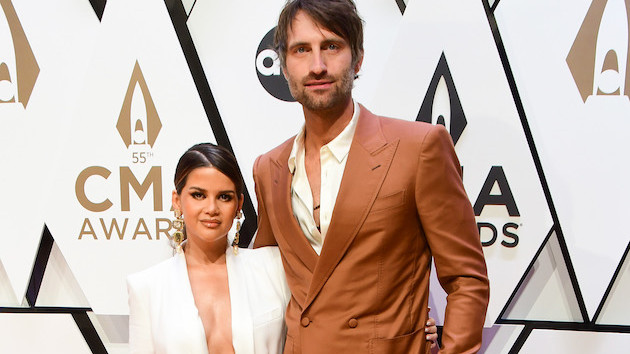
Maren Morris didn’t have to take much creative license when she wrote “Tall Guys,” a tongue-and-cheek, fun celebration of height-gifted men that appears on her latest album, Humble Quest.
That’s because her husband, fellow artist Ryan Hurd, is 6 feet, 3 inches tall — over a foot taller than Maren.
“I’m 5’1″, so I look at everyone like they’re taller than me,” she admits, adding that she always wished to be taller — but after being married to Ryan, she can see that extra height comes with its own set of challenges.
“I always feel jealous, like, ‘Oh, tall people must love being at festivals and concerts because you can see the stage no matter what,’” she continues. “But Ryan … is like, ‘No, it’s awful because everyone’s mad at you for standing in front of them.’”
There are also perks to having what Maren calls “a hilarious height difference,” especially in the footwear department. “I can wear my heels as high as they possibly go, and he’s still taller than me,” she points out.
And as fodder for a great song? That’s just the cherry on top. Maren says many of the lyrics of “Tall Guys” were taken straight from her life as the wife of a guy who deals with all the perks and hangups of having extra height.
“My favorite lines of that song are this weird humble-brag of ‘We drink top shelf because he can always reach it / And we fly first class because it’s the only way his knees fit.’ We’re bragging, but we’re also not,” she continues. “We have to just out of pure practicality.”
Overall, she wouldn’t change a thing about the “Tall Guy” in her life: “I love tall guys,” Maren says, “and he’s definitely the tallest guy in my life.”
With just a few days left before the release of The Forever Story, JID‘s unveiled his track list.
The album will have 15 songs, including previously released singles “Dance Now” and “Surround Sound” featuring 21 Savage and Baby Tate, as well as the “2007” outro that includes bars from J. Cole, Dreamville President Ibrahim Hamad and his own father.
Other features are on the project, too, but their names have been blocked.
Instead, the track list revealed the producers and composers who contributed to The Forever Story;2One2, Aviad, Badbadnotgood, Benji, Cardiak, Childish Major, DJ Khalil and Thundercat were among those credited for their work on The Forever Story.
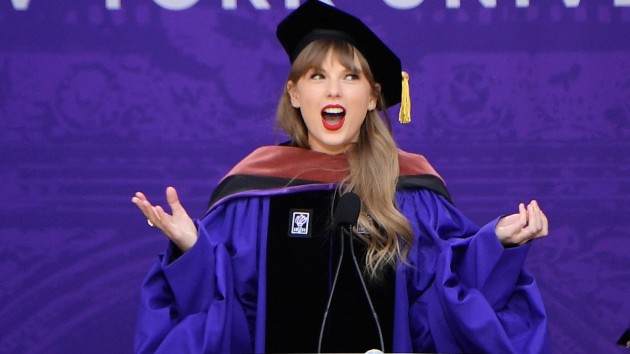
Back in February, New York University offered a course on Taylor Swift, focusing on her entrepreneurship, how she fits into the history of pop music “prodigies,” and how the experiences of youth and girlhood are “often exploited” by the media. Now, the University of Texas at Austin is following suit, offering a class that focuses specifically on Taylor’s songwriting.
Starting this fall, Dr. Elizabeth Scala at UT’s English department will teach Literary Contests and Contexts: The Taylor Swift Songbook. It’ll use Taylor’s songwriting to teach “a wide range of skills.” As the school’s Facebook post says, “Let’s turn that Easter Egg hunting and reading in detail to academic purposes!”
Scala tells The Austin-American Statesmanthat she’s focusing on Taylor because she admires her writing skills, calling the star “an intelligent and talented songwriter.”
Scala says her daughter introduced her to Taylor in November, after the release of Red (Taylor’s Version). She notes, “For me, it’s all about form (not just or even primarily about content). We will study Swift’s songs as poems and literary structures.”
As previously reported, Taylor’s ex-boyfriend Harry Styles will be the subject of a class at Texas State University next spring.