(ATLANTA) — A multi-state E. coli outbreak associated with romaine lettuce in sandwiches from Wendy’s has grown, with dozens more infections reported in the past week, according to federal health officials.
Since Aug. 17, when the outbreak was first publicized, 47 more illnesses in the outbreak have been reported to the U.S. Centers for Disease Control and Prevention — bringing the total number of reported infections to 84, the agency said Thursday.
Among those, 38 people have been hospitalized, including eight people in Michigan who have a type of kidney failure called hemolytic uremic syndrome, the CDC said. No deaths have been reported so far.
The infections have been reported to the CDC from four states: Michigan (53); Ohio (23); Indiana (six); and Pennsylvania (two).
CDC investigators are working to confirm the source of the outbreak, though many of those who became sick reported eating at Wendy’s, the CDC said.
“A specific food has not yet been confirmed as the source of this outbreak, but many sick people reported eating sandwiches with romaine lettuce at Wendy’s restaurants in Indiana, Michigan, Ohio, and Pennsylvania before getting sick,” the CDC said in its notice.
Among 62 people interviewed by investigators, 52 of them (84%) reported eating at a Wendy’s the week before they became sick, the CDC said. Of 17 people with detailed information about what they ate there, 15 (88%) reported eating romaine lettuce served on burgers and sandwiches.
As a precaution, the fast food chain has removed the romaine lettuce used in sandwiches from restaurants in that region. A different type of romaine lettuce is used in salads.
In a statement on its website Friday, Wendy’s confirmed that it was “fully cooperating with public health authorities on their ongoing investigation of the regional E. coli outbreak reported in certain midwestern states,” adding that it was “taking the precaution of discarding and replacing the sandwich lettuce at some restaurants in that region.”
“The lettuce that we use in our salads is different, and is not affected by this action. As a company, we are committed to upholding our high standards of food safety and quality,” the statement read.
The CDC is not advising that people stop eating at Wendy’s or to stop eating romaine lettuce in general.
“At this time, there is no evidence to indicate that romaine lettuce sold in grocery stores, served in other restaurants, or in people’s homes is linked to this outbreak,” the CDC said.
Most people infected with E. coli experience severe stomach cramps, vomiting and often bloody diarrhea, which typically start three to four days after ingesting the bacteria.
The CDC is urging people to call their health care provider immediately if they have severe symptoms, such as diarrhea for more than three days, diarrhea and a fever higher than 102 degrees, vomiting to the point where you can’t keep liquids down and signs of dehydration.
Most recover without treatment within a week, though some people may develop kidney failure.
ABC News’ Eric Strauss contributed to this report.
(LOS ANGELES) — A lawsuit filed in California alleges that professional boxer and former heavyweight champion George Foreman sexually assaulted at least two women in the 1970s, when they were teenagers and below the age of consent.
The lawsuit, filed Wednesday in the Los Angeles Superior Court, does not identify Foreman by name, but identifies the alleged abuser as a former professional heavyweight boxer who defeated Joe Frazier in 1973 to become the heavyweight champion of the world. Foreman became champion after he defeated Frazier on Jan. 22, 1973.
Foreman has denied the allegations in a statement to ABC News, alleging people are “trying to extort millions of dollars each from me and my family.”
The lawsuit, filed by a woman identified as Denise S., alleges Foreman started “grooming” her at an early age by taking her out for ice cream and allowing her to sit in his lap as he drove his car, according to the suit.
According to the lawsuit, Denise S. is the daughter of an Oakland-based boxer who trained with Foreman in the early 1970s. She allegedly met Forman when she was around 8 years old.
According to the suit, the alleged sexual assault and misconduct occurred when Denise S. was 13 to 16 years old, below the legal age of consent. Foreman was over the age of 23, the suit said.
Foreman and Denise S. allegedly had sexual intercourse several times when she was 15 years old and she alleges she was sexually abused by Foreman in a San Francisco hotel on at least one occasion, according to the lawsuit.
The lawsuit is filed under a new California law that increases the limit for when someone can bring a legal action to recover damages from childhood sexual assault.
The law allows accusers to bring a suit 22 years from the date the plaintiff reaches the age of majority, 18 in California, or within five years of the date the plaintiff discovers or reasonably should have discovered that psychological injury or illness after the age of 18 was the caused by the sexual assault, whichever is later.
Denise S. alleges she suffered injuries, including physical and mental pain and suffering, past and future costs of medical care and treatment and past and future loss of earnings and earning capacity, “in an amount not yet ascertained, but which exceeds the minimum jurisdictional limits of this Court,” according to the lawsuit.
She is asking for a jury trial and an unspecified amount of damages.
Denise S. alleges in the suit that she disclosed the abuse to a friend and business associate of Foreman, identified as “Ron,” who allegedly said he was aware of at least one other victim that Foreman sexually abused when she was a minor, according to the lawsuit.
According to the suit, Ron confronted Foreman about the abuse of the two minors on at least one occasion, and Foreman allegedly did not deny the allegations.
According to the New York Times, a second lawsuit was filed by a woman using the pseudonym Gwen H. who alleges she met Foreman when she was under the age of 10 and was groomed by him.
It’s unclear if “Gwen H” is the other teenager Ron allegedly knew Foreman abused.
In a statement to ABC News, Foreman said he will work with his lawyers to “fully and truthfully expose my accusers’ scheme and defend myself in court. I don’t pick fights, but I don’t run away from them either.”
“They are falsely claiming that I sexually abused them over 45 years ago in the 1970s. I adamantly and categorically deny these allegations. The pride I take in my reputation means as much to me as my sports accomplishments, and I will not be intimidated by baseless threats and lies,” Foreman said.
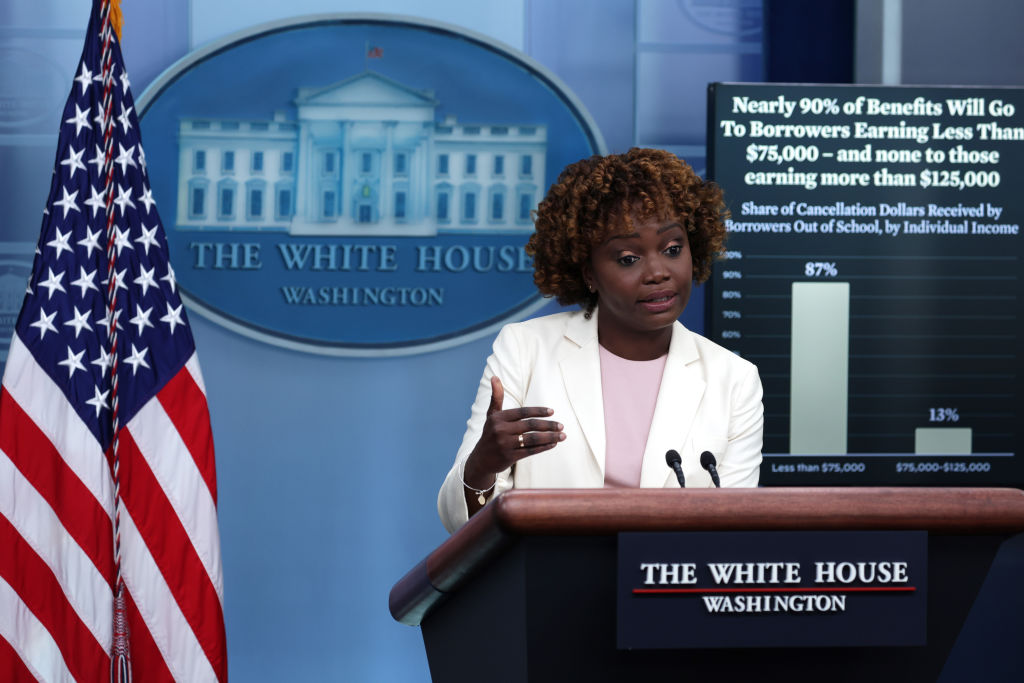
(WASHINGTON) — Some of the Americans who qualify for the Biden administration’s federal student loan forgiveness plan may not see relief before payments are due again in January, officials acknowledged on Thursday.
White House press secretary Karine Jean-Pierre told ABC News at a briefing that the forgiveness policy is something that the administration wants to make sure “happens right away” — but she stopped short of a specific timeline commitment to borrowers, deferring to the Department of Education (DOE).
“I don’t have a timeline for you. That is something that the Department of Education is going to work on,” Jean-Pierre said. “That is something, again, that the Department of Education is going to focus on. It is important. We want this to happen for these individuals.”
Politico in July obtained a DOE memo that senior officials prepared for Education Secretary Miguel Cardona which stated that the forgiveness plan potentially allowed “immediate eligibility determination for millions of borrowers, the first cancellations within 45 days of announcement and millions of cancellations within 90 days.”
Jean-Pierre on Thursday stressed that the administration wants to be certain that debt forgiveness is enacted in tandem with the restart of student loan payments, something the DOE will “be focused on.”
A key provision of the White House plan is that about 8 million borrowers may be eligible for automatic loan forgiveness because their income data is readily available to the DOE.
But for the rest of those with federal loans, debt balances may not shrink before repayments begin on Dec. 31 — which is the deadline for the latest extension of the pandemic-era student loan pause enacted by Biden on Wednesday.
His announcement that Pell grant recipients will receive up to $20,000 in federal loan forgiveness and non-Pell borrowers will owe up to $10,000 less on their loans — if they make under $125,000 per year — came just a week before the restart of payments for America’s $1.7 trillion in federal student loans after a two-year COVID-19 freeze.
The White House has also confirmed that the application forms some of the borrowers will need to use for the debt cancellation are not yet ready, with no timeline for their disbursement. (Officials are referring borrowers to studentaid.gov for more information.)
At Thursday’s White House briefing, Jean-Pierre struggled to answer rounds of questioning about exactly how the federal government will foot the bill if this trillion-dollar promise.
“Let’s see who actually takes advantage of this, then we’ll have a better sense of what this is actually going to cost,” she said, noting that Biden’s work to lower the deficit during his time in office and that lifting the student loan payment pause would help bring $50 billion into the Treasury.
Even without a price tag, she added, “We do believe this will be fully paid for because of the work this president has done with the economy.”
A recent study by the University of Pennsylvania’s business school found that erasing $10,000 in student loan debt will cost about $300 billion. If the program continues for 10 years, the cost becomes $330 billion, or $344 billion if there is no income limit, per the report.
Because the federal government backs many student loans, U.S. taxpayers will likely foot the bill — something Biden addressed directly on Wednesday, comparing the debt cancellation to the Paycheck Protection Program, a loan forgiveness program during the pandemic.
“No one complained that those loans caused inflation. A lot of these folks in small businesses are working in middle-class families. They needed help,” he said. “It was the right thing to do,” Biden said.
ABC News’ Gabe Ferris and Cheyenne Haslett contributed to this report.
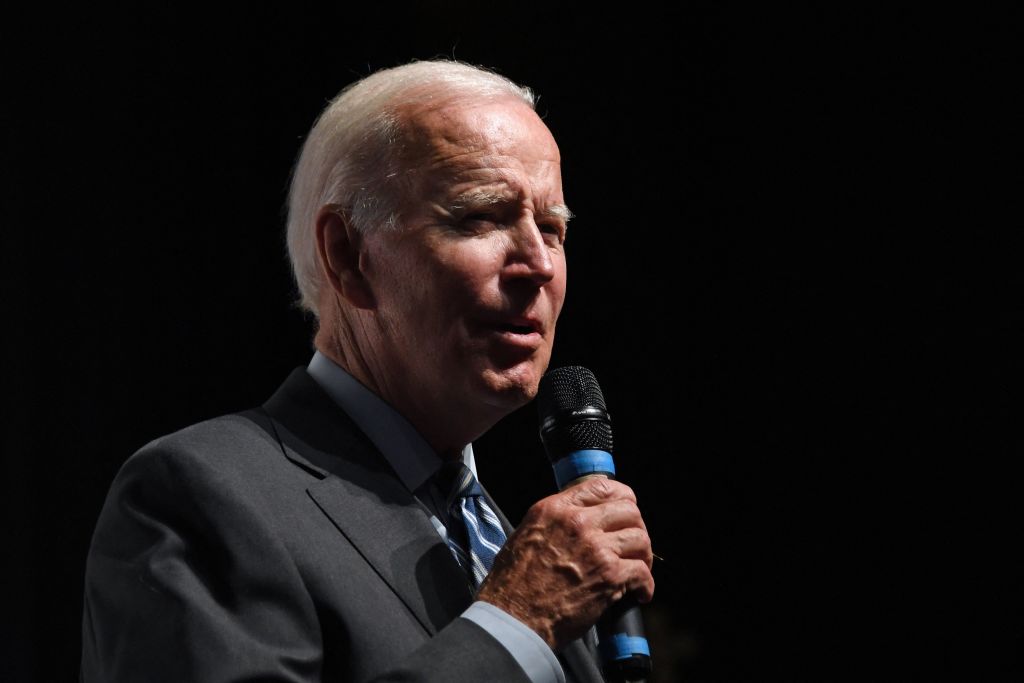
(ROCKVILLE, Md.) — President Joe Biden will hit the campaign trail on Thursday to highlight a series of policy wins as Democrats look to keep their narrow majorities in Congress during this fall’s elections.
Biden will “lay out the choice before Americans” when he speaks at a Democratic National Committee rally in Rockville, Maryland, White House press secretary Karine Jean-Pierre told reporters.
Biden’s appearance, happening exactly 75 days out from Election Day, comes after a string of summer legislative victories: the first major piece of gun reform in decades, Democrats’ landmark health care and climate change law and a bipartisan effort to boost semiconductor production in the U.S.
“He’ll highlight how he and congressional Democrats have delivered results for working families,” Jean-Pierre said as she teased his speech tonight. “Creating nearly 10 million jobs and record low unemployment, lowering health care costs and energy costs, passing a new gun safety law, which we hadn’t seen in decades.”
“And he’ll say that they have taken on special interest and won, that’s what Democrats have done,” Jean-Pierre added.
Earlier this week, the administration announced a plan to cancel thousands of dollars of student loan debt for millions of borrowers — fulfilling one pledge Biden made as a 2020 presidential candidate.
The policy has been lambasted by Republicans as unfair, and while many Democrats have celebrated the plan, some lawmakers in tough reelection races have distanced themselves from it.
Rep. Tim Ryan, a Democratic Senate nominee in Ohio, was critical of the move as sending “the wrong message to millions of Ohioans without a degree working just as hard to make ends meet.”
“Are you guys worried that you might have put more vulnerable Democrats in a tough spot? That you could have risked some of these races in November,” ABC News White House Correspondent MaryAlice Parks asked Jean-Pierre.
“I’m not going to get into politics and to what the next several weeks are going to look like,” Jean-Pierre responded. “But I can speak to the popularity of what we did, the importance of what we did, how this is going to help struggling families, and that has always been the plan of this president, especially as we look at the economy and making sure that we do not leave anybody behind.”
Biden will also warn about what his Republican in Congress would do if they are able to regain majority control — drawing on statements prominent GOP leaders have made about abortion access and gun rights.
Since the Supreme Court overturned Roe v. Wade — the landmark decision legalizing abortion access nationwide — at least 15 states (many led by Republicans) have ceased nearly all abortion services. Some Republicans in Congress, including House Minority Leader Kevin McCarthy, have floated the idea of a national ban on abortion.
“He’ll say what they are still fighting for is protecting a woman’s right to choose, not a national ban on abortion, which we have seen from the other side,” Jean-Pierre said. “The safety of kids in school, not protecting the NRA, as we’ve seen from the Republicans and the right to vote and have the — that vote counted, which is so incredibly important as we talk about our democracy.”
ABC News’ Justin Gomez contributed to this report.
(NEW YORK) — Ameshia Cross, 35, spent the past two years of the coronavirus pandemic worried about how she would pay off her nearly $90,000 in student loan debt once the freeze on federal student loan payments ended.
Now, she said she will have $20,000 less to pay off starting in January, after President Joe Biden on Wednesday announced a long-awaited plan to cancel federal student debt for a subset of Americans.
Cross qualifies for $20,000 in loan forgiveness under Biden’s plan as a recipient of a Pell Grant — scholarships reserved for students with the highest financial need — and someone making less than $125,000 per year.
She said that while she is extremely grateful for having a portion of her debt canceled, she remains anxious about how she will pay off the rest of her loans when payments resume in January.
Cross — who worked two jobs and cared for her three siblings while in college — said the $20,000 that will be forgiven is less than the interest that has accrued on her loans over the past decade.
“Money only goes so far and it’s not like your salary increases or the money you have incoming increases at the rate of cost of living,” Cross, assistant director of communications for The Education Trust, a nonprofit focused on student equity, told “Good Morning America.” “Hopefully we will be in a different place come January, but right now the costs of groceries, the cost of basic necessities is just really, really high, and I think that makes it extremely difficult.”
As a Black woman, Cross is part of a population that stands to benefit the most from Biden’s student debt relief plan.
Black women carry a disproportionate burden of student debt. Overall, women hold nearly two-thirds of the nearly $2 trillion outstanding student debt in the U.S., and Black women are the most likely of any gender group to have student loans, with around 1 in 4 Black women holding student debt, according to data from the Census Bureau and the American Association of University Women.
Black women graduate college with an average of nearly $38,000 in student debt, according to the American Association of University Women, a number that grows at a faster rate over time than for other populations, data shows. Just over a decade after starting college, Black women, on average, owe 13% more than they borrowed, while white men, on average, have paid off 44% of their debt, according to The Education Trust.
“When I became a borrower, I didn’t think about the repayment, I thought about degree completion, and then the economic mobility that would come,” said Brittani Williams, a senior policy analyst in higher education at The Education Trust. “I figured I would graduate, get a job and pay those student loans back, and the reality for me was that I graduated, got a job and went back to school a couple of times.”
Williams, a mom of three, said payments on the tens of thousands of dollars of loan debt she still owes are on pause as she pursues a doctorate degree, which she expects to finish in 2024.
Though she too qualifies for $20,000 in loan forgiveness under Biden’s plan, Williams said she sees it as “just a start” and is already worried about restarting payments in the future.
“I’ve already begun to create in my head a scenario for repayment and what does that look like,” she said. “I’m enrolled in public service loan forgiveness and I work for an eligible nonprofit but what does that mean for my forgiveness personally moving forward, and what does that mean for the planning of these next nearly two academic years that I have?”
Under Biden’s plan, people who went to school on a Pell Grant can qualify for up to $20,000 in debt forgiveness, while other student loan borrowers who didn’t go to school on a Pell Grant will still have loans forgiven up to $10,000.
Both forgiveness options are for people who earn less than $125,000 per year, or $250,000 as a household, in either the 2020 or 2021 tax year.
When Biden announced the plan on Wednesday, he spoke of a generation of people “saddled with unsustainable debt” that impacts whether they can buy homes or start families, among other life choices.
That debt is especially harmful to Black women, who face both racial and gender discrimination on top of everything else. Even after entering the workforce, where they might ostensibly earn the money to pay off their student loans, Black women are paid less than their white male counterparts, earning just 63 cents for every dollar earned by white men on average, according to the Labor Department.
Gloria Blackwell, CEO of the American Association of University Woman, said Black women face the “perfect storm” of both a racial wealth gap and gender pay gap, which she said combine to keep them further behind their peers both before and during college, and then exponentially so afterward, when they graduate with debt.
“When you are a Black woman and you have this burden of student loans, it impacts every aspect of your life,” said Blackwell. “It impacts whether you can pay for basic living expenses, whether you can afford transportation or even the rent in order to have a decent place to live, let alone save for a house or be able to start a family or take care of your family. It’s a burden on Black women on whether they can save for retirement or afford rent or be able to move to a better neighborhood.”
Kristin McGuire, 40, said the past two decades of her life have been structured around her responsibility to pay back the more than $20,000 she borrowed to attend a four-year public college in California, an amount she said has increased to over $50,000 due to interest.
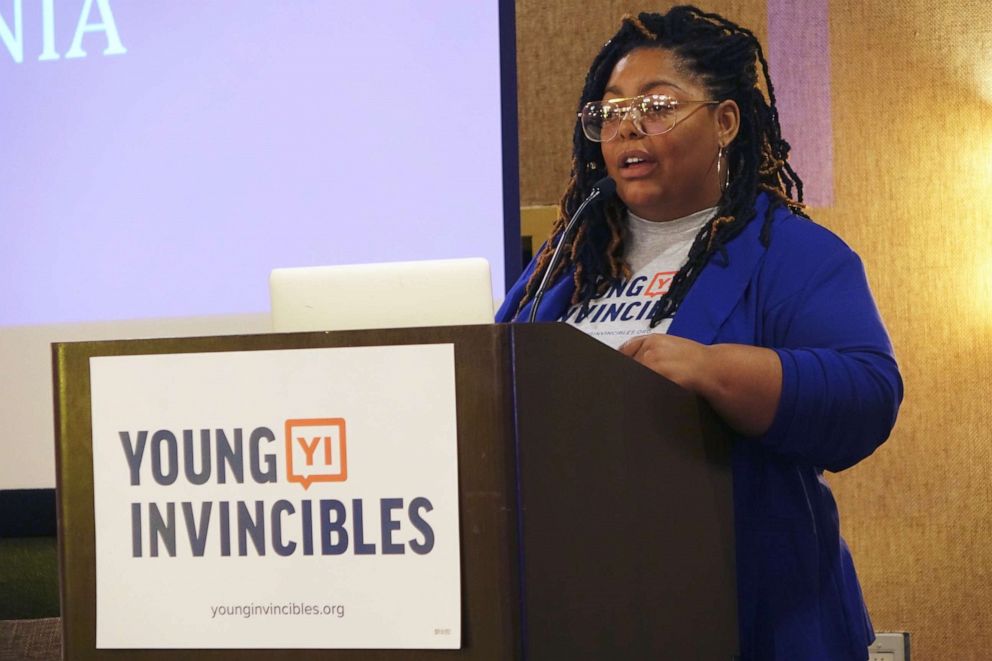
Now, as she pays for her oldest daughter to attend college, also in California, McGuire, the executive director of Young Invincibles, a youth advocacy organization, said she is preparing to resume payments on her loans in January, when the pause ends.
McGuire said she did not qualify for loan forgiveness under Biden’s plan, which she said she hoped would not include means testing.
“The president’s wording has been no one who makes a high income will be eligible for this relief, but $125,000 doesn’t really weigh in for regional differences or inflation,” said McGuire. “So because of that, a lot of coastal borrowers or folks who live on the coast or in major metropolitan areas will be excluded from this.”
Still, McGuire said she is “very, very grateful” that Biden took action because she knows so many people who are impacted by student debt for whom the loan forgiveness will help.
“I’m not exaggerating when I say every single person I know who went to college and is a Black person is overwhelmed with the burden of student debt,” she said. “And it’s all for the very same reasons, that we were all first-generation, we were all low-income and the cost of us attending college was more expensive because we had zero expected family contribution, which means we had to borrow the money.”
“That impacted everyone in my social circle in a different way, so these wins are more of a communal win for me,” she added. “I don’t have to view it as a personal win or loss.”
McGuire’s sentiment is one echoed by Corazon Eaton, of Columbus, Ohio, who paid off her remaining loan balance of more than $130,000 within the past year, but said she is still very happy with Biden’s loan forgiveness plan.
“I went into [paying off my student loans] knowing that it could potentially down the road end up getting forgiven or a portion of it getting forgiven [for others], and being at peace with that,” said Eaton. “I think the changes are going to propel and impact a lot of people.”
Still, Eaton, McGuire and the other women “GMA” spoke with all said they believe Biden’s action on student loan forgiveness should be only a first step and that more needs to be done to help Black women, including capping the rising cost of higher education and introducing greater debt cancellation options.
They also said they are proud that it was Black women who led the call — and who will continue to do so — for changes to student debt policy.
On the 2020 campaign trail, Biden pledged to approve $10,000 in student loan forgiveness for every federal borrower.
“Black women came out and Black women voted and Black women said, ‘This is what we need,'” said Blackwell. “The call is to be more deeply responsive to the very specifically articulated needs that would have an impact on improving the economic security of Black women, and those calls are not going to stop, and that advocacy is not going to stop.”
(HOUSTON) — Uvalde:365 is a continuing ABC News series reported from Uvalde and focused on the Texas community and how it forges on in the shadow of tragedy.
One of the survivors of the Robb Elementary School shooting in Uvalde, Texas, was honored at Tuesday’s MLB game between the Houston Astros and Minnesota Twins.
Mayah Zamora got to throw out the ceremonial first pitch at Minute Maid Park, an opportunity set up by the Correa Family Foundation, a nonprofit founded by Twins shortstop Carlos Correa, formerly of the Astros. Both the Astros and the Twins teamed up to give Mayah, a softball player herself, an unforgettable experience ahead of their first matchup in a three-game series that concludes Thursday night.
Mayah donned a bright orange Astros jersey and a navy blue and orange Astros cap for the occasion and posed for photos with players from both teams, including Correa, and the Astros’ mascot, Orbit, a green alien. Mayah’s family, her parents Christina and Ruben Zamora, as well as her two brothers and some extended family members were also by her side at the special event.
It’s not the first time the Astros have honored Uvalde families following the Robb Elementary school shooting, which cut short the lives of 19 children and two teachers. In July, the team traveled to Uvalde, nearly 280 miles west of Houston, to hold events and support the local community.
They also hosted families of the shooting victims earlier this month at Minute Maid Park.
Mayah was released from University Hospital in San Antonio on July 29. According to a press release from the Correa Family Foundation, the 10-year-old had to undergo over 20 surgeries during her 66-day stay.
While she was at the hospital, Mayah’s softball team launched a lemonade stand to raise at least $4,000 to help fund their teammate’s medical costs.
The Correa Family Foundation also announced Tuesday that it had raised funds to provide Mayah and her family a new home. The foundation’s president, Dr. Ricardo “Ricky” Flores, confirmed to “GMA” that after the school shooting, Mayah had learned she and her family lived just blocks away from the shooter and she felt uneasy returning home.
The Zamora family is in the process of finding a new place to relocate and the foundation plans on making sure their next home is fully furnished and comfortable for Mayah.
“We are thrilled to have so many friends and collaborators who are willing to come together and help us provide this gift to Mayah and her family,” Correa said in a statement. “I could never begin to imagine everything she has gone through, and we feel that this is one thing we could do to try to alleviate some of her pain. I’m thankful to both teams for being a part of this effort.”
(WASHINGTON) — Five more states are set to severely restrict abortion this week, adding to the growing number of laws that have taken effect since the Supreme Court overturned Roe v. Wade.
Three states — Idaho, Tennessee and Texas — had trigger laws go into effect Thursday after being required to wait 30 days following the reversal of Roe before the bans could be enacted.
Additionally, North Dakota has a trigger law in place to make abortion illegal that may go into effect Friday and Oklahoma has a law with higher penalties for providers going into effect at the end of the week.
The states with trigger laws had effectively banned abortion since the Supreme Court reversed Roe but the new laws go a step further.
Previously, Tennessee had banned abortions after fetal cardiac activity could be detected, which is about six weeks’ gestation. But the new law makes performing abortions a felony punishable by three to 15 years in prison.
There are only exceptions if the mother’s life is in danger or if the pregnancy would result in serious bodily injury. There are no exceptions for rape or incest.
Meanwhile, in Texas, abortions were prohibited in nearly all circumstances, including rape and incest, following the Supreme Court’s decision. There are only exceptions if the mother’s life or health is in danger.
Abortions providers can incur penalties of no less than $100,000 and may lose their professional license for performing the procedure.
Similarly, in Idaho, prior to the law, abortions had been banned after six weeks. The new law makes it a felony to perform an abortion in almost all circumstances.
However, a federal judge issued a preliminary injunction Wednesday against part of the ban after the U.S. Department of Justice filed a lawsuit saying the ban violated a federal law guaranteeing access to emergency medical care at Medicare-funded hospitals.
“It’s not about the bygone constitutional right to an abortion,” Judge B. Lynn Winmill of the Federal District Court in Idaho wrote. “The court is called upon to address a far more modest issue — whether Idaho’s criminal abortion statute conflicts with a small but important corner of federal legislation. It does.”
North Dakota had a near-total abortion ban with exceptions for rape, incest or if the life of the mother is in danger, which was temporarily blocked in court last month after the state’s sole abortion clinic, the Red River Women’s Clinic located in Fargo, sued.
A hearing Friday will decide whether the injunction will be extended while the case proceeds through court or if it will go into effect.
During this time, the Red River Women’s Clinic has moved its abortion services across state lines to Moorhead, Minnesota, about five minutes away from Fargo.
“Regardless of whether it goes into effect, or the 2023 North Dakota legislature is going to pass even something more restrictive, yes, we’re here and we’re providing services,” Tammi Kromenaker, director of Red River Women’s Clinic, told ABC News. “Access to abortion has essentially not changed for patients who have to travel, you know, to us, but it’s the principle of the thing, knowing that abortion is illegal in their state.”
She said a week ago she spoke to a patient in North Dakota who thought she wouldn’t even be able to access services.
“I spoke to a patient from North Dakota who said, ‘Oh, my God, did I miss it? Did I miss my chance?’ were her literal words,” Kromenaker said. “And I said, ‘No, we are here. We’re moving to Moorhead; we’ll see you there.’ And she just was so relieved because she literally thought she missed the opportunity to have an abortion.”
In addition to patients thinking that they can’t access services provided by the clinic, there are physical barriers too.
“The Fargo clinic is literally five minutes away from the Moorhead clinic, but for some patients, they had to drive three, four or five hours one way just to get to Fargo,” Kromenaker said. ‘That’s already a really big challenge to many patients who have to come from the western part of the state. You know, take time off from work, pay for gas, arrange child care.”
She added, “We live in a part of the country where winter is very challenging for travel. I remember a time in this last winter when there was such a bad snowstorm that every Interstate in the state was closed down. The patients literally could not get here.”
Additionally, Oklahoma was already enforcing laws banning abortion, but the latest ban adds further penalties.
Senate Bill 612, signed by Gov. Kevin Stitt makes performing abortion a felony, punishable by up to 10 years in prison and a fine of $100,000.
The only exception under the law is if the mother’s life is in danger.
ABC News’ Nadine El-Bawab and Meredith Deliso contributed to this report.
Much has been made of Pete Davidson‘s allure with the women of Hollywood, but he’s managed to attract one very hard-to-get male star — for his new comedy series Bupkis, that is.
Oscar winner Joe Pesci — who of late only, and rarely, works if it’s for his Goodfellas director Martin Scorsese — has signed onto the comedy show, which has been described as a Curb Your Enthusiasm-like look at Davidson’s life.
Officially, the streaming service calls Bupkis, which also stars Sopranos Emmy winner Edie Falco as Pete’s mom, “a heightened, fictionalized version of Pete Davidson’s real life.”
It’s not known who Pesci will play, but he is being billed as a series regular.
Incidentally, it will be the first time Pesci plays for the small screen since a short-lived ABC cop dramedy from 1985 called Half-Nelson.
(WASHINGTON) — The judge considering the release of the affidavit used to support the search of former President Donald Trump’s Mar-a-Lago estate on Thursday ordered a redacted version made public by noon on Friday.
It was unclear whether the Justice Department would appeal.
Earlier Thursday, the Justice Department submitted its proposed redactions to the affidavit.
In his order, Magistrate Judge Bruce Reinhart said that after reviewing DOJ’s memorandum and proposed redactions he believes the government has met its burden of showing a compelling reason and good cause to seal the requested portions of the affidavit because “disclosure would reveal the identities of witnesses, law enforcement agents, and uncharged parties, the investigation’s strategy, direction, scope, sources, and methods, and grand jury information…”
He says that the government has also met its burden in showing that its proposed redactions “are narrowly tailored to serve the Government’s legitimate interest in the integrity of the ongoing investigation and are the least onerous alternative to sealing the entire Affidavit.”
He gave DOJ until noon Friday to file in the public docket a version of the affidavit containing the redactions sent Thursday.
Reinhart had given department officials a noon deadline Thursday to submit proposed redactions under seal as well as a legal memorandum explaining their justifications for the information that they believe should be kept hidden from public view. Reinhart had said he was not inclined to keep the full affidavit sealed, saying he believes there are portions of it that could presumably be unsealed.
The government argued in court last week that the redactions they believe would be necessary to protect the integrity of their ongoing criminal investigation would essentially render the document “meaningless.”
A coalition of media organizations, including ABC News, has urged for release of the affidavit even with redactions — citing the need to further inform the public in light of the historic nature of the search of a former president’s residence.
Jay Bratt, the head of DOJ’s counterintelligence division, said “there would be nothing of substance” adding that the government is “very concerned about the safety of the witnesses” and the impact releasing the affidavit could have on other witnesses.
“It doesn’t serve the media’s interest to give them something that is meaningless,” Bratt said.
Bratt argued there is information in the document that could easily identify witnesses based on the descriptions of events that only certain people would have knowledge about.
Reinhart said in a Monday filing that he might ultimately side with the government.
“I cannot say at this point that partial redactions will be so extensive that they will result in a meaningless disclosure, but I may ultimately reach that conclusion after hearing further from the Government,” he said.
Judge Reinhart said that he believes the government has met “its burden of showing good cause/a compelling interest that overrides any public interest in unsealing the full contents of the Affidavit.”
It was thought the Justice Department would likely seek to immediately appeal any decision that would release portions of the affidavit they are not comfortable releasing.
While former President Trump and his allies have publicly called for the release of the full affidavit, his legal team has made no such efforts in court since the Aug. 8 search, including as part of their motion filed Monday before a separate federal judge calling for the appointment of a special master to review materials seized by the FBI.
Instead, Trump’s lawyers requested federal Judge Aileen Cannon to issue an order directing investigators to halt their review of the materials taken from Mar-a-Lago pending appointment of a special master, return any personal materials swept up in the search, and provide a more detailed receipt of items that were seized.
The filing, which was riddled with falsehoods, misrepresentations and blatant references to a possible announcement of Trump’s plans to again run for the presidency in 2024, appeared to be met with confusion by Judge Cannon.
On Tuesday, Judge Cannon, a Trump appointee, issued an order requesting Trump’s team enter a supplemental filing by Friday with a line-item list of basic information not included in their original motion.
(WASHINGTON) — Two Florida residents have pleaded guilty to stealing the diary of Ashley Biden, President Joe Biden’s youngest daughter, and then selling it to right-wing activist group Project Veritas, the Justice Department announced Thursday.
Aimee Harris, 40, and Robert Kurlander, 58, pleaded guilty to conspiracy to commit interstate transportation of stolen property involving the theft of personal belongings of an immediate family member of a then-former government official for taking several items belonging to Ashley Biden in September 2020. The charge carries a maximum of five years in prison.
Kurlander has also agreed to cooperate with the government.
Though Ashley Biden, 41, is not named in the court documents, a source familiar with the case confirmed they were her belongings.
“Harris and Kurlander stole personal property from an immediate family member of a candidate for national political office,” U.S. Attorney Damian Williams said in a statement. “They sold the property to an organization in New York for $40,000 and even returned to take more of the victim’s property when asked to do so.”
Biden had stored a handwritten journal containing highly personal entries, tax records, a digital storage card containing private family photographs and a cellphone, among other things, in a private residence in Delray Beach, Florida, where Harris was also staying.
After she stole Biden’s items, she contacted Kurlander and they got in touch with a representative from Project Veritas. They met with the Veritas employee in New York City shortly after they made contract with them, the DOJ said.
“During that meeting, Harris described the circumstances of how she had obtained the property, and provided the property to the Organization,” court documents say. “After the meeting, and at the Organization’s request, HARRIS and KURLANDER returned to Florida to obtain more of the Victim’s property in order to provide it to the Organization.”
They were paid $20,000 each by Project Veritas after providing more of Biden’s personal belongings, according to the DOJ.
In a statement Thursday, Project Veritas said, “Project Veritas’ news gathering was ethical and legal. A journalist’s lawful receipt of material later alleged to be stolen is routine, commonplace, and protected by the First Amendment.”
After the pair went to the house in Florida to steal more of the information, Kurklander sent a text to Harris, saying they expected as much as $100,000 from Project Veritas for the additional possessions.
“They are in a sketchy business and here they are taking what’s literally a stolen diary and info … and trying to make a story that will ruin [the Victim’s] life and try and effect the election. [The Victim] can easily be thinking all her stuff is there and not concerned about it. … we have to tread even more carefully and that stuff needs to be gone through by us and if anything worthwhile it needs to be turned over and MUST be out of that house,” the text message said according to court documents.
Harris acquired Ashley Biden’s property after she was invited to live there shortly after Ashley moved out. Biden stored her stuff at the property, according to the DOJ.
The duo also allegedly tried to sell the stolen property at a fundraiser benefiting “Candidate-2,” which is believed to be former President Donald Trump. Harris and Kurklander “attended the fundraiser with the intent of showing the Victim’s stolen property to a campaign representative of Candidate-2, hoping that the political campaign would purchase it.”
The campaign representative declined to purchase the information.
“A representative of Candidate-2’s political campaign conveyed to AIMEE HARRIS and ROBERT KURLANDER, the defendants, that the campaign was not interested in purchasing the property and advised HARRIS and KURLANDER to provide the items to the Federal Bureau of Investigation,” the court documents said.