(NEW YORK) — In July, three months after Russia launched a full-scale invasion of Ukraine, first lady Olena Zelenska told ABC News that she hoped an end to the war was near.
Four months later, just last week, Russian President Vladimir Putin announced that he is mobilizing 300,000 more troops against Ukraine.
In a new interview, Zelenska told ABC News’ Amy Robach that the developments are upsetting, saying this is not an “easy period” for the people of Ukraine.
“When the whole world wants this war to be over, they continue to recruit soldiers for their army,” said Zelenska, referring to Russia. “Of course, we are concerned about this. We are worried, and this is a bad sign for the whole world.”
Zelenska, who spoke with Robach through a translator, said she feels though that Ukrainians will continue to persevere in the face of conflict.
“The main difference between our army and the Russian army is that we really know what we are fighting for,” she said.
Zelenska’s husband, Ukraine’s President Volodymyr Zelensky, warned last week in a recorded address to the United Nations General Assembly that Moscow was trying to wait his fighters out.
Zelenska attended the United Nations General Assembly in-person in New York City, where she spoke to Robach about the U.N.’s recent finding that wars crimes have been committed in Ukraine by Russian troops.
A U.N.-appointed panel of independent legal experts reported that, among other crimes, Russian soldiers have “raped, tortured, and unlawfully confined” children in Ukraine.
The report followed an announcement by U.S. Secretary of State Antony Blinken in March that the State Department made a formal assessment that Russian forces have committed war crimes in the country.
Zelenska said she was not surprised by the U.N. report but is glad the crimes are internationally recognized now.
“On the one hand, it’s horrible news, but it’s the news that we knew about already,” she said. “On the other hand, it’s great news that the whole world can finally see that this is a heinous crime, that this war is against humanity and humankind.”
Zelenska continued, “Now Ukrainian efforts at the international level are focused on creating an international tribunal for all responsible for crimes that still unfortunately continue to occur in Ukraine during this war.”
Zelenska recently started a foundation to help Ukrainians recover from the devastating effects of the war with Russia.
She said the foundation is focused on three areas: Education, medicine and humanitarian aid.
“Our main goal is to help as many people as possible to return home,” said Zelenska. “For them to be able to return, we need to restore hospitals, schools … We need to rebuild their homes.”
In English, Zelenska directly addressed the American people, saying support from the United States is “crucial.”
“It’s not war between Ukraine and Russia. It’s war for values of all the world. A war for freedom, for human rights, for all that we love, all of the people of the world,” she said. “And that’s exactly what Ukrainians are fighting for now. So don’t stop your support. It’s very important for us.”
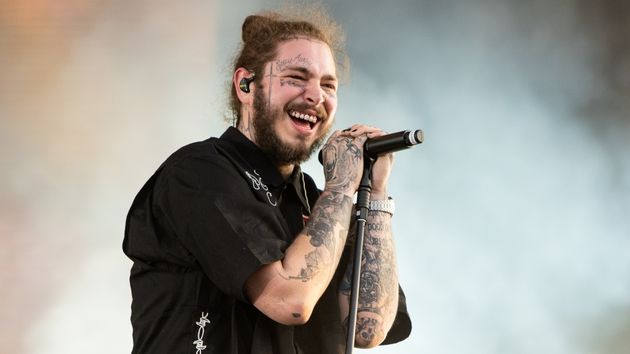
One week after falling on-stage, Post Malone announced he had to cancel his show at Boston’s TD Garden Arena.
Taking to Twitter on Saturday, the “Circles” rapper shared the unfortunate news with fans.
“On tour, I usually wake up around 4 o’clock PM, and today I woke up to a cracking sounds on the right side of my body. I felt so good last night, but today it felt so different than it has before,” he explained. “I’m having a very difficult time breathing, and there’s like a stabbing pain whenever I breathe or move.”
“We’re in the hospital now, but with this pain, I can’t do the show tonight. I’m so f****** sorry,” the 28-year-old continued. “Everyone’s tickets for tonight’s show will be valid for the reschedule that we’re planning right now.”
“Once again, I’m so f****** sorry, I love y’all so much,” he wrote. “I feel terrible, but I promise I’m going to make this up to you. I love you Boston, I’ll see you soon. I’m so sorry. – Love Austy.”
The news comes about a week after Malone had to shorten his set after falling into an opening on stage while performing at St. Louis Enterprise Center.
“So whenever we do the acoustic part of the show the guitar is on the guitar stand and it goes down. And there’s this big a** hole, so I go around there and I turn the corner and bust my a**,” he explained at the time.
“Winded me pretty good, got me pretty good,” he added before sharing that after going to the hospital “everything’s good” and he received pain meds.
Malone’s next tour stop is scheduled for Tuesday, September 27 in Cleveland.
(NEW YORK) — Every day at the start of his classes, Nick Orr, a high school science teacher in Nevada, said he checks in with his students about their mental health.
It’s a practice Orr said he began doing after his own brother Anthony died by suicide shortly after graduating high school in 2020.
Orr said Anthony’s death came as a shock and made him realize his brother may have never felt there was a safe space to talk about his mental health.
“I didn’t think there was anything going on,” Orr told “Good Morning America.” “We had a wonderful relationship, but this is just something he never told anyone about, he never spoke about, he never asked for help and unfortunately, it was something that ultimately got the best of him.”
Anthony’s death came at the same time the school district where he attended high school experienced a wave of student deaths due to suicide, according to Orr.
He said the firsthand experience of seeing teenagers struggling with their mental health changed the way he approached it in his classroom.
“How much do we really want to put an emphasis on academic content standards and this rigor when these kids are so obviously hurting and struggling,” said Orr. “We can ask them to think about earth science for 80 minutes straight, but we know that that’s not going to happen.”
He continued, “There are going to be issues that promote emotional reactions for these kids and teaching them how to deal with their feelings as well as how to process their feelings. That’s how we set them up to be successful in their life.”
In Orr’s classroom, he began asking his students to confidentially give him a thumbs up or thumbs down sign at the start of class to let him know how they’re feeling.
He started holding what he calls “social-emotional conferences” with students as follow-ups. Orr also started helping students with their physical health as a way to improve their mental health, taking on classroom challenges to drink more water, get more sleep and eat breakfast daily, something he has his first period students do together as a class each morning.
Orr said he works hard to make sure each student knows that they matter and that help is available.
“My kids know that if they ever need me, I am a trusted adult that they can come to and that I’m here to help however I can,” said Orr. “I tell the kids that they all matter, that we don’t all have to dance to the same beat or do the same job or go down the same path, but we do all need to look out for each other and respect each other.”
Orr said that connecting with each student and looking out for their mental health is “no easy task” given all the other responsibilities he and other teachers have, but it is one he is committed to as a way to honor his brother.
He said both he and his parents talk openly about Anthony and mental health so that no other family has to suffer a similar loss.
“As suicide survivors, we don’t want anyone else to experience the pain that we’ve lived through and live through to this day,” said Orr. “It can be terrifying to ask for help, but so is what could happen if we don’t get help. Very few things are as permanent as suicide.”
Growing concerns over teens and suicide
Across the country, the suicide rate among young people has been on the rise, increasing nearly 60% between 2007 and 2018, according to the Centers for Disease Control and Prevention.
Data shows that in the U.S., suicide is the third leading cause of death for young people, and, more specifically, the second leading cause of death for youth ages 10 to 14.
In 2021, during the coronavirus pandemic, there was an almost 51% rise in emergency department visits related to suspected suicide attempts among girls ages 12 to 17, compared to the same time period in 2019, according to data released last year by the CDC.
Amid the pandemic, youth mental health was declared a “national emergency” by the American Academy of Pediatrics, the American Academy of Child and Adolescent Psychiatry and the Children’s Hospital Association.
U.S. Surgeon General Dr. Vivek H. Murthy issued a 53-page advisory warning of a growing mental health crisis among young people, writing, “The challenges today’s generation of young people face are unprecedented and uniquely hard to navigate.”
Dr. Jenna Glover, a licensed psychologist and director of psychology training at Children’s Hospital of Colorado, said she has seen firsthand the mental health struggles among teens.
“In large part that’s just due to having increased pressures in our society and more access to information and connections to other people, which isn’t always a helpful thing,” said Glover. “I think we also have seen a small amount of that increase come just because we are identifying the problems so more people are more aware, but certainly kids are dealing with more stress and pressure relative to previous generations.”
Glover said teens today are connected online which means they face more stressors like bullying and the pressure to succeed as well as full access to information on societal struggles like wars, the pandemic and climate change.
“They’re experiencing a lot more stress than many of us did growing up,” said Glover, who said in her home state, suicide is the leading cause of death for young people ages 10 to 24.
The high rate of mental health struggles among her peers in Colorado is what prompted Aimee Resnick, 17, of Centennial, Colorado, to advocate for a now-state law that requires student ID cards to feature the state’s free, 24/7 mental health hotline.
It was that hotline that Aimee said saved her life when she called it for help at age 13 while struggling with suicide idealization.
Aimee said like many teens, she felt the pressures of school, including bullying, and said she suffered from an eating disorder.
Through the hotline, Aimee said she was able to get immediate help and was able to continue on with mental health services that gave her tools to cope.
“We need this information out here so that young people know who to call,” she said of her motivation to increase access to the mental health hotline.
According to Glover, teens could be at a higher risk of death by suicide relative to adults because their brains are still developing.
“I have a colleague who says teenagers are like Ferraris, where the engine and the gas pedal are put in but not the brakes,” she said. “They are experiencing a full range of emotions that they’ve never experienced before but they don’t have the same cognitive abilities to control those emotions that adults do.”
Glover said the part of the brain that manages emotions and inhibits strong behaviors is not fully developed until around age 25.
“It’s easy as parents to think, ‘Why can’t you mange this? It’s not that big of a deal,’ but they literally can’t see the world the same way that we can because we have a different part of our brain developed,” she said. “They’re going to experience stronger emotions without that brake pedal built in and then, in addition, they’re experiencing a lot more stress than many of us did growing up.”
Gabriella Betance, now 22, of Lakewood, Colorado, said she had no idea how to handle the big emotions she felt as a teenager, a struggle that led to two hospitalizations after suicide attempts.
“When you start struggling with these big feelings, the first people you are going to talk to are going to be your peers and you’re all kids and don’t know how to handle it,” she said. “The two times that it was a serious, life-threatening moment, I was lucky enough to get the help that I needed.”
She continued, “But I feel like if we had the tools, if we had the conversations regularly about mental health, like check-ins and safe words, that I wouldn’t have felt the need to act in such a drastic way.”
How parents, teachers can help
One of the most important things that adults can do to support teens with their mental health is to have open and honest conversations, according to Glover.
She said parents in particular should not be afraid to talk directly about suicide with their child.
“It’s important for us to state it and say it because when we don’t, kids are worried that it’s not OK that they’re thinking that or feeling that, and it’s a fairly normal human reaction to have,” said Glover, adding that parents can open the conversation by asking their child if anything has been worrying or overwhelming them and then ask directly if the child has had any thoughts of killing or hurting themselves.
“Don’t worry that that is going to plant an idea,” she said of asking directly about suicidal thoughts. “If they’re not having those thoughts, they can just tell you no. But if they are, they will experience a huge amount of relief that you asked directly so they can get that outside of themselves and talk about their problems and usually when kids are able to talk about their problems, they are able to start seeing solutions.”
Glover said checking in and asking your teenager those questions every few months is important, even if a child is not showing symptoms of mental health struggles.
Just as Orr works with his students to make sure they are eating and sleeping well, Glover said access to good nutrition and getting consistent and good quality sleep can greatly improve mental health for teens in particular.
She said social connection is another important factor for preventing teen suicide and that includes both connections with their peers and with dependable adults.
“If a child can just develop one positive relationship with an adult outside of a parent in your life, that is a huge protective factor,” said Glover. “Getting kids involved in extracurriculars, having them have relationships in community, in church, with neighbors, all of those are going to serve as protective factors.”
For teens in need of help, pediatricians, school counselors and school psychologists are easily accessible resources for help, according to Glover.
She also recommends that parents program mental health help lines into their phones so they are easily accessible, saying, “When you are in a crisis, you don’t want to have to be Googling what to do. You want to have it immediately available.”
Glover also encourages parents of teens who struggle with mental health to practice calling a help line together, even if the child is not in crisis in the moment.
“You can absolutely do that and just say, ‘We’re just practicing calling in case we ever need to. We want to know what this is like,'” said Glover. “That practice might make it more likely that your child can use that in a moment when they are in crisis.”
If you are experiencing any thoughts about wanting to hurt yourself or anyone else, any thoughts of suicide, or any mental health crisis, please call or text 988. You will reach a trained crisis counselor for free, 24 hours a day, seven days a week. You can also go to 988lifeline.org or dial the current toll free number 800-273-8255 [TALK].
(NEW YORK) — Here are the scores from Sunday’s sports events:
MAJOR LEAGUE BASEBALL
INTERLEAGUE
NY Mets 13, Oakland 4
AMERICAN LEAGUE
Toronto 7, Tampa Bay 1
Houston 6, Baltimore 3
Detroit 4, Chi White Sox 1
Cleveland 10, Texas 4
Kansas City 13, Seattle 12
LA Angels 10, Minnesota 3
NY Yankees 2, Boston 0
NATIONAL LEAGUE
Atlanta 8, Philadelphia 7
Cincinnati 2, Milwaukee 1
Chi Cubs 8, Pittsburgh 3
Washington 6, Miami 1
San Diego 13, Colorado 6
LA Dodgers 4, St. Louis 1
San Francisco 3, Arizona 2
NATIONAL HOCKEY LEAGUE PRESEASON
Pittsburgh 3, Columbus 2 (OT)
Buffalo 4, Washington 3 (OT)
Minnesota 3, Colorado 2 (OT)
Anaheim 3, Arizona 2
Winnipeg 4, Edmonton 0
Calgary 3, Vancouver 2 (OT)
San Jose 3, Los Angeles 2 (OT)
Columbus 5, Pittsburgh 1
Vegas a3, Colorado 1
NATIONAL FOOTBALL LEAGUE
Baltimore 37, New England 26
Carolina 22, New Orleans 14
Chicago 23, Houston 20
Cincinnati 27, NY Jets 12
Indianapolis 20, Kansas City 17
Miami 21, Buffalo 19
Minnesota 28, Detroit 24
Philadelphia 24, Washington 8
Tennessee 24, Las Vegas 22
Jacksonville 38, LA Chargers 10
Atlanta 27, Seattle 23
Green Bay 14, Tampa Bay 12
LA Rams 20, Arizona 12
Denver 11, San Francisco 10
Kelsea Ballerini promised vulnerability on her new album, Subject to Change, and she delivered so much so that, as she told Consequence, the project included a few songs that she was “a little nervous” for fans to hear.
She didn’t specify which those were, but it’s a pretty good bet that one is “Doin’ My Best,” a song whose lyrics hint at some low points in her life, including challenges she faced in her marriage to Morgan Evans.
“And therapy for one turned into therapy for two / When you get married that young you got a lotta s*** you gotta get through,” Kelsea sings in the first verse. Ultimately, those struggles proved insurmountable: The couple announced this year that they’re getting a divorce.
There is also a nod to a Twitter misstep from 2021 in the lyrics of the song: After Morgan Wallen’s racist slur scandal early that year, Kelsea tweeted, “The news out of Nashville tonight does not reflect country music,” prompting a wave of backlash, including a critical reply from fellow singer Maren Morris.
Kelsea — who wondered if her tweet was a “misstep” in her subsequent book of poetry, Feel Your Way Through — sings, “Sometimes I try to say the right thing and it comes out wrong / And Twitter kicked my a**, now it’s one less app on my iPhone” in “Doin’ My Best.”
There’s also another line that suggests that Kelsea and her pop singer pal Halsey might not be so close anymore.
“I was friends with a pop star / I put ‘em on track four / Wish I could take it back, I would’ve never asked / If I knew we wouldn’t talk anymore,” she sings. Halsey is featured on “The Other Girl,” the fourth track on Kelsea’s self-titled album.
Maddie & Tae are completing their Through the Madness album cycle Friday, closing the chapter with its second and final installment, Through the Madness Vol. 2.
“We’ll probably be done with Vol. 2. I don’t think anyone wants Vol. 100 of Madness,” jokes bandmate Maddie Font, pointing out that the album cycle’s title seems to have inspired some real-life “madness” in the duo’s personal lives.
For one thing, Taylor Kerr had a complicated pregnancy amid the release process, resulting in a lengthy hospital stay. Taylor wound up giving birth to her daughter, Leighton, about three months early. Fortunately, following a NICU stay, baby Leighton is home and healthy.
Still, the duo might come up with a slightly calmer name for their next album. “I think we manifested madness by naming this album that,” Maddie goes on to say.
Though the Madness might be over, a slew of songs from its album cycle remain. Maddie & Tae say that narrowing down the track list was a pretty grueling process, and they had to cut a lot of songs they loved.
“Oh my gosh, it’s a tough process,” Taylor says of selecting songs for an album.
“We normally have staples for a record. Like, ‘Madness’ was a huge staple [for this one],” explains Maddie. “We kind of have our pillars, I would say, and everything else fits underneath that. But it was hard to say ‘bye’ to a lot of the songs.”
When Elton John dropped by the White House on Friday to perform at an event on the South Lawn, he was surprised by a special gift from PresidentBiden: the National Humanities Medal.
Elton performed at A Night When Hope and History Rhyme, an event organized in collaboration with The History Channel and A+E Networks. In addition to celebrating the healing power of music, the event paid tribute to Elton’s philanthropic work, as well as his musical achievements.
“On behalf of the American people, thank you — and I sincerely mean this — for moving the soul of the nation,” the president told Elton.
Elton entertained the crowd with favorites like “Your Song,” “Tiny Dancer,” “Rocket Man,” “I’m Still Standing,” and “Crocodile Rock,” a favorite of the Biden family. He also spoke about his work with his Elton John AIDS Foundation, praising the American people and the U.S. government for their generosity in helping him in his fight to eradicate the disease.
But Elton was shocked when Biden and first lady Dr. Jill Biden presented him with the Medal, given to people those “activities, contributions, and achievements have significantly enriched the educational, intellectual, and cultural life of the nation.”
“I said to the First Lady, I’m never flabbergasted but I’m flabbergasted. And humbled,” said Elton. “It will make me double my efforts to make sure this disease [AIDS] goes away.”
On Instagram, he wrote, “There is so much more to be done to reach the most vulnerable communities – thank you to everyone who has joined and supported us so far on our mission to make sure no one is left behind.“
Kevin Mazur/MTV VMAs 2021/Getty Images for MTV/ ViacomCBS
David Lee Roth has posted the third in a series of new, live-in-the-studio solo versions of classic Van Halen songs at his official YouTube channel.
The latest installment of the “Roth Lives!” series is a joyous rendition of Van Halen’s 1979 hit “Dance the Night Away,” which originally appeared n the band’s sophomore album, Van Halen II, and reached #15 on the Billboard Hot 100.
Roth’s updated version of the song includes a little guitar riff near the end nicked from the Them classic “Gloria.”
Accompanying the YouTube clip is a poster-like image of a vintage pinup model controlling two small Diamond Daves on puppet strings.
Earlier this month, Diamond Dave debuted new renditions of the Van Halen tunes “Panama” and “Ain’t Talkin’ ’bout Love” on his YouTube channel. All three tracks were recorded in May of this year at Henson Recording Studios in Los Angeles with the current members of his solo backing band — guitarist Al Estrada, bassist Ryan Wheeler and drummer Francis Valentino.
None of the new tracks have been made available as digital downloads or via major streaming services.
Netflix revealed a new slate of shows and movies at its annual Tudum showcase on Saturday.
The event kicked off with a new trailer for Enola Holmes 2, starring Millie Bobby Brown, returning as the titular character who, after solving her first case, continues to follow in the footsteps of her famous brother, Sherlock — played once again by Henry Cavill — now with her own agency, only to find life as a female detective-for-hire is harder than it looks.
Highlights included teaser trailers for returning favorites Emily in Paris, debuting December 21; Manifest‘s fourth and final season; the second installment of Shadow and Bone; Vikings: Valhala season 2; Dead to Me‘s third and final season, launching November 17.
Additionally, the streamer debuted trailers for the Bridgerton spinoff, Queen Charlotte, starring India Amarteifio as the young Charlotte and Corey Mylchreest as the young King George; a first look trailer and October 13 release date for its upcoming horror thriller The Watcher; plus clips of the Addams Family spinoff Wednesday, premiering November 23.
Netflix also announced the release dates for The Crown‘s fifth season on November 9; Reese Witherspoon and Ashton Kutcher’s Your Place or Mine arriving February 10; Noah Centineo’s retitled Netflix series The Recruit December 16; and 1989 November 17. Part one of You Season 4 will premiere on February 10, while its part two will be released a month later on March 10.
(NEW YORK) — After Donald Trump suggested last week that as president “you can declassify just by saying it’s declassified, even by thinking about it,” Republican Wyoming Senator John Barrasso disagreed — but only after George Stephanopoulos pressed him on the issue twice on ABC’s “This Week.”
During an interview on Sunday, Barrasso was asked by Stephanopoulos about Trump’s handling of classified material, which is under federal investigation as Trump denies wrongdoing.
Trump claimed to Fox News’ Sean Hannity last week that while “different people see different things,” his view of this authority was absolute: “If you’re the president of the United States, you can declassify just by saying it’s declassified. Even by thinking about it.”
Stephanopoulos asked if Barrasso agreed. The senator said that he had not heard about such an assertion and pivoted to criticizing the Department of Justice’s court-authorized search of Mar-a-Lago.
Barrasso said that he had “never seen anything like that before,” referring to the FBI “raid” Trump’s home, and that it had “become political.”
Stephanopoulos pushed back: “You know that a president can’t declassify documents by thinking about it. Why can’t you say so?”
The senator, who also said that he isn’t versed in the rules of presidential declassification and wants to get a briefing from the DOJ on the investigation, then agreed with Stephanopoulos. He said, “I don’t think a president can declassify documents by saying so, by thinking about it.”
That view lines up with what outside experts have told ABC News: The president must document his declassification process somewhere, whatever his process was.
Barrasso spent much of his “This Week” appearance pushing back on President Joe Biden’s foreign policy, including addressing the potential revival of the 2015 nuclear deal between the U.S. and Iran.
Stephanopoulos opened up the interview by having Barrasso respond to Jake Sullivan, Biden’s national security adviser. Sullivan was also interviewed on “This Week” on Sunday and said nuclear negotiations — so Iran never has a weapon “they can threaten the world with” — could be effective at the same time the White House was putting public pressure on the country over its treatment of women and protesters.
“Did you find his argument convincing for staying in the Iran nuclear talks?” Stephanopoulos asked Barrasso.
“No deal with Iran, George, is a good deal … They continue to claim ‘death to America.’ We cannot allow them to have a nuclear weapon,” Barrasso said.
Stephanopoulos also sought clarity from Barrasso on the GOP and Ukraine.
Citing criticism of American’s continued aid to Ukraine by some Republicans, like Ohio Senate nominee J.D. Vance, Stephanopoulos asked Barrasso if Democrats were right to warn that the GOP may restrict future support if they retake Congress.
“No. There continues to be bipartisan support in the House and in the Senate for weapons to Ukraine,” Barrasso said.
He said he wanted the White House to be quicker in providing weapons to Ukraine and said “we ought to be producing more American energy to help our European allies” and American consumers who are dealing with the fallout of the conflict with Russia, a major energy provider.
Stephanopoulos asked Barrasso, just as he asked Sullivan: “Do you believe that [Russian President Vladimir] Putin’s hold on power is secure?”
“I’m not sure,” Barrasso, a member of the Senate Foreign Relations Committee, said. “He is in a deep hole right now and he’s dug this hole. And I thought his statement to the country there really was desperate. It didn’t show really confidence or strength.”
“The Foreign Relations Committee is going to have a hearing this Wednesday on what additional things we can do in terms of sanctions [on Russia],” Barrasso said. “And also we have a secure briefing on Thursday in the Senate to take a look right at what’s happening on the ground in Ukraine.”