
Jan. 6 officers awarded Congressional Gold Medals; some family seem to snub Republican leaders

Jan. 6 officers awarded Congressional Gold Medals; some family seem to snub Republican leaders
Anna Moneymaker/Getty Images

(WASHINGTON) — Top lawmakers on Tuesday presented police officers who defended the Capitol on Jan. 6, 2021, with Congressional Gold Medals — the highest honor that Congress can bestow — nearly two years after the attack.

For many officers honored, the Rotunda ceremony marked the first time since Jan. 6 that they’ve returned to the Capitol complex.

“Many of us still carry the physical, mental and emotional scars after that mob of thousands launched a violent assault in an attempt to halt the counting of electoral ballots,” said Chief Robert Contee of the Metropolitan Police Department. “The sound of metal poles and other objects striking the bodies, helmets and shields may still ring loudly — the air, still thick with bear spray and other chemicals, making it difficult for our officers to see and breathe — the calls for your fellow officer to be harmed just as loud as the day that this occurred.”

“But there is hope,” Contee added, speaking directly to the scores of police present, “because through adversity comes growth, and we continue to grow together and deliver excellence to our community.”

“Defending the U.S. Capitol is something that you will carry with you for the rest of your careers and lives. Regardless of your political affiliation, you responded like you do each and every day: without hesitation, with courage and an unwavering duty to uphold your oath,” Contee said. “You did not give up, and you did not give in.”

House Speaker Nancy Pelosi, in one of her final ceremonial acts in leadership, was the first to deliver remarks of the top four congressional leaders, all of whom were present. She recalled Jan. 6 — in which a mob overran law enforcement and stormed the Capitol to try and prevent the certification of Donald Trump’s election loss — as a “day of horror and heartbreak” but also a “moment of extraordinary heroism.”

“Exactly 23 months ago, our nation suffered the most staggering assault on democracy since the Civil War,” Pelosi said. “Staring down deadly violence and despicable bigotry, our law enforcement officers bravely stood in the breach, ensuring that democracy survived on that dark day. So on behalf of the United States Congress and the American people, it is my honor to present the Congressional Gold Medal to the United States Capitol Police, the Metropolitan Police and every hero of Jan. 6.”
MORE: Biden signs measure awarding Congressional Gold Medal to police who defended Capitol

U.S. Capitol Police Chief Tom Manger said, for his officers, that it was a day “defined by chaos, courage, tragic loss and resolve.”

“I especially want to recognize our officers who made the ultimate sacrifice: Officer Brian Sicknick, Officer Howard Liebengood. Now I want to recognize also Officer Billy Evans who was lost in the line of duty on April 2, 2021, when he was attacked outside the Capitol by a lone assailant,” Manger said, referring to three police who died in the days and months after Jan. 6. “I appreciate the fact that Congress is acknowledging the courage, the strength and resiliency of each and every member of the United States Capitol Police — sworn and civilian.”

Contee, speaking for Metropolitan Police, thanked “all that voted in favor of this recognition.” While the Senate passed legislation last year to grant the medals unanimously with a voice vote, 21 House Republicans voted against it.

The ceremony arrived as Democrats race to finish a nearly 18-month investigation by a House select committee probing the attack amid discussion of criminals referrals to the Justice Department ahead of Republicans taking back the House majority in January.

Republican leader Kevin McCarthy, the likely incoming House speaker, has signaled he would not like to see the select committee kept in place and, instead, hold hearings about security lapses that led to the breach.

McCarthy, on Tuesday, joined in calling the officers “heroes.”

“Heroes who live out the code to protect and serve, heroes who do the noble work — too many people take that for granted — but days like today force us to realize how much we owe that thin blue line. We’re forever indebted to them for their heroism,” McCarthy said.

Gladys Sicknick, the mother of Brian Sicknick, appeared to pass over McCarthy and Senate Minority Leader Mitch McConnell in a handshake line with congressional leaders. Gladys Sicknick had lobbied Congress to pass legislation for a bipartisan select commission to investigate Jan. 6, which Senate Republicans ultimately blocked.

McConnell, in his remarks, called law enforcement officers at the Capitol “familiar colleagues … the first faces we see on our way in each morning and our last goodbyes every night.”

“Because you honored your oath to support and defend the Constitution, we were able to honor ours,” McConnell told officers present. “That is a reality that was made especially clear 23 months ago, but it is true every single day. Thank you for having our backs. Thank you for saving our country. Thank you for being not just our friends, but our heroes.”

When President Joe Biden signed legislation to grant the medals last year, he said that one would be placed at the Smithsonian Museum “so all visitors can understand what happened that day.” Medals will also be placed at the Capitol, at the U.S. Capitol Police headquarters and at the Metropolitan Police Department.

“We cannot allow history to be rewritten,” Biden said at a Rose Garden ceremony last summer. “We cannot allow the heroism of these officers to be forgotten. We have to understand what happened — the honest and unvarnished truth. We have to face it.”

Copyright © 2022, ABC Audio. All rights reserved.
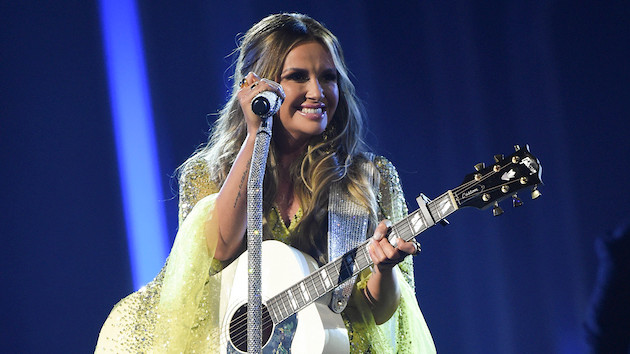
Carly Pearce explains why she “might throw up” from nerves when she performs on ‘The Voice’ this week

Carly Pearce explains why she “might throw up” from nerves when she performs on ‘The Voice’ this week
ABC

Carly Pearce will return to the stage of The Voice this week, performing her current single, “What He Didn’t Do,” during the semifinal results episode of the show.

Carly has performed on The Voice before — she hit the stage in late 2021 to perform the title track of her 29 album — but that doesn’t mean she doesn’t have jitters this time around.

“This show makes me very nervous because I have to sing in front of people like Camila Cabello and John Legend and Gwen Stefani and my tourmate, Blake Shelton. So, I might throw up,” the singer tells her record label ahead of her performance.

The singer is joining Blake on his Back to the Honky Tonk arena tour in 2023, along with newcomer Jackson Dean. He’s a big hero of hers, both musically and in terms of his work on the show, Carly says.

“I think about what he has done for country music by being on that show, his humor, his talent, his awareness of what artists need to go from that show to becoming superstars,” she explains. “I just think he’s everybody’s best friend, and I think he was always that, but The Voice made everybody in America and beyond aware of that.”

The episode featuring Carly will air live tonight on NBC. Blake will also take the stage to perform his single “No Body,” and John will sing “Nervous,” off his new album, Legend.

Copyright © 2022, ABC Audio. All rights reserved.
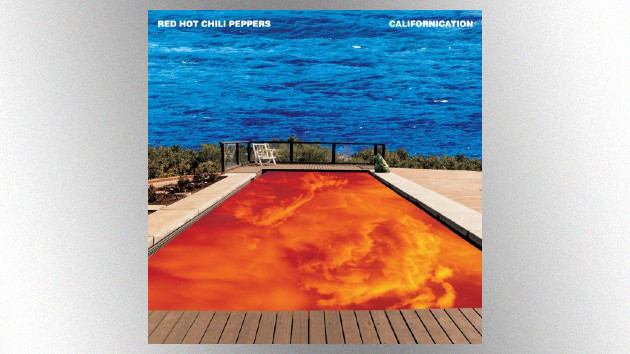
Red Hot Chili Peppers earn first billion-views video with “Californication”

Red Hot Chili Peppers earn first billion-views video with “Californication”
Warner Records

Red Hot Chili Peppers have joined the billion views club on YouTube.

The band’s video for “Californication,” which reimagines Anthony Kiedis, Flea, John Frusciante and Chad Smith as video game characters, has officially passed the milestone, making it the first Peppers clip to reach 1 billion views.

“Californication” is the title track off RHCP’s 1999 album. It’s now one of several videos from the ’90s with 1 billion views, along with Nirvana‘s “Smells Like Teen Spirit,” Guns N’ Roses‘ “November Rain,” AC/DC‘s “Thunderstruck,” Metallica‘s “Nothing Else Matters,” R.E.M.‘s “Losing My Religion,” The Cranberries‘ “Zombie,” 4 Non Blondes‘ “What’s Up” and Whitney Houston‘s “I Will Always Love You.”

Even without the billion views news, Red Hot Chili Peppers were already having a big week with the announcement of a 2023 world tour in support of their two 2022 albums, Unlimited Love and Return of the Dream Canteen.

Copyright © 2022, ABC Audio. All rights reserved.

Billie Eilish opens up about imposter syndrome and sexism in the music industry

Billie Eilish opens up about imposter syndrome and sexism in the music industry
ABC

Billie Eilish opened up about the price she paid growing up in the public eye, which she says was a downward spiral of imposter syndrome.

Speaking with BBC, the 20-year-old singer opened up about becoming an overnight sensation at the age of 14, when her song “Ocean Eyes” went viral. “Growing up in the public eye is a very bruising experience, and it’s really hard to develop and change,” the singer said. “I didn’t know what to do so I was grasping at straws.”

“I just had such severe imposter syndrome. I’ve had that so many times in my life,” she continued. Billie said she was swept up in a “downward spiral of imposter syndrome” between 2020 and 2021. 

She said what helped her through those moments was gaining more trust from people in the industry. “Being a female at all and especially being a very young female especially in this industry — it’s, like, it’s very hard to make people believe in you,” she divulged. 

While Billie admits she understands “to an extent” why she was met with resistance early on, she added, “When I finally had control was a really good moment.”

“I feel the most powerful when I feel masculine … I like to feel more masculine than feminine. It just makes me feel better,” the singer disclosed, adding she initially struggled with those feelings because she “wanted to feel feminine and like it.”

Billie says she now balances both her masculinity and femininity, which she expresses with how she moves and looks. She said being able to exhibit both traits makes her feel good.

Copyright © 2022, ABC Audio. All rights reserved.

Firearm deaths among Black men at 28-year high, doctors are taking steps to reframe gun violence as one of America’s major health crisis

Firearm deaths among Black men at 28-year high, doctors are taking steps to reframe gun violence as one of America’s major health crisis
DBenitostock/Getty Images

(NEW YORK) — There’s been a substantial increase in firearm-related deaths in the United States over the past three decades and Black men are the most affected, according to new research from a team of emergency room doctors. They’re 23 times more likely to experience firearm-related homicide than white men, the study showed.

“Gun violence is an incredible scourge in our country. Gun violence affects everybody, and that’s an important thing to recognize. However, it affects certain groups far more than others. Black men speak to one of the greatest disparities, if not the greatest disparity,” co-author Eric Fleegler, associate professor of pediatrics and emergency physician at Harvard Medical School, said in a statement.

In a study published in the Journal of American Medical Association, Fleegler and colleagues analyzed disparities in firearm-related deaths between 1990 and 2021. They showed firearm-related homicides are greatest among Black men between 20 and 40 years of age. Firearm-related violence for Black men is at a 28-year high, the analysis found.

“There are these hotspots where firearm fatalities are happening more frequently, and interventions need to be catered to where those are happening. We’re seeing huge rates of firearm-related homicides among young Black and African American males — that’s the population where we may need to think about implementing violence prevention strategies,” said co-author Chris Rees, an assistant professor of Pediatrics and Emergency medicine at Emory University School of Medicine.

To reframe firearm violence as a public health crisis, the American Medical Association, one of the nation’s largest doctor associations, established the first taskforce on firearm violence prevention in November.

“We cannot continue to live this way…In movie theaters, houses of worship, hospitals, big cities and small towns, firearm violence has shattered any sense of security and taken lives. As physicians, we are committed to ending firearm violence by advocating for common-sense, evidence-based solutions, and this task force will be key to that ongoing effort,” Jack Resneck Jr. president of the American Medical Association, said in a statement at the launch of the taskforce.

Experts say there’s a range of factors contributing to the high rates of gun deaths among Black men.

“Weak gun laws cause more damage in places that have been subjected to systemic racial inequalities,” said Jeffrey Gardere, a clinical psychologist, and an associate professor at Touro College of Osteopathic Medicine.

Medical associations like the AMA have called for more gun laws over the years to combat firearm violence — but there was no governmental action until this past June, when Congress passed the first gun law in 30 years.

But gun laws alone will not solve the societal issues that contribute to firearm violence among Black males.

In places where unemployment rates are higher, where there isn’t equal access to safe housing, and where public infrastructure is neglected, people may be more exposed to dangerous behavior, Gardere said. Addressing those issues “would help Black and Brown people, especially males, be able to avert gun violence — whether as victims or as perpetrators,” he said.

Reframing firearm violence as a public health issue means affected communities need to be at the table as vocal members of any taskforce.

“The next step I’d like to see is addressing things at the community level and taking into account what communities think is feasible. I don’t think any community wants to see higher rates of firearm fatalities,” said Rees.

All hands are needed to solve this continually escalating problem.

“Unfortunately, in our country, the firearm epidemic is getting worse at an accelerating pace,” Fleegler said.

Faith Crittenden, MD MPH is a resident physician in pediatrics from Yale–New Haven Children’s Hospital and contributing correspondent of the ABC News Medical Unit.

Copyright © 2022, ABC Audio. All rights reserved.

Jan. 6 committee ‘will probably make’ criminal referrals related to Capitol attack, Thompson says

Jan. 6 committee ‘will probably make’ criminal referrals related to Capitol attack, Thompson says
Omar Chatriwala/Getty Images

(WASHINGTON) — The House Jan. 6 committee’s chairman, Rep. Bennie Thompson, indicated on Tuesday that criminal referrals related to the Capitol attack were under discussion but that final decisions — including on specific crimes and specific suspects — had not been made pending a vote by committee members.

A spokesperson for the committee subsequently said in a statement that “the Committee has determined that referrals to outside entities should be considered as a final part of its work.”

“The committee will make decisions about specifics in the days ahead,” the spokesperson said.

Thompson, D-Miss., talked with reporters Tuesday on Capitol Hill as his committee pushes to finish its work before the next Congress begins in January and Republicans retake the House. The GOP majority is not expected to continue the Jan. 6 investigation in its current form.

Thompson gave sometimes contradictory answers to questions about whether his committee will make criminal referrals.

“We’ve made decisions that we will make referrals. As to how many, we’ve not decided,” Thompson said before later clarifying, after follow-up questions from ABC News, “What we’ve decided is that we will probably make referrals. … It’s under consideration, but we’ve not decided to do it.”

“We’ve not had a vote,” Thompson said, then added after more questions: “We have not made a decision as to who, but we have made decisions that criminal referrals will happen. … We have not voted on who.”

A criminal referral would be a notable but symbolic move as the Department of Justice can pursue investigations without them or ignore congressional referrals as it chooses. The DOJ has been separately conducting a parallel investigation into Jan. 6.

The committee is also finishing a report summarizing its 18-month investigation into the insurrection last year, when a mob stormed the Capitol, overrunning law enforcement, in an attempt to prevent the certification of President Joe Biden’s win over Donald Trump.

In a series of hearings that began this summer, the committee cited extensive testimony from Trump’s staff and allies, as well as other materials, to argue that Trump plotted to prevent losing power and urged supporters to march to the Capitol on Jan. 6 knowing some of them were armed.

Republican Minority Leader Kevin McCarthy has accused the committee of partisanship, given that it is dominated by Democrats with only two Republican members. Trump denies wrongdoing.

Copyright © 2022, ABC Audio. All rights reserved.

Ex-Fleetwood Mac member Billy Burnette remembers putting together Clinton inauguration gig

Ex-Fleetwood Mac member Billy Burnette remembers putting together Clinton inauguration gig
Jim Steinfeldt/Michael Ochs Archives/Getty Images

In the early ’90s, Fleetwood Mac‘s “Don’t Stop” became synonymous with Bill Clinton, who used the song to soundtrack his 1992 presidential campaign. The response was so huge that the band reunited with guitarist Lindsey Buckingham to play “Don’t Stop” at Clinton’s inauguration in 1993. As it turns out, the person who helped put that performance together was Buckingham’s replacement.

Billy Burnette first joined Fleetwood Mac in 1987 after Buckingham’s departure that year amid heated turmoil among the band members. He continued to play with the group through the “Don’t Stop” phenomenon, during which he got a call from Clinton’s vice president, Al Gore, who he’d previously met.

“I put together that gig,” Burnette tells Rolling Stone. “I learned that Tipper Gore‘s favorite song was ‘Don’t Stop.’ It had nothing to do with the Clintons. Al asked me to call the managers and see if we’d do something at the inaugural.”

“I called everybody and got everybody together to do it,” he continues. “And then Stevie [Nicks] calls and asks if it would be OK if Lindsey played with them instead of me.”

Burnette would rejoin Fleetwood Mac after the inauguration, though his time in the band ended shortly thereafter in 1995, after which Buckingham rejoined. When Buckingham again left Fleetwood Mac in 2018 and was replaced by Neil Finn and Mike Campbell, Burnette says he “didn’t understand” why he wasn’t called.

“I got really upset with Mick [Fleetwood] about that,” Burnette says, though he adds he “got over it real quick.”

In other Fleetwood Mac news, the band’s iconic 1977 album Rumours is headed toward the top 10 on the United Kingdom’s Official Albums Chart. Sales of the record have jumped following the death of keyboardist, vocalist and songwriter Christine McVie, who passed away November 30 at age 79.

Copyright © 2022, ABC Audio. All rights reserved.

Georgia Senate runoff live updates: Warnock and Walker face off again

Georgia Senate runoff live updates: Warnock and Walker face off again
YinYang/Getty Images

(ATLANTA) — Georgia’s Senate runoff between Democratic incumbent Raphael Warnock and Republican challenger Herschel Walker comes to a close on Tuesday after more than a year of campaigning, several controversies and record-breaking turnout.

While the race won’t determine control of the Senate, it could increase Democrats’ power in the chamber — where Vice President Kamala Harris currently has to break ties — or see the Republicans win a 50th seat and create procedural obstacles.

Walker, a businessman and local football legend, and Warnock, a noted reverend in Atlanta, first faced off in November’s general election. But neither got 50% of the vote as required by state law, leading to Tuesday’s runoff after about a week of early voting.

Here’s how the news is developing. All times Eastern:

Dec 06, 12:31 PM EST
Walker dodges Warnock’s attacks on his character

ABC News Congressional Correspondent Rachel Scott asked Herschel Walker on Election Day about his rival questioning his character and competence — and if he was confident that he could flip Sen. Raphael Warnock’s seat.

“I’m not going to answer that,” Walker said, repeating a version anytime he was presented with his opponent’s name. “We’re going out to win this election. So this election, I’m telling people to get out to vote.”

“Hershel Walker is going to be your senator, and we’re going to get things changed,” Walker added.

When pressed further, Walker said, “The reason I’m not going to address that is because it doesn’t need to be addressed … Right now, I’ll put my character against Raphael Warnock any day. Right now, I’ve done a lot of things.”

Walker’s strategy in the final stretch has been to link Warnock to President Joe Biden, labeling him a “rubber stamp” for Biden’s agenda, a characterization Warnock has rejected.

“I am the 18th most bipartisan senator in the Senate. Period,” Warnock told Scott on Monday. “Now I know that’s an inconvenient fact for Mr. Walker. We also know that he’s allergic to facts, even the facts about his own life.”

-ABC News’ Libby Cathey

Dec 06, 12:17 PM EST
Who is Raphael Warnock?

Warnock is running in his fourth election in under two years as he fights for a full six-year term representing the battleground state.

Warnock is currently at the helm of as Ebenezer Baptist Church in Atlanta, which was famously led by Martin Luther King Jr. He has campaigned on a personal history steeped in religion and social justice.

He has also touted his current work during his short time in Congress, including some bipartisan priorities.

“I’m not a senator who used to be a pastor. You might as well know that you sent a pastor to the Senate,” Warnock told canvassers in October.

In 2020, Warnock was accused by then-wife Ouleye of running over her foot amid their divorce proceedings.

Neither police nor medical professionals were able to find evidence to show that she was injured, and Warnock was not charged with any crimes. He told The Atlanta Journal-Constitution of the claim: “It didn’t happen.”

Dec 06, 12:16 PM EST
Who is Herschel Walker?

Walker hopes to do what former Sen. Kelly Loeffler could not and defeat Warnock in a runoff election in Georgia.

Walker is a football legend in the state known for scoring touchdowns in the University of Georgia’s 1980 championship season.

Now a businessman, he entered the Senate primary in August 2021 at the urging of former President Donald Trump, a longtime friend, whose swift support largely cleared the field.

“I’m here to win the seat for the Georgia people because the Georgia people need a winner,” he said in October.

Both the November election and the runoff have seen Walker deny a series of allegations from women, including that he paid for their abortions, which he has said is not true. He is running as a staunchly anti-abortion candidate.

During the campaign, Walker’s past also received new scrutiny, such as resurfaced reports about violence in his first marriage — which he didn’t contest — amid what he said was a struggle with dissociative identity disorder.

Dec 06, 12:16 PM EST
Election Day is here for midterm’s final battle

In Georgia, the stage is set for the final Senate battle of the midterm election as voters head back to the polls on Tuesday for the runoff election between Democratic incumbent Raphael Warnock and Republican Herschel Walker.

In November’s general election, Warnock finished less than 1% ahead of Walker, falling just short of the 50% threshold required by state law, triggering a four-week runoff election that included at least five days of mandatory early voting last week.

Georgia is no stranger to runoff elections and this is the third time voters cast ballots in a Senate runoff election in less than two years. But the dynamics have shifted since the 2020 campaign that got Warnock elected. The state legislature passed a sweeping voting law last year that, among other changes, shortened the runoff period from nine weeks to four, causing an all-out sprint to the finish line for both candidates.

On Monday, Walker and Warnock made their closing pitches to voters in multiple campaign stops on the eve of Election Day.

Copyright © 2022, ABC Audio. All rights reserved.

Beyoncé releases video compilation to celebrate “Break My Soul” going Platinum

Beyoncé releases video compilation to celebrate “Break My Soul” going Platinum
Carlijn Jacobs

Beyoncé‘s “Break My Soul” is now certified Platinum by the Recording Industry Association of America. To celebrate the feat, the singer dropped a “Hive Certified” video compilation featuring members of the BeyHive, her loyal fanbase, jamming to the dance track.

“BREAK MY SOUL is Certified Platinum,” she captioned the video. “Thank you so much for all the love and for releasing the wiggle.” 

“Break My Soul” and its album Renaissance both dropped over the summer, but Bey has yet to release an official music video. Back in August, she teased fans with a short clip of the music video for another song off the project, “I’m That Girl.”

Copyright © 2022, ABC Audio. All rights reserved.

Colorado Springs Club Q shooting suspect faces 305 charges, including bias-motivated crimes

Colorado Springs Club Q shooting suspect faces 305 charges, including bias-motivated crimes
Marilyn Nieves/Getty Images

(COLORADO SPRINGS, Colo.) — The suspect accused of killing five people in a mass shooting at an LGBTQ nightclub in Colorado Springs, Colorado, is facing 305 charges, including first-degree murder, attempted murder and bias-motivated crimes.

Anderson Lee Aldrich, 22, wore yellow prison attire for Tuesday’s court appearance, which was to hear the charges against them. Aldrich did not speak.

Public defenders assigned to Aldrich said in a court filing that the suspect identifies as nonbinary and uses the pronouns they/them.

Investigators and witnesses said the suspect allegedly opened fire as soon as they walked into Club Q at about midnight on Nov. 19. Patrons at the venue tackled Aldrich, subduing them until police arrived, according to witnesses.

“We are encouraged by this morning’s announcement of formal charges … as it cements what we already knew: this was a targeted hate crime,” one of the owners of Club Q, Matthew Haynes, said in a statement released by GLAAD on Tuesday. “The charges also affirm what we as a community demand: hate has no place here in Colorado Springs or anywhere.”

“We continue to call out those who spread disgusting rhetoric and encourage violence against the LGBTQ community, to end this behavior immediately before more people get hurt,” Haynes said. “And we urge everyone to do what they can to speak up for LGBTQ people and everyone’s right to be safe.”

Aldrich was arrested earlier for five counts of first-degree murder and five counts of ethnic intimidation causing bodily injury. The mass shooting was being investigated as a hate crime.

Copyright © 2022, ABC Audio. All rights reserved.