
Trump-era pardon recipients are increasingly back in legal jeopardy

Trump-era pardon recipients are increasingly back in legal jeopardy
Creativeye99/Getty Images

(WASHINGTON) — In February, former newspaper executive Kenneth Kurson pleaded guilty to cyberstalking his ex-wife. Months later, rapper Kodak Black was arrested on felony drug charges in Florida before pleading not guilty. And in October, jurors found political operative Jesse Benton guilty of illegally funneling Russian money into a group aligned with former President Donald Trump.

The trio’s circumstances may seem unrelated, but they share one notable link: All were previously granted clemency by Trump while he was in office.

And the list doesn’t end there.

An ABC News analysis of the 238 people who were pardoned or had their sentences commuted during the Trump administration found at least 10 who have since faced legal scrutiny — either because they are under investigation, are charged with a crime, or are already convicted.

Legal experts call this recurring theme unprecedented — but not entirely unexpected, given the former president’s unorthodox approach to the pardon process.

“President Trump bypassed the formal and orderly Justice Department process in favor of an informal and fairly chaotic White House operation, relying in some cases on his personal views and in others on recommendations from people he knew or who gained access to him in various ways,” said Margaret Love, a lawyer who represents clients seeking pardons and a former U.S. Pardon Attorney, a Justice Department appointee who helps advise presidents on grants of clemency.

“So it might have been predicted,” said Love, “that some who made it through that lax gauntlet were going to get in trouble again.”

Friends and allies

Those pardoned by Trump during his term in office included dozens of friends and political allies. The list included celebrities, lawmakers and former aides who had been convicted of crimes ranging from fraud to murder — including four private military contractors who were in prison for murdering 17 Iraqi citizens, including two children, in a 2007 attack in Baghdad.

An analysis by two Ivy League academics determined that just 25 of those 238 pardons went through the Office of the Pardon Attorney, a small enclave within the Justice Department that fields clemency applications and examines the merits of each case before deciding whether to recommend a convict for presidential action. The researchers said that figure represented “an historic low.”

“The process is supposed to be fair, it’s supposed to be careful, it’s supposed to be accurate … and it’s also supposed to be a process that helps predict who is not going to recidivate,” said Larry Kupers, who served as the U.S. Pardon Attorney for more than two years at the beginning of the Trump administration.

Recidivism rates from previous administrations’ clemencies is opaque, as federal agencies don’t keep tabs on clemency grantees after their release. But in one study reviewing former President Barack Obama’s 2014 clemency initiative, which led to sentence commutations for nearly 1,700 federal drug offenders, the independent and bipartisan U.S. Sentencing Commission found only three who had been rearrested by the end of 2017. A Texas woman was rearrested on theft charges less than a year after earning an Obama commutation on her life sentence in 2016, and another Texan pleaded guilty to drug charges less than two years after earning a life sentence commutation under Obama’s 2014 clemency initiative.

Based on news accounts and other available evidence, the number of clemency grantees who have gone on to commit additional crimes remains “incredibly low,” Kupers said.

For Trump-era pardons, however, experts said the numbers seem disproportionately high.

Trump’s inner circle

Chief among those pardoned is Steve Bannon, a former senior White House aide and one of Trump’s highest-profile political allies.

Bannon was found guilty in July of contempt of Congress for his refusal to testify before the House committee investigating the Jan. 6 Capitol attack, and was sentenced to four months in prison. He also faces charges in New York State for allegedly defrauding donors to the “We Build the Wall” fundraising campaign — the same allegations for which he faced federal charges before Trump intervened with a presidential pardon. Bannon has pleaded not guilty to the state charges.

Two other notable members of Trump’s inner circle, veteran political operative Roger Stone and Trump’s first national security adviser, Michael Flynn, are also involved in ongoing investigations. Both were prosecuted by former special counsel Robert Mueller — Stone for lying to Congress, Flynn for lying to federal investigators — and were later pardoned by Trump.

A federal appellate judge recently ordered that Flynn must provide testimony to an Atlanta-area district attorney who called Flynn a “necessary and material witness” to Trump’s efforts to overturn the 2020 presidential election, and Justice Department prosecutors investigating the events of Jan. 6 are reportedly examining Stone’s alleged ties to violent extremists who attacked the Capitol.

Mark Osler, a professor at St. Thomas University Law School and an expert on presidential clemency, said many of the Trump-era clemency recipients — particularly those who were prosecuted for crimes they committed while working for Trump, like Stone, Bannon and Flynn — “were people who thought they were above the law already.”

“And Trump, by giving them a pardon after they’d been charged or convicted of a crime, only enhanced that sense of entitlement,” Osler said.

U.S. presidents have, in the past, gone to lengths to avoid the appearance of political patronage tainting the clemency process. George W. Bush went so far as to revoke a pardon one day after granting it, after it came to light that the grantee’s father had donated almost $30,000 to the Republican Party just months earlier.

Some experts ABC News spoke with noted the irony of Trump’s clemency practices, considering his repeated claims to support law and order.

“If the Democratic Party wants to stand with anarchists, agitators, rioters, looters, and flag-burners, that is up to them, but I, as your president, will not be a part of it,” Trump told attendees at the 2020 Republic National Convention. “We must always have law and order.”

Trump has also suggested that he would look “favorably” at pardons for those convicted for their participation in the Jan. 6 attack on the U.S. Capitol, if reelected to the White House in 2024.

‘A slapdash approach’

Another notable Trump-era clemency recipient who has since fallen back into legal jeopardy is former Detroit Mayor Kwame Kilpatrick, whose fraud sentence was cut 20 years short by a commutation — but who reportedly remains under federal investigation for unpaid restitution tied to the public corruption charges that in 2013 landed him in prison. A lawyer who has represented Kilpatrick said that outstanding restitution payments for ex-convicts are common, but acknowledged that failure to repay them could leave Kilpatrick in legal jeopardy.

And Jonathan Braun, whose 10-year drug smuggling sentence was cut nine years short by a Trump commutation, is facing lawsuits from the Federal Trade Commission and the New York attorney general’s office for allegedly running a predatory loan scheme targeting small businesses.

Braun “harassed, insulted, swore at, and threatened” his debtors, according to a June 2020 petition filed by the New York attorney general. He allegedly told one small business owner, “I will take your daughters from you,” and told another: “I am going to make you bleed.” In court, Braun has denied these claims and requested a trial.

The lawsuits predate Braun’s sentence commutation, but that he still managed to secure a commutation from Trump in spite of the active suits “shows what happens when you ignore the formal process in favor of a slapdash approach,” said Osler, the presidential clemency expert.

“A trained staff of analysts who specialize in sniffing out facts like this was sidelined, with predictable results,” Osler said.

Some who have faced legal scrutiny since securing clemency have accused prosecutors of pursuing vendettas against Trump. After learning of the charges filed against him by New York state prosecutors, Bannon said, “This is nothing more than a partisan political weaponization of the criminal justice system.”

And in August, after federal prosecutors suggested they would seek to re-try Philip Esformes, a Florida-based nursing home business owner, on six hung counts from his 2019 trial after his 20-year fraud sentence was commuted by Trump, a member of Esformes’ legal team said the Justice Department’s “flagrant disregard of President Trump’s clemency order is motivated by acrimony towards him.”

Prosecutors in Manhattan also attempted to target former Trump campaign chief Paul Manafort on state mortgage fraud charges after he was convicted in 2019 on similar federal charges — a move widely seen as a means to ensure Manafort would face justice even in the event that Trump pardoned him for the federal offenses. Manafort was indeed pardoned by Trump in December 2020 — and in 2021 a New York appeals court ruled that the state charges should be tossed, citing the state’s double jeopardy rule.

Meanwhile, the U.S. Pardon Attorney’s office says more than 17,000 applicants for clemency remain pending. And while experts agree that the clemency process is in desperate need of an overhaul — many suggest removing it from the Justice Department’s bureaucracy and into its own office — there remains widespread support for the institution and its principles.

Osler said he’s concerned that Trump’s approach to clemency and the subsequent legal travails for some beneficiaries could cause lasting harm to the process.

“It could sour clemency for people who really, deeply, richly deserve it,” Osler said.

Copyright © 2022, ABC Audio. All rights reserved.

Eric Benét talks new ALLBLK anthology series ‘Snap’

Eric Benét talks new ALLBLK anthology series ‘Snap’
ALLBLK

Snap, a brand new anthology series, arrives on ALLBLK today. 

It was co-created by Grammy-nominated singer-songwriter and actor Eric Benét, who tells ABC Audio the series “is a really interesting look into what we’re going through on this planet, socially, ethically.”

Snap follows a perfectly imperfect god named A.O., who serves as the “moral compass” for the protagonist of each episode and challenges them to take an “ethical inventory” of their life. 

“Sometimes the consequences of that ethical inventory is life changing or sometimes life ending,” Benét shares.

Each episode in the series tells a different story and stars talent like Amiyah Scott, Michael Buscemi, Clifton Powell, Tisha Campbell and more. 

So, how did the show come about? Benét says the idea came to him during an RV trip with his family and he immediately called his friend, director and Snap co-creator, Devin Hampton

“I thought it was just going to be like one little short film that we were going to shoot,” Benét explains. “And then, you know, after we saw what we did, it became clearly evident that there are many more stories that could be told through this prism.”

The purpose of all of these stories, says Benét is to remind people “there’s some really important things we need to be paying attention to now.”

“The oceans are literally drying up and we’re living in this crazy distraction,” he says, making note of social media and celebrity gossip. “We need to reevaluate how we see the world and how we can maneuver through all of these obstacles that are in front of us and obstacles that we’re creating right now for the future generation.” 

Catch Snap Thursdays on ALLBLK with new episodes weekly.

Copyright © 2022, ABC Audio. All rights reserved.

Sam Bankman-Fried lands in US after being extradited from Bahamas

Sam Bankman-Fried lands in US after being extradited from Bahamas
ABC News

(NEW YORK) — Sam Bankman-Fried has landed in the U.S. to face federal charges after agreeing to extradition in a Bahamian court on Wednesday.

The disgraced former CEO was put on a U.S. government plane for a flight to New York. He landed in Westchester County Airport.

“I hereby consent in writing to be extradited without formal extradition proceedings,” Bankman-Fried said in a signed affidavit in the Bahamas earlier Wednesday.

He took the witness stand to confirm his signature and that his decision was voluntary.

“I therefore formally commit you to custody while you await your extradition,” Magistrate Shaka Serville said.

The Bahamian Foreign Ministry said the foreign minister signed the warrant of surrender, which allowed the extradition.

The move came a day after Bankman-Fried signed extradition papers in the Bahamas, where he lived in a multimillion-dollar mansion, after waffling on the decision since his initial court appearance last week.

Bankman-Fried was arrested last week in the Bahamas after federal prosecutors in New York filed an eight-count indictment including allegations of fraud and conspiracy.

He had been expected in court Tuesday but did not appear, even as his lawyers and U.S. consular officials waited for two hours.

At a court hearing last week, Bankman-Fried declined to waive his right to challenge extradition to the U.S. However, multiple sources familiar with the matter told ABC News ahead of a court hearing on Monday that Bankman-Fried had reversed his position and was prepared to waive extradition, setting up a move to custody in the U.S.

At the court hearing on Monday, however, Bankman-Fried did not waive his right to deny extradition as expected, instead asking to see a copy of the U.S. indictment and speak to his New York-based attorney.

Bankman-Fried has been held in the medical ward of the island’s Fox Hill prison, after an application for bail was denied when a judge determined he was too much of a flight risk.

In addition to the criminal charges, Bankman-Fried faces related civil lawsuits from the Securities and Exchange Commission and the Commodity Futures Trading Commission.

There are more than $8 billion in customer losses, said Gretchen Lowe of the Commodity Futures Trading Commission, a federal agency.

Some crypto traders, who deposited their savings on the platform, fear they may never get their money back.

John Ray, the new CEO of FTX, who oversaw the dissolution of Enron, told members of the House last week that FTX lacked corporate controls to an extent he had never witnessed, characterizing the company’s conduct as “old-fashioned embezzlement.”

“I’ve never seen an utter lack of record keeping,” Ray said. “Absolutely no internal controls.”

Bankman-Fried, in an interview with ABC News’ George Stephanopoulos in November, denied knowing “there was any improper use of customer funds.”

“I really deeply wish that I had taken like a lot more responsibility for understanding what the details were of what was going on there,” Bankman-Fried told Stephanopoulos. “A lot of people got hurt, and that’s on me.”

Copyright © 2022, ABC Audio. All rights reserved.

China’s official COVID-19 stats mask unprecedented surge overwhelming hospitals and funeral homes

China’s official COVID-19 stats mask unprecedented surge overwhelming hospitals and funeral homes
Rainer Puster / EyeEm/Getty Images

(NEW YORK) — Since the relaxation of its “zero COVID” restrictions earlier this month in the wake of unprecedented nationwide protests, China is facing its largest outbreak of the pandemic.

At the same time, mass testing has been dropped as Chinese authorities changed their criteria in counting cases and COVID-19 deaths, rendering elusive a clear picture of the state of coronavirus in China.

No longer including asymptomatic cases in their count, cases have been dropping officially in China, with only 2,966 symptomatic infections Wednesday. Cases peaked at some 40,000 daily cases earlier this month, but less than 10 official COVID deaths were reported since the beginning of December.

The congested streets, however, around the busy funeral homes in Beijing don’t seem to match the official toll.

Ambulances, hearses and vans lined the streets outside two of the main crematoriums in Beijing.

Workers at Beijing’s Dongjiao Funeral Parlor in the capital’s eastern suburbs told ABC News that their crematorium is operating around the clock.

The funeral home had run out of freezers to store the bodies, another worker surnamed Li told ABC News’ partners at TVBS News.

“New remains would be cremated right away,” Li said. “And if there are too many they have to be put on the floor to wait.”

Chinese health authorities in recent days clarified that they will now follow a strict criteria in classifying a case as a COVID-19 related death.

“Deaths caused by pneumonia and respiratory failure caused by the novel coronavirus are classified as deaths caused by COVID-19 infection,” Wang Guiqiang, director of the Infectious Diseases Department of Peking University First Hospital, told the media in a government press conference earlier this week. “Deaths caused by other diseases and basic diseases … are not classified as deaths caused by COVID-19.”

Despite the low official count, authorities have conceded that various sub-variants of Omicron are spreading rapidly across China. Shanghai-based medical expert Zhang Wenhong told an online forum over the weekend that the reproductive number around China stands at 16-18, meaning one positive patient can infect up to 18 others.

The streets around Beijing’s Chaoyang Hospital were quiet in below-freezing temperatures Thursday but inside ABC News observed packed halls in the emergency clinic with some patients on makeshift beds in the corridors. The fever clinic at the China-Japan Friendship Hospital in northeastern Beijing has been running 24 hours and ABC News saw the ward at near capacity, the majority of the patients being seniors.

Similar scenes are playing out across the country.

In the western metropolis of Chongqing, a nurse in the pediatric department of one of the city’s three main hospitals told ABC News that her department is at capacity, full of children with high fevers. The nurse, who declined to allow her name to used because she is not authorized to speak, said that parents are taking their children directly to the hospital because they have no fever medicine at home. Like many, they were caught off guard by China’s sudden shift in COVID policies to prepare.

Another doctor in Chongqing, also declining to use his name because of similar sensitivities, told ABC News that the fever clinic and respiratory medicine department at this hospital are inundated with many senior citizens having a “difficult time” and having to wait several hours just to get a numbered ticket to see a doctor. He added that many of the seniors “ have other illness” in addition to COVID.

China’s official vaccination rate is above 90% but the rate for boosted adults is only around 58%. Ahead of the relaxation of zero-COVID, China’s most vulnerable elderly population was already highly under-vaccinated. Over a third of over 80-year-olds were not fully vaccinated and 60% were not boosted.

Beijing has only allowed its population to use its homegrown vaccines which uses traditional vaccine technology and are less effective than the western-made mRNA vaccines like Pfizer’s and Moderna’s in preventing serious illness due to COVID. With Beijing’s mass-vaccination drive being almost two years ago, immunity protective from those vaccines are also waning.

The World Health Organization said Wednesday it was “very concerned” about severe coronavirus cases across China and warned the country’s lagging vaccination rate could result in large numbers of vulnerable people getting infected.

WHO Director-General Tedros Adhanom Ghebreyesus called for China to be transparent about the severity of COVID-19 across the country, in particular hospital and intensive care unit admissions, “in order to make a comprehensive risk assessment of the situation on the ground.”

A number of studies done in recent weeks point to an unavoidable toll caused by China’s ‘exit wave’ from zero-COVID. A study released by Hong Kong University last week warned that China would suffer nearly a million deaths if more isn’t done to slow the rapid release of COVID restrictions, the South China Morning Post reported.

Wu Zunyou, the chief epidemiologist for China’s CDC, said they are anticipating three waves over the few months. The current wave — hitting the major cities like Beijing, Shanghai, Chongqing and Guangzhou — will peak just before the Lunar New Year around early-to-mid January. These are the cities with the best healthcare and number of ICU beds. The next wave will be seeded by the Lunar New Year travel rush, when hundreds of thousands travel back to their hometowns, deeper into the less prosperous regions of the country. A third wave is expected when people head back to work in late February and early March.

China’s official state media has been focusing on re-opening the economy and stories of the recovered. Buried in the headlines have been an uptick of obituaries of prominent elderly Chinese citizens.

In just the last three days, there were obituaries for the artist who designed the mascots from the 2008 Beijing Olympic Games, a former politician who served as the deputy director of China’s National Sport Commission in the years leading up to the 2008 Games, a prominent economist, the former head of China Film Archives and a legendary film makeup artist who designed the look of the iconic Monkey King television series that many Chinese grew up with.

None of the obituaries mentioned their cause of death. At most, some mentioned that they were seeking medical treatment.

However, the personal toll for some cannot be obscured.

On Wednesday evening, television actor Wang Jinsong posted a lament on his Weibo saying “This is the time of day I video chat with my mother. My mother has been taken away by the pandemic. That video call will no longer be connected through.”

Copyright © 2022, ABC Audio. All rights reserved.

Brittney Griner pens thank you letter, urges supporters to write to Paul Whelan

Brittney Griner pens thank you letter, urges supporters to write to Paul Whelan
U.S. Dept. of State

(NEW YORK) — Brittney Griner late Wednesday posted an open letter thanking fans for their support and urging them to write to Paul Whelan, an American detained in Russia.

“Your letters were also bigger than uplifting me,” Griner said in a handwritten letter, which she posted to Instagram. “They showed me the power of collective hands.”

Griner said that words of hope from fans had kept her spirits up, helping “me not to lost hope at a time where I was full of regret and vulnerable in ways I could have never imagined.”

“Thank you, from the bottom of my heart,” she said. “Because of you I never lost hope.”

The WNBA star had been detained in Russia for about 10 months on charges related to illegal drugs. The U.S. swapped the WNBA star for convicted Russian arms dealer Viktor Bout on Dec. 8.

Griner on Wednesday thanked all the families who “supported the We are BG Campaign to bring me home,” adding that now “it’s our turn to support” other Americans wrongly detained in Russia.

Whelan, a former marine, has been held in Russia since 2018, when he was detained in Moscow by Russia’s domestic intelligence agency, the Federal Security Service.

“I hope you’ll join me in writing to Paul Whelan and continuing to advocate for other Americans to be rescued and returned to their families,” Griner wrote.

She included a mailing address for Whelen, care of the Department of State in Washington.

Griner finished her letter: “Thank you again from the bottom of my heart. I hope your holiday season is full of joy and love.”

Copyright © 2022, ABC Audio. All rights reserved.
American woman released same day as Griner recounts horror of Russian captivity

American woman released same day as Griner recounts horror of Russian captivity
ABC News

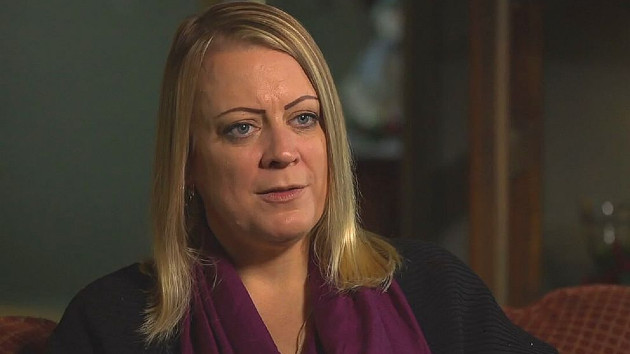
(NEW YORK) — An American woman held in captivity in a Russian prison for most of this year says she was assaulted by an inmate and left without contact to the outside world.

“Nobody ever came,” Sarah Krivanek said.

Krivanek, who spoke to ABC News in an exclusive sit-down interview this week, was released Dec. 8, the same day that WNBA star Brittney Griner was released from Russian captivity.

She said she is suffering PTSD and malnourishment she endured but had to check herself into a local hospital upon arrival back home. She is currently working with a trauma specialist.

In a statement to ABC News, the State Department said, “The U.S. Department of State and our embassies and consulates abroad have no greater priority than the safety and security of U.S. citizens overseas.”

The statement added, “U.S. Embassy Moscow provided assistance on the case of U.S. citizen Sarah Krivanek for more than a year. We monitored the case throughout the process, including attending deportation hearings. We coordinated with Russian authorities to facilitate Ms. Krivanek’s safe return to the United States.”

Krivanek disputes that claim and says that she was put on a commercial flight by deportation center agents from Russia and had to sign paperwork that required her to repay the U.S. government for the travel costs. She said she was given only $100 in cash and was forced to travel alone. She also said she didn’t hear from anyone from the U.S. government throughout her imprisonment and after her arrest at the airport only met officials in her single deportation hearing.

Becoming a ‘sacrifice’

Krivanek, 46, had moved to Russia in 2017 to teach English. Fluent in both languages, she said she ended up enjoying a successful career teaching at elite schools in Moscow. Following a broken wedding engagement, she briefly lived with roommates, one of whom was a man who Krivanek said beat her. In December 2021, she was arrested and detained for attacking him with a knife that she said she used to defend herself.

A trial in February without a jury resulted in a 15-month sentence to a Russian penal colony, a verdict even her attorney told her was extreme for the circumstances, she said. Krivanek said she believes she became “a sacrifice” for the Russians to use to send a warning to the U.S. about intervening in the conflict.

“I just fell into the system… at the wrong time,” she said. “Because it came on the heels of starting a war with Ukraine, they used this as leverage.”

Vanquished hope

In the penal colony, located in the remote Oblast region of Russia, Krivanek said she faced harsh conditions: The colony consisted of “old, run-down buildings from the Stalin era” where she said she was forced to work in an asbestos-laden factory.

There, she sewed fake flowers for use in cemeteries. Because the factory lacked air conditioning, a guard broke windows for ventilation in the summer. A small heater warmed the workers in the fall and winter months. She subsided on a diet of cabbage and bread, she said.

Being an American, she said, often made her a target among prison officials and other inmates. She said she witnessed sex trafficking, drug use and gambling throughout her entire stay.

Blocked from using the official prison phone system, Krivanek said she used a smuggled cell phone to call the U.S. Embassy in Moscow. She said her seven-minute call was redirected to Washington where she told an operator her name and where she was located. The signal was lost immediately afterward.

“After that, I just had to pray and just hope that I had given them enough information to find me,” she said.

“I didn’t have anybody. No phone calls. No nothing. I’m left completely alone,” he said.

Watching an abduction

Krivanek’s situation eventually earned the attention of Russia Behind Bars, an activist group based in England that attempted to deliver items like clothing, toothpaste and soap. Representatives from the group tried to visit her, and during both visits, they were not allowed to see Krivanek in person, she said. Connecting the organization to Krivanek was Anita Martinez, whose friendship with Krivanek dates to 2008.

Martinez, who lives outside Fresno, California, was also the last person to talk with her friend, having watched Krivanek get arrested on camera by Russian authorities when both women were on a FaceTime conversation together.

“I froze. I didn’t know what to do. I was literally in a store in Fresno… and I’m standing in the store in shock,” Martinez said. “I thought, ‘did she just get kidnapped? Like, what did I just see?'”

Martinez said she then began a long and difficult effort to get her friend released, which included contacting the embassy in Moscow, the State Department, and activist and media organizations. She said a State Department official told her that they were aware of Krivanek’s location and were working on her release, but that they could not give her details because she didn’t have permission from Krivanek to allow them to speak to her.

“No one would tell me anything,” she said.

‘They found me’

The adjustment back to life in the U.S. has been difficult for both women. Krivanek said she is suffering from PTSD and is also dealing with the loss of her father who died when she was in Russia. She is now living with Martinez who said she was unprepared, financially and emotionally, to help her friend make the successful transition she needs to move forward in her life.

A GoFundMe account has been established to help Krivanek pay back the U.S. government loan, and Martinez has been helping her get medical care and therapy.

Krivanek said she owes her friend her freedom: “Anita’s just tough as nails. I knew that nobody could walk all over her and that if she had her mind set to something, she was going to get it.”

Nine months after her arrest, on Sept. 1, Krivanek received an email in prison that changed her life. It was from Martinez, asking about her condition.

“I was just about to give up,” Krivanek said. “And I got that letter and freaked out. I’m like, ‘they found me. They found me.'”

Copyright © 2022, ABC Audio. All rights reserved.

Does Elon Musk’s resignation from Twitter mean he’ll give up control? Experts weigh in

Does Elon Musk’s resignation from Twitter mean he’ll give up control? Experts weigh in
Chris Delmas/AFP via Getty Images

(NEW YORK) — Elon Musk vowed to resign as the head of Twitter but he will remain a dominant force at the company, some management experts told ABC News.

The billionaire entrepreneur, who owns Twitter, said on Tuesday that he will step down as soon as the company identifies a successor. The move follows a Twitter poll in which a majority of users called on Musk to stop leading the company.

However, he will retain control over the software and server departments, important teams that will grant him significant control over how the social media platform operates.

The authority afforded by ownership of the company, as well as Musk’s longstanding reluctance to delegate key tasks, will result in decisions dictated largely by his preferences, the experts said.

The company, which lacks a board of directors, will likely hire a hand-picked successor with views that align closely with Musk’s and a public profile that is vanishingly small by comparison, they added.

“It will be Elon’s impulse to jump in and say, ‘It’s my money at stake, it’s my reputation at stake — I have to be a part of every decision,” Peter Harms, a professor of management at the University of Alabama who has studied corporate leadership, told ABC News.

“He has shown no inclination to delegate authority with his businesses,” Harms added.

Twitter did not immediately respond to a request for comment.

‘Window dressing’

Since he acquired Twitter, Musk has made dramatic changes. He fired top executives and cut the company’s 7,500-person workforce in half, while reinstating some formerly suspended accounts such as that belonging to former President Donald Trump.

He also revamped Twitter’s subscription service, Twitter Blue, allowing users to access verification if they pay a monthly fee of $8. The service was suspended after it gave rise to a flood of fake accounts impersonating public figures and brands. It has since been relaunched.

In an interview on Twitter Spaces on Tuesday, Musk defended the moves as part of an aggressive effort to rescue Twitter from financial peril, which he described as an “emergency fire drill.”

“That’s the reason for my actions,” he added. “They may seem sometimes spurious or odd or whatever.”

​​Musk, who admitted he overpaid for the platform at the purchasing price of $44 billion, said last month that the company was losing $4 million a day.

In his latest eye-catching move, Musk posted a poll on the platform asking users whether he should resign. The poll ended Monday morning, with 57.5% of voters saying he should step down and 42.5% saying he shouldn’t.

After a day of silence about the results, Musk announced that he would ultimately step down. By retaining control of key product teams, however, Musk will remain heavily involved in overseeing the company, experts said.

“It feels like window dressing,” Sandra Sucher, a professor of management at Harvard Business School, told ABC News. “He can appear to be responding to the vote to get him out, but I think it’s somewhat disingenuous because he’s going to maintain operational control over a big portion of the business.”

“There’s no question that he will remain the de facto head,” she added. “As far as concerns over decision making and the way he’s shaping the business to reflex his own personal views, it’s unclear what this change will do.”

Growing pressure over losses at Tesla

Musk, who also runs electric vehicle company Tesla, has faced growing pressure to return his focus to the automaker. The company’s stock has fallen 60% this year, as it faces heightened competition and pandemic-induced production challenges.

Musk’s resignation “has become a necessity because of the hemorrhaging at Tesla,” Jeffrey Sonnenfeld, a professor of management at Yale University who convenes gatherings of top CEOs, told ABC News.

While Musk will remain atop Twitter for the foreseeable future, he may end up distancing himself from the company in order to prioritize the comparatively massive automaker, which boasts a market capitalization of nearly $440 billion, Sonnenfeld said.

In fact, Musk tried to avoid taking control of Twitter in the first place. He tried to pull out of the deal to buy the company but went through with the acquisition after Twitter brought a lawsuit forcing the acquisition.

“He became CEO by default because he lost the lawsuit,” said Sonnenfeld, of Yale University. “He didn’t really want to be CEO.”

A potential successor

Despite the need for a steady hand at Tesla, Musk will find it difficult to disengage from day-to-day operations at Twitter, said Harms, of the University of Alabama.

“He’ll struggle to relinquish control,” he said.

A successor, Harms said, would need to implement Musk’s vision for the company and allow Musk to take credit, leaving little opportunity for dissent.

The current dynamic atop Twitter — a visionary leader in need of a logistics-oriented partner — has come about in the industry on multiple occasions, Harms said, pointing to former Apple CEO Steve Jobs and his then-second-in-command Tim Cook.

In another case, Meta CEO Mark Zuckerberg hired Chief Operating Officer Sheryl Sandberg to handle the company’s advertising business, on which it relies for revenue.

“Elon Musk needs his Tim Cook,” Harms said.

Copyright © 2022, ABC Audio. All rights reserved.

US life expectancy falls to lowest levels since 1996 due to COVID, drug overdoses: CDC

US life expectancy falls to lowest levels since 1996 due to COVID, drug overdoses: CDC
Jose Luis Pelaez Inc/Getty Images

(NEW YORK) — Life expectancy in the United States has fallen to the lowest levels seen in 26 years, new federal data shows.

Two new reports, published early Thursday by the Centers for Disease Control and Prevention’s National Center for Health Statistics, found the death rate increased 5.3%, from 835.4 per 100,000 people to 879.7 per 100,000 in 2021.

This means that life expectancy decreased in 2021 for the second year in a row to 76.4 years, down from 77 years in 2020, and is the lowest figure recorded since 1996.

While the drop of 0.6 years is not insignificant, it’s smaller than the drop of 1.8 years that occurred between 2019 and 2020.

The authors of the report said the drop was primarily due to COVID-19 and drug overdose deaths.

Men and women had roughly the same decrease in life expectancy, according to the data, with men seeing declines of 0.7 years from 74.2 years in 2020 to 73.5 in 2021. Meanwhile, women saw a decrease of 0.6 years of 79.9 years in 2020 to 79.3 in 2021.

Among racial and ethnic groups, death rates increased for nearly every group. Decreases were only seen for Hispanic and Black men, with nonsignificantly different rates for Asian men and women.

When it came to the top 10 leading causes of death in the U.S., they were largely unchanged from 2020 to 2021. Heart disease continued to be the leading cause of death in the U.S. followed by cancer and COVID-19, respectively, according to the data.

The only change was chronic liver disease and cirrhosis becoming the ninth leading cause of death, while influenza and pneumonia fell off the top 10 list.

For eight of the top 10 causes, the death rate increased, but the biggest jump was seen for COVID-19.

In 2020, the rate was 85 deaths per 100,000 Americans with the rate increasing to 104.1 per 100,000 in 2021, the data showed.

The report pointed to COVID-19 as one of the main reasons for the drop in life expectancy. There were approximately 460,000 deaths caused by COVID-19 during 2021, according to an April 2022 CDC report.

Drug overdoses were the other reason for the drop in life expectancy, according to the report out Thursday.

In 2021, there were 106,699 overdose deaths for a rate of 32.4 per 100,000 people, up from 91,799 deaths or 28.3 overdose deaths per 100,000 in 2020.

The authors noted that drug overdose deaths currently account for more than one-third of all accidental deaths in the U.S.

From 2020 to 2021, the rate for men increased 14%, from 39.5 deaths per 100,000 to 45.1, and for women, the rate increased 15% from 17.1 to per 100,000 to 19.6.

The largest percentage increase was seen in Americans aged 65 and older, with a 28% jump from 2020 to 2021.

Many of those drug fatalities were due to opioids, particularly synthetic opioids such as fentanyl, the data showed, with a 22% increase from 2020 to 2021.

Copyright © 2022, ABC Audio. All rights reserved.

House Jan. 6 committee releases interview transcripts of 34 witnesses

House Jan. 6 committee releases interview transcripts of 34 witnesses
Photo by Mike Kline (notkalvin)/Getty Images

(WASHINGTON) — The House committee investigating the Jan. 6 attack on the U.S. Capitol on Wednesday released the interview transcripts of 34 witnesses who were interviewed as part of the sprawling 17-month probe.

House Jan. 6 committee Chairman Bennie Thompson had initially said the committee would be releasing its voluminous final report Wednesday, but the panel released a statement Wednesday afternoon saying the report’s release would be delayed until Thursday.

Among those witnesses whose testimony was released are former President Donald Trump’s one-time national security adviser Michael Flynn, Proud Boys leader Enrique Tarrio, Oath Keepers leader Stewart Rhodes, Infowars host Alex Jones, onetime Trump campaign adviser Roger Stone, and Trump-backed attorneys John Eastman and Jenna Ellis.

Most of the transcripts included responses from the witnesses invoking their Fifth Amendment right against self-incrimination.

The committee said on Monday it would refer Eastman to the Department of Justice for prosecution after he drafted a plan for Trump to cling to power by falsely claiming then-Vice President Mike Pence could reject legitimate electors during the Jan. 6 certification of the vote.

The committee also said it would make multiple criminal referrals to the DOJ on at least four charges against Trump in connection to his actions surrounding the attack on the Capitol.

The referrals, however, are viewed as largely symbolic, as the DOJ is not obligated to act on them.

The referrals were announced Monday in conjunction with the release of a 160-page summary report that fingered Trump as the “central cause” of the Capitol attack.

Trump has dismissed the work of the committee, mocking it as the “Unselect Committee” and calling it a “political Witch Hunt.”

Thompson said the full final report will be posted online once it’s released to the public.

Copyright © 2022, ABC Audio. All rights reserved.

Eight girls, some just 13 years old, charged in Toronto fatal ‘swarming’ knife attack

Eight girls, some just 13 years old, charged in Toronto fatal ‘swarming’ knife attack
Toronto Police Service

(TORONTO) — Eight teenage girls, three just 13 years old, are facing murder charges, accused of fatally stabbing a 59-year-old man in downtown Toronto in what police described as a “swarming” attack.

The teenage suspects were arrested shortly after the victim was found on a street in Canada’s largest city suffering from multiple stab wounds and was later pronounced dead at a hospital, Detective Sgt. Terry Browne said.

“I wouldn’t describe them as a gang at this point, but what they are alleged to have occurred that evening would be consistent with what we traditionally call a swarming, or a swarming-type behavior,” Browne said at a news conference on Tuesday.

A motive for the killing remains under investigation, but Browne said investigators suspect they were involved in another violent altercation just prior to allegedly committing the slaying.

He said the stabbing unfolded just after midnight on Dec. 18 and that the suspects were located and arrested soon after in the same area. He said a number of weapons were recovered from the suspects.

In addition to the three 13-year-olds, Browne said three 14-year-old girls and two 16-year-old suspects were arrested in the grisly crime that has sent shockwaves through the city of nearly three million people.

The names of the suspects were not released due to their age. Browne said they have already made one court appearance and remain in custody. They were ordered to return to court on Dec. 29.

Browne said the young suspects are from various parts of Toronto and that they met through social media.

The sergeant said the group made arrangements to join up in downtown Toronto. He said detectives believe they met in the heart of the city around 10:30 p.m. on Dec. 17, a day before the killing.

Police are investigating whether the group was involved in other physical altercations in the city and Browne asked anyone who encountered the girls or were assaulted by them to contact investigators.

The victim of the fatal stabbing, whose name has not been released, was a resident of Toronto, who has been living in a homeless shelter since the fall, Browne said.

“I wouldn’t necessarily call him homeless, maybe just recently on some hard luck,” said Browne, adding that the victim has supportive family members in the area.

Copyright © 2022, ABC Audio. All rights reserved.