(PARIS) — Three people were killed and three others wounded, one critically, in a shooting in Paris on Friday, according to the city’s prosecutor, Laure Beccuau.
The motive for the shooting was not immediately clear, but a 69-year-old suspect was taken into custody, according to the prosecutor. The suspect was also wounded.
An investigation has been opened into murder and aggravated violence charges.
Beccuau confirmed the attacker was already known to the police, and had recently been released from prison.
The shooting took place at a Kurdish cultural center and the nearby businesses, according to 10th arrondissement Mayor Alexandra Cordebard, where the attack took place.
The prosecutor said a potential racist motive for the attack will be part of the investigation.
“I extend my deepest condolences and solidarity to the relatives of the victims and to the hard-hit Kurdish community,” Cordebard said, in French, on Twitter.
The same suspect was under investigation for an attack at a migrant camp in Bercy — in the 12th arrondissement — where he allegedly slashed tents with a sword in December 2021, according to Beccuau.
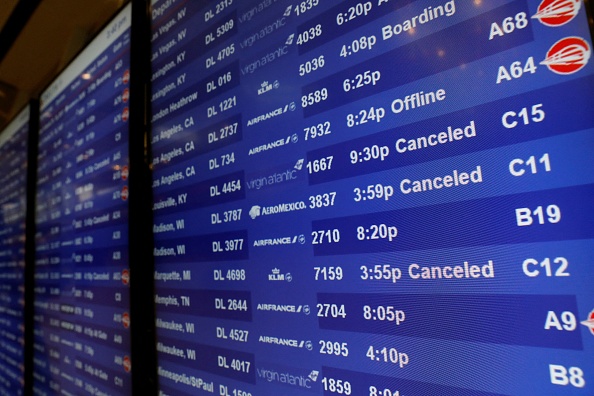
(NEW YORK) — A massive storm is bringing blizzard conditions and icy roads to the U.S. right as the holiday travel rush gets underway.
Over 3,200 flights are canceled within, into or out of the U.S. so far on Friday.
States of emergency have been declared from South Dakota to New York. At least 750,000 customers are without power across the U.S.
“This is really a very serious weather alert,” President Joe Biden warned Thursday. “Please take this storm extremely seriously.”
Here’s the latest forecast:
The storm barreled across the Midwest and Great Lakes on Thursday.
Blizzard conditions will continue in the Great Lakes into Friday. The blowing snow will cause very low visibility, making travel nearly impossible.
Several feet of snow could drop in Michigan and western New York.
Only a few inches of snow is expected for the rest of the Midwest. But the combination of the snow, wind and brutal cold will make travel extremely dangerous throughout the day Friday.
The Illinois State Police is urging people to stay home.
“The snow, wind and bitter cold are headed our way creating hazardous roadway,” the police tweeted. “If you must travel because of an emergency, please slow down, remain vigilant, and Don’t Crowd the Plow!”
Meanwhile, heavy rain invaded the Northeast Thursday, flooding roads from Virginia to New York. As the temperature plunges on Friday, roads could turn to ice, so those hitting the road for the holidays should use extreme caution.
Charlbi Dean‘s cause of death has been revealed. The Triangle of Sadness actress, who died at age 32 in August, died of bacterial sepsis, a spokesperson for the New York City Office of Chief Medical Examiner confirmed to The Hollywood Reporter. The spokesperson added that the sepsis was “complicating asplenia,” which is the absence of a spleen, due to “remote blunt force trauma to [her] torso.” Dean’s death was ruled an accident…
Fans of Showtime’s Yellowjackets got a first glimpse at adult Van, portrayed by Lauren Ambrose. Photos from the upcoming sophomore season, obtained by Entertainment Weekly, show Van working at what looks like an art shop and bearing the scars from a vicious wolf attack. Season 2 of Yellowjackets, which also stars Melanie Lynskey, Christina Ricci, Juliette Lewis and Tawny Cypress, is set to premiere in March 2023…
Glee alums Lea Michele and Darren Criss are reuniting for an episode of Apple TV+’s Carpool Karaoke: The Series. In a sneak peek of the episode, the two take turns singing Christmas tunes from their respective holiday albums, including Michele’s “Christmas in New York” and Criss’ “Christmas Dance.” Carpool Karaoke: The Series is streaming now on Apple TV+…
(NEW YORK) — The 2022 global semiconductor crisis was maddening for motorists: record-high prices, months-long delays and hefty dealership markups. Automakers were forced to park new cars and trucks in vacant lots, unable to sell them because of missing parts or software. Consumers also watched as fuel prices reached unprecedented levels.
Interest in electric vehicles reached a fever pitch in 2022, with revolutionary models like the Ford F-150 Lightning, Kia EV6 and Hummer EV drumming up interest among consumers. Automakers also answered enthusiasts’ pleas, rolling out sports cars and hatches with manual transmissions, powerful V8s and high-revving naturally aspirated engines.
Will 2023 be a repeat of 2022? Here’s what the experts are saying:
Car prices
Consumers shopping for deals on a new vehicle in 2022 were out of luck; horror stories of fellow buyers paying $10K, $20K or $50K above MSRP were widely reported. Moreover, the average transaction price (ATP) for a new vehicle hit $47,681 in November — a record high, according to Edmunds. Monthly lease payments also jumped to $583 in November compared to $471 in November 2019.
Jaw-dropping prices, however, may finally be ending, according to Jessica Caldwell, Edmunds’ executive director of insights.
“Prices have been really high for over a year now but are starting to cool,” she told ABC News.
The average transaction price of a new vehicle in November dipped below MSRP for the first time since July 2021, she said, and prices for large trucks, SUVs and luxury vehicles have fallen in recent weeks as consumers search for budget-friendly alternatives. Rising interest rates on auto loans have also dampened demand for expensive conveyances.
“Interest rates are a big deterrent … you’re dedicating more of your income to a car payment,” she said. “This is leading to a softening of the market.”
New vehicle loans are averaging 6.6% and 10.2% for used cars, according to Edmunds data.
Ed Kim, president and chief analyst of AutoPacific, said a recession — even a moderate one — would put a dent in prices and demand next year.
“We may enter a situation where supply comes back but this time there won’t be the number of consumers to support the volume,” he told ABC News.
Inventory returns
Sparse inventory and manufacturing slowdowns turned the automotive industry upside down. Some marques like Toyota have alerted investors and customers that persistent shortages will hamper production of key vehicles in 2023.
“Chips will be a story in the first half of the year,” Tyson Jominy, vice president of data and analytics at J.D. Power, told ABC News.
Jominy, however, predicts inventory will generally rise in 2023, leading to a greater supply of vehicle choices and better prices. But too much supply could presage a return of heavy incentives and lower profits.
“Automakers are trying to be disciplined and tight with inventory,” he said.
Kim said China’s decision to relax its “zero-COVID” policy will help ease chip and supply headaches that have plagued automakers since 2020.
“We won’t be constrained in 2023 like we were in 2022,” he noted. “But there can still be a long lead time for chips — up to six to nine months until one is delivered or installed in a vehicle.”
He added, “As chip supply comes back, there will be a priority on finishing up those vehicles sitting in big, empty fields and getting them out the door to customers.”
Ultra-luxe demand
The chip shortage and ongoing pandemic did not stop high-end automakers like Rolls-Royce, Bentley and Lamborghini from selling thousands of vehicles. All three are expected to beat their sales totals from 2021, a record year for the storied brands.
“We have no slowdown in sales. Every month we’re selling more cars than we’re able to deliver,” Lamborghini CEO Stephan Winkelmann told ABC News.
Recent models like the Rolls-Royce Ghost Black Badge, Bentley Flying Spur Hybrid and Bentayga Extended Wheelbase and Lamborghini Urus S and Urus Performante have brought in new and deep-pocketed customers.
The entire luxury space did exceptionally well in 2022.
“Land Rover sold 5,116 vehicles in November with nearly no incentives. Average price paid: More than $95,000. Slow down? What slow down?” Cox Automotive said in a newsletter to clients.
Consumers who can afford six-figure vehicles are still flush with cash and will likely keep up their buying spree, Kim said.
“People at that income level are well shielded from traditional economic cycles. A recession won’t impact ultra-luxe brands,” he noted.
Enthusiast cars and big V8s
Automakers sneakily revealed a bevy a sports cars and high-performance utes that did not cater to the EV audience. There was the massive debut of the Corvette Z06, a sports car with a naturally aspirated 5.5-liter flat-plane crank V8 engine that revs to 8,500 rpm.
Manual lovers had so many new models to choose from: the Nissan Z; Toyota GR Supra, GR 86 and GR Corolla; BMW M2; Porsche 911 Carrera T; Honda Civic Type R; and Cadillac CT5-V and CT4-V Series Blackwings.
Electrification did not stop the production of thirsty V8 engines in SUVs. British automaker Aston Martin introduced its fast DBX 707, an exclusive SUV designed to give a track-like experience even on short jaunts around town. The 4.0-liter twin-turbo V8 (697 horsepower) delivers luscious acoustics and the race start launch-control function scares drivers and passengers alike.
General Motors launched its opulent Cadillac Escalade to the Escalade V Series, hailed as the “most powerful full-size SUV in the industry.” The 6.2-liter supercharged V8 in the Escalade V produces 682 hp and hustles from 0-60 mph in 4.4 seconds. There was also the all-new GMC Yukon Denali Ultimate, a seven or eight passenger SUV equipped with the latest tech, a 6.2-liter V8 and a 10-speed automatic.
Lexus opted for a V8 in its sleek IS 500 sedan and the fifth-generation Range Rover, Land Rover’s flagship SUV, has three powertrain options, including a V8.
Jominy said the maligned V8 may have a longer shelf-life than expected in an increasingly electric world.
“It’s a space where consumers are more reluctant to swap,” he said. “Anything with three or four cylinders will be replaced with an EV.”
EV market share
So many new electric vehicles were launched in 2022 that it can be hard for consumers to keep track. None, however, were Teslas. We saw electrics in a range of categories: pickup trucks (GMC Hummer EV and Ford F-150 Lightning), stylish crossovers (Audi Q4 e-tron, Kia EV6), plushy utes (BMW iX, Cadillac Lyriq, Rivian R1S) and sporty sedans (BMW i4, Taycan GTS).
The biggest story for 2023 will be the number of three-row electric SUVs on the market, Kim said. Millennials are more likely to buy an EV than Gen Xers or Baby Boomers and many millennials are now “reaching peak income and peak family raising years,” he explained.
“Right now there’s only the Tesla Model X … the market is really lacking in electric three-row products,” he said. “In the next 12 months we’ll get the Hyundai IONIQ 7, Kia EV9, VinFast VF9 and an electric Explorer. All these vehicles will address an unmet need.”
EV supply could not meet market demand in 2022. Caldwell said even more consumers will begin to shift to greener vehicles in 2023, boosting EV share from the current 5% (up from 2.5% in 2021).
“A lot of EVs are coming next year,” she said. “Chevy is doing a massive push with the Silverado and Equinox and Blazer — these are volume vehicles. More body styles are coming and so is better availability of popular models like the IONIQ 5.”
Jominy said he’s waiting to see if lower fuel prices will temper demand for EVs and how automakers respond to the Inflation Reduction Act that President Joe Biden signed into law in August.
“If you’re an automaker and don’t have a U.S. plant [that can build electric batteries] that could be tough,” he said. “But the awareness and intent to buy an EV is growing. The biggest challenge for EVs is that gasoline prices have fallen pretty precipitously.”
The decision by Tesla CEO Elon Musk to open the company’s acclaimed Supercharger network to competitors may be the real reason more consumers ditch their gas-powered vehicles for electrics, argued Kim.
“Range anxiety and charge times are still the top reasons why people don’t want to go electric,” he said. “Tesla’s biggest competitive advantage is its charging network. We’ll see a lot more automakers adopt the [North American Charging Standard], which allows, in theory, a Tesla-like charging experience.”
(NEW YORK) — A collection of images exclusively obtained by ABC News details what law enforcement says are the recruitment and transportation tactics used by human smugglers to help move migrants across the southwest border and through U.S. cities.
The screen-captured images, provided by Homeland Security Investigations (HSI), show suspected smuggling organizers posting what are essentially recruitment ads asking for “serious drivers” in states along the border and portray the task as a test of manhood.
Investigators said these tactics are aimed at recruiting young people in often rural areas looking to make some quick cash.
Multiple ads, as seen in the images, show large stacks of cash and claim to be offering drivers as much as $10,000 to drive between various places in Texas including Eagle Pass, San Antonio, Dallas and Austin.
“We’ve seen a very disturbing trend over the past few years — it’s the use of social media to recruit young people,” HSI lead agent Craig Larrabee told ABC News. “Young people on social media in big cities, whether it be Dallas or San Antonio or Austin — recruited on social media … they’re told to go out into places they’ve never been in very difficult situations on ranches and desolate roads and told to pick up people and drive them north.”
Larrabee said law enforcement often finds mangled vehicles crashed on the side of poorly lit back roads.
“If approached by law enforcement, they’re often told to try to flee and that’s disastrous too,” Larrabee said. “These kids are young, maybe first-year drivers — sometimes they don’t even have a driver’s license. But they certainly very often do not have experience driving on ranch roads.”
Human smuggling investigations require hundreds of hours and a deep dive into what are often vast networks of organized criminals seeking to exploit migrants, Larrabee said. As the HSI special agent in charge for San Antonio, Larrabee oversees the largest single region in the country for investigating human smuggling, which includes 500 miles of Texas-Mexico border.
HSI, a division of Immigration and Customs Enforcement (ICE), is the country’s principal agency for tracking down smugglers and delivering justice and helping those who find themselves in the throes of illicit operations run by transnational criminal organizations with immense resources. The government believes the stakes have never been higher for ICE HSI as the Biden administration attempts to reign in illegal immigration across the southwest while protecting victims fleeing persecution.
The scope and sophistication of smuggling operations has ramped up exponentially in recent years, according to Homeland Security officials. Fifteen to 20 years ago it was common to find family-operated smuggling rings charging $2,000-3000 per migrant, Larrabee said. But now, much larger organizations are charging upwards of $8,000.
“That’s a huge amount of money,” Larrabee said. “Now, that money is spread out among many different people in the organization — but those numbers continue to go up depending on where you’re coming from too.”
Larrabee said the scale of individual smuggling attempts has increased, with drivers using tractor trailers to move large groups of people at one time.
“If you can put 200 people in the back of a tractor trailer in one run, that’s gonna make you a lot more money [than] to try to find multiple drivers and smaller vehicles, which may be safer in some cases,” Larrabee said.
ICE HSI, along with a variety of law enforcement partners, is responsible for investigating the San Antonio tractor trailer incident earlier this year where 53 people were found dead.
Authorities said it was the largest mass casualty incident ever connected to human smuggling in the U.S. Multiple people have since been charged.
While details remain limited due to the ongoing nature of the investigation, Larrabee said, investigators employ a victim-centered approach when sorting out the level of complicity within a human smuggling scheme. Though migrants may initially agree and pay smugglers to transport them, they are often exploited or physically harmed along the way.
“It’s not always obvious,” he said. “But our approach is to make sure that we’re looking for victims.”
Additional photos and body camera images obtained by ABC News show a thwarted smuggling effort in which 41 migrants were found at a truck stop in San Antonio last year. As non-citizens, all 41 were arrested and processed by Homeland Security officials.
(GRAND JUNCTION, Colo.) — A Colorado nurse was arrested in October for allegedly sexually assaulting patients and documenting the abuse in cellphone videos and photos. Now, two of his alleged victims are suing his former employer for negligence, claiming the hospital should have known about the alleged misconduct.
Christopher Lambros, 61, was arrested on Oct. 25 on suspicion of sexual assault following a months-long investigation that began after a colleague reported seeing the former nurse at St. Mary’s Medical Center in Grand Junction appear to take a “selfie” with a nearly naked female patient, according to a police affidavit.
Detectives said at the time there appeared to be at least three victims, based on photographs and videos found on Lambros’ phone. During a hearing last month, prosecutors said they believe there may be a fourth victim dating back to an incident in March 2016.
Two of Lambros’ alleged victims filed a lawsuit in Mesa County District Court this week against St. Mary’s Medical Center and its parent companies, SCL Health and Intermountain Healthcare. The class-action complaint alleges there could be hundreds, if not thousands, of victims during Lambros’ decade-long tenure at the hospital, and said that investigators recovered four terabytes of data from Lambros’ devices.
He is being represented by an attorney from the Colorado public defender office, which does not comment on criminal cases.
That amount of data is “something like 65,000 hours of cellphone footage or 700,000 cellphone photos,” Omeed Azmoudeh, one of the attorneys representing the plaintiffs, told ABC Denver affiliate KMGH-TV.
In one video from June 24, police said Lambros can be heard whispering to the camera, “Don’t ever get rid of these videos,” and “You need to keep them forever … this is your Dexter collection” — an apparent reference to the TV series about a serial killer, the complaint noted.
“That confirms that nurse Lambros has maintained a very long and large collection of what he believes to be trophies. And what they really are are scars, scars on our patients,” Azmoudeh told KMGH.
Both plaintiffs, who are identified by their initials due to the sensitive nature of the case, allege that Lambros drugged and then sexually assaulted them while they were patients at St. Mary’s Medical Center over the summer.
One of the plaintiffs, M.C., said she was assaulted on July 9 — the day police say a colleague reported Lambros to a supervisor.
“I was his last victim. And thank God for the nurse that walked in on him,” M.C. told KMGH. “She’s my guardian angel right now.”
The complaint alleges that Lambros drugged and assaulted the second plaintiff, J.V., on several occasions while she was in the hospital’s intensive care unit in late June and early July. After regaining consciousness, J.V. told hospital employees and family members that Lambros “‘was a bad man,’ or something to that effect,” according to the complaint.
“I will never know what happened to me exactly,” J.V. told KMGH. “But yes, there were photos and videos. That’s how they identified me.”
The lawsuit, which is seeking unspecified damages, alleges the hospital “knew or should have known of Lambros’ misconduct” due to patients under his care being unconscious for “no legitimate medical purpose” and because there was a surveillance camera in M.C.’s room, among other reasons.
After the July 9 incident, the hospital placed Lambros on administrative leave, removed his access to the hospital and reported the matter to law enforcement, Intermountain Healthcare said. He was fired following his arrest.
“What this former nurse is accused of is reprehensible and goes against everything we believe and value at St. Mary’s Medical Center. Patients put their trust in us and should feel safe in our care,” Bryan Johnson, president of St. Mary’s Medical Center, said in a statement this week in response to the lawsuit. “We are working closely with law enforcement to protect our patients from those who intend to cause harm. We are doing everything possible to ensure our patients continue to feel safe and respected while receiving care at St. Mary’s Medical Center.”
Intermountain Healthcare said it cannot offer further details on the matter “out of respect for patient privacy.”
When confronted by police in July, Lambros reportedly denied taking pictures with patients and claimed he was administering an injection for blood clots when the colleague walked in on him, according to the affidavit.
Lambros faces multiple sexual assault charges. He is currently being held on $1 million bond and is due back in court on Jan. 13, 2023, for a review hearing.
(NEW YORK) — The Taliban returned to power over Afghanistan issuing public promises to preserve its people’s basic freedoms. But just as swiftly as the group grasped control, it reneged on those guarantees — completely blocking female students’ access to education through a series of crackdowns culminating on Wednesday in a ban forbidding them from attending elementary school, setting the country’s women back decades.
The decision to prohibit Afghan girls from receiving even a basic level of education outside of the home comes just a day after the Taliban announced that women would no longer be allowed to attend public or private universities.
These latest limitations have sparked the condemnation of Western governments and human rights groups across the globe. Even countries like Saudi Arabia, Qatar, and the UAE — which are frequently criticized over their unequal treatment of men and women — have urged the Taliban to reverse course.
On Thursday, Secretary of State Antony Blinken said that widespread criticism was important and that the U.S. was working with various partners to hold Afghanistan’s de facto rulers accountable, although he declined to preview any action.
“What you’ve already heard is a course of condemnation from around the world, and not only from us, but from countries — virtually every continent, including Muslim countries, which I think is in and of itself important and powerful,” Blinken told reporters. “And to be clear, and we are engaged with other countries on this right now. There are going to be costs if this is not reversed.”
But so far, Afghanistan’s leaders seem undeterred by any attempts to either persuade or pressure the government to keep its initial promises, and is reportedly already taking brutal steps to enforce its newly installed policies.
Almost immediately after the chaotic withdrawal of U.S. troops in August 2021, the Taliban imposed new limitations on female university students and shuttered lower level schools, saying it would reopen them to girls and women last March after the country’s security situation improved and measures could be implemented to fully segregate both sexes. When that deadline arrived, girls above the 6th grade where still not allowed to return.
At the time, the U.S. retaliated by canceling talks with the Taliban focused on economic issues, but those meetings resumed in late June.
On Tuesday, State Department spokesperson Ned Price called the crackdown “possibly even fatal” to any hopes the Taliban might have for improving their standing with the West. He also maintained that the group — which has not been recognized by any country as the lawful rulers of Afghanistan — is eagerly seeking legitimacy on the international stage and hopes to better relations with the U.S., saying the Taliban have made those desires “clear to us in private.”
“The level of our support and the nature of our relationship is wholly contingent on the actions that they take towards their own people and the actions that they take with regard to our primary interests,” Price said.
However, since its exit from the country, the Biden administration has given Afghanistan over $1.1 billion in humanitarian assistance and moved to unfreeze another $3.5 billion in Afghan central bank reserves. While the State Department says it has placed safeguards to prevent that money from falling into the hands of the Taliban, monitors from the United Nations report that members of the group are increasingly seeking to sway aid money and that accountability is difficult to achieve.
Price also argued the administration has “many tools in its toolbox” to punish the Taliban for its restrictions, but the group itself and many of its prominent members are already under strict sanctions. Imposing other economic punishments to the country runs the risk of worsening an already dire humanitarian crisis ravaging Afghanistan.
If women are not allowed to access education, both the State Department and human rights groups say Afghanistan’s economy is certain to suffer further blows.
“There are no two ways about it: women and girls must be allowed to work, access education and to move freely,” Vice President of International Programmes for the International Rescue Committee Elinor Raikes, said in a statement. “Many educated Afghans have already left the country over the last eighteen months. Afghanistan is in urgent need of a future generation of doctors, teachers, civil servants and much more.”
(NEW YORK) — As parts of the country are bracing for a frigid forecast, residents are advised to be on the lookout for turtles, pelicans and other animals impacted by the unseasonably freezing temperatures.
Texas is forecast to see single-digit temperatures into Friday morning. With the extreme cold Thursday night and Friday, sea turtles could become cold-stunned, where they could wash up and become stranded along the shores or be unable to avoid watercraft, David Reese, a meteorologist from the National Weather Service in Brownsville, Texas, told ABC News.
In extreme cold, turtles experience hypothermia and can no longer move or keep their heads above water. Once they are stunned, it is critical for their survival to remove them from the water or they will drown.
In February 2021, when southern Texas experienced record cold, thousands of endangered turtles had to be rescued from South Padre Island.
Ahead of the cold temperatures this week, the National Weather Service in Brownsville advised residents heading out to South Padre Island to report any stranded or cold-stunned sea turtles to an emergency hotline.
The agency also warned residents to be on the lookout for pelicans, which also struggle with chilly weather and gusty winds. They often land on coastal roadways and bridges when temperatures drop below 30 to 40 degrees and winds increase above 20 mph and “do not avoid oncoming traffic well,” it said.
Fish stocks in Texas’ bays and estuaries are also vulnerable to the extreme cold, with a hard freeze likely to game fish or make them easier to capture. During the February 2021 freeze, an estimated 3.8 million fish were killed on the Texas coast, according to the Texas Parks and Wildlife Department.
In response to the current forecast, the department has issued a temporary closure to saltwater fishing along parts of the coast, effective Saturday, to “protect resources during the upcoming freezing weather conditions,” while advising anglers and coastal residents to report any freeze-related fish kills or cold-stunned fish.
“The high mortality that a freeze can cause may deplete fish stocks for years,” Robin Riechers, director of the Texas Parks and Wildlife Department’s Coastal Fisheries Division, said in a statement Thursday. “Protection of the surviving fish during the few days when they are especially vulnerable to capture would likely shorten the time period for overall recovery of coastal species, especially spotted seatrout.”
Elsewhere, the Maryland Department of Natural Resources is asking visitors to the Chesapeake Bay, the largest estuary in the U.S., to be on the lookout for sea turtles and marine mammals that may be showing signs of cold-stunning.
“While cold-stunning is a natural occurrence, reporting incidents can help protect these animals and the public,” Amanda Weschler, coordinator of Maryland’s Marine Mammal and Sea Turtle Stranding Response Program, said in a statement Wednesday.
The East Coast is forecast to get hit with a blast of cold air by Saturday morning, when dangerously cold wind chills will make it feel like it is below zero.
Farther south, Southern Florida could also see unseasonably chilly temperatures this weekend — which could mean cold-stunned iguanas falling from trees. The phenomenon is possible when temperatures drop into the 30s and 40s, according to the National Weather Service.
Images of fallen iguanas flooded social media in January 2020, when lows hit the 30s and 40s in the Miami area. The National Weather Service in Miami even issued an advisory at the time on the possibility of falling iguanas — and to let residents know the invasive lizards are not dead but immobile.
This weekend, parts of southern Florida, around Lake Okeechobee, could see temperatures drop into the low to middle 30s, with winds making it feel like it’s in the upper 20s to lower 30s. Elsewhere in the region, lows in the 40s are possible.
“There could be some sites that meet the iguana danger criteria,” Nick Carr, a meteorologist with the National Weather Service office in Miami, told The Palm Beach Post.
(NEW YORK) — As parents and caregivers try to cope with the spread of flu, RSV and COVID-19 in what health experts are calling a “tripledemic,” some may look online for treatment and prevention tips.
However, earlier this month, the Food and Drug Administration issued an advisory warning people about fraudulent flu products sold online and in retail stores, saying the “unproven” products “claim to prevent, mitigate, treat, or cure the flu” – even though they have not been evaluated or approved by the FDA for safety and effectiveness.
On Instagram alone, the hashtags #rsv and #flu have been shared over 1.5 million times.
Some social media posts share information about symptoms of both viruses, while others contain information about home remedies, which doctors warn can be dangerous.
“What I worry about is that some parents may rely on these unproven treatments, and then this can actually lead to a delay in care when children need it,” said Dr. Alok Patel, a pediatrician at Stanford Children’s Health in Palo Alto, California, and an ABC News medical contributor. “For example, every cold symptom is not necessarily because of a virus that’s going to treat itself on its own.”
Patel, the father of a 2-year-old daughter, continued, “Your child may actually have something such as an ear infection, or a strep throat, and if those remain untreated, they can lead to some really bad consequences.”
Adding to parents’ confusion, according to Patel, is that as doctors’ offices and hospitals remain busy during the tripledemic, social media may seem like the fastest way to seek information. In addition, the medical advice for viral illnesses may be to let them take their course, which can lead parents to try to find home remedies.
“Parents are seeing these headlines about overfull hospitals and ERs, so parents are scared,” said Patel. “I feel the same thing,” he added.
Dr. Edith Bracho-Sanchez, a pediatrician at Columbia University in New York and the mother of a 14-month-old son, said she worries about how often people may take advice from people they follow on social media who are not medical professionals.
“Sometimes we follow accounts for their lifestyle advice and for decorations, or how to dress, how to dress our kids and fun activities,” said Bracho-Sanchez. “Those accounts are not the ones that we want to go to when we’re looking for health information.”
Here are tips from Bracho-Sanchez and Patel to help parents navigate the flood of health information online around flu, RSV and more:
1. Go to trusted medical sources online.
When parents and caregivers see health tips online, Bracho-Sanchez says there are three questions they should ask themselves: Does this person have the credentials to be recommending this? Could this potentially be dangerous to my child? Should I talk to my pediatrician first before doing some of these things that are being recommended?
The top step to take though, according to Bracho-Sanchez, is to only seek medical information from certified medical providers.
“When you want health information tips on keeping your kids safe, go to the pediatricians, go to verified and credited accounts of people who are actual health care professionals that are giving you advice from a place of knowledge about some of these subjects,” she said.
Patel recommends always searching for the source of a social media video or post before taking in the information.
“Any time you see a Facebook, TikTok or Instagram post that is claiming to have a treatment for a common cold or a cure, scroll to the bottom and look to see what the source of that information is,” he said. “And go backwards and be an internet sleuth, and make sure it’s legit.”
2. Know the home remedies that are pediatrician-approved.
Overall, the best way to boost your child’s immune system is simply with good hydration, nutrition and sleep, Patel noted.
There are also things parents can do to help make sure their child is as comfortable as can be when battling a viral illness like RSV or the flu, according to both Patel and Bracho-Sanchez.
Both doctors said items like humidifiers, saline nasal sprays and nasal suctioning tools are all great to have on hand at home.
For children over the age of 1, a small dose of honey, around one teaspoon, can help ease a child’s cough, according to Patel and Bracho-Sanchez.
Hydration is also very important when kids are sick.
“When my daughter is sick, we make sure that she’s still eating and drinking consistently, even if it’s small amounts at a time,” said Patel.
3. Be wary of suggested home remedies that aren’t proven.
“Some things that I personally have seen and heard of from social media platforms are home remedies such as onion water, or making immune-boosting smoothies, or even cutting up garlic cloves and placing them on children’s feet, inside their ear or on their chest to ‘draw out toxins,'” said Patel. “There is no evidence that any of this actually works.”
Patel said he warns parents to be wary of remedies that claim to be safe because they are “all natural.”
“Some treatments that may be homeopathic or natural are not necessarily safe,” he said. “They can actually interact with certain medications or have bad consequences for some children.”
Another red flag, according to Patel, is a claim that a product or treatment can cure RSV.
“There is no actual proven RSV cure,” he said. “We just have different forms of supportive care and treatment in some particular situations. There’s nothing you can buy or make that is going to magically cure your child of RSV in one day.”
4. Remember that your child is not every child.
Both Patel and Bracho-Sanchez stressed the importance of parents knowing that what may have helped one child, may not necessarily be the most effective or safest treatment for their own child.
“Your child may have asthma or a heart condition or allergies, and what works for somebody else’s child may not be enough for your child,” said Bracho-Sanchez. “You know your child best. Trust yourself and trust your doctor.”
Patel also said it’s important for parents to seek medical attention when necessary for a child so there is not a delay in the correct treatment.
“Coughing, sneezing, congestion, itchy eyes, all those symptoms may not be from the same cause as somebody else’s child,” said Patel. “What might be RSV in one kid, could be influenza in another or COVID-19 in another or a sinus infection in another child, and treatment may differ.”
Symptoms that would call for urgent medical care include changes in their mental status like confusion or sleepiness, respiratory distress like gasping for air and difficulty breathing and signs of dehydration like not making tears when they cry or making less than one wet diaper every eight hours, according to Patel.