The New York rock band Tempt recently released a cover of the Queen classic “We Will Rock You,” and now they are using it to raise money for one of Brian May’s favorite charities.
May gave his blessing to the cover, saying in a press release, “I’m very honored that Tempt play ‘We Will Rock You,’ and with so much passion! -Tempt I’m all ears!” Now that it’s officially out, Tempt has announced they’re donating profits from the single to May’s Save Me Trust charity, which is dedicated to protecting the welfare and dignity of wild animals.
“Thanks TEMPT for rockin’ for wild animals,” May wrote on Instagram. “And for playing a damn good rendition of our ancient tune !!!”
“Although I am an American, I spend a good deal of time with family in the UK countryside and honoring Sir Brian by supporting a UK initiative that he is involved with that also feels local and important to us gives the project extra meaning,” Tempt frontman Harrison Marcello shares in the release. “We hope that Queen fans everywhere will join us and donate and that fans in other countries will reach out to donate to causes that support wildlife in their part of the world.”
Ricky Carioti/The Washington Post via Getty Images
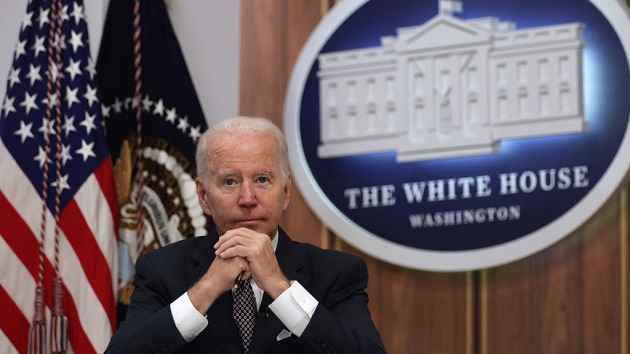
(WASHINGTON) — Speaker Kevin McCarthy says he is set to meet with President Joe Biden on Wednesday to discuss the Republican House majority’s views on federal government spending and raising the country’s borrowing limit in order to avoid a debt default.
“I know the president said he didn’t want to have any discussions, but I think it’s very important that our whole government is designed to find compromise,” McCarthy said during an appearance on Sunday on CBS’ “Face the Nation.”
“I want to find a reasonable and a responsible way that we can lift the debt ceiling but take control of this runway spending,” McCarthy said, later adding, “I don’t think there’s anyone in America who doesn’t agree that there’s some wasteful Washington spending that we can eliminate.”
The White House has repeatedly said that Biden will not negotiate or compromise by tying a debt limit increase to spending cuts, with the administration pointing to the bipartisan history of the ceiling being increased by both parties over the years.
The debt limit doesn’t allow government spending on new programs; rather, it allows the U.S. to borrow any money it needs to pay for what Congress has already authorized.
“Attempts to exploit the debt ceiling as leverage will not work,” White House press secretary Karine Jean-Pierre told reporters earlier this month. “There will be no hostage taking.”
The president and his aides have also argued Republicans want to use spending talks to push for cuts to Medicare and Social Security, which McCarthy said on Sunday was “off the table.”
“If you read our ‘Commitment to America,’ all we talk about is strengthening Medicare and Social Security,” McCarthy said, referring to a plan he unveiled for his party before the 2022 midterms.
Pressed on what he meant by strengthen — and whether he saw that as including changes to the programs like raising the retirement age — McCarthy said: “No, no, no. What I’m talking about Social Security, Medicare, you keep that to the side.”
He insisted that he wants to work with Democrats to pass a budget but that government spending needs to come “under control.” He did not completely take defense cuts off the table, saying he wants to “make sure it’s effective and efficient.”
“I want to look at every dollar no matter where it’s being spent,” he said. “I want to eliminate waste wherever it is.”
The speaker also did not say if he would support a short-term debt limit extension to buy more time for negotiations but said that he intended to see the government continue to be funded.
“There will not be a default. But what is really irresponsible is what the Democrats are doing right now, saying we just raise the limit. … They won’t even negotiate. We have now till June,” he said.
The federal government hit the current debt ceiling, about $31.4 trillion, earlier this month.
Since then, the Treasury Department has employed “extraordinary measures” along with its usual cash flow to keep its bills paid, though that is expected to be depleted by June, Treasury Secretary Janet Yellen has said.
“I want to sit down together, work out an agreement that we can move forward, to put us on a path to balance,” McCarthy said Sunday, “[and] at the same time, not put any of our debt in jeopardy.”
In a statement after his interview, the White House accused him of being “evasive” on his conference’s plan for government spending.
“For years, congressional Republicans have advocated for slashing earned benefits using Washington code words like ‘strengthen,’ when their policies would privatize Medicare and Social Security, raise the retirement age, or cut benefits. It’s like saying, ‘you’re not being laid off – we just want to make a change,'” White House spokesperson Andrew Bates said.
“House Republicans refuse to raise revenue from the wealthy, but insist they will ‘strengthen’ earned benefits programs. You do the math. They have – they just won’t show you,” Bates said.
(LONDON) –The Parthenon Sculptures, also known as the “Elgin Marbles” or “Parthenon Marbles” were taken from Greece in the early 19th century and have been displayed in Britain ever since – however, the debate over who rightfully owns these Greek artifacts continues to this day.
The British Museum and the Greek government are in the midst of talks over whether the museum will return the marbles.
The marbles were taken from the Parthenon between 1801 and 1805 by Lord Elgin, the British Ambassador to the Ottoman Empire, according to the British Museum.
The museum says the Ottoman Empire was the governing authority over Athens at the time, and Elgin removed half of the remaining sculptures from the ruins of the Parthenon with the permission of Ottoman authorities.
Can a governing power such as the Ottoman Empire rightfully give away the artifacts of the cultural state it rules – like the Grecian marble sculptures?
The British Museum claims Elgin’s transaction was done legally.
“His actions were thoroughly investigated by a Parliamentary Select Committee in 1816 and found to be entirely legal, prior to the sculptures entering the collection of the British Museum by Act of Parliament,” the British Museum said.
However, Greek authorities disagree.
“The violent detachment of the Parthenon Sculptures from their physical context and the architectural setting that they were part of violated the laws, the common sense of justice and the established morals at the time,” said the Office of the Secretary General for Greeks Abroad and Public Diplomacy in Athens in a statement to ABC News.
The Parthenon Marbles aren’t the only cultural antiquity under debate.
Many museums around the globe, particularly those in imperialistic or colonialist countries, have been criticized for their massive collections of historically and culturally important artifacts that come from colonized countries.
Who owns the artifacts? Depends on who you ask.
Patrimony laws around the world protect cultural heritage by legally preserving antiquities, artifacts and to prevent international conflicts like the fight over the Parthenon Marbles.
However, these laws go as far back as 1891, with one of the first patrimony laws in Egypt, according to anti-racketeering group Antiquities Coalition. Many other countries around the world followed with protections of their own.
Anything taken before these protections were in place is where the argument of rightful ownership gets a bit complicated.
In some cases, it’s up to the institution or museum to return an artifact that has been stolen, looted, or taken under precarious circumstances.
“A lot of people would think it’s morally right, ethically right to return these objects,” said Leila A. Amineddoleh, an attorney specializing in art, cultural heritage, and intellectual property law. “Some of them, like the Benin Bronzes, were taken under very violent and brutal circumstances … human lives were lost, and people were massacred.
The Benin Bronzes were stolen from Nigeria during a British raid in 1897 on Benin City, according to the Smithsonian Museum. The Smithsonian’s Board of Regents voted to return the bronzes in June 2022 under the museum’s new ethical returns policy.
“Not only was returning ownership of these magnificent artifacts to their rightful home the right thing to do, it also demonstrates how we all benefit from cultural institutions making ethical choices,” said Lonnie Bunch, secretary of the Smithsonian, in a statement at the time.
Even so, a group of Nigerian Americans are suing to keep the Benin Bronzes in the U.S. They have accused the Smithsonian of a “breach of trust for failing to protect the interests of United States citizens descended from enslaved people” who could learn about their culture through the bronzes.
The question of morality in cultural preservation is an issue that’s not black and white.
“The Parthenon is a symbol of Greece in ancient Athens,” Amineddoleh said. “I don’t really understand how the British Museum can continue to argue that they’re keeping the work safe if, in fact, those objects were removed and destroyed the site [of the Parthenon.]”
What responsibility do museums have?
The Metropolitan Museum of Art has experience . The Met has recently returned works to Nepal, India and Nigeria in partnership with officials from each country.
Through the Met’s own researchers and outside sources, the museum sometimes learns a work should be returned to its country of origin based on its policies or the laws of the country in which it originated.
“The Met has a long and well documented history of responding to claims regarding works of art, restituting objects where appropriate, being transparent about the provenance of works in the collection, and supporting further research and scholarship,” Met officials told ABC News, saying it is one of the few institutions in the field to do so.
Those in favor of returning objects, like professor of political science at the University of South Africa Everisto Benyera, say it’s a “form of reparation and restorative justice.”
“What was stolen here are not mere artifacts, but they were important aspects of a civilization,” Benyera said.
“While to some they are beautiful artifacts, to their owners – who are the victims of this theft – they are the missing link in connecting with those in the other realms of life such as the living dead, commonly known as the ancestors.”
Grace Ndiritu, an artist and advocate for “de-colonizing” museums, told ABC News ancient art signifies the creativity and invention of a culture.
“Not only do [artifacts] show the mythologies and spiritual beliefs, they also show the innovation and the power of different tribes and different societies,” said Ndiritu.
Ndiritu’s work centers on “healing” museums, which she believes often perpetuate a colonizer mindset – that of taking stolen prized possessions from one nation and profiting from it or removing it from the context of the origin country’s culture.
“Usually, objects were seen as prizes or possessions and not actually valued for their spiritual context or the cultural context,” said Ndiritu.
Others, like the British Museum, argue that a diversity of these artifacts from around the world offer “wider cultural context and sustained interaction with the neighbouring civilisations.”
“The collection is a unique resource to explore the richness, diversity and complexity of all human history, our shared humanity,” the British Museum says on its website. “The strength of the collection is its breadth and depth which allows millions of visitors an understanding of the cultures of the world and how they interconnect – whether through trade, migration, conquest, conflict, or peaceful exchange.”
(NEW YORK) — George Floyd, Breonna Taylor, Philando Castile, Laquan McDonald, and now Tyre Nichols — all are part a growing list of people who have been killed by police.
The latest disturbing death of Nichols at the hands of Memphis police officers has renewed calls for police reform.
“The world is watching us,” Shelby County District Attorney Steve Mulroy said Thursday as he announced charges against the five police officers who allegedly beat Nichols to death earlier this month. “We need to show the world what lessons we can learn from this tragedy.”
But rather than looking inward, some experts say U.S. law enforcement officials may be better served by looking at the rest of the world for its lessons.
A recent report by the Police Executive Research Forum (PERF), an independent research organization that focuses on critical issues in policing, shows significant gaps in how police in the U.S. are trained when compared to their international counterparts.
According to the report, titled “Transforming Police Recruit Training: 40 Guiding Principles,” training standards for the more than 18,000 police agencies in the U.S. are outdated and inconsistent, and often provide training that is too brief — with an emphasis on weapons and tactics and too little focus on decision-making, communications and other critical thinking skills that officers use every day.
“Almost every major aspect of policing has fundamentally changed in recent decades, except for one: how we train officers,” the report states.
A matter of weeks
Police training in the U.S. is most often measured in weeks, while in many other countries it is measured in months or years.
“Our training is outdated, antiquated, and is trying to do on the cheap what other places have done in a comprehensive way,” PERF Executive Director Chuck Wexler told ABC News.
A 2018 Justice Department study of state and local law enforcement training academies found that the average length of core basic police training in the U.S. is 833 hours, or less than 22 weeks. A more recent survey by PERF found a similar result, with responding agencies reporting an average of 20 weeks of basic police training.
In comparison, police recruits in Japan get between 15 and 21 months of training. Police in Germany get 2.5 years of training. And in Finland, police education takes three years to complete.
U.S. law enforcement agencies do often provide additional training for police on the job who serve in specialized police units such as narcotics squads and violent crime suppression teams. But in Memphis, it was one of those special units — Street Crimes Operation to Restore Peace in Our Neighborhood, or SCORPION — whose members are accused of fatally beating Nichols during a traffic stop arrest. The unit has now been deactivated following Nichols’ death.
Like the military
Many police academies in the U.S. still resemble military boot camps, with cadets in buzz cuts and hair buns getting yelled at by drill instructors.
“Barking orders and giving commands and sort of a military kind of thinking — it’s not a problem-solving approach. It’s not critical thinking,” Wexler said.
Much of the training in American police academies emphasizes skills like marksmanship and defensive tactics, with less focus on so-called “soft skills” like communication and crisis intervention.
“People call those soft skills — those are not soft skills, those are hard,” Wexler says. “Communicating, being a good listener, responding, thinking, and sometimes saying, ‘You know what, we need to step back, we’re not the right ones here. For this we need to bring someone else in.’ Those are important skills, to know your limitations, and also to ask the right questions.”
De-escalation training
A 2020 study by the University of Cincinnati looked at the impact of a training program focused on de-escalation and critical thinking skills in the Louisville Metro Police Department in Kentucky. The program, called Integrated Communications, Assessment and Tactics (ICAT) was developed by PERF. University of Cincinnati researchers found that ICAT training was associated with a sizeable reduction in use-of-force incidents as well as the number of injuries to both citizens and officers.
LMPD officers who had participated in ICAT training experienced a 28% reduction in use-of-force incidents and 36% fewer injuries, compared to their peers who had not been given the training. In addition, 26% fewer citizens were injured in encounters with officers who had the training compared to officers who did not.
“It turns out that actually using a critical decision model … is not only safer for the person you’re dealing with, but it’s actually safer for police officers,” said Wexler.
The cost of reform
Regardless of their training, police in the U.S. face unique challenges compared to many of their international counterparts, experts say. American streets are awash in guns and illicit drugs like fentanyl, and training alone won’t change that.
Meanwhile, police departments across the country continue to struggle with staffing shortages. Qualified new recruits are in short supply, and many departments are not keeping pace with the number of police retiring or leaving the profession.
Expanding police training is costly and could have the undesirable effect of slowing down the pipeline of new officers at a time when law enforcement agencies can’t get new police online fast enough. According to a 2020 PERF survey, 71% of police agencies spend less than 5% of their budgets on recruit training.
And law enforcement remains a dangerous profession, with difficult hours and limited pay.
As a result, Wexler says that improving policing requires a wide-ranging investment in the profession.
“There has to be a national commitment to want to fundamentally train … and to compensate police at a level that makes them professionals,” he said.
(LOS ANGELES) — At least three people were killed and four injured in the second mass shooting to erupt in Los Angeles County in eight days — the sixth in California this month, according to police.
The latest shooting occurred Saturday in the upscale Beverly Crest neighborhood of Los Angeles, bordering Beverly Hills.
The mass-casualty shooting unfolded around 2:30 a.m. when police received multiple 911 calls of a shooting in progress at a short-term rental luxury home in the8 neighborhood, according to the Los Angeles Police Department.
A senior LAPD source told ABC News that the three people killed were found in a car outside of the rental home. Two wounded individuals were found nearby and two others were taken to area hospitals in private vehicles, police said.
Sgt. Bruce Borihanh, a spokesperson for the Los Angeles Police Department, said at a news conference that the shooting occurred in front of the rental home.
Two of the injured victims were in critical condition, police said.
No arrests were immediately announced.
Borihanh said investigators were trying to determine if the shooting occurred during a party at the rental house.
A motive for the shooting remains under investigation.
“We’re still interviewing additional occupants, as well as witnesses and neighbors, to try to piece together exactly what happened here,” Borihanh said. “Investigators are also going door to door and looking for additional surveillance video, or any evidence that could help us.”
The Beverly Crest episode came just eight days after a Jan. 21 mass shooting in the Los Angeles County city of Monterey Park, where 12 people were fatally shot at a dance studio allegedly by a 72-year-old man, who died from an apparent self-inflicted gunshot wound when police cornered him in a van in Torrance, California.
The two Los Angeles County mass shootings are among six that have occurred in California since Jan. 16, when six people, including a teenage mother and her baby, were found fatally shot at a home in Goshen, a semi-rural area in the state’s San Joaquin Valley. The Tulare County Sheriff’s Department, which has yet to announce any arrests, said the shooting appeared to be a targeted attack by two gunmen possibly connected to a drug cartel.
A day after Monterey Park rampage, a 66-year-old farmworker allegedly shot and killed seven co-workers and injured one in what authorities said was a workplace shooting at two mushroom growing farms in the Northern California city of Half Moon Bay. The suspect, Chunli Zhao, was arrested and charged with seven counts of murder, one count of attempted murder, firearm use enhancements and a count of special circumstance allegation of multiple murders.
Just hours after the Half Moon Bay shooting, five people were shot, one fatally, in Oakland, California, in what police described as a “targeted” and possibly gang-related attack during the filming of a music video at a gas station.
And on Friday night in San Diego, four people were shot, one fatally, in two shooting incidents that occurred several miles apart and allegedly committed by the same suspect, according to the San Diego Police Department.
The first shooting occurred around 8:26 p.m. in San Diego’s Encanto neighborhood, where police found two 15-year-old boys suffering from gunshot wounds, officials said. They were taken to an area hospital and are expected to survive, police said.
About 49 minutes later, two men were found shot, one fatally, several miles from the Encanto neighborhood, authorities said.
“After both of these shootings, officers received a detailed physical description of the suspect and his vehicle, and it became apparent these shootings were likely related,” police said in a statement. “Officers saturated the area in an effort to locate the suspect before additional acts of violence could occur.”
The suspect was located and arrested after police initiated a “high-risk” traffic stop on a vehicle witnesses saw leaving the scene of at least one of the shootings, officials said. The suspect was identified as 22-year-old Jaime Gonzalez, who was jailed of murder and attempted murder, according to police. He was also arrested gun-related charge stemming from a semi-automatic 9mm handgun found in his car that appeared to be an untraceable “ghost gun,” police said.
Nationwide, there have been 48 mass shootings in the first month of 2023, according to the Gun Violence Archive, a website that tracks shootings nationwide.
(WASHINGTON) — When President Joe Biden signed the $369 billion Inflation Reduction Act in August, supporters hailed the measure as the largest climate investment in the nation’s history — but questions remained about what the spending would ultimately achieve.
The majority of the funding took the form of tax credits meant to incentivize private investment in clean energy, such as wind and solar, and in theory, boost U.S. production of renewables as the nation pursues ambitious carbon emissions goals and a supply chain less dependent on China.
The success of the strategy, however, in a large part hinged on the willingness of companies to pursue those tax credits. So far, dozens of firms have announced projects that qualify for government relief, totaling more than $40 billion in clean energy investment and adding nearly 7,000 jobs, according to a report from Clean Power America, an industry group representing green energy companies.
New plans range from a battery manufacturing plant in Georgia to a solar complex in Alabama to the expansion of a wind turbine facility in Colorado, the report found.
As the global supply chain struggles to recover from the pandemic, the early wave of investment proves the wisdom of the landmark energy law, foretelling significant growth for U.S. clean energy and easing the sector’s reliance on China, some industry representatives and analysts said.
But some climate experts cautioned that the tens of billions in investment makes up a fraction of the scale required, leaving the effectiveness of the environmental measure in question. The law left out key parts of the climate change fight that could imperil carbon emissions goals regardless of the amount of investment, they added.
“Friction in the global economy is causing difficulties getting solar panels and lithium batteries,” David Victor, a professor of innovation and public policy at the University of California, San Diego, told ABC News. “It’s hard to deploy the commitments we’ve made, let alone bring a radical expansion.”
“This is a massive amount of money behind that ambition that we’ve never seen before in American history,” he added.
To be sure, a host of industry groups and economists opposed the Inflation Reduction Act altogether, warning that the billions in spending would exacerbate inflation rather than alleviate it. Congressional Republicans tried to obstruct the law with a party-line “no” vote.
“We share the goal of addressing climate change,” the American Petroleum Institute, a trade group representing about 600 companies in the oil and natural gas industry said in a letter to House leaders before the law’s passage. “The considerable tax increases and new government spending in the IRA amount to the wrong policies at the wrong time.”
Last decade, the use of renewable electricity in the U.S. skyrocketed. Between 2011 and 2020, the U.S. quadrupled the share of electricity it gets from wind and solar, according to a report from the nonprofit Environment America Research and Policy Center and the nonpartisan research organization Frontier Group.
Over the first six months of 2022, nearly a quarter of U.S. electricity generation came from renewable sources, according to the Energy Information Administration, a government agency. But the progress falls well short of the Biden administration’s goal of 100% clean electricity by 2035.
The need for additional U.S. clean energy capacity has drawn attention to the nation’s renewables manufacturing sector, which pales in comparison to China, the source of more than 80% of components in all of the key stages of solar production, the International Energy Agency said in July.
As global supply chain bottlenecks amid the pandemic have weighed on China’s economy and hindered U.S. access to key parts, the need for a fix has gained added urgency, some analysts said.
“Frankly, we’ve seen a slowdown,” John Hensley, vice president for research and analytics at American Clean Power, told ABC News. “The inability to source solar modules is front and center.”
The three-month period ending in September marked the slowest quarter for renewable energy growth in three years, a report from American Clean Power found. Wind installations fell 78% compared with the previous quarter, while solar installations dropped 23%, the report showed.
By dramatically expanding U.S. clean energy production, the Inflation Reduction Act, or IRA, will help the nation circumvent a fragile global supply chain and return it to a trajectory of robust growth, industry representatives and some analysts said.
A pronounced impact is expected in the solar market. The law will lead to over $600 billion in new investment over the next decade, bringing 50% more solar investment than the country would’ve drawn without the measure, the Solar Energy Industry Association found.
Hanwha Qcells, a Korean solar company, announced earlier this month more than $2.5 billion in new investment to build a manufacturing facility about 50 miles northwest of Atlanta. The company said it will also expand an existing plant in Dalton, Georgia, bringing a total of 2,500 new jobs.
“The U.S. solar manufacturing industry has really struggled over the last couple decades,” Scott Moskowitz, senior director, head of market strategy and public affairs at Qcells North America, told ABC News. “The IRA marks a turning point in the history of the industry.”
The Republican party, whose members on Capitol Hill uniformly opposed the energy law, retains one-party control of Georgia’s state legislature. But government officials in the state have backed the solar project, Moskowitz said.
“We’ve had nothing but support from our elected officials,” he said. “We’ve found there’s universal support for manufacturing jobs and pretty wide support for a diversified and cleaner energy mix.”
Despite signs of success, some analysts warned that the investment so far remains far short of what the country will require to achieve its climate goals.
“It’s definitely good,” Mark Jacobson, a professor of civil and environmental engineering at Stanford University, told ABC News. “The issue is we need much more.”
The law hamstrings itself, Jacobson said, since it includes tax credits for what he says are unproven technologies like carbon capture, a way of reducing emissions at their source by trapping and storing carbon before it releases into the air. Such tax credits are “basically taking money away from real solutions,” he said.
The market will limit the use of credits for technology that proves ineffective, limiting that potential waste, said Hensley, of American Clean Power.
“If you have a project that doesn’t have great economics, that doesn’t have a great production profile, that isn’t delivering on goals and benefits, not many of those projects are going to get done,” he said.
While improving the output of clean energy, the IRA doesn’t address the issue of fossil fuel consumption, Jacobson said. As long as cars, homes and offices use fossil fuels, the benefits of clean energy will prove limited, he said.
“The IRA isn’t addressing that problem of getting rid of fossil fuels,” he said. “The big problem is we need to stop burning things.”
Hensley acknowledged that the climate fight will require initiatives that extend beyond clean energy production.
“It will take a joint effort to get there,” he said. “The country has a good track record of rising to the occasion.”
(MEMPHIS, Tenn.) — Nearly three weeks after Tyre Nichols was violently arrested in Memphis, Tennessee, city officials released disturbing footage of his fatal confrontation with police.
The graphic footage of Memphis police officers beating the 29-year-old following a traffic stop was released Friday “because it was important to the community and to Tyre’s family, as they want the world to be their witness and feel their pain,” Shelby County District Attorney Steve Mulroy said in a statement.
The release of the videos sheds more light on what happened to Nichols on the night of Jan. 7, three days before he died. Though it also prompts more questions about the incident, which has sparked nationwide outrage.
What the footage shows
Three videos from body worn cameras were shared to Vimeo by the city of Memphis on Friday with the warning: “Footage contains graphic content and language. Some may find offense. Viewer discretion is advised.” A fourth video — soundless surveillance footage from a city pole camera — was also released, amounting to about 67 minutes total.
1st video
The roughly 11-minute clip is a body camera video that shows Nichols’ initial altercation with police during a traffic stop. As he is pulled out of his car and wrestled to the ground, Nichols can be heard saying, “I didn’t do anything,” and tells officers at least twice that he is “just trying to go home.”
During the altercation an officer warns Nichols, “I’m going to beat your a–” and “I’m going to tase your a–,” as various officers hold him on the ground and yell at him. Nichols’ tone remains calm, at one point telling the cops, “You guys are really doing a lot right now.” He manages to break free from the officers as they appear to try to deploy a stun gun on him and he runs away.
The officer from whose vantage point this body camera video is taken chases him down the road and then turns back to the scene of the initial altercation. Eventually, he learns over the radio that other officers have found Nichols nearby and he says twice, “I hope they stomp his a–.”
2nd video
The roughly 31-minute clip is an overhead surveillance wide-angle shot taken from a city surveillance camera that offers a bird’s-eye view of the unsettling beating.
Several officers can be seen grouped with Nichols, standing over him as he’s on the ground. As two officers hold him down, a third kicks him. A fourth officer comes over with a baton and the officers pick Nichols up from the ground and hold him up while officers appear to strike him in the face and torso.
As Nichols falls to his knees, several officers kneel and lean over him, while another appears to stand a few feet away watching. Additional officers run into the frame. At least one officer kicks Nichols while he is on the ground. About three minutes from the first kick, they begin to step away. They eventually drag him into the street and lean him up against a car as he appears to have his hands behind his back.
Nichols remains slumped next to the car for roughly 20 minutes it appears before officers’ first attempt to render him aid. Several minutes later EMTs appear to lean over Nichols before an ambulance appears.
3rd video
The roughly 6-minute clip is body camera video that shows the officers beating Nichols, taken from the vantage point of the officer who can be seen hitting Nichols with a baton in the second clip.
The footage shows officers beating Nichols and spraying pepper spray as he begins yelling for his mother, who lived nearby. He can be heard screaming “mom” at least three times. The officers yell multiple times at Nichols to “give me your hands.” The officer with the baton can be heard saying, “I’ma baton the f— out of you” then appears to strike him on the back three times. Officers pull Nichols to a stand, then appear to punch and slap him.
4th video
The approximately 19-minute clip is another body camera video from the scene of the beating, though less than two minutes in the camera is somehow affected and nothing is visible. Audio can be heard, including Nichols yelling out “mom.” The video becomes visible once again several minutes later, showing Nichols slumped on the ground next to a vehicle. Later on in the video, as officers stand at the scene rehashing the turn of events, they allege Nichols reached for at least two officers’ guns.
Remaining questions
The footage has helped answer questions about what happened that night, in particular for Nichols’ family. His mother, RowVaughn Wells, said that police initially told her that her son had been tased and pepper sprayed, though the extent of his injuries in the hospital indicated that something more violent had happened. For his stepfather, Rodney Wells, the video “justifies” that Nichols was no threat to the officers.
Though the footage also raises questions about the incident, including:
What led up to Nichols being pulled over?
It’s unclear what led up to the traffic stop in the first place and why officers responded so aggressively. The first video is from the vantage point of an officer arriving at the scene as Nichols is being pulled out of his car while stopped at a red light.
In the fourth video, as officers recounted the traffic stop, one alleged that Nichols nearly drove into oncoming traffic, while another claimed that Nichols swerved and nearly hit his car while he was attempting to pull him over.
Police said he was pulled over for reckless driving, though Memphis Police Chief Cerelyn Davis said she has been unable to substantiate that.
“I do believe that the stop itself was very questionable,” Davis told ABC News’ George Stephanopoulos during an interview Friday on “Good Morning America.” “We have been unable to verify the reckless driving allegation.”
Tennessee state Rep. G.A. Hardaway said questions have not been answered regarding the timeline and logistics of the case and called for clarity regarding the chain of command as it pertains to notification of car chases and violent encounters.
“There is more to the story, and I think that the citizens of Memphis and Shelby County deserve to know the whole story,” he said during a press event Saturday.
Will more charges be filed?
Five officers were fired and charged with second-degree murder in connection with the confrontation, though the footage shows several officers at the scene who have not been identified.
Ben Crump, the attorney representing the family, told ABC News that the video raises more questions about who was involved, including the unidentified officer at the initial traffic stop whose body camera footage was released, and whether they will face any repercussions.
Two Shelby County sheriff’s deputies who were at the scene of the police confrontation were relieved of their duties pending an investigation shortly after the video was released, the county’s sheriff announced Friday. The sheriff said he has launched an investigation into their conduct “to determine what occurred and if any policies were violated,” though no further information was provided.
The local district attorney has said that more charges could be possible in the case.
Why was the first aid response so long?
It appears that roughly 20 minutes lapse between the ending of the beating and the officers’ first attempts to render aid to Nichols as he sat and lied down on the ground. EMTs are not visible in the video until more than 22 minutes after the end of the beating.
Nichols was hospitalized in critical condition after complaining of shortness of breath during the arrest, police said.
The Memphis Fire Department said that two employees involved in the initial patient care of Nichols were removed from duty last week while the agency conducts an investigation into his death. The fire department updated Friday that it was reviewing the footage and plans to conclude its investigation early next week.
What were the roles of the officers charged?
An attorney for Desmond Mills Jr., one of the former officers charged in the case, also said the videos “produced as many questions as they have answers,” for his client, whom he said was not the first on the scene.
“Some of the questions that remain will require a focus on Desmond Mills’s individual actions; on what Desmond knew and what he was able to see when he arrived late to the scene; on what Desmond knew and what he was able to see after he was pepper sprayed; and on whether Desmond’s actions crossed the lines that were crossed by other officers during this incident,” the attorney, Blake Ballin, said in a statement.
Ballin added that they are “confident” the answers to whether Mills “crossed the lines that others crossed and whether he committed the crimes charged will be answered with a resounding no.”
ABC News’ Whitney Lloyd, Sasha Pezenik and Laura Romero contributed to this report.
(COLUMBIA, S.C.) — Former President Donald Trump made his campaign debut for his 2024 run on Saturday in two key early-voting states.
Trump’s first stop was in New Hampshire, where he teased a ramp-up in campaign events, laid out an agenda focused on crime, immigration and education and criticized the investigation into classified documents found at his Mar-a-Lago estate.
“This is about the beginning. You know, this is it. We’re starting. We’re starting right here as a candidate for president,” Trump said as he delivered remarks at the New Hampshire Republican Party’s annual meeting.
“To save America, we need a leader who is prepared to take on the forces laying waste to our country, and we need a president who is ready to hit the ground running on day one — and I am, boy am I hitting the ground.”
Looking to reenergize his campaign, Trump addressed skepticism and criticisms that he hasn’t been on the road since his announcement back in November.
“They said, ‘He’s not doing rallies, he’s not campaigning. Maybe he’s lost that step.’ We didn’t. I’m more angry now. And I’m more committed now than I ever was,” Trump said to cheers.
Trump also took aim at Democrats, slamming the party for their planned 2024 presidential primary calendar, which would strip New Hampshire of its first-in-the-nation primary status. Trump said if elected, he would ensure New Hampshire remains first in the nation for Republican primaries and he named outgoing state GOP Chairman Stephen Stepanek as his senior adviser for his New Hampshire campaign.
Saturday’s campaign stops were also filled with not-so-slight digs at potential Republican contenders as Trump looks to dissuade other Republicans from launching presidential bids. The former president projected confidence in his ability to win the next presidential election, telling the crowd he doesn’t “think we have competition this time either.”
Speaking to reporters after his New Hampshire appearance, Trump told ABC News and other outlets that he would view a presidential run by Florida Gov. Ron DeSantis, for example, as “disloyal.”
“When I hear he might run, you know, I consider that very disloyal,” Trump said. “But it’s not about loyalty, but to me it is, it’s always about loyalty.”
Trump, the only declared GOP candidate in the race so far, also said that widely expected challenger Nikki Haley, a former ambassador in his administration and former South Carolina governor, had called him recently to say “she’d like to consider” a run for president in 2024.
“I said, ‘Look, you know, go by your heart if you want to run,'” Trump told reporters. “She’s publicly said that ‘I would never run against my president.'”
Following his event in New Hampshire, Trump sent out a fundraising email seeking to capitalize on his return to the campaign trail.
“I will officially be the FIRST Republican presidential candidate to campaign in the two early primary states of New Hampshire and South Carolina. No other candidate is working this early to win every last vote and save America from Biden’s destruction,” the email stated.
But Trump’s third run for the White House also comes as he faces multiple investigations, including a Department of Justice probe of his handling of classified documents while out of office and a criminal investigation in Georgia into efforts to overturn the 2020 presidential election result — a case in which decisions regarding potential charges are “imminent,” the prosecutor leading the investigation said earlier this week.
“I’m not worried,” Trump said Saturday when asked about the possibility of charges in the case. He insisted that, because he was president at the time, “I had an obligation to criticize or to ask questions” about the election.
Trump also spent time during both his campaign stops Saturday criticizing the court-authorized FBI search of Mar-a-Lago and the investigation into classified documents found at his estate. It comes as classified materials have also been found at the residences of former Vice President Mike Pence and President Joe Biden.
Attorney General Merrick Garland has appointed two special counsels to investigate Trump and Biden whereas the DOJ has been reviewing the material found at Pence’s Indiana home earlier this week.
In South Carolina for his second event of the day, Trump spoke to a small, packed room filled with hundreds of people where he announced his leadership team for the state and spoke to the importance of its early role in the primary process.
“As the famous saying goes, ‘South Carolina picks presidents,’ you’ve heard that a little bit before, right?” he said.
His South Carolina Leadership team includes Sen. Lindsey Graham, Gov. Henry McMaster, Lt. Gov. Pamela Evette, Treasurer Curtis Loftis, Rep. Joe Wilson, Rep. Russell Fry, Rep. William Timmons, former Lt. Gov. Andre Bauer, former U.S. Attorney Peter McCoy and former Amb. Ed McMullen.
“We believe in common sense. We believe in the Declaration of Independence. We believe in the Constitution. We believe in the Bible, and we believe in you,” McMaster said, pointing to Trump.
“How many times have you heard ‘we like Trump policies, but we want somebody new.’ There are no Trump policies without Donald Trump,” Graham added.
On policy, Trump said Saturday he would “eliminate federal funding for any school that pushes critical race theory or left-wing gender ideology,” restore every border security measure of the Trump presidency “within hours of my inauguration,” investigate “radical left-wing prosecutors” and said he supports a constitutional amendment to impose term limits on members of Congress.
“This is just the beginning of our agenda. I look forward to returning many times,” Trump said as he ended his remarks in New Hampshire.
(WASHINGTON) — House Intelligence Committee Chairman Mike Turner on Sunday indicated both chambers and both parties in Congress will seek to “force” the Department of Justice to let lawmakers review the classified documents that Joe Biden and Donald Trump retained while out of office.
In an appearance on ABC’s “This Week,” Turner criticized DOJ’s decision not to let Congress see the documents because of the ongoing special counsel investigations of Biden and Trump’s conduct.
“They have no ability to prevent us,” Turner, R-Ohio, told co-anchor Martha Raddatz, calling Congress’ subpoena power on the matter “absolute.”
“We were told that we were going to have these documents available to us to review. … I think it only makes everybody concerned about what are they hiding and why are they trying to keep it from Congress?” he said.
Turner predicted “bipartisan, bicameral support to force Attorney General [Merrick] Garland to make these documents available to Congress so that we can take a look at what happened, what’s in these documents and what does Congress need to do to protect America’s secrets.”
His comments come days after former Vice President Mike Pence’s lawyers said they found he retained some classified materials after leaving office — just as Biden and Trump did (in Biden’s case, after he was a senator and vice president).
The Pence documents were undergoing review by the DOJ’s National Security Division and the FBI, sources previously told ABC News. The attorney general has also appointed special counsels to investigate the handling of documents recovered from Biden and Trump.
Pence — who told ABC News’ David Muir in November that he didn’t bring any classified documents home with him — said Friday that he was “not aware” the materials were at his house in Indiana but said he took “full responsibility,” calling it a mistake.
An attorney for Biden has said much the same, contending after some of the materials were found that they were “inadvertently misplaced.”
Trump has denied wrongdoing.
On “This Week,” Turner said the three cases pointed to broader issues.
“It’s just really astounding because it shows there’s really a systemic problem here on the administration handling side, of both the vice president’s office and the president’s office,” he said.
“I can’t imagine a circumstance where anyone would believe they need to have them [classified materials] in their home,” he said, later adding: “The chain of custody in each of these issues is going to be important. It certainly should be part of the Department of Justice’s investigation.”
“How did these documents get where they were going and where we ultimately found them, but also what happened to them in the interim?” Turner asked.
The Republican congressman singled out Biden’s conduct, noting that some of the documents in Biden’s home dated back to his time as a senator at least 14 years ago. Turner declined to specifically address the Pence case when pressed, other than noting Pence said he’d been unaware of the materials.
“Last week, you called President Biden a serial document hoarder and said he would only have classified documents at his residence to show them to somebody. Do you have the same concerns now about Mike Pence?” Raddatz asked.
“Well, in all these instances, the concern is that this information would be given to someone else, and would be accessed by someone else. That’s why it’s classified,” Turner said. “That’s why it’s a grave concern as to the manner in which this is handled.”
“These classified documents contain information that we don’t want anyone else to see, that we don’t want anyone else to know, because they put at risk our country,” he continued.
Even so, Turner said, he had a broader concern that there were too many classified documents.
“I think things are overclassified. Unfortunately, Congress doesn’t have the ability to declassify. There are things that I think need to be out in the public discourse,” he said.
He said he was heartened by a recent “shift in policy” in which the government began disclosing some information regarding Russia’s invasion of Ukraine and the U.S. response.
“I think it’s incredibly important for allies of the United States to openly discuss the information that we have,” he said.
(WASHINGTON) — In the wake of Tyre Nichols’ “horrible” death following his beating by police in a traffic stop in Memphis, Tennessee, Senate Majority Whip Dick Durbin on Sunday called on his colleagues to restart efforts to pass federal police reform.
“It’s the right starting point,” Durbin, the Senate Judiciary Committee chairman, told ABC “This Week” co-anchor Martha Raddatz of earlier work between Democratic Sen. Cory Booker and Republican Sen. Tim Scott and others after George Floyd’s murder.
Those efforts ultimately stalled on Capitol Hill. Among the major sticking points in those negotiations were qualified immunity, which shields police from lawsuits, and how officers should be prosecuted, ABC News reported at the time.
“Sen. Booker, chairman of the crime subcommittee, has been working on this for years. I think he and Sen. Scott should sit down again quickly to see if we can revive that effort,” Durbin said on “This Week.”
Their bipartisan talks would have provided more resources to police departments while granting more federal power in bringing misconduct cases in areas of excessive force or obstruction of justice and would have banned the use of chokeholds and no-knock warrants.
While Durbin said those provisions were “necessary,” they wouldn’t be totally “sufficient” in addressing policing in America. The solution required something “larger in scope,” he said.
“We need a national conversation about policing in a responsible, constitutional and humane way,” he said. “These men and women with badges put them on each day and risk their lives for us. I know that. But we also see, from these videos, horrible conduct by city officers and unacceptable situations. We’ve got to change.”
The 29-year-old Nichols died on Jan. 10, three days after being pulled over by police in Memphis and subsequently attacked by officers — which was recorded by police and area cameras.
The five officers involved were all fired and have been charged with second-degree murder, among other counts. Two of their attorneys have said they will plead not guilty; the others haven’t commented.
Graphic footage of the fatal confrontation was released on Friday and showed Nichols being struck by police multiple times as he was standing up and after he’d fallen to the ground. It then showed officers standing around Nichols for roughly 20 minutes before any of them began to render aid.
Durbin said his reaction to the footage was “heartbreak.”
“My heart goes out to the Tyre Nichols family to think that their son went through this. And it just tells us that we live in an age now, with video cameras and with DNA evidence, where our system of justice and law enforcement is under greater scrutiny, as it should be,” he said.
“You were there when the Rodney King video came out in ’91 [of King being beaten by Los Angeles police], spoke about how horrific it was then and yet there really has not been anything passed that would prevent this,” Raddatz said.
“Understand that law enforcement, by and large, is a state and local responsibility. That does not absolve us,” Durbin said.
Ben Crump, an attorney for the Nichols family, told Raddatz on Sunday that he asked President Joe Biden to use the Nichols tragedy as an opportunity to “march back in the United States Senate” and kickstart talks on reform.
“Without federal police reform, I think we’re going to continue to see these hashtags [from police killings] proliferate so much more so that we can keep up with them,” Crump said.
Nichols’ family has also been pushing for Tennessee to pass “Tyre’s Law” to require a “duty to intervene” by law enforcement.
Memphis already had some reforms in place when Nichols was killed, including a ban on chokeholds and de-escalation policies.
When asked how deadly altercations still happen with such measures in place, Crump said the nation also needs to address “the institutionalized police culture.”
“And it doesn’t matter if the officers are Black, Hispanic, or white,” he said. “It’s part of the culture — this bias culture that says this is allowed. And so just as much as those officers are responsible for the death of Tyre Nichols, so is that implicit bias police culture that exists in America.”
Durbin echoed Crump’s concerns about the policing system and said change could come from “screening, by training, by accreditation to up the game, so that the people who have this responsibility to keep us safe really are stable and approaching this in a professional manner.”
Asked if there should be a federal investigation of the Memphis Police Department, Durbin said he “would not rule that out.”
“We have to be honest about this,” he said. “There are good policemen out there risking their lives for us but there are some that should not be on the force. So let’s get down to the basics are in terms of protection that Americans want to have in their communities.”