After the HBO series The Last of Us used Linda Ronstadt‘s 1970 hit “Long, Long Time” in its third episode Sunday night, streams of the track jumped by 4,900%. While Ronstadt hasn’t seen the episode, she’s happy about the renewed interest in the song — even though she won’t make any money from it.
That’s because, as Billboard notes, “Long, Long Time” was written by Gary White and in 2021, Linda sold the rights to the royalties from her master recordings to legendary music manager Irving Azoff‘s Iconic Artists Group. Consequently, they’ll get the money, not Linda.
“I still love the song and I’m very glad that Gary will get a windfall,” she tells Billboard via email. In fact, she only found out that the song was in the episode when her manager told her, and he only knew about it because a friend told him about it. “I don’t follow social media or streaming services very closely,” Ronstadt notes.
Linda’s manager, John Boylan, tells Billboard that she’s not “unhappy” about missing out on the cash, noting that it’ll help draw attention to the singer’s upcoming projects, including a biopic. Linda doesn’t perform anymore due to a brain disorder that resembles Parkinson’s disease.
She tells Billboard that she first heard “Long, Long Time” in 1969, when White performed it for her after a show in New York City. “I immediately wanted to record it,” she says. “It wasn’t a country song, wasn’t a folk song, or a rock song, but I thought it was a really good song.”
In The Last of Us, the song is used several times, both the original and a version performed by the episode’s characters. No spoilers, but let’s just say you should have a box of Kleenex handy when you watch it.
One of the biggest hits of 2022, Black Panther: Wakanda Forever, is now streaming on Disney+. The movie recently earned five Academy Award nominations, including a Best Actress honor for Angela Bassett, who became Marvel Studio’s first actor to be nominated.
The cast and co-writer/director Ryan Coogler had to grapple with the loss of Chadwick Boseman, who, unbeknownst to them, was already ill with the cancer that would eventually take his life in 2020 when they made the original blockbuster.
Oscar winner Lupita Nyong’o‘s character, Nakia, was the love interest to Boseman’s T’Challa, but when we meet her in Wakanda Forever, she’s made peace with her loss — and one of her reasons is revealed in an after-credits scene.
The actress says she was raw and “wanted to express it” after losing Boseman, the way Letitia Wright‘s Shuri does on-screen as T’Challa’s grieving sister. But Lupita says she’s eternally grateful to Coogler for letting her learn from her character. “As much as I was frustrated with Ryan that we’re doing that with Nakia, actually playing her was very therapeutic for me, you know? Because I had to look beyond my frustrations with losing Chadwick and learn from her, learn from that wisdom that she seems to possess.”
She expresses, “In the first film, Ryan described her as T’Challa’s oasis, and that really, really resonated with me. And so when I was reading this script and thinking about where she is, I realized that what she was to T’Challa she now has the opportunity to offer Shuri.”
Marvel Studios is owned by Disney, the parent company of ABC News.
(WASHINGTON) — The Biden administration on Wednesday proposed a federal rule to “curb excessive credit card late fees” and plans to go after the Apple and Google app stores for what it says are “barriers to competition.”
The rule, proposed by the Consumer Financial Protection Bureau, would reduce typical late fees from roughly $30 to $8, according to projections from the White House.
Regarding the app stores, according to reports from the U.S. Department of Commerce’s National Telecommunications and Information Administration, “Consumers largely can’t get apps outside of the app store model, controlled by Apple and Google.”
The proposals come less than a week before President Joe Biden’s State of the Union address on Tuesday and originated from his Competition Council. The credit card fee proposal, in particular, is part of Biden’s push to reduce “junk fees.”
“Today’s rule proposes to cut those fees from $31 on average to $8,” Biden said Wednesday while meeting with the Competition Council. “That change is expected to save tens of millions of dollars for America. Roughly $9 billion a year in total savings.”
He said over the next few weeks his team will meet with state and local officials across the U.S. to find ways to “crack down on junk fees” in their jurisdictions, and is calling on Congress to pass a Junk Fee Prevention Act that would regulate a variety of fees, including entertainment ticket fees and certain airline fees.
“These unfair fees add up. It’s a basic question of fairness,” Biden said. “We’re gonna keep building an economy that’s fair, economy that’s competitive, and an economy that works for everyone.”
Democratic Sen. Elizabeth Warren tweeted in support of the proposed rule and said, “Congress should follow President Biden’s lead and crack down on junk fees on tickets, airfare, internet, hotels, and more.”
In addition to the limit on credit card late fees, the proposed rule would end the automatic annual inflation adjustment and cap late fees at 25% of the required minimum payment, according to the White House.
“Over a decade ago, Congress banned excessive credit card late fees, but companies have exploited a regulatory loophole that has allowed them to escape scrutiny for charging an otherwise illegal junk fee,” said CFPB Director Rohit Chopra. “Today’s proposed rule seeks to save families billions of dollars and ensure the credit card market is fair and competitive.”
In recent years, late fees have surged to as much as $41 for a missed payment, Chopra said in a statement, with consumers being hit with $12 billion a year in late fees — in addition to the billions of dollars in interest they are paying.
Chopra said that the rule could go into effect as soon as 2024, the Associated Press reported.
Industry groups, including the American Bankers Association, worry the proposed rule will “harm consumers by reducing competition and increasing the cost of credit,” Rob Nichols, ABA president and CEO, said in a statement.
“It will result in more late payments, higher debt and lower credit scores, and is inconsistent with the CARD Act’s encouragement of responsible credit management,” Nichols said. “If the proposal is enacted, credit card issuers will be forced to adjust to the new risks by reducing credit lines, tightening standards for new accounts and raising APRs for all consumers, including the millions who pay on time.”
The Consumer Bankers Association released a similar statement following Wednesday’s announcement of the proposed rule.
“It is deeply unfortunate and puzzling that policymakers would take action that could ultimately limit consumers’ access to these valued financial products at a time when they are needed most,” Lindsey Johnson, the association’s president and CEO, said in a statement. “Continuing to conflate fees charged by well-regulated banks with those in other industries is not only disingenuous, it fails to reflect the fact that banks are required by law to provide clear and conspicuous disclosures.”
In addition to the administration’s push to limit credit card late fees, it also announced a plan to go after large app stores. The National Telecommunications and Information Administration released a report on Wednesday stating that, “The current mobile app store model is harmful to consumers and developers.”
“Apple and Google create hurdles for developers to compete for consumers by imposing technical limits, such as restricting how apps can function or requiring developers to go through slow and opaque review processes,” the NTIA said.
An Apple spokesperson told ABC News, “we respectfully disagree with a number of conclusions reached in the report, which ignore the investments we make in innovation, privacy and security – all of which contribute to why users love iPhone and create a level playing field for small developers to compete on a safe and trusted platform.”
A Google spokesperson said the firm also disagrees with the report, namely “how this report characterizes Android, which enables more choice and competition than any other mobile operating system,” The Associated Press reported.
The report, which was developed at the direction of President Biden’s 2021 Executive Order on Competition, says new legislation and antitrust enforcement actions are “likely necessary to boost competition in the app ecosystem.”
ABC News’ Ben Gittelson and Justin Gomez contributed to this report.
Warren Zevon is one of the artists nominated for the Rock & Roll Hall of Fame this year, and a fellow Hall of Famer may have been partly responsible for his recognition. The Los Angeles Times reports that Billy Joel, who was inducted into the Hall of Fame in 1999, wrote a letter to the nominating committee campaigning for Zevon’s recognition.
“I just wanted to put in my two cents of supporting Warren Zevon to be included,” Joel tells the paper. “If anyone deserved to be, he did. He was a real original, and I don’t know if that’s appreciated enough.”
Joel says he didn’t think Zevon “got the attention he deserved,” explaining, “Well, he was a piano player, and we all tend to get lumped into this thing of ‘They’re not real rock guys’ — which I don’t think is fair, but I understand why it happens. Piano is perceived to be this middle-of-the-road instrument only played by dorks.”
Joel says seeing Zevon play proved that thought wrong, noting, “He was kind of breaking the piano to pieces, little by little, which I thought was an interesting style.” He added, “He banged it, and he banged it good. Even without amplifiers, he was getting the most volume he could get out of that thing.”
Peerapon Boonyakiat/SOPA Images/LightRocket via Getty Images
(NEW YORK) — Depending on where they live, owners of certain Hyundai and Kia models may have a hard time insuring their vehicles due to the cars’ high incidence of theft.
State Farm and Progressive are refusing to insure vehicles in certain states over the rising rate of theft, caused primarily by the absence of technology known as an engine immobilizer – a redundancy system that pairs a vehicle’s key fob to the car’s internal computer. When a drivers insert a key into some cars’ ignition, a chip in the key fob sends a signal to the vehicle, confirming that it is safe to start the engine. If the signal isn’t transmitted, the technology is supposed to “immobilize” the car: the engine won’t start and, in some cases, the steering wheel will lock itself in place.
Certain Hyundai and Kia models manufactured before the 2022 model year didn’t come with immobilizers. According to the Highway Loss and Data Institute, 96% of cars made between 2015 and 2019 had immobilizers as standard equipment, but only 26% of Hyundai and Kia vehicles had them.
Thieves have targeted lower-trim versions of certain Hyundai Motor Group vehicles, such as Hyundai’s Elantra and Santa Fe, and Kia’s Soul, Seltos and Forte vehicles, according to the HLDI..
In recent years, videos posted to social media have explained how to break into the cars and take them for joyrides. According to the videos, something as simple as a USB cable – often already stashed in the car – is all it takes for thieves to start the vehicle.
The thefts have arisen as the Hyundai Motor Group, which comprises Hyundai, Kia and the Genesis luxury brand, is coming off several years of critical and financial success. Kia’s electric SUV, the EV6, was named the North American Utility of the Year for 2023. The Genesis G90, a full-size luxury sedan designed to challenge the Mercedes Benz S-Class and the Lexus LS, recently notched Motor Trend’s Car of the Year award. The magazine also awarded Hyundai’s Ioniq 5 its SUV of the Year prize. According to the International Organization of Motor Vehicle Manufacturers, Hyundai Motors is the third largest automaker in the world in terms of vehicle production, behind only Toyota and Volkswagen.
State Farm calls the thefts a “serious problem” that affects the “entire auto insurance industry.” Progressive did not respond to repeated requests for comment.
In a statement, Hyundai and Kia both say they “regret” insurers’ decision and anticipate it will be temporary. Both companies also say they are working on a software update for affected vehicles, which they are planning to make available by the middle of this year. As of the 2022 model year, all Hyundai and Kia models come standard with engine immobilizers.
(WASHINGTON) — Rep. Jamie Raskin, sporting a cap as he undergoes chemo, received applause from GOP colleagues.
In a moment of bipartisanship, Democratic Rep. Jamie Raskin received words of encouragement from a Republican colleague as he undergoes cancer treatment.
House Oversight Committee Chairman James Comer, R-Ky., told Raskin “we’re all rooting for you” as he kicked off the panel’s meeting Tuesday to adopt its official rules for this Congress.
“We know that you’re gonna win this battle,” Comer said. “You’re in our thoughts and prayers, and it’s good to see you here today.”
Raskin, who was elected by his Democratic colleagues to serve as the committee’s ranking member, said the words meant a lot to him.
“I’ve been gratified to receive so many kind words of encouragement and sympathy from colleagues on both sides of the aisle,” he said. “I hope that these expressions of concern and solidarity will become seeds of friendship over the year.”
“I certainly plan on getting through this thing and beating it, and I thank you for your patience and indulgence,” he added, prompting a round of applause from committee members on both sides of the aisle.
Raskin announced in late December he’d been diagnosed with diffuse large B-cell lymphoma, which he described as a “serious but curable form of cancer,” and said he was about to begin chemo-immunotherapy.
Raskin joked at the time he was advised the regimen will cause hair loss and weight gain, but that he was “still holding out hope for the kind that causes hair gain and weight loss.”
The Maryland Democrat wore a black-and-white bandana during Wednesday’s oversight meeting, and has been seen wearing other caps as he endures treatment.
House rules have generally long prohibited the wearing of hats on the floor, though Democrats amended the century-old rule in 2019 to allow for religious headwear.
Raskin rose to national prominence as he led two impeachments against former President Donald Trump, and was a leading member of the House Jan. 6 Select Committee tasked with investigating the U.S. Capitol attack.
He’s said he expects to continue working as he battles the disease, but was advised by his medical team to “to reduce unnecessary exposure” to COVID-19 or other viruses.
Raskin on Wednesday offered an amendment to allow members of the influential House Oversight Committee to participate remotely for certain situations, including medical circumstances.
“No one should be prevented from performing their duties on behalf of their constituents due to unavoidable and uncontrollable health conditions, whether it’s being immunocompromised or having COVID-19 or being injured in some way that prevents him or her from coming to work,” Raskin said.
The measure was rejected along party lines as House Republicans make good on their vow to end remote participation and proxy voting measures enacted by the Democrat-controlled chamber during the COVID-19 pandemic.
Comer and other Republicans on the panel voted against the amendment, calling it unnecessary as the chairman’s already pledged to work to with Raskin.
“I will do everything in my ability to work with you to make sure we can accommodate anything with respect to committee work while you’re undergoing treatment. I’m very sympathetic to what you’re going through,” Comer said.
Democrats on the panel, pushed back and described the amendment as a failsafe for both sides.
“Protecting individuals based on health outcome should be part of our workplace protections,” Rep. Alexandria Ocasio-Cortez, D-N.Y., said during the hearing.
(NEW YORK) — The U.S. Department of Labor on Wednesday announced new citations at three more Amazon warehouses — in Aurora, Colorado; Nampa, Idaho; and Castleton, New York -. for failing to keep workers safe.
As part of the enforcement action, the Occupational Safety and Health Administration delivered hazard alert letters for exposing workers to ergonomic hazards.
OSHA cited Amazon for not providing safe workplaces in violation of the Occupational Safety and Heath Act’s “general duty clause.”
The inspections follow referrals from the U.S. Attorney’s Office for the Southern District of New York that led the agency to open inspections and find similar violations at other Amazon warehouse facilities in Florida, Illinois and New York in July 2022. OSHA later opened inspections in Aurora, Nampa and Castleton on Aug. 1, 2022.
At all six locations, OSHA investigators found Amazon exposed warehouse workers to a high risk of low back injuries and other musculoskeletal disorders related to: the high frequency at which workers must lift packages and other items; heavy weight of items handled; employees awkwardly twisting, bending and extending while lifting items; and long hours.
Amazon warehouse workers experienced high rates of musculoskeletal disorders, OSHA said and proposed $46,875 in penalties for the violations at the Aurora, Nampa and Castleton facilities.
“Amazon’s operating methods are creating hazardous work conditions and processes, leading to serious worker injuries,” said Assistant Secretary for Occupational Safety and Health Doug Parker. “They need to take these injuries seriously and implement a company-wide strategy to protect their employees from these well-known and preventable hazards.”
In a statement issued Wednesday, Nicholas Biase, a spokesman for the U.S. Attorney’s office for the Southern District of New York, said: “Together with OSHA, the Civil Division of the SDNY is also investigating potential worker safety hazards at Amazon warehouses across the country, as well as possible fraudulent conduct designed to hide injuries from OSHA and others. “
“We take the safety and health of our employees very seriously, and we don’t believe the government’s allegations reflect the reality of safety at our sites. We’ve cooperated with the government through its investigation and have demonstrated how we work to mitigate risks and keep our people safe, and our publicly available data show we reduced injury rates in the U.S. nearly 15% between 2019 and 2021. We also know there will always be more to do, and we’ll continue working to get better every day,” Kelly Nantel, Amazon spokesperson said in a statement to ABC News.
Biase said the public can report workplace safety and injury-related issues at Amazon warehouses to the SDNY U.S. Attorney’s office.
“Anyone who has information about safety issues — including safety issues related to the pace of work — a failure to report injuries, or inadequate medical care at Amazon’s onsite first-aid center or at a clinic recommended by Amazon, can share that information with SDNY via the following link: https://www.justice.gov/usao-sdny/webform/sdny-amazon-warehouse-investi…,” his statement continued.
In January, OSHA also cited Amazon for failing to furnish a place of employment free from recognized hazards that were causing serious physical harm to employees.
It was the second set of OSHA citations issued after referrals from federal prosecutors in New York who have been investigating workplace complaints.
(WASHINGTON) — Kicking off its investigations into the Biden administration, the Republican-led House Oversight Committee on Wednesday held a hearing on the billions of dollars that were apparently scammed from COVID-19 relief programs.
Republicans argued the programs were a “prescription for waste, fraud and abuse” and haven’t been investigated thoroughly enough by Democrats over the last two years of Biden’s administration, though much of the COVID relief money was also discharged under the Trump administration.
“We owe it to the American people to get to the bottom of the greatest theft of American taxpayer dollars in history,” Republican Chairman James Comer of Kentucky told the committee in his opening remarks.
“We must identify where this money went, how much ended up in the hands of fraudsters or ineligible participants and what should be done to ensure it never happens again,” Comer said.
A total of about $5 trillion was used for pandemic response and recovery under the Trump and Biden administrations, with nearly 90% of it spent by last November, according to the Government Accountability Office (GAO).
The Oversight Committee intends to evaluate that money, which was given out largely as grants or loans to businesses who had to shut down during the pandemic and unemployment insurance to people who lost their jobs, so as “to ensure those funds were appropriately used to respond to the pandemic, and not wasted on ineligible payees or unrelated matters,” Comer said.
While Republicans argued that Democrats should’ve done more to wrangle the programs into better shape over the last two years while they had majority control in Congress, Democrats pushed back. They said longstanding bureaucratic problems within the Small Business Administration and the Department of Labor created the ripe opportunity for fraud because of understaffing and underinvestment.
And at one point, Rep. Alexandria Ocasio-Ortez, D-N.Y., also took a shot at Comer, charging that he was using the committee to specifically investigate pandemic-era fraud in blue states, pushing responsibility on Democrats, when his own state reportedly gave unemployment insurance to people who were employed with the state government itself.
The ranking member of the Oversight Committee, Maryland Democrat Jamie Raskin, also pushed back on the notion that fraud hasn’t been properly investigated over the last two years by citing multiple past hearings — while also acknowledging that more investigation, in a bipartisan fashion, was necessary.
“Democrats have systematically ferreted out fraud, waste and abuse in pandemic-relief programs, although we all certainly can do a more effective job and that’s what this hearing should be about,” Raskin said.
He noted that the programs were “by no means perfect” — an issue he largely blamed on “anachronistic government IT systems, many running obsolete software,” that were unable to efficiently respond when unemployment insurance claims ballooned by 30-fold over just three weeks in March 2020.
But he heralded their benefits, even with their flaws.
“Recall that, while the former president [Donald Trump] denied and trivialized and dismissed the COVID-19 pandemic, it was Congress which acted responsibly and swiftly and in bipartisan fashion to create and supercharge programs that saved countless businesses and families from bankruptcy and ruin throughout the pandemic,” Raskin said.
Three witnesses from nonpartisan groups that have been tracking COVID 19-era fraud testified before the committee on Wednesday. Each group found evidence indicating billions of dollars were stolen from programs intended to help people during the height of the pandemic.
One of those groups, the Pandemic Response Accountability Committee (PRAC), reported on Monday that nearly $5.5 billion of pandemic aid that was supposed to reach small businesses suffering from COVID-19 shutdowns may have been eaten up by fraudsters instead.
The report found that in the rush to get assistance out the door, the Small Business Administration granted billions of dollars under the Paycheck Protection Program (PPP) and the Economic Injury Disaster Loan (EIDL) to applicants who used Social Security numbers that ultimately didn’t match up with the person applying.
“We determined that 69,000 questionable [Social Security numbers] were used to obtain $5.4 billion in pandemic loans and that another 175,000 questionable [Social Security numbers] were used in applications that were not paid or approved,” Michael Horowitz, the PRAC chair, told the committee.
The proper checks and balances were not in place in time, PRAC found, but there was tremendous pressure to get massive amounts of money quickly to businesses that were on the brink of failure because of COVID-19 interruptions.
The result was that many pandemic aid programs were left open to fraud.
That conclusion was from David Smith, the assistant director of the Office of Investigations within the U.S. Secret Service, which has been overseeing criminal investigations into COVID-19 relief fraud.
“My colleagues and I have seen and countered the full spectrum of pandemic-related fraud to date,” Smith said.
“From N95 mask non-delivery schemes to synthetic accounts used in identity theft scams to apply for millions of dollars in loans. From medical facilities targeted with ransomware attacks at the height of the pandemic to prison inmates applying for unemployment benefits,” Smith said.
And while a “similar dynamic” has been seen with other major relief efforts and natural disasters, the money stolen amid COVID-19 “was and is substantial,” Smith said.
The Secret Service has clawed back more than $1.43 billion in funds that were wrongfully obtained, Smith said, with 2,300 investigations into unemployment insurance fraud and 2,900 investigations into loans and grants given to businesses.
Over 1,000 people have also been charged, forced to return money or convicted for defrauding the programs, though that work is ongoing, according to Comptroller General Gene Dodaro of the Government Accountability Office, another witness before the Oversight Committee on Wednesday.
But Dodaro also pointed to improvements that could be made to weed out fraud before it happened.
“We have found a range of internal control shortcomings across a wide range of programs and made many recommendations that agencies are in the process of implementing,” Dodaro said.
Michael Ray‘s busy working on new music as he gets ready to hit the road in 2023.
He’ll launch his new tour February 18 in Los Fresnos, Texas, on the heels of being in the studio with producer Michael Knox, who’s best known for his work with Jason Aldean.
“My romance with the business of music was starting to take its toll on me,” Michael Ray confesses. “Things really come into focus when you take the time to live a little life.”
He finds that’s making a difference both in the studio and onstage.
“The main things that have kept me going this year is my family, friends, and these incredible fans that have become friends,” he reflects. “I think they’ll see a lot of life lived in these songs, and hopefully they’ll see themselves in it, too.”
The first taste of Michael’s follow-up to 2021’s Higher Education should arrive sometime this spring.
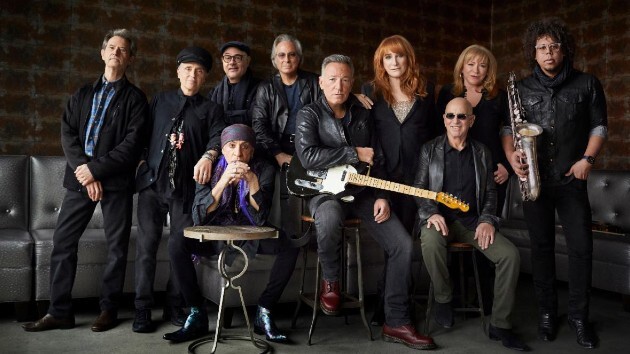
The day Bruce Springsteen fans have been waiting six years for is finally here. Springsteen and the E Street Band launch their new tour Wednesday, February 1, in Tampa, Florida.
The trek hits such cities as Atlanta, Philadelphia, Boston, Houston and Seattle, with four shows in the New York area, before wrapping April 14 in Newark, New Jersey.
This is Bruce and the E Street Band’s first tour since 2016, when they hit the road in support of The Ties That Bind: The River Collection, which celebrated the 35th anniversary of The Boss’ 1980 double album, The River.
Since then, Bruce has starred in his one-man Broadway show, Springsteen on Broadway, and also released two solo albums, 2019’s Western Stars and 2022’s Only The Strong Survive. He also released Letters To You with the E Street Band in 2020.
This new tour hasn’t been without controversy, though. When tickets went on sale many fans were unhappy about either not being able to get tickets or the high prices that were being charged thanks to Ticketmaster’s dynamic pricing option. In response, Bruce said in an interview with Rolling Stone that while he usually charged under market value for his concerts, this time he decided to do what his “peers” were doing. He argued that “most of our tickets are totally affordable.”
And if fans can’t actually make it to a show, they can still enjoy the music. The Boss is releasing official multiple-track audio recordings from every stop on the tour right after each show. They will all be professionally mixed by Chiller Sound’s Jon Altschiller.