
TikTok faces bans in US and other countries. Here’s why.

TikTok faces bans in US and other countries. Here’s why.
Dan Kitwood/Getty Images

(WASHINGTON) — The backlash against China-owned TikTok in the U.S. and other Western countries escalated in recent days, as some U.S lawmakers pushed to give President Joe Biden the authority to impose a ban on the app for all users.

Canada banned TikTok on government-issued mobile devices on Monday, following a similar ban from the European Union last week.

TikTok, which has more than 100 million monthly active users in the U.S., has faced growing scrutiny from government officials over fears that user data could fall into the possession of the Chinese government and the app could ultimately be weaponized by China to spread misinformation.

However, the fight to ban TikTok risks imposing undue limits on free speech and private business, mimicking the type of censorship for which some Western countries have faulted China, according to some experts and civil liberties advocates.

Here’s what to know about why TikTok is being banned, and whether government officials would eventually prevent everyday users from accessing the app:

Why is TikTok being banned?

The primary concern raised by officials banning TikTok centers on data security, especially fears that user information could end up in the hands of the Chinese government.

Such concerns focus both on potential risks posed to U.S. national security, as well as business advantages afforded to Chinese companies that may gain access to the information, Aynne Kokas, professor of media studies and the director of the East Asia Center at the University of Virginia, told ABC News.

“There are significant national security concerns about Chinese firms that are gathering data in the U.S. and what they can do with that,” Kokas said. “TikTok has a lot of users.”

Companies that operate in China must comply with laws that require them to share data with the government, Deputy Attorney General Lisa Monaco said at a panel event earlier this month.

“The bottom line is China has been quite clear that they are trying to mold and put forward the use and norms around technologies that privilege their interests,” she said. “There’s a reason we need to be very concerned.”

In addition, some officials have raised alarm that the Chinese government could use TikTok to spread false information, possibly influencing political discourse and election outcomes.

“There are concerns about the lack of algorithmic transparency on TikTok, and the potential for mis- and disinformation,” Kokas said.

Which countries have banned TikTok?

A slew of countries have imposed restrictions on TikTok.

In 2020, India imposed a full ban on TikTok and dozens of other Chinese apps, citing data privacy and national security concerns. TikTok has faced temporary bans for all users in Indonesia, Bangladesh and Pakistan over the spread of content deemed inappropriate by government officials.

Some countries have joined the U.S. in banning TikTok on government-issued devices. Canada and the European Union imposed such measures in recent days. Taiwan also banned the app from government devices last year.

In response to the government-device bans, TikTok told ABC News in a statement: “We appreciate that some governments have wisely chosen not to implement such bans due to a lack of evidence that there is any such need, but it’s disappointing to see that other government bodies and institutions are banning TikTok on employee devices with no deliberation or evidence.”

“We share a common goal with governments that are concerned about user privacy, but these bans are misguided and do nothing to further privacy or security,” the company added.

Will the U.S. ban TikTok entirely?

So far, restrictions of TikTok in the U.S. at the state and federal level have solely focused on banning the app from government-issued devices and currently no further bans have been put in place.

“There’s a huge amount of logic for government-device bans,” Kokas said. “It doesn’t fall victim to the same conversations about free speech because these are government-owned devices.”

The Biden administration said on Monday that it is giving federal agencies 30 days to guarantee they do not have TikTok on any federal devices.

“We’ll continue to look at other actions that we can take,” Olivia Dalton, the White House principal deputy press secretary, told reporters on Tuesday. “That includes how to work with Congress on this issue further.”

In response to the U.S. ban of the app on government-issue devices, TikTok told ABC News: “The ban of TikTok on federal devices was passed in December without any deliberation, and unfortunately that approach has served as a blueprint for other world governments. These bans are little more than political theater.”

“We hope that when it comes to addressing national security concerns about TikTok beyond government devices, Congress will explore solutions that won’t have the effect of censoring the voices of millions of Americans,” the company added.

TikTok CEO Shou Zi Chew is scheduled to appear before the House Energy and Commerce Committee in March about the company’s data security practices, the committee said last month.

More than half of U.S. states have taken steps toward a partial or full ban of TikTok on government devices.

Some lawmakers and advocates, however, have sought to extend the ban to all U.S. users. The House Foreign Affairs Committee is weighing a measure that would grant Biden new authority to ban TikTok.

TikTok has undergone a yearslong review by the ​​Committee on Foreign Investment in the United States, which could result in a ban of the app or a forced sale of the company’s U.S. operation.

Despite momentum among lawmakers for a full U.S. ban, the likelihood of such a move remains low, experts told ABC News. citing the dramatic intervention into the private sector that it would require. Moreover, if such a move did take place, it would face a challenge in the courts, they added.

“I’m skeptical that a ban would survive constitutional scrutiny in the U.S.,” Anupam Chander, a professor of law and technology at Georgetown University, told ABC News. “Because we have a First Amendment right to receive information, even information from adversary countries.”

In a letter to federal lawmakers on Monday, the American Civil Liberties Union voiced opposition to a full ban of TikTok.

“Congress must not censor entire platforms and strip Americans of their constitutional right to freedom of speech and expression,” said Jenna Leventoff, senior policy counsel at the ACLU.

Copyright © 2023, ABC Audio. All rights reserved.

FAA investigating close call involving JetBlue plane at Boston airport

FAA investigating close call involving JetBlue plane at Boston airport
Robert Smith/MI News/NurPhoto via Getty Images

(BOSTON) — The Federal Aviation Administration is investigating another close call involving two jets at Boston Logan International Airport. The FAA said a Learjet took off from a runway without clearance from air traffic control while a JetBlue flight was preparing to land on an intersecting runway.

The agency said air traffic control instructed the Learjet pilot to line up and wait on runway 9 while the JetBlue plane landed on an intersecting runway. The Learjet pilot read back the instructions, “but began a takeoff roll instead,” the FAA said in a statement.

The JetBlue pilot “took evasive action and initiated a climb-out as the Learjet crossed the intersection,” the FAA said.

The agency did not say how close the planes were to each other.

In a statement to ABC News, JetBlue said, “Safety is JetBlue’s first priority and our crews are trained to react to situations like this. We will assist authorities as they investigate this incident.”

The incident, first reported by NBC News, is the latest in a series of recent close calls under investigation by the FAA.

In December of last year, a United Airlines flight bound for San Francisco experienced a sudden loss in altitude over the Pacific Ocean. Shortly after takeoff from Maui, the Boeing 777 dropped to just 775 feet above the water in less than 20 seconds, according to data from FlightRadar24. The plane was then able to regain altitude and continue on to its final destination.

In January, an American Airlines flight crossed a runway at New York’s JFK Airport without clearance from air traffic control. A Delta Air Lines flight was taking off from that same runway and was forced to abort its takeoff, according to the National Transportation Safety Board.

The two aircraft came within about 1,400 feet of each other, according to a preliminary report from the NTSB.

In another January incident, a United Airlines flight crossed a runway at Honolulu International Airport without clearance from air traffic control. A Cessna was landing on the same runway at the time, the FAA said. The Cessna came to a stop approximately 1,170 feet from the United flight, according to the agency.

In February, a FedEx cargo plane was cleared to land at Austin-Bergstrom International Airport in Texas, just as a Southwest flight was cleared to take off from the same runway, according to the FAA.

As the FedEx plane was landing, the Southwest plane began its takeoff; the planes came within 100 feet of each other, according to the NTSB.

Acting FAA Administrator Billy Nolen announced earlier this month the agency would establish a safety review team to examine the nation’s aerospace system — saying the group will look at structure, culture, systems and integration of safety efforts.

“We are experiencing the safest period in aviation history, but we cannot take this for granted,” Nolen said in a hearing on Capitol Hill. “Recent events remind us that we must not become complacent. Now is the time to stare into the data and ask hard questions.”

Copyright © 2023, ABC Audio. All rights reserved.

Dr. Dre thought Michael B. Jordan was “out of his mind” for starring in & directing ‘Creed III’

Dr. Dre thought Michael B. Jordan was “out of his mind” for starring in & directing ‘Creed III’
Sonja Flemming/CBS

If there’s one person proud of Michael B. Jordan, it’s Dr. Dre. In an interview with Entertainment Tonight, the producer praised MBJ for starring in his directorial debut, Creed III — though he thought the actor was crazy for taking on the extra responsibility. 

“Mike actually came to my house and screened the film for me, and I thought he was out of his mind,” Dre said on the red carpet of the film’s LA premiere. “First-time director and starring in the film? It’s like, you gotta be crazy to do that, because it’s extremely difficult.” 

After watching the film, however, he said he was proud and excited to see what else Michael has in store as a director.

“I was so proud of him,” said Dre. “I said, ‘Listen, man, I can’t wait to see what’s gonna come out of your mind next, as far as the direction goes,’ you know? It was amazing.”

“I thought they did an amazing job,” he continued. “I’m really proud of it.”

Creed III premieres in theaters March 3. At the LA premiere, Michael told ET about apologizing to his mother before photos from his Calvin Klein’s Spring/Summer 2023 campaign, in which he only sported underwear, surfaced on the web.

“I was like, my mama gon’ have to see this. Let me call her and be like, ‘I’m sorry. It’s out here,'” Michael shared. “My business all out in the streets — literally.”

The actor’s set to receive a star on the Hollywood Walk of Fame on March 1.

Copyright © 2023, ABC Audio. All rights reserved.
Kodak Black ordered to enter drug rehab facility

Kodak Black ordered to enter drug rehab facility
Tommaso Boddi/WireImage

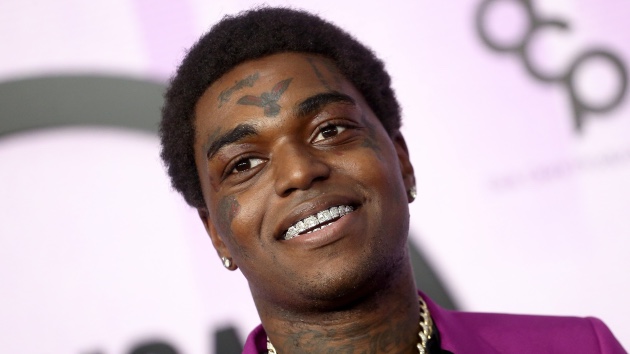
A South Florida judge has ordered Kodak Black to enter a drug rehabilitation facility after he allegedly tested positive for fentanyl earlier this month and violated his pretrial release. As ABC affiliate WPLG reports, the rapper will serve a 30-day sentence, which will start next week Tuesday, allowing him to perform at Rolling Loud California this weekend. He says money he earns from the event will be donated to charity.

News of Kodak’s rehab requirement comes after a warrant was issued for his arrest last week. Police say he didn’t submit to a drug and alcohol test on February 3 and tested positive for fentanyl after getting tested on February 8.

During a hearing Tuesday, Kodak’s attorney Bradford Cohen argued there could have been a mix-up between his client’s urine sample and paperwork and someone else’s; a lab worker testified that could be true. Cohen also noted the rapper had no prior positive fentanyl tests and had gone to rehab in the past.

The judge gave Kodak, born Bill Kapri, the option to give a hair sample to determine whether he had drugs in his system. She ordered the 30-day rehab program when he refused to provide the sample. The rapper then thanked the judge and asked for a Jolly Rancher before making his way out of the courtroom.

Kodak was first arrested in July in Fort Lauderdale after troopers pulled him over, and found 31 oxycodone pills and $74,960 in cash in the car. He is awaiting trial and has pleaded not guilty. 

Copyright © 2023, ABC Audio. All rights reserved.

New documentary asks ‘What the Hell Happened to Blood, Sweat & Tears?’

New documentary asks ‘What the Hell Happened to Blood, Sweat & Tears?’
ABRAMORAMA Films

A new documentary is setting out to answer the question What the Hell Happened to Blood, Sweat & Tears? Directed by John Scheinfeld, who directed The U.S. vs. John Lennon and more, the documentary is set to hit theaters March 24. 

According to the description, the film explores how the band “was unknowingly embroiled in a political rat’s nest involving the U.S. State Department, the Nixon White House and a controversial concert tour of Yugoslavia, Romania and Poland, countries that were behind what was then known as the Iron Curtain.”

It continues, “As a result, they found themselves in the crossfire of a polarized America, as divided then as it is now.” 

Blood, Sweat & Tears is known for such hit songs as “Spinning Wheel” and “You’ve Made Me So Very Happy.” Their self-titled sophomore release won the Grammy for Album of the Year in 1970, beating out such iconic records as The Beatles’ Abbey RoadJohnny Cash’s Johnny Cash at San Quentin and Crosby, Stills & Nash’s self-titled release.

Copyright © 2023, ABC Audio. All rights reserved.

Judge on Steve Bannon trial: ‘We can’t keep dragging this out’

Judge on Steve Bannon trial: ‘We can’t keep dragging this out’
Michael M. Santiago/Getty Images

(WASHINGTON) — Steve Bannon, a former adviser to Donald Trump, appeared in court Tuesday with a new crop of lawyers who promptly decried the “explosion” of evidence disclosures from the Manhattan District Attorney’s Office and asked for additional time to review them.

“Now we have 32 terabytes of discovery,” defense attorney Harlan Protass said. “We, like prior counsel, need time to get our hands around that discovery before we are able to set a motion schedule.”

Bannon, who appeared in a black jacket over a black untucked button down, is charged with defrauding donors to We Build the Wall, an online fundraising mechanism for former President Trump’s signature domestic project.

Bannon hired new lawyers after his prior counsel, David Schoen and John Mitchell, withdrew, citing “a complete breakdown in communication” with their client. The new attorneys sought a 90-day delay.

“All of us at this table are experienced at doing complicated cases,” defense attorney John Carlan said. “We have to, in some general sense, get our arms around what we’re talking about.”

The judge granted a 90-day reprieve and ordered Bannon to return to court May 25, citing a need to “move the case along” after Bannon’s arraignment five months ago.

“Other than discovery being turned over, nothing has happened. Part of that is of Mr. Bannon’s own doing,” Judge Juan Merchan said. “We can’t just keep dragging this out.”

The judge, however, chided prosecutors over the true volume of discovery and the pace of its disclosure to the defense.

“What is the number really the defense is dealing with?” Merchan asked.

Assistant District Attorney Daniel Passeser struggled to explain the varying sources of evidence and size of the files.

“I don’t think it’s for you to decide what’s important or relevant for the defense to look at,” Merchan said.

In another potential shakeup in the case, the attorney for We Build the Wall asked to resign from the case, arguing the entity no longer functions or employs anyone.

“The human beings associated with We Build the Wall have all resigned,” defense attorney Justin Weddle said. “There will be no people with whom I can communicate.”

Prosecutors objected.

“We only found out about this 10 minutes ago,” Passeser said.

Merchan declined to immediately grant the motion and ordered Weddle to return to court March 16.

Copyright © 2023, ABC Audio. All rights reserved.
Ukraine military adviser: ‘Our air defense system will not be complete without F-16s’ from US

Ukraine military adviser: ‘Our air defense system will not be complete without F-16s’ from US
ABC News

(KYIV, Ukraine) — The war in Ukraine is entering its second year as fighting continues on the eastern frontline, where the battle for Bakhmut has intensified in recent weeks. The United Nations says more than 8,000 civilians have died, and Russia is launching new attacks by the hour.

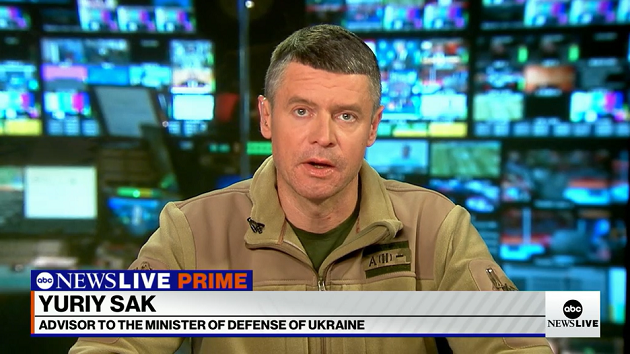
ABC News’ Linsey Davis and Ian Pannell spoke with Yuriy Sak, adviser to Ukraine’s defense minister, on the need for U.S. fighter jets and whether the American public’s support for aid to Ukraine is waning.

LINSEY DAVIS: The destruction we’re seeing in Bakhmut is just staggering. What’s the front line in this war right now?

YURIY SAK: Good afternoon, Linsey, and thank you for inviting me. Of course, the situation on the front lines is very difficult. In some places, the fierce fighting continues. There are cities such as Bakhmut, which have been under attack now for almost eight months, actually, but the fighting during the past weeks has intensified. We are observing the buildup of Russian troops. They are increasing the intensity of their attacks. They are continuing to throw their soldiers as cannon fodder. Our minister of defense, Mr. Oleksii Reznikov, just yesterday said that near Bakhmut, on a daily basis, Ukrainian Army is killing approximately 500 Russian soldiers. So just this rate at which we are destroying the enemy, this rate in itself is a good testimony to the intensity of the fighting in the eastern front of Ukraine.

DAVIS: “World News Tonight” anchor David Muir asked President [Joe] Biden about sending American F-16s to Ukraine on Friday. I want you to listen to part of that exchange:

DAVID MUIR: But we know President Zelenskyy continues to say what he really needs are F-16s. Will you send F-16s?

BIDEN: Look, we’re sending him what our seasoned military thinks he needs now.

MUIR: You don’t think he needs F-16s now?

BIDEN: No, he doesn’t need F-16s now.

MUIR: Is that a never?

BIDEN: Look, first of all, the idea that we know exactly what’s going to be needed a year or two or three from now — but there is no basis upon which there is a rationale, according to our military now, to provide F-16s.

MUIR: But you’re not ruling it out.

BIDEN: I am ruling it out for now.

MUIR: For now.

DAVIS: Yuriy, curious to your response to that. What would you tell the president, who is clearly saying that you don’t need these planes?

SAK: Well, you know, I’m tempted to say that — there is this famous saying that — but I will paraphrase it. You don’t bite the hand that gives you HIMARS, that gives you tanks, and then hopefully will give you F-16s. Now, what I can say that we are thankful and grateful to the U.S. leadership when it comes to provision to Ukraine of the military assistance. Everything that we received so far, most often it’s been a game changer. The HIMARS system, now we’re waiting for the Patriots, the tanks. Now, when it comes to F-16s, let’s look at the last 24 hours. Ukraine was a target again of the drone attack. Now we, our Air Defense Forces, have been able to shoot down 11 out of 14 Iranian drones.

And our president, when he was making his evening address, said it very clearly. So, this is just a very good example why we need the F-16s. And we understand that these are sophisticated platforms. We understand that they require training. We understand that for each pilot, there needs to be a crew of about 25 to 30 engineers. We understand that. But for us to be able to efficiently protect our skies, to make sure that situations like the one yesterday, the attacks, are repelled now — our air defense system will not be complete without F-16s. I’m sure that everybody understands this. I will just repeat that we have seen during the last 12 months that, everything which seems impossible, and which other allies are kind of reluctant or hesitant to provide us, sooner or later, we get it. So we are just asking, let’s make it sooner rather than later.

DAVIS: I want to bring in our Chief Foreign Correspondent Ian Pannell. Ian, I know you have a few questions.

IAN PANNELL: Yeah, thanks Linsey. Yuriy, good evening. I’d like to ask you about waning U.S. support. It’s something I asked President Zelenskyy about in his press conference on Friday. As you know, the numbers are falling of Americans who support the funding or the support to Ukraine. Can you tell me as we go into the second war [sic] in Ukraine, why should Americans continue to care and continue to pay for Ukraine’s war?

SAK: Well, I would answer that making two points. Point No. 1, during the latest NATO summit in Madrid, the NATO members have stated very clearly that Russia is the most real threat to NATO allies and to the U.S. in particular. So that’s No. 2.

Point No. 2, yesterday, while here in Washington, D.C., I went to visit the Arlington Cemetery. And the American people know the price that has to be paid for freedom. I think this is the key factor why American people and the American government will continue to stand with Ukraine, because of all the nations on this planet. This country knows that freedom comes at a cost. And I believe that there are now estimates that on average, the repelling of the greatest evil that we have to face now cost the American taxpayers on average, 50 cents per day. So, this seems to be not a very high price to pay to save the world from the spread of this — and I will have to repeat this. We’ve never asked the American Army, American soldiers to fight for us. We are doing it ourselves. We just want the American people and the government to stand with us. And this will bring us closer to victory in this freedom war, because we are fighting not just for Ukraine, not just for Bakhmut, Mariupol, Kherson. We are fighting for our shared values, for our common freedom. And I think this is the deep-seated reason why our alliance must continue. And I am sure that it will.

DAVIS: Ian also reported tonight on the warning from the U.S. to China not to arm the Russians. How concerned are you about China taking a more active role in this war?

SAK: Of course, we are concerned about any country willing to support Russia in their aggression against our people, against our country, against our values. Now, because we are already having to deal with the Russia’s alliance with Iran, who is providing Russia with the lethal drones, and there are talks that Russia will be planning to get cruise missiles from Iran as well. So we hope that China, as a major player on the international arena, is not interested in supporting the country, which is a terrorist state, which is an aggressor, which has violated every article on the UN Charter. It’s logical that China probably will be better off living in a predictable world based on rules, rather than on chaos and dominance of tyrants. So we hope that China continues to have a pragmatic approach, that China will not supply any weapons. And our president said it very clearly, that we will be talking to the Chinese government, with a view to making sure that through diplomatic means, China remains at least neutral.

DAVIS: Yuriy Sak, Ian Pannell, we thank you so much for just this time and really to discuss this important conversation. Appreciate you both.

SAK: Thank you. Thank you Linsey.

Copyright © 2023, ABC Audio. All rights reserved.

FISA program that helped take down Zawahiri is expiring. Officials are sounding the alarm

FISA program that helped take down Zawahiri is expiring. Officials are sounding the alarm
Ting Shen/Bloomberg via Getty Images

(WASHINGTON) — Top U.S. officials on Tuesday began their formal efforts to sound an alarm to Congress on a surveillance program — one they describe as “critical” to protecting national security — that is set to expire at the end of this year.

The statute, Section 702 of the Foreign Intelligence Surveillance Act, lays the groundwork for the government to be able to collect the communications of non-Americans overseas who message on U.S.-based platforms without use of a warrant.

The program has drawn scrutiny, however, over the incidental collection of Americans’ communications that are swept up in the process — and the ability for officials at agencies to in certain cases search through that collected information.

“What keeps me up at night is thinking about what will happen if we fail to renew Section 702 of FISA,” DOJ Assistant Attorney General Matt Olsen said in a speech at the Brookings Institution Tuesday. “In the 15 years since enactment, Section 702 has become the Intelligence Community’s most valuable national security legal tool. And we must retain it to confront the evolving threats we will be facing ahead.”

Attorney General Merrick Garland and Director of National Intelligence Avril Haines sent a joint letter to congressional leaders Tuesday morning urging them to reauthorize the program, listing several specific instances in which Section 702 was used to disrupt national security threats.

Section 702-acquired information helped contribute to the successful U.S. targeting of al-Qaeda leader Ayman al-Zawahiri last year, has helped officials quickly identify foreign perpetrators of ransomware attacks against critical infrastructure inside the U.S., and helped authorities disrupt foreign adversaries’ attempts to recruit spies in the U.S.; among other examples outlined by Garland and Haines.

President Joe Biden’s national security adviser Jake Sullivan also expressed the administration’s support for reauthorization of Section 702 in a statement this morning, describing the program as a “cornerstone of U.S. national security.”

“This authority is an invaluable tool that continues to protect Americans every day and is crucial to ensuring that U.S. defense, intelligence, and law enforcement agencies can respond to threats from the People’s Republic of China, Russia, nefarious cyber actors, terrorists, and those who seek to harm our critical infrastructure,” Sullivan said.

House Republicans, including Judiciary Committee Chairman Rep. Jim Jordan of Ohio, have already made clear their plans to fight any effort to reauthorize the program without significant concessions. In appearances on Fox News and other conservative outlets, they have sought to tie the issue to concerns voiced by former President Donald Trump and his long-running attacks on the intelligence community’s surveillance powers.

Trump has largely hinged those grievances on the FBI’s handling of surveillance against a former adviser to his campaign, Carter Page, in 2016 and 2017. A DOJ inspector general report found significant inaccuracies and omissions in the applications for court-authorized wiretaps against Page.

But that program is entirely separate from the FISA program that the administration is currently appealing to Congress to reauthorize before its end of year expiration, which doesn’t involve court approved warrants.

For comparison, in 2021 officials identified more than 230,000 instances in which non-U.S. persons were targets of Section 702 warrantless surveillance. That same year officials only sought FISA court-authorized surveillance against more that 370 Americans or non-U.S. citizens inside the country, according to the most updated data from the DNI.

Olsen, though, acknowledged Tuesday the valid criticism of cases when officials have been found to have misused the Section 702 program. An audit late last year outlined several times when FBI officials used the 702 search query system using Americans’ identifiers for unauthorized purposes.

In certain cases, such queries would be proper if an official was seeking to identify an American who could be considered a victim of foreign hacking or spying. But the audit found cases in which it said officials appeared to have misunderstood the rules and used the program to screen potential informants for any damaging information and one case where an agent queried the name of a local political party to see if it had connections to foreign intelligence.

“At the end of the day, these mistakes are not acceptable,” Olsen said. “They aren’t acceptable to us, are not acceptable to the court or Congress, and not acceptable to the public. Nor should they be.”

Olsen said following the audit the FBI implemented several reforms that resulted in a dramatic drop in the total number of U.S. person queries.

“Of course, there are going to be compliance incidents in a complex system, involving human beings, trying to work on tremendously difficult problems under time pressure,” Olsen said. “But the reality is that every mistake undermines public trust and confidence in how we use these tools.”

Olsen said moving forward would require candid discussions with congressional leaders on the importance of reauthorizing the program, but repeatedly sought to underscore what he said could be dire implications for U.S. national security if the program lapsed for even a few days.

“I think it is very dire,” Olsen said. “I can tell you from my own career going back to my time at the FBI in the 2000s to today, I have seen the way in which 702 has become increasingly important — increasingly the tool that enables us to collect information that we have no other way of getting.”

Copyright © 2023, ABC Audio. All rights reserved.

One of the world’s last cities with a mask mandate plans to drop it

One of the world’s last cities with a mask mandate plans to drop it
Paul Yeung/Bloomberg via Getty Images

(HONG KONG) — Hong Kong is ending its mask mandate Wednesday, becoming one of the world’s last cities to drop rules demanding face coverings.

In a press conference Tuesday, Chief Executive John Lee said residents and tourists will not be required to wear masks indoors, outdoors or on public transportation for the first time in nearly three years.

However, masks will still be required in health care settings such as hospitals and nursing homes.

The mandate, which went into effect in mid-July 2020, imposed a more than $600 fine to those who didn’t follow mask rules.

“After looking at all the data, the trends and the fact that the winter surge [of influenza] is nearing the end, in order to give people a very clear message that Hong Kong is resuming to normalcy, I think this is the right time to make the decision,” Lee said.

For much of the pandemic, Hong Kong has followed mainland China’s so-called “zero COVID” policy, enforcing harsh restrictions — such as universal masking — in an attempt to prevent outbreaks.

However, after China dropped several of its stringent policies in December 2022 and Hong Kong followed suit, it led to a surge of cases not seen since March 2022, according to Our World in Data, which uses data from Johns Hopkins University.

Cases have been declining for weeks. On Tuesday, Hong Kong recorded just 96 COVID-19 cases, according to Hong Kong’s Centre for Health Protection.

Several other countries and territories in Asia have been rolling back COVID-19 restrictions as leaders look to shift to an endemic phase.

In late January, South Korea rolled back face covering requirements for most indoor places.

Additionally, last week, the gambling hub of Macao said people will not be required to wear mask outdoors but will still be required in elderly care homes, hospitals and public transit. Indoor venues, such as casinos, can set requirements at their discretion.

Leaders in Hong Kong hope the easing of requirements will help bring back tourists and businesses. Earlier this month, the tourism board launched the “Hello Hong Kong” campaign, giving away 500,000 free airline tickets in an attempt to lure international travelers.

“With the masking requirement removed, we are starting to resume to normalcy comprehensively and that will be very beneficial to the economic development, our international competitiveness, as well as our activities which involve everyone in Hong Kong,” Lee said.

Lo Chung-mau, director of the Medical and Health Bureau, said at the press conference that he expects cases of respiratory viruses, such he expects the peak to be short and that it will have very little impact on public health systems.

“We look forward to a better tomorrow, which is the 1st of March so that we can all put a smile on our faces say, ‘Hello, Hong Kong,'” he said, according to Hong Kong Free Press.

ABC News’ Britt Clennett contributed to this report.

Copyright © 2023, ABC Audio. All rights reserved.

Former FTX executive Nishad Singh pleads guilty to charges related to crypto exchange’s collapse

Former FTX executive Nishad Singh pleads guilty to charges related to crypto exchange’s collapse
Beata Zawrzel/NurPhoto via Getty Images

(NEW YORK) — Nishad Singh, former director of engineering at FTX, the bankrupt cryptocurrency exchange founded by Sam Bankman-Fried, agreed Tuesday to plead guilty to criminal charges, according to his lawyers and federal prosecutors in New York.

Singh agreed to plead guilty to six counts of fraud and conspiracy contained in information unsealed Tuesday, becoming the third member of Bankman-Fried’s inner circle to admit guilt and cooperate with federal prosecutors as they build a case against those believed responsible for what U.S. Attorney Damian Williams has called one of the biggest financial frauds in American history.

“Today’s guilty plea underscores once again that the crimes at FTX were vast in scope and consequence,” Williams said in a statement. “They rocked our financial markets with a multibillion dollar fraud. And they corrupted our politics with tens of millions of dollars in illegal straw campaign contributions. These crimes demand swift and certain justice and that is exactly what we are seeking in the Southern District of New York.”

Caroline Ellison, former CEO of Alameda Research, Bankman-Fried’s privately controlled hedge fund, and Gary Wang, co-founder of FTX, have also pleaded guilty to criminal charges and agreed to assist the government’s prosecution. Bankman-Fried has pleaded not guilty to eight criminal counts and prosecutors recently added an additional four counts.

Singh contributed to the fraud that led to the $32 billion bankruptcy of FTX by providing “misleading information to auditors about FTX’s revenue,” knowing that information would be given to prospective investors, according to the information.

Singh was also part of the conspiracy to make political contributions to candidates and committees that were paid for using funds from Bankman-Fried’s privately controlled hedge fund, Alameda Research, but reported to the Federal Election Commission under different names, the information said.

“Nishad is deeply sorry for his role in this and has accepted responsibility for his actions,” Singh’s lawyers, Andrew D. Goldstein and Russell Capone, said in a statement to ABC News. “He wants to do everything he can to make things right for victims, including by assisting the government to the best of his ability in this case.”

In exchange for his cooperation, federal prosecutors agreed to recommend a sentence below the 75-year maximum attached to the charges, according to the plea agreement also unsealed Tuesday.

Prosecutors agreed to Singh’s release on a $250,000 personal recognizance bond.

Copyright © 2023, ABC Audio. All rights reserved.