
‘Sinners’ wins big, Salt-N-Pepa accepts Hall of Fame award at NAACP Image Awards 2026

‘Sinners’ wins big, Salt-N-Pepa accepts Hall of Fame award at NAACP Image Awards 2026
Delroy Lindo, Wunmi Mosaku, Jayme Lawson, Sev Ohanian, Ludwig Göransson, Michael B. Jordan, Zinzi Coogler, Miles Caton, and Ryan Coogler accept the Outstanding Motion Picture Award for “Sinners” onstage during the 57th NAACP Image Awards at Pasadena Civic Auditorium on February 28, 2026 in Pasadena, California. (Photo by Paras Griffin/Getty Images for BET)

Black excellence was celebrated at the 57th annual NAACP Image Awards Saturday.

Host Deon Cole kicked off the night with a comedic prayer, which included a request for more pettiness from 50 Cent and poked fun at Nicki Minaj’s support of President Donald Trump. He also made reference to the incident at the BAFTA Film Awards, during which John Davidson, who has Tourette syndrome, yelled racial slurs as Michael B. Jordan and Delroy Lindo were on the stage.

Regina Hall praised Jordan and Lindo for responding with class, before presenting Sinners star Miles Caton with outstanding breakthrough performance (motion picture). Lindo later thanked everyone who showed him and Jordan support in the wake of the incident.

Quinta Brunson received the award for outstanding actress in a comedy series for Abbott Elementary. Angela Bassett won outstanding actress in a drama series for 9-1-1, and Sterling K. Brown took home the male equivalent for Paradise, shouting out Black women for supporting him throughout his journey.

Cynthia Erivo was named outstanding actress in a motion picture for Wicked: For Good. Michael B. Jordan was named Entertainer of the Year and won outstanding actor in a motion picture for Sinners, where he paid homage to Chadwick Boseman in his speech. Sinners later took home the award for outstanding motion picture.

NAACP President Derrick Johnson paid tribute to the late Jesse Jackson, with Samuel L. Jackson sharing how Jesse inspired him to believe in himself with the famous chant, “I am somebody.”

Viola Davis was honored with the Chairman Award; she acknowledged “the people that we forget, the people that we don’t think about” and “those caring for her mother who has dementia,” among others.

Salt-N-Pepa and DJ Spinderella received the Hall of Fame award, and Colman Domingo was honored with the President’s Award. An in memoriam tribute remembered late Black entertainers including Malcolm Jamal Warner, D’Angelo, Angie Stone, Roberta Flack and Sly Stone.

Copyright © 2026, ABC Audio. All rights reserved.

Olivia Dean wins big at BRIT Awards, Harry Styles opens show with massive dance number

Olivia Dean wins big at BRIT Awards, Harry Styles opens show with massive dance number
Olivia Dean poses in the winners room at The BRIT Awards 2026, Feb. 28, 2026 in Manchester, England. (Dave Benett/Getty Images)

Olivia Dean went four for five Saturday night at the BRIT Awards, the U.K. equivalent of the Grammys.

After winning the Grammy for best new artist, Olivia was nominated in five categories at the BRITs, held in Manchester, England. She took home four: artist of the year, pop act, Mastercard album of the year for The Art of Loving and song of the year for “Rein Me In,” a collaboration with singer/songwriter Sam Fender that’s currently #1 on the U.K. singles chart. She also performed “Man I Need” during the show.

Lola Young, who was also up for five trophies, won breakthrough artist, accepting the trophy from Myles Smith.

Opening the show, Harry Styles gave the first live performance of his #1 single “Aperture.” It was a huge number with a full chorus of background singers and more than a dozen male dancers, and featured some fancy footwork from Harry himself.  He wore black-and-white pinstriped trousers, a pinstriped shirt, a striped tie and bow-trimmed ballet flats, all by Chanel, according to People.

The winner for international song of the year was “APT.”  by ROSÉ & Bruno Mars, marking the first-ever BRIT Award for a K-pop artist. And speaking of K-pop, the voices of KPop Demon Hunters’ HUNTR/X — EJAE, Audrey Nuna and Rei Ami — were also seen performing “Golden” on the show.

Mark Ronson won the outstanding contribution to music award, and performed a career-spanning medley, during which he was joined by frequent musical collaborator Dua Lipa, among others.

The late Ozzy Osbourne was posthumously honored with a BRITs Lifetime Achievement award, introduced by Dolly Parton via a pre-recorded message. His widow, Sharon Osbourne, accepted the trophy.

Alex Warren, RAYE and sombr also performed during the ceremony.

Copyright © 2026, ABC Audio. All rights reserved.
Noel Gallagher, Ozzy Osbourne honored at 2026 BRITs; Sam Fender, Wolf Alice among winners

Noel Gallagher, Ozzy Osbourne honored at 2026 BRITs; Sam Fender, Wolf Alice among winners
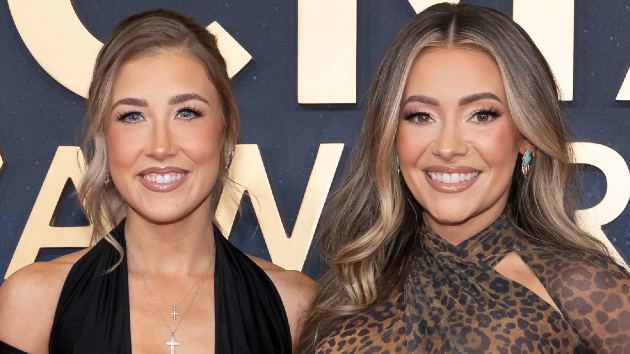
Noel Gallagher on stage accepting the songwriter of the year award during The BRIT Awards 2026 at Co-op Live on February 28, 2026 in Manchester, England. (JMEnternational/Getty Images)

Noel Gallagher and Ozzy Osbourne were honored Saturday at the 2026 BRIT Awards, the U.K. equivalent of the Grammys.

The Oasis guitarist received the songwriter of the year award despite not having not released a new song in the past year, though it’s hard to deny the impact of his and his brother Liam Gallagher’s reunion tour in 2025.

In accepting the prize, Noel thanked his aforementioned brother as well as the rest of Oasis for bringing “those songs to life.”

The late Prince of Darkness, meanwhile, was posthumously honored with the BRIT lifetime achievement award. The ceremony also featured a performance of the song “No More Tears” featuring Ozzy band members including Metallica bassist Robert Trujillo, guitarist Zakk Wylde, keyboardist Adam Wakeman and drummer Tommy Clufetos. The rendition was fronted by English pop star Robbie Williams.

The night’s winners included Sam Fender for alternative/rock act and song of the year for his collaboration with Olivia Dean, “Rein Me In,” Wolf Alice for group of the year, Lola Young for breakthrough artist and Geese for international group.

Wolf Alice also performed, as did sombr, who was seemingly accosted by a stage-rushing fan during his set. However, a rep for sombr confirms to Variety that the incident was staged and was intentionally part of the production.

Copyright © 2026, ABC Audio. All rights reserved.

Iran strike was Pentagon’s 1st use of 1-way drones, CENTCOM says

Iran strike was Pentagon’s 1st use of 1-way drones, CENTCOM says
Smoke rises over the city center after an Israeli army launches 2nd wave of airstrikes on Iran on February 28, 2026. (Photo by Fatemeh Bahrami/Anadolu via Getty Images)

(NEW YORK) — Saturday’s attack against Iran was the Pentagon’s first use of one-way drones in combat, CENTCOM said, and only about three months since its first notable test in the field — a rapid turnaround for a weapon system in the United States’ arsenal.

The use of one-way drones comes as military planners have been rapidly building up a squadron in the Middle East of Low-Cost Unmanned Combat Attack System, or LUCAS, a one-way attack drone produced by Arizona-based SpektreWorks.

Each unit costs about $35,000 — much cheaper than a $30 million Reaper drone and subsequent munitions.

The drones are brand new, being deployed to the Middle East in December and having their first test flight from a Navy ship that month.

The American drone was reverse-engineered from Iran’s Shahed drones that have been used by Iran against Israel and by Russia against Ukraine.

The new drones are part of CENTCOM’s Task Force Scorpion Strike, which was founded shortly after Defense Secretary Pete Hegseth directed acceleration of the acquisition and deployment  of cheap drone technology last summer.

LUCAS drones are designed to operate autonomously, according to CENTCOM. They can be launched with different mechanisms to include catapults, rocket-assisted takeoff, and ground and vehicle systems.

“Autonomous” doesn’t always refer to technology that doesn’t require humans for a designate a target, just that it doesn’t necessarily require human involvement after a target is selected, according to Pentagon policy.

One-way attack drones became notable in the war in Ukraine and spurred enormous investment into the technology from the Pentagon as a significantly cheaper option with relative ease of use compared to other weapons and aircraft.

“The first hours of the operation included precision munitions launched from air, land, and sea,” CENTCOM said in a statement. 

Copyright © 2026, ABC Audio. All rights reserved.

Iranian officials claim school hit during US-Israeli army strikes

Iranian officials claim school hit during US-Israeli army strikes
A plume of smoke rises after an explosion on February 28, 2026 in Tehran, Iran. (Majid Saeedi/Getty Images)

(NEW YORK) — Dozens of students at an Iranian all-girls elementary school were among those killed during the U.S. and Israeli military strikes throughout the country Saturday morning, officials in Iran claimed.

The country’s leaders and state TV said 85 people who were at the Shajare Tayyiba Elementary School were dead, as of 10:40 a.m. ET, after the school in Minab was attacked.

At least 92 injuries related to the school attack were reported, according to Iran’s Tasnim News Agency, which cited the local governor.

Iranian officials have not immediately said how many of the dead and wounded are children. Earlier in the morning, Iran’s state broadcaster, IRIB, reported shortly after that the death toll had risen to 57 school girls, with another 60 injured.

Iranian President Masoud Pezeshkian blasted the United States and Israeli governments for the deaths and injuries in a statement Saturday carried by the IRGC-affiliated Fars News Agency.

“This barbaric act is another black page in the record of countless crimes committed by the aggressors against this land that will never be erased from the historical memory of our nation,” he said.

Iranian Foreign Minister Abbas Araghchi said in an X post that the school was “bombed in broad daylight, when packed with young pupils.”

A spokesman for U.S. Central Command said in a statement that it would look into the reports about the school being bombed but emphasized, “Unlike Iran, we have never — and will never — target civilians.”

“We take these reports seriously and are looking into them,” Capt. Tim Hawkins, a CENTCOM spokesman, said in a statement. “The protection of civilians is of utmost importance, and we will continue to take all precautions available to minimize the risk of unintended harm.”

International law prohibits the deliberate targeting of schools and universities during armed conflicts.

The U.S. military has a rigorous targeting process using different forms of intelligence to ensure that any targets to be struck by bombs or missiles are, in fact, enemy targets and will not harm civilians or strike civilian targets.

Claims of civilian casualties are investigated as much as possible, although it may not be possible to do so in areas controlled by hostile forces.

The Global Coalition to Protect Education from Attack, a non-profit that tracks military attacks on academic institutions, documented more than 6,000 attacks on schools, universities, students and education personnel worldwide between 2022 and 2023.

The group’s global research found that 10,000 students and education personnel were killed, injured, abducted or otherwise harmed during that time period.

Copyright © 2026, ABC Audio. All rights reserved.

Trump says new call for regime change in Iran justified by ‘imminent threats’ to US

Trump says new call for regime change in Iran justified by ‘imminent threats’ to US
People take shelter as Iran launched missiles and drones towards Israel following the US-Israeli attacks, in Jerusalem on February 28, 2026. (Photo by Mostafa Alkharouf/Anadolu via Getty Images)

(NEW YORK) — In announcing the U.S. military strike on Iran, President Donald Trump went significantly beyond his previous justification of destroying the country’s nuclear program.

He’s now also calling for regime change — and encouraging the Iranian people to rise up and overthrow their government.

Three sources briefed on the attack told ABC News that Iran’s Supreme Leader Ayatollah Ali Khamenei and President Masoud Pezeshkian were both targeted during the strikes.

But whether American bombing could help make regime change happen — without also deploying U.S. forces on the ground — was unclear, as was who might replace Iran’s current leaders.

“Our objective is to defend the American people by eliminating imminent threats from the Iranian regime, a vicious group of very hard, terrible people,” Trump announced in a video posted to his social media account early Saturday morning.

Speaking to what he called “the great, proud people of Iran,” he added, “I say tonight that the hour of your freedom is at hand.”

“When we are finished, take over your government. It will be yours to take. This will be probably your only chance for generations,” he said.

“For many years, you have asked for America’s help, but you never got it. No president was willing to do what I am willing to do tonight. Now you have a president who is giving you what you want, so let’s see how you respond.” he said.

“America is backing you with overwhelming strength and devastating force. Now is the time to seize control of your destiny and to unleash the prosperous and glorious future that is close within your reach,” he said.

Shortly after, in a brief phone call with a Washington Post reporter, the president said that all he wants is “freedom for the people” of Iran. 

In January, during widespread protests in Iran when thousands of Iranians were reported killed, Trump posted on social media, “Iranian Patriots, KEEP PROTESTING — TAKE OVER YOUR INSTITUTIONS!!! Save the names of the killers and abusers. They will pay a big price.”

“HELP IS ON ITS WAY,” Trump added at the time, though he faced criticism for taking no further action at that point.

Israeli Prime Minister Benjamin Netanyahu, in his own video statement Saturday echoed  Trump’s call, saying the attack’s goal was  “to remove the existential threat posed by the terrorist regime in Iran.”

Iran has claimed it is not pursuing a nuclear weapon and has the sovereign right to pursue a peaceful nuclear program for civilian purposes.

Imminent threat?
Up to now, Trump has said he preferred a diplomatic solution and has not presented a clear justification for why strikes are needed now, since he has repeatedly insisted Iran’s nuclear program was “obliterated” in U.S. strikes he ordered last June — a claim he repeated at last week’s State of the Union address.

In making his new case for the strikes, the president is arguing attacks are warranted to “defend the American people by eliminating imminent threats from the Iranian regime” without providing clear evidence of that.

Trump also argued Iranian missiles could “soon” reach the U.S —  but the president has provided no details.

Iran is “developing long range missiles that can now threaten our very good friends and allies in Europe, our troops stationed overseas and could soon reach the American homeland,” he said.

Yet, according to a one-page document released by the Defense Intelligence Agency earlier this year, Iran is looking to develop an intercontinental ballistic missile by 2035.

Just a few days ago, after the president’s State of the Union address, Secretary of State Marco Rubio told reporters Iranian missiles could reach the United States “one day.”

“Clearly, they are headed in a pathway to one day being able to develop weapons that can reach the continental U.S. They already possess weapons that can reach much of Europe already now as we speak, and the ranges continue to grow every single year exponentially,” Rubio said.

Whether the Iranian missile threat was “imminent” — and whether Congress should vote on committing American troops to an extensive military operation — aimed at pursuing such a broad goal of regime change in Iran — will likely dominate the debate when lawmakers return to Washington this week.


Copyright © 2026, ABC Audio. All rights reserved.
US and Israeli strikes on Iran could rattle oil markets

US and Israeli strikes on Iran could rattle oil markets
A plume of smoke rises after an explosion on February 28, 2026 in Tehran, Iran. (Photo by Majid Saeedi/Getty Images)

(NEW YORK) — The U.S. and Israel’s large-scale strikes on Iran Saturday are expected to rattle oil markets when trading resumes Sunday evening, with analysts anticipating an immediate price reaction and impact on gas prices.

The central concern isn’t just Iran’s oil production, but its influence over the Strait of Hormuz, one of the world’s most important checkpoints for oil.

According to the U.S. Energy Information Administration, roughly 20% of the world’s oil passes through the strait, making Iran’s threats to close the waterway a significant risk. The U.S. is trying to control for this situation by vowing to “annihilate” Iran’s navy. 

Saudi Arabia and the United Arab Emirates have limited infrastructure in place that can bypass the Strait of Hormuz, which has the potential to mitigate any transit disruptions, but not offset them entirely.

While Iran has never followed through on these threats in the past, the perception of risk is still enough to move markets.

GasBuddy’s Patrick DeHaan expects crude oil to jump 5-10% as markets reopen, pushing oil above $70 a barrel.

While this would be much less dramatic than the response to the start of the Russia-Ukraine war in 2022, which drove prices above $100 a barrel, it would still move the average price of gas to above $3 a gallon for the first time this year.

DeHaan noted that gasoline and diesel prices in the U.S will not skyrocket overnight, and the actual impact will depend on the intensity and duration of the conflict.

Copyright © 2026, ABC Audio. All rights reserved.

‘Life Changes’: Thomas Rhett is finally the father of a boy

‘Life Changes’: Thomas Rhett is finally the father of a boy
Thomas Rhett & Lauren Akinds (Daniel Boczarski/Getty Images for Churchill Downs)

Thomas Rhett and Lauren Akins are now the parents of a baby boy, the two revealed on Instagram Friday evening. 

“Oh. my. goodness. Our hearts are just in a big ole puddle with this precious baby BOY,” Lauren begins, leading with a photo of the little one, who has a full head of dark hair, with his arms wrapped around a stuffed duck. 

“Brave Elijah Akins was born last week at almost 10 pounds and almost 2 weeks early-thank you Jesus this big boy didn’t wait another 2 weeks to be born,” she says. “Thomas Rhett was my biggest champion in labor & delivery.”

“He helped deliver him,” she continues, adding a crying emoji, “was the first one to see and *tearfully*, mixed with a bit of shock announce to us all in the room ‘It’s a BOY.’”

“We are so grateful God chose us to have YOU cutie pie,” she closes. “Your four sisters are smitten and we are completely over the moon in love with you big Brave boy.”

The post includes a full carousel of photos of the whole family, including his sisters, Willa Gray, Ada James, Lennon Love and Lillie Carolina, who range in age from 10 to 4.  

Copyright © 2026, ABC Audio. All rights reserved.
Trump threatens ‘certain death’ to Iranian guard who don’t ‘lay down’ weapons

Trump threatens ‘certain death’ to Iranian guard who don’t ‘lay down’ weapons
A plume of smoke rises after an explosion on February 28, 2026 in Tehran, Iran. (Majid Saeedi/Getty Images)

(NEW YORK) — President Donald Trump threatened “certain death” to elite forces in the Iranian regime and advised the country’s military to lay down their weapons as the United States and Israel launched attacks on the country early Saturday.

Announcing the “massive and ongoing operation” against Iran and its Middle East proxies, Trump promised immunity to members of “the Islamic Revolutionary Guard, the armed forces and all of the police if they “lay down” their weapons now.

“So, lay down your arms. You will be treated fairly with total immunity, or you will face certain death,” Trump said in a video address released overnight.

To the people of Iran, Trump said, “The hour of your freedom is at hand.”

“When we are finished, take over your government. It will be yours to take,” he added. “This will probably be your only chance for generations.”

Trump explained that among the reasons for launching the military operation is that the Iranian regime has failed to negotiate in good faith a deal in which they would agree to stop pursuing nuclear weapons.

Iran has stated numerous times that it doesn’t want nuclear weapons, but believes it has the right to use nuclear power for civilian purpose. It had also been part of a nuclear deal with the U.S., which Trump withdrew from during his first term.

Trump said Iran’s “menacing activities directly endanger the United States, our troops, our bases overseas and our allies throughout the world.”

Iranian Foreign Minister Abbas Araghchi said the U.S.-Israel strikes on Saturday were “wholly unprovoked, illegal, and illegitimate.”

Trump did not specifically say what led his administration to believe the U.S. was in imminent danger.

In a sobering message to the American people, Trump said, “The lives of courageous American heroes may be lost and we may have casualties.”

“That often happens in war. But we’re doing this not for now, we’re doing this for the future, and it is a noble mission,” Trump said.

He said that after the U.S. targeted Iran’s nuclear facilities last year in limited strikes, the regime continued to rebuild its nuclear program.

“They rejected every opportunity to remove their nuclear ambitions and we can’t take it anymore,” Trump said.

He said Iran was developing long-range missiles with the capability of threatening U.S. allies in Europe and U.S. troops stationed overseas and “could soon reach the American homeland.”

Trump said the operation intends to “prevent this very wicked, radical dictatorship from threatening America and our core national security interests.”

“We are going to destroy their missiles and raise their missile industry to the ground. It will be totally, again, obliterated,” Trump said. “We are going to annihilate their Navy. We’re going to ensure that the region’s terror proxies can no longer destabilize the region or the world and attack our forces.”

ABC News contributor Steve Ganyard, a retired U.S. Marine Corps colonel and former deputy assistant secretary of state, said it appears the U.S. operation in Iran will be a “dayslong” effort.

“I think the real point here in what the president is saying, this could be a long-term effort,” Ganyard said. “This isn’t just a pinprick. They are going after missile sites. They’re going after nuclear sites. The president did mention naval sites.”

Ganyard said that it appears the U.S. military has a list of widespread targets not seen in previous attacks, such as “Operation Midnight Hammer” that targeted Iran’s nuclear facilities in June 2025.

“The U.S. is hitting things that Iran could do to effect the rest of the world, which include nuclear sites, missile sites, the [Iranian] Navy that may be able to close the very strategic waters that could effect the global economy,” Ganyard said.

Copyright © 2026, ABC Audio. All rights reserved.

How we got here: Months after Operation Midnight Hammer, the US strikes Iran again

How we got here: Months after Operation Midnight Hammer, the US strikes Iran again
Smoke rises over the city center after an Israeli army launches 2nd wave of airstrikes on Iran on February 28, 2026. (Photo by Fatemeh Bahrami/Anadolu via Getty Images)

(NEW YORK) — Last summer, the United States struck several nuclear weapons facilities in Iran.

In the wake of the strikes, carried out by the highly advanced American B-2 bombers, President Donald Trump declared that the Iranian regime’s nuclear capabilities had been “obliterated.”

However, questions arose in the wake of the strikes about what was actually destroyed.

In the intervening months, the U.S. has tried to negotiate with the Iranian regime to reach a nuclear deal and Trump has repeatedly threatened the regime.

Recently, the administration began to float a potential strike, while maintaining that the nuclear program had been “obliterated,” leaving the justification for doing so unclear. In his address after Saturday’s strikes, Trump mentioned “imminent threats from the Iranian regime,” missile and nuclear capabilities as well as regime change.

Iran has stated numerous times that it doesn’t want nuclear weapons but believes it has the right to use nuclear power for civilian purpose.

A recent Defense Intelligence Agency memo suggested Iran was looking to develop an intercontinental ballistic missile by 2035, but Trump suggested missiles could be capable of reaching the U.S. “soon.”

Here’s how the events have unfolded.

June 12, 2025: Israel launches a series of preemptive strikes against Iran, hitting military targets including the nuclear program. A dayslong conflict erupts.

June 22, 2025: U.S. launches Operation Midnight Hammer, with more than 100 planes, including seven B-2 stealth bombers, targeting three nuclear sites in Iran. In the wake of the strike, Defense Secretary Pete Hegseth said the country’s nuclear ambitions were “obliterated.”

Hegseth said at the time that the scope of the operation was “intentionally limited” to give the Iranians a chance to negotiate and the attack was not about “regime change.” At the same time, Israel said that it struck “dozens of military sites” in Iran.

Trump floated the idea of regime change at the time writing on Truth Social – “It’s not politically correct to use the term, “Regime Change,” but if the current Iranian Regime is unable to MAKE IRAN GREAT AGAIN, why wouldn’t there be a Regime change???”

December 2025-January 2026: Protests break out in Iran that become widespread. The protests turn deadly, with the Human Rights Activists News Agency (HRANA) saying that thousands were killed. Trump threated to hit the regime “hard” if protesters were killed.

Jan. 26, 2026: Trump tells Axios that Iran “wants to make a deal.” “They were going to hang 837 people, and I told them, if you do it, you’re going to pay a price like nobody’s ever paid before. They pulled back. I appreciated that, but a lot of people have been killed. So, we’ll see what happens. I can say this. They do want to make a deal,” he said.

Jan. 28, 2026: Trump says on Truth Social that a “massive armada is heading to Iran” and “Hopefully Iran will quickly “Come to the Table” and negotiate a fair and equitable deal – NO NUCLEAR WEAPONS.” He further warned that “he next attack will be far worse” than Midnight Hammer.

Jan. 30: Trump says Iran wants to make a deal.

Feb. 3: A U.S. official confirms talks are tentatively scheduled to take place in Turkey.

Feb. 4: Secretary of State Marco Rubio says the U.S. is ready for Iran talks but “they will have to include certain things, and that includes the range of their ballistic missiles, that includes their sponsorship of terrorist organizations across the region, that includes a nuclear program, and that includes the treatment of their own people.”

Feb. 6: U.S. and Iran engage in indirect talks in Oman. After the talks, Iranian Foreign Minister Abbas Araghchi called them a “good start” according to state media.

Feb. 11: Vice President JD Vance says he wants a deal with Iran, but “if we can’t cut that deal, then there’s another option on the table.” He said regime change was “up to the Iranian people.”

Feb. 13: Trump says regime change is the “best thing that could happen.” He urged Iran to make a deal. “I will say they wanted to talk, but so far, they do a lot of talking, and no action,” he said.

Feb. 19: Trump gives Iran 15 days “maximum” to make a deal. “We’re either going to get a deal or it’s going to be unfortunate for them,” he said.

Feb. 24: During the State of the Union speech, Trump issued a stark warning to the Iranian regime. “They’ve already developed missiles that can threaten Europe and our bases overseas, and they’re working to build missiles that will soon reach the United States of America,” Trump said. Trump insisted that Iran would not agree to not pursue a nuclear weapon. He said “no nation should ever doubt America’s resolve.”

Feb. 26: The U.S. and Iran hold high stakes talks in Geneva. The administration said that it wanted a full stop to Iranian uranium enrichment. Secretary of State Marco Rubio said the regime posed a “threat” and “you can see them always trying to rebuild elements of” the nuclear program. Vance says there is “no chance” of a drawn out war.

Feb. 27: Trump says he is “not happy” with negotiations with Iran. “I’m not happy with the fact that they’re not willing to give us what we have to have.” But he said a final decision had not been made as to whether to strike. Earlier in the day, it was announced that Rubio would travel to Israel on Monday and Tuesday.

Feb. 28: The U.S. launches Operation Epic Fury, which Trump called “major combat operations” alongside Israel. Trump justified the attacks to “defend the American people by eliminating imminent threats from the Iranian regime.” He also called on the Iranian people to rise up and depose the regime. Trump has not provided evidence of the threats posed by Iran and did not seek the approval of Congress.

Copyright © 2026, ABC Audio. All rights reserved.