Cher has won two Grammys, an Emmy and an Oscar, but now, she could be adding an unexpected honor to her trophy shelf.
Cher is nominated for an Audie Award, which honors audiobooks and spoken-word entertainment, for her best-selling 2024 autobiography, Cher: The Memoir, Part One. She narrated the book with actress Stephanie J. Block, who portrayed her in The Cher Show on Broadway and is also nominated.
Cher wasn’t able to narrate the entire audiobook due to her dyslexia, so she reads the dedication, author’s note, preface and first chapter. She also introduces each chapter and reads a few minutes of it before Block takes over.
Among her competitors in the category is another chart-topping female singer: Beyoncé. She’s nominated — along with mother Tina Knowles, sister Solange and Destiny’s Child bandmate Kelly Rowland — for her narration of Tina’s memoir, Matriarch.
Cher will find out whether she wins the award on March 2, when the 2026 Audies Gala takes place in New York City.
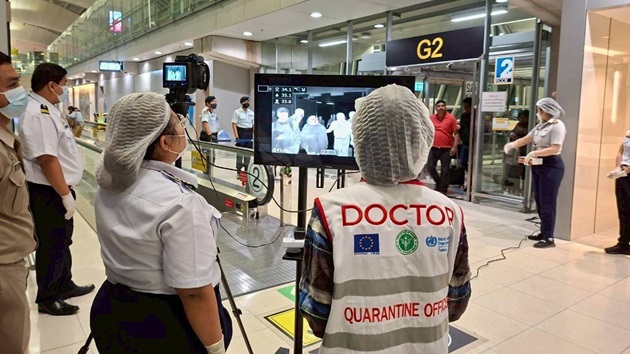
Airport health authorities wearing protective masks monitor passengers from international flights arriving at Suvarnabhumi International Airport in Bangkok, Thailand, January 25, 2026. Suvarnabhumi Airport Office/Handout/Anadolu via Getty Images
(NEW YORK) — Several countries, including Thailand and Nepal, have increased their surveillance after cases of the deadly Nipah virus were detected in India.
So far, just two cases have been confirmed among 25-year-old nurses, a woman and a man, in West Bengal, according to the World Health Organization.
A spokesperson for the Department of Health and Human Services told ABC News earlier this week that Indian health authorities have deployed an outbreak response team and the Centers for Disease Control and Prevention is in contact with local officials. The CDC said it is “monitoring” the situation.
Despite the virus’s high fatality rate, experts have said it’s very unlikely it will lead to a global emergency.
Here’s what you need to know about the virus, including signs and symptoms, how the virus is transmitted and what treatments are available.
What is Nipah virus?
Nipah virus is a type of zoonotic disease, meaning it’s primarily found in animals and can spread between animals and people.
It was first discovered in 1999 after a disease affected both pigs and people in Malaysia and Singapore, according to the CDC.
The virus is most often spread by fruit bats, and can spread through direct or indirect contact.
The virus can also spread from person to person by being in close contact or coming into contact with the bodily fluids of an infected person.
What are the symptoms?
Symptoms typically occur between four and 14 days after exposure. The most common symptom is fever followed by headache, cough, sore throat, difficulty breathing and vomiting.
Diagnosing the virus in the early stages is often difficult because the symptoms resemble many other illnesses, the CDC has said.
The virus can lead to severe symptoms, including disorientation, drowsiness, seizures or encephalitis, which is inflammation of the brain. These can progress to a coma within 24 to 48 hours, according to the CDC.
Deaths range anywhere between 40% and 75% among all cases, the federal health agency said. Some permanent changes among survivors have been noted, including persistent convulsions.
What are the treatments available?
Currently there are no specific treatments available for Nipah virus other than managing symptoms with supportive care, including rest and fluids.
Experts said there are treatments currently under development. One is a monoclonal antibody, a treatment that uses immune system proteins manufactured in a lab. They mimic the antibodies the body naturally creates when fighting the virus.
Dr. Diana Finkel, an associate professor of medicine in the division of infectious disease at Rutgers New Jersey Medical School, previously told ABC News that the drug has already completed phase I clinical trials and is currently being used on a compassionate basis.
Researchers are also studying the potential benefit of remdesivir — the intravenous medication used to treat COVID-19 — which has been shown to work well in nonhuman primates with Nipah virus.
What is the likelihood of Nipah virus spreading?
Experts said that while anything is possible, it’s very unlikely that cases in India will lead to global spread.
“The world is small, but the likelihood that somebody’s infected, or an infected fruit bat with Nipah virus would be here, right now, is very unlikely,” Finkel previously told ABC News.
She said when people are exposed in health care settings, it’s often because proper standard precautions were not followed, such as not wearing gloves or masks.
Experts have said Nipah virus cases are also a reminder of the potentially devastating effects of habitat destruction and climate change, possibly leading to more interaction between infected animals and humans.
“You have to think about why are fruit bats that harbor this Nipah virus, why are they coming into contact with people?” Dr. Peter Rabinowitz, director of the University of Washington Center for One Health Research, previously told ABC News. “What is changing in terms of the movement of the bat populations? Are they leaving [a] habitat where there were not very many people? Are they now spending more time close to people?”
ABC News’ Youri Benadjaoud contributed to this report.
A U.S. Department of Homeland Security (DHS) sign stands at the agency’s headquarters in Washington, D.C., U.S., on Thursday, Dec. 11, 2014. Andrew Harrer/Bloomberg via Getty Images
(WASHINGTON) — There are signs of progress with negotiations over funding for the Department of Homeland Security ahead of a partial government shutdown that would begin at midnight Friday.
Talks are intensifying in the final hours between the White House and Senate Democrats to reach an agreement over how to advance a package of bills necessary to fund the government — including Democrats’ request to separate the bill that funds DHS.
Democrats want DHS removed from a package that includes five other government funding bills so that changes to the DHS bill aimed at reining in Immigration and Customs Enforcement can be made without affecting the other agencies that still need to be funded.
There were Democratic calls to separate the DHS funding following the deaths of Renee Good, a mother of three who was fatally shot by an immigration enforcement officer in Minneapolis earlier this month, and became more urgent after the death of Alex Pretti, an ICU nurse, who was killed in a shooting by federal agents over the weekend.
As of now, there is no firm deal yet, and there is plenty of time for things to fall apart.
Negotiations are centered around that request from Democrats, sources told ABC News. This would allow the military and critical programs like the Centers for Disease Control and Prevention and Head Start — a federal program run by the U.S. Department of Health and Human Services that provides early childhood education, health, nutrition and family support services to low-income children and families — to be funded through September.
A deal would temporarily extend funding for DHS through a short-term bill, which would give Democrats and the White House more time to discuss any possible policy changes.
Coming into the negotiations, Senate Democrats laid out a list of demands including: ending roving patrols, ensuring federal agents are held to the same use of force policies that apply to state and local law enforcement, preventing agents from wearing masks and requiring body cameras.
Republicans need the support of at least seven Democrats in the Senate to avert a partial shutdown.
The White House has not yet commented on the ongoing negotiations.
While sources indicate Democratic leadership is optimistic that things are headed in their direction, that same level of optimism has not been shared from the White House, sources told ABC News.
It is likely that even if a deal is reached, there will still be a short partial shutdown. Any changes to the government funding bill passed in the Senate would have to go back to the House.
The Senate is still slated to take a test vote on the larger package to fund the government (without any of the Democratic demands) Thursday at 11:30 a.m. Democrats have said they intend to block this vote unless modifications are made to meet their demands.
(NEW YORK) — Two people are dead from a shooting in the Cree First Nation community of Mistissini in northern Quebec, Canada, officials said, adding that it is not considered an active shooter situation.
Two men in their 30s who live in the Mistissini community were found fatally shot in a car overnight, according to Hugues Beaulieu, a spokesperson for Quebec’s provincial police, the Sureté du Québec.
Although no arrest has been made, there is no active threat to the general population, Beaulieu told ABC News, explaining that police are working under the theory that the murders were related to organized crime and drug trade.
The community’s chief, Michael Petawabano, said earlier that all schools and community buildings were closed and residents were advised to remain in their homes.
The remote town has a population of roughly 4,000 people.
“Our hearts are heavy with grief for the lives lost and the families affected by this tragedy,” Petawabano said in a statement. “We ask all community members to remain calm, stay indoors, and cooperate fully with police as they conduct their investigation.”
“The lockdown will remain in effect until law enforcement confirms it is safe to resume normal activities,” Petawabano said.
(NEW YORK) — Two people are dead from a shooting in the Cree First Nation community of Mistissini in northern Quebec, Canada, officials said, adding that it is not considered an active shooter situation.
Two men in their 30s who live in the Mistissini community were found fatally shot in a car overnight, according to Hugues Beaulieu, a spokesperson for Quebec’s provincial police, the Sureté du Québec.
Although no arrest has been made, there is no active threat to the general population, Beaulieu told ABC News, explaining that police are working under the theory that the murders were related to organized crime and drug trade.
The community’s chief, Michael Petawabano, said earlier that all schools and community buildings were closed and residents were advised to remain in their homes.
The remote town has a population of roughly 4,000 people.
“Our hearts are heavy with grief for the lives lost and the families affected by this tragedy,” Petawabano said in a statement. “We ask all community members to remain calm, stay indoors, and cooperate fully with police as they conduct their investigation.”
“The lockdown will remain in effect until law enforcement confirms it is safe to resume normal activities,” Petawabano said.
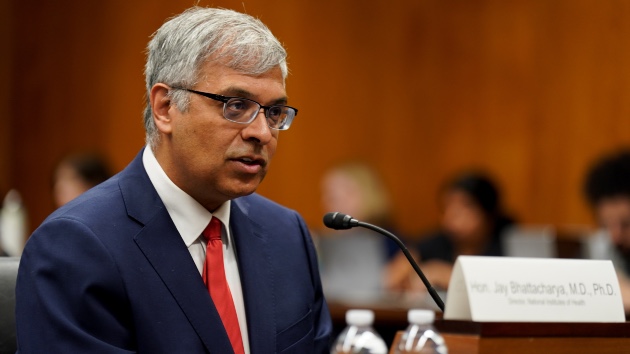
Jayanta Bhattacharya, director of the US National Institutes of Health (NIH), during a Senate Appropriations Subcommittee on Departments of Labor, Health and Human Services, and Education, and Related Agencies hearing in Washington, DC, US, on Tuesday, June 10, 2025. (Photographer: Al Drago/Bloomberg via Getty Images)
(NEW YORK) — Last week, the Trump administration announced it was banning the use of human fetal tissue from some abortions in federally funded medical research.
The National Institutes of Health (NIH) said the policy would go into effect immediately and advance “science by investing in breakthrough technologies more capable of modeling human health and disease,” NIH director Dr. Jay Bhattacharya said in a statement.
Scientists told ABC News that research using human fetal tissue has contributed to understanding diseases better, such as HIV and Ebola, and helped in the development of some vaccines and drugs.
Some scientists worry the ban could prevent groundbreaking discoveries about the behaviors of certain diseases and stop the development of life-saving therapies.
“It’s not a scientific decision,” Dr. Lawrence Goldstein, a professor emeritus of cellular and molecular medicine at the University of California, San Diego, told ABC News. “It’s a moral decision that places the rights of fetal tissue that would be discarded above the rights of sick people who will benefit from that research.”
How human fetal tissue has been used
Human fetal tissue has been used to study serious diseases and disorders, including AIDS, cancer, Parkinson’s disease, dengue, Ebola, hepatitis C, diabetes and spinal cord injuries.
Cell lines have been created from human fetal tissue that have led to the development of vaccines for rubella, rabies, chickenpox, shingles and hepatitis A. Research has also led to the development of drugs to treat HIV, hemophilia and sepsis.
President Donald Trump himself benefited from the research: the experimental antibody treatment he took to treat COVID-19 was developed using cells derived from human fetal tissue. At the time, Trump praised the treatment as a “cure.”
The tissue has been also used in reproductive medicine research to study fertility issues, pregnancy issues, and pregnancy conditions such as pre-eclampsia.
Goldstein said that human fetal tissue research also helps create humanized mouse models to study human immune systems.
“Using fetal tissue, you can make mice that have human blood-forming and immune systems,” Goldstein said. “And that’s valuable because a lot of the viruses that trouble human health don’t grow properly in mice. But if you can make mice with human blood and immune systems, those viruses will frequently grow, and you can learn how to make therapies to block them.”
There are very strict guidelines that researchers have to follow when using human fetal tissue, ensuring they are in compliance with federal and sometimes state requirements.
Additionally, the research must be reviewed and approved by the NIH’s Institutional Review Board (IRB), which specifically assesses federally funded research that uses human subjects.
The IRB assures that donation and reception of human fetal tissue were done with consent and not coercion and that there were no enticements provided to the participant, the clinic or the research team.
A researcher with knowledge of the matter, who asked that their name not be used due to fears of retribution, told ABC News that federal law states that donation cannot be even brought up to a pregnant individual deciding to terminate their pregnancy before the decision to terminate.
“These are extremely important guardrails that are in place to ensure that everything is handled properly,” the researcher with knowledge of the matter said.
Impacts of ending NIH funding
The Trump administration first instituted a ban ending all human fetal tissue research at NIH in 2019, but it was reversed by the Biden administration in 2021.
The current ban stops NIH funds from supporting all “grants, cooperative agreements, other transaction awards and research and development contracts,” the agency said in a statement.
Some groups praised the Trump administration’s new policy, including the Independent Medical Alliance, a group that promoted unproven treatments during the COVID-19 pandemic.
“There is no ethical justification for performing experiments on tissue derived from aborted human beings,” Dr. Joseph Varon, president and chief medical officer of the Independent Medical Alliance, said in a statement. “The fact this practice continued for years within federally funded research institutions shows just how far removed parts of HHS had become from foundational medical ethics. This correction is long overdue.”
However, some scientists say the ban will affect ongoing and future work.
Dr. Anita Bhattacharyya, an associate professor of cell and regenerative biology in the school of medicine and public health at the University of Wisconsin-Madison, said she was hoping to apply for a future NIH grant to study human fetal tissue research and will now not be able to do so.
Bhattacharyya explained she currently uses human-induced pluripotent stem cells, which are reprogrammed cells that are similar to embryonic stem cells, in her work. However, the loss of NIH funding for human fetal tissue research could affect future work.
“My reaction was, ‘How are we going to do some of our research if we can no longer use human fetal tissue?'” she recalled to ABC News. “In particular, my lab studies Down syndrome and so we know that in Down syndrome, the brain develops differently to lead to the intellectual disability that people with Down syndrome have.”
Bhattacharyya said human fetal tissue is valuable when studying Down syndrome or neuropsychiatric disorders because it can recapitulate what’s happening in brain development.
“And so that’s where the human fetal tissue really provides us with a benchmark or the ground truth so that we can validate our models,” she said.
Finding alternative methods of funding is another issue, scientists told ABC News. The NIH was the largest funder of research involving human fetal tissue, and no longer financially supporting such research may leave scientists scrambling to find other donors.
Goldstein said there are private disease foundations that will sometimes fund human fetal tissue research, such as the California Institute for Regenerative Medicine, which funds stem-cell-related research in California.
However, experts say the hole left behind by the lack of NIH funding cannot be made up through private donations.
“There’s really nothing adequate to substitute for the federal effort,” Goldstein said. “It is the largest funder of medical research in the United States. It has systems in place to regulate quality and ensure that ethics and scientific principles are being adhered to. We really can’t move ahead as efficiently as we would like with the absence of the NIH.”
Although the NIH said tissue from spontaneous abortions will still be available, the researcher with knowledge of the matter said this tissue is very often not suitable for research purposes.
“The reason is because, most often, spontaneous abortion happens as a result of some sort of genetic abnormality or some injury, infection, some kind of damage to the fetus itself, that renders that tissue completely unusable for scientific research,” they said.
“Additionally, because spontaneous abortions are just that, they’re spontaneous and therefore completely unpredictable,” the researcher continued. “We have to be very careful in the way that we handle that tissue. It makes those studies intractable. And so, for that reason, spontaneous abortions are not a suitable replacement for fetal tissue research that we would normally obtain.”
Ozzy Osbourne and Sharon Osbourne during Ozzfest 2007 press conference at the Century Plaza hotel in Los Angeles, California on February 6, 2007. (John Shearer/WireImage for Live Nation)
Sharon Osbourne hopes to keep the legacy of Ozzfest alive following Ozzy Osbourne‘s passing.
“I’ve been talking to Live Nation about bringing [Ozzfest] back recently,” Sharon tells Billboard. “It was something Ozzy was very passionate about: giving young talent a stage in front of a lot of people.”
Sharon first launched Ozzfest in 1996 as a two-day festival before turning it into a full-scale touring event. It became a staple of the hard rock and metal scene, helping propel the careers of bands including Linkin Park, Slipknot and Deftones.
“We really started metal festivals in this country,” Sharon says. “It was [replicated but] never done with the spirit of what ours was, because ours was a place for new talent. It was like summer camp for kids.”
The last Ozzfest was held on New Year’s Eve 2018 in Los Angeles. It marked Ozzy’s final full-length live performance before the 2025 Back to the Beginning concert, during which he played a solo set with the reunited Black Sabbath. Ozzy died just over two weeks later on July 22.
Lady Gaga performs on ‘The Late Show with Stephen Colbert,’ Sept. 8, 2025 (Scott Kowalchyk/CBS via Getty Images)
Lady Gaga paused her concert in Tokyo, Japan, on Jan. 29 to speak out about recent events in Minneapolis and in the U.S.
During the portion of her Mayhem Ball show where she performs solo on piano, Gaga told the crowd, “I want to take a second to talk about something that’s extremely important to me. Something important to people all over the world and especially in America right now.”
As documented in fan-shot video, Gaga continued, “In a couple of days, I’m gonna be heading home and my heart is aching thinking about the people, the children, the families, all over America, who are being mercilessly targeted by ICE.”
“I’m thinking about all of their pain and how their lives are being destroyed right in front of us,” she went on. “I’m also thinking about Minnesota and everyone back at home who is living in so much fear and searching for answers on what we all should do.”
Gaga then said she wanted to dedicate a song that has “some hope” to “everyone who is suffering, to everyone who’s feeling alone and helpless, anyone who’s lost a loved one and is it having a difficult time, an impossible time, seeing when the end will be near.”
Becoming emotional, she added, “I hope our leaders are listening. I hope you’re listening to us ask you to change your course of action swiftly and have mercy on everyone in our country.”
She then performed “Come to Mama” from her album Joanne.
The Japanese leg of Gaga’s tour ends Jan. 30. She’s nominated for seven awards at Sunday night’s Grammys, including album of the year for Mayhem and song and record of the year for “Abracadabra.”
Ice chunks float in the Hudson River in front of the skyline of midtown Manhattan and the Empire State Building in New York City as seen from Hoboken, New Jersey, Jan. 26, 2026. (Gary Hershorn/ABC News)
(NEW YORK) — A potential blizzard is headed to the Southeast this weekend, impacting the Carolinas, Georgia, Virginia and Tennessee.
The storm will begin Fridayevening with snow over Appalachia, along the Tennessee/North Carolina border and western Virginia.
On Saturday, the snow is forecast to spread east into eastern Georgia and much of South Carolina, North Carolina and southern Virginia.
The storm could bring powerful winds, which may lead to blizzard conditions. Visibility could be reduced to less than a quarter-mile.
While it is still too early to predict exact snow totals, it appears that much of northern South Carolina, nearly all of North Carolina and southern Virginia will get 3 to 8 inches of snow between Friday night and Sunday morning. Some areas could even near 1 foot of snow, especially along the North Carolina coast where the heavy snow may last longer.
Along with a full moon causing naturally higher tides, large waves produced by the storm may lead to destructive beach erosion and coastal flooding, with 2 to 4 feet water inundation possible from the South Carolina coast to the Outer Banks of North Carolina to the coasts of Virginia and Maryland.
The Northeast coast may escape this storm mostly unscathed.
Those along the Interstate 95 corridor from Washington, D.C. to New York City should see little to no snow accumulation, but they will see gusty winds up to 40 mph on Sunday morning.
A few inches of snow is possible on the coasts of Delaware, Maryland and New Jersey, as well as New York’s Long Island and Massachusetts’ Cape Cod.
But if the storm moves slightly west, 3 to 6 inches of snow and blizzard conditions could strike the I-95 corridor from Connecticut to Boston to Maine.
On Friday, the the wind chill — what temperature it feels like — is forecast to hit minus 13 degrees in Minneapolis. On Saturday, the wind chill is forecast to drop to 2 degrees in Atlanta and minus 1 in New York City.
That cold is also spreading south to Florida.Record lows are possible across the Sunshine State on Sunday, including 20 degrees in Tallahassee, 23 degrees in Jacksonville and 25 in Orlando.
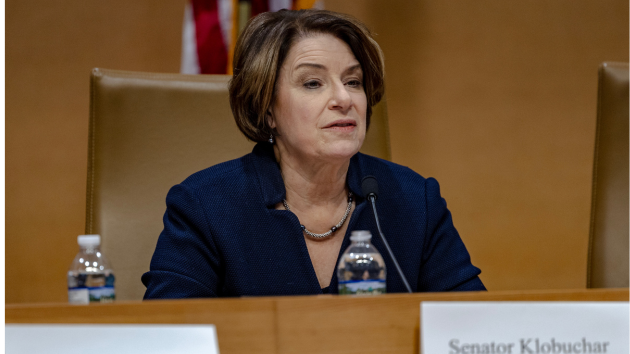
Senator Amy Klobuchar (D-MN) attends a field hearing at the Minnesota Senate Building on January 16, 2026 in St Paul, Minnesota. (Jim Vondruska/Getty Images)
(NEW YORK)– Sen. Amy Klobuchar announced on Thursday her candidacy for governor of Minnesota, saying her home state was in need of a leader who could “fix things in our state” and who would “stand up and not be rubber stamps” to the Trump administration.
“I believe we must stand up for what’s right and fix what’s wrong,” Klobuchar said in a video message announcing her run. “That’s why today, I am announcing my candidacy for governor of the state of Minnesota.”
“I like my job in the Senate,” she added. “But I love our state more than any job.”
The announcement arrived at a turbulent time in Minnesota, where thousands of federal agents have been carrying out Operation Metro Surge, a Trump administration operation with the stated goal of detaining and deporting undocumented immigrants.
Federal agents have been involved this month the fatal shootings of two protesters in Minneapolis, incidents that have spurred further protests in the state and around the country.
That ongoing operation has been decried by local leaders, including Tim Walz, the current governor, who on Jan. 5 ended his bid for reelection.
Walz, who served as Vice President Kamala Harris’ running mate in 2024, said as he bowed out that he would not be able to give a campaign all of his attention as he worked to defend Minnesota against allegations of fraud and right-wing attacks — including from President Donald Trump.
Prior to his announcement, Walz came under fire amid allegations of fraud by child-care centers in Minnesota. The governor had said the state was investigating alleged fraud and he slammed rhetoric targeting the state’s Somali community, saying those allegations could put people at risk.
Federal Immigration and Customs Enforcement entered Minnesota to begin their operation in December, prior to Walz’ campaign departure. Hundreds more agents arrived in the first weeks of the year, federal officials said. Minnesota officials filed on Jan. 12 a federal lawsuit calling for an end to the surge.
Klobuchar has been outspoken throughout the past year against what she has framed as the overreach of the Trump administration and throughout turmoil in Minnesota, including amidst the recent shootings of protesters Renee Good and Alex Pretti by federal agents in Minneapolis.
“We cannot sugarcoat how hard this is, but in these moments of enormous difficulty, we find strength in our Minnesota values of hard work, freedom, and simple decency and good will,” Klobuchar said in the video message released on Thursday.
She added, “These times call for leaders who can stand up and not be rubber stamps of this administration. But who are also willing to find common ground and fix things in our state.”
Klobuchar, who is also seen as a possible 2028 presidential candidate, was first elected to the Senate in 2006 as the first female U.S. senator elected from Minnesota. She is the ranking member of the Senate Committee on Agriculture, Nutrition, and Forestry, and is a key member of the Senate Judiciary Committee.
The senator had filed paperwork to create a campaign committee to run for governor last week. Election Day is Tuesday, Nov. 3. Klobuchar had previously met with Walz about a possible bid for governor, according to two sources familiar with the meeting.
She told ABC News’ “This Week” on Sunday that ICE, one of the federal agencies operating in Minnesota, is “making us less safe, and they need to get out of our state.”