Anne Hathaway’s new film Mother Mary casts the Oscar-winning actress as a huge pop star who’s sort of a combination of Lady Gaga, Beyoncé and Taylor Swift. While the movie’s director has said that Swift’s Reputation Tour concert film inspired the movie’s live sequences, Hathaway says it was another one of Swift’s films that really influenced her character: the Miss Americana documentary.
On The Late Show with Stephen Colbert, Hathaway said she was inspired by “how vulnerable [Swift] let herself be in that, kinda showing that pop stars, who we’re so used to seeing in their power and so polished, y’know, what happens when they’re kinda in-between moments, when they’re having a moment of metamorphosis, which can be so painful.”
“I was already a fan, but after that, I just had so much empathy for her humanity and, of course, her talent.”
Hathaway also revealed she and Swift “know each other,” and noted she was convinced the singer was waving to her from the stage when she went to see the Eras Tour.
“And then somebody tapped me on the shoulder and they said, ‘Taylor wants you to have this,'” she continued. “And I opened it. It was a note where Taylor said, ‘I’m so happy you’re here, I’m gonna be enthusiastically waving at you.’”
“I was like, ‘Oh my God! She’s so magical!'” Hathaway laughed. “She did! She did the thing! And I was right! I am special!'”
Metallica’s Lars Ulrich attends the 37th Annual Pollstar Awards at Loews Hollywood Hotel on April 15, 2026 in Los Angeles, California. (Photo by Amy Sussman/Getty Images for Pollstar )
The Eagles and Metallica were big winners at the 37th annual Pollstar Awards, which took place Wednesday night in Los Angeles.
Eagles’ residency at the Sphere Las Vegas was named residency of the year, while Metallica’s M72 World Tour was named rock tour of the year.
The night’s other winners include the Oasis Live ’25 Tour, named major tour of the year; the Sphere, named U.S. arena of the year; and Allegiant Stadium, also in Vegas, named U.S. stadium of the year.
Plus, Glastonbury Festival in the U.K. was named international music festival of the year; the Eddie Vedder-curated Ohana Festival in Dana Point, California, and the Austin City Limits Music Festival were the two U.S. festivals honored.
Eagles launched their Sphere residency in September 2024. It consisted of 58 shows, setting the record for the longest-running residency at the venue. The final two shows, as of now, took place April 10 and 11.
Metallica are set to launch their own Sphere residency later this year. The Life Burns Faster residency kicks off Oct. 1 and runs through March 13, 2027.
An advertisement for the Eagles residency is displayed on the Sphere, a music and entertainment venue on March 11, 2026 in Las Vegas, Nevada. (Photo by Kevin Carter/Getty Images)
The Eagles’ recent residency at the Sphere in Las Vegas won the award for residency of the year at the 37th annual Pollstar Awards, which took place Wednesday night in Los Angeles.
The honors are handed out by Pollstar, the publication that covers the concert industry, and voted on solely by members of the industry.
The night’s other winners include the Oasis Live ’25 Tour, named major tour of the year; the Sphere, named U.S. arena of the year; and Allegiant Stadium, also in Vegas, named U.S. stadium of the year.
Eagles launched their Sphere residency in September 2024, playing 58 shows to set the record for the longest-running residency at the venue. The final two shows, as of now, took place April 10 and 11.
While the Eagles currently have no more residency shows on their schedule, they do have several tour dates ahead of them, including New Orleans Jazzfest on May 2.
They have also booked four shows on their The Long Goodbye Act III tour, including stops in Atlanta; Nashville; Arlington, Texas; and Hollywood, Florida.
A complete list of dates can be found at Eagles.com.
Benson Boone appears on ABC’s ‘Jimmy Kimmel Live!’ (Disney/Randy Holmes)
Benson Boone and Teddy Swims have a well-documented bromance, so maybe they can celebrate their wins at this year’s Pollstar Awards together.
Both singers’ tours were Wednesday honored with awards, which were voted on solely by members of the concert industry, and presented by Pollstar, the publication that covers the industry. Benson’s American Heart World Tour was named pop tour of the year, while Teddy was named new headliner of the year.
Meanwhile, Olivia Dean won the support/special guest of the year award for her opening slot on Sabrina Carpenter’s Short n’ Sweet Tour, while The Weeknd’s After Hours Til Dawn Stadium Tour won for R&B tour of the year.
The biggest award of the night, major tour of the year, went to Oasis Live ’25 Tour, which saw the famously feuding British band reunite for a massive trek that earned over $405 million.
Venues that were honored included Sphere Las Vegas, Allegiant Stadium in Las Vegas, New York’s Radio City Music Hall, Nashville’s The Pinnacle and Mohegan Sun Arena in Connecticut.
Liam and Noel Gallagher of Oasis walk on stage to perform as part of their Live ’25 global tour in Sydney, Australia (Chris Putnam/Future Publishing via Getty Images)
I said maybe … that Oasis reunion was the best thing that ever happened to Noel and Liam Gallagher.
Just days after earning induction into the Rock & Roll Hall of Fame, the band’s Oasis Live ’25 Tour was named major tour of the year at the Pollstar Awards on Wednesday. The honors are handed out by Pollstar, the publication that covers the concert industry, and voted on solely by members of the industry.
The highly anticipated reunion tour earned over $405 million and drew more than two million fans, making it the second-biggest tour of 2025, second only to Beyoncé’s Cowboy Carter Tour.
Meanwhile, Metallica’s M72 World Tour was named rock tour of the year, while the Eagles’ stand at Sphere Las Vegas was named residency of the year. Sphere was named U.S. arena of the year, while another Vegas venue, Allegiant Stadium, was named U.S. stadium of the year.
The Glastonbury Festival in the U.K. was named international music festival of the year; U.S. festivals honored included the Eddie Vedder-curated Ohana Festival in Dana Point, California, and the Austin City Limits Music Festival.
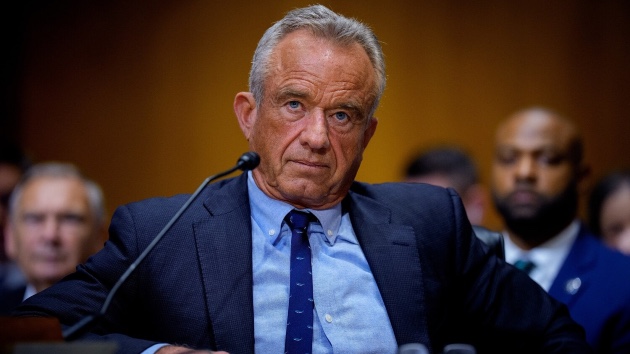
Robert Kennedy Jr. appears before the Senate Finance Committee at the Dirksen Senate Office Building on September 04, 2025 in Washington, DC. (Andrew Harnik/Getty Images)
(WASHINGTON) — Health and Human Services Secretary Robert F. Kennedy Jr. heads to Capitol Hill Thursday after restoring staffing at the World Trade Center Health Program, a move that could ease one of the most persistent points of bipartisan criticism he has faced for months.
Program advocates and lawmakers said they received an email from the secretary on Wednesday approving hiring for 37 long-vacant positions. This will raise staffing from its current 83 employees to the federally authorized level of 120.
The move comes after nearly a year of bipartisan criticism that staffing shortages were slowing care for the 140,000 responders and survivors the program serves, many of whom have been diagnosed with cancer, respiratory disease and other conditions tied to exposure to toxins after the 9/11 terror attacks in New York, Shanksville, Penn., and Washington, D.C.
The World Trade Center Health Program was created as part of the James Zadroga 9/11 Health and Compensation Act to provide long-term medical monitoring and treatment to those affected by the attacks. For more than a year, the program has operated far below capacity with about 83 staff members, following a period of upheaval that included firings, rehires and shifting leadership, even as the participant population grew by nearly 30,000 new enrollees.
Advocates say the reduced staffing has had real consequences, including slower approval of survivors into the program, delays in managing contractors, and longer wait times for care.
“This is progress,” Benjamin Chevat, executive director of Citizens for the Extension of the James Zadroga Act, told ABC News. He credited the progress to sustained pressure from lawmakers in both parties and their consistent support of the program.
Lawmakers also have welcomed the end of the hiring freeze.
Rep. Andrew Garbarino, R-N.Y., told ABC News that the approval for the additional staff would “directly support the responders and survivors who rely on this care every day,” and that “more staff means better access to care, shorter wait times, and stronger support for those still living with the health impacts” of the attacks.
He called the move “real progress for the 9/11 community” and said it is “about making sure those who answered the call on September 11th get the care they have earned.”
Rep. Dan Goldman, D-N.Y., also welcomed the news but criticized the delays. “I am encouraged that, after repeated demands from me and from other members of Congress, Secretary Kennedy is finally increasing staffing at the World Trade Center Health Program so that our brave survivors and first responders can receive the quality health care they deserve,” Goldman told ABC News.
“The ongoing staffing shortages under this administration are unacceptable and have been undermining the program’s ability to provide timely and quality care to the enrollees,” Goldman added. “I will be watching closely to ensure that new staffers are hired as quickly as possible and that our heroes receive the quality healthcare they were promised and deserve.”
At a senate hearing last May, Kennedy acknowledged that “we made a couple of mistakes” in firing program staff and promised to address them.
“Under Secretary Kennedy’s leadership, the World Trade Center Health Program continues to move forward and deliver for responders and survivors,” a spokesperson for the Department of Health and Human Services told ABC News in response to a request for comment. “The approval of these positions reflects HHS’ commitment to strengthening the program. The petition reviews are proceeding through established processes, and work is actively underway to advance pending petitions. Protecting the health and well-being of those affected by 9/11 remains a top priority.”
Chevat pointed out the timing of the decision, which comes as Kennedy prepared to face lawmakers at Thursday’s public hearing: “Now a year later he is finally letting the program fill the staff vacancies that the program was blocked from filling.”
In a previous statement to ABC News, HHS spokesperson Andrew Nixon said decisions about the program, including staffing and whether to add new health conditions to be covered under the program, rest with the World Trade Center Health Program administrator, not Secretary Kennedy.
Even with the staffing issue moving toward resolution, significant concerns for the program remain, Chevat said. They include key decisions about expanding coverage for additional conditions including autoimmune, cardiac, and cognitive disorders are still pending – for years, in some cases.
Those decisions ultimately require sign-off within HHS, under Kennedy’s direction, according to Chevat. Until that happens, patients with those conditions don’t qualify for full coverage through the program.
Research funding for the program also remains stalled, according to Chevat. Its annual grant cycle, which typically distributes about $20 million for studies on 9/11-related illnesses, is still waiting for approval, despite the understanding that it would begin this past February, he said.
Additionally, communication between the program and the 9/11 community has been sparse under HHS oversight, with fewer updates and less clarity about decision-making, according to Chevat and other 9/11 survivor advocates.
Lawmakers are still likely to ask Kennedy questions about the World Trade Center Health Program during today’s hearings, Chevat said. The research funding budget is also expected to come up during a Senate Health, Education, Labor and Pensions Committee hearing next week.
For now, however, the decision to restore program staffing removes one of the most visible and widely criticized problems, Chevat said.
Virginia Lieutenant Gov. Justin Fairfax (D) speaks during a news conference on June 4, 2020 in Richmond, Virginia. Virginia Gov. Ralph Northam (D) and Richmond Mayor Levar Stoney announced plans to take down a statue of Confederate General Robert E. Lee on Monument Avenue. (Photo by Zach Gibson/Getty Images)
(NEW YORK) –Former Virginia Lt. Gov. Justin Fairfax fatally shot his wife, Cerina, in their home before taking his own life, police said Thursday.
Fairfax County Police Chief Kevin Davis told reporters that there was an “ongoing domestic dispute surrounding a complicated, messy divorce.”
Police responded to a domestic call at the couple’s Annandale, Virginia, home in January, Davis said, but no charges were filed from that incident. The couple were separated but still living together inside the house, according to Davis.
“Former Lt Gov Fairfax was recently served some paperwork associated with an upcoming court proceeding that apparently led to this incident last night,” he said.
Davis said that the shooting took place around midnight and the couple’s two teenage children were inside the home.
Their son, the eldest child, called 911, according to Davis.
“[It’s] a traumatic event for those children to live through,” he said.
Fairfax served as the state’s lieutenant governor between 2018 and 2022.
This is a developing story. Please check back for updates.
If you are struggling with thoughts of suicide or worried about a friend or loved one, call or text the Suicide & Crisis Lifeline at 988 for free, confidential emotional support 24 hours a day, seven days a week.
Kids eating lunch at school (Tetra Images/Getty Images)
(NEW YORK) — As President Donald Trump’s administration touts its new federal dietary guidelines, experts and officials suggest there’s a long road ahead before America’s students have healthier school meals.
With the Departments of Agriculture and Health and Human Services partnering to address chronic disease — aiming to place whole, nutrient-dense food at the center of diets — the administration believes it has taken a major step toward solving America’s youth health crises.
From Secretaries Brooke Rollins and Robert F. Kennedy Jr. to Food and Drug Administration Commissioner Marty Makary, there’s a full-scale push to make school meals healthier by next school year, but the USDA’s former Food and Nutrition Service Administrator Cindy Long said their changes won’t happen “overnight.”
Long — who was USDA’s Deputy Administrator for Child Nutrition under former President Barack Obama and during President Donald Trump’s first term — told ABC News the Healthy-Hunger Free Kids Act, which is the school meals bill that was signed into law in 2010, ignited a shift to healthier school meals over a decade ago.
Celebrating the newest dietary guidelines, the foundation of dozens of federal feeding programs, including school meals, Agriculture Secretary Brooke Rollins has said that her agency is submitting its proposed school meals rule by mid-spring. Meanwhile, implementing the meals in U.S. classrooms will see delays after the updated regulations, some health policy experts noted.
Dr. David Ludwig, a professor of nutrition at the Harvard School of Public Health, suggested the changes may take a while both in practice and culture.
“We have to address this on many levels,” Ludwig told ABC News, adding, “First, improving the guidelines that regulate food quality in schools. That’s foundational.”
Ludwig echoed the Trump administration’s 2025-2030 guidelines, which are updated every five years, emphasizing that new school meal ingredients must reduce sugar and other processed carbohydrates and increase whole foods.
“Layer two is adequate funding so that not only healthful but delicious foods can be prepared,” he said, adding, “It’s critical for children to understand that we don’t want to raise a generation that thinks healthy foods are going to be just bland.”
Updates will be made through formal rulemaking, the government’s multi-step process that includes opportunities for public comment, to ensure USDA supports children’s access to nutritious, high-quality meals at school, according to a USDA spokesperson.
However, Long told ABC News that some of the President Joe Biden administration’s changes to reduce added sugar and sodium to school meals are still being implemented.
“You can’t change this enormous system with 100,000 schools operating overnight,” she said, adding “You’ve got to allow time for people to be successful, for people to change menus, for them to procure the right products, for industry to be able to produce products that will help them bring down the sodium, bring down the added sugar etc.”
White House Senior Advisor Calley Means told ABC News there will be a “flurry” of regulation changes this year that will bolster kids’ meals at school. He bemoaned critics’ concerns that the administration lacks the funding to make the necessary changes.
“The government spends hundreds of billions of dollars on food procurement,” he said, adding, “We do not have a budget issue. There’s been a political will problem that President Trump and Bobby Kennedy and Brooke Rollins have solved. There’s care about this issue. We’re going to be driving common sense solutions.”
Parental control over school meals
University of Illinois Professor of Nutrition Dr. Donald Layman believes promoting healthier meal options — like increased protein and the subtraction of ultra-processed foods — signals a “total sea change” for parents.
“I think it gives parents a different structure,” he told ABC News, adding, “They’ve been told that, well, eggs were bad for you, or that meats were bad for you, and they’re left not knowing what to give their kids.”
“I’ve always felt that the issue was, how do we empower parents to do what they know is right, but they’ve been told they shouldn’t do,” Layman added.
Hilary Boynton — a California mom and former head of nutrition services at her kids’ school — said, “people are starting to recognize that they have agency over their own health and [they can] be empowered by that.”
In Summer Barrett’s home state of West Virginia, a mom who says she’s a part of the Make America Healthy Again Movement, said she’s grown frustrated with school meals containing excess amounts of sugar in Dunkin’ Stix Donuts breakfasts.
“You’re giving them 52 grams of sugar, and then you send them to class and you wonder, ‘oh, why can’t you sit still,’” Barrett said. “Why can’t you learn? Why can’t you focus?” Well, cause you just jacked them up on more sugar than they should have in an entire day,” she added.
The new guidelines may signal that school meal changes are to come, thanks to MAHA moms like Barrett who have been “hungry for this nutrition science for a long time,” according to FDA Commissioner Makary. Makary and Kennedy have already started visiting schools to help promote programs that serve scratch-cooked meals with Whole Foods like fruits and vegetables.
Meanwhile, Cindy Long told ABC that the administration’s changes will only build on prior policy wins.
“I’m hoping that this will just continue on the path of, sort of, continuing to make school meals stronger and stronger,” she said.
(NEW YORK) — Weekly visits to emergency rooms for tick bites are at the highest level since at least 2017, according to data from the Centers for Disease Control and Prevention (CDC).
During the most recent week, 71 per 100,000 ER visits were due to tick bites, compared to the average of about 30 per 100,000 ER visits for this time of year, more than double from what is typical this time of year.
Currently, the Northeast is reporting the most ER visits for tick bites, followed by the Midwest, Southeast, West and South Central regions, respectively, CDC data shows.
“We’re running well above historic average and even well above last year,” Dr. John J. Halperin, chair of the New Jersey Stroke Care Advisory Panel and member of the department of neuroscience at Atlantic Health Overlook Medical Center in New Jersey — who partly focuses on Lyme disease — told ABC News.
“The ticks have started a little earlier. There seems to be a lot of them. A lot of people are going to the emergency room,” he continued. “It’s not entirely clear how much of this is increased recognition and as people become more aware of this, more going to the emergency room. But there seems to be a clear increase in the number of ticks out there.”
May is typically when ER visits for tick bites peak each year, and it remains unclear if the upward trend will continue.
Halperin said it is possible that the monthly April average will level out and match prior years.
“Spring and early summer are prime time for getting bitten by the locally youngest form of ticks, which are the main ones who get us humans,” he said. “So, seeing a lot of them certainly means an increased risk.”
Tick-borne diseases have been on the rise in recent years and scientists suspect it is partly linked to climate change, which has caused shorter winters, earlier springs and hotter summers.
Dr. Christopher Bazzoli, an emergency medicine physician at Cleveland Clinic, said because of increased tick populations, in conjunction with warmer weather and heavy rains, it is likely some tick populations grow earlier in the season.
“Ticks tend to become active when the temp reaches 45 degrees [Fahrenheit] or more,” he told ABC News. “If [temperatures] stay higher into the fall, we could also see a longer tick season.”
Halperin said that in addition to climate change, there has been an increase in the recognition of certain tick-borne diseases.
“One big change … was the CDC changed what they would allow to be called a confirmed case of Lyme disease and really loosened the criteria,” he said. “So, there was a huge bump in the reported numbers.”
The CDC recommends that people avoid wooded and brushy areas with high grass and leaf litter and stay in the center of trails when hiking. The agency also recommends using Environmental Protection Agency-registered insect repellents containing at least 20% DEET, 20% picaridin as the listed active ingredient or other approved ingredients, but to avoid use for children under the age of 3.
“The thing to appreciate is these ticks have a strongly preferred habitat,” Halperin said. “They spend much of their lives in low brush. Their preferred reservoir host is the field mouse. Field mice carry Lyme disease … and if a tick lodges on that field mouse, it picks up the infection, and they can give it to us. The first thing you could do is stay away from areas where there might be field mice and ticks.”
The CDC also recommends treating outdoor clothing and gear with 0.5% permethrin, an insecticide and repellent, which remains effective even after multiple washes.
Halperin suggests doing a tick check at the end of the day. If you find one, he recommends using fine-tip tweezers, placing them between the skin and the tick and pulling to remove the tick.
Bazzoli recommended cleaning the area and taking a picture of the tick to identify it and what type of disease it could possibly be carrying.
Close-up of Chevron sign at a gas station, showing California gas prices, in Walnut Creek, California, April 8, 2025. (Photo by Smith Collection/Gado/Getty Images)
(NEW YORK) — The United States continued to mount a naval blockade of Iranian ports in the Strait of Hormuz on Thursday, exerting financial pressure on Tehran while at the same time choking off a source of oil amid a historic global shortage.
The move comes as Americans grapple with a surge in gasoline prices that threatens to eat away at household budgets and slow the economy.
Gasoline prices in the U.S. registered at $4.10 on average per gallon on Wednesday, standing about 35% higher than before the war, AAA data showed.
The blockade risks higher prices at the pump since oil trades on a global market, meaning a loss of supply in the Middle East could raise prices for Americans, some analysts said.
But, they added, the strategy may hasten a resolution of the war or reassure non-Iranian tankers otherwise hesitant to travel the strait, ultimately alleviating the oil shock and pushing down gas prices.
“This is an economic game of chicken,” Tyler Schipper, a professor of economics at the University of St. Thomas, told ABC News.
Ten vessels have been turned around at the Strait of Hormuz during the first 48 hours of the U.S. blockade, complying with U.S. orders, according to U.S. Central Command.
On Wednesday, the commander of the Khatam Al-Anbiya Central Headquarters of Iran’s armed forces said the U.S. blockade of Iranian ports is a “violation of the ceasefire,” in a statement published by the official Islamic Republic News Agency.
The war prompted Iran’s effective closure of the Strait of Hormuz, a critical waterway that facilitates the transport of 20 million barrels of oil per day, or about one-fifth of the global supply.
Iran continued to export nearly 2 million barrels of oil each day through the strait, blunting some of the supply loss, according to energy data firm Kpler.
Still, in March, oil prices notched their largest one-month gain ever, the International Energy Agency said in a new report on Tuesday.
The potential loss of Iranian oil exports amid the blockade could deepen the supply shock and raise gasoline prices further, some analysts said.
“The move toward a full blockade of the Strait of Hormuz is compounding global supply concerns and risks further disrupting flows,” GasBuddy petroleum analyst Patrick De Haan said in a post on X on Monday.
Car owners, De Haan added, “should prepare for another round of price increases.”
Jason Miller, a professor of supply chain management at Michigan State University, echoed such concern.
“It’s unclear to me how this moves to quickly solve the problem that vessels aren’t transiting the Strait of Hormuz,” Miller told ABC News. “Every day this continues, it gets worse and worse and worse.”
Price hikes have not come to pass over the initial days of the blockade, however.
West Texas Intermediate futures price, the benchmark index for U.S. trading, clocked in at about $92 a barrel on Wednesday, marking a nearly 10% drop since the blockade began at 10 a.m. Eastern Time on Monday.
Even so, U.S. oil prices remain about 40% higher than pre-war levels.
The national average price of a gallon of gas as of Wednesday stood 1.4% lower than a week earlier.
The ceasefire between the U.S. and Iran entered its second week, appearing to boost hopes of a resolution to the war.
President Donald Trump reiterated his desire to wind down the conflict, meanwhile, saying the war is “very close to over” in a portion of an interview with Fox News’ Maria Bartiromo that aired on Tuesday.
Rather than restrict oil supply, the U.S. blockade could ultimately add crude to the market if the naval presence reassures non-Iranian ships otherwise unwilling to sail through the strait, Dominic Pappalardo, chief multi-asset strategist at Morningstar Wealth, told ABC News.
“For countries other than Iran, does the blockade give them more trust for sending oil through the strait?” Pappalarado said. “If other countries start to gain confidence, you could see other shipments pick up for non-Iranian vessels pushing through the strait, which would help alleviate upward pressure on the price.”
As of Monday, tanker traffic remained well below pre-war levels after the blockade had taken effect, Kpler said in a post on X. Six vessels sailed through the strait on Monday, Kpler said, marking a decline from 14 vessels a day prior.
The conditions in the strait remain in flux, some analysts said, leaving a wide range of possible outcomes.
“There’s still tremendous uncertainty,” Miller said.