Ch-Check It Out: Beastie Boys’ Ad-Rock has role in upcoming Adam Sandler movie

Ch-Check It Out: Beastie Boys’ Ad-Rock has role in upcoming Adam Sandler movie
Adam Horowitz of the Beastie Boys is interviewed live on stage during the 2019 SXSW Conference and Festival at the Austin Convention Center on March 15, 2019 in Austin, Texas. (Jim Bennett/WireImage)

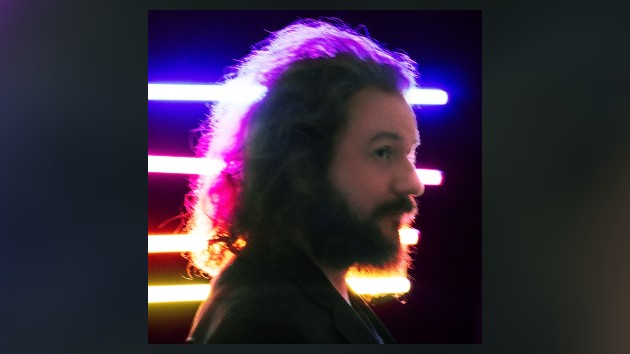
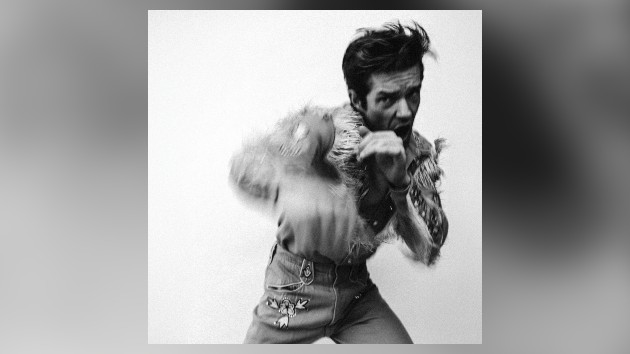
Adam “Ad-Rock” Horovitz of the Beastie Boys is part of the cast for an upcoming Netflix movie called Time Out, starring Adam Sandler.

The film, which is based on a 2001 French movie called L’Emploi du temps, follows Vince, played by Sandler, a recently fired man who “can’t bring himself to tell his wife and family” that he’s lost his job,” according to a description on Netflix’s Tudum.

“Rather than reveal the truth, he spins a web of lies to conceal his situation,” the description reads. “He escalates his lies further when he creates an investment scheme and asks friends to contribute. His deception threatens to overwhelm his life and his family.”

The Time Out cast also includes Willem Dafoe, Gaby Hoffmann, F. Murray Abraham and Steve Zahn. A release date has yet to be announced.

Horovitz has previously acted in movies including While We’re Young and Golden Exits.

Copyright © 2026, ABC Audio. All rights reserved.

On This Day, March 26, 2025: Bruce Springsteen, Michael Stipe & more celebrate Patti Smith at New York concert

On This Day, March 26, 2025: Bruce Springsteen, Michael Stipe & more celebrate Patti Smith at New York concert

On This Day, March 26, 2025 …

Bruce Springsteen and R.E.M.’s Michael Stipe were among the artists celebrating Patti Smith at New York’s Carnegie Hall as part of the annual Music Of… concert series, put on by New York City entrepreneur Michael Dorf.

Springsteen, who was a last-minute addition to the bill, performed “Because the Night,” which he co-wrote with Smith and went on to become a hit for her. Stipe performed “My Blakean Year,” from Smith’s 2004 album Trampin’.

Other artists who performed at the concert included Yeah Yeah Yeahs’ Karen O, Maggie Rogers, Johnny Depp, Glen Hansard, The Kills’ Alison Mosshart, Susanna Hoffs, Ben Harper and The National’s Matt Berninger.

Smith — joined by her band, Lenny Kaye, Tony Shanahan and Jay Dee Daugherty — ended the evening with a performance of “Peaceable Kingdom,” and was then joined on stage by all the performers for a rendition of her iconic tune “People Have the Power.”

Copyright © 2026, ABC Audio. All rights reserved.

Savannah Guthrie questions if mom’s abduction is because of her: ‘Too much to bear’

Savannah Guthrie questions if mom’s abduction is because of her: ‘Too much to bear’
Savannah Guthrie and mother Nancy Guthrie on Thursday, June 15, 2023. (Nathan Congleton/NBC via Getty Images)

Today show host Savannah Guthrie is speaking out in her first interview nearly two months after her mother, Nancy Guthrie, was kidnapped from her Tucson, Arizona, home.

Authorities say Nancy Guthrie, 84, was abducted from her house in the early hours of Feb. 1. They have released surveillance images from outside Nancy Guthrie’s house, but the person who took her remains unidentified.

In an emotional interview with her friend and former co-host Hoda Kotb, Savannah Guthrie called the images “absolutely terrifying.”

“I can’t imagine that that is who she saw standing over her bed. I can’t. It’s too much,” she said.

Savannah recounted a heartbreaking conversation with her brother when she asked him if their mother’s abduction could have been because of her.

“He said, ‘I’m sorry sweetie, but yeah, maybe,'” Savannah recalled through tears.

She told Kotb that it’s “too much to bear to think that I brought this to her bedside, that it’s because of me.”

“I’m so sorry, Mommy, I’m so sorry,” Savannah said.

And to her family, she apologized through tears, “If it is me, I’m so sorry.”

But she added, “We still don’t know. … Honestly, we don’t know anything.”

Savannah also commented on the speculation early in the investigation that one of her family members could have been involved, calling that “unbearable.”

“It piles pain upon pain,” she said.

Authorities announced on Feb. 16 that they cleared the Guthrie family as suspects.

“No one took better care of my mom than my sister and brother-in-law, and no one protected my mom more than my brother,” she said. “And we love her and she is our shining light. She is our matriarch. She is all we have.”

In the days after Nancy Guthrie’s disappearance, various ransom notes were sent to the media.

“There are a lot of different notes, I think, that came. And I think most of them, it’s my understanding, are not real,” Savannah said. “And I didn’t see them, but a person that would send a fake ransom note has to look deeply at themselves.”

She added, “I believe the two notes that we received that we responded to, I tend to believe those are real.”

While Savannah said law enforcement has worked tirelessly on the investigation, she stressed that her family “cannot be at peace” without answers.

“Someone can do the right thing, and it is never too late to do the right thing. And our hearts are focused on that,” she said.

Another part of Kotb’s interview with Savannah Guthrie will air on Friday.

Anyone with information is urged to call 911, the FBI at 1-800-CALL-FBI, or the Pima County Sheriff’s Department at 520-351-4900.

Copyright © 2026, ABC Audio. All rights reserved.

‘The Masked Singer’ reveals Rachel Platten is ‘Pangolin’

‘The Masked Singer’ reveals Rachel Platten is ‘Pangolin’
Rachel Platten as Pangolin on ‘Semi-Finals’ episode of ‘THE MASKED SINGER,’ March 25, 2026 (Trae Patton/ FOX)

“Fight Song” singer Rachel Platten was revealed to be “Pangolin” on The Masked Singer Wednesday night. Panelist Jenny McCarthy correctly guessed that Rachel was under the mask.

After the unmasking, Rachel told host Nick Cannon that she — like the panelists — didn’t know what a pangolin was at first. Fun fact: They’re a kind of scaly anteater found in Asia and Africa. 

“I’m very spiritual and I wanted to understand its core, so I watched a documentary,” Rachel told the judges. “And I sobbed! I was like, ‘This animal is very beautiful. People need to know!'”

“Pangolin justice!” she yelled as the crowd cheered. 

When Nick asked Rachel if performing incognito changed her connection to music, Rachel said, “You know, for 13 years I toured around the country and sold CDs out of my suitcase. And all those years I would just have to prove who I was. No one knew my name and it was just about how I could make them feel. And it really brought me back to that.”

“It brought me back to that feeling of like this is not about what I look like or the clothes or the brand. This is like, ‘Can I make you feel what I’m feeling? Touch your hearts. Open your hearts?'” Rachel added to cheers and applause.

During her time on the show, Rachel sang songs like “It Must’ve Been Love” by Roxette, “What a Feeling (Flashdance)” by Irene Cara, “Ironic” by Alanis Morissette and “Mama, I’m Coming Home” by Ozzy Osbourne.

Copyright © 2026, ABC Audio. All rights reserved.

UN peacekeepers in Lebanon fired upon 20 times amid Israel-Hezbollah fight: Official

UN peacekeepers in Lebanon fired upon 20 times amid Israel-Hezbollah fight: Official
Lebanese army forces carry out efforts to reinforce their positions at the Serde area, accompanied by the United Nations Interim Force on February 25, 2026, in Marjayoun, Lebanon. (Photo by Ramiz Dallah/Anadolu via Getty Images)

(LONDON) — United Nations peacekeepers operating in southern Lebanon have been fired upon around 20 times since the resumption this month of hostilities there between Israel and the Iranian-backed Hezbollah militia, a spokesperson for the force told ABC News.

Around 7,500 personnel from 48 countries make up the U.N. Interim Force in Lebanon (UNIFIL) mission, tasked with monitoring the cessation of hostilities between Israel and Hezbollah in support of the Lebanese Armed Forces (LAF).

UNIFIL peacekeepers have regularly been caught in the crossfire between the warring sides in recent years, with intense bouts of violence in southern Lebanon touched off by the Oct. 7, 2023, attack by Iranian-backed Hamas militants into southern Israel and the subsequent war in the Hamas-ruled Gaza Strip, which Hezbollah joined in support of Hamas.

Limited respite secured by a November 2024 ceasefire deal between Israel and Hezbollah has now given way to another round of conflict, sparked by the joint U.S.-Israeli attack on Iran in late February. Hezbollah joined the conflict on March 2, firing projectiles into northern Israel, seemingly in support of their patrons in Tehran.

Hezbollah leader Naim Qassem said the attacks were a response to Israeli “transgressions” since the signing of the 2024 ceasefire, which he described as “excessive.”

The Israel Defense Forces said this week that the group had fired over 2,000 rockets and drones toward northern Israel during the conflict to date. A 27-year-old Israeli woman was killed by a Hezbollah rocket on Tuesday.

More than 1 million people in Lebanon have been displaced by Israel’s offensive and evacuation orders, according to U.N. data. More than 1,000 people have been killed by Israeli attacks in Lebanon in the latest round of fighting, the country’s health ministry said.

Peacekeepers are now back in the line of fire from both sides. Of the roughly 20 firing incidents so far recorded since Feb. 28, UNIFIL spokesperson Kandice Ardiel told ABC News that a preliminary count found that around 60% were of unknown origin, 25% were attributed to the IDF and 15% to non-state actors on the Lebanese side — “most likely” Hezbollah.

Four UNIFIL peacekeepers have so far been injured in two separate incidents, Ardiel said. Three of the injuries were minor and one was severe. The peacekeeper who sustained severe injuries is now in a stable condition, she said.

UNIFIL has not yet established responsibility for the incidents that caused casualties, Ardiel added. 

However, the IDF has acknowledged responsibility for one incident, when it said that on March 6 an Israeli tank mistakenly fired on a UNIFIL position, wounding Ghanaian peacekeepers.

Hezbollah is not known to have claimed responsibility for any recent attacks on UNIFIL forces.

Ardiel credited UNIFIL’s security measures for the relatively low number of casualties to date.

Even the force’s headquarters in the coastal city of Naqoura, she said, “has been hit with bullets, shrapnel, fragments of intercepted projectiles.” On Monday, the headquarters was also struck by “a rocket fired by a non-state actor — likely Hezbollah,” Ardiel said.

UNIFIL was first deployed to Lebanon in 1978, tasked with monitoring the ceasefire that ended an Israeli incursion into the south of the country.

Since 2006, UNIFIL has been tasked with monitoring the cessation of cross-border hostilities following a major conflict between the IDF and Hezbollah and supporting the planned — but ultimately unrealized — Hezbollah withdrawal from the area and the redeployment of the LAF in its place. That plan was set out by U.N. Security Council resolution 1701.

The U.S.-brokered 2024 ceasefire between Israel and Hezbollah restated UNIFIL’s role in supporting the LAF’s disarmament of all non-state armed groups — prime among them Hezbollah — south of the Litani River. The LAF claimed to have achieved the first phase of this plan in January, but Hezbollah’s daily fire toward Israel seems to undercut those claims.

Israeli forces retained control of five positions on Lebanese territory and continued strikes against alleged Hezbollah targets all across Lebanon despite the ceasefire deal. Hezbollah was vocally critical of the continued Israeli presence and attacks but did not retaliate.

The resumption of hostilities earlier this month prompted a major new Israeli campaign. Israeli Defense Minister Israel Katz said he instructed the IDF to “accelerate the destruction of Lebanese homes in the line of contact villages, to thwart threats to Israeli communities, in accordance with the model of Beit Hanoun and Rafah,” referring to Israel’s destruction of Gaza towns during operations against Hamas.

Katz sent thousands of additional troops into southern Lebanon, vowing to seize the territory up to the Litani River to create what he called a “defensive buffer.” The effort included the destruction of several bridges along the Litani, which Katz claimed were being used by Hezbollah.

Ardiel said the destruction of those bridges — which she described as “vital arteries” — would complicate UNIFIL and LAF efforts in the area.

“While peacekeepers are well-prepared and supplied and can continue daily activities, we rely on these arteries for essential logistical movements, including troop rotations,” Ardiel said, urging all actors to avoid harm to civilians and damage to civilian infrastructure.

UNIFIL troops, she added, have facilitated the safe movement of around 100 civilians from dangerous areas.

UNIFIL peacekeepers remain in all their positions, Ardiel said, but, “due to the volatile and dangerous security situation, our movements are heavily restricted. We are no longer conducting patrols in the way we used to, so our monitoring is more limited than it was before.”

“Our patrols are now focused on areas around our positions, to ensure our peacekeepers are safe and discourage armed groups from using our positions as cover for their activities,” she added.

Copyright © 2026, ABC Audio. All rights reserved.

In brief: Kevin McKidd, Kim Raver departing ‘Grey’s Anatomy’ and more

In brief: Kevin McKidd, Kim Raver departing ‘Grey’s Anatomy’ and more

Kevin McKidd and Kim Raver are moving on from Grey’s Anatomy. The longtime stars of the ABC medical drama are departing the series at the end of season 22, which is currently airing. Their final episodes will be the season finale, which debuts on May 7. “Thank you, Kim and Kevin. There are no words for the gratitude we have for everything you brought to Grey’s Anatomy,” the show’s official Instagram posted …

We now know what Adam Sandler’s next film will be. He will star in director Scott Cooper’s new movie Time Out for Netflix. Willem Dafoe, Gaby Hoffmann, F. Murray Abraham, Steve Zahn and Adam Horovitz will also star in the upcoming movie. Time Out is based on the French film L’Emploi du temps, and follows a man who is fired from his job and lies to his family about it rather than admitting the truth …

Honeymoon with Harry, the upcoming comedic drama film that stars Kevin Costner and Jake Gyllenhaal, is set to shoot in Queensland, Australia, in April. Deadline reports that Love Story breakout star Sarah Pidgeon is in talks to join the cast of the Amazon MGM Studios production …

Copyright © 2026, ABC Audio. All rights reserved.

Wind power will continue to grow, despite Trump administration’s attempts to halt renewable energy: Experts

Wind power will continue to grow, despite Trump administration’s attempts to halt renewable energy: Experts
A general view of wind turbines at the Saint-Nazaire offshore wind farm, off the coast of the Guerande peninsula in western France, in Batz-sur-Mer, on December 3, 2025. (Photo by Jerome Gilles/NurPhoto via Getty Images)

(NEW YORK) — Wind power production will continue to advance, despite the Trump administration’s attempts to halt the growing momentum of renewable energy, experts told ABC News.

On Monday, the U.S. Department of the Interior reached a $928 million deal with French energy company TotalEnergies to end the company’s offshore wind development off the East Coast and redirect that investment into domestic fossil fuel initiatives, describing the “landmark agreement” as a way to lower energy costs and strengthen the nation’s energy security.

The move continues efforts by President Donald Trump and his administration to stall renewable energy, including the Department of Justice suing the state of California earlier this month over its electric vehicle mandate, signing an executive order last month directing the Department of Defense to purchase electricity from coal-fired power plants and the Environmental Protection Agency rescinding the landmark “endangerment finding” that has served as the scientific and legal foundation for federal regulations on carbon dioxide and five other heat-trapping greenhouse gases or more than 16 years.

Offshore wind is facing the most “headwinds” from the federal government, but is still persevering, Erin Baker, distinguished professor and faculty director at the Energy Transition Institute at the University of Massachusetts Amherst, told ABC News. The actions of the Trump administration have had “very little impact” on the global increase in production of renewable energy, Baker added.

What the nearly $1 billion deal with TotalEnergies entails
As part of the deal, TotalEnergies will commit $928 million to fossil fuel development in the United States, matching the amount the company previously paid for offshore wind leases. Upon meeting those commitments, the federal government will reimburse the company up to the value of those lease payments, the Interior Department said.

Citing national security concerns, the Interior Department said TotalEnergies has pledged not to develop any new offshore wind projects in the United States.

“This agreement is yet another win for President Trump’s commitment to affordable and reliable energy for all Americans,” Interior Secretary Doug Burgum said in a ​statement. “Offshore wind is one of the most expensive, unreliable, environmentally disruptive, and subsidy-dependent schemes ever forced on American ratepayers and taxpayers.”

The agreement supports the administration’s push for affordable, reliable baseload energy, officials said, arguing that offshore wind projects are costly and less dependable. Ending the projects would reduce unnecessary federal spending while supporting domestic energy production, according to the Interior Department.

North Carolina Gov. Josh Stein described the move as “a terrible deal for the people of North Carolina and our country” in a post on X.

Because offshore wind is installed in federal waters, the power of the federal government over offshore wind projects is higher than in onshore wind projects, Michelle Solomon, senior policy analyst at Energy Innovation, a non-partisan research and analysis nonprofit that supports clean energy, told ABC News.

“I think the really unfortunate thing about this news is that offshore wind is a really, really reliable resource that can really help mitigate spiking fossil fuel prices in the winter,” she said.

The momentum for wind energy is too strong to stall, experts said
Wind is the largest and most reliable source of renewable energy. It can also help energy bills stay affordable during extreme weather due to its capacity to produce fuel-free energy, Solomon said.

The power purchase agreements signed by offshore wind companies suppress electricity prices, Baker said. The companies agree to “always buy the wind when it blows,” which then brings down the entire cost to purchase electricity, she said, describing it as “good business.”

“They’re not doing it for environmental reasons,” Baker said of renewable energy companies. “They’re doing it just for business reasons.”

In 2025, wind and solar energy generated a record 17% of electricity in the U.S., up from less than 1% in 2005, according to data recently released by the Energy Information Administration (EIA).

The total net generation from wind and solar together reached 760,000 gigawatt-hours (GWh) last year, enough to power tens of millions of average American homes, according to the EIA. Wind power generated 464,000 GWh, a 3% increase over 2024.

The milestone comes amid federal energy policy changes, including the early phase-out of renewable tax incentives and other regulatory changes.

“The momentum is definitely still there,” Solomon said.

“Even though [the Trump administration] was actively trying to stop those industries, they still were growing,” Baker said.

Another benefit to wind is that it’s the type of energy that can “come online the most quickly” after it is built, Solomon said.

“In this moment, when we’re needing to build electricity generation resources really quickly to deal with low growth, data centers, [wind farms] are the ones that are going to be able to respond really quickly,” she said.

Wind and solar made up nearly 90% of new U.S. electricity capacity in 2025, according to the Federal Energy Regulatory Commission. That trend is expected to continue into 2026, Solomon said.

Global renewable energy capacity is expected to more than double by 2030, according to the EIA.

Trump has long criticized wind energy
Trump’s criticism of wind turbines dates back to his first term.

In 2019, Trump claimed that noises from wind turbines “cause cancer” and negatively impact property values. In 2024, during his presidential campaign, Trump stated that wind turbines “kill whales” and vowed to write an executive order on “Day 1” to end offshore wind projects.

On Jan. 20, 2025, the first day of his second term, Trump signed an executive order to withdraw all areas of the outer continental shelf from offshore wind leasing. A federal judge in the U.S. District of Massachusetts ruled in December that the stop to permits on wind farms was illegal.

The deal with TotalEnergies is the latest move by the administration in an attempt to halt the increased production of wind power.

In December 2025, the Interior Department froze large offshore wind projects on the East Coast, citing national security concerns. Federal judges ruled that all five projects could resume construction, concluding that the government did not show that the risk was so imminent that it should stop.

The projects included Empire Wind, the wind farm being built 15 to 30 miles south of the coast of Long Island, and the Coastal Virginia Offshore Wind, which started delivering to the state’s power grid on Monday, developer Dominion Energy announced.

Despite the victories for the offshore wind developers, the delays to the project have led to an uncertain investment environment and increased both the cost to build and the costs to consumers’ energy bills, Solomon said.

The impact of these actions will raise energy costs in the end, Solomon said.

Copyright © 2026, ABC Audio. All rights reserved.

Conservatives gather for CPAC as MAGA fights over Iran war

Conservatives gather for CPAC as MAGA fights over Iran war
U.S. President Donald Trump dances on stage after speaking at the Conservative Political Action Conference (CPAC) at the Gaylord National Resort Hotel and Convention Center on February 22, 2025 in Oxon Hill, Maryland. (Photo by Win McNamee/Getty Images)

(NEW YORK) — Conservatives from across the country will descend on Texas this week for the Conservative Political Action Conference (CPAC), one of the largest gatherings for Republicans in the year.

But the yearly gathering comes during a fraught time for the party as the ongoing war with Iran has split some of President Donald Trump’s MAGA followers.

And for the first time in nearly a decade, Trump will not attend the event. A White House official told ABC News that Trump could not attend due to his schedule and the ongoing conflict in Iran.

Vice President JD Vance, who spoke at the gathering last year, is also not listed as a speaker.

Since the war began in February, notable Trump allies have publicly broken from him over the conflict. Most recently, former National Counterterrorism Center Director Joe Kent resigned over his opposition to the war, making him the highest-profile administration official to step down over the issue.

Other MAGA allies, such as Tucker Carlson and former Trump adviser Steve Bannon, have spoken out against the war.

Bannon, who will speak at CPAC, said on his “War Room” podcast this month that if the war becomes “a hard slog,” it could cost the GOP voters before November’s midterm elections.

“We’re going to bleed support,” Bannon said at the time.

In an interview with Piers Morgan earlier this month, Carlson said the Iran war was a “betrayal” to Trump’s supporters.

“Breaking faith with those people, those voters, the ones who actually got Trump elected and whose coalition promised a new day in American politics, that’s a big deal. It’s a betrayal on the level that I don’t think people who aren’t in those groups can understand, like, this is heartbreak. This is heartbreaking,” Carlson said.

Texas Sen. Ted Cruz, who is widely seen as a potential 2028 presidential candidate and has been supportive of the war, is also scheduled to speak at the gathering.

A Quinnipiac poll released Tuesday found that a little more than half — 54% — of voters oppose the U.S. military action in Iran, while 39% support it.

But 86% of Republicans overall support Trump’s military action while 92% of Democrats and 64% of independents oppose it, according to the Quinnipiac poll.

CPAC occurs this year as the midterm primaries are underway and comes ahead of the bitter Texas Senate Republican primary runoff between Sen. John Cornyn, who has held his seat since 2002, and state Attorney General Ken Paxton, which Trump hasn’t yet made an endorsement in.

Paxton is slated to address Friday’s Ronald Reagan Dinner, while Cornyn is not scheduled to speak.

Other notable GOP candidates attending the event include former Republican National Committee Chair Michael Whatley, who’s running for retiring GOP Sen. Thom Tillis’ seat in North Carolina, and businessman Nate Morris, who is running for retiring Republican Sen. Mitch McConnell’s seat in Kentucky.

Copyright © 2026, ABC Audio. All rights reserved.

In Lebanon, a brewing disaster that could outlast the war in Iran

In Lebanon, a brewing disaster that could outlast the war in Iran
Residential and commercial buildings damaged by Israeli Air strikes that were targeting the Hezbollah affiliated al-Qard al-Hassan financial institution on March 22, 2026 in Tyre, Lebanon. (Photo by Guy Smallman/Getty Images)

(LONDON) — The escalating Israeli operation against the Iranian-backed Hezbollah militia in Lebanon may prove to be the most intractable theater of the wider U.S.-Israeli confrontation with Iran, analysts who spoke with ABC News warned.

But the showdown unfolding in Lebanon could pose an existential threat to both Hezbollah and the Lebanese state, experts said, with the latter having long struggled to rein in the powerful militia but now facing growing pressure — and threats — from Israel to do more despite the danger of civil instability.

The technocratic government that came to power in Beirut on a wave of optimism in February 2025 is now facing “the worst possible combination of factors,” Emile Hokayem of the International Institute for Strategic Studies think tank told ABC News during a recent webinar hosted by the U.K.-based Chatham House think tank.

Lebanon “is a secondary front at the moment that is likely to burn for longer both because the Israelis see the political-military opportunity, but also the Iranians see it as a place where they can bleed and distract the Israelis,” Hokayem added.

Cascading crises
Even before the latest round of violence erupted, observers were noting rising discontent with Hezbollah among the wider Lebanese population and their elected representatives. 

The recent scars of Hezbollah’s activities were all too visible. On the edges of Beirut’s stylish downtown area and the trendy Mar Mikhael neighborhood is the devastated port area, wrecked by a massive explosion in 2020, with efforts to apportion responsibility for the disaster allegedly repeatedly stymied by Hezbollah. While some blame Hezbollah, others blame the entire political ruling class and the systemic corruption in the country.

Villages across the Hezbollah-dominated south and east of the country lay in ruins from Israeli missiles, bombs and artillery shells fired in clashes since Hezbollah attacked Israel in solidarity with Hamas after the latter’s deadly surprise Oct. 7, 2023, attack on Israel. In a U.S.-brokered ceasefire between Israel and Lebanon in 2024, the Israeli army partially withdrew, holding on to five positions in southern Lebanon.

Parts of Beirut’s southern Dahiyeh area — a longtime Hezbollah stronghold — were cratered, with giant posters of its slain totemic leader Hassan Nasrallah, who was killed in a massive 2024 Israeli airstrike on the city, seen by ABC News late last year rising above the arterial road which runs through the area from the airport to the rest of the city.

The conflict significantly degraded Hezbollah’s capabilities, apparently setting the stage for Lebanon to appoint a new government with fewer ties to the group — led by Prime Minister Nawaf Salam and President Joseph Aoun — after more than two years of a caretaker cabinet amid a political deadlock.

Neither were formally endorsed by Hezbollah. Aoun, the country’s former army chief, and his new government said they were committed to disarming Hezbollah, appealing to foreign partners to help.

Many observers suggested Hezbollah appeared to be in a historically weak position from late 2024 into early 2026. Its patrons in Tehran were themselves weakened by confrontations with Israel and, later, the U.S. Discontent inside Iran exploded into multiple rounds of anti-government protests, with Tehran’s funding and direction of foreign proxy forces a common grievance among demonstrators.

The fall of Tehran-aligned and Hezbollah-bolstered Syrian President Bashar al-Assad across the border in December 2024 robbed Hezbollah of strategic depth, vital arms smuggling routes and financial opportunities. Nasrallah — an icon of the Iran-directed “Axis of Resistance” — was dead, as were many of the group’s most senior military and strategic minds, according to long-time observers of the group.

Meanwhile, strikes that Israel described as targeted against Hezbollah personnel and infrastructure in Lebanon continued, killing hundreds of people despite the November 2024 ceasefire deal. Hezbollah did not respond, apparently pursuing a policy of strategic patience that some observers interpreted as operational weakness.

Before the outbreak of its latest war with Israel in 2023, estimates of Hezbollah’s military strength ranged from 30,000 to more than 50,000 personnel. Its parliamentary party won 15 seats in the last Lebanese legislative elections in 2022, securing around 20% of all votes to the tune of nearly 360,000 ballots, according to data from Lebanon’s Interior Ministry.

Aoun’s government took some steps to curtail Hezbollah’s uniquely powerful position, in which it had been able to establish — with Iranian help — what analysts often described as “a state within a state.” 

The Lebanese Armed Forces claimed in January to have completed the first phase of the plan to disarm all non-state groups in the area south of the Litani River — around 18 miles north of Israel’s border — as part of the 2024 ceasefire deal.

Those efforts continued after the U.S. and Israel launched their latest military campaign against Iran in late February. In early March, the Lebanese government declared all military activities by Hezbollah illegal. The army also set up checkpoints to search vehicles headed south for weapons.

But the idea of the state’s open confrontation with the Iranian-backed militia group prompts fears of a slide back into the bloody anarchy of the 1975-1990 civil war that killed more than 100,000 people and devastated the young nation.

Sectarian tensions are again rising in Lebanon. Last month, Salam criticized the country’s sectarian political system — designed to ensure power sharing between the country’s ethnic and religious groups — as “a source of harm both for the state and for the citizens.”

The state’s forces, while popular, are broadly considered to be weak relative to other regional militaries and non-state actors. Meanwhile, despite its recent setbacks, Hokayem said Hezbollah remains “a very powerful coercive force domestically in Lebanon, where they can punish, intimidate and possibly assassinate their enemies.”

Hezbollah’s new leader, Naim Qassem, said in August that the group would not surrender its weapons to the state, warning there would be “no life in Lebanon” if its arms were taken by force.

“I wouldn’t be surprised if we see, in addition to communal violence, more targeted hits — including assassinations — inside the country,” Hokayem said of intensifying Hezbollah activity. “If the military, the security forces are not able to prevent that or contain this, then you can easily see a loss of trust in central institutions, which is already very low.”

“Given the trajectory of events, more likely than not the state will weaken despite what some people in Washington say or would like to believe,” he added.

A ‘prolonged’ conflict
Israeli forces are now moving deeper into southern Lebanon, with the Israel Defense Forces having issued a series of “urgent” warnings for the full evacuation of the country south of the Zahrani River, which sits around 36 miles north of the border. That order came on top of an evacuation order for all residents south of the Litani River — 18 miles north of the border — and for all residents in the southern Beirut suburbs.

Human Rights Watch said that more than a million people have been forced to flee their homes — nearly one-fifth of the entire population of the country. More than 1,000 people have been killed by Israeli attacks in Lebanon in the latest round of fighting, the country’s health ministry said.

Israel’s aggressive policy in Lebanon came after Hezbollah fired on northern Israel on March 2, joining Tehran in its response to the U.S.-Israeli campaign launched against Iran on Feb. 28.

Hezbollah defied assessments it had been substantially weakened by its two-year involvement in the war in Gaza, firing rockets and drones daily toward northern Israel. 

The IDF said this week that Hezbollah had fired over 2,000 projectiles toward Israel so far. That fire has killed four people — two civilians and two soldiers.

IDF Lt. Gen. Eyal Zamir said on March 22 that the Israeli operation “has only just begun,” describing the nascent campaign as “a prolonged operation.” As of March 24, the IDF had destroyed multiple bridges spanning the Litani River.

Israeli Defense Minister Israel Katz said he instructed the IDF to “accelerate the destruction of Lebanese homes in the line of contact villages, to thwart threats to Israeli communities, in accordance with the model of Beit Hanoun and Rafah,” referring to Israel’s destruction of Gaza towns during the war on Hamas.

Katz said troops would seize and hold southern Lebanon up to the Litani River to create what he called a “defensive buffer.”

More extreme voices have demanded a permanent occupation. Far-right Israeli Finance Minister Bezalel Smotrich, for example, said the Litani should form “the new Israeli border,” in an echo of longheld ambitions of Israeli ultranationalists.

Lebanon’s president described the destruction of the bridges over the Litani and continued Israeli strikes elsewhere as a “dangerous escalation and flagrant violation of Lebanon’s sovereignty.” The measures, Aoun said, “are considered a prelude to a ground invasion.”

But there appears little hope of relief from Beirut’s two prime foreign partners — the U.S. and France — Hokayem said. “The Americans essentially have washed their hands of Lebanon,” he said, citing frustration with the government’s inability or unwillingness to rein in Hezbollah.

“In Washington there are people who have this illusion that you can break the back of Hezbollah, if only there was a bit more spine in some in Beirut,” Hokayem said. “It’s very difficult to see that.”

Barbara Leaf, who served as the assistant secretary of state for near eastern affairs under President Joe Biden, said during the Chatham House event that the U.S. had taken a “hectoring” approach with the new Lebanese government. The message, Leaf said, is, “Take care of Hezbollah, and if not, the Israelis will.”

The U.S. Department of State has urged all Americans in Lebanon — of whom there were around 86,000 in 2022, according to the State Department — to leave the country as soon as possible.

Earlier this month, President Donald Trump said of the situation in Lebanon, “We’re working on it very hard. We love Lebanon. We love the people of Lebanon, and we’re working very hard.” Hezbollah, he said, “has been a disaster for many years.”

Days later, Trump again said Hezbollah has been “a big problem” that was “rapidly being eliminated” by Israeli military action.

With clear U.S. backing, Israeli leaders appear set on a decisive operation in Lebanon, which forms one theater of Prime Minister Benjamin Netanyahu’s drive to create what he calls a “new Middle East” shorn of Iranian influence.

Those ambitions will require a long-term presence on Lebanese territory, Yezid Sayigh, of the Malcolm H. Kerr Carnegie Middle East Center think tank in Beirut, wrote in early March. “A complementing Lebanese effort is necessary, hence the effort to force the Lebanese government’s hand one way or the other,” he added.

But the ongoing operation may undermine the very partners Israel needs in Beirut, Hokayem said. “A Lebanon in which so much territory is occupied will struggle to enter any kind of genuine peace negotiations with Israel,” he said.

“I don’t think they could be a central authority with enough strength and legitimacy,” he added.

Faced with yet another national crisis, many in Lebanon are pessimistic. The country must consider “the worst-case scenarios,” political scientist Ziad Majed wrote earlier this month.

This means, Majed said, huge destruction in Hezbollah’s heartlands in the south, the eastern Bekaa Valley and southern Beirut combined with a military occupation blocking hundreds of thousands of displaced people from returning to their homes.

Such a scenario, Majed warned, could “lead to suffocating living crises and social and political tensions that many might exploit for political opportunism, incitement and other forms of sectarian conflict.”

Copyright © 2026, ABC Audio. All rights reserved.

Ousted Venezuelan President Nicolas Maduro set to return to Manhattan federal court

Ousted Venezuelan President Nicolas Maduro set to return to Manhattan federal court
Nicolas Maduro and his wife, Cilia Flores, are seen in handcuffs after landing at a Manhattan helipad, escorted by heavily armed Federal agents as they make their way into an armored car en route to a Federal courthouse in Manhattan on January 5, 2026 in New York City. (Photo by XNY/Star Max/GC Images)

(NEW YORK) — Ousted Venezuelan President Nicolas Maduro and his wife Cilia Flores are set to return to a Manhattan courtroom on Thursday for a status conference that could determine the trajectory of the criminal case against them.

Maduro and Flores pleaded not guilty to federal charges including narco-terrorism during their first appearance in court in January, and their attorneys have since pushed to have the case dismissed over concerns that the Trump administration is blocking the Venezuelan government from paying their legal fees.

For more than a decade, Maduro enjoyed an opulent life as Venezuela’s president, living in the neoclassical palace in Caracas and accruing a net worth reportedly in the millions. He allegedly owned multiple mansions, two private jets, millions in jewelry and cash, a horse farm, and a fleet of luxury vehicles. 

But as he awaits trial in a Brooklyn jail cell, the ousted head of state is now pushing to have his case dismissed by arguing he doesn’t have enough money to pay for his own legal defense — and his lawyers argue his due process rights will be violated if Venezuela is unable to pay for his lawyers because of U.S. sanctions on the country.

“I understand that the government of Venezuela is prepared to fund my legal defense and it is my expectation that it will,” Maduro said in a sworn declaration. “I have relied on this expectation and cannot afford to pay for my own legal defense.”

As the Trump administration gradually warms relations with Venezuela, Thursday’s hearing marks the second time that the ousted Venezuelan leader has appeared in a United States courtroom since special operations forces captured him in Caracas in January.

During the status conference on Thursday, U.S. District Judge Alvin Hellerstein is expected to hear from both sides about how the case will progress toward a trial, including what pre-trial motions the defense plans to make and how much evidence has been turned over by prosecutors.

In a move that triggered an international outcry, Maduro was captured and brought to the U.S. in January after the United States carried out what President Trump described as a “large scale strike” in the Venezuelan capital.

Maduro’s attorneys seek dismissal

Last month, attorneys for Maduro and Flores asked the court to dismiss the indictment after the Department of Treasury Office of Foreign Assets Control (OLFAC) restricted the ability for Venezuela to pay for their legal fees. 

Defense lawyers argue that the couple’s Sixth Amendment and due process rights would be violated if Venezuela is unable to financially support Maduro, who Venezuelan interim president Delcy Rodriguez says is still “the legitimate president” of the country.

“The conduct of the United States government not only undermines Mr. Maduro’s rights but also this Court’s mandate to provide a fair trial to all defendants who come before it in accordance with the protections afforded by the U.S. Constitution,” Maduro’s attorney Barry Pollack said in a motion last month.

Prosecutors with the U.S. Attorney’s Office for the Southern District of New York have pushed back on the request, arguing that Maduro and Flores are still allowed to access their own money to pay for their legal defense. While the Treasury Department initially allowed Venezuela to pay for their legal defense, prosecutors said the authorization was an “administrative error” and denied that the decision to change the terms of their license was targeted. 

“OFAC’s Longstanding sanctions regime predated the initiation of the criminal charges the defendants now face and was instituted for purposes completely separate from the criminal charges currently pending before this Court,” defense lawyers said. “The defendants’ attempts to portray OFAC’s sanctions as a targeted attack on the defendants and their rights are misleading and undermined by the facts and chronology of this case and OFAC’s independent decision-making.”

Defense attorneys expressed skepticism about that argument by highlighting that the Trump administration has recently issued multiple licenses to allow the export of Venezuelan oil and other goods despite the existing sanctions.

“There is no apparent reason why the use of Venezuelan funds to pay for the legal defense in this case jeopardizes national security and the government offers none,” defense attorneys said. “The national security emergency rationale that the government invokes, without explaining, has even less force now that the government has normalized relations with the government of Venezuela and recognized the current Venezuelan government.”

While the issue is fully briefed, the judge could opt to set a separate hearing on the motion.

‘I am innocent,” Maduro told the court

Maduro’s last appearance in federal court came just days after he was captured in Venezuela by U.S. special operations forces and transported to New York to face criminal charges.

After Judge Hellerstein summarized the charges against him, Maduro told the court through an interpreter that he is “the president of Venezuela” and that he was “captured at home in Caracas, Venezuela.” 

“I am innocent. I am not guilty. I am a decent man. I am still president of my country,” Maduro said to enter his plea.

Flores similarly pleaded not guilty after being informed of the charges against her and her rights. Their attorneys did not ask for bail or their release, though Judge Hellerstein said he would be open to reviewing a bail application in the future. In the meantime, the former heads of state have been detained at the federal detention center in Brooklyn.

As he was escorted out of the courtroom, Maduro responded to a member of the public seated in court who shouted at him in Spanish to say in part, “You will pay in the name of Venezuela.”

“I am the elected president. I am a prisoner of war. I will be free,” Maduro responded.

Maduro’s defense?

During his arraignment in January, Maduro’s attorney signaled that they will likely argue that Maduro should be protected from prosecution as a head of state.

“He is the head of a sovereign state,” said Pollack, added that there are “issues about the legality of his military abduction.”

Maduro’s lawyers have not yet filed any motions based on that argument, instead focusing on concerns about his due process rights after the Treasury Department cut off Venezuela’ s ability to pay for Maduro’s legal defense. 

According to ABC News Legal Contributor James Sample, Maduro’s lawyers could attempt to argue that he is protected by “head of state immunity,” which is a principle of international law that the leaders of other countries are shielded from the jurisdiction of other country’s criminal courts.

“They will be arguing that because he was the head of essentially a sister sovereign of another nation, and he was doing those things in that nation, that the United States courts lack the jurisdiction, which is simply to say the power to hold him criminally accountable,” Sample said. “Whether a U.S. court will embrace that defense or not is a different matter, but it is not a frivolous argument.”

Former Panamanian strongman Manuel Noriega, who was never elected president, unsuccessfully attempted to use head-of-state immunity when he was tried in the U.S. on drug smuggling charges in 1991, but a federal appeals court concluding he “never served as the constitutional leader of Panama.”

What prosecutors allege

The Department of Justice initially brought an indictment against Maduro and 14 other Venezuelan officials in March of 2020, arguing they committed narco-terrorism by conspiring with drug cartels to allow the flow of cocaine into the United States.

Nearly six years later, prosecutors filed a new indictment charging Maduro, Flores, Maduro’s son, and three others with narco-terrorism conspiracy, cocaine importation conspiracy and weapons offenses.

“Nicolas Maduro Moros, the defendant, now sits atop a corrupt, illegitimate government that, for decades, has leveraged government power to protect and promote illegal activity, including drug trafficking,” the indictment said. 

Prosecutors alleged that Maduro allowed “cocaine-fueled corruption to flourish for his own benefit,” including by providing diplomatic cover to drug traffickers and money launderers. Maduro has pleaded not guilty and denies being involved in drug trafficking.  

“[Maduro] is at the forefront of that corruption and has partnered with his co-conspirators to use his illegally obtained authority and the institutions he corroded to transport thousands of tons of cocaine to the United States,” the indictment said. 

Copyright © 2026, ABC Audio. All rights reserved.