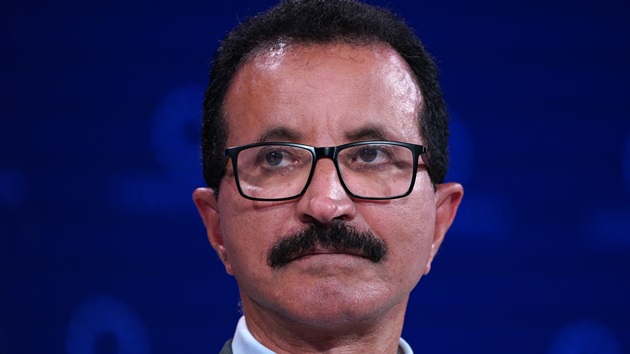
Group Chairman & CEO, DP World Sultan Ahmed Bin Sulayem speaks during the 2023 Concordia Annual Summit at Sheraton New York on September 19, 2023 in New York City. Leigh Vogel/Getty Images for Concordia Summit
(NEW YORK) — The billionaire CEO of logistics giant DP World has resigned following the disclosure of his communications with the late sex offender Jeffrey Epstein.
Sultan Ahmed bin Sulayem, an Emirati billionaire, stepped down from the company on Friday, “effective immediately,” the massive global supply chain and logistics company said in an announcement.
The move comes after financial groups in Canada and the U.K. earlier this week announced a pause in their investments with DP World on the heels of the U.S. Justice Department’s release of Epstein files.
A company spokesperson did not immediately respond to a request for comment from ABC News.
For years, before and after Epstein became a convicted sex offender in 2008, Bin Sulayem and Epstein maintained a free-flowing exchange of emails that ran the gamut from workshopping financial proposals to rating sexual conquests, according to the DOJ files.
“Are you going to the Clinton Forum?” Epstein asked Bin Sulayem in one email exchange. “I see that the Secretary General is scheduled to attend. If so, we can go to my island after the forum. Call me so we can discuss the details.” Bin Sulayem replied that his meetings were “flexible” and could be rearranged around Epstein’s.
Later on in the exchange, Epstein wanted to know from Bin Sulayem “what time you would like your massage today in new york.”
In April 2009, Epstein emailed, “where are you? are you ok, I loved the torture video.” There is no further explanation or context of the video mentioned. Bin Sulayem said he was in China and would return in a couple of weeks. “Hope to see you,” Epstein said.
Bin Sulayem was among six names read out on the floor of the House of Representatives Tuesday by Democratic Rep. Ro Khanna, one of the authors of the Epstein Files Transparency Act, who has criticized the DOJ and Trump administration for what he and others have regarded as a lack of transparency when it comes to the Epstein files saga.
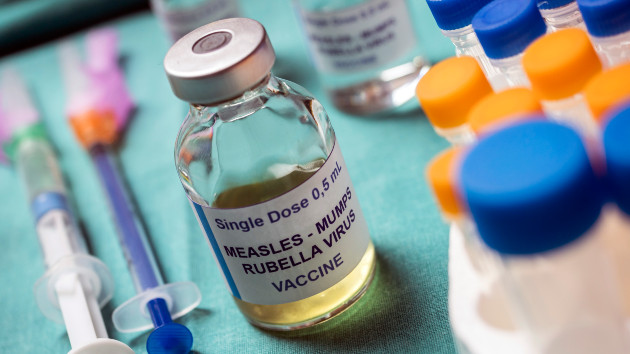
(NEW YORK) — At least 177 new measles cases have been reported in the U.S., according to newly updated data from the Centers for Disease Control and Prevention.
A total of 910 infections have been confirmed in 24 states including Arizona, California, Colorado, Florida, Georgia, Idaho, Kentucky, Maine, Minnesota, Nebraska, New York, North Carolina, North Dakota, Ohio, Oklahoma, Oregon, Pennsylvania, South Carolina, South Dakota, Utah, Vermont, Virginia, Washington, and Wisconsin.
This is a developing story. Please check back for updates.
FBI Director Kash Patel released a surveillance photo, Feb. 10, 2026 showing a potential subject in investigation of the disappearance of Nancy Guthrie in Tucson, AZ. (@FBIDirectorKash/X)
(PHOENIX, Ariz.) — More information is coming to light about the unidentified person who kidnapped Nancy Guthrie, the mother of “Today” show host Savannah Guthrie.
The 84-year-old was taken from her Tucson, Arizona, home in the early hours of Sunday, Feb. 1. The first images of the suspect were released by the FBI this week, showing an armed person in a mask in front of Nancy Guthrie’s house, appearing to tamper with a security camera.
Although the suspect’s name remains unknown, the FBI announced Thursday that analysis of the video determined he is a man with an average build who stands at about 5 feet 9 inches to 5 feet 10 inches tall.
The FBI said the suspect was wearing a black, 25-liter Ozark Trail Hiker Pack backpack.
The Pima County Sheriff’s Department said on Thursday that “several items of evidence” have been recovered, including gloves. It’s not clear if the gloves seen on the surveillance camera were the same gloves recovered.
The FBI is offering a $100,000 reward.
Anyone with information is urged to call 911 or the Pima County Sheriff’s Department at 520-351-4900.
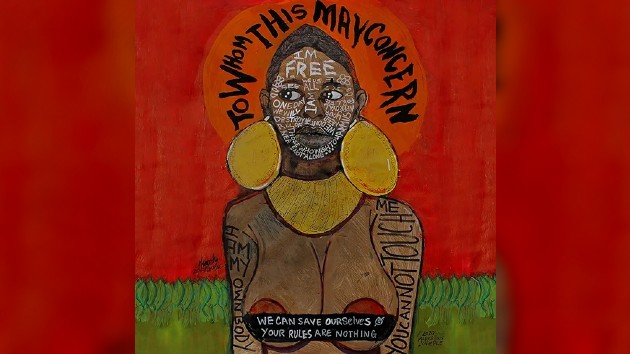
Jill Scott ‘To Whom This May Concern’ album artwork (Blues Babe Records)
Jilly from Philly is back.
After a more than 10-year hiatus, Jill Scott has released a new album, To Whom This May Concern.
It’s the soul singer’s sixth studio album following her Billboard #1 project Woman,which released back in 2015.
“I did not have a creative block,” Scott explained to Billboard about her time away from music. “I just took a creative break.”
To Whom This May Concern is complete with 19 tracks, including the previously released “Lifting Me Up.” And despite years of quietly recording and working on music, all of the songs are new as of the last 18 months, she confirmed.
The album also includes features from popular artists like JID, Too $hort, Ab-Soul and Tierra Whack.
“It’s been like a whole process,” she told Billboard of finally releasing the project.“Initially, I felt pregnant and I felt tired of holding it, you know. The idea of giving your baby to the world and seeing what they’re going to do with it — it’s very scary.”
The album title alone gave her a sense of peace. “It kind of released me in a sense. Like, okay, this is for the people it’s for.”
And now that it’s out, Scott said she’s feeling excitement more than anything.
In celebration of the new project, Scott will play a special Valentine’s Day show at Blue Note NYC in New York on Saturday, February 14.
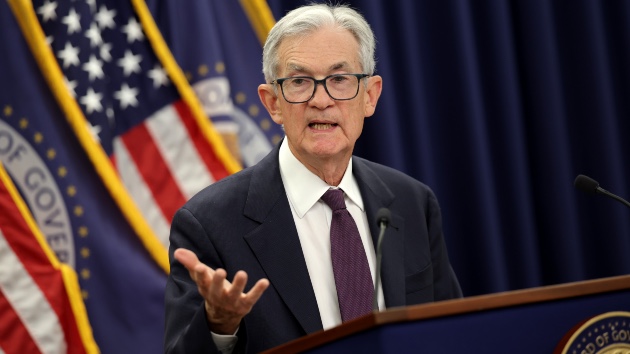
: Federal Reserve Chair Jerome Powell speaks during a press conference following the Federal Open Markets Committee meeting at the Federal Reserve on January 28, 2026 in Washington, (Photo by Kevin Dietsch/Getty Images)
(NEW YORK) — Inflation cooled in January, dropping price increases to their lowest level in nine months and defying fears of a tariff-induced hike in overall costs.
Prices rose 2.4% in January compared to a year earlier, U.S. Bureau of Labor Statistics data on Tuesday showed. The reading came in lower than economists had expected.
Inflation stands at its lowest level since May, but it remains a half-percentage point higher than the Fed’s target rate of 2%.
Affordability remains a concern for many Americans as the political calendar turns closer to election season.
The data arrived days after fresh hiring figures showed stronger-than-expected job growth in January, even though an updated estimate released at the same time indicated a near-paralysis of the labor market last year.
The murky hiring picture marked the latest in a recent series of mixed signals in economic data, which have left observers uncertain about the potential risk posed by elevated inflation alongside sluggish hiring.
Observers closely watched price movements for some household staples, which have faced sharp increases of late.
Coffee prices surged about 18% in January compared to a year earlier, while ground beef prices climbed more than 17% over that span, Bureau of Labor Statistics data showed.
Grocery prices rose at a faster pace than prices overall, climbing 2.9% over the year ending in January, BLS data showed.
Over the past year, hiring has slowed dramatically while inflation has remained elevated, risking an economic double-whammy known as “stagflation.” Those conditions have put the Federal Reserve in a difficult position.
The central bank must balance a dual mandate to keep inflation under control and maximize employment. To address pressure on both of its goals, the Fed primarily holds a single tool: interest rates.
The strain on both sides of the Fed’s mandate presents a “challenging situation” for the central bank, Fed Chair Jerome Powell said in December.
The Fed held interest rates steady at its most recent meeting in January, ending a string of three consecutive quarter-point rate cuts.
The benchmark rate stands at a level between 3.5% and 3.75%. That figure marks a significant drop from a recent peak attained in 2023, but borrowing costs remain well above a 0% rate established at the outset of the COVID-19 pandemic.
Futures markets expect two quarter-point interest rate cuts this year, forecasting the first in June and a second in the fall, according to the CME FedWatch Tool, a measure of market sentiment.
U.S. Navy, USS Gerald R. Ford (CVN 78), F/A-18E/F, November 13, 2025. (Photo by Paige Brown/US Navy via Getty Images)
(NEW YORK) — The USS Gerald R. Ford carrier strike group is expected to leave the Caribbean and head towards the Middle East in the coming days, according to three U.S. officials.
The deployment of the Ford and the three destroyers accompanying it will mean that there will be two aircraft carriers in the Middle East as it joins the USS Abraham Lincoln carrier strike group.
The deployment comes after President Donald Trump said earlier this week in an interview with Axios that he was considering sending a second carrier to the Middle East if talks with Iran about its nuclear program did not succeed.
The crew of the carrier and the supporting ships were told on Thursday about the new deployment to the Middle East, according to the officials.
The New York Times first reported the Ford’s new deployment to the Middle East.
The Ford is now expected to return to its home port in Norfolk around late April or early May, according to one U.S. official. The carrier had left Norfolk in late June for what was to be a seven-month deployment to Europe, but in late October it was redirected towards the Caribbean as part of the Trump administration’s large buildup of military forces to counter South American drug cartels.
A U.S. Southern Command spokesperson has issued provided a statement to ABC News saying that “While force posture evolves, our operational capability does not.” It adds that “SOUTHCOM forces remain fully ready to project power, defend themselves, and protect U.S. interests in the region.”
The carrier strike group will once again cross the Atlantic and the Mediterranean for a deployment that could now last as long as 10 months.
The Ford is the world’s largest carrier and its presence in the Caribbean was seen as putting pressure on then-Venezuelan President Nicolas Maduro and his government.
Some of the aircraft aboard the carrier participated in the Jan. 3 raid in the Venezuelan capital of Caracas that led to Maduro’s capture.
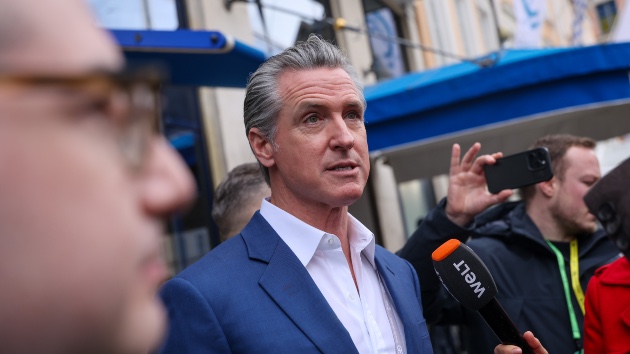
Gavin Newsom, governor of California, at the Munich Security Conference in Munich, Germany, on Friday, Feb. 13, 2026. Nuclear deterrence is set to be a hot topic at the conference. (Photographer: Alex Kraus/Bloomberg via Getty Images)
(WASHINGTON) — While it’s not Des Moines or Manchester, Munich may be on some Democrats’ path to a White House run or higher office.
Several Democrats thought to be considering 2028 presidential runs are attending the Munich Security Conference in Germany this weekend to boost their profiles and strengthen bonds with European allies strained in the first year of President Donald Trump’s second term.
From Gov. Gavin Newsom of California to Sen. Ruben Gallego, D-Ariz., and Rep. Alexandria Ocasio-Cortez, D-N.Y., the Democrats plan to push an alternative to Trump’s aggressive and transactional foreign policy agenda, lawmakers, aides and analysts told ABC News.
Newsom is expected to address the conference, meet with German Chancellor Friedrich Merz and formalize a new partnership between California and Ukraine.
In a post on X, Gallego previewed his visit, writing: “I’m headed to the Munich Security Conference this weekend to talk about rebuilding alliances and restoring steady American leadership. To meet the threat of China, the world needs a partner it can count on again, not chaos.”
At last year’s gathering, Vice President JD Vance criticized European allies, accusing them of censoring right-wing political parties and not doing more to stop illegal migration.
Since then, Trump’s on-again, off-again tariffs, repeated threats to seize Greenland and calls for NATO allies to spend more on security have forced longtime U.S. allies to question American commitments.
“We know the old order is not coming back. We shouldn’t mourn it,” Canadian Prime Minister Mark Carney said in a speech in Davos, Switzerland, last month. “Middle powers must act together because if we’re not at the table, we’re on the menu.”
Democrats will have to reaffirm their support for strong transatlantic ties while navigating European skepticism after Trump’s 2024 victory, Damian Murphy, a former Democratic foreign policy staffer and senior vice president of National Security at the Center for American Progress, told ABC News.
“They have to be careful not to overpromise and send too much of a message of reassurance, because at the end of the day, Trump is still in the White House and still directs foreign policy,” he said. “But it’s important for a European audience to understand that that’s not a monolithic view.”
The conference is also an opportunity for Democrats to bring new perspectives to the world stage and give them an opportunity to “establish relationships” with world leaders, Murphy added.
Ocasio-Cortez, who is one of the most prominent progressive voices in the party, is running for reelection in 2026 and has not said whether she plans to run for Senate or the White House in 2028, though supporters have encouraged her to do so.
The New York Democrat, who does not serve on any national security committees in Congress like most lawmakers traveling to Munich, will participate in two panels on Friday, as she takes a bigger step onto the foreign policy stage.
Matt Duss, a former adviser to Sen. Bernie Sanders, I-Vt., who has advised Ocasio-Cortez on foreign policy, told ABC News he expects her to share a progressive perspective on foreign policy, one intertwined with her domestic politics aimed at combating economic inequality and improving the conditions for working people.
“I think it’s safe to say that the American electorate has some very serious questions and different ideas about how the U.S. should act in the world than it has previously,” Duss told ABC News.
Ocasio-Cortez has also been a critic of Israel’s war in Gaza against Hamas and accused Israel of genocide against the Palestinian people. She also voted against an amendment that would have stripped U.S. funding for Israel’s missile defense systems, but has pushed back against U.S. offensive military aid to Israel.
Secretary of State Marco Rubio, who is leading the Trump administration’s delegation to Munich, called the summit “an important conference” and that other delegations “want honesty” and “want to know where we’re going, where we’d like to go with them.”
“We live in a new era in geopolitics, and it’s going to require all of us to sort of reexamine what that looks like and what our role is going to be,” he said.
ABC News’ Isabella Murray contributed to this report
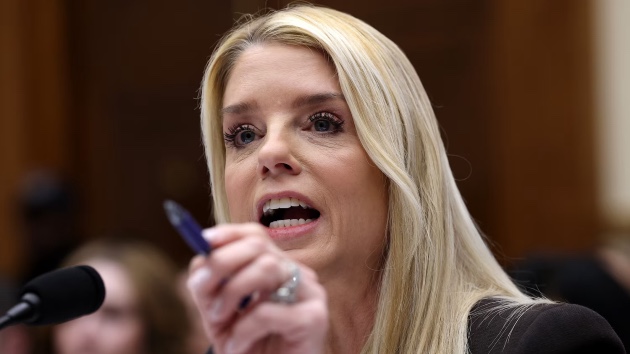
Attorney General Pam Bondi testifies before the House Judiciary Committee, February 11, 2026 in Washington. (Win McNamee/Getty Images)
(WASHINGTON) — The Justice Department’s failure this week to convince a grand jury to hand up an indictment against six members of Congress is the latest stumbling block faced by prosecutors as they seek to rebuke the administration’s perceived political opponents.
The U.S. attorney’s office in Washington, D.C., was unable to secure an indictment against six congressmembers after President Donald Trump called for them to be arrested and tried for posting a video on social media telling military service members that they could refuse illegal orders, sources said Tuesday.
Following a classified briefing on the deadly strikes on alleged drug boats in Latin America, Sen. Mark Kelly, Sen. Elissa Slotkin, Rep. Maggie Goodlander, Rep. Jason Crow, Rep. Chrissy Houlahan, and Rep. Chris DeLuzio, all former members of the military and intelligence community, posted a video in November telling current members that — per the Uniform Code of Military Justice — they should refuse to carry out unlawful orders.
“Each one of these traitors to our Country should be ARRESTED AND PUT ON TRIAL,” Trump posted to social media in response to the video on Nov. 20.
Prosecutors under U.S. Attorney Jeanine Pirro sought to convince a grand jury to indict the six lawmakers, but the panel did not comply.
It is exceedingly rare for a grand jury to not indict after prosecutors have made their presentation. In fiscal year 2016, the most recent year for which figures are available from the DOJ’s Bureau of Justice Statistics, the DOJ sought federal charges against 69,451 felony defendants — and in only six cases did a grand jury return a vote of no bill, indicating a refusal to indict.
Yet the current Justice Department has faced this outcome several times in recent months while attempting to prosecute perceived foes of the president’s agenda.
“This is pretty rare for a prosecutor to want an indictment and not get one,” University of Illinois Professor Andrew Leipold, an expert on the federal judiciary system, told ABC News. “The most obvious answer is that the government is being aggressive in prosecuting federal crimes, and grand juries are simply not in agreement.”
Vice President JD Vance has said that any such actions are “driven by law and not by politics.”
After a federal judge in November dismissed the cases the Justice Department had brought against former FBI Director James Comey and New York Attorney General Letitia James, the DOJ again sought an indictment of the New York AG.
The move came after U.S. District Judge Cameron McGowan Currie ruled that that the appointment of Trump’s handpicked interim U.S. attorney, Lindsey Halligan, was unconstitutional and that Halligan acted in an “unlawful” and “ineffective” manner when she brought charges of making false statements against Comey and mortgage fraud charges against James.
Ten days after Judge Cameron’s ruling, a federal grand jury in Norfolk, Virginia, refused to indict James on the same charges when the Justice Department attempted to refile the case, according to sources.
A second grand jury in the Eastern District of Virginia’s Alexandria branch then rejected the charges when the DOJ attempted to file the case for a third time.
“This unprecedented rejection makes even clearer that this case should never have seen the light of day,” James’ attorney, Abbe Lowell, said in a statement.
Last August, D.C. prosecutors failed to secure an indictment against a man accused of throwing a sandwich at a Customs and Border Protection agent after video of the confrontation went viral and provoked an all-out public relations blitz from the White House and Justice Department touting his arrest and the federal assault charge against him.
Sean Charles Dunn was arrested on charges of allegedly throwing a Subway sandwich at a CBP agent who was patrolling with Metro Transit Police in northwest Washington on the night of Aug. 9, amid the Trump administration’s deployment of National Guard troops in the capital.
“You f—— fascists! Why are you here? I don’t want you in my city!” Dunn is alleged to have shouted at the CBP officer before allegedly throwing the sandwich, which struck the officer in the chest.
Prosecutors similarly failed to convince a federal grand jury in D.C. to indict a woman who was accused by the government of assaulting an FBI agent during an inmate swap with U.S. Immigration and Customs Enforcement.
The U.S. attorney’s office was unable to secure an indictment against Sidney Reid despite making three separate attempts, according to court records.
ABC News’ Alexander Mallin and Katherine Faulders contributed to this report.
(ORANGEBURG, S.C.) — Two people were killed and one person was wounded after a shooting Thursday night on the campus of South Carolina State University, the school said.
The shooting, which was reported in an apartment at the Hugine Suites student residential complex on the Orangeburg campus, prompted a campus lockdown that remained in place hours after the shooting, according to a news release from the university.
Officials have not released any details about a suspect.
The South Carolina Law Enforcement Division (SLED) is investigating the shooting, the university said.
The university said school officials have not confirmed the victims’ identities or the condition of the wounded person.
Classes are canceled Friday, the university said.
Two shootings on the campus in October, including one at the same student housing complex, left one person dead and another wounded.
The university has a student population of about 2,800 students.