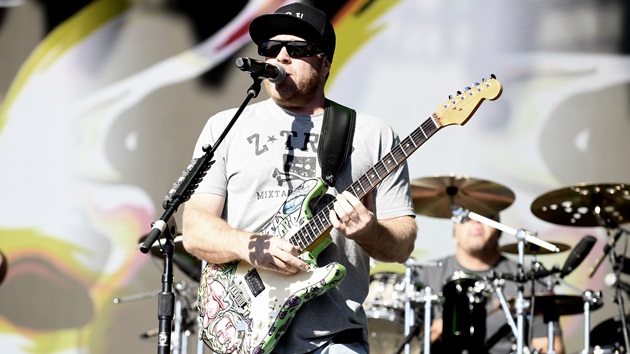
Slightly Stoopid performs during Innings Festival 2025 at Tempe Beach & Arts Park on February 21, 2025 in Tempe, Arizona. (Tim Mosenfelder/WireImage)
Slightly Stoopid has announced the inaugural edition of their own festival, Field of Dreamz, taking place June 13 in the band’s hometown of San Diego.
The event will be held at Petco Park, home of the San Diego Padres baseball team.
“The Padres and Petco Park have always been special to us,” Slightly Stoopid says in a statement. “From growing up watching the games to headlining shows here, and even throwing out the first pitch, partnering with the Padres and creating our own festival on that field in our hometown is truly a dream come true.”
Slightly Stoopid will headline the festival alongside Sublime.
“Given the history of Stoopid and Sublime, this will be really special, especially with so many of our musical friends and heroes joining us,” the “Closer to the Sun” outfit adds. “San Diego has supported us from day one, and the Field of Dreamz Festival is our way of bringing it all back to the community that raised us.”
Presales begin Thursday at 10 a.m. local time, and tickets go on sale to the general public on Saturday at 10 a.m. local time.
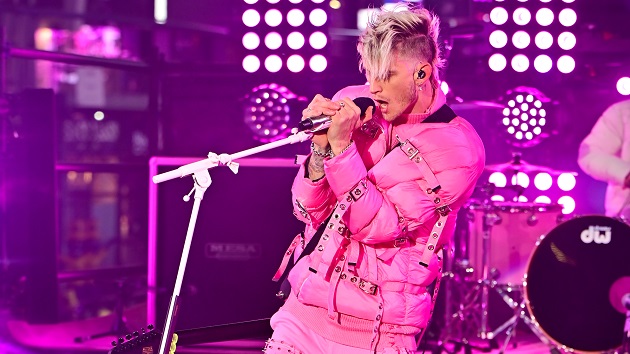
Mgk on ‘Dick Clark’s New Year’s Rockin’ Eve with Ryan Seacrest 2021.’ (ABC/Jeff Neira)
Mgk has premiered the video for “starman,” a track off his latest album, 2025’s lost americana.
“Starman” interpolates the melody of and samples Third Eye Blind’s ’90s staple “Semi-Charmed Life.” The clip spotlights the stage production of mgk’s ongoing tour in support of lost americana, which finds him performing alongside a giant replica of the Statue of Liberty.
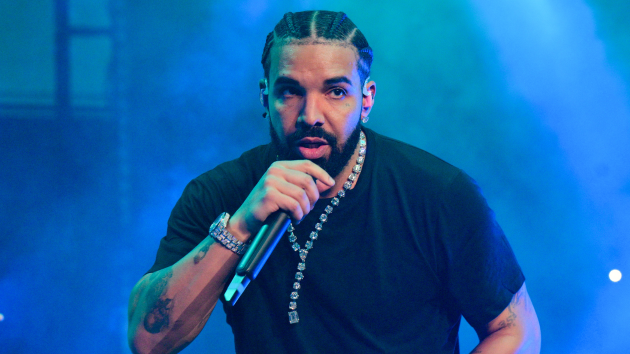
Rapper Drake performs onstage during Lil Baby & Friends Birthday Celebration Concert at State Farm Arena on December 9, 2022, in Atlanta, Georgia. (Photo by Prince Williams/Wireimage)
Drake has been named the bestselling rapper in a list compiled by the International Federation of the Phonographic Industry, which represents the recorded music industry worldwide.
He’s ranked as the third biggest-selling global artist of 2025, coming closely behind Taylor Swift and Stray Kids.
Other rappers who join Drake on the list are The Weeknd at #4; Kendrick Lamar at #6; Tyler Creator, who made his debut at the chart on #12; and Eminem at #15. SZA also made the chart, coming in at #19.
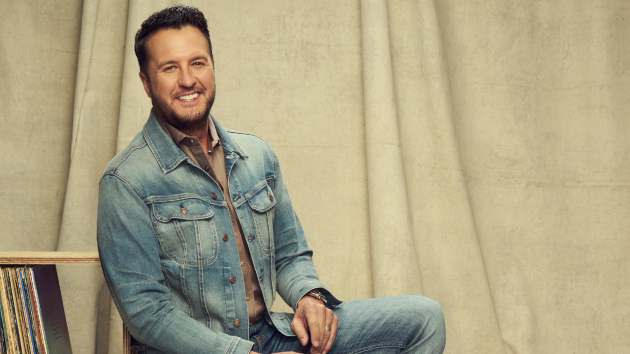
“Word on the Street” is that Luke Bryan’s new single’s set to drop on Friday.
“There’s no rumors on the rollin river/ No talk in them tall pine trees/ Just the wind and a whippoorwill whisper/ BS-free in BFE,” Luke sings in a preview of him in the recording studio. “I don’t wanna hear how you’re movin’ on’s movin’ since me/ And backroads mind their own so I don’t hear the word on the street.”
“Word on the Street” is the first new music from Luke since 2024’s Mind of a Country Boy and the name of his upcoming tour, which kicks off at the end of May.
The American Idol judge also appears on George Birge’s new radio single, “Ride, Ride, Ride.”
Kristen Bell attends the 83rd annual Golden Globe Awards at The Beverly Hilton on Jan. 11, 2026, in Beverly Hills, California. (Monica Schipper/Getty Images)
Kristen Bell is joining the Sonic the Hedgehog franchise.
The actress will voice Amy Rose in Paramount Pictures’ upcoming film Sonic the Hedgehog 4. Ben Schwartz, who has voiced Sonic in all three of the franchise’s previous films, made the announcement in an Instagram post on Wednesday.
Schwartz posted a photo of himself and Bell embracing while holding action figures of their respective characters.
“WE HAVE OUR AMY ROSE!!! And I could not be more excited!!! Please welcome the incredible @kristenanniebell to the @sonicmovie family!!!”
In the video games, Amy Rose is a pink hedgehog who is a longtime admirer of Sonic’s.
Bell joins the star-studded voice cast of the franchise that also includes Idris Elba as Knuckles and Keanu Reeves as Shadow. The live-action cast of the franchise includes Jim Carrey as the villain Dr. Robotnik, James Marsden as Tom Wachowski and Tika Sumpter as Maddie Wachowski.
While a plot for the fourth film has yet to be unveiled, it will be directed by Jeff Fowler, who also helmed the previous three films in the franchise. It is scheduled for release on March 19, 2027.
Amy Rose was first teased in the mid-credits scene of Sonic the Hedgehog 3. The scene finds Sonic being chased by an army of Metal Sonics before he is saved by the pink hedgehog.
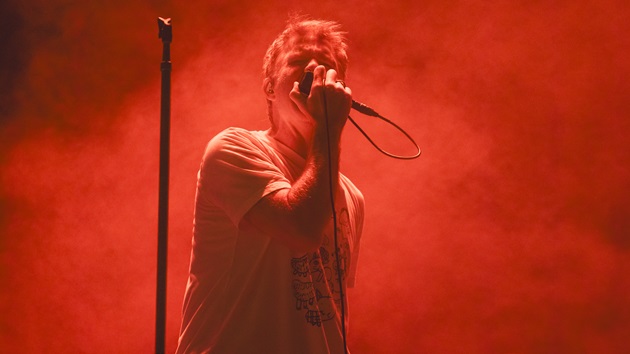
James Murphy of LCD Soundsystem performs in concert during day 4 of the Primavera Sound Festival at Parc Del Forum on June 07, 2025 in Barcelona, Spain. (Xavi Torrent/Redferns)
LCD Soundsystem has announced a residency in Boston.
The “Dance Yrself Clean” outfit will play four shows at the Beantown venue Roadrunner between April 30 and May 3.
Presales begin Feb. 24 at 10 a.m. local time, and tickets go on sale to the general public on Feb. 27 at 10 a.m. local time.
LCD has also announced a one-off show in Reno, Nevada, taking place Sept. 24. Tickets to that go on sale on Friday at 10 a.m. local time.
For the full list of dates and all ticket info, visit LCDSoundsystem.com.
LCD Soundsystem’s upcoming live schedule also includes a four-date Chicago residency in March, and a set at the BottleRock Napa Valley festival in May. Their annual New York City residency, which typically takes place in November and December, has yet to be announced for 2026.
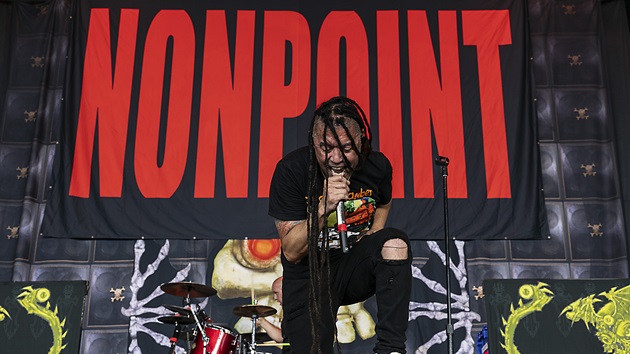
Elias Soriano of Nonpoint performs at PNC Music Pavilion on July 23, 2023 in Charlotte, North Carolina. (Jeff Hahne/Getty Images)
Nonpoint has announced a U.S. tour for the spring.
The headlining run begins April 25 in Tampa, Florida, and will wrap up May 14 in Chicago. The bill will also include “Halo” rockers SOiL and Sumo Cyco.
Tickets go on sale Friday. For the full list of dates and all ticket info, visit Nonpoint.com.
Nonpoint has also been working on new music to follow their 2024 single, “Underdog.” The band put out an EP, Heartless, in 2023, and their most recent album is 2018’s X.
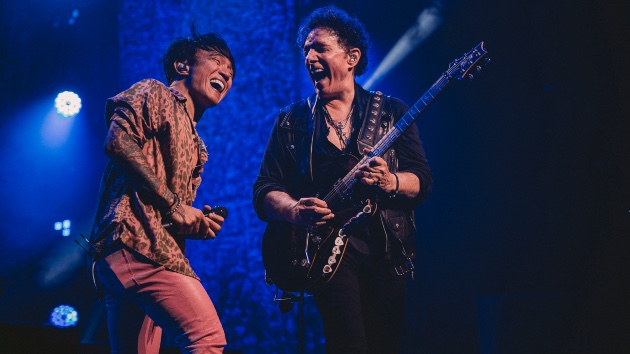
Neal Schon (R) and Aenel Pineda perform onstage during Journey Freedom Tour at Pacifico Yokohama National Convention Hall on October 21, 2024 in Yokohama, Japan. (Photo by Jun Sato/WireImage)
Journey has added another show to their 2026 schedule.
The Rock & Roll Hall of Famers have announced they’ll be performing at this summer’s Sturgis Motorcycle Rally, which takes place Aug. 7-16 in Sturgis, South Dakota.
Journey will be performing at the event’s Full Throttle Saloon on Aug. 11.
Journey isn’t the only act booked for the Sturgis Motorcycle Rally. Sammy Hagar, David Lee Roth, Lynyrd Skynyrd, Megadeth, Collective Soul, Rob Zombie, Lainey Wilson and more are all playing the event, either at the Full Throttle Saloon or at the Sturgis Buffalo Chip.
But before they head to Sturgis, Journey will be on the road with their Final Frontier tour. The trek, which has been announced as their farewell tour, kicks off Feb. 28 in Hershey, Pennsylvania, and wraps July 2 in Laredo, Texas.
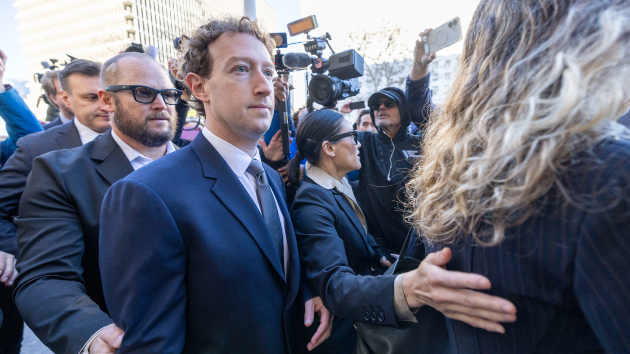
Meta CEO Mark Zuckerberg arrives to the Los Angeles Superior Court at United States Court House on February 18, 2026 in Los Angeles, California. (Jill Connelly/Getty Images)
(LOS ANGELES) — A landmark trial over social media addiction has drawn fresh scrutiny to a decades-old legal shield: Section 230.
The case, which began last Monday in Los Angeles County Superior Court, centers on claims against Meta — the parent company of Facebook and Instagram — and YouTube, which is owned by Google. Plaintiffs argue the companies knowingly built features that encouraged compulsive use among young users, contributing to long-term mental health harm.
The case is the first of more than 1,500 similar lawsuits nationwide to go before a jury, potentially setting a precedent for how tech companies could be held liable for product design. Meta CEO Mark Zuckerberg is testifying in the case on Wednesday.
The companies deny the allegations, arguing that mental health outcomes are shaped by a range of factors beyond social media use. They say they have implemented safeguards aimed at protecting young users, including parental controls and accounts designed specifically for teens.
In a statement to ABC News at the start of the trial, a Meta spokesperson said, “We strongly disagree with these allegations and are confident the evidence will show our longstanding commitment to supporting young people.”
Meta said that the company has made “meaningful changes” to its services, such as introducing accounts specifically for teenage users.
The tech giants are expected to challenge the plaintiff’s argument that there is a direct link between social media use and mental health issues. They may also invoke legal protection long-afforded by Section 230.
Section 230 of the 1996 Communications Decency Act protects social media platforms and other sites from legal liability that could result from content posted by users because they are not deemed to be publishers.
Plaintiffs have sought to circumvent that legal immunity in part by arguing that the platforms are addictive, which amounts to a defect in a product.
Section 230 grants broad protection for internet platforms, saying: “No provider or user of an interactive computer service shall be treated as the publisher or speaker of any information provided by another information content provider.”
Some tech giants, like Meta and Google, have supported reform of Section 230 that would raise the standard that platforms would need to meet in order to qualify for immunity. But the companies largely support preserving the law in some form to protect them from legal liability tied to user-generated content.
Section 230 has garnered backing from some free-speech advocacy groups such as the Electronic Frontier Foundation (EFF). The measure “protects internet users’ speech by protecting the online intermediaries we rely on,” EFF said in a blog post last week, praising Section 230 as “the legal support that sustains the internet as we know it.”
In 2023, the Supreme Court issued a pair of rulings that upheld Section 230, rejecting challenges from users alleging that harm had resulted from online posts.
One of the cases, Gonzalez v. Google LLC, concerned a lawsuit brought by the family of Nohemi Gonzalez, an American woman who was killed in an ISIS terrorist attack in Paris in 2015. The lawsuit against Google, the parent company of YouTube, alleged that YouTube recommended ISIS recruitment videos to users. The high court ruled against the plaintiffs.
Many Democrats argue that Section 230 allows platforms to evade accountability for allegedly permitting harmful or misleading content, claiming the rule lets platforms off the hook for policing too little speech.
Republicans have taken issue with what they consider big tech censorship, saying the legal protection allows the platforms to police too much speech without facing consequences.
In December, Sen. Dick Durbin, D-Ill., and Lindsey Graham, R-S.C., introduced the Sunset Section 230 Act, which would remove the legal protection from federal law within two years. A bipartisan group of seven senators has signed onto the bill but it remains well short of a majority.
ABC News’ Shafiq Najib contributed to this report.
Meta CEO Mark Zuckerberg arrives to the Los Angeles Superior Court at United States Court House on February 18, 2026 in Los Angeles, California. (Jill Connelly/Getty Images)
(LOS ANGELES) — A landmark trial over social media addiction has drawn fresh scrutiny to a decades-old legal shield: Section 230.
The case, which began last Monday in Los Angeles County Superior Court, centers on claims against Meta — the parent company of Facebook and Instagram — and YouTube, which is owned by Google. Plaintiffs argue the companies knowingly built features that encouraged compulsive use among young users, contributing to long-term mental health harm.
The case is the first of more than 1,500 similar lawsuits nationwide to go before a jury, potentially setting a precedent for how tech companies could be held liable for product design. Meta CEO Mark Zuckerberg is testifying in the case on Wednesday.
The companies deny the allegations, arguing that mental health outcomes are shaped by a range of factors beyond social media use. They say they have implemented safeguards aimed at protecting young users, including parental controls and accounts designed specifically for teens.
In a statement to ABC News at the start of the trial, a Meta spokesperson said, “We strongly disagree with these allegations and are confident the evidence will show our longstanding commitment to supporting young people.”
Meta said that the company has made “meaningful changes” to its services, such as introducing accounts specifically for teenage users.
The tech giants are expected to challenge the plaintiff’s argument that there is a direct link between social media use and mental health issues. They may also invoke legal protection long-afforded by Section 230.
Section 230 of the 1996 Communications Decency Act protects social media platforms and other sites from legal liability that could result from content posted by users because they are not deemed to be publishers.
Plaintiffs have sought to circumvent that legal immunity in part by arguing that the platforms are addictive, which amounts to a defect in a product.
Section 230 grants broad protection for internet platforms, saying: “No provider or user of an interactive computer service shall be treated as the publisher or speaker of any information provided by another information content provider.”
Some tech giants, like Meta and Google, have supported reform of Section 230 that would raise the standard that platforms would need to meet in order to qualify for immunity. But the companies largely support preserving the law in some form to protect them from legal liability tied to user-generated content.
Section 230 has garnered backing from some free-speech advocacy groups such as the Electronic Frontier Foundation (EFF). The measure “protects internet users’ speech by protecting the online intermediaries we rely on,” EFF said in a blog post last week, praising Section 230 as “the legal support that sustains the internet as we know it.”
In 2023, the Supreme Court issued a pair of rulings that upheld Section 230, rejecting challenges from users alleging that harm had resulted from online posts.
One of the cases, Gonzalez v. Google LLC, concerned a lawsuit brought by the family of Nohemi Gonzalez, an American woman who was killed in an ISIS terrorist attack in Paris in 2015. The lawsuit against Google, the parent company of YouTube, alleged that YouTube recommended ISIS recruitment videos to users. The high court ruled against the plaintiffs.
Many Democrats argue that Section 230 allows platforms to evade accountability for allegedly permitting harmful or misleading content, claiming the rule lets platforms off the hook for policing too little speech.
Republicans have taken issue with what they consider big tech censorship, saying the legal protection allows the platforms to police too much speech without facing consequences.
In December, Sen. Dick Durbin, D-Ill., and Lindsey Graham, R-S.C., introduced the Sunset Section 230 Act, which would remove the legal protection from federal law within two years. A bipartisan group of seven senators has signed onto the bill but it remains well short of a majority.
ABC News’ Shafiq Najib contributed to this report.