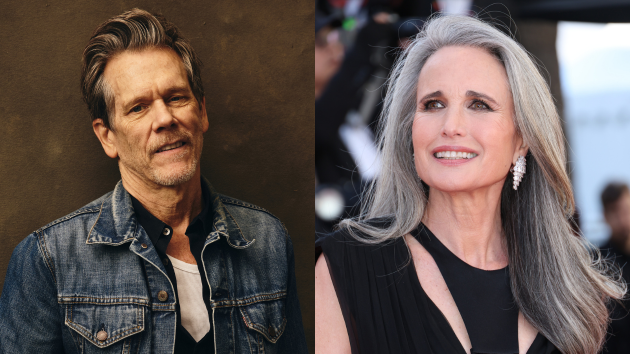
RAYE attends the Rock & Roll Hall of Fame Induction Ceremony, November, 2025 (Disney/Cristian Lopez)
RAYE‘s had a big year, performing at the Grammys and Oscars, releasing a single with Doja Cat and LISA, singing at the Glastonbury Festival and the Rock & Roll Hall of Fame induction, and now, scoring a hit with her latest single, “WHERE IS MY HUSBAND!” RAYE says the positive reaction to the song has surprised her.
“WHERE IS MY HUSBAND!” is about Raye’s tongue-in-cheek search for her life partner. The British singer/songwriter told ABC Audio, “I definitely didn’t expect it … people really connect with it. Apparently, I’m not the only one feeling extremely single, and it’s good to know! But on a serious level, I am very, very proud.”
The song is the first we’ve heard from her upcoming album, which she’s working on right now, and she says it’s actually inspiring the album’s sound.
“It’s been a beautiful thing, performing it all summer … which has kind of informed the record itself,” she explained. “Every time we play it live, I’d come off stage and be like, ‘Right, here’s my notes for the actual record, we should add this, take this away, la la la.’ So it’s been brilliant.”
While RAYE hasn’t officially announced her album, she has booked a world tour for 2026 called This Tour May Contain New Music. So, exactly how much new music are we talking about?
“Honestly, nothing’s set in stone yet, but it could be anywhere from one new song to many new songs,” she teases.
The North American leg of This Tour May Contain New Music starts March 31 in Sacramento, California. The opening acts are ABSOLUTELY and AMMA, two female artists who also happen to be RAYE’s younger sisters.
‘The Best of The Band’ (Capitol/UMe); ‘Filmworks: Insomnia’ (Omnivore Recordings)
Fans of The Band have multiple vinyl releases to choose from this holiday season.
Available for preorder now is the Vinylphyle pressing of1975’s Northern Lights, Southern Cross, which marks its 50th anniversary this year. Featuring classics like “Ophelia,” “It Makes No Difference” and “Acadian Driftwood,” the 180-gram black vinyl LP was mastered from the original analog sources, and includes gatefold packaging and new liner notes.
Then on Record Store Day Black Friday, Nov. 28, you can grab The Band’s 1993 reunion album, Jericho, appearing on vinyl for the first time, as well asFilmworks: Insomnia, a companion LP to Robbie Robertson‘s new book, Insomnia.
The book details the start of Robertson’s creative partnership with Martin Scorsese, which culminated in an Oscar nomination for his Killers of the Flower Moon score. The album features music Robertson composed and/or produced forThe Last Waltz, Raging Bull and Carny. Of note, Robertson recorded the Raging Bull pieces with bandmates Richard Manuel and Garth Hudson.
According to Robertson’s longtime manager, Jared Levine, Filmworks: Insomnia is a sidebar to a much larger future project, which began prior to Robertson’s death in 2023.
“He very much wanted, and we were working on before he died, a collection of his movie music,” Levine explains. “And so we were putting together all the pieces that he had done for film and kind of trying to figure out how we would go about it.” The Insomnia LP, he says, is something “that we’re really proud of and really just includes pieces that Robbie details in the book.”
And finally, the long-out-of-print greatest hits albumThe Best of The Bandreturns to vinyl on Dec. 12; it’ll also be available on CD.
Ariana Grande and Cynthia Erivo in ‘Wicked: For Good.’ (Giles Keyte/Universal Pictures)
Wicked: For Good did good business at the box office this weekend, opening with $150 million.
The second act of 2024’s Wicked broke the previous film’s record for biggest debut of a Broadway adaptation of all time, according to Variety. Wicked brought in $112.5 million in its debut weekend last year.
The film, starring Cynthia Erivo and Ariana Grande, is also this year’s second-biggest opening behind A Minecraft Movie, which debuted with $162 million back in April.
The week’s two other new releases, the Brendan Fraser-starring Rental Family and the action thriller Sisu: Road to Revenge, opened at numbers five and six, respectively. Rental Family had a $3.3 million haul, while Sisu took in $2.6 million
Here are the top 10 films at the box office:
1. Wicked: For Good – $150 million 2. Now You See Me: Now You Don’t – $9.1 million 3. Predator: Badlands – $6.25 million 4. The Running Man – $5.8 million 5. Rental Family – $3.3 million 6. Sisu: Road to Revenge – $2.6 million 7. Regretting You – $1.52 million 8. Nuremberg – $1.23 million 9. Black Phone 2 – $1 million 10. Sarah’s Oil – $771,542
After three seasons of watching Will Smith search for identity and belonging in Bel-Air, Jabari Banks says his character finally feels at home in the show’s final season.
“I think he has reached the point now where he definitely feels like he belongs in Bel Air and having to leave is the hardest part,” he tells ABC Audio. “Finding a place where you’re like, ‘OK, I finally fit in. I finally think I got a hang of this thing’ and then everything changes again.”
Jabari says it’s a storyline fans can relate to.
“I think so many people can resonate with that in life in general. … As soon as you get comfortable, life throws something at you where you are like, it’s another thing,” he says, noting Will leans on his loved ones to get through the ebbs and flows of life.
“I think he’s at the point now in his life where he’s accepting that there’s always going to be something,” Jabari says. “And so as long as he has his family with him, I think he can get through anything.”
One of Will’s family members is cousin Carlton Banks, played by Olly Sholotan. Ollysays season 4 completes his character’s story, one that’s seen fans go from hating to loving Carlton.
“I think the thingI’m the most proud of is the fact that I was able to introduce audiences to a version of Carlton that quite frankly they did not like. … He was selfish. He had sacrificed so much of himself to fit in that he just rubbed everyone the wrong way,” Olly says. “It’s been a really incredible thing to see how audiences have come along with him. … And now they’re rooting for him.”
He teases there’s a “really big plot point in [Carlton’s] evolution” in the show’s final season.
Sen. Mark Warner, D-Va. on ABC News’ “This Week” on Nov. 23., 2025. (ABC News)
(NEW YORK) — Republican Rep. Michael McCaul, R-Texas, said Sunday he would advise against Ukraine signing the peace proposal that President Donald Trump has offered to end its war with Russia unless more “ironclad” security guarantees are written into the agreement.
“Without that, I would not advise Ukraine to sign this. They can’t sign an agreement like Budapest and then allow Russia to invade again,” McCaul told ABC News’ “This Week” co-anchor Martha Raddatz.
Peace talks continue as American officials are meeting on Sunday with a Ukrainian delegation in Geneva.
The latest proposal, which was presented to Kyiv Thursday, was drafted by U.S. special envoy Steve Witkoff with input from Secretary of State Marco Rubio, according to the White House. But it was done in coordination with Moscow and includes conditions that are widely seen as being in Russia’s favor, prompting concerns within Ukraine and Europe that it would effectively be a capitulation.
Among the concessions Ukraine is being asked to make in this proposal: limiting its military to 600,000 personnel, agreeing to never join NATO, and forcing Kyiv to give up territory in the east, including areas not yet occupied by Russia.
McCaul, a top member and former chairman of the House Foreign Affairs Committee, said he believes there’s “flexibility” in Trump’s 28-point plan and that his Thursday deadline for Ukrainian President Volodymyr Zelenskyy to make a decision or risk losing American support to end Russia’s nearly four-year war in shouldn’t be a “take it or leave it” situation.
“I think there’s flexibility. I do know that Rubio said within the next 72 hours, we all know a great deal about whether this goes forward or not,” McCaul said. “It’s always he who has stated, the president, that he sees this as a vision, but not a done deal. So it should not be take it or leave it.”
Democratic Sen. Mark Warner, who also appeared on “This Week,” called the plan “awful.”
“My reaction is it’s awful. It would make Neville Chamberlain’s giving in to Hitler outside of World War II looks strong in comparison,” Warner said, arguing the plan is “almost a series of Russian talking points.
“This would be a complete capitulation and that’s why I think you’re hearing from Congress, both sides, people pushing back … It feels like this was a plan that they took almost entirely from the Russians,” Warner said.
Warner, the top Democrat on the Senate Intelligence Committee, said he hopes this is merely a new starting point.
“To have this proposal forced upon them, I think as Zelenskyy said, Ukrainian dignity versus giving up a partner, I would hope the president would not be so weak as to try to force this plan on the Ukrainian and our other allies,” Warner said. “I think the president is seeing this one-sided plan kind of blow up in his face with pushback from the Ukrainians, from the Europeans, from members of Congress of his own party. And my hope is, he’ll come back and be a bit more reasonable.”
Here are more highlights from McCaul’s interview:
On the Russia-Ukraine peace proposal’s prospects McCaul: The inception of this agreement seems to have come from a [Trump special envoy Steve] Witkoff discussion with the Russian [Kirill] Dmitriev, who heads up the Russian sovereign wealth fund. It’s unclear how much input was given by either Ukraine or our European allies. Rubio did say on the call that this is a United States document with input from Ukraine and from Russia. About 80% of this deal, I think, they’re going to find agreement with as they go to Geneva. The problem is going to be the 20% of really tough items to negotiate.
On the deal’s Thanksgiving deadline McCaul: On all party sides, except the Russians I haven’t talked to, is that this is an ongoing negotiation process, so they’re really getting it started. What they — the way the White House described it last night was we had to start putting this pen to paper so we could get something accomplished. I do think it’s in Ukraine’s best interest to get something done now, rather than a year later, the military industrial war machine of Russia has now risen to a level that is very difficult now for Ukraine.
Here are more highlights from Warner’s interview:
On Trump saying he’ll speak with Venezuela’s president Raddatz: Trump says he’ll be speaking with Venezuelan President Nicolas Maduro. Do you think that is a good idea? And what can you say to him?
Warner: I think the notion that Trump says, “We’ll talk to anyone” I think that is — I’m not going to critique him on that. If there’s a way to push Maduro out. Remember, our government and 50 other governments, most all of Western Europe, don’t — don’t recognize the Maduro government as legitimate, but it does not feel like there is an organized planning coming down again — America-only without any of our other allies in South America or Central America again, seems not the right approach.
On whether U.S. will go to war with Venezuela Raddatz: Do you think he wants to go to war with Venezuela? Do you think he wants to —
Warner: I don’t know. I don’t know. I think he is trying to put outside pressure on Maduro, but by doing it in this kind of America-only approach, again, without giving any sign to, I think, even in the Republicans on the Hill, what his plans are, I’m not sure is the right way to do foreign policy. You couple this Venezuela misadventure with this desertion of Ukraine and this is not making America safer and it’s sure not putting America first.
New York Jets defensive player Kris Boyd while playing for his former team, the Houston Texans in 2024. (Todd Rosenberg/Getty Images)
(NEW YORK) — A 39-year-old man was fatally shot early Sunday near a Midtown Manhattan nightclub, and the New York City Police Department said the shooter remains on the run.
The incident happened a week after New York Jets player Kris Boyd was shot and wounded outside of a Midtown Manhattan restaurant.
NYPD officers were alerted around 4:13 a.m. on Sunday that a person had been shot near a nightclub on West 46th Street and 12th Avenue in the Midtown West neighborhood, less than a block east of the Intrepid Museum.
“Upon arrival, officers observed a 39-year-old male with gunshot wounds to the back and groin,” according to an NYPD statement.
The victim, whose name was not immediately released, was taken by ambulance to Mount Sinai Morningside Hospital, where he was pronounced dead, according to the NYPD.
No arrests have been announced and police are working to identify the suspect.
The violence follows the unrelated Nov. 16 shooting of 29-year-old Boyd, a Jets defensive back and specialty teams player, outside the Midtown Manhattan restaurant Sei Less, located 156 W. 38th Street, roughly two miles from Sunday morning’s shooting.
Boyd was shot around 2 a.m. after and he and some friends emerged from the restaurant at closing time and got into a scuffle on the street with another group that had been inside the restaurant, according to a statement from the NYPD.
Boyd remains hospitalized with a bullet lodged in his lung, law enforcement sources told ABC News. Jets coach Aaron Glenn told reporters on Wednesday that he spoke to Boyd and that he is confident the player will be okay.
The Boyd shooting is believed to have stemmed from words exchanged between Boyd, who was with two other Jets players and a friend at Sei Less, and another group “chirping” about their clothing, law enforcement sources told ABC News.
No arrests have been announced in the Boyd shooting. However, police sources on Thursday told ABC News that detectives have identified a possible suspect and are looking to question him.
(NEW YORK) — It took an extra day, but the delegates at COP30, the U.N. annual climate conference, have reached a deal on a final agreement.
The agreement, however, falls far short of the high expectations many delegates, environmental groups and non-governmental organizations had going into the conference in Belém, Brazil.
Despite more than 80 countries calling for a roadmap to phase out fossil fuels worldwide, the primary cause of human-amplified climate change, that demand did not make it into the final text.
Although the conference took place in what’s called the “gateway to the Amazon,” the COP30 agreement also doesn’t include any significant new initiatives to stop deforestation and protect the Amazon rainforest, known as “the lungs of the planet.”
“The venue bursting into flames couldn’t be a more apt metaphor for COP30’s catastrophic failure to take concrete action to implement a funded and fair fossil fuel phaseout,” Jean Su, energy justice director at the Center for Biological Diversity, said in a statement to ABC News, referencing a fire that broke out Thursday at the COP30 venue.
“These negotiations keep hitting a wall because wealthy nations profiting off polluting fossil fuels fail to offer the needed financial support to developing countries and any meaningful commitment to move first,” she added.
Appearing to acknowledge the disappointment of some delegates and environmental and climate groups that the final agreement didn’t include the roadmaps on deforestation and fossil fuels, COP30 President André Corrêa do Lago said during his remarks during the closing plenary that he would use his authority as the COP30 president to create the roadmaps himself.
These roadmaps would not be binding, however, because they weren’t part of the approved agreement and aren’t backed by all 195 countries.
“I, as president of COP30, will therefore create two roadmaps. One on halting and reverting deforestation, another to transitioning away from fossil fuels in a just, orderly and equitable manner,” do Lago said during the final plenary session.
The World Resources Institute (WRI), an environmental research organization that sent a delegation to COP30, said that while there were some notable successes during the nearly two week conference, it didn’t deliver on what many delegates and advocates were hoping it would.
“COP30 delivered breakthroughs to triple adaptation finance, protect the world’s forests and elevate the voices of Indigenous people like never before. This shows that even against a challenging geopolitical backdrop, international climate cooperation can still deliver results,” Ani Dasgupta, the president and CEO of WRI, said in a statement to ABC News.
“But many will leave Belém disappointed that negotiators couldn’t agree to develop a roadmap to transition away from fossil fuels. More than 80 countries stood their ground for a fair and equitable shift off fossil fuels, but intense lobbying from a few petrostates weakened the deal,” she added.
The Union of Concerned Scientists (UCS) expressed disappointment that a stronger agreement couldn’t be reached but praised the delegates for making progress in some areas.
“The barely adequate outcome salvaged in the final hours of COP30 keeps the Paris Agreement alive but exposes the monumental failures of rich countries–including the United States and European Union nations–to live up to the commitments they made under that agreement,” Dr. Rachel Cleetus, senior policy director for the Climate and Energy Program at UCS, said in a statement to ABC News.
Cleetus acknowledged that the conference saw some progress in several key areas, including “a nod to tripling adaptation finance,” although she said that the specific details of how that will be implemented were left out of the text.
“On a positive note, the COP30 outcome includes a very encouraging agreement to develop a just transition mechanism to help enable a fair, funded transformation to a clean energy future with social and economic safeguards for workers and communities,” she said.
The Center for Biological Diversity praised delegates for the “establishment of a first-ever just transition mechanism for workers, Indigenous peoples and frontline communities transitioning to renewable energy economies.”
These initiatives will focus on ensuring that the shift to a low-carbon economy is fair to workers, communities, and ecosystems.
“It’s a big win to have the Belém Action Mechanism established with the strongest-ever COP language around Indigenous and worker rights and biodiversity protection,” said Su of the Center for Biological Diversity.
“The BAM agreement is in stark contrast to this COP’s total flameout on implementing a funded and fair fossil fuel phaseout,” Su added.
In his closing remarks, do Lago acknowledged that the outcomes of COP30 may disappoint many.
“I know some of you had higher ambitions,” said do Lago. “I know youth and civil society will demand we do more,” he said. “I will try not to disappoint you during my presidency.”
Next year’s COP31 will be held in Antalya, Turkey, with Australia leading the negotiations.
This rare splitting of responsibilities was part of an agreement to end a standoff between Turkey and Australia over who would host the event.
(CHICAGO) — At least seven people were injured in a shooting in downtown Chicago on Friday night, police said.
Officers were on patrol when they observed a large group of people on the sidewalk close to the Chicago Theater on State Street, according to a statement from the Chicago Police Department.
“Officer’s heard gunshots being fired, and the large group began fleeing the scene,” authorities said. “Officers immediately responded to the area and discovered seven people had sustained gunshot wounds from the gun fire.”
The victims were all treated by the Chicago Fire Department and taken to local hospitals, authorities said.
The shooting happened during a very busy night downtown, with the city holding its Christmas tree lighting ceremony, according to ABC News’ Chicago station WLS.
Though police have not disclosed the identities of any of the victims, they have confirmed that six of them have been listed in good condition and one of them has been listed in fair condition.
No suspects are in custody and detectives are currently investigating the circumstances that led up to the incident.
(NEW YORK) — A proposal from the Trump administration to revise the Endangered Species Act could have critical impacts on the most vulnerable animals, plants and habitats throughout the U.S., according to environmental advocates.
Earlier this week, the U.S. Department of the Interior outlined several rules within the ESA that it plans to roll back.
Included in the proposed revisions are changes to the listing of protected species and critical habitat (50 CFR part 424), which would be based on the “best scientific and commercial data available,” according to the Interior Department.
This would make economics a factor in what was previously science-based decision-making, Susan Holmes, executive director of the Endangered Species Coalition, told ABC News.
“For example, if the Trump administration determined that the economic harm to a golf course would be greater than protections for the Florida panther, then they could make that determination,” she said. “It would essentially potentially put money over the science.”
The Interior Department has also proposed changes to the 4(d) provision, which casts a blanket protection over threatened species, which presumptively prohibits killing or harming them unless federal agencies outline species-specific alternatives. The revision would require species-specific rules tailored to each threatened species instead.
“Overturning the 4(d) rule would remove protections for threatened species, make it more difficult to list species in need, reduce habitat conservation and open loopholes to undermine protections for imperiled species,” animal welfare group Humane Society of the United States said.
Conservation group Defenders of Wildlife said it would also deprive newly listed species from “automatically receiving protections from killing, trapping, and other forms of prohibited ‘take.'”
This could impact species now proposed for listing, such as the Florida manatee, California spotted owl, Greater sage grouse and Monarch butterfly.
“The rule provides an important safety net for vulnerable wildlife, giving species time to recover their populations before they become critically endangered,” Kitty Block, president and CEO of Humane World for Animals, said in a statement.
The Interior Department said the change “aligns service policy with the National Marine Fisheries Service’s longstanding species-specific approach.”
The Trump administration is also proposing to restrict the amount of habitats that are protected under the ESA (50 CFR part 17). The rule would narrow the definition of “critical habitat” to exclude currently unoccupied but historic habitat.
According to the Interior Department, the revised framework provides “transparency and predictability for landowners and project proponents.”
“Habitat is the number one reason why species go extinct,” Holmes — from the Endangered Species Coalition — said. “We know, to protect a species, we have to protect the habitat where they live, where they breed, they feed.”
The move reaffirms the federal government’s commitment to “science-based conservation that works hand in hand with America’s energy, agricultural and infrastructure priorities,” Fish and Wildlife Service Director Brian Nesvik said in a statement.
“By restoring clarity and predictability, we are giving the regulated community confidence while keeping our focus on recovery outcomes, not paperwork,” Nesvik said.
Changes on a rule on interagency cooperation (50 CFR part 402) would make it easier for federal agencies to greenlight projects such as mining, drilling, logging and overdevelopment without fully assessing the impact on threatened and endangered species or their habitats, according to Defenders of Wildlife.
The Endangered Species Coalition’s Holmes told ABC News that “there would be less compliance, less consultation between the federal agencies.”
The proposal seeks to return to the 2019 consultation framework by reinstating definitions of “effects of the action” and “environmental baseline,” according to the Interior Department.
Since the Endangered Species Act was passed in 1973, it has saved 99% of listed species from extinction since its inception, a study published in 2019 found. It has since become one of the nation’s bedrock environmental laws.
Wildlife and environmental advocates condemned the proposed revisions.
Revisions to these rules would “drastically weaken protection for endangered species,” Holmes said.
“These devastating proposals disregard proven science and risk reversing decades of bipartisan progress to protect our shared national heritage and the wildlife that make America so special,” Andrew Bowman, president and CEO at Defenders of Wildlife, said in a statement.
The Humane Society of the United States described the move as “yet another attack on wildlife” by the Trump administration.
“The proposal to repeal this rule is completely reckless,” Block said. “Even if they are listed as ‘threatened’ under the ESA, species could become extinct without its protections.”
Environment advocates also accused the Trump administration of failing to “read the room” in terms of how Americans feel about protecting nature.
Polling data published in June 2025 found that four out of five Americans support the ESA, according to the International Fund for Animal Welfare.
The polling also found that 81% of Americans say they are concerned about the environment, including the welfare of animals and including nature, and that 70% factor the value of nature into government decision-making.
In addition, 84% of those polled believe the U.S. should focus on preventing endangered species from becoming extinct, and 78% support the goals of the ESA.
“Trump’s attacks on the Endangered Species Act seriously misread the room. Most people are not going to allow the sacrifice of our natural world to a bunch of billionaires and corporate interests,” Kristen Boyles, an attorney with environmental law group Earthjustice, said in a statement.
The attempt to alter the ESA follows other attacks against wildlife by the Trump administration this year, including proposals to rescind the Roadless Rule and Public Lands Rule, according to the environmental organization Sierra Club.
If the proposed rules were to come into effect, they would benefit industry and developers, the advocates said.
“The Trump administration is stopping at nothing in its quest to put corporate polluters over people, wildlife and the environment,” Sierra Club Executive Director Loren Blackford said in a statement. “After failing in their latest attempt to sell off our public lands, they now want to enable the wholesale destruction of wildlife habitat for a short-term boost in polluters’ bottom lines.”
In a statement to ABC News, the White House said the proposed rules will streamline protections under the ESA.
“President Trump is cutting red tape across the administration — including at the Department of Interior, where he is making it easier to delist recovered species and focus protections where they are truly needed,” White House Deputy Press Secretary Anna Kelly told ABC News in an emailed statement. “Joe Biden expanded bureaucracy and sowed confusion, but President Trump and Secretary Burgum are returning power to Americans by eliminating regulatory barriers and respecting private property while maintaining core conservation goals.”
A 30-day period of public comment is in place following the Interior Department’s proposal.
(KYIV and LONDON) — Amid a U.S.-proposed plan to end Russia’s nearly four-year war in Ukraine, the Office of the President of Ukraine said Saturday that “consultations on steps to end the war will take place in the coming days.”
“Yesterday, the President of Ukraine approved the composition of the Ukrainian delegation and the directives for the relevant talks,” the president’s office said in a statement posted on social media. “We anticipate constructive work and are ready to advance as swiftly as possible to achieve a real peace.”
“Ukraine never wanted this war and will make every effort to end it with a dignified peace,” the statement continued. “Ukraine will never be an obstacle for peace, and the representatives of the Ukrainian state will defend legitimate interests of the Ukrainian people and the foundations of European security. We are grateful for our European partners’ willingness to help.”
In another statement posted on social media Saturday, the secretary of Ukraine’s National Security and Defense Council, Rustem Umerov, said “we are starting consultations between high-ranking officials of Ukraine and the United States on the possible parameters of a future peace agreement in Switzerland.”
Earlier this week, the White House presented Kyiv with a new 28-point peace plan drawn up in coordination with Moscow that contains conditions that are widely seen in Ukraine as effectively demanding the country’s capitulation.
U.S. Army Secretary Daniel P. Driscoll and Chief of Staff Gen. Randy George led an American delegation to Kyiv on Wednesday, with a U.S. official confirming to ABC News that the group was read in on the new peace plan. The U.S. military officials are the most senior delegation to visit Ukraine since President Donald Trump took office in January.
A U.S. official told ABC News Saturday that a U.S. delegation including Driscoll, Secretary of State Marco Rubio, and envoy Steve Witkoff will meet in Geneva, Switzerland, with a Ukrainian delegation.
Additionally, the official said there are plans for the U.S. delegation to hold a separate meeting with a Russian delegation. No details were provided about the location of the planned meeting with the Russians.
“Since the first days of the war, we have taken one, extremely simple position: Ukraine needs peace,” Ukrainian President Volodymyr Zelenskyy said in his Friday evening address. “And a real peace — one that will not be broken by a third invasion.”
Driscoll met with Zelenskyy for an hour on Thursday and discussed “a collaborative plan to achieve peace in Ukraine,” according to a U.S. official.
“This is a comprehensive plan to end the war,” the official said of the plan, which was described as a collaboration between the U.S. and Ukraine.
The plan includes a number of maximalist demands that the Kremlin has long demanded and that have been previously dismissed as non-starters for Kyiv, including that Ukraine cut its armed forced by more than half and cede swaths of territory not yet occupied by Russia, according to a Ukrainian official.
Ukraine would also be forbidden from possessing long-range weapons, while Moscow would retain virtually all the territory it has occupied — and receive some form of recognition of its 2014 seizure of Crimea under the latest proposed U.S. plan.