UK bookies have Olivia Dean, RAYE tied for favorite to record next James Bond theme

UK bookies have Olivia Dean, RAYE tied for favorite to record next James Bond theme
Raye and Olivia Dean attend the Burberry Summer 2026 show during London Fashion Week on Sept. 22, 2025 in London, England. (Dave Benett/Getty Images for Burberry)

At the beginning of March, Olivia Dean was the British bookmakers’ favorite to record the next James Bond theme, but now RAYE has pulled up even.

On March 26, RAYE was asked by an interviewer on a red carpet about rumors that she was going to record the next Bond theme. “I don’t know what to say,” she responded. “I’m nervous. No, there’s no rumor. Now I’m going red and it looks like there’s a rumor. There is no rumor. Obviously … if they ever want to approach me about that, my inbox is open.”

Because of her answer, top U.K. bookmakers William Hill now have Olivia and the “Where Is My Husband!” singer tied at 2/1 joint favorites.

“The growing buzz around RAYE and her recent interviews speculating about an involvement in the 007 franchise means we can’t split them anymore,” said a spokesperson for William Hill. “Right now the betting suggests the next 007 theme is most likely to come from one of the UK’s two standout female stars of the moment.”

Meanwhile, Harry Styles’ odds have been shortened from 10/1 to 6/1, but Dua Lipa remains right behind Olivia and RAYE, at 7/2. Other singers the company is offering odds on include Miley Cyrus, Chappell Roan, Charli XCX and Lana Del Rey.

There is no firm information on when the new James Bond film will begin filming; a new James Bond, who would take over for Daniel Craig, hasn’t been announced yet. However, we do know that Dune director Denis Villeneuve will be behind the camera for the movie, which will be the 26th official film in the series.


Copyright © 2026, ABC Audio. All rights reserved.

Ringo Starr releasing new single, ‘Choose Love,’ on Friday

Ringo Starr releasing new single, ‘Choose Love,’ on Friday
Ringo Starr’s ‘Long Long Road’ (Universal Music)

Ringo Starr is getting ready to share another song from his upcoming solo album, Long Long Road. The Beatles rocker just announced on Instagram that the track “Choose Love” will be released Friday.

“No matter what you choose, – Choose Love,” he wrote in the announcement. “I just love that song – I am Peace & love, that’s what I do.”

This will be the second song released from Long Long Road, following “It’s Been Too Long,” which featured guest appearances by Molly Tuttle and Sarah Jarosz.

Long Long Road, dropping April 24, is Ringo’s second album with producer T Bone Burnett, following 2025’s Look Up. The 10-track album is described as having “roots in Country and Americana.” Other guests on the album include Sheryl Crow, St. Vincent and Billy Strings.

Long Long Road is available for preorder now.

Copyright © 2026, ABC Audio. All rights reserved.

Iran regime weaker, more radical after US-Israel assassination campaign: Analysts

Iran regime weaker, more radical after US-Israel assassination campaign: Analysts
A man sweeps up debris near a residential building that was hit in an airstrike in the early hours of March 27, 2026 in Tehran, Iran. (Majid Saeedi/Getty Images)

(LONDON) — President Donald Trump and Israeli Prime Minister Benjamin Netanyahu kicked off their joint military campaign against Iran in late February, urging the fall of the Islamic Republic.

“When we are finished, take over your government. It will be yours to take. This will be probably your only chance for generations,” Trump said, addressing Iranians in announcing the start of “major combat operations.”

A month of unrelenting combined U.S.-Israeli strikes appears to have significantly eroded Iran’s military capabilities and killed many of its most senior leaders, including Supreme Leader Ayatollah Ali Khamenei, who died alongside dozens of top Iranian officials in a series of airstrikes on his official residence in Tehran in the opening salvos of the war.

But despite Trump’s assertion that the “war has been won,” Iranian forces continue to launch attacks on Israel, regional U.S. bases and American partners across the Middle East, while commercial shipping through the strategic Strait of Hormuz remains constrained, with large numbers of cargo vessels in limbo on either side of the narrow waterway at the southern entrance to the Persian Gulf.

Trump has also asserted that there had been “complete regime change,” with the leaders the U.S. is now dealing with in recently announced negotiations “more moderate” and “much more reasonable,” the president told ABC News’ Jonathan Karl.

Trump named Mohammad Bagher Ghalibaf, the powerful speaker of the Iranian parliament, as the direct U.S. negotiating partner, though Ghalibaf has denied the assertion.

But in Tehran, the cadre of officials – Ghalibaf among them – emerging to take the reins of power appear as committed as the slain figures they are replacing, many of them veterans of the powerful Islamic Revolutionary Guard Corps (IRGC), analysts have said.

The regime in Tehran, according to Danny Citrinowicz – the Israel Defense Forces’ former top Iran researcher, now at the Institute for National Security Studies think tank in Israel – “is weaker than it was before the conflict, but it is also more radical. The IRGC has further consolidated its influence over decision-making, eroding what little internal balance once existed within the regime.”

The war appears to have given Tehran long-term leverage over the Strait of Hormuz – a “weapon of mass disruption,” as described by Ali Vaez of the International Crisis Group during an online briefing hosted by the think tank this week.

If the Islamic Republic survives the war, and its immediate aftermath by suppressing simmering anti-regime movements, its new leaders may be emboldened to retain perceived strategic advantages, chief among them control of the Strait of Hormuz, analysts who spoke to ABC News said.

That regime sentiment seems to be crystalizing. Ghalibaf, for example, told the IRNA state news agency that Iran’s strategy now rests on its control of three pillars: “missiles, the streets, and the Strait.”

Inside Iran, some sense that shift. Darius – who did not wish to use his real name for fear of reprisal – told ABC News from Tehran of a growing sentiment that “the source of legitimacy for the Islamic republic is shifting” from the clerical establishment to the IRGC.

“Now, the de facto leaders of the country are the generals in the IRGC. And they are actually running the show at the moment,” Darius said.

IRGC ascendant

The IRGC was formed shortly after the Iranian Revolution by Ayatollah Ruhollah Khomeini in 1979, ultimately emerging as the new Islamic Republic’s primary tool for projecting its ideology and influence beyond its own borders.

The IRGC entrenched and expanded its power during the Iran-Iraq War from 1980 to 1988. With its battlefield exploits and ideological zeal, the IRGC came to embody the wartime concept of “sacred defense,” Johns Hopkins University professor Vali Nasr wrote in his recent book, “Iran’s Grand Strategy.”

Observers have long considered the IRGC to be the most powerful military, political and economic institution in Iran.

Even before the most recent U.S.-Israeli campaign against Iran, many experts warned that decapitation strikes or a push for regime change risked empowering the IRGC to seize the state’s other mechanisms of power – though others suggested the force had no need to openly seize control, given its de facto hold over the country.

The new supreme leader, Mojtaba Khamenei, the son of Ali Khamenei, served in an elite IRGC unit during the Iran-Iraq War, and analysts have suggested his candidacy was strongly supported by the force.

Mojtaba Khamenei’s newly appointed military adviser, Mohsen Rezaei, was drawn from the senior ranks of the IRGC, as was the new secretary of Iran’s Supreme National Security Council, Mohammad Bagher Zolghadr, who was selected to replace Ali Larijani when the latter was killed by Israeli airstrikes in mid-March.

Meanwhile, IRGC veteran Ghalibaf – who has reportedly long been close to Mojtaba Khamenei – remains alive and appears to be in a position of influence, one of the few top prewar officials to have survived the U.S.-Israeli campaign.

Inside Iran, some sense that shift. Darius told ABC News from Tehran of a growing sentiment that “the source of legitimacy for the Islamic republic is shifting” from the clerical establishment to the IRGC.

“Now, the de facto leaders of the country are the generals in the IRGC. And they are actually running the show at the moment,” Darius said.

Reading the ‘mosaic’

Iranian Foreign Minister Abbas Araghchi credited a “mosaic defense” strategy with enabling the Iranian military to launch retaliatory strikes despite the killing of so many senior military officials in the opening hours of the U.S.-Israeli campaign.

That decentralized approach also appeared to cause some tactical confusion. Araghchi and Iranian President Masoud Pezeshkian, for example, both denied Iranian responsibility for several reported Iranian drone and missile attacks in the region in the days after the war erupted.

A decapitated regime in Tehran may pose challenges to American negotiators seeking a peace deal, Citrinowicz said, telling ABC News that the killings have created a “worse” strategic situation by dispersing power.

The centralized decision-making power enjoyed by Ali Khamenei is no more, he said. “Now, how are you going to work with them? It’s going to be very hard to reach an agreement with them,” Citrinowicz said, referring to the newly emergent group of leaders.

Trump himself appeared to acknowledge a diffusion of power in Iran as a result of the American-Israeli assassination campaign. “We have nobody to talk to, and you know what, we like it that way,” the president said earlier this month.

Secretary of State Marco Rubio told “Good Morning America” this week there are “fractures” within the Iranian leadership, though he would not say with whom the administration is in contact.

Yossi Kuperwasser – the former head of the IDF’s military intelligence research division – told ABC News that the emergence of hardliners “was to be expected.”

“Once you eliminate Khamenei, he’s not going to be replaced by some wishy-washy character, but somebody who is committed to the cause and the IRGC is going to be in charge,” Kuperwasser said.

But Kuperwasser also noted that figures currently touted as Iranian negotiators, such as Ghalibaf, might not live to see the end of the war. Indeed, Larijani was often noted as among the prime negotiating candidates before his killing. “I’d guess there are going to be more eliminations,” Kuperwasser said.

As the war progressed, both U.S. and Israeli officials have distanced themselves from earlier suggestions of regime change. Instead, officials refocused the strategic narrative on their ambitions to degrade Iran’s conventional military – especially ballistic missile – and nuclear programs.

These targets, according to Kuperwasser, were always the Israeli priority.

“Simultaneously, we are trying to weaken the regime so as to create the conditions that can be used by the people of Iran in order to promote something that can bring about the removal of the regime from power,” Kuperwasser said. But that will not necessarily occur in the short term, he added.

‘Missiles, the street, the strait’

Citrinowicz said that whatever structure emerges to negotiate with the Trump administration will likely be influenced toward more hardline demands by the killing of its predecessors.

On the nuclear file, too, “it goes without saying” that Tehran’s outlook will have shifted, Citrinowicz said. Before the war, Iranian leaders had already publicly committed not to pursue nuclear weapons, though Tehran was refusing to accept Trump’s demands of zero enrichment. Now, Citrinowicz said, the new Iranian leadership “might find themselves rushing toward a bomb.”

Iran also has more leverage in the Strait of Hormuz than it did before the conflict, even with the significant military degradation that the U.S. and Israel appear to have inflicted. Officials in Tehran have suggested that Iranian control over the strait – and the requirement for those transiting it to coordinate with Tehran and pay tolls – is the new baseline.

Rubio hinted at long-term disruption in the Persian Gulf last week. “Immediately after this thing ends, and we’re done with our objectives, the immediate challenge we’re going to face is an Iran that may decide that they want to set up a tolling system in the Strait of Hormuz,” Rubio said.

Hamidreza Azizi of the German Institute for International and Security Affairs think tank said during the Crisis Group briefing that Tehran will be set on a conclusive settlement, not merely a ceasefire that would allow the U.S. and Israel to rearm and resume the conflict at a later date, as was the case after the 12-day conflict in June.

“Deep inside Iran’s strategic thinking, there is an understanding that ceasefires are only a means for the United States and Israel to buy time,” Azizi said. While before the conflict, Tehran appeared willing to make concessions on the nuclear file and other issues, now Iranian leaders see an opportunity to achieve what they were unable to across years of negotiations.

The endgame, Azizi said, could be one in which Iran preserves “some sort of leverage” over the Strait of Hormuz or secures “substantial sanctions removal.”

For its part, Citrinowicz said the U.S. appears to be scrambling. “There are so many people in the U.S. that understand this regime, but the administration is behaving like it’s Venezuela. It’s crazy,” Citrinowicz said, referring to the American operation in January to seize Venezuelan President Nicolas Maduro and support his vice president, Delcy Rodriguez, as Maduro’s successor.

Last week, the U.S. delivered 15-point plan to end the war, which was widely interpreted as a blueprint for Tehran’s capitulation. Iranian demands are likewise maximalist, calling for reparations and for the U.S. to abandon its regional bases.

“Nobody’s getting their wish list,” Dalia Dassa Kaye of the UCLA Burkle Center for International Relations said during this week’s Crisis Group briefing.

In the meantime, the battlefield costs will rise and geopolitical implications deepen across the Middle East. “Even if this ends tomorrow,” Kaye said, the costs have already been paid. “It’s going to take years to recuperate the damage.”

“This is not something you put back in a box,” he added.

ABC News’ Desiree Adib and Somayeh Malekian contributed to this report.

Copyright © 2026, ABC Audio. All rights reserved.

Iran war timeline: 1 month of escalating strikes, broadening conflict

Iran war timeline: 1 month of escalating strikes, broadening conflict
A view of gigantic poster as daily life continues despite the ongoing conflict in Tehran, Iran on April 1, 2026. (Fatemeh Bahrami/Anadolu via Getty Images)

(LONDON) — President Donald Trump is set to address the nation on Wednesday evening with an “important update” on the ongoing U.S.-Israeli war against Iran, which was launched on Feb. 28.

ABC News has collated a timeline of the key events in the conflict to date.

Feb. 28: Combined U.S.-Israeli airstrikes began, with Iranian Supreme Leader Ayatollah Ali Khamenei killed alongside dozens of senior political and military leaders in strikes on his office in Tehran. Iran immediately began retaliatory attacks targeting Israel, U.S. facilities and allies across the Middle East.

The opening salvo of strikes targeted Iranian government and military sites across the country, but there were allegations of collateral damage. The most significant was an airstrike on a girls’ elementary school in the southern city of Minab, which Iranian state media said killed 168 people.

March 1: Six American troops were killed in an Iranian drone strike on a U.S. base in Port Shuaiba, Kuwait — the first U.S. personnel to be killed in the conflict. Three U.S. F-15 fighter jets are also shot down by friendly fire from Kuwaiti air defenses.

The first commercial tankers were struck by projectiles in the Strait of Hormuz, marking the beginning of Iran’s efforts to choke the flow of shipping through the strategic chokepoint.

March 2: The Iran-aligned Hezbollah militant group in Lebanon launches attacks into northern Israel, framing them as retaliation for several months of Israeli airstrikes across Lebanon. Israel responded by intensifying its campaign — including with fresh strikes in Beirut — and launching new ground operations along the shared border.

March 4: The Iranian IRIS Dena frigate was sunk by a U.S. submarine off the coast of Sri Lanka, killing at least 104 crew members, according to the Iranian military.

The Israeli military issued an “urgent warning” to all residents of southern Lebanon located south of the Litani River ahead of intended strikes, ordering them to immediately evacuate and head north of the river — highlighting a vast area.

March 8: Mojtaba Khamenei was selected by Iran’s Assembly of Experts as the country’s next supreme leader, succeeding his father who was killed on Feb. 28. Mojtaba Khamenei’s candidacy was reportedly backed by the Islamic Revolutionary Guards Corps, in which the new leader once served.

March 12: A U.S. KC-135 refueling aircraft went down over western Iraq, killing six airmen. Another aircraft involved in the incident was damaged but able to land safely.

March 17: Ali Larijani, the influential secretary of Iran’s Supreme National Security Council, was killed in an Israeli strike in Tehran.

March 18: The Israeli military strikes the South Pars gas field in the Persian Gulf, which is shared by Iran and Qatar. The attack signaled a move toward the targeting of energy and critical infrastructure targets, prompting Tehran to warn it would target energy targets across the Gulf.

March 20: Iran is accused of launching a missile attack targeting Diego Garcia, a U.S.-U.K. military base in the Indian Ocean, around 2,500 miles from Iranian territory. The U.S. and Israel said the attacked showed that the range of Iranian missiles was longer than Tehran previously admitted.

March 22: Trump issued a 48-hour ultimatum for Iran to open the Strait of Hormuz or face punishing strikes on critical energy infrastructure. The president later extended his deadline.

March 24: Airstrikes targeted three major Iranian steelworks, reflecting an apparent shift in U.S.-Israeli strategy toward degrading Iran’s economic base.

Iranian drones and missiles targeted the Prince Sultan Air Base in Saudi Arabia, damaging several American aircraft — among them an E-3 Sentry AWACS aircraft — and wounding multiple service members.

Israeli Defense Minister Israel Katz said the Israeli military will destroy homes in southern Lebanon, just as it did in the war-torn Gaza Strip, in a continued effort to eliminate Hezbollah militants from the area. Israel will implement “the Rafah and Beit Hanoun models,” Katz said, referring to two Gaza border towns that Israel destroyed in its offensive in the Palestinian enclave.

March 28: The Iran-aligned Houthis rebels in Yemen fired a ballistic missile toward Israel, marking their first involvement in the conflict.

March 28: U.S. Central Command announces the arrival of some 3,500 U.S. sailors and Marines in the Middle East aboard the USS Tripoli, amid reports of a possible American ground operation against Iran. Around 1,500 soldiers with the 82nd Airborne Division are also expected in the region.

March 30: Trump again demanded the end of Iranian harassment of shipping in the Strait of Hormuz, threatening to broaden U.S. strikes to target Iranian energy facilities and desalination plants.

March 31: Katz says Israeli forces will occupy Lebanese territory up to the Litani River — around 18 miles north of the Israeli border — and block the return of hundreds of thousands of displaced residents.

April 1: Trump prepares for an “important” address to the nation related to the war in Iran.

Copyright © 2026, ABC Audio. All rights reserved.

Watch Noah Kahan rewrite his new song with group of 7-year-olds in ‘Celebrity Substitute’

Watch Noah Kahan rewrite his new song with group of 7-year-olds in ‘Celebrity Substitute’
Noah Kahan on ‘Celebrity Substitute’ (Courtesy: Danielle Perelman)

Noah Kahan was a teacher for the day on the digital series Celebrity Substitute, and what came out of it was a new version of a song he hasn’t released yet.

While Noah has performed the song, “Deny Deny Deny,” live multiple times, he has yet to release it. In the episode, “Mr. Noah” asks a third grade class at New York City’s PS 15 what inspires them, and then incorporates their suggestions into the lyrics, retitling the song “Sky Sky Sky.”

In the new song, Noah and the kids sing about homework, pets, beaches, vacations, playing, the sun and watching TV, before getting to the chorus: “We can go outside when the sun is out and it’s fine/ you know today is all mine/ We can lay on our back, look at the sky, sky, sky.”

“Mr. Noah’s a good teacher, ’cause he’s funny,” says one little girl. “I became less shy today,” says another.

Also in the episode, Noah plays the kids “Stick Season,” swapping “applesauce” in for “alcohol.” The kids ask him if he has a mansion and if he knows Billie Eilish. The answer to both those questions was “no.”


Copyright © 2026, ABC Audio. All rights reserved.

Jagged Edge, Dru Hill, Kirk Franklin, Jodeci to perform at 56th annual Hampton Jazz & Music Festival

Jagged Edge, Dru Hill, Kirk Franklin, Jodeci to perform at 56th annual Hampton Jazz & Music Festival
Poster for 56th annual Hampton Jazz & Music Festival (Courtesy of City of Hampton, Hampton University and The Black Promoters Collective)

The Hampton Jazz & Music Festival celebrates 56 years with the 2026 iteration of the event, taking place June 26-28 at the Hampton Coliseum in Hampton, Virginia. According to the lineup, it’s continuing to bring together folks of different generations and artists from various genres through music.

Jagged Edge, Dru Hill, 702, Next and Lil’ Mo are set to perform on June 26, dubbed No Skips Friday, while the following night, Soul Food Saturday, will see Kirk Franklin and Jodeci, among others, take the stage.

The final night, titled Sunday Dinner, will take place on June 28. It will feature performances from The Isley Brothers, El DeBarge, Charlie Wilson and more.

“The moment we’ve all been waiting for… and trust, this year is bringing the culture, the legacy, and the vibes all the way back to the coliseum,” read a post from the festival’s Instagram. “Three days. One stage. Nothing but timeless music and unforgettable moments.”

Presales for The Hampton Jazz & Music Festival, co-presented by the City of Hampton, Hampton University and The Black Promoters Collective, start Thursday at 10 a.m. ET. Tickets will go on sale to the general public on Friday at 10 a.m. ET via Ticketmaster.com and the Hampton Coliseum Box Office.

Copyright © 2026, ABC Audio. All rights reserved.

Megan Thee Stallion discharged from hospital after becoming ‘very ill’ during Broadway show

Megan Thee Stallion discharged from hospital after becoming ‘very ill’ during Broadway show
Megan Thee Stallion makes her Broadway debut in Moulin Rouge! The Musical at Al Hirschfeld Theatre on March 24, 2026, in New York City. (Theo Wargo/Getty Images)

Megan Thee Stallion has been discharged from the hospital after becoming “very ill” during a Broadway performance on Tuesday.

The rapper and songwriter was hospitalized Tuesday night after “experiencing concerning symptoms” during a performance of Moulin Rouge!, a spokesperson told ABC News in a statement Wednesday.

Megan is currently starring in the Broadway show as Zidler.

“Doctors ultimately identified extreme exhaustion, dehydration, vasoconstriction and low metabolic levels as the cause of her symptoms,” the statement continued. “Megan has since been treated, discharged and is now resting.”

The statement thanked the star’s supporters and noted Megan would resume her role in Moulin Rouge! on Thursday.

The “Savage” artist took to social media on Wednesday to reflect on the incident, calling it a “wake-up call.”

“I’ve been pushing myself past my limits lately, running on empty, and my body finally said enough. It honestly scared me,” she wrote in the caption of an Instagram post. “I thought I was gonna faint on stage, I really tried to push through my performance but I just couldn’t.”

Megan wrote that she would take one day to “rest, reset, and take care of myself,” adding that she would return to the show “stronger, clearer, and ready to give you 100% the way you deserve.”

A previous statement shared with ABC News on behalf of Megan’s spokesperson read, “During Tuesday night’s production, Megan started feeling very ill and was promptly transported to a local hospital, where her symptoms are currently being evaluated.”

The statement added, “We will share additional updates as more information becomes available.”

A prompt that appears on the show’s ticket purchase page states that Megan will not be performing in Wednesday night’s show.

Megan kicked off her eight-week run as Zidler in late March, with plans to conclude the role on May 17.

Copyright © 2026, ABC Audio. All rights reserved.

Ella Langley’s ‘Choosin’ Texas’ video has Luke Grimes, Miranda Lambert, Ava Phillippe & more

Ella Langley’s ‘Choosin’ Texas’ video has Luke Grimes, Miranda Lambert, Ava Phillippe & more
Ella Langley (Disney/Michael Le Brecht)

Ella Langley’s already set multiple records with “Choosin’ Texas,” but up until now, the smash hit hasn’t had a music video.

That’s all about to change Wednesday afternoon, when the video arrives at 5:30 p.m. CT. Ella made the announcement Tuesday on her socials and included a sneak peek of the treatment. 

“Good ole stompin’ grounds, huh?” Ella says to Marshals star Luke Grimes, who seems to be playing her love interest, as we see a sign that says Abilene. 

A quick montage then shows the song’s co-writer and co-producer Miranda Lambert onstage, a shot of Ava Phillippe, who you might also know as Reese Witherspoon’s daughter, and footage of Ella and Luke dancing. 

“I think the guy that I’m in love with is in love with somebody else,” Ella says, before she sings the song’s hook.

“Choosin’ Texas” spent four weeks atop the all-genre Billboard Hot 100, a first for a female country artist. It spent three weeks at #1 on the Country Airplay tally, as well.

While the song didn’t have a music video during its chart run, it was not without some visual love. It has a fairly elaborate lyric video, featuring Ella performing while sitting at a bar while a couple dances behind her. 

Copyright © 2026, ABC Audio. All rights reserved.

‘A Good Girl’s Guide to Murder’ gets season 2 Netflix premiere date

‘A Good Girl’s Guide to Murder’ gets season 2 Netflix premiere date
The cast of ‘A Good Girl’s Guide to Murder’ season 2. (Netflix)

A Good Girl’s Guide to Murder now has a season 2 release date.

Netflix has announced that the second season of the young adult mystery series will debut on May 27. The series stars Wednesday‘s Emma Myers as the young detective Pippa Fitz-Amboi.

“After solving the Andie Bell case, Pip (Myers) is determined to fix the fallout – and stay away from any more investigations. But as Max Hastings’ (Henry Ashton) trial approaches, Connor’s (Jude Morgan-Collie) brother Jamie (Eden H-Davies) suddenly disappears, and Pip finds herself in a race against time to find him,” according to the season’s official logline.

Season 2 will consist of six 45-minute episodes. The show is based on Holly Jackson’s Good Girl, Bad Blood. Jackson adapted season 2 for the small screen along with Poppy Cogan.

Zain Iqbal, Asha Banks, Yali Topol Margalith and Freddie England also star in season 2.

Copyright © 2026, ABC Audio. All rights reserved.

Supreme Court appears skeptical of Trump’s case to end birthright citizenship

Supreme Court appears skeptical of Trump’s case to end birthright citizenship
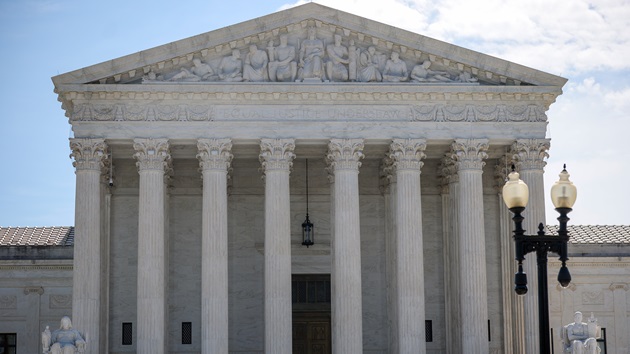
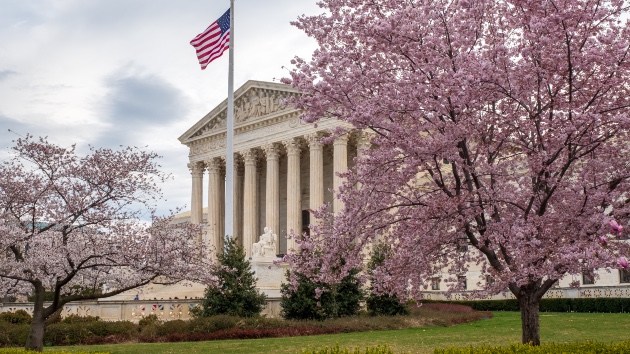
U.S. Supreme Court building on March 31, 2026 in Washington, DC. (Roberto Schmidt/Getty Images)

(WASHINGTON) — As President Donald Trump looked on during an unprecedented visit to the Supreme Court, a majority of justices appeared skeptical of his administration’s bid to end birthright citizenship during arguments in the landmark case Wednesday.

Most of the court’s conservatives and all three liberal members raised doubts about the constitutionality of Trump’s Day 1 executive order that would limit American citizenship at birth only to those born to U.S. citizens and legal permanent residents.

It would also impose sweeping changes for all new parents and current American citizens going forward, requiring a new system to verify a person’s citizenship beyond a simple birth certificate.

The 14th Amendment, ratified in 1868, says all “persons born or naturalized in the U.S. and subject to the jurisdiction thereof” are citizens. Congress later codified the same language in federal citizenship law in 1940 and again in 1952.

Solicitor General D. John Sauer argued that the phrase “subject to the jurisdiction” applies only to children whose parents have “allegiance” to the U.S., which he said is determined by being “domiciled” in the country.

The meaning of ‘domiciled’

The 1898 landmark Supreme Court decision in U.S. v Wong Kim Ark, widely considered to be the precedent affirming birthright citizenship, concluded, “The [14th] Amendment, in clear words and in manifest intent, includes the children born, within the territory of the United States, of all other persons, of whatever race or color, domiciled within the United States.”

Sauer said “domiciled” means living in the U.S. lawfully with “intent to stay.”

But many of the court’s conservatives questioned how that definition was derived and whether it aligned with the views of the framers of the 14th Amendment and members of Congress who codified the citizenship clause.

Trump — the first sitting president to attend the high court’s arguments — was seated in the front row of the public gallery alongside White House Counsel David Warrington, Attorney General Pam Bondi and Commerce Secretary Howard Lutnick.  

As Sauer parried with the justices, Trump sat attentive and expressionless. His presence in the chamber was not publicly announced or acknowledged by any of the justices on the bench. While Justices Ketanji Brown Jackson, Brett Kavanaugh, and Elena Kagan were most immediately in his line of sight, it was not clear whether any justice on the bench made eye contact with him. Trump also did not engage with anyone seated beside him or in the chamber.

Trump departed the chamber as ACLU Legal Director Cecilia Wang was in the middle of delivering her opening statement, in which she argued that the principle of birthright citizenship was enshrined in the Constitution to prevent government officials from stripping citizenship away.

“Ask any American what our citizenship rule is, and they’ll tell you, everyone born here is a citizen alike,” Wang said. “That rule was enshrined in the 14th Amendment to put it out of the reach of any government official to destroy.”

“If you credit the government’s theory, the citizenship of millions of Americans past, present and future could be called into question,” Wang said.

‘Very quirky arguments’

Sauer got a somewhat frosty reception from at least two key Supreme Court Justices — Chief Justice John Roberts and Associate Justice Neil Gorsuch — during his arguments, in which he contended that the longstanding understanding of the 14th Amendment is incorrect.

“The citizenship clause was adopted just after the Civil War to grant citizenship to the newly freed slaves and their children whose allegiance to the United States had been established by generations of domicile. Here, it did not grant citizenship to the children of temporary visitors or illegal aliens who have no such allegiance,” Sauer said.

Roberts noted that the Trump administration is relying on “very quirky” arguments, saying they are using “narrow exceptions” to claim that a much broader class of people should be ineligible for birthright citizenship.

“You know, children of ambassadors, children of enemies during a hostile invasion, children on warships, and then you expand it to the whole class of illegal aliens here in the country — I’m not quite sure how you can get to that big group from such tiny and sort of idiosyncratic examples,” said Roberts.

Gorsuch also remarked that the Trump administration seems to be relying on outdated “Roman law sources” and court precedents that do not work in their favor.

“I’m not sure how much you want to rely on Wong Kim Ark,” Gorsuch remarked about the landmark 1898 case that enshrined birthright citizenship.

Justice Elena Kagan similarly voiced concerns about the sources cited by the Trump administration.

“You’re using some pretty obscure sources to get to this concept,” she said.

‘Illegal immigration’

Justice Samuel Alito initiated a discussion on “illegal immigration” by noting that it was “something that was basically unknown” at the time when the 14th amendment was adopted in the 1860s.

“What we’re dealing with here is something that was basically unknown at the time when the 14th Amendment was adopted, which is illegal immigration,” Alito said. “So how do we deal with that situation when we have a general rule?”

Sauer responded by agreeing with Alito, saying that “illegal immigration did not exist [then],” and “the problem of temporary visitors didn’t exist.”

Sauer pointed to “commentators” from 1881 to 1922 who, he claimed, were “uniformly saying the children of temporary visitors are not included.” He argued that this logic “naturally extends” to those who enter the country illegally.

Justice Kagan challenged Sauer’s argument on immigration, saying his arguments in his brief did not focus on “illegal immigration.”

“Most of your brief is about people who are just temporarily in the country where there was quite clearly an experience of an understanding that there were going to be temporary inhabitants,” Kagan said. “And your whole theory of the case is built on that group.”

“You don’t get to talking about undocumented persons until quite later, and at much lesser … I think it’s like 10 pages to three pages or something like that,” she said.

When asked about how the Trump administration would apply their birthright citizenship executive order, pointed to a guidance document from the Social Security Administration issued last year.

“How does this work? Are you suggesting that when a baby is born, people have to have documents present in the delivery room?” Justice Jackson asked.

“I think that’s directly addressing the SSA guidance that cited in our brief, what SSA says,” Sauer responded.

Justice Jackson appeared skeptical of that response, pressing Sauer about the steps of the process and whether a parent could challenge a final decision.

“We’ll give you a social security number, provided that there’s the system [that] automatically checks the immigration status of the parents — which there are robust databases for — and then it appears no different to the vast majority of birthing parents,” Sauer said.

Birth tourism

In his opening statements, Sauer laid out one of the Trump administration’s key arguments about why birthright citizenship should not be extended to the children of undocumented immigrants, claiming that if it remains “unrestricted” it will continue to be a “pull factor for illegal immigration” and would “reward” immigrants who violate immigration laws.

“It has spawned a sprawling industry of birth tourism as uncounted thousands of foreigners from potentially hostile nations have flocked to give birth in the United States in recent decades, creating a whole generation of American citizens abroad with no meaningful ties to the United States,” Sauer said.

The Trump administration has often claimed that birth tourism — the idea that foreign nationals travel to the U.S. with the sole purpose of having a child here — poses a national security risk and undermines birthright citizenship.

Justice Roberts pressed Sauer to explain how common the problem is, but Sauer was unable to give a clear answer.

“No one knows for sure. There’s a March 9 letter from a number of members of Congress to DHS saying, ‘Do we have any information about this?’ The media reports indicate estimates could be over one million, or 1.5 million from the People’s Republic of China alone. The congressional report that we cite in our brief talks about certain hotspots, like Russian elites coming to Miami through these birth tourism companies,” Sauer said.

Sauer went on to claim that media reports indicate there are 500 “birth tourism companies” in China, prompting Justice Roberts to interject to ask if Sauer agreed that had “no impact on the legal analysis before us.”

“We’re in a new world now as Justice Alito pointed out, to where 8 billion people are one plane ride away from having a child who is a U.S. citizen,” Sauer added later.

In a statement Wednesday morning, ACLU Executive Director Anthony D. Romero addressed Trump’s attendance at the proceedings, saying Trump would “watch the ACLU school him in the meaning of the Constitution and birthright citizenship.”

“Any effort to distract from the gravity and importance of this case will not succeed. The Supreme Court is up to the task of interpreting and defending the Constitution even under the glare of a sitting president a couple dozen feet away from them,” he said.

Wednesday’s arguments concluded after about two hours. A ruling in the case isn’t expected until the end of June.

Copyright © 2026, ABC Audio. All rights reserved.