Photo by Pavlo Pakhomenko/NurPhoto via Getty Images
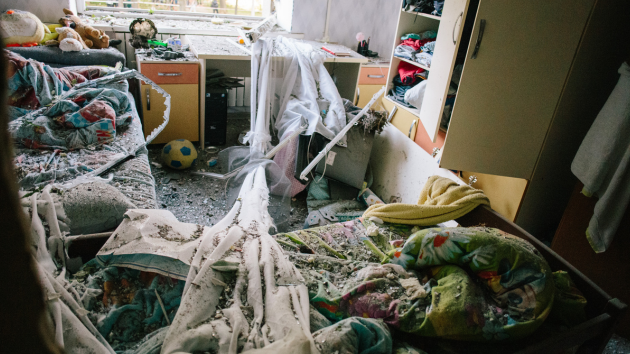
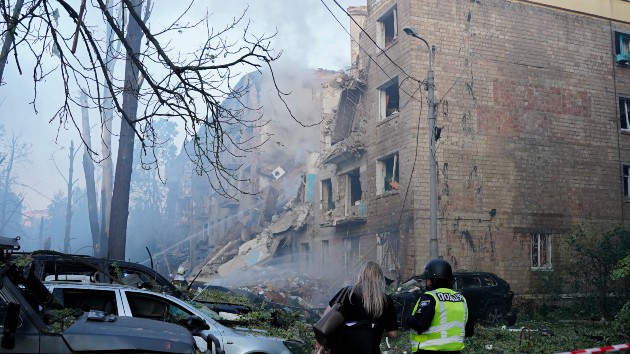
KHARKIV, Ukraine — One person was killed and at least 27 others, including three children, were injured in Russian strikes overnight in Ukraine, President Volodymyr Zelenskyy said.
The fatality was in Odesa, Zelenskyy said. Emergency responders were searching the rubble of apartment buildings that were hit in Kharkiv, he added.
Moscow targeted regions across Ukraine with some 101 drones, Zelenskyy said. Russia on Friday had launched its largest overnight strike of the war, firing 539 drones and around a dozen missiles, according to Ukraine’s air force.
“In total, over the past week, there were around 1,270 drones, 39 missiles, and nearly a thousand guided bombs,” the president said on Monday.
Zelenskyy added that air defense “remains the top priority for protecting lives.”
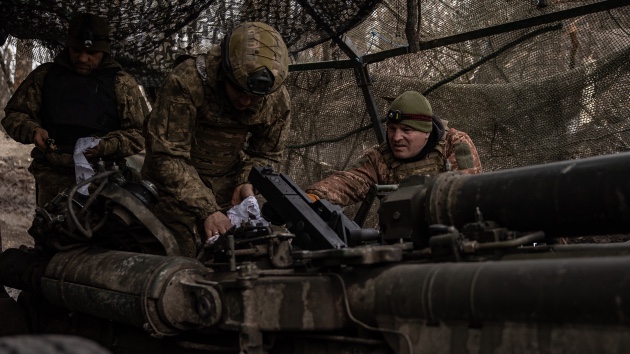
“We are also actively advancing agreements on investing in our domestic weapons production, including all types of drones,” he said. “Special focus is on interceptor drones. We are contracting at full capacity. I thank all partners who are helping.”
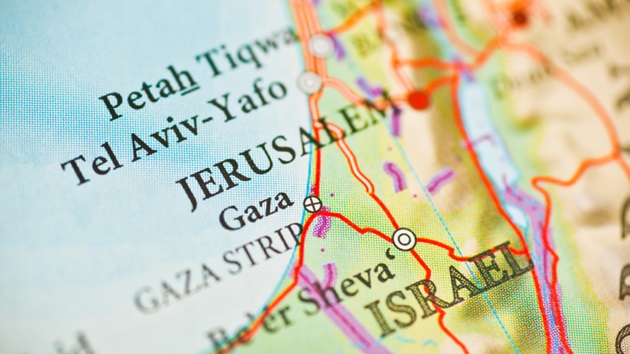
(WASHINGTON) — Hamas announced it has submitted a “positive response” to the mediators about the current ceasefire and hostage exchange release proposal on the table.
How the proposal will be implemented will require another round of negotiations, according to the group.
“The movement is fully prepared to immediately enter into a round of negotiations regarding the mechanism for implementing this framework,” Hamas said.
The deal comes more than 20 months into the conflict — and more than three months after a previous deal ended.
Israel had expected a response from Hamas on the ceasefire and hostage deal by Friday, an Israeli official told ABC News.
Earlier this week, a Hamas adviser said the group was still studying the proposal.
“Hamas is open to any proposal that will end the Israeli military campaign in Gaza, but Hamas wants guarantees that Israel will commit to moving to the second phase of the ceasefire agreement after the first phase, which is set to last for 60 days,” said Taher Al-Nounou, media adviser to the head of Hamas.
What’s in the deal?
The revised temporary ceasefire deal on the table now deals with the release of more hostages by Hamas, according to two Israeli sources familiar with the matter.
The deal calls for the release of 10 living hostages from Hamas captivity and the return of 15 bodies of hostages being held by the terrorist group.
It is believed there are about 20 living hostages still being held by Hamas.
According to the terms of the proposal, the release of the 10 living hostages and 15 bodies will be staggered over the 60-day period the temporary ceasefire is in effect.
Under the terms of the deal, Hamas will not hold ceremonies for the hostage releases, as they did during a previous six-week ceasefire.
Discussion of a permanent ceasefire will take place during the 60-day period.
Even after Hamas responds to the proposal, there are still several issues that remain to be addressed, one of the sources said — including the number of Palestinian prisoners to be released in exchange for hostages.
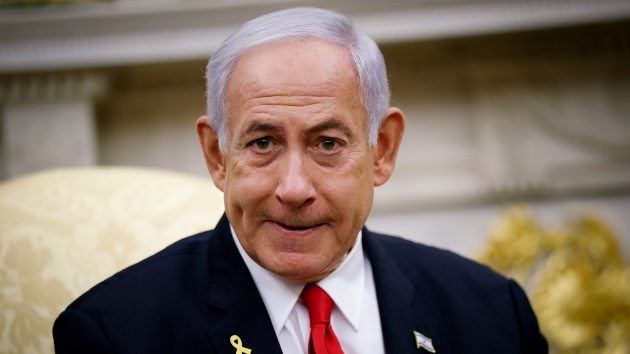
In many rounds of negotiations, Hamas has sought a guaranteed end to the war in Gaza — but that remained a chief sticking point in recent negotiations and something Israeli Prime Minister Benjamin Netanyahu had not agreed to budge on.
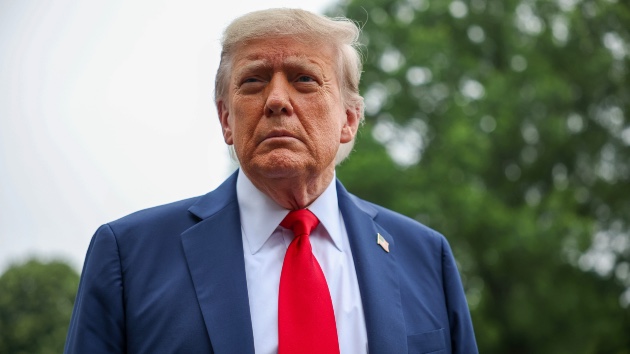
President Donald Trump announced earlier this week that Israel had agreed to conditions for the 60-day ceasefire in Gaza.
Trump said representatives from Qatar and Egypt would deliver the final proposal to Hamas, which came after a “long and productive meeting” between Trump officials and Israeli officials in Washington, D.C. on Tuesday.
“I hope, for the good of the Middle East, that Hamas takes this Deal, because it will not get better — IT WILL ONLY GET WORSE,” Trump said in a post on his Truth Social platform.
The latest deal comes after months of negotiations over a ceasefire led in part by U.S. Middle East Envoy Steve Witkoff.
In May, the White House submitted an Israeli-approved proposal for a 60-day ceasefire to Hamas, but the deal stalled.
At the time, Trump urged both Israel and Hamas to make a deal ahead of and during his first foreign policy trip of his second term in office to the Middle East. Ultimately, a deal was not reached, and Israeli Prime Minister Benjamin Netanyahu ramped up attacks on Gaza after Trump left the region
In January, a six-week temporary ceasefire went into effect, resulting in the release of dozens of captives held by Hamas and an exchange of Palestinian prisoners.
However, that ceasefire ended on March 18 when Israel resumed military operations against Hamas in Gaza, with Israel citing the failure to release the remaining hostages and saying the military was targeting Hamas terrorists who posed a threat to Israeli troops and citizens.
The Israeli government also imposed a blockade on humanitarian aid entering the Gaza Strip on March 2 that lasted for 11 weeks and ended on May 19.
The Israel-Hamas war has taken a grim human toll. Since the war began, nearly 56,000 people in Gaza have been killed and more than 131,000 have been wounded, according to Gaza’s Hamas-run health ministry.
The war began on Oct. 7, 2023, when 1,200 people were killed in a Hamas-led terrorist attack on southern Israel. Hundreds more were taken hostage. At least 20 living hostages are believed to still remain in Hamas captivity.
-ABC News’ Diaa Ostaz and Nasser Atta contributed to this report.
LONDON — Russia overnight hit Ukraine with the biggest missile and drone attack of the war, launching a record number of drones at Kyiv.
Hundreds of Russian drones swarmed the capital all night as videos show huge fires and plumes of smoke on the skyline. Residents describe it as one of the most intense nights since the start of the full-scale invasion and people in Kyiv are waking up Friday morning to the city being blanketed by smoke from the fires still burning.
Russia launched over 500 drones, a huge number and the second time in less than a week it has launched the biggest air attack of the war. The attack comes after the Trump administration froze deliveries of critical air defense missiles to Ukraine.
The mayor of Kyiv said that at least 23 people were injured as many people spent the night sheltering in Kyiv’s metro system.
The aerial assault began shortly after President Trump spoke with Russian President Vladimir Putin by phone which, in Ukraine, is being widely taken as a clear message to Ukrainians.
“Notably, the first air raid alerts in our cities and regions yesterday began to blare almost simultaneously with media reports discussing a phone call between President Trump and Putin,” Ukrainian President Zelenskyy wrote on Friday morning. “Yet again, Russia is showing it has no intention of ending the war and terror. Only around 9 a.m. today did the air raid alert end in Kyiv. It was a brutal, sleepless night.”
(LONDON) — The White House confirmed on Tuesday that President Donald Trump’s administration froze the shipment of some air defense and precision guided weapons that were on track to be sent to Ukraine.
Officials said the decision followed an assessment of U.S. stockpiles.
“This decision was made to put America’s interests first following a DOD review of our nation’s military support and assistance to other countries across the globe,” said White House spokesperson Anna Kelly.
“The strength of the United States Armed Forces remains unquestioned — just ask Iran,” she added in a statement sent to reporters.
Politico first reported the decision. It was not immediately clear whether other shipments of weapons would be released or how much was paused.
The Pentagon declined to provide additional details about the decision.
“America’s military has never been more ready and more capable thanks to President Trump and Secretary Hegseth’s leadership,” Chief Pentagon Spokesman Sean Parnell said in a statement.
“Our service members are fully equipped to deter against any threat and the Senate’s recent passage of the One Big Beautiful Bill ensures that our weapons and defense systems are modernized to protect against 21st century threats for generations to come.”
Pentagon policy chief Elbridge Colby provided an updated statement Wednesday saying the military is continuing to provide Trump “with robust options to continue military aid to Ukraine, consistent with his goal of bringing this tragic war to an end.”
Mykhailo Podolyak — a top adviser to Ukraine’s presidential office — denied that the U.S. will end its supply air defenses to Ukraine. Speaking on Ukrainian television on Wednesday, Podolyak said negotiations are ongoing on how to provide them, including potential purchases by Kyiv.
“America will not abandon its support for Ukraine in protecting civilians from Russian strikes,” Podolyak said. “There are enough anti-missile systems and missiles for them in U.S. warehouses.”
“Negotiations on their supply to Ukraine, including on a commercial basis, are ongoing,” Podolyak said.
Ukraine’s Defense Ministry also commented on the reports, saying in a post to Telegram it “has not received any official notification regarding the suspension or revision of delivery schedules for the agreed defense assistance.” The ministry said it requested a phone call with its U.S. counterparts “to further clarify the details.”
“For Ukraine, it is critically important to maintain resilience, continuity, and predictability in the provision of the agreed defense assistance — especially in strengthening our air defense systems,” the ministry said.
“We are grateful to the United States for all its support and highly value the efforts of our American partners aimed at achieving genuine peace. We emphasize that the path to ending the war lies through consistent and collective pressure on the aggressor, as well as through continued support for Ukraine.”
Oleksandr Merezhko, a member of the Ukrainian parliament representing President Volodymyr Zelenskyy’s party and the chair of the body’s foreign affairs committee, told ABC News that the reports are “concerning, of course, but I hope that it’s some kind of technical delay.”
“If not, then it might have negative impact on our defense capabilities — especially when it comes to air defense,” Merezhko added. Any hint of a delay in aid, the lawmaker warned, would “embolden” Russian President Vladimir Putin “to intensify bombardments.”
The military shipment was frozen comes just a week after Trump signaled his openness to selling Patriot missiles to Ukraine.
After meeting with Zelenskyy at the NATO summit in the Netherlands, Trump said, “They do want to have the anti-missile, missiles,” Trump said of Ukraine. “As they call them the Patriots, and we’re going to see if we can make some available.”
“You know, they’re very hard to get. We need them too. We were supplying them to Israel, and they’re very effective, 100% effective. Hard to believe how effective,” Trump said.
“As far as money going, we’ll see what happens. There’s a lot of spirit,” Trump added.
The Patriot system is especially valuable to Ukraine, having been used to down Russian ballistic missiles, drones and aircraft since arriving in the country in the spring of 2023.
Russia is intensifying its near-nightly drone and missile attacks on cities and targets all across Ukraine.
June saw Moscow set a new monthly record for the number of long-range drones and missiles launched into Ukraine — 5,438 drones and 239 missiles — according to figures published by the Ukrainian air force.
The U.S. remained the most generous single contributor of aid to Ukraine as of April 2025, according to the Kiel Institute for the World Economy, a research group based in Germany that tracks support from foreign governments toward Ukraine.
The U.S. has contributed around $130 billion in total aid to Ukraine since 2022, of which $74 billion is military assistance. Combined, European Union nations have contributed more overall — $157 billion — but less than the U.S. on the military front, at slightly less than $73 billion.
Ukraine’s budget for military and security spending approved by lawmakers in late 2024 was around $53.7 billion.
Trump has repeatedly raised the prospect of curtailing or ending U.S. military support for Kyiv, both on the campaign trail and since returning to office in January. A nine-month pause on U.S. aid in 2024, due to a gridlocked Congress, forced Kyiv to consider a future without American assistance.
Those fears materialized in March 2025 when Trump imposed a week-long freeze on all American military aid and intelligence sharing with Ukraine. The flow soon resumed, but Trump’s frustration has only deepened as U.S.-brokered peace talks floundered.
The administration approved a $50 million sale of military aid to Ukraine in April, but only after Kyiv signed off on a controversial minerals sharing deal.
The White House is also yet to use some $3.9 billion earmarked to fund military aid to Ukraine — to be drawn from existing U.S. stocks, meaning it can be delivered quickly — that former President Joe Biden was not able to spend before the end of his term.
Zelenskyy said early this year that American aid accounts for 30% of Ukrainian weaponry. Though other estimates go as low as 20%, Washington remains a key benefactor — particularly for advanced weapons systems for which Ukraine has no domestically- or European-produced analogues.
-ABC News’ Anne Flaherty, Kelsey Walsh, Molly Nagle, Patrick Reevell and Ellie Kaufman contributed to this report.
Mohamad Salaheldin Abdelg Alsayed/Anadolu via Getty Images
(PARIS) — As a heat wave scorches most of Europe, the Eiffel Tower announced it will be closing early on Tuesday with France expected to hit triple-digit temperatures.
With temperatures in Paris expected to reach 38.3 degrees Celsius — approximately 101 degrees Fahrenheit — on Tuesday, the Eiffel Tower will “exceptionally close at 4:00 p.m.,” according to a statement on the monument’s official website.
Last entry for ticket holders is at 2:30 p.m. local time and visitors without tickets are “asked to postpone their visit until after Thursday,” the website said.
During this heat wave, people are encouraged to “please remember to protect yourselves from the sun and stay hydrated regularly,” the website said.
The Eiffel Tower’s website said fountains leading to the monument’s forecourt are available for individuals seeking respite from the heat.
Other countries — including Portugal and Spain — have broken heat records this week, while in London, it was the hottest Wimbledon opening day ever, with temperatures hitting 93 degrees Fahrenheit on Monday.
The temperature hit a record 46 degrees Celsius (about 114.8 degrees Fahrenheit) in the southern Spanish town of El Granado on June 28, the hottest ever in the country, according to the U.N.’s World Meteorological Organization.
“Everybody is at risk,” Clare Nullis, spokesperson for the World Meteorological Organization, said in a statement Tuesday. “If you go out without water in the middle of the day, to do jogging, have a bike ride, you will probably have health problems or even die.”
Officials in Scotland also continue a “round-the-clock” effort to battle wildfires in the Cairngorms, a mountain range located in the eastern part of the country, according to the Scottish Gamekeepers Association.
“Extreme heat is no longer a rare event — it has become the new normal. The planet is getting hotter and more dangerous — no country is immune,” U.N. Secretary-General Antonio Guterres said in a statement.
Higher temperatures are expected on Wednesday, before rain brings relief to some areas, according to The Associated Press.
“What is exceptional — and I would stress exceptional but not unprecedented — is the time of year,” Nullis said in a statement. “We are July 1, and we are seeing episodes of extreme heat which normally we would see later on.”
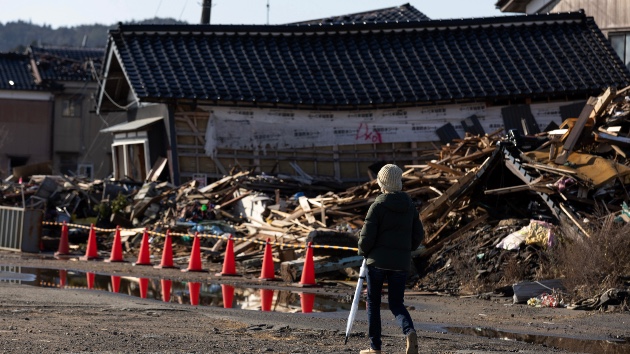
destroyed house caused by Noto Peninsula earthquake on New Year’s Day 2025/ Buddhika Weerasinghe/Getty Images)
(HONG KONG) — Some believe she foretold the devastating 2011 tsunami in Japan that killed more than 15,000 people and urban legend goes she also predicted the COVID-19 pandemic. Now, another premonition of a major disaster from manga artist Ryo Tatsuki is about to hit its alleged due date, spooking tourists in Asia and even causing some cancelled flights.
Social media is abuzz with Tatsuki’s prophecy of a catastrophic earthquake and tsunami wrecking her home country of Japan — a place prone to natural disasters but also a top destination for many in Asia — sometime between July 5 and 7.
In a 1999 Japanese comic book, also known as manga, Tatsuki wrote of a “great disaster” striking in March 2011. That same month, a 9.0 magnitude earthquake triggered a deadly tsunami, causing a meltdown at the Fukushima nuclear plant, leading to one of the biggest nuclear disasters in history.
Tatsuki updated her book, titled “The Future I Saw,” in 2021, claiming that “the real catastrophe” was due in July this year.
The predictions have irked local officials, with one local governor calling it a “serious issue” that “unscientific rumors are impacting tourism.”
Seismologists say there is no scientific basis for these predictions and, in a post on X last month, the Japanese Cabinet Office Disaster Prevention Division said that “with current scientific knowledge, it is difficult to predict an earthquake by specifying its date, time and location,” adding that “earthquakes can occur at any time.”
But with other psychics sharing warnings similar to Tatsuki’s foretelling, some travelers are getting cold feet, cancelling trips and prompting travel agencies to incentivize Japan-bound journeys by offering discounts.
Demand has plummeted so much that regional carrier Hong Kong Airlines cancelled all its flights to the southern Japanese prefectures of Kagoshima and Kumamoto in July and August.
However, statistics released by Japan’s National Tourism Organization in May showed that overall inbound tourism remains strong this year for the country.
(LONDON) — President Donald Trump on Wednesday again claimed “total obliteration” of Iran’s nuclear program during the NATO summit in the Netherlands, escalating his pushback on an early Pentagon intelligence report suggesting joint U.S.-Israeli strikes may have set back Iran’s nuclear program back by only a matter of months.
“I believe it was total obliteration,” Trump told reporters speaking alongside NATO Secretary General Mark Rutte in The Hague, Netherlands.
A preliminary analysis of the strikes by the Defense Intelligence Agency and U.S. Central Command prompted questions as the efficacy of the operation. Two people familiar with the report told ABC News it suggested the strikes did limited damage and that Iran was able to relocate highly enriched uranium stocks before the strikes occurred.
Later on Wednesday, during a solo news conference, Trump continued to push back on that analysis and claimed American pilots who carried out the strikes were being demeaned by news reports about the Pentagon’s preliminary assessment.
“Since then, we’ve collected additional intelligence,” he said. “We’ve also spoken to people who have seen the site, and the site is obliterated, and we think everything nuclear is down there. They didn’t take it out.”
“They presented something that wasn’t finished,” Trump said of U.S. intelligence reports on the impact of the U.S. strikes. Over the course of the news conference, Trump highlighted Israeli and Iranian reports of the damage caused by the strike.
Iranian Foreign Ministry spokesperson Esmail Baghaei said Wednesday that the country’s nuclear facilities had been “badly damaged,” as quoted by the Associated Press — which Trump repeated.
On Iran, Trump told reporters he’s not interested in restarting negotiations and didn’t view it as “necessary.” Though he also said that the U.S. would be talking with Iran “next week” and “we may sign an agreement. I don’t know.
“I don’t see them being back involved in the nuclear business anymore,” Trump said of Tehran.
Trump earlier Wednesday insisted Iran’s nuclear program had been set back “basically decades,” adding, “It’s gone for years.”
“I believe they didn’t have a chance to get anything out, because we acted fast,” Trump said. “If it would have taken two weeks, maybe. But it’s very hard to remove that kind of material, very hard and very dangerous. Plus, they knew we were coming, and if they know we’re coming, they’re not going to be down there.”
Asked if they could rebuild and whether the U.S. would strike again, Trump said that would be someone else’s problem.
“I’m not going to have to worry about that,” he said. “It’s gone for years, years, very tough to rebuild, because the whole thing is collapsed. In other words, inside, it’s all collapsed. Nobody can get in to see it, because it’s collapsed.”
Asked if he trusted U.S. intelligence, the president said the initial report was “very inconclusive. The intelligence says we don’t know, it could have been very severe, that’s what the intelligence says. So I guess that’s correct, but I think we can take the ‘we don’t know.’ It was very severe. It was obliteration.”
Defense Secretary Pete Hegseth and Secretary of State Marco Rubio also spoke in support of the president’s position, having accompanied Trump to The Hague.
Like Trump, Hegseth (whom the president described as the “secretary of war”) claimed what he called “fake news” about the Pentagon assessment as demeaning the B-2 pilots who carried out the strikes.
“These pilots these refuels these fighters, these air defenders, the skill and the courage took to go into enemy territory flying 36 hours on behalf of the American people in the world to take out a nuclear program is beyond what anyone in this audience can fathom,” Hegseth said, speaking next to Trump at his news conference.
The defense secretary also rejected the early Pentagon analysis of the damage done by the military operation.
“Given the 30,000 pounds of explosives and capability of those munitions, it was devastation underneath Fordo,” Hegseth said.
“Any assessment that tells you it was something otherwise is speculating with other motives,” Hegseth continued. “And we know that because when you actually look at the report, by the way, it was a top secret report, it was preliminary, it was low confidence.”
Hegseth suggested the leak of the report had “a political motive,” adding, “We’re doing a leak investigation with the FBI right now because this information is for internal purposes.”
Rubio also claimed that the leak of the preliminary report was politically motivated, saying that the attacks led to “complete and total obliteration.”
“But all this leaker stuff, these leakers are professional stabbers,” he said. “They go out and they read this stuff, and then they tell you what it says against the law, but they characterize it for you in a way that’s absolutely false.”
The report prompted further consternation among Trump’s opponents in Washington. Democratic Sens. Jeanne Shaheen and Chris Coons told ABC News at the NATO summit it is too soon to determine the success of U.S. strikes, adding that the recent round of fighting could have been avoided if Trump had not withdrawn from the Iran nuclear deal in his first term.
“The American public needs answers for what what’s really going on,” Shaheen, ranking member of the Senate Foreign Relations Committee and senior member of the Senate Armed Services Committee, said. “If what we see is Iran’s nuclear program has not been obliterated, then we need to try and get Iran back to the negotiating table,” she added.
Shaheen said further nuclear tensions are also possible, as Tehran may “be convinced their race to get a nuclear weapon is even more important — given North Korea’s example — and they will do everything possible to get there as quickly as possible.”
Meanwhile, Trump said the ceasefire is “going very well” despite Tuesday’s continued exchanges, which prompted him to lambast both Israel and Iran and to speak with Israeli Prime Minister Benjamin Netanyahu to warn him off further attacks.
“Israel came back yesterday,” he said. “I was so proud of them, because they came back, you know, they went out because they felt it was a violation. And technically they were right, but it just wouldn’t have worked out very well. And they brought the planes back.”
“They’re not going to be fighting each other,” he added of Israel and Iran. “They’ve had it. They’ve had a big fight, like two kids in a schoolyard. You know, they fight like hell. You can’t stop them. Let them fight for about two, three minutes. Then it’s easier to stop them.”
Trump said the U.S. strikes on Iran’s nuclear facilities on Saturday proved decisive. “That hit ended the war,” he said, likening the U.S. atomic bomb attacks on Japan at the end of World War II.
“I don’t want to use an example of Hiroshima, I don’t want to use an example of Nagasaki, but that was essentially the same thing that ended that war,” Trump said. “If we didn’t take that out, they would have been, they’d be fighting right now,” he continued.
The president expressed optimism about the future of U.S. and Iranian relations.
“I think we’ll end up having somewhat of a relationship with Iran,” he said. “I’ve had a relationship over the last four days. They agreed to the ceasefire, and it was a very equal agreement. They both said, that’s enough. They both said it.”
ABC News’ Joe Simonetti, Luis Martinez, Anne Flaherty and Ivan Pereira contributed to this report.
(LONDON) — Police in France say that 14 people have been arrested after 145 people reported being ‘pricked’, possibly by syringes, at a nationwide music festival on Saturday.
Most of the victims were women and the attacks happened during France’s annual “Festival of Music” — Fête de la Musique — which is a series of musical events in towns and cities across the country.
The 145 people who were either pricked, or believe they were pricked, were typically attacked when they were in a crowd and were pricked either in the arm or the back, police say. Most of the victims didn’t see their attacker.
Victims reported feeling an array of symptoms such as hot flushes, dizziness, loss of consciousness and visible marks or bruises on their skin.
Some victims were treated by medics at the festival, but some were taken to hospital where they gave saliva, urine and blood samples to detect whether they had been injected with substances, according to police.
It is not yet clear whether substances have been detected following those tests.
In a video posted on X on Monday evening, French police said they have so far arrested 14 suspects in connection with the attacks.
French police are now warning people attending future events to be vigilant and to seek help immediately if they feel any symptoms. They have also urged people to contact the police and visit a hospital to be tested for any potential substances.
Just before the Festival of Music, a French feminist influencer had posted on social media warning women that men were threatening to prick people during Saturday’s nationwide event in France.
The investigation into the incident is currently ongoing.
Israeli Prime Minister Benjamin Netanyahu/ Kevin Dietsch/Getty Images)
(WASHINGTON) — President Donald Trump said on social media Monday evening that Israel and Iran had agreed to a ceasefire, signaling a possible end to nearly two weeks of escalating air assaults by the two countries.
The agreement described by Trump involved two 12-hour ceasefire periods, starting at about 12 a.m. EDT starting with Iran. That would come “when Israel and Iran have wound down and completed their in progress, final missions,” Trump said in the Truth Social post.
Israel would then follow with a second 12-hour ceasefire, Trump said.
After 24 hours, the war would be officially declared ended, according to Trump.
“On the assumption that everything works as it should, which it will, I would like to congratulate both Countries, Israel and Iran, on having the Stamina, Courage, and Intelligence to end, what should be called, ‘THE 12 DAY WAR,'” Trump wrote in the post. In the immediate aftermath of Trump’s announcement, neither Israeli nor Iranian officials publicly commented on the proposal.
In the final hours before the ceasefire was set to go into effect, under the terms described by Trump, Israel said Iran had launched a barrage of missiles, killing at least three people.
Earlier, in a post on social media, Iran’s foreign minister, Abbas Araghchi had denied there was a ceasefire agreement. However, he said if Israel halted its strikes by 4 a.m. Tehran time (8:30 p.m. EDT) “we have no intention to continue our response afterwards.”
Araghchi said a final decision “on the cessation of our military operations” would be made later and he thanked Iranian armed forces who he said “responded to any attack by the enemy until the very last minute.”
Trump’s surprise ceasefire announcement came two days after the U.S. joined Israel’s war, launching strikes on three Iranian nuclear targets.
The war began June 12 when Israel launched a series of strikes against Iran that included dozens of military targets, including the country’s nuclear program. Defending what it called a “preemptive” strike, Israel cited intelligence that it said indicated Iran had “significantly advanced” toward obtaining a nuclear weapon — claims Iran denied.
Earlier Monday, Iran fired missiles targeting Al Udeid Air Base in Qatar — the largest U.S. military base in the region — raising concerns about potential escalation after the U.S.. However, a U.S. official told ABC News the U.S. intercepted the missiles with assistance from Qatar and Trump, who called the response “very weak,” struck a de-escalatory tone on social media. One source later called Iran’s move a “failed retaliation.”
Ihor Kuznietsov/Novyny LIVE/Global Images Ukraine via Getty Images
(LONDON) — At least seven people were killed and 28 injured in Kyiv overnight as Russian drone and missile attacks again rocked Ukraine’s capital, Mayor Vitali Klitschko said on Monday, describing Moscow’s latest attack as “terrible.”
Most casualties came from a single strike on a residential building in Kyiv’s northwestern Shevchenkivskyi district, Klitschko said in a post to Telegram, alongside which he published a video from the impact site showing extensive damage to nearby apartment blocks.
Ukraine’s air force said in a post to Telegram that Russia launched 352 drones and 16 missiles into the country overnight, with Kyiv the primary target. Of those, the air force said 339 drones and 15 missiles were shot down or otherwise neutralized.
Direct hits were reported in six locations, the air force said, with falling debris reported in 25 locations.
Ukrainian President Volodymyr Zelenskyy posted a statement on Telegram condemning the “cynical strike,” which he said included the use of North Korean ballistic missiles.
Noting Russia’s condemnation of recent Israeli and U.S. strikes on Iran, Zelenskyy said Moscow remains “silent” on its own ongoing bombardment of Ukrainian cities using Iranian-supplied attack drones.
“A significant part of the drones and missiles were shot down by our sky defenders,” Zelenskyy wrote. “But not all. And everyone in countries close to Russia, Iran and North Korea should think about whether they will be able to protect lives there if this coalition of killers persists and continues to spread terror.”
The Ukrainian president will visit the U.K. on Monday, as British leaders prepare for the NATO summit in the Netherlands on Tuesday.
Zelenskyy said that air defense capabilities will be among the topics to be discussed, capabilities he said “should become the basis for a much stronger joint defense.”
“And we will also agree on new and strong steps to put pressure on Russia for this war and to stop the strikes,” Zelenskyy wrote in his statement.
Russia’s Defense Ministry, meanwhile, said its forces shot down 23 Ukrainian drones overnight.