
Ukraine, left out in Trump-Putin summit, fears setbacks on key peace issues

Ukraine, left out in Trump-Putin summit, fears setbacks on key peace issues
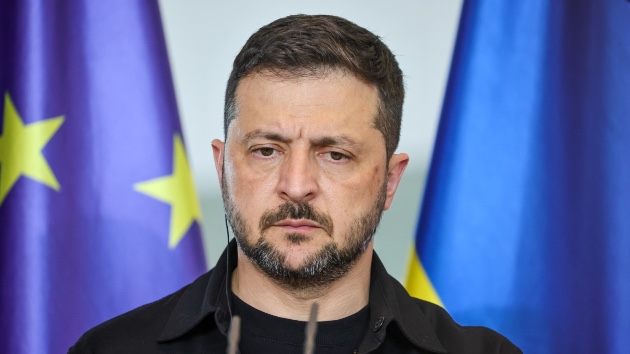
Ukrainian President Volodymyr Zelensky listens as German Chancellor Friedrich Merz (not pictured) speaks during a joint press conference at the Chancellery following a virtual meeting hosted by Merz between European leaders and U.S. President Donald Trump on August 13, 2025 in Berlin, Germany./Photo by Omer Messinger/Getty Images)

()LONDON) — Ukrainian President Volodymyr Zelenskyy has warned that the Friday meeting between President Donald Trump and Russian President Vladimir Putin “will not achieve anything” if peace talks exclude Ukraine.

Decisions taken without Kyiv’s input will be “stillborn decisions,” Zelenskyy continued. “They are unworkable decisions. And we all need real and genuine peace,” the president said in an address to the nation last weekend.

Ukrainian expectations for the summit in Alaska are low, amid fears in Kyiv that the American and Russian leaders will seek to dictate Ukraine’s future without its participation.

Zelenskyy’s talks with European leaders and Trump on Wednesday, though, did appear to find consensus on key Ukrainian demands according to subsequent statements from Zelenskyy and his European counterparts, including that Kyiv will be the one to decide on any territorial concessions and that no such concessions can occur without binding security guarantees.

“We must learn from the experience of Ukraine, [and] our partners, to prevent deception by Russia,” Zelenskyy said in a statement posted to social media on Wednesday.

“There is no sign now that the Russians are preparing to end the war,” he added. “Our coordinated efforts and joint steps — of Ukraine, the United States, Europe, all countries that want peace — can definitely force Russia to make peace.”

Trump said Wednesday after the virtual meeting with Zelenskyy and European leaders that there will be “severe consequences” against Russia if Putin did not agree to stop his war on Ukraine.

Oleksandr Merezhko — a member of the Ukrainian parliament and chair of the body’s foreign affairs committee — likened the coming Alaska summit to the 1938 Munich Agreement — a pre-World War II accord by which European powers allowed Nazi Germany to annex part of Czechoslovakia without Prague’s consent.

“Putin secured a one-on-one meeting with Trump, providing an opportunity to influence U.S. policy and push for abandonment of Ukraine and European allies,” Merezhko told ABC News.

“Putin would like to use the summit to persuade Trump to blame Ukraine for the lack of progress on a ceasefire and give him a pretext to walk away from the negotiations,” Merezhko said.

“Putin is a very masterful manipulator and he will go into Friday’s meeting well prepared,” Merezhko added. “He will go in with well-prepared, planned and rehearsed talking points.”

John E. Herbst, a former U.S. ambassador to Ukraine now working at the Atlantic Council’s Eurasia Center, said Putin “wants a deal with Trump that will be presented to Kyiv and other European capitals as a fait accompli.”

The Kremlin’s goals remain the “elimination of Ukraine as a state and as a culture, elimination of NATO and undermining of the U.S. global positions,” Pavel Luzin, a Russian political analyst at The Fletcher School of Law and Diplomacy at Tufts, told ABC News.

There are several key — and thorny — issues for the two leaders to discuss.

Territory

Territory has been a main source of conflict between the two countries since Russia’s annexation of Crimea and fomentation of separatist revolt in eastern Ukraine in 2014.

Putin has remained firm in his demands. Any peace settlement, Moscow has said, must include “international legal recognition” of its 2014 annexation of Crimea and four regions it has occupied to varying degrees since launching its full-scale invasion in 2022.

Russia demanded that Ukrainian troops withdraw entirely from the Donetsk, Luhansk, Zaporizhzhia and Kherson regions — including areas that Russian troops do not control. The Kremlin claimed to have annexed all four regions in September 2022. Moscow also wants Kyiv to give up on any designs on taking back occupied Crimea.

Ahead of Friday’s meeting, Trump suggested that a “swapping of territories” could lead to a peace deal. However, Ukrainian officials quickly rejected that idea.

Zelenskyy held that the country would not give up any of its land, saying in a Saturday statement, “Ukrainians will not gift their land to the occupiers.” The president has since said that any decisions on territorial concessions must be made by Ukraine, and that no such concessions can occur without Ukraine receiving binding security guarantees that include the U.S.

NATO ambitions

Russian officials are also looking for their own “security guarantees” regarding NATO, by which Ukraine would be permanently excluded from the alliance, which has a mutual defense agreement among members.

Putin has regularly expressed concern over NATO’s eastward expansion, framing the alliance’s growth as an existential security threat to Russia. He has repeatedly warned the alliance against accepting Ukraine as a member, accusing the organization of trying to turn the country into a launch pad for aggression.

Russia’s Deputy Foreign Minister, Alexander Grushko, said in March that Moscow is seeking “the neutral status of Ukraine, the refusal of NATO countries to accept it into the alliance.”

Ukrainian officials have continued in their bid to join NATO — an ambition that has the backing of the vast majority of Ukrainians and is enshrined in the national constitution.

During a news conference earlier this year, Zelenskyy offered to step down from the presidency in exchange for admission to NATO. “If to achieve peace you really need me to give up my post — I’m ready. I can trade it for NATO membership, if there are such conditions.”

NATO nations, while backing Ukraine in its defensive war, have refused to allow Kyiv’s accession to the alliance. The alliance agreed at a 2008 summit that Ukraine “will become a member of NATO,” but the leaders of key allied nations — including the U.S. — have said Kyiv cannot accede while it is at war.

Limits to Ukraine’s military

Russian officials have demanded limits to the size of Ukraine’s military, which Moscow has framed as necessary to ensure its own security — a claim dismissed by Kyiv as false.

During peace negotiations in the opening days of the full-scale invasion, Moscow demanded that Ukraine reduce its military size to 50,000.

Zelenskyy, however, has expressed concern that any reductions to Ukraine’s military could allow Russia to secure more Ukrainian land, even with Western support. “The best thing is a strong army, a large army, the largest army in Europe. We simply have no right to limit the strength of our army in any case,” he said in December.

Russia is also demanding limits on Ukraine’s weapons arsenals and the sophistication of its military technology.

In the days leading up to Friday’s meeting between Trump and Putin, Ukraine has increased its long-range drone strikes into Russia. Ukrainian officials have said such attacks are part of its strategy to force the Kremlin into genuine peace talks.

Sanctions

The lifting of international sanctions on Russia may also be discussed during Friday’s meeting.

Russia is currently the world’s most sanctioned country with “50,000 or so measures,” according to The Center for European Policy Analysis. Russian officials have stated that a peace treaty should include lifting sanctions imposed since 2022.

The European Union has refused requests to reduce sanctions against Russia before a peace deal is secured, and Zelenskyy has called Putin’s suggestion that reductions could lead to lasting peace “manipulative.”

Trump has threatened to impose further sanctions on Russia and its top trading partners if Putin fails to commit to a ceasefire. Earlier this month, the U.S. announced additional tariffs on India related to its purchases of Russian oil.

“Everyone sees that there has been no real step from Russia toward peace, no action on the ground or in the air that could save lives,” Zelenskyy said earlier this week. “That is why sanctions are needed, pressure is needed.”

ABC News’ Patrick Reevell contributed to this report.

Copyright © 2025, ABC Audio. All rights reserved.
IDF chief approves new Gaza attack plan, spokesperson says

IDF chief approves new Gaza attack plan, spokesperson says
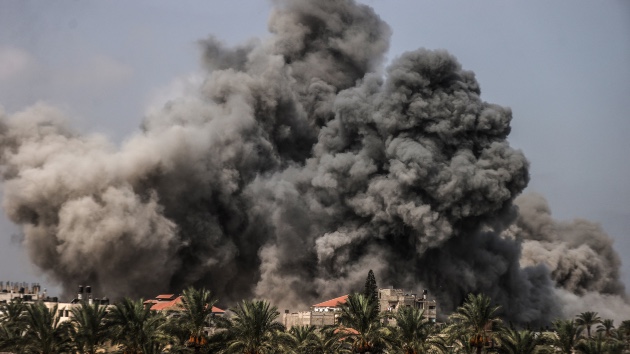
Smoke rises from the area following an Israeli attack on former Social Development building on August 13, 2025 in Rafah, Gaza. Photo by Ali Jadallah/Anadolu via Getty Images

(LONDON) — Israel Defense Forces Chief of Staff Maj. Gen. Eyal Zamir on Wednesday approved “the main framework for the IDF’s operational plan in the Gaza Strip,” according to an IDF spokesperson.

“As part of the discussion, IDF operations to date were presented, including an attack in the Zeitoun area that began yesterday,” the spokesperson said in a statement.

“The central concept for the plan for the next stages in the Gaza Strip was presented and approved, in accordance with the directive of the political echelon,” the spokesperson added.

Last week, Israeli Prime Minister Benjamin Netanyahu and his security cabinet approved plans for the IDF to seize and occupy Gaza City — the strip’s largest urban area — as part of an expanded military operation to “demilitarize” the strip and remove Hamas from power.

The operation would force the IDF to operate in areas where Israel believes Hamas is holding living hostages.

Netanyahu set out “five principles” for the end of the war.

“One, Hamas disarmed. Second, all hostages freed. Third, Gaza demilitarized. Fourth, Israel has overriding security control. And five, non-Israeli, peaceful civil administration — by that I mean a civilian administration that doesn’t educate its children for terror, that doesn’t pay terrorists and doesn’t launch terrorist attacks against Israel.”

Netanyahu’s plans to expand the war have been sharply criticized by the families of the hostages who call it a death sentence for their loved ones. Israel believes 20 hostages are still alive in Hamas captivity — the terror group is also holding the bodies of 30 killed hostages.

Hospitals across Gaza recorded 123 deaths and 437 injuries over the previous 24 hours, Gaza’s Hamas-run Ministry of Health said Wednesday.

Among the dead were 21 people killed while trying to collect humanitarian aid, the ministry said, while another 185 people were injured.

Eight deaths due to hunger were also recorded across Gaza, the ministry said on Wednesday.

ABC News’ Morgan Winsor and Diaa Ostaz contributed to this report.

Copyright © 2025, ABC Audio. All rights reserved.
Why Ukraine’s ex-foreign minister believes Putin won’t go for peace as Trump summit approaches

Why Ukraine’s ex-foreign minister believes Putin won’t go for peace as Trump summit approaches
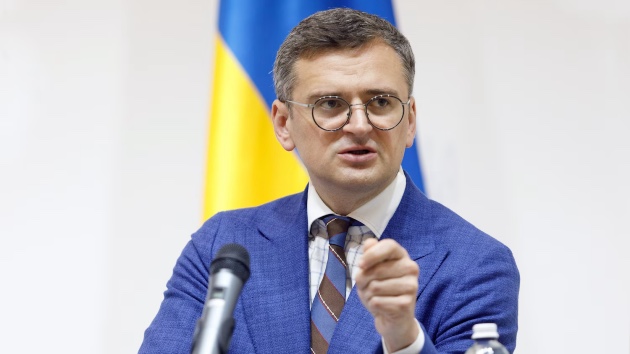
Ukraine’s then-Foreign Minister Dmytro Kuleba is pictured in Kyiv, Ukraine, on June 3, 2024./ Nurphoto/NurPhoto via Getty Images

(LONDON) — Dmytro Kuleba, who served as Ukraine’s foreign minister from 2020 to 2024 and was the youngest-ever appointed to the post, has no plans to rush back into the fray. But he retains deep convictions about Ukraine’s ongoing struggle against Russia’s full-scale invasion — and about the man he considers the prime obstacle to peace in Europe.

“It is the saddest thing, I have to say, but I do not see the end to this war in sight,” Kuleba told ABC News in a video interview from Kyiv, just under a year after he left his role as part of a sweeping government reshuffle.

“A ceasefire is possible, but ending the war as a result of the ceasefire does not seem to be possible at this stage,” Kuleba said. Even if Russian President Vladimir Putin “agrees to a ceasefire in order to avoid mounting pressure from the United States — the threat of mounting pressure from the United States — it will only be a pause,” he said.

No longer encumbered by the demands put on the country’s top diplomat, Kuleba has been speaking frankly on Kyiv’s situation and outlook since departing his former role.

Kuleba’s country remains under existential threat, more than three-and-a-half years into a full-scale Russian invasion. As the war wears on and its toll rises unrelentingly, President Donald Trump’s efforts to force a ceasefire and peace appear to be stalled.

Friday’s planned summit in Alaska between Trump and Putin has suddenly raised hopes that a deal may be possible, according to observers. But Kuleba urged caution over any apparent breakthroughs — particularly if they offer strategic opportunities for the Kremlin.

“There is a famous saying that if you see the light in the end of the tunnel, make sure it is not an incoming train,” Kuleba said. “The light of ceasefire in the end of the tunnel of the Russia-Ukraine war is actually an incoming train.”

Ukraine has backed the previous U.S. demand for a full and immediate ceasefire, during which time a peace settlement can be reached. Putin has repeatedly dodged ceasefire proposals, suggesting that the “new territorial realities” of Russian occupation of swaths of southern and eastern Ukraine must be recognized as part of any settlement.

Putin has also dismissed Kyiv’s offers of a direct meeting with Ukrainian counterpart Volodymyr Zelenskyy — a leader he has repeatedly and incorrectly framed as illegitimate, although he is a democratically elected leader.

Putin, Kuleba said, has shown no sign of abandoning his maximalist war goals, with or without a U.S.-brokered ceasefire. A pause in the fighting may only prove an opportunity for Moscow to prepare its next offensive, he said.

“I think Putin has said enough over the last years and Russia has done enough over the last years to make the point that their strategic goal is subjugating Ukraine as a whole,” he said.

‘He cannot lose this war’

As Ukraine’s top diplomat, Kuleba was deeply involved in peace talks with Russia that sought to end the full-scale invasion that began in 2022. In March 2022, just weeks after Russia’s full-scale invasion began, Kuleba met with Russian counterpart Sergei Lavrov in Turkey.

More than three years later, he said Putin’s fixation on a Russian historical narrative imbued with disinformation and chauvinism remains the main obstacle to a long-term resolution.

“The only thing President Putin really cares about is what will be written about him in history books,” he said. “He just cannot lose this war. He can pretend he’s winning it. But he can never drop the ambition, give up on the ambition, to subjugate Ukraine.”

Putin, Kuleba says, sees himself in the company of Russia’s great historic leaders like Ivan the Terrible, Peter the Great, Catherine the Great. All expanded the Russian empire — and subjugated the people and areas that now form Ukraine.

“He put all of his bets on this — this is his major legacy issue,” Kuleba said. “He throws everything into the fire of his legacy — his people, his country, his future, its future — because he doesn’t care about them.”

Asked if the Russia-Ukraine war can end while Putin is still alive, Kuleba responded, “No.”

“We can have a war of a much lower intensity with Russia,” he added. “But I cannot imagine eternal peace between Russia and Ukraine achieved during President Putin’s lifetime.”

“The West should not be afraid of who comes next,” Kuleba said when asked whether the next Russian president could be equally problematic. “Nothing helps Putin more to stay in power than the fear entrenched in Western intellectual circles that someone even worse than him can move in,” he said.

“This is a flawed strategy,” he said. “Ukrainians are paying the highest price for it. Europe will be paying a very high price for it if it continues like this.”

In Kyiv, Zelenskyy and his officials are sticking to their key demands. Ukraine’s intended accession to NATO and the EU is enshrined in the national constitution. Zelenskyy has also repeatedly dismissed any suggestion of surrendering Ukrainian territory in any peace deal. “Ukrainians will not give their land to the occupier,” he said last week.

Will Trump ‘walk the walk?’

Ukraine’s Western partners still have not done enough to help Kyiv succeed, Kuleba said, though he stressed that all Ukrainians are “immensely grateful and we will always remember it.”

European nations have collectively given some $182 billion in aid of all kinds to Ukraine as of April 2025, according to the Kiel Institute for the World Economy — a research group based in Germany that tracks support from foreign governments toward Ukraine. The U.S. has contributed around $133.5 billion, the institute said.

“I’ve been asked many times over the last three years — has the West supported Ukraine enough?” Kuleba said. “If the war is still raging, it means that the answer is no, not enough.”

Trump’s return to office posed the danger of a total U.S. withdrawal from the conflict. Recent months, though, have seen growing White House frustration at Putin’s apparent obstinance in continuing his war.

Kuleba sees a clear “evolution” in Trump’s approach. “He spent the first months of his presidency giving all sticks to Ukraine and offering all carrots to Russia as a negotiating strategy. It failed. So, now what we see today is his attempt to rebalance sticks and carrots among belligerent parties.”

Ukraine hears Trump’s threats, but is yet to see action, Kuleba said. “Putin understands only force,” he added. Without it, “he will come to the same conclusion he made about previous administrations and European governments — they talk the talk, but they don’t walk the walk.”

Trump, unlike Putin, is constrained by time, Kuleba said. “Putin will not be in a rush to accommodate Trump.”

The two salient options, Kuleba said, are “arming Ukraine and stripping Russia of its oil revenues. That’s it. Everything else may sound good, will be helpful, but it has zero chance to change the tide. A combination of these two factors is crucial to make Putin seriously think about revising his goals in this war.”

Meanwhile, Kuleba said Europeans should be bracing for the war to come to them.

Putin, Kuleba said, only needs one day of hesitation at NATO and European Union headquarters in Brussels to press an attack. “As it looks today, Putin will have his day of hesitation,” he said.

“Both headquarters realize that and they work tirelessly to mitigate this risk, to create a more holistic, coherent space. But I’m afraid there is still a long way to go to achieve that.”

Ukrainian policy still reflects Kuleba’s outlook, though he is no longer involved in its creation. His replacement, current Foreign Minister Andrii Sybiha, has continued Kuleba’s work in pressing Western partners to provide more aid and to do so faster.

Along with Zelenskyy’s office, Sybiha has repeatedly warned that without intense Western pressure, Putin and his government cannot be trusted to negotiate in good faith or to abide by any ceasefire or peace deal.

Ukraine’s ‘red lines’

Kuleba offered a sober assessment of Ukraine’s military situation, as Russian forces continue their grinding advance in the east of the country and expand their long-range drone and missile bombardments of cities across Ukraine.

Ukraine’s size, its industrial capabilities and Western support bolster its war effort, he said. “Remove one of these elements in the equation and then everything collapses,” he added.

And for all the talk of expanded American and European military aid, Kuleba cautioned against investing too much hope in any silver bullets.

“We should forget once and forever the idea of a magic weapon that will change the game,” he said. “This tune has been played so many times over three years and none of it worked,” Kuleba continued, recalling drawn-out debates and sensationalism over the supply of weapons systems like the ATACMS, Western tanks and F-16 fighter jets.

“What is required is the systemic effort to provide Ukraine with the weapons — all types of weapons — and intelligence information that it requires, in sufficient quantities and in good time that it requires to stabilize the front line.”

“The moment Putin has no news to deliver to his people that he’s making progress on the front line will also be an important factor in making him rethink or revise his goals in this war,” he said.

Ukraine has its own red lines in negotiations, he said. He said the government will not have public backing to agree to legally recognize Russian occupation of Ukrainian territory, limit the size and sophistication of Ukraine’s armed forces or abandon Kyiv’s NATO ambitions — a goal enshrined in the national constitution.

The government will not be able to agree to legally recognize Russian occupation of Ukrainian territory — which the nati — or limit the size and sophistication of Ukraine’s armed forces or abandon Kyiv’s NATO ambitions, Kuleba said.

“It would be a political suicide to do that,” he warned — a sentiment broadly shared by Ukrainian political analysts, though such thorny concessions will no doubt be under discussion within the president’s office.

Recent polling suggests Kuleba is correct. A survey conducted by the Kyiv International Institute of Sociology in July and August, for example, found that 76% of Ukrainians rejected Russia’s proposed peace plan, which would include Ukraine abandoning NATO accession, limiting its army and surrendering several southern and eastern regions.

Recent weeks have shown the potency of Ukrainian people power. Street protests erupted around the country last month after Zelenskyy’s government and the Ukrainian parliament approved a new law curtailing the independence of two key anti-corruption agencies.

The president was forced into a quick reversal as Ukrainian civil society and Western leaders expressed their concern over the bill. The brief crisis “was a very healthy thing for Ukrainian democracy,” Kuleba said. “I think that we came out of this crisis stronger than we were before that.”

Ukrainians, he added, are keenly focused on their political future despite the ongoing war. Last month’s anti-corruption groundswell only sharpened such sentiment, he said. The turmoil also revitalized talk of the post-war elections — currently delayed due to martial law — that will shape the country’s path, he added.

As for Kuleba, the former minister said he is in no hurry to return to public office. “It makes me very happy to spend more time at home,” he said.

“A diplomat’s life is when you know foreign countries better than your own country. So, I’m now correcting this professional mistake,” he added.

When the war does end, Kuleba said, Ukraine could face a political reckoning.

“When the war suppresses the politics for three years, the politics do not go away,” he explained. “The moment there is no war, the moment there is an open, full-fledged democratic political process, all of this energy is going to burst out. And there is a huge, big risk in that.”

Millions of veterans will form a potent voting bloc, he added. “I do not believe that there is a threat of a military takeover in Ukraine — no, this is not going to happen,” Kuleba said. “But people with combat experience will have a different sense of justice. And they will be demanding a higher role in politics.”

The good news, Kuleba said, is that the war is forging a “clear vision” of Ukraine’s Western — not Eastern — future.

“We will be far more politically consolidated in the sense that independence of Ukraine, its Western orientation, will not be questioned,” he said. “But we will be divided along the lines of populism and understanding of the sense of justice in the post-war era.”

Copyright © 2025, ABC Audio. All rights reserved.
Trump, Vance to meet virtually with Zelenskyy ahead of Putin summit

Trump, Vance to meet virtually with Zelenskyy ahead of Putin summit
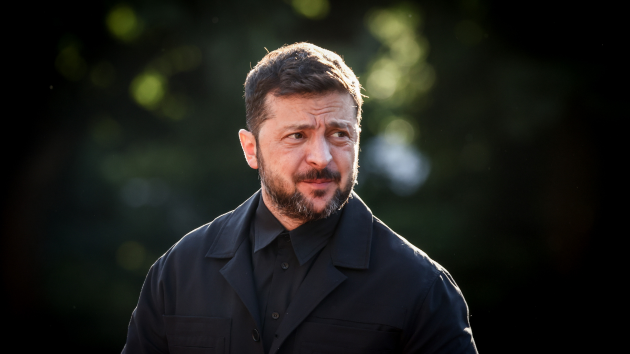
Beata Zawrzel/NurPhoto via Getty Images

(LONDON) — President Donald Trump and Vice President JD Vance will take part in a virtual meeting on Wednesday with Ukrainian President Volodymyr Zelenskyy and European allies, two U.S. officials confirmed to ABC News.

Zelenskyy said on Tuesday that Russia is showing signs it may want to end the war after Zelenskyy spoke by phone with Trump, White House adviser Steve Witkoff and European leaders last week.

“During the call, there was a signal from Mr. Witkoff, who was also on the call, that Russia is ready to end the war, or at least to make a first step toward a ceasefire, and that this was the first such signal from them,” Zelenskyy said of the call, which took place Friday. “Everyone on the call felt positive about this — that there was some kind of shift.”

Zelenskyy emphasized there were no demands or concrete proposals from the U.S., just discussions, and it’s still unclear to him what exactly Russian President Vladimir Putin told Witkoff.

The Ukrainian president also said he was told that since a meeting with him and Trump already took place, one between Putin and Trump logically followed. “And then a trilateral meeting — the U.S., Ukraine and Russia – should take place,” Zelenskyy said.

The White House officially announced the summit between Trump and Putin will take place in Anchorage, Alaska, on Friday.

Zelenskyy said Putin was preparing for “new offensive operations” despite Friday’s looming peace summit in Alaska — and as Russian forces appear to have scored significant front-line success in eastern Ukraine.

Fierce front-line combat and long-range drone and missile strikes are ongoing as the U.S. and Russia prepare for Friday’s meeting. Ukrainian representatives are not expected to attend, though a source in Zelenskyy’s office told ABC News on Monday that “everything is very fluid.”

Zelenskyy and his officials have gone on a diplomatic offensive ahead of the meeting, seeking to shore up foreign support behind Ukraine’s key demands in any peace deal.

On Monday, Zelenskyy suggested that Putin is not ready to end the fighting, despite Friday’s meeting in Alaska.

The president’s warning came as Russian troops broke through an area of the front north of the important defensive city of Pokrovsk — in the east of the country — advancing at least six miles toward the town of Dobropillia.

The breach could give Russian forces an opportunity to drive a wedge between two Ukraine’s key eastern defensive hubs — Pokrovsk and Kostyantynivka — and imperil other cities in the region.

Citing a report from his intelligence and military commands, Zelenskyy said in a statement that Putin “is definitely not preparing for a ceasefire or an end to the war. Putin is determined only to present a meeting with America as his personal victory and then continue acting exactly as before, applying the same pressure on Ukraine as before.”

Zelenskyy said on Telegram on Monday, “So far, there is no indication whatsoever that the Russians have received signals to prepare for a post-war situation. On the contrary, they are redeploying their troops and forces in ways that suggest preparations for new offensive operations.”

“If someone is preparing for peace, this is not what he does,” Zelenskyy said.

Zelenskyy has said Kyiv will not cede any territory to Russia, will not abandon its NATO ambitions and will not allow any limitations on its armed forces.

Among Moscow’s demands are that Ukraine cede several regions — not all of which are controlled by Russian troops — in the south and east of the country, accept curbs on the size and sophistication of its military and be permanently excluded from NATO. Putin also wants all international sanctions on Russia to be lifted in the event of a peace deal.

Russia’s demands, Zelenskyy has said, constitute an attempt to “partition Ukraine.”

Trump on Monday described the coming summit as a “feel-out meeting,” telling reporters, “I’m going in to speak to Vladimir, and I’m going to be telling him, ‘You got to end this war. You got to end it.'”

“And at the end of that meeting, probably in the first two minutes, I’ll know exactly whether or not a deal can be made,” Trump said.

When asked how he would know if a deal is possible, the president replied, “Because that’s what I do. I make deals.”

ABC News’ Yulia Drozd, Ellie Kaufman, Oleksiy Pshemyskyi, Kelsey Walsh and Michelle Stoddart contributed to this report.

Editor’s Note: This story has been updated to reflect that Zelenskyy spoke about the call with Trump on Tuesday, but the call took place last week.

Copyright © 2025, ABC Audio. All rights reserved.
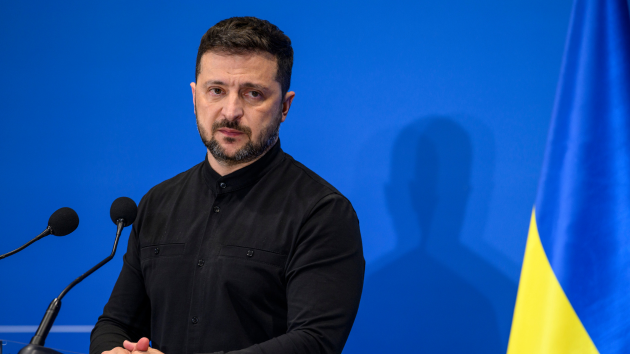
Zelenskyy speaks with Trump, says Russia is ‘shifting’ their position on a ceasefire

Trump, Vance to meet virtually with Zelenskyy ahead of Putin summit
Beata Zawrzel/NurPhoto via Getty Images

(LONDON) — Ukrainian President Volodymyr Zelenskyy said Russia is showing signs it may want to end the war after Zelenskyy spoke by phone with President Donald Trump, White House adviser Steve Witkoff and European leaders on Tuesday.

“During the call, there was a signal from Mr. Witkoff, who was also on the call, that Russia is ready to end the war, or at least to make a first step toward a ceasefire, and that this was the first such signal from them,” Zelenskyy said. “Everyone on the call felt positive about this — that there was some kind of shift.”

Zelenskyy emphasized there were no demands or concrete proposals from the U.S., just discussions, and it’s still unclear to him what exactly Russian President Vladimir Putin told Witkoff.

The Ukrainian president also said he was told that since a meeting with him and Trump already took place, one between Putin and Trump logically followed. “And then a trilateral meeting — the U.S., Ukraine and Russia – should take place,” Zelenskyy said.

The White House officially announced the summit between Trump and Putin will take place in Anchorage, Alaska, on Friday.

Prior to the call, Zelenskyy took a more pessimistic tone, saying Putin is preparing for “new offensive operations” despite Friday’s looming peace summit in Alaska — and as Russian forces appear to have scored significant front-line success in eastern Ukraine.

Fierce front-line combat and long-range drone and missile strikes are ongoing as the U.S. and Russia prepare for Friday’s meeting. Ukrainian representatives are not expected to attend, though a source in Zelenskyy’s office told ABC News on Monday that “everything is very fluid.”

Zelenskyy and his officials have gone on a diplomatic offensive ahead of the meeting, seeking to shore up foreign support behind Ukraine’s key demands in any peace deal.

On Monday, Zelenskyy suggested that Putin is not ready to end the fighting, despite Friday’s meeting in Alaska.

The president’s warning came as Russian troops broke through an area of the front north of the important defensive city of Pokrovsk — in the east of the country — advancing at least six miles toward the town of Dobropillia.

The breach could give Russian forces an opportunity to drive a wedge between two Ukraine’s key eastern defensive hubs — Pokrovsk and Kostyantynivka — and imperil other cities in the region.

Citing a report from his intelligence and military commands, Zelenskyy said in a statement that Putin “is definitely not preparing for a ceasefire or an end to the war. Putin is determined only to present a meeting with America as his personal victory and then continue acting exactly as before, applying the same pressure on Ukraine as before.”

Zelenskyy said on Telegram on Monday, “So far, there is no indication whatsoever that the Russians have received signals to prepare for a post-war situation. On the contrary, they are redeploying their troops and forces in ways that suggest preparations for new offensive operations.”

“If someone is preparing for peace, this is not what he does,” Zelenskyy said.

Zelenskyy has said Kyiv will not cede any territory to Russia, will not abandon its NATO ambitions and will not allow any limitations on its armed forces.

Among Moscow’s demands are that Ukraine cede several regions — not all of which are controlled by Russian troops — in the south and east of the country, accept curbs on the size and sophistication of its military and be permanently excluded from NATO. Putin also wants all international sanctions on Russia to be lifted in the event of a peace deal.

Russia’s demands, Zelenskyy has said, constitute an attempt to “partition Ukraine.”

Trump on Monday described the coming summit as a “feel-out meeting,” telling reporters, “I’m going in to speak to Vladimir, and I’m going to be telling him, ‘You got to end this war. You got to end it.'”

“And at the end of that meeting, probably in the first two minutes, I’ll know exactly whether or not a deal can be made,” Trump said.

When asked how he would know if a deal is possible, the president replied, “Because that’s what I do. I make deals.”

ABC News’ Yulia Drozd, Ellie Kaufman, Oleksiy Pshemyskyi, Kelsey Walsh and Michelle Stoddart contributed to this report.

Copyright © 2025, ABC Audio. All rights reserved.
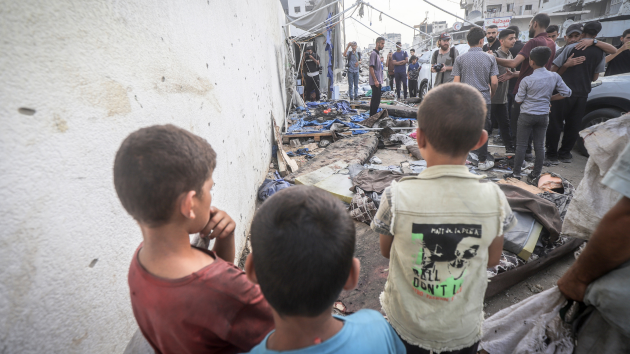
Zelenskyy says Putin ‘definitely’ not preparing to end war despite Trump summit

Trump, Vance to meet virtually with Zelenskyy ahead of Putin summit
Beata Zawrzel/NurPhoto via Getty Images

(LONDON) — Ukrainian President Volodymyr Zelenskyy claimed on Tuesday that Russian President Vladimir Putin is preparing for “new offensive operations” despite Friday’s looming peace summit in Alaska.

Fierce frontline combat and long-range drone and missile strikes are ongoing as the U.S. and Russia prepare for Friday’s meeting. Ukrainian representatives are not expected to attend, though a source in Zelenskyy’s office told ABC News on Monday that “everything is very fluid.”

Zelenskyy and his officials have gone on a diplomatic offensive ahead of the meeting, seeking to shore up foreign support behind Ukraine’s key demands in any peace deal.

On Monday, Zelenskyy suggested that Putin is not ready to end the fighting, despite Friday’s meeting in Alaska.

Citing a report from his intelligence and military commands, Zelenskyy said in a statement that Putin “is definitely not preparing for a ceasefire or an end to the war. Putin is determined only to present a meeting with America as his personal victory and then continue acting exactly as before, applying the same pressure on Ukraine as before.”

“So far, there is no indication whatsoever that the Russians have received signals to prepare for a post-war situation,” he added. “On the contrary, they are redeploying their troops and forces in ways that suggest preparations for new offensive operations.”

“If someone is preparing for peace, this is not what he does,” Zelenskyy said.

Zelenskyy has said Kyiv will not cede any territory to Russia, will not abandon its NATO ambitions and will not allow any limitations on its armed forces.

Among Moscow’s demands are that Ukraine cede several regions — not all of which are controlled by Russian troops — in the south and east of the country, accept curbs on the size and sophistication of its military and be permanently excluded from NATO. Putin also wants all international sanctions on Russia to be lifted in the event of a peace deal.

Russia’s demands, Zelenskyy has said, constitute an attempt to “partition Ukraine.”

President Donald Trump on Monday described the coming summit as a “feel out meeting,” telling reporters, “I’m going in to speak to Vladimir, and I’m going to be telling him, ‘You got to end this war. You got to end it’.”

“And at the end of that meeting, probably in the first two minutes, I’ll know exactly whether or not a deal can be made,” Trump said.

When asked how he would know if a deal is possible, the president replied, “Because that’s what I do. I make deals.”

Copyright © 2025, ABC Audio. All rights reserved.
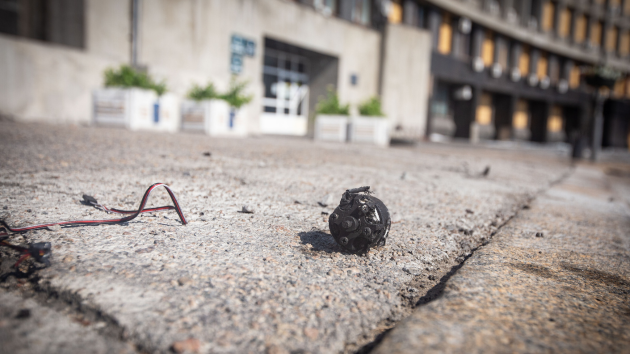
Ukraine ramps up drone attacks on Russia ahead of Trump-Putin Alaska summit

Ukraine ramps up drone attacks on Russia ahead of Trump-Putin Alaska summit
Antonio Masiello/Getty Images

(LONDON) — Ukrainian forces are increasing the intensity of long-range drone strikes deep into Russia, according to data released by Moscow, ahead of Friday’s planned meeting between Presidents Donald Trump and Vladimir Putin in Alaska.

Russia’s Defense Ministry reported downing another 59 Ukrainian drones overnight into Monday morning, with Moscow Mayor Sergei Sobyanin reporting that at least nine craft were shot down en route to the capital.

Russia’s federal air transport agency, Rosaviatsiya, reported temporary restrictions on flights at airports in Penza, Nizhny Novgorod, Kaluga, Volgograd and Saratov during the overnight attacks.

Monday’s figures bring the total number of long-range Ukrainian drones claimed shot down by Russian forces in August to 1,337 — with a daily average of more than 121 drones each day.

Moscow only provides data on the number of drones it claims to have shot down, and not the overall number of Ukrainian craft launched. Neither Ukraine nor Russia provide public information on the scale of their own cross-border drone attacks.

In July, the total number of Ukrainian drones claimed downed over the course of the month was 3,008, with an average of just over 97 craft per day.

Ukraine’s air force, meanwhile, said Russia launched 100 drones into Ukraine overnight into Monday morning, of which 70 were intercepted or suppressed.

Thus far in August, the intensity of Russian strikes on Ukraine appear to have eased. The first 11 days of this month have seen Moscow launch a daily average of 74 drones and one missile into Ukraine, compared with record-breaking July figures of 201 drones and around six missiles per day.

Ukrainian President Volodymyr Zelenskyy and his officials have said Kyiv will continue and expand its long-range strikes in an effort to force Moscow to the negotiating table.

“They in Russia must clearly feel the consequences of what they are doing against Ukraine,” the president said in a statement posted to Telegram in May. “And they will. Attack drones, interceptors, cruise missiles, Ukrainian ballistic systems — these are the key elements. We must manufacture all of them.”

It is not clear whether Zelenskyy will attend Friday’s summit in Alaska. There, Trump and Putin are expected to discuss proposals to secure a ceasefire and potentially to end Russia’s full-scale invasion, which it launched in February 2022.

Zelenskyy has insisted that any negotiations must include Ukraine. Kyiv will also not officially cede any territory, accept limitations on its armed forces, or jettison its ambitions to join NATO and the European Union, Zelenskyy has said.

Putin, though, is demanding that Ukraine cede several regions — not all of which are controlled by Russian troops — in the south and east of the country, accept curbs on the size and sophistication of its military and be permanently excluded from NATO.

Russia’s demands, Zelenskyy has said, constitute an attempt to “partition Ukraine.”

Speaking from the White House on Friday, Trump suggested a settlement could include “some swapping of territories.”

Zelenskyy swiftly rejected the proposal, saying Ukraine “will not give Russia any awards for what it has done” and that “Ukrainians will not give their land to the occupier.”

On Monday, Zelenskyy appealed for more pressure on the Kremlin. “Russia is prolonging the war and therefore deserves stronger pressure from the world,” he wrote on Telegram.

“Russia refuses to stop the killings and therefore should not receive any rewards or benefits,” he added.

Copyright © 2025, ABC Audio. All rights reserved.
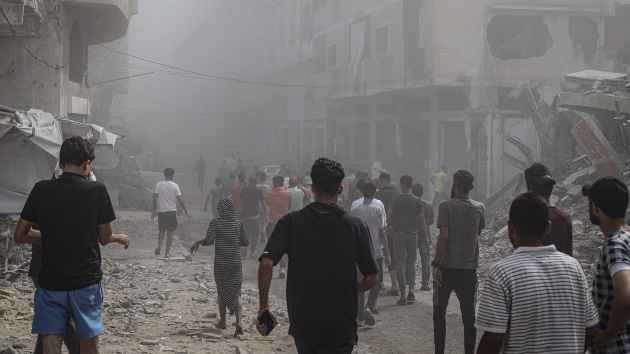
Israeli strike kills 5 Al Jazeera journalists, including Anas Al Sharif, in Gaza, network says

Israeli strike kills 5 Al Jazeera journalists, including Anas Al Sharif, in Gaza, network says
Saeed M. M. T. Jaras/Anadolu via Getty Images

(LONDON) — The Al Jazeera media company said in a Sunday statement that five of its journalists — including prominent correspondent Anas Al Sharif — were killed in an Israeli airstrike on a tent housing reporters in Gaza City.

Fellow correspondent Mohammed Qreiqeh, cameramen Ibrahim Zaher and Moamen Aliwa and their assistant Mohammed Noufal were also killed in the attack, Al Jazeera said.

The Israel Defense Forces said in a statement that it targeted Sharif, claiming the correspondent headed a Hamas cell and was involved in rocket attacks against Israeli targets.

Sharif was one of the best-known journalists reporting from Gaza, with millions of social media followers. He last posted to his X and Instagram accounts minutes before his death.

Al Jazeera said in a statement that it “condemns in the strongest terms the targeted assassination” of its journalists. “The order to assassinate Anas Al Sharif, one of Gaza’s bravest journalists, and his colleagues, is a desperate attempt to silence the voices exposing the impending seizure and occupation of Gaza,” it added.

Sunday’s strike came after the Committee to Protect Journalists published an appeal for Sharif’s protection, saying it was “gravely worried” about his safety and accusing the IDF of launching a “smear campaign,” against him, which Sharif “believes is a precursor to his assassination.”

The CPJ said that 186 journalists have been killed since the start of the Israel-Gaza war on Oct. 7, 2023. At least 178 of those were Palestinians killed by Israeli forces, the group said.

Copyright © 2025, ABC Audio. All rights reserved.

Russia and Ukraine exchange drone attacks amid peace talks maneuvers

Russia and Ukraine exchange drone attacks amid peace talks maneuvers
Francisco Richart Barbeira/NurPhoto via Getty Images

(LONDON) — Russia and Ukraine exchanged large waves of attack drones overnight into Sunday as the two combatants maneuvered ahead of Friday’s planned summit in Alaska between U.S. President Donald Trump and Russian President Vladimir Putin.

Ukraine’s air force said Russia launched 100 drones into the country overnight, of which 70 were shot down or otherwise suppressed. Thirty drones impacted across 12 locations, it said in a statement posted to Telegram.

Russia’s Defense Ministry said its troops shot down at least 126 Ukrainian drones overnight.

Temporary restrictions on flights were introduced at airports in the southwest of the country in Vladikavkaz, Grozny, Saratov and Kaluga, Russia’s federal air agency Rosaviatsiya said, during the attacks.

In Saratov, regional Gov. Roman Busargin said one person was killed and several injured by a drone that fell near a residential building. An industrial facility was also damaged, Busargin said.

The Ukrainian General Staff later confirmed the attack on Saratov, saying in a statement that it targeted an oil refinery there. “Saratov oil refinery is one of the key facilities of the Russian Federation’s fuel infrastructure involved in providing oil products to the occupation troops,” the General Staff said. “Its annual processing capacity is up to 7 million tons of oil.”

“The Defense Forces of Ukraine continue to systematically take measures aimed at reducing the military and economic potential of the enemy in order to force it to stop the armed aggression against our state,” it added. “Every affected object on the territory of the Russian Federation involved in securing its criminal war against Ukraine brings us closer to just peace.”

Ukraine appears to have been ramping up its drone strikes in recent days. So far in August, Russia’s Defense Ministry has reported downing 1,117 Ukrainian drones — an average of around 117 per day, marking a notable increase on July’s daily average of 97 drones downed.

For Ukrainian defenders, August has thus far been quieter than July. Kyiv has reported facing 749 drones and 11 missiles so far this month, an average of approximately 75 drones and one missile each day.

July saw Russia set a new record number of aerial attacks, launching a total of 6,443 drones and missiles into Ukraine across the month, with a daily average of around 201 drones and six missiles per day.

While long-range strikes and grinding frontline combat continues, both Kyiv and Moscow are also maneuvering on the diplomatic front.

Since Trump announced that he would meet with Putin in Alaska on Friday, Ukrainian officials have gone on a diplomatic offensive to bolster the Western coalition in support of its peace demands.

President Volodymyr Zelenskyy and other Ukrainian officials have insisted that any negotiations must include Ukraine. Kyiv will also not officially cede any territory, accept limitations on its armed forces, or jettison its ambitions to join NATO and the European Union, Zelenskyy has said.

Putin, though, is demanding that Ukraine cede several regions — not all of which are controlled by Russian troops — in the south and east of the country, accept curbs on the size and sophistication of its military and be permanently excluded from NATO.

Russia’s demands, Zelenskyy has said, constitute an attempt to “partition Ukraine.”

Speaking from the White House on Friday, Trump suggested a settlement could include “some swapping of territories.” Zelenskyy swiftly rejected the proposal, saying Ukraine “will not give Russia any awards for what it has done” and that “Ukrainians will not give their land to the occupier.”

“Our positions were clear: a reliable, lasting peace is only possible with Ukraine at the negotiating table, with full respect for our sovereignty and without recognizing the occupation,” Andriy Yermak, Zelenskyy’s influential chief of staff, said in a Saturday statement after taking part in talks with Vice President JD Vance in the U.K.

French President Emmanuel Macron, German Chancellor Friedrich Merz, British Prime Minister Keir Starmer and Polish Prime Minister Donald Tusk were among the European leaders to sign a joint statement expressing their support for Kyiv in any peace negotiations.

“We welcome President Trump’s work to stop the killing in Ukraine, end the Russian Federation’s war of aggression and achieve just and lasting peace and security for Ukraine,” the statement read.

“We are convinced that only an approach that combines active diplomacy, support to Ukraine and pressure on the Russian Federation to end their illegal war can succeed,” it added.

“Meaningful negotiations can only take place in the context of a ceasefire or reduction of hostilities,” the joint statement said. “The path to peace in Ukraine cannot be decided without Ukraine. We remain committed to the principle that international borders must not be changed by force. The current line of contact should be the starting point of negotiations.”

Copyright © 2025, ABC Audio. All rights reserved.

UN says Israel’s planned Gaza City military offensive ‘must be immediately halted’

UN says Israel’s planned Gaza City military offensive ‘must be immediately halted’
People are seen in smoke after Israel targeted the area near Abbas Junction in western Gaza City, Gaza on August 08, 2025/Khames Alrefi/Anadolu via Getty Images

(LONDON) — On the heels of Israel’s security cabinet approving plans to occupy Gaza City, the United Nations High Commissioner for Human Rights, Volker Turk, said “this further escalation will result in more killing, more unbearable suffering, senseless destruction,” according to a statement released Friday morning.

Turk called for the offensive to be “immediately halted.”

“The Israeli Government’s plan for a complete military takeover of the occupied Gaza strip must be immediately halted,” Turk said. “It runs contrary to the ruling of the International Court of Justice that Israel must bring its occupation to an end as soon as possible, to the realisation of the agreed two-State solution and to the right of Palestinians to self-determination.”

Family members of hostages and other protesters gathered in front of the building where the Israeli cabinet was in session to protest Netanyahu’s current proposal to occupy all of Gaza, calling the move a “death sentence” for the remaining hostages in a statement from the Hostages and Missing Families Forum Headquarters.

“For a year and ten months we’ve been trying to believe that everything is being done to bring them back – you have failed. Now it’s necessary to do the one thing the government hasn’t yet done – put a comprehensive deal on the table that will bring them all home together,” said Anat Angrest, mother of hostage Matan Angrest.

Israel’s plan for an expansion of military operations comes amid international condemnation of the deteriorating humanitarian situation in the Gaza Strip.

“The Security Cabinet has approved the Prime Minister’s proposal for the defeat of Hamas,” the Israeli prime minister’s office said in a statement released on Thursday. “The IDF [Israel Defense Forces] will prepare for the takeover of Gaza City while ensuring the provision of humanitarian aid to the civilian population outside the combat zones.”

Turk, however, said that the potential escalation will only lead to more problems in the region. leading to, what he says, “senseless destruction and atrocity crimes.”

“The war in Gaza must end now. And Israelis and Palestinians must be allowed to live side by side in peace,” said Turk. “Instead of intensifying this war, the Israeli Government should put all its efforts into saving the lives of Gaza’s civilians by allowing the full, unfettered flow of humanitarian aid. The hostages must be immediately and unconditionally released by Palestinian armed groups. Palestinians arbitrarily detained by Israel must also be immediately and unconditionally released.”

In a Fox News interview earlier this week, Israeli Prime Minister Benjamin Netanyahu said repeatedly that he does not want to “govern Gaza,” but he wants to “hand it over to Arab forces that will govern it properly without threating,” Israel.

Hamas, responding to the Fox News interview, said in a statement that “Netanyahu’s statements represent a blatant reversal of the negotiation process and clearly expose the real motives behind his withdrawal from the latest round of talks, despite us nearing a final agreement.”

On Sunday, an Israeli official told ABC News that Netanyahu was pushing to expand the military operation in Gaza on the grounds that he felt Hamas is not interested in reaching a new ceasefire deal under which surviving hostages could be released.

When asked about the possible expansion of the campaign in Gaza, U.S. State Department spokesperson Tammy Bruce said Tuesday, “Reporting is one thing. Real plans might be another. We are not in the business of interpreting statements from foreign governments when and if they’re made.”

“We do remain focused on freeing the hostages, including the remains of two Americans, and ensuring that Hamas never rules Gaza again,” Bruce said.

Copyright © 2025, ABC Audio. All rights reserved.