(NORTH KOREA) — North Korea hosted its 73rd anniversary parade late Wednesday going into early Thursday morning, with a display of soldiers in bright orange hazmat suits and gas masks marching in Pyongyang, according to the Korea Central News Agency, the nation’s state media.
Along with top officials, a thinner Kim Jong Un appeared in the square, where he “extended warm greetings” and waved back to the crowds, KCNA reported. Parachutists came down from the sky, there was a fireworks display and tractors hauled artillery behind soldiers, the news agency reported, though photos depict only fire trucks and tractors.
But the image of a strong, healthy regime painted by the country’s state media is the opposite of what the parade truly showcased, according to Gordon Chang, author of “Nuclear Showdown: North Korea Takes on the World.” The parade indicated a much less ambitious North Korea, Chang said, one that has been decimated by the coronavirus pandemic despite zero cases reported by the country.
“All those guys in the red hazmat suits, which were really striking, that wasn’t directed to us, that was directed to the North Korean people basically saying that the regime has this well in hand because it obviously doesn’t,” he said.
The pandemic and international sanctions have damaged the economy and caused widespread famine. In July, South Korea’s central bank released its 2020 economic estimates for its northern neighbor, finding that North Korea’s economy shrunk by 4.5% last year — the largest decrease in at least 10 years, according to the report.
Photos of Kim at the parade also showed that his weight loss has continued since he began slimming down this summer.
Martyn Williams, a researcher at 38 North, which provides analysis about the country, tweeted that “It’s striking how much healthier Kim is looking in these photos from yesterday. However he is doing it — and there are theories — he looks a lot better than he did a few months ago.”
Chang also speculated as to why Kim had lost weight.
“I think he’s either realized it doesn’t look good from a public relations point of view to be overly heavy, or he’s just dealing with a personal health problem,” he said.
Aside from the apocalyptic looking hazmat suits, the parade lacked North Korea’s signature missiles, which are routinely used to boast the regime’s military might.
This was the nation’s first military parade since President Joe Biden took office. North Korea has been very quiet on the international scene in recent months — which is very uncharacteristic, according to Chang.
“They have been very, very quiet for a long time which means we should start to worry about what’s going on because something is not right,” he said.
(AFGHANISTAN) — For girls and young women accustomed to mountain climbing and physical fitness training six times a week, being confined in a crowded wedding hall near an airport in northern Afghanistan is a different kind of challenge — one with their fates at stake.
It’s the new reality for dozens of them affiliated with Ascend, an organization that teaches Afghan women and girls athletic-based leadership skills. They came to the airport in Mazar-e-Sharif 10 days ago for evacuation flights the Taliban have blocked, heightening their fears they’ll be left behind.
“We’re trying to remind them we haven’t forgotten you. The world hasn’t forgotten you,” Marina LeGree, founder and executive director of Ascend told ABC News. “But some of them are losing hope.”
While the first passenger flight out of Kabul since the Taliban seized power took off on Thursday, carrying some U.S. citizens and other Westerners on board, life-and-death concerns loom for at-risk Afghans still in the country, especially for women like those of Ascend who have exercised independence in the last 20 years, free from Taliban rule.
Founded in 2014, Ascend is a U.S.-based nonprofit operating in Afghanistan that recruits a new group of Afghan girls and young women aged 15-24 each year to embark on a two-year mountaineering program. The recruits — who have trained in Ghaza Stadium, used by the last Taliban government for public punishment — have a mission of fostering leadership, volunteerism, and physical and mental well-being for the next generation.
But if the group in Mazar-e-Sharif is left behind, LaGree fears they’ll be married off to Taliban fighters — or worse.
(KUWAIT CITY) — The United States has not seen evidence that the Taliban’s newly formed government will be as inclusive as promised, and it appears to be “more of the same” with “many of the same actors,” according to Defense Secretary Lloyd Austin.
“I think the whole international community was hopeful that they would be inclusive as they kind of said they would be weeks and months ago,” Austin told a small group of reporters traveling with him to the Middle East. “But we’ve not seen evidence of that early on, and so it appears to be many of the same actors.”
Austin said the U.S. and the international community would continue “to listen to what they’re saying, but we’re watching what they’re doing and right now it just seems that it’s more of the same.”
The Taliban’s new government includes several leaders of the Haqqani network, including the group’s de facto leader Sirajuddin Haqqani, who was named as interior minister. The Haqqani network has been directly tied to violent attacks against American troops over the last two decades.
“We don’t get a choice, a vote in that but, but certainly these are people that I don’t look favorably upon personally, but again, it’s the Taliban government,” Austin said when asked about the inclusion of Haqqani network leaders in the government.
Austin said the United States has “put the Taliban on notice” that it expects them not to allow al-Qaida to regenerate — something he said would demonstrate that they “are serious about being a bona fide government and respected in the international community.”
“They want sanctions lifted, and that sort of business so they have goals and aspirations,” said Austin. “If they demonstrate that they’re going to harbor terrorism, and in Afghanistan, all of that will be very very difficult for them to achieve.”
“I think the international community will hold them to task, quite frankly,” Austin said. “But again our goal is to make sure that that terror cannot be exported from the spaces in Afghanistan to the homeland, and we will remain focused.”
But he acknowledged that al-Qaida and ISIS-Khorasan “will always attempt to find space to grow and regenerate, whether it’s there, whether it’s in Somalia, whether it’s in any on any other ungoverned space,” he said. “I think that’s the nature of the organization.”
He added that the U.S. military would address any terrorism threats to the United States with its “over the horizon” counterterrorism drone strike capability.
But not having U.S. troops or U.S. intelligence on the ground in Afghanistan may make it more difficult to identify threats and carry out such strikes, something Austin acknowledged to reporters earlier this week.
A veteran of the conflicts in Iraq and Afghanistan over the past two decades and a former commander of U.S. Central Command, Austin embarked on his trip to thank the leaders of Persian Gulf states that provided assistance for the airlift that evacuated 124,000 people from Afghanistan.
“The ability to shuttle back and forth and lift out as many people as we did as fast as we as we did could not have happened without partners and in this region, and in Europe,” said Austin.
Beyond the airlift, his goal is “to always reassure them that first of all, we’re a global nation of global interests, and, and this region will always be important to us,” he said.
“We will have to shift our stance from time to time to focus on what we describe as our main effort and and that’s understandable,” Austin said. “But, but we will always be interested in what is going on in this region.”
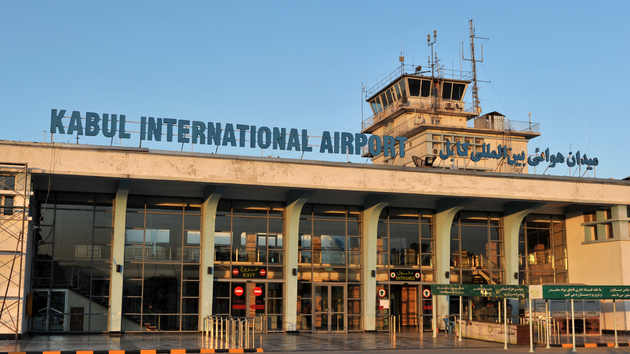
(KABUL, Afghanistan) — With the U.S. military and diplomatic withdrawal now complete after 20 years in Afghanistan, the Taliban has taken over the country, including the Kabul airport, the site of an often-desperate evacuation effort in past weeks.
But even as the last American troops were flown out to meet President Joe Biden’s Aug. 31 deadline, other Americans who wanted to flee the country were left behind. The Biden administration is now focused on a “diplomatic mission” to help them leave but some hoping to evacuate are still stuck in the country. Meanwhile, the Taliban has announced its new “caretaker” government which includes men with U.S. bounties on their heads — and no women.
Here are the latest developments. All times Eastern:
Sep 09, 8:41 am
Americans, foreigners to leave Kabul on first flight since Taliban takeover: Qatari envoy
A Qatari Airways flight has landed at Kabul’s international airport and will be the first to fly out of Afghanistan’s capital since the Taliban seized power, with U.S. citizens and other Westerners on board, Qatar’s special envoy for Afghanistan announced on the tarmac Thursday alongside the Taliban’s spokesperson.
A State Department spokesperson told ABC News, “As we have said, our efforts to assist U.S. citizens and others to whom we have a special commitment are ongoing, but we aren’t in a position to share additional details at this time.”
Mutlaq bin Majed al Qahtani, the Qatari envoy, told reporters during the joint press conference, “Call it what you want, a charter or a commercial flight — everyone has tickets and boarding passes.”
He said the airport in Kabul will be fully up and running, telling reporters, “Hopefully life is becoming normal in Afghanistan.”
While the number and breakdown of passengers it’s unclear, this is the first large departure — the first flight out — of Americans and other foreigners since the U.S. evacuation operation ended last week, leaving hundreds of U.S. citizens and thousands of Afghan partners behind.
Sep 08, 3:00 pm
All US service members who died in Kabul attack to be awarded Purple Heart
All 13 U.S. service members who died in the Aug. 26 airport attack in Kabul will be posthumously awarded the Purple Heart.
Both the Marine Corps and the Army told ABC News their members will receive the decoration after the Navy announced on Tuesday that the one member of its service that died was posthumously promoted and would also be awarded the Purple Heart.
“The 11 Marines killed-in-action while supporting Operation Freedom’s Sentinel will be awarded the Purple Heart,” said Capt. Andrew Wood, Marine Corps spokesperson on Tuesday.
The Army’s 1st Special Forces Command said in a press release the day after the attack that its member who died, Army Staff Sgt. Ryan C. Knauss, was awarded the Purple Heart, Bronze Star medal and Combat Action Badge.
(RAMSTEIN-MIESENBACH, Germany) — The 8-year old Afghan girl, housed at Ramstein Air Base without her parents, decided to share her dreams with the U.S. staffers running the “youth pod” where she was staying.
She wanted to be a pilot, she told them.
When word got to U.S. Air Force personnel, they decided to let her know that dream could come true. They sent three female U.S. pilots to meet with her, give her a challenge coin and tell her that in the U.S., she could become anything she wanted to be.
The road to becoming one will be difficult, to say the least.
The young girl, whose name was withheld by the State Department to protect her identity, is one of 275 unaccompanied children evacuated from Afghanistan, according to UNICEF, as part of the massive U.S.-led evacuation operation.
Many of them lost their parents in the crowds and were sent on separate military aircraft or chartered flights out of Afghanistan. Others were pushed inside Kabul airport’s fortified walls by parents desperate to give their child a better life than what may come next in Afghanistan as the Taliban take control. And others still were orphaned in the final days of America’s 20-year war in Afghanistan — losing parents on the battlefield or in the crush of crowds outside the airport gates.
“They were all traumatized,” said one State Department official who served at Kabul airport as a consular officer. Children there were brought to a reunification center run by the Norwegian government, where some were able to be reunited with family. But as the clock ticked down on evacuation efforts, U.S. officials knew they couldn’t leave any children behind, per the official, taking them all out on evacuation flights to Qatar.
Some children were even separated there, according to the State Department. Safe from the chaos of Kabul airport, one 17-year old boy was told by his parents to guard his family’s luggage. But when the bags were loaded onto an aircraft to Ramstein, in Germany, he went with them — without his family. His family was later flown to Ramstein, and U.S. officials were able to reunite them.
But for the scores of other separated and unaccompanied children, finding close family members to reunify them with is now a challenge. U.S. officials from several agencies are working at military installations in Qatar, Germany and even the U.S. — with technical advice from UNICEF and the International Organization for Migration — amid concerns that some children could be trafficked or others may be claimed as child brides.
Visiting Ramstein Air Base Wednesday, Secretary of State Antony Blinken met with several of the 25 unaccompanied children currently housed there.
“Many, many, many Americans are really looking forward to welcoming you and having you come to the United States,” he told a group of them.
Already, there are at least over several dozen children that have been moved from Ramstein and other U.S. bases to the U.S., where their cases are handed off to the Department of Health and Human Services and its Office of Refugee Resettlement — the same agency that has handled cases of unaccompanied minors at the southern U.S. border.
HHS “works to find extended family or other appropriate sponsors to care for the child using established sponsor assessment procedures. Unaccompanied minors not immediately unified with an appropriate caregiver are placed in culturally and age-appropriate facilities,” State Department spokesperson Ned Price said Friday.
He declined to specify who qualifies as an “appropriate sponsor,” but said judgments are made on a “case-by-case basis.”
Blinken was briefed by one official from USAID at Ramstein, who told him before reporters that 11 minors would be departing Wednesday evening after 21 others had left in the last five days. Virtually all of them have been flown to Dulles International Airport in Virginia and onward from there to military bases across the U.S., where tens of thousands of Afghan refugees are being housed as their cases are processed.
Blinken asked the official where the 11 departing that evening, some of whom he met, would end up, but she said she did not know.
When he met with a group of them earlier that day, he engaged in small talk, asking where they were from and what sports they were playing. He toured some of their sleeping quarters in the pop-up facilities on Ramstein’s tarmac, passing sleeping bags and Spiderman pillows — each facility marked with a cartoon animal on its door to help kids remember their pod, like the giraffe outside Door #7.
Inside one tent, Blinken saw some of the kids’ artwork — drawings and paintings, including an eye, the Genie from Aladdin, boxing gloves and a couple landscapes — a beach and palm tree, a mountain valley.
“I know you all have a lot of questions. There are a lot of people who will look out for you and help you,” he told the group he met on his tour.
One young boy gifted Blinken a T-shirt — and he told them, “I will wear this in Washington and be able to tell everyone where I got it.” They laughed and applauded, according to the print pool of reporters.
Fatella, a 21-year old woman in a head scarf and black and brown checkered shirt, told reporters about how difficult it was to get to Kabul airport, with bullets “flying.” Her father died some years ago, and her mother was unable to escape — left behind in Kabul.
Fatella, along with U.S. authorities, have been in touch with her, but it’s unclear how the U.S. will reunite them with Kabul airport still not functional. Her mother would have to be evacuated from Afghanistan, as State Department officials have made clear they will not send anyone who has been evacuated back into the country.
But among the other challenges with reunification, officials are also concerned about child trafficking. There have been “multiple cases” of young girls being claimed as brides by adult Afghan men at one U.S. base in Wisconsin, according to an internal State Department situation report obtained by ABC News.
The State Department’s task force requested “urgent guidance” after staff at Fort McCoy reported “multiple cases of minor females who presented as ‘married’ to adult Afghan males, as well as polygamous families,” according to the Aug. 27 report.
Child marriage is not uncommon in Afghanistan, but it is illegal under U.S. law, and the State Department sanctions countries that don’t crack down on it and other forms of human trafficking.
U.S. officials in the United Arab Emirates reportedly sent a cable to Washington to warn that some young Afghan girls had been forced into marriages in order to escape Afghanistan and reported being sexually assaulted by these older men, according to the Associated Press, which first reported about the Aug. 27 report.
The State Department declined to confirm whether there have been any cases of forced marriages among Afghan evacuees or other forms of human trafficking, but a spokesperson told ABC News last Friday that they take allegations “seriously” and are “committed to protecting vulnerable individuals globally.”
“We are coordinating across the U.S. government and with domestic and international partners to detect potential cases of forced marriage among vulnerable Afghans at relocation sites and to protect any victims identified,” they added in a statement.
After touring the base in her home state, Sen. Tammy Baldwin, D-Wis., told reporters that an investigation had concluded there were no child brides at Fort McCoy, according to the AP.
ABC News first reported on the concerns about human trafficking, especially of unaccompanied minors, when Qatari officials raised it amid a wider warning about the conditions at U.S. facilities in the country. Qatar’s assistant foreign secretary told U.S. officials there was a “danger of human trafficking in such circumstances and highlighted the cases of unaccompanied minors coming from Kabul,” according to another internal situation report dated Aug. 23.
(AFGHANISTAN) — Secretary of State Antony Blinken on Wednesday called on the Taliban to allow chartered aircraft to depart Afghanistan with Americans and Afghans ready to board, but said there were “limits” to what the U.S. can do to ensure they fly out.
For over a week now, the Taliban have not permitted at least six chartered flights to leave, saying some evacuees do not have the proper documents to depart. The standoff is turning dire for some passengers, with one aid group organizing a group of Afghan women and girls telling ABC News the situation is “uncontrolled” and “uncomfortable.”
The militant group, which has publicly said it will allow safe passage to foreigners trying to leave the country, unveiled an “interim” government on Tuesday that includes several top leaders already under U.S. and United Nations sanctions.
Blinken said the new Taliban cabinet “certainly does not meet the test of inclusivity,” but would only say its top members had “very challenging track records.”
The Biden administration has struggled to evacuate U.S. citizens and at-risk Afghan partners in the eight days since U.S. military and diplomatic personnel withdrew from the country, ending America’s 20 years of war in Afghanistan.
That includes for at least 19 U.S. citizens and hundreds of Afghans in the northern city Mazar-e-Sharif, where chartered aircraft have been waiting at the airport for over a week now, according to aid groups involved in organizing them.
“Those flights need to be able to leave and the United States government, the State Department – we are doing everything we can to help make that happen,” Blinken told reporters Wednesday at Ramstein Air Base in Germany, where he met some of the thousands of Afghan refugees evacuated by the U.S.-led operation that ended on Aug. 30.
Rep. Mike McCaul, R-Texas, the top Republican on the House Foreign Affairs Committee, said Sunday that the flights were being held “hostage” as the Taliban demanded concessions from the U.S., while some advocates blamed the U.S. for not clearing the flights. Blinken said Wednesday there was “a fair amount of confusion” about the situation — with State Department officials saying the U.S. is not involved in approving landing or overflight rights and doing what it can to help the chartered flights get approvals.
“While there are limits to what we can do without personnel on the ground, without an airport with normal security procedures in place, we are doing everything in our power to support those flights and to get them off the ground. That’s what we’ve done, that’s what we’ll continue to do,” Blinken said alongside German Foreign Minister Heiko Maas.
State Department officials said U.S. special envoy Zalmay Khalilzad has been sending urgent messages to the Taliban’s leadership to demand that they abide by their commitments on safe passage, and that the U.S. has so far no security concerns based on the manifests provided by advocacy groups.
But Marina LeGree, the founder and executive director of Ascend, a U.S.-based nonprofit seeking to empower Afghan women and girls through mountain climbing, blamed the State Department for standing in the way at times.
“We’ve given you all the details of these people and you cleared them and call them to come, and now you’re saying, ‘You have to have travel documents and don’t worry if you do, you get to go’? That’s a complete abdication of responsibility, and it’s just – it’s morally repugnant,” LeGree told ABC News Wednesday.
In total, there are more than 1,000 people now seeking a seat on these chartered flights, she added, complicating efforts to ensure Americans and vulnerable Afghans can safely evacuate first and degrading conditions at the airport itself where many have been waiting for days.
One hundred and ninety miles to the southeast, some conditions in Kabul are deteriorating as well. A top U.N. official said Wednesday her office is receiving daily reports of women’s rights being rolled back, including barring them from leaving home without a man or going to work.
“With the announcement yesterday, the Taliban have missed a critical opportunity to show the world that is truly committed to building an inclusive and prosperous society,” said Alison Davidian, the deputy representative in Afghanistan for U.N. Women, the global agency’s entity for gender equality and the empowerment of women.
That announcement is the formation of an “interim” government, led by Taliban commanders that played prominent roles in its previous government that ruled much of Afghanistan in the late 1990’s.
Instead of naming a woman to any position, the Taliban also dissolved the previous U.S.-backed government’s Ministry of Women’s Affairs and reinstated its Ministry for the Propagation of Virtue and the Prevention of Vice, which acted as a religious enforcement force.
Blinken said the U.S. was still “assessing the announcement,” but expressed concern that the list of ministers “consists exclusively of individuals who are members of the Taliban and their close associates and no women” and that some have ties to other terrorist organizations like al Qaeda and the Haqqani Network.
“It certainly does not meet the test of inclusivity,” he added, noting some individuals have “very challenging track records.”
Challenging is an understatement. Sirajuddin Haqqani, for example, has been put in charge of domestic affairs as acting Interior Minister. The leader of the sanctioned Haqqani Network, which is responsible for ruthless terror attacks across Afghanistan, he has a $10 million bounty on his head by the FBI.
Asked whether the U.S. government is still pursuing his capture, Blinken didn’t directly address the question – instead saying the U.S. will engage the Taliban “for purposes of advancing the national interests” of the U.S. and its allies and “in ways that are fully consistent with our laws,” including U.S. sanctions on the Taliban, the Haqqani Network, and Haqqani himself and others.
As he and other U.S. officials have said repeatedly, Blinken reiterated that the U.S. will judge the new government “by its action.”
But he was pressed by an Afghan journalist Tuesday on that. After Taliban fighters have beaten female protesters and journalists covering demonstrations against them, shut down media outlets and raided homes, and more, TOLO News’s Lotfullah Najafizada asked Blinken, “What else do you want to see?”
“We will see by its actions whether it corrects course on any of these incidents of abusive conduct,” Blinken said.
(PARIS) — France’s long-awaited “trial of the century” began Wednesday in Paris as more than a dozen people tied to the November 2015 terror attacks — the deadliest in the country since World War II — face a panel of judges.
In a matter of hours, nine suicide bombers committed a series of attacks across Paris that killed 130 people and wounded over 400 more. The simultaneous attacks outside the Stade de France during a soccer match, on a number of Parisian cafés and restaurants and inside the Bataclan concert hall during a packed performance were later claimed by the Islamic State of Iraq and the Levant, or ISIL. At the Bataclan alone, 90 people were killed by terrorists with machine guns after being taken hostage.
Six years after the terror attacks of Nov. 13, 2015, the landmark trial opened Wednesday and will last about nine months. With 1,800 plaintiffs and 330 lawyers, the trial is taking place in front of a specially composed panel of professional judges, instead of a jury of peers.
A historic event and a logistical challenge for the Paris courts, the trial is extraordinary in more ways than one.
For the occasion, the French government spent $9 million on a courtroom specially built in the former courthouse of Paris. The work was completed this summer, making it the largest criminal courtroom ever built in France, able to accommodate up to 550 people.
“All parties wanted the attacks that took place in the heart of Paris to be judged in a unique place, in the heart of Paris,” the French Ministry of Justice said in a statement.
Twenty defendants are being tried, including 14 who will appear before the court. Salah Abdeslam, the only one directly involved in the planning who’s still alive, is among those who will be tried. Of the nine terrorists involved in the attack itself, seven of those died during the attacks and another two were killed in a police raid five days later.
Six defendants will be tried in absentia, including five ISIS officials presumed dead in the Iraqi-Syrian zone.
The witness list is up to par with this historic moment, with a number of high-profile witnesses set to testify, including former French President Francois Hollande — who was inside the stadium when three suicide bombers blew themselves up outside — and a number of his ministers, and the former Paris prosecutor, Francois Molins. Several convicted terrorists will testify via videoconference.
Footage of the trial itself won’t be available for years, as hearings will be filmed only for posterity by the courts themselves. Like the trials of the Charlie Hebdo and Hyper Cacher attacks, which took place in January 2015, the archival video will become available to the public and the media when a final judgment has been made and the full course of justice has taken place.
Unlike in the United States, trials are not usually filmed. This is the 13th trial filmed in France since 1985, when the method was authorized by law for historic trials.
The defendants face sentences ranging from six years in prison to life imprisonment. The main defendant, Abdeslam, is appearing for organized murder in connection with a terrorist enterprise and could be sentenced to the life imprisonment. This is also the case for 10 of the other defendants who are on trial for complicity in the murders. France does not have the death penalty.
(KABUL, Afghanistan) — With the U.S. military and diplomatic withdrawal now complete after 20 years in Afghanistan, the Taliban has taken over the country, including the Kabul airport, the site of an often-desperate evacuation effort the past two weeks.
But even as the last American troops were flown out to meet President Joe Biden’s Aug. 31 deadline, other Americans who wanted to flee the country were left behind and the Biden administration is now focused on a “diplomatic mission” to help them leave.
When President Joe Biden sat down with ABC News’ George Stephanopoulos for an exclusive one-on-one interview at the White House on Aug. 18, he said he was committed to keeping the U.S. military in Afghanistan as long as needed. “If there are American citizens left, we’re going to stay until we get them all out,” he said.
Here are the latest developments. All times Eastern:
Sep 07, 6:16 pm
Taliban leaders release 1st official statement
In its first official statement since announcing a new caretaker government, the Taliban said their previous 20 years of “struggle and Jihad” had two major goals: to end foreign occupation and aggression and to establish “a complete, independent, stable, and central Islamic system in the country.”
“Based on this principle, in the future, all matters of governance and life in Afghanistan will be regulated by the laws of the Holy Sharia,” according to the statement.
The statement said the Taliban wants strong and healthy relations with all other countries and “We are committed to all international laws and treaties, resolutions and commitments that are not in conflict with Islamic law and the country’s national values. We also call on the countries of the world to value building strong and cordial political, diplomatic and good relations with us and to also cooperate with us.”
“The Islamic Emirate will take serious and effective steps towards protecting human rights, the rights of minorities as well as the rights of the underprivileged groups within the framework of the demands of the sacred relation of Islam,” the statement continued.
Despite suggestions the new regime would be more inclusive, the Taliban appointed no women to any of the interim positions, and even disbanded Afghanistan’s Ministry of Women’s Affairs.
The statement went on to say that media is an important element of the country and the Taliban said it “will work for the freedom, functioning and improvement of the media quality. We consider it our duty to take into account the sacred precepts of Islam, the national interests of the country and impartiality in our broadcasts.”
-ABC News’ Christine Theodorou
Sep 07, 12:19 pm
Biden admin pushes back on reports Taliban blocking US citizens from leaving
The Biden administration has pushed back on reports that the Taliban is stopping American citizens with proper documentation from flying out of Mazar-e-Sharif, a northern city where chartered planes have sat on the tarmac for a week.
Secretary of State Antony Blinken, speaking in Qatar, confirmed for the first time on Tuesday that there are “a small number of Americans” in Mazar-e-Sharif trying to depart, but he told reporters it was his “understanding that the Taliban has not denied access to anyone holding a valid document … but because all of these people are grouped together, that’s meant that flights had not been allowed to go.”
In other words, in his view, the Taliban is blocking the larger group, and the Americans were unfortunately stopped because they’re alongside others who don’t have valid documents.
White House press secretary Jen Psaki, was also asked about Americans stuck in Mazar-e-Sharif on Tuesday and whether the administration views it as a “hostage situation.”
“No, that is not what we would characterize it as,” she told reporters on Air Force One.
“Our secretary of state is in Qatar right now working on a range of options, including getting flights up and operational and going. And what we have seen is that individuals who have documentation are able to depart,” Psaki added.
Sep 07, 11:47 am
Taliban announce new caretaker government
The Taliban have announced a new caretaker government for Afghanistan on Tuesday, naming Mullah Mohammad Hassan Akhund, who is on the United Nations sanctions list and described as “one of the most effective Taliban commanders,” as the interim prime minister, and Mullah Abdul Ghani Baradar as deputy prime minister.
The militant group appointed former Guantanamo Bay Detention Camp detainee Mullah Abdul Haq Waseeq as Afghan Intelligence Chief. The new government also includes two Haqqani leaders with $5 million in U.S. bounties on their heads as ministers.
Along with several other ministers, none of which was a woman, the Taliban announced the disbandment of the Ministry of Women’s Affairs from its new caretaker government.
Sep 07, 4:55 am
Around 100 Americans remain in Afghanistan, Blinken says
U.S. Secretary of State Antony Blinken told reporters Tuesday that “somewhere around 100” Americans remain in Afghanistan.
“We believe the number of those who have American citizenship — many of them dual nationals — who remain in Afghanistan is somewhere around 100,” Blinken said during a press conference in Qatar’s capital. “We’re in direct contact with virtually all of them.”
“For weeks now, we’ve been working very closely with Qatar, with Turkey to see to it that the Kabul airport could get up and running again to civilian air travel as soon as possible,” he continued. “We’re also working to facilitate overland passage for those who wish to depart when it comes to charters.”
Blinken admitted it’s a challenge without personnel on the ground in Afghanistan but one that “we’re determined to work through.”
“Many thousands of U.S. citizens or permanent residents or at-risk Afghans, who successfully evacuated and relocated from Kabul, have left aboard charter flights. Now, others are working to arrange more such flights,” he said. “We are working around-the-clock with NGOs, with members of congress and advocacy groups, providing any and all information and doing all we can to clear any roadblocks that they’ve identified to make sure that charter flights carrying Americans or others to whom we have a special responsibility can depart Afghanistan safely.”
U.S. officials have been engaging with the Taliban on departing flights, according to Blinken.
“They said that they will let people with travel documents freely depart,” he noted. “We will hold them to that, so will dozens of countries. The international community is watching to see if the Taliban will live up to their commitments.”
“It’s my understanding that the Taliban has not denied access to anyone holding a valid document, but they have said that those without valid documents at this point can’t leave,” he added. “Because all of these people are grouped together, that’s meant that flights had not been allowed to go. We’ve been able to identify a small number of Americans who we believe are seeking to depart from Mazar-e-Sharif with their families.”
Sep 06, 3:07 pm
4 US citizens evacuated over land border
The State Department has facilitated the evacuation of four U.S. citizens across one of Afghanistan’s land borders — the first Americans to leave the country with U.S. government help since President Joe Biden ended the massive, chaotic evacuation efforts that closed the country’s longest war.
Four Americans made their way across land with Taliban knowledge, according to a senior State Department official, who told ABC News they evacuated without Taliban interference.
The official declined to say which country they arrived in but added they were in “good condition” and met by U.S. embassy staff from the local embassy.
While the State Department helped these four evacuate, White House Chief of Staff Ron Klain said Sunday there were approximately 100 U.S. citizens still trying to escape the country, nearly a week after the last U.S. forces departed.
Among those left behind, there are several Americans in the northern city of Mazar-e-Sharif ready to board charter flights out that are being blocked by the Taliban, according to several sources. The Taliban has not give permission to the airlines, leaving the potential passengers stuck in the city now for days.
A State Department spokesperson told ABC News Sunday that they could not confirm the manifests of these flights because there were no U.S. personnel or assets in Afghanistan anymore, but added, “We will hold the Taliban to its pledge to let people freely depart Afghanistan.”
Sep 06, 4:53 am
Taliban claims victory over Panjshir, last pocket of resistance
The Taliban claimed victory Monday over Afghan opposition forces in Panjshir province, the last pocket of resistance in Afghanistan and the only province that the Taliban had not seized last month.
Taliban spokesman Zabihullah Mujahid issued a statement saying Panjshir was under full control of Taliban fighters.
“We tried our best to solve the problem through negotiations, and they rejected talks and then we had to send our forces to fight,” Mujahid later told a press conference in Kabul on Monday.
The Taliban posted photos and videos on social media apparently showing fighters standing at the gate of the Panjshir provincial governor’s office and raising the group’s flag in the provincial capital.
A spokesperson for the resistance group, the National Resistance Front of Afghanistan (NRF), took to Twitter to deny that Panjshir had fallen.
“Taliban’s claim of occupying Panjshir is false,” the spokesperson tweeted. “The NRF forces are present in all strategic positions across the valley to continue the fight. We assure the ppl of Afghanistan that the struggle against the Taliban & their partners will continue until justice & freedom prevails.”
Sep 05, 6:31 pm
Some US citizens unable to fly out of Afghanistan due to Taliban interference
The Taliban is blocking efforts to get U.S. citizens out of Afghanistan on flights, according to a non-governmental organization arranging travel for some passengers.
Marina LeGree, the CEO of Ascend, told ABC News that the Taliban has prevented 600 people from leaving Mazar-e-Sharif by charter plane for six days.
The NGO is helping 100 of those passengers, none of whom are American, to try to fly out. LeGree said she is aware of 19 U.S. citizens who are trying to leave but Ascend is not overseeing their departure.
“Ascend, an organization dedicated to empowering young women through athletics, has members trying to leave Afghanistan,” LeGree told ABC News in a statement Sunday. “We call on the Taliban to honor their commitments and allow these charters to depart immediately.”
The affected passengers are either staying at the airport or at nearby hotels, according to LeGree.
The U.S. Department of State did not confirm whether there are Americans on those flights, but said it “will hold the Taliban to its pledge to let people freely depart Afghanistan.”
(NEW YORK) — Naval Station Guantanamo Bay, Cuba — Twenty years after 9/11, the trial of the alleged mastermind of the 9/11 terrorist attacks, Khalid Sheikh Mohammed, is set to resume once again after a series of delays, including the coronavirus pandemic.
Mohammed will be joined by four co-defendants in pretrial proceedings as a new judge presides over the military commission nearly 20 years after 2,977 people were killed at the World Trade Center, Pentagon and Shanksville, Pennsylvania.
The moment is primed to create headlines as the legal process resumes not only days before the 20th anniversary of the attacks, but also less than two weeks after the U.S. military completed its chaotic withdrawal from Afghanistan.
It is also fraught with a sense of justice delayed for years, charged battles over whether civilian or military authorities should try the cases and of course, the fight over the infamous Guantanamo Bay complex itself, where a number of those swept up in the war on terror were held indefinitely.
Also at issue is how much the public will learn and when. With concerns about classified information, images and transcripts from the courtroom, while in public view, will be tightly controlled and the proceedings could be halted for national security reasons. After this pretrial phase Sept. 7-17, another pretrial continuation is set for Nov. 1-19.
There could be additional pretrial phases added after that, at the discretion of the judge. After that, the military commission will go through a process that could last two months to select military officers to serve as panel members. The trial itself could begin as soon as next April, although a date is not yet definite. Mohammed and his codefendants face capital charges that could carry the death penalty if convicted.
Approximately 15 reporters received a tour Sunday afternoon of the Expeditionary Legal Complex (ELC) at Camp Justice, where the hearings will take place.
Here’s what we learned about the courtroom and proceedings, and how we got to this point:
A nearly decade-long detention
The defendants in this case were arraigned in 2012, but have yet to truly see their day in court because of a numerous delays in the pretrial process.
One of the key issues to be decided before the trial can begin is what evidence will be admissible. The defendants were held in secret prisons abroad, called CIA black sites, before they were transferred to the Guantanamo facility. There, they were subjected to enhanced interrogation techniques, which many human rights organizations and the defense teams argue are tantamount to torture.
Accounts obtained after the prisoners came to Guantanamo are also in question. Defense lawyers contend that their clients were already conditioned to give their interrogators the answers they wanted to hear.
The court itself has also undergone many changes during the duration of the trial. Established by former President George W. Bush in 2001, the Guantanamo military commission was revised via Congressional act in 2006 and later amended through the legislative branch again in 2009. Former President Obama attempted to transfer detainees to the U.S., but was effectively blocked by Congress.
Critics have argued the military court is unconstitutional and unjust because the accused are denied the right to due process and a speedy trial.
The courtroom
There is a sound-proof gallery where 53 reporters and family members of 9/11 victims and survivors of the terrorist attacks can watch the proceedings through sound-proof glass. A blue curtain separates family members of victims or 9/11 survivors from the press, if they wish to pull it closed for privacy. The proceedings can also be observed by members of the public at Fort Meade, Maryland via closed-circuit TV.
If classified material is raised during the trial, the judge or trial judiciary staff, such as a court information security officer, or CISO, could stop the closed-circuit feed — cutting off the presentation before any classified information is revealed publicly. The prosecution could also preemptively invoke national security to disrupt the defense’s argument even before any classified information is actually revealed.
The courtroom — built specifically for the trial of the 9/11 defendants, cost $12 million to construct in 2008 and is basically a renovated warehouse. Despite rhetoric by the Obama and Biden administrations promising to “close GITMO” — that discussion is really only about ending the detainee program, and the Naval Station, which has been under U.S. control through a lease with the Cuban government since 1903 is not in jeopardy of closing.
After visiting the gallery, reporters were taken into the large courtroom — approximately 100 feet by 100 feet — if not a little bigger.
The defendants have not been in the courtroom since early 2020 – just before the COVID-19 pandemic began. In addition to Mohammed, four other defendants charged in the 9/11 terrorist attacks will be in the courtroom: Walid bin Attash, Ramzi bin al-Shibh, Ammar al-Baluchi (also known as Abd al Aziz Ali) and Mustafa al Hawsawi.
The defendants will sit at five tables alongside their defense teams and interpreters — with Mohammed in the front — and his alleged co-conspirators seated from front-to-back in the order listed on the indictment and above.
Col. Matthew McCall will preside, becoming the fourth judge to sit on the bench during the pretrial proceedings. McCall was initially selected to oversee the trial last year, but withdrawn after prosecutors objected, citing his lack of experience. He was reinstated after completing two years as a military judge, meeting the minimum requirement for the war court.
At the base of each seat for the defendants are chains anchored into the carpet that could potentially be hooked to shackles if the judge determines a defendant must be restrained, although Wendy Kelly — chief of operations at the Office of Military Commissions Guantanamo Bay — did not believe this would be needed. There is also a hospital bed positioned in the back of the courtroom for a defendant in another trial.
A sixth table was built in the courtroom for a prospective sixth 9/11 defendant, although it will likely be unoccupied since the defendant was not indicted.
Timetable and priority on classified information
Protecting classified intelligence is a priority during the hearings. Information about events, location and timing could appear to be innocuous but combine to present a classified narrative. Kelly said the defendants have frequently sought to delay the proceedings by revealing classified information and details that they are privy to themselves.
The military commission is expected to have an open session all day Tuesday and a closed session on Wednesday, when none of the defendants will be permitted in the courtroom as the judge, defense and prosecution have a classified session. On Thursday, the court is expected to have an open session for a half day, and then another closed session on Friday. The pretrial proceedings are set to resume the following Monday and potentially carry on through Sept. 17.
What happens next is largely up to the discretion of the judge. He is expected to hold additional pretrial hearings later this year, but jury selection will not begin until 2022 at the earliest.
No video or audio from the courtroom will be released publicly, although an unofficial courtroom transcript will be posted approximately one day later, depending on the length of the proceedings and any potential security review for classification. There will be a sketch artist, who will be present in the soundproof gallery to draw images of the defendants in the courtroom. Kelly said that steps will be taken in the gallery to observe social distancing — with all attendees required to wear face masks. The judge must still determine whether to socially distance the defendants and their defense teams or ask them to wear masks.
Four out of five of the 9/11 defendants accepted an offer to receive vaccinations against COVID-19, and some personnel on the base have tested positive for the disease.
Approximately 10 remote-controlled video cameras are mounted on the walls and ceilings of the courtroom and Kelly assured ABC News that there are no hidden cameras in the courtroom.
To the far right of the courtroom is a box for the panel members — who serve as a jury and will be comprised of 12 military officers, with four alternates (although six may ultimately be chosen).
The pool of prospective jurors is comprised of hundreds of officers from all branches of the service. They are not expected to be sequestered during the trial, but may be asked by the judge not to read or view media reports on the trial, or the conduct interviews with the media. Kelly predicted it could take up to two months to vet and select prospective jurors.
Along the right side of the courtroom are several tables for the prosecution, which is also comprised of U.S. citizens — some civilian and some military. There is a podium in the middle of the courtroom that has a laptop computer and microphone. The podium swivels 360 degrees, so any speaker may turn to address the panel of military officers serving as the jury, for example.
There will be five 9/11 victim family members or survivors of the terrorist attacks — and each may bring one guest to accompany them in the gallery, as well as VFM (Victim Family Member) escorts. No recordings are allowed — so military security is present to ensure that nobody breaks the rules imposed by the military commission.
The detainees
After viewing the courtroom, journalists were taken outside to view holding cells where the defendants will be detained during any recesses in the proceedings, as well as immediately before the day’s proceedings commence. Reporters were permitted to peer into the cells but were prohibited from fully entering for security reasons.
Kelly said that detainees, who are held at the Joint Task Force miles from the courtroom, will be awoken about 5 a.m. each day, and then taken to the holding cells about 6:30 a.m. There are five cells, numbered ELC14 through ELC18. Inside each is a mounted bed with a foam cushion resting on a mattress. There are no sheets, after several detainees died by suicide years ago.
The cells also have a toilet and a Qibla pointer — an arrow that points toward Islam’s holiest site — the Kaaba in Mecca, Saudi Arabia. Monitors provide a closed-circuit feed to the defendants in each cell, if they decide not to remain in the courtroom or are removed for some reason.
There is also a larger holding cell nearby that can accommodate meetings with more members of the defense team. Between the larger holding cell and the five cells is another small building with a shower. There was also a make-shift shower positioned between cells ELC14 and ELC15. This was built on the site in case any of the defendants have to stay overnight at the ELC, and then later a more modern shower facility with additional privacy was added.
A thick black netting is designed to prevent anyone from the outside to see movements within. There was a long corridor leading from the detention cells to the courtroom, which the defendants will have to traverse in order to enter the courtroom.
Another building within the ELC is ready for any evidence introduced or entered into the record at the hearings — complete with digital servers. Nearly all of the evidence is digitally presented, although Kelly said there will also be physical evidence presented from the sites of the terrorist attacks. That physical evidence is possessed by the FBI in a locker across a courtyard in the ELC.
(KABUL, Afghanistan) — With the U.S. military and diplomatic withdrawal now complete after 20 years in Afghanistan, the Taliban has taken over the country, including the Kabul airport, the site of an often-desperate evacuation effort the past two weeks.
But even as the last American troops were flown out to meet President Joe Biden’s Aug. 31 deadline, other Americans who wanted to flee the country were left behind and the Biden administration is now focused on a “diplomatic mission” to help them leave.
When President Joe Biden sat down with ABC News’ George Stephanopoulos for an exclusive one-on-one interview at the White House on Aug. 18, he said he was committed to keeping the U.S. military in Afghanistan as long as needed. “If there are American citizens left, we’re going to stay until we get them all out,” he said.
Here are the latest developments. All times Eastern:
Sep 07, 4:55 am
Around 100 Americans remain in Afghanistan, Blinken says
U.S. Secretary of State Antony Blinken told reporters Tuesday that “somewhere around 100” Americans remain in Afghanistan.
“We believe the number of those who have American citizenship — many of them dual nationals — who remain in Afghanistan is somewhere around 100,” Blinken said during a press conference in Qatar’s capital. “We’re in direct contact with virtually all of them.”
“For weeks now, we’ve been working very closely with Qatar, with Turkey to see to it that the Kabul airport could get up and running again to civilian air travel as soon as possible,” he continued. “We’re also working to facilitate overland passage for those who wish to depart when it comes to charters.”
Blinken admitted it’s a challenge without personnel on the ground in Afghanistan but one that “we’re determined to work through.”
“Many thousands of U.S. citizens or permanent residents or at-risk Afghans, who successfully evacuated and relocated from Kabul, have left aboard charter flights. Now, others are working to arrange more such flights,” he said. “We are working around-the-clock with NGOs, with members of congress and advocacy groups, providing any and all information and doing all we can to clear any roadblocks that they’ve identified to make sure that charter flights carrying Americans or others to whom we have a special responsibility can depart Afghanistan safely.”
U.S. officials have been engaging with the Taliban on departing flights, according to Blinken.
“They said that they will let people with travel documents freely depart,” he noted. “We will hold them to that, so will dozens of countries. The international community is watching to see if the Taliban will live up to their commitments.”
“It’s my understanding that the Taliban has not denied access to anyone holding a valid document, but they have said that those without valid documents at this point can’t leave,” he added. “Because all of these people are grouped together, that’s meant that flights had not been allowed to go. We’ve been able to identify a small number of Americans who we believe are seeking to depart from Mazar-e-Sharif with their families.”
Sep 06, 3:07 pm
4 US citizens evacuated over land border
The State Department has facilitated the evacuation of four U.S. citizens across one of Afghanistan’s land borders — the first Americans to leave the country with U.S. government help since President Joe Biden ended the massive, chaotic evacuation efforts that closed the country’s longest war.
Four Americans made their way across land with Taliban knowledge, according to a senior State Department official, who told ABC News they evacuated without Taliban interference.
The official declined to say which country they arrived in but added they were in “good condition” and met by U.S. embassy staff from the local embassy.
While the State Department helped these four evacuate, White House Chief of Staff Ron Klain said Sunday there were approximately 100 U.S. citizens still trying to escape the country, nearly a week after the last U.S. forces departed.
Among those left behind, there are several Americans in the northern city of Mazar-e-Sharif ready to board charter flights out that are being blocked by the Taliban, according to several sources. The Taliban has not give permission to the airlines, leaving the potential passengers stuck in the city now for days.
A State Department spokesperson told ABC News Sunday that they could not confirm the manifests of these flights because there were no U.S. personnel or assets in Afghanistan anymore, but added, “We will hold the Taliban to its pledge to let people freely depart Afghanistan.”
Sep 06, 4:53 am
Taliban claims victory over Panjshir, last pocket of resistance
The Taliban claimed victory Monday over Afghan opposition forces in Panjshir province, the last pocket of resistance in Afghanistan and the only province that the Taliban had not seized last month.
Taliban spokesman Zabihullah Mujahid issued a statement saying Panjshir was under full control of Taliban fighters.
“We tried our best to solve the problem through negotiations, and they rejected talks and then we had to send our forces to fight,” Mujahid later told a press conference in Kabul on Monday.
The Taliban posted photos and videos on social media apparently showing fighters standing at the gate of the Panjshir provincial governor’s office and raising the group’s flag in the provincial capital.
A spokesperson for the resistance group, the National Resistance Front of Afghanistan (NRF), took to Twitter to deny that Panjshir had fallen.
“Taliban’s claim of occupying Panjshir is false,” the spokesperson tweeted. “The NRF forces are present in all strategic positions across the valley to continue the fight. We assure the ppl of Afghanistan that the struggle against the Taliban & their partners will continue until justice & freedom prevails.”
Sep 05, 6:31 pm
Some US citizens unable to fly out of Afghanistan due to Taliban interference
The Taliban is blocking efforts to get U.S. citizens out of Afghanistan on flights, according to a non-governmental organization arranging travel for some passengers.
Marina LeGree, the CEO of Ascend, told ABC News that the Taliban has prevented 600 people from leaving Mazar-e-Sharif by charter plane for six days.
The NGO is helping 100 of those passengers, none of whom are American, to try to fly out. LeGree said she is aware of 19 U.S. citizens who are trying to leave but Ascend is not overseeing their departure.
“Ascend, an organization dedicated to empowering young women through athletics, has members trying to leave Afghanistan,” LeGree told ABC News in a statement Sunday. “We call on the Taliban to honor their commitments and allow these charters to depart immediately.”
The affected passengers are either staying at the airport or at nearby hotels, according to LeGree.
The U.S. Department of State did not confirm whether there are Americans on those flights, but said it “will hold the Taliban to its pledge to let people freely depart Afghanistan.”