(LONDON) — Meghan, the Duchess of Sussex, spoke on Monday at the One Young World Summit in Manchester, England, encouraging attendees to work at solving hard issues “now” in order to help build a better world for future generations.
The annual event, which brings together young leaders from across the globe to address pressing issues within topics such as health care, the environment and social change, takes place across several days at “various venues across the city,” according to the event website.
The duchess, who has appeared at past summits, delivered a keynote speech this year, addressing attendees at the event’s opening ceremony at Bridgewater Hall.
It was her first time speaking publicly in the U.K. since she and husband Prince Harry, who appeared onstage with Meghan at Monday’s event, stepped down from their roles as senior working royals.
“It was several years ago in 2014 that I was first invited to be a counselor at One Young World, and in many ways at the time … I was probably a lot like you,” she said, recalling her feelings of uncertainty at the time.
“The truth was, I wasn’t sure that I belonged. … But One Young World saw in me what I wanted to see fully in myself. They saw in me, just as I see in you, the present and the future.”
She emphasized that while many focused on the last part — the future — the present was in many ways more important. Too often, she said, society tends to neglect the importance of the work young people are doing now.
“You here, in this present moment, this is where it’s all beginning,” she said.
Meghan also applauded the young leaders’ commitment to a more diverse and inclusive society. “Earlier this afternoon we sat down with a few of you delegates, and it was incredibly inspiring the resounding themes that came up — about representation, about inclusion, about access, and about trying to shift the global perspective for all of us as a global community to one of curiosity over criticism,” she said.
She cited Harry’s past work on issues affecting youth, adding that she was “thrilled that my husband is able to join me here this time, to be able to see and witness firsthand my respect for this organization and all that it provides and accomplishes.”
“For both of us, bearing witness to the power that you hold in your hands, and the unbridled enthusiasm and energy that you have to see things come to fruition, it is just an absolute privilege,” she said.
“I’m incredibly humbled to not just stand before each of you, but to stand beside you,” she continued. “We often hear people say ‘The time is now,’ but I’m going to double down on that by saying ‘your time is now.’ The important work can’t wait for tomorrow. And this week, the world is watching as you cement your place in history by showcasing the good that you are doing today, in the present moment, as we embrace the moment of now to create a better tomorrow.”
One Young World first announced Meghan’s keynote speech in mid-August, noting that both she and Harry would also be meeting with a group of summit delegates “doing outstanding work on gender equality during the multi-day event.
“We’re delighted to announce Meghan and Harry, the Duke and Duchess of Sussex will be attending the One Young World Summit in Manchester this September!” One Young World tweeted at the time.
In a separate tweet, One Young World noted that Meghan “has been a proud #OYWCounsellor since 2014.”
Meghan issued a statement through the organization at the time, expressing excitement for the upcoming summit.
“When I was asked to be a Counsellor at One Young World my response was a resounding yes!” she said.
“One Young World invites young adults from all over the world who are actively working to transform the socio-political landscape by being the greater good,” she continued. “They are delegates who are speaking out against human rights violations, environmental crises, gender equality issues, discrimination and injustice. They are the change.”
The duchess has been an advocate of gender equality and women’s rights for many years. In September 2019, she posted a personal message on the topic from the official @SussexRoyal Instagram account, following a meeting with “a group of women ranging from a legendary anti-apartheid activist, female parliamentarians, professors, educators and policy makers,” during a royal tour of several African nations.
“Issues of gender inequality affect women throughout the world, independent of race, color, creed, or socioeconomic background,” she wrote in part. “… In sitting down with these forward thinkers, it was abundantly clear – it is not enough to simply hope for a better future; the only way forward is ‘hope in action.'”
The One Young World summit marks Harry and Meghan’s first return trip to the U.K. since Queen Elizabeth II’s Platinum Jubilee celebration in June.
The family will stay at Frogmore Cottage, their home on the queen’s Windsor estate, while in the U.K. The queen herself is currently at Balmoral Castle in Scotland preparing to appoint her 15th prime minister, Liz Truss, who won the Conservative Party leadership election Monday to replace outgoing prime minister Boris Johnson, whose premiership ends on Tuesday. It is unclear whether Meghan and Harry will visit the queen while in the U.K.
The pair are headed next to Dusseldorf, Germany, where Harry will deliver remarks on the “one year out” countdown to the Invictus Games before returning to London on Thursday for the WellChild Awards, which recognize “seriously ill” children and their families. The couple will then return home to Montecito, California, where they reside currently with their children Archie and Lilibet. The family moved there in June 2020, just a few months after announcing their plans to “step back as senior members of the Royal Family” and divide their time between the U.K. and the U.S.
The couple formally announced they would not be returning to their roles as senior working royals in February 2021.
Harry and Meghan’s trip to the U.K. comes one week after Megan opened up about the couple’s decision to leave the U.K., in an interview with The Cut.
According to the duchess, pressure from tabloid stories attacking them, oftentimes “under the guise of public interest” — or taxpayers footing the bill for a royal lifestyle, in other words — along with racist commentary and “allegedly” true rumors, became too much and was taking a toll on her mental health. At one point, she said she suggested the couple be allowed to work to make their own money. “Then maybe all the noise would stop,” she recalled thinking.
Exiting the U.K. and starting a new life elsewhere was one part of their eventual solution, she said. “Anything to just … because just by existing, we were upsetting the dynamic of the hierarchy. So we go, ‘Okay, fine, let’s get out of here. Happy to,’ ” she said.
Meghan also said that, despite the things she’s been open about in the past, regarding her time in the U.K., she’s kept a lot to herself. “It’s interesting, I’ve never had to sign anything that restricts me from talking. I can talk about my whole experience and make a choice not to,” she said, noting that she’s “still healing” from the experience.
“I think forgiveness is really important. It takes a lot more energy to not forgive,” she added. “But it takes a lot of effort to forgive. I’ve really made an active effort, especially knowing that I can say anything.”
According to ABC News royal contributor Omie Scobie, the royal family “will have no doubt been bracing themselves” for Meghan and Harry’s U.K. visit, given Meghan’s recent revelations, as well as her comments in The Cut, “but for the Sussexes this is very much about the work.”
“These are the kinds of trips they wanted to do ever since they stepped back, but the pandemic prevented them from doing so until now,” Scobie added.
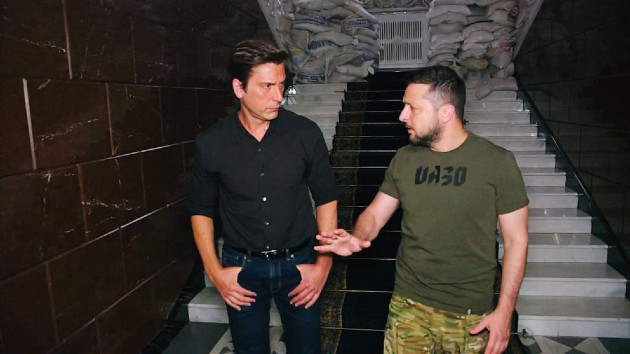
(KYIV, Ukraine) — In an exclusive interview with ABC’s World News Tonight anchor David Muir, Ukrainian President Volodymyr Zelenskyy indicated he’s not interested in negotiating with Russia to end Moscow’s invasion.
“It’s a question of dialogue with terrorists. We cannot — you cannot discuss anything with terrorists. The majority of the world — majority of the countries — understand that we are dealing with a terrorist state after what they’ve done to our people, to civilian people,” Zelenskyy said.
Zelenskyy cited suspected instances of rape and torture by Russian troops in areas outside of Kyiv during a retreat earlier this year. Images of tortured and bound bodies littered across neighborhoods like Bucha spread across the world.
“After rapes, after tortures, after murders, after we discovered a lot of dead bodies … it’s not a war, it’s pure and clear terrorism, which Russia is doing against our nation and occupation of our land,” the Ukrainian president said. “So, we cannot have any compromises with terrorists. We cannot have any dialogue with the terrorists.”
When pressed by Muir over the alleged atrocities, Zelenskyy said Putin was a war criminal and should be prosecuted.
“As any civilized person, any civilized man, I think that those responsible should not just go to hell, no, they should have fair trials — fair, independent trials,” Zelenskyy said.
The comments come as Ukraine wages a counteroffensive to regain territory in the southern and eastern parts of the country that were lost to Russia.
The main counteroffensive is focused around the port city of Kherson, which was the first major city Russia conquered in its invasion. However, Zelenskyy hinted to Muir that more than one counteroffensive is taking place.
“I won’t say that it’s only counteroffensive in Kherson. … There is a direction or directions — plural — and we have to move forward,” he said.
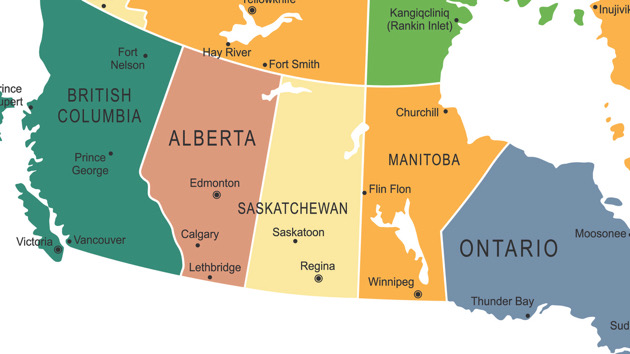
(SASKATCHEWAN, Canada) — Two suspects in a Canada stabbing rampage that left 10 people dead and 15 injured in an Indigenous community in Saskatchewan remained on the run Monday morning as a massive search for them continued into its second day, authorities said.
Royal Canadian Mounted Police Saskatchewan identified Damien Sanderson and Myles Sanderson as the two suspects in the massacre. They are believed to be driving a black Nissan Rogue with SK license plate 119 MPI, according to police.
“Let me be clear, we are still looking for the two suspects. We are asking residents across Saskatchewan and our neighboring provinces to be vigilant. At this stage in our investigation, we believe some of the victims have been targeted by the suspects and others have been attacked randomly,” Assistant Commissioner Rhonda Blackmore, the commanding officer of Saskatchewan RCMP, said in a statement issued late Sunday night.
The Sandersons, whose relationship to each other was not immediately disclosed, are considered armed and dangerous, and Blackmore advised anyone who spots them to call police immediately and refrain from approaching them.
The stabbings occurred between James Smith Cree Nation and in the village of Weldon, located northeast of Saskatoon, police said.
Blackmore said the massacre started around 5:40 a.m. Sunday when the Saskatchewan RCMP Divisional Operational Communications Center received the first call reporting a stabbing on the James Smith Cree Nation. Blackmore said numerous calls began coming into the center from multiple locations.
“At this point in our investigation, we have located 10 deceased individuals and are investigating 13 locations in the communities of the James Smith Cree Nation and Weldon in Saskatchewan,” Blackmore said.
A motive for the attacks remains under investigation.
Canadian Prime Minister Justin Trudeau issued a statement Sunday, saying, “I am shocked and devastated by the horrific attacks today in James Smith Cree Nation and Weldon, Saskatchewan, that claimed the lives of 10 people and injured many more.”
“As Canadians, we mourn with everyone affected by this tragic violence, and with the people of Saskatchewan. We also wish a full and quick recovery to those injured,” he said.
(LONDON) — The United Kingdom’s Conservative Party announced Monday that it has selected Liz Truss as its new leader, putting her in line to be confirmed as the country’s prime minister.
Truss beat rival Rishi Sunak in a leadership election, in which only the 180,000 dues-paying members of the ruling party were allowed to vote. Britain’s Queen Elizabeth II is scheduled to formally name Truss as prime minister on Tuesday.
In a speech following her victory, Truss said it was an “honor” to be elected and paid tribute to her “friend” Boris Johnson, whom she will be succeeding. She will become the U.K.’s fourth prime minister since 2016 and the country’s third female premier ever.
Truss previously served as the foreign secretary under Johnson’s Rishi Sunak, the former chancellor of the exchequer whose resignation helped bring about Johnson’s downfall in July.
Members of the Conservative Party cast their votes after eight weeks of campaigning, with Truss — a supporter of Johnson’s who said she did not back his resignation — emerging as the overwhelming favorite.
The leadership campaign was dominated by questions about what both candidates would do to tackle a looming economic crisis, with household energy bills set to skyrocket this winter and inflation, already at a four-decade high at 10.1%, is expected to rise further according to the Bank of England. The leadership hopefuls clashed most fiercely on the issue of tax, with Truss saying she would not raise taxes, while Sunak has supported a windfall tax on energy companies’ profits to help ease the burden on households.
Truss has promised action on the energy crisis within a week of taking office, though she has not spelled out her plans in any detail and refused to elaborate when questioned by the BBC on Sunday.
Truss will also have the task of uniting a divided Conservative Party. Johnson’s tenure in office was dogged by scandal – most notably with the issue of ‘Partygate’ – the illegal gatherings held in government residences while the country was under lockdown. While his supporters will remember him for securing a huge election victory, Brexit and support for Ukraine, his detractors say Johnson’s conduct and flexible relationship with the truth damaged the Conservative Party brand.
Writing in the Sunday Telegraph, the leader of the opposition Labour Party, Sir Keir Starmer, said that the appointment of a fourth Conservative prime minister in recent years did not mark a “new dawn” for Britain.
“As summer turns to autumn, the shadows of crisis are lengthening, looming over the whole country,” he wrote. “There is no sign that either Rishi Sunak or Liz Truss have grasped the scale of what is facing us, let alone possesses the answers to it.”
Truss will not be formally installed as the new prime minister until Tuesday after Johnson formally submits his resignation to the Queen at Balmoral and his successor is then invited to form a government.
“It is clearly now the will of the parliamentary Conservative Party that there should be a new leader of that party and therefore a new prime minister,” Johnson said on the steps of Downing Street when he announced his resignation. “I want you to know how sad I am to be giving up the best job in the world… But them’s the breaks.”
(KYIV, Ukraine) — In an exclusive interview with ABC’s World News Tonight anchor David Muir, Ukrainian President Volodymyr Zelenskyy hinted of more counteroffensives as his country tries to turn the tide of war against Russia.
“It’s a very difficult war,” Zelenskyy told Muir from the presidential office in Kyiv. “We will regain our territory.”
You can watch more of David Muir’s full interview with Ukrainian President Volodymyr Zelenskyy on ABC’s Good Morning America and World News Tonight.
Last week, the Ukrainian military launched a long-awaited counteroffensive near the southern port city of Kherson, which Russian forces seized in early March. Kherson was the first major Ukrainian city to fall to the Russians amid the early days of the full-scale invasion, which began on Feb. 24. The counteroffensive there is one of the first for Ukrainian troops that have been largely on the defensive.
In his nightly video address on Sunday, the Ukrainian president said he had received “good reports” from his military commanders and head of intelligence. He thanks his troops for liberating a settlement in the eastern Donetsk region as well as two settlements in the south, and for advancing and regaining “certain heights” in an eastern area in the Lysychansk-Siversk direction.
Zelenskyy told Muir that Ukrainians “need to, step-by-step, de-occupy our territory.”
“This task is difficult and it doesn’t only depend on us, but I’m sure that is what will happen,” he added. “It’s only matter of time.”
When asked why the Ukrainian military decided to launch the counteroffensive in the Kherson region at this time, Zelenskyy told Muir: “I won’t say that it’s only counteroffensive in Kherson … There is a direction or directions — plural — and we have to move forward.”
Asked to clarify that the Kherson counteroffensive is not the only one underway in Ukraine, Zelenskyy said he “can’t discuss details of any military actions.”
“I want that the enemy gets some surprises from us,” he added.
Muir pressed: “So what you are telling me, more than six months into this war, is that you will cede no Ukrainian territory — that is not on the table?”
(NEW YORK) — Vlad Buryak, 17, was traveling in a car on the morning of April 8 and stopped at a Russian checkpoint. Within hours, he would end up in a Russian prison.
Russian soldiers had seen his cellphone and accused him of filming him, he told ABC News’ Britt Clennett during an interview held over Zoom. They took his phone and while checking his photos and social media, they found a pro-Ukrainian Telegram group.
The soldiers were furious, he said, and threatened to kill him on the spot. Instead, he was taken to a filtration camp and then to a prison where he would spend 48 days before eventually being released.
Thousands of Ukrainians have reportedly been held as prisoners of war and hundreds of thousands have been forcibly deported from the country through so-called filtration camps.
The experience of children during the war, which has stretched over six months, has been uniquely traumatic and provides a chilling portrait into the painful reality on the ground in Ukraine.
The U.N. estimates that nearly 1,000 children have been killed or injured during the conflict and more than 5 million Ukrainian children, both inside the country and living as refugees, are in need of humanitarian aid.
The prison he was put into “so awful and so difficult,” he said, adding that hearing constant cries of “help me” and “don’t beat me” breaks you inside.
His job was to wash floors, cleaning rooms that had been used for torture “three or four days a week,” he said.
He helped pass information between prisoners, written on small bits of paper which they would try to smuggle outside the prison walls to family members.
He wasn’t beaten, but watched other gets beaten and tortured. Although he noticed everything going on around him, he tried to be invisible he said, focusing on his work. He didn’t want the Russian soldiers to know how much he was seeing.
During the interview with ABC News, he admitted that he had probably blocked out many aspects of his time in prison. “If you see awful things, your brain forgets it.” If he dwells on the past too much, “I can have problem in my head,” he said, “and I don’t want to have [that].”
So, he said, “I prefer to not think about this.”
It was very difficult to maintain his psychological health in prison, he said. If you show emotion, there was the fear of being beaten and tortured, and of never being released, he said.
“If you begin crying, if you begin to be angry with these Russian soldiers, these Russian soldiers can kill you or torture you.”
To keep himself mentally sane, he would talk to himself. “I think about what I do when I have freedom. What I do after prison, what I do with my family, how I visit my friends, how I go to the café, how I go to McDonalds,” he said.
After 48 days, he was finally reunited with his father.
“You can’t explain this emotion,” he said, displaying maturity beyond his years. “This emotion you can only feel.”
(SAN DIEGO, Calif.) — A former Marine arrested in El Salvador earlier this week for the 2016 murder of his girlfriend was ordered held without bail during an arraignment hearing in California on Friday.
Raymond McLeod was taken into custody on Monday following a yearslong manhunt. He was charged with the murder of his girlfriend, 30-year-old Krystal Mitchell, who was found strangled to death at a friend’s apartment in San Diego on June 10, 2016.
“This week, this defendant’s brazen attempt to evade justice was over,” San Diego County District Attorney Summer Stephan said during a press briefing following the arraignment. “The work to hold him accountable has begun.”
McLeod, 37, pleaded not guilty to the charge of murder during his arraignment hearing, San Diego ABC affiliate KGTV reported. A preliminary hearing has been scheduled for Jan. 26, 2023. He faces 25 years to life in prison if convicted, the district attorney said.
Mitchell’s mother, Josephine Funes Wentzel, a former police detective, was instrumental in the search for McLeod by helping generate leads and spreading the word about the manhunt on social media, the district attorney’s office said.
“He’s not going to get away again. He’s never going to be released from that jail if I could have something to do with that,” Wentzel, who was in the courtroom Friday, told reporters after the arraignment hearing. “I will be satisfied when he is convicted for brutally murdering my daughter, and that he is sentenced to life in prison.”
The couple, from Phoenix, was in San Diego to visit friends when Mitchell was killed. McLeod was seen assaulting Mitchell in the hours before she was found dead from a “violent” strangulation, Stephan said. McLeod, the last person with whom Mitchell was seen alive, then fled to Mexico, Stephan said.
McLeod was believed to have also been in Belize, Guatemala and, for the past two-and-a-half years, El Salvador, Chief Deputy U.S. Marshal Joseph O’Callahan told reporters during Friday’s briefing.
“He really laid low,” O’Callahan said, noting the former Marine may have relied on training in “clandestine operations.”
Then, on Aug. 20, the U.S. Marshals Service received a promising tip that someone resembling McLeod may be working as an English instructor at a school in Sonsonate, El Salvador, O’Callahan said.
A week later, U.S. Marshals traveled to El Salvador and “determined the individual inside the school was, in fact, Mr. McLeod, going by the name of Jack Donovan,” he said.
McLeod, previously described by the U.S. Marshals as an “avid bodybuilder,” is believed to have taken the name of a bodybuilder in Canada who resembled him and “was able to run with that identity,” O’Callahan said.
El Salvadorian law enforcement officials took McLeod into custody on Monday and he was deported back to the U.S. the following day.
McLeod was added to the U.S. Marshals’ 15 Most Wanted List in 2021 and a reward of up to $50,000 was being offered for information leading to his capture. O’Callahan said the U.S. Marshals plan to pay the reward but did not share further details.
Vyacheslav Madiyevskyi/ Ukrinform/Future Publishing via Getty Images
(NEW YORK) — Russian President Vladimir Putin’s “special military operation” into neighboring Ukraine began on Feb. 24, with Russian forces invading from Belarus, to the north, and Russia, to the east. Ukrainian troops have offered “stiff resistance,” according to U.S. officials.
The Russian military has since launched a full-scale ground offensive in eastern Ukraine’s disputed Donbas region, capturing the strategic port city of Mariupol and securing a coastal corridor to the Moscow-annexed Crimean Peninsula.
Here’s how the news is developing. All times Eastern:
Sep 01, 1:16 PM EDT
Part of IAEA mission leaves Zaporizhzhia power plant: Report
Several experts with the United Nations’ nuclear watchdog have left the Zaporizhzhia power plant, according to Russian news agency Interfax.
Four out of the nine vehicles that arrived earlier Thursday as part of the International Atomic Energy Agency convoy left at 2:15 p.m. local time after about four hours at the plant, according to an Interfax reporter on the ground at the Ukrainian facility.
IAEA Director General Rafael Grossi, who is leading the mission, was among those to leave, while some experts remained behind and will stay at the plant, according to Interfax.
Ukraine’s nuclear regulator, Energoatom, also confirmed Thursday that the majority of the IAEA mission has left the power plant, including Grossi, and that five experts stayed behind to unload equipment brought to the plant.
The IAEA team is expected to remain at the plant through Sept. 3, Energoatom said in an update posted to Telegram.
In a video statement posted to Twitter, Grossi said he completed a first tour of “key areas” at the plant on Thursday.
“Of course there’s a lot more to do,” he said. “My team is staying on, and more importantly and most importantly, we are establishing a continued presence … from the IAEA here.”
-ABC News’ Natalia Shumskaia and Fidel Pavlenko
Sep 01, 12:44 PM EDT
NYC apartment of Russian oligarch searched by federal agents: Sources
Federal agents searched the New York City apartment of Russian billionaire Viktor Vekselberg on Thursday, law enforcement sources told ABC News.
The oligarch’s Park Avenue apartment was searched by federal agents with the FBI and Homeland Security Investigations, the main investigative arm of the U.S. Department of Homeland Security, the sources said.
An address in East Hampton associated with Vekselberg is also being searched as part of court-authorized activity involving the Justice Department’s KleptoCapture task force, according to sources.
The task force has been seizing assets of Russian businessmen associated with Russian President Vladimir Putin over suspected violations of U.S. sanctions following the invasion of Ukraine.
The task force is trying to find yachts, airplanes and other moveable property before the oligarchs can transport them to jurisdictions where it might be more difficult for U.S. authorities to investigate.
In April, Spanish authorities seized Vekselberg’s $90 million yacht in the port of Palma de Mallorca at the request of the Justice Department.
Vekselberg was among the oligarchs previously sanctioned by the U.S. after Russia invaded Crimea in 2018.
-ABC News’ Aaron Katersky
Sep 01, 9:46 AM EDT
New school year begins in Ukraine
Thursday marked the start of a new school year in Ukraine amid Russia’s ongoing war.
For many of Ukraine’s four million schoolchildren, their last day of school was the day before Russian forces invaded their country on Feb. 24. Since then, thousands of schools across Ukraine have been damaged or destroyed, with less than 60% of schools deemed safe and eligible to reopen by the Ukrainian government, according to the United Nations International Children’s Emergency Fund.
At least 379 children have been killed in Ukraine since the war with Russia began, while the whereabouts of 223 others are unknown and another 7,013 were among Ukrainians forcibly transferred to Russia from Russian-occupied areas, according to the Ukrainian Prosecutor General’s Office. And as of July 31, an estimated 650,000 Ukrainian children living as refugees in 12 host countries were still not enrolled in national education systems, according to UNICEF.
UNICEF is working with the Ukrainian government to help get the country’s schoolchildren back to learning, in classrooms when it is deemed safe, and through online or community-based alternatives if in-person is not possible. Some 760,000 children have received formal or non-formal education since the start of the war. More than 1.7 million children and caregivers have benefited from UNICEF-supported mental health and psychosocial support interventions, the agency said in a press release Thursday.
On the first day of Ukraine’s academic year, UNICEF Executive Director Catherine Russell visited a rehabilitated primary school damaged during the early weeks of war. Only 300 students can attend at any one time due to the capacity of the school’s bomb shelter, a mere 14% of the school’s pre-war capacity, according to UNICEF.
“The new school year should be a time of excitement and promise, as children re-enter the classroom and share stories of their summer with friends and teachers,” Russell said in a statement Thursday. “Yet, for four million children in Ukraine, the mood is one of trepidation. Children are returning to schools — many of which have been damaged during the war — with stories of destruction, uncertain if their teachers and friends will be there to welcome them. Many parents are hesitating to send their children to school, not knowing if they will be safe.”
Sep 01, 8:40 AM EDT
IAEA mission arrives at Zaporzhzhia nuclear power plant
A high-stakes mission from the United Nations’ nuclear watchdog reached a Russian-controlled power plant in Ukraine on Thursday afternoon amid reports of heavy fighting there.
The International Atomic Energy Agency has long sought access to the Zaporizhzhia nuclear power plant, Europe’s largest, since invading Russian troops overran the site and the surrounding town of Enerhodar in southeastern Ukraine in early March. The Ukrainian workers have been left in place to keep the plant operating, as it supplies electricity across the war-torn country, but the site is now on the frontline between Russian-occupied and Ukrainian-controlled territory. Moscow and Kyiv have traded accusations of shelling at or near the plant in recent days and weeks, fueling fears that the conflict could spark a radiation disaster.
IAEA’s Rafael Grossi, who is leading a team of over a dozen experts sent to inspect the besieged plant, said earlier Thursday that they were “aware” of the high risk posed by the “increased military activity in the area” between Russian and Ukrainian forces.
“There has been increased military activity, including this morning, until very recently, a few minutes ago. I have been briefed by the Ukrainian regional military commander here about that and the inherent risks,” Grossi told reporters as he and his team left their hotel in the city of Zaporizhzhia, north of Enerhodar, across the Dnipro River.
“But, weighing the pros and cons, and having come so far, we are not stopping,” he added. “We are moving now.”
A few hours later, the IAEA announced via Twitter that its “Support and Assistance Mission … has just arrived at Zaporizhzhya Nuclear Power Plant to conduct indispensable nuclear safety and security and safeguards activities.”
Aug 31, 10:45 AM EDT
IAEA mission arrives in Zaporizhzhia
A long-awaited expert mission from the United Nations’ nuclear watchdog arrived in the southeastern Ukrainian city of Zaporizhzhia on Wednesday.
The International Atomic Energy Agency’s team will travel to the Zaporizhzhia nuclear power plant near the town of Enerhodar on Thursday for the first time.
IAEA Director General Rafael Grossi, who is leading the mission, told reporters during a press briefing in Zaporizhzhia on Wednesday that the aim is for his team to establish a permanent presence at the Russian-occupied plant and that the initial phase would take “days.”
When asked if it was possible to demilitarize the site, Grossi said it was “a matter of political will” and that his mission is to preserve Europe’s biggest nuclear power plant. He admitted it was “not a risk-free mission” and underlined that his team would be operating in Ukrainian sovereign territory but in cooperation with Russian forces.
Asked if he thought Russian troops would really give his team full access, Grossi told reporters the IAEA was on a “technical mission” and that he was confident his team could work “on both sides.”
Aug 30, 4:31 PM EDT
Blinken heralds arrival of first shipload of Ukrainian grain to drought-stricken Horn of Africa
Secretary of State Antony Blinken on Tuesday celebrated the first shipment of Ukrainian grain to arrive in the Horn of Africa — a region facing dire hunger — since Russia’s invasion began.
“The United States welcomes the arrival in Djibouti of 23,300 metric tons of Ukrainian grain aboard the ship Brave Commander. This grain will be distributed within Ethiopia and Somalia, countries that are dangerously food insecure after four years of drought,” Blinken said in a statement.
This is the first shipload to reach the region since a United Nations-brokered deal that allowed ships to leave Ukraine’s ports again.
According to Ukrainian officials, dozens of ships have been able to safely navigate the Black Sea in recent weeks. But State Department officials have claimed Russian allies, like Syria, have unfairly benefitted from recent exports, proving detrimental to countries the World Food Programme has determined are facing a greater level of need.
-ABC News’ Shannon Crawford
Aug 30, 4:25 PM EDT
EU preemptively donates 5.5 million potassium iodide tablets to protect Ukrainians from potential radiation exposure
The European Commission said it received a request from the Ukrainian government on Friday for potassium iodide tablets as a preventative safety measure to increase the level of protection around the Zaporizhzhia nuclear power plant. The European Response Coordination Centre quickly mobilized 5.5 million potassium iodide tablets through the EU Civil Protection Mechanism for Ukraine, including 5 million from the rescEU emergency reserves and 500,000 from Austria.
“No nuclear power plant should ever be used as a war theatre,” EU Commissioner for Crisis Management Janez Lenarčič said. “It is unacceptable that civilian lives are put in danger. All military action around the Zaporizhzhia nuclear power plant must stop immediately.”
-ABC News’ Max Uzol
Aug 30, 2:15 PM EDT
Sens. Klobuchar, Portman meet with Zelenskyy in Ukraine
Sens. Amy Klobuchar, D-Minn., and Rob Portman, R-Ohio, met with Ukrainian President Volodymyr Zelenskyy and Defense Minister Oleksii Reznikov on a visit to the war-torn country.
“The support that the U.S. has given has been strongly bipartisan and we want that to continue,” Klobuchar told ABC News.
Portman noted the psychological advantage of Ukraine now making advances in Kherson, which was the first oblast taken by the Russians six months ago.
It shows that “even when the Russians are dug in, as they are in that region, that Ukrainians can make progress in an offensive,” he said. “And my hope is that we will continue to see that to the point that the Russians will finally come to the bargaining table and stop this illegal, totally unprovoked war on Ukraine.”
-ABC News’ Ibtissem Guenfoud
Aug 30, 11:07 AM EDT
Russian forces shelling corridors leading to nuclear plant, Ukraine says
Mykhailo Podolyak, a senior adviser to Ukrainian President Volodymyr Zelenskyy, said Russian forces are shelling corridors the International Atomic Energy Agency mission would take to reach the Zaporizhzhia power plant in southeastern Ukraine.
Podolyak said Russian forces are probably shelling the path to ensure the IAEA mission pass through Russian-controlled territory to reach the plant.
Aug 29, 4:38 PM EDT
Zelenskyy vows to reclaim all territory lost to Russian forces
Ukrainian President Volodymyr Zelenskyy on Monday vowed to reclaim all territory lost to Russian forces.
“Ukraine is returning its own. And it will return the Kharkiv region, Luhansk region, Donetsk region, Zaporizhzhia region, Kherson region, Crimea. Definitely our entire water area of the Black Sea and the Sea of Azov, from Zmiinyi Island to the Kerch Strait,” he said in his daily address. “This will happen. This is ours. And just as our society understands it, I want the occupiers to understand it, too. There will be no place for them on Ukrainian land.”
Zelenskyy said his message to Russian fighters is that if they want to survive, it’s time for them to flee or surrender.
“The occupiers should know, we will oust them to the border — to our border, the line of which has not changed. The invaders know it well,” he said. “If they want to survive, it is time for the Russian military to flee. Go home. If you are afraid to return to your home in Russia, well, let such occupiers surrender, and we will guarantee them compliance with all norms of the Geneva Conventions.”
Aug 29, 3:00 PM EDT
White House calls for controlled shutdown of Zaporizhzhia nuclear reactors, DMZ around plant
White House spokesman John Kirby said Monday that Russia should agree to a demilitarized zone around the Zaporizhzhia nuclear power plant and that a controlled shutdown of the reactors “would be the safest and least risky option in the near-term.”
Kirby also expressed support for the IAEA mission to the power plant.
“We fully support the International Atomic Energy Agency Director General Grossi’s expert mission to the power plant, and we are glad that the team is on its way to ascertain the safety, security and safeguards of the systems there, as well as to evaluate the staff’s working conditions,” he said. “Russia should ensure safe, unfettered access for these independent inspectors.”
-ABC News’ Ben Gittleson
Aug 29, 1:33 PM EDT
Ukrainian forces launch major counteroffensive
Ukrainian forces have launched a major counteroffensive in multiple directions in the southern part of Ukraine, Natalia Humeniuk, a spokesperson for Ukraine’s Operational Command, said Monday.
Humeniuk said the situation in the south remains “tense,” but controlled.
Ukrainians have been targeting strategic Russian command posts and slowly advancing toward Kherson for weeks. Kherson was first major city in the south to be captured by Russian forces following the invasion.
Russian military issued a statement confirming the offensive and claiming Ukraine sustained heavy losses.
Meanwhile, at least 12 missiles have struck Mykolaiv, which remains under Ukraine’s control in the south. Two people were killed and 24 were wounded, according to the governor of Mykolaiv Oblast.
-ABC News’ Max Uzol and Natalia Shumskaia
Aug 29, 12:47 PM EDT
Ukrainian official accused of treason is shot and killed
Oleksiy Kovalyov, a Ukrainian official who was accused of treason for openly collaborating with Russia, was shot and killed in his home on Sunday in Hola Prystan, Kherson Oblast, according to preliminary information from the Investigative Committee of Russia (SKR). An unidentified woman was also killed, SKR said.
Kovalyov was a Ukrainian lawmaker from President Volodymyr Zelenskyy’s party who was accused of treason; criminal proceedings were initiated by Ukraine’s State Bureau of Investigations in June. He is one of the highest-ranking Ukrainian defectors who fled to Kherson after the invasion and openly collaborated with Russia. He was appointed by the Russians as the deputy head of the Kherson Military-Civil Administration.
Aug 29, 12:19 PM EDT
IAEA says mission to Zaporizhzhia nuclear power plant ‘on its way’
The head of the United Nations’ nuclear watchdog announced Monday that the agency’s long-awaited expert mission to the Zaporizhzhia power plant in southeastern Ukraine “is now on its way.”
“The day has come,” Rafael Grossi, director general of the International Atomic Energy Agency, said in a post on Twitter.
Grossi, who is leading the IAEA’s “Support and Assistance Mission to Zaporizhzhia,” has long sought access to the nuclear power plant, which is the largest in Europe. Russia and Ukraine have traded accusations of shelling at or near the site in recent weeks, fueling fears that the fighting could cause a nuclear disaster.
“We must protect the safety and security of #Ukraine’s and Europe’s biggest nuclear facility,” Grossi tweeted, alongside a photo of himself with 13 other experts. “Proud to lead this mission which will be in #ZNPP later this week.”
Shortly after invading neighboring Ukraine on Feb. 24, Russian troops stormed the Zaporizhzhia nuclear power plant near the town of Enerhodar, on the banks of the Dnipro River in the country’s southeast. The Ukrainian workers have been left in place to keep the plant operating, as it supplies electricity across the war-torn nation.
Kremlin spokesperson Dmitry Peskov said the IAEA team will travel to the plant via Ukrainian-controlled territory, state-run TASS reported.
The area around the nuclear plant is controlled by Russian forces. Peskov said once the IAEA team enters Russian-controlled territory, all necessary security will be provided.
Aug 29, 2:21 AM EDT
IAEA says mission to Zaporizhzhia nuclear power plant ‘on its way’
The head of the United Nations’ nuclear watchdog announced Monday that the agency’s long-awaited expert mission to the Zaporizhzhia power plant in southeastern Ukraine “is now on its way.”
“The day has come,” Rafael Grossi, director general of the International Atomic Energy Agency, said in a post on Twitter.
Grossi, who is leading the IAEA’s “Support and Assistance Mission to Zaporizhzhia,” has long sought access to the nuclear power plant, which is the largest in Europe. Russia and Ukraine have traded accusations of shelling at or near the site in recent weeks, fueling fears that the fighting could cause a nuclear disaster.
“We must protect the safety and security of #Ukraine’s and Europe’s biggest nuclear facility,” Grossi tweeted, alongside a photo of himself with 13 other experts. “Proud to lead this mission which will be in #ZNPP later this week.”
Shortly after invading neighboring Ukraine on Feb. 24, Russian troops stormed the Zaporizhzhia nuclear power plant near the town of Enerhodar, on the banks of the Dnipro River in the country’s southeast. The Ukrainian workers have been left in place to keep the plant operating, as it supplies electricity across the war-torn nation.
(NEW YORK) — A high-stakes mission from the United Nations’ nuclear watchdog reached a Russian-controlled power plant in Ukraine on Thursday afternoon amid reports of heavy fighting there.
The International Atomic Energy Agency has long sought access to the Zaporizhzhia nuclear power plant, Europe’s largest, since invading Russian troops overran the site and the surrounding town of Enerhodar in southeastern Ukraine in early March. The Ukrainian workers have been left in place to keep the plant operating, as it supplies electricity across the war-torn country, but the site is now on the frontline between Russian-occupied and Ukrainian-controlled territory. Moscow and Kyiv have traded accusations of shelling at or near the plant in recent days and weeks, fueling fears that the conflict could spark a radiation disaster.
IAEA’s Rafael Grossi, who is leading a team of over a dozen experts sent to inspect the besieged plant, said earlier Thursday that they were “aware” of the high risk posed by the “increased military activity in the area” between Russian and Ukrainian forces.
“There has been increased military activity, including this morning, until very recently, a few minutes ago. I have been briefed by the Ukrainian regional military commander here about that and the inherent risks,” Grossi told reporters as he and his team left their hotel in the city of Zaporizhzhia, north of Enerhodar, across the Dnipro River.
“But, weighing the pros and cons, and having come so far, we are not stopping,” he added. “We are moving now.”
While acknowledging the risks, Grossi said his team had the “minimum conditions” to forge on with the final and dangerous leg of their journey. He told reporters to “wish us luck.”
“We know that there is an area, as you know, the so-called grey zone, where the last line of the Ukrainian defense comes, and before the first line of the Russian occupying forces begins, where the risks are significant,” he said. “At the same time, we consider that we have the minimum conditions to move, accepting that the risks are very, very high. Still, myself and the team, we believe that we can proceed with this. We have a very important mission to accomplish.”
Upon arrival, the team plans to immediately start “an assessment of the security and the safety situation at the plant, as it is right now,” according to Grossi.
“We are going to be liaising and consulting with the staff at the facility. And I am going to consider the possibility of establishing a continued presence of the IAEA at the plant, which we believe is indispensable to stabilize the situation and to get regular, reliable, impartial, neutral updates of what the situation is there,” he added. “It’s very important that the world knows what’s happening here.”
A few hours later, the IAEA announced via Twitter that its “Support and Assistance Mission … has just arrived at Zaporizhzhya Nuclear Power Plant to conduct indispensable nuclear safety and security and safeguards activities.”
Grossi and his team landed in Kyiv earlier this week, where they met with with Ukrainian President Volodymyr Zelensky, before making their way to the Zaporizhzhia region in a convoy of U.N.-marked vehicles.
When asked by reporters on Wednesday if it was possible to demilitarize the plant, Grossi said it was “a matter of political will” and that his mission is to preserve the biggest nuclear power station in both Ukraine and Europe. He emphasized that his team would be operating in Ukrainian sovereign territory but in cooperation with Russian forces.
Asked if he thought Russian troops would really give his team full access, Grossi told reporters the IAEA was on a “technical mission” and that he was confident they could work “on both sides.”
Vyacheslav Madiyevskyi/ Ukrinform/Future Publishing via Getty Images
(NEW YORK) — Russian President Vladimir Putin’s “special military operation” into neighboring Ukraine began on Feb. 24, with Russian forces invading from Belarus, to the north, and Russia, to the east. Ukrainian troops have offered “stiff resistance,” according to U.S. officials.
The Russian military has since launched a full-scale ground offensive in eastern Ukraine’s disputed Donbas region, capturing the strategic port city of Mariupol and securing a coastal corridor to the Moscow-annexed Crimean Peninsula.
Here’s how the news is developing. All times Eastern:
Sep 01, 8:40 AM EDT
IAEA mission arrives at Zaporzhzhia nuclear power plant
A high-stakes mission from the United Nations’ nuclear watchdog reached a Russian-controlled power plant in Ukraine on Thursday afternoon amid reports of heavy fighting there.
The International Atomic Energy Agency has long sought access to the Zaporizhzhia nuclear power plant, Europe’s largest, since invading Russian troops overran the site and the surrounding town of Enerhodar in southeastern Ukraine in early March. The Ukrainian workers have been left in place to keep the plant operating, as it supplies electricity across the war-torn country, but the site is now on the frontline between Russian-occupied and Ukrainian-controlled territory. Moscow and Kyiv have traded accusations of shelling at or near the plant in recent days and weeks, fueling fears that the conflict could spark a radiation disaster.
IAEA’s Rafael Grossi, who is leading a team of over a dozen experts sent to inspect the besieged plant, said earlier Thursday that they were “aware” of the high risk posed by the “increased military activity in the area” between Russian and Ukrainian forces.
“There has been increased military activity, including this morning, until very recently, a few minutes ago. I have been briefed by the Ukrainian regional military commander here about that and the inherent risks,” Grossi told reporters as he and his team left their hotel in the city of Zaporizhzhia, north of Enerhodar, across the Dnipro River.
“But, weighing the pros and cons, and having come so far, we are not stopping,” he added. “We are moving now.”
A few hours later, the IAEA announced via Twitter that its “Support and Assistance Mission … has just arrived at Zaporizhzhya Nuclear Power Plant to conduct indispensable nuclear safety and security and safeguards activities.”
Aug 31, 10:45 AM EDT
IAEA mission arrives in Zaporizhzhia
A long-awaited expert mission from the United Nations’ nuclear watchdog arrived in the southeastern Ukrainian city of Zaporizhzhia on Wednesday.
The International Atomic Energy Agency’s team will travel to the Zaporizhzhia nuclear power plant near the town of Enerhodar on Thursday for the first time.
IAEA Director General Rafael Grossi, who is leading the mission, told reporters during a press briefing in Zaporizhzhia on Wednesday that the aim is for his team to establish a permanent presence at the Russian-occupied plant and that the initial phase would take “days.”
When asked if it was possible to demilitarize the site, Grossi said it was “a matter of political will” and that his mission is to preserve Europe’s biggest nuclear power plant. He admitted it was “not a risk-free mission” and underlined that his team would be operating in Ukrainian sovereign territory but in cooperation with Russian forces.
Asked if he thought Russian troops would really give his team full access, Grossi told reporters the IAEA was on a “technical mission” and that he was confident his team could work “on both sides.”
Aug 30, 4:31 PM EDT
Blinken heralds arrival of first shipload of Ukrainian grain to drought-stricken Horn of Africa
Secretary of State Antony Blinken on Tuesday celebrated the first shipment of Ukrainian grain to arrive in the Horn of Africa — a region facing dire hunger — since Russia’s invasion began.
“The United States welcomes the arrival in Djibouti of 23,300 metric tons of Ukrainian grain aboard the ship Brave Commander. This grain will be distributed within Ethiopia and Somalia, countries that are dangerously food insecure after four years of drought,” Blinken said in a statement.
This is the first shipload to reach the region since a United Nations-brokered deal that allowed ships to leave Ukraine’s ports again.
According to Ukrainian officials, dozens of ships have been able to safely navigate the Black Sea in recent weeks. But State Department officials have claimed Russian allies, like Syria, have unfairly benefitted from recent exports, proving detrimental to countries the World Food Programme has determined are facing a greater level of need.
-ABC News’ Shannon Crawford
Aug 30, 4:25 PM EDT
EU preemptively donates 5.5 million potassium iodide tablets to protect Ukrainians from potential radiation exposure
The European Commission said it received a request from the Ukrainian government on Friday for potassium iodide tablets as a preventative safety measure to increase the level of protection around the Zaporizhzhia nuclear power plant. The European Response Coordination Centre quickly mobilized 5.5 million potassium iodide tablets through the EU Civil Protection Mechanism for Ukraine, including 5 million from the rescEU emergency reserves and 500,000 from Austria.
“No nuclear power plant should ever be used as a war theatre,” EU Commissioner for Crisis Management Janez Lenarčič said. “It is unacceptable that civilian lives are put in danger. All military action around the Zaporizhzhia nuclear power plant must stop immediately.”
-ABC News’ Max Uzol
Aug 30, 2:15 PM EDT
Sens. Klobuchar, Portman meet with Zelenskyy in Ukraine
Sens. Amy Klobuchar, D-Minn., and Rob Portman, R-Ohio, met with Ukrainian President Volodymyr Zelenskyy and Defense Minister Oleksii Reznikov on a visit to the war-torn country.
“The support that the U.S. has given has been strongly bipartisan and we want that to continue,” Klobuchar told ABC News.
Portman noted the psychological advantage of Ukraine now making advances in Kherson, which was the first oblast taken by the Russians six months ago.
It shows that “even when the Russians are dug in, as they are in that region, that Ukrainians can make progress in an offensive,” he said. “And my hope is that we will continue to see that to the point that the Russians will finally come to the bargaining table and stop this illegal, totally unprovoked war on Ukraine.”
-ABC News’ Ibtissem Guenfoud
Aug 30, 11:07 AM EDT
Russian forces shelling corridors leading to nuclear plant, Ukraine says
Mykhailo Podolyak, a senior adviser to Ukrainian President Volodymyr Zelenskyy, said Russian forces are shelling corridors the International Atomic Energy Agency mission would take to reach the Zaporizhzhia power plant in southeastern Ukraine.
Podolyak said Russian forces are probably shelling the path to ensure the IAEA mission pass through Russian-controlled territory to reach the plant.
Aug 29, 4:38 PM EDT
Zelenskyy vows to reclaim all territory lost to Russian forces
Ukrainian President Volodymyr Zelenskyy on Monday vowed to reclaim all territory lost to Russian forces.
“Ukraine is returning its own. And it will return the Kharkiv region, Luhansk region, Donetsk region, Zaporizhzhia region, Kherson region, Crimea. Definitely our entire water area of the Black Sea and the Sea of Azov, from Zmiinyi Island to the Kerch Strait,” he said in his daily address. “This will happen. This is ours. And just as our society understands it, I want the occupiers to understand it, too. There will be no place for them on Ukrainian land.”
Zelenskyy said his message to Russian fighters is that if they want to survive, it’s time for them to flee or surrender.
“The occupiers should know, we will oust them to the border — to our border, the line of which has not changed. The invaders know it well,” he said. “If they want to survive, it is time for the Russian military to flee. Go home. If you are afraid to return to your home in Russia, well, let such occupiers surrender, and we will guarantee them compliance with all norms of the Geneva Conventions.”
Aug 29, 3:00 PM EDT
White House calls for controlled shutdown of Zaporizhzhia nuclear reactors, DMZ around plant
White House spokesman John Kirby said Monday that Russia should agree to a demilitarized zone around the Zaporizhzhia nuclear power plant and that a controlled shutdown of the reactors “would be the safest and least risky option in the near-term.”
Kirby also expressed support for the IAEA mission to the power plant.
“We fully support the International Atomic Energy Agency Director General Grossi’s expert mission to the power plant, and we are glad that the team is on its way to ascertain the safety, security and safeguards of the systems there, as well as to evaluate the staff’s working conditions,” he said. “Russia should ensure safe, unfettered access for these independent inspectors.”
-ABC News’ Ben Gittleson
Aug 29, 1:33 PM EDT
Ukrainian forces launch major counteroffensive
Ukrainian forces have launched a major counteroffensive in multiple directions in the southern part of Ukraine, Natalia Humeniuk, a spokesperson for Ukraine’s Operational Command, said Monday.
Humeniuk said the situation in the south remains “tense,” but controlled.
Ukrainians have been targeting strategic Russian command posts and slowly advancing toward Kherson for weeks. Kherson was first major city in the south to be captured by Russian forces following the invasion.
Russian military issued a statement confirming the offensive and claiming Ukraine sustained heavy losses.
Meanwhile, at least 12 missiles have struck Mykolaiv, which remains under Ukraine’s control in the south. Two people were killed and 24 were wounded, according to the governor of Mykolaiv Oblast.
-ABC News’ Max Uzol and Natalia Shumskaia
Aug 29, 12:47 PM EDT
Ukrainian official accused of treason is shot and killed
Oleksiy Kovalyov, a Ukrainian official who was accused of treason for openly collaborating with Russia, was shot and killed in his home on Sunday in Hola Prystan, Kherson Oblast, according to preliminary information from the Investigative Committee of Russia (SKR). An unidentified woman was also killed, SKR said.
Kovalyov was a Ukrainian lawmaker from President Volodymyr Zelenskyy’s party who was accused of treason; criminal proceedings were initiated by Ukraine’s State Bureau of Investigations in June. He is one of the highest-ranking Ukrainian defectors who fled to Kherson after the invasion and openly collaborated with Russia. He was appointed by the Russians as the deputy head of the Kherson Military-Civil Administration.
Aug 29, 12:19 PM EDT
IAEA says mission to Zaporizhzhia nuclear power plant ‘on its way’
The head of the United Nations’ nuclear watchdog announced Monday that the agency’s long-awaited expert mission to the Zaporizhzhia power plant in southeastern Ukraine “is now on its way.”
“The day has come,” Rafael Grossi, director general of the International Atomic Energy Agency, said in a post on Twitter.
Grossi, who is leading the IAEA’s “Support and Assistance Mission to Zaporizhzhia,” has long sought access to the nuclear power plant, which is the largest in Europe. Russia and Ukraine have traded accusations of shelling at or near the site in recent weeks, fueling fears that the fighting could cause a nuclear disaster.
“We must protect the safety and security of #Ukraine’s and Europe’s biggest nuclear facility,” Grossi tweeted, alongside a photo of himself with 13 other experts. “Proud to lead this mission which will be in #ZNPP later this week.”
Shortly after invading neighboring Ukraine on Feb. 24, Russian troops stormed the Zaporizhzhia nuclear power plant near the town of Enerhodar, on the banks of the Dnipro River in the country’s southeast. The Ukrainian workers have been left in place to keep the plant operating, as it supplies electricity across the war-torn nation.
Kremlin spokesperson Dmitry Peskov said the IAEA team will travel to the plant via Ukrainian-controlled territory, state-run TASS reported.
The area around the nuclear plant is controlled by Russian forces. Peskov said once the IAEA team enters Russian-controlled territory, all necessary security will be provided.
Aug 29, 2:21 AM EDT
IAEA says mission to Zaporizhzhia nuclear power plant ‘on its way’
The head of the United Nations’ nuclear watchdog announced Monday that the agency’s long-awaited expert mission to the Zaporizhzhia power plant in southeastern Ukraine “is now on its way.”
“The day has come,” Rafael Grossi, director general of the International Atomic Energy Agency, said in a post on Twitter.
Grossi, who is leading the IAEA’s “Support and Assistance Mission to Zaporizhzhia,” has long sought access to the nuclear power plant, which is the largest in Europe. Russia and Ukraine have traded accusations of shelling at or near the site in recent weeks, fueling fears that the fighting could cause a nuclear disaster.
“We must protect the safety and security of #Ukraine’s and Europe’s biggest nuclear facility,” Grossi tweeted, alongside a photo of himself with 13 other experts. “Proud to lead this mission which will be in #ZNPP later this week.”
Shortly after invading neighboring Ukraine on Feb. 24, Russian troops stormed the Zaporizhzhia nuclear power plant near the town of Enerhodar, on the banks of the Dnipro River in the country’s southeast. The Ukrainian workers have been left in place to keep the plant operating, as it supplies electricity across the war-torn nation.