
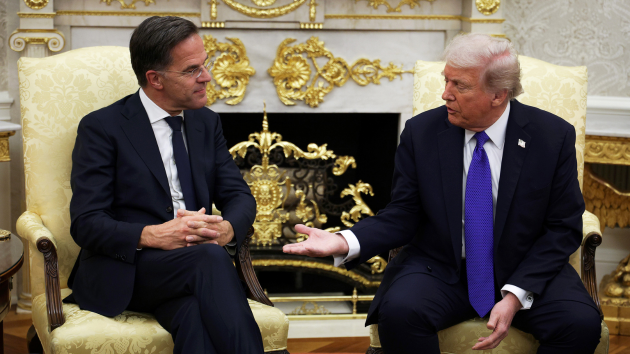
NATO aircraft scrambled amid overnight Russian drone strikes on Ukraine

NATO aircraft scrambled amid overnight Russian drone strikes on Ukraine
Andriy Mikheev/Suspilne Ukraine/JSC “UA:PBC”/Global Images Ukraine via Getty Images

(LONDON) — Two German fighter jets were scrambled to the Romanian-Ukrainian border on Tuesday night in response to a Russian drone attack in the frontier region, Romania’s Defense Ministry said in a statement.

Ukraine’s air force said Russia launched 93 drones and two ballistic missiles into the country overnight, of which 62 drones and one missile were shot down or suppressed. The air force reported drone and missile impacts across 20 locations.

Oleg Kiper, the head of the regional Odesa administration, said drones hit infrastructure and production facilities in the city of Izmail on the Danube river, at the border with Romania — a NATO member.

Fires broke out at the site of the attacks and at least one person was injured, Kiper said.

The attack prompted the scrambling of two German Air Force Typhoon fighters “to monitor the air situation in the border area with Ukraine, in the north of Tulcea County,” Romania’s Defense Ministry said in a statement posted to social media.

The German aircraft are currently deployed to Romania as part of NATO’s Enhanced Air Policing missions, which were introduced along the bloc’s eastern flank after Russia’s seizure of Crimea and parts of eastern Ukraine in 2014.

Romania’s “aerial surveillance system” identified “groups of drones launched by the Russian Federation that attacked Ukrainian ports on the Danube,” the ministry said. “During the mission, there were no penetrations of aircraft in the national airspace.”

Allied aircraft are often scrambled in NATO nations like Poland and Romania in response to Russian long-range attacks in Ukraine, which regularly target locations along Ukraine’s border with its NATO neighbors.

During previous attacks, Russian drones and missiles have entered NATO airspace. Crashed Russian munitions or fragments of them have been found in Romania, Lithuania and Latvia. Russian missile fragments have also been found in Moldova, which borders Ukraine to the southwest but is not a NATO state. NATO member Poland has also reported several violations of its airspace by Russian missiles and drones.

Russia’s Defense Ministry, meanwhile, said its forces shot down at least 42 Ukrainian drones overnight into Wednesday morning.

Temporary restrictions in flights were introduced at airports in Volgograd, Saratov, Samara, Tambov and Nizhny Novgorod during the overnight strikes, Russia’s federal air agency Rosaviatsiya said.

Copyright © 2025, ABC Audio. All rights reserved.
Russia launches largest attack of August on Ukraine after Trump-Zelenskyy meeting

Russia launches largest attack of August on Ukraine after Trump-Zelenskyy meeting
Anna Moneymaker/Getty Images

(LONDON) — Ukraine’s air force reported a major Russian attack on Monday night and into Tuesday morning — the largest overnight barrage for weeks, coming while Ukrainian President Volodymyr Zelenskyy met with President Donald Trump and a delegation of European leaders in Washington.

The air force said Russia launched 270 drones and 10 missiles into Ukraine, of which 30 drones and six missiles were intercepted or suppressed. The air force reported the impacts of 40 drones and four missiles across 16 locations, with debris reportedly falling in three locations.

Ukraine’s Energy Ministry said energy infrastructure in the central Poltava region was a focus of the strikes. “As a result of the attack, large-scale fires broke out,” the ministry said in a statement.

Oil refining and gas facilities were attacked, the statement said, describing the strikes as the latest in a campaign of “systematic terrorist attacks against Ukraine’s energy infrastructure, which is a direct violation of international humanitarian law.”

Monday night’s attack was the largest attack since Russia launched 309 drones and eight missiles into Ukraine on July 31, according to the daily figures published by the Ukrainian air force and analyzed by ABC News.

Russia’s Defense Ministry, meanwhile, said its forces shot down 23 Ukrainian drones overnight into Tuesday morning.

Thirteen of the craft were downed over the Volgograd region, the ministry said. Regional Gov. Andrey Bocharov said on Telegram that falling debris set fires at an oil refinery and on the roof of a hospital building, though added there were no casualties.

The overnight exchanges bookended a day of high-level talks in Washington. Trump, Zelenskyy and a host of European leaders met in the capital on Monday to discuss a possible roadmap to end Russia’s full-scale invasion, which began in February 2022. Zelenskyy on Tuesday described the meeting as “truly a significant step toward ending the war.”

Monday’s summit followed a meeting between Trump and Russian President Vladimir Putin in Alaska on Friday, during which Putin refused an immediate ceasefire and demanded that Ukraine cede the entirety of its eastern Donetsk region in exchange for an end to the fighting, two sources told ABC News.

Ahead of Monday’s meetings, Trump appeared to be pressuring Zelenskyy into making a deal. “President Zelenskyy of Ukraine can end the war with Russia almost immediately, if he wants to, or he can continue to fight,” Trump wrote on social media on Sunday.

The president also said Ukraine would not be allowed to join NATO and would not be able to regain Crimea — occupied by Russia in 2014.

Such remarks raised concerns of another fractious Oval Office meeting, akin to Zelenskyy’s February visit when the Ukrainian leader was publicly lambasted by Trump and Vice President JD Vance for his alleged ingratitude for American wartime support.

But Monday’s meetings were cordial, though the parties still appeared to be some way apart on key issues.

Trump, Zelenskyy and European leaders all confirmed their support for a direct bilateral meeting between Zelenskyy and Putin — a proposal the Russian president has repeatedly dodged.

Such a meeting would be followed by a trilateral meeting involving Trump, the president said. Zelenskyy said Ukraine is “ready” for a trilateral discussion. Trump remarked, “I think it’s going to be when, not if.”

Later, Trump posted to social meda saying he had spoken by phone with Putin “and began the arrangements for a meeting, at a location to be determined, between President Putin and President Zelenskyy.”

The Kremlin is yet to explicitly confirm Putin’s readiness to attend such a meeting. Yuri Ushakov, a top Kremlin aide, said in a statement that Trump and Putin “expressed their support for the continuation of direct negotiations between the Russian and Ukrainian delegations.”

“In this regard, in particular, the idea was discussed that the level of representatives from the Ukrainian and Russian sides should be increased,” Ushakov said. “This refers to the representatives who participate in the aforementioned direct negotiations.”

On the question of security guarantees for Ukraine, Trump said during his meeting with Zelenskyy, “We’re going to be discussing it today, but we will give them very good protection, very good security.”

The president later confirmed that Putin would accept security guarantees for Ukraine, though Russian officials on Monday said that the presence of NATO troops in the country would be unacceptable.

Zelenskyy and his European partners again stressed their desire for a full ceasefire, only after which peace negotiations could take place. Trump has repeatedly demanded a ceasefire since returning to office in January, but appeared to drop the idea after last week’s meeting with Putin.

“I don’t think you need a ceasefire,” Trump told Zelenskyy in the Oval Office on Monday. “I know that it might be good to have, but I can also understand strategically, like, well, you know, one country or the other wouldn’t want it.”

Trump added that he likes “the concept of a ceasefire for one reason, because you’d stop killing people immediately.”

Zelenskyy expressed his gratitude to Trump for hosting the meeting, and wrote on Telegram afterwards thanking the White House for “the important signal from the USA regarding readiness to support and be part of” post-war security guarantees.

“The leaders personally came to support Ukraine and discuss everything that will bring us closer to real peace, a reliable security architecture that will protect Ukraine and all of Europe,” Zelenskyy wrote.

Post-meeting comments from European leaders, though, hinted at unresolved obstacles to peace.

“You have an American president, European presidents and a Ukrainian president all wanting peace,” French President Emmanuel Macron said.

“For my part, I have the greatest doubts about the reality of a desire for peace on the part of the Russian president, because as long as he thinks he can win through war, he will do so,” Macron added. “His ultimate objective is to take as much territory as possible, to weaken Ukraine and to have a Ukraine that is not viable alone or is within the Russian fold.”

German Chancellor Friedrich Merz said that the thorny issue of Ukrainian territorial concessions was not discussed. “The Russian demand that Kyiv give up the free parts of Donbas is, to put it in perspective, equivalent to the U.S. having to give up Florida,” he said.

“A sovereign state cannot simply decide something like that. It is a decision that Ukraine must make itself in the course of negotiations,” Merz added.

Copyright © 2025, ABC Audio. All rights reserved.

More than 350 killed in monsoon flooding in Pakistan, emergency officials say

More than 350 killed in monsoon flooding in Pakistan, emergency officials say
Muhammad Reza/Anadolu via Getty Images

(LONDON) — Over 350 people have died in a 72 hour period in Pakistan due to monsoon flooding, Pakistan’s National Disaster Management Authority reported, bringing the total number of people killed to over 650 since June 26.

Over 180 others were reported injured, and rescue efforts are ongoing after heavy rains halted operations for several hours on Monday, according to Reuters.

A deluge of rain triggered floods and landslides, sweeping people away and flooding and destroying homes, officials said.

Updates from the National Disaster Management Authority indicated that the majority of deaths were caused by the flash floods, while smaller percentages were caused by houses collapsing and lightning. Deaths were concentrated in the mountainous northern region of Khyber Pakhtunkhwa.

“My heartfelt condolences go out to the bereaved families. We stand in solidarity with our brothers and sisters in this hour of grief,” wrote Pakistan’s prime minister, Shehbaz Sharif, on X. “The Government is mobilising all resources for rescue and relief operations.”

But some residents reportedly said they feel the government is not providing enough support in the aftermath of the floods.

“We’re poor people here, and nine feet of water flooded our homes. People have suffered huge losses – everything, even basic utensils,” Mohammad Shabbir, a garment factory owner in Rawalpindi, told Reuters last month. “No one from the government has checked on us or offered help. They didn’t even show sympathy. It’s like we’re invisible.”

Other residents echoed his sentiment. “The authorities haven’t lifted a finger. They visit briefly in big vehicles, take note, and leave, while we, the most vulnerable, are left to fend for ourselves,” Rawalpindi resident Shehbaz Ali told Reuters.

The Pakistani government stated in a news conference that it had sufficient resources for recovery efforts and does not require foreign assistance at this time, reported the Associated Press.

In 2022, devastating floods in Pakistan left a third of the country submerged, about 15,000 dead or injured, and 8 million displaced, according to the United Nations Development Programme.

Pakistan faces some of the highest disaster risk levels in the world in part due to high exposure to flooding and tropical cyclones, according to the World Bank.

A 2022 study from World Weather Attribution concluded that climate change likely increased extreme monsoon rainfall.

As rescue and recovery efforts continue, Pakistanis affected by the flooding are attempting to rebuild their lives and homes. “Those with means might be able to bear the loss, but we can’t,” said Shabbir. “We’re just struggling to survive.”

Copyright © 2025, ABC Audio. All rights reserved.
Russian drone strike on Ukraine apartments kills several before Trump-Zelenskyy meet

Russian drone strike on Ukraine apartments kills several before Trump-Zelenskyy meet
Pierre Crom/Getty Images

(LONDON) — At least seven people, including two children, were killed by a Russian drone strike in the northeastern Ukrainian city of Kharkiv on Sunday night, according to local officials.

Serhiy Bolvinov, the head of Kharkiv National Police’s investigations unit, said in a post to Facebook that five Shahed strike drones hit an apartment building at dawn.

“An entire family died in an apartment on the fifth floor,” Bolvinov said.

Ukraine’s air force said Russia launched 140 drones and four missiles in the country overnight into Monday morning, of which 88 drones were shot down or suppressed.

Missile and drone impacts were reported across 25 locations in Donetsk, Kharkiv, Sumy, Dnipropetrovsk, Odesa and Kyiv regions, the air force said.

Zaporizhzhia Gov. Ivan Fedorov said in a post to Telegram that at least three people were killed and at least 20 people injured by missile strikes in the southern region.

The latest attacks come as Ukrainian President Volodymyr Zelenskyy prepares to meet President Donald Trump and a host of European leaders at the White House on Monday, where Trump has said he hopes his Ukrainian counterpart will agree to a deal to end Russia’s war.

Andriy Yermak, Zelenskyy’s influential chief of staff, wrote on Telegram of the latest round of strikes, “Russia continues to deliberately kill civilians.”

“That’s why [Russian President Vladimir] Putin doesn’t want to stop the fire — he likes to shell peaceful cities and talk about wanting to end the war,” Yermak wrote. “We don’t see this desire yet.”

Both sides have continued their long-range strike campaigns throughout Trump’s efforts to craft a ceasefire and peace deal to end the conflict, which began with Russia’s full-scale invasion of its neighbor in February 2022.

Through July, Russia launched a record 6,443 drones and missiles into Ukraine, according to data published by the Ukrainian air force, with a daily average of 201 drones and six missiles.

July’s monthly total was the highest of the war to date, and around 13% more than were recorded in June.

At least 286 people were killed and 1,388 injured in Ukraine in July, making last month the deadliest for Ukrainian civilians since May 2022, according to data published by the United Nations’ Human Rights Monitoring Mission in Ukraine.

So far in August, the scale of Russian strikes has diminished. As of Monday, Ukraine’s air force had recorded 1,344 drone and 27 missile launches by Russia in August — an average of around 74 drones and more than one missile per day so far this month.

Russia’s Defense Ministry, meanwhile, has claimed to have shot down 1,740 Ukrainian drones so far in August, at a daily average of around 96 per day.

The Defense Ministry in Moscow said its forces downed at least 24 Ukrainian drones overnight into Monday.

Copyright © 2025, ABC Audio. All rights reserved.

Trump says Zelenskyy can end Russia war ‘almost immediately’ before White House meet

Trump says Zelenskyy can end Russia war ‘almost immediately’ before White House meet
Kharkiv Regional Prosecutor’s Office / Handout/Anadolu via Getty Images

(LONDON) — President Donald Trump on Sunday teased what he said would be a “big day” as Ukrainian President Volodymyr Zelenskyy and a host of European leaders prepared for a White House meeting that Trump said can end Russia’s invasion of Ukraine “almost immediately.”

Monday’s Washington, D.C., summit follows Trump’s meeting with Russian President Vladimir Putin in Alaska on Friday. Since that meeting, Trump appears to have dropped his demand for Russia to agree to an immediate ceasefire and is now pressuring Kyiv to accept territorial concessions to secure a peace deal.

On Sunday, Trump explicitly said Ukraine will not regain Crimea — occupied by Russia in 2014. The president also repeated that Ukraine will not be allowed to join NATO, though White House special envoy Steve Witkoff and Zelenskyy have hinted at alternative security guarantees involving the U.S.

“President Zelenskyy of Ukraine can end the war with Russia almost immediately, if he wants to, or he can continue to fight,” Trump wrote on social media on Sunday.

The president has previously incorrectly framed Ukraine as the initiator of the conflict, which began with Russia’s full-scale invasion in February 2022. That invasion followed Moscow’s cross-border aggression in 2014, which saw Russia seize Crimea and parts of the eastern Donbas region.

“Big day at the White House tomorrow,” Trump added. “I’ve never had so many European leaders at one time. It’s my great honor to host them!!!”

“NO GOING INTO NATO BY UKRAINE,” Trump added. “Some things never change!!!”

Trump is expected to greet Zelenskyy outside the West Wing at 1 p.m. ET, according to a schedule published by the White House, after which they will hold a bilateral meeting. The president is scheduled to take photos with European leaders at around 2:30 p.m. ET and hold a multilateral meeting with them at 3 p.m.

Zelenskyy said in a post to social media that he had arrived in Washington on Sunday night, expressing his gratitude to Trump for hosting the planned meeting. “We all share a strong desire to end this war quickly and reliably,” Zelenskyy wrote.

“And peace must be lasting,” he added, noting Moscow’s 2014 aggression plus the failure of the international community to enforce the 1994 Budapest Memorandum — which was also signed by Russia — that offered Ukraine “security assurances” in exchange for Kyiv surrendering its Cold War-era nuclear arsenal.

“Ukrainians are fighting for their land, for their independence,” Zelenskyy wrote. “Russia must end this war, which it itself started. And I hope that our joint strength with America, with our European friends, will force Russia into a real peace.”

Friday’s summit in Alaska ended with Russia demanding that Ukraine cede the entirety of its contested and fortified eastern Donetsk region in exchange for an end to the fighting, two sources told ABC News.

Trump then challenged Kyiv to “make the deal” and lavished praise on Putin. “Look, Russia is a very big power, and they’re not,” Trump told Fox News after the meeting. Putin, he added, is a “strong guy” and “tough as hell.”

A host of European leaders will accompany Zelenskyy at the White House meeting. European leaders have backed Zelenskyy and Ukraine’s positions during the Trump administration’s pressure campaign on Kyiv.

Those confirmed as attending are European Commission President Ursula von der Leyen, German Chancellor Friedrich Merz, British Prime Minister Keir Starmer, NATO Secretary-General Mark Rutte, French President Emmanuel Macron, Italian Prime Minister Giorgia Meloni and Finnish President Alexander Stubb.

Ahead of last week’s summit in Alaska, European leaders echoed Zelenskyy’s position that a ceasefire must precede peace negotiations, that security guarantees for Kyiv must be put in place and that only Ukraine can make the final decision on any territorial concessions.

On Sunday, French President Emmanuel Macron told reporters that he and his fellow European leaders will be traveling to Washington both to support Zelenskyy and “to defend European interests” at a “very serious” moment for the continent’s security.

“If we are weak today with Russia, we prepare the wars of tomorrow,” Macron said, adding that Moscow had “never” respected past “promises of non-aggression.”

The nature of Western security guarantees for Ukraine will be a key topic for discussion, Macron said, explaining to journalists a two-pronged approach by which Ukraine’s military would be bolstered and a Western “reassurance force” would be deployed to Ukraine to act as a deterrent against renewed Russian attacks.

Any concessions will spark intense debate within Ukraine. The country’s constitution dictates that any changes to the national borders must be approved by an all-Ukraine referendum.

Kyiv’s ambitions to join both NATO and the European Union are also enshrined in the constitution, meaning it may need to be amended for Ukraine to accept exclusion from either bloc.

“Territorial concessions are impossible,” Oleksandr Mrezhko, a member of the Ukrainian parliament and chair of the body’s foreign affairs committee, told ABC News. “Under the present circumstances, we need a ceasefire and security guarantees to prevent Putin from violating the ceasefire.”

“In my opinion, Putin’s idea about a ‘peace treaty’ instead of a ceasefire is extremely dangerous and unacceptable for both Ukraine and the U.S.,” he added.

“That the U.S. offers to be engaged in security guarantees is great news for us, but we don’t know yet what it will be in practice,” Merezhko said. “I personally continue to believe that the best option for all — Ukraine, the U.S. and the EU — is NATO membership for Ukraine.”

“Putin is afraid of only one thing — NATO,” Merezhko added. “That’s why it’s the most reliable and effective security guarantee for us.”

Meanwhile, both Russia and Ukraine continued long-range attacks overnight into Monday.

Ukraine’s air force said Russia launched 140 drones and four missiles in the country, of which 88 drones were shot down or suppressed. Missile and drone impacts were reported across 25 locations in Donetsk, Kharkiv, Sumy, Dnipropetrovsk, Odesa and Kyiv regions, the air force said.

At least seven people, including a child, were killed when a Russian drone impacted an apartment complex in Kharkiv, local officials said.

Zaporizhzhia Gov. Ivan Fedorov said in a post to Telegram that at least three people were killed and at least 20 people injured by missile strikes in the southern region.

Russia’s Defense Ministry said its forces downed at least 24 Ukrainian drones overnight.

Copyright © 2025, ABC Audio. All rights reserved.
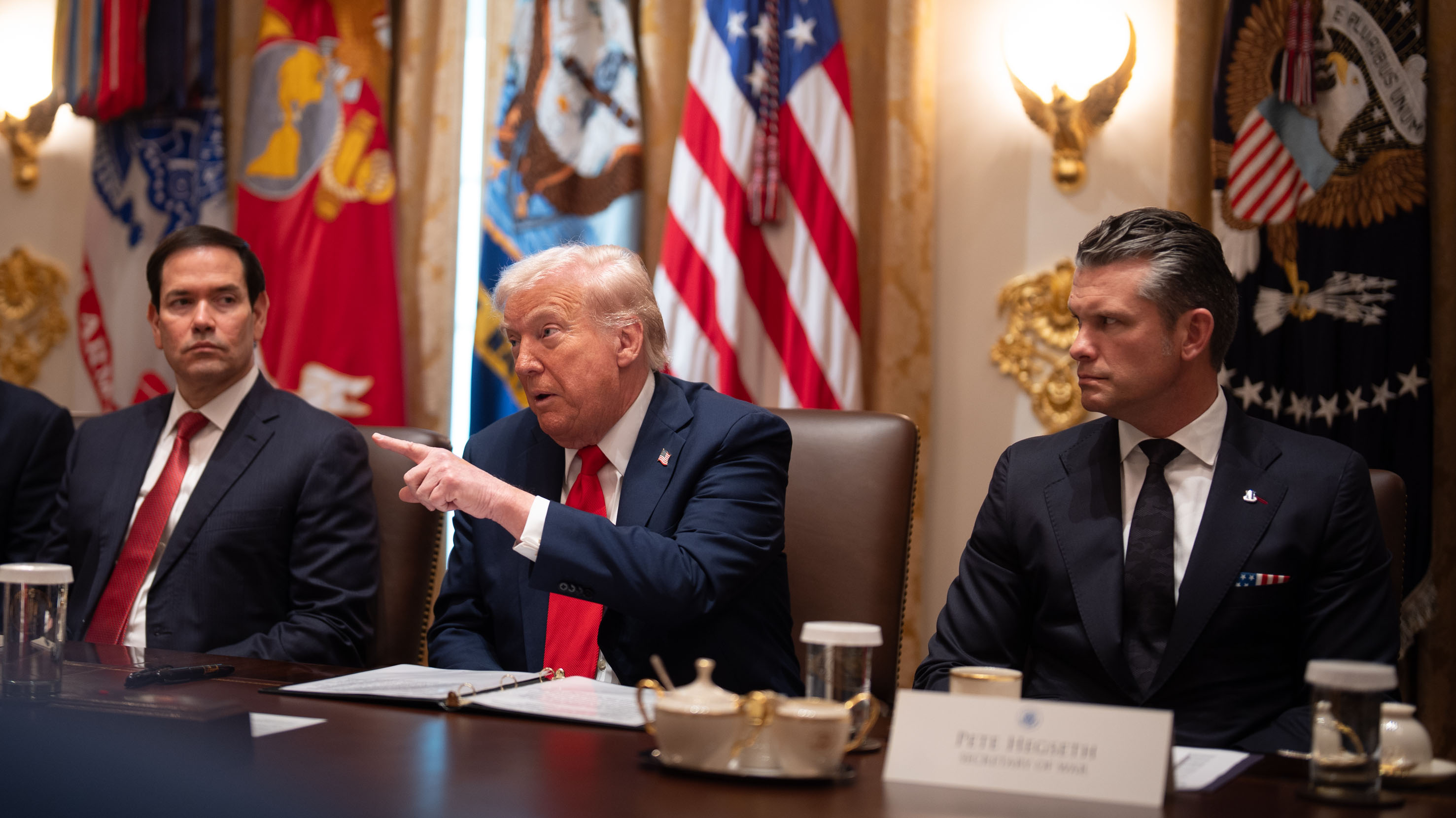
Russia ceasefire refusal ‘complicates’ talks, Zelenskyy says before White House visit

Russia ceasefire refusal ‘complicates’ talks, Zelenskyy says before White House visit
Ben Stansall – WPA Pool/Getty Images

(LONDON) — Russian President Vladimir Putin’s continued refusal to accept a ceasefire is “complicating” efforts to reach a peace deal, Ukrainian President Volodymyr Zelenskyy said Saturday, as he prepared to travel to the White House to meet with U.S. President Donald Trump.

Friday’s summit between Trump and Putin in Alaska — to which Ukrainian representatives were not invited — ended with Russia demanding that Ukraine cede the entirety of its contested and fortified eastern Donetsk region in exchange for an end to the fighting, two sources told ABC News.

Putin has repeatedly dodged Ukrainian-U.S. offers of an immediate ceasefire. Before the summit, Trump told reporters, “I want to see a ceasefire rapidly.”

Kyiv has previously rejected ceding any territory to Russia without binding security guarantees that include the U.S. Zelenskyy has also ruled out giving up Donetsk, saying the region could provide a launchpad for future Russian offensives deeper into Ukraine. Kyiv maintains that no peace negotiations can take part until a ceasefire is in effect.

On Saturday, Zelenskyy addressed the ongoing talks in a post to Telegram, saying, “We see that Russia rejects numerous demands for a ceasefire and still has not determined when it will stop the killings. This complicates the situation.”

“If they have no will to implement a simple order to stop the strikes, it may take a lot of effort for Russia to develop the will to implement much more, namely peaceful life with neighbors for decades,” Zelenskyy added. “But we all work together for peace and security. Stopping the killings is a key element of ending the war.”

Zelenskyy will meet Trump at the White House on Monday, with the U.S. president also inviting European leaders to attend.

European Commission President Ursula von der Leyen, German Chancellor Friedrich Merz, NATO Secretary-General Mark Rutte and British Prime Minister Keir Starmer confirmed on Sunday that they will be among the leaders accompanying Zelenskyy.

“The talks will address, among other things, security guarantees, territorial issues and continued support for Ukraine in its defense against Russian aggression,” Merz’s office said in a statement. “This includes maintaining the pressure of sanctions.”

The leaders of France, Germany and the U.K. were also expected to co-chair a virtual meeting of the pro-Ukraine “Coalition of the Willing” on Sunday, according to a press release from French President Emmanuel Macron’s office.

After the Alaska summit, Trump told Fox News he recommends that Kyiv “make the deal.”

“Look, Russia is a very big power, and they’re not,” Trump said, saying Ukraine had “great soldiers.” The president then praised Putin, calling him a “strong guy” and saying he is “tough as hell.”

On Sunday morning, Trump posted to social media claiming “big progress” being made regarding the peace talks. “STAY TUNED!” Trump wrote.

The president also again criticized media coverage of the talks. “If I got Russia to give up Moscow as part of the Deal, the Fake News, and their PARTNER, the Radical Left Democrats, would say I made a terrible mistake and a very bad deal,” he wrote.

Zelenskyy said Saturday he would continue “coordination with partners” ahead of Monday’s meeting. “It is important that everyone agrees that a conversation at the leaders’ level is necessary to clarify all the details and determine which steps are needed and will work,” he said.

The Ukrainian president warned earlier on Saturday that Russian operations may expand as peace negotiations continue. “The Russian army may attempt to intensify pressure and strikes against Ukrainian positions in order to create more favorable political conditions for negotiations with global actors,” Zelenskyy posted to Telegram.

Ukraine’s air force said that Russia launched 60 drones and one missile into the country overnight into Sunday, of which 40 drones were shot down or suppressed. Twenty drones impacted across 12 locations, the air force said.

Russia’s Defense Ministry, meanwhile, said its forces shot down at least 52 Ukrainian drones overnight.

Copyright © 2025, ABC Audio. All rights reserved.

2 easyJet planes clip wings at Manchester Airport in UK

2 easyJet planes clip wings at Manchester Airport in UK
An EasyJet Airbus A320 comes in to land as another EasyJet Airbus A320 waits on the taxiway at London Southend Airport on July 28, 2025 in Southend, England. (Photo by John Keeble/Getty Images)

(LONDON) — Two easyJet planes clipped wings on the runway at Manchester International Airport in the United Kingdom on Friday morning, officials said.

A spokespeson for Manchester Airport confirmed to ABC News that “two easyJet planes clipped wings as they taxied on the airfield” and a temporary ground stop was ordered immediately after the planes made contact with each other.

“We suspended operations briefly while they were assessed to see if they could taxi back to a stand, which they could so operations resumed after a few minutes,” the airport spokesperson said.

There have been no reports of any injuries following the incident and authorities at the airport are currently investigating.

“EasyJet is handling arrangements for passengers affected,” officials said.

This is a developing story. Please check back for updates.

ABC News’ Kayla Panagrosso contributed to this report.

Copyright © 2025, ABC Audio. All rights reserved.

Ukraine, left out in Trump-Putin summit, fears setbacks on key peace issues

Ukraine, left out in Trump-Putin summit, fears setbacks on key peace issues
Ukrainian President Volodymyr Zelensky listens as German Chancellor Friedrich Merz (not pictured) speaks during a joint press conference at the Chancellery following a virtual meeting hosted by Merz between European leaders and U.S. President Donald Trump on August 13, 2025 in Berlin, Germany./Photo by Omer Messinger/Getty Images)

()LONDON) — Ukrainian President Volodymyr Zelenskyy has warned that the Friday meeting between President Donald Trump and Russian President Vladimir Putin “will not achieve anything” if peace talks exclude Ukraine.

Decisions taken without Kyiv’s input will be “stillborn decisions,” Zelenskyy continued. “They are unworkable decisions. And we all need real and genuine peace,” the president said in an address to the nation last weekend.

Ukrainian expectations for the summit in Alaska are low, amid fears in Kyiv that the American and Russian leaders will seek to dictate Ukraine’s future without its participation.

Zelenskyy’s talks with European leaders and Trump on Wednesday, though, did appear to find consensus on key Ukrainian demands according to subsequent statements from Zelenskyy and his European counterparts, including that Kyiv will be the one to decide on any territorial concessions and that no such concessions can occur without binding security guarantees.

“We must learn from the experience of Ukraine, [and] our partners, to prevent deception by Russia,” Zelenskyy said in a statement posted to social media on Wednesday.

“There is no sign now that the Russians are preparing to end the war,” he added. “Our coordinated efforts and joint steps — of Ukraine, the United States, Europe, all countries that want peace — can definitely force Russia to make peace.”

Trump said Wednesday after the virtual meeting with Zelenskyy and European leaders that there will be “severe consequences” against Russia if Putin did not agree to stop his war on Ukraine.

Oleksandr Merezhko — a member of the Ukrainian parliament and chair of the body’s foreign affairs committee — likened the coming Alaska summit to the 1938 Munich Agreement — a pre-World War II accord by which European powers allowed Nazi Germany to annex part of Czechoslovakia without Prague’s consent.

“Putin secured a one-on-one meeting with Trump, providing an opportunity to influence U.S. policy and push for abandonment of Ukraine and European allies,” Merezhko told ABC News.

“Putin would like to use the summit to persuade Trump to blame Ukraine for the lack of progress on a ceasefire and give him a pretext to walk away from the negotiations,” Merezhko said.

“Putin is a very masterful manipulator and he will go into Friday’s meeting well prepared,” Merezhko added. “He will go in with well-prepared, planned and rehearsed talking points.”

John E. Herbst, a former U.S. ambassador to Ukraine now working at the Atlantic Council’s Eurasia Center, said Putin “wants a deal with Trump that will be presented to Kyiv and other European capitals as a fait accompli.”

The Kremlin’s goals remain the “elimination of Ukraine as a state and as a culture, elimination of NATO and undermining of the U.S. global positions,” Pavel Luzin, a Russian political analyst at The Fletcher School of Law and Diplomacy at Tufts, told ABC News.

There are several key — and thorny — issues for the two leaders to discuss.

Territory

Territory has been a main source of conflict between the two countries since Russia’s annexation of Crimea and fomentation of separatist revolt in eastern Ukraine in 2014.

Putin has remained firm in his demands. Any peace settlement, Moscow has said, must include “international legal recognition” of its 2014 annexation of Crimea and four regions it has occupied to varying degrees since launching its full-scale invasion in 2022.

Russia demanded that Ukrainian troops withdraw entirely from the Donetsk, Luhansk, Zaporizhzhia and Kherson regions — including areas that Russian troops do not control. The Kremlin claimed to have annexed all four regions in September 2022. Moscow also wants Kyiv to give up on any designs on taking back occupied Crimea.

Ahead of Friday’s meeting, Trump suggested that a “swapping of territories” could lead to a peace deal. However, Ukrainian officials quickly rejected that idea.

Zelenskyy held that the country would not give up any of its land, saying in a Saturday statement, “Ukrainians will not gift their land to the occupiers.” The president has since said that any decisions on territorial concessions must be made by Ukraine, and that no such concessions can occur without Ukraine receiving binding security guarantees that include the U.S.

NATO ambitions

Russian officials are also looking for their own “security guarantees” regarding NATO, by which Ukraine would be permanently excluded from the alliance, which has a mutual defense agreement among members.

Putin has regularly expressed concern over NATO’s eastward expansion, framing the alliance’s growth as an existential security threat to Russia. He has repeatedly warned the alliance against accepting Ukraine as a member, accusing the organization of trying to turn the country into a launch pad for aggression.

Russia’s Deputy Foreign Minister, Alexander Grushko, said in March that Moscow is seeking “the neutral status of Ukraine, the refusal of NATO countries to accept it into the alliance.”

Ukrainian officials have continued in their bid to join NATO — an ambition that has the backing of the vast majority of Ukrainians and is enshrined in the national constitution.

During a news conference earlier this year, Zelenskyy offered to step down from the presidency in exchange for admission to NATO. “If to achieve peace you really need me to give up my post — I’m ready. I can trade it for NATO membership, if there are such conditions.”

NATO nations, while backing Ukraine in its defensive war, have refused to allow Kyiv’s accession to the alliance. The alliance agreed at a 2008 summit that Ukraine “will become a member of NATO,” but the leaders of key allied nations — including the U.S. — have said Kyiv cannot accede while it is at war.

Limits to Ukraine’s military

Russian officials have demanded limits to the size of Ukraine’s military, which Moscow has framed as necessary to ensure its own security — a claim dismissed by Kyiv as false.

During peace negotiations in the opening days of the full-scale invasion, Moscow demanded that Ukraine reduce its military size to 50,000.

Zelenskyy, however, has expressed concern that any reductions to Ukraine’s military could allow Russia to secure more Ukrainian land, even with Western support. “The best thing is a strong army, a large army, the largest army in Europe. We simply have no right to limit the strength of our army in any case,” he said in December.

Russia is also demanding limits on Ukraine’s weapons arsenals and the sophistication of its military technology.

In the days leading up to Friday’s meeting between Trump and Putin, Ukraine has increased its long-range drone strikes into Russia. Ukrainian officials have said such attacks are part of its strategy to force the Kremlin into genuine peace talks.

Sanctions

The lifting of international sanctions on Russia may also be discussed during Friday’s meeting.

Russia is currently the world’s most sanctioned country with “50,000 or so measures,” according to The Center for European Policy Analysis. Russian officials have stated that a peace treaty should include lifting sanctions imposed since 2022.

The European Union has refused requests to reduce sanctions against Russia before a peace deal is secured, and Zelenskyy has called Putin’s suggestion that reductions could lead to lasting peace “manipulative.”

Trump has threatened to impose further sanctions on Russia and its top trading partners if Putin fails to commit to a ceasefire. Earlier this month, the U.S. announced additional tariffs on India related to its purchases of Russian oil.

“Everyone sees that there has been no real step from Russia toward peace, no action on the ground or in the air that could save lives,” Zelenskyy said earlier this week. “That is why sanctions are needed, pressure is needed.”

ABC News’ Patrick Reevell contributed to this report.

Copyright © 2025, ABC Audio. All rights reserved.

IDF chief approves new Gaza attack plan, spokesperson says

IDF chief approves new Gaza attack plan, spokesperson says
Smoke rises from the area following an Israeli attack on former Social Development building on August 13, 2025 in Rafah, Gaza. Photo by Ali Jadallah/Anadolu via Getty Images

(LONDON) — Israel Defense Forces Chief of Staff Maj. Gen. Eyal Zamir on Wednesday approved “the main framework for the IDF’s operational plan in the Gaza Strip,” according to an IDF spokesperson.

“As part of the discussion, IDF operations to date were presented, including an attack in the Zeitoun area that began yesterday,” the spokesperson said in a statement.

“The central concept for the plan for the next stages in the Gaza Strip was presented and approved, in accordance with the directive of the political echelon,” the spokesperson added.

Last week, Israeli Prime Minister Benjamin Netanyahu and his security cabinet approved plans for the IDF to seize and occupy Gaza City — the strip’s largest urban area — as part of an expanded military operation to “demilitarize” the strip and remove Hamas from power.

The operation would force the IDF to operate in areas where Israel believes Hamas is holding living hostages.

Netanyahu set out “five principles” for the end of the war.

“One, Hamas disarmed. Second, all hostages freed. Third, Gaza demilitarized. Fourth, Israel has overriding security control. And five, non-Israeli, peaceful civil administration — by that I mean a civilian administration that doesn’t educate its children for terror, that doesn’t pay terrorists and doesn’t launch terrorist attacks against Israel.”

Netanyahu’s plans to expand the war have been sharply criticized by the families of the hostages who call it a death sentence for their loved ones. Israel believes 20 hostages are still alive in Hamas captivity — the terror group is also holding the bodies of 30 killed hostages.

Hospitals across Gaza recorded 123 deaths and 437 injuries over the previous 24 hours, Gaza’s Hamas-run Ministry of Health said Wednesday.

Among the dead were 21 people killed while trying to collect humanitarian aid, the ministry said, while another 185 people were injured.

Eight deaths due to hunger were also recorded across Gaza, the ministry said on Wednesday.

ABC News’ Morgan Winsor and Diaa Ostaz contributed to this report.

Copyright © 2025, ABC Audio. All rights reserved.

Why Ukraine’s ex-foreign minister believes Putin won’t go for peace as Trump summit approaches

Why Ukraine’s ex-foreign minister believes Putin won’t go for peace as Trump summit approaches
Ukraine’s then-Foreign Minister Dmytro Kuleba is pictured in Kyiv, Ukraine, on June 3, 2024./ Nurphoto/NurPhoto via Getty Images

(LONDON) — Dmytro Kuleba, who served as Ukraine’s foreign minister from 2020 to 2024 and was the youngest-ever appointed to the post, has no plans to rush back into the fray. But he retains deep convictions about Ukraine’s ongoing struggle against Russia’s full-scale invasion — and about the man he considers the prime obstacle to peace in Europe.

“It is the saddest thing, I have to say, but I do not see the end to this war in sight,” Kuleba told ABC News in a video interview from Kyiv, just under a year after he left his role as part of a sweeping government reshuffle.

“A ceasefire is possible, but ending the war as a result of the ceasefire does not seem to be possible at this stage,” Kuleba said. Even if Russian President Vladimir Putin “agrees to a ceasefire in order to avoid mounting pressure from the United States — the threat of mounting pressure from the United States — it will only be a pause,” he said.

No longer encumbered by the demands put on the country’s top diplomat, Kuleba has been speaking frankly on Kyiv’s situation and outlook since departing his former role.

Kuleba’s country remains under existential threat, more than three-and-a-half years into a full-scale Russian invasion. As the war wears on and its toll rises unrelentingly, President Donald Trump’s efforts to force a ceasefire and peace appear to be stalled.

Friday’s planned summit in Alaska between Trump and Putin has suddenly raised hopes that a deal may be possible, according to observers. But Kuleba urged caution over any apparent breakthroughs — particularly if they offer strategic opportunities for the Kremlin.

“There is a famous saying that if you see the light in the end of the tunnel, make sure it is not an incoming train,” Kuleba said. “The light of ceasefire in the end of the tunnel of the Russia-Ukraine war is actually an incoming train.”

Ukraine has backed the previous U.S. demand for a full and immediate ceasefire, during which time a peace settlement can be reached. Putin has repeatedly dodged ceasefire proposals, suggesting that the “new territorial realities” of Russian occupation of swaths of southern and eastern Ukraine must be recognized as part of any settlement.

Putin has also dismissed Kyiv’s offers of a direct meeting with Ukrainian counterpart Volodymyr Zelenskyy — a leader he has repeatedly and incorrectly framed as illegitimate, although he is a democratically elected leader.

Putin, Kuleba said, has shown no sign of abandoning his maximalist war goals, with or without a U.S.-brokered ceasefire. A pause in the fighting may only prove an opportunity for Moscow to prepare its next offensive, he said.

“I think Putin has said enough over the last years and Russia has done enough over the last years to make the point that their strategic goal is subjugating Ukraine as a whole,” he said.

‘He cannot lose this war’

As Ukraine’s top diplomat, Kuleba was deeply involved in peace talks with Russia that sought to end the full-scale invasion that began in 2022. In March 2022, just weeks after Russia’s full-scale invasion began, Kuleba met with Russian counterpart Sergei Lavrov in Turkey.

More than three years later, he said Putin’s fixation on a Russian historical narrative imbued with disinformation and chauvinism remains the main obstacle to a long-term resolution.

“The only thing President Putin really cares about is what will be written about him in history books,” he said. “He just cannot lose this war. He can pretend he’s winning it. But he can never drop the ambition, give up on the ambition, to subjugate Ukraine.”

Putin, Kuleba says, sees himself in the company of Russia’s great historic leaders like Ivan the Terrible, Peter the Great, Catherine the Great. All expanded the Russian empire — and subjugated the people and areas that now form Ukraine.

“He put all of his bets on this — this is his major legacy issue,” Kuleba said. “He throws everything into the fire of his legacy — his people, his country, his future, its future — because he doesn’t care about them.”

Asked if the Russia-Ukraine war can end while Putin is still alive, Kuleba responded, “No.”

“We can have a war of a much lower intensity with Russia,” he added. “But I cannot imagine eternal peace between Russia and Ukraine achieved during President Putin’s lifetime.”

“The West should not be afraid of who comes next,” Kuleba said when asked whether the next Russian president could be equally problematic. “Nothing helps Putin more to stay in power than the fear entrenched in Western intellectual circles that someone even worse than him can move in,” he said.

“This is a flawed strategy,” he said. “Ukrainians are paying the highest price for it. Europe will be paying a very high price for it if it continues like this.”

In Kyiv, Zelenskyy and his officials are sticking to their key demands. Ukraine’s intended accession to NATO and the EU is enshrined in the national constitution. Zelenskyy has also repeatedly dismissed any suggestion of surrendering Ukrainian territory in any peace deal. “Ukrainians will not give their land to the occupier,” he said last week.

Will Trump ‘walk the walk?’

Ukraine’s Western partners still have not done enough to help Kyiv succeed, Kuleba said, though he stressed that all Ukrainians are “immensely grateful and we will always remember it.”

European nations have collectively given some $182 billion in aid of all kinds to Ukraine as of April 2025, according to the Kiel Institute for the World Economy — a research group based in Germany that tracks support from foreign governments toward Ukraine. The U.S. has contributed around $133.5 billion, the institute said.

“I’ve been asked many times over the last three years — has the West supported Ukraine enough?” Kuleba said. “If the war is still raging, it means that the answer is no, not enough.”

Trump’s return to office posed the danger of a total U.S. withdrawal from the conflict. Recent months, though, have seen growing White House frustration at Putin’s apparent obstinance in continuing his war.

Kuleba sees a clear “evolution” in Trump’s approach. “He spent the first months of his presidency giving all sticks to Ukraine and offering all carrots to Russia as a negotiating strategy. It failed. So, now what we see today is his attempt to rebalance sticks and carrots among belligerent parties.”

Ukraine hears Trump’s threats, but is yet to see action, Kuleba said. “Putin understands only force,” he added. Without it, “he will come to the same conclusion he made about previous administrations and European governments — they talk the talk, but they don’t walk the walk.”

Trump, unlike Putin, is constrained by time, Kuleba said. “Putin will not be in a rush to accommodate Trump.”

The two salient options, Kuleba said, are “arming Ukraine and stripping Russia of its oil revenues. That’s it. Everything else may sound good, will be helpful, but it has zero chance to change the tide. A combination of these two factors is crucial to make Putin seriously think about revising his goals in this war.”

Meanwhile, Kuleba said Europeans should be bracing for the war to come to them.

Putin, Kuleba said, only needs one day of hesitation at NATO and European Union headquarters in Brussels to press an attack. “As it looks today, Putin will have his day of hesitation,” he said.

“Both headquarters realize that and they work tirelessly to mitigate this risk, to create a more holistic, coherent space. But I’m afraid there is still a long way to go to achieve that.”

Ukrainian policy still reflects Kuleba’s outlook, though he is no longer involved in its creation. His replacement, current Foreign Minister Andrii Sybiha, has continued Kuleba’s work in pressing Western partners to provide more aid and to do so faster.

Along with Zelenskyy’s office, Sybiha has repeatedly warned that without intense Western pressure, Putin and his government cannot be trusted to negotiate in good faith or to abide by any ceasefire or peace deal.

Ukraine’s ‘red lines’

Kuleba offered a sober assessment of Ukraine’s military situation, as Russian forces continue their grinding advance in the east of the country and expand their long-range drone and missile bombardments of cities across Ukraine.

Ukraine’s size, its industrial capabilities and Western support bolster its war effort, he said. “Remove one of these elements in the equation and then everything collapses,” he added.

And for all the talk of expanded American and European military aid, Kuleba cautioned against investing too much hope in any silver bullets.

“We should forget once and forever the idea of a magic weapon that will change the game,” he said. “This tune has been played so many times over three years and none of it worked,” Kuleba continued, recalling drawn-out debates and sensationalism over the supply of weapons systems like the ATACMS, Western tanks and F-16 fighter jets.

“What is required is the systemic effort to provide Ukraine with the weapons — all types of weapons — and intelligence information that it requires, in sufficient quantities and in good time that it requires to stabilize the front line.”

“The moment Putin has no news to deliver to his people that he’s making progress on the front line will also be an important factor in making him rethink or revise his goals in this war,” he said.

Ukraine has its own red lines in negotiations, he said. He said the government will not have public backing to agree to legally recognize Russian occupation of Ukrainian territory, limit the size and sophistication of Ukraine’s armed forces or abandon Kyiv’s NATO ambitions — a goal enshrined in the national constitution.

The government will not be able to agree to legally recognize Russian occupation of Ukrainian territory — which the nati — or limit the size and sophistication of Ukraine’s armed forces or abandon Kyiv’s NATO ambitions, Kuleba said.

“It would be a political suicide to do that,” he warned — a sentiment broadly shared by Ukrainian political analysts, though such thorny concessions will no doubt be under discussion within the president’s office.

Recent polling suggests Kuleba is correct. A survey conducted by the Kyiv International Institute of Sociology in July and August, for example, found that 76% of Ukrainians rejected Russia’s proposed peace plan, which would include Ukraine abandoning NATO accession, limiting its army and surrendering several southern and eastern regions.

Recent weeks have shown the potency of Ukrainian people power. Street protests erupted around the country last month after Zelenskyy’s government and the Ukrainian parliament approved a new law curtailing the independence of two key anti-corruption agencies.

The president was forced into a quick reversal as Ukrainian civil society and Western leaders expressed their concern over the bill. The brief crisis “was a very healthy thing for Ukrainian democracy,” Kuleba said. “I think that we came out of this crisis stronger than we were before that.”

Ukrainians, he added, are keenly focused on their political future despite the ongoing war. Last month’s anti-corruption groundswell only sharpened such sentiment, he said. The turmoil also revitalized talk of the post-war elections — currently delayed due to martial law — that will shape the country’s path, he added.

As for Kuleba, the former minister said he is in no hurry to return to public office. “It makes me very happy to spend more time at home,” he said.

“A diplomat’s life is when you know foreign countries better than your own country. So, I’m now correcting this professional mistake,” he added.

When the war does end, Kuleba said, Ukraine could face a political reckoning.

“When the war suppresses the politics for three years, the politics do not go away,” he explained. “The moment there is no war, the moment there is an open, full-fledged democratic political process, all of this energy is going to burst out. And there is a huge, big risk in that.”

Millions of veterans will form a potent voting bloc, he added. “I do not believe that there is a threat of a military takeover in Ukraine — no, this is not going to happen,” Kuleba said. “But people with combat experience will have a different sense of justice. And they will be demanding a higher role in politics.”

The good news, Kuleba said, is that the war is forging a “clear vision” of Ukraine’s Western — not Eastern — future.

“We will be far more politically consolidated in the sense that independence of Ukraine, its Western orientation, will not be questioned,” he said. “But we will be divided along the lines of populism and understanding of the sense of justice in the post-war era.”

Copyright © 2025, ABC Audio. All rights reserved.