(BOSTON, Mass.) — Prince William thanked the “people of Boston” as he and his wife Kate arrived in the city to kick off their first U.S. tour in nearly a decade.
Their whirlwind tour ends with an awards ceremony for the Earthshot Prize, an initiative William launched in 2019 to create solutions for environmental problems.
This is William and Kate’s first visit to the United States since they visited New York City in 2014. It is also their first overseas trip since the death of Queen Elizabeth II in September and their first overseas trip since taking on the titles of Prince and Princess of Wales.
“[William and Kate] are both excited for their first international trip since taking on their new roles,” a Kensington Palace spokesperson told ABC News. “Both appreciate the history associated to the titles but understandably want to look to the future and pave their own paths.”
Check back for updates throughout their trip.
William and Kate light Boston green
William and Kate’s first stop on their Boston trip was Boston City Hall.
They were greeted by Boston Mayor Michelle Wu, the first woman and first person of color to be elected as mayor in the city last year, and U.S. Ambassador to Australia Caroline Kennedy.
In honor of the Earthshot Prize, which was inspired by President John F. Kennedy’s Moonshot Initiative, the couple helped light Boston buildings and landmarks green.
In his address to Mayor Wu and the crowd at Boston City Hall, Prince William thanked Wu and Reverend White-Hammond for their support for the Earthshot Prize. He also noted why Boston was the “obvious choice for the Earthshot Prize in its second year” and said he was inspired by President Kennedy’s moonshot speech to launch the Earthshot Prize.
“Sixty years ago, President John F. Kennedy’s ‘moonshot’ speech laid down a challenge to American innovation and ingenuity,” Prince William began. “‘We chose to go to the moon,’ he said, ‘not because it is easy, but because it is hard.'”
“Where better to hold this year’s awards ceremony than in President Kennedy’s hometown, in partnership with his daughter and the foundation that continues in his name,” he added. “Boston was also the obvious choice because our universities, research centres and vibrant start-up scene make you a global leader in science, innovation and boundless ambition. Mayor Wu, you have also been a leader in putting climate policies at the heart of your administration. Thank you.”
“Like President Kennedy, Catherine and I firmly believe that we all have it in ourselves to achieve great things, and that human beings have the ability to lead, innovate and problem-solve,” William said. “We cannot wait to celebrate the Earthshot Prize later this week, and we are both looking forward to spending the next few days learning about the innovative ways the people of Massachusetts are tackling climate change.”
President Biden to greet Prince William and Kate in Boston on Friday
Earlier on Wednesday during a White House press briefing, White House press secretary Karine Jean-Pierre said President Joe Biden “intends to greet the prince and princess of Wales” on Friday when he is in Boston. The White House previously announced that Biden would be in Boston this week for a fundraiser.
William and Kate arrive in Boston
Upon their arrival in Boston Wednesday morning, William said he and Kate are “delighted to be back in the United States.” He also used the moment to reflect about his grandmother, who celebrated her 1976 bicentennial in the U.S.
“On this, our first visit since the death of my grandmother, I would like to thank the people of Massachusetts and particularly of Boston for their many tributes to the late queen. She remembered her 1976 bicentennial visit with great fondness,” William said in a statement.
“My grandmother was one of life’s optimists. And so am I,” he added. “To the people of Boston, thank you. I’m so grateful to you for allowing us to host the second year of the Earthshot Prize in your great city. Catherine and I can’t wait to meet many of you in the days ahead.”
Spokesperson for William addresses racism accusations surrounding godmother
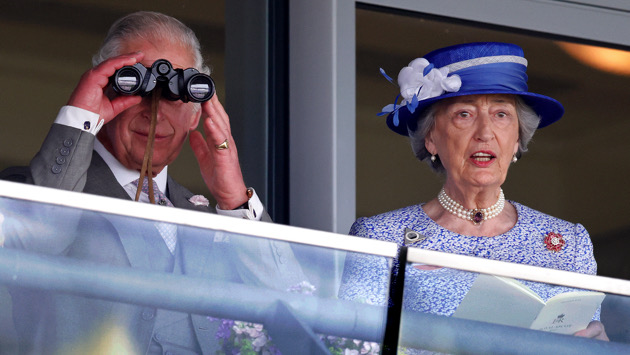
As William and Kate were making their way to Boston, a controversy erupted in the U.K. involving William’s godmother, Lady Susan Hussey.
Hussey, a longtime lady-in-waiting to the late queen, was accused of making racist remarks to an attendee at a reception hosted by Queen Escort Camilla on Tuesday at Buckingham Palace.
On Wednesday, Buckingham Palace said it had launched an investigation into the allegation and said Hussey had “stepped aside from her honorary role.”
A spokesperson for William commented on the incident while briefing reporters ahead of William and Kate’s arrival in Boston.
“This is a matter for Buckingham Palace but as the Prince of Wales’ spokesperson, I appreciate you’re all here and understand you’ll want to ask about it. So let me address it head on,” the spokesperson said. “I was really disappointed to hear about the guest’s experience at Buckingham Palace last night.”
He continued, “Obviously, I wasn’t there, but racism has no place in our society. The comments were unacceptable and it is right that the individual has stepped aside with immediate effect.”
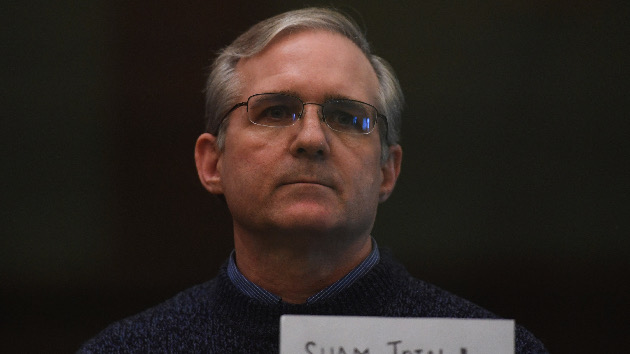
(NEW YORK) — The family of Paul Whelan, the American former Marine held hostage by Russia, say they are worried for his safety after he dropped out of contact at the prison camp where is being held last week.
Whelan’s brother, David Whelan, on Tuesday said camp authorities had claimed they had abruptly moved Whelan to a prison hospital without explanation. In a statement, he said the family fear Whelan could have suffered a sudden medical emergency or that the prison authorities might be lying to conceal that Whelan was now in solitary confinement or otherwise held and not allowed to communicate.
Paul Whelan has spent nearly four years in detention since he was seized in 2018 by Russia’s domestic intelligence agency, the Federal Security Service, while visiting Moscow for a friend’s wedding. He was sentenced to 16 years in prison on espionage charges but the United States and his family say were fabricated in order to take him as a political bargaining chip.
Whelan has been held in at Correctional Colony 17 — a prison camp in the Mordovia region around 300 miles from Moscow — for more than two years. His family began sounding the alarm on Monday after Whelan missed scheduled calls with his parents and the U.S. embassy last week.
“We’re concerned that he may have either some emergency medical issue that is not being disclosed or that he is in fact still at IK-17 and has been placed in solitary as retaliation for something,” David Whelan said in an email statement.
David Whelan said the prison camp claims his brother was moved to the prison hospital on Nov. 17 but Whelan had not complained of any medical issue to U.S. embassy staff that visited him a day earlier or mentioned any move to his parents in a call on Nov. 23.
“Paul was not complaining of any health conditions that required hospitalization, so has there been an emergency? He appeared healthy and well to the Embassy staff,” David Whelan wrote.
“If Paul’s at the prison hospital, why is he being prohibited from making phone calls that every prisoner is allowed to make? Is he unable to make calls? Or is he really still at IK-17 but he’s been put in solitary and the prison is hiding that fact,” he wrote.
He said the prison had previously sent Whelan to the hospital against his will, sometimes as a punishment. Previously, however, Whelan noted that his brother had always told them when he was being sent to the hospital, David Whelan said.
Whelan’s Russian lawyer, Vladimir Zherebenkov, told ABC News that Whelan had a medical check up two weeks ago which suggested no issues.
Zherebenkov said there were two explanations why Whelan was not making his calls — either there are technical issues or he was being punished.
Asked by ABC News on Tuesday, the spokesman for the White House National Security Council, John Kirby, said it was the first he had heard Whelan had missed a call but he expressed deep concern for Whelan’s conditions.
Whelan is able to speak most weeks to his parents in the U.S. via video call from the prison, according to his family, and also has scheduled calls to the embassy.
“They have a call scheduled with him on Thursdays and he failed to make it last week. It’s incredibly unusual for Paul to miss trying to call home on a holiday like Thanksgiving,” David Whelan said. He said he hoped the U.S. embassy would find out Whelan’s condition.
“Is his phone card out of funds? Is he in solitary? Has he been moved to a hospital camp again without his request? Transport somewhere always comes to mind because prisoner transfers always seem to happen on a Friday. And, if it’s punitive, what is the prison retaliating for?”
The U.S. is seeking to negotiate Whelan’s release as well as the release of WNBA star Brittney Griner, who has been in Russian detention since February and who American officials also believe was taken by the Kremlin as a political bargaining chip.
Griner arrived earlier this month at a nearby prison camp in Mordovia after she was sentenced to nine years on drug smuggling charges, the U.S. says were trumped up.
Russia has signaled it wants to trade Whelan and Griner in a prisoner exchange for Russians imprisoned in the U.S., but efforts to reach a deal have stalled.
The Biden administration this summer said it was prepared to trade Viktor Bout, the notorious arms trafficker who is serving a 25-year prison sentence on weapons smuggling charges and is widely suspected to have ties to Russian intelligence. But Russia has so far rejected the offer, despite publicly suggesting for years Bout was a top candidate for any swap.
Russia’s deputy foreign minister Sergey Ryabkov earlier this month said he hoped the prospect of trading Bout was “getting stronger” but that the two sides were “yet to arrive at a common denominator.” He confirmed the U.S. and Russia were negotiating on the issue via a “special channel” and that Bout was among those being discussed.
A potential sticking point is Moscow may be their unwillingness to trade two Americans for one Russian citizen, even one of Bout’s importance.
In new comments on Tuesday, Ryabkov said “there is always a chance” that a deal might be reached soon, but gave little suggestion one was close.
“Regretfully, we have seen a number of situations where we thought a decision would be made soon. That did not happen,” Ryabkov told reporters.
Ryabkov also criticized the U.S. for speaking publicly about the negotiations, accusing it of “going over the top by using megaphone diplomacy.”
The acting U.S. ambassador to Moscow, Elizabeth Rood, in an interview with Russian state media this week confirmed that the U.S. was continuing to discuss Griner and Whelan through special channels.
“We have already said, the United States has submitted a serious proposal for consideration. We finalized this proposal and offered alternatives. Unfortunately, the Russian Federation has not yet received a serious response to these proposals,” she told RIA Novosti.
(LONDON) — Prince William’s godmother and a longtime lady-in-waiting to the late Queen Elizabeth II has stepped down from her role amid an allegation of racism.
Buckingham Palace said Wednesday it launched an investigation into an accusation that Lady Susan Hussey made racist comments to an attendee at a palace reception hosted by Queen Camilla.
Ngozi Fulani, the founder of Sistah Space, a nonprofit organization that supports women and families affected by domestic abuse, shared in a Twitter post that she was asked repeatedly by Hussey where she was from.
“What part of Africa are you from?” Fulani alleges Hussey asked her, according to her tweet.
Fulani wrote that when she replied she was from the United Kingdom, Hussey continued to question her, allegedly saying, “Oh, I can see I am going to have a challenge getting you to say where you’re from. When did you first come here?”
Fulani — who was at the palace for a reception on combatting violence against women, one of Camilla’s main charitable interests — wrote that she had “mixed feelings” about her visit to the palace, saying that after her conversation with Hussey, the “rest of the event is a blur.”
Hussey was one of Elizabeth’s longest-serving ladies-in-waiting, an honorary role that serves as a kind of personal assistant to the queen.
Camilla, who became queen consort after Elizabeth’s death in September, did away with the lady-in-waiting role, instead choosing to have lady companions, one of whom is Hussey’s daughter.
On Wednesday, Buckingham Palace confirmed Hussey had “stepped aside from her honorary role.”
“We take this incident extremely seriously and have investigated immediately to establish the full details. In this instance, unacceptable and deeply regrettable comments have been made,” the palace said in a statement. “We have reached out to Ngozi Fulani on this matter, and are inviting her to discuss all elements of her experience in person if she wishes.”
The statement continued, “In the meantime, the individual concerned would like to express her profound apologies for the hurt caused and has stepped aside from her honorary role with immediate effect. All members of the Household are being reminded of the diversity and inclusivity policies which they are required to uphold at all times.”
Prince William, who is starting a three-day trip in Boston Wednesday with his wife, Kate, the Princess of Wales, has not commented on the incident. Camilla has not commented beyond the statement from Buckingham Palace.
The apology from the palace comes less than two years after Prince Harry and Meghan, the Duke and Duchess of Sussex, made bombshell allegations of racism within the royal institution in an interview with Oprah Winfrey.
In the two-hour, prime-time interview, Harry and Meghan, who stepped down from their senior royal roles in 2020, alleged that conversations were had with Harry about the skin color of their son Archie, the first American British biracial royal born in the U.K., and also widely considered to be the first mixed-race child born into the royal family.
When Harry and Meghan were dating in 2016, Harry lambasted the “abuse and harassment” of Meghan, whose mother is Black and father is white, in the press and criticized “racial undertones” in some coverage of her.
Earlier this week, a senior police official confirmed the Sussexes faced “disgusting and very real” threats when they lived in the United Kingdom.
Neil Basu, the former head of counterterrorism for the Metropolitan Police, told Channel 4 News that there were serious and credible threats made against Meghan, mostly emanating from what Basu described as “extreme right-wing terrorism.”
“If you’d seen the stuff that was written and you were receiving it, the kind of rhetoric that’s online, if you don’t know what I know, you would feel under threat all of the time,” he said of the threats against Meghan. “We had teams investigating it. People have been prosecuted for those threats.”
(NEW YORK) — Over the past several days, protests have erupted in cities across China, as citizens push back against the country’s so-called “zero COVID” policy.
Since the virus began spreading across the world in January 2020, China has enforced harsh restrictions, including lockdowns and mass testing in an attempt to prevent outbreaks.
As most countries ease mitigation measures and focus on the importance of vaccination and boosting, China has kept the strict policy in place.
But public resentment over the disruption to daily life is growing, posing a problem for leader Xi Jinping and the ruling Chinese Communist Party.
“The Chinese government does not have a plan B or has not prepared for a way out of this zero COVID policy, and all these lockdowns,” Dr. Ali Mokdad, an epidemiologist with the University of Washington’s Institute for Health Metrics and Evaluation in Seattle, told ABC News.
“You cannot keep a country locked down. Why? Because right now what’s happening in China is the economy has been impacted, the livelihood has been impacted and as a result, lives are being impacted meaning more mental health [crises], quality of life is really bad, more chronic conditions,” Mokdad said.
China implements its zero COVID policy
After the first cluster of patients were discovered in Wuhan in December 2019, a public notice was released on Dec. 31 and, about a week later, Chinese officials announced they had discovered a novel coronavirus.
Lockdowns were implemented in Wuhan, then in the larger Hubei Province — where Wuhan is located — and lastly in most of China. Travel was banned and those who tested positive for COVID with mild or moderate symptoms were removed from their homes to prevent household transmission.
COVID-19 cases peaked in China in early February 2020 before declining to low levels by the end of summer 2020.
At the end of the first wave, the Chinese Centers for Disease Control and Prevention published an article arguing for a zero COVID strategy over more lax mitigation measures.
“The successful containment effort builds confidence in China, based on experience and knowledge gained, that future waves of COVID-19 can be stopped, if not prevented,” the authors wrote. “Case identification and management, coupled with identification and quarantine of close contacts, is a strategy that works.”
Only about 5,000 deaths have been reported in mainland China since the start of the pandemic, fewer than most countries with large populations including the U.S. and the U.K.
“The COVID policies were very effective in preventing people in China from getting the infection and dying, and that was a real achievement for the Chinese government,” Robert Sutter, a professor of practice of international affairs at George Washington University — with expertise in U.S.-China relations and China’s domestic and foreign affairs — told ABC News. “In 2020, they looked really good compared to the United States in particular, and they were handling it just fine and it was working well.”
“With the severe lockdown in Wuhan, they bought us time, all of us to be prepared and the Chinese health officials early on were really open about what they are seeing shared information, which really helped everybody’s response,” Mokdad added. “So, we need to give them that credit.”
Following the first outbreak, similar strict measures were enforced to control outbreaks happening elsewhere in China. But cases are now on the rise and the country reported its first COVID-19 deaths since May.
“Right now, the Chinese government, the policy that they have implemented, as successful as it was in the past first year, is a failure right now quite honestly,” Mokdad said.
Less effective vaccines
In July 2020, the Chinese government allowed the Sinovac COVID-19 vaccine to be administered under emergency use authorization. More than 90% of the population has been vaccinated, according to the government.
However, research has shown the Sinovac vaccine is just 60% effective at preventing severe disease compared to 90% for the Pfizer vaccine and 97% for the Moderna vaccine.
What’s more, when it comes to booster shots, only 69% of those aged 60 and older and 40% of those aged 80 and older have gotten boosted.
A combination of low vaccination rates and people not being exposed to the virus due to lockdowns has led to low immunity coverage.
“So, here you have a country that started a policy of locking down, but it resulted in less immunity,” Mokdad said. “The country, at the same time, has low vaccination coverage, a vaccine that is not effective or has low effectiveness against Omicron and all the variants that came after.”
He added, “So now if they open up, what will happen is they’ll have more cases, more mortality. They’ll overwhelm their hospitals.”
Sutter said it’s not clear why the Chinese government has rejected the Pfizer or Moderna vaccines, but it may be due to rejecting medicine from the traditional West in favor of their own vaccines or trying to convince the rest of the world they have the situation under control.
“On the one hand, they don’t want to bring in the U.S. vaccines given the state of their attitude toward the United States,” Sutter said. “And on the other hand, they don’t want to acknowledge that they mishandled the situation.”
Frustration bubbling
During the early days of the lockdown, Sutter said there was support among the Chinese public for the stringent measures.
However, tensions have been rising and protests have rung out in cities across China, including Shanghai, Guangzhou and the capital Beijing, after a fire in a high-rise building in Urumqi, a city that was under lockdown, led to the deaths of 10 people.
People have questioned whether COVID restrictions prevented residents from fleeing the burning building and first responders from helping.
In addition, the Draconian measures have also led to food shortages and have prevented people from visiting doctors’ offices for non-COVID-related visits.
“The zero COVID policy, it’s very disruptive for people’s lives and it leads to a lot of frustration,” Sutter said. “This has been going on now for three years and so I think there’s just a fatigue factor with it all. And people are fed up with the policy, particularly, as they learn more about other countries in the world, they’re all opening up.”
The government has tried to appease protesters, with Beijing announcing gates will no longer be erected around apartment complexes where COVID-19 cases are detected.
Sutter said he believes local officials may be worried about lifting restrictions because they will get blamed for any deaths.
“The local officials seem to be under the impression that they’re going to be held responsible if there are deaths in their area,” he said. “So, it leads to a very confused situation with a lot of local officials being cautious and therefore not changing the zero COVID policies because if they have a lot of deaths, they will be held responsible, and they will suffer the consequences.”
Meanwhile, over the last week, China has been reporting a record number of COVID-19 infections, mainly due to more transmissible variants.
Mokdad said if China is ever to exit from the zero COVID strategy, officials need to convince the government to accept more effective vaccines and to ease restrictions slowly.
“That’s the key message for the Chinese government, that the virus is not going anywhere,” he said. “It’s mutating, and we have more deadly or more infectious variants. And unless you have immunity, you’re not going to be able to avoid getting infected. And the only way to get immunity is either through infection, which we don’t want, or through vaccination.”
(NEW YORK) — Months before Prince William and Catherine, princess of Wales, were set to visit Boston — their first trip to the U.S. since 2014 — one little-known American government agency sprang into action.
The royal couple on Wednesday begins a three-day swing in Massachusetts culminating in an awards ceremony Friday night.
Agents from the Diplomatic Security Service (DSS) — diplomats with badges and guns — make up their protective detail, according to two senior DSS officials who spoke with ABC News.
“We are the law enforcement and security arm of the U.S. Department of State and we protect the secretary of state, foreign dignitaries who are visiting the United States foreign ministers, former heads of state, members of the royal family, in this case, as well as U.S. citizens, athletes, corporate sponsors,” Andrew Wroblewski the deputy assistant secretary and assistant director of the U.S. Department of State’s Diplomatic Security Service (DSS) for domestic operations, said.
Wroblewski, who served on various protective details himself during his tenure at the agency, said they have been working with the United Kingdom to get the schedule and protection strategy firmed up.
“So, whenever the Diplomatic Security Service has a visiting foreign dignitary, what we do is we assess the threat against that dignitary in the United States,” he explained without getting into specifics about the royal couple’s visit. “We have our Threat Investigations and Analysis Directorate, they’ll actually look at all source reporting from open source to classified intelligence. And we’ll make it a determination on whether or not we need to protect that person and at what level we need to provide protection.”
Matthew O’Brien, the assistant special agent in charge of the Boston DSS field office, the lead office for the visit, told ABC News preparations started in September, and have involved 11 law enforcement agencies — from local police to state police and the federal government.
“I’m confident in the plan we’ve we’ve built,” he said. “I will say that we cannot do anything without our state and local partners.”
The Boston field office is one of the 33 different offices in the United States. Where the agency’s presence is really felt is in the 170 countries the agency is in.
They are also protecting the U.S. Men’s National Soccer team at the 2022 World Cup, according to the officials.
The movements of the royal couple are “choreographed down to the minute” and the same goes for the security plan, O’Brien said.
(NEW YORK) — Rhinoceros populations are beginning to rebound in the species’ native home of Zimbabwe, a sign that efforts to preserve the species are working, according to animal conservationists.
The rhino population in Zimbabwe has surpassed more than 1,000 animals for the first time in more than 30 years, according to the International Union for Conservation of Nature Species Survival Commission’s African Rhino Specialist Group. This includes 614 black and 415 white rhinos, listed as critically endangered and near threatened on the IUCN’s Red List of Threatened Species, respectively.
Dedicated conservationists continue to persevere in protecting the country’s rhinos “with great success,” despite soaring costs for food and fuel, according to the International Rhino Foundation, which was founded 31 years ago amid a poaching crisis.
The populations have thrived due to intensive protection, monitoring and management of these animals, Christopher Whitlatch, spokesperson for the International Rhino Foundation, told ABC News.
Included in the population of black rhinos in Zimbabwe’s Bubye Valley Conservancy is Pumpkin, who was injured and orphaned by poachers and continues to flourish after she was re-released into the wild just months later.
During a routine patrol in July 2020, conservationists from the Lowveld Rhino Trust found Pumpkin’s mother, who had been killed by poachers, Whitlatch said. Near her body, the conservationists noticed “little bloody footprints,” to which they tracked down Pumpkin, who was still alive but had been shot in the torso by the poachers and was severely injured, Whitlatch said. She was just about 16 months at the time.
Pumpkin’s will to live was apparent from the get-go, as were her “spunk” and “charisma,” Whitlatch said. She even took a bottle from her caregivers, a foreign concept to baby rhinos that gave them confidence that she would survive.
After some months of rehabilitation, Pumpkin was released in October 2020 back into the protected land, home to most of the rhinos in Zimbabwe and where she continues to thrive today, Whitlatch said.
Pumpkin is monitored on a regular basis, and has even made the acquaintance of a young male black rhino of the same age named Rocky, giving conservationists hope that they will mate and reproduce, Whitlatch added.
However, it has still been a difficult year for rhinos, according to the International Rhino Foundation. After a temporary lull in poaching due to COVID-19 pandemic restrictions, criminal networks have quickly adapted to the new challenges, and poaching rates and trade volume have begun increasing again this year, according to the IRF.
“Large, organized crime groups, who see wildlife trafficking as low-risk, high-reward crime, became even more involved in rhino horn trade during the pandemic, monopolizing key networks and moving higher volumes of horn,” the conservation said in a statement.
Maksim Konstantinov/SOPA Images/LightRocket via Getty Images
(LONDON) — A top jailed Belarus opposition leader, who became the face of its pro-democracy movement, is reportedly in intensive care after being hospitalized for an unknown reason, according to her supporters.
Maria Kalesnikava was one of three women who found themselves at the head of mass street protests in 2020 that came close to toppling Belarus’ long-ruling dictator Alexander Lukashenko.
Kalesnikava, 39, was imprisoned after she tore up her passport to prevent Lukashenko’s security forces from forcibly deporting her in 2020. She became one of Belarus’ most prominent political prisoners, sentenced to 11 years in prison in September 2021 on charges of extremism and seeking to illegally seize power that were widely condemned by western countries as politically motivated.
On Tuesday, an official Twitter account linked to another jailed opposition figure Viktor Babariko, tweeted that Kalesnikava was now in intensive care.
“Masha Kalesnikava is in intensive care. The reason is unknown,” the account tweeted, saying the information was confirmed by her lawyer.
The account said Kalesnikava is in a hospital in the city of Gomel, saying she was brought there on Monday and hospitalized in a surgical department before being transferred to intensive care.
The account added that Kalesnikava’s lawyers had been complaining to authorities about the state of her health but that they had been ignored.
A former professional musician, Kalesnikava was initially a spokeswoman for Babariko, but teamed up with Sviatlana Tsikhanouskaya to challenge Lukashenko in a 2020 presidential election after Babariko and Tsikhanouskaya’s husband were barred from running and jailed. She became one of the faces of the protests that erupted after Lukashenko declared victory in the vote that was widely criticized as rigged, becoming known for the heart shape sign she often flashed with her hands.
Lukashenko’s regime was shaken by the protests– that saw hundreds of thousands demonstrate peacefully for weeks— but he eventually succeeded in smothering the uprising with a relentless crackdown, during which security forces have arrested thousands of people. Kalesnikava became one of the only top leaders of the protests who remained in the country, after most were driven into exile.
After Kalesnikava was sentenced last year, U.S. Secretary of State Antony Blinken condemned it, calling it “further evidence of the regime’s total disregard for the human rights and fundamental freedoms of the people of Belarus.”
(NEW YORK) — More than six months after Russian President Vladimir Putin launched an invasion into neighboring Ukraine, the two countries are engaged in a struggle for control of areas throughout eastern and southern Ukraine.
Ukrainian President Volodymyr Zelenskyy, whose forces began an offensive in August, has vowed to take back all Russian-occupied territory. But Putin in September announced a mobilization of reservists, which is expected to call up as many as 300,000 additional troops.
Here’s how the news is developing. All times Eastern:
Nov 28, 4:36 PM EST
UN lays out ‘dire’ situation in southern Ukraine
Denise Brown, the United Nations Resident Coordinator in Ukraine, traveled to the Ukrainian cities of Kherson and Mykolaiv over the weekend to get an update on the humanitarian issues affecting the southern part of the country, according to the U.N.
Although repairs to the area’s water system are finally able to commence, there is still a lot of work to be done to help the people in those cities, the U.N said.
“We continue to be concerned about the plight of civilians in Ukraine especially as winter sets in,” a U.N. spokesperson said in a statement.
Some heating points have already been established in Mykolaiv to help people who cannot heat their homes, according to the U.N.
“Aid workers are providing supplies and generators to make these places functional,” the U.N. said in a statement.
The agency added that donations and funding for humanitarian efforts are critical as the cold weather sets in.
Nov 25, 1:13 PM EST
Power restored in all regions, Ukraine grid operator says
All of Ukraine’s regions are now connected to the European Union’s energy system and all three nuclear power plants located in the Kyiv-controlled area are working, CEO of Ukrenergo grid operator Volodymyr Kudrytskyi announced.
“In one to two days, they will reach their normal planned capacity, and we expect to introduce planned rolling blackouts instead of emergency outages,” Kudrytskyi said.
Power is slowly returning to all Ukrainian cities, but blackouts and emergency shutdowns continue. Power issues are the worst in Kyiv, Kirivigrad, Dnipropetrovsk, Kharkiv, Poltava and Lviv, according to Kudrytskyi.
Kyiv’s critical infrastructure receives electricity, the water supply is fully restored and heating is being restored, but 50% of residential houses remain without power. Only one-third of houses currently have heating, according to the mayor.
-ABC News’ Will Gretsky
Nov 25, 12:08 PM EST
Putin says he has no regrets over launching war in Ukraine
Russian President Vladimir Putin met with more than a dozen mothers of Russian soldiers fighting in Ukraine, telling those who had lost sons that he and the entire leadership shared their suffering.
Putin said he has no regrets about launching what he calls Russia’s “special military operation” against Ukraine.
-ABC News’ Tanya Stukalova
Nov 24, 11:28 AM EST
Journalists and monitors are being silenced in Russia, Amnesty International says
Russian authorities have developed a sophisticated system to suppress any reporting of protests by journalists and independent monitors, according to a new report released by Amnesty International.
These restrictions have increased since the beginning of the war in Ukraine. The report documented dozens of cases of unlawful obstruction of journalists and monitors during public protests, including arbitrary arrests, use of force, detentions and heavy fines.
“We can see that the Russian authorities are hellbent not only on preventing and severely penalizing any protest, however peaceful, but also on minimizing any public awareness of it,” said Natalia Prilutskaya, Amnesty International’s Russia researcher.
-ABC News’ Guy Davies
Nov 24, 7:37 AM EST
European Parliament approves $18.7 billion loan to Ukraine
The European Parliament on Thursday approved a loan of 18 billion euros (about $18.7 billion) to help Ukraine “survive” Russia’s ongoing invasion and “restore its critical infrastructure.”
The move came one day after the European Parliament adopted a resolution recognizing Russia as a state sponsor of terrorism and as a state that “uses means of terrorism.”
The loan would cover roughly half of the estimated 3 to 4 billion euros of monthly funding that Ukraine needs in 2023.
“The loan is conditional for Ukraine,” the European Parliament said in a press release on Thursday. “It requires reforms to strengthen the country’s institutions and prepare it both for reconstruction and its path towards EU membership.”
Next, the loan must be unanimously approved by the European Council on Dec. 6, before the European Commission can tap the markets and disburse the support early next year.
Since the start of the war, the European Union and its member states have provided 19.7 billion euros to support Ukraine, a large part of which has come in the form of macro-financial assistance approved by the European Parliament in September and July.
Nov 23, 11:26 AM EST
US announces additional $400 million in aid for Ukraine
The U.S. announced a new $400 million military aid package for Ukraine to “help defend itself,” Secretary of State Antony Blinken said in a statement Tuesday.
“With Russia’s unrelenting and brutal missile and [Unmanned Aerial Systems] attacks on Ukrainian critical energy infrastructure, additional air defense capabilities remain an urgent priority. The additional munitions for [National Advanced Surface-to-Air Missile Systems] and heavy machine guns will help Ukraine counter these urgent threats,” the Department of Defense said in a statement.
The U.S. has provided Ukraine with more than $19 billion in aid since the beginning of the war in February.
-ABC News’ Matt Seyler and Luis Martinez
Nov 23, 11:20 AM EST
Newborn killed in Russian strike on hospital in Zaporizhzhya
A newborn baby was killed and two doctors wounded after a Russian strike on the town of Vilniansk, in the Zaporizhzhya region hit a hospital, including a maternity ward, according to the region’s governor.
The baby was only 2 days old. His mother survived the attack.
The hospital staff was evacuated, the emergency service workers are clearing the debris. Both wounded doctors were hospitalized and one of them is in critical condition, according to the local authorities.
-ABC News’ Yulia Drozd
Nov 23, 8:34 AM EST
Cities across Ukraine hit with missile strikes
Missile strikes have been reported in a number of cities across Ukraine, including Kyiv.
Residential buildings and an infrastructure object in Kyiv were hit with missile strikes leaving one person dead north of the city, according to Ukrainian officials.
Nov 23, 7:04 AM EST
European Parliament declares Russia a terrorist state
The European Parliament adopted a resolution on Wednesday recognizing Russia as a state sponsor of terrorism.
“The European Parliament adopts a resolution declaring Russia a terrorist state,” Guy Verhofstadt, a member of the European Parliament from Belgium, said in a Twitter post. “Putin’s regime is a state sponsor of terrorism, complicit in war crimes [and] must face the international consequences.”
Nov 22, 4:14 PM EST
Investigation launched after claim that Russian soldiers who surrendered were killed
Ukraine’s prosecutor general launched an investigation after a video emerged on social media of the Kremlin claiming Russian soldiers were killed after surrendering to Ukrainian forces.
Ukraine claimed Russia staged the attack, but Ukrainian authorities said they will investigate.
The videos, verified by the New York Times as authentic, have been circled online and in Ukrainian and Russian media show moments before and after a group of at least 11 Russian troops were killed by Ukrainian fighters after one of their fellow fighters suddenly opened fire on Ukrainian soldiers standing nearby.
The Ukrainian prosecutor general said law enforcement opened the criminal case “after Russian occupiers pretended to give up and then opened fire on fighters of the Armed Forces of Ukraine,” according to a statement.
-ABC News’ Will Gretsky
Nov 22, 2:27 PM EST
Ukraine liberated over 1,800 settlements from Russian occupation, Zelenskyy says
Ukrainian President Volodymyr Zelenskyy claimed Ukrainian forces have liberated over 1,800 settlements that were occupied by Russian forces. Zelenskyy claimed that more than 3,700 settlements have been occupied, he said in an address Tuesday.
Zelenskyy claimed that Russian soldiers mined and looted everything they could, leaving behind hundreds of thousands of buildings destroyed or damaged by shelling.
-ABC News’ Will Gretsky
Nov 19, 12:49 PM EST
US warns Russia’s eroding situation could lead to ‘more nuclear saber-rattling’
Russia’s eroding situation could lead Russian President Vladimir Putin to “more nuclear saber-rattling,” U.S. Defense Secretary Lloyd Austin warned Saturday.
“The ripples of Russia’s invasion has traveled far beyond Europe. Beijing, like Moscow, seeks a world where autocrats can stamp out the flame of freedom,” Austin said while addressing the Halifax International Security Forum.
Austin said the deadly explosion in Poland this week was the result of the “recklessness of Putin’s war of choice.”
“Russia’s invasion offers a preview of a possible world of tyranny and turmoil that none of us would want to live in. And it’s an invitation to an increasingly insecure world haunted by the shadow of nuclear proliferation,” Austin said.
He went on, “Putin’s fellow autocrats are watching and they could well conclude that getting nuclear weapons would give them a hunting license of their own. And that could drive a dangerous spiral of nuclear proliferation.”
Nov 18, 2:36 PM EST
Trace of explosives found at Nord Stream pipelines, Swedish prosecutors say
An investigation into the cause of a leak from the Nord Stream pipelines in the Baltic Sea revealed “extensive damage” and several “foreign items,” some with detectable “explosive residue,” the Swedish Security Service and a prosecutor said Friday.
“The advanced analysis work is still in progress – the aim is to draw more definitive conclusions about the Nord Stream incidents. The investigation is extensive and complex and will eventually show whether anyone can be suspected of, and later prosecuted for this,” prosecutor Mats Ljungqvist and the Swedish Security Service said in a statement.
Several blasts near the Nord Stream 1 and Nord Stream 2 gas pipelines on Sept. 26 caused leaks. Officials are still investigating the cause of the blasts. Major pipelines which supply natural gas from Russia to Europe, were shut off in September. While they were not in use at the time of the blast, the pipelines were filled with natural gas.
Nov 17, 1:53 PM EST
Russian strike on Ukraine’s Dnipro leaves 23 injured
A Russian missile strike on the Ukrainian city of Dnipro has left 23 people injured, 15 of whom are in hospital. One person is in grave condition, according to Valentyn Reznichenko, the governor of the Dnipropetrovsk Oblast.
Local officials earlier said the strike had left at least 14 people dead.
Air raid sirens went off in several Ukrainian cities including Odessa and Zaporizhzhia. Officials said four missiles were shot down in Kyiv.
-ABC News’ Will Gretsky, Joe Simonetti and James Longman
Nov 17, 1:23 PM EST
Polish officials grant Ukrainian investigators access to site of missile explosion
Polish authorities have granted Ukrainian investigators access to site of the missile explosion, as an investigation into the origin of the missile continues, according to Jakub Kumoch, an aide to Polish President Andrzej Duda.
Ukrainian President Volodymyr Zelenskyy, who denies that the missile originated from Ukrainian air defense, has been requesting access to the site.
-ABC News’ Will Gretsky
Nov 17, 12:57 PM EST
Ukrainian officials refute US estimates on number of killed, injured soldiers
Top Ukrainian security officials are refuting U.S. estimates of how many Ukrainian soldiers have been killed or injured in the war. Last week, the U.S. chair of the Joint Chiefs of Staff, Gen. Mark Milley, said around 100,000 Ukrainian troops have been killed or injured.
Ukrainian officials are now saying that figure is “not entirely true.”
Oleksiy Danilov, Ukraine’s secretary of National Security and Defense Council, said the casualty figures are “definitely not those.”
-ABC News’ Tom Soufi Burridge
Nov 17, 11:35 AM EST
Biden says Zelenskyy’s statements on Poland missile incident are ‘not evidence’
President Joe Biden was asked by reporters Thursday what his reaction was to Ukrainian President Volodymyr Zelenskyy denying that the missile that landed in Poland was Ukrainian.
“That’s not the evidence,” Biden responded.
On Wednesday, the White House told reporters it had “seen nothing” to contradict the assessment that the explosion in Poland was likely caused by a Ukrainian defense missile.
“We will continue to assess and share any new information transparently as it becomes available. We will also continue to stay in close touch with the Ukrainians regarding any information they have to fill out the picture,” National Security Council spokesperson Adrienne Watson said in a statement.
-ABC News’ Lauren Minore
Nov 16, 3:00 PM EST
Zelenskyy disputes claim that missile blast in Poland was fired by Ukraine’s air-defense system
Ukrainian President Volodymyr Zelenskyy pushed back Wednesday against claims that a Ukrainian defense missile landed in Polish territory on Tuesday, killing two.
Polish President Andrzej Duda said Wednesday that the Russian-made missile likely came from Ukraine’s air-defense system.
U.S. Defense Secretary Lloyd Austin said he backs Duda’s assertion.
-ABC News’ Luis Martinez, Matt Seyler and Tom Soufi Burridge
Nov 16, 12:48 PM EST
Ukrainian air defense missile likely caused deadly blast in Poland: US official
The U.S. believes that the missile strike was likely due to a Ukrainian air defense missile, according to a U.S. official. The missile strike killed two Polish civilians.
-ABC News’ Luis Martinez
Nov 16, 9:08 AM EST
CIA director met with Zelenskyy in Kyiv after meeting Russian counterpart
CIA Director Bill Burns traveled to Kyiv to meet with Ukrainian President Volodymyr Zelenskyy on Tuesday, following a meeting with his Russian counterpart in Turkey, according to a U.S. official.
Burns was in the Ukrainian capital during Tuesday’s widespread Russian missile strikes.
“He is safe and was safely in the U.S. embassy during the strikes,” the official said.
While in Kyiv, the official said, Burns “discussed the U.S. warning he delivered to the head of Russia’s SVR not to use nuclear weapons and reinforced the U.S. commitment to provide support to Ukraine in its fight against Russian aggression.”
Nov 16, 7:27 AM EST
Polish police share photo of large crater from missile
Poland’s national police force posted an image on Twitter on Wednesday purportedly showing the site of Tuesday’s missile blast, which left two people dead.
The photo showed authorities collecting evidence from a large crater in the ground, alongside debris and a destroyed vehicle.
The Polish Police said in the tweet that its “officers have been securing the area” since the blast happened in the southeastern village of Przewodow, which is close to the border with Ukraine. An investigation into the incident is ongoing, but Polish President Andrzej Duda said Wednesday that the projectile was “probably a Russian-made S-300 missile” and, so far, appeared to be an “unfortunate accident.”
W #Przewodów, gdzie doszło do wybuchu policjanci od początku zdarzenia zabezpieczają teren. Policyjni eksperci m. in. z @CBSPolicji, #CLKP, Biura Kryminalnego @PolskaPolicja wspólnie z innymi służbami szczegółowo wyjaśniają okoliczności zdarzenia i zabezpieczają dowody. pic.twitter.com/ohBP0rT4u7
Nov 16, 7:10 AM EST
Kremlin notes ‘reserved and far more professional reaction’ from US to missile incident
Russia on Wednesday noted the “reserved and far more professional reaction” of the United States compared with other countries following Tuesday’s missile blast that killed two people in Poland.
“In this case, one should take note of the reserved and far more professional reaction of the American side and the American president,” Kremlin spokesman Dmitry Peskov told reporters during a press briefing in Moscow.
Peskov said the U.S. government’s reaction “stood in contrast to the absolutely hysterical reaction of the Polish side and a whole number of other countries.”
U.S. President Joe Biden said Tuesday that it’s “unlikely” the missile was fired from Russia but that he and other leaders of the G-7 and NATO would support Poland’s investigation into what happened. Meanwhile, Polish President Andrzej Duda said Wednesday that the projectile was “probably a Russian-made S-300 missile” but that, so far, it appeared to be an “unfortunate accident.”
Nov 15, 9:18 PM EST
Biden says it’s ‘unlikely’ missile that hit in Poland was fired from Russia
Following his meeting with leaders of the G-7 and NATO on Ukraine, President Joe Biden said Tuesday night that it’s “unlikely” the missile that hit Poland was fired from Russia, but that the group would support the investigation into what happened.
When asked if it’s too early to say whether the missile was fired by Russia, Biden responded: “There is preliminary information that contests that. I don’t want to say that till we completely investigate, but it’s unlikely in the minds of the trajectory that it was fired from Russia, but we will see.”
“I’m going to make sure we find out exactly what happened,” Biden said, and then determine the next steps, adding that there was “total unanimity” among leaders today on this decision.
The president added that recent Russian missile attacks were also a point of discussion this morning.
“They have been totally unconscionable, what they are doing, totally unconscionable,” he said.
-ABC News’ Justin Ryan Gomez
Nov 15, 7:47 PM EST
Polish president says rocket may have been Russian-made; investigation underway
Polish President Andrzej Duda said Tuesday night that a rocket that landed near the Polish-Ukrainian border, killing two Polish citizens, may have been Russian-made. Though he said that there is no conclusive evidence at this time of who launched the missile and that an investigation is underway.
Duda said he has also spoken with NATO Secretary General Jens Stoltenberg and President Joe Biden.
Stoltenberg said earlier that NATO is monitoring the situation.
Nov 15, 6:41 PM EST
Biden speaks with Polish president, offers ‘full US support’
President Joe Biden spoke by phone with Polish President Andrzej Duda and “expressed deep condolences for the loss of life in Eastern Poland,” according to the White House.
Biden “offered full U.S support for and assistance with Poland’s investigation” and the two agreed “they and their teams should remain in close touch to determine appropriate next steps as the investigation proceeds,” the White House said.
Polish officials confirmed that two Polish citizens were killed in an explosion Tuesday in the area of Hrubieszów. They were the owner of a granary that was stuck and a tractor driver who was transferring corn to the facility, according to local officials.
-ABC News’ Ben Gittleson and Tomek Rolski
Nov 15, 5:21 PM EST
Biden administration asks Congress for $37.7B for Ukraine
The White House said Tuesday it has asked Congress for $37.7 billion in additional funding for Ukraine.
The funding would include defense support and humanitarian assistance and be for the rest of the current fiscal year, which runs until Sep. 30, 2023, according to the White House.
“Together, with strong, bipartisan support in the Congress, we have provided significant assistance that has been critical to Ukraine’s success on the battlefield — and we cannot let that support run dry,” Shalanda Young, the head of the White House budget office, said in a letter to House Speaker Nancy Pelosi Tuesday on the funding request.
-ABC News’ Ben Gittleson
Nov 15, 4:47 PM EST
State Department investigating reported strike in Poland, will determine ‘appropriate next steps’
State Department officials are working to determine the circumstances surrounding the reported strike in Poland, Principal Deputy spokesperson Vedant Patel told reporters.
Calling the reports “incredibly concerning,” Patel said they were in close communication with the Polish government and other NATO allies to “gather more information.”
“We can’t confirm the reports or any of the details at this time. But I can assure you we will determine what happened and what appropriate next steps would be,” he said during a briefing Tuesday afternoon.
U.S. national security adviser Jake Sullivan has spoken with Chief of the National Security Bureau of Poland Jacek Siewiera, according to White House National Security Council spokesperson Adrienne Watson.
“We’ve seen the reports out of Poland and are working with the Polish government to gather more information,” Watson said in a statement, also adding that the White House cannot confirm the reports or any details at this time.
President Joe Biden has been briefed on the reports and will be speaking with Polish President Andrzej Duda “shortly,” the White House said.
-ABC News’ Shannon K. Crawford and Ben Gittleson
Nov 15, 1:52 PM EST
Polish PM calls urgent meeting amid unconfirmed reports of rockets landing in Poland
Polish Prime Minister Mateusz Morawiecki called a meeting of the Committee of the Council of Ministers for National Security and Defense Affairs amid unconfirmed reports that the NATO ally was hit with stray Russian missiles.
According to Polish media, two stray Russian rockets landed in Polish territory killing two people. The rockets reportedly landed in the Polish town of Przewodów, near the border with Ukraine. These reports have not yet been independently confirmed by ABC News.
-ABC News Tom Soufi Burridge and Will Gretsky
Nov 15, 11:48 AM EST
Lviv loses 80% of electricity, heating and hot water stopped, mayor says
After Russia hit critical infrastructure in the Lviv region, the area lost 80% of its electricity supply. The city’s heating and hot water supply has also stopped and there are mobile service interruptions, according to Andriy Sadovyi, the mayor of Lviv.
Sadovyi warned residents to stay in shelters.
-ABC News’ Will Gretsky
Nov 15, 11:45 AM EST
Zelenskyy lays out ‘peace formula’ to ‘G-19,’ which Lavrov calls ‘unrealistic’
Ukrainian President Volodymyr Zelenskyy on Tuesday demanded that Russia end its invasion and reiterated that the territorial integrity of his country is not up for negotiation.
Appearing via video link from Kyiv, Zelenskyy addressed the leaders of the Group of 20 at a summit in Bali as the “dear G-19” — an apparent snub to Russia, whose foreign minister was attending the event.
“Apparently, one cannot trust Russia’s words and there will be no Minsk 3, which Russia would violate immediately after signing,” Zelenskyy said, referring to the Minsk 1 and 2 agreements signed in 2014 and 2015, respectively, which aimed to bring an end to fighting at that time. Russia invaded and annexed the Crimean Peninsula in 2014 before using Kremlin-backed proxies to seize territory in the Donbas region of eastern Ukraine.
“I want this aggressive Russian war to end justly and on the basis of the U.N. charter and international law,” he added. “Ukraine should not be offered to conclude compromises with its conscience, sovereignty, territory and independence. We respect the rules and we are people of our word.”
The Ukrainian president called on the United Nations to dispatch a mission to assess the damages to his country’s energy infrastructure from Russian missile strikes. He said Russian forces should also withdraw from the Zaporizhzhia nuclear power plant — the largest in Ukraine and in Europe — so that the International Atomic Energy Agency — the U.N.’s nuclear watchdog — can take control of the site together with Ukrainian officials.
In addition, Zelenskyy said his country needs a framework that guarantees the long-term security of his country and he called again for a special tribunal to investigate Russian war crimes in Ukraine. He called this series of proposals Ukraine’s “peace formula” and all of them, he said, must be achieved before there is an end to the ongoing war.
“If Russia wants to end this war, let it show it with actions,” Zelenskyy said. “We will not allow Russia to wait us out, to grow its forces and then start a new series of terror and global destabilization. I am sure that it is necessary and possible to stop this destructive Russian war now.”
In response, Russian Foreign Minister Sergey Lavrov, who was attending the G-20 summit in Bali, called Zelensky’s demands “unrealistic.”
-ABC News’ Tom Soufi Burridge and Patrick Reevell
Nov 15, 10:11 AM EST
Strikes on Kyiv part of Russian strikes across Ukraine
There are reports of Russian strikes in several regions throughout Ukraine after Ukrainian President Volodymyr Zelenskyy spoke to G-20 leaders.
The head of the regional administration in Kharkiv confirmed strikes in that region. Ukrainian media reported that people in the Zhytomyr region are without power after strikes.
There are also unconfirmed reports of explosions in the Lviv region, Rivne and Kryvyi Rih.
-ABC News’ Tom Burridge
Nov 15, 9:22 AM EST
Kyiv hit with a series of missile strikes
There have been a series of Russian missile strikes on Kyiv, with the city’s mayor, Vitaliy Klitchko, saying two residential buildings have been hit and several missiles were shot down by air defense.
So far there are no details on casualties; however, unverified videos circulating show an apartment block engulfed in flames.
Nov 14, 3:17 PM EST
International Atomic Energy Agency to dispatch security missions to 3 nuclear plants
The International Atomic Energy Agency will send security missions to three nuclear plants in Ukraine, the agency announced Monday.
Safety and security experts will be dispatched to the South Ukraine, Khmelnytskyi and Rivne Nuclear power plants following a request from Ukraine, the IAEA said in a statement. A security mission will also be conducted at the Chernobyl site, said IAEA Director General Rafael Mariano Grossi.
The IAEA already has a team of experts continuously present at the country’s largest such facility, the Zaporizhzhya plant, and has been carrying out safety measures and checks at three other locations in Ukraine at the request of the Ukrainian government following allegations by the Russian Federation about activities there, according to the agency.
“From the beginning of the war in Ukraine, the IAEA has been doing everything it can to prevent a nuclear accident with potentially serious consequences for public health and the environment,” Grossi said. “We have delivered nuclear safety and security equipment, produced impartial assessments of the situation, and provided technical expertise and advice.”
-ABC News’ Will Gretzky
Nov 14, 3:06 PM EST
UN General Assembly calls on Russia to pay reparations
The United Nations General Assembly has approved its fifth resolution this year that supports Ukraine and rebukes Russia, declaring that Moscow should pay for damages caused by its invasion.
The resolution, which 94 countries voted in favor of, calls for the creation of “an international mechanism for reparation for damage, loss or injury” resulting from the war.
The resolution was co-sponsored by Canada, Guatemala, Netherlands and Ukraine. China was among the 14 countries that voted against it. There were 73 absentations.
While not legally binding, General Assembly resolutions have been viewed by Western powers as a powerful messaging tool through the conflict, communicating worldwide opposition to Russia’s invasion.
-ABC News’ Shannon Crawford
Nov 14, 1:21 PM EST
US citizen among prisoners freed in liberated Kherson
A U.S. citizen has been freed from prison in Kherson, the southern city that Russia had occupied for about eight months, according to a member of Ukraine’s parliament.
Swede Merekezi was arrested in Kherson in July and had not been in contact with officials for “a long time,” Ukraine parliament member Alexandr Kovaliov said in a statement posted to Facebook on Monday.
Merekezi was in Ukraine to defend “our country’s independence” and will be heading home on Monday, Kovaliov said.
A spokesperson for the U.S. Department of State said they are aware of unconfirmed reports but declined to comment further due to privacy concerns.
“This once again proves the cohesion and hard work of our team,” Kovaliov said.
-ABC News’ Shannon Crawford and Will Gretsky
Nov 14, 6:31 AM EST
Zelenskyy visits Kherson after liberation
Ukrainian President Volodymyr Zelenksyy on Monday visited Kherson, the southern city that Russia had occupied for about eight months.
He handed out awards and was seen speaking to soldiers and civilians. Video footage showed Zelenskyy waving to residents who waved at him from an apartment window and yelled, “Glory to Ukraine!”
Kremlin spokesperson Dmitry Peskov declined to comment on the visit, other than to say that it was Russian territory.
-ABC News’ Joe Simonetti
Nov 13, 1:36 PM EST
Ukrainians celebrate Kherson liberation
Russian forces completed their retreat from the Ukrainian city of Kherson on Friday. Now, Ukrainians are celebrating the liberation.
Nov 12, 2:45 PM EST
Banksy mural unveiled in Ukraine
Renowned street artist Banksy debuted a new work in a war-torn Ukrainian town in the Kyiv region.
The anonymous British artist posted photos of a mural to Instagram on Friday in Borodyanka, which was liberated from Russian forces in April.
The piece, which depicts a young girl doing a handstand on a pile of concrete rubble, was painted onto the wall of a building destroyed by shelling.
Fans were taking photos of the work, as well as several others presumed to be by the artist, in the region on Saturday.
Nov 11, 3:15 PM EST
Satellite images show damage to bridge near Kherson
New satellite images from Maxar, a Colorado space technology company, show massive damage to Kherson’s Antonovskiy Bridge and other structures after the Russian withdrawal across the Dnipro River.
The bridge is the main way to cross over the Dnipro River near the city of Kherson.
Photos show several sections of the key bridge have been completely destroyed.
ABC News’ Stephen Wood
Nov 11, 10:54 AM EST
Russians leave Kherson Oblast, not just the city
Russian forces have retreated not just from the city of Kherson, but the rest of Kherson province that surrounds the city and lies north of the Dnipro River.
The Russian Ministry of Defense said that its 30,000 troops have now crossed to the other bank of the river, a figure that is in line with how many forces U.S. officials had estimated were in Kherson.
Russians claimed they are continuing to shell areas around Kherson that they’ve just left, which could be a concern for Ukrainian troops who will be in the range of Russian artillery fire while in the city.
Russia also claimed that fire damage is being inflicted on the accumulations of manpower and military equipment of the Ukrainian armed forces on the right bank of the Dnipro River.
ABC News’ Luis Martinez
Nov 11, 10:06 AM EST
Russia says withdrawal from Kherson complete
Russian forces have completed their retreat from the Ukrainian city of Kherson, the Russian Ministry of Defense said, saying the last of its troops crossed over to the other side of the Dnipro river.
In a statement carried by Russia’s state news agencies, the ministry said the withdrawal was completed at 5 a.m. Moscow time on Friday.
ABC News’ Patrick Reevell
Nov 10, 3:53 PM EST
Pentagon announces $400M in aid to Ukraine
The Pentagon announced a new $400 million defense package for Ukraine on Thursday.
The new aid will include four short-range Avenger air defense systems, which is a first for the packages approved for the war in Ukraine. It will also include more missiles for HAWK air defense systems, more anti-aircraft Stinger missiles, HIMARS ammunition, precision-guided artillery rounds and Humvees.
The Ukrainians will need some training on the Avengers, according to Deputy Pentagon press secretary Sabrina Singh, who did not give an estimate on when the systems might arrive and be ready to use.
With this latest drawdown, the U.S. has now committed more than $18.6 billion for the war since Russia invaded Ukraine on Feb. 24.
ABC News’ Matt Seyler
Nov 10, 11:51 AM EST
US estimates 100,000 Russians killed or wounded in Ukraine
A new U.S. assessment estimates 100,000 Russians have been killed or wounded in the war in Ukraine, according to Gen. Mark Milley, the chairman of the Joint Chiefs of Staff.
The U.S. last gave an estimate in early August that the number of Russians killed and wounded was between 70,000 and 80,000.
“There has been a tremendous amount of suffering, human suffering, you’re looking at maybe 15, 20, 30 million refugees, probably 40,000 Ukrainian innocent people who are civilians have been killed as collateral damage,” said Milley.
He added, “You’re looking at well over 100,000 Russian soldiers killed or wounded, same thing probably on the Ukrainian side.”
He pointed out that Russia invaded Ukraine with a force of 170,000 troops.
ABC News’ Luis Martinez
Nov 09, 12:54 PM EST
Oligarch close to Putin says Russian troop retreat was necessary
Russian oligarch Yevgeny Prigozhin, who runs the private military company Wagner, said Wednesday that Russia’s retreat from the key Ukrainian city of Kherson was painful but necessary.
Prigozhin, nicknamed “Putin’s Chef” due to his restaurant and catering businesses, said Russian troops had to withdraw from Kherson because they were nearly surrounded by Ukrainian forces and cut off from supply lines.
“Neither I, nor Wagner abandoned Kherson,” Pigozhin said. “Without question, it is not a victorious step in this war, but it’s important not to agonize, nor to fall into paranoia, but to make conclusions and work on mistakes.”
He praised Russian Gen. Sergey Surovikin for making the decision to withdraw Russian troops and saving the lives of thousands of soldiers.
ABC News’ Patrick Reevell
Nov 09, 11:32 AM EST
Russian troops retreat from key Ukrainian city
Russia’s defense minister and top commander in Ukraine announced Wednesday that Russian troops will pull back from the key city of Kherson in southern Ukraine.
Defense minister Sergey Shoigu said he accepted a proposal from Russian Gen. Sergey Surovikin to order Russian forces to retreat to the eastern bank of the Dnieper River, in effect abandoning the city of Kherson.
Surovikin said it was a “very difficult decision” and justified it as necessary to save the lives of Russian soldiers and to preserve their capacity for future operations.
“Besides that, it frees up part of the forces and resources, which will be employed for active actions, including offensive, in other directions,” Surovikin said in the televised meeting with Shoigu.
Kherson is the only regional capital the Russians have occupied since 2014. The city and the surrounding area act as a gateway to Crimea Peninsula, which was annexed by Russia in 2014.
Nov 09, 3:21 AM EST
White House denounces Griner transfer to penal colony
Brittney Griner, the WNBA star detained in Russia, has been transferred to a penal colony, a move decried by White House officials.
“Every minute that Brittney Griner must endure wrongful detention in Russia is a minute too long,” White House press secretary Karine Jean-Pierre said in a statement early Wednesday. “As the Administration continues to work tirelessly to secure her release, the President has directed the Administration to prevail on her Russian captors to improve her treatment and the conditions she may be forced to endure in a penal colony.”
Griner’s lawyers said in a statement that she was transferred on Nov. 4 from a detention center in Iksha. She’s now on her way to a penal colony in an undisclosed location.
“We do not have any information on her exact current location or her final destination,” the lawyers, Blagovolina and Alexander Boykov, said in a statement. “In accordance with the standard Russian procedure the attorneys, as well as the U.S. Embassy, should be notified upon her arrival at her destination.”
The White House said it had made a “significant offer” to Russian officials to “resolve the current unacceptable and wrongful detentions of American citizens.”
“In the subsequent weeks, despite a lack of good faith negotiation by the Russians, the U.S. Government has continued to follow up on that offer and propose alternative potential ways forward with the Russians through all available channels,” Jean-Pierre said in a statement.
She added, “The U.S. Government is unwavering in its commitment to its work on behalf of Brittney and other Americans detained in Russia — including fellow wrongful detainee Paul Whelan.”
ABC News’ Cindy Smith, Ahmad Hemingway and Tanya Stukalova
(LONDON) — The Prince and Princess of Wales are coming to America.
Prince William and Kate will travel to Boston this week, marking their first visit to the United States since 2014, when they visited New York City and famously shook hands with Beyoncé and Jay-Z at a New York Knicks game.
This will be their first overseas trip since the death of William’s grandmother, Queen Elizabeth II, in September.
The royals will arrive in Boston on Wednesday, two days ahead of the second annual awards ceremony for the Earthshot Prize, an initiative William launched in 2019 to create solutions for environmental problems.
Their itinerary in the city includes everything from meeting Caroline Kennedy to visiting Harvard University.
“The Prince and Princess are looking forward to spending time in Boston, and to learning more about the issues that are affecting local people, as well as to celebrating the incredible climate solutions that will be spotlighted through The Earthshot Prize,” Kensington Palace said in a statement.
Here is what to watch on each day of William and Kate’s three-day visit.
Wednesday: Welcome celebration in Boston
William and Kate will be welcomed to Boston on Nov. 30 in a ceremony at City Hall attended by Kennedy and Boston Mayor Michelle Wu, who made history last year as the first woman and first person of color to be elected mayor.
In honor of the Earthshot Prize’s focus on the environment, landmarks across the city, including City Hall, will be lit up in the color green.
Thursday: Visiting with high-risk youth
The royal couple will start their second day in Boston with a visit to Greentown Labs, a climate technology start-up incubator, in nearby Somerville, Massachusetts.
According to Kensington Palace, William and Kate will learn during the visit about “climate innovations” being incubated in Boston.
From there, the couple will travel just a few miles to Chelsea, where they will visit Roca, nonprofit organization that focuses on helping high-risk young people between the ages of 16 and 24, according to the palace.
William and Kate will meet with leaders of the organization and with participants in the young mothers’ and young men’s programs.
Friday: Earthshot Awards at MGM Music Hall
Friday’s main event will be the 2022 Earthshot Prize Awards Ceremony, which will be held Friday night at MGM Music Hall at Fenway, located close to Fenway Park.
The ceremony, which will air around the world on Dec. 4, will see five winners awarded $1 million grants each to scale their solutions to help repair planet Earth.
The ceremony will also include live performances by Billie Eilish, Annie Lennox, Ellie Goulding and Chloe.x.Halle, and will feature actors including Rami Malek, Catherine O’Hara, Shailene Woodley and Daniel Dae Kim as hosts and presenters.
Earlier in the day Friday, Kate and William will each attend separate events.
Kate, who has made early childhood education a focus of her royal work, will meet with researchers at The Center on the Developing Child at Harvard University.
William plans to tour the John F. Kennedy Presidential Library and Museum along with Caroline Kennedy.
William has said that President John F. Kennedy’s “moonshot” challenge in 1962 to land a man on the moon within 10 years was the inspiration behind his Earthshot Prize, which has a goal to find solutions to repair the planet within the next 10 years.
The John F. Kennedy Foundation partnered with Earthshot Prize to bring this year’s awards ceremony to Boston, according to the organization.
(HONG KONG) — Chinese President Xi Jinping is facing the greatest challenge to his signature zero-COVID strategy as unprecedented anti-lockdown protests have spread across the country over the weekend, popping up in major cities like Shanghai, Guangzhou, Wuhan and even the capital Beijing.
Anger stemming from a deadly apartment fire Thursday night in the far western city of Urumqi in China’s Xinjiang region that killed 10, including a 3-year-old child, have brought Chinese citizens out to the streets calling for an end to lockdowns. Some are even crying for the Communist Party and Xi himself to step down.
According to local officials, the deadly fire was caused by a faulty power strip that caught fire on the 15th floor of a high-rise apartment, but it took the fire department over three hours to put out the flames.
Videos of the blaze went viral on Chinese social media, showing firetrucks unable to get close to the flames. Many across the city questioned whether COVID restrictions had gotten in the way of first responders and left people trapped inside unable to flee.
The authorities denied this, but anger was already brewing as much of Xinjiang, including its regional capital Urumqi, had been under lockdown for over 100 days, since August.
On Friday night, videos emerged of hundreds Urumqi citizens pushing through the lockdowns around their residential compounds and marching towards the local government, demanding them to lift the lockdown. Social media videos showed crowds, wrapping themselves in patriotism as protection, marching through the frigid night alternatively singing the Chinese national anthem, “March of the Volunteers,” and the socialist hymn “The Internationale.”
Hours after the crowds confronted the city officials, the Urumqi city government suddenly announced they would finally lift lockdowns in “low-risk” neighborhoods and restart public transportation Monday.
While Urumqi residents may have gotten some of their demands met, the deadly fire set something off across China, becoming a focal point of public anger towards the harsh COVID restrictions.
The late-Chinese leader Mao Zedong famously said, “a single spark can start a prairie fire.” The “spark” of the Urumqi fire spread beyond the Chinese internet faster than censors could catch up, and by Saturday night, spontaneous protests and vigils popped up across the countries in college campuses and major cities.
This was prominent in Shanghai, where many residents still harbor fresh memories of their messy two-month lockdown earlier this year.
Hundreds of angry Shanghai residents gathered on consecutive nights over the weekend symbolically on Middle Urumqi Road in the tony former French Concession neighborhood, lighting candles and cursing zero-tolerance COVID measures with some openly daring to chant, “Communist Party step down” and “Step down, Xi Jinping, step down.”
Police officers mostly let the crowd disperse Saturday night but made arrests in early morning hours of some of the remaining protesters.
On Sunday, the protests spread to more cities including Beijing, which was entering a de-facto lockdown dealing with a fresh outbreak.
Hundreds of students gathered outside the main dining hall of Beijing’s prestigious Tsinghua University, which happens to be Xi’s alma mater, raising blank sheets of paper to decry the growing censorship and calling for “freedom of speech.” It was scene unseen on college campuses in China since the Tiananmen Square crackdown in 1989.
The blank-sheet protests were seen again near the Liangmaqiao diplomatic district, close to the U.S. and South Korean embassies in Beijing Sunday night, accompanied with cries of “no PCR tests, only freedom.”
The scenes were repeated across the country from the first COVID epicenter of Wuhan to the tech center of Hangzhou to the far-flung and usually laidback backpacker hub of Dali in southwestern China.
Adding to the national frustration, many across the country have been glued to the Qatar World Cup games on China’s state broadcaster, complete with cutaways of the raucous maskless crowds, leading to sarcastic discussions online whether China was “not the same planet” as Qatar.
By Sunday’s game between Japan and Costa Rica, CCTV Sports stayed on close-up shots of the players, referees and coaches when the ball was not in play instead of showing the maskless fans in the stands.
On Nov. 11, Beijing had issued new guidelines to improve COVID measures, promising to lessen the impact of their restrictions. It was initially taken to be a signal that Beijing was laying the groundwork to open up.
Record outbreaks across the country, however, have snapped many cities shut again. Most local jurisdictions are in charge of their own COVID enforcement and the officials’ jobs are on the line if they mismanage an outbreak, leading them to err on the side of harsher measures no matter the effect on residents.
For nearly three full years, China’s “dynamic zero-COVID” strategy meant one infection is too much.
By Sunday night, some city governments were tweaking their restrictions in real time. As the protesters gathered in Liangmaqiao, Beijing officials said they lifted lockdowns on 75 neighborhoods and announced new guidelines for enforcement that included no snap-lockdown lasting more than 24 hours.
While China’s record daily case numbers are not high by international standards, running 39,906 cases Sunday with no new deaths, the Japanese investment bank Nomura estimates that more than 21.1% of China’s total GDP is under lockdown, on par with the economic impact of Shanghai’s lockdown in the spring.
China, in a way, is a victim of its own success. The zero-COVID policy undoubtedly saved lives during the pandemic, with only 5,232 official COVID deaths over nearly three years, but has also isolated much of the Chinese population from any type of natural immunity.
For Xi Jinping and the Chinese government, it remains a question of which would cause more instability: loosening up and letting a COVID “exit wave” quickly cause up to hundreds of thousands of deaths and overwhelm the national health system in the very best-case scenario presented by some health officials, or tolerate the whack-a-mole of still-sporadic and unorganized protests across the country.
For a country that spends more on public domestic security than on their military, the answer is still on the side of zero-COVID. But as the anger spreads, many believe time may not be on zero-COVID’s side.