
At least 57 dead, dozens more injured in Greek train derailment

At least 57 dead, dozens more injured in Greek train derailment
SAKIS MITROLIDIS/AFP via Getty Images

(TEMPI, Greece) — At least 57 people were killed and more than 80 others were injured in a head-on collision between a freight train and a passenger train in Greece late Tuesday, which officials said was mainly due to human error.

The crash occurred shortly before midnight in the town of Tempi along the Athens-Thessaloniki route at the entrance to the Vale of Tempe, a tree-lined gorge that separates the northern Greek regions of Thessaly and Macedonia. The two trains were running toward each other on the same track and the force of the high-speed collision derailed multiple cars, with some bursting into flames, according to Greece’s Hellenic Fire Service.

The passenger train was traveling at a speed of about 103 miles per hour when it collided with the freight train, according to the Hellenic Fire Service. Greek state TV reported that the two trains were running on the same line for 12 minutes, or a distance of about 11 miles.

Greek Prime Minister Kyriakos Mitsotakis said Wednesday that the incident was “mainly due to tragic human error.”

About 350 people were on board the northbound passenger train, which was traveling from Athens to Thessaloniki, according to the Greek rail operator Hellenic Train.

Roubini Leontari, chief coroner of the general hospital in the nearby city of Larissa, told Greek state TV that the majority of those killed were between the ages of 20 and 30 years old

At least 150 firefighters, including some from specialized units, and 40 ambulances responded to the scene with the assistance of 32 police officers and 15 patrol vehicles, according to the Hellenic Fire Service. The next morning, rescuers were still searching for survivors in the smoking wreckage, using cranes to lift the derailed carriages. Their efforts were initially focused on the first two cars, which had “overturned” and were “the most difficult to extricate,” a Hellenic Fire Service spokesperson said in a statement early Wednesday.

The impact of the collision left the passenger train’s restaurant car on top of two other cars. A blaze broke out in that carriage, with temperatures reaching as high as 1,300 degrees Celsius (2,372 degrees Fahrenheit), which “makes it difficult to identify the people inside,” the Hellenic Fire Service spokesperson said in a statement on Wednesday afternoon.

The search and rescue operation at the site of the train collision will continue overnight into Thursday, according to the Hellenic Fire Service. Rescuers “will continue” the search “until the last stone is turned,” a Hellenic Fire Service spokesperson said in a statement Wednesday evening.

A 59-year-old Greek citizen has been arrested in connection with the ongoing investigation into the deadly crash, according to Greece’s Hellenic Police.

Meanwhile, authorities are still working to identify the dead, whose bodies were taken to the general hospital in the nearby city of Larissa, a Hellenic Police spokesperson said in a statement on Wednesday afternoon.

As for the injured, 72 remain hospitalized, including six in critical condition, while the rest have been treated and released, according to the Hellenic Fire Service.

The Greek government has declared three days of national mourning in the wake of the tragedy.

Greek Prime Minister Mitsotakis said in a video statement on Wednesday that the government “will stand by the families of the victims” and “work so that this ‘never again’ that I heard in Larissa will not be a hollow word.”

U.S. Department of State spokesperson Ned Price offered condolences to the people of Greece during Wednesday’s press briefing in Washington, D.C.

“As we continue to see the death toll rise, I want to offer our sincere condolences to the people of Greece for the tragic loss of life in the train collision that happened overnight in the town of Tempi,” Price said. “The United States stands with our friend Greece, and we commend the incredible dedication of first responders who are working tirelessly to save lives and attend to the injured.”

U.S. Secretary of State Antony Blinken spoke with Greek Foreign Minister Nikolaos Dendias on Wednesday, extending condolences and said the United States stands with the people of Greece.

Greek Transport Minister Kostas Karamanlis announced his resignation on Wednesday after visiting the crash site in Tempi, saying he felt it was his “duty” to do so “as a minimum sign of respect” to the victims.

“When something this tragic happens, it is impossible to go on as if it didn’t happen,” Karamanlis wrote in a post on Facebook. “This is called political responsibility.”

Mitsotakis said he has appointed a new interim transport minister, George Gerapetritis, to hold the office until national elections. The prime minister asked Gerapetritis to establish an “independent and non-partisan committee of experts” to investigate the cause of the accident and investigate the “long-standing delays” in the implementation of railway projects.

Meanwhile, Mitsotakis said two rail executives have resigned: Spyros Pateras, president of the Hellenic Railways Association, and Christos Vinis, president and managing director of the national railway subsidiary ERGOSE.

ABC News’ Ellie Kaufman and Daphne Tolis contributed to this report.

Copyright © 2023, ABC Audio. All rights reserved.

Egypt unveils hidden tunnel inside Great Pyramid of Giza

Egypt unveils hidden tunnel inside Great Pyramid of Giza
Smartshots International/Getty Images

(CAIRO) — A nine-meter long hidden passageway was discovered inside the Great Pyramid of Giza, the Egyptian tourism and antiquities minister announced on Thursday.

The function of corridor inside the Pyramid of Khufu, the largest of the Great Pyramids of Giza, was not immediately known but officials said it could lead to further discoveries.

The finding was made by researchers from the Scan Pyramid project, an international mission that since 2015 has been using modern methods — including scanners and infrared thermography — to probe the internal structure of the pyramid.

The gabled ceiling of the secret tunnel suggests it was built to lighten the load on the structure, Mostafa Waziri, head of Egypt’s Supreme Council of Antiquities told reporters at the pyramid site.

“But a big question mark hangs over whether this corridor was created to relieve the weight on the [main] entrance or lighten the load on a space yet to be discovered,” he added. “Scanning work will continue to uncover more secrets.”

The Great Pyramid is the last surviving wonder of the ancient world. It was built as a royal tomb some 4,500 years ago during the reign of Pharaoh Khufu.

Egypt aims to tap into new ancient discoveries to draw in tourists, a major source of foreign currency and jobs that has been hard hit by the COVID-19 pandemic as well as political instability following the 2011 revolution.

Copyright © 2023, ABC Audio. All rights reserved.

Hidden dangers on Easter Island: The hunt for microplastics

Hidden dangers on Easter Island: The hunt for microplastics
ABC News

(NEW YORK) — The deep blue waters, shimmering cliffs and palm tree-lined beaches of Easter Island face a growing threat: plastic.

“So now there are some things that belonged to this beach. For example, the rock belonged to this beach. The shell belonged to this beach. But the plastic, no,” said Rapa Nui native Ludo Tuki Burns.

Burns has spent most of his life preserving the island.

He organizes regular beach clean-ups at places suc as Anakena Beach, where he took ABC News’ Good Morning America to get a closer look.

“The plastic is going to float and then with this tool you are going to take [it out of the water],” said Burns. “And so you will take only the plastic.”

Ivan Hinojosa is a marine biologist who is studying plastic pollution on Easter Island. He estimates a ton of plastic washes ashore each month.

Below the surface Hinojosa hunts for microplastics — plastic that has since degraded in the ocean and carried by strong currents from all over the world.

“I can distinguish at least five different types of plastic here just with my eye, but in the microscope we’re going to find more,” said Hinojosa.

Degrading plastics also release greenhouse gasses that can interfere with the ocean’s ability to store carbon. It’s estimated that degrading plastic in the ocean releases 76 metric tons of methane per year, contributing to climate change, according to a study.

Although barely noticeable by the human eye, microplastics can take their toll through food. A study found that 80% of bait fish used to catch local tuna contain microplastics in their stomachs.

“For example, the plastic attracts all the chemicals that are in the water. So you have a higher concentration of toxins in the plastics,” said Hinojosa. “So that when the animals eat them, they’re also [eating] plastic and some poison chemicals.”

Despite the deluge, the local community is determined to fight back on behalf of future generations. Burns said when things are thrown away, they don’t just disappear. All trash ends up somewhere.

“Well, my message is that we are here in the middle of the Pacific and we receive all the things you think don’t matter. We receive it,” he said. “I believe that we can make a change.”

Copyright © 2023, ABC Audio. All rights reserved.

Two survivors of 1921 Tulsa Race Massacre become citizens of Ghana, foundation says

Two survivors of 1921 Tulsa Race Massacre become citizens of Ghana, foundation says
Nipah Dennis/AFP via Getty Images

(NEW YORK) — Two survivors of the Tulsa Race Massacre became Ghanaian citizens, the Justice for Greenwood Foundation, Inc. announced on Tuesday.

Viola Ford Fletcher, 108, and Hughes Van Ellis, 102, are the oldest African Americans to be granted citizenship in Ghana.

“The Justice for Greenwood Foundation was proud to stand in solidarity with the survivors, celebrating their resilience and their contribution to the history of Black Oklahoma,” the organization wrote on Facebook.

A mob of white vigilantes destroyed Tulsa’s Greenwood neighborhood, known at the time as “Black Wall Street” due to its wealth and successful business enterprises, in 1921. The racist violence killed at least 300 people, wounded thousands and destroyed some 35 acres of commercial and residential property.

Fletcher and Ellis are two of three living survivors, with Fletcher being the oldest living survivor of the Tulsa Race Massacre.

Ellis and Fletcher, alongside the third survivor Lessie Benningfield Randle, sued Tulsa and the local government in 2021 for a reparations fund.

In May, an Oklahoma judge ruled that the lawsuit could move forward.

Some officials are hesitant to pay monetary reparations to the victims and their families seeking restitution.

“I am not opposed to cash payments to descendants and the victims. It’s where the money comes from that for me is important,” Tulsa Mayor G.T. Bynum, who led the effort to help find missing Tulsa victims, told ABC News last year, before adding that he is ”opposed to levying a tax on this generation of Tulsans who are at no fault.”

Fletcher told ABC News last year that she and her family never returned to Tulsa after they fled the night of May 31, 1921. Her home had been ravaged by fire, leaving her and hundreds of others without any of their possessions and livelihoods.

“There wasn’t anything to come back to,” she told ABC News last year.

Copyright © 2023, ABC Audio. All rights reserved.

Man survives at sea on ketchup

Man survives at sea on ketchup
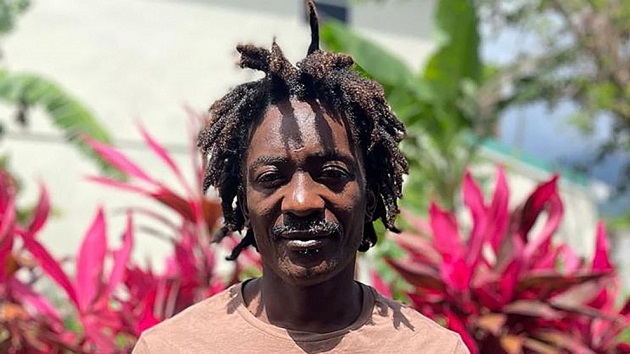
Emerline Anselm – CEO, EmoNews

(PORT OF SPAIN, Trinidad) — After surviving on ketchup while lost at sea for weeks, Elvis Francois said he is hoping a ketchup company’s social media search for him can lead to easier days ahead.

“I’m kind of stressed out,” Francois told ABC News, from Paix Bouche, a village located in the northern part of Dominica.

Francois said he had just finished a virtual meeting with officials from The Kraft Heinz Company, the maker of Heinz ketchup.

“They say they’re going to organize, to see how I could get something,” Francois said.

The company just days earlier sent out a social media SOS, with the hashtag #FindTheKetchupBoatGuy, trying to find him.

Francois, a 47-year-old Dominican native had spent 24 days drifting in the Caribbean Sea.

That drift began on a December day, as Francois was repairing his boat at a port in Saint Martin. While drifting, he said he ate ketchup three times a day. Seaweed and sea water also became part of his diet to stay alive.

“If I didn’t have those things I wouldn’t have made it,” Francois told ABC News. “At a certain time I had kind of given up, I had no hope.”

A plane spotted Francois in waters off the northen tip of Colombia. Pilots notified Colombian authorities, who then radioed a large cargo ship.

After he was rescued, authorities sent him back to Dominica. A fire had destroyed Francois’ home in the fishing village of Anse De Mai, Dominica, a year ago. He said he lost everything, and left the island in search of a better life. He ended up in Saint Martin.

He now sleeps in what’s left of his burned-down house.

“I just blocked up a side, and that’s how I’m living for the time,” Francois said.

“Trying to go in the market, and see if I could sell produce, but after a year there’s nothing much in the soil,” he added.

Heinz’s social media search ended after Dominican news outlet EmoNews was able to track down Francois.

“Heinz was able to contact Elvis and discuss the best way to help support him and his family,” said a Kraft Heinz spokesperson, Jenna Thornton. “Heinz and Elvis are working out the logistical details of gifting him his new boat,” she said.

Francois told ABC News he’s hoping the helping hand from the American company comes soon, and that he needs a financial lifeline to survive now that he’s back on land.

“There’s a lot of other things I need, because for the moment, I’m at zero,” he said.

Copyright © 2023, ABC Audio. All rights reserved.

Peruvian man found carrying mummy at least 600 years old in food delivery bag

Peruvian man found carrying mummy at least 600 years old in food delivery bag
belterz/Getty Images

(PUNO, Peru) — A man stopped for drinking in a park in Peru was found to be in possession of more than just a container of alcohol.

Juan Cesar Bermejo, 26, had a 600 to 800-year-old mummy in a cooler bag, authorities in the South American nation told ABC News.

Bermejo, a food delivery man, was allegedly showing off the mummy to two friends in the park in the southern city of Puno on Saturday, the Peruvian National Police said.

“I take care of her and she takes care of me,” Bermejo allegedly told police to justify the presence of the mummified corpse in his bag.

Police say Bermejo was on the job at the time he was stopped and searched.

According to police, Bermejo said he even named the mummy “Juanita” and called her his “spiritual friend.”

But authorities say the mummy is believed to be that of a male. Its now in possession of Peru’s ministry of culture, authorities said this week.

It’s unclear how the man came to be in possession of the mummy. Mummification was a common practice among several cultures in Peru before the arrival of Spanish conquistadores in the 16th Century. In November 2021, archeologists in Peru discovered a mummy believed to be up to 1,200 years old in a underground tomb.

Bermejo has been charged with illegal possession of historical patrimony and could face up to 5 years in jail.

Copyright © 2023, ABC Audio. All rights reserved.

At least 43 dead, dozens more injured in Greek train derailment

At least 57 dead, dozens more injured in Greek train derailment
SAKIS MITROLIDIS/AFP via Getty Images

(TEMPI, Greece) — At least 43 people were killed and more than 80 others injured in a head-on collision between a freight train and a passenger train in Greece late Tuesday, in what was mainly due to human error, officials said.

The two trains that crashed into one another were running on the same line for 12 minutes, and a distance of about 11 miles, Greek state TV said Wednesday.

The majority of those killed were between the ages of 20 and 30 years old, Roubini Leontari, the chief coroner of the general hospital in Larissa, Greece, told Greek state TV.

The passenger train was traveling at a speed of about 103 mph when it hit the freight train, according to the Greek Fire Service.

The crash occurred shortly before midnight in the town of Tempi along the Athens-Thessaloniki route at the entrance to the Vale of Tempe, a tree-lined gorge that separates the northern Greek regions of Thessaly and Macedonia. The two trains were running toward each other on the same track and the force of the high-speed collision derailed multiple cars, with some bursting into flames, according to Greece’s Hellenic Fire Service.

Greek Prime Minister Kyriakos Mitsotakis said in remarks Wednesday that the train collision was “mainly due to tragic human error.”

About 350 people were on board the northbound passenger train, which was traveling from Athens to Thessaloniki, according to the Greek rail operator Hellenic Train.

At least 150 firefighters, including some from specialized units, and 40 ambulances responded to the scene with the assistance of 32 police officers and 15 patrol vehicles, according to the Hellenic Fire Service.

The next morning, rescuers were still searching for survivors in the smoking wreckage, using cranes to lift the derailed carriages. Their efforts were initially focused on the first two cars, which had “overturned” and were “the most difficult to extricate,” a Hellenic Fire Service spokesperson said in a statement early Wednesday.

The impact of the collision left the passenger train’s restaurant car on top of two other cars. A blaze broke out in that carriage, with temperatures reaching as high as 1,300 degrees Celsius (2,372 degrees Fahrenheit), which “makes it difficult to identify the people inside,” the Hellenic Fire Service spokesperson said in a statement on Wednesday afternoon.

The search and rescue operation at the site of the train collision will continue overnight, the Greek Fire Service said in a statement late Wednesday.

The fire servicemen will continue the search “until the last stone is turned,” the Greek Fire Service said.

A 59-year-old Greek citizen has been arrested in connection with the ongoing investigation into the deadly crash, according to Greece’s Hellenic Police.

Meanwhile, authorities are still working to identify the dead, whose bodies were taken to the general hospital in the nearby city of Larissa, a Hellenic Police spokesperson said in a statement on Wednesday afternoon.

As for the injured, 72 remain hospitalized, including six in critical condition, while the rest have been treated and released, according to the Hellenic Fire Service.

The Greek government has declared three days of national mourning in the wake of the tragedy.

Greece “will stand by the families of the victims” and “work so that this ‘never again’ that I heard in Larissa will not be a hollow word,” Prime Minister Mitsotakis said in a short video address posted on his official Twitter account Wednesday.

Greek Transport Minister Kostas Karamanlis announced his resignation on Wednesday after visiting the crash site in Tempi, saying he felt it was his “duty” to do so “as a minimum sign of respect” to the victims.

“When something this tragic happens, it is impossible to go on as if it didn’t happen,” Karamanlis wrote in a post on Facebook. “This is called political responsibility.”

Prime Minister Mitsotakis announced he has appointed a new interim Minister of Infrastructure and Transport, George Gerapetritis, to hold the office until national elections.

Mitsotakis asked the new interim minister to establish an “independent and non-partisan committee of experts” to investigate the cause of the accident and investigate the “long-standing delays” in the implementation of railway projects.

Two more executives also resigned on Wednesday in the wake of the crash, according to Mitsotakis: Spyros Pateras, the president of the Hellenic Railways Association, and Christos Vinis, president and managing director of the national railway subsidiary ERGOSE.

ABC News’ Ellie Kaufman and Daphne Tolis contributed to this report.

Copyright © 2023, ABC Audio. All rights reserved.

What’s likely behind mysterious ‘Havana syndrome’ that plagued US diplomats

What’s likely behind mysterious ‘Havana syndrome’ that plagued US diplomats
Graeme Jennings – Pool/Getty Images

(WASHINGTON) — A review of ‘Havana syndrome” by the U.S. intelligence community finds it “very unlikely” that a foreign adversary or energy weapon is the cause, officials said Wednesday.

That’s according to a new assessment from the Office of the Director of National Intelligence (ODNI) released on Wednesday.

Instead, Director of National Intelligence Avril Haines said in a statement that the events, which are referred to officially as Anomalous Health Incidents, were probably the result of other factors such as “preexisting conditions, conventional illnesses, and environmental factors.”

Haines added that the evidence also did not indicate that a “causal mechanism,” such as a weapon, or a “unique syndrome” brought on the reported symptoms.

The report from ODNI added that confidence in the explanation was “bolstered by fact we identified medical, environmental and social factors that plausibly can explain many AHIs reported by U.S. officials,” but that the level of confidence varied across agencies.

“Needless to say, these findings do not call into question the very real experiences and symptoms that our colleagues and their family members have reported,” Haines said. “We are sincerely grateful to those who came forward, as it helped to not only shape our response, but identify areas where we need to improve our medical and counterintelligence protocols, which remains an ongoing process.”

In a statement of his own, CIA director William Burns noted the assessment was the product of “more than two years of rigorous, painstaking collection, investigative work, and analysis” and “one of the largest and most intensive” in the agency’s history.

But there are still many unanswered questions, and not everyone is pleased with what they called the limited information declassified to support the conclusion.

Mark Zaid, an attorney whose firm represents dozens of AHI victims, said in a statement to ABC News that the assessment “lacks transparency,” adding, “we continue to question the accuracy of the alleged findings.”

“Until the shrouds of secrecy are lifted and the analysis that led to today’s assertions are available and subject to proper challenge, the alleged conclusions are substantively worthless,” he said. “But the damage it has caused to the morale of the victims, particularly by deflecting from the government’s failure to evaluate all the evidence, is real and must be condemned.”

While this assessment is the result of the extensive known effort conducted by the government to identify the cause of strange symptoms that have plagued hundreds of diplomats, intelligence officers, and other U.S. personnel serving abroad, previous inquires have come to similar conclusions.

A comprehensive review conducted by the CIA and released in January found it was unlikely that a foreign power was behind most of the incidents, but a later interagency report found that some of the cases were likely brought on by directed energy or acoustic devices, suggesting they were the result of deliberate attacks.

“Havana syndrome” was first reported in late 2016 by State Department personnel stationed in the Cuban capital, but soon, diplomats stationed around the world began experiencing similar, unexplained neurological symptoms.

Symptoms are said to vary in type and severity, but often are reported to include the sudden onset of severe headaches, difficulty concentrating, auditory disturbances, and memory loss.

The initial incidents led to increased strain on the already fraught ties between the U.S. and Cuba, and eventually the American embassy was shuddered during the Trump administration.

Earlier this year, the State Department said it was reopening processing for all immigrant visa categories at the U.S. Embassy in Cuba and increasing its staffing numbers, even though Havana Syndrome was still a poorly understood threat.

“The fact that we have been able to augment our staffing posture at our embassy in Havana is a signal that we are confident in our ability to mitigate the risks, confident in our ability to take prudent steps to protect our people. But this is something we evaluate and reevaluate on a virtually a daily basis,” department spokesperson Ned Price said at the time. “Diplomacy is never a risk-free endeavor.”

In September 2022, the State Department announced it had started approving payments for victims of the anomalous health incidents in accordance with the HAVANA Act — the unanimously passed bill that authorizes agencies to compensate “personnel who incur brain injuries from hostilities while on assignment.”

While plans vary across the federal government, the State Department said in June 2022 that it would provide eligible victims a one-time, non-taxable, lump sum of between $140,475 and $187,300. The total would depend on whether the requestor had reemployment potential, if they required a full-time caregiver for activities of daily living, and other factors.

To qualify, a document published by the State Department says applicants must have sustained “an acute injury to the brain such as, but not limited to, a concussion, penetrating injury, or as the consequence of an event that leads to permanent alterations in brain function,” a medical diagnosis of a traumatic brain injury, or the acute onset of new persistent, disabling neurologic symptoms.

The injury also must have occurred on or after Jan. 1, 2016, and it must have happened while the impacted person or the victim’s direct family member was working for the department.

“Because of the varied symptoms and still-nascent understanding of how to test or otherwise screen for AHI impacts, the Department sought to establish a standard that it believes will be broadly inclusive of the types of injuries that have been reported by covered individuals to date,” the document states.

ABC News’ Cindy Smith contributed to this report.

Copyright © 2023, ABC Audio. All rights reserved.

Finland begins construction of barrier wall along border with Russia

Finland begins construction of barrier wall along border with Russia
pop_jop/Getty Images

(NEW YORK) — Finland has begun construction on a barrier fence along the border it shares with Russia, the country announced. Construction will begin on a pilot phase that’s 3 kilometers, or 1.8 miles, in length in order to test the barrier’s capabilities before completing the entire project.

The full barrier is expected to take three to four years to build, depending on funding and the smoothness of the construction process, the country said.

The border between Russia and Finland is 1,300 kilometers, or over 800 miles, long. The barrier being built will be about 130 to 260 kilometers, or 80 to 160 miles, long when completed.

Construction of the border comes months after Finland and Sweden abandoned their longstanding policy of military nonalignment and applied to join NATO in response to Russia’s invasion of Ukraine. The Finnish parliament approved the country joining NATO in a vote on Wednesday, though Turkey and Hungary — two of the 30 NATO countries — still have to approve Sweden and Finland’s entry.

“In the assessment of the Finnish Border Guard, the changed security environment has made it necessary to construct a barrier fence along part of the eastern border,” the Finnish Border Guard wrote on a website dedicated to the barrier fence.

“Russia implements border control of traffic moving from Russia into Finland, thus preventing attempts at illegal entry. If Russia reduces its border control, this may cause additional pressure at the Finnish end to control illegal entry. Finland cannot rely on the effectiveness of Russian border control,” it added.

Finland has also vowed to support Ukraine, sending it shipments of weapons.

Construction of the pilot fence has started in Pelkola, Finland, at the Imatra border crossing point, according to the Finnish Border Guard. The pilot is expected to be completed by the end of June.

Forest clearance at the terrain began on Tuesday. Road construction and fence installation should begin in March. A technical surveillance system will also be installed after construction, according to the Finnish Border Guard.

Another 300-meter barrier fence will also be built in the Immola garrison during the pilot phase of construction. It will serve as a test area for surveillance technology and become part of the training environment for the Border and Coast Guard Academy, the Finnish Border Guard said in a statement.

After the barrier is completed, landowners in the area near the border will be paid a lump sum for permanent damage and harm caused by the construction.

A road will also be built for the movement and maintenance of border patrols near the fence under construction.

Copyright © 2023, ABC Audio. All rights reserved.
At least 38 dead, dozens more injured in Greek train derailment

At least 57 dead, dozens more injured in Greek train derailment
SAKIS MITROLIDIS/AFP via Getty Images

(NEW YORK) — At least 38 people were killed and more than 80 others injured in a head-on collision between a freight train and a passenger train in Greece late Tuesday, officials said.

The crash occurred shortly before midnight in the town of Tempi along the Athens-Thessaloniki route at the entrance to the Vale of Tempe, a tree-lined gorge that separates the northern Greek regions of Thessaly and Macedonia. The two trains were running toward each other on the same track and the force of the high-speed collision derailed multiple cars, with some bursting into flames, according to Greece’s Hellenic Fire Service.

About 350 people were on board the northbound passenger train, which was traveling from Athens to Thessaloniki, according to the Greek rail operator Hellenic Train.

At least 150 firefighters, including some from specialized units, and 40 ambulances responded to the scene with the assistance of 32 police officers and 15 patrol vehicles, according to the Hellenic Fire Service.

The next morning, rescuers were still searching for survivors in the smoking wreckage, using cranes to lift the derailed carriages. Their efforts were initially focused on the first two cars, which had “overturned” and were “the most difficult to extricate,” a Hellenic Fire Service spokesperson said in a statement early Wednesday.

The impact of the collision left the passenger train’s restaurant car on top of two other cars. A blaze broke out in that carriage, with temperatures reaching as high as 1,300 degrees Celsius (2,372 degrees Fahrenheit), which “makes it difficult to identify the people inside,” the Hellenic Fire Service spokesperson said in a statement on Wednesday afternoon.

A 59-year-old Greek citizen has been arrested in connection with the ongoing investigation into the deadly crash, according to Greece’s Hellenic Police.

Meanwhile, authorities are still working to identify the dead, whose bodies were taken to the general hospital in the nearby city of Larissa, a Hellenic Police spokesperson said in a statement on Wednesday afternoon.

As for the injured, 72 remain hospitalized, including six in critical condition, while the rest have been treated and released, according to the Hellenic Fire Service.

The Greek government has declared three days of national mourning in the wake of the tragedy.

Greek Transport Minister Kostas Karamanlis announced his resignation on Wednesday after visiting the crash site in Tempi, saying he felt it was his “duty” to do so “as a minimum sign of respect” to the victims.

“When something this tragic happens, it is impossible to go on as if it didn’t happen,” Karamanlis wrote in a post on Facebook. “This is called political responsibility.”

Copyright © 2023, ABC Audio. All rights reserved.