

GHF unveils new ‘flag system’ at aid site in southern Gaza as Palestinians continue to report chaos, deaths

GHF unveils new ‘flag system’ at aid site in southern Gaza as Palestinians continue to report chaos, deaths
Abed Rahim Khatib/Anadolu via Getty Images

LONDON — The U.S.-backed Gaza Humanitarian Foundation (GHF) announced some changes at its Khan Younis aid distribution center on Monday, as Palestinians continue to report mass killings and chaos near aid distribution sites in the Gaza Strip.

The center will now use “a flag system” in place to indicate the status of the site, with the red flag signifying the site is closed and the green flag showing it is open, according to a social media post from GHF.

The announcement comes after major controversies around GHF’s operations since it took over most of the humanitarian aid distribution in the Gaza Strip on May 27 after Israel had blockaded supplies getting into the strip for more than two months.

Since the end of May, at least 798 people have been killed near and around food aid sites, according to a United Nations statement on Thursday. Among them, 615 people were killed on their way to GHF sites and 183 near other aid convoys, the UN statement added.

Reacting to the new GHF flag system, Ibrahiem Mohammed Abdul Raouf Al Qatrawi, a 22-year-old Palestinian, called for the total cancellation of the GHF aid system, telling ABC News on Monday that “respect and dignity” should be restored.

“The humiliation we live is really difficult at the American aid centers, not to mention the fear, I even feel sorry for myself, going through this,” Al Qatrawi said.

“It’s a death trap, it’s very dangerous over there,” Hazem Al Taweel, a Palestinian who had recently returned from getting aid at one GHF center, told ABC News on Sunday. “You can go there to bring a bag [of food] but you get brought back in a bag.”

“You see snipers, quadcopters and tanks. You feel the whole world is fighting you over your food. It’s very difficult, even those who get minor injuries bleed to death while no one can help them,” Al Taweel added. As he went to collect aid recently, he said he was surrounded by dead bodies. Ambulances were not allowed to reach the injured, he said.

Responding to ABC News on the hundreds killed near the aid site, the Israel Defense Forces (IDF) said Saturday in a statement it “allows the American civilian organization (GHF) to distribute aid to Gaza residents independently, and operates in proximity to the new distribution zones to enable the distribution alongside the continuation of IDF operational activities in the Gaza Strip.

The IDF added, “The aforementioned incidents are under review by the competent authorities in the IDF.”

Israel says it implemented the distribution system built around GHF to keep Hamas from stealing aid and using it to support its militants. Israeli officials have long accused Hamas of seizing humanitarian goods and selling them to fund militant activity. Hamas denies those claims. A State Department spokesperson issued a statement to the Wall Street Journal that said the Trump administration supports GHF, because it is “the only pipeline that denies Hamas resources and control.”

The GHF called the UN report “false and misleading” in a statement, accusing the UN of using numbers from the Hamas-run Gaza Ministry of Health. The organization added, “The UN’s reliance and coordination with a terrorist organization to falsely smear our effort is not only disturbing but should be investigated by the international community.”

Nonetheless, the risk is mounting for hungry Palestinians as they try to get food and water.

On Sunday, 12-year-old Siraj Khaled Ibrahim was waiting in line to collect water for his family in Nuseirat Camp, in the center of the Gaza Strip, when he was killed in an airstrike, his family told ABC News. Siraj and at least nine other Palestinians, including five other children, were killed in the IDF airstrike near the water distribution point, according to Al-Awda hospital, where the deceased were taken.

ABC News has verified video of Siraj’s father carrying his son’s blood-covered body in the aftermath of the attack. The video was widely shared online. In the video, Siraj’s father can be heard saying, “Oh my boy, why did you go to fetch water? We didn’t need water.”

“He had the most beautiful heart in the world,” Hamza Ibrahim, a relative of Siraj, told ABC News. “He would memorize Quran and was a football fan,” he added.

The IDF told ABC News on Sunday that the strike near the water distribution was “a technical error with the munition,” and the main target was “an Islamic Jihad terrorist” in the central Gaza Strip. “The IDF is aware of the claim regarding casualties in the area as a result, and the details of the incident continue to be examined,” the statement added.

Copyright © 2025, ABC Audio. All rights reserved.
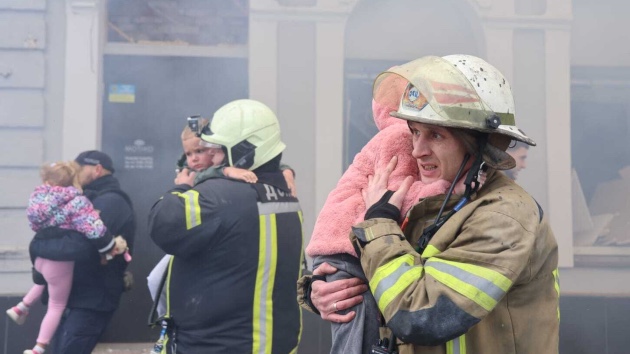
Japan doesn’t plan on responding to Trump tariff threats with countermeasures, government official says

Japan doesn’t plan on responding to Trump tariff threats with countermeasures, government official says
Photo by Buddhika Weerasinghe/Getty Images

(TOKYO) — While the European Union has vowed to impose countermeasures if the Trump administration moves forward with its planned 30% tariffs on all EU exports to the U.S., another key strategic ally, Japan, is taking a different approach.

Unlike the European Union, the Japanese government has made no indication it plans to impose any kind of reciprocal tariff on the U.S., even if the U.S. does move forward with its planned 25% tariffs on all Japanese exports.

“We have no intention to change” the Japan-U.S. ally relationship, a Japanese government official told ABC News. “We will cooperate with the United States to make a win-win situation.”

While the European Union has vowed to impose countermeasures if the Trump administration moves forward with its planned 30% tariffs on all EU exports to the U.S., another key strategic ally, Japan, is taking a different approach.

Unlike the European Union, the Japanese government has made no indication it plans to impose any kind of reciprocal tariff on the U.S., even if the U.S. does move forward with its planned 25% tariffs on all Japanese exports.

“We have no intention to change” the Japan-U.S. ally relationship, a Japanese government official told ABC News. “We will cooperate with the United States to make a win-win situation.”

Japan has attempted to remain calm since President Donald Trump first announced potential tariffs on all Japanese exports this spring, sticking with a strategy of steady diplomacy, a promise to invest further in the U.S. and patience.

Japanese government officials have met with their U.S. counterparts seven times since Japanese Prime Minister Shigeru Ishiba’s initial meeting with Trump at the White House in February, the Japanese government official said. Trump and Ishiba also met on the sidelines of the G7 summit in Canada in June before Trump cut his trip short.

Ishiba was the second world leader to visit Trump at the White House after he took office in January.

Hideo Kumano, Japanese chief economist at Dai-ichi Life Research Institute, warned if the U.S. tariffs are imposed on Japanese goods, Japan will likely see a recession.

“It’s inevitable to see some kind of damage,” Kumano told ABC News. “There is a possibility that we will fall into recession.”

But Kumano said he doesn’t think Japan should retaliate like some other countries have to Trump’s tariff threats.

“Trump is emotional, and countries like India or Brazil, they reacted in the same manner, and they also wanted to punish such a policy and impose high tariffs in response,” Kumano said. “Europe is insinuating something like that, but I don’t think Japan should do the same.”

Instead, Kumano believes Japan should “smile superficially” and then “behind the scenes,” prepare for the potential impacts of the coming tariffs.

“Behind the scenes, Japan or Japanese companies should react to potential impact of the tariffs and control or manage the transactions with the U.S.,” Kumano said.

Copyright © 2025, ABC Audio. All rights reserved.

Trump sending weapons to Ukraine, threatens ‘severe tariffs’ against Russia if ceasefire deal not reached in 50 days

Trump sending weapons to Ukraine, threatens ‘severe tariffs’ against Russia if ceasefire deal not reached in 50 days
Michael Sorrow/Anadolu via Getty Images

(BUDAPEST) — President Donald Trump threatened “severe tariffs” against Russia if a ceasefire deal isn’t reached in 50 days over its war in Ukraine.

“We’re very, very unhappy with them,” Trump said of Russia during remarks in the Oval Office alongside NATO Secretary-General Mark Rutte on Monday.

“Tariffs at about 100%. You call them secondary tariffs, you know what that means,” he added.

Trump also announced an agreement with NATO regarding weapons to assist Ukraine amid Russia’s onslaught.

“We’ve made a deal today where we are going to be sending them weapons and they’re going to be paying for them. We, the United States, will not be having any payment made,” Trump said.

Rutte called the deal “really big” and said this is “Europeans stepping up.”

The announcement comes after Russia launched four missiles and 136 drones into Ukraine overnight into Monday morning, according to Ukraine’s air force.

Ukraine’s air force said in a post to Telegram that 108 drones were shot down or otherwise neutralized during the latest attack, with 28 drones impacting in 10 locations. Falling debris from downed drones was reported in four locations, the air force said.

Russia’s Defense Ministry, meanwhile, said its forces downed 11 Ukrainian drones overnight into Monday morning.

Russian President Vladimir Putin is continuing the long-range bombardment of Ukrainian cities despite criticism from Trump, whose months-long push for a ceasefire and eventual peace deal has thus far failed to achieve a breakthrough.

Trump had said Sunday that the U.S. would provide Kyiv with more Patriot surface-to-air systems to help defend against Russia’s nightly bombardments.

Asked when he expected some weapons, including Patriot systems, to arrive in Ukraine, Trump told reporters on Monday, “We’re going to have some come very soon, within days.”

Rutte added that the next arms delivery to Ukraine will encompass a wider range of military equipment, extending beyond the Patriot missile systems.

Trump said Sunday that the U.S. would provide more “sophisticated” equipment to aid Kyiv in its defense against Russian attacks.

“We basically are going to send them various pieces of very sophisticated military equipment,” Trump told reporters on Sunday. “They’re going to pay us 100% for them, and that’s the way we want it,” Trump said.

Asked if he would still send 10 Patriot missiles to Ukraine — as announced last week — the president said the number has not been finalized but that Kyiv would be receiving more aid.

“I haven’t agreed on the number yet, but they’re going to have some because they do need protection,” he said.

“But the European Union is paying for it,” Trump added. “We’re not paying anything for it, but we will send it. It will be business for us, and we will send them Patriots, which they desperately need, because Putin really surprised a lot of people.”

“He talks nice and then he bombs everybody in the evening. There’s a little bit of a problem there,” Trump continued.

The Patriot surface-to-air missile system has become one of Ukraine’s most important platforms during Russia’s full-scale invasion, which began in February 2022. Since 2023, Patriots in Ukraine have been used to down drones, ballistic missiles and Russian aircraft.

Ukraine now fields at least six Patriots, two of which were provided by the U.S. and the others by different NATO allies.

Ukraine has other air defense platforms — among them the European IRIS-T and SAMP-T systems — but none have been so publicly celebrated by Ukraine for blunting Russian attacks. The system, which entered U.S. service in the 1980s, has even been credited with shooting down Russian hypersonic missiles.

Sen. Lindsey Graham told ABC News last week that Trump is “ready” to act on a sweeping Senate bill that would impose tariffs of up to 500% on countries that buy oil and gas from Russia.

Trump, Graham said Wednesday, is “trying to get Putin to the table, but Putin’s not responding.” The legislation will include a waiver allowing Trump to lift sanctions on countries purchasing Russian oil or uranium for 180 days, Graham said.

Responding to Trump’s remarks on Sunday, Kremlin spokesperson Dmitry Peskov told reporters at a Monday briefing, “A lot has been said about the high cost and so on, now it seems that these supplies will be paid for by Europe,” as quoted by Russia’s state Tass news agency.

“Some things will be paid for, some things will not be paid for, but the fact remains that the supply of weapons, ammunition and military equipment from the United States has continued and continues to Ukraine,” Peskov said,

Meanwhile, Trump’s Russia-Ukraine envoy Keith Kellogg met with Ukrainian President Volodymyr Zelenskyy in Kyiv on Monday. Zelenskyy said they had a “productive conversation” in which they discussed possible sanctions against Russia.

“We discussed the path to peace and what we can practically do together to bring it closer,” Zelenskyy said in a statement. “This includes strengthening Ukraine’s air defense, joint production, and procurement of defense weapons in collaboration with Europe. And of course, sanctions against Russia and those who help it.”

ABC News’ Hannah Demissie and Alexandra Hutzler contributed to this report.

Copyright © 2025, ABC Audio. All rights reserved.
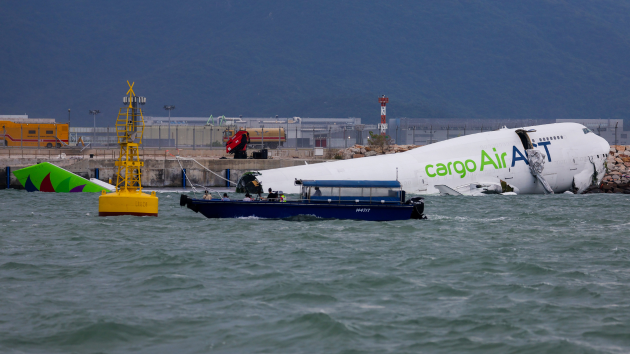
Small plane crashes at London Southend Airport, killing all 4 passengers on board

Small plane crashes at London Southend Airport, killing all 4 passengers on board
Oliver Helbig/Getty Images

(LONDON) — A small plane crashed at London Southend Airport in Sussex, England, on Sunday, killing all four people on board, according to local officials.

On Sunday, Essex Police said they were on the scene after a “serious incident” occurred at the Southend airport at approximately 4 p.m. local time. They said they are responding to reports of a “collision involving one 12 metre plane” and said the emergency response will last several hours.

The aircraft — which had landed at the airport earlier in the day — took off and was heading to the Netherlands, Essex Police said on Monday. But shortly after takeoff, the plane got “into difficulty and crashed within the airport boundary.”

Police are “working to officially confirm” the identities of the four dead people but they believe all are foreign nationals, authorities said on Monday.

“Our thoughts are with their families and colleagues at this tragic time. I can promise them that those who have passed away will be treated with the utmost care and dignity,” police said.

Zeusch Aviation confirmed on Sunday its flight SUZ1 was involved in the incident and that the company is “actively supporting the authorities with the investigation.”

The East England Ambulance Service said they’ve sent “four ambulances, a rapid response vehicle, four Hazardous Are Response Team vehicles, three senior paramedic cars and an Essex and Herts Air Ambulance” to the airport.

Officials said the public should avoid the area and that they are evacuating the Rochford Hundred Golf Club and Westcliff Rugby Club “due to their proximity to the incident.”

London Southend Airport confirmed the “serious incident” on Sunday afternoon involving a “general aviation aircraft.”

“We are working closely with the local authorities and will be able to provide more information as soon as possible,” the airport said in a statement.

Airport authorities later said the airport is closed until further notice as investigations respond to the incident.

“All flights to and from the Airport have been cancelled while Police, emergency services and air accident investigators are attending the incident. We ask that any passengers due to travel tomorrow via London Southend Airport contact their airline for information and advice,” airport officials said in a statement.

The spokesperson for the Air Accidents Investigation Branch said they are aware of they accident “involving an aircraft near Southend Airport this afternoon” and have deployed a “team and an investigation into the cause of the accident.”

London Southend Airport is located about one hour east of London, a few miles from the coast.

ABC News’ Victoria Beaule, Ayesha Ali and Will Gretsky contributed to this story.

Copyright © 2025, ABC Audio. All rights reserved.
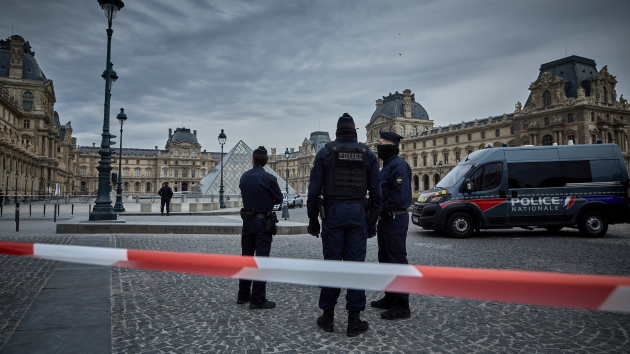
Russia launches 136 drones into Ukraine ahead of expected Trump announcement

Trump sending weapons to Ukraine, threatens ‘severe tariffs’ against Russia if ceasefire deal not reached in 50 days
Michael Sorrow/Anadolu via Getty Images

BUDAPEST — Russia launched four missiles and 136 drones into Ukraine overnight into Monday morning, according to Ukraine’s air force, after President Donald Trump said the U.S. would provide Kyiv with more Patriot surface-to-air systems to help defend against Russia’s nightly bombardments.

Ukraine’s air force said in a post to Telegram that 108 drones were shot down or otherwise neutralized during the latest attack, with 28 drones impacting in 10 locations. Falling debris from downed drones was reported in four locations, the air force said.

Russia’s Defense Ministry, meanwhile, said its forces downed 11 Ukrainian drones overnight into Monday morning.

Russian President Vladimir Putin is continuing the long-range bombardment of Ukrainian cities despite criticism from Trump, whose months-long push for a ceasefire and eventual peace deal has thus far failed to achieve a breakthrough.

Ahead of an expected announcement on his Ukraine-Russia policy on Monday, Trump said Sunday that the U.S. would provide more “sophisticated” equipment to aid Kyiv in its defense against Russian attacks.

Trump is also expected to meet with NATO Secretary-General Mark Rutte in Washington, D.C., on Monday.

“We basically are going to send them various pieces of very sophisticated military equipment,” Trump told reporters on Sunday. “They’re going to pay us 100% for them, and that’s the way we want it,” Trump said.

Asked if he would still send 10 Patriot missiles to Ukraine — as announced last week — the president said the number has not been finalized but that Kyiv would be receiving more aid.

“I haven’t agreed on the number yet, but they’re going to have some because they do need protection,” he said.

“But the European Union is paying for it,” Trump added. “We’re not paying anything for it, but we will send it. It will be business for us, and we will send them Patriots, which they desperately need, because Putin really surprised a lot of people.”

“He talks nice and then he bombs everybody in the evening. There’s a little bit of a problem there,” Trump continued.

The Patriot surface-to-air missile system has become one of Ukraine’s most important platforms during Russia’s full-scale invasion, which began in February 2022. Since 2023, Patriots in Ukraine have been used to down drones, ballistic missiles and Russian aircraft.

Ukraine now fields at least six Patriots, two of which were provided by the U.S. and the others by different NATO allies.

Ukraine has other air defense platforms — among them the European IRIS-T and SAMP-T systems — but none have been so publicly celebrated by Ukraine for blunting Russian attacks. The system, which entered U.S. service in the 1980s, has even been credited with shooting down Russian hypersonic missiles.

Trump declined to say whether he would be announcing new sanctions on Russia on Monday.

Sen. Lindsey Graham told ABC News last week that Trump is “ready” to act on a sweeping Senate bill that would impose tariffs of up to 500% on countries that buy oil and gas from Russia.

Trump, Graham said Wednesday, is “trying to get Putin to the table, but Putin’s not responding.” The legislation will include a waiver allowing Trump to lift sanctions on countries purchasing Russian oil or uranium for 180 days, Graham said.

Meanwhile, Trump’s Russia-Ukraine envoy Keith Kellogg arrived in Kyiv on Monday.

Andriy Yermak, the head of Ukraine’s presidential office, welcomed Kellogg in a post to Telegram. “Peace through strength is the principle of U.S. President Donald Trump, and we support this approach,” he said.


Copyright © 2025, ABC Audio. All rights reserved.
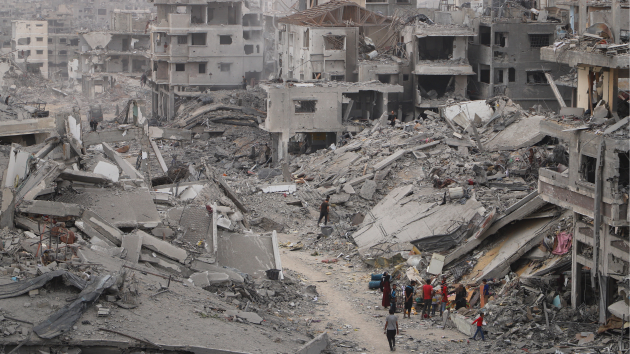
Emergency teams respond to plane ‘collision’ at London Southend Airport

Small plane crashes at London Southend Airport, killing all 4 passengers on board
Oliver Helbig/Getty Images

(LONDON) — A small plane was involved in a “collision” at London Southend Airport in Sussex, England, on Sunday, according to Essex Police.

Essex Police said they are on the scene after a “serious incident” occurred at the Southend airport at approximately 4 p.m. local time on Sunday. They said they are responding to reports of a “collision involving one 12 metre plane” and said the emergency response will last several hours.

The East England Ambulance Service said they’ve sent “four ambulances, a rapid response vehicle, four Hazardous Are Response Team vehicles, three senior paramedic cars and an Essex and Herts Air Ambulance” to the airport.

Officials said the public should avoid the area and that they are evacuating the Rochford Hundred Golf Club and Westcliff Rugby Club “due to their proximity to the incident.”

Police said updates will be issued “as soon as possible.”

London Southend Airport is located about one hour east of London, a few miles from the coast.

This is a developing story. Please check back for updates.

ABC News’ Victoria Beaule contributed to this story.

Copyright © 2025, ABC Audio. All rights reserved.
Sudan has become a ‘case study’ for the impact of USAID cuts, aid worker says

Sudan has become a ‘case study’ for the impact of USAID cuts, aid worker says
pawel.gaul/Getty Images

(WASHINGTON) — Humanitarians in Sudan, where a two-year civil war has given rise to the world’s most acute needs and made assistance increasingly difficult, warn that a vacuum left by cuts to U.S. funding for aid programs cannot be filled.

The civil war between the country’s army and a paramilitary group has displaced 11 million people internally and 4 million more are refugees in other countries. It’s the only place in the world where famine conditions have been confirmed in multiple locations, and the United Nations says 30 million Sudanese require assistance — or 60% of the country’s population.

The U.S. shuttered its arm for foreign assistance at the beginning of July, formerly the U.S. Agency for International Development, folding it under the State Department in a move Secretary of State Marco Rubio said marked the end of an “era of government-sanctioned inefficiency.” And the U.S. Senate could vote on legislation proposed by the Trump Administration as soon as this week to claw back over $8 billion in funding due to be dispersed for USAID in the remainder of the fiscal year.

“Moving forward, our assistance will be targeted and time limited,” Rubio wrote on Substack, adding the U.S. “will favor those nations that have demonstrated both the ability and willingness to help themselves and will target our resources to areas where they can have a multiplier effect.”

The months-long drawdown of USAID reduced its staff by 83% — down from 10,000 employees to a few hundred — and resulted in stop-work orders for grantees of its funds, including in Sudan. The State Department says the life-saving work of the agency, which distributes grants to aid implementers, is continuing, and said its new “America First” foreign assistance policy would be accountable to policymakers in Washington instead of global entities like the United Nations.

A senior State Department official last week called the end of USAID and the institution of a new overarching office at State “a milestone for American engagement in the world,” saying U.S. assistance abroad would be “linked up diplomatically” with U.S. interests.

The British medical journal Lancet found that in the absence of USAID’s funds and works, 14 million more people would die in the next five years, a third of those children under 5.

The senior State Department official downplayed the study.

“You can go back and relitigate all these little decisions. That’s not our focus. That’s not the secretary’s focus,” the official said. “We are excited about what sort of the America First foreign assistance agenda is going to look like, and how much impact we can have moving forward.”

Meanwhile, in the world’s most dire humanitarian crisis, where access for emergency food and medical workers has been made increasingly difficult by warring parties, people are fleeing violence on foot, children are malnourished, and Sudanese are dying from treatable conditions.

Pietro Curtaz, an emergency logistics coordinator for Médecins Sans Frontières (Doctors Without Borders, or MSF) said children he sees crossing Sudan’s border are malnourished at a rate of 29%.

The cuts to USAID — and the chaos that followed — have “come with a body count” in Sudan said Tom Perriello, the U.S. special envoy to Sudan in the last year of the Biden administration from 2024 to 2025.

There were 29 USAID employees in Sudan in 2023, at the outset of the war, according to then-administrator Samantha Powers.

The July 1 reprogramming of USAID into the State Department cut two additional U.S. staffers dedicated to Sudan, leaving just nine remaining in the region, said Andrea Tracy, a former USAID Sudan official who now runs her own humanitarian funding mechanism for the country.

Tracy saw colleagues lose their jobs on a daily basis as USAID wound down the programs it funded in the country, she told ABC News in a June phone call.

“I was talking to one of the regional directors the other day, and just that morning, she got an email saying another 40 programs are going to be cut,” she said. “So we haven’t found the floor yet.”

The dramatic reorientation of U.S. aid abroad comes as the United Kingdom, Switzerland, and Germany have announced a scaling down of their own foreign assistance budgets and as humanitarian crises in places like Sudan — where the civil war has stretched into a third year — deepen.

According to data from the U.N., USAID provided 44% of the world’s humanitarian funding in 2024 for Sudan.

A U.N. spokesman told ABC News that “food aid, nutrition support and essential health services” have been cut back as the U.N.’s annual fund for Sudan is funded at only 14%.

“Without urgent additional support, the risk of famine and further deterioration remains high,” said Dan Teng’o, a spokesperson for the U.N.’s Office for the Coordination of Humanitarian Affairs.

The State Department did not respond to requests by ABC News for the current data on its assistance commitments to Sudan after foreign aid freezes and layoffs.

But it said in a statement that “foreign assistance continues to arrive in Sudan,” citing a $56 million donation to the World Food Programme and a wheat grain delivery under USAID that would feed “as many as 3.2 million people for an entire month.”

It also said emergency assistance continues for refugees of Sudan who have been displaced to “seven neighboring countries due to the conflict.”

Important dollars for refugee assistance are in jeopardy, too, as humanitarians brace for the impacts of a proposed $1.7 billion cut to U.S. refugee assistance. As a part of Rubio’s reorganization, the State Department proposed a 50% reduction for aid to the world’s refugees in its 2026 budget request to Congress.

Chain reactions and health care at the brink

Humanitarians, who are legally protected under international law, have not been spared from the violence of the civil war, which has deprived people of the chance to stave off starvation and made access increasingly difficult.

Five humanitarians in June died when a U.N. convoy came under attack, the U.N. said.

In the void, small, grassroots organizations began to sprout when war broke out two years ago. A coalition known as Mutual Aid stood up emergency clinics and soup kitchens that became “a lifeline” for Sudanese, Tracy said. The coalition was backed by nearly 80% funding from USAID, organizers have said.

When the White House on President Donald Trump’s first day in office froze all U.S. assistance abroad, Tracy said, some 1,500 of the kitchens in Sudan closed almost immediately.

Perriello, whose role as the special envoy in Sudan has been left vacant by the Trump administration, said the Mutual Aid coalition was among a group of “edgy efforts … redefining approaches to aid.” These programs suffered the first and “deepest” cuts, he said.

Tracy said the pain from the cuts has been felt most acutely in the health sector, where medicine is not moving the way it used to and a “chain” of “different components that rely on each other” are not in place.

“Once you break one of those components, it all breaks,” she said.

MSF, which provides emergency medical care in Sudan, is operating in a country where the World Health Organization estimates only 20 to 30% of health facilities are operational.

“Wherever we look in Sudan, you will find humanitarian and medical needs. All those needs are overwhelming, urgent, and unfortunately, unmet,” Claire San Filippo, MSF’s emergency coordinator for Sudan, said.

A “case study” for impact of cuts

At the Tine border point in Chad, east of the violence-plunged Darfur region of Sudan, Curtaz, the emergency coordinator for MSF, told ABC News the cuts are impossible to miss.

“Clinically … we tend to see people that are in much worse condition than before because of all of that,” he said.

MSF is independent and donor-funded, taking no dollars from the U.S. government and therefore not directly affected by the cuts and shutdown of USAID.

Sudan has become a “case study” for the “impact of those cuts,” Curtaz said.

“One of the examples you can touch first,” he said, is the lack of shelter for refugees under a 110-degree sun. People arrive by foot in Chad having spent the day with no form of shelter, he said.

The 18,000 people hosted in Tine should have had at least 350 toilets, meeting a standard in acute situations of one toilet for every 50 people, Curtaz said. But for a group surging toward 20,000 people, it had only nine toilets.

Asked whether the large, interconnected humanitarian system is neglecting Sudan, Curtaz agreed.

“A majority of the weight is lying on us, on the host community and on grassroots organizations that are doing their best to support the population,” he said. “So, yes.”

“For the first time in my life,” Tracy said, MSF doctors and administrators told her “‘We really need the USAID money … to come back online, because we’re carrying way more of a load than we can handle. We’re falling apart here.’”

Copyright © 2025, ABC Audio. All rights reserved.

American killed by Israeli settlers in the West Bank, family says

American killed by Israeli settlers in the West Bank, family says
Issam Rimawi/Anadolu Agency via Getty Images

(RAMALLAH, WEST BANK) — A 20-year-old American from Florida was allegedly beaten to death by Israeli settlers while visiting his family in the West Bank, according to Palestinian health officials and his family.

Sayfollah “Saif” Musallet was killed in the town of Sinjil, north of Ramallah, according to the Palestinian Health Ministry in the West Bank.

A second man was also shot dead in the attacks, according to the health ministry.

Musallet was trying to protect his family’s land from Israeli settlers, who surrounded him for over three hours, blocking the ambulance from reaching him, according to his family. He died before making it to the hospital, they said.

He is the fifth American killed in the West Bank since the war between Israel and Hamas began on Oct. 7, 2023, when 1,200 Israelis were killed in a Hamas-led terrorist attack on southern Israel.

Musallet was born in Florida, lived in Tampa, and ran a business there, according to his family. He had traveled to the West Bank on June 4, they said.

“He was a kind, hard-working, and deeply-respected young man, working to build his dreams. Saif built a successful business in Tampa and was known for his generosity, ambition, and connection to his Palestinian heritage,” his family said in a statement.

The Israel Defense Forces said it was “aware of reports regarding a Palestinian civilian killed and a number of injured Palestinians as a result of the confrontation, and they are being looked into by the ISA and Israel Police.”

The IDF said rocks were thrown at Israeli settlers adjacent to Sinjil, causing light injuries.

“Shortly after, a violent confrontation developed in the area involving Palestinians and Israeli civilians, which included vandalism of Palestinian property, arson, physical clashes, and rock hurling,” the IDF said.

Musallet’s family is demanding “the U.S. State Department lead an immediate investigation and hold the Israeli settlers who killed Musallet accountable for their crimes.”

“This is an unimaginable nightmare and injustice that no family should ever have to face,” the family said in a statement.

The family said they demand “justice.”

“We are devastated that our beloved Sayfollah Musallet (nicknamed Saif) was brutally beaten to death by Israeli settlers while he was protecting his family’s land from settlers who were attempting to steal it,” his family said.

ABC News has reached out to the U.S. State Department for comment.

A U.S. State Department spokesperson told Reuters on Friday it was aware of the incident, but that the department had no further comment “out of respect for the privacy of the family and loved ones” of the reported victim.

Four other Americans have been killed in the West Bank since Oct. 7, 2023. Tawfic Abdel Jabbar, 17, was killed on Jan. 19, 2024; Mohammad Alkhdour, 17, was killed on Feb. 10, 2024; Aysenur Eygi, 26, was killed on Sept. 6, 2024; and Amer Rabee, 14, was killed on April 6, 2025.

Copyright © 2025, ABC Audio. All rights reserved.

Iran may still have enriched uranium, but nuclear program dismantled: Israeli officials

Iran may still have enriched uranium, but nuclear program dismantled: Israeli officials
KeithBinns/Getty Images

(NEW YORK) — Senior Israeli officials are acknowledging that some enriched uranium may have survived the powerful U.S. strikes on Iran’s key nuclear sites last month.

One of the multiple senior Israeli officials involved in the matter told ABC News that Israel has concluded that facilities at Fordo and Natanz were effectively destroyed in the U.S. bombing. But at Isfahan, where the stockpile is believed to be more protected and stored much deeper underground, there’s less certainty, and it’s possible some of the regime’s uranium — enriched to a near weapons-grade 60% — survived the attack, according to an official.

However, an official stressed that Israel’s campaign against the Iranian regime, which began when the Israeli military launched airstrikes on June 12 in what it called “a preemptive strike,” was not just about targeting its uranium. Rather, an official said, it was about dismantling Iran’s ability to rebuild its internationally scrutinized nuclear program.

During the strikes early on in the 12-day war, Israel says it targeted and killed at least nine Iranian scientists involved in the nuclear program. In addition, personnel, infrastructure, command systems and the entire support ecosystem — from trucking fleets to specialized parts manufacturing — were all systematically attacked, according to an official.

It’s believed design archives were likely destroyed and core conversion facilities were rendered unusable, an official said.

The assessment by Israel comes amid varying conclusions about the extent of the destruction of the Iranian nuclear program from the U.S. strikes. The New York Times first reported details of the assessment.

U.S. President Donald Trump, who ordered “Operation Midnight Hammer” on June 21, said during the weekend of the strikes that all three Iranian nuclear facilities were “completely and totally obliterated” by the operation, which involved the largest B-2 bomber strikes and bunker-busting bombs.

An initial assessment by the U.S. Defense Intelligence Agency indicated the strike might only have set back Iran’s program by months. But intelligence officials in the Trump administration later said that was only a low-confidence preliminary report.

Last week, the Pentagon sharpened its assessment, declaring that Iran’s ability to build a nuclear weapon following the U.S. strike on its nuclear facilities was “closer to two years” away.

The head of the International Atomic Energy Agency, the nuclear watchdog of the United Nations, said earlier this month that he believed Iran could begin enriching uranium in a matter of months.

In addition to concerns about Iran’s nuclear program, Israel decided to launch strikes against Iran last month after Israeli intelligence detected a surge in production of ballistic missiles in Iran following Israel’s assassination of Hezbollah leader Hassan Nasrallah in Beirut airstrikes last September, according to an Israeli official. If left unchecked, the build-up of missiles — as many as 300 per month, some the size of buses and able to level entire blocks — would have become an existential danger within two to three years, an official said.

Before launching its strikes on Iran, an official said, Israel did not ask permission from the United States, and if the U.S. hadn’t decided to join the effort by striking Iran’s nuclear facilities, Israel was prepared to go it alone. That likely would have meant a very different kind of operation, including commandos on the ground — a much higher cost in terms of lives, an official said.

Copyright © 2025, ABC Audio. All rights reserved.

Russia kills 2 in Kyiv with 10-hour drone, missile bombardment, Zelenskyy says

Russia kills 2 in Kyiv with 10-hour drone, missile bombardment, Zelenskyy says
Debris from a Russian drone lies inside damaged residential building after a Russian drones and missiles attack on July 10, 2025 in Kyiv/Yevhenii Zavhorodnii/Global Images Ukraine via Getty Images

(LONDON) — At least two people were killed and 22 others were injured in Kyiv in an overnight Russian drone and missile bombardment, Ukrainian President Volodymyr Zelenskyy and local officials in the Ukrainian capital said on Thursday.

The “massive combined strike” lasted for nearly 10 hours, Zelenskyy said. Ukraine’s air force said Russia launched 397 drones of various types — among them nearly 200 Iranian-designed Shahed attack craft — and 18 missiles.

Fourteen missiles and 164 attack drones were shot down, the air force said, with another 204 drones and missiles neutralized by electronic warfare measures.

The main target of the attack was Kyiv and the surrounding region, with Chernihiv, Sumy, Poltava, Kirovohrad and Kharkiv regions also attacked, the president said.

The air force said drone strikes were recorded in eight locations, with 33 strike drones impacting. Falling drone debris was reported in 23 locations.

Russia’s Defense Ministry said in a Telegram post that it “carried out a group strike using high-precision long-range weapons and strike drones against military-industrial complex facilities in Kyiv and the infrastructure of a military airfield. The strike achieved its objectives. All designated targets were hit.”

“This is an obvious escalation of terror by Russia: hundreds of ‘Shaheds’ every night, constant strikes, massive attacks against Ukrainian cities,” Zelenskyy wrote in a post to social media.

“This means that acceleration is needed. We need to be faster with sanctions and put pressure on Russia so that it feels the consequences of its terror. Partners need to be faster with investments in weapons production and technology development,” he continued.

On Thursday, Zelenskyy said he will speak with foreign partners “about additional funding for the production of interceptor drones and the supply of air defense for Ukraine. The tasks are absolutely clear. Such Russian strikes must be responded to harshly. That is exactly how we will respond.”

Russia’s Defense Ministry, meanwhile, said its forces shot down 14 Ukrainian drones over Russian regions and the Black Sea overnight.

In Russia’s western Belgorod region, Gov. Vyacheslav Gladkov said on Telegram that two people were injured by debris from a downed drone.

Russia’s attacks on Wednesday night followed the largest single barrage of the full-scale war to date, with 728 drones — a mix of attack drones and decoys — and 13 missiles launched into the country on Tuesday night into Wednesday morning.

Moscow is expanding its aerial attacks on Ukraine despite ongoing U.S.-led peace efforts. June saw a new monthly record for the number of long-range drones and missiles launched into Ukraine — 5,438 drones and 239 missiles — according to figures published by the Ukrainian air force.

The first 10 days of July have already seen Russia launch 2,464 drones and 58 missiles into Ukraine, according to Ukrainian air force data.

Russia’s expanded attacks appear to have frustrated President Donald Trump, who despite repeated threats is yet to impose additional sanctions on the Kremlin for its failure to commit to American ceasefire and peace proposals.

Trump said of Russian President Vladimir Putin on Tuesday, “We get a lot of b——- thrown at us by Putin,” adding, “He’s very nice all the time, but it turns out to be meaningless.”

Sen. Lindsey Graham told ABC News Wednesday that Trump is “ready” to act on a sweeping Senate bill that would impose tariffs of up to 500% on countries that buy oil and gas from Russia.

Trump, Graham said, is “trying to get Putin to the table, but Putin’s not responding.” The legislation will include a waiver allowing Trump to lift sanctions on countries purchasing Russian oil or uranium for 180 days, Graham said.

Kremlin spokesperson Dmitry Peskov said Wednesday that Moscow is “calm” about the president’s rhetoric. “We hope to continue our dialogue with Washington and our efforts to repair the badly damaged bilateral relations,” he told journalists during a briefing.

Kyiv is also pressing the White House to resume the supply of U.S.-made key weapons systems, a shipment of which were frozen last week.

Among the munitions held up were Patriot surface-to-air missile interceptors, which have proven vital for Ukraine’s defense against Russian missile and drone strikes.

A U.S. official confirmed to ABC News on Wednesday that the flow of some weapons had resumed as of Monday night, including 155mm artillery rounds and GMLR rockets used by HIMARS launchers.

ABC News’ Luis Martinez, Anne Flaherty, Selina Wang, Patrick Reevell, Will Gretsky and Ellie Kaufman contributed to this report.

Copyright © 2025, ABC Audio. All rights reserved.