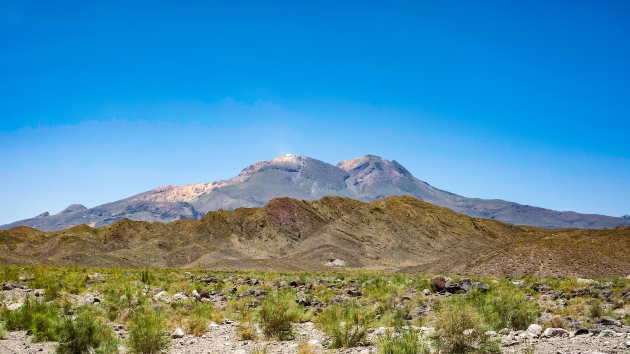
(NEW YORK) — A volcano that has been dormant for hundreds of thousands of years could be gearing up for a massive explosion, according to new research.
Scientists have measured signs of unrest at the Taftan volcano in eastern Iran, near the Afghanistan border, despite no eruptions in the last 700,000 years, according to a paper published earlier this month in Geophysical Research Letters.
Rapid uplift was detected near Taftan’s 13,000-foot-tall summit between July 2023 and May 2024, while an analysis method to reduce random noise due to atmospheric condition indicated that neither rainfall nor earthquakes triggered the unrest.
Therefore, an explosive eruption is likely imminent, the researchers said.
Changes in gas permeability within the shallow part of the volcano, as well as undetected deep magma movement, have likely led to the hydrothermal pressure buildup.
Taftan experiences frequent fumarolic — or venting of gas — activity, but geologic evidence indicates that it has not experienced a major eruption since 700,000.
“Uncertain” eruptions may have occurred in January 1902 and April 1993, according to the Smithsonian Institution’s Global Volcanism Program.
Currently, Taftan is not monitored at the same level of scrutiny as other volcanoes due to its remote location. Space-based satellite sensing is the only source of data to detect transitions from dormancy to unrest for many remote and unmonitored volcanoes, according to the paper.
The study reveals an urgent need to revise the current volcano risk of the Makran subduction volcanic arc — a stretch of about 275 miles along the Indian Ocean — and establish volcano monitoring networks in the region.
“Our findings reveal that Taftan is more active than previously recognized,” the authors wrote.
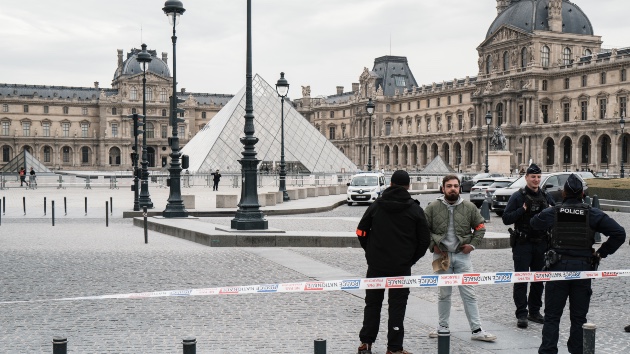
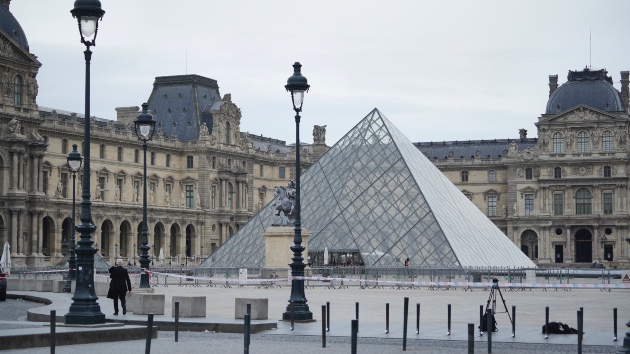
French police officers stand in front of the Louvre Museum after a robbery in Paris, France, on October 19, 2025. (Photo by Jerome Gilles/NurPhoto via Getty Images)
(LONDON) — Investigators have collected more than 150 trace samples, including fingerprints, bits of DNA and other silent evidence, from the scene of the Louvre heist, a source close to the Minister of the Interior in France has told ABC News.
The samples are now being analyzed in Paris as authorities work to identify the suspects and the manhunt for the four main suspects in the brazen heist enters its sixth day on Friday.
Investigators have said they are in a race against time to catch the culprits, fearing they will dismantle the eight pieces they got away with and attempt to fence the many diamonds, precious stones and gold piecemeal.
On Thursday, a dramatic video surfaced capturing two of the thieves wanted in the brazen $102 million jewel heist at the Louvre as they exited the crime scene on a mobile cherry picker and fled on motorbikes with the loot.
Two French law enforcement sources confirmed to ABC News on Thursday that investigators are aware of the video and are reviewing it for clues as part of the investigation. The sources said the video was taken from inside the Louvre by members of the museum security staff.
The video, circulating online and verified by ABC News, shows the two thieves coming down from the targeted Apollo Gallery at the world-famous museum in a truck-mounted mechanical cherry picker.
In the footage, alarms can be heard going off in the background. The alleged perpetrators — one wearing a motorcycle helmet and the other covering their face with a balaclava and wearing a yellow construction worker vest – are seen making their way to the street.
Across the street from the escaping thieves, people can be seen walking and jogging along the Seine River as traffic goes by. The thieves are then seen jumping on a motorcycle and speeding off with the jewels.
French investigators said the entire robbery from start to getaway took seven minutes.
Among the eight pieces of jewelry taken was a pearl and diamond tiara from the collection of Queen Marie-Amelie and Queen Hortense, according to the Louvre. The tiara, according to the Louvre, is composed of 212 pearls of various sizes and nearly 2,000 diamonds. The piece was commissioned by Emperor Napoleon III for his marriage to Eugenie de Montijo in 1853.
Also stolen was another tiara from the collection of Queen Marie-Amelie and Queen Hortense composed of sapphires and 1,083 diamonds, according to the Louvre.
Officials said earlier this week that evidence collected so far points to “organized crime,” but added that investigators have not ruled out that the heist could have been an inside job.
(PARIS) — A dramatic video has surfaced, capturing two of the thieves wanted in the brazen $102 million jewel heist at the Louvre exiting the crime scene on a mobile cherry picker and fleeing on motorbikes with the loot.
Two French law enforcement sources confirmed to ABC News on Thursday that investigators are aware of the video and are reviewing it for clues as part of the investigation. The sources said the video was taken from inside the Louvre by members of the museum security staff.
The video, circulating online and verified by ABC News, shows the two thieves coming down from the targeted Apollo Gallery at the world-famous museum in a truck-mounted mechanical cherry picker.
In the footage, alarms can be heard going off in the background. The alleged perpetrators — one wearing a motorcycle helmet and the other covering their face with a balaclava and wearing a yellow construction worker vest – are seen making their way to the street.
Across the street from the escaping thieves, people can be seen walking and jogging along the Seine River as traffic goes by. The thieves are then seen jumping on a motorcycle and speeding off with the jewels.
French investigators said the entire robbery from start to getaway took seven minutes.
During her testimony before France’s Senate Culture Committee on Wednesday, Laurence des Cars, the president and director of the Louvre, said the only camera installed outside the Apollo Gallery was facing west and did not cover the window where the thieves used power tools to break in and exit.
“We did not spot the criminals arriving from outside early enough,” des Cars said.
In the video, someone on a two-way radio or intercom is heard saying, they were looking at one of the thieves getting on “his scooter” and adding, “They’re going to leave.” Moments later, a person filming could be heard saying in French, “F—, they’re gone?”
The manhunt for four main suspects in the brazen heist entered its fifth day on Thursday. Investigators have said they are in a race against time to catch the culprits, fearing they will dismantle the eight pieces they got away with and attempt to fence the many diamonds, precious stones and gold piecemeal.
Among the eight pieces of jewelry taken was a pearl and diamond tiara from the collection of Queen Marie-Amelie and Queen Hortense, according to the Louvre. The tiara, according to the Louvre, is composed of 212 pearls of various sizes and nearly 2,000 diamonds. The piece was commissioned by Emperor Napoleon III for his marriage to Eugenie de Montijo in 1853.
Also stolen was another tiara from the collection of Queen Marie-Amelie and Queen Hortense composed of sapphires and 1,083 diamonds, according to the Louvre.
On Wednesday, French police told ABC News that traces of DNA were found in one of the helmets and one of the gloves the suspects left behind after a jewelry heist.
In what could be the major break in the probe, investigators are now analyzing the DNA in hopes of finding a match.
The latest developments come as des Cars, the Louvre director, took the hot seat on Wednesday, telling lawmakers she submitted her resignation following Sunday’s heist.
Appearing in front of France’s Senate Culture Committee for two hours, des Cars said her resignation was rejected.
“This tragedy deeply shocked museum staff, fellow citizens, and admirers of the Louvre around the world,” said des Cars, reading an opening statement. “This is an immense wound that has been inflicted on us.”
Des Cars said all of the museum’s alarms worked, as did its video cameras, but noted a “weakness” in security.
“The weakness of the Louvre is its perimeter security, which has been a problem for a long time … certainly due to underinvestment,” des Cars told the lawmakers.
She said a “Grand Louvre renovation project” began 40 years ago “and has only affected half of the museum.”
Des Cars added, “The security system, as installed in the Apollo Gallery, worked perfectly. The question that arises is how to adapt this system to a new type of attack and modus operandi that we could not have foreseen.”
Despite touting the security system within the Louvre as working properly, des Cars added, “Today we are witnessing a terrible failure at the Louvre. The security of the Louvre is one of my top priorities during my term of office, and I repeat that I was appalled by the museum’s security situation when I arrived in 2021.”
Des Cars said the 232-year-old museum’s “aging infrastructure” has hindered “the installation of modern equipment.”
Officials said earlier this week that evidence collected so far points to “organized crime,” but added that investigators have not ruled out that the heist could have been an inside job.
(LONDON) — Two traces of DNA were found in one of the helmets and one of the gloves suspects left behind after a jewelry heist at the Louvre on Sunday, French police told ABC News.
In what could be the first major break in the investigation of the $102 million jewel heist at the Louvre Museum, investigators are now analyzing the lates clues in hopes it would lead to identifying the brazen thieves involved in the heist.
The latest development comes as the director of the Louvre took the hot seat on Wednesday, telling lawmakers she submitted her resignation following Sunday’s daylight robbery from the museum’s ornate Apollo Gallery.
Appearing in front of France’s Senate Culture Committee for two hours, Laurence des Cars, the president and director of the Louvre, said her resignation was rejected.
“This tragedy deeply shocked museum staff, fellow citizens, and admirers of the Louvre around the world,” said des Cars, reading an opening statement. “This is an immense wound that has been inflicted on us.”
Des Cars said all of the museum’s alarms worked, as did its video cameras, but noted a “weakness” in security.
“The weakness of the Louvre is its perimeter security, which has been a problem for a long time … certainly due to underinvestment,” des Cars told the lawmakers.
She said a “Grand Louvre renovation project” began 40 years ago “and has only affected half of the museum.”
She said the only camera installed outside the Apollo Gallery was facing west and did not cover the window where the thieves used power tools to break in.
“The security system, as installed in the Apollo Gallery, worked perfectly,” des Cars said. “The question that arises is how to adapt this system to a new type of attack and modus operandi that we could not have foreseen.”Despite touting the security system within the Louvre as working properly, des Cars added, “Today we are witnessing a terrible failure at the Louvre. The security of the Louvre is one of my top priorities during my term of office, and I repeat that I was appalled by the museum’s security situation when I arrived in 2021.”
Des Cars said the 232-year-old museum’s “aging infrastructure” has hindered “the instalation of modern equipment.”
Officials said earlier this week that evidence collected so far points to “organized crime,” but added that investigators have not ruled out that the heist could have been an inside job.
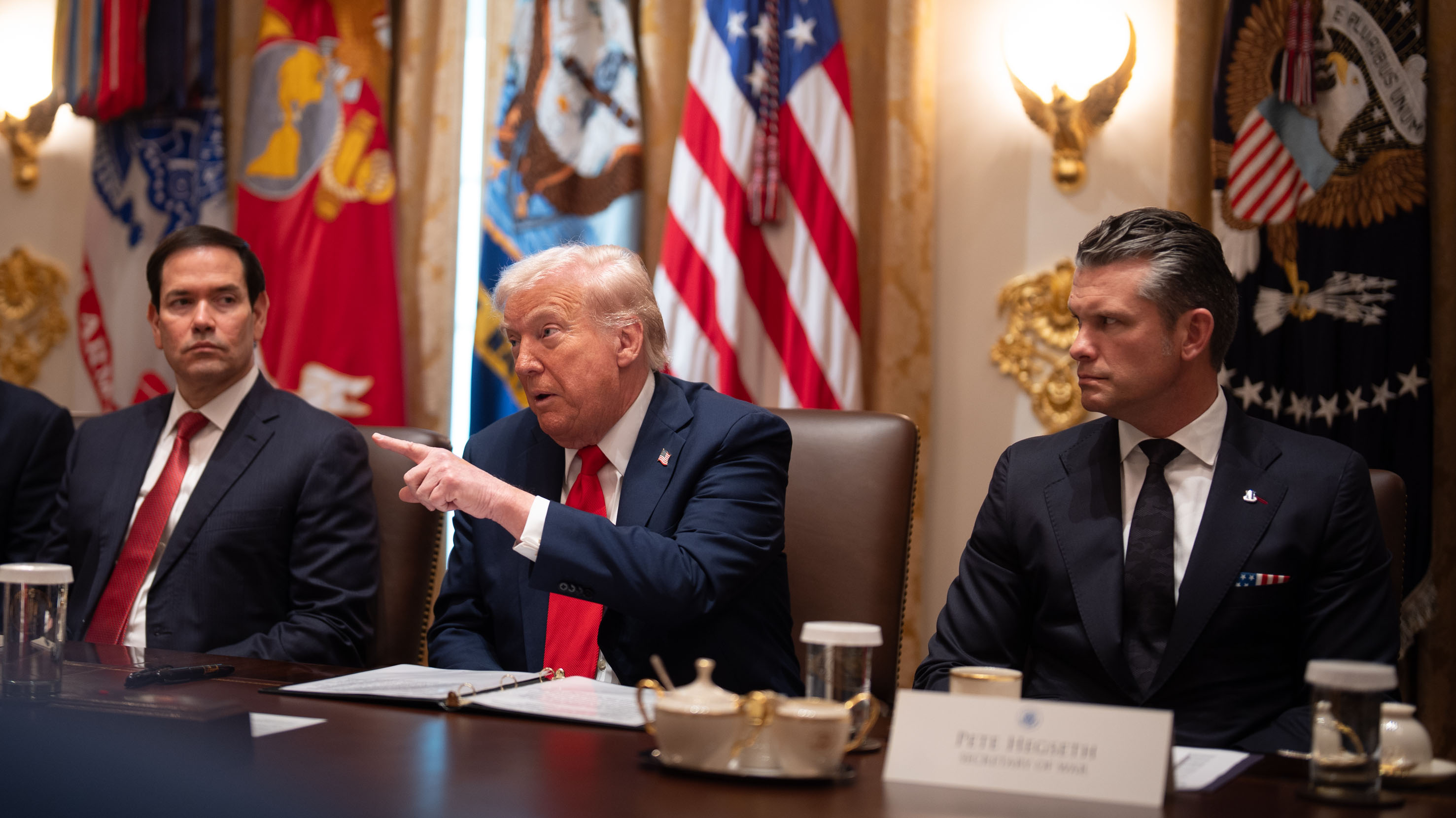
President Donald Trump talks during a cabinet meeting at the White House on Oct. 9, 2025, joined by Secretary of State Marco Rubio and Secretary of Defense Pete Hegseth. (Photo by Sarah L. Voisin/The Washington Post via Getty Images)
(WASHINGTON) — The U.S. military has carried out another airstrike on an alleged drug cartel vessel on Tuesday night, according to two U.S. officials, this time in the Pacific Ocean.
It is the eighth known U.S. strike against an alleged drug boat since early September.
There were no survivors of Tuesday night’s strike and it is believed that two to three people aboard were killed, according to the officials.
Tuesday night’s strike occurred in the waters west of Central America, according to one of the officials. The other seven airstrikes targeted alleged drug cartel vessels in the Caribbean Sea.
It is now believed that at least 34 individuals have been killed in these strikes carried out by the U.S. military.
CBS News was first to report this latest airstrike.
The use of lethal military force is unprecedented and has raised legal questions. Past administrations relied on law enforcement to interdict drug shipments. The Trump administration’s defended the strikes as part of what they said is a “war” against cartels.
“They have faster boats. Some of these boats are seriously — I mean, they’re world-class speedboats — but they’re not faster than missiles,” Trump said last week.
Two people survived a U.S. strike earlier this month on a semi-submersible vessel in the Caribbean. Trump said that the survivors were being sent back to their home countries.
President Donald Trump talks during a cabinet meeting at the White House on Oct. 9, 2025, joined by Secretary of State Marco Rubio and Secretary of Defense Pete Hegseth. (Photo by Sarah L. Voisin/The Washington Post via Getty Images)
(WASHINGTON) — The U.S. military has carried out another airstrike on an alleged drug cartel vessel on Tuesday night, according to two U.S. officials, this time in the Pacific Ocean.
It is the eighth known U.S. strike against an alleged drug boat since early September.
There were no survivors of Tuesday night’s strike and it is believed that two to three people aboard were killed, according to the officials.
Tuesday night’s strike occurred in the waters west of Central America, according to one of the officials. The other seven airstrikes targeted alleged drug cartel vessels in the Caribbean Sea.
It is now believed that at least 34 individuals have been killed in these strikes carried out by the U.S. military.
CBS News was first to report this latest airstrike.
Defense Secretary Pete Hegseth released video of strike on social media on Wednesday. Hegseth confirmed the strike killed two people and took place in the Eastern Pacific. He wrote that no U.S. forces were harmed in the strike.
“Narco-terrorists intending to bring poison to our shores, will find no safe harbor anywhere in our hemisphere. Just as Al Qaeda waged war on our homeland, these cartels are waging war on our border and our people. There will be no refuge or forgiveness — only justice,” Hegseth posted on X.
The use of lethal military force is unprecedented and has raised legal questions. Past administrations relied on law enforcement to interdict drug shipments.The Trump administration’s defended the strikes as part of what they said is a “war” against cartels.
“They have faster boats. Some of these boats are seriously — I mean, they’re world-class speedboats — but they’re not faster than missiles,” Trump said last week.
Two people survived a U.S. strike earlier this month on a semi-submersible vessel in the Caribbean. Trump said that the survivors were being sent back to their home countries.
The Louvre looks empty during a normally busy Sunday on October 19, 2025 in Paris, France. (Photo by Remon Haazen/Getty Images)
(PARIS) — The director of the Louvre in Paris took the hot seat on Wednesday, telling lawmakers she submitted her resignation following Sunday’s brazen daylight heist of more than $100 million in jewels from the museum’s orate Apollo Gallery.
Appearing in front of France’s Senate Culture Committee for two hours, Laurence des Cars, the president and director of the Louvre, said her resignation was rejected.
“Last Sunday, after acknowledging … the consequences of the terrible attack we had just suffered, I submitted my resignation to the Minister of Culture. She refused it,” des Cars said.
Amid mounting criticism over the colossal lapse in security at one of the world’s most famous museums, des Cars conceded, “We have been defeated.”
“This tragedy deeply shocked museum staff, fellow citizens, and admirers of the Louvre around the world,” said des Cars, reading an opening statement. “This is an immense wound that has been inflicted on us.”
Des Cars added, “This theft hurts our institution.”
Des Cars said all of the museum’s alarms worked, as did its video cameras, but noted a “weakness” in security.
“The weakness of the Louvre is its perimeter security, which has been a problem for a long time … certainly due to underinvestment,” des Cars told the lawmakers.
She said a “Grand Louvre renovation project” began 40 years ago “and has only affected half of the museum.”
“We did not spot the criminals arriving from outside early enough,” des Cars said.
She said the only camera installed outside the Apollo Gallery was facing west and did not cover the window where the thieves used power tools to break in.
“The security system, as installed in the Apollo Gallery, worked perfectly,” des Cars said. “The question that arises is how to adapt this system to a new type of attack and modus operandi that we could not have foreseen.”
Des Cars also said the fortified glass cases that held the stolen jewels from the collection of Emperor Napoleon and his wives were not broken but were cracked.
“The thieves tried to sneak their hands in, but the glass actually held,” des Cars said. “The high-quality display cases were designed to withstand attacks with weapons and to withstand the heavy materials used during last Sunday’s incident.”
Having said that, des Cars added, “Today we are witnessing a terrible failure at the Louvre. The security of the Louvre is one of my top priorities during my term of office, and I repeat that I was appalled by the museum’s security situation when I arrived in 2021.”
Des Cars said the 232-year-old museum’s “aging infrastructure” has hindered “the instalation of modern equipment.”
She said one way to improve security would be to place a police station within the museum.
“I would like to ask the Department of the Interior to look into whether it would be feasible to set up a police station within the museum,” des Cars said.
Paris public prosecutor Laure Beccuau announced on Tuesday that those gems are estimated to be worth $102 million.
Des Cars testimony came as the Louvre reopened for the first time since Sunday’s robbery.
A large crowd of visitors was lined up when most of the Louvre reopened at 9 a.m. Wednesday. The Apollo Galley, still considered a crime scene, remained temporarily closed, according to the Louvre’s website.
In an interview with the French radio network RTL, Beccuau called the figure “spectacular,” but said it was nothing compared to the “historical loss caused by the theft.”
“We can maybe hope that [the perpetrators] think about it and won’t destroy these jewels for no reason,” Beccuau said.
Hundreds of police officers are a part of the ongoing investigation in the Louvre heist. There are four main suspects in the ongoing investigation, but it’s possible there were other accomplices, Beccuau said.
A nationwide manhunt for the Louvre thieves has been in high gear since the theft on Sunday. French President Emmanuel Macron vowed that authorities would catch those responsible for the “attack on a heritage that we cherish because it is our history.”
The thieves went directly to two displays, breaking them and taking a “significant amount of loot,” French Culture Minister Rachida Dati told ABC News.
“They knew exactly where they were going,” Dati said. “It looks like something very organized and very professional.”
Dati said the evidence collected so far points to “organized crime,” but added that investigators have not ruled out that the heist could have been an inside job.
ABC News’ Aicha El Hammar Castano and Hugo Leenhardt contributed to this report.
The Louvre looks empty during a normally busy Sunday on October 19, 2025 in Paris, France. (Photo by Remon Haazen/Getty Images)
(PARIS) — The director of the Louvre in Paris took the hot seat on Wednesday, answering questions from lawmakers amid mounting criticism over apparent security lapses that enabled thieves to pull off Sunday’s brazen daylight heist of more than $100 million in jewels from the museum’s ornate Apollo Gallery.
Laurence des Cars, the president and director of the Louvre, testified in front of France’s Senate Culture Committee, saying, “We have been defeated.”
“This tragedy deeply shocked museum staff, fellow citizens, and admirers of the Louvre around the world,” said des Cars, reading an opening statement. “This is an immense wound that has been inflicted on us.”
Des Cars added, “This theft hurts our institution.”
Des Cars said all of the museum’s alarms worked, as did its video cameras, but noted a “weakness” in security.
“The weakness of the Louvre is its perimeter security, which has been a problem for a long time … certainly due to underinvestment,” des Cars told the lawmakers.
She said a “Grand Louvre renovation project” began 40 years ago “and has only affected half of the museum.”
“We did not spot the criminals arriving from outside early enough,” des Cars said.
She said the only camera installed outside the Apollo Gallery was facing west and did not cover the window where the thieves used power tools to break in.
Des Cars said the 232-year-old museum’s “aging infrastructure” has hindered “the instalation of modern equipment.”
She said one way to improve security would be to place a police station within the museum.
“I would like to ask the Department of the Interior to look into whether it would be feasible to set up a police station within the museum,” des Cars said.
Some lawmakers have called for des Cars resignation in the wake of the robbery.
During her testimony on Wednesday, des Cars said she submitted her resignation and it was refused.
“Last Sunday, after acknowledging … the consequences of the terrible attack we had just suffered, I submitted my resignation to the Minister of Culture. She refused it,” des Cars said.
Paris public prosecutor Laure Beccuau announced on Tuesday that those gems are estimated to be worth $102 million.
Des Cars testimony came as the Louvre reopened for the first time since Sunday’s robbery.
A large crowd of visitors was lined up when most of the Louvre reopened at 9 a.m. Wednesday. The Apollo Galley, still considered a crime scene, remained temporarily closed, according to the Louvre’s website.
In an interview with the French radio network RTL, Beccuau called the figure “spectacular,” but said it was nothing compared to the “historical loss caused by the theft.”
“We can maybe hope that [the perpetrators] think about it and won’t destroy these jewels for no reason,” Beccuau said.
Hundreds of police officers are a part of the ongoing investigation in the Louvre heist. There are four main suspects in the ongoing investigation, but it’s possible there were other accomplices, Beccuau said.
A nationwide manhunt for the Louvre thieves has been in high gear since the theft on Sunday. French President Emmanuel Macron vowed that authorities would catch those responsible for the “attack on a heritage that we cherish because it is our history.”
The thieves went directly to two displays, breaking them and taking a “significant amount of loot,” French Culture Minister Rachida Dati told ABC News.
“They knew exactly where they were going,” Dati said. “It looks like something very organized and very professional.”
Dati said the evidence collected so far points to “organized crime,” but added that investigators have not ruled out that the heist could have been an inside job.
ABC News’ Léontine Gallois contributed to this report.
The Louvre looks empty during a normally busy Sunday on October 19, 2025 in Paris, France. (Photo by Remon Haazen/Getty Images)
(PARIS) — The director of the Louvre in Paris took the hot seat on Wednesday, answering questions from lawmakers amid mounting criticism over apparent security lapses that enabled thieves to pull off Sunday’s brazen daylight heist of more than $100 million in jewels from the museum’s ornate Apollo Gallery.
Laurence des Cars, the president and director of the Louvre, testified in front of France’s Senate Culture Committee, saying, “We have been defeated.”
“This tragedy deeply shocked museum staff, fellow citizens, and admirers of the Louvre around the world,” said des Cars, reading an opening statement. “This is an immense wound that has been inflicted on us.”
Des Cars added, “This theft hurts our institution.”
Paris public prosecutor Laure Beccuau announced on Tuesday that those gems are estimated to be worth $102 million.
A large crowd of visitors was lined up when most of the Louvre reopened at 9 a.m. Wednesday. The Apollo Galley, still considered a crime scene, remained temporarily closed, according to the Louvre’s website.
In an interview with the French radio network RTL, Beccuau called the figure “spectacular,” but said it was nothing compared to the “historical loss caused by the theft.”
“We can maybe hope that [the perpetrators] think about it and won’t destroy these jewels for no reason,” Beccuau said.
Hundreds of police officers are a part of the ongoing investigation in the Louvre heist. There are four main suspects in the ongoing investigation, but it’s possible there were other accomplices, Beccuau said.
A nationwide manhunt for the Louvre thieves has been in high gear since the theft on Sunday. French President Emmanuel Macron vowed that authorities would catch those responsible for the “attack on a heritage that we cherish because it is our history.”
The thieves went directly to two displays, breaking them and taking a “significant amount of loot,” French Culture Minister Rachida Dati told ABC News.
“They knew exactly where they were going,” Dati said. “It looks like something very organized and very professional.”
Dati said the evidence collected so far points to “organized crime,” but added that investigators have not ruled out that the heist could have been an inside job.
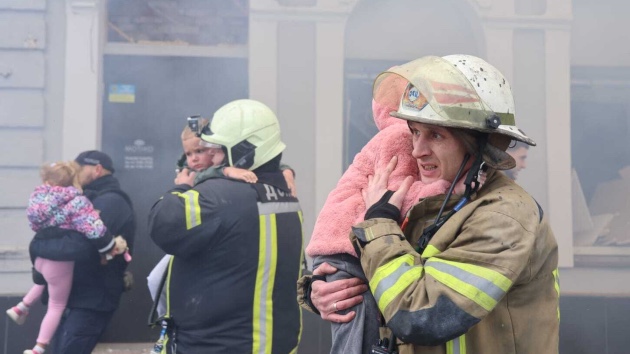
Officials carry the children after the Russian missile attack on Kyiv, Ukraine on October 22, 2025. (Photo by Office of the President of Ukraine/Anadolu via Getty Images)
(LONDON) — Russia overnight launched a heavy air attack on Ukraine — including striking Kyiv with drones and ballistic missiles — that killed at least six people, including two children.
It came hours after plans for President Donald Trump’s proposed summit with Russian President Vladimir Putin appeared to fall apart, leaving hopes of movement in the coming days towards ending the war once again in tatters.
Russia also directly struck a kindergarten in the eastern city of Kharkiv, according to Kyiv.
At least one drone hit the building where nearly 50 young children were inside, Ukrainian officials said.
Fortunately many or all were in its shelter, the local governor said.
“Fortunately, the children were in shelter during the alarm, and they were not injured,” the governor said on Telegram.”In total, 48 children were rescued by the State Emergency Service units. Four people were hospitalized, two of them are in serious condition, two are in moderate condition. Two more injured received outpatient medical care.”
Images released by the State Emergency Service of Ukraine show firefighters carrying terrified toddlers to safety from the destroyed building.
Kharkiv’s regional State Emergency Service told ABC News one person had been killed and nine injured in the strikes on the city on Wednesday morning.
Forty-eight children were evacuated from the kindergarten. They are experiencing “acute stress reactions,” a spokesperson said.
Dozens of people also have had to be rescued in Kyiv after Russian drones and debris struck their high-rise apartment buildings.
President Volodymyr Zelensky noted the attacks showed Russia doesn’t “feel enough pressure for dragging out the war.”