
Trump touts short-term deal with China after Xi meeting

Trump touts short-term deal with China after Xi meeting
Andrew Harnik/Getty Images

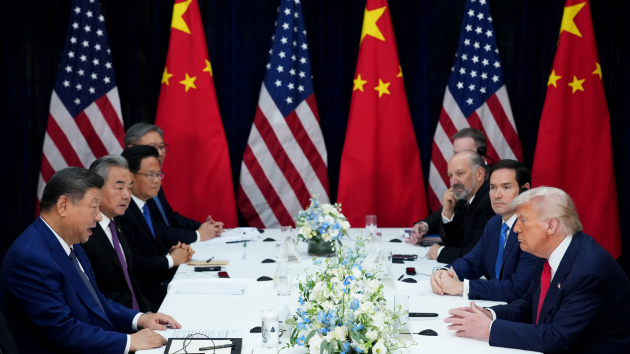
(LONDON) — President Donald Trump touted an “amazing” meeting with Chinese President Xi Jinping in South Korea, saying the two leaders reached agreements to reduce tariffs on Chinese imports, delay Chinese restrictions on its rare earth mineral exports and secure Chinese purchases of American soybeans and other farm products.

Still, key topics — including Chinese designs on Taiwan and a potential deal to keep TikTok operating in the U.S. — were not addressed, according to the post-meeting remarks from Trump and official Chinese readouts.

Speaking to reporters aboard Air Force One following the meeting with Xi, which lasted about 1 hour and 45 minutes, Trump said the 20% tariffs on China related to fentanyl were being reduced to 10%, bringing the total amount of duties imposed on Chinese imports from 57% to 47%.

Trump said he agreed to reduce the tariff rate because China had agreed to “work very hard to stop the flow” of fentanyl.

Trump said the U.S. had reached a one-year agreement with China ensuring Beijing would not impose dramatic restrictions on rare earth minerals — materials key for producing computer chips that are needed for everything including smartphones, AI systems and defense technology.

China’s Ministry of Commerce confirmed the temporary suspension of those restrictions in an official readout. Trump said he believes the one-year deal will be “routinely” extended.

Meanwhile, Trump also said Xi had “authorized China to begin the purchase of massive amounts of Soybeans, Sorghum, and other Farm products.”

“We have a deal now,” Trump told reporters. “Every year we’ll renegotiate the deal, but I think the deal will go on for a long time, long beyond the year. We’ll negotiate at the end of the year. But all of the rare earth has been settled, and that’s for the world.”

The president said the meeting touched on most key bilateral issues. “A lot of decisions were made,” Trump said. “There wasn’t too, too much left out there.”

Overall, Trump said the meeting with Xi in South Korea was “amazing,” and on a scale of 1 to 10 gave it a 12. “He’s a great leader, great leader of a very powerful, very strong country, China, and we, what can I say? We have — it was an outstanding group of decisions, I think that was made,” Trump said.

The two leaders agreed that Trump will visit China in April, the president said, with Xi then visiting the U.S. “sometime after that.”

The Chinese Ministry of Commerce released a statement following the meeting saying that Beijing “looks forward to working with the United States to do a good job in implementation and inject more certainty and stability into Sino-U.S. economic and trade cooperation and the world economy.”

Leaders talk soybeans, but not Taiwan
Trump said China would begin purchasing U.S. soybeans “immediately” as part of the new deal. The Chinese pause on purchasing Americans soybeans had been a major part of the ongoing trade war and had deeply affected American farmers.

“We’re in agreement on so many elements, large amounts, tremendous amounts of the soybeans and other farm products are going to be purchased immediately, starting immediately,” Trump told reporters after the meeting.

In a later social media post, Trump said Xi “authorized China to begin the purchase of massive amounts of Soybeans, Sorghum, and other Farm products.”

Trump also said that he discussed computer chips with Xi, claiming China said they would speak with U.S. chipmaker Nvidia and some others about purchasing products from America.

Trump said the two men did not discuss Nvidia’s high-end Blackwell artificial intelligence chip during the talks.

In his post to social media after the meeting, Trump said China also agreed to “begin the process of purchasing American Energy. In fact, a very large scale transaction may take place concerning the purchase of Oil and Gas from the Great State of Alaska.”

Trump did not address a potential deal to keep TikTok running in the U.S. China’s Commerce Ministry said it is committed to “properly resolving issues related to TikTok.” The statement did not say a deal had been finalized. 

The thorny issue of Taiwan did not come up, Trump told reporters aboard Air Force One.

Russia’s war in Ukraine was discussed at length, the president added, with Trump saying he and Xi agreed to work together to get the war “finished.”

“Ukraine came up very strongly,” Trump said. “We talked about it for a long time, and we’re both going to work together to see if we can get something done.”

“We agree the sides are, you know, locked in fighting, and sometimes you have to let him fight, I guess, crazy, but he’s going to help us, and we’re going to work together on Ukraine. Not a lot more we can do,” Trump said.

Trump said that he didn’t broach China’s continued purchases of oil from Russia.

“He’s been buying oil from Russia for a long time. It takes care of a big part of China,” Trump said. “But we didn’t really discuss the oil. We discussed working together to see if we could get that war finished. You know, it doesn’t affect China. It doesn’t affect us.”

The president said his pre-meeting announcement on the planned resumption of U.S. nuclear testing was not aimed at China. Rather, he said, it “had to do with others.”

“They seem to all be nuclear testing,” he said. “We have more nuclear weapons than anybody. We don’t do testing. We’ve halted it years, many years ago. But with others doing testing, I think it’s appropriate that we’d … also testing.”

When pressed, Trump would not say who the “others” were. The U.S. and Russia, he added, have the most nuclear warheads, with China able to “catch up within four or five years.”

“I’d like to see a denuclearization,” Trump said. “I think de-escalation would be — they would call denuclearization — would be a tremendous thing, and it’s something we are actually talking to Russia about that and China would be added to that, if we do something.”

Copyright © 2025, ABC Audio. All rights reserved.
5 more suspects arrested over Louvre jewel heist

5 more suspects arrested over Louvre jewel heist
Jerome Gilles/NurPhoto via Getty Images)

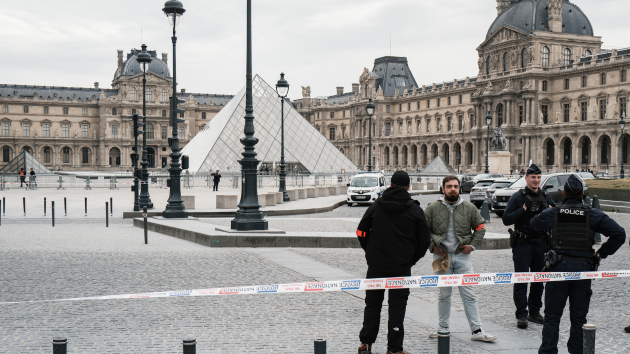
(LONDON) — Five more suspects have been arrested in connection to the the Oct. 19 jewel heist at the Louvre museum in Paris, according to Paris Prosecutor Laure Beccuau.

The arrests took place on Wednesday in the Seine-Saint-Denis region in the suburbs of Paris though French authorities have not yet named any of the suspects.

Beccuau, who was speaking on French radio station RTL, said that the stolen jewelry has still not been found but that police believe one of the suspects arrested in yesterday’s raid could be a major person of interest due to his DNA being found at the scene of the crime.

French police told ABC News that one of the suspects was already identified and had been under surveillance for a few days already.

The fresh arrests bring to seven the total number of people detained related to the heist. Two other people — both men in their 30s and from the Paris suburb of Seine-Saint-Denis — were arrested last weekend, French National Police confirmed to ABC News.

Investigators said they matched trace DNA evidence recovered from a helmet left at the scene of the crime to one of the suspects, enabling police to put the alleged thief under phone and physical surveillance.

One suspect was arrested at 10 p.m. on Saturday at Paris’ Charles de Gaulle Airport while trying to board a plane bound for Algeria, according to police.

Investigators previously told ABC News that the second suspect was arrested as he was about to travel to Mali, but on Wednesday, Beccuau said the man had no intention of leaving the country.

One of the suspects has dual citizenship in France and Mali, and the other is a dual citizen of France and Algeria, investigators said, adding that both were already known to police from past burglary cases.

Investigators say they’re still determining whether a source inside the Louvre may have had a role in the theft.

“They knew exactly where they were going. It looks like something very organized and very professional,” French Culture Minister Rachida Dati told ABC News last week.

Copyright © 2025, ABC Audio. All rights reserved.
Louvre heist suspects to be charged, jewels not recovered: Paris prosecutor

Louvre heist suspects to be charged, jewels not recovered: Paris prosecutor
Jerome Gilles/NurPhoto via Getty Images

(PARIS) — The Paris public prosecutor reported on Wednesday that investigators are making “major progress” in solving the brazen Oct. 19 Louvre Museum heist and said two suspects in custody will be charged with “organized robbery.”

During a news conference on Wednesday, Laure Beccuau, the Paris Public Prosecutor, released new information about the two suspects arrested last weekend, but said the stolen jewels remain missing.

Beccuau said that if the suspects are convicted, they’ll face a sentence of up to 15 years in prison and heavy fines.

A 96-hour deadline for charging or releasing the suspects was set to expire on Wednesday. Both suspects are from the Paris suburb of Seine-Saint-Denis, authorities previously said.

Beccuau also said in her press conference that the two suspects arrested on Saturday “partially admitted their involvement in the events to investigators.”

A massive manhunt continued on Wednesday for at least two other suspects in the robbery. Beccuau said she has not ruled out the possibility that more perpetrators were involved in the heist, but added that, at this stage, evidence has not suggested any additional accomplices.

Beccuau said trace DNA recovered from a scooter used in the heist and a window at the Louvre helped investigators identify the suspects, whose names have not been released.

One man was arrested about 8 p.m. local time on Saturday at Paris’ Charles de Gaulle Airport as he was about to leave the country without a return ticket, Beccuau said. She said the suspect has lived in France since 2010 and had been convicted of a previous robbery.

Beccuau said the second suspect is a taxi driver who was arrested at 8:40 p.m. on Saturday near his home. She said the suspect’s DNA was found on one of the windows at the Louvre.

Beccuau said the suspect had been previously convicted of “aggravated robberies” in 2008 and 2014.

Investigators previously told ABC News that the second suspect was arrested as he was about to travel to Mali, but on Wednesday, Beccuau said the man had no intention of leaving the country.

ABC News’ Tom Soufi Burridge and Joseph Simonetti contributed to this report.

Copyright © 2025, ABC Audio. All rights reserved.

Jamaica has a history of dealing with powerful hurricanes

Jamaica has a history of dealing with powerful hurricanes
NOAA via Getty Images

(NEW YORK) — Hurricane Melissa made landfall on Jamaica early Tuesday afternoon as a Category 5 storm, with maximum sustained winds of 185 mph — the most powerful hurricane to strike the Caribbean island nation and one of the strongest on record in the Atlantic Basin.

The storm is anticipated to bring catastrophic winds, rain, flooding and storm surge to Jamaica, where residents and tourists are sheltering in place.

But the island is no stranger to dealing with destructive storms. Several hurricanes over the past several decades have struck Jamaica, causing fatalities and billions of dollars of damage.

Hurricane Beryl: July 3, 2024
Hurricane Beryl — the first hurricane of the 2024 Atlantic hurricane season — battered Jamaica when it passed just south of the island as a Category 4 storm.

Beryl slammed the island with up with 130 mph winds, between 8 inches and 12 inches of rainfall and a storm surge that sent ocean water rushing into coastal areas, according to the National Hurricane Center (NHC). The storm ripped roofs off of buildings and sent several feet of floodwater onto roadways in low-lying areas.

At least four people died in Jamaica as a result of the storm, three due to freshwater flooding and one due to rain, while more than 1,000 people were evacuated to shelters, according to officials.

In the aftermath of the storm, about 60% of the island was without electricity, and 20% of the population lacked access to clean water due to the storm’s impact on the piped water network, according to a situation report by the United Nations Office for the Coordination of Humanitarian Affairs. Healthcare on the island was also compromised, with 82 healthcare facilities reporting major damage. Minor damage was reported at the Norman Manley International Airport in Kingston.

Beryl’s damage was especially extensive in rural parts of Jamaica, where debris from destroyed homes littered the landscape and banana and coconut farms were severely damaged, according to the United Nations. An estimated 45,000 farmers were impacted, with $15.9 million in damage done to farming infrastructure that led to food shortages, according to the report.

The storm tallied about $995 million in damage to infrastructure, homes and in lost revenue, according to the National Hurricane Center. Beryl caused also caused a 1.1% drop in Jamaica’s GDP, according to the U.K.’s Centre for Disaster Protection.

Beryl was the strongest storm to hit Jamaica since Hurricane Dean in 2007, Rhea Pierre, disaster manager for the International Federation of Red Cross and Red Crescent Societies, said in the aftermath.

Hurricane Dean: Aug. 20, 2007
Hurricane Dean passed just south of Jamaica on Aug. 20, 2007, bringing powerful winds, heavy rains and storm surge to the region.

The storm was so strong that there are “few authoritative observations” for its passage over Jamaica because many of the instruments did not survive the storm, according to the NHC.

The weather station tower at the Norman Manley International Airport in Kingston was blown over the day before the storm passed the island, and numerous rain gouges were either blown over or washed away.

The highest rainfall report was 13.5 inches in Manchester Parish in West-Central Jamaica, according to the NHC.

The NHC estimates that Dean was a Category 3 hurricane when it impacted Jamaica, with maximum sustained winds of 111-129 mph, per the Saffir-Simpson scale. The most severe impacts were reported in the southeastern parishes of Clarendon, St. Catherine, Kingston and St. Andrew. About two-thirds of the homes that were completely destroyed or required major repairs were located in those parishes.

Agriculture was also significantly impacted, particularly the banana crops, according to the NHC.

Six people died in Jamaica as a result of Hurricane Dean, according to the University of West Indies.

The storm caused damage in all 13 of the island’s parishes, according to USAID. More than 3,120 homes were damaged, while a significant portion of the island’s farmland was also affected, with about 40% of the sugarcane crop, 75% of coffee trees and 100% of the banana crop impacted.

Hurricane Gilbert: Sept. 12, 1988

Before Melissa, Hurricane Gilbert was the strongest tropical cyclone on record to make landfall on Jamaica.

The massive storm made landfall on the island’s east coast near Kingston around 1 p.m. on Sept. 12, 1988, as a Category 4 hurricane with maximum sustained winds of 130 mph, according to the National Weather Service.

The eye of the hurricane traversed the entire island, with its winds weakening only to 125 mph by the time is exited Jamaica’s western coast several hours later. The storm triggered a massive storm surge, mudslides and heavy rains that caused inland flash flooding, according to the NWS.

At least 45 deaths were attributed to Gilbert, according to the National Oceanic and Atmospheric Administration.

The eye of the hurricane traversed the entire island, with its winds weakening only to 125 mph by the time is exited Jamaica’s western coast several hours later. The storm triggered a massive storm surge, mudslides and heavy rains that caused inland flash flooding, according to the NWS.

At least 45 deaths were attributed to Gilbert, according to the National Oceanic and Atmospheric Administration.

Gilbert damaged 40% of Jamaica’s agricultural fields and 95% of the island’s medical facilities, according to Hurricanes: Science and Society. Two of Jamaica’s hospitals were completely destroyed, while only two of those remaining escaped with minimal damage. In addition, about 50% of the island’s water supply was destroyed, including storage and distribution facilities.

More than 100,000 homes were destroyed or damaged, as were hundreds of miles of roads and highways, The New York Times reported at the time.

The destruction amounted to an estimated $4 billion in damages to crops, buildings, roads, homes and other infrastructure, according to Hurricanes: Science and Society.

Jamaica Prime Minister Edward P. G. Seaga described Hurricane Gilbert at the time as “the worst disaster in our modern history.”

Hurricane Charlie: Aug. 17, 1951
The center of Hurricane Charlie skirted the southern coast of Jamaica on the night of Aug. 17, 1951, before it made landfall early the next morning as a strong Category 3 storm, bringing destructive winds to the entirety of the island, according to the NHC. The strongest winds at Kingston were measured at 110 mph.

Heavy rainfall that lingered after the hurricane passed caused landslides across the island, according to the University of West Indies.

Charlie was the deadliest storm of the 20th century to impact Jamaica, resulting in more than 150 deaths on the island, according to the NHC. About 2,000 people were homeless in the storm’s aftermath.

The hurricane caused about $50 million in property and crop damage to the island, according to the NHC. Banana farms, coconut plantations and citrus groves perished in the storm.

Considerable damage was also done to shipping in the Kingston Harbor, with five large vessels pushed ashore, according to the University of West Indies.

Copyright © 2025, ABC Audio. All rights reserved.
Hurricane Melissa live updates: Storm strikes Cuba after tearing through Jamaica

Hurricane Melissa live updates: Storm strikes Cuba after tearing through Jamaica
ABC News

(NEW YORK) — Hurricane Melissa made landfall in Jamaica as a Category 5 hurricane — one of the most powerful hurricane landfalls on record in the Atlantic basin.

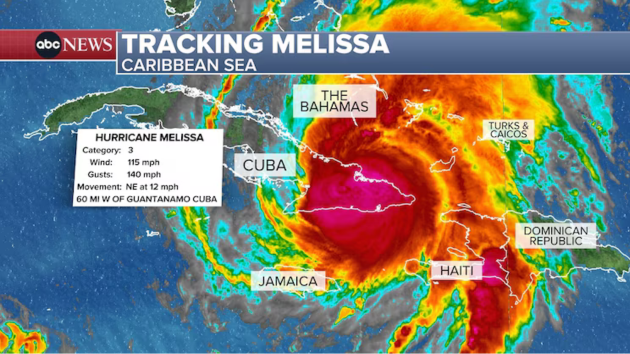
After tearing across Jamaica on Tuesday, Melissa is now a Category 3 hurricane as it pounds Cuba on Wednesday morning.

Latest forecast: Melissa to pass Cuba, Bahamas on Wednesday
As of 5 a.m. ET on Wednesday, Hurricane Melissa was a Category 3 storm with sustained winds of 115 mph moving northeast across Cuba.

Melissa — the strongest hurricane on record to hit Jamaica — made landfall on Cuba early on Wednesday near the city of Chivirico in the southeastern province of Santiago de Cuba.

Melissa is forecast to move off the northern coast of Cuba on Wednesday morning as it heads towards the Bahamas. It is expected to pass through the Bahamas as a Category 2 storm in the afternoon. A Hurricane Warning is in effect for the southeastern and central Bahamas.

Rain totals could reach 25 inches for higher elevations in Cuba and 5 to 10 inches of rain is expected across the southeastern Bahamas.

Storm surge is still affecting the islands. Cuba is experiencing a surge of up to 12 feet along the southeast coast, with 5 to 8 feet of surge possible in the southeastern Bahamas through Wednesday.

As Melissa moves into the Atlantic Ocean, it is expected to pass close to Bermuda late on Thursday. The archipelago is under a Hurricane Watch.

Copyright © 2025, ABC Audio. All rights reserved.
Deadline nears for charging 2 suspects as lawmaker rips Louvre security

Deadline nears for charging 2 suspects as lawmaker rips Louvre security
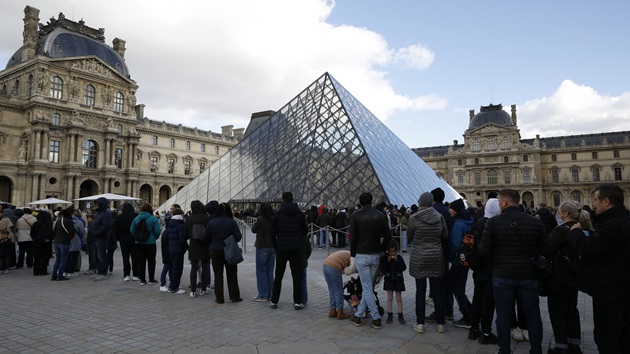
Tourists queue to enter the Louvre on October 26, 2025 in Paris, France. Antoine Gyori – Corbis/Corbis via Getty Images

(PARIS) — As a deadline fast approaches to either charge to release two suspects in the $102 million Louvre jewel heist, the president of France’s Senate Culture Committee said the museum is “not up to standard” for guarding it against other bandits.

The Paris prosecutor has until Wednesday to decide whether to file charges when a 96-hour window expires on holding two French nationals arrested over the weekend, just as they were about to flee the country.

As the massive manhunt for at least two other perpetrators in the brazen robbery stretched into its 10th day, Laurent Lafon, president of the Senate Culture Committee, said the Oct. 19 jewel heist at the museum exposed major flaws in its security.

“We have a security system that does not meet what we would expect from a museum,” Lafon said on Tuesday while standing outside the world’s most visited museum.

Lafon said “numerous improvements need to be made” to correct flaws that enable a team of thieves to steal precious pieces of the French crown jewels and other treasures once belonging to Emperor Napoleon and his wife.

“The security equipment was not suitable for a museum worthy of the 21st century and for such a unique site for France. It is our flagship institution; it must be exemplary, and today, we cannot describe the security conditions as exemplary,” Lafon said.

Lafon spoke out ahead of a Wednesday hearing on the museum’s security issues.

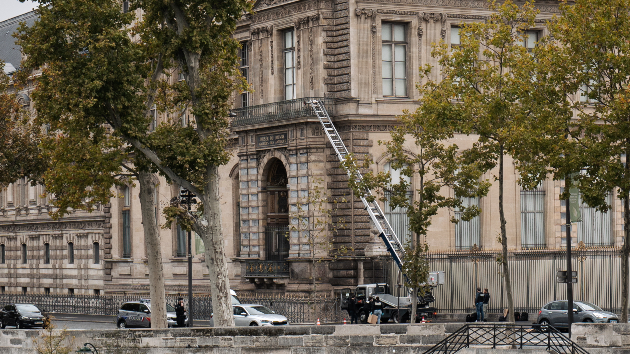
In what appeared to be an intricately planned robbery, a team of thieves drove up to the side of the museum in what police described as a stolen truck with a “mobile freight elevator” or cherry picker on the back that was extended up to a window, according to the Paris police.

Two of the thieves dressed as construction workers used the cherry picker to get up to the second floor, where they cut through the window of the Apollo Gallery using angle grinders, authorities said. Upon entering the gilded gallery, the thieves used power tools to cut into the glass cases to reach the precious jewels, investigators said.

The entire theft took about seven minutes, according to investigators.

Paris Prosecutor Laure Beccuau estimated that $102 million worth of jewels were stolen, including crowns, necklaces, earrings and a diamond-encrusted brooch.

Over the weekend, police arrested two men, both in their 30s and from the Paris suburb of Seine-Saint-Denis, French National Police confirmed to ABC News.

Investigators said they matched trace DNA evidence recovered from a helmet left at the scene of the crime to one of the suspects, enabling police to put the alleged thief under phone and physical surveillance.

One suspect was arrested at 10 p.m. on Saturday at Paris’ Charles de Gaulle Airport while trying to board a plane bound for Algeria, according to police.

The second suspect was nabbed by police as he was about to travel to Mali, in West Africa, an investigator with the Paris Brigade for the Repression of Banditry (BRB), the special police unit spearheading the probe, and a source with the French Interior Ministry directly connected to the investigation told ABC News.

One of the suspects has dual citizenship in France and Mali, and the other is a dual citizen of France and Algeria, investigators said, adding that both were already known to police from past burglary cases.

Investigators say they’re still determining whether a source inside the Louvre may have had a role in the theft.

“They knew exactly where they were going. It looks like something very organized and very professional,” French Culture Minister Rachida Dati told ABC News last week.

While testifying before France’s Senate Culture Committee on Wednesday, Laurence des Cars, president and director of the Louvre, described the heist as “an immense wound that has been inflicted on us.”

Des Cars said all of the museum’s alarms worked properly, as did its video cameras, but noted a “weakness” in security that was taken advantage of by the thieves. She said the only camera installed outside the Apollo Gallery was facing west and did not cover the window where the thieves broke in and exited.

“The weakness of the Louvre is its perimeter security, which has been a problem for a long time … certainly due to underinvestment,” des Cars told the lawmakers.

Des Cars said a “Grand Louvre renovation project” began 40 years ago “and has only affected half of the museum.”

“We did not spot the criminals arriving from outside early enough,” des Cars said.

“The security system, as installed in the Apollo Gallery, worked perfectly,” des Cars said. “The question that arises is how to adapt this system to a new type of attack and modus operandi that we could not have foreseen.”

Copyright © 2025, ABC Audio. All rights reserved.
Navy helicopter, fighter jet both go down in South China Sea: Navy

Navy helicopter, fighter jet both go down in South China Sea: Navy
Efnan Ipsir/Anadolu via Getty Images

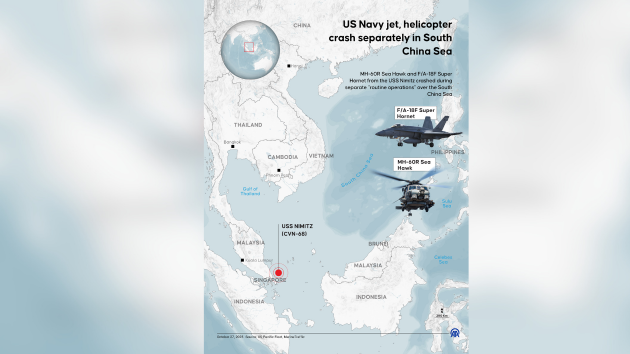
(NEW YORK) — A Navy helicopter and a fighter jet, both conducting routine operations from the USS Nimitz aircraft carrier, went down in the South China Sea about 30 minutes apart Sunday, the U.S. Pacific Fleet said in a statement.

The U.S. Navy MH-60R Sea Hawk helicopter went down at about 2:45 p.m. local time. All three crew members were safely recovered, the Navy said.

“Following the incident, separately, at 3:15 p.m., an F/A-18F Super Hornet fighter assigned to the ‘Fighting Redcocks’ of Strike Fighter Squadron (VFA) 22 also went down in the waters of the South China Sea while conducting routine operations from Nimitz.” 

Both crew members ejected and were also safely recovered, the Navy said.

“All personnel involved are safe and in stable condition. The cause of both incidents is currently under investigation,” the U.S. Pacific Fleet said in the statement.

Copyright © 2025, ABC Audio. All rights reserved.
French police arrest 2 Louvre jewel heist suspects amid manhunt

French police arrest 2 Louvre jewel heist suspects amid manhunt
Remon Haazen/Getty Images

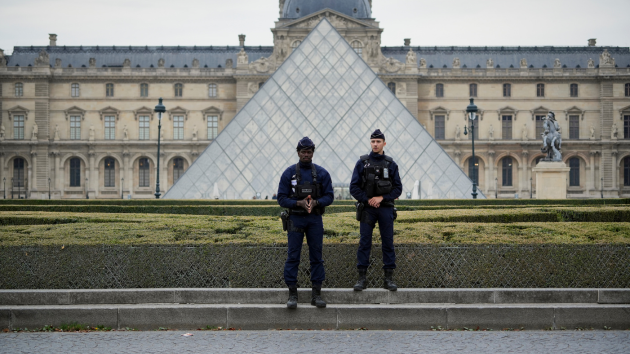
(LONDON) — French authorities arrested two men in relation to last week’s major jewel heist at Paris’ Louvre Museum, the French National Police confirmed to ABC News, amid a nationwide manhunt for the perpetrators.

One suspect was arrested at 10 p.m. on Saturday at Paris Charles de Gaulle Airport while trying to board a plane bound for Algeria, police said.

Police did not offer any information on the timing or circumstances of the second suspect’s arrest.

Both men are suspected of having been part of a team alleged to have robbed the Louvre last week. They are both from Seine Saint Denis, a northeastern suburb of Paris, police said.

No new information has been made public on the whereabouts of the stolen jewels that Paris Public Prosecutor Laure Beccuau estimated to be worth $102 million.

French Interior Minister Laurent Nuñez praised investigators for making the arrests in a social media post on Sunday.

“I would like to offer my warmest congratulations to the investigators who worked tirelessly as I asked them to and who always had my full confidence,” Nuñez said in the post. “The investigations must continue in accordance with the secrecy of the investigation under the authority of the specialized interregional court of the Paris Public Prosecutor’s Office.”

“We will continue with the same determination! Let’s keep going!” Nuñez added.

Authorities launched a nationwide manhunt for the Louvre suspects after the theft from the museum’s Apollo Gallery on the morning of Oct. 19, shortly after the museum opened to the public.

The stolen items included crowns, necklaces, earrings and brooches, some of which once belonged to Emperor Napoleon and his wife.

The team of thieves drove up to the side of the museum in what police described as a “mobile freight elevator” equipped with a metal ladder on the back that was extended up to a window, according to the Paris police.

“They deployed the freight elevator, securing the surroundings with construction cones, before accessing the second floor, in the Apollo Gallery, by breaking the window with an angle grinder,” according to the police statement.

“Inside, they then smashed two display cases, ‘Napoleon jewels’ and ‘French crown jewels,’ using the angle grinder and stole numerous pieces of high-value jewelry,” police said.

French President Emmanuel Macron vowed that authorities would catch those responsible for what he described as an “attack on a heritage that we cherish because it is our history.”

French Culture Minister Rachida Dati, who is overseeing the investigation alongside the Justice Ministry, described the heist to ABC News as “a simple, but spectacular operation.”

Soon after the theft, investigators said four suspects left the scene on two motorbikes, winding their way through central Paris and last spotted speeding southeast on Highway A6 out of Paris and in the direction of Lyon.

Copyright © 2025, ABC Audio. All rights reserved.
Trump’s U-turns on Russia and Ukraine, and the significance of new sanctions: ANALYSIS

Trump’s U-turns on Russia and Ukraine, and the significance of new sanctions: ANALYSIS
Alex Wong/Getty Images

(NEW YORK) — For the first time in his presidency, Donald Trump this week imposed new sanctions on Russia in an attempt to push Vladimir Putin to stop his nearly four-year war in Ukraine.

The sanctions target two of Russia’s largest oil companies and their subsidiaries, a move that analysts say is a significant blow to Putin but unlikely to immediately shift his military aims.

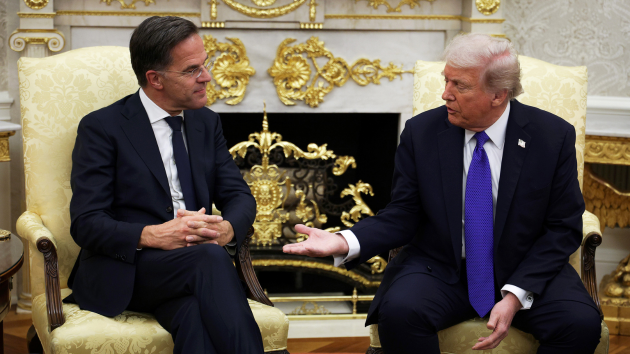
“These are tremendous sanctions. These are very big,” Trump said as he confirmed the levies in an Oval Office meeting with NATO Secretary-General Mark Rutte on Wednesday.

When asked why he was taking this action now, after months of threats and delayed punitive action against Moscow, Trump said he “felt it was time.”

Trump’s U-turns on Russia-Ukraine diplomacy

The surprise sanctions announcement came after a dizzying week of diplomacy for Trump, who turned his focus back to the conflict in Eastern Europe after securing a fragile ceasefire agreement in the Middle East.

Trump has shifted between support for Russia and support for Ukraine since returning to office, and has often sent mixed messages on what concessions would need to be made by both sides to reach a peace deal.

“I don’t think there’s an overall strategy. I think there’s an overall goal, which has been pretty consistent, which is to stop the fighting and stop the killing,” said William Taylor, a former U.S. ambassador to Ukraine under President George W. Bush and President Barack Obama who also served as chargé d’affaires to the country during the first Trump administration.

Trump is now calling for a freeze of the conflict along the current battle lines, a ceasefire proposal that is backed by Ukraine.

One clear trend in Trump’s approach to the war over the past several months, experts said, was a growing frustration with Russia.

“Trump’s rhetoric started to change in the summer when he realized that despite his effort to diplomatically engage with Russia, Putin was not really delivering anything other than smooth talking. Russia, in fact, continued to escalate its attacks on Ukraine,” said Maria Snegovaya, a senior fellow with the Europe, Russia, and Eurasia Program at the Center for Strategic and International Studies.

Amid those tensions, Trump recently said he was considering giving Ukraine access to coveted American-made Tomahawk missiles that would allow Kyiv to strike deeper inside Russia. Ukrainian President Volodymyr Zelenskyy visited Washington to make the case for the military assets last week.

One day before Zelenskyy’s arrival, though, Trump changed his bullish posture after a phone call with Putin. Trump then said he and Putin planned to meet for a second face-to-face meeting.

“Putin has been very skillful in derailing Trump’s intentions to get tough with him. Putin derailed the sanctions when he went to Alaska and he derailed the Tomahawks with a phone call. But it does appear that Trump has figured that out,” said Taylor.

The second Putin summit was called off days after Trump first announced it, as Russia made clear it had no intention to change its goals to erode a sovereign Ukraine. Trump said he canceled the meeting because he didn’t want to have his time “wasted.”

“It seems that was a final blow,” said Snegovaya. “And eventually the administration decided it’s not enough to just use carrots to pressure Putin, you also need sticks. I think [the sanctions are] really long overdue decision but it’s better later than never, and the hope is that it’s just a first step in the overall much needed direction.”

What impact will the sanctions have?

The sanctions hit Open Joint Stock Company Rosneft Oil Company and Lukoil OAO, which are estimated to account for nearly half of all Russian oil production.

The Kremlin waved off the measures, and Putin said they will not “significantly affect our economies.”

Severe sanctions were put in place by the Biden administration and European countries after the start of Russia’s war in 2022, but Russia was largely able to stem the impact on its economy through shadow fleets and other adjustments.

But the economic situation in Russia has worsened in recent months, with declines in oil and fuel export revenues, persistent inflation and lower growth rates.

“These sanctions would be bad news for Putin under any circumstances but at the present moment, they’re more significant than they might otherwise seem,” said Stephen Sestanovich, a senior fellow at the Council on Foreign Relations who served as the State Department’s ambassador-at-large for the former Soviet Union.

“The past few years they’ve had pretty good economic growth, and so they might not have had this kind of impact then,” Sestanovich said of the new U.S. sanctions. “But right now, this is just one more headache Putin does not need.”
 

How much these new sanctions hamper Russia will largely dependent on U.S. enforcement, experts said, especially when it comes to secondary sanctions on countries and companies buying Russian oil.

A fuller picture of the effect of the sanctions will emerge when they go into effect on Nov. 21.

“The devil, as usual, is in details,” said Snegovaya.

What next?

Analysts agree that the sanctions are not a silver bullet, and should be paired with more military support and financial support for Ukraine.

“There’s more that’s needed,” said Taylor, the former ambassador to Ukraine. “More sanctions, more weapons and more consistency.”

The European Union joined the U.S. in enacting tougher sanctions on Russia on Thursday, marking the group’s 19th sanctions package against Moscow. On Friday, the United Kingdom called on European allies to send more long-range missiles to Ukraine during a gathering with Zelenskyy in London.

Zelenskyy, for his part, left Washington last week without Tomahawk missiles but said he believed the issue was not entirely off the table.

In the meantime, Russia’s only ramped up its attacks on Ukraine, including an aerial strike on a kindergarten in the eastern city of Kharkiv.

“I think everybody ought to be ready for the Russians to get significantly more brutal in their attacks on Ukraine,” said Sestanovich.

“You have to have a comprehensive approach to dealing with this problem and to make the Russians see that actually, the situation is only going to get worse for them,” Sestanovich said. “The Putin approach has been a patient one and maybe a somewhat self-deluded one, thinking that the moment will come where they can break the Ukrainian lines or Ukrainian morale will sag or Western unity will erode. What you’ve got to do is have a set of policies that make it hard for Putin to kid himself.”

Copyright © 2025, ABC Audio. All rights reserved.
Company who made lift used in Louvre heist goes viral with social post

Company who made lift used in Louvre heist goes viral with social post
Kiran Ridley/Getty Images

(PARIS) — When Alexander Boecker and his wife, Julia Schwartz, woke up last Sunday morning, the first headlines were not what they expected.

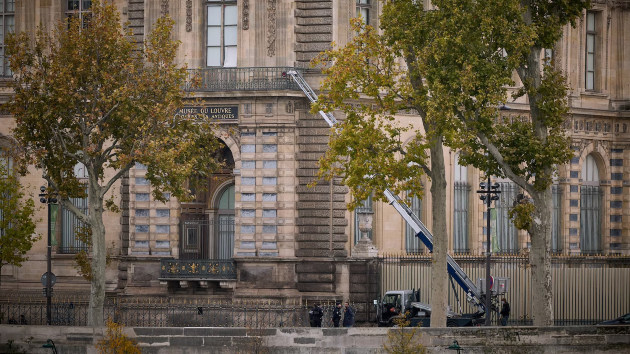
One of their company’s machines — a Boecker AgiLo furniture lift — had been used in a jewel heist at the Louvre Museum in Paris and the image of their lift beneath the iconic French museum’s balcony was already everywhere.

Last week’s Louvre heist saw four masked thieves steal eight pieces of jewelry valued at $102 million, sparking a national outcry and nationwide manhunt. The daring heist took just seven minutes, leaving investigators searching for answers as to how one of the world’s most secure museums was robbed in such a brief window of time.

Based in Werne, a small town in western Germany, Boecker is a third-generation family firm that employs more than 600 people and earns about 150 million euros ($174 million) a year, according to its website. Its lifts are designed to move furniture, pianos and scaffolding — not priceless treasures.

“At first we were shocked,” Boecker told ABC News. “It was a reprehensible act. They had used our device to do it.”

By Sunday evening, once it was clear no one had been hurt, the shock gave way to dark humor, the 42-year-old noted.

“We put some slogans together we found funny,” Boecker said.

His wife, who heads the company’s marketing department, came up with the line that would soon go viral: “When you need to move fast.”

On Monday morning, the company licensed the now-famous photo of the Louvre heist — their lift in full view — and posted it online with the slogan.

“We expected maybe a few laughs,” Boecker said. “Not millions.”

By Thursday, the post had reached 4.3 million views — an extraordinary leap from their usual 20,000.

Inside the office, other slogans were considered: “Return on investment in only seven minutes” and “Even professional criminals rely on the best machines.” In the end, they decided to hold back.

“We didn’t want to cross the line,” Boecker said. “Of course, it’s a crime — a very serious one. We didn’t want to make fun of that.”

The AgiLo in question had been sold to a French rental company in 2020. On Oct. 15, 2025, the thieves arrived posing as clients, attended a short demonstration, learned how to operate the lift — then drove away with it. The rental company reported the theft to police that same day.

Boecker described his machines as “safe, reliable, durable — and as quiet as a whisper.”

“Over 99% of the reactions are positive,” he said. “Some people wrote, ‘Who says Germans don’t have a sense of humor?'”

He noted that they may stop the campaign, since they don’t want to “step over a line.”

“But still,” Boecker said with a smile. “Quite a story, and quite a lift.”

Copyright © 2025, ABC Audio. All rights reserved.