
What the UN Security Council vote means for Trump’s Gaza peace plan

What the UN Security Council vote means for Trump’s Gaza peace plan
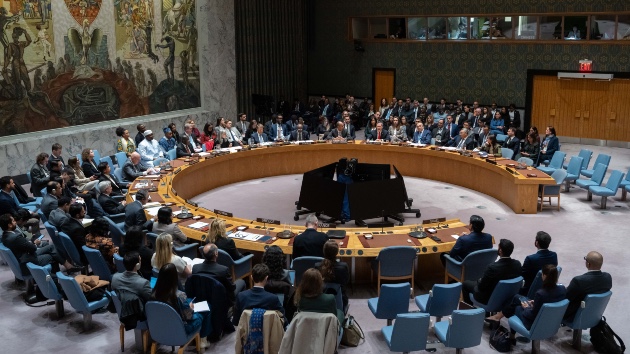
 U.S. Ambassador to the United Nations Mike Waltz addresses the UN Security Council as they meet to vote on a draft resolution to authorize an International Stabilization Force in Gaza, on November 17, 2025 in New York City. (Photo by Adam Gray/Getty Images)

(LONDON) — The United Nations Security Council voted to authorize President Donald Trump’s post-war plan for Gaza, with the president quick to declare it “one of the biggest approvals in the History of the United Nations.”

Trump’s 20-point plan, which was the basis for the ceasefire agreement signed by Israel and Hamas last month, was the subject of the resolution put to the council by the U.S. on Monday.

It was approved by a 13-0 vote, with Russia and China — both of whom wield veto power at the council — abstaining.

The vote gives authorization to the Board of Peace envisioned in Trump’s Gaza plan, which is intended as a transitional authority to oversee the strip’s redevelopment. The board is expected to be chaired by Trump. The only other member proposed by Trump to date is former British Prime Minister Tony Blair.

The vote also gave approval for the International Stabilization Force, which — under the command of the Board of Peace — will provide security, train a new Palestinian police force and ensure the demilitarization of Gaza.

Trump touted the “incredible Vote” as a “moment of true Historic proportion!,” in a post to social media.

But key questions remain regarding both pillars of the Gaza peace effort — the Board of Peace and the International Stabilization Force.

In his social media post, the president said that “members of the Board, and many more exciting announcements, will be made in the coming weeks.” All parties involved in the peace process will be watching closely to see the makeup and political bent of the eventual Board.

Likewise, the composition and capabilities of the International Stabilization Force remains unclear. Ahead of Monday’s vote, U.S. Ambassador to the U.N. Mike Waltz said in a statement that the force would be drawn from “a strong coalition of peacekeepers, many from Muslim-majority nations like Indonesia, Azerbaijan and others.”

“These brave souls will secure Gaza’s streets, they will oversee demilitarization, they will protect civilians and they will escort aid through safe corridors, all while Israel phases out its presence and a vetted Palestinian police force takes on a new role,” Waltz said.

But practical progress has been slower. Earlier this month, for example, a United Arab Emirates presidential adviser said the nation “does not yet see a clear framework for the stability force and under such circumstances will not participate.”

The U.N. said contributing nations will send troops “in close consultation and cooperation” with Egypt and Israel. 

But that close cooperation is already blocking some from involvement. Israeli Prime Minister Benjamin Netanyahu, for example, said he would not allow Turkish forces to participate.

While negotiations continue as to the makeup of the Board of Peace and International Stabilization Force, the Gaza ceasefire looks far from secure. Hamas agreed to return all living and dead hostages as part of the deal, but three hostage bodies are still thought to be inside Gaza.

Israeli forces have withdrawn to the so-called “yellow line” inside Gaza as stipulated in the deal, but there has already been one short resurgence in fighting since the ceasefire went into effect.

There have also been several instances in which Israeli forces have killed people alleged to have crossed the line. The Hamas-run Gaza Ministry of Health said on Sunday that since the ceasefire was signed on Oct. 11, 266 Palestinians have been killed by Israeli actions.

Hamas, meanwhile, said after Monday’s U.N. vote that it will not disarm and that the issue of its weapons cannot be separated from “a political path that ensures the end of the occupation, the establishment of the state and self-determination.”

Netanyahu has said that Israel will disarm Hamas by force if it does not do so voluntarily, or in coordination with the proposed International Stabilization Force.

“We believe that this plan will lead to peace and prosperity, as it includes full demobilization, disarmament and a process to deradicalize Gaza,” Netanyahu said in a statement following Monday’s vote.

“We will also begin the process of demilitarizing and disarming the Gaza Strip and ending Hamas rule,” Netanyahu said.

“Israel extends its hand of peace and prosperity to all its neighbors, and calls on them to normalize relations and join the movement to remove Hamas and its supporters from the region,” the prime minister added.

For all Palestinian factions and influential foreign parties, the issue of Palestinian statehood remains a key and unanswered element of any long-term peace deal. 

A slew of nations formally recognized a Palestinian state in September as they pushed Israel and the U.S. to secure a ceasefire in Gaza. 

The eventual agreement stated that, if redevelopment in Gaza and significant reform to the Palestinian Authority proceeds, “the conditions may finally be in place for a credible pathway to Palestinian self-determination and statehood, which we recognize as the aspiration of the Palestinian people.”

That clause prompted significant consternation in Israel, where Netanyahu, his officials and particularly his far-right coalition partners vowed to block any semblance of Palestinian statehood.

Reacting to Monday’s vote, Netanyahu made no comment on that aspect of the blueprint. But just one day before, the prime minister told a cabinet meeting that his opposition to Palestinian statehood “has not changed one bit.”

“I have been rebuffing these attempts for decades and I am doing it both against pressures from outside and against pressures from within,” the prime minister said. “So, I do not need affirmations, tweets or lectures from anyone.”

ABC News’ Michelle Stoddart and Jordana Miller contributed to this report.

Copyright © 2025, ABC Audio. All rights reserved.
Ukraine’s Odesa forced onto backup power after overnight Russian attack: Officials

Ukraine’s Odesa forced onto backup power after overnight Russian attack: Officials
Nina Liashonok/Ukrinform/NurPhoto via Getty Images

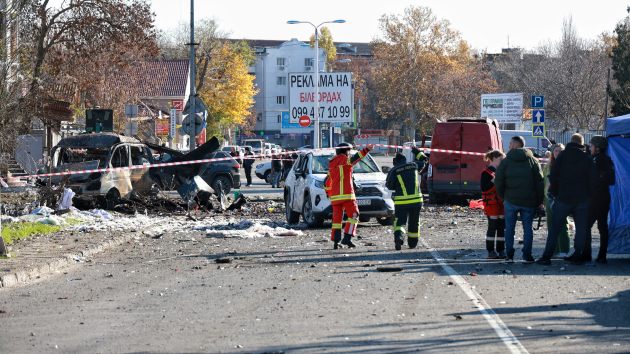
(LONDON) — Life support facilities and critical infrastructure in the southern Ukrainian city of Odesa were forced onto backup power by overnight Russian strikes on energy targets, Ukrainian officials said early Sunday.

“The enemy continues to deliberately strike civilian infrastructure in the southern part of the Odesa region,” Oleh Kiper, the head of the Odesa Regional Military Administration, wrote on Telegram.

“Despite active air defense efforts, last night strike drones again damaged energy facilities, including a solar power plant,” Kiper added. “Fires that broke out were promptly extinguished by the State Emergency Service units. Fortunately, there were no casualties.”

“Resilience points have been deployed in the affected area,” Kiper wrote. “Life-support facilities and critical infrastructure have been switched to backup power.”

The Ukrainian Energy Ministry confirmed Kiper’s report, saying in social media posts that there was “a power outage” in Odesa as a result of Russian strikes.

Ukraine’s air force said Russia launched one ballistic missile and 176 drones into the country overnight, of which 139 drones were shot down or suppressed. Thirty-seven drones impacted across 14 locations, the air force said.

Moscow is intensifying its strikes against critical infrastructure — particularly energy targets — all across Ukraine coinciding with the onset of wintry weather, according to Ukrainian officials. Russian forces have targeted energy infrastructure throughout Moscow’s full-scale invasion, which began in February 2022.

Ukrainian President Volodymyr Zelenskyy said in a statement on Sunday that Kyiv is working to enhance its air defenses in cooperation with Western partners. “We have prepared new strong agreements with Europe to significantly strengthen our air defense, our resilience and our diplomacy,” he wrote on Telegram.

The president also said his government is bolstering its energy grid and securing more natural gas supplies in response to Russian attacks.

“We already have agreements in place for financing gas imports — and we will cover nearly 2 billion euros needed for gas imports to compensate for the losses in Ukrainian production caused by Russian strikes,” Zelenskky said in a statement posted to the presidential office website.

Zelenskyy announced a new deal for gas imports from Greece and said Kyiv is working with European Union, American, Norwegian, Polish and Azerbaijani partners to secure more supplies and arrange financing for additional imports.

On Saturday, Zelenskyy said in a statement that the government’s “winter support elements” include the fixing of electricity and gas prices for households, financing of gas imports and the building of equipment reserves for repairs after Russian strikes.

Copyright © 2025, ABC Audio. All rights reserved.
At least 6 killed and dozens injured in Russian attacks on Kyiv: Ukrainian officials

At least 6 killed and dozens injured in Russian attacks on Kyiv: Ukrainian officials
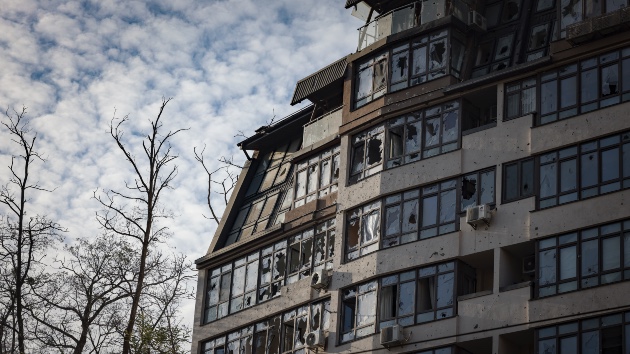
A general view of the aftermath following an overnight wave of Russian strikes on November 14, 2025 in Kyiv, Ukraine. Kyiv was attacked by a wave of Russian drones and missiles on the night of November 14, with the Ukrainian president alleging that Russia had launched 430 drones and 18 missiles, damaging dozens of high-rise buildings. Search and rescue operations are ongoing as damage is reported across nine districts of the capital. (Photo by Maksym Kishka/Frontliner/Getty Images)

(LONDON) — At least six people have been killed and 35 injured, including a pregnant woman, from ongoing Russian attacks in the Kyiv region early Friday morning, Ukrainian officials said.

Sections of certain heating networks in the region were damaged from the attack, and some buildings were without heat supply, Kyiv Mayor Vitali Klitschko said in a post on Telegram.

At least 15 buildings have been damaged in Kyiv so far from the attacks, the Kyiv City State Administration said in a post on Telegram.

Ukrainian officials said that 430 drones and 18 missiles were launched as debris from the strike rained down on Kyiv.

Meanwhile, earlier this week, Ukrainian forces were forced to withdraw from several positions in the Zaporizhzhia region, the southeastern front, due to intense Russian assaults, according to a spokesperson for the army.

Russian forces have launched more than 400 artillery strikes per day and Ukrainian troops faced the destruction of defensive fortifications, Southern Defense Forces spokesman Vladyslav Voloshyn told ABC News.

The withdrawal affected the areas around Novouspenivske, Nove, Okhotnyche, Uspenivka and Novomykolaivka, according to Voloshyn.

“The situation there remains difficult, in part because of weather conditions that favor the attacks. But we continue to destroy the occupier, and I thank every one of our units, every warrior involved in defending Ukraine’s positions,” Ukrainian President Volodymyr Zelenskyy said Tuesday.

Ukraine is also facing the potential fall of Pokrovsk — a city home to around 60,000 people at the time of Russia’s 2022 full-scale invasion of Ukraine — to Russia after an 18-month battle of attrition. This could be one of the most serious defeats of the war for Ukraine.

Copyright © 2025, ABC Audio. All rights reserved.

At least 5 killed and more than 2 dozen injured in Russian attacks on Kyiv

At least 6 killed and dozens injured in Russian attacks on Kyiv: Ukrainian officials
A general view of the aftermath following an overnight wave of Russian strikes on November 14, 2025 in Kyiv, Ukraine. Kyiv was attacked by a wave of Russian drones and missiles on the night of November 14, with the Ukrainian president alleging that Russia had launched 430 drones and 18 missiles, damaging dozens of high-rise buildings. Search and rescue operations are ongoing as damage is reported across nine districts of the capital. (Photo by Maksym Kishka/Frontliner/Getty Images)

(LONDON) — At least 5 people have been killed with over two dozen injured, including a pregnant woman, from ongoing Russian attacks in the Kyiv region early Friday morning, Kyiv Mayor Vitali Klitschko said in a post on Telegram.

Sections of certain heating networks in the region were damaged from the attack, and some buildings were without heat supply, the mayor added.

At least 15 buildings have been damaged in Kyiv so far from the attacks, the Kyiv City State Administration said in a post on Telegram.

Ukrainian officials said that 430 drones and 18 missiles were launched as debris from the strike rained down on Kyiv.

Meanwhile, earlier this week, Ukrainian forces were forced to withdraw from several positions in the Zaporizhzhia region, the southeastern front, due to intense Russian assaults, according to a spokesperson for the army.

Russian forces have launched more than 400 artillery strikes per day and Ukrainian troops faced the destruction of defensive fortifications, Southern Defense Forces spokesman Vladyslav Voloshyn told ABC News.

The withdrawal affected the areas around Novouspenivske, Nove, Okhotnyche, Uspenivka and Novomykolaivka, according to Voloshyn.

“The situation there remains difficult, in part because of weather conditions that favor the attacks. But we continue to destroy the occupier, and I thank every one of our units, every warrior involved in defending Ukraine’s positions,” Ukrainian President Volodymyr Zelenskyy said Tuesday.

Ukraine is also facing the potential fall of Pokrovsk — a city home to around 60,000 people at the time of Russia’s 2022 full scale invasion of Ukraine — to Russia after 18-month battle of attrition. This could be one of the most serious defeats of the war for Ukraine.

Copyright © 2025, ABC Audio. All rights reserved.
Indian Supreme Court’s order seeks to take bite out of stray dog problem. Observers say it’s mostly bark.

Indian Supreme Court’s order seeks to take bite out of stray dog problem. Observers say it’s mostly bark.
Sunil Ghosh/Hindustan Times via Getty Images

(NEW YORK) — The Supreme Court of India issued an order directing all states and union territories to remove stray dogs from public spaces — including schools, universities, hospitals, and transport hubs — sparking a debate about animal welfare.

The move came through a suo motu petition, where the court takes on a matter of public interest without any official petition, and was said to be in response to the alarming number of dog-bite incidents and the threat to human safety, particularly children.

The order called for dogs that are taken off the street for preventative medical treatments — including those related to rabies — to not be returned. They are meant to be shifted to a “designated shelter,” as per the judgement, because India’s 2023 law doesn’t allow culling.

The conditions and capacity of these shelters to host millions of India’s stray dogs has been questioned by activists and protestors. 

Although some animal rights groups have noted a need for a solution to the problems caused by the dogs, some have also called the proposed approach into question.

The judgment announced on Nov. 7 cites several media reports and incidents, including one with a Welsh entrepreneur who was bitten by a stray dog during a morning run in Bengaluru, a city in India’s south.

India had an estimated 9 million dogs in their 2019 livestock census; other surveys done in 2021 estimated the number much higher, at 52 million. In 2024, the country recorded 3.7 million dog bite incidents and 54 human deaths from rabies. Estimated cases of rabies have declined by 75% between 2003 and 2023.

“These numbers have been falling steadily for two decades — the court orders do not seem to have taken this official and research data into consideration,” said Dr. Krithika Srinivasan, professor of political ecology at the University of Edinburgh.

Until now, India’s stray dog management was guided by the Animal Birth Control (ABC) Rules, under which stray dogs were to be sterilized, vaccinated and dewormed before being released back into the same locality.

Though the recent judgment calls for the dogs not to be released back at all. 

“Stable dog populations are less likely to bite and transmit rabies,” Srinivasan said. “When you start removing them, you create what ecologists call a perturbation effect.”

Ayesha Christina Benn, founder of Neighbourhood Woof and a longtime partner of the local urban body in implementing the ABC program, warned that infrastructure simply cannot handle the court’s directive. 

Benn says the order isn’t practical. Delhi alone has a million dogs, and almost 20 centers to house them. “These centers themselves lack compliance,” Benn said. “We had to tear ours down and rebuild it to meet the norms.”

Her NGO currently receives the equivalent of about $11 per dog for sterilisation and vaccination — which is about two-thirds of the actual cost per dog. The government doesn’t have the necessary funds.

A similar directive was issued by the same court, in August, but on a smaller scale in Delhi National Capital Region. This directive was rescinded after protests from animal-rights groups.

In the current judgment, the court wants adequate fencing, boundary walls and gates around education institutes and hospitals within eight weeks.

Akanksha Majumdar, a lawyer by training, said, “The judgment is a step in the right direction, but detached from the ground reality.”

She runs an organization called The Philanthropist and the Happy Dog, which assists in the rescue and rehabilitation of community animals, including dogs and cats. Her group is “taking steps to file a review petition against the said order,” she said.

Srinivasan said she agreed that while the ABC policy’s implementation needs improvement, it has nonetheless been instrumental in bringing down rabies and dog population numbers in some regions.

She attributed the country’s progress to two key factors: the widespread availability of post-exposure prophylaxis for bite victims and the 2001 decision to end mass culling in favour of sterilisation and vaccination programmes.

Yet, despite the long-term decline, controversies around stray dogs have grown. Srinivasan warned that such incidents, while tragic, cannot be effectively addressed by policy decisions that are not based on long-term, nation-wide data and evidence that show which strategies have been successful.

Srinivasan said officials should focus on what has worked: Ensure human anti-rabies treatment is available across the country, avoid regular mass feeding of complete meals to prevent increases in dog population density in particular locations, and, of course, the vaccination-sterilization program.

And, to make them more effective, she said, officials should take the help of grassroots groups that work in the community and understand the dogs better. 

Copyright © 2025, ABC Audio. All rights reserved.

Corruption investigation into former Zelenskyy associate shakes Ukraine

Corruption investigation into former Zelenskyy associate shakes Ukraine
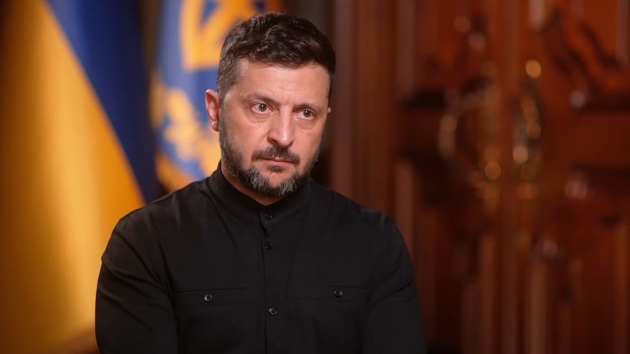
Ukrainian President Volodymyr Zelenskyy speaks with Martha Raddatz of ABC News on This Week. (ABC News)

(LONDON) — Ukraine is being shaken by one of the biggest wartime corruption scandals since Russia’s invasion three years ago, after investigators raided the homes of top officials and a former business partner of President Volodymyr Zelenskyy as part of an investigation into an alleged sprawling corruption scheme in the country’s energy sector.

Ukraine’s main anti-corruption agencies on Monday announced they had uncovered the “high-level” scheme that included corruption at Ukraine’s state nuclear energy company Energoatom. The National Anti-Corruption Bureau said it has proof that the scheme had elicited kickbacks worth $100 million from contractors hired to build defenses for Ukraine’s energy infrastructure to protect it from Russian attacks. That is likely to draw particular outrage from Ukrainians as it affects the efforts to guard the country’s power systems, as they come under sustained attack from Russia.

On Wednesday, Prime Minister Yulia Svyrydenko confirmed that Justice Minister German Galushenko — who previously served as the energy minister — was under investigation and had been removed from his position.

In a statement posted to Facebook, Galushenko said he agreed with the decision. “I believe that the suspension for the time of investigation is a civilized and correct scenario,” he said. “I will defend myself in the legal arena and prove my position.”

On Tuesday, NABU said it had detained five individuals and notified seven “members of the organization of their status as suspects,” saying they included “a businessman who is the head of the criminal organization” and “a former advisor to the minister of energy,” as well as a former deputy prime minister.

The agencies hadn’t initially named the individuals, but Ukrainian media reported one is the former business partner and close associate of Zelenskyy, Tymur Mindich.

A wealthy businessman, Mindich co-owned Zelenskyy’s production company, Kvartal 95, from the president’s years as an actor until Zelenskyy transferred ownership when he was elected. He has previously faced allegations of exploiting his connections with the president, according to Ukrainian media.

On Tuesday, prosecutors from the Specialized Anti-Corruption Prosecutors’ Office reportedly named Mindich, along with six others, during an arraignment hearing for one of the suspects in the energy scheme, according to local media.

NABU said it had raided Mindich’s house on Monday but that he had fled the country, prompting speculation he could have been tipped off.

Ukrainian media also report that the FBI is now also investigating Mindich. ABC News has reached out to the FBI for a comment.

Ukraine’s Justice Ministry on Tuesday confirmed that Galushenko was also part of the investigation after it was reported that NABU agents had raided his home.

So far, there have been no allegations that Zelenskyy knew of the scheme or was involved in profiting from it. But he is facing intense pressure to show he is acting and will not cover for his associates.

More details of the alleged scheme are emerging as prosecutors lay out evidence in arraignment hearings against one of the detained suspects. On Wednesday, prosecutors said Mindich had texted Zelenskyy asking him to speak with Galushenko shortly before a call took place.

That appears to be the first evidence that Mindich was in contact with Zelenskyy amid the scheme. The allegations so far imply Mindich was seeking to exploit his connection with the president for his own benefit.

The allegations against a former close associate are potentially embarrassing for the president and have prompted warnings from anti-corruption activists that Zelenskyy must ensure the investigation is allowed to proceed.

Zelenskyy this summer moved to take more control over the same anti-corruption agencies now investigating the energy sector corruption scheme. That attempt triggered the first mass protests of the war and criticism from European allies, forcing Zelenskyy to back down.

The new allegations come at a moment when Ukraine is struggling to protect its energy infrastructure from the heaviest Russian attacks of the war, which have left most of the country frequently living with rolling blackouts. Zelenskyy has been seeking financial support from Western countries to help restore the system and provide greater defenses.

The scandal could also risk reigniting problems for Zelenskyy with President Donald Trump, given some influential right-wing allies have long accused the Ukrainian leader of corruption. The alleged involvement of senior government ministers could also hurt morale among Ukraine’s public amid the war.

Zelenskyy on Monday expressed support for the investigations and said convictions must follow.

“Everyone who has built corrupt schemes must face a clear procedural response,” Zelenskyy said in his nightly video address. “There must be convictions. And government officials must work together with NABU and law enforcement bodies — and do it in a way that delivers real results.

Prominent Ukrainian anti-corruption activists have now said the president must prove that he will hold his associates accountable.

Daria Kaleniuk, a veteran campaigner, wrote that if there are fresh moves against the anti-corruption agencies, NABU and SAPO, “it will be a clear sign that the president decided to cover up his friends instead of supporting justice and interests of the nation of Ukraine.”

ABC News’ Fidel Pavlenko, Dada Jovanovic and Somayeh Malekian contributed to this report.

Copyright © 2025, ABC Audio. All rights reserved.
Drone crashes in Romania as Russia attacks Ukraine, defense ministry says

Drone crashes in Romania as Russia attacks Ukraine, defense ministry says
A display of military drone equipment during the Steadfast Dart 25 exercise, part of the North Atlantic Treaty Organization’s (NATO) Allied Reaction Force (ARF) training in Smardan, Romania, on Wednesday, Feb. 19, 2025. (Photographer: Andrei Pungovschi/Bloomberg via Getty Images)

(LONDON) — A drone crashed on the territory of NATO member Romania during Russia’s overnight attack on Ukrainian targets along the Danube River, the country’s defense ministry said in a statement on Tuesday.

Radars “signaled the presence of groups of drones in the area neighboring the national airspace, which led to the preventive activation of air defense systems,” the ministry said in a statement posted to its website.

One “aerial vehicle” was reported impacting in the Grindu area, around 3 miles south of the shared border, the ministry said.

“Teams made up of military personnel went on-site and reported the presence of possible drone fragments,” it added. “The area was secured and investigations are to be conducted in the early hours.”

“Weather conditions in the southeast of the country prevented the aircraft conducting air policing missions from scrambling,” the ministry said of its air force assets.

Alert messages were sent to residents of Romania’s northern Tulcea County, along the Danube River which forms the border with Ukraine, the ministry said. On the other side of the river, “a large number of explosions were observed” around the port of Izmail, it added.

The drone incursion came as Ukraine defended another night of intense Russian attacks. Ukraine’s air force said Russia launched 119 drones of various types into the country overnight, of which 53 were shot down or suppressed.

The air force said 59 drones impacted across 18 locations, with drone debris reported falling in one location.

The Odesa region — which borders Romania to the west and encompasses Ukraine’s Danube River ports — was among the main targets of Monday night’s barrage, the air force said.

Russian drone and missile incursions into Romanian airspace have become a relatively common occurrence as Moscow expands its long-range strikes into Ukraine.

Romania’s Defense Ministry told ABC News in September that it had recorded at least 11 violations of the country’s airspace by drones since the start of Moscow’s full-scale invasion of Ukraine in February 2022.

A ministry spokesperson said there had been approximately 50 attacks involving Russian drones on Ukrainian territory near Romania’s borders up until mid-September, of which 30 saw drone debris falling on Romanian territory.

Such incidents have become “almost routine” for Romanians, Constantin Spinu, a former spokesperson for Romania’s Defense Ministry, told ABC News.

“There is a war going on right across the border, so this situation is no longer a surprise for Romanian public opinion,” he added.

The Defense Ministry and wider government, though, “are taking this very seriously,” Spinu added.

Repeated incursions of Russian projectiles have prompted questions as to NATO’s readiness to defend its airspace. In September, Poland became the first NATO nation to shoot down Russian drones over its territory.

Romania is yet to down any intruding Russian munitions. “There is always a risk-benefit calculus — and that is to be sometimes in seconds,” Spinu said. “Whenever you shoot something in the air, you have to take into consideration that you might not hit the target and your projectile can be a danger.”

As NATO scrambles to revitalize its military-industrial base and refill its arsenals, there is also the question of resources.

“You don’t use an F-35 missile or an F-16 missile that costs millions” against a relatively cheap drone, Spinu said. “But should that €2,000 drone represent a real danger for the population, I think it is worth using a multi-million piece of equipment.”

Copyright © 2025, ABC Audio. All rights reserved.
NASA is sending probes to Mars to find out why it lost its atmosphere – and what that could mean for Earth

NASA is sending probes to Mars to find out why it lost its atmosphere – and what that could mean for Earth
Miguel J. Rodríguez Carrillo/Getty Images

(NEW YORK) — Mars is a cold, dry, desert-like planet. But billions of years ago, scientific evidence suggests that it had a thick atmosphere, which kept it warm enough to support flowing water on its surface. So, what happened to the Red Planet, and could it happen to Earth?

“From everything we know about the history of Mars through robotic exploration, it had very similar chemistry [to Earth]. It had very similar periods of time and development. It had that thicker atmosphere, had standing water, fresh water. All the things that Earth had,” said Casey Dreier, chief of space policy at the Planetary Society.

“So, what went wrong? Why don’t we see Mars as a rich planet now? That’s exactly the kind of thing that helps us put Earth in context and hopefully makes us appreciate Earth a little bit better as an outcome of that,” he added.

Dreier says one of the reasons Mars no longer has a dense and protective atmosphere is that the planet lacks the same kind of magnetic field that keeps Earth safe from the sun’s highly charged particles.

To better understand how solar wind energy interacts with Mars’ atmosphere and magnetic environment, and how that might have altered the planet’s surface, NASA and the University of California, Berkeley’s Space Sciences Laboratory are sending twin orbiters to the Red Planet.

The ESCAPADE mission, short for Escape and Plasma Acceleration and Dynamics Explorers, is the first dual-satellite mission to another planet. Two identical spacecraft will orbit in formation to provide a first-of-its-kind 3D view of Mars’ magnetosphere and upper atmosphere.

A unique route to the Red Planet

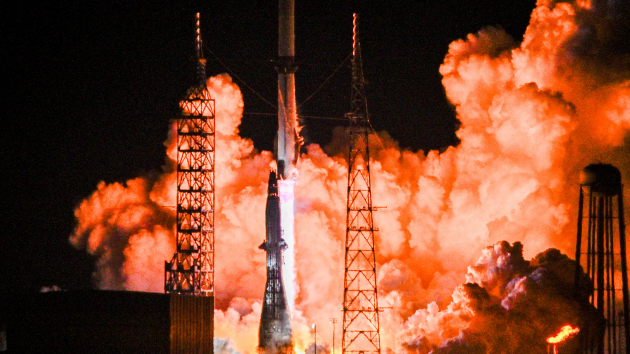
Scheduled to lift off on Sunday at 2:45 p.m. ET from Kennedy Space Center in Florida aboard a Blue Origin New Glenn rocket, the two probes will take a unique path to Mars. Instead of the traditional route used by previous Mars missions, UC Berkley says the ESCAPADE will first travel to a Lagrange point, an area in space where the pull of Earth’s and the sun’s gravity is balanced. The two craft will loop around it for about a year and then slingshot back toward Earth on their way to Mars. 

This flexible route could pave the way for future Mars missions by allowing for launch schedules spread over many months, which is essential if humans are to send fleets of spacecraft to Mars.

Sunday’s launch is only the second flight of the New Glenn rocket, a much more powerful rocket than the company’s New Shepard, which it uses for its regular space tourist missions to the edge of space. New Glenn is more than 320 feet tall, partially reusable and capable of delivering payloads to low, medium and geosynchronous orbits.

Unlocking the magnetic mysteries of Mars

NASA says the two identical Mars probes, which are nicknamed Gold and Blue after UC Berkeley’s school colors, “will reveal the planet’s real-time response to space weather and how the Martian magnetosphere changes over time.”

The two probes are about the size of a mini-fridge and weigh nearly 250 pounds.

Once they arrive at Mars in 2027, “The twin probes are designed to complement each other and unlock a more complete, real-time picture of how the Martian atmosphere blows off into space,” according to an analysis of the mission by the Planetary Society.

Dreier says that understanding what happened and is happening to Mars could help scientists better protect our own climate and atmosphere from current and future solar threats.

“The interaction between the sun’s particles and the atmosphere of Mars is thought to be one of the driving reasons that Mars no longer has a dense and protective atmosphere itself on the planet. So, understanding that relationship helps us understand the history and processes that have stripped away Mars’s atmosphere over time,” Dreier explained.

Safeguarding future astronauts from solar threats

The mission’s principal investigator, Robert Lillis of the Space Sciences Laboratory, emphasized that mapping Mars’ magnetic fields and how they respond to space weather is also critical for safeguarding future astronauts who may visit the planet. Solar storms and background cosmic radiation could pose significant risks to settlers, and lessons from this mission could help NASA protect human crews who may eventually spend time there.

“We will be making the space weather measurements we need to understand the system well enough to forecast solar storms whose radiation could harm astronauts on the surface of Mars or in orbit,” Lillis said in a press statement.

Dreier says the ESCAPADE mission is building on the science collected by MAVEN, another probe that has been studying the planet’s atmosphere since 2014. He notes that the mission is costing significantly less than previous scientific missions to space.

A mission on a budget

“This is a very, very, very low-cost mission for these types of science missions. This is roughly $70 to $80 million,” said Dreier. “It’s one of these smallest mission classes that NASA has, and as a consequence of that, it’s a very limited and focused set of scientific priorities, and it’s almost itself demonstrating the feasibility of doing missions like this.”

Dreier points out that NASA is facing the prospect of significant budget cuts and the decommissioning of a number of spacecraft, including MAVEN. He says wiping out the space agency’s science missions could have detrimental long-term consequences.

“It was actually looking at planets like Mars and also looking at planets like Venus that made scientists on Earth realize our climate and our planet is not this fixed, unchanging sphere. Things can go really, really, really wrong over the course of long periods of time,” said Dreier.

“Understanding that we weren’t owed an atmosphere, that we aren’t owed this protection from our magnetic field, puts this into context that the life and the habitat that we have here on Earth is actually very rare, but it’s also relies on and is protected by a number of these external factors that we are really just beginning to understand over the last generation or two,” he added.

Copyright © 2025, ABC Audio. All rights reserved.
Russia carries out ‘massive strike’ on Ukraine, killing at least 4 and injuring 26

Russia carries out ‘massive strike’ on Ukraine, killing at least 4 and injuring 26
Yurii Tynnyi/Suspilne Ukraine/JSC “UA:PBC”/Global Images Ukraine via Getty Images

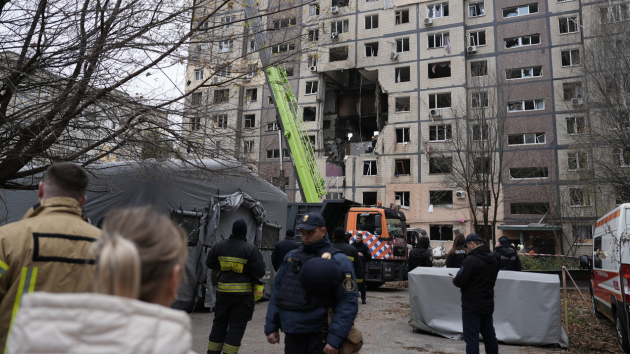
(NEW YORK) — Russia carried out a massive aerial attack across central and eastern Ukraine overnight, killing at least four people and injuring 26 others, according to Ukrainian authorities.

The Ukrainian Air Force said in a Telegram post Saturday morning that Russia overnight had launched 503 projectiles — 458 drones and 45 missiles — of which 415 were shot down while the remaining 78 struck 25 different locations across Ukraine.

Ukrainian President Volodymyr Zelenskyy said in a Telegram post Saturday morning that the targets of the latest Russian strikes “remain the same: ordinary life, residential buildings, our energy system, and infrastructure.”

The city of Dnipro was hit hard, with three people killed and another 11 injured there, according to the regional military administration, which said children were among the casualties. A drone struck an apartment building in the city. Three more were injured in the nearby Samarskyi district of the wider Dnipropetrovsk region, authorities said.

In the Kharkiv region, at least one person was killed in the village of Rokytne; eight others were injured in the suburbs of Kharkiv city; one person was injured in nearby Chuhuiv; and another was injured in the village of Hrushivka, according to the regional military administration. The mayor of Kharkiv said in a Telegram post Saturday morning that the city is facing a significant electricity shortage.

Additionally, one person was injured in the Poltava region and another person was injured in the neighboring Kyiv region, according to the respective regional military administrations. The strikes on the Poltava region targeted energy infrastructure facilities, cutting off electricity, water and heating to some communities, authorities said.

The Russian strikes mark the ninth large-scale attack on Ukraine’s gas infrastructure since the start of October, according to Ukrainian state-run energy firm Naftogaz, which in a Telegram post Saturday morning accused Russian of deliberately “targeting enterprises that provide Ukrainians with gas and heat” during the winter months.

The Russian Ministry of Defense confirmed in a Telegram post Saturday morning that it had targeted Ukrainian military and energy infrastructure in an overnight attack. The “massive strike” was carried out in response to “Ukraine’s terrorist attacks on civilian targets in Russia,” according to the Russian defense ministry.

Copyright © 2025, ABC Audio. All rights reserved.

Ukraine faces potential fall of Pokrovsk to Russia after 18-month battle of attrition

Ukraine faces potential fall of Pokrovsk to Russia after 18-month battle of attrition
Kostiantyn Liberov/Libkos/Getty Images

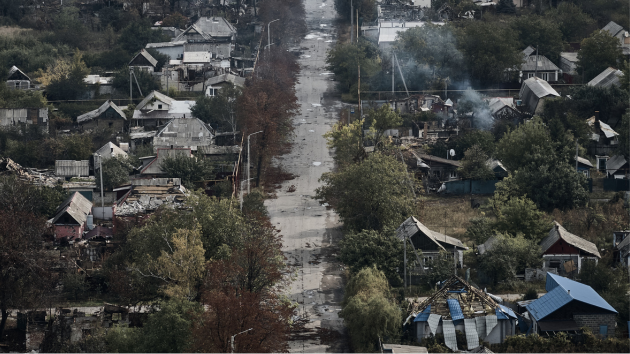
(LONDON) — Ukraine appears at increasing risk of losing the city of Pokrovsk, an important stronghold in eastern Ukraine where its embattled defenders have held off Russia’s grinding assaults for more than a year and a half.

The devastated city — which was home to some 60,000 people before Russia’s February 2022 full-scale invasion — has become a key focus of the Kremlin’s yearslong push to capture all of Ukraine’s eastern Donetsk Oblast, which along with neighboring Luhansk Oblast makes up the Donbas region.

Although Ukraine for now is still maintaining a defense, the fall of Pokrovsk would be one of the most serious defeats Ukraine has suffered since March, when its troops were forced to retreat from Russia’s Kursk region.

Russia has for many months been attempting to encircle Pokrovsk and neighboring Myrnohrad from the north and south. Moscow’s forces are now close to cutting off the main roads into Pokrovsk, with its two key supply routes already under fire from Russian drones making it dangerous and difficult to bring in supplies and also threatening Ukrainian forces ability to withdraw.

In recent weeks, a growing number of Russian troops have advanced into Pokrovsk, with small groups using infiltration tactics to penetrate into the heart of the city, according to both Ukrainian and Russian military analysts.

Intense street fighting is now taking place inside Pokrovsk, with Ukraine’s commander-in-chief Gen. Oleksandr Syrskyi describing the situation as “difficult.”

“The enemy in Pokrovsk is paying the highest price for attempting to fulfill the Kremlin dictator’s task of occupying Ukrainian Donbas,” Syrskyi wrote in a post to Telegram on Saturday.

Ukrainians outnumbered, under fire
Ukraine in recent days has launched counterattacks to push Russian forces back from the northern edge of Pokrovsk and keep a road there open to Myrnohrad.

Last weekend, for example, special forces troops under the command of Main Directorate of Intelligence (GUR) chief Kyrylo Budanov launched an audacious heliborne operation into territory that Russian forces claimed they already controlled. The GUR later uploaded video of the assault.

But the momentum in Pokrovsk appears to be with the attacking Russian forces. The city’s fall would be a blow to Ukrainian morale and would complicate its broader defense of the Donbas region.

There are also concerns in Ukraine that its loss could open a route for a Russian offensive towards the cities of Kostyantynivka, Kramatorsk and Sloviansk — the largest Donbas cities still controlled by Kyiv.

But military analysts who spoke to ABC News suggested that the fall of Pokrovsk alone would not necessarily imperil Ukraine’s forces holding the area.

“The Ukrainians could quite likely just as easily continue to defend outside Pokrovsk and Myrnohrad,” Pasi Paroinen of the Finland-based Black Bird Group open-source intelligence analysis organization told ABC News.

Though urban centers “usually make decent tactical defensive positions,” Paroinen added, “when you are already surrounded from three sides and your lines of communications have been cut off or are being disrupted as badly as they are right now over there, then those positions become liabilities, and they are just basically draining Ukrainian resources.”

A Ukrainian withdrawal may even improve Kyiv’s prospects, Paroinen said, assuming that new defenses have been prepared to the city’s west. If those new fortifications are not ready, “then they have a bigger problem than failing to hold Pokrovsk and Myrnohrad,” he said.

The Institute for the Study of War think tank suggested that Russia is unlikely to have the reserves to exploit Pokrovsk’s potential fall to advance rapidly to seize more of the Donbas region. Rather, Moscow’s mauled forces would likely have to continue their slow and costly forward grind, the ISW said.

Regardless, the situation is fraught for Ukrainian units still present in the city. The omnipresent threat of drones could complicate any Ukrainian retreat effort, which would likely see Kyiv’s troops attempt to break out to the west of the city using its under-fire supply routes.

If unable to retreat, large numbers of Ukrainian troops could find themselves cut off and potentially captured. To date and with the exception of the Russian siege of Mariupol in the early stages of the invasion, Kyiv’s forces have avoided being forced into mass surrender, even as they’ve gradually ceded territory in the east of the country.

The fall of Pokrovsk would also likely buoy Russian morale and send a signal that the war is going in its favor — a signal likely to be amplified by Russian state-aligned media and the Kremlin.

Moscow has amassed around 170,000 troops in the Donetsk region with a focus on Pokrovsk, according to remarks by Ukrainian President Volodymyr Zelenskyy on Friday — a signal, he said, of Russian President Vladimir Putin’s intent to capture the area.

Russia has not said how many troops it has deployed to the area. Ukrainian troops defending it are outnumbered eight-to-one, Zelenskyy said.

Visiting a command post in the Dobropillia sector — just north of Pokrovsk — this week, Zelenskyy said Ukrainian forces there are “defending Ukraine and our territorial integrity. This is our country, this is our East, and we will certainly do our utmost to keep it Ukrainian.”

Russian soldiers have already paid a high price. Ukraine’s General Staff said that, since the start of 2025, Moscow has lost some 200,000 soldiers who have been killed or wounded in Donetsk, most of them in the Pokrovsk and Kupyansk directions.

Russia does not release details about its casualties, making it difficult to independently confirm that figure. Ukrainian estimates of Russian casualties have broadly chimed with estimates from U.S. and European intelligence agencies since 2022.

A Russian victory in Pokrovsk will be welcome good news for the Kremlin as Putin maneuvers for advantage over his Ukrainian and American counterparts in anticipation of possible talks over a proposed ceasefire and eventual peace deal.

Russian Chief of the General Staff Gen. Valery Gerasimov last week sought to play up the significance of Moscow’s advance on the city, telling Putin that up to 10,000 Ukrainian soldiers were “encircled” in areas including Pokrovsk — a claim later denied by Ukrainian officials and even disputed by some Russian military analysts, and that most military observers say is currently false.

Fight or flight?
The current situation in Pokrovsk is following a similar pattern as other embattled Donbas cities like Bakhmut in 2023 and Avdiivka in 2024. In all three, Russian forces edged forward over several months at staggering human cost despite a resolute Ukrainian defense, according to figures released by Kyiv. In Bakhmut and Avdiivka, Ukrainian forces were eventually forced to abandon the cities.

Zelenskyy and his generals have been criticized by some military bloggers and analysts in Ukraine and abroad for their perceived sluggishness in ordering retreats from doomed Donbas cities.

“The Ukrainians are committing to defending these towns, I would say, for too long,” Paroinen said. “The Russians are already too deep, and I think in too many numbers inside Pokrovsk for Ukrainians to be able to throw them out.”

Ukrainian political and military officials have repeatedly said that military — not political — considerations are front of mind, framing their defense of certain cities as a means to further bleed Russia’s attacking units. Others have argued for a nimbler “defense-in-depth” approach to preserve Ukrainian lives and conserve stretched resources.

“Defense-in-depth is not something the political leadership appreciates too much,” Oleksandr V. Danylyuk — an associate fellow at the Royal United Services Institute think tank in the U.K. and the chairman of the Center for Defense Reforms think tank in Kyiv — told ABC News. “That’s why I would rather expect the government to fight for as long as they can.”

“I think that potentially, Ukraine can actually keep the ground in Pokrovsk, in the same way as the ground has been kept in Chasiv Yar, for instance,” Danylyuk — who has previously served as an adviser to top Ukrainian military and intelligence officials — added, referring to the pivotal fortress city to the northwest where Ukrainian troops have been pushed back but retain a foothold after a yearlong Russian offensive.

“I’m not quite sure if Pokrovsk is of the same importance militarily as Chasiv Yar,” Danlyluk said.

“Personally, I don’t see any real military reason to actually fight for Pokrovsk,” he said. “I understand political reasons. I understand symbolic reasons. And I believe that it is doable. It’s just a matter of price. And I’m not quite sure if we need to pay the price.”

Oleksandr Merezhko — a member of the Ukrainian parliament representing Zelenskyy’s party and the chair of the body’s foreign affairs committee — downplayed the criticism of the decision to fight for Pokrovsk.

“I guess our military philosophy is to defend a particular point till the last opportunity, but at the same time to save people,” he told ABC News. “To make the Russians lose more of their soldiers and to save our soldiers.”

But influential military figures, such as Vitalii Deineha — the well-known Ukrainian volunteer and founder of the Come Back Alive Foundation — are already calling for Kyiv to abandon the city.

“The General Staff reports to the top contain more and more lies every day,” Deineha wrote in a post to Facebook. “In fact, we have practically already lost Pokrovsk, which means that holding Myrnohrad also makes no sense.”

“We should not be afraid of rating drops, because there will be no elections: next year there will be war again. And someone will have to fight it,” he added.

Copyright © 2025, ABC Audio. All rights reserved.