
Israeli military warns Gazans to evacuate Al-Shifa Hospital as raid continues

Israeli military warns Gazans to evacuate Al-Shifa Hospital as raid continues
Dawoud Abo Alkas/Anadolu via Getty Images

(TEL-AVIV, Israel) — Displaced Gazans at Al-Shifa Hospital in northern Gaza were reportedly being told to evacuate immediately Thursday, as Israel’s raid on the hospital continues into a fourth day amid the ongoing war with Hamas.

The Israel Defense Forces (IDF) launched an operation at Al-Shifa on Monday, claiming “senior Hamas terrorists” were using the hospital, located in Gaza City and the largest in the strip, to “conduct and promote terrorist activity.”

People near the area are now purportedly being told to leave as reports emerge of some buildings in the vicinity of the complex being detonated.

At least 3,000 Gazans remain trapped at Al-Shifa with limited food and water due to the siege, according to hospital officials.

The IDF said it continues to conduct “precise operational activity in the hospital.” Israeli officials have said more than 140 Hamas terrorists have been killed and more than 500 suspected militants have been arrested throughout the course of the operation.

IDF spokesman Rear Adm. Daniel Hagari said Thursday the operation at Al-Shifa would go on “for some days.” They have captured several members of the Islamic Jihad chain of command and several senior Hamas officials, according to Hagari.

Israel has said it has not conducted targeted attacks against hospitals and claims Hamas misuses hospitals — operating inside and underneath them in tunnels and using them as command centers, as well as to store weapons. The IDF has released videos it claims are evidence of Hamas operations. Hamas denies the accusations.

The IDF has said it is only targeting Hamas and other militants in Gaza and alleges that Hamas deliberately shelters behind civilians, which the group denies.

The IDF claimed many weapons and intelligence documents from Hamas have been uncovered during searches in the hospital, as well as about $3 million in U.S. currency plus Jordanian dinars that were allegedly “earmarked for terrorism.” ABC News has not independently verified the IDF’s claims.

Al-Shifa Hospital officials said that among those who were arrested were journalists and medical workers. The majority of those arrested were beaten and forced to strip, the officials added.

“We appeal to all international institutions to stop these crimes against the sick, wounded and medical staff inside the hospital,” the Hamas-run Gaza Health Ministry said in a statement Tuesday.

The IDF claimed Thursday it had evacuated 220 patients and equipment from the emergency room to a different building, as fighting was ongoing after some terrorists barricaded themselves near the emergency room.

Famine is ‘imminent’ in northern Gaza, with many facing ‘catastrophic’ levels of hunger: Report
During the operation, the IDF said about 3,700 Gazans have passed through an Israeli checkpoint near the hospital and moved south, where the majority of Gazans currently are.

This is not the first time Israeli forces have raided the Al-Shifa medical complex during the war with Hamas. An operation also occurred in November, with IDF soldiers claiming they found weapons and a tunnel complex at the hospital.

Prior to the current raid, international organizations had said Al-Shifa was in a “dire” situation. The World Health Organization (WHO) said medical staff have gone periods without electricity or water and have been forced to move babies from neonatal intensive incubators after fuel ran out.

WHO Director-General Tedros Adhanom Ghebreyesus said Thursday the organization has lost contact with hospital personnel since the raid began, and is seeking information on patients’ conditions.

“Accessing Al-Shifa is now impossible, and there are reports of health workers being arrested and detained,” he said in a statement. “A planned mission to Al-Shifa today had to be canceled due to lack of security. The ongoing situation could impact the hospital’s ability to function, even minimally, and deprive people of critical, lifesaving care.

“We repeat once again: Hospitals are not battlegrounds. They must be protected in line with international humanitarian law,” he added.

The raid comes as the IDF considers launching an operation in Rafah, a city located in southern Gaza near the border crossing with Egypt where about 1.4 million Palestinians have been displaced. Meanwhile, Secretary of State Antony Blinken said the U.S. has submitted a draft resolution to the United Nations Security Council calling for “an immediate cease-fire tied to the release of hostages.”

Hamas carried out an unprecedented incursion from Gaza into southern Israel by air, land and sea on Oct. 7, 2023, killing more than 1,200 people and taking 253 others hostage, according to Israeli authorities. More than 31,400 Palestinians have been killed and more than 72,000 others have been injured in Gaza since Oct. 7, amid Israel’s ongoing ground operations and aerial bombardment of the strip, according to the Hamas-run Gaza Health Ministry.

ABC News’ Emma Ogao and Sami Zayara contributed to this report.

Copyright © 2024, ABC Audio. All rights reserved.

Sudan now ‘1 of the worst humanitarian crises in recent memory:’ UN

Sudan now ‘1 of the worst humanitarian crises in recent memory:’ UN
pawel.gaul/Getty Images

(LONDON) — Humanitarian organizations are sounding alarm over the crisis in Sudan, warning the conflict has created “one of the worst humanitarian crises in recent memory.”

Speaking at a briefing to the security council on the humanitarian situation in Sudan, Edem Wosornu, director of Operations and Advocacy at the United Nations Office for the Coordination of Humanitarian Affairs (UNOCHA), warned of a “fast-reaching and fast-deteriorating situation of food insecurity” in Sudan following 11 months of conflict.

“It is truly the stuff of nightmares,” said Wosronu. “In Khartoum, Darfur, and Kordofan — which are home to 90% of people facing emergency levels of acute food insecurity — there has been no respite from the fierce fighting for 340 days.”

“Now, as the conflict rages on, Sudan is on course to become the world’s worst hunger crisis. Already, 18 million people — more than one third of the country’s population — are facing acute food insecurity,” Wosronu said.

“By all measures, the sheer scale of humanitarian needs, the numbers of people displaced and facing hunger, Sudan is one of the worst humanitarian disasters in recent memory,” Wosronu added.

The U.N. warns that that by May, parts of Darfur could face IPC Phase 5 level acute food insecurity, the highest stage on the Integrated Food Security Phase Classification scale.

“We call this stage catastrophe,” said the U.N.

Hostilities in Sudan’s breadbasket state, Al Jazirah — which is responsible for almost half of Sudan’s wheat production — has further jeopardized the food security situation in the country.

Humanitarian organizations tell ABC News that farmers have been unable to tend to their crops and the conflict has been driving up the prices of basic commodities, some items by almost 300%. The U.N. says natural cereal production and supply of animal-sourced food like milk has also plummeted.

“Hostilities have resulted in extensive damage, looting and widespread destruction of critical infrastructure, including food and nutrition manufacturing facilities — once the pride of Sudan,” said Wosronu.

Without “urgent” action, children’s charity Save the Children warns almost 230,000 children, pregnant women and new mothers could die from hunger in the coming months. Over 2.9 million children are already “acutely malnourished” warns the charity, and an additional 729,000 under the age of 5 are also facing severe acute malnutrition.

Fighting erupted in Sudan on April 15, 2023, after a culmination of weeks of tensions linked to a planned transition to civilian rule. Gen. Abdel-Fattah Burhan, commander of the Sudanese Armed Forces (SAF) and Gen. Mohammed Hamdan Dagalo, head of the Rapid Support Forces paramilitary group (RSF) — once allies who jointly orchestrated a military coup in 2021 — are now engaged in a vicious and ongoing power struggle.

As fighting continues between the warring parties, at least 14,000 people have been killed according to verified figures. However, local groups warn that the toll is likely to be much higher as the true scale of the conflict continues to be uncovered.

A State Department spokesperson told ABC News in February that the United States is “gravely concerned” about the “deteriorating humanitarian situation in Sudan.”

“We already have reports of people starving to death in Sudan and babies dying every day at IDP camps in Sudan. More than half of Sudan’s population, nearly 25 million, are experiencing severe protection concerns, widespread shortages of essential items and limited access to services across the country, exacerbating food, health and other humanitarian needs. Millions of Sudanese face the risk of famine in the coming months due to this devastating conflict,” the spokesperson said.

Both warring parties have been found to have restricted “delivery, access and distribution” of humanitarian aid since the conflict broke out in April 15, 2023, and the World Food Program (WFP) says it has been unable to get sufficient emergency assistance to communities in need due to “relentless violence and interference by the warring parties.”

“We cannot explain in greater terms the catastrophic situation,” said Wosronu. “And we cannot underscore more the need for Council action.”

Copyright © 2024, ABC Audio. All rights reserved.

Gaza reaches ‘tipping point,’ doctors tell UN in plea for help

Gaza reaches ‘tipping point,’ doctors tell UN in plea for help
A woman and her daughter sit at a nutritional stabilization center in Gaza in March, in a photo supplied by MedGlobal. (MedGlobal)

(UNITED NATIONS) — At the United Nations headquarters on Tuesday, four doctors from the U.S., U.K. and France who have spent decades working on the frontlines, warned that the humanitarian situation in Gaza has reached “a tipping point” and that an Israeli invasion of Rafah would be “apocalyptic.”

The group pleaded for help from global leaders as it discussed the worsening healthcare emergency in the Strip since Oct. 7, the result of Israel’s retaliatory war in response to the Hamas terrorist attack that left 1,200 dead and saw 253 kidnapped. More than 31,000 Palestinians have been killed and more than 72,000 others have been injured in Gaza since the war began, according to the Hamas-run Gaza Health Ministry.

Dr. Zaher Sahloul, a critical care specialist and co-founder of MedGlobal, who returned in late January from a mission in Gaza, said during Tuesday’s press conference that they hope through their testimony to “instill a sense of urgency about the situation” in the Strip. He said he’s seen civilians experiencing famine, injuries and shortages of medical supplies and facilities.

The doctors warned about a potential “bloodbath” with “apocalyptic” consequences if Israel carries out its planned invasion of Rafah, a southern city by the border with Egypt where over 1.5 million displaced civilians are currently taking refuge.

“This is probably the worst crisis that can happen within this war,” Sahloul said.

He said he saw a sea of tents of the displaced, hemmed in by the border and by the nearby fighting.

“If there is any offensive, they’re going to have a bloodbath, massacres after massacres,” he said.

Sahloul said he saw an estimate of around 250,000 deaths in this scenario from colleagues on the ground.

Practitioners from Doctors Without Borders (Médecins Sans Frontières, MSF), MedGlobal and other nongovernmental organizations are participating in a series of meetings with Biden administration officials and members of Congress in D.C. from Wednesday through Friday

Their visit comes as Israel confirmed that officials will travel to D.C. early next week to meet with their U.S. counterparts to “discuss alternative approaches” for their Rafah offensive.

Their plan includes an evacuation to “humanitarian islands,” according to Israel Defense Forces spokesperson Rear Adm. Daniel Hagari, but it was unclear what those safe areas would look like. Organizations, including MSF, have repeatedly said that there is no safe place in Gaza.

Although international leaders, including U.S. Secretary of State Antony Blinken, have publicly shared their concerns, a senior Israeli official told ABC News on Wednesday that “there is no world” in which Israel does not go ahead with its Rafah offensive, a military operation they claim will destroy the last battalions of Hamas left in the south.

The doctors affirmed that the situation is already dire and called for a cease-fire.

“I felt very overwhelmed the first few days that I was at Nasser Hospital with the amount of injuries that we were seeing and how little resources we had,” said Dr. Thaer Ahmad, a Palestinian-American physician who participated in a MedGlobal mission to Gaza in late January. “If it was not for the Palestinian doctors and nurses holding my hand and showing me how to treat these patients, I think I would have been useless for the rest of my time there.”

Dr. Nick Maynard, a U.K.-based surgeon who worked in Gaza and West Bank hospitals for over a decade, said that what he experienced over New Year’s still haunts him at night.

“One child alone, I will never forget, had burns so bad, you could see her facial bones. We knew there was no chance of her surviving that,” Maynard said at the U.N. “But there was no morphine to give her. So not only was she inevitably going to die, but she would die in agony. … She was just left on the floor of the emergency department to die.”

The doctor said the stories they shared Tuesday were just some of the over 13,000 similar stories of children who have been killed in the conflict, according to numbers from the Hamas-controlled Gaza Health Ministry.

Asked by a reporter about aid and plans for field hospitals, such as the one that the U.S. has announced will be built over a floating platform, Dr. Amber Alayyan, a Texas pediatrician with MSF, said such a facility wouldn’t make up for the 35 hospitals destroyed in Gaza since October.

“Before the war, the health care system was not perfect but it was robust,” Alayyan said. “You could put 1000 field hospitals and they wouldn’t address one-tenth of the current needs.”

Copyright © 2024, ABC Audio. All rights reserved.

Famine-imminent conditions in Gaza ‘unprecedented’: UN official

Famine-imminent conditions in Gaza ‘unprecedented’: UN official
Palestinians receive food rations at a donation point at a camp for internally displaced people in Rafah in the southern Gaza Strip, Feb. 2, 2024, as fighting continues between Israel and the Palestinian Hamas group. (Said Khatib/AFP via Getty Images)

(NEW YORK) — A United Nations official in Gaza said the Monday report of famine-imminent conditions in the strip are “unprecedented” amid the ongoing Israel-Hamas war.

Earlier this week, a report from the Integrated Food Security Phase Classification (IPC) initiative confirmed that famine is fast approaching in northern Gaza and will likely occur before May of this year unless a cease-fire occurs.

The report also found that the entire population of the Gaza Strip, about 2.23 million people, is facing high levels of food insecurity and, in the most likely scenario, an estimated 1.1 million people — half of the population — will be experiencing famine levels of hunger by mid-July.

Limited humanitarian access to and within the Gaza Strip continues to “impede the safe and equitable delivery of life-saving multi-sector humanitarian assistance,” the IPC report said.

Speaking from the city of Rafah in southern Gaza, Andrea De Domenico, head of the U.N. Office for the Coordination of Humanitarian Affairs in the Occupied Palestinian territory, told ABC News that “the scale of this is unprecedented.”

“We’re talking about 1.1 million people,” De Domenico told ABC News. “If you compare to other contexts — at the peak of the famine in Yemen, for example — we had 150,000 people in Phase 5. Here, we’re talking about 1.1 million. So, it’s unprecedented.”

The IPC’s Phase 5 categorization is the most catastrophic and indicates households in that phase are faced with extreme lack of food and unable to meet basic needs, including water and sanitation, De Domenico said.

The Israeli government has received criticism from several countries regarding the possibility of an offensive in Rafah, the city in southern Gaza that borders Egypt. International agencies have accused Israel of not letting enough aid into the country and, when aid is let in, it’s not sufficient.

Israeli officials have said Hamas steals aid once it enters Gaza and claim looting is also a problem. Israel continues to deny all accusations that it isn’t letting enough aid into Gaza and encourages other countries to send in aid, with Israeli officials saying the U.N., its partners and other aid agencies have created logistical challenges, resulting in a bottleneck. The U.N. disputes these claims.

De Domenico said the potential expansion of the military operation in Rafah is one of the “driving factors,” referencing the IPC report, that would bring the entire population of Gaza to a catastrophic situation. An expanded offensive would further limit the already scarce access for those needing to give humanitarian assistance, he added.

“When I’m talking about access to people, I’m not talking about how many trucks cross into Gaza,” De Domenico said. “The problem is not about crossing into Gaza only. The problem is to make sure that the commodities in those trucks reach the people — all the people in Gaza, and particularly those that are most vulnerable.”

According to the scenario presented in the IPC report, 70% of the remaining population in the north, or about 210,000 Gazans, will experience “catastrophic” levels of hunger.

“Not only is [this] a man-made catastrophe, but it is also totally preventable,” De Domenico said. “We can still reverse this trajectory.”

Expanding aid teams’ abilities to deliver food and other supplies to the impacted communities, and diversifying the diet of aid is crucial to addressing the impending famine, he said. Many civilians in Gaza say they are eating animal fodder or scavenging through trash bins for nourishment — ultimately leading to increased cases of diseases.

“The problem is at the moment we barely can bring basic staples into the north of Gaza in particular, and you cannot address famine with bread,” De Domenico said. “Flour is fundamental, but you need a diversity of diet – you need access to water.”

De Domenico said the uniquely narrow land area and concentrated population of the region is crucial to note in discussions of humanitarian response.

In reference to the tangible actions to be taken in the region, De Domenico said the ability to change the impending trajectory of famine is critically time-sensitive.

“That deadline — has already passed. It was yesterday. What we have to do is immediately open those passages and give access to humanitarians … and we’re ready,” De Domenico said.

Access to the Gaza Strip became increasingly limited following Hamas’ terrorist attack in Israel on Oct. 7, 2023. More than 1,200 people have been killed in Israel since then, according to the Israeli Prime Minister’s Office. More than 31,000 Palestinians have been killed and nearly 74,000 injured over the same period, according to the Hamas-run Gaza Health Ministry.

Copyright © 2024, ABC Audio. All rights reserved.

US submits draft UN resolution for “immediate cease-fire tied to the release of hostages,” Blinken says

US submits draft UN resolution for “immediate cease-fire tied to the release of hostages,” Blinken says
pawel.gaul/Getty Images

(WASHINGTON) — The U.S. has submitted a draft resolution to the UN Security Council calling for “an immediate ceasefire tied to the release of hostages,” Secretary of State Antony Blinken told Saudi news outlet Al Hadath on Wednesday.

“Well, in fact, we actually have a resolution that we put forward right now that’s before the United Nations Security Council that does call for an immediate ceasefire tied to the release of hostages, and we hope very much that countries will support that,” he said in an interview with Al Hadath’s Christiane Baissary. “I think that would send a strong message, a strong signal.”

Story developing…

Copyright © 2024, ABC Audio. All rights reserved.

US airlifts more than 30 citizens out of Haiti’s capital amid gang rebellion: Officials

US airlifts more than 30 citizens out of Haiti’s capital amid gang rebellion: Officials
Diplomatic Security Services/X

(WASHINGTON) — As a gang-led rebellion continues to surge through Haiti, the U.S. on Wednesday orchestrated two helicopter airlifts from Port-au-Prince — evacuating more than 30 stranded Americans to the Dominican Republic, according to the State Department.

After officials spent days weighing escape routes for citizens trapped in the perilous capital city, State Department deputy spokesperson Vedant Patel announced in a briefing that an operation involving government-chartered helicopters would get underway in the hours ahead, with multiple flights planned to help as many people depart as possible.

“Of course, the situation on the ground is one of the biggest factors into determining the frequency at which we can do this,” Patel said.

Another official later said that the State Department intends to facilitate the departure of roughly 30 Americans via two helicopter flights each day through the duration of the mission and that government personnel would be on hand in the Dominican Republic to help individuals book commercial travel back to the U.S upon landing.

But this official cautioned that the department’s ability to continue running the flights would depend on security conditions in Haiti and the availability of commercial charters, as well as ongoing demand for evacuations.

Patel said in Wednesday’s briefing that the number of Americans that had reached out to the U.S. Embassy in Haiti through its crisis intake form was approaching 1,600, but that many had not asked for help departing the country.

For those who do wish to leave, there are few viable options, according to officials. Gangs have laid siege to Port-au-Prince’s airport, and warfare between the criminal groups, the country’s beleaguered authorities and bands of vigilantes have made traveling by road treacherous.

An official said that members of the State Department’s Diplomatic Security Service are working with the Department of Defense to provide security for departing citizens and the helicopter landing zone — which is very near the embassy, according to a defense official — but embassy security alerts have repeatedly cautioned Americans in Haiti that they must make their own way to departure points, instructing individuals to “assess your own safety when deciding whether to travel.”

The U.S. on Sunday organized a charter flight from Cap-Haïten, a city in northern Haiti, that brought approximately 30 Americans to Miami, and State Department officials say they are continuing to evaluate other departure options from the region.

Republican politicians and private companies have also organized their own evacuations. Florida Gov. Ron DeSantis said his state chartered a flight from Haiti that landed in Orlando late Wednesday.

Many fear that the already dismal conditions in the country are only becoming more dire. UNICEF said on Tuesday that the country’s health care system is on the verge of collapse, and aid groups say the latest wave of violence has made reaching vulnerable populations impossible.

The Biden administration has allocated more than $50 million in humanitarian assistance for Haiti in recent days and is counting on a multinational security force led by Kenya to restore order to the country.

However, Kenyan officials say they will only consider launching that force when Haiti installs a new leader.

Secretary of State Antony Blinken, Haitian stakeholders and Caribbean leaders struck an agreement early last week to launch a transitional council to appoint an interim prime minister.

U.S. officials initially anticipated that process would take up to 48 hours, but the council has yet to take shape — further pushing off prospects for international intervention.

Copyright © 2024, ABC Audio. All rights reserved.
‘Most valuable treasure’: $17 billion Spanish shipwreck from 1708 to be recovered

‘Most valuable treasure’:  billion Spanish shipwreck from 1708 to be recovered
‘Most valuable treasure’: $17 billion Spanish shipwreck from 1708 to be recovered
Bruce Yuanyue Bi/Getty Images

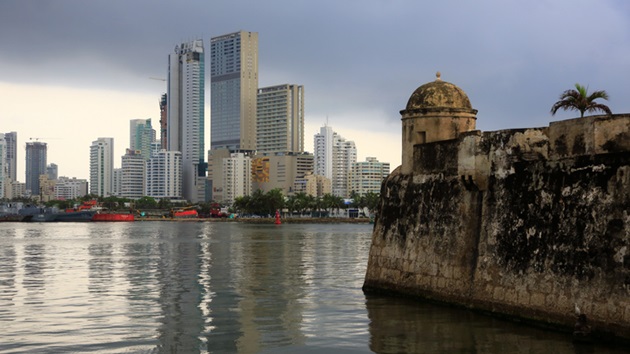
(CARTAGENA, Colombia) — Centuries after the Spanish galleon ship San José sunk in Colombian waters and nearly a decade after it was initially discovered, the estimated $17 billion shipwreck is set to be recovered as soon as April, according to officials.

“For the first time in history, a model of comprehensive public management of the archaeological site and asset of cultural interest, protected by regulations and public missionality, is advanced,” the Colombian government said in a press release, which was translated, Tuesday.

The 150-foot-long, 64-gun, three-masted galleon ship’s treasure is comprised of 200 tons of silver and emeralds, 11 million gold coins, an intact Chinese dinner service and porcelain pottery, according to Colombian Navy divers’ findings in June 2022.

In 2015, when the wreck was initially rediscovered, former Colombian President Juan Manuel Santos said in a news conference, “This is the most valuable treasure that has been found in the history of humanity.” Santos also paid tribute to the 600 people who were onboard the ship during the wreck.

Current Colombian President Gustavo Petro ordered the recovery to be coordinated by the Ministry of Cultures, Arts and Knowledge, the National Navy’s General Maritime Directorate and the Colombian Institute of Anthropology and History, according to the release.

The San José was sunk in 1708 by British warships while it was returning to Spain, with a cargo full of treasure meant to help fund The War of the Spanish Succession, a European conflict that spanned from 1701 to 1714.

The shipwreck’s deep-sea location, which remained a mystery until 2015, is near Cartagena, a port city on Colombia’s Caribbean coast, Colombian officials said in the press release.

In December 2015, former president Santos announced the discovery of the San José galleon, which launched an international debate over the rightful owner of the ship’s bounty.

Colombia, Spain, Bolivian Indigenous groups and an American salvage company have all attempted to take legal ownership of the historical wreck, which is now estimated to be worth $17 billion, according to court documents from Colombia’s National Legal Defense Agency, obtained by Business Insider in 2023.

A U.S. salvage company, Sea Search Armada (SSA), claimed they discovered the location of the San José in 1981 and attempted to take legal ownership against Colombia for the recovery of the ship.

However, a U.S. court declared the galleon the property of the Colombian state in 2011, according to court documents.

In 2018, UNESCO, the United Nations cultural agency, intervened when the Colombian government attempted to auction some of the San José’s artifacts to fund the recovery costs.

“Allowing the commercial exploitation of Colombia’s cultural heritage goes against the best scientific standards and international ethical principles as laid down especially in the UNESCO Underwater Cultural Heritage Convention,” a letter from the cultural agency to Colombian Culture Minister Mariana Garces Cordoba said.

In May 2022, the official decision was made to keep the “invaluable cultural heritage of Colombians managed under the figure of a protected archaeological area of ​​the national order,” according to the release.

In the 316 years since the San José sunk, the ship has remained untouched aside from natural ocean wear and tear.

“So far, the entire discovery of the Galeón San José Asset of Cultural Interest and its archaeological evidence have been deposited without any variation, other than that produced by the marine dynamics themselves (currents and fauna), with no evidence of external interventions,” according to the release.

The Colombian State will invest 17,962 million pesos ($1,073,646) in the recovery process, officials say.

Copyright © 2024, ABC Audio. All rights reserved.

Private US firm wants to coordinate aid boats to Gaza

Private US firm wants to coordinate aid boats to Gaza
MOHAMMED ABED/AFP via Getty Images

(NEW YORK) — A private U.S. advisory firm of former senior American military, CIA and humanitarian officials is proposing to operate the anticipated daily deployment of international aid ships from Cyprus to the Gaza coast, in a plan that would increase the American presence in the volatile region.

The proposal, pitched by the firm Fogbow with the hope that foreign donors will sign on in meetings this week, is being pursued separately from a U.S. military effort to build a giant pier off Gaza to enable the delivery of aid.

While such a plan would put more Americans operating near Gaza, Fogbow’s effort calls for its team to stay offshore, providing primarily logistics and other support from nearby sites.

“Right now, the plan is to have no Americans on the ground. But there will be former military and former humanitarian officials advising at each level,” said the person, speaking on condition of anonymity because the effort – coined the “Blue Beach Plan” — hadn’t been publicly announced.

Representatives from potential donor countries were scheduled to meet Thursday and Friday in Nicosia, Cyprus, to discuss details, the person said.

A leading global authority warned this week that famine was “imminent” in north Gaza in the wake of Israel’s military operations against Hamas. U.S. officials have pressed the Israeli government to open up ground checkpoints and allow aid trucks to enter Gaza. But convoys are still being denied access or slowed down as Israel says they want to ensure the cargo doesn’t help Hamas fighters.

With few options, the U.S. in recent weeks joined other countries in air dropping aid — pushing parachute-strapped pallets out the backs of C-130 military planes — in an effort officials acknowledge is not nearly as efficient as a ground convoy.

President Joe Biden this month announced he would try to push more aid through by opening up a maritime aid corridor and deployed some 1,000 troops to construct a pier that would help humanitarian ships off load supplies. The military pier, however, is still some two months away from becoming operational.

U.S. officials said this week that the government still hasn’t decided which organizations it might rely on to help move the humanitarian aid from its pier, including providing transportation to shore, security and distribution. Biden has insisted that U.S. troops not operate from the ground in Gaza, and the expectation is that Army, Navy and Marines will be working some three to five miles from the coast.

With the U.S. pier still weeks away, international aid groups have launched their own efforts using donations. Earlier this week, a barge operated by the Spanish aid group Open Arms landed with food from World Central Kitchen, a charity founded by celebrity chef José Andrés.

According to a statement provided by the World Central Kitchen, aid workers built their own jetty in Gaza using nearby rubble from bombed buildings to unload the cargo. The group said their team is now prepared to send a second maritime shipment that will include food and heavy machinery to expedite the offloading process.

The idea pitched by Fogbow would dramatically expand these kinds of operations, the person familiar with Fogbow’s plan said, allowing more aid ships from the World Central Kitchen and elsewhere to access the coast weeks before the US military pier is up and running.

Private contractors operating in war zones aren’t uncommon, although US military officials grew wary of the idea following deadly shootings of civilians involving security contractors in the Iraq war.

Fogbow advisers, however, would not be involved in any security operations, and they would not work from the ground in Gaza. According to the plan, the group would rely on a maritime company from Cyprus to deliver supplies to the beach and United Nations organizations to distribute it.

Fogbow is led by retired Marine Corps Lt. Gen. Sam Mundy and Mick Mulroy, a former Pentagon and CIA official and now an ABC News contributor, as well as by Chris Hylslop, a retired United Nations humanitarian official.

Copyright © 2024, ABC Audio. All rights reserved.

US no longer in top 20 of world’s happiest countries and is now behind Kuwait, Lithuania, UAE

US no longer in top 20 of world’s happiest countries and is now behind Kuwait, Lithuania, UAE
omersukrugoksu/Getty Images

(NEW YORK) — The United States has fallen eight spots and is no longer in the top 20 happiest countries in the world, falling behind countries like Canada, Israel, Kuwait, Lithuania and the United Arab Emirates, according to the 2024 World Happiness Report released by Gallup and its partners.

The new report, which was released on Wednesday, shows that the top 10 happiest countries in the world remain largely unchanged compared to the 2023 report, but that there has been a lot of change when it comes to the top 20.

“Costa Rica and Kuwait are both new entrants to the top 20, at positions 12 and 13,” the report states. “The continuing convergence in happiness levels between the two sides of Europe led last year to Czechia and Lithuania being in the top twenty, nearly joined now by Slovenia in 21st place. The new entrants are matched by the departures of the United States and Germany from the top 20, dropping from 15 and 16 last year to 23 and 24 this year.”

The list of the world’s happiest countries no longer includes any of the world’s largest countries.

“In the top ten countries only the Netherlands and Australia have populations over 15 million,” according to the report. “In the whole of the top twenty, only Canada and the United Kingdom have populations over 30 million.”

One of the main reasons for the United States dropping out of the top 20 is the overall unhappiness of younger people, according to the report.

“For the United States, Canada, Australia and New Zealand, happiness has decreased in all age groups, but especially for the young, so much so that the young are now, in 2021-2023, the least happy age group,” according to the new report. “This is a big change from 2006-2010, when the young were happier than those in the midlife groups, and about as happy as those aged 60 and over. For the young, the happiness drop was about three-quarters of a point, and greater for females than males.”

The 2024 World Happiness Report goes on to explain another reason for such a heavy drop is the widespread concern about an “emerging epidemic of loneliness, and about the consequences of loneliness for mental and physical health.”

“Although overall levels of loneliness are not unduly high in global terms, there is a significantly different pattern across the generations,” the report says. “Loneliness is almost twice as high among the Millennials than among those born before 1965. Millennials also feel less socially supported than Boomers in those countries, another place in which these countries look different from the rest of the world. This is despite the fact that actual social connections are much more frequent for Millennials than Boomers, and about as frequent as for Generation X.”

The results are based on self-assessments from people in more than 140 countries who are answering questions regarding their overall satisfaction with their lives. The study also takes into account six key variables which contribute to explaining life evaluations, including GDP per capita, social support, healthy life expectancy, freedom, generosity and corruption.

Then to help understand the differences seen between countries, they look at six factors: the nation’s healthy life expectancy, economy (GDP per capita), levels of corruption, social support, generosity and freedom.

The top 10 countries overall this year are Finland, Denmark, Iceland, Sweden, Israel, Netherlands Norway, Luxembourg, Switzerland and Australia.

The countries that fared the worst and were least happy this year are Zambia, Eswatini, Malawi, Botswana, Zimbabwe, Congo (Kinshasa), Sierra Leone, Lesotho, Lebanon and Afghanistan, which was listed as the least happy by a sizeable margin.

The report, which was published on Wednesday, was released to coincide with the U.N.’s International Day of Happiness which is celebrated on March 20 every year to promote happiness, well-being and a more compassionate world.

Copyright © 2024, ABC Audio. All rights reserved.

215-million-year-old crocodile ancestor that pre-dates dinosaurs identified

215-million-year-old crocodile ancestor that pre-dates dinosaurs identified
Ayzenstayn/Getty Images

(NEW YORK) — The recent identification of fossils from a heavily armored ancient crocodile ancestor species, known as aetosaurs, provides a glimpse into our world 215 million years ago.

The study, led by researchers at the University of Texas at Austin and published in the journal The Anatomical Record earlier this year, announces a new aetosaur species: Garzapelta muelleri.

Aetosaurs are a species likened to modern crocodiles that lived during the Triassic Period, 229 million to 200 million years ago, which pre-dates the Jurassic Period, according to researchers, who further note aetosaur fossils have been discovered on every continent except Antarctica and Australia.

Garzapelta muelleri’s fossilized dorsal carapace – the hard, armored plating that covered its back – is 70% complete, according to researchers, with major pieces from the neck and shoulder region to the end of its tail intact.

William Reyes, a doctoral student at the UT Jackson School of Geosciences who led the study, published in January, told Phys.org on Monday that the findings are remarkable because “Usually, you find very limited material.”

The exterior of Garzapelta’s skeleton is called the osteoderm, which is comprised of rock-hard plates and curved spikes both made of bone, according to the study.

“Take a crocodile from modern day, and turn it into an armadillo,” Reyes told the publication, describing the ancient creature.

The study determined that Garzapelta’s fossils date back 215 million years and that the species was largely omnivorous, contradictory to its modern cousin, the carnivorous crocodile.

The name Garzapelta muelleri is a nod to Garza County in northwest Texas, where the fossil was discovered, while “pelta” is the Latin word for shield, to signify the armor-like shell of the species. The second half of the name, muelleri, is a nod to Bill Mueller, the paleontologist who initially discovered the aetosaur’s fossilized skeleton.

To determine that Garzapelta is, in fact, a new species of aetosaur, researchers compared the skeleton with those of similar ancient aetosaurs.

“The carapace of G. muelleri exhibits a striking degree of similarity between that of the paratypothoracin Rioarribasuchus chamaensis and desmatosuchins,” researchers said in the study.

However, the unique qualities of Garzapelta’s skeleton, from the formation of the osteoderm plates to the distinct markings and ridges on the species’ bones, make it distinctly different from its aetosaur relatives, according to the study.

“Convergence of the osteoderms across distantly related aetosaurs has been noted before, but the carapace of Garzapelta muelleri is the best example of it and shows to what extent it can happen and the problems it causes in our phylogenetic analyses,” Reyes told Phys.org.

Copyright © 2024, ABC Audio. All rights reserved.