
Despite a famine determination in Gaza, delivering desperately needed aid remains elusive, experts say

Despite a famine determination in Gaza, delivering desperately needed aid remains elusive, experts say
Palestinians, including children, who are struggling to access food due to Israel’s blockade and ongoing attacks on the Gaza Strip, wait in line to receive hot meals distributed by the charity organization in Gaza City, Gaza on July 30, 2025.(Photo by Abdalhkem Abu Riash/Anadolu via Getty Images)

(NEW YORK) — The U.N.-backed Integrated Food Security Phase Classification (IPC) said last week that famine was determined in parts of Gaza for the first time.

The IPC report projected that famine would expand in the region by the end of September and more than 100,000 children under age 5 were at risk of death from acute malnutrition through June 2026.

In a statement, the Israeli prime minister’s office called the IPC’s determination of famine “an outright lie” and “a modern blood libel.”

Humanitarian experts and doctors described the report as unsurprising — a situation they have warned about for months — but “appalling” nonetheless.

“The situation itself is appalling,” Scott Paul, director of peace and security for the non-governmental organization Oxfam America, told ABC News. “I think if anyone is surprised by this news, then they haven’t been paying attention to the repeated warnings of local communities, Palestinian organizations, international organizations and other states and humanitarian donors.”

Aid organizations have said the next steps after such a report are securing an immediate, and permanent, ceasefire and opening border crossings to allow unhindered access of humanitarian aid and medical supplies.

While some experts told ABC News it’s not too late to increase aid and ready-to-eat therapeutic food for cases of malnutrition, others are less optimistic that the report will result in meaningful change.

“What will be done will be nothing,” Dr. John Kahler, a pediatrician and co-founder of MedGlobal, who has been on multiple medical missions to Gaza, told ABC News. “There’s plenty of money and plenty of resources available. It’s 100% access. And so, this [famine determination] won’t do a thing to move that needle.”

He added, “I’m in a difficult position with organizations at large, because they think the production of yet another document has some dramatic meaning. We knew this.”

To determine if a famine is happening, three thresholds have to be met: 20% of households must be facing an extreme food shortage, 30% of children must be acutely malnourished and either two adults or four children must be dying every day per 10,000 people, according to the IPC.

A termination is separate from a declaration. The IPC itself doesn’t issue official declarations of famine, but its findings can inform governments and bodies such as the U.N. to make a famine declaration.

Humanitarian experts have said there is no legal mechanism that a government body or the U.N. would have to go through to formally declare a famine.

“Governments or international organizations might have their own sort of processes internally to go into famine mode, but I don’t think that anyone should be holding their breath for a piece of paper that says ‘famine declaration’ on the top, because that likely won’t come,” Paul, of Oxfam America, said.

He noted that the U.N. Emergency Relief Coordinator already addressed the famine determination during a press conference with reporters on Friday and acknowledged it in the wake of the IPC classification.

“This isn’t the penultimate step. This is it. We have arrived at famine,” Paul said.

Kahler agreed, adding that the IPC report should not be taken as a warning — rather that the warning should have occurred months ago with previous reports.

“The health system’s collapsed, the educational system’s collapsed, the public health system’s collapsed,” he said. “I’m not sure what else to warn people about.”

Paul said normally what would follow would be an immediate “all hands-on deck” effort from the U.S. government and others to influence the Israeli government to secure a ceasefire and increase the flow of aid, which he said should have been done with prior warnings of emergency levels of food insecurity famine warnings.

Since May, the U.S. has participated in providing aid to Gaza through the Gaza Humanitarian Foundation, which set up designated aid distribution sites rather than delivering aid throughout the strip. Palestinians and aid organizations reported incidents of people being shot at while trying to retrieve aid as well as general chaos at the sites, which continues to be an ongoing issue.

The Israel Defense Forces has previously said it only fires “warning shots” toward people who are allegedly “advancing while posing a threat to the troops.” The Israeli government has also previously claimed that Hamas shoots people waiting in food lines and films the events for propaganda videos. Hamas has denied these claims.

Israeli officials have argued there are hundreds of truckloads of aid sitting at the border for the U.N. and its partners to distribute. The U.N., however, said it can’t deliver the aid safely.

“One of the things that is not well understood is how complex it is for the United Nations to do our work here in the Gaza Strip,” Tess Ingram, a spokesperson for UNICEF who is currently in Gaza, told ABC News. “I think what is not well understood is the challenges that we face on a daily basis that impede our work. It’s like a game of ‘Snakes and Ladders.’ We take one step forward and then we have to take two steps backwards because there are constantly hurdles in front of us that we have to overcome, and many of these hurdles do not need to be there.”

These threats include poor road conditions, lack of route alternatives, poor telecommunications, large crowds of desperate people and unpredictable supply lines, according to the U.N.

Paul noted that a prior IPC report, issued at the end of July, found that a “worst-case scenario of famine” was unfolding in Gaza.

“It was less than a few weeks ago that the same technical body on hunger issued a very clear warning [on] famine, which is about as close as they can come to an official confirmation without doing it,” he said. “The situation will get worse, and famine will continue to spread as long as all routes for humanitarian assistance … is not immediately opened up.”

Copyright © 2025, ABC Audio. All rights reserved.
Time capsule sealed by Princess Diana in London opened up after 34 years

Time capsule sealed by Princess Diana in London opened up after 34 years
Diana, Princess Of Wales.(Photo by Tim Graham Photo Library via Getty Images)

(LONDON) — A time capsule that was laid by Princess Diana in 1991 at Great Ormond Street Hospital (GOSH) in London has been opened, with officials revealing a collection of 1990s artifacts just days before the 28th anniversary of her death on August 31st, 1997.

Jason Dawson, the hospital’s executive director who opened the capsule earlier this year as GOSH started its new project to develop a new children’s cancer center, called the moment “really quite moving, almost like connecting with memories planted by a generation gone by.”

Inside lay a snapshot of 1991 — a Kylie Minogue CD, Casio pocket television, solar calculator and other artifacts that were cutting-edge three decades ago.

As winners of a BBC competition 34 years ago, the items were chosen by David Watson, a then-11-year-old boy from Devon, and Sylvia Foulkes, a then-9-year-old girl from Norwich, to represent life in the 1990s.

Watson contributed the Kylie Minogue “Rhythm of Love” album and a European passport, along with a pocket TV and recycled paper.

Foulkes added British coins, tree seeds from Kew Gardens in London, a hologram snowflake and a solar calculator. Princess Diana included her own photograph and a copy of The Times newspaper that featured Gulf War headlines at the time.

As Great Ormond Street Hospital’s president from 1989 until her death, Diana played a central role in GOSH’s Wishing Well Appeal, raising £54 million — equivalent to £200 million today – considered the largest U.K. charity appeal at the time, according to GOSH.

Princess Diana famously made regular ward visits, sitting on children’s beds, holding hands and providing physical comfort at a time when many feared contact with seriously ill patients.

After her divorce in 1996, Diana reduced her charitable commitments from over 100 organizations to just six focused causes, with Great Ormond Street Hospital being one of the remaining ones.

Stephen Lee, director of the U.K. Institute of Charity Fundraising Managers, called her impact “probably more significant than any other person’s in the 20th century.”

Modern royal philanthropy directly traces to Diana’s deeply personal approach, living on through Prince William’s homelessness work and Harry’s veteran advocacy, according to Emma Hart, director of the McNeil Center for Early American Studies at the University of Pennsylvania, who notes that notes Diana “forced the British monarchy to move into the 21st century” and that she “showed how the royal family could be a force for good.”

Meanwhile, following the opening of the capsule and the continuation of construction of the new cancer center, officials say that the new facility aims to increase patient capacity by 20% when it opens in 2028.

“Replacing outdated facilities on Great Ormond Street itself, the centre will be a national resource for the treatment of childhood cancers, with a focus on research and innovation,” GOSH said in a statement following the announcement of the time capsule being opened. “Developed with families and clinicians, the centre’s design will make it easier for clinical teams to develop kinder, more effective treatments, all delivered in a child-focused environment where children can play, learn and be with their family while at hospital.”

Copyright © 2025, ABC Audio. All rights reserved.

Denmark summons US envoy over alleged influence operations in Greenland

Denmark summons US envoy over alleged influence operations in Greenland
The Flag of Greenland, known nationally as “Erfalasorput”, flies above homes on March 28, 2025 in Nuuk, Greenland.(Photo by Leon Neal/Getty Images)

(LONDON) — The top U.S. diplomat in Denmark was summoned for a meeting at the country’s foreign ministry, Foreign Minister Lars Lokke Rasmussen confirmed on Wednesday, over alleged pro-American influence operations in Greenland.

“We are aware that foreign actors continue to show an interest in Greenland and its position in the Kingdom of Denmark,” Rasmussen said in a statement. “It is therefore not surprising if we experience outside attempts to influence the future of the kingdom in the time ahead.

“Any attempt to interfere in the internal affairs of the kingdom will of course be unacceptable,” Rasmussen said. “In that light, I have asked the Ministry of Foreign Affairs to summon the U.S. chargé d’affaires for a meeting at the ministry.”

“The cooperation between the governments of Denmark and Greenland is close and based on mutual trust, just as there is close cooperation and dialogue between the relevant Greenlandic and Danish authorities,” Rasmussen added.

The meeting came after Danish public broadcaster DR published a report in which unnamed government and security sources said that three Americans with connections to President Donald Trump were conducting influence operations in the semi-autonomous Danish territory.

DR said it was unclear whether the Americans were acting on their own initiative or under orders from others.

Trump has repeatedly expressed his desire to take control of Greenland, framing the huge Arctic territory as vital for American national security. The president has proposed purchasing the island and refused to rule out taking military action to take control of it.

Politicians in Denmark and Greenland have said that the island is not for sale.

In a statement sent to ABC News on Wednesday, the Danish Security and Intelligence Service said it is aware that Greenland has been the target of “various types of influence campaigns” aimed at “creating discord in the relationship between Denmark and Greenland.”

“Influence activities can generally be carried out via traditional physical influence agents or via disinformation, i.e. deliberate production and dissemination of misleading information,” the statement added.

ABC News’ Dada Jovanovic contributed to this report.

Copyright © 2025, ABC Audio. All rights reserved.
London’s ‘wet wipe island’ gets bulldozed in historic Thames clean-up operation

London’s ‘wet wipe island’ gets bulldozed in historic Thames clean-up operation
Heavy machinery is tearing through what locals are calling “Wet Wipe Island,” an 820-foot shoreline of flushed bathroom debris that has transformed a stretch of London’s Thames River into an environmental nightmare. ABC News / Dakota Bennett

(LONDON) — Heavy machinery is tearing through what locals are calling “wet wipe island,” an 820-foot shoreline of flushed bathroom debris that has transformed a stretch of London’s Thames River into an environmental nightmare.

The clean-up near Hammersmith Bridge in West London represents the United Kingdom’s first attempt to mechanically remove wet wipes from a river and, over the next month, excavators will extract an estimated 180 tons of congealed waste — equivalent to the weight of 15 double-decker buses spread across an area the size of two tennis courts.

“We’re doing the first mass removal of wet wipes that’s ever taken place in the country,” Emily McLean, senior technical advisor for the Port of London Authority, which is coordinating the operation, told ABC News.

The mechanical intervention comes after nearly a decade of volunteers painstakingly collecting wet wipes by hand. Thames21, an environmental charity, has documented the problem since 2017, with volunteers removing 140,000 individual wipes while mapping the contamination’s spread.

“It’s a validation of eight years of work,” said Ann Willard Sullivan, a Thames21 volunteer who leads cleanup efforts in the area. “It’s a sign that there can be big change, don’t give up.”

The volunteer data proved crucial in convincing authorities to act and, what started as citizen science, became the foundation for both this cleanup and potential broader policy changes down the line.

The Thames’ 23-foot tidal range creates a narrow window for the cleanup work meaning excavators can only operate during a four-hour window around low tide when the debris becomes accessible.

McLean said that engineers are using a “rake and shake” method to separate wet wipes from river sediment, ensuring that essential materials for the Thames ecosystem remain on the riverbed while removing only the contamination.

“We’re removing that contaminated layer while retaining as much of the foreshore as we can,” explained Grace Rawnsley, sustainability director for the Port of London Authority.

The cleanup represents the latest chapter in the clean-up of the Thames after it was declared “biologically dead” by the Natural History Museum in 1957.

“This is a huge moment — after years of campaigning, wet wipe island hopefully is no more!” said Fleur Anderson, the MP for Putney, Southfields, Roehampton and Wandsworth Town. “The ban I’ve introduced will mean 3.8 billion wipes removed from the network every year. A win for our waters, sewers and environment!”

Now, nearly 70 years later, it supports 125 different fish species and serves as a nursery for five types of sharks, according to the Zoological Society of London.

Wet wipes, however, have recently threatened this recovery, with the plastic-laden debris breaking down into microplastics that clog digestive systems of fish and disrupt feeding patterns, according to the World Wide Fund for Nature.

Recent scientific research indicates that an estimated 70% of Thames flounder contain plastic fibers in their stomachs.

“They get stuck in fish stomachs,” McLean said. “So, we really think that by removing them, we’re taking out those contaminants, and that will help the water quality.”

The Hammersmith cleanup coincides with Britain’s groundbreaking approach to wet wipe pollution when, in April 2024, the U.K. government announced plans to ban plastic-containing wet wipes, with implementation expected by 2026.

The legislation followed massive public support, with 95% of respondents to a recent survey backing the ban.

Currently, Britons use approximately 11 billion wet wipes annually, with an estimated 2.5 billion flushed down toilets, according to Thames21.

Thames Water says that it spends £18 million ($24 million) yearly removing 3.8 billion wipes from London’s sewage system alone, costs that are ultimately passed to consumers through higher water bills.

The wet wipe issue extends far beyond the Thames, however, with water companies across the U.K. collectively spend £100 million ($135 million) annually clearing 300,000 sewer blockages, with 93% caused by flushed wipes, according to an October 2021 research report from United Utilities.

“These wet wipes should never be entering into the river,” Felicity Rhodes, Thames program manager at Thames21, told ABC News.

The charity advocates for a “multi-stakeholder approach” involving manufacturers, water companies, government regulation and consumer behavior change.

The Port of London Authority estimates the monthlong operation will cost “hundreds of thousands” of pounds, a fraction of the ongoing costs of wet wipe pollution.

For the rowers gliding past the cleanup site, the mechanical intervention represents both an end and a beginning: the removal of London’s most embarrassing landmark and a step toward the Thames that millions of Londoners want their river to become.

ABC News’ Maggie Rulli and Charlotte Gardiner contributed to this report.

Copyright © 2025, ABC Audio. All rights reserved.
Last churches in Gaza City say they will not evacuate despite Israeli incursion

Last churches in Gaza City say they will not evacuate despite Israeli incursion
Smoke rises after Israeli forces carried out airstrikes in Gaza City, Gaza, on August 22, 2025. Hamza Z. H. Qraiqea/Anadolu via Getty Images

(LONDON) — The last remaining churches in Gaza will not evacuate amid Israel’s ramped-up military action and threats to destroy Gaza City, saying the clergy and nuns have decided they will “remain and continue to care for all those who will be in the compounds,” the churches said in a joint statement to the Israel Defense Forces.

Hundreds of civilians — including women, children and elderly — have been seeking refuge in the Greek Orthodox compound of Saint Porphyrius and the Holy Family compound since the outbreak of the war and the Latin compound has been hosting people with disabilities who have been under the care of the Sisters Missionaries of Charity for many years, the Greek Orthodox Patriarchate of Jerusalem and the Latin Patriarchate of Jerusalem said in a statement Tuesday.

“Like other residents of Gaza City, the refugees living in the facilities will have to decide according to their conscience what they will do. Among those who have sought shelter within the walls of the compounds, many are weakened and malnourished due to the hardships of the last months. Leaving Gaza City and trying to flee to the south would be nothing less than a death sentence. For this reason, the clergy and nuns have decided to remain and continue to care for all those who will be in the compounds,” the churches said.

Last week, Israeli Defense Minister Israel Katz warned that Gaza City could “turn into Rafah and Beit Hanoun,” areas that were destroyed earlier in the war, unless Hamas agrees to Israel’s terms for a ceasefire.

This came after Israeli Prime Minister Benjamin Netanyahu said he would approve the IDF’s plan to seize Gaza City.

The churches criticized Israel’s plans surrounding its decision to take control of Gaza City, saying, “There can be no future based on captivity, displacement of Palestinians or revenge.”

“We echo what Pope Leo XIV said a few days ago: ‘All peoples, even the smallest and weakest, must be respected by the powerful in their identity and rights, especially the right to live in their own lands; and no one can force them into exile,'” the churches said.

The churches called for an end to the war and the “spiral of violence.”

“There has been enough devastation, in the territories and in people’s lives. There is no reason to justify keeping civilians as prisoners and hostages in dramatic conditions.It is now time for the healing of the long-suffering families on all sides,” the churches said.

Israel began the first stages of its attack on Gaza City last week, calling up 50,000 to 60,000 reservists for the operation to occupy the city, according to IDF spokesman Eddie Defrin and an Israeli military official.

Mass protests against the military action on Gaza were seen across Israel on Tuesday, with protesters demanding the Israeli government get a ceasefire deal in Gaza that would secure the release of the remaining hostage held there.

Israel is also facing criticism for Monday’s attack on a hospital in Khan Younis that killed five journalists and 15 medical workers, according to their media organizations and the Hamas-run Gaza Health Ministry.

Netanyahu called the attack a “tragic mishap.”

The IDF released an initial report on Tuesday, which concludes that “six of the individuals killed were terrorists, one of whom took part in the infiltration into Israeli territory on October 7th.”

Copyright © 2025, ABC Audio. All rights reserved.

Painting stolen by Nazis during WWII believed discovered in Argentine real estate listing

Painting stolen by Nazis during WWII believed discovered in Argentine real estate listing
A photograph of the painting “Portrait of a Lady,” by Italian artist Giuseppe Vittore Ghislandi. Cultural Heritage Agency of the Netherlands

(LONDON) — An 18th-century portrait stolen by the Nazis during WWII is believed to have resurfaced in the most unexpected place: hanging above a sofa in a coastal Argentinian home and discovered not by law enforcement or a museum, but spotted in a photo on a real estate website.

The painting, “Portrait of a Lady” by Italian baroque artist Giuseppe Vittore Ghislandi, belonged to Jacques Goudstikker, a prominent Dutch-Jewish art dealer whose collection of more than 1,100 works was seized after the Nazi invasion of the Netherlands in 1940. Senior Nazi officials, including Hermann Göring, acquired hundreds of pieces, according to the Cultural Heritage Agency of the Netherlands (RCE).

The potential discovery is the result of years of work by Dutch daily newspaper Algemeen Dagblad (AD) investigative journalists Cyril Rosman, Paul Post and Peter Schouten, who have been pursuing the case for nearly a decade.

Rosman said the team began tracing Friedrich Kadgien, Göring’s financial adviser and close confidant, several years ago.

“Kadgien escaped to South America at the end of the war,” Rosman told ABC News. “We knew from archival documents that he brought diamonds, jewelry, and two stolen paintings with him. We’ve spent years trying to piece together his life here and where those paintings ended up.”

Kadgien died in Buenos Aires in 1978. His two daughters inherited properties in Mar del Plata, where the investigation eventually led the AD journalists.

After years of dead ends, the AD team resolved to make one final attempt. They sent Peter Schouten, AD’s correspondent in Argentina, to visit the property.

“I rang the bell. Nobody answered but we saw movement inside,” Schouten recalled. “Then we noticed a ‘For Sale’ sign in the garden.”

Back at his hotel, Schouten looked up the property listing together with his husband, a producer for international media who often assists in his investigations.

“We were scrolling through the photos when my husband suddenly said, ‘Look, isn’t that the painting?’” Schouten said. “I told him, ‘No, that can’t be true. The Dutch government has been looking for this painting for 80 years … it can’t just be hanging above a sofa in Mar del Plata.’ But there it was.”

Rosman, reviewing the same images from the Netherlands, had the same reaction.

“I was scrolling through the listing, looking for photos of the father or maybe some old documents,” Rosman said. “I didn’t expect to find one of the paintings we’d been searching for just sitting there in the living room. It was surreal.”

AD immediately sent the images to the RCE, which maintains official records of Nazi-looted art. Annalies Kool, a provenance researcher at RCE, told ABC News that the agency is “almost certain” the painting is the missing “Portrait of a Lady” but cannot 100% confirm it without examining the work in person.

“According to post-war declaration forms, we know that Kadgien possessed this painting,” Kool said. “Given that he fled to Argentina after the war and we now see it hanging in the living room of his daughters, we assume it has remained within the family for the past 80 years.”

Kool explained that the RCE cross-referenced the photo with the original wartime records. “The measurements match, the composition matches, and visually it aligns with the archival images,” she said. “But we would need to examine the back of the painting to confirm. There could be labels or marks proving it came from the Goudstikker collection.”

However, AD didn’t rely solely on the real estate listing photos to identify the painting. “We obtained additional images from inside the house from a separate source,” Schouten confirmed. “That gave us the second verification we needed before publishing.”

AD said they repeatedly attempted to speak with Kadgien’s daughters via email, Instagram, and WhatsApp. “After weeks, one of them finally responded,” Schouten said. “She asked what we wanted, said she was busy, and then blocked us.”

Shortly afterward, the listing real estate agency, Robles Casas y Campos, removed the photos showing the painting, as well as the entire listing itself.

Goudstikker’s heirs are represented by U.S. attorneys Yael Friedman and Amelia Cuneo of Friedman, Norman & Friedland, LLP. Friedman confirmed to ABC News that their client, Marei von Saher, Goudstikker’s 81-year-old daughter-in-law and sole heir, intends to pursue a formal restitution claim for “Portrait of a Lady.”

“Our client does intend to make a claim,” Friedman said. “She is the sole heir of Jacques Goudstikker’s estate and her goal is to recover the artworks that were looted by the Nazis from her father-in-law.”

Kool also said that a second missing painting – a 17th-century floral still life by Dutch artist Abraham Mignon – was listed in Kadgien’s possession in post-war declarations. Investigators believe it appears in a 2012 Facebook photo posted by one of Kadgien’s daughters, though its ownership and provenance remain unclear.

Friedman clarified that their claim will only target the Ghislandi portrait, not the second Mignon painting, because that work was not part of the Goudstikker collection.

“I have been on this quest since the late 1990s. My family’s goal is to locate and recover each and every artwork looted from Jacques Goudstikker’s collection and restore his legacy, von Saher told ABC News in a statement provided through her lawyers.

“This is the kind of case you dream of,” said Arthur Brand, the Dutch art detective often called “the Indiana Jones of the art world.” “A painting stolen in WWII, thought lost for decades, suddenly pops up on a real estate website in Argentina, hanging above a sofa,” Brand said. “You can’t write a better script.”

Brand added that the discovery highlights the unpredictable nature of recovering looted art: “You can find them anywhere – auction catalogues, archives, attics, even real estate listings.”

Rosman believes this case is only the beginning. “Hundreds, maybe thousands, of Nazi fugitives fled to Argentina after the war,” he said. “Who knows how many more looted artworks ended up here, quietly passed down through families?”

Brand agreed: “This case shows something important,” he said. “Thousands of Nazi-looted works are still out there, hanging in living rooms, passed down quietly through families. Argentina was a haven for many who fled Europe after the war – who knows how many masterpieces are still hidden here?”

Copyright © 2025, ABC Audio. All rights reserved.
Australia accuses Iran of directing antisemitic attacks, says Iran’s ambassador will be expelled

Australia accuses Iran of directing antisemitic attacks, says Iran’s ambassador will be expelled
Hagen Hopkins/Getty Images

(LONDON) — Australian officials on Tuesday said they would expel Iran’s ambassador after accusing Tehran of directing antisemitic attacks in Sydney and Melbourne last year.

Australia’s intelligence agency, ASIO, said it determined Iran was behind attacks on Lewis’ Continental Kitchen in Sydney on Oct. 20 and the Adass Israel Synagogue in Melbourne on Dec. 6, according to government officials.

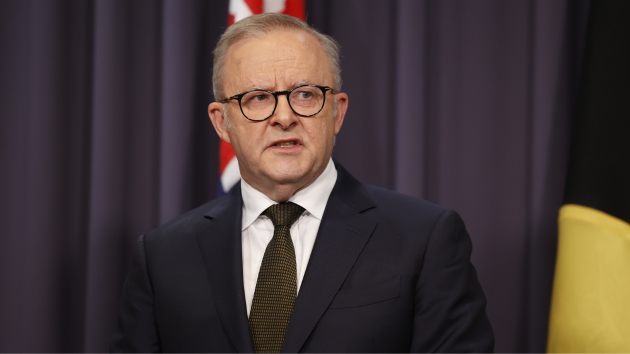
“These were extraordinary and dangerous acts of aggression orchestrated by a foreign nation on Australian soil,” Prime Minister Anthony Albanese told reporters during a press conference in Canberra on Tuesday, according to an official transcript.

ASIO in a statement said intelligence officers had “uncovered and unpicked” links between the attacks and commanders in Iran’s Islamic Revolutionary Guard Corps, accusing the Iranian military of using a “complex web of proxies” to hide its involvement in the attacks in Australia.

Australia’s legislators will seek to list the IRGC as a terrorist organization, Albanese said. Iranian diplomatic staff in Australia weren’t involved in directing the attacks, Director-General of Security Mike Burgess said.

“ASIO now assesses the Iranian Government directed at least two and likely more attacks on Jewish interests in Australia,” Burgess said in a statement.

Operations at the Australian embassy in Tehran were suspended, Albanese said, adding that Australian diplomats left the country.

Australian Foreign Minister Peggy Wong said the alleged acts of aggression by Iran “have crossed a line.”

“This is the first time in the post-war period that Australia has expelled an ambassador,” Wong said. “And we have made this decision because Iran’s actions are completely unacceptable.”

Copyright © 2025, ABC Audio. All rights reserved.

Trump ‘very angry’ with Putin as Russia’s strikes on Ukraine continue despite peace push

Trump ‘very angry’ with Putin as Russia’s strikes on Ukraine continue despite peace push
Pierre Crom/Getty Images

(LONDON) — President Donald Trump again on Monday expressed frustration with Russian counterpart Vladimir Putin as Russian strikes on Ukraine continued despite White House efforts to broker a peace deal between the warring neighbors.

“Every conversation I have with him is a good conversation,” the president told reporters of Putin during an Oval Office executive order signing event. “And then unfortunately, a bomb is loaded up into Kyiv or someplace, and then I get very angry about it.”

Trump has repeatedly admonished Putin for Russia’s nightly strikes on Ukrainian cities. Nonetheless, the president told reporters he was still hopeful of progress towards a peace deal.

“I think we’re going to get the war done,” Trump said, though added, “You never know what’s going to happen in a war. Strange things happen in war. The fact that [Putin] went to Alaska, our country, I think, was a big statement that he wants to get it done.”

Both Russia and Ukraine continued long-range strikes through the weekend and into Monday. On Tuesday, Ukraine’s air force said Russia launched 59 drones into the country overnight, of which 47 were shot down or suppressed.

The air force reported impacts of 12 drones across nine locations.

Russia’s Defense Ministry, meanwhile, said its forces downed at least 51 Ukrainian drones overnight into Tuesday morning, two which were en route to Moscow.

Following in-person meetings with Putin in Alaska and Ukrainian President Volodymyr Zelenskyy — plus a host of European leaders — in Washington, D.C., earlier this month, Trump raised the hope of an imminent bilateral meeting between the Russian and Ukrainian presidents.

Zelenskyy has repeatedly expressed willingness to attend such a meeting. But Putin and his officials have consistently dodged the proposal.

“Maybe they will, maybe they won’t,” the president told ABC News Monday of the potential for the two men to meet. Trump said he had spoken to Putin since Zelenskyy’s visit to Washington, but declined to discuss the specifics of the call.

Asked if he would act if the bilateral meeting does not materialize, Trump refused to detail possible consequences but said he may act “over the next week or two.”

U.S. peace efforts continued on Monday, with Secretary of State Marco Rubio speaking with European counterparts and Trump’s Ukraine envoy Keith Kellogg traveling to Kyiv to meet with Zelenskyy.

For both U.S. officials, the question of future security guarantees for Ukraine to prevent future Russian aggression was a key topic of discussion.

Ukrainian Foreign Minister Andrii Sybiha took part in the call with Rubio. “I reiterated Ukraine’s position that security guarantees must be concrete, legally binding and effective,” he wrote on X after. “They should be multidimensional, including military, diplomatic, legal and other levels.”

Zelenskyy said his meeting with Kellogg was “productive,” again expressing his thanks to Trump’s efforts to broker a deal and his willingness to lend U.S. backing to security guarantees.

Kellogg, meanwhile, said the U.S. side is “working very, very hard” to get “to a position where, in the near term, we have, with a lack of a better term, security guarantees. That’s a work in progress.”

Copyright © 2025, ABC Audio. All rights reserved.

El Mayo, the infamous Mexican drug lord, pleads guilty to drug trafficking charges

El Mayo, the infamous Mexican drug lord, pleads guilty to drug trafficking charges

(MEXICO CITY) — The co-founder of Mexico’s Sinaloa cartel pleaded guilty Monday to federal drug trafficking charges that accused him of being one of the most prolific and powerful narcotraffickers in the world.

Ismael Zambada, 75, pleaded guilty to two counts contained in two different indictments, including one that charged him with engaging in a continuing criminal enterprise for 35 years beginning in 1989.

Judge Brian Cogan said he would sentence Zambada to life in prison. The plea agreement orders him to forfeit $15 billion.

His sentencing has been scheduled for Jan. 13, 2026.

Zambada, who is known as El Mayo, said his career began when he was teen while speaking from a prepared statement with dozens of federal drug agents crowding the courtroom.

“I started getting involved with illegal drugs in 1969 when I was 19 years old when I planted marijuana for the first time,” Zambada said. “I went on to sell heroin and other drugs, especially cocaine.”

El Mayo founded the Sinaloa cartel with Joaquin “El Chapo” Guzman, shipping at least 1.5 million kilos of cocaine since 1980 largely to the United States and maintaining control through the regular use of violence, bribery and murder.

Zambada admitted in court he “directed people under my control to kill others to further the interests of my organization” during the Mexican drug wars of the 1980s and 1990s and he conceded “many innocent people” were killed.

“I recognize the great harm illegal drugs have done to the people in the United States and Mexico,” Zambada said.

Federal prosecutors have said Zambada presided over a violent, militarized cartel armed with high-powered weapons and a cadre of hitmen.

His guilty plea followed the conviction at trial of El Chapo in the same federal courthouse in Brooklyn. Guzman is serving a life sentence in a maximum-security prison.

Zambada thought he was flying with one of Guzman’s sons to inspect a clandestine Mexican airfield when he instead landed in El Paso and was taken into U.S. custody in July 2024, according to a Homeland Security Investigations official.

His defense attorney, Frank Perez, said the plea agreement contains no cooperation component.

“He recognizes that his actions over the course of many years constitute serious violations of the United States drug laws, and he accepts full responsibility for what he did wrong,” Perez said in a statement. “The agreement that he reached with the U.S. authorities is a matter of public record. It is not a cooperation agreement, and I can state categorically that there is no deal under which he is cooperating with the United States Government or any other government.”

Perez said Zambada calls on Sinaloa to “remain calm” and “avoid violence” after descendants of El Mayo and El Chapo have waged a bloody war for control of the cartel.

“My client is also mindful of the impact of this case on his home state of Sinaloa. He calls upon the people of Sinaloa to remain calm, to exercise restraint, and to avoid violence,” Perez said. “Nothing is gained by bloodshed; it only deepens wounds and prolongs suffering. He urges his community to look instead toward peace and stability for the future of the state.”

Copyright © 2025, ABC Audio. All rights reserved.

Associated Press journalist killed in Israeli strike in Gaza, agency confirms

Associated Press journalist killed in Israeli strike in Gaza, agency confirms
Abdallah F.s. Alattar/Anadolu via Getty Images

(LONDON) — Four journalists were among at least 14 people killed in an Israeli airstrike at the Nasser Medical Complex in the southern Gaza city of Khan Younis on Monday morning, officials at the Hamas-run Gaza Government Media Office and Health Ministry said.

Hossam Al-Masry, Mohammed Salama, Mariam Dagga and Moaz Abu Taha were the journalists killed, the media office said in a statement.

Dagga, 33, had been working as a freelance journalist for the Associated Press since the conflict began in October 2022, the AP reported.

The IDF issued a statement confirming that it launched a strike in the area of Nasser Hospital.

“The IDF regrets any harm to uninvolved individuals and does not target journalists as such,” the statement said. “The IDF acts to mitigate harm to uninvolved individuals as much as possible while maintaining the safety of IDF troops.”

The IDF said that its chief of the general staff had ordered an initial inquiry into the incident.

Copyright © 2025, ABC Audio. All rights reserved.