
Scale of Russia’s long-range attacks on Ukraine eases in August despite major strikes

Scale of Russia’s long-range attacks on Ukraine eases in August despite major strikes
Pierre Crom/Getty Images

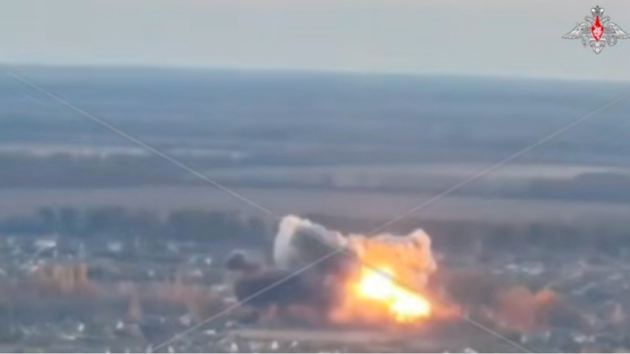
(LONDON) — August saw an easing in the scale of Russia’s long-range strike campaign on Ukraine, according to data published by Ukraine’s air force and analyzed by ABC News, though Moscow continued to launch massed and deadly bombardments on Kyiv, other major cities and critical infrastructure targets.

Over the course of August, Russia launched 4,216 air attack vehicles — 4,060 attack or decoy drones and 156 missiles — at a daily average rate of nearly 131 drones and five missiles, Ukraine’s air force data showed. No night of August passed without a Russian attack, the Ukrainian government said.

The reason for the apparent drop off in the overall intensity of the attacks is unclear. Moscow has shown no sign of abandoning its maximalist demands in the ongoing peace talks. Meanwhile, Ukrainian long-range strikes have been targeting military industrial targets across Russia, including facilities involved in the production of drones and missiles.

Ukrainian forces said they shot down or suppressed just over 85% of the drones and nearly 68% of missiles launched by Russia during August.

The overall number of long-range Russian drones and missiles launched in August was around 34% less than in July, according to the Ukrainian air force’s figures.

But the month ended with a notable uptick in Russian activity. From Aug. 1 to 15 — the day of the summit between Presidents Donald Trump and Vladimir Putin in Alaska — Ukraine’s air force said Russia launched a total of 1,131 drones and 21 missiles, at a daily average of 75.4 drones and 1.4 missiles.

But from Aug. 16 to 31, the scale of attacks increased. In the second half of the month, Ukraine’s air force reported 3,001 Russian drones and 135 missiles at a daily average of 187.5 drones and 8.4 missiles.

Neither Russia nor Ukraine publish data on their own strike campaigns. Ukraine’s air force publishes a daily tally of Russian drone and missile strikes, while Russia’s Defense Ministry only publishes figures of Ukrainian drones it claims were shot down.

The overall number of Russian drones and missiles reported by Kyiv in August was the lowest monthly total since May. Still, three nights during August each saw more than 500 drones and missiles launched into the country, despite the comparatively smaller scale of month’s attacks.

The human toll continues to rise in Ukraine, despite Trump’s repeated appeals for Moscow to end long-range strikes — and despite his public frustration over Putin’s refusal to do so.

The U.N. Human Rights Monitoring Mission in Ukraine said that July marked the deadliest month for Ukrainian civilians since May 2022, with 286 people killed and 1,388 people injured. The mission said it verified casualties in 18 of the country’s 24 regions in July. The mission attributed nearly 40% of the casualties in July to “long-range weapons such as missiles and loitering munitions.”

The mission is yet to publish its data for August. But there were several high casualty events during the month, perhaps most notably the drone and missile barrage on Kyiv that killed at least 23 people on the night of Aug. 27-28.

The bombardment on the night of Aug. 20-21 also saw one person killed and more than a dozen more injured, while another large combined strike on the night of Aug.29-30 killed one person and injured at least 29 people.

In July, Russia set a new monthly record for the number of drones and missiles fired at Ukraine. The month saw Russia launch 6,443 aerial vehicles — 6,245 drones and 198 missiles — into the country, of which 89% of drones and around 61% of missiles were defeated, according to Ukrainian figures.

June saw 5,438 drones and 239 missiles fired into Ukraine, with a daily average of 181 drones and nearly eight missiles. The air force downed or suppressed 87.2% of all drones and 73% of missiles during June.

And in May, Russia launched a total of 3,835 drones and 117 missiles, for an average of around 124 drones and nearly four missiles each day. Across the month, 85.7% of drones and 57% of missiles were defeated.

Despite the nightly attacks, August saw two key diplomatic summits, intended as springboards to end Russia’s full-scale invasion of its neighbor which began in February 2022.

First, Putin traveled to Alaska to meet with Trump — the first face-to-face meeting between Russian and American leaders since 2019.

Ukrainian President Volodymyr Zelenskyy, accompanied by a host of European leaders, then traveled to the White House to discuss possible peace terms.

Trump framed both meetings as positive and encouraging. But subsequent developments have been lacking. Trump’s proposal for a meeting between Putin and Zelenskyy — an idea the Kremlin has repeatedly dodged since the two men last met in 2019 — has yet to come to fruition, with Kyiv accusing Moscow of continued evasion.

Data published by Russia’s Defense Ministry suggests that Ukraine maintained the level of its own drone strike campaign through August.

The ministry said its forces shot down 2,783 Ukrainian drones over the course of the month, at an average rate of nearly 90 per day.

Across July, the Defense Ministry in Moscow reported downing 3,008 Ukrainian drones at an average of around 97 per day.

In June, the ministry reported downing a total of 2,368 Ukrainian drones, with an average of almost 79 drones per day across the month. Those figures were down from May, during which the ministry said it shot down 3,611 drones with an average of 116 per day.

Local governments in Russia often publicly state death tolls for specific attacks, although the Kremlin doesn’t release a regular country-wide tally, making it difficult to track over a period of time.

Last month, Rodion Miroshnik — a Foreign Ministry ambassador-at-large responsible for analyzing Ukrainian attacks in Russia — told the TASS state news agency that 15 people were killed and 140 injured during one week of attacks in August. The toll included casualties in frontline regions, as well as those deep inside Russia caused by long-range drone strikes.

Zelenskyy said on Sunday that Kyiv is planning “new strikes.”

Copyright © 2025, ABC Audio. All rights reserved.

Hundreds killed as 6.0 magnitude earthquake strikes Afghanistan, destroying villages, officials say

Hundreds killed as 6.0 magnitude earthquake strikes Afghanistan, destroying villages, officials say
USGS

(LONDON) — A 6.0 magnitude earthquake struck eastern Afghanistan on Sunday, destroying several villages, killing at least 812 people and injuring scores more, according to local officials.

Almost all of the deaths were in Kunar Province, where 800 people were killed and another 2,500 people were injured, officials said in a statement shared by Zabihullah Mujahid, a government spokesperson.

Another dozen people were killed in Nangarhar Province, said Mufti Abdul Matin Qani, spokesperson for the Ministry of Interior. At least 255 were injured in that province, officials said.

In a phone interview with ABC News, Shah Mehmood, a Taliban government official in Nangahar Province said more people are feared trapped under rubble in remote villages.

The United Nations mission in Afghanistan said in a statement its staffers were “deeply saddened” by the “devastating” quake, which “claimed hundreds of lives, injuring many more.”

The powerful earthquake struck about 17 miles east of Jalalabad, near the border with Pakistan just before midnight, according to preliminary data from the U.S. Geological Survey.

The Afghan health minister said that several villages in the Nurgal district of Kunar — including Sholt, Arit, Mamagal, Wadir and others — had been all but destroyed. Others suffered significant damage, the minister said.

Some of the injured had been evacuated and rescue efforts were ongoing, the ministry said.

“Sadly, tonight’s earthquake has caused loss of life and property damage in some of our eastern provinces,” Mujahid said in a post on social media.

Mujahid said support teams from nearby provinces had been dispatched to the area.

The Ministry of Defense said a 10-member crew flew some 40 flights out of the area, carrying 420 people to hospitals, including the Daoud Khan Military Hospital. The National Disaster Management Authority said a convoy carrying response teams was en route to the affected areas in Kunar.

The U.N. Office for the Coordination of Humanitarian Affairs in Afghanistan began coordinating with other international agencies after the quake, saying its “partners are on the ground initiating immediate relief efforts.”

The U.N. would “spare no effort to assist those in need in the affected areas,” Secretary-General Antonio Guterres said.

“I stand in full solidarity with the people of Afghanistan after the devastating earthquake that hit the country earlier today,” he said on social media. “I extend my deepest condolences to the families of the victims and wish a speedy recovery to those injured.”

Rescue efforts by local officials were ongoing, with 200 Taliban soldiers deployed to assist in retrieving survivors, Mehmood said. Two helicopters and 30 ambulances were also being used in the rescue operations.

The Taliban official added that among the worst-hit areas are Nurgal and Siringal in Kunar Province, as well as several villages in Shaman District, which have been completely destroyed. Darr-e-Nur in Nangarhar Province has also sustained significant damage.

Mehmood noted that reaching out to some of the affected regions remains difficult due to communication blackouts and poor cell phone coverage.

To support those affected, 7,000 food packages have been delivered to Kunar Province and surrounding areas.

Copyright © 2025, ABC Audio. All rights reserved.
Israeli officials say they have identified 2nd of two bodies of hostages recovered in Gaza

Israeli officials say they have identified 2nd of two bodies of hostages recovered in Gaza
Hostages and Missing Families Forum

(LONDON) — The second of two remains of hostages recently recovered in Gaza has been identified, the Israel Defense Forces said Saturday.

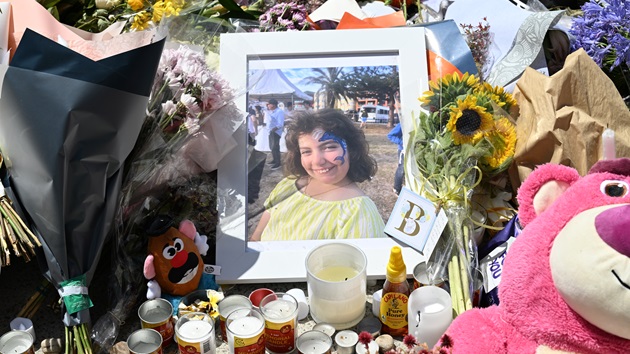
The recovered bodies of the two hostages killed in the Oct. 7, 2023, attacks by Hamas were identified as Ilan Weiss, a member of his kibbutz emergency squad, and Idan Shtivi, who was helping to rescue and evacuate people from the Nova music festival when he was abducted in the Tel Gama area, the IDF said in a statement Saturday. Shtivi was 28 at the time of his death.

Weiss was identified on Friday when Israeli officials first announced the recovery of the two bodies.

The IDF said the bodies of both hostages were recovered following a “complex rescue operation.”

“Idan Shtivi was murdered and abducted from the Nova music festival on October 7th, 2023, while trying to save other party goers he only met moments beforehand,” the Hostages and Missing Families Forum, said in a social media post.

Weiss was killed on Oct. 7, 2023, while his wife and daughter were kidnapped on Oct. 7, but released during the first ceasefire in November 2023, according to Israeli officials.

“Ilan Weiss, a hero, was a member of the emergency squad at Kibbutz Be’eri,” Israeli Prime Minister Benjamin Netanyahu said in an earlier statement.

“Together with all citizens of Israel, my wife and I convey our heartfelt condolences to the dear families and share in their deep sorrow. I thank our commanders and fighters for their successful action, determination and bravery. The campaign to return the hostages is ongoing. We will neither rest nor be silent until we bring all of our hostages back home, the living and the deceased,” Netanyahu said.

“The hostage families embrace the family of Ilan Weiss during this difficult time. Ilan’s return fulfills the State of Israel’s fundamental duty to its citizens,” the Hostages and Missing Families Forum said in a statement. “Our hearts are with the family today. Alongside the grief and pain, his return provides some comfort to the family after 692 days of waiting in the nightmare of uncertainty.”

In an earlier statement, Israeli President Isaac Herzog offered his “heartfelt condolences and support” to Weis’ family calling this a moment of “deep sorrow, but also of closure.”

“Ilan showed courage and noble spirit when he fought the terrorists on that dark day. In his death, he gave life. And ever since, his family has shown extraordinary strength in their struggle for his return,” Herzog said in a statement.

“We wish to express our deep gratitude to the IDF and security forces who have worked and continue to work with dedication and courage,” the Hostages and Missing Families Forum said. “Only by bringing home all hostages can we achieve healing and national recovery.”

Copyright © 2025, ABC Audio. All rights reserved.
Russia’s ‘massive strike’ on Ukraine overnight kills 1, injures 29, Ukrainian authorities say

Russia’s ‘massive strike’ on Ukraine overnight kills 1, injures 29, Ukrainian authorities say
Anastasia Potapenko/Suspilne Ukraine/JSC “UA:PBC”/Global Images Ukraine via Getty Images

(LONDON) — Russia carried out “a massive strike” on Ukraine overnight, launching 537 drones and 45 missiles, the Ukrainian Air Force said Saturday morning.

Ukraine’s air defense systems took out most of the projectiles, but five missiles and 24 drones still struck seven locations, while the debris of shot down projectiles fell in 21 locations, according to the air force.

The southeastern region of Zaporizhzhia was particularly hard hit, with at least one person killed and 29 others injured, including three children, according to the Zaporizhzhia Regional Military Administration. More than 40 houses and 14 apartment buildings were damaged as a result of the overnight attack, and some 25,000 households were without power Saturday morning, authorities said.

Some homes, businesses and infrastructure were also hit in the neighboring region of Dnipropetrovsk, according to the Dnipropetrovsk Regional Military Administration.

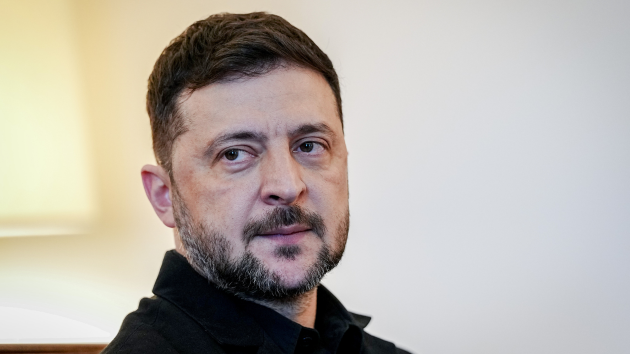
Ukrainian President Volodymyr Zelenskyy reacted to the attack in a post on X, saying the “only way to reopen a window of opportunity for diplomacy is through tough measures against all those bankrolling the Russian army and effective sanctions against Moscow itself – banking and energy sanctions.”

“It is absolutely clear that Moscow used the time meant for preparing a leaders-level meeting to organize new massive attacks, he added. “This war won’t stop with political statements alone; real steps are needed. We expect action from the U.S., Europe, and the entire world.”

Meanwhile, Ukraine said early Saturday that its forces have struck two Russian oil refineries.

The targets were the Krasnodar Refinery in southwestern Russia’s Krasnodar Krai and the Syzran Refinery in the Samara Oblast, southeast of Moscow, according to Ukraine’s drone commander, Maj. Robert “Magyar” Brovdi.

The General Staff of the Armed Forces of Ukraine also confirmed the attack, adding that the results of the strikes are still being clarified.

The Russian Ministry of Defense said its air defense systems shot down 86 Ukrainian drones late Friday into early Saturday, including 11 over Krasnodar Krai, without specifying any attacks on oil refineries. The ministry also didn’t mention the Samara Oblast, but the head of the region, Vyacheslav Fedorishchev, said drones had attacked an industrial enterprise in Syzran early Saturday.

Earlier this week, Zelenskyy called for pressure on Russia, such as sanctions and tariffs, and said Ukraine is “counting on strong steps.” He urged a response from nations like China and Hungary, which have expressed sympathy with Russia’s position. “It is definitely time for new tough sanctions against Russia for everything it is doing,” he added.

“All deadlines have already been missed, dozens of opportunities for diplomacy have been spoiled. Russia must feel its responsibility for every strike, for every day of this war,” Zelenskyy said.

The latest barrage continued the nightly tempo of Russian strikes, though the scale of the attacks through August have so far been smaller than in July and June. In August so far, Russia has launched a daily average of around 118 drones and four missiles into Ukraine, according to Ukrainian air force data analyzed by ABC News.

The daily averages for July were around 201 drones and six missiles, and in June there were 181 drones and eight missiles.

U.S. President Donald Trump expressed frustration this week with Russian President Vladimir Putin over the strikes, which continue despite White House efforts to broker a peace deal.

White House press secretary Karoline Leavitt said Trump was “not happy about this news, but he was also not surprised.”

“The president is continuing to watch this intently. And this killing, unfortunately, will continue as long as the war continues, which is why the president wants it to end,” she said.

Copyright © 2025, ABC Audio. All rights reserved.
Israeli officials say they have recovered bodies of 2 hostages

Israeli officials say they have recovered bodies of 2 hostages
People hold posters of Ilan Weiss at the “International Rally – United We Bring Them Home” rally in Hostage Square on May 18th, 2024 in Tel Aviv, Israel. (Photo by Alexi J. Rosenfeld/Getty Images)

(LONDON) — The bodies of two Israeli hostages — including Ilan Weiss who was killed in the Oct. 7, 2023, attacks by Hamas on Israel — have been recovered, according to a statement from the Hostages and Missing Families Forum.

“The hostage families embrace the family of Ilan Weiss during this difficult time. Ilan’s return fulfills the State of Israel’s fundamental duty to its citizens,” the statement read. “Our hearts are with the family today. Alongside the grief and pain, his return provides some comfort to the family after 692 days of waiting in the nightmare of uncertainty.”

Ilan Weiss, was killed on Oct. 7, 2023, while his wife and daughter were kidnapped but later released during the first ceasefire in November 2023.

The remains of the second body recovered has not been identified, officials said.

“We wish to express our deep gratitude to the IDF and security forces who have worked and continue to work with dedication and courage,” the statement continued. “Only by bringing home all hostages can we achieve healing and national recovery.”

This is a developing story. Please check back for updates.

Copyright © 2025, ABC Audio. All rights reserved.

Kyivstar becomes 1st Ukrainian company to join US stock exchange

Kyivstar becomes 1st Ukrainian company to join US stock exchange
The Kyivstar signboard visible on the facade of the building on December 15, 2023 in Lviv, Ukraine. (Photo by Mykola Tys/Global Images Ukraine via Getty Images)

(NEW YORK) — Kyivstar — Ukraine’s leading digital operator — will ring the Nasdaq opening bell Friday morning as the first Ukrainian company to be listed on a United States stock exchange to celebrate its historic listing and the launch of its Invest in Ukraine NOW! campaign.

The company officially began trading on the Nasdaq on Aug. 15 under the umbrella of its parent company, VEON. Together, the companies launched the campaign to draw in U.S. and global investors, showcasing Kyvistar as a unique investment opportunity not only as a successful company, but also as a symbol of Ukraine’s economic growth and potential post-war recovery.

Beyond its nearly 22.4 million mobile customers, Kyivstar has expanded into entertainment, digital healthcare and ride-hailing platforms that all rank among Ukrainian market leaders.

“Kyivstar’s listing on Nasdaq under the ticker KYIV gives American investors a window into the Ukrainian economy as a whole,” said Augie K Fabela II, chairman and founder of VEON, in a press release.

The Invest in Ukraine NOW! campaign was attended by Ukrainian government officials, VEON and Kyivstar executives, investors, and business leaders. VEON and Kyivstar framed the initiative as both an image of wartime resilience and a practical effort to spur foreign investment.

“We have transformed Kyivstar into a robust digital operator with a globally attractive business model and growth story, while being the backbone of Ukraine’s resilience and reconstruction,” said Kyivstar President Oleksandr Komarov in a press release.

“This week we mark the resilience and potential of Ukraine. Together with our team, partners, investors and governmental counterparts, we mark the beginning of Kyivstar’s new chapter. We are excited to help build bridges for other Ukrainian companies to deepen their global partnerships, especially with the American and global business community.”

Copyright © 2025, ABC Audio. All rights reserved.

Kyiv hit by ‘massive’ Russian missile, drone attack, officials say, with 19 killed

Kyiv hit by ‘massive’ Russian missile, drone attack, officials say, with 19 killed
Rescuers work at the site of a residential building hit by a Russian missile on August 28, 2025 in Kyiv, Ukraine. (Kostiantyn Liberov/Libkos/Getty Images)

(LONDON) — Kyiv and other parts of Ukraine came under a major combined missile and drone attack overnight into Thursday, Ukrainian officials said, with at least 19 people — four of them children — killed in the capital.

“Kyiv is under massive attack,” Timur Tkachenko, the head of the Kyiv City Military Administration, said in a post on Telegram. At least 63 people were injured across the city, including 11 children, Ukrainian officials said.

Ukraine’s air force said Russia launched 598 drones and 31 missiles into the country overnight, of which 563 drones and 26 missiles were shot down or suppressed. Impacts were reported across 13 locations, the air force said, with falling debris reported in 26 locations.

Kyiv Mayor Vitali Klitschko said in a post to Telegram that it was “a terrible night” for the capital. He reported “many damaged buildings” across five city districts.

“These include both non-residential buildings and high-rise apartments,” Klitschko said. “Educational institutions, transport infrastructure. Emergency services are working on site everywhere.”

Ukrainian President Volodymyr Zelenskyy said there were strikes on “a Turkish enterprise, the Embassy of Azerbaijan, the EU Delegation, the British Council, and residential areas.”

He said the strikes represented “a clear response to everyone in the world who for weeks and months has been calling for a ceasefire and real diplomacy. Russia chooses ballistics over the negotiating table. It chooses to continue the killings rather than end the war.”

“This means that Russia still does not fear the consequences,” Zelenskyy added. “Russia still takes advantage of the fact that at least part of the world closes its eyes to the killed children and looks for excuses for Putin.”

Zelenskyy called for pressure, such as sanctions and tariffs, and said Ukraine is “counting on strong steps.” He urged a response from nations like China and Hungary, which have expressed sympathy with Russia’s position. “It is definitely time for new tough sanctions against Russia for everything it is doing,” he added.

“All deadlines have already been missed, dozens of opportunities for diplomacy have been spoiled. Russia must feel its responsibility for every strike, for every day of this war,” Zelenskyy said.

Ukrainian Foreign Minister Andrii Sybiha said the overnight strikes also damaged damaged the building housing the European Union mission to Ukraine in Kyiv. “We insist on strong international reactions to Russia’s brutal strike on Kyiv and other cities,” Sybiha wrote in a post to X.

European Council President Antonio Costa confirmed the damage to the building in a post to social media, describing the attack as a “Russian deliberate strike.” No injuries were reported at the building.

“Horrified by yet another night of deadly Russian missile attacks on Ukraine,” Costa wrote. “The EU will not be intimidated. Russia’s aggression only strengthens our resolve to stand with Ukraine and its people,” he added.

European Commission President Ursula Von der Leyen said the attack served as “another grim reminder of what is at stake.” She added, “It shows that the Kremlin will stop at nothing to terrorize Ukraine.”

U.S. Ukraine Envoy General Keith Kellogg, who was in Kyiv earlier this week for meetings, said the “egregious attacks threaten the peace” that President Donald Trump is pursuing.

U.K. Prime Minister Keir Starmer, who confirmed that a building used by the British Council in Kyiv was damaged in the overnight bombardment, said, “Putin is killing children and civilians, and sabotaging hopes of peace. This bloodshed must end.”

The latest barrage continued the nightly tempo of Russian strikes, though the scale of the attacks through August have so far been smaller than in July and June. In August so far, Russia has launched a daily average of around 118 drones and four missiles into Ukraine, according to Ukrainian air force data analyzed by ABC News.

The daily averages for July were around 201 drones and six missiles, and in June there were 181 drones and eight missiles.

Wednesday night’s strike was the largest on Ukraine since Aug. 21 and the first major strike on Kyiv for several weeks.

Earlier this week, Trump expressed frustration with Russian President Vladimir Putin over the strikes, which continue despite White House efforts to broker a peace deal.

Zelenskyy said Wednesday that Ukrainian officials will meet with members of the Trump administration in New York on Friday. On the agenda are security guarantees for Ukraine to prevent future Russian aggression — a key element of the negotiations that took center stage when Zelenskyy and a slate of European leaders visited the White House last week.

“The task is to accelerate as much as possible so that this too becomes a lever – a lever of influence: the Russians must see how seriously the world is determined and how dire the consequences will be for Russia if the war continues,” Zelenskyy said Wednesday.

Russia’s Defense Ministry, meanwhile, said its forces shot down at least 102 Ukrainian drones overnight.

ABC News’ Nataliia Popova, Natalia Kushniir, Oleksiy Phemyskiy and Guy Davies contributed to this report.

Copyright © 2025, ABC Audio. All rights reserved.
With Putin ‘stalling’ peace talks, NATO minister says US has ‘powerful leverage’

With Putin ‘stalling’ peace talks, NATO minister says US has ‘powerful leverage’
Russian President Vladimir Putin. (Contributor/Getty Images)

(LONDON) — On NATO’s eastern edge, leaders of the Baltic nations have long considered themselves more awake to the threat from Moscow than their allies to the west, a collective memory of Russian and Soviet occupation seared into their national narratives.

“We know that Russia is going to move forward,” Lithuanian Defense Minister Dovile Sakaliene told ABC News during her visit to Kyiv last weekend. “We in Lithuania, we remember very well. So, that means that we have to prepare ourselves.”

“This terrible threat is also an opportunity for us to grow the muscle where we need it to be,” Sakaliene added.

Russia’s full-scale invasion of Ukraine from February 2022 served as vindication for NATO’s eastern-most nations, who for years had been warning their Western allies that Moscow could not be a reliable partner.

With President Donald Trump now seeking to press Moscow and Ukraine into a peace deal, Sakaliene said the West should focus on Russian President Vladimir Putin’s actions rather than his words.

“I don’t want to sound pessimistic, but this is an ongoing process, which, again, in my opinion, is severely complicated by the fact that Putin keeps bombing, that Putin keeps annihilating Ukraine,” Sakaliene said.

“When he talks about peace, it’s not even funny — it’s just absurd,” she continued. “He is now playing the game of pretending to be participating in talks, of having a dialogue, while at the same time he’s moving full speed forward.”

“This stalling of our additional sanctions, of additional pressure, simply gives him room for further military actions in Ukraine,” Sakaliene said.

Trump presses Putin on peace

Putin and his top officials have claimed willingness to make a deal, though have demanded the freezing of the current front lines and Ukraine’s withdrawal from key battlefields including those in Donetsk Oblast in the east of the country.

Moscow also wants Ukraine permanently barred from NATO membership, opposes the deployment of any Western troops to the country as part of any future security guarantees and wants all international sanctions lifted.

The shape of the intended security guarantees is still being forged. Trump has committed some level of American involvement, though also this month ruled out deploying U.S. troops to Ukraine.

Following the Aug. 15 summit between Trump and Putin in Alaska, Trump appeared to have dropped his demand for a full ceasefire before peace negotiations. Ukraine and its European backers maintain that no terms can be agreed to while the fighting is ongoing.

“I think that we are moving forward, but slowly,” Sakaliene said.

“The killing has not stopped and it doesn’t really matter what term we use, the war is actively ongoing,” Sakaliene said when asked about the shape of any peace deal. “That means that talking about any security guarantees during the full-scale invasion — which is going on in a full-blown capacity — is not possible.”

Sakaliene said she was encouraged by Trump’s recent social media post suggesting that his predecessor, President Joe Biden, should have allowed Ukraine “to play offensive” by striking deep within Russia. “I agree wholeheartedly,” she said.

When asked if she thought Trump would greenlight such strikes, the minister replied, “We may hope.”

“All the patience and wish for diplomacy” so far demonstrated by Trump, she continued, “was not met with any goodwill from the other side. Russia has not demonstrated a single millimeter of goodwill.”

Trump this week again expressed his frustration with Russia’s continued long-range strikes on Ukraine, and again hinted at consequences “over the next week or two” if Moscow failed to make moves towards peace.

The president did not say what those consequences might be, though he has previously threatened more sanctions and secondary tariffs on customers of Russian energy exports. The White House has imposed an additional 25% tariff on Indian goods related to New Delhi’s continued purchases of Russian military equipment and energy goods.

“The United States has very powerful leverage,” Sakaliene said. Secondary sanctions, she added, could have “nuclear effects and we’d love to see them,” along with permission to “use whatever weapons to whatever targets” necessary to help Ukraine on the battlefield.

Those two measures are “the only tangible motivation for Putin to sit at the negotiation table,” Sakaliene said.

‘America First’

The Trump administration has made clear that Europeans — not Americans — will be expected to shoulder most of the burden of any future security guarantees for Ukraine. More broadly, Trump has long demanded that Europeans do, and pay, more to protect their own continent.

“We are going to do even more,” Sakaliene said, noting the recent agreement of NATO nations to raise the collective defense spending target to 5% of GDP. But the U.S., she said, will remain a key security partner and guarantor, regardless of Europe’s efforts to achieve greater self-reliance.

“When we talk about certain capabilities, let’s be honest, for at least a decade in certain areas, the United States is going to remain the ‘influencer,’ the main capability guarantor,” she said.

“Do you really want to lose the United States as the dominant power in security architecture globally?” Sakaliene asked. Without “a very clear dominance of the United States, then we have a dogfight,” she said.

“Then we have probably a very dangerous shift, a very dangerous shakedown of this current structure of power,” Sakaliene said. “I don’t think anybody’s going to like it. China is already trying to become number one.”

Europeans have already committed to buying more weapons from the U.S., both for themselves and for Ukraine. Indeed, arms sales have become a key metric of success for Trump.

Sakaliene said that both sides of the Atlantic will need each other in a coming era of great power competition.

“Regretfully, the level of our need is so much higher than the current level of supply,” she said of military resources. “And regretfully, this decade of wars is not over.”

Sakaliene traveled to Washington, D.C., in July with other Baltic defense ministers to meet with Secretary of Defense Pete Hegseth. There, she said, the Baltic officials were assured that American forces are not about to abandon their allies.

“The United States is not leaving,” she said. “As they said, ‘The United States first, but the United States not alone’.”

For all the talk of America’s pivot to face down the China challenge in the Indo-Pacific, Sakaliene — who was sanctioned by Beijing after the European Union imposed sanctions on China over its policies in Xinjiang — suggested that different theaters cannot be so easily separated.

“Even though sometimes it seems that we can draw red lines on the map — this is the Indo-Pacific, this is Europe, this is the Middle East — that’s not how it works,” she said.

A secure and peaceful Europe would be a vital ally for the U.S. in any future conflict with China in the Indo-Pacific, Sakaliene said. Continued conflict with Russia on the continent, though, may hamstring Europeans and undermine a united Western front in Asia.

“This world has become as small as ever,” she said. “Joint coordinated actions by Russia and China and their smaller evil allies — this is what we are facing right now, and this is the main challenge of this decade, in my opinion.”

On the Baltic front

The Baltic region, Sakaliene suggested, can offer valuable lessons to the U.S. and its fellow NATO allies for the conflicts of the future.

“See the bigger picture,” she said when asked what lessons she wants to impart to her NATO counterparts. “I’ve had some very useful meetings with my colleagues from the Indo-Pacific and the problems that we see in the Baltics are very similar to what the Philippines, or Singapore, or Japan — or of course, Taiwan — see.”

The use of shadow fleets to evade sanctions, attacks on underwater critical infrastructure, cyber attacks and electronic warfare — most prominently the use of GPS jamming and spoofing technologies — have all become commonplace in the Baltic Sea. Such tactics could also become more visible and common in the waters of the Indo-Pacific in years to come, Sakaliene said.

For now, she suggested, the capacity of Europe’s military industry still lags far behind its civil industry. Western allies need to produce quality technology at great speed and in greater mass, Sakaliene said, potentially aided by combining civil and military capacities.

“Technologies do evolve,” she said. “We really have to speed it up.”

Copyright © 2025, ABC Audio. All rights reserved.
Kyiv hit by ‘massive’ Russian missile, drone attack, officials say, with 18 killed

Kyiv hit by ‘massive’ Russian missile, drone attack, officials say, with 19 killed
Rescuers work at the site of a residential building hit by a Russian missile on August 28, 2025 in Kyiv, Ukraine. (Kostiantyn Liberov/Libkos/Getty Images)

(LONDON) — Kyiv and other parts of Ukraine came under a major combined missile and drone attack overnight into Thursday, Ukrainian officials said, with at least 18 people — four of them children — killed in the capital.

“Kyiv is under massive attack,” the head of the Kyiv City Military Administration Timur Tkachenko said in a post on Telegram. At least 48 people were injured across the city, the military administration said.

Ukraine’s air force said Russia launched 598 drones and 31 missiles into the country overnight, of which 563 drones and 26 missiles were shot down or suppressed. Impacts were reported across 13 locations, the air force said, with falling debris reported in 26 locations.

Kyiv Mayor Vitali Klitschko said in a post to Telegram that it was “a terrible night” for the capital. He reported “many damaged buildings” across five city districts.

“These include both non-residential buildings and high-rise apartments,” Klitschko said. “Educational institutions, transport infrastructure. Emergency services are working on site everywhere.”

President Volodymyr Zelenskyy said the strikes represented “a clear response to everyone in the world who for weeks and months has been calling for a ceasefire and real diplomacy. Russia chooses ballistics over the negotiating table. It chooses to continue the killings rather than end the war.”

“This means that Russia still does not fear the consequences,” Zelenskyy added. “Russia still takes advantage of the fact that at least part of the world closes its eyes to the killed children and looks for excuses for Putin.”

Zelenskyy urged a response from nations like China and Hungary, which have expressed sympathy with Russia’s position. “It is definitely time for new tough sanctions against Russia for everything it is doing,” he added.

“All deadlines have already been missed, dozens of opportunities for diplomacy have been spoiled. Russia must feel its responsibility for every strike, for every day of this war,” Zelenskyy wrote.

Ukrainian Foreign Minister Andrii Sybiha said the overnight strikes also damaged damaged the building housing the European Union mission to Ukraine in Kyiv. “We insist on strong international reactions to Russia’s brutal strike on Kyiv and other cities,” Sybiha wrote in a post to X.

European Council President Antonio Costa confirmed the damage to the building in a post to social media, describing the attack as a “Russian deliberate strike.” No injuries were reported at the building.

“Horrified by yet another night of deadly Russian missile attacks on Ukraine,” Costa wrote. “The EU will not be intimidated. Russia’s aggression only strengthens our resolve to stand with Ukraine and its people,” he added.

European Commission President Ursula Von der Leyen said the attack served as “another grim reminder of what is at stake.” She added, “It shows that the Kremlin will stop at nothing to terrorize Ukraine.”

The latest barrage continued the nightly tempo of Russian strikes, though the scale of the attacks through August have so far been smaller than in July and June. In August so far, Russia has launched a daily average of around 118 drones and four missiles into Ukraine, according to Ukrainian air force data analyzed by ABC News.

The daily averages for July were around 201 drones and six missiles, and in June 181 drones and eight missiles.

Wednesday night’s strike was the largest on Ukraine since Aug. 21 and the first major strike on Kyiv for several weeks.

Earlier this week, President Donald Trump expressed frustration with Russian President Vladimir Putin over the strikes, which continue despite White House efforts to broker a peace deal.

Zelenskyy said Wednesday that Ukrainian officials will meet with members of the Trump administration in New York on Friday. On the agenda are security guarantees for Ukraine to prevent future Russian aggression — a key element of the negotiations that took center stage when Zelenskyy and a slate of European leaders visited the White House last week.

“The task is to accelerate as much as possible so that this too becomes a lever – a lever of influence: the Russians must see how seriously the world is determined and how dire the consequences will be for Russia if the war continues,” Zelenskyy said Wednesday.

Russia’s Defense Ministry, meanwhile, said its forces shot down at least 102 Ukrainian drones overnight.

ABC News’ Nataliia Popova, Natalia Kushniir, Oleksiy Phemyskiy and Guy Davies contributed to this report.

Copyright © 2025, ABC Audio. All rights reserved.

Pope calls for an end to violence in Gaza, supports churches that will not evacuate

Pope calls for an end to violence in Gaza, supports churches that will not evacuate
Pope Leo XIV holds his weekly General Audience at the Paul VI Hall on August 20, 2025 in Vatican City, Vatican.Photo by Mario Tomassetti – Vatican Media via Vatican Pool/Getty Images)

(VATICAN CITY) — Pope Leo XIV said on Wednesday he supports the statement put out by the last remaining churches in Gaza City, which called for an end to the war and said they will not evacuate amid Israel’s ramped-up military action and threats to destroy Gaza City.

“I return today to address a strong appeal to both the parties involved and to the international community to put an end to the conflict in the Holy Land that has caused so much terror, destruction and death,” the pope said in Italian on Wednesday at his weekly audience. “In particular, the obligation to protect civilians and the prohibitions on collective punishment, indiscriminate use of force and forced displacement of the population.”

The churches said Tuesday that the clergy and nuns have decided they will “remain and continue to care for all those who will be in the compounds,” the churches said in a joint statement to the Israel Defense Forces.

Hundreds of civilians — including women, children and elderly — have been seeking refuge in the Greek Orthodox compound of Saint Porphyrius and the Holy Family compound since the outbreak of the war and the Latin compound has been hosting people with disabilities who have been under the care of the Sisters Missionaries of Charity for many years, the Greek Orthodox Patriarchate of Jerusalem and the Latin Patriarchate of Jerusalem said in a statement Tuesday.

“Like other residents of Gaza City, the refugees living in the facilities will have to decide according to their conscience what they will do. Among those who have sought shelter within the walls of the compounds, many are weakened and malnourished due to the hardships of the last months. Leaving Gaza City and trying to flee to the south would be nothing less than a death sentence. For this reason, the clergy and nuns have decided to remain and continue to care for all those who will be in the compounds,” the churches said.

Last week, Israeli Defense Minister Israel Katz warned that Gaza City could “turn into Rafah and Beit Hanoun,” areas that were destroyed earlier in the war, unless Hamas agrees to Israel’s terms for a ceasefire.

This came after Israeli Prime Minister Benjamin Netanyahu said he would approve the IDF’s plan to seize Gaza City.

The churches criticized Israel’s plans surrounding its decision to take control of Gaza City, saying, “There can be no future based on captivity, displacement of Palestinians or revenge.”

“We echo what Pope Leo XIV said a few days ago: ‘All peoples, even the smallest and weakest, must be respected by the powerful in their identity and rights, especially the right to live in their own lands; and no one can force them into exile,'” the churches said.

The churches called for an end to the war and the “spiral of violence.”

“There has been enough devastation, in the territories and in people’s lives. There is no reason to justify keeping civilians as prisoners and hostages in dramatic conditions. It is now time for the healing of the long-suffering families on all sides,” the churches said.

Israel began the first stages of its attack on Gaza City last week, calling up 50,000 to 60,000 reservists for the operation to occupy the city, according to IDF spokesman Eddie Defrin and an Israeli military official.

Mass protests against the military action on Gaza were seen across Israel on Tuesday, with protesters demanding the Israeli government get a ceasefire deal in Gaza that would secure the release of the remaining hostage held there.

Israel is also facing criticism for Monday’s attack on a hospital in Khan Younis that killed five journalists and 15 medical workers, according to their media organizations and the Hamas-run Gaza Health Ministry.

Netanyahu called the attack a “tragic mishap.”

The IDF released an initial report on Tuesday, which concludes that “six of the individuals killed were terrorists, one of whom took part in the infiltration into Israeli territory on October 7th.”

Copyright © 2025, ABC Audio. All rights reserved.