Man arrested after ‘pepper spray’ incident at Heathrow parking lot, police say

Man arrested after ‘pepper spray’ incident at Heathrow parking lot, police say
Travelers held at Heathrow where train platforms remained closed. (Jay Davies/Getty Images)

(LONDON) — A man was arrested on Sunday after a “group of men” unleashed what may have been pepper spray during an altercation in a parking garage at London’s Heathrow Airport, the police said.

The incident was not being investigated as terrorism, Cmdr. Peter Stevens, of London’s Met Police, said in a statement. Officers were called just after 8 a.m. local time to the parking garage at the airport’s Terminal 3, where there were reports of “multiple people being assaulted,” the department said.

“A number of people were sprayed with what is believed to be a form of pepper spray by a group of men who then left the scene,” the police said.

The man who was detained, who was not immediately identified, remained in custody on suspicion of assault, the police said.

“At this stage, we believe the incident involved a group of people known to each other, with an argument escalating and resulting in a number of people being injured,” Stevens said.

Police said people were transferred by ambulances to local hospitals with injuries that were thought to be non life-threatening. Officials did not say immediately how many people had been injured.

Terminal 3 remained open, although there was “some disruption of traffic” in the area near the parking garage, police said. Stevens in his statement said the department planned to increase the presence of officers throughout the airport, which is among the busiest in Europe, for the remainder of the morning.

“Passengers are advised to allow extra time when travelling to the airport and to check with their airline for any queries,” Heathrow said on social media.

Copyright © 2025, ABC Audio. All rights reserved.
US-Ukraine talks on security ‘framework’ to continue Saturday, State Department says

US-Ukraine talks on security ‘framework’ to continue Saturday, State Department says
Jose Colon/Anadolu via Getty Images

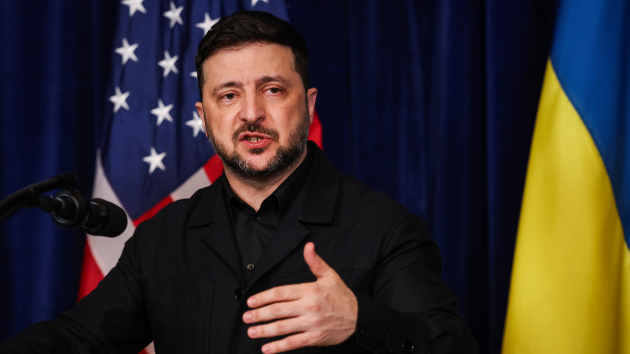
(LONDON) — American and Ukrainian representatives will continue discussions on a possible framework for a peace deal to end Russia’s full-scale invasion of its neighbor on Saturday, the State Department said in a statement, following meetings between the two teams in Miami this week.

The office of the spokesperson at the State Department said in a Friday statement that U.S. President Donald Trump’s envoy Steve Witkoff and Trump’s son-in-law Jared Kushner held “constructive discussions” with the Ukrainian delegation this week on “advancing a credible pathway toward a durable and just peace in Ukraine.”

The statement said the two delegations agreed on a framework of security arrangements and necessary deterrence capabilities that the State Department said will lead to a “lasting peace” between Ukraine and Russia.

Friday’s State Department statement provided no further details on the framework of any security arrangement.

Kyiv has long said it cannot accept any peace deal that does not include concrete security guarantees from Western partners, chief among them the U.S. Ukrainian President Volodymyr Zelenskyy and his government have warned that without such protections, Russia may be emboldened to launch new rounds of aggression in the future.

The U.S. and Ukrainian delegations met in Miami for talks on Thursday and Friday. The teams are set to reconvene on Saturday to “continue advancing the discussions,” the State Department statement said.

The readout said that the Ukrainian delegation — which was led by Rustem Umerov, the secretary of the country’s National Security and Defense Council — “reaffirmed that Ukraine’s priority is securing a settlement that protects its independence and sovereignty, ensures the safety of Ukrainians and provides a stable foundation for a prosperous democratic future.”

The statement also said that the U.S. envoys discussed their recent meeting with Russian President Vladimir Putin in Moscow, plus “steps that could lead to ending this war.”

“Both parties agreed that real progress toward any agreement depends on Russia’s readiness to show serious commitment to long-term peace, including steps toward de-escalation and cessation of killings,” the statement added.

Ahead of the first meeting in Miami on Thursday, Zelenskyy said in a post to social media that his team’s task was “to obtain full information about what was said in Russia and what other pretexts Putin has come up with to drag out the war and to pressure Ukraine,” referring to the visit of Witkoff and Kushner to the Russian capital earlier in the week.

“Ukraine is prepared for any possible developments, and of course we will work as constructively as possible with all our partners to ensure that peace is achieved,” Zelenskyy added. “Only a dignified peace provides real security, and we fully understand that this requires — and will continue to require — the support of our partners.”

The Kremlin’s public statements suggest it is maintaining its maximalist demands, which include Ukraine’s withdrawal from territories still partially under Kyiv’s control in the east of the country. Ukraine has repeatedly dismissed that proposal.

Putin is projecting confidence, last week claiming a “positive dynamic” everywhere on the front despite high rates of Russian casualties — according to Kyiv’s reporting — and slow battlefield progress. Russia, the president said, is “ready in principle” to “fight to the last Ukrainian.”

Both Russia and Ukraine are sustaining their long-range strike campaigns amid the White House’s latest diplomatic push.

Ukraine’s air force said on Saturday morning that Russia launched 653 drones and 51 missiles — 17 of them ballistic missiles — into the country overnight. The air force said 585 drones and 30 missiles were shot down or suppressed. Drone and missile impacts were reported across 29 locations, the air force said.

Russia’s Defense Ministry, meanwhile, said its forces downed at least 121 Ukrainian drones on Friday night into Saturday morning.

Copyright © 2025, ABC Audio. All rights reserved.
NATO fighters scrambled in Poland as Russia bombards Ukraine

NATO fighters scrambled in Poland as Russia bombards Ukraine
Jose Colon/Anadolu via Getty Images

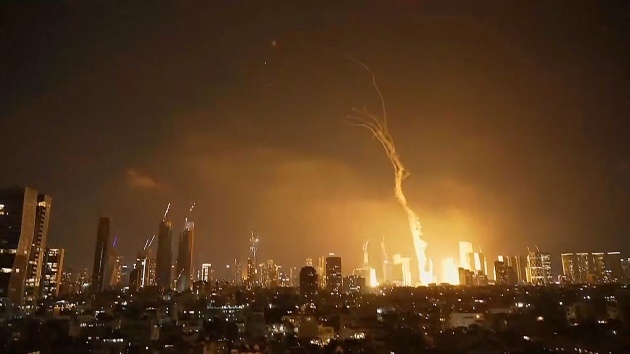
(LONDON) — NATO fighter jets were scrambled and air defense systems put on alert in Poland in response to Russia’s latest overnight drone and missile strikes in Ukraine, the Armed Forces Operational Command in Warsaw said in a series of social media posts.

“Fighter jets have been scrambled and ground-based air defense systems as well as radar reconnaissance systems have reached a state of readiness,” the command said in a post to X.

“These actions are of a preventive nature and are aimed at securing the airspace and its protection, especially in areas adjacent to the threatened regions,” it added.

The alert lasted for just under four hours, after which the command said the fighters and air defense systems had “returned to standard operational activities.” No violations of Polish airspace were observed, a follow-up post to X said.

The Spanish and Czech air forces were involved in the response, the command said, as were German and Dutch air defense systems.

Ukraine’s air force said Russia launched 653 drones and 51 missiles — 17 of them ballistic missiles — into the country overnight. The air force said 585 drones and 30 missiles were shot down or suppressed.

Drone and missile impacts were reported across 29 locations, the air force said.

The attack — which consisted of 704 air attack weapons — was Russia’s largest overnight bombardment since it launched 705 munitions on the night of Oct. 29, according to Ukrainian air force data analyzed by ABC News.

The largest attack of the war to date took place on the night of Sept. 6 and involved 823 air attack vehicles. The latest overnight attack is only the fourth of Russia’s full-scale invasion to date in which the number of air attack vehicles used surpassed 700.

Ukrainian Minister of Internal Affairs Iho Klymenko said in a post to Telegram that 10 regions of the country came under attack, with direct hits to residential buildings, railways and energy infrastructure.

More than two dozen houses in the Kyiv, Dnipropetrovsk, Zhytomyr and Lviv regions were damaged, according to Klymenko.

At least three people were injured in the Kyiv region, another three people were injured in the Dnipropetrovsk region and two people were injured in the Lviv region, Klymenko said.

In the Black Sea port city of Odesa, regional Gov. Oleh Kiper said an energy facility was damaged, resulting in disruptions to the supply of power and heating. Some 9,500 customers were without heating and 34,000 without water as of 9:30 a.m. local time.

There was also damage to energy infrastructure in the Chernihiv, Zaporizhzhia, Lviv and Dnipropetrovsk regions, according to authorities there.

The International Atomic Energy Agency — the U.N.’s nuclear watchdog — said in a post to X that Ukraine’s Zaporizhzhia nuclear power plant also temporarily lost all off-site power during the Russian strikes.

IAEA Director General Rafael Grossi “reiterates call for military restraint to avoid a nuclear accident,” the post said.

Ukrainian Prime Minister Yulia Svyrydenko said she had “convened an emergency coordination meeting” with the ministers of internal affairs and energy as well as the leadership of the state-run energy companies and all services responsible for recovery operations.

Ukrainian Foreign Minister Andrii Sybiha said in a post to X, “Russia continues to disregard any peace efforts and instead strikes critical civilian infrastructure, including our energy system and railways.”

“This shows that no decisions to strengthen Ukraine and raise pressure on Russia can be delayed,” Sybiha added. “And especially not under the pretext of peace process.”

Ukrainian President Volodymyr Zelenskyy said in a post to social media that energy facilities were “the main targets of these strikes.”

“Russia’s aim is to inflict suffering on millions of Ukrainians,” the president wrote. “That is exactly why additional pressure is needed. Sanctions must work, and so must our air defenses, which means we must maintain support for those defending lives.”

Russia’s Defense Ministry, meanwhile, said its forces downed at least 121 drones on Friday night into Saturday morning.

ABC News’ Morgan Winsor, Natalia Kushnir, Natalia Popova and Anna Sergeeva contributed to this report.

Copyright © 2025, ABC Audio. All rights reserved.

Why countries are pulling out of 2026 Eurovision contest over Israel’s participation

Why countries are pulling out of 2026 Eurovision contest over Israel’s participation
Igor Golovniov/SOPA Images/LightRocket via Getty Images

(NEW YORK) — The Eurovision Song Contest slogan is “United By Music,” but the music competition’s organizers are seeing some cracks in that unity.

A discordant note has been struck in that unity over Israel’s participation in the contest over the war between Israel and Hamas and the humanitarian crisis it precipitated.

Four European nations say they will not take part in the popular international song competition next year after Israel was cleared to participate. State broadcasters in the Netherlands, Ireland, Spain and Slovenia cited the ongoing war in Gaza as their reason for withdrawing.

The war started after Hamas launched a surprise terrorist attack in Israel on Oct. 7, 2023, that killed roughly 1,200 Israelis and took about 251 people hostage. Israel responded by declaring war, vowing to eradicate Hamas, the organization that has been de facto governing Gaza and has been designated by the U.S. as a terrorist group. The death toll in Gaza had surpassed 70,000 as of Wednesday, according to the Hamas-run Gaza health ministry.

Both sides agreed to a ceasefire, which has broadly held, this October.

“Culture unites, but not at any price. What has happened over the past year has tested the limits of what we can uphold,” Taco Zimmerman, head of the Dutch broadcaster AVROTROS, said in a statement. “Universal values such as humanity and press freedom have been seriously compromised, and for us, these values are non-negotiable.”

Ireland’s broadcaster RTÉ directly cited the war in its statement.

“RTÉ feels that Ireland’s participation remains unconscionable given the appalling loss of lives in Gaza and the humanitarian crisis there which continues to put the lives of so many civilians at risk,” it wrote.

Ireland has won the Eurovision Song Contest seven times, and is tied with Sweden for the most wins ever. The Swedish group ABBA famously got a boost into worldwide stardom from its Eurovision win for “Waterloo.”

“The situation in Gaza, despite the ceasefire and the approval of the peace process, and Israel’s use of the contest for political purposes, make it increasingly difficult to maintain Eurovision as a neutral cultural event,” Alfonso Morales, secretary general of Spain’s broadcaster RTVE, said in part in a statement. 

Spain is part of what’s known as the Eurovision’s “Big 5” — the participants whose broadcasters provide the most, financially, to the contest and have the biggest viewership. The UK, France, Germany and Italy are the other members of this group, and performers representing these countries get automatic entry into the Eurovision final.

A representative for Slovenia’s broadcaster also cited the war in Gaza, and said the Israeli government had been using the contest for political gain.

During this year’s Eurovision, Yuval Raphael’s song “New Day Will Rise” reached second place — it was beaten by Austrian singer JJ’s “Wasted Love.”

The Israeli government was accused by other countries’ broadcasters of manipulating the voting system during this year’s Eurovision. Amid the controversy, the EBU announced new changes to tighten voting rules, but Eurovison Song Contest Director Martin Green told the BBC that Israel did not break the rules.

At a meeting in Geneva on Thursday, the European Broadcasting Union — the organizing body of the contest — and member broadcasters from participating nations gathered to discuss new voting guidelines and contest rules. They did not take a vote on Israel’s participation, which cleared the way for the country to compete.

Four European nations say they will not take part in the popular international song competition next year after Israel was cleared to participate. State broadcasters in the Netherlands, Ireland, Spain and Slovenia cited the ongoing war in Gaza as their reason for withdrawing.

“I am pleased that Israel will once again participate in the Eurovision Song Contest, and I hope that the competition will remain one that champions culture, music, friendship between nations, and cross-border cultural understanding,” Israeli President Isaac Herzog wrote, in part, in a post on X after the Geneva meeting.

Israeli broadcaster KAN was critical of the backlash

“The attempt to remove KAN from the contest can only be understood as a cultural boycott,” one representative said during the meeting.

But some broadcasters — like Britain’s BBC — expressed support for Israel to compete. 

Opposition to Israel’s participation had been brewing since 2024, when protesters demonstrated outside the arena in Malmo, Sweden.

Israel first joined the Eurovision Song Contest in 1973. Four Israeli acts have taken home the Eurovision trophy since, most recently in 2018.

The final of the 2026 Eurovision Song Contest will take place in Vienna, Austria, on May 16.

Copyright © 2025, ABC Audio. All rights reserved.

Putin vows to take Ukraine’s eastern region as top US and Ukrainian prepare to meet

Putin vows to take Ukraine’s eastern region as top US and Ukrainian prepare to meet
Russian President Vladimir Putin begin a meeting with US special envoy Steve Witkoff and US President Donald Trump’s son-in-law Jared Kushner at the Kremlin, aimed at finding a solution to end the Ukraine war, in Moscow, Russia on December 2, 2025. (Photo by Kremlin Press Office/Anadolu via Getty Images)

(NEW YORK) — Ukraine’s top negotiator is scheduled on Thursday to meet in Florida with U.S. special envoy Steve Witkoff, two days after the American’s high-stakes meeting with Russian President Vladimir Putin in Moscow, according to a senior U.S. administration official.

President Donald Trump’s son-in-law Jared Kushner is also expected to be in the meeting with Rustem Umerov, the secretary of Ukrainian National Security and Defense Council, the official said.

Ahead of the meeting in Florida, Putin reiterated Russia’s demand that Ukrainian troops withdraw from territories they control in the east of the country and allow their annexation by Moscow — a proposal that Kyiv has repeatedly rejected.

“It all boils down to this — either we will liberate these territories by force, or Ukrainian troops will leave these territories and stop fighting there,” Putin told The Times of India ahead of his planned two-day visit to the country.

“No, they prefer to fight,” Putin said of the Ukrainian armed forces. “Well, now they’ve fought themselves into a corner.”

Putin again claimed the legitimacy of Russian control of eastern Ukraine citing the results of Russian-organized referenda in the occupied regions.

Ukraine, the U.S. and 142 other nations rejected those referenda as illegitimate in a 2022 United Nations resolution. Only Russia, Belarus, North Korea, Nicaragua and Syria voted against the measure.

Ukrainian President Volodymyr Zelenskyy confirmed on Wednesday that preparations were underway for further discussions with U.S. officials, but did not disclose when the talks were expected.

“We’re preparing meetings in the United States — after the American team returns from Moscow and following the relevant consultations in Washington — Rustem Umerov, Andrii Hnatov, along with the rest of the negotiating team, will continue discussions with envoys of President Trump,” Zelenskyy said on social media.

Few details were released about what had been discussed during the five-hour meeting between Witfkoff, Kushner and Putin, but post-talks comments made by Washington and Moscow were mostly positive. Both parties acknowledged that more work would have to be done to make the deal acceptable to both Kyiv and Moscow.

Kremlin spokesperson Dmitry Peskov said Putin had found some terms “unacceptable,” but added that others were fine for Moscow. And Trump described it as a “reasonably good meeting.”

Trump said Witkoff and Kushner relayed their “impression” that Putin “would like to see the war ended.”

Both Russia and Ukraine continued their long range strike campaigns overnight into Thursday.

Ukraine’s air force said Russia launched 138 drones and two missiles into the country overnight, of which 114 drones were shot down or suppressed. Two missiles and 24 drones impacted across 14 locations, the air force said.

Russia’s Defense Ministry said its forces downed at least 76 Ukrainian drones overnight, one of which was destroyed over the Moscow region.

Copyright © 2025, ABC Audio. All rights reserved.

South Korea marks 1 year since failed martial law attempt

South Korea marks 1 year since failed martial law attempt
People gather for a rally marking one year since citizens blocked former President Yoon Suk Yeol’s martial law declaration, in front of the National Assembly on December 03, 2025 in Seoul, South Korea. (Hwawon Lee/Anadolu via Getty Images)

(SEOUL) — Thousands of South Koreans rallied outside the National Assembly on Wednesday, marking one year since former President Yoon Suk-yeol declared martial law — a short-lived, failed attempt that citizens and parliament quickly overturned.

The demonstration was organized to commemorate the public resistance that helped reverse the move and to address the aftermath of what officials now call an insurrection.

As K-pop blasted through speakers, attendees held light sticks and chanted, “Reckon with insurrection!” Police estimated about 11,000 people attended the rally, hosted by progressive civic groups.

“It was the first time in the 21st century that a coup occurred in a democratic country like South Korea. Equally unprecedented, unarmed citizens peacefully prevented it,” President Lee Jae Myung said in a speech marking the anniversary. “Ironically, the Dec. 3 coup became an opportunity to show the world the high civic consciousness of our people and the resilience of South Korea’s democracy.”

Lee referred to the movement as a “revolution of light” powered by “K-democracy,” a phrase his administration has embraced to describe what it views as a uniquely resilient democratic tradition rooted in past movements, including the 1980 Gwangju Uprising.

Across the political spectrum, lawmakers marked the anniversary, with the supermajority Democratic Party celebrating by advancing dozens of bills related to the failed martial law attempt, including legislation that would designate Dec. 3 as Democracy Movement Memorial Day.

At the National Assembly complex — the site where troops attempted to enforce martial law — Speaker Woo Won-shik, who led the motions to repeal the order and impeach Yoon last year, led a “dark tour” highlighting key locations from the night, including the lawn where troops landed and a wall he had climbed to enter the building.

Meanwhile, the conservative People Power Party issued a series of apologies, with party leader Song Eon-seog apologizing on behalf of 107 lawmakers who either supported or did not participate in last year’s impeachment proceedings.

The party initially boycotted the first impeachment vote, blocking the measure, but a second vote passed a week later with more than two-thirds support. In total, 25 first- and second-term lawmakers issued their own statement pledging to sever ties with Yoon.

“Yoon’s failed martial law attempt shows how erratic leadership can throw a country into turmoil,” Jungkun Seo, a professor at Seoul’s Kyung Hee University, told ABC News. “But parliament lifted martial law, Yoon was detained, tried, impeached, and the country elected a new president — all in only six months. This demonstrated to the international community that South Korea’s democracy is rock solid.”

Lee, who was leader of the opposition at the time, said he livestreamed from the National Assembly grounds on the night martial law was declared because he believed citizens were the only force capable of stopping the coup.

Thousands gathered outside the building demanding the repeal of martial law, and peaceful candlelight protests continued until Yoon’s impeachment passed.

Copyright © 2025, ABC Audio. All rights reserved.

After US-Russia meeting, Ukraine to begin regrouping with European and American allies

After US-Russia meeting, Ukraine to begin regrouping with European and American allies
Charles McQuillan/Getty Images

(NEW YORK) — The Kremlin on Wednesday said Russian President Vladimir Putin hadn’t outright rejected the latest version of the U.S.-backed plan at his Tuesday meeting with American officials, but added that more work would have to be done to make the proposal acceptable to Moscow.

“No, it would not be correct,” Kremlin spokesperson Dmitry Peskov told reporters in Moscow on Wednesday. “The fact is that such a direct exchange of views took place for the first time yesterday, and, again, as was said yesterday, something was accepted, something was noted as unacceptable, and this is a normal working process of seeking compromise.”

Those statements came as two of the top Ukrainian security officials were set to regroup on Wednesday in Brussels with several European counterparts to discuss the outcomes of Tuesday’s U.S.-Russia meeting in Moscow, the Ukrainian presidential office said in a statement.

Rustem Umerov, secretary of the National Security and Defense Council, and Andrii Hnatov, chief of the General Staff, were expected to join talks in Belgium, which would follow a day after top U.S. officials held a high-stakes sit-down with Russian President Vladimir Putin in Moscow.

“This is our ongoing coordination with partners, and we ensure that the negotiation process is fully active,” Ukrainian President Volodymyr Zelenskyy said on Wednesday on social media.

After their meetings in Brussels, Umerov Hnatov were expected to begin preparations for a meeting with envoys of the Trump administration, Zelenskyy said.

The sit-down in Moscow followed a series of meetings between top U.S. and Ukrainian officials, during which the parties sought to revise the original peace-plan proposal presented by the Trump administration to Ukraine last month. Witkoff and other top U.S. officials — including Secretary of State Marco Rubio and President Donald Trump’s son-in-law Jared Kushner — met on Sunday in Florida with a Ukrainian delegation to attempt to find a deal that Ukraine and Russia might both accept to end the war.

Witkoff and Kushner on Tuesday conveyed the outcomes of that meeting to Putin. The Kremlin’s top foreign policy aide said Tuesday’s five-hour talks in Moscow had been “useful” but added that “no compromise plan” had been found yet on the toughest issues.

None of the parties involved in the negotiations has detailed the current version of the proposal.

Peskov on Wednesday told reporters in Moscow on Wednesday that Russia also didn’t plan to publicly disclose what Witkoff, Kushner and Putin had discussed, but added that Russia was “grateful for these efforts by the Trump administration and we are all ready to meet as many times as necessary to achieve a peaceful settlement.”

Copyright © 2025, ABC Audio. All rights reserved.

Family of Colombian fisherman killed in US boat strike files complaint alleging he was murdered

Family of Colombian fisherman killed in US boat strike files complaint alleging he was murdered
Carolyn Van Houten/The Washington Post via Getty Images

(WASHINGTON) — The family of a Colombian fisherman who died in a U.S. military boat strike in September has filed a formal complaint with the Inter-American Commission on Human Rights alleging the U.S. government illegally killed him.

Alejandro Carranza was killed in a strike in the Caribbean on Sept. 15, according to the petition, filed on Tuesday.

“From numerous news reports, we know that U.S. Secretary of Defense Pete Hegseth was responsible for ordering the bombing of boats like those of Alejandro Carranza and the murder of all those on such boats,” according to the petition. “Secretary Hegseth has admitted that he gave such orders despite the fact that he did not know the identity of those being targeted for these bombings and extra-judicial killings.”

In the petition, Carranza’s lawyer Dan Kovalik said the fisherman’s family “has no recourse to adequate and effective remedies in Colombia to obtain redress for the injuries they have suffered due to the actions of the United States.”

While the Inter-American Commission on Human Rights can investigate the complaint and issue findings, any ruling it makes would not be legally binding on the U.S. 

A Pentagon official told ABC News the department does not comment on pending litigation.

The filing comes after Colombian President Gustavo Petro accused the U.S. government of committing murder for the strike that killed Carranza.

“U.S. government officials have committed a murder and violated our sovereignty in territorial waters. Fisherman Alejandro Carranza had no ties to the drug trade and his daily activity was fishing,” Petro said on X last month. “The Colombian boat was adrift and displaying the distress signal due to having an outboard motor. We await explanations from the U.S. government.”

Three people total were killed in the Sept. 15 strike in the Caribbean, U.S. officials said.

President Donald Trump said at the time that he ordered the military strike against a boat that he insisted was carrying illegal drugs from Venezuela to the U.S., telling reporters the operation left “big bags of cocaine and fentanyl” floating around in the ocean.

Since September, Trump and Hegseth have ordered more than 20 military strikes against suspected drug boats in the Caribbean Sea and eastern Pacific Ocean. The Trump administration has alleged with little evidence that the boats were smuggling drugs from Venezuela and Colombia. The controversial campaign so far has killed more than 80 people, according to officials.

Hegseth has maintained that the strikes are all legal and claims that the military has evidence that the boats were carrying drugs.

On Capitol Hill, some leaders from both parties have questioned the legality of the strikes and whether the president has the constitutional power to authorize them.

The first such incident, which occurred on Sept. 2, has been under scrutiny following a recent Washington Post report that cited two people with direct knowledge of the operations saying a second strike was ordered on the boat that killed two survivors.

One person familiar with details of the incident confirmed to ABC News that there were survivors from the initial strike on the boat and that those survivors were killed in a subsequent strike.

Democrats say that alone could be enough to suggest a war crime occurred. The laws of war require either side in a conflict to provide care for wounded and shipwrecked troops.

Defense Secretary Pete Hegseth, who oversaw the initial attack, has defended the strike as legal.

The defense secretary told reporters at the White House on Tuesday that he watched the first strike unfold before leaving for meetings. He says he did not see survivors or any strikes that followed and said the admiral who, he said, ordered the second strike made the “right call.”

Copyright © 2025, ABC Audio. All rights reserved.

Ahead of US meeting, Putin warns Russia is ready if Europe ‘wants to fight’

Ahead of US meeting, Putin warns Russia is ready if Europe ‘wants to fight’
Russian President Vladimir Putin speaks during his press conference after the Summit of Collective Security Treaty Organization, on November 27, 2025 in Bishkek, Kyrgyzstan. Contributor/Getty Images

(LONDON) — President Vladimir Putin warned that Russia is ready to fight a war if Europe seeks one and claimed European countries are trying to make changes in President Donald Trump’s proposal on ending Russia’s war against Ukraine, ahead of his high-stakes meeting with U.S. special envoy Steve Witkoff in Moscow on Tuesday.

“We can clearly see that these changes are aimed at only one thing: to block the entire peace process,” Putin said in remarks to reporters while accusing Europe of being “on the side of war.”

“We are not going to fight Europe, I have said this a hundred times. But if Europe suddenly wants to fight and starts, we are ready right now,” Putin said.

Russia would allow Europe to return to negotiations on Ukraine if it takes into account the realities on the ground, Putin said.

Putin’s meeting with Witkoff is underway, Russian state media TASS reported Tuesday night local time. Trump’s son-in-law, Jared Kushner, is also taking part.

Earlier, Kremlin spokesperson Dmitry Peskov said the meeting had no time limit and would go on for “as long as necessary.”

Ahead of the meeting, the White House said it was “very optimistic,” as U.S. officials continue their push to end Russia’s war against Ukraine.

The sit-down follows a series of meetings between top U.S. and Ukrainian officials, during which the parties sought to revise the original peace-plan proposal presented by the Trump administration to Ukraine last month.

Witkoff and other top U.S. officials — including Kushner and Secretary of State Marco Rubio — met on Sunday in Florida with a Ukrainian delegation to attempt to find a deal that Ukraine and Russia might both accept to end the war.

“I think the administration feels very optimistic,” White House press secretary Karoline Leavitt told reporters on Monday, following the Florida meeting. “They had very good talks with the Ukrainians in Florida. And now, of course, Special Envoy Witkoff is on his way to Russia.”

The top Ukrainian official at the Florida talks said there had been progress, but, he added, “some issues still require further refinement.”

The Kremlin on Monday said a meeting between Witkoff and Putin was scheduled for Tuesday. Putin prepared in recent days by holding meetings with military commanders and a governor of a frontline territory, according to Russian officials.

“We have no doubt that this will be a very important step towards peace and a peaceful settlement,” Peskov told reporters in Moscow on Tuesday.

There was little expectation Putin would agree to a deal. The Russian leader signaled last week he would not compromise, repeating in hardline remarks his demand that Ukraine withdraw from territory he claims as Russian soil and saying it was “pointless” to negotiate with Ukrainian President Volodymyr Zelenskyy.

Putin then on Monday claimed without evidence that Russian forces had taken control of two Ukrainian cities where intense fighting has been happening for weeks in the eastern part of the country, a move intended perhaps to burnish the perception of Russia’s leading position on the battlefield.

Zelenskyy, who, along with Trump, was not directly involved with the talks in Florida, met on Monday with French President Emmanuel Macron in Paris. The meetings in France were “substantive and important — above all, focused on the steps that bring a just peace closer,” he said on social media. Zelenskyy landed on Tuesday in Dublin, where he’s expected to meet with Taoiseach Micheal Martin, the Irish prime minister.

As Zelenskyy pushed for European unity against Russian aggression, members of his delegation in Florida were sending updates on what was being discussed. He said on Monday that there were still several “tough issues” to work through in the negotiations, but did not elaborate. Ukraine’s potential relinquishment of some of its territory to Russia was thought to be part of the talks.

Zelenskyy on Monday also said he, Macron and British Prime Minister Keir Starmer had again been briefed by Witkoff and the head of the Kyiv delegation, Rustem Umerov, the secretary of Ukraine’s National Security and Defense Council. 

“Over two very productive days in the United States, we held many hours of meetings and negotiations,” Umerov said in a separate social media update on Monday. “We achieved significant progress, although some issues still require further refinement.”

Umerov and the rest of the negotiating team met with Zelenskyy in person on Tuesday, with the president saying they discussed “the matters that cannot be addressed over the phone.” He praised Ukrainian allies for their partnership. And he also accused Russia of beginning new disinformation campaigns prior to Putin’s meeting with Witkoff.

“Ukraine approaches all diplomatic efforts with utmost seriousness — we are committed to achieving a real peace and guaranteed security,” Zelenskyy said on social media. “This is exactly the level of commitment that must be compelled from the Russian side, and this task can be accomplished only together with our partners.”

The meeting in Moscow would be the sixth such Witkoff-Putin sit-down this year and it comes amid a redoubled effort by the White House to produce a peace deal in the almost 4-year-old conflict.

The meeting on Sunday included discussions of a revised 19-point peace plan that was developed a week ago during another round of American-Ukrainian talks in Geneva, Switzerland. Those talks reworked an earlier 28-point plan that the Trump administration had presented and that had alarmed Kyiv and European allies as heavily favoring Russia. Details about whether further revisions may have been made over the weekend had not been released as of Tuesday morning.

Speaking at the White House on Monday, Leavitt did not detail what the U.S. expected to happen during the negotiations in Moscow, instead deferring to those who would be at the meeting.

“We’ve put points on paper. Those points have been very much refined,” she said. “But as for the details, I will let the negotiators negotiate. But we do feel quite good, and we’re hopeful that this work can finally come to an end.”

ABC News’ Emily Chang and Patrick Reevell contributed to this report.

Copyright © 2025, ABC Audio. All rights reserved.

After US-Ukraine meeting in Florida, focus shifts to Putin

After US-Ukraine meeting in Florida, focus shifts to Putin
Russian President Vladimir Putin speaks during his press conference after the Summit of Collective Security Treaty Organization, on November 27, 2025 in Bishkek, Kyrgyzstan. (Photo by Contributor/Getty Images)

(KHARKIV, Ukraine and LONDON) — President Donald Trump’s special envoy Steve Witkoff is due to travel to Moscow on Monday to present a peace plan proposal to Russian President Vladimir Putin in what is expected to be a crucial test for the Trump administration’s efforts to end the war in Ukraine.

Witkoff is travelling to Putin a day after taking part in talks with a high-level Ukrainian delegation in Florida, aimed at trying to find a deal to end the war that Ukraine and Russia might accept. The Kremlin on Monday said a meeting between Witkoff and Putin was scheduled for Tuesday.

“The president will hold several closed-door meetings today in preparation for the Russian-American contacts,” spokesperson Dmitry Peskov told reporters in Moscow.

There is little expectation Putin will agree to a deal. The Russian leader has already signalled he will not compromise, last week making hardline remarks where he repeated his demands that Ukraine withdraw from territory he claims and saying it is “pointless” to negotiate with Ukrainian President Volodymyr Zelenskyy. He suggested the Kremlin believes it is making sufficient progress on the battlefield and is content to wait until Kyiv concedes to its conditions.  

Zelenskyy is expected to be in Paris today to meet with French President Emmanuel Macron, with whom he’s expected to discuss the negotiations with the U.S. Zelenskyy and Europe appear to be signaling solidarity on a day when the U.S. and Putin are expected to dominate the airwaves. 

“It will be a very substantive day,” Zelenskyy said on Monday morning. “Diplomacy, defense, energy — the priorities are clear.”

Zelenskyy on Sunday said his emissaries in Florida had reported back the “main parameters” of what had been discussed, along with “some preliminary results.” But the full details were still to be relayed, he said.

“I look forward to receiving a full report from our team during a personal meeting,” Zelenskyy said on social media.

U.S. Secretary of State Marco Rubio said on Sunday after taking part in the talks with Ukraine the next steps in the negotiations were “delicate,” adding that “it’s complicated, there are a lot of moving parts.”

There was “another party involved here that’ll have to be a part of the equation — and that’ll continue later this week when Mr. Witkoff travels to Moscow, although we’ve also been in touch in varying degrees with the Russian side,” Rubio said. 

“We have a pretty good understanding of their views as well,” Rubio said. 

Officials from Ukraine and the United States both said the about 2-hour meeting at Shell Bay Golf Course in Hallandale Beach were productive, but neither side released details about what agreements were made and there is no indication a breakthrough was made on the most difficult issues that would allow an end to the war.

The meeting discussed a revised 19-point peace plan that was developed a week ago during another round of negotiations in Geneva between the U.S. and Ukraine. Those talks reworked an earlier 28-point plan that the Trump administration had presented and that had alarmed Kyiv and European allies as heavily favoring Russia.

Officials on Sunday did not release details about whether the proposal had again been updated.

A source familiar with the talks said they had discussed security guarantees for Ukraine, as well as including the fate of billions of dollars of Russian assets frozen by Western countries and possible elections in Ukraine. The issue of the frozen assets was a “key” one for the Russians, the source said.

On the crucial issue, though, of Russia’s demand that Ukraine surrender unoccupied territory in the Donbas region, there was no sign of progress. The source said Russia was still unwilling to discuss any form of ceasefire and Ukraine is not willing to cede territory.

Rubio said the talks had been “a very productive and useful session where additional progress was made.” 

“I think there is a shared vision here that this is not just about ending the war, which is very important; it is about securing Ukraine’s future, a future that we hope will be more prosperous than it’s ever been,” he told reporters after emerging from the talks with Rustem Umerov, the secretary of Ukraine’s National Security and Defense Council, who had been the lead negotiator from Kyiv. 

“We worked — we already had a successful meeting in Geneva, and today we continued this success,” Umerov said, adding that there would be “later stages” to the talks.

Zelenskyy on Monday said initial reports from his team appeared to show that the meeting on Sunday had been “very constructive.”

“There are some tough issues that still have to be worked through,” he added.

ABC News’ Joe Simonetti contributed to this report.

Copyright © 2025, ABC Audio. All rights reserved.