(LONDON) — “Around 10” people died in a shooting on Tuesday at an adult education facility in Orebro, Sweden, according to police.
The victims were found inside the school complex, police said during a press conference Tuesday night local time. The school is currently cordoned off.
Police don’t yet know the motive of the shooting. There’s no initial indication it’s terror-related, but “we’re not ruling out anything,” a Swedish police spokesperson said.
“We have no indication that it’s terror, but we’re not ruling out anything,” the spokesperson, Lars Hedelin, said.
Swedish police didn’t provide the identify of the shooter and said they’re “no longer a threat to us.” Authorities didn’t say whether the suspect was among the dead.
The investigation is still ongoing, with police officers still searching the school to ensure there are no additional victims.
Police previously said the shooter may be among the injured being treated at the hospital but said “nothing is clear yet.” Police initially said five people were taken to the hospital. No ages of the victims have been given yet.
When asked how the number jumped from five to 10, Hedelin clarified: “We didn’t have a possibility to confirm until now that we had 10 people that were killed,” adding: “I would say that all of them have been shot and all are adults.”
Officials said in a statement they were urging the public to stay away from the Risbergska Skolan, a municipal education center in the Vasthaga area of Orebro. The school is for students over 20 years old, according to its website.
Law enforcement in the Bergslagen region began at about 1 p.m. local time to post a series of short statements, saying initially that a “major operation” was underway and the school was under threat of “deadly violence.”
Police set up an information point for relatives to gather, and students were sent to nearby facilities.
“The danger is not over,” Police said at about 2 p.m. “The public MUST continue to stay away from Västhaga.”
The school is about 200 km, or about 125 miles, west of Stockholm, the capital.
This is a developing story. Please check back for updates.
ABC News’ Ellie Kaufman Joe Simonetti and Helena Skinner contributed to this report.
(LONDON) — At least five people were shot on Tuesday at an adult education facility in Orebro, Sweden, police said.
“The extent of the injuries is unclear,” police said. “The operation is still ongoing.”
Police said the shooter may be among the injured being treated at the hospital, but said “nothing is clear yet.” Five people have been taken to the hospital. Officials cannot confirm if anyone has died, and no ages of the victims have been given yet.
Officials said in a statement they were urging the public to stay away from the Risbergska Skolan, a municipal education center in the Vasthaga area of Orebro. The school is for students over 20 years old, according to its website.
Law enforcement in the Bergslagen region began at about 1 p.m. local time to post a series of short statements, saying initially that a “major operation” was underway and the school was under threat of “deadly violence.”
Police set up an information point for relatives to gather, and students were sent to nearby facilities.
“The danger is not over,” Police said at about 2 p.m. “The public MUST continue to stay away from Västhaga.”
The school is about 200 km, or about 125 miles, west of Stockholm, the capital.
ABC News’ Joe Simonetti and Helena Skinner contributed to this report.
Venezuelan community leaders speak to the media as they protest against the suspension of Temporary Protected Status in Doral, Fla., Feb. 3, 2025. (Chandan Khanna/AFP via Getty Images)
(WASHINGTON) — Nearly 350,000 Venezuelans who gained relief from deportation and obtained work permits in 2023 under Temporary Protected Status (TPS) will lose those protections in April, according to an unpublished notice filed in the Federal Register.
Last week, Department of Homeland Security Secretary Kristi Noem announced she was canceling a recent extension of the program by former Secretary Alejandro Mayorkas which would have allowed nearly 600,000 current Venezuelan TPS holders to maintain their legal status until October 2026. She had until Feb. 1 to decide whether she’d extend protections for those who joined the program in 2023.
Now, nearly 350,000 Venezuelan immigrants may lose their legal status if they don’t have any other type of relief.
The program began in 1990 as a way to protect immigrants who are already in the United States when their home countries are deemed to dangerous to return to. TPS is under the DHS Secretary’s discretion.
In the notice, DHS acknowledges that some of the conditions in Venezuela that the Biden administration used to justify TPS designation in 2023, “may continue.” However, they claim things have gotten better in the country.
“There are notable improvements in several areas such as the economy, public health, and crime that allow for these nationals to be safely returned to their home country,” the notice file says.
The agency adds that Sec. Noem “has determined it is contrary to the national interest to permit the covered Venezuelan nationals to remain temporarily in the United States.”
The notice is set to publish Feb. 5 and says the termination of the 2023 TPS Venezuela designation will be effective 60 days from date of publication, however, protections were already set to expire April 2 without an extension.
In a letter to Noem last week, a group of Democratic lawmakers said returning Venezuelan immigrants “to a dictatorship” would be a “death sentence.”
“Given Venezuela’s increased instability, repression, and lack of safety, and within all applicable rules and regulations, we demand more information on why the Department has made this decision,” the lawmakers said. “The only justification that has been offered by the Administration is the false claim that all Venezuelans are ‘dirt bags,’ ‘violent criminals’ or the ‘worst of the worst.'”
Immigrant advocates are also sounding the alarm about the move some consider “cruel” and “reckless.”
“Donald Trump’s attempt to revoke protections for 300,000 Venezuelans is as cruel as it is reckless — but we know he won’t stop here. His shock-and-awe approach to dismantling the immigration system is already devastating families and communities across the country, and we’re likely to see immigrants from Ukraine and Afghanistan targeted next,” Keri Talbot, co-executive director of the Immigration Hub, told ABC News.
“Families who have built their lives here — who work, contribute, and play by the rules — are under attack, being thrown into crisis overnight and forced from their homes. This isn’t about policy; it’s about inflicting harm at any cost.” Talbot added.
The termination does not apply to Venezuelans who registered under the 2021 TPS designation, those protections will remain in effect until Sept. 10, 2025.
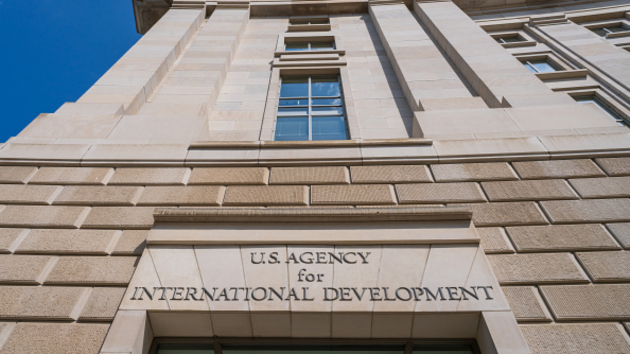
(WASHINGTON) — International aid organizations are warning that humanitarian efforts in Gaza would be severely impacted if the U.S. Agency for International Development (USAID) is shut down by Elon Musk’s Department of Government Efficiency.
Musk said he was “in the process” of “shutting down” the agency — which oversees foreign aid, disaster relief and international development programs — and that President Donald Trump agreed with him.
Meanwhile, Secretary of State Marco Rubio told reporters on Monday that he had been appointed acting director of USAID, saying the agency is “not functioning” and that it needs to be aligned with U.S. national interests.
Alex Smith, a former contractor for USAID who advised on nutrition, child health and maternal health, told ABC News that the dismantling of the agency could have a major impact on aid in Gaza.
“It’s going to be devastating,” said Smith, who left the agency last year. “You know, countries are already trying to figure out how they’re going to fill the gaps, but they just don’t have the money, and finding new donors could take years.”
Smith noted that the Trump administration said previous federal funding freezes wouldn’t affect emergency food programs, but that the USAID also provides humanitarian assistance on other fronts.
“There’s a lot more than food aid that USAID does. That’s a kind of common misconception — that all we do is just drop off big bucks and food,” he said. “It’s about fighting infectious disease, malaria, TB, HIV all over the world. You know, with the conditions in Gaza as they are, we’ve seen some polio. It’s very likely that cholera is already there and it’s going to get worse. So we used to have a lot of programs to try to combat those specific infectious diseases.”
Jesse Marks, senior advocate for the Middle East at the humanitarian organization Refugees International, told ABC News he’s worried the stoppage of aid from USAID could put the Israel-Hamas ceasefire in jeopardy.
“An aid freeze in general, but particularly for Gaza, threatens to undermine what has already been a fragile ceasefire, and the potential for phase two and phase three release of hostages,” Marks said.
“I think one of the facets of this that people are not necessarily connecting is that the humanitarian access to Gaza — which is underpinned by USAID, State Department funds — was a central feature of the bargain that underpins ceasefire,” he continued. “So, if you remove aid to Gaza, whether directly or as a second-order effect of the aid freeze, this raises the risk of a broader ceasefire collapse.”
USAID has been contributing aid to Gaza and the West Bank since at least 2021, with increased aid after the Israel-Hamas war broke out.
In November 2024, USAID announced it was providing $230 million in additional funding “to support economic recovery and development programs in the West Bank and Gaza.” It has given more than $2.1 billion in humanitarian assistance since Oct. 7, 2023.
The U.S. Office of Palestinian Affairs said funding from USAID would allow the agency’s partners to provide food assistance, emergency health care and psychosocial services, and could help with providing access to clean drinking water, hygiene products and sanitation services.
In a statement to ABC News last week, the nonprofit International Medical Corps (IMC) said it had received $68 million from USAID to set up and run two large field hospitals in Gaza so it could treat more than 33,000 civilians per month.
The spokesperson also rejected claims from a U.S. State Department official that IMC had used funding from USAID to procure or distribute condoms.
USAID was partly responsible for renewed international pressure on Israel to increase the flow of aid into Gaza.
In April 2024, USAID Administrator Samantha Power testified before Congress, stating that parts of Gaza were experiencing a famine and that conditions were “as dire as any I have seen in my career.”
Her assessment came after a March 2024 report from the Integrated Food Security Phase Classification that famine was “imminent” in northern Gaza and the entire population was experiencing high levels of food insecurity.
Later that day, Israeli military spokesman Rear Adm. Daniel Hagari told reporters that Israel was constructing a new land crossing from Israel into northern Gaza to facilitate more aid deliveries based on previous promises made by Israeli Prime Minister Benjamin Netanyahu.
Aid organizations including Médecins Sans Frontières (MSF), or Doctors without Borders, and Oxfam, a group made up of 21 independent NGOs, have called on the U.S. government to halt the shutdown of USAID.
“Dismantling USAID would be a callous, destructive political power play that would have deadly consequences for millions of people living in dire humanitarian emergencies and extreme poverty,” Abby Maxman, Oxfam America president and CEO, said in a statement.
ABC News’ Katherine Faulders, Shannon Kingston, MaryAlice Parks and Will Steakin contributed to this report.
(HONG KONG and LONDON) — Select American goods imported into China will be subject to tariffs of up to 15%, Chinese officials said Tuesday, as they rolled out a series of retaliatory measures to counteract U.S. President Donald Trump’s planned tariffs.
China said it would on Feb. 10 impose a 15% tariff on U.S. coal and liquefied natural gas, along with a 10% tariff on other products, including crude oil, agricultural machinery and pickup trucks.
“China firmly opposes the U.S. practice and urges the United States to correct its wrong practices immediately,” the Chinese Ministry of Commerce said in a statement.
The move came as the deadline passed for Trump’s 10% tariffs on Chinese goods imported into the United States. Trump was expected to sign an executive order on Tuesday putting those tariffs into effect, according to the White House.
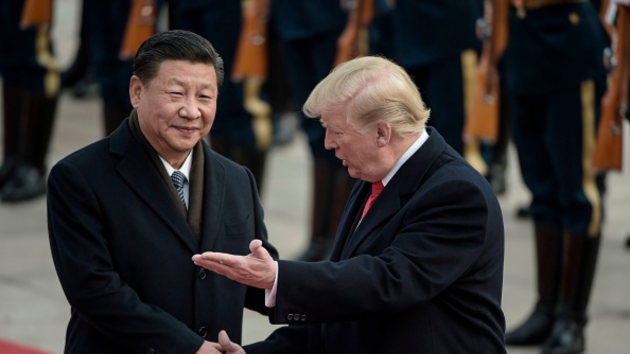
Trump and Chinese President Xi Jinping are expected to talk in “the next couple days,” White House press secretary Karoline Leavitt said Monday. It was unclear whether that discussion would happen prior to the Chinese tariffs going into effect next week.
The leaders last spoke in January, prior to Trump’s inauguration, as the U.S. ban on social media app TikTok was set to take effect.
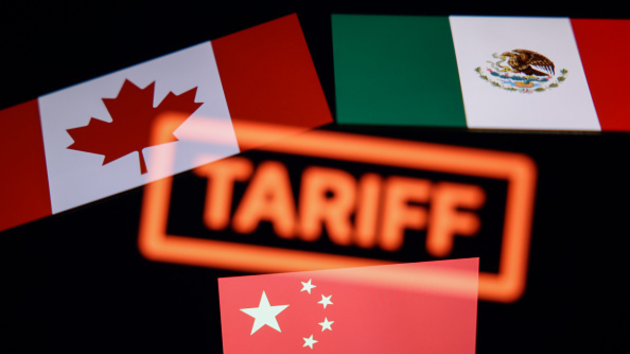
Trump on Feb. 1 announced tariffs against the United States’ three largest trading partners, saying he would put in place 25% tariffs on goods from Mexico and Canada, along with 10% tariffs on those from China, according to the White House.
Those duties had been expected to be put in place on Tuesday, although Trump and the leaders of Canada and Mexico announced on Monday that Trump’s administration had paused plans for both North American trading partners for a month.
China in the days since Trump’s announcement had said the tariffs on Chinese exports amounted to a serious violation of World Trade Organization rules, with officials adding that the tariffs were “of a bad nature.” The U.S. tariffs were “typical unilateralism and trade protectionism,” the Beijing’s commerce officials said Tuesday.
China said it had brought the U.S. tariffs to the WTO dispute settlement mechanism.
“The U.S. practice seriously undermines the rules-based multilateral trading system, undermines the foundation of economic and trade cooperation between China and the United States and disrupts the stability of the global industrial chain and supply chain,” the Ministry of Commerce said.
China’s State Council Tariff Commission released a list of 72 items that would fall under the10% tariffs. Much of that list was related to agriculture, including several types of tractors, harvesters and other large pieces of farming equipment.
The list of U.S. imports that will be subject to 15% tariffs was far shorter, listing just eight types of coal and natural gas.
As Trump introduced the tariffs against Canada, Mexico and China last week, the White House positioned them as a “bold action” that would hold the three countries “accountable to their promises of halting illegal immigration and stopping poisonous fentanyl and other drugs from flowing into our country.”
Canada responded with a threat of tariffs of its own. Mexico announced on Monday a plan to send troops to its border with the U.S.
U.S. officials also described the tariffs as a point of leverage for the Trump administration against China, pointing to the president’s first-term announcement that he would at that time place tariffs on Chinese goods.
During that trade war in 2018 and 2019, “President Trump acted with conviction to impose tariffs on imports from China, using that leverage to reach a historic bilateral economic agreement,” the White House said on Friday.
(APPLETON, WI) — A young Wisconsin man died from an asthma attack after the price of his inhaler skyrocketed nearly $500, according to a lawsuit filed by his family.
Cole Schmidtknecht, 22, suffered from asthma, a chronic disease, that he treated with an Advair Diskus inhaler that allegedly cost him no more than $66.
That cost changed last year when OptumRx, a subsidiary of United Health Group, stopped coverage for the inhaler Schidtknecht used for a decade, the lawsuit alleges.
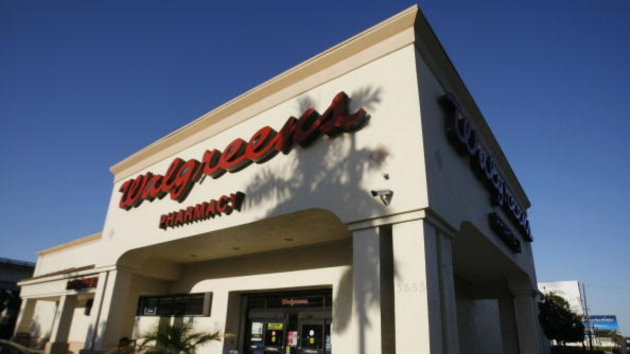
On Jan. 10, 2024, Schmidtknecht went to his local Optum Rx-Walgreens pharmacy in Appleton, Wisconsin, expecting to fill his usual prescription when he was advised by Walgreens that his medication was no longer covered by his insurance and would cost him $539.19 out of pocket, according to the lawsuit.
He was given no notice and, the lawsuit said, Walgreens did not offer him a generic alternative “and further told Cole that there were no cheaper alternatives or generic medications available.”
Unable to afford the inhaler, the lawsuit alleges he left the store without it. “Over the next five days, Cole repeatedly struggled to breathe, relying solely on his old ‘rescue’ (emergency) inhaler to limit his symptoms, because he did not have a preventative inhaler designed for daily use,” his family claims in the lawsuit.
On Jan. 15, 2024, Schmidtknecht was driven to an emergency room by his roommate for a severe asthma attack, but “became unresponsive and pulseless in the car,” before reaching the ER according to the lawsuit.
After receiving cardiopulmonary resuscitation (CPR) in the ER, Schmidtknecht spent days in an intensive care unit and never woke up. He was pronounced dead on Jan. 21 after life-supporting care was stopped, the lawsuit states.
His parents are now suing Walgreens, its parent company Boots Alliance and Optum Rx, the pharmacy benefits manager, for negligence.
“Defendant Optum Rx had a duty to not artificially inflate prescription drug prices for medications such as Advair Diskus for insured patients, including Cole Schmidtknecht, making them so unaffordable that patients could not obtain the medications their physicians prescribed,” the lawsuit said.
In a statement to ABC News, Optum Rx said that Schmidtknecht filled a generic Albuterol prescription, an inhaler used to stop asthma attacks, on Jan. 10, 2024, with a $5 copay, adding that the same drug was previously filled in October 2023 by him.
The prescription service said that it “also has available clinically appropriate options and formulary information” for when medication is not covered by a provider.
In the lawsuit, Schmidtknecht’s family claims “Walgreens Defendants failed to exercise reasonable care in that they knew, or should have known, of the unreasonable risk of harm to asthmatic patients, including Cole Schmidtknecht, that would result from their failing to provide him with Advair Diskus or a medically equivalent alternative medication at an affordable price at the point of service.”
Walgreens declined to comment on the litigation when ABC News reached out for a comment.
Just a few months after Schmidtknecht’s death, the makers of Advair, GSK, announced in March 2024 that starting January 2025 the most people will pay out of pocket for their inhaler is $35 a month.
GSK joined other manufacturers of inhalers in capping the out-of-pocket cost for inhalers, something Sen.Bernie Sanders, a Vermont independent who chairs the HELP Committee commented on at the time.
“The three largest manufacturers of inhalers in the world have all committed to cap the cost of inhalers in the United States at no more than $35 at the pharmacy counter,” he said.
Dr. Jade Cobern, MD, MPH, who is board-certified in pediatrics and general preventive medicine, recommended individuals who suddenly see an increase in medication cost or can no longer afford it speak to their provider about alternatives, check for current discounts to lower out-of-pocket costs by using an app like GoodRx or reach out to the manufacturer for assistance or possible rebates.
“If you are struggling to breathe it is imperative that you seek medical help immediately through your doctor, by going to the emergency room or by calling 911,” Cobern said.
(WASHINGTON) — In an interview on ABC News’ “This Week” on Sunday, Canadian Ambassador to the U.S. Kirsten Hillman said Canadians are “perplexed” and “disappointed” by President Donald Trump’s tariffs.
White House officials announced Saturday that Trump has imposed 25% tariffs on Mexico and Canada and 10% tariffs on goods from China. Trump had long threatened tariffs against Canada and Mexico to ensure their cooperation to stop illegal immigration and the flow of fentanyl into the U.S.
The tariffs are expected to be implemented on Tuesday but Hillman said her government is continuing to discuss the situation with the Trump administration.
“We’re hopeful that they don’t come into effect on Tuesday,” she said. “We’re ready to continue to talk to the Trump administration about that, and in particular about all the work that we’re doing with them and on our own, with respect to the border.”
Hillman said Canadian Prime Minister Justin Trudeau and Trump discussed Canada’s plan to meet some of his demands, although not recently, and discussions between the two governments are continuing.
“Not in recent days, but they have discussed it, and we’ve discussed it with senior members of the White House as well, and we’ve laid out our plan, and my understanding is that the plan and some of the actual outcomes, results of what we have done, have been presented to the president,” she said.
Trudeau responded to the tariffs on Saturday evening, announcing his country will implement 25% tariffs on $155 billion Canadian dollars (about $107 billion U.S. dollars) of U.S. goods. The prime minister said he has not talked to Trump since his inauguration.
Hillman said the proposed tariff’s are “disrupting an incredibly successful trading relationship.”
“The Canadian people are going to expect that our government stands firm and stands up for itself,” she said. “I don’t think we’re not at all interested in escalating, but I think that there will be a very strong demand on our government to make sure that we stand up for the deal that we have struck with the with the United States.”
“They just don’t understand where this is coming from, and probably there’s a little bit of hurt,” she added.
The U.S. and Canada have always had a “sense of common purpose,” Hillman said, and Trump’s actions constitute a significant heel turn.
“This is not something that Canada wants to do,” she said. “This is not a path that we are interested in going down. We are actually interested in being and continuing to be your best customer.”
(WASHINGTON) — President Claudia Sheinbaum of Mexico plans on Monday to announce her country’s “Plan B” response to U.S. President Donald Trump’s plan to impose tariffs on imported goods.
Trump told reporters he would speak on Monday with Sheinbaum and Canadian Prime Minister Justin Trudeau, prior to imposing import tariffs on their goods. The U.S. president is expected to sign executive orders on Tuesday putting in place 25% tariffs on goods from Mexico and Canada and 10% tariffs on those from China, according to the White House.
Sheinbaum in a video posted to social media on Sunday said her government was calling for “reason and law” among “individuals as well as among nations.”
‘This measure of 25% tariffs has effects for both countries but it has very serious effects for the U.S. economy,” she said, “because it will raise the costs of all the products that are exported from Mexico to the U.S., it will have a 25% higher cost.”
Trudeau responded to the planned tariffs on Saturday evening, announcing his country will implement 25% tariffs on 155 billion Canadian dollars, or about $107 billion, of U.S. goods. The prime minister said he has not talked to Trump since his inauguration.
Sheinbaum, who was elected in June, offered little detail on how her government’s “Plan B” would respond to the tariffs.
She instructed her economic secretary to “implement Plan B that we have been working on, which includes tariff and non-tariff measures in defense of Mexico’s interests,” she said in a statement written in Spanish and translated by ABC News.
She also sought to remind the White House that the current trade free agreements between the U.S. and Mexico have been in place for about three decades.
“The last free trade agreement was signed by President López Obrador and President Trump himself,” she said.
Trump on Sunday told reporters he was unconcerned about the potential impact of imposing tariffs on close trading partners, saying the American people would understand.
“We may have short term, some, a little pain, and people understand that, but, long term, the United States has been ripped off by virtually every country in the world,” he told reporters on Sunday, as he departed Air Force One at Maryland’s Joint Base Andrews.
He added, “We have deficits with almost every country, not every country, but almost. And we’re going to change it. It’s been unfair. That’s why we owe $36 trillion we have deficits with everybody.”
Canada has been taking advantage of the U.S., Trump said, calling the relationship with the country a “one-way street.”
“They don’t allow our banks. Did you know that Canada does not allow banks to go in, if you think about it, that’s pretty amazing,” he said. “If we have a U.S. bank, they don’t allow them to go in.”
Trump added, “Canada has been very tough on oil, on energy. They don’t allow our farm products in. Essentially, they don’t allow a lot of things in, and we allow everything to come in. It’s been a one-way street.”
ABC News’ Matt Rivers, Max Zahn, Kelsey Walsh, Victoria Beaule and William Gretsky contributed to this report.
Al-Qassam Brigades, the armed wing of Hamas, hands over Israeli hostage Keith Samuel Siegel in Gaza Port to the International Committee of the Red Cross on Saturday as part of the ongoing prisoner exchange deal in Gaza City, Gaza on February 01, 2025. (Photo by Dawoud Abo Alkas/Anadolu via Getty Images)
(LONDON) — American Keith Siegel has been released from captivity Saturday morning.
His release took place in Gaza City where he was taken onto a stage wearing a cap, flanked by masked and armed Hamas forces with the waters of the Mediterranean and the destroyed port behind them.
A crowd watched calmly from a short distance away while Hamas photographers on stage and drones above filmed the release.
Siegel walked on his own power, and he will now undergo medical checks before being reunited with his family shortly.
“According to information communicated by the Red Cross, one hostage was transferred to them, and they are on their way to IDF and ISA forces in the Gaza Strip,” read a joint statement from the IDF and the ISA.
Earlier on Saturday, two other hostages were turned over to the Red Cross in Khan Younis, Ofer Kalderon and Yarden Bibas.
Both walked onto a stage flanked by armed and masked Hamas fighter and then taken into waiting while Red Cross SUVs where they were driven out and handed over to Israeli authorities.
The release on Saturday has looked different from previous releases and was done more orderly with the crowd kept back at a distance.
Keith Siegel, who is originally from Chapel Hill, North Carolina, was taken hostage along with his wife, Aviva Siegel in 2023. She was released during the brief 2023 ceasefire and has waged a long campaign to free her husband and the other hostages.
“The commanders and soldiers of the Israel Defense Forces salute and embrace the returning hostage as he makes his way home to the State of Israel,” a joint statement from the IDF and ISA read. “The IDF Spokesperson’s Unit asks everyone to respect the privacy of the returning hostage and his family.”
“The Israeli government embraces the return of Keith Siegel,” read a statement from the Israeli prime minister’s office. “His families have been informed by the designated authorities that he is a member of our forces. The government, together with all security agencies, will accompany him and his families. The Israeli government is committed to the return of all abducted and missing persons.”
Siegel’s family released a statement shortly after he crossed over into Israel, saying they are “filled with indescribable excitement” and thanked President Trump “for bringing our father back to us.”
“At this very moment, our father is setting foot on the soil of the Land of Israel, and we are filled with indescribable excitement. Finally, after 484 long, terrifying days and nights, full of immense worry for our father, we can breathe again,” the statement read.
“Thank you President Trump, for bringing our father back to us. There are now 79 hostages who are also waiting to be reunited with their loved ones. Our hope rests with you. We also wish to thank the governments of Israel and the United States for bringing this blessed deal to fruition—a deal that prioritizes human life and embodies Jewish and Israeli values.”
“We are grateful to the incredible IDF soldiers and security forces who risk their lives and bodies, and we send our condolences to the bereaved families who have lost their most precious loved ones for the sake of us all,” the statement continued. “You will forever be in our hearts. Only together can we bring everyone home!”