(SAN FRANCISCO, Calif.) — Former Vice President Kamala Harris, who has stayed largely out of the political limelight since leaving office, is set to deliver remarks on Wednesday in San Francisco as the Trump administration celebrates its accomplishments of its first 100 days.
Harris will be speaking at the 20th anniversary celebration for Emerge, an organization that supports Democratic women running for office.
The former Democratic nominee for president has had few public appearances since departing the White House, and has limited her political activity.
But her remarks come as she is set to possibly re-enter politics in the coming months. Harris has been mulling a run in California’s gubernatorial race and will make a decision by the end of summer, two sources familiar with her plans told ABC News in March.
Some Democrats have also floated her as a potential 2028 presidential candidate, although some of her longtime supporters have told ABC News they are torn over that prospect.
Whether she runs for either office or not, Harris’ public remarks thus far have sometimes included veiled and explicit swipes at the Trump administration and the president himself.
In remarks at a women of color leaders summit in early April, she weighed in on the second Trump administration, saying “there is a sense of fear that has been taking hold in our country” but that “courage is also contagious.”
And in remarks at the NAACP Image Awards in February, Harris framed the “chapter” America is in as one that “will be written not simply by whoever occupies the oval office nor by the wealthiest among us. The American story will be written by you. Written by us. By we the people.”
Harris and her spouse Doug Emhoff have been the target of recent actions by President Donald Trump.
Trump issued a memo in March that revoked the security clearances and access to classified information of his previous presidential opponents — Hillary Clinton and Kamala Harris — as well as more than a dozen former administration officials. On Tuesday, Emhoff said he had been dismissed from the board of trustees of the U.S. Holocaust Memorial Museum as the White House confirmed it had removed board members.
-ABC News’ Averi Harper, Zohreen Shah, Gabriella Abdul-Hakim and Kelsey Walsh contributed to this report.
(WASHINGTON) — The U.S. Supreme Court’s conservative majority on Wednesday appeared ready to clear the way for creation of the nation’s first religious charter school funded directly with taxpayer dollars.
The justices heard arguments in a landmark dispute from Oklahoma, where the state Supreme Court last year blocked the Catholic Church from receiving a charter school contract on grounds that it violated state and federal constitutional bans on government-sponsored sectarian education.
A decision overruling the state high court would have ripple effects nationwide, especially in the 45 states that are home to 8,000 charter schools serving more than 3.8 million kids.
The state’s Republican attorney general argues that charter schools are public schools – open to all and subject to close supervision – and, as such, operate as extensions of state government subject to principles of separation of church and state.
Lawyers for the prospective school — St. Isidore of Seville Catholic Virtual School — insist that it is privately created and controlled and that excluding it from generally available charter school funding is religious discrimination.
For more than two hours, the justices debated application of the First Amendment’s competing religion clauses to the case, weighing both its prohibition of state establishment of religion and its protection of free exercise of religious faith.
The court’s three liberal members were united in the view that charter schools are quintessentially public institutions that cannot advance a specific ideology using taxpayer funds.
“The essence of the Establishment Clause was, we’re not going to pay religious leaders to teach their religion,” said Justice Sonia Sotomayor.
Justice Elena Kagan noted that the Oklahoma law creating a charter school program explicitly says they must be nonreligious.
“These are state-run institutions,” Kagan said. “With respect to a whole variety of things, the state is running these schools and insisting upon certain requirements.”
Conservatives suggested they had a fundamentally different view of charter schools — as contractors for a public service rather than an arm of the government.
“The argument that St. Isidore and the board has made is that it’s a private entity that is participating in a state program,” noted Justice Clarence Thomas. “It was not created by the state program.”
Justice Brett Kavanaugh expressed concern that a ruling against St. Isidore on First Amendment grounds could call into question other government contracts with religiously affiliated organizations.
“I think a concern here is that religiously operated senior homes or food banks or foster care agencies or adoption agencies or homeless shelters, many of which get substantial funding from the government, would potentially … become state actors and, thus, not be able to exercise their religion,” Kavanaugh said.
A series of recent Supreme Court decisions has endorsed the idea that taxpayer-funded public benefit programs, from school vouchers to state-run scholarships, must be equally available, even if a person or organization has a religious affiliation.
Many of the justices said those precedents apply to the Oklahoma case.
Kavanaugh emphasized that religious charter schools would provide families with “options” but not confine students to a religious education.
“A student in Oklahoma is free to choose a public school, correct? No student is required to attend a charter school, correct?” he said.
“That’s right,” replied Gregory Garre, the attorney representing the state.
Justice Neil Gorsuch suggested that individual states opposed to religiously affiliated charter schools could tailor their laws to prevent that — and potentially curtail a charter’s independence.
“I can imagine some states might respond to a decision in your favor by imposing more requirements on charter schools,” Gorsuch said to attorney James Campbell representing the plaintiffs.
Chief Justice John Roberts posed critical questions of both sides. At one point, Roberts opined that a St. Isidore charter school would pose a striking “comprehensive involvement” between church and state. Later, he likened the relationship to Catholic Charities’ contract with the City of Philadelphia to provide adoption services; a 2021 high court decision said the city could not exclude the religious agency from the foster care program.
“How is that different from what we have here?” Roberts asked Oklahoma attorney Gregory Garre. “You have an education program, and you want to not allow them to participate with a religious entity.”
Justice Amy Coney Barrett recused from the case last year but did not explain her decision. Veteran court watchers have noted her close ties to the University of Notre Dame and personal relationships with law professors there who are involved in the case.
Her absence creates the possibility of a gridlocked 4-4 court, in which case the Oklahoma state Supreme Court ruling would stand. Roberts is widely seen as being the decisive vote.
“Today’s oral arguments made clear that states must not treat religious individuals and institutions as second-class citizens,” said Carrie Severino, a former clerk to Justice Clarence Thomas and president of JCN, a conservative legal advocacy group. “I expect the court will follow precedent and allow St. Isidore to offer educational choice for Oklahoma’s students.”
Opponents of religious charter schools said they feared a major ruling is on the horizon and could be transformative.
“If today’s arguments are any indication, the Supreme Court may be on the verge of abandoning one of the bedrock principles of our democracy,” said Rev. Dr. Shannon Fleck, executive director of Faithful America, a left-leaning Christian advocacy group. “Let’s be clear, this was always a test case, and today, the constitutional protections that have guarded true religious freedom for generations are at risk.”
Office of the President of Ukraine via Getty Images
(WASHINGTON) — President Donald Trump reflected on the dramatic meeting he had with Ukrainian President Volodymyr Zelenskyy inside St. Peter’s Basilica just before the pope’s funeral on Saturday, when asked by ABC News anchor and Senior National Correspondent Terry Moran in an exclusive interview Tuesday in the Oval Office.
Noting the striking photograph of the two men “talking peace” that “went around the world,” Moran asked Trump, “Take us into that moment.”
“The moment was a moment of solace in a sense, because — tremendous numbers of people are dying. A lot of his people are dying,” Trump answered. “They’re being killed, and I feel very badly about it,” he said.
It was the first time Trump and Zelenskyy had met face-to-face since their heated argument in the Oval Office in February.
At the time, Zelenskyy contended the Russian president needed stronger pushback from Ukraine’s allies.
“I really count on your strong position to stop Putin,” Zelenskyy said to Trump at the February meeting.
Moran noted that Trump has since appeared to have changed his thinking about Putin’s intentions, bringing up what Trump said in a social media post after his conversation with Zelenskyy in St. Peter’s.
“There was no reason for Putin to be shooting missiles into civilian areas, in cities and towns, over the last few days,” he said in the post. “It makes me think that maybe he doesn’t want to stop the war. He’s just tapping me along.”
Trump repeated those comments in the interview.
“It’s possible. Yeah, that’s possible. Sure,” he said. “He could be tapping me along a little bit. I would say that he would like to stop the war.”
When Moran asked if Trump truly believed Putin wanted to end the war even with the continued attacks, Trump claimed that negotiations would have been much worse under a different president.
“You think Vladimir Putin wants peace?” Moran asked.
“I think he does, yes. I think he does,” he answered.
“Still?” Moran said.
“I think because of me … ” Trump continued.
“Even with the raining missiles on …?” Moran asked.
“I think he really– his– his– his dream was to take over the whole country. I think because of me, he’s not gonna do that,” Trump answered.
Asked if he trusts Putin, Trump said, “I don’t trust a lot of people. But I do think this. I think that he … let’s say he respects me,” he said.
(WASHINGTON) — In his interview with ABC News on his 100th day in office, President Donald Trump was asked about one of his biggest supporters sounding the alarm about his aggressive migrant deportation plan.
Joe Rogan told his audience of millions on his April 17 episode that “rounding up gang members and shipping them to El Salvador with no due process” was “dangerous.”
“We gotta be careful that we don’t become monsters while we’re fighting monsters,” Rogan said.
Responding to that quote in an interview with ABC News anchor and Senior National Correspondent Terry Moran on Tuesday — who asked whether Rogan was right — Trump said he was.
“Oh, I agree with that a hundred percent, yeah,” the president said. “We want to be careful. We are careful.”
When asked about the various court challenges to the deportations and court orders admonishing his administration for not following the law, Trump pushed back, calling those being deported “criminals.” He claimed Venezuelan “criminals are now living happily in the United States of America, and we’re getting ’em out.”
“And I was elected to get ’em out, and we’re getting them out, getting them out fast, and we’re getting them out legally,” he said.
Moran stressed that “in our country even bad guys get due process,” but Trump contended the situation is different for migrants in the country illegally.
“If people come into our country illegally there’s a different standard. These are illegal. They came in illegally,” the president said.
“But they get due process,” Moran said.
“Well, they get a process where we have to get ’em out, yeah,” Trump said.
The president was asked about the unanimous U.S. Supreme Court ruling that ordered the administration to “facilitate” the return of Kilmar Abrego Garcia, a migrant from El Salvador who was deported from Maryland to a notorious prison there because of an “administrative error,” according to the Justice Department.
Trump alleged that Abrego Garcia was a violent gang member, even though judges have said such claims have not been proven in court by prosecutors in the weeks since he was arrested.
“You could get him back. There’s a phone on this desk,” Moran said.
“I could,” Trump said.
“You could pick it up, and with all … ” Moran continued.
“I could,” Trump said again, interrupting Moran.
“… the power of the presidency, you could call up the president of El Salvador and say, ‘Send him back,’ right now,” Moran said.
“And if he were the gentleman that you say he is, I would do that,” Trump said. “But he’s not.”
When Moran said “the buck stops in this office,” Trump responded, “I follow the law. You want me to follow the law. If I were the president that just wanted to do anything, I’d probably keep him right where he is.”
When questioned again about the Supreme Court ruling, Moran saying, “the Supreme Court says what the law is,” Trump said he was elected in November to crack down on illegal immigration.
“Listen. I was elected to take care of a problem that was — it was — a, a unforced error that was made by a very incompetent man,” Trump said, referring to former President Joe Biden.
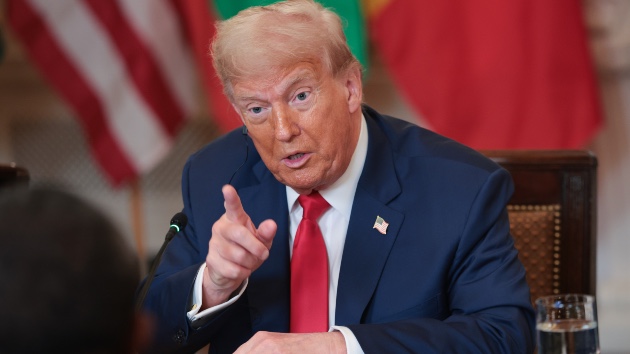
(WASHINGTON) — President Donald Trump exclusively sat down with ABC News on Tuesday for the first broadcast interview marking the 100-day milestone of his second term.
ABC News anchor and Senior National Correspondent Terry Moran conducted the interview from the Oval Office, which aired on ABC at 8 p.m. ET. The interview will also be streamed later Tuesday on ABC News Live, Disney+ and Hulu.
The president’s first 100 days back in the White House have been marked by controversial tariffs, an overhaul of U.S. immigration enforcement and massive cuts to the federal workforce, all policies that Trump notes he campaigned on.
Read the full transcript of ABC News’ milestone interview with Trump below.
TERRY MORAN: Okay. Mr. President, thank you for doing this.
PRESIDENT DONALD TRUMP: Thank you very much.
TERRY MORAN: Here in the Oval Office, it’s — it’s special. A hundred days into your second term. So what’s the one thing, just one thing, that you think is the most significant thing you’ve done so far in these 100 days?
PRESIDENT DONALD TRUMP: Well, I think maybe the border is the most significant because our country was really going bad. They were allowing people to come in from prisons, as you know. And you’ve heard me say it, but you’ve heard a lot of people say it. Prisons, mental institutions, gang members — murderers.
We had many murderers, 11,888, they think. Some murdered more than one person. So you had murderers coming in. You had everybody coming in. And not just South America. From all over the world, they were emptying their prisons into our country.
And now it’s totally closed down. And you’ve seen just yesterday, they announced 99.9%. Nobody thought that could happen, and it happened quickly, very quickly. And I think that’s very significant. But we’re doing other things that are very significant.
Results will take a little bit longer because it’s one of those — you know, it’s complicated. It’s — many years of trading abuse. We’ve been abused by other countries for years and years. They laughed at us. They thought we were stupid people, and we’re fixing it. And — I think that’s gonna be very, very important. But I — I would —
TERRY MORAN: We have a lot of ground to cover.
PRESIDENT DONALD TRUMP: Yeah. I would really say that — that — that the border is so important, you know? You just can’t —
TERRY MORAN: And we’ll get there. Immigration is huge —
PRESIDENT DONALD TRUMP: — let that happen. Yeah.
TERRY MORAN: And we’re gonna get there. But I wanna start —
PRESIDENT DONALD TRUMP: Sure.
TERRY MORAN: — with the economy, the number one issue for so many people, for just about everybody. It — it’s one of the main reasons that you’re back in this office. And now we have this trade war with China that — that Moody’s and other analysts say is gonna cost American families thousands of more dollars per year. And there is a lot of concern out there. People are worried, even some people who voted for you, sayin’, “I didn’t sign up for this.” So how do you answer those concerns?
PRESIDENT DONALD TRUMP: Well, they did sign up for it, actually. And this is what I campaigned on. I said that– we’ve been abused by other countries at levels that nobody’s ever seen before. We were losing $3 to 5 billion a day on trade. We were losing– a trillion and a half to $2 trillion a year. Not sustainable.
They were takin’ advantage of us like they’ve never — I could’ve left it that way, and at some point there would’ve been an implosion like nobody’s ever seen. But I said, “No, we have to fix it.” I’ve — I’ve wanted to do this for many years.
You know, I had the best economy during my first term. We had a tremendous economy, tremendous success. And we — we did tremendous numbers of tariffs on — we took in a lot of money from tariffs — China in particular, hundreds of billions of dollars in tariffs. We had no inflation, as you know. We had an incredible economy. We were given credit for a great economy. But I said, “We have to fix this, otherwise it’s just not self-sustaining.”
TERRY MORAN: Well, one of the things you ran on was you’d said you’d bring prices down on day one. And that —
PRESIDENT DONALD TRUMP: And I have —
TERRY MORAN: — it would happen fast. And that it would happen fast and —
PRESIDENT DONALD TRUMP: I have.
TERRY MORAN: Many — most economists will tell you that tariffs will raise prices. So don’t your tariffs cut against that promise you made to bring prices down?
PRESIDENT DONALD TRUMP: No, because I had massive tariffs on China, if you remember in my first term, and we had essentially no inflation. Like, around 1% inflation, which is, like, a perfect number. The — and then when Biden took over it went through the roof.
It went to the — probably the worst inflation we’ve ever had. I mean, we had an inflation nightmare. Now, if you look at what’s happening now, we’re only there for 100 days, as you say, and in 100 days we took over the — we had bad inflation for four years, for two years of — especially two years of his — his administration. I would say record-setting like we’ve never seen. They say 48 years, the worst in 48 years. I’d say it was much worse than that —
TERRY MORAN: You lived through that, I lived through that, yeah.
PRESIDENT DONALD TRUMP: Right. So — so now if you look at what’s happened — energy is down. Gasoline hit $1.98 in a few states — during the last couple of days. It was $3.50 and $4.00 and $4.50. But gasoline is way down. And when I took over, you remember the big thing with eggs?
They hit me the first week, “Eggs, eggs, eggs,” like it was my fault. I said, “I didn’t cause this problem. This problem was caused by Biden. What’s the problem with eggs?” And they said, “They’ve doubled it.” Well, eggs are down 87% since I got involved.
TERRY MORAN: A lotta that is bird flu, right —
PRESIDENT DONALD TRUMP: And by the way — and there were plenty of eggs for Easter, which we just went through. There were plenty of eggs for Easter. They were saying, “You won’t have enough eggs for Easter.” We ended — our sec — my secretary did a fantastic job on eggs. Groceries are down. Everything’s down —
TERRY MORAN: Okay.
PRESIDENT DONALD TRUMP: Interest rates are the same. Interest rates should be down, but we have a Federal Reserve that wants to be stubborn. They wanna be cute —
TERRY MORAN: Alright, we’ll get to that. A couple — you said something a couple weeks ago that — that struck me. You said, concerning the tariffs, which economists say are gonna raise prices, you said, quote, “Hang tough. It won’t be easy.” You said that to the American people. Is that what Americans should expect —
PRESIDENT DONALD TRUMP: Well, I’ve said that —
TERRY MORAN: — some hard times?
PRESIDENT DONALD TRUMP: I’ve said that during —
TERRY MORAN: Because of these tariffs–
PRESIDENT DONALD TRUMP: — my campaign. Look, we won a campaign by a lot. We won all seven swing states. We won the popular vote by a lot. You know, we had a tremendous campaign. I said all of these things during my campaign. I said, “You’re gonna have a transition period.” We’ve been ripped off by every country all over the world. They’re laughing at us. They thought we were stupid people, and we were. And I said, “That’s not gonna happen. We’re not gonna let that happen” —
TERRY MORAN: Hard times — hard times are ahead?
PRESIDENT DONALD TRUMP: I don’t think so. I think great —
TERRY MORAN: “Hang tough” —
PRESIDENT DONALD TRUMP: — times are ahead. Look, since I came in gasoline is down, groceries are down, egg prices are down — many things are down, just about everything. You know, you don’t have the drop in — in fuel and energy and oil like we did. I took it from maybe $3.20, maybe more than that, down into a low — a much lower number. When you have that kind of a drop you’re not gonna have inflation.
TERRY MORAN: Not now. But it’s the tariffs, right? We still have 145% tariffs —
PRESIDENT DONALD TRUMP: Well —
TERRY MORAN: — on China
PRESIDENT DONALD TRUMP: Why is it —
TERRY MORAN: Your Treasury secretary said we basically have an embargo on China.
PRESIDENT DONALD TRUMP: Look, you’re trying to —
TERRY MORAN: And that —
PRESIDENT DONALD TRUMP: — say something’s gonna happen, Terry —
TERRY MORAN: No, no, no, no. Okay, well, do you —
PRESIDENT DONALD TRUMP: Nothing’s gonna happen
TERRY MORAN: You know business. I wanna ask you —
PRESIDENT DONALD TRUMP: Terry — Terry —
TERRY MORAN: I wanna ask you.
PRESIDENT DONALD TRUMP: I do know business. And —
TERRY MORAN: Yeah, so 145% tariffs on China. And — and that is —
PRESIDENT DONALD TRUMP: That’s good.
TERRY MORAN: — basically —
PRESIDENT DONALD TRUMP: That’s good.
TERRY MORAN: — an embargo
PRESIDENT DONALD TRUMP: They deserve it.
TERRY MORAN: It’ll raise prices on everything from–
PRESIDENT DONALD TRUMP: They deserve it.
TERRY MORAN: — electronics to clothing to building houses.
PRESIDENT DONALD TRUMP: You don’t know that. You don’t know whether or not China’s gonna eat it —
TERRY MORAN: That’s mathematics.
PRESIDENT DONALD TRUMP: China probably will eat those tariffs. But at 145, they basically can’t do much business with the United States. And they were making from us a trillion dollars a year. They were ripping us off like nobody’s ever ripped us off. And by the way, we have other countries that were just as bad. If you look at the European Union, it was terrible what they’ve done to us. Every country, almost every country in the world was ripping us off.
TERRY MORAN: But I —
PRESIDENT DONALD TRUMP: They’re not doing that anymore.
TERRY MORAN: I want you to think about the boom that this country has had in small businesses, mom-and-pops — Etsy stores, small businesses that became —
PRESIDENT DONALD TRUMP: Really? They haven’t had a boom —
TERRY MORAN: — big businesses
PRESIDENT DONALD TRUMP: — because of inflation.
TERRY MORAN: Well, your boom, what they’ve done —
PRESIDENT DONALD TRUMP: The boom was inflationary boom. The people were wiped out with inflation. I mean, you read the news. You do the business stuff, I assume —
TERRY MORAN: Now they face — now they — they — a lot of ’em built those businesses on the trading model before you —
PRESIDENT DONALD TRUMP: Yeah, and they’re gonna make more money now
TERRY MORAN: They source their products overseas. And now they’re looking at an extinction event —
PRESIDENT DONALD TRUMP: I’ve been here.
TERRY MORAN: They’re — they’re — it’s disaster for them.
PRESIDENT DONALD TRUMP: I’ve been here for three months. I’ve taken a trade deficit down to a number that’s very, very — starting to get really good. I only — I just got here. We had a country that — it was not sustainable. What Biden did to this country, between — the open borders where criminals poured into our country, between every country in the world ripping us off on trade, it was not sustainable.
TERRY MORAN: So your message to those small businesses who are saying, “We can’t live a month, two months with these tariffs,” Apple got a big deal. Is there something for them?
PRESIDENT DONALD TRUMP: No, no. Not only Apple. We’ve got $7-8 trillion being invested in our country in two months. Biden didn’t have that over a year. I mean, if you look at Biden, nobody was really investing in this country. Everybody was ripping off our country. Apple’s putting up $500 billion, but that’s only one of many companies. Companies are flooding into our country right now.
TERRY MORAN: So your answer to the concern about the tariffs is, “Everything’s gonna be hunky-dory?”
PRESIDENT DONALD TRUMP: Everybody’s gonna be just fine. It wouldn’t have been if I didn’t do this. I had a choice. I could leave it, have a nice, easy time. But I think ultimately you would’ve had an implosion. Our country had inflation that was worse than they’ve ever had it before.
You don’t mention that. Why don’t you mention that? We had the worst inflation probably in the history of our country. People say 48 years, probably in the history of our country we had the worst inflation. And people were dying over the inflation. You know that. Now the grocery prices are coming down. The energy prices are coming down. Gasoline’s coming down. It’s all heading in the right direction.
TERRY MORAN: Okay. Let’s move on to immigration. And as you said, it is an undeniable fact that illegal crossings at the southern border have plummeted, a staggering decline. But there are questions about your methods, and so I want to ask you —
PRESIDENT DONALD TRUMP: About my message?
TERRY MORAN: Methods. About your methods, how you’re accomplishing this —
PRESIDENT DONALD TRUMP: Well, they seem to work.
TERRY MORAN: Do you acknowledge that under our law every single person who gets deported gets a hearing first to make their case?
PRESIDENT DONALD TRUMP: Well, are we talking about people that are citizens of our country or not?
TERRY MORAN: No, you’re not deporting citizens, at this point.
PRESIDENT DONALD TRUMP: Well, lemme ask you. Do they get hearings when — when Biden allowed 21 million — ’cause I think the number’s 21, 20 million — people to flow into our country? He had 21 million people that came into our country through a stupid open border.
And they were prisoners and they were — people that you don’t want, in many cases, in our country, right? They came from all over the world. They came from the Congo. They came from south — they came from all over the world. We’re talkin’ about some of the roughest countries in the world — they had — they had here, including terrorists, by the way. Now —
TERRY MORAN: But the law —
PRESIDENT DONALD TRUMP: Did we give them a hearing when they came in?
TERRY MORAN: Well, the law requires that every single person who is going to be deported gets a hearing first.
PRESIDENT DONALD TRUMP: Well —
TERRY MORAN: Do you acknowledge that?
PRESIDENT DONALD TRUMP: I’ll — I’ll have to ask the lawyers about that. All I can say is this: If you’re gonna have 21 million people, and if we have to get a lot of ’em out because they’re criminals, we’re gonna have to act fast. We can’t — do you think we can give 21 million trials? Let’s say each trial takes two weeks. Is that what you want us to do —
TERRY MORAN: The law is the law, sir —
PRESIDENT DONALD TRUMP: — give 21 million?
TERRY MORAN: The law is the law and you’re sworn —
PRESIDENT DONALD TRUMP: No, no. The law doesn’t say anything —
TERRY MORAN: — to uphold it —
PRESIDENT DONALD TRUMP: — about trials
TERRY MORAN: No, not trials. Hearings. I said hearings —
PRESIDENT DONALD TRUMP: If these people came in, they’re not citizens, they came in illegally, they came into our country illegally, we have to —
TERRY MORAN: And they —
PRESIDENT DONALD TRUMP: — get them out.
TERRY MORAN: There’s a legal process for that.
PRESIDENT DONALD TRUMP: I can’t — sure, and we follow the legal process. I can’t — I can’t have a trial– a major trial– for every person that came in illegally, we have thousands of murderers that came in. They’re gonna murder people. They already have murdered people in our country.
TERRY MORAN: Right, so —
PRESIDENT DONALD TRUMP: We have to get ’em out–
TERRY MORAN: They’re bad guys —
PRESIDENT DONALD TRUMP: And we have to get ’em out fast.
TERRY MORAN: Really bad guys. But in our country even bad guys get due process, right?
PRESIDENT DONALD TRUMP: If people come into our country illegally there’s a different standard. These are illegal. They came in illegally.
TERRY MORAN: But they get due process.
PRESIDENT DONALD TRUMP: Well, they get a process where we have to get ’em out, yeah.
TERRY MORAN: Okay. Let’s talk about the Venezuelans.
PRESIDENT DONALD TRUMP: They get whatever my lawyers say.
TERRY MORAN: Right. Alright, let’s talk about the Venezuelans. You deported more than 200 Venezuelans to that prison in El Salvador. You — you say they’re — they’re violent. They’re gang members. They’re terrorists. Many of them don’t have — a criminal record —
PRESIDENT DONALD TRUMP: They are, by the way.
TERRY MORAN: — at all.
PRESIDENT DONALD TRUMP: Well — I’m not so sure about that, if you take a look —
TERRY MORAN: I wanna — I wanna read you something —
PRESIDENT DONALD TRUMP: When you — excuse me. When you look at those — those people, they were violent people. They were violent people —
TERRY MORAN: But many of them don’t have a criminal record at this point —
PRESIDENT DONALD TRUMP: Go ahead.
TERRY MORAN: I wanna read you something —
PRESIDENT DONALD TRUMP: I mean, that’s what you say.
TERRY MORAN: Well, it’s based on — their lawyer– what their lawyers have said —
PRESIDENT DONALD TRUMP: Go ahead. Go ahead.
TERRY MORAN: Joe Rogan said this. Joe Rogan, one of the leading podcasters, Trump supporter, about the deportation of Venezuelans. He said, quote, “Rounding up gang members and shipping them to El Salvador with no due process,” he said it was dangerous and added, quote, “We gotta be careful that we don’t become monsters while we’re fighting monsters.” I — is Joe Rogan —
PRESIDENT DONALD TRUMP: I agree with that.
TERRY MORAN: — right?
PRESIDENT DONALD TRUMP: Oh, I agree with that a hundred percent, yeah. We want to be careful. We are careful. We’re doing something that has to be done. We have a country that’s very sick. Joe Biden — and it’s not him, because I don’t even think he knew what the hell was happening.
But the people around him are vicious people. And what they’ve done to the country is unbelievable. They’ve allowed 21 million people to pour into our country. Many of these people are criminals. They’ve allowed the — you mention Venezuela — the jails of Venezuela to be emptied into the United States.
Do you know Venezuela crime is way down? Way, way down. You know why? Because their criminals are now living happily in the United States of America, and we’re getting ’em out. And I was elected to get ’em out, and we’re getting ’em out —
TERRY MORAN: Under the law, it sounds like —
PRESIDENT DONALD TRUMP: — getting them out fast, and we’re getting them out legally. Now in some cases, we have judges. In some cases, they’re radical left judges. What happened the other day, where a judge was protecting a criminal, was horrible.
TERRY MORAN: Mmm.
PRESIDENT DONALD TRUMP: And I think she’s got big problems, frankly —
TERRY MORAN: Probably. And talk about —
PRESIDENT DONALD TRUMP: And there are a couple of them like that.
TERRY MORAN: I want to talk about one man —
PRESIDENT DONALD TRUMP: Wait a minute.
TERRY MORAN: Yep.
PRESIDENT DONALD TRUMP: We have to be treated fairly by judges. And we’re not being treated fairly by all judges.
TERRY MORAN: Oh, that’s a subject its — so you’re saying that you don’t like some of the rulings, some of the —
PRESIDENT DONALD TRUMP: Well, I think —
TERRY MORAN: — court orders?
PRESIDENT DONALD TRUMP: I think the rulings will be overturned, yeah.
TERRY MORAN: Alright. Well, let me ask about one man and one court order. Kilmar Abrego Garcia. He’s the Salvadoran man who crossed into this country illegally but who is under a protective order that he not be sent back to El Salvador. Your government sent him back to El Salvador and acknowledged in court that was a mistake. And now the Supreme Court has upheld an order that you must return him to the — facilitate his return to the United States. What are you doing to comply?
PRESIDENT DONALD TRUMP: Well, the lawyer that said it was a mistake was here a long time, was not appointed by us — should not have said that, should not have said that. And just so you understand —
TERRY MORAN: Said it in court. Said it in court —
PRESIDENT DONALD TRUMP: — the person that you’re talkin’ about, you know, you’re makin’ this person sound — this is a MS-13 gang member, a tough cookie, been in lots of skirmishes, beat the hell out of his wife, and the wife was petrified to even talk about him, okay? This is not an innocent, wonderful gentleman from Maryland —
TERRY MORAN: I’m not saying he’s a good guy. It’s about the rule of law. The order from the Supreme Court stands, sir —
PRESIDENT DONALD TRUMP: He came into our country illegally.
TERRY MORAN: You could get him back. There’s a phone on this desk.
PRESIDENT DONALD TRUMP: I could.
TERRY MORAN: You could pick it up, and with all —
PRESIDENT DONALD TRUMP: I could
TERRY MORAN: — the power of the presidency, you could call up the president of El Salvador and say, “Send him back,” right now.
PRESIDENT DONALD TRUMP: And if he were the gentleman that you say he is, I would do that.
TERRY MORAN: But the court has ordered you —
PRESIDENT DONALD TRUMP: But he’s not.
TERRY MORAN: — to facilitate that — his release–
PRESIDENT DONALD TRUMP: I’m not the one making this decision. We have lawyers that don’t want —
TERRY MORAN: You’re the president.
PRESIDENT DONALD TRUMP: — to do this, Terry —
TERRY MORAN: Yeah, but the — but the buck stops in this office —
PRESIDENT DONALD TRUMP: I — no, no, no, no. I follow the law. You want me to follow the law. If I were the president that just wanted to do anything, I’d probably keep him right where he is —
TERRY MORAN: The Supreme Court says what the law is.
PRESIDENT DONALD TRUMP: Listen. I was elected to take care of a problem that was — it was — a, a unforced error that was made by a very incompetent man, a man that turned out to be incompetent that you always said was wonderful, a great genius, right? And now you find out — all of the media, now they’re saying what a mistake they made. A man who was grossly incompetent allowed us to have open borders where millions of people flowed in —
TERRY MORAN: Alright.
PRESIDENT DONALD TRUMP: I campaigned on that issue. I wouldn’t say it was my number one issue, but it was pretty close.
TERRY MORAN: Right up there.
PRESIDENT DONALD TRUMP: I campaigned on that issue. I’ve done an amazing job. I have closed borders. He said you couldn’t do it, you wouldn’t be able to do it, it would never happen. Well, it happened. And it happened —
TERRY MORAN: Alright.
PRESIDENT DONALD TRUMP: — very quickly. Wait a minute. When we have criminals, murderers, criminals in this country, we have to get ’em out. And we’re doing it.
TERRY MORAN: By law —
PRESIDENT DONALD TRUMP: And you’ll pick out one man, but even the man that you picked out —
TERRY MORAN: He’s got —
PRESIDENT DONALD TRUMP: — he said he’d — wasn’t a member of a gang. And then they looked, and —
TERRY MORAN: Alright.
PRESIDENT DONALD TRUMP: On his knuckles — he had MS-13 —
TERRY MORAN: Alright. There’s dis — there’s a dispute over that —
PRESIDENT DONALD TRUMP: Well, wait a minute. Wait a minute. He had MS-13 —
TERRY MORAN: Well —
PRESIDENT DONALD TRUMP: — on his knuckles tattooed.
TERRY MORAN: — he — he — he — it didn’t say– oh, he had some tattoos that are inper — interpreted that way. But let’s move on
PRESIDENT DONALD TRUMP: Wait a minute.
TERRY MORAN: I want —
PRESIDENT DONALD TRUMP: Hey, Terry. Terry. Terry.
TERRY MORAN: He — he did not have the letter —
PRESIDENT DONALD TRUMP: Don’t do that — M-S-1-3 — It says M-S-one-three.
TERRY MORAN: I — that was Photoshop. So let me just–
PRESIDENT DONALD TRUMP: That was Photoshop? Terry, you can’t do that — he had —
— he– hey, they’re givin’ you the big break of a lifetime. You know, you’re doin’ the interview. I picked you because — frankly I never heard of you, but that’s okay —
TERRY MORAN: This — I knew this would come —
PRESIDENT DONALD TRUMP: But I picked you — Terry — but you’re not being very nice. He had MS-13 tattooed —
TERRY MORAN: Alright. Alright. We’ll agree to disagree. I want to move on —
PRESIDENT DONALD TRUMP: Terry.
TERRY MORAN: — to something else.
PRESIDENT DONALD TRUMP: Terry. Do you want me to show the picture?
TERRY MORAN: I saw the picture. We’ll — we’ll — we’ll agree to disagree —
PRESIDENT DONALD TRUMP: Oh, and you think it was Photoshop. Well —
TERRY MORAN: Here we go. Here we go.
PRESIDENT DONALD TRUMP: — don’t Photoshop it. Go look —
TERRY MORAN: Alright.
PRESIDENT DONALD TRUMP: — at his hand. He had MS-13 —
TERRY MORAN: Fair enough, he did have tattoos that can be interpreted that way. I’m not an expert on them.
I want to turn to Ukraine, sir —
PRESIDENT DONALD TRUMP: No, no. Terry —
TERRY MORAN: I– I want to get to Ukraine–
PRESIDENT DONALD TRUMP: Terry, no, no. No, no. He had MS as clear as you can be. Not “interpreted.” This is why people —
TERRY MORAN: Alright.
PRESIDENT DONALD TRUMP: — no longer believe —
TERRY MORAN: Well.
PRESIDENT DONALD TRUMP: — the news, because it’s fake news —
TERRY MORAN: When he was photographed in El Sal — in– in El Salvador, they aren’t there. But let’s just go on —
PRESIDENT DONALD TRUMP: He is —
TERRY MORAN: They aren’t there when he’s in El Salvador.
PRESIDENT DONALD TRUMP: –there — oh, oh, they weren’t there —
TERRY MORAN: Take a look at the photograph —
PRESIDENT DONALD TRUMP: But they’re there now, right?
TERRY MORAN: No. What —
PRESIDENT DONALD TRUMP: But they’re there now?
TERRY MORAN: They’re in your picture.
PRESIDENT DONALD TRUMP: Terry.
TERRY MORAN: Ukraine, sir.
PRESIDENT DONALD TRUMP: He’s got MS-13 on his knuckles.
TERRY MORAN: Alright. I —
PRESIDENT DONALD TRUMP: Okay?
TERRY MORAN: — we’ll — we’ll take a look at it —
PRESIDENT DONALD TRUMP: It’s — it’s — you do such a disservice —
TERRY MORAN: We’ll take a look. We’ll take a look at that, sir —
PRESIDENT DONALD TRUMP: Why don’t you just say, “Yes, he does,” and, you know, go on to something else —
TERRY MORAN: It’s contested. Ukraine. I want to turn — I was just in Rome, and to that moving photograph of you and President Zelenskyy sitting in St. Peter’s Basilica —
PRESIDENT DONALD TRUMP: Yeah.
TERRY MORAN: — talking peace. It went around the world.
PRESIDENT DONALD TRUMP: Sure.
TERRY MORAN: Take us into that moment.
PRESIDENT DONALD TRUMP: Well, look, the Ukraine is a very serious, very tough situation. And this is Biden’s war. This is not my war. But I want to see if I can solve it, because probably close to 5,000 young soldiers a week are being killed, Russian and Ukrainian. We also spend a tremendous amount of money in Ukraine, and Europe should be spending much more than us. They’re not. They’re spending much less. It’s been badly handled by the Biden administration. It’s been badly handled all the way around, all the way around —
TERRY MORAN: But that — that moment.
PRESIDENT DONALD TRUMP: The moment was a moment of solace in a sense, because — tremendous numbers of people are dying. A lot of his people are dying. They’re being killed. And I feel very badly about it. I feel very badly about — that’s a war that would have never happened if I were president, and it didn’t happen for four years. It was never even a thought of it happening.
TERRY MORAN: It — it does feel like something’s happening. After that meeting with Zelenskyy in St. Peter’s, you posted this on social media. “There was no reason for Putin to be shooting missiles into civilian areas, in cities and towns, over the last few days. It makes me think that maybe” —
PRESIDENT DONALD TRUMP: Yeah, well, that was part of my post. But you’re right. That was — that was part of a post, yes —
TERRY MORAN: And it says, “It makes me think that maybe he doesn’t want to stop the war. He’s just tapping me along–“
PRESIDENT DONALD TRUMP: It’s possible. Yeah, that’s possible. Sure.
TERRY MORAN: “He might be –“
PRESIDENT DONALD TRUMP: He could be tapping me along a little bit. I would say that he would like to stop the war. I think that —
TERRY MORAN: You believe that?
PRESIDENT DONALD TRUMP: — if — if it weren’t for me, I think he’d want to take over the whole country, personally. I always felt — so when I left, there wasn’t even a chance that this would happen. When Biden got involved, I won’t say whether or not he handled it properly, but obviously it wasn’t good, because the war started.
Putin went in. The war started. I believe that Putin wanted to get all of Ukraine once he went in. And I think part of the reason he went in is he saw what happened in Afghanistan, how incompetent — how incompetently Milley and all these guys handled that. It was one of the greatest embarrassments of — of our lifetimes but maybe in the history of our country. Okay. So Putin went in. I think Putin wanted all of Ukraine.
TERRY MORAN: Right.
PRESIDENT DONALD TRUMP: I think if I didn’t win the election, he would have gotten all of Ukraine. I think he would have taken all of Ukraine.
TERRY MORAN: From —
PRESIDENT DONALD TRUMP: I think his first choice — never with me. He would have never gone in. With this group of losers, he went in. He saw what happened in Afghanistan. He said, “Wow, this is my chance,” because it was always the apple of his eye. I talked to him. Ukraine was the apple of his eye. I think he wanted the whole country.
TERRY MORAN: You’ve said for months that —
PRESIDENT DONALD TRUMP: And because of me, I do believe that —
TERRY MORAN: Yeah. Yeah.
PRESIDENT DONALD TRUMP: — he’s willing to stop the fighting. Don’t forget —
TERRY MORAN: You think he wants peace?
PRESIDENT DONALD TRUMP: — this is —
TERRY MORAN: You think Vladimir Putin wants peace?
PRESIDENT DONALD TRUMP: I think he does, yes. I think he does–
TERRY MORAN: Still?
PRESIDENT DONALD TRUMP: I think because of me —
TERRY MORAN: Even with the raining missiles on —
PRESIDENT DONALD TRUMP: I think he really — his — his — his dream was to take over the whole country. I think because of me, he’s not gonna do that.
TERRY MORAN: Do you trust him?
PRESIDENT DONALD TRUMP: I think —
TERRY MORAN: Do you trust him?
PRESIDENT DONALD TRUMP: I don’t trust you. I don’t trust — I don’t trust a lot of people. I don’t trust you. Look at you. You come in all shootin’ for bear. You’re so happy to do the interview.
TERRY MORAN: I am happy —
PRESIDENT DONALD TRUMP: And then you start hitting me with fake questions. You start tellin’ me that a guy — whose hand is covered with a tattoo —
TERRY MORAN: Alright. We’re back to that.
PRESIDENT DONALD TRUMP: — doesn’t have the tattoo, you know.
TERRY MORAN: Alright.
PRESIDENT DONALD TRUMP: I mean, you’re being dishonest.
TERRY MORAN: No, I’m not —
PRESIDENT DONALD TRUMP: Let — let– let me just tell you —
TERRY MORAN: No, I am not, sir.
PRESIDENT DONALD TRUMP: Do I trust — I don’t trust a lot of people. But I do think this. I think that he — let’s say he respects me. And I believe because of me he’s not gonna take over the whole — but his decision, his choice would be to take over all of Ukraine.
TERRY MORAN: Okay.
PRESIDENT DONALD TRUMP: It’s a war that never should have happened. It did happen because of incompetent people —
TERRY MORAN: Last question on this.
PRESIDENT DONALD TRUMP: But it never should have happened.
TERRY MORAN: If there’s no peace deal, will the U.S. cut off military aid to Ukraine?
PRESIDENT DONALD TRUMP: I don’t want to tell you that. I’m not gonna tell you whether or not I would or not —
TERRY MORAN: That sounds —
PRESIDENT DONALD TRUMP: I want to leave that as a big, fat secret, because I don’t want to ruin a negotiation. But —
TERRY MORAN: I’d be worried if I were Ukraine.
PRESIDENT DONALD TRUMP: — I will tell you I was not happy when I saw Putin shooting missiles into a few towns and cities. And — that was not something that I liked seeing, and I thought it was inappropriate. But I think the whole war is inappropriate.
TERRY MORAN: Okay.
PRESIDENT DONALD TRUMP: Again, it’s a war that shouldn’t have happened. This war is a war that if the election weren’t rigged — and it was totally rigged, the 2020 election — if it weren’t rigged, you wouldn’t have that. You wouldn’t have had the embarrassment —
TERRY MORAN: Okay.
PRESIDENT DONALD TRUMP: — of Afghanistan.
TERRY MORAN: Got it.
PRESIDENT DONALD TRUMP: You wouldn’t have October 7th with Is —
TERRY MORAN: Got it.
PRESIDENT DONALD TRUMP: –Israel. You wouldn’t have had any of the problems that you have right now —
TERRY MORAN: Thank you. I want to ask one question —
PRESIDENT DONALD TRUMP: And you wouldn’t have had inflation either.
TERRY MORAN: Alright. I want to ask one question about Defense Secretary Pete Hegseth. There’s a lot of turmoil — at the — at the Pentagon right now. There’s the Signal chat with his wife on it where he’s discussing that attack in Yemen. There’s another Signal chat — discussing the attack on Yemen.
There’s a reporter accidentally involved. You said the other day that you had a talk with the secretary. Did you take him to the woodshed?
PRESIDENT DONALD TRUMP: I had a talk with him, and whatever I said I probably wouldn’t be inclined to tell you. Bu t– we had a good talk. He’s a talented guy. He’s young. He’s smart, highly educated. And I think he’s gonna be a very good defense — hopefully a great defense secretary, but he’ll be a very good defense secretary —
TERRY MORAN: You have a hundred percent confidence in Pete Hegseth?
PRESIDENT DONALD TRUMP: I don’t have — a hundred percent confidence in anything, okay? Anything. Do I have a hundred percent? It’s a stupid question. Look —
TERRY MORAN: It’s a pretty important position.
PRESIDENT DONALD TRUMP: — I have — no, no, no. You don’t have a hundred percent. Only a liar would say, “I have a hundred percent confidence.” I don’t have a hundred percent confidence that we’re gonna finish this interview.
TERRY MORAN: We will.
PRESIDENT DONALD TRUMP: Let’s go.
TERRY MORAN: Elon Musk and DOGE. Everyone knows that there’s wasteful government spending. It’s really important. But the cuts have had some serious consequences. There have been cuts to foreign aid programs that save lives and keep people alive overseas. There’s been research at the National Institutes of Health on cancer, on Alzheimer’s that has had to be stopped. And- – the question I think people have is: Did DOGE go too far, too fast, too recklessly?
PRESIDENT DONALD TRUMP: No, I think DOGE has been, look, saved $150 billion. Billion. We saved — that’s a lot of money. There’s also a lot of things right now under investigation, which is gonna increase that amount by a lot. And that’s a tremendous amount of money. There were some things where when I heard about ’em I — I put ’em back, as you know. There are things that I’m considering right now putting back. But overall, we’ve saved hundreds of billions of dollars of —
TERRY MORAN: Well, the original promise was $2 trillion, went to $1 trillion. Now, it’s $150 billion —
PRESIDENT DONALD TRUMP: Well, I don’t know —
TERRY MORAN: — and heading south.
PRESIDENT DONALD TRUMP: You don’t know what it’s gonna be because we have things that are very — at a very high level that are being looked at right now. We also found tremendous waste, fraud, and abuse, as you know.
We found a lot of fraud. There was a lot of fraud. Fraudulent things were taking place, and we ended that, and those people are gonna be suffering —
TERRY MORAN: Just —
PRESIDENT DONALD TRUMP: — because of it.
TERRY MORAN: — a legal note. Fraud is a crime. There have been no referrals to the Justice Department on any of this —
PRESIDENT DONALD TRUMP: Well, you don’t know that, do you? How do you know that?
TERRY MORAN: Have there been referrals —
PRESIDENT DONALD TRUMP: How do you know that —
TERRY MORAN: — to the — are there criminal referrals —
PRESIDENT DONALD TRUMP: Why — how would you know that, that there were no referrals? I think there–
TERRY MORAN: There’s — there’s —
PRESIDENT DONALD TRUMP: — were referrals.
TERRY MORAN: They generally — alright. There’s been no investigation from the Justice Department —
PRESIDENT DONALD TRUMP: How do you know that?
TERRY MORAN: I’m asking you, sir.
PRESIDENT DONALD TRUMP: No, you’re not askin’ me. You made a statement. You’re not asking me —
TERRY MORAN: Now, I’m asking you.
PRESIDENT DONALD TRUMP: That was a statement that you made. There have been —
TERRY MORAN: Now, I’m asking.
PRESIDENT DONALD TRUMP: Have there been? Yes, there have.
TERRY MORAN: So there have been referrals for fraud from the work of DOGE?
PRESIDENT DONALD TRUMP: Of course there have been. Take a look at some of these things —
TERRY MORAN: Alright. Alright.
PRESIDENT DONALD TRUMP: — that took place. Millions of dollars were given to people for no reason whatsoever. Of course there have been.
TERRY MORAN: I want to bring up — what is truly one of — to a lot of people, one of the biggest achievements of your first term. That is Operation Warp Speed. You got that COVID vaccine up and going —
PRESIDENT DONALD TRUMP: That’s right.
TERRY MORAN: — and distributed. And a lotta people took it, and a lotta people that feel their lives have been saved by it. Now, we have this measles outbreak, biggest in a decade — in Texas, and it’s because people aren’t getting their children vaccinated. Do you recommend to parents that they get their children vaccinated for measles?
PRESIDENT DONALD TRUMP: Well, I recommend the governors to make the decisions. You have a very talented governor of Texas, and he’s making decisions, and those decisions are gonna be made rapidly. This is a very much different thing than COVID in terms of rap — rapidity and speed and other things.
Measles have been with us a long time. And I’m not saying good, bad, or indifferent. I’m just saying that — the governors are making the decision. It’s a federalist decision —
TERRY MORAN: So you’re — the president is — is our leader in so many ways, and your voice counts so much. And you can’t tell moms and dads, you know, it’s a good thing —
PRESIDENT DONALD TRUMP: Oh, sure. I rec —
TERRY MORAN: — to get a measles vaccine?
PRESIDENT DONALD TRUMP: Do I recommend it?
TERRY MORAN: Yes.
PRESIDENT DONALD TRUMP: Yes, I do. I recommend it. Yeah.
TERRY MORAN: Got it. That was my question —
PRESIDENT DONALD TRUMP: Do I mandate it? No.
TERRY MORAN: No. No, I didn’t ask —
PRESIDENT DONALD TRUMP: But I do recommend it, yes —
TERRY MORAN: Good. Do you think your —
PRESIDENT DONALD TRUMP: And I have recommended it.
TERRY MORAN: Do you think the secretary of Health and Human Services, Robert F. Kennedy Jr., who has a history of at the very least vaccine skepticism — do you think Kennedy recommends the measles vaccines?
PRESIDENT DONALD TRUMP: He did. He did. He recommended it. Yeah, he did. He recommended it —
TERRY MORAN: Are you satisfied with his —
PRESIDENT DONALD TRUMP: Yeah, I mean, he —
TERRY MORAN: — response on this?
PRESIDENT DONALD TRUMP: — recommended that they go out and get the vaccine. Yeah.
TERRY MORAN: Okay. I want to talk a little bit about presidential power, the powers that you have in the presidency- – temporarily that the American people ha — have given you, right? You’ve revoked a lot of people’s security clearances. You’ve revoked people’s security details who are — still threatened, you know, with death threats. You’ve gone after law firms because they’ve employed people you don’t like or they have represented people that you don’t like —
PRESIDENT DONALD TRUMP: Well, they obviously agreed because they paid me a lotta money.
TERRY MORAN: Well, the reason they agreed is because you were threatening to destroy their business with your executive order that said, “You can’t represent clients before the federal government.” That’s–
PRESIDENT DONALD TRUMP: Well — These are big —
TERRY MORAN: That’s their bread and butter —
PRESIDENT DONALD TRUMP: These are big boys. These are big — these are the biggest, most powerful lawyers. These are not people that —
TERRY MORAN: You got a lotta leverage as president —
PRESIDENT DONALD TRUMP: — are easily intimidated.
TERRY MORAN: As president, you’ve got all the cards.
PRESIDENT DONALD TRUMP: And they paid hundreds of millions of dollars because they felt — I guess they probably felt they did something wrong, you know —
TERRY MORAN: It was for survival, sir. You —
PRESIDENT DONALD TRUMP: No, it isn’t. These —
TERRY MORAN: You were crushing their business —
PRESIDENT DONALD TRUMP: These — these firms are very powerful firms, and there’s 15 of them. And these are firms that — probably– look, you have to ask them. In fact, this is a separate story. You have to ask them, “Why did you all pay Trump hundreds of millions of dollars in services, et cetera? Why did you do that?” I don’t know.
TERRY MORAN: You don’t think that factored —
PRESIDENT DONALD TRUMP: We — we — we have a clause in the thing that, “While we admit no wrongdoing.” But, you know, it’s like one of those things. And now I’m friendly with those firms. But it’s — you know, these are the most powerful firms in the world.
And they just signed whatever I put in front of ’em. I’ve never seen anything like it. I’m– I’m actually surprised myself in a certain way. But they obviously felt they probably did something wrong. I guess that’s why they signed.
TERRY MORAN: I guess the question out of that is the concern that people have: Are — are you using your powers as president to get personal revenge?
PRESIDENT DONALD TRUMP: No. I’ll tell you what — I tell you what you sh — not — you’re really not asking and you should be asking. There has never been a president in this country in the history that was persecuted like I was persecuted by really crooked people. Dishonest, horrible people. And it’s been proven.
So when you say I’m treating people rough, I’m not treating people rough. I was treated worse than any president in the history of our country. And, you know, people figured, “Well, maybe that’s it. Finally we got– you know, he’s leaving town. There goes the helicopter.”
And then I came back. And — I came back because I have tremendous support. You know, when you win an election like I won it — and you will admit: I won all seven swing states. I won the popular vote. I won — 700 of — let’s say 2,750 districts compared to 500 districts. That’s why the map is all red. And those people feel that I was treated unfairly.
TERRY MORAN: But does that give you the right to go after your political opponents with the powers of this office —
PRESIDENT DONALD TRUMP: I don’t go after — I don’t go — I’m going after — all I’m doing — hey, Biden did something to me —
TERRY MORAN: So —
PRESIDENT DONALD TRUMP: –a nd I did something to Biden. And you know why I did it? ‘Cause he’s grossly incompetent. That’s not a man that should be allowed to, you know, be lookin’ at things that are very confidential.
TERRY MORAN: But what about –71 people you’ve revoked their —
PRESIDENT DONALD TRUMP: Here’s a man that used an autopen to sign very important documents. Now, who really is — do — do you think he knew what — that they were using an autopen? I mean, he used an autopen to sign very, very important documents. And so those are really the questions you should be asking: “What do you think of the autopen? Who wielded the autopen?” Because — whoever that person was, think of it. Whoever the person that wielded the autopen, he was really the president of the United States.
TERRY MORAN: You are the president, right.
PRESIDENT DONALD TRUMP: I don’t think that Biden knew anything about it —
TERRY MORAN: Okay, fair enough. But you are the president now. And I’m asking the justification for going after people you don’t like.
PRESIDENT DONALD TRUMP: Uh. No, no.
TERRY MORAN: That is the —
PRESIDENT DONALD TRUMP: People that I think are dishonest. It’s not that I don’t — I don’t even know most of ’em. They’re people that I think are dis —
TERRY MORAN: These are people that made you angry.
PRESIDENT DONALD TRUMP: No– it’s not anger. These are people that I think are very dishonest. I don’t think they’re worthy of being able to go into top-secret information. I think that’s fine. And Biden did that with many of our people. But when you look at it — these are people that I don’t think are worthy. That’s my decision. It’s not a question of anger.
TERRY MORAN: Okay. I understand you just had a phone call with the new Canadian premier. And they just had this election. You were a big issue in it. And Canadians, many of them, are really angry, furious, about your talk about, “We’re gonna take over Canada. It’s gonna become the 51st state–“
PRESIDENT DONALD TRUMP: That’s their prerogative.
TERRY MORAN: And it kind of is of a piece — a lotta — travel is down into the United States from around the world.
PRESIDENT DONALD TRUMP: We’re doing great —
TERRY MORAN: Feels like there’s been reputational damage —
PRESIDENT DONALD TRUMP: The country’s doing great.
TERRY MORAN: Well —
PRESIDENT DONALD TRUMP: Prices are down.
TERRY MORAN: Not the tourism industry —
PRESIDENT DONALD TRUMP: Gasoline’s down. Energy’s down. Tourism is gonna be way up. Wait till you see the numbers. The tourism is way up.
TERRY MORAN: Not now.
PRESIDENT DONALD TRUMP: Now, Canada — oh, sure — tourism’s doing very well. We’re doing very well. We’re doing very well. Wait till you see the real numbers come out in about — in six months from now wait till you see the numbers.
TERRY MORAN: But do you think —
PRESIDENT DONALD TRUMP: They’re gonna be very good —
TERRY MORAN: I’m gonna ask — if I may, do you think the reputation of the United States has gone down under your presidency?
PRESIDENT DONALD TRUMP: I — no, I think it’s gone way up, and I think we’re a respected country again. We were laughed at all over the world. We had — a president that couldn’t walk up a flight of stairs, couldn’t walk down a flight of stairs, couldn’t walk across a stage without falling. We had a president that was grossly incompetent. You knew it, I knew it, and everybody knew it. But you guys didn’t want to write it because you’re fake news.
TERRY MORAN: Alright. Thank you —
PRESIDENT DONALD TRUMP: And, by the way, ABC is one of the worst. I have to be honest with you —
TERRY MORAN: Okay. Thank you for the opinion. But more importantly, thank you for having us here. I have one more question.
It’s a big one. It’s a question that you know a lot of people have out there. What do you say to people who are concerned you are taking, seizing too much power and becoming an authoritarian president like we haven’t had before?
PRESIDENT DONALD TRUMP: No, I — I would hate them to think that. I’m doing one thing: I’m makin’ America great again. We have a country that was failing. We have a country that was laughed at all over the world. We had a leader that was grossly incompetent. He should have never been there.
The election was rigged. He shoulda never been there. Our country suffered greatly, and now our country’s coming back like nobody can believe. I have editorials just today where they’re saying they’ve never seen anything like it. They love it. Our country’s coming back, and we’re respected again.
TERRY MORAN: Mr. President, thank you.
PRESIDENT DONALD TRUMP: Thank you, Terry, very much.
(NEWWARK, NJ) — Columbia University graduate Mahmoud Khalil’s bid to remain in the United States survives after a New Jersey federal judge decided Tuesday he could retain jurisdiction over the case.
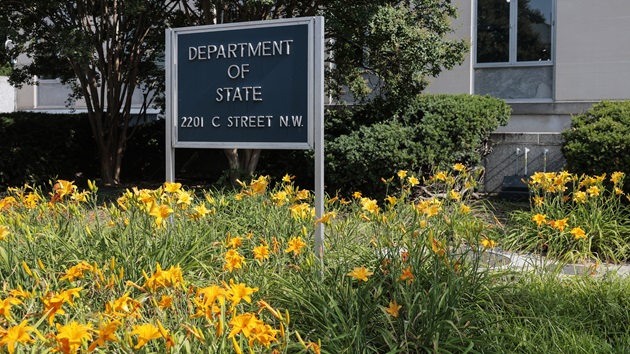
Khalil claimed he was detained and targeted for deportation because of his speech at pro-Palestinian protests on the Columbia campus and challenged his detention based on the constitutionality of the State Department’s finding that his continued presence in the country could have “serious adverse foreign policy consequences” for the United States.
Judge Michael Fabiarz did not address the substance of Khalil’s challenge but decided the case belonged in his courtroom so he could assess the Trump administration’s basis for Khalil’s removal. Fabiarz said an immigration court in Louisiana, which has already allowed for Khalil’s removal, did not have the ability to “look under the hood” of Khalil’s claims.
“If there needs to be fact-finding here, it may potentially be sprawling, and it may potentially involve sensitive evidence, or (renewed) requests to depose senior officials,” Fabiarz said. “This is not the kind of fact-finding work the immigration courts have been built for.”
Fabiarz previously found that the Newark court can retain jurisdiction over the case in a decision issued earlier this month. The judge wrote that there were still “other jurisdictional hurdles” to consider before reaffirming in his latest opinion that the case can stay in his courtroom.
The federal government had argued that Khalil’s habeas challenge should be denied in part because the Newark court cannot hear the case.
“Today we moved one step closer to vindicating Mr. Khalil’s rights by challenging his unlawful detention and the administration’s unconstitutional and retaliatory actions against him,” Amy Greer, one of Khalil’s attorneys, said in a statement on Tuesday.
The case could have consequences beyond Khalil’s status, since the State Department is using similar justification to attempt to deport other students and recent graduates who were outspoken supporters of the Palestinian cause.
Khalil, a lawful permanent resident, was detained on March 8 at his student apartment building in New York. He was taken to 26 Federal Plaza in lower Manhattan, then to an immigration detention facility in Elizabeth, New Jersey, before ending up in a Louisiana detention center, his attorneys said.
After his lawyers filed a petition for Khalil’s immediate release, a federal judge in New York last month moved the case to New Jersey.
Fabiarz rejected the federal government’s request to move the case to Louisiana earlier this month.
The following week, an immigration judge in Louisiana ruled that Khalil is removable after Secretary of State Marco Rubio invoked a section of the law that deemed him deportable because, the government claimed, his continued presence in the US would have an adverse consequence on foreign policy.
Khalil’s legal team said it has pending motions seeking his release so he can be with his wife, who recently gave birth to their first child.
“As I am now caring for our barely week-old son, it is even more urgent that we continue to speak out for Mahmoud’s freedom, and for the freedom of all people being unjustly targeted for advocating against Israel’s genocide in Gaza,” his wife, Noor Abdalla, said in a statement Tuesday. “I am relieved at the court’s finding that my husband can move forward with his case in federal court. This is an important step towards securing Mahmoud’s freedom. But there is still more work to be done.”
(WASHINGTON) — President Donald Trump expressed confidence in Pete Hegseth on Tuesday in an exclusive interview with ABC News, saying he hopes the former Fox News host will be a “great” defense secretary amid a bevy of press reports calling his leadership into question.
The interview airs on ABC at 8 p.m. ET, 7 p.m. CT. It can also be streamed later Tuesday on ABC News Live, Disney+ and Hulu.
“I had a talk with him, and whatever I said I probably wouldn’t be inclined to tell you,” Trump told ABC News anchor and Senior National Correspondent Terry Moran. “But — we had a good talk. He’s a talented guy. He’s young. He’s smart, highly educated. And I think he’s gonna be a very good defense — hopefully a great defense secretary.”
Trump’s vote of confidence in Hegseth comes amid scrutiny over Hegseth’s use of the Signal app to communicate sensitive military plans to members of the administration and, in at least one case, his wife, who does not hold a security clearance.
Asked by Moran whether Trump has “a hundred percent confidence” in Hegseth, Trump fired back.
“I don’t have — a hundred percent confidence in anything, OK? Anything,” Trump said. “Do I have a hundred percent? It’s a stupid question.”
“It’s a pretty important position,” Moran said.
“No, no, no,” Trump said. “You don’t have a hundred percent. Only a liar would say, ‘I have a hundred percent confidence.'”
(WASHINGTON) — Defense Secretary Pete Hegseth, under investigation for mishandling sensitive military information, traveled to Michigan on Tuesday alongside President Donald Trump in what appeared to be a show of support for the Pentagon chief whose rocky tenure has prompted calls by Democrats for his resignation.
Speaking at Selfridge Air National Guard Base, Trump introduced his secretary of defense to the Guard members, telling them Hegseth was doing “a really great job.”
In brief remarks following Trump, Hegseth praised the president.
“Only because the commander in chief invited me,” Hegseth said, gesturing to Trump. “Mr. President, thank you for restoring the warrior ethos inside our formations, for rebuilding our military, reestablishing deterrence around the world and making Americans proud to wear the uniform.”
Hegseth later added: “All I ever wanted when I was in combat was to know that my commander had my back no matter what, and with Donald J. Trump, that commander has your back.”
Hegseth’s office declined to answer questions about why he was added to Trump’s entourage as part of the president’s trip to celebrate his 100 days in office. Hegseth’s involvement was not previously announced.
Trump was to speak later to a rally crowd in Warren, Michigan, to tout his achievements during his first 100 days. He was joined at the base by Michigan Democratic Gov. Gretchen Whitmer as he announced that Selfridge would receive 21 F-15 fighters which will bolster its future.
An infantry officer in the U.S. Army National Guard, Hegseth deployed to Guantanamo Bay, Iraq and Afghanistan before leaving the service with the rank of major, according to military records.
“From Day One, our overriding objectives have been clear: restoring the warrior ethos, rebuilding our military, and reestablishing deterrence,” said Sean Parnell, a senior adviser to Hegseth. “In 100 days, the Department of Defense and our warfighters have delivered historic victories for the American people.”
Hegseth, a former Fox News anchor, was narrowly confirmed by the Senate earlier this year following allegations of financial mismanagement at a veterans nonprofit, sexual assault and heavy drinking — all allegations he denies and says were aimed at smearing his reputation.
Two months after Hegseth took the helm at the Pentagon, The Atlantic reported he was using the commercial messaging app Signal to update other national security officials, including Vice President JD Vance, with detailed plans for a military attack on the Houthi rebels in Yemen. Hegseth then used a second Signal chat to provide sensitive details to his wife, brother and personal lawyer, ABC News confirmed.
The Pentagon’s independent watchdog, DOD acting Inspector General Steven Stebbins, said he would investigate the use of Signal by Hegseth and others.
Trump later told The Atlantic that he spoke with Hegseth following the reports.
“I think he’s gonna get it together,” Trump said of Hegseth. “I had a talk with him, a positive talk, but I had a talk with him.”
Adding to the tumult is the departure of several top aides to the secretary. Hegseth’s chief of staff, Joe Kasper, recently stepped down, moving into a part-time advisory role. Hegseth fired three other close aides for what he said was leaking, although the aides say they have not been approached by investigators and remain unclear what the allegations are. And a fifth adviser resigned, writing a scathing opinion article calling Hegseth’s handling of the Pentagon “total chaos.”
For his part, Hegseth said he’s fighting to enact the president’s agenda. On Tuesday, shortly before leaving on his trip with the president, Hegseth said he “proudly” ended a small Defense Department program aimed at bolstering the participation of women in helping to resolve overseas conflicts, calling the effort a “woke divisive/social justice/Biden initiative.”
The program — called “Women, Peace and Security” — was signed into law by Trump during his first term in 2017 after several Republicans, including current Trump Cabinet members Kristi Noem and Marco Rubio, who were lawmakers at the time, sponsored the bill.
In 2019, the Trump administration outlined a strategy for implementing the program, including insisting upon female representation by other countries during peace talks. Trump’s daughter, Ivanka Trump, was among its supporters.
“Peace processes and peacebuilding efforts are more successful when women have influential roles,” the Trump administration wrote at the time.
But according to Hegseth, the program never worked.
“Politicians fawn over it; troops HATE it,” Hegseth insisted.
Hegseth acknowledged in a subsequent post that the effort was indeed a Trump initiative with Republican support. He then accused the Biden administration of ruining it.
In 2021, President Joe Biden and Congress put $5.5 million in DOD spending toward implementing the law, including hiring and training personnel.
(WASHINGTON) — A federal judge blasted the Trump administration’s termination of immigration records for thousands of foreign students in the United States as “arbitrary and capricious,” demanding that the government provide detailed explanations as to why and how the records were terminated and what this means for students.
“I think we all agree it was arbitrary and capricious,” Judge Ana Reyes said about the Trump administration’s move to terminate records of foreign students in the Student and Exchange Visitor Information System (SEVIS), a database that schools and government agencies used to confirm if foreign students are abiding by the conditions of their stay, during a court hearing for an international student’s case in Washington, D.C., on Tuesday.
“This was not ideal by any stretch of the imagination,” she continued.
Akshar Patel, a computer science student from India, sued the Trump administration after his SEVIS record was recently terminated based on a speeding ticket from a few years ago. On the heels of the Trump administration’s recent announcement that it is reinstating SEVIS records for some international students whose records had been terminated, Patel sought a preliminary injunction to ensure he can maintain his status and won’t be detained or deported.
“It still boggles my mind that we’re firing tens of thousands of federal workers on no notice and then take 10 to 20 of them to run a bunch of names through a database to see if there are students — if they have a speeding record,” Reyes said.
Reyes, who is overseeing Patel’s case, did not rule on the motion for a preliminary injunction from the bench on Tuesday after hearing from the government that Patel’s legal status as a student has not been terminated and that he’s not facing any immediate threat of deportation. The judge suggested that the plaintiff and the government could come up with language to ensure Patel’s status in the United States.
During the court hearing, Andre Watson, a senior official at the National Security Division of Homeland Security Investigations, explained that Patel was terminated due to a speeding ticket from a few years ago, was one of roughly 6,400 international students who were referred to the State Department after his team checked the records of nearly 1.3 million international students through the National Crime Information Center as part of its Criminal Alien Program initiative, which is aimed at identifying and removing migrants lacking legal status to be in the U.S. who also have criminal records.
The thousands of international students who were referred to the State Department, and subsequently returned to the Department of Homeland Security, including Patel, came up on the NCIC database but did not necessarily have criminal records. Watson did not elaborate on how exactly the government combed through the names to decide whom it flagged.
The judge was highly critical of the administration’s process of terminating these students’ immigration records and visas, taking particular notice of the sweeping nature of the mass terminations.
“After careful consideration for 15 minutes, terminate everybody, right?” the judge questioned as she walked through the government’s process of filtering through students’ records and determining whose records to terminate. “Can you and I agree that nowhere in this entire process has anyone done an individualized determination of any of these individuals before their names were terminated in SEVIS?”
“I mean, no one looked at Mr. Patel’s case and said that, yeah, here’s somebody who should no longer be in the United States, right?” Reyes continued.
Noting that Patel had only received a citation in Texas for reckless driving but was never charged, Reyes said, “You and I both agree that if we deported every single individual in this country who’s been tasked for speeding, there’d be very few people left, and almost all of them would not have driver’s license.”
“You and I both know that Mr. Patel is not a criminal, right?” she said, adding that Patel had even disclosed the speeding ticket in his visa petition. “The United States government had already assessed this speeding ticket and had found it not to be a reason to kick him out of status.”
U.S. attorney Johnny Walker maintained that the SEVIS termination was merely a “red flag” to the school notifying it of the student’s record, saying it is up to the school to terminate his student status.
While Patel, who is scheduled to graduate in a few weeks, has continued to attend classes to finish his degree, lawyers representing other affected international students have said some schools saw it as more than a red flag — thinking this meant their students needed to leave the country.
While declining to rule from the bench after assurances from the government that Patel’s student status is active, the judge criticized the administration’s actions, describing it as an “utter lack of concern for human individuals.”
“Aside from the utter lack of concern for human individuals who we have invited into our country and who have made our communities richer by being students who have contributed to our colleges and who have paid our colleges — the reason I’m concerned and particularly troubled is because those plaintiffs lawyers, like all lawyers, have to get paid, and so now we’ve got thousands of people who are having to pay plaintiff’s attorneys to have litigation, to file briefs, to appear in court, prepare for court, to get the information, and that’s not cheap, right?” Reyes said.
“And all of this could have been avoided if individuals had taken a beat and instead of just rushing things,” she continued.
Maiker Escalona and his family were separated after entering the U.S. in 2024. (Raida)
(WASHINGTON) — After being in a detention center for several months in Texas, Yorely Bernal Inciarte got the news she had been praying for: She was going to be deported back to her home country.
But when she boarded her deportation flight to Venezuela last week, her worst nightmare came true, she said: Her two-year old daughter was not on the flight.
“I started yelling at the officers asking where my baby was,” Inciarte told ABC News. “[Immigration and Customs Enforcement] officers ignored me.”
When Inciarte, her partner Maiker Espinoza Escalona and their child entered the U.S. last year and surrendered to authorities, the three were separated, Inciarte told ABC News.
Inciarte and Escalona were placed in separate detention centers in Texas and their daughter was placed in government custody, Inciarte said. She told ABC News she was able to speak with her daughter on video calls and with Escalona over the phone.
The two adults were placed in asylum proceedings but they eventually asked for a deportation order to be reunited with their child, who is not a U.S. citizen, one of their attorneys told ABC News.
But that would never happen. Escalona was transferred to Guantanamo Bay and then sent to the notorious CECOT prison in El Salvador on March 30 under Title 8 authorities, according to the family and their attorney.
“When I saw him in a video in El Salvador, I was in shock,” Inciarte said. “I couldn’t stop crying and yelling.”
Last week, Inciarte was deported to Venezuela without her daughter, a move that has outraged government officials in Venezuela. The Department of Homeland Security over the weekend labeled Inciarte and Escalona as “Tren de Aragua parents,” alleging the two are members of the Venezuelan gang.
“The child’s father, Maiker Espinoza-Escalona is a lieutenant of Tren De Aragua who oversees homicides, drug sales, kidnappings, extortion, sex trafficking and operates a torture house,” DHS said in a statement over the weekend. “The child’s mother, Yorely Escarleth Bernal Inciarte oversees recruitment of young women for drug smuggling and prostitution.”
“The child remains in the care and custody of the Office of Refugee Resettlement and is currently placed with a foster family,” DHS added.
Inciarte, her attorney and the family deny the accusations by DHS.
“If it’s true, release the evidence,” Inciarte told ABC News. “Release the proof that we are Tren de Aragua. They took a child away from their mother and they’re telling lies about us.”
According to Inciarte, she and Escalona were never released from detention in the U.S. A DHS document obtained by ABC News shows that Inciarte entered the U.S. on May 14 and did not present a valid entry document.
Venezuelan documents provided by their family appear to show the two do not have criminal records in their home country.
When asked about the evidence the agency has on Escalona and Inciarte, DHS sent ABC News the statement posted over the weekend.
An ABC News review of county and federal records found no cases associated with Escalona. ABC News located a federal criminal case against Inciarte for improper entry into the U.S. in 2024. According to the documents, Inciarte pleaded guilty and was sentenced to time served and one business day.
Over the weekend, a top official in the Venezuelan government accused the U.S. of “kidnapping” the child.
“The U.S. government is robbing Venezuelan children,” Interior Minister Diosdado Cabello said on a radio show.
Inciarte’s family previously told ABC News they believe the couple was accused of being members of Tren de Aragua because of their tattoos.
“My daughter has a tattoo of the year I was born and the year her dad was born,” Inciarte’s mother told ABC News. “She also has the name of her son and some flowers on her chest. Maiker is a tattoo artist and he would do her tattoos.”
Marly, who is Escalona’s sister, said her brother was also a barber and traveled to the U.S. for a better life.
“My brother is a 25-year-old guy, a dreamer, like all Venezuelans,” Marly said in Spanish. “He loves cutting hair. He finished high school, he took courses in barbering and set up his barbershop in Venezuela. But things got a bit tough in Venezuela, so he emigrated to have a better life.”
The Office of Refugee Resettlement under the Department of Health and Human Services, the agency that has custody of the 2-year old, referred ABC News to DHS for questions about the child.
Inciarte told ABC News she does not know who to contact and what to do to get her daughter back.
“I wouldn’t wish this on any mother,” Inciarte said.
ABC News’ Jared Kofsky contributed to this report.