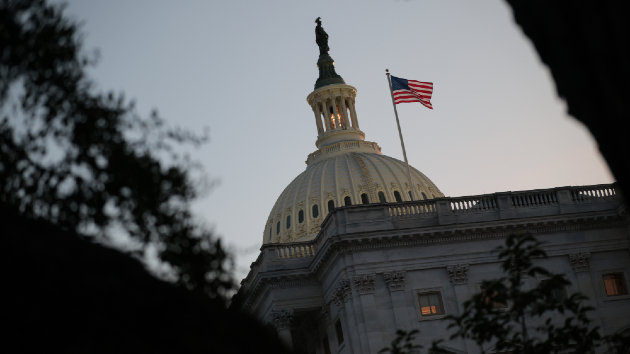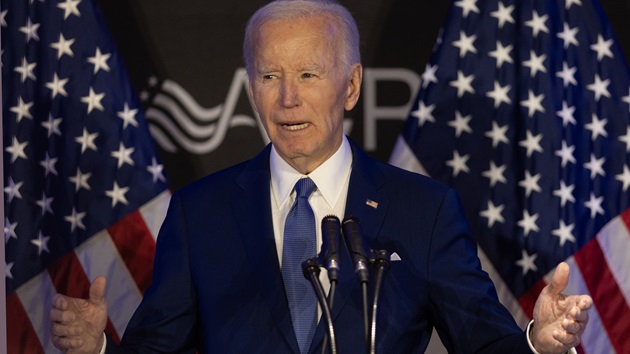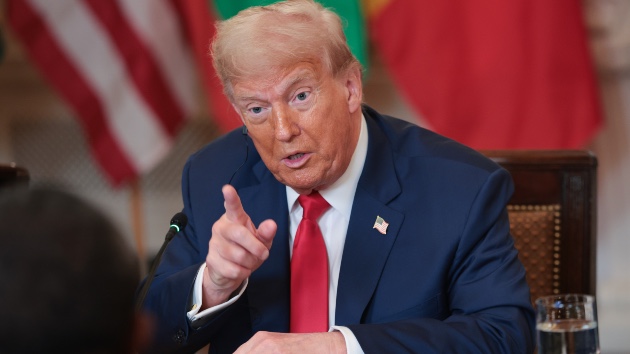
(WASHINGTON) — The White House on Friday released President Donald Trump’s proposed budget for the 2026 fiscal year, which calls for $163 billion in cuts to federal spending.
Office of Management and Budget Director Russell Vought, in a letter to Congress alongside the proposal, said the cuts to discretionary funding would lead to “significant savings.”
“The President is proposing base non-defense discretionary budget authority $163 billion — 22.6 percent below — current-year spending, while still protecting funding for homeland security, veterans, seniors, law enforcement, and infrastructure,” Vought wrote.
While budget proposals are essentially wish-list for the administration, they serve to illustrate the president’s priorities and what the White House hopes is a jumping off point for negotiations with Congress.
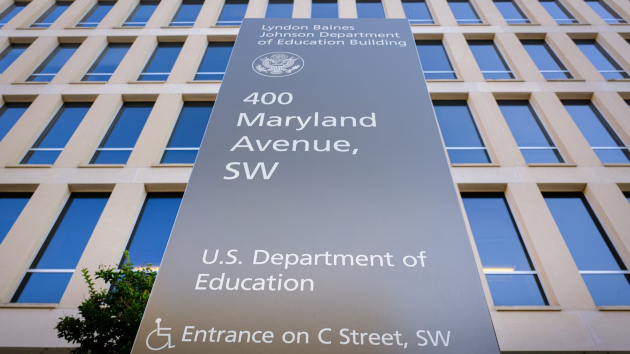
The cuts proposed would come from the Department of Education, the Department of Health and Human Services, USAID and the Environmental Protection Agency, among others.
However, Trump is proposing a 13% increase to defense spending, which would bring it to $1.01 trillion for the next fiscal year.
The administration’s also proposing $175 billion to go toward the southern border.
This is a developing story. Please check back for updates.
(WASHINGTON) — President Donald Trump on Friday renewed his threat to take away Harvard’s tax-exempt status.
“We are going to be taking away Harvard’s Tax Exempt Status. It’s what they deserve,” Trump wrote in a post to his conservative social media platform. He first floated the idea in mid-April.
Any attempt to do so, though, would likely face legal challenges.
A Harvard spokesperson told ABC News there’s no “legal basis” to rescind the university’s tax-exempt status and said it would endanger the school’s ability to carry out its mission.
“Such an unprecedented action would endanger our ability to carry out our educational mission,” the spokesperson said. “It would result in diminished financial aid for students, abandonment of critical medical research programs, and lost opportunities for innovation. The unlawful use of this instrument more broadly would have grave consequences for the future of higher education in America.”
Trump has taken aim at the university after it said it would not comply with the administration’s series of demands, including actions on antisemitism and the use of DEI on campus.
The Trump administration has already frozen more than $2.2 billion in federal grants to Harvard, as well as $60 million in multi-year contract value to the institution. Harvard sued the administration in response, alleging the freeze violates the First Amendment and federal law.
Taking away the school’s tax-exempt status would be the latest escalation.
Federal law bars the president from directly or indirectly ordering the Internal Revenue Service (IRS) to conduct or terminate an audit or investigation.
Sources previously told ABC News that the IRS was considering revoking Harvard’s tax-exempt status. The White House said in a statement to ABC News in mid-April that any investigation by the IRS into Harvard began before President Trump began posting on his social media account that the school should lose its tax-exempt status.
Many major public and private colleges in the U.S. are exempt from federal income under Section 501(c)(3) of the Internal Revenue Code because of their educational mission, research and public service.
“The government has long exempted universities from taxes in order to support their educational mission,” the Harvard spokesperson said. “The tax exemption means that more of every dollar can go toward scholarships for students, lifesaving and life-enhancing medical research, and technological advancements that drive economic growth.”
ABC News’ Hannah Demissie, Katherine Faulders, Arthur Jones and Kelsey Walsh contributed to this report.
(WASHINGTON) — President Donald Trump on Thursday announced he’s nominating Michael Waltz to be U.S. ambassador to the United Nations, while Secretary of State Marco Rubio will serve as interim national security adviser while keeping his current role as well.
“I am pleased to announce that I will be nominating Mike Waltz to be the next United States Ambassador to the United Nations,” Trump wrote on his conservative social media platform. “From his time in uniform on the battlefield, in Congress and, as my National Security Advisor, Mike Waltz has worked hard to put our Nation’s Interests first. I know he will do the same in his new role.”
“In the interim, Secretary of State Marco Rubio will serve as National Security Advisor, while continuing his strong leadership at the State Department,” Trump continued. “Together, we will continue to fight tirelessly to Make America, and the World, SAFE AGAIN. Thank you for your attention to this matter!”
Sources had told ABC News earlier Thursday that Waltz was expected to leave his post as national security adviser.
The move came as President Trump has been increasingly frustrated by Waltz after he came under intense scrutiny for inadvertently adding a reporter to a Signal chat with top Trump officials discussing a U.S. military strike on Houthi rebels in Yemen.
Waltz responded to Trump’s announcement on X, writing: “I’m deeply honored to continue my service to President Trump and our great nation.”
Rubio was a National Prayer Event at the White House earlier Thursday before the news broke. He was seen standing in the colonnade on his phone, and at times speaking with White House deputy chief of staff Stephen Miller.
State Department spokesperson Tammy Bruce learned about Rubio replacing Waltz in the middle of Thursday’s press briefing. She was being asked by reporters on whether Rubio would consider the position when Trump’s social media post came out.
“It is clear that I just heard this from you,” Bruce said as she reacted to the news in real time. She praised Rubio as “a man who, as I think you all know, has worn several hats from day one” and is “someone who is well known by the president.”
Bruce said the move was not “not entirely surprising,” but acknowledged “these last 100 days, it’s like hanging onto a freaking bullet train.”
Waltz was spotted doing a Fox News interview at the White House on Thursday morning, but was not present later on at the prayer event.
He was in attendance at Trump’s Cabinet meeting on Wednesday, where he offered praise for the president’s leadership and strength on the world stage during his first 100 days in office.
Trump publicly defended Waltz in the aftermath of the March Signal mishap, telling NBC News the day after details came to light in an article by The Atlantic’s Jeffrey Goldberg that Waltz “has learned a lesson and is a good man.”
Trump was asked further about Waltz’s future by The Atlantic in an April 24 interview. He said Waltz was “fine” despite being “beat up” after accidentally adding Goldberg to the group chat.
Trump also said in that interview that Defense Secretary Pete Hegseth, who also came under fire for the Signal fiasco, was “safe.”
“I think we learned: Maybe don’t use Signal, okay?” Trump said about the controversy. “If you want to know the truth. I would frankly tell these people not to use Signal, although it’s been used by a lot of people. But, whatever it is, whoever has it, whoever owns it, I wouldn’t want to use it.”
This is a developing story. Please check back for updates.
(WASHINGTON) — President Donald Trump on Thursday announced he’s nominating Michael Waltz to be U.S. ambassador to the United Nations, while Secretary of State Marco Rubio will serve as interim national security adviser.
“I am pleased to announce that I will be nominating Mike Waltz to be the next United States Ambassador to the United Nations,” Trump wrote on his conservative social media platform. “From his time in uniform on the battlefield, in Congress and, as my National Security Advisor, Mike Waltz has worked hard to put our Nation’s Interests first. I know he will do the same in his new role.”
“In the interim, Secretary of State Marco Rubio will serve as National Security Advisor, while continuing his strong leadership at the State Department,” Trump continued. “Together, we will continue to fight tirelessly to Make America, and the World, SAFE AGAIN. Thank you for your attention to this matter!”
Sources had told ABC News earlier Thursday that Waltz was expected to leave his post.
The move came as President Trump has been increasingly frustrated by Waltz after he came under intense scrutiny for inadvertently adding a reporter to a Signal chat with top Trump officials discussing a U.S. military strike on Houthi rebels in Yemen.
Waltz was present at Trump’s Cabinet meeting on Wednesday, where he offered praise for the president’s leadership and strength on the world stage during his first 100 days in office.
Trump publicly defended Waltz in the aftermath of the March Signal mishap, telling NBC News the day after details came to light in an article by The Atlantic’s Jeffrey Goldberg that Waltz “has learned a lesson and is a good man.”
Trump was asked further about Waltz’s future by The Atlantic in an April 24 interview. He said Waltz was “fine” despite being “beat up” after accidentally adding Goldberg to the group chat.
Trump also said in that interview that Defense Secretary Pete Hegseth, who also came under fire for the Signal fiasco, was “safe.”
“I think we learned: Maybe don’t use Signal, okay?” Trump said about the controversy. “If you want to know the truth. I would frankly tell these people not to use Signal, although it’s been used by a lot of people. But, whatever it is, whoever has it, whoever owns it, I wouldn’t want to use it.”
This is a developing story. Please check back for updates.
(WASHINGTON) — The U.S. military’s standards for investigating sexual assault claims will remain unchanged, a senior official told reporters on Thursday, as it launches a separate department-wide review into how discrimination claims are handled in general.
The promise also comes as the Defense Department faces a potential loss of personnel available to process sexual assault cases due to efforts by the Trump administration to trim staff across government.
“At the end of the day, the standard of proof remains the same with regard to any sexual harassment complaint,” said Dr. Nathan Galbreath, director of the Sexual Assault Prevention and Response Office.
“To that end, all complaints are reviewed, the evidence is analyzed, and a legal officer often opines on whether or not action can be taken,” Galbreath told reporters in a briefing call on tracking sexual assault cases in the military.
Last week, Secretary of Defense Pete Hegseth called on service secretaries to review equal opportunity programs to ensure discrimination complaints weren’t being “weaponized” by disgruntled employees. The military tracks sexual harassment complaints through its equal opportunity personnel.
In his April 23 directive, Hegseth specifically called on secretaries to ensure “complaints that are unsubstantiated by actionable, credible evidence are timely dismissed.” He called it the “no more walking on eggshells policy.”
“Too often, at the Defense Department, there are complaints made that for certain reasons that can’t be verified that end people’s careers,” Hegseth said in a video posted on X.
“Some individuals use these programs in bad faith to retaliate against superiors or peers. I hear that all the time,” he said of general discrimination complaints.
When it comes to sexual assault, unfounded claims are extraordinarily rare. According to the military, 1% of cases involve evidence that either exonerates the person accused or shows the crime did not occur.
When asked if Hegseth’s latest mandate will raise the standard of proof for sexual assault victims, Galbreath said “no.”
President Donald Trump also asked the Pentagon to review regulations that are potentially burdensome and streamline operations, an effort that resulted in offers to employees for early retirement as well as hiring freezes across the department.
Galbreath and other officials told reporters Thursday that they aren’t sure exactly how the military’s Sexual Assault Prevention and Response program will be affected just yet.
When a recent hiring freeze went into effect, there were about 300 sexual assault prevention jobs put on hold, said Dr. Andra Tharp, director of the Defense Department’s office of command climate and well-being integration.
“We’re really trying to get our arms around total impacts of that,” she said.
Tharp said she is encouraging the services to seek hiring exemptions for sexual assault response coordinators and victim advocates.
Galbreath said that 100% of victim services remain available now and that sexual assault response coordinators and victim advocates are stationed at every military installation around the world.
The number of sexual assaults reported across the military fell by nearly 4% last year, according to data released by the department.
The report is the first full-year account since the Pentagon put in place new prosecution procedures that empower independent lawyers, rather than military commanders. The changes were called for by lawmakers who said not enough was being done to encourage personnel to report assault.
“Even though we’d like to see the number of reports increase, I’m still very satisfied that our military members know that they can come forward,” and “get the help that they need to recover,” said Galbreath.
Education Secretary Linda McMahon/Andrew Harnik/Getty Images
(WASHINGTON) — The Trump administration will not renew Biden-era grants worth $1 billion that were aimed at boosting mental health services in schools, a Department of Education spokesperson confirmed to ABC News.
“These grants are intended to improve American students’ mental health by funding additional mental health professionals in schools and on campuses,” Deputy Assistant Secretary for Communications Madison Biedermann wrote in a statement to ABC News. “Instead, under the deeply flawed priorities of the Biden Administration, grant recipients used the funding to implement race-based actions like recruiting quotas in ways that have nothing to do with mental health and could hurt the very students the grants are supposed to help.”
The decision comes as the Trump administration takes sweeping action to eliminate diversity, equity and inclusion programs and alleged racial discrimination practices in schools. However, multiple courts have blocked efforts to ensure schools certify compliance with the administration’s demands.
The department said the grant programs were not advancing administration priorities. Conservative activist Christopher Rufo lauded the administration’s decision to discontinue the programs, alleging they intend to advance “left-wing racialism and discrimination.”
“No more slush fund for activists under the guise of mental health,” Rufo wrote in a post on X.
But American Federation of Teachers President Randi Weingarten called it a “direct attack” on the safety and well-being of children.
“They may not have agreed on everything, but Congress secured $1 billion in bipartisan mental health grants to help kids better understand themselves and the world around them,” Weingarten wrote in a statement. “The benefits were obvious. Now, with the stroke of a pen, that halting progress has been wiped away, even as the president and his allies insist that improving mental health is the only way to fix the gun violence epidemic.”
The grants were allocated under President Joe Biden’s signature Bipartisan Safer Communities Act. The BSCA, an anti-gun violence law signed after the mass school shooting in Uvalde, Texas, in 2022, used “historic funding” to add more mental health services to schools over five years, according to former White House officials.
ABC News previously reported on the Biden administration prioritizing mental health services in schools during a youth crisis prompted by interrupted learning time and social isolation from the coronavirus pandemic.
The former president had indicated his goal was to double the number of school-based practitioners, including social workers, psychologists and counselors.
Dr. Tish Brookins, a certified social worker in Jefferson County, Kentucky, told ABC News that the Trump administration’s decision could result in “missed opportunities, deepened trauma, and diminished futures” for students across the country.
“This cut undermines every effort we’ve made to build safe, responsive, and equitable schools,” Brookins wrote in a statement.
“Mental health support in schools is not a luxury. It is a necessity,” she added.
(WASHINGTON) — President Donald Trump’s national security adviser Michael Waltz is expected to leave his post, sources familiar with the decision told ABC News Thursday.
This move comes as President Trump has been increasingly frustrated by Waltz after he came under intense scrutiny for inadvertently adding a reporter to a Signal chat with top Trump officials discussing a U.S. military strike on Houthi rebels in Yemen.
The White House and Waltz have not commented on the moves. Sources cautioned the move is not final until Trump announces it.
The president is expected to announce the changes soon, according to sources.
Waltz was present at Trump’s Cabinet meeting on Wednesday, where he offered praise for the president’s leadership and strength on the world stage during his first 100 days in office.
Trump publicly defended Waltz in the aftermath of the March Signal mishap, telling NBC News the day after details came to light in an article by The Atlantic’s Jeffrey Goldberg that Waltz “has learned a lesson and is a good man.”
Trump was asked further about Waltz’s future by The Atlantic in an April 24 interview. He said Waltz was “fine” despite being “beat up” after accidentally adding Goldberg to the group chat.
Trump also said in that interview that Defense Secretary Pete Hegseth, who also came under fire for the Signal fiasco, was “safe.”
“I think we learned: Maybe don’t use Signal, okay?” Trump said about the controversy. “If you want to know the truth. I would frankly tell these people not to use Signal, although it’s been used by a lot of people. But, whatever it is, whoever has it, whoever owns it, I wouldn’t want to use it.”
This is a developing story. Please check back for updates.
A 9/11 responder with life-threatening pancreatic cancer was told this week that he couldn’t start chemotherapy. Two others with new cancer diagnoses were also denied treatment, according to Dr. David Prezant, chief medical officer of the New York City Fire Department and director of its World Trade Center Health Program.
“We postponed chemotherapy for a firefighter this week, hoping this could be fixed,” Prezant said “He’s too young for Medicare, and this delay may cost him his life.”
All three patients were part of the federally funded World Trade Center Health Program — a system created to care for those who risked their lives on Sept. 11, 2001. But the program has come to a standstill, Prezant said.
“We have been directed not to process any new certifications,” an internal email that was shared with ABC News said.
To receive care through the program, a responder or survivor must first enroll and then have their illness formally certified by the federal program as being related to 9/11 exposure.
Certification is a separate and critical step. Clinics must submit medical evidence, such as biopsy results or lung scans — and only after the program approves it can treatment move forward or compensation claims be filed.
Without someone in place to authorize these certifications, patients with newly diagnosed conditions are stuck waiting.
Prezant said the secure federal website used to track approvals had removed the certification tab entirely.
In addition to its freeze on certifying illnesses, the program can no longer enroll new members or approve life-saving treatments like chemotherapy, lung transplants or stem cell therapy.
The crisis, Prezant said, is the result of a breakdown on multiple fronts: severe staffing cuts, and budget shortfalls worsened by inflation.
Sixteen of the program’s doctors, nurses and support staff were laid off in early April — depleting the program by approximately 20%.
This month’s layoffs followed a previous round of cuts in February — but those were reversed after bipartisan backlash. It hasn’t yet been established if any of the newly terminated employees were part of the original group.
Either way, the decision once again left the program critically understaffed, according to clinic leaders and advocacy groups.
To make matters worse, the World Trade Center Health Program’s longtime leader, Dr. John Howard, was also removed in February — and then rehired after bipartisan backlash. But according to Citizens for the Extension of the James Zadroga Act, an advocacy group, it’s still unclear whether he was actually reinstated to his legal role as administrator.
“It appears that Dr. John Howard, Director of the National Institute of Occupational Safety and Health (NIOSH) and the Administrator of the World Trade Center Health Program (WTCHP) was not properly reinstated as Administrator of the World Trade Center Health Program, as the Health and Human Services Department told the NY Republican Members of Congress which they announced on April 5,” the group said in a statement on its website.
Howard’s unresolved status is preventing the program from functioning, the statement added.
Clinics were allowed to begin treating patients under “initial approvals,” Prezant said, while waiting for formal certification from the federal program. But that emergency workaround was shut down this week, Prezant explained.
The process of certification requires submitting medical evidence — like biopsy results or lung scans — and a signature from the program’s administrator, which has not been possible, “a clear sign that Dr. Howard hasn’t been fully reinstated,” according to Prezant.
Without formal certification, treatment for new conditions cannot proceed, Prezant emphasized.
Funding problems are also interrupting the program’s ability to function.
The program now serves more than 150,000 people nationwide, up from about 76,000 in 2015, according to data from the Centers for Disease Control and Prevention. A bipartisan bill, HR 1410, was introduced in February to close the funding gap as enrollment surged, but it remains stalled in Congress.
“We don’t decide who qualifies,” said Prezant, noting that eligibility rules and certification decisions are set by the federal program under the Zadroga Act. “That protects the system from fraud — and it works.”
He pointed to FDNY data showing that five years after a cancer diagnosis, 86% of program patients are still alive — compared to just 66% among those diagnosed in New York State who are not enrolled in the program.
Now, according to Prezant and others, patients in all 50 states who rely on care from the program are being turned away without clear answers about when, or if, the system will be restored.
“No one is asking for anything more than what was promised under the law,” Prezant said, referring to the Zagroda Act’s commitment to provide lifelong medical care and monitoring for 9/11 responders and survivors whose illnesses are linked to their exposure. “We just want the federal government to honor that promise before more lives are lost.”
ABC reached out to HHS for a response but did not hear back. In a statement sent earlier this week, an agency spokesperson said, “The Program continues to accept and review new enrollment applications and certification requests.”
Former Vice President Kamala Harris, who has stayed largely out of the political limelight since leaving office, sharply criticized President Donald Trump – her opponent in the 2024 presidential election – over tariffs, government cuts, and the direction his administration is taking the country, during remarks on Wednesday in San Francisco.
Her remarks, delivered at the 20th anniversary celebration for Emerge, an organization that supports Democratic women running for office, came as the Trump administration celebrates its accomplishments in its first 100 days – a date Harris acknowledged.
“Now I know tonight’s event happens to coincide with 100 days after the inauguration, and I’ll leave it to others to give a full accounting of what’s happened so far,” Harris told the audience.
“But I will say this, instead of an administration working to advance America’s highest ideals, we are witnessing the wholesale abandonment of those ideals,” she said.
Harris has had few public appearances since departing the White House and has limited her political activity, but on Wednesday night, she called out Trump by name.
“We all know President Trump, his administration and their allies are counting on the notion that fear can be contagious. They are counting on the notion that, if they can make some people afraid, it will have a chilling effect on others,” Harris said.
“But what they’re overlooking, what they’ve overlooked, is that fear isn’t the only thing that’s contagious. Courage is contagious,” Harris said to raucous cheers.
Harris had brought up similar themes – including the “courage is contagious” line – during remarks at a women of color leaders summit in early April.
That courage, Harris added on Wednesday, extends to Americans protesting against what she called “the greatest man-made economic crisis in modern presidential history.”
“Americans across the political spectrum who are declaring that the president’s reckless tariffs hurt workers and families by raising the cost of everyday essentials; devastate the retirement accounts that people spent a lifetime paying into; and paralyze American businesses, large and small forcing them to lay off people, stop hiring, or pause investment decisions,” she said.
Trump and the White House have argued that tariffs will help Americans be better off economically in the long run and will level the playing field between the U.S. and its trading partners.
Later in her remarks, speaking more broadly about the White House’s actions, Harris said she would describe the current moment in America as a “high-velocity event” to implement an agenda she claimed was “decades in the making” to shrink and privatize government while giving tax breaks to the wealthy.
“It’s an agenda, a narrow self-serving vision of America, where they punish truth tellers, favor loyalists, cash in on their power and leave everyone to fend for themselves, all while abandoning allies and retreating from the world,” Harris said. “And folks, what we are experiencing right now is exactly what they envision for America.”
Americans should be ready, if the “checks and balances” such as Congress “ultimately collapse,” Harris said, to work together and raise their voices.
“I am not here tonight to offer all the answers, but I am here to say this, you are not alone, and we are all in this together — and straight talk, things are probably going to get worse before they get better, but we are ready for it. We are not going to scatter. We are going to stand together, everyone a leader,” Harris said.
At the end of her remarks, Harris struck a populist note: “Always remember this country is ours. It doesn’t belong to whoever is in the White House. It belongs to you. It belongs to us. It belongs to We The People.”
The former Democratic nominee for president has had few public appearances since departing the White House, and has limited her political activity.
Harris’ speech came as she is set to possibly re-enter politics in the coming months. Harris has been mulling a run in California’s gubernatorial race and will make a decision by the end of summer, two sources familiar with her plans told ABC News in March.
Some Democrats have also floated her as a potential 2028 presidential candidate, although some of her longtime supporters have told ABC News they are torn over that prospect.
Whether she runs for either office or not, Harris’ public remarks thus far have sometimes included veiled and explicit swipes at the Trump administration and the president himself.
In remarks at a women of color leaders summit in early April, she weighed in on the second Trump administration, saying “there is a sense of fear that has been taking hold in our country” but that “courage is also contagious.”
And in remarks at the NAACP Image Awards in February, Harris framed the “chapter” America is in as one that “will be written not simply by whoever occupies the oval office nor by the wealthiest among us. The American story will be written by you. Written by us. By we the people.”
Harris and her spouse, Doug Emhoff, have been the target of recent actions by Trump.
Trump issued a memo in March that revoked the security clearances and access to classified information of his previous presidential opponents — Hillary Clinton and Kamala Harris — as well as more than a dozen former administration officials. On Tuesday, Emhoff said he had been dismissed from the board of trustees of the U.S. Holocaust Memorial Museum as the White House confirmed it had removed board members.
-ABC News’ Averi Harper, Zohreen Shah, Gabriella Abdul-Hakim and Kelsey Walsh contributed to this report.
LONDON — The U.S. and Ukrainian governments touted the signing of a controversial minerals sharing deal as a launchpad for expansive bilateral economic cooperation — and as a signal of America’s long-term investment in a free Ukraine.
American and Ukrainian representatives signed the accord in Washington, D.C., on Wednesday after months of tense negotiations, President Donald Trump long having framed the proposal as means to recoup more than $100 billion worth of aid given to Kyiv since Russia launched its invasion three years ago.
“This partnership allows the United States to invest alongside Ukraine to unlock Ukraine’s growth assets, mobilize American talent, capital and governance standards that will improve Ukraine’s investment climate and accelerate Ukraine’s economic recovery,” Treasury Secretary Scott Bessent said in a video announcing the deal.
The full details of the agreement are yet to be released, with Prime Minister Denys Shmyhal expected to present the deal to the Ukrainian parliament — the Rada — on Thursday. Shmyhal this week previewed some parts of the agreement, saying it would not undermine Ukraine’s potential for accession to the European Union.
The deal will also need to be ratified by the Ukrainian parliament, members of which suggested on Thursday it was too early to fully evaluate the agreement.
“I don’t know what we have signed,” Oleksandr Merezhko, a lawmaker representing President Volodymyr Zelenskyy’s party and the chair of the parliament’s foreign affairs committee, told ABC News.
“Judging by the statement of the prime minister, it is better than the initial version,” he added. “It seems like we have managed to dodge Trump’s idea to turn the previously-provided U.S. military and material aid into Ukrainian debts.”
The lawmaker suggested it was too early to say whether the deal represented a win for both Kyiv and Washington.
“It seems like Trump put pressure on us in an attempt to get a victory in his first 100 days in office,” Merezhko said. “The devil is in the details. But politically there are upsides. First, we have improved relations with Trump for whom it’s a win.”
Other members of parliament suggested that ratification would not be immediate. “I would really like to see the final document of the agreement,” lawmaker Oleksiy Goncharenko wrote on Telegram.
Lawmaker Yaroslav Zheleznyak, meanwhile, suggested it may take until mid-May for the parliament to vote on the minerals agreement — “and that’s only if everything is submitted to the Rada on time,” he wrote on Telegram.
In Russia, Dmitry Medvedev — the former president and prime minister now serving as the deputy chairman of the Russian Security Council — framed the deal as a defeat for Kyiv.
“Trump has broken the Kyiv regime into paying for American aid with minerals,” Medvedev — who through Russia’s invasion of Ukraine has become known for his hawkish statements — wrote on Telegram. “Now they will have to pay for military supplies with the national wealth of a disappearing country,” he wrote.
Nonetheless, Bessent said the agreement “clearly to Russian leadership that the Trump administration is committed to a peace process centered on a free, sovereign and prosperous Ukraine over the long term, it’s time for this cruel and senseless war to end the killing must stop.”
Bessent also said this deal was because of “President Trump’s tireless efforts to secure a lasting peace.”
ABC News’ Oleksiy Pshemyskiy, Nataliia Popova and Michelle Stoddart contributed to this report.