

Key Republican says he opposes Trump’s controversial pick for top prosecutor in DC

Key Republican says he opposes Trump’s controversial pick for top prosecutor in DC
Tasos Katopodis/Getty Images

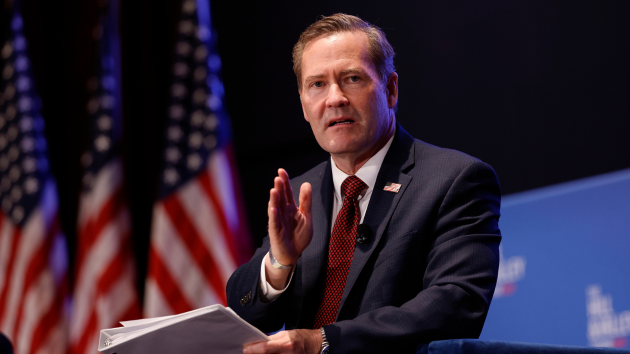
(WASHINGTON) — President Donald Trump’s plan to promote acting U.S. Attorney for the District of Columbia Ed Martin, who has repeatedly defended Jan. 6 rioters, to the permanent position appears to face an uphill battle after a key Senate Republican said Tuesday he would not support the nomination.

Sen. Thom Tillis of North Carolina told ABC News that he will not support Trump’s nominee to become the next U.S. attorney for Washington, D.C., a message he says has been relayed to the White House.

“At this point, I have indicated to the White House I wouldn’t support his nomination,” Tillis told ABC News.

Tillis met with Martin Monday evening after he publicly expressed reluctance about Martin’s nomination due to concerns about his work representing Jan. 6 defendants and past inflammatory comments about the riot.

Martin, Tillis said, did a “good job of explaining how there were people that probably got caught up in it,” but that it wasn’t enough to satisfy his concerns.

“I think anybody who breached the perimeter should have been in prison for some period of time,” Tillis said. “Whether it’s 30 days or three years is debatable, but I have no tolerance for anybody who entered the building on January the sixth, and that’s probably where most of the friction was,” Tillis said.

Tillis is a key Republican vote on the Senate Judiciary Committee that will be responsible for determining whether to advance Martin’s nomination to a final vote on the Senate floor.

Martin has served as the interim U.S. attorney since the start of the administration but his term expires on May 20, meaning he would need to be confirmed by then to continue leading the office.

One path forward is for the chief judge of the D.C. District Court, Judge Jeb Boasberg, to pick the next nominee.

That is extremely unlikely given Trump’s apparent disdain for Boasberg who has overseen a number of Trump’s related cases.

Boasberg recently found probable cause that the Trump administration acted in contempt of court when officials in March ignored his order to turn around two planes carrying alleged Venezuelan gang members to El Salvador.

If Tillis votes with all Democrats to oppose the nomination and no other Republicans flip, the committee will tie, and Martin’s nomination won’t be sent to the floor for a final vote.

But there’s still a few ways to get around this. Tillis could choose to vote to advance without recommendation, allowing the nomination to go to the floor of the Senate even without Tillis’ support.

Losing any more Republicans on the panel could prove insurmountable.

The timing of a Judiciary Committee vote is also in flux at the moment, as a source close to the confirmation process confirms that Judiciary Chairman Chuck Grassley has not listed a committee vote for Martin on the committee’s agenda this week amid growing concerns about his floundering support.

This delay could make it close to impossible for the Senate to take a final vote on Martin before May 20.

Martin, who has been vying to become the top prosecutor in one of the nation’s most important U.S. attorney’s offices, was a promoter of Donald Trump’s “Stop the Steal” campaign and was himself seen on the Capitol grounds during the attack on the U.S. Capitol.

His tenure leading the office has been fraught with controversy.

Martin has moved to fire or demote dozens of top career attorneys who investigated the Capitol attack, he has sent threatening letters to top Democrats and other political opponents of President Trump suggesting he would target them with criminal investigations.

He recently had to apologize for his past praise of a Jan. 6 rioter who had a lengthy history of antisemitic statements and who infamously posted photos of himself dressed as Adolf Hitler.

Martin has also had to provide multiple supplemental letters to the committee in recent weeks after failing to disclose numerous media appearances on far-right outlets like InfoWars and Russian-propaganda networks Sputnik and RT.

Trump urged Republicans to vote for Martin, saying on his social media platform Monday evening that “if approved, HE WILL NOT LET YOU DOWN.”

Copyright © 2025, ABC Audio. All rights reserved.
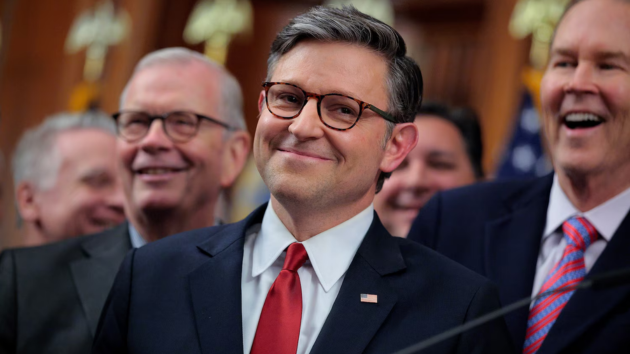
Trump and Canada’s Carney to hold high-stakes meeting amid tariff war, takeover threat

Trump and Canada’s Carney to hold high-stakes meeting amid tariff war, takeover threat
Canada’s Prime Minister Mark Carney/ Artur Widak/NurPhoto via Getty Images

(WASHINGTON) — President Donald Trump and Canada’s Prime Minister Mark Carney meet on Tuesday at the White House for a high-stakes, and possibly tense, meeting amid a tariff trade war between the two neighbors and allies.

The two leaders will greet each other at 11:30 a.m. ET and then hold a bilateral meeting in the Oval Office.

Carney’s visit comes off the heels of his election win to replace Justin Trudeau that was fueled, in part, by his anti-Trump platform.

After his victory, Carney warned Canadians: “Trump is trying to break us so that America can own us. That will never, that will never ever happen.”

Trump, meanwhile, has taken relentless aim at Canada since returning to office in January. He’s threatened to make Canada the 51st state and slapped steep tariffs on the nation, which is one of the United States’ biggest trading partners.

Trump has said he’s “not sure” what the prime minister wants to discuss but added that Canada “wants to make a deal,” while Carney said on Friday that they will focus on “trade pressures and the broader future economic and security relationship.”

“I’m not pretending these discussions will be easy — they won’t proceed in a straight line,” Carney said last week. “There will be ups and downs, zigzags along the way. But as I said in my remarks, I will fight for the best possible deal for Canada. I will only accept what’s in the best interest of Canadians, and I will take as much time as necessary to achieve that.”

The historically friendly relationship between the U.S. and Canada is now on edge. Trump and Carney’s face-to-face meeting in the Oval Office could yield progress on easing tariffs or strain the relationship even further.

One advantage for Carney compared to his predecessor going into this meeting is his lack of history with Trump. Trudeau left his post with a bruised relationship with the president, who Trump repeatedly trolled as “governor” rather than prime minister. The two leaders were unable to work out a tariff deal.

A 25% tariff imposed by Trump remains in place for Canadian goods that are not compliant with the United States-Mexico-Canada Agreement (or USMCA) as well as a 10% tariff on Canadian oil imports and 25% tariff on all cars, auto parts, steel and aluminum.

Canada’s retaliatory action includes a 25% tariff on vehicles imported from the U.S. that are not compliant with USMCA. In March, Canada imposed $21 billion worth of retaliatory tariffs were applied on items like American orange juice, whiskey, peanut butter, coffee, appliances, footwear, cosmetics, motorcycles and certain pulp and paper products.

Canada also has a lot to lose if Trump follows through with threat to impose 100% tariffs on films produced outside the U.S.

Copyright © 2025, ABC Audio. All rights reserved.
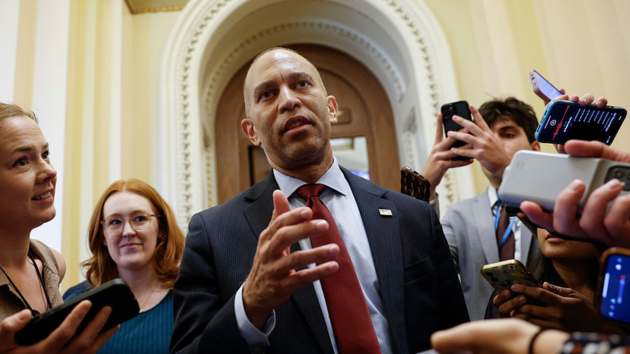
‘Shocking’: Experts question Trump claiming ‘I don’t know’ about upholding Constitution

‘Shocking’: Experts question Trump claiming ‘I don’t know’ about upholding Constitution
Andrew Harnik/Getty Images

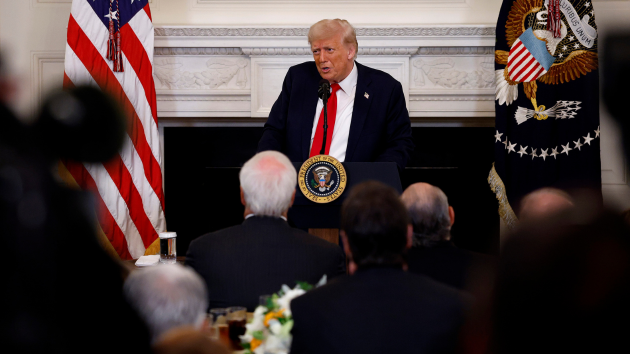
(WASHINGTON) — President Donald Trump, a little more than 100 days after taking the oath of office, questioned whether he had a duty to uphold the Constitution and the Fifth Amendment right to due process as he expressed frustration on judicial pushback to his mass deportation effort.

During a wide-ranging interview with NBC News “Meet the Press” moderator Kristen Welker, Trump was asked if he agreed with Secretary of State Marco Rubio that citizens and noncitizens alike are entitled to due process.

“I don’t know,” Trump responded. “I’m not a lawyer. I don’t know.”

Welker noted that the Fifth Amendment, which states in part that “no person” shall be “deprived of life, liberty, or property, without due process of law,” says as much.

“I don’t know,” Trump repeated. “It seems it might say that, but if you’re talking about that, then we’d have to have a million or 2 million or 3 million trials. We have thousands of people that are some murders and some drug dealers and some of the worst people on earth, some of the worst most dangerous people on earth, and I was elected to get them the hell out of here and the courts are holding me from doing it.”

Asked a final time if, as president, he needed to uphold the Constitution, Trump again deflected.

“I don’t know. I have to respond by saying, again, I have brilliant lawyers that work for me, and they are obviously going to follow what the Supreme Court said,” in what’s become a new standard answer in interviews when confronted with similar questions about what the law requires him to do.

Legal experts told ABC News that the Fifth Amendment does not make any distinction between citizens and noncitizens. The Supreme Court has held that illegal immigrants are afforded due process rights under the Fifth and Fourteenth Amendments.

“Even Justice Scalia, for whom President Trump has expressed great admiration, acknowledged that the plain language of the Fifth Amendment clearly provides every ‘person,’ not just American citizens, are entitled to the protections of due process,” Michael Gerhardt, a constitutional law expert at the University of North Carolina, told ABC News.

Scalia’s 1993 ruling in which he wrote it was well established that the Fifth Amendment entitles aliens to due process of law in deportation proceedings” was referenced in a recent Supreme Court order mandating detained migrants be given “reasonable time” to challenge their removal.

“President Trump’s failure to acknowledge that he swore an oath to support and defend the Constitution is unprecedented in American history,” Gerhardt said. “Most presidents have not been lawyers, but every president, other than Trump, has acknowledged that every federal official, including the president, has the duty to uphold the Constitution.”

Trump, with his right hand raised, took the oath of office on Jan. 20 as prescribed by Article II, Section 1 of the Constitution.

“I Donald John Trump do solemnly swear that I will faithfully execute the Office of President of the United States, and will to the best of my ability, preserve, protect and defend the Constitution of the United States,” Trump said during his inauguration.

In another escalation of his standoff with the courts, Trump later on Sunday told reporters that he would seek to appoint judges who won’t challenge his deportation plan.

“I mean, we need judges that are not going to be demanding trials for every single illegal immigrant,” Trump said while taking questions on Air Force One. “We have millions of people that have come in here illegally, and we can’t have a trial for every single person. That would be millions of trials.”

Immigration matters are routinely dealt with in a limited hearing or other court proceedings before an immigration judge, not a full-blown trial as Trump suggests, experts say. Those administrative judges are employees of the Department of Justice.

“It’s a minimal due process hearing, but it does provide due process,” said David Leopold, an attorney and former president of the American Immigration Lawyers Association.

Trump’s comments on Sunday were quickly criticized by Democrats and other critics, who pointed to it as what they said was another example of Trump’s disregard for constitutional boundaries.

“This is as un-American as it gets,” Senate Democratic Leader Chuck Schumer wrote on X.

Republican Sen. Rand Paul also pushed back that “following the Constitution is not a suggestion.”

“It is a guiding force for all of us who work on behalf of the American people. Do you agree?” Paul wrote on X.

“It is shocking that a sitting president would treat the Constitution as if it’s an inconvenience,” said Leopold.

“We can’t just assume that the government is judge, jury and executioner,” said Leopold. “That’s not what this country was founded on. That’s what an authoritarian country is. We are not an authoritarian country. We are a constitutional republic.”

Copyright © 2025, ABC Audio. All rights reserved.
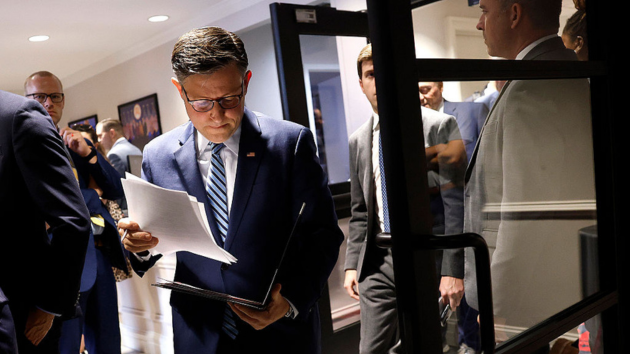
On Teacher Appreciation Day, Trump cuts affecting profession in a ‘huge way’

On Teacher Appreciation Day, Trump cuts affecting profession in a ‘huge way’
Chip Somodevilla/Getty Images

(WASHINGTON) — The Trump administration has made dozens of cuts that some teachers say could impact their profession in a “huge way,” according to educators in terminated programs who spoke with ABC News.

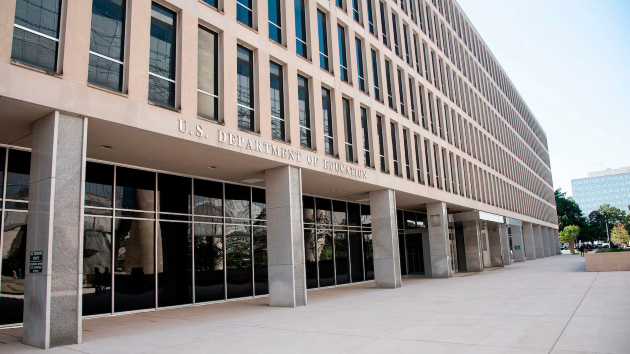
Before Teacher Appreciation Day, which is celebrated on Tuesday as part of Teacher Appreciation Week, the administration has slashed professional development initiatives, preparation programs, and other federally funded education projects that the administration has deemed as divisive and run afoul of its priorities.

Cuts are affecting the experiences that ’empower teachers’
Melissa Collins, who was Tennessee’s Teacher of the Year in 2023, said professional learning grants through the National Endowment for the Humanities (NEH) made her a better teacher. Collins told ABC News the opportunity to attend programs at museums or colleges allowed her to enhance her skills. At the Japanese American National Museum (JANM) last summer, Collins participated in the Landmarks of American History and Culture workshop entitled “Little Tokyo: How History Shapes a Community Across Generations.”

“I have received the best professional learning experience that I could ever receive that is going to impact my classroom and so many others,” Collins said in a video by JANM.

However — like many federal education awards — the NEH grant was terminated by the Department of Government Efficiency (DOGE) and the programming is no longer offered due to the administration’s “shifting priorities,” according to a termination notice reviewed by ABC News.

“As teachers, we strive to improve for our students, but currently, budget cuts are affecting the experiences that empower teachers to serve their schools and communities effectively,” Collins wrote in a statement to ABC.

Former teacher Dani Pierce was educator liaison at the department of education before losing her job this spring under the agency’s reduction in force efforts as Trump hopes to abolish the department completely. Pierce stressed the work teachers do in the classroom each day is “immeasurable” and often goes unseen. But during Teacher Appreciation Week this year many in the education community, including Pierce, grapple with the prospect of a shuttered department.

“It pains me deeply not to be at the Department right now, leading our teacher appreciation efforts or ensuring teachers have a voice in the policies that affect your schools and students,” Pierce wrote in an open letter to the teachers of America.

“I may be RIFed from my role as your liaison to the Department, but I will never stop working to ensure your voices are heard and your contributions receive the recognition and support they deserve,” Pierce added.

Teachers across the country tell ABC News they continue to face major hurdles in the classroom — including staffing shortages, the pinch of low pay and addressing students’ mental health — many of which stem from closures during the COVID-19 pandemic.

DEI initiatives “inconsistent” with fairness and excellence in education

On the other hand, the next generation of teachers are also affected by the administration’s cuts.

One of Trump’s top pledges is to root out diversity, equity and inclusion programs and any practices that discriminate on the basis of race. Some of the most recent actions taken by the education department include cutting grants that contribute directly to educator diversity.

The agency terminated the CREATE project, formerly at Georgia State University, because the program conflicted with the department’s policy of prioritizing merit, fairness and excellence in education, according to a termination letter obtained by ABC News.

The federal funding was deemed “inconsistent” with the department’s objectives because the program promoted DEI initiatives or unlawful discrimination practices. But former employees said the organization contributed hundreds of millions of dollars toward promoting novice teachers. They told ABC News the teacher residency program helped place the majority of its student teachers into underserved schools in the Atlanta Public School system and called the administration’s termination notice “dismissive.”

“It was very disrespectful to the work that we have put our blood, sweat and tears into — ensuring that this community that we are serving in has quality educators,” an educator said.

Copyright © 2025, ABC Audio. All rights reserved.
Trump touts ‘very strong’ Alcatraz as Bureau of Prisons assessing reopening prison

Trump touts ‘very strong’ Alcatraz as Bureau of Prisons assessing reopening prison
Tayfun Coskun/Anadolu Agency via Getty Images

(WASHINGTON) — The new director of the federal Bureau of Prisons said the agency will “vigorously” pursue “all avenues to support and implement” the president’s agenda after President Donald Trump said he was wanted to reopen Alcatraz as a “substantially enlarged and rebuilt” prison.

Over the weekend, Trump posted on Truth Social that he was directing the Bureau of Prisons, along with the Department of Justice, FBI and DHS to reopen the facility.

“The Bureau of Prisons (BOP) will vigorously pursue all avenues to support and implement the President’s agenda,” said BOP Director William K. Marshall III, who was sworn in last month. “I have ordered an immediate assessment to determine our needs and the next steps. USP Alcatraz has a rich history. We look forward to restoring this powerful symbol of law, order, and justice. We will be actively working with our law enforcement and other federal partners to reinstate this very important mission.

“Just an idea I had,” Trump told reporters Sunday night when asked what prompted his proposal. “And I guess because so many of these radicalized judges, they want to have trials for every single, think of it, every single person that’s in our country illegally, they came in illegally. That would mean millions of trials, and it’s just so ridiculous what’s happening.”

Alcatraz, which sits in the middle of San Francisco Bay, has not been an operational prison since 1963, according to the National Park Service, which has maintained it as part of the Golden Gate National Recreation Area since 1972. More than 1 million people visit the island each year, according to the BOP.

The facility, which was built as a fort to protect San Francisco Bay then converted to an Army prison before holding federal inmates, has housed notorious prisoners such as mobster Al Capone. Known as “The Rock,” the prison held on average 260 to 275 people, according to the Bureau of Prisons, and many inmates considered the living conditions at the prison to be better than most at the time, the agency says.

It was estimated that it would take $3 million to $5 million for restoration and maintenance work to keep the prison open in addition to daily operating costs, which were far higher than other federal prisons. Alcatraz’s daily per capita cost in 1959 was $10.10 compared to $3.00 for the federal prison in Atlanta.

A recent inspector general report estimated that the Bureau of Prisons facilities across the country needed $2 billion worth of repairs. The BOP has had to close facilities because of the dire conditions inside some prisons.

Elizabeth Neumann, a former DHS deputy chief of staff, told ABC News Live that the BOP “already has some pretty significant problems with its existing prisons.”

“They’ve closed a number in recent years just because they can’t maintain them. So to try to also turn around something that hasn’t been operational for 60 years, and make it habitable for people to be imprisoned would be a lot of money,” she said.

And it’s not just the cost of getting the facility ready to house inmates, she said.

“San Francisco is a very high cost of living area. Federal employees get paid more if they work in those high cost areas. So it’s not really a cost effective solution,” Neumann said. “If you’re looking to build producer capacity, you would it’s more effective to just build something new in a part of the country where the cost of living is lower.”

Neumann said she wasn’t surprised by Trump’s suggestion. She said during his first administration, she was often tasked with researching some of his proposals.

“He has a lot of ideas. People will go off and study them, then they’ll come back with the facts and, and usually it gets dropped at that stage,” she said.

House Speaker Emerita Nancy Pelosi, who represents the area in Congress, shot down Trump’s proposal.

“Alcatraz closed as a federal penitentiary more than sixty years ago. It is now a very popular national park and major tourist attraction. The President’s proposal is not a serious one,” she posted on X.

Copyright © 2025, ABC Audio. All rights reserved.
Bureau of Prisons assessing Trump’s directive to reopen Alcatraz

Trump touts ‘very strong’ Alcatraz as Bureau of Prisons assessing reopening prison
Tayfun Coskun/Anadolu Agency via Getty Images

(WASHINGTON) — The new director of the federal Bureau of Prisons said the agency will “vigorously” pursue “all avenues to support and implement” the president’s agenda after President Donald Trump said he was wanted to reopen Alcatraz as a “substantially enlarged and rebuilt” prison.

Over the weekend, Trump posted on Truth Social that he was directing the Bureau of Prisons, along with the Department of Justice, FBI and DHS to reopen the facility.

“The Bureau of Prisons (BOP) will vigorously pursue all avenues to support and implement the President’s agenda,” said BOP Director William K. Marshall III, who was sworn in last month. “I have ordered an immediate assessment to determine our needs and the next steps. USP Alcatraz has a rich history. We look forward to restoring this powerful symbol of law, order, and justice. We will be actively working with our law enforcement and other federal partners to reinstate this very important mission.

Alcatraz, which sits in the middle of San Francisco Bay, has not been an operational prison since 1963, according to the National Park Service, which has maintained it as part of the Golden Gate National Recreation Area since 1972. More than 1 million people visit the island each year, according to the BOP.

The facility, which was built as a fort to protect San Francisco Bay then converted to an Army prison before holding federal inmates, has housed notorious prisoners such as mobster Al Capone. Known as “The Rock,” the prison held on average 260 to 275 people, according to the Bureau of Prisons, and many inmates considered the living conditions at the prison to be better than most at the time, the agency says.

It was estimated that it would take $3 million to $5 million for restoration and maintenance work to keep the prison open in addition to daily operating costs, which were far higher than other federal prisons. Alcatraz’s daily per capita cost in 1959 was $10.10 compared to $3.00 for the federal prison in Atlanta.

A recent inspector general report estimated that the Bureau of Prisons facilities across the country needed $2 billion worth of repairs. The BOP has had to close facilities because of the dire conditions inside some prisons.

Elizabeth Neumann, a former DHS deputy chief of staff, told ABC News Live that the BOP “already has some pretty significant problems with its existing prisons.”

“They’ve closed a number in recent years just because they can’t maintain them. So to try to also turn around something that hasn’t been operational for 60 years, and make it habitable for people to be imprisoned would be a lot of money,” she said.

And it’s not just the cost of getting the facility ready to house inmates, she said.

“San Francisco is a very high cost of living area. Federal employees get paid more if they work in those high cost areas. So it’s not really a cost effective solution,” Neumann said. “If you’re looking to build producer capacity, you would it’s more effective to just build something new in a part of the country where the cost of living is lower.”

Neumann said she wasn’t surprised by Trump’s suggestion. She said during her time at Homeland Security, she was often tasked with researching some of his proposals.

“He has a lot of ideas. People will go off and study them, then they’ll come back with the facts and, and usually it gets dropped at that stage,” she said.

House Speaker Emerita Nancy Pelosi, who represents the area in Congress, shot down Trump’s proposal.

“Alcatraz closed as a federal penitentiary more than sixty years ago. It is now a very popular national park and major tourist attraction. The President’s proposal is not a serious one,” she posted on X.

Copyright © 2025, ABC Audio. All rights reserved.
CPB fires back at Trump’s executive order pulling funding for NPR, PBS

CPB fires back at Trump’s executive order pulling funding for NPR, PBS
Brooks Kraft LLC/Corbis via Getty Images

(WASHINGTON) — The nonprofit corporation that partially funds NPR and the Public Broadcasting Service is firing back at President Donald Trump’s executive order to stop funding for the two popular media outlets.

The Corporation for Public Broadcasting pointed out that Congress controls its funding, not the president.

“CPB is not a federal executive agency subject to the President’s authority,” Patricia Harrison, president and CEO of the CPB, said in a statement Friday. “Congress directly authorized and funded CPB to be a private nonprofit corporation wholly independent of the federal government.”

She continued, “In creating CPB, Congress expressly forbade ‘any department, agency, officer, or employee of the United States to exercise any direction, supervision, or control over educational television or radio broadcasting, or over [CPB] or any of its grantees or contractors.'”

Trump signed the executive order instructing the Corporation for Public Broadcasting to “cease direct funding to NPR and PBS” on his way to Florida aboard Air Force One on Thursday.

The order blocks federal funding to NPR and PBS to the maximum extent allowed by law, according to a fact sheet from the White House. It also prevents indirect funding to PBS and NPR by prohibiting local public radio and television stations, and any other recipients of CPB funds, from using taxpayer dollars to support the organizations.

The order mandates that the CPB revise its 2025 General Provisions to explicitly prohibit direct or indirect funding to NPR and PBS. It directs all federal agencies to terminate any direct or indirect funding to NPR and PBS and to review existing grants and contracts for compliance. Additionally, it instructs the Federal Communications Commission and relevant agencies to investigate whether NPR and PBS have engaged in unlawful discrimination.

In the fact sheet, the White House claims the two news organizations “have fueled partisanship and left-wing propaganda with taxpayer dollars.”

In an interview with ABC News on Friday, PBS president and CEO Paula Kerger said a loss in federal funding would hit audiences in rural communities hard. Kerger said that their access to stations has been historically dependent on government funding and that content from children’s programming to backup emergency alerts could be negatively impacted by cuts.

“They formed PBS as a way that we could bring the dollars together from around the country from all of our stations,” Kerger said. “That would help us create the kids content that people have loved for many decades and that have really raised generations of children.”

For some stations, the situation could be dire, she said.

“For a number of smaller stations, it really could be an existential challenge,” Kerger said. “That means the existence of those very stations.”

Kerger and the head of NPR testified at a House hearing in March about their funding.

“I hear, respect and understand your concerns regarding bias and whether public media is relevant in a commercial landscape,” NPR President and CEO Katherine Maher said at the hearing. “It is critical for NPR’s newsroom to operate with the highest journalistic standards. That means they do their jobs independently, and as CEO I have no editorial role at NPR.”

NPR and PBS are primarily funded through a combination of public and private sources. The CPB provides a portion of the funding, along with private donations from individuals, foundations and corporations. The CPB helps fund dozens of media organizations in addition to NPR and PBS, including everything from American Public Media to Native Public Media and Public Media in Mid-America.

Those in the Senate and House quickly responded along party lines.

“The fact that taxpayers are forced to subsidize far-left propaganda outlets like NPR is an outrage,” Sen. Tom Cotton, R-Ark., wrote on X. “I commend President Trump for his common-sense order ending taxpayer funding for liberal media outlets.

“President Trump is once again walking us towards authoritarianism, by eliminating funds for PBS and NPR, claiming it will stop ‘biased and partisan news coverage,'” Rep. Adam Smith, D-Wash., wrote on X. “NPR and PBS is how 160 million Americans find their fact-based, impartial news each month.”

“These organizations were created under an act of Congress, and therefore cannot be eliminated in an executive order,” he continued. “We need these programs and must challenge this ruling in the courts.”

ABC News’ Max Zahn, Lalee Ibssa and Docquan Louallen contributed to this report.

Copyright © 2025, ABC Audio. All rights reserved.
Beshear, Raimondo, Gabbard keep door open to running for president in 2028

Beshear, Raimondo, Gabbard keep door open to running for president in 2028
Kayla Bartkowski/Getty Images

(WASHNINGTON) — It’s been less than six months since the 2024 presidential election, but for some Democrats and Republicans, it’s not too early to plan for the race for the White House in 2028.

Three high-profile Democratic governors, one former Democratic Cabinet member and one Republican Cabinet member weighed in last week when questioned if they will run for president in 2028. Some did not rule out a run.

Kentucky Gov. Andy Beshear, a Democrat, said on Thursday that he would consider running for president if he felt he was someone who could successfully unite the country.

“If you’d asked me a couple years ago if this is something I’d consider, I probably wouldn’t have. But I don’t want to leave a broken country to my kids. And so if I’m somebody that can bring this nation together, hopefully find some common ground, it’s something I’ll consider,” Beshear told local station WDRB on Thursday.

Beshear rose to national prominence after his statewide gubernatorial wins in a Republican-leaning state and was among those considered to become Vice President Kamala Harris’ running mate in 2024.

However, Maryland Gov. Wes Moore, another Democrat who was considered a potential Harris running mate and who has received praise from some as a rising star within the party, said he’s “not running” for president when asked on ABC’s “The View” on Thursday.

“I am not running,” Moore said, adding that he is “really excited about the work that’s happening right now in the state of Maryland.”

Moore’s term as governor ends in 2026, and he could opt to run for a second term.

Moore, Maryland’s first Black governor, had previously said he was not running, including in an interview with the Baltimore Sun in April. However, Moore’s statement comes as he makes more national media and event appearances. He is set to headline the South Carolina Democratic Party’s high-profile Blue Palmetto Dinner at the end of May.

Last week, former Commerce Secretary Gina Raimondo, who served under President Joe Biden, said she would consider running for president, responding with a direct “yes” when asked by political analyst David Axelrod at an event at the University of Chicago.

“The Democratic Party has a huge amount of work to do,” she said. “Introspection … where did we go wrong, what are our policies going to be, what is our platform going to be, what will our tactics be.”

Raimondo, a former venture capitalist, said she has served the country for 15 years and that if there is a “big way” for her to serve again, “including running, I’ll do it.” But she offered a caveat: “If I thought somebody else would be better or better able to win, I’d get behind that person in a minute. … For us to have a chance, it has to be just that right person at that right moment to make it happen.”

Minnesota Gov. Tim Walz, who was Vice President Kamala Harris’s running mate, recently said he was not thinking about a 2028 presidential run, and reiterated that position – “I’m not” – at an event last Monday at the Harvard Institute of Politics.

Asked why, Walz did not offer any specifics about his own decision but pointed again to his ethos of the teamwork he thinks should be shown among Democrats. “I think we, collectively as a party, and those elected officials, should be running this campaign, kind of like the old school mountain climbing expeditions,” Walz said. “You never knew who was going to summit. It was whoever was ready at the last moment. And on summit day, if somebody was in the best shape, push them to the top, and the whole team gets credit.”

Walz, however, recently went on a national town hall tour — which has sparked speculation about his political future– and has spoken openly about reflections on his 2024 run.

On the Republican side, fewer names have been floated so far as 2028 presidential contenders. President Donald Trump has speculated about finding a way to run for a third term in office, which scholars say is barred by the 22nd Amendment to the Constitution. But in an interview with NBC News aired Sunday, he said he would be “a two-term president” and said he is not looking to run in 2028.

However, Director of National Intelligence Tulsi Gabbard, who joined the Republican Party in 2024 after serving as a Democrat in Congress for several years, said in a podcast episode published Thursday that she would not rule out a future presidential bid.

Conservative journalist Megyn Kelly asked Gabbard if she has ruled out ever running again for president after her unsuccessful 2020 Democratic presidential bid, saying, “Could we potentially see a Tulsi 2028 try?”

“I will never rule out any opportunity to serve my country. … My decisions in my life have always been made around how can I best be of service to God, how can I best be of service to our country,” Gabbard said. “And that is what has led me here. I’m grateful for this opportunity, and I will continue to chase those opportunities where I can make the most positive impact and be of service.”

Her remarks echoed some previous statements she made when under consideration for a presidential ticket.

Gabbard, who is Samoan American, in 2020 became the first woman of color to win a delegate to the Democratic National Convention since Shirley Chisholm in 1972. Four years later, though, in 2024, Gabbard was under consideration to become Trump’s running mate.

The buzz around 2028 contenders continues as some other figures floated as potential 2028 presidential candidates, including Illinois Gov. J.B. Pritzker, former Vice President Kamala Harris and former Transportation Secretary Pete Buttigieg, ramp up their public appearances and remarks.

Pritzker and Harris delivered high-profile speeches on Sunday and Wednesday, respectively, and Buttigieg is set to headline a town hall in Iowa later in May.

At the same time, some Democrats say the party’s focus, as it regroups after its losses in 2024, needs to be on the 2026 midterm elections for the House of Representatives and the Senate — not on 2028. The Republican Party currently has a trifecta with majorities in the House and the Senate and Trump in the White House.

“I mean, everybody is sort of out there trying to get the touch and the feel [of] like what is actually happening in the country and are the things that Trump is doing, which is now dropping his approval rating, really registering with people,” 2016 presidential candidate Hillary Clinton said at a book talk in New York City on Thursday.

But she added later, “I think that there is going to be a lot of testing of the waters, but we won’t know, really, who decides to run until probably after the midterms, which really underscores the most important message: We have to win the midterms.”

ABC News’ Brittany Shepherd contributed to this report.

Copyright © 2025, ABC Audio. All rights reserved.

Nearly 7,000 troops, tanks and parachute jumps: Army confirms military parade coinciding with Trump’s birthday

Nearly 7,000 troops, tanks and parachute jumps: Army confirms military parade coinciding with Trump’s birthday
(Lightvision, LLC/Getty Images)

(WASHINGTON) — The U.S. Army is planning a historic parade through the streets of Washington, D.C., on June 14 that will coincide with and be part of the Army’s long-planned 250th celebration.

The parade will involve some 6,600 soldiers, tanks and infantry vehicles, helicopter flyovers and parachute jumps, according to several people familiar with the planning effort, and will also occur on President Donald Trump’s 79th birthday.

“The Army is celebrating its 250th Birthday with multiple events leading up to June 14,” the Army said in a statement Friday evening. “The national level celebration will include a spectacular fireworks display, a parade, and a day-long festival on the National Mall in Washington, DC. The festival will feature displays of Army equipment, military demonstrations, musical performances, and a fitness competition.

“Given the significant milestone of 250 years, the Army is exploring options to make the celebration even bigger, with more capability demonstrations, additional displays of equipment, and more engagement with the community,” it added. “Parade planning is actively underway, and we anticipate approximately 150 vehicles, 50 aircraft, and 6,600 Soldiers to highlight the Army’s 250 years of service to the nation.”

Officials said earlier Friday that the parade had been a possible add-on but had cautioned that no final decisions had been made. The Associated Press first reported details involving the latest plans.

The timing and White House involvement in planning efforts have stoked speculation that Trump is using the Army’s birthday as an excuse to get the kind of grand military parade he wanted during his first term in office. That event was scrapped after estimates topped $90 million.

The cost for this year’s June 14 parade is unclear, officials said, but it will likely be steep. The event will require involvement from several federal agencies, including those requiring security. The Army plans to have soldiers from each of the its 10 divisions represented in the parade, according to a U.S. official.

Earlier this year, city officials expressed concern that heavy vehicles such as tanks would tear up the roads and noted the city would require significant reimbursement to fix any damaged infrastructure.

The tanks would not be allowed to cross the bridges from Virginia into Washington, D.C., only allowing them to operate inside the city along certain roads, according to one official familiar with the planning.

Last month, the Army confirmed the possibility of a parade but called it pre-decisional.

Copyright © 2025, ABC Audio. All rights reserved.

DOJ reaches agreement in principle to settle lawsuit brought by family of Ashli Babbitt

DOJ reaches agreement in principle to settle lawsuit brought by family of Ashli Babbitt
Photo by Stephanie Keith/Getty Images

(WASHINGTON) — The Department of Justice has reached an agreement in principle to settle a lawsuit brought by the family of Ashli Babbitt, a pro-Trump rioter who was shot by a U.S. Capitol Police officer during the Jan. 6 Capitol riot.

The details of the proposed settlement were not made clear during a Friday hearing before federal Judge Ana Reyes, of the U.S. District Court for the District of Columbia.

Babbitt’s family members sued the government in January 2024 seeking $30 million for what they allege was her wrongful shooting death by Capitol Police Officer Michael Byrd.

Byrd was cleared of any wrongdoing following an internal investigation into the actions leading up to his shooting of Babbitt as she tried to climb through a broken window that led to the House Speaker’s Lobby, where several lawmakers and their staff were sheltering from rioters.

Babbitt’s attorneys disclosed the agreement in principle was reached during the hearing, which was convened on an emergency basis after one of Babbitt’s prior attorneys sought a preliminary injunction on Friday to ensure he received payment for his work on the case if a settlement was formally announced.

Robert Sticht, the lawyer for Babbitt’s family, said he expected the family to sign the formal settlement agreement within the next three weeks.

President Donald Trump has repeatedly expressed his solidarity with Babbitt’s family and called for “justice” for what he has said was her “murder” at Byrd’s hands — in line with his broader vocal support for the pro-Trump rioters who attacked the Capitol to overturn his 2020 election loss.

In March, Trump said in an interview with Newsmax he wasn’t aware of the lawsuit brought by Babbitt’s family but promised he would “look into” it.

“I’m a big fan of Ashli Babbitt, OK, and Ashli Babbitt was a really good person who was a big MAGA fan, Trump fan, and she was innocently standing there — they even say trying to sort of hold back the crowd,” Trump said. “And a man did something unthinkable to her when he shot her, and I think it’s a disgrace. I’m going to look into that. I did not know that.”

Copyright © 2025, ABC Audio. All rights reserved.