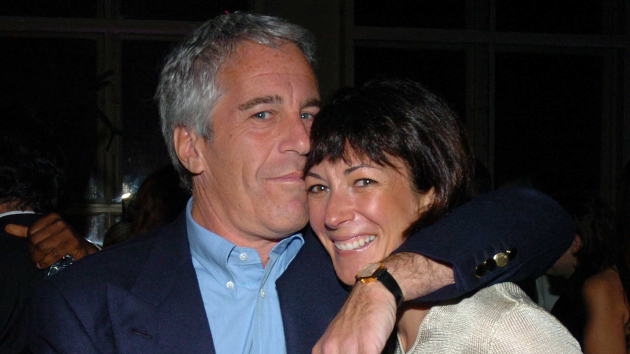
(NEW YORK) — The federal judge now overseeing the Justice Department’s request to unseal grand jury records from Jeffrey Epstein associate Ghislaine Maxwell’s criminal case said in a new order Tuesday that he plans to rule “expeditiously” on the matter but requires more information before he can do so.
“The Court intends to resolve this motion expeditiously,” District Judge Paul Engelmayer said in a four-page order, filed Tuesday. “However, the Court cannot rule on the motion without additional submissions,” the order also said.
Engelmayer is asking for further briefing from the Justice Department after he said their initial motion “does not adequately address” what the filing said is a “non-exhaustive list of factors for district courts to weigh in considering applications for disclosure” of such secret grand jury information.
Engelmayer gave the government until July 29 to submit a brief further outlining their justification for seeking the release of the records, which he said should address whether they have already reviewed grand jury transcripts from Maxwell’s case and whether they provided notice to victims prior to their motion to unseal the records.
The order also directs the government to file under seal an index of Maxwell grand jury transcript materials, the transcripts themselves and a proposed redacted set of the transcripts, as well as other items.
Separately, Judge Engelmayer set a deadline of Aug. 5 for Maxwell’s attorneys and victims in the case to address their positions regarding the disclosure of the grand jury transcripts.
President Donald Trump announced last week that he’d ordered Attorney General Pam Bondi to seek the release of additional Epstein material following pushback from conservatives and others for more transparency in the case.
Bondi said Monday that Deputy Attorney Todd Blanche will meet with Ghislaine Maxwell sometime in the “coming days.”
“President Trump has told us to release all credible evidence. If Ghislane Maxwell has information about anyone who has committed crimes against victims, the FBI and the DOJ will hear what she has to say,” Blanche said in a statement posted by Bondi on X.
(NEW YORK) — The daughter of Martin Luther King Jr. said the White House should make public the files on financier-turned-sex offender Jeffrey Epstein after the Trump administration released thousands of files on her father’s 1968 assassination over objections from her and other relatives of the civil rights leader.
“Now, do the Epstein Files,” Bernice King, CEO of The King Center in Atlanta, wrote in a social media post on X on Monday night.
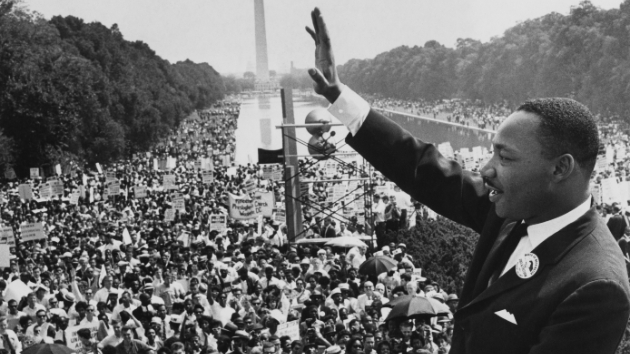
Bernice King’s social media post, accompanied by a black-and-white photo of her late father, came after she and her brother, Martin Luther King III, issued a statement on the government’s release on Monday of 230,000 files related to their father’s assassination.
“As the children of Dr. King and Mrs. Coretta Scott King, his tragic death has been an intensely personal grief — a devastating loss for his wife, children, and the granddaughter he never met — an absence our family has endured for over 57 years,” the children of the civil rights’ leader said in their statement. “We ask those who engage with the release of these files to do so with empathy, restraint, and respect for our family’s continuing grief.”
On Monday, Tulsi Gabbard, the White House National Intelligence director, announced the release of the King assassination files in accordance with President Donald Trump’s Jan. 23 executive order to declassify records concerning the assassinations of King, President John F. Kennedy and his brother, Sen. Robert F. Kennedy.
Gabbard said the files were being made public in coordination with the Department of Justice, the FBI, the CIA and the National Archives.
Gabbard said the King files include records that have “never been digitized and sat collecting dust in facilities across the federal government for decades.”
“The American people have waited nearly sixty years to see the full scope of the federal government’s investigation into Dr. King’s assassination,” Gabbard said in a statement. “Under President Trump’s leadership, we are ensuring that no stone is left unturned in our mission to deliver complete transparency on this pivotal and tragic event in our nation’s history. I extend my deepest appreciation to the King family for their support.”
In her statement, Gabbard included quotes from Alveda King, Martin Luther King’s niece and a former Georgia state representative.
“My uncle lived boldly in pursuit of truth and justice, and his enduring legacy of faith continues to inspire Americans to this day. While we continue to mourn his death, the declassification and release of these documents are a historic step towards the truth that the American people deserve,” said Alveda King, a supporter of President Trump.
The Rev. Al Sharpton, founder and president of the National Action Network civil rights organization, criticized the release of the King assassination records as a “desperate attempt to distract people from the firestorm engulfing Trump over the Epstein files.”
“The integrity of Dr. King’s legacy can and will not be weaponized to serve Trump’s cynical agenda,” Sharpton said. “I urge the public to see this for what it is and not fall for the bait and switch.”
Trump has come under criticism recently from his own supporters for not releasing the files on Epstein, who died from suicide in 2019 in a federal detention center in New York City where he was being held while awaiting trial on sex-trafficking charges.
Trump, who once had a friendly relationship with Epstein, said last week that he has urged Attorney General Pam Bondi to release “whatever she thinks is credible” about the Epstein files.
The president also told reporters that he doesn’t understand why some of his supporters are so interested in the “sordid, but boring” contents of the Epstein files. He added, “I think, really, only pretty bad people, including the fake news, want to keep something like that going.”
(WASHINGTON) –Attorney General Pam Bondi said Monday that Deputy Attorney Todd Blanche will meet with Ghislaine Maxwell, the convicted associate of deceased sex offender Jeffrey Epstein, sometime in the “coming days.”
“President Trump has told us to release all credible evidence. If Ghislane Maxwell has information about anyone who has committed crimes against victims, the FBI and the DOJ will hear what she has to say,” Blanche said in the statement posted by Bondi on X.
Blanche also said that the joint statement from the Justice Department and FBI on July 6 — which stated they would not release any additional files on Epstein and that they determined there was no Epstein “client list” — “remains as accurate today as it was when it was written.”
“Namely, that in the recent thorough review of the files maintained by the FBI in the Epstein case, no evidence was uncovered that could predicate an investigation against uncharged third parties,” Blanche said.
He added that up “until now, no administration on behalf of the Department had inquired about her willingness to meet with the government.”
The statement comes as a growing chorus of lawmakers have called for Maxwell to testify about her relationship with Epstein, and while the department is actively opposing Maxwell’s efforts to appeal her conviction for conspiring with and aiding Epstein in his sexual abuse of underage girls.
David Oscar Markus, the appellate counsel for Maxwell, confirmed to ABC News that they are in talks with the government.
“I can confirm that we are in discussions with the government, and that Ghislaine will always testify truthfully,” Markus said. “We are grateful to President Trump for his commitment to uncovering the truth in this case.”
Maxwell was convicted of sex trafficking and other charges and sentenced to 20 years in prison in 2022.
Amid growing calls from Republicans to release the Epstein files, an Oversight subcommittee approved a motion on Tuesday morning to direct Chairman James Comer to issue a subpoena for Maxwell testimony.
The motion was offered by Republican Rep. Tim Burchett during an unrelated hearing in the Subcommittee on Government Operations. Burchett’s motion was approved by a voice vote with only a few members present in the room.
“It’s about to get real,” Rep. Burchett posted on X.
Comer said he plans to subpoena Maxwell “as expeditiously as possible,” according to a committee spokeswoman.
“Since Ms. Maxwell is in federal prison, the Committee will work with the Department of Justice and the Bureau of Prisons to identify a date when Committee can depose her,” the spokeswoman said.
House Speaker Mike Johnson brought up the Epstein files during a GOP House news conference Tuesday and reiterated his calls to release the files, but emphasized that there needs to be protection for the victims.
“There are innocent victims of those sex crimes,” Johnson told reporters.
Johnson also slammed Democrats for calling out the administration for not being transparent in the Epstein case.
“What we refuse to do is participate in the Democrats’ political games,” he said.
Several hours later, when asked about the meeting between Maxwell and Blanche, Trump said he “doesn’t know a thing” about it, but said the meeting “sounds appropriate to do.”
“I don’t really follow that too much,” Trump said, calling the demand for the release of the files to be a “witch hunt.”
Last week, President Donald Trump ordered the DOJ to “release all Grand Jury testimony with respect to Jeffrey Epstein, subject only to Court Approval,” he said on social media.
The DOJ requested in its filing, which was signed by Bondi and Blanche, for the court to “conclude that the Epstein and [Ghislaine] Maxwell cases qualify as a matter of public interest, release the associated grand jury transcripts, and lift preexisting protective orders.”
ABC News’ Lauren Peller contributed to this report.
(WASHINGTON) –Attorney General Pam Bondi said Monday that Deputy Attorney Todd Blanche will meet with Ghislaine Maxwell, the convicted associate of deceased sex offender Jeffrey Epstein, sometime in the “coming days.”
“President Trump has told us to release all credible evidence. If Ghislane Maxwell has information about anyone who has committed crimes against victims, the FBI and the DOJ will hear what she has to say,” Blanche said in the statement posted by Bondi on X.
Blanche also said that the joint statement from the Justice Department and FBI on July 6 — which stated they would not release any additional files on Epstein and that they determined there was no Epstein “client list” — “remains as accurate today as it was when it was written.”
“Namely, that in the recent thorough review of the files maintained by the FBI in the Epstein case, no evidence was uncovered that could predicate an investigation against uncharged third parties,” Blanche said.
He added that up “until now, no administration on behalf of the Department had inquired about her willingness to meet with the government.”
The statement comes as a growing chorus of lawmakers have called for Maxwell to testify about her relationship with Epstein, and while the department is actively opposing Maxwell’s efforts to appeal her conviction for conspiring with and aiding Epstein in his sexual abuse of underage girls.
David Oscar Markus, the appellate counsel for Maxwell, confirmed to ABC News that they are in talks with the government.
“I can confirm that we are in discussions with the government, and that Ghislaine will always testify truthfully,” Markus said. “We are grateful to President Trump for his commitment to uncovering the truth in this case.”
Maxwell was convicted of sex trafficking and other charges and sentenced to 20 years in prison in 2022.
Last week, President Donald Trump ordered the DOJ to “release all Grand Jury testimony with respect to Jeffrey Epstein, subject only to Court Approval,” he said on social media.
The DOJ requested in its filing, which was signed by Bondi and Blanche, for the court to “conclude that the Epstein and [Ghislaine] Maxwell cases qualify as a matter of public interest, release the associated grand jury transcripts, and lift preexisting protective orders.”
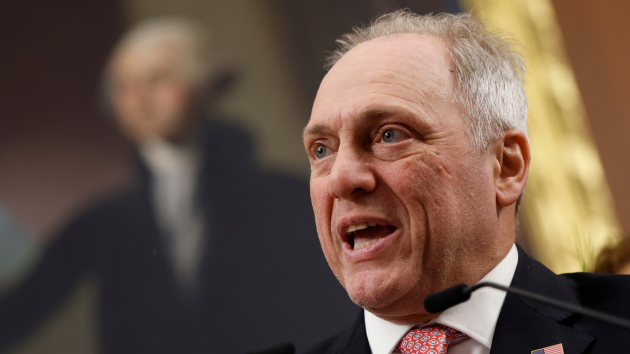
House Majority Leader Steve Scalise (R-LA). Kevin Dietsch/Getty Images
(WASHINGTON) — Another week, another stalemate in the House of Representatives over releasing the Jeffrey Epstein files.
The GOP-led Rules Committee — which was working on advancing a slate of unrelated bills — came to a halt Monday evening because Democrats announced their plan to force a committee vote on bipartisan legislation that would call for the release of the Epstein files.
Republicans on the panel decided to recess the meeting with lawmakers saying there were no plans to reconvene at all. South Carolina GOP Rep. Ralph Norman said Monday he and the other Republicans on the committee did not want to vote on Democrats’ Epstein amendments, calling the effort “grandstanding.”
Majority Leader Steve Scalise told reporters it was “unlikely” the committee would meet this week at all.
This means that House Republicans will not hold votes this week on several key measures, including an immigration bill and legislation to establish new ZIP codes, because Democrats on the panel continue to force tough votes over releasing the Epstein files.
The House plans to depart for a long August recess on Thursday without holding votes on the planned measures. The lower chamber can still vote on measures under suspension, which requires a two-thirds majority.
With no action by the Rules Committee, the House will vote on two minor bills both under suspension on Tuesday at 4:30 p.m.
Republicans also plan to meet behind closed doors Tuesday morning for their weekly conference meeting, which is followed by a news conference from Speaker Mike Johnson.
(WASHINGTON) — A coalition of school districts — including Alaska’s largest school district — and advocacy groups has sued President Donald Trump’s administration over the $6 billion funding freeze to congressionally appropriated education programs.
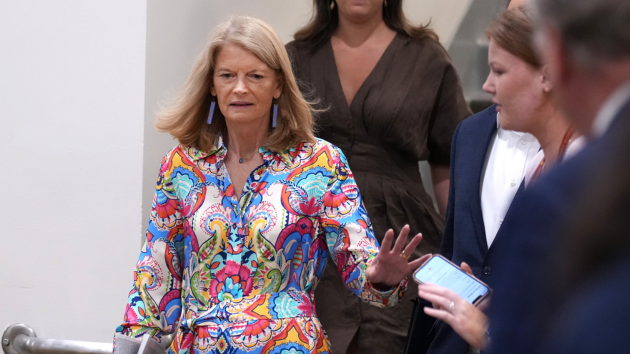
The news comes just days after nine Republican senators and Alaska Sen. Lisa Murkowski conducted a rare rebuke of President Donald Trump’s education policies, urging the Office of Management and Budget (OMB) Director Russ Vought to reverse the decision to withhold aid for key programs, such as English language acquisition, teacher development and student support.
OMB told ABC News in a statement that many of the programs “grossly misused” government funds to promote a “radical leftwing agenda.” However, the GOP senators’ letter said the decision to pause this funding was “contrary to President Trump’s goal of returning K-12 education to the states,” and they didn’t believe any leftwing agenda programs were being administered in their states.
Within 48 hours, the Trump administration had unfrozen more than a billion dollars for critical after-school and summer education programming nationwide, a senior administration official told ABC News.
Murkowski celebrated the initial funding release but noted it doesn’t go far enough.
“The pause of these funds caused great concern for families across the nation, and I am relieved to know that our young people will have enriching opportunities to stay engaged outside of the classroom,” Murkowski wrote in a statement to ABC News. “While this news is welcome, it is frustrating that many additional funds Alaska school districts are relying on from the Department of Education remain in limbo,” she said.
ABC News has reached out to the Trump administration for additional comment.
A pause on the total $6 billion funding happened on July 1, when federal aid for schools is typically allocated each year. However, states were notified on June 30 that an ongoing programmatic review of education funding would occur, according to a Department of Education memo sent to Congress, obtained by ABC News. School districts and programs have been concerned that programs and staff could be eliminated if funding isn’t restored.
The case, Anchorage School District et al. v. Department of Education et al., is led by multiple Alaska school districts and affiliates of the American Federation of Teachers. In it, the plaintiffs argue that the administration’s recent actions violate the Administrative Procedure Act, the Impoundment Control Act, and the constitutional separation of powers.
The Impoundment Control Act of 1974 says Congress must consider and review executive branch withholdings of budget authority, according to the U.S. Government Accountability Office. The GAO website says the Administrative Procedure Act prescribes the minimum procedural steps an agency must follow in its administrative proceedings.
The school districts’ suit was filed in the U.S. District Court of Rhode Island. It comes in the wake of two dozen state attorneys general and Democratic governors suing the administration for withholding education funding using the same claims.
“It’s against the Constitution,” North Carolina Attorney General Jeff Jackson, one of the AGs involved in the suit, told ABC News. “It’s against the Impoundment Act. From a legal standpoint, this is not a hard case,” he added.
AFT President Randi Weingarten called the freeze an attempt to “lawlessly” defund education through rampant government overreach.
“It’s not only morally repugnant: the administration lacks the legal right to sacrifice kids’ futures at the altar of ideology,” Weingarten wrote in a statement to ABC News.
“The Department of Education is holding hostage billions of dollars from American communities,” according to Skye Perryman, President and CEO of Democracy Forward — a public education advocacy nonprofit representing the plaintiffs.
“This is an unconstitutional and unlawful power grab that puts extreme agendas over the well-being of students and denies communities the educational resources that Congress intended them to have,” Perryman added in a statement to ABC News.
Earlier this month, the Anchorage School District announced in a letter to the community that the district had already begun laying off some staff members after $46 million was impacted by the pause. The district receives about a third of the state’s federal education funds, according to Superintendent Jharrett Bryantt.
Several state education leaders who’ve spoken to ABC News say that they’re scrambling to prevent immediate harm to students as the school year approaches. OMB has not given a timeline for when the programmatic review for the other education programs will be completed.
Meanwhile, Rhode Island Department of Education Commissioner Angélica Infante-Green applauded the Republican efforts to reverse the funding pause, stressing this is not a political issue.
“We are one United States of America,” Infante-Green told ABC News. “These dollars are important to every single student in every single state. This is what we need,” she said.
“We need people to speak up. We need people to be brave, to have the conversation and advocate for our kids, to put politics aside and make this one of their number one issues.”
(WASHINGTON) — Director of National Intelligence Tulsi Gabbard on Monday announced the release of 230,000 files related to the assassination of Martin Luther King Jr.
“Today, after nearly 60 years of questions surrounding the assassination of Dr. Martin Luther King, Jr., we are releasing 230,000 MLK assassination files, available now at http://archives.gov/mlk,” Gabbard wrote in a post on X. “The documents include details about the FBI’s investigation into the assassination of MLK, discussion of potential leads, internal FBI memos detailing the progress of the case, information about James Earl Ray’s former cellmate who stated he discussed with Ray an alleged assassination plot, and more.”
James Earl Ray, a convicted robber and prison escapee, was identified as King’s killer after his fingerprint was found on the rifle used in the assassination and discarded near the murder scene. Police believe Ray shot King from a boarding house across from the Lorraine Motel after stalking the civil rights leader for more than two weeks.
In March 1969, Ray pleaded guilty to King’s murder to avoid the death penalty and was sentenced to 99 years in prison, where he died in 1998.
Following Monday’s announcement, King’s family called for the documents’ release to be “viewed within their full historical context.”
“During our father’s lifetime, he was relentlessly targeted by an invasive, predatory, and deeply disturbing disinformation and surveillance campaign orchestrated by J. Edgar Hoover through the Federal Bureau of Investigation (FBI),” his family said in a statement. “The intent of the government’s COINTELPRO campaign was not only to monitor, but to discredit, dismantle, and destroy Dr. King’s reputation and the broader American Civil Rights Movement.”
The family said that as it reviews the released files, “we will assess whether they offer additional insights beyond the findings our family has already accepted.” They also said they “strongly condemn any attempts to misuse these documents in ways intended to undermine our father’s legacy and the significant achievements of the movement.”
This is a developing story. Please check back for updates.
(WASHINGTON) — President Donald Trump has threatened the Washington Commanders football team, stating he will not facilitate a deal for the team’s new stadium to be built in Washington, D.C., if it does not revert to its former name.
“My statement on the Washington Reskins has totally blown up, but only in a very positive way. I may put a restriction on them that if they don’t change the name back to the original ‘Washington Redskins,’ and get rid of the ridiculous moniker, ‘Washington Commanders,’ I won’t make a deal for them to build a Stadium in Washington,” Trump wrote on his social media platform on Sunday.
In another post on Sunday, Trump called on the Commanders to “immediately” change their name.
“Their heritage and prestige is systematically being taken away from them. Times are different now than they were three or four years ago,” Trump wrote on his social media platform.
ABC News has reached out to the Commanders for comment on Trump’s demands.
Trump also said that the Cleveland Guardians baseball team should switch back to its old name, too, and called out Ohio Senate candidate Matt Dolan, who owns the team, claiming that he lost several elections because of the name change.
“The Owner of the Cleveland Baseball Team, Matt Dolan, who is very political, has lost three Elections in a row because of that ridiculous name change. What he doesn’t understand is that if he changed the name back to the Cleveland Indians, he might actually win an Election. Indians are being treated very unfairly. MAKE INDIANS GREAT AGAIN (MIGA)!,” Trump wrote on Sunday.
The Cleveland Guardians’ president of baseball operations, Chris Antonetti, said in a statement on Sunday that there have not been any plans to change the team’s name, according to The Associated Press.
“We understand there are different perspectives on the decision we made a few years ago, but obviously it’s a decision we made. We’ve got the opportunity to build a brand as the Guardians over the last four years and are excited about the future that’s in front of us,” Antonetti said.
The Guardians didn’t have any additional comment when asked by ABC News.
With the Commanders, Josh Harris, the managing partner for the team, said earlier this year that the team would not be changing its name, according to The Associated Press.
The Association on American Indian Affairs said in a statement to ABC News that Trump’s remarks on Sunday are a “distraction from the real harm this administration continues to inflict on Native Peoples” and that there is “no genuine respect for Native Nations here — only empty gestures and political theater.”
“The idea that Native Nations broadly support the use of these names and mascots is false. Hundreds, if not thousands of Native Nations, Native organizations, scholars and youth leaders have repeatedly and clearly expressed that Native ‘themed’ names and mascots are offensive and dehumanizing,” the association said in a statement on Monday.
The association went on to say that these mascots and names — like the former name for the Commanders — “reduce us to caricatures.”
The Washington Commanders dropped its former name in July 2020 after years of complaints over its racist connotations toward Native Americans. The team adopted the generic “Washington Football Team” two weeks later, though it was only supposed to be in place for the 2020-21 season. Then in 2022, the team revealed it’s new name would be the Washington Commanders.
A 2020 study from the University of Michigan and the University of California, Berkeley found that at least half of more than 1,000 Native Americans surveyed were offended by Commanders’ previous team name.
In 2024, the Senate passed a bipartisan bill with unanimous consent that would allow the federal government to lease more than 170 acres of land at the site where the Robert F. Kennedy Memorial Stadium is currently located, which would allow for the possibility of a new stadium to be built. The team currently plays at the Northwest Stadium in Landover, Maryland.
The bill transfers the jurisdiction of the stadium site from the federal government to local D.C. authorities.
“We are extremely grateful that our elected officials have come together on a bipartisan basis to give Washington, D.C. the opportunity to decide on the future of the RFK stadium site. This bill will create an equal playing field so that all potential future locations for the home of the Washington Commanders can be fairly considered and give our franchise the opportunity to provide the best experience for all of our fans,” Harris said in a statement on Dec. 21, 2024.
ABC News’ Lauren Peller, Mark Osborne and Deena Zaru contributed to this report.
(WASHINGTON) — President Donald Trump has threatened the Washington Commanders football team, stating he will not facilitate a deal for the team’s new stadium to be built in Washington, D.C., if it does not revert to its former name.
“My statement on the Washington Reskins has totally blown up, but only in a very positive way. I may put a restriction on them that if they don’t change the name back to the original ‘Washington Redskins,’ and get rid of the ridiculous moniker, ‘Washington Commanders,’ I won’t make a deal for them to build a Stadium in Washington,” Trump wrote on his social media platform on Sunday.
In another post on Sunday, Trump called on the Commanders to “immediately” change their name.
“Their heritage and prestige is systematically being taken away from them. Times are different now than they were three or four years ago,” Trump wrote on his social media platform.
ABC News has reached out to the Commanders for comment on Trump’s demands.
Trump also said that the Cleveland Guardians baseball team should switch back to its old name, too, and called out Ohio Senate candidate Matt Dolan, who owns the team, claiming that he lost several elections because of the name change.
“The Owner of the Cleveland Baseball Team, Matt Dolan, who is very political, has lost three Elections in a row because of that ridiculous name change. What he doesn’t understand is that if he changed the name back to the Cleveland Indians, he might actually win an Election. Indians are being treated very unfairly. MAKE INDIANS GREAT AGAIN (MIGA)!,” Trump wrote on Sunday.
The Cleveland Guardians’ president of baseball operations, Chris Antonetti, said in a statement on Sunday that there have not been any plans to change the team’s name, according to The Associated Press.
“We understand there are different perspectives on the decision we made a few years ago, but obviously it’s a decision we made. We’ve got the opportunity to build a brand as the Guardians over the last four years and are excited about the future that’s in front of us,” Antonetti said.
The Guardians didn’t have any additional comment when asked by ABC News.
With the Commanders, Josh Harris, the managing partner for the team, said earlier this year that the team would not be changing its name, according to The Associated Press.
The Washington Commanders dropped its former name in July 2020 after years of complaints over its racist connotations toward Native Americans. The team adopted the generic “Washington Football Team” two weeks later, though it was only supposed to be in place for the 2020-21 season. Then in 2022, the team revealed it’s new name would be the Washington Commanders.
A 2020 study from the University of Michigan and the University of California, Berkeley found that at least half of more than 1,000 Native Americans surveyed were offended by Commanders’ previous team name, according to UC Berkeley’s website.
The practice of using Native American mascots is controversial and many tribal leaders say it is dehumanizing and perpetuates stereotypes.
In 2024, the Senate passed a bipartisan bill with unanimous consent that would allow the federal government to lease more than 170 acres of land at the site where the Robert F. Kennedy Memorial Stadium is currently located, which would allow for the possibility of a new stadium to be built. The team currently plays at the Northwest Stadium in Landover, Maryland.
The bill transfers the jurisdiction of the stadium site from the federal government to local D.C. authorities.
“We are extremely grateful that our elected officials have come together on a bipartisan basis to give Washington, D.C. the opportunity to decide on the future of the RFK stadium site. This bill will create an equal playing field so that all potential future locations for the home of the Washington Commanders can be fairly considered and give our franchise the opportunity to provide the best experience for all of our fans,” Harris said in a statement on Dec. 21, 2024.
ABC News’ Lauren Peller and Mark Osborne contributed to this report.
(LOS ANGELES) — As President Donald Trump marks six months into his second term, Los Angeles Mayor Karen Bass told ABC News’ “This Week” co-anchor Martha Raddatz that the administration’s immigration crackdown has not only sparked protests, but fear among the city’s residents.
“Los Angeles is a city of immigrants — 3.8 million people, and about 50% of our population is Latino. And so when the raids started, fear spread,” Bass said.
Immigration and Customs Enforcement (ICE) raids started in Los Angeles early June, prompting demonstrations that at times turned violent. While Trump’s deportation push was initially said to be centered around undocumented immigrants with criminal records, an ABC News analysis of new data shows that in recent weeks, the Trump administration has arrested an increasing number of migrants with no criminal convictions.
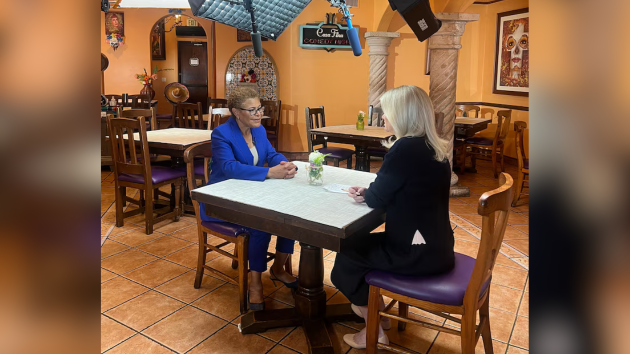
Since then, farmers, business owners and immigrant advocacy groups have, like the mayor, said that many residents have been afraid to leave their homes for fear of deportation, affecting the workforce, food supply and the culture of the city. Bass said that the restaurant the interview took place in, located in the predominantly Latino Boyle Heights neighborhood of east Los Angeles, was typically bustling. But now, it — and the neighborhood overall — can feel like a ghost town.
“It’s not just the deportation. It’s the fear that sets in when raids occur, when people are snatched off the street,” Bass said. “Even people who are here legally, even people who are U.S. Citizens, have been detained. Immigrants who have their papers and were showing up for their annual immigration appointment were detained when they showed up doing exactly what they were supposed to be doing.”
She criticized ICE for agents for executing enforcement operations without their affiliation being prominently displayed.
“Masked men in unmarked cars, no license plate, no real uniforms, jumping out of cars with rifles, and snatching people off the street, leading a lot of people to think maybe kidnappings were taking place,” Bass said. “How do you have masked men who then say, ‘Well, we are federal officials,’ with no identification?”
Raddatz noted that administration says those agents do that because “there have been threats… [and] doxing.”
“We have a Los Angeles police department that has to deal with crime in this city every single day. And they’re not masked. They stay here,” Bass said. “The masked men parachute in, stay here for a while, and leave. And so you enter a profession like policing, like law enforcement? I’m sorry, I don’t think you have a right to have a mask and snatch people off the street.”
Bass also touched on the continued presence of federal troops in the city. In response to those protests in early June, Trump deployed the National Guard and active-duty Marines to Los Angeles after protesters clashed with police. Some protestors threw rocks, fireworks and other objects at police, according to reports, before the arrival of federal troops.
Trump signed a memorandum in June saying the National Guard was deployed to address lawlessness in Los Angeles. The California National Guard’s 79th Infantry Brigade Combat Team posted on X that its objective was to protect federal protesters and personnel.
In her interview with ABC News, Bass denounced the violence as “terrible,” but said it did not “warrant military intervention.”
“It did not warrant the Marines coming into our city with basically no real mission, but just to show a force,” Bass said.
While the number of National Guard members in the city has been cut roughly in half, Bass said that their objective has not changed since they first arrived — and argued they’re presence is still not necessary.
“If you drive by our two federal buildings, you will see them standing out there. But there’s nothing going on in those federal buildings. So in my opinion, we are misusing taxpayers’ dollars, and we are misusing our troops,” she said.
While she disagreed strongly with the Trump administration’s immigration agenda, Bass said she appreciated the help the administration gave Los Angeles during the massive January wildfires.
“Well, I will heap praise on the administration for the first six months in Los Angeles with the fires. If you ask me, is there anything that they have done good in terms of immigration? I don’t know. I don’t think so,” she said. “I think that the viewpoint has been punitive, has been let’s make it as miserable as possible so that these people don’t come.”
Bass said that she is still willing to “work” with the White House, noting both the Olympics and World Cup coming to the city over the next few years.
“How does this end?” Raddatz asked. “How do you see the next six months, the next two years for immigrants in your city?”“Well, I am just hoping that this reign of terror ends. I’m hoping that the military leaves, because they were never needed here to begin with. I’m hoping that we can get back to normal. I’m hoping that the next time I come to this restaurant, that it will be filled, because people won’t be afraid to come here,” Bass said.