(WASHINGTON) — They’re cheap, easy to produce and can make guns more dangerous in minutes.
Gun modifications are becoming a problem for the country as the number of shooting incidents linked to automatic weapons is on the rise, according to two U.S. senators.
Sens. Amy Klobuchar (D-Minn.) and Cory Booker (D-N.J.) are pushing the federal government to take action and sent a letter to U.S. Attorney General Merrick Garland last week voicing their concerns.
Specifically, they are looking for the Department of Justice to investigate the sale and distribution of “auto sears” and other conversion devices. When an auto sear is installed into a semi-automatic firearm, the weapon will fire multiple rounds as long as the trigger is pulled instead of just one round.
The modifications can be done in under a minute and require “little technical expertise,” according to the senators who cited a Minneapolis Star Tribune article that included interviews with the Bureau of Alcohol, Tobacco, Firearms and Explosives about the mods.
Klobuchar and Booker expressed concern about how easy it is for one to acquire or make these modification devices, “in part due to the ease and accessibility of 3-D printing and the availability of cheap imported conversion devices from countries like China, which can be purchased for as little as $19 each.”
The letter noted that Minneapolis has seen a spike in the use of automatic weapons in the last year. The Minneapolis Police Department’s data found that there have been 72 incidents involving automatic weapon discharge in 2021 so far compared to five during the same time last year, according to the senators.
The Minneapolis Star Tribute reported that seven people were injured in a shooting in August where an automatic weapon was used. Over 100 bullets were fired during the incident, according to the police.
Klobuchar and Booker asked the Department of Justice to provide them with the agency’s current plans to address the rise of gun modification devices, as well as any strategies at curbing illegal sales the agency is considering.
The senators are also looking for responses from the Department of Justice in addressing the availability of 3-D printing technology for auto sears as well as information on its coordination with local law enforcement on the issue.
A spokesperson for the Department of Justice told ABC News the office received the senators’ letter but didn’t have an immediate comment.
ABC News’ Alexander Mallin contributed to this report.
(WASHINGTON) — Senate Majority Leader Chuck Schumer announced Tuesday that Democrats have reached a deal on a measure aimed at lowering the cost of prescription drugs as part of President Joe Biden’s “Build Back Better” package.
This is one of the last major remaining hurdles for agreement on the reconciliation effort to pass the sweeping social and climate policy measure, and Schumer said that Arizona Democratic Sen. Sinema, a holdout on prescription drugs, supports this new plan.
The deal includes: Direct government negotiation on the price of insulin and a smaller universe of drugs that are no longer protected from competition; a cap on out of pocket prescription drug expenses for seniors at $2,000 annually; if the cost of a drug rises faster than inflation, that manufacturer would pay a rebate penalty to Medicare (this penalty would apply to all drugs both in Medicare and in commercial insurance.
“We’ve heard this from people across the country who have serious illnesses and can’t afford their medicine,” Schumer said. “What a painstaking position to be in, it’s horrible. Today we’ve taken a massive step forward in helping to alleviate that problem. “
This is a developing story. Please check back for updates.
(GLASGOW, Scotland) — President Joe Biden’s spent his last hours on his overseas trip with a news conference to tout U.S. climate policies and close out what he called “significant progress” made at the COP26 summit — but he was also forced to respond to Democratic infighting over his climate change policies at home.
“Mister President, you’re touting on this visit the $1.7 trillion plan that includes climate but your party is still not united behind it,” a reporter said, raising progressives battling with Sen. Joe Manchin, D-W.Va., over the social spending package Democrats seek to pass through reconciliation — which would need every Democratic Senate vote. “Today, he said he never signed off on the framework. So, do you have a specific commitment from Senator Manchin to support your Build Back Better bill — yes or no — and how do you respond to those criticisms?”
“Number one, I’m not going to talk about the specifics of my conversations,” Biden replied. “He will vote for — in this proposal what he has anticipated and that is looking at the fine print and the detail of what comes out of the house in terms of the actual legislative initiative. I believe that Joe will be there.”
Although there’s no definite sign a vote on the already Senate-passed bipartisan infrastructure bill will pass the House soon, progressives say they trust Biden to deliver 51 Senate votes he promised on the larger social spending bill, and the president offered an optimistic outlook, despite Manchin’s new concerns that it would cost a lot more than claimed.
“Seventeen Nobel laureates and economists said it’s going to lower inflation and raise wages and increase competition and create two million jobs in a year, et cetera, and so I think that Joe is looking for the precise detail to make sure nothing got slipped in — in terms of how the legislation got written that is different than he acknowledged he would agree to, but I think we’ll get this done,” Biden said.
He took the same tone when asked about election day in Virginia — where the race for governor is being considered a litmus test for former President Donald Trump’s influence on voters while Democrats’ agenda is stalled.
Asked if a Democratic loss could signal real losses for the party in the midterms, Biden said, “We’re going to win.”
“The race is very close. It’s about who shows up, who turns out, and grant it, I did win by a large margin, but the point of the matter is that I think, this is going to be what we all knew from the beginning. This is going to be a tight race,” he said, acknowledging results may be slow because of the stiff competition. “I think we’re going to win New Jersey as well.”
“The off-year is always unpredictable, especially when we don’t have a general election going on at the same time,” he added. “But having said that, I don’t believe, and I’ve not seen any evidence that whether or not I am doing well or poorly, whether or not I’ve got my agenda passed or not is going to have any real impact on winning or losing. Even if we had passed my agenda, I wouldn’t claim we won because Biden’s agenda passed,” Biden said.
In brief remarks ahead of taking questions, Biden touted the U.S. as leading the way with initiatives such as reducing methane emissions and deforestation.
He said investing in a clean energy future will take a whole society effort and is both an economic and “moral imperative.”
Earlier in the day, the president emphasized innovation of new technologies, and the adoption of existing ones, to galvanize the fight against climate change. He talked about deforestation and how the U.S. will meet carbon emission goals after the White House announced a new plan for methane reduction which he said more than 100 countries have signed, too.
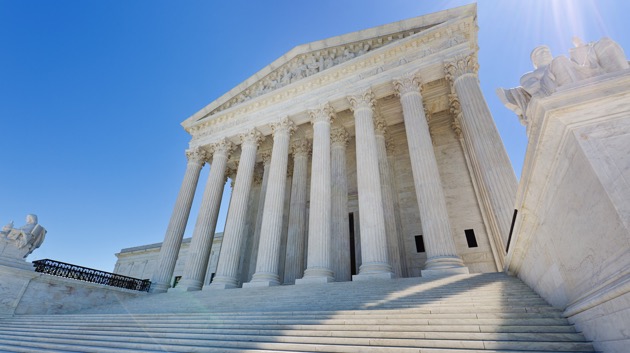
(WASHINGTON) — Two months to the day after allowing Texas to impose a near-total ban on abortions, the Supreme Court on Monday was openly skeptical of state law SB8 over concerns about its unprecedented enforcement mechanism and what it could mean for other state attempts to limit constitutional rights.
The Texas law, which bans abortions after six weeks of pregnancy, delegates enforcement to everyday citizens — rather than state officials — who can file civil lawsuits against anyone who “aids or abets” an unlawful procedure. Its state sponsors deliberately intended to circumvent federal court review, knowing that such a ban on its face violates constitutionally-protected abortion rights.
A majority of justices, during the more than three hours of oral arguments on Monday, signaled that Texas abortion providers have a strong case for asking federal courts to put SB8 on hold.
“There’s a loophole that’s been exploited here, or used here,” Justice Brett Kavanaugh said, referring to a 1908 Supreme Court case — Ex parte Young — that established a precedent for people to sue state officials in federal court for alleged constitutional violations.
Kavanaugh and Justice Amy Coney Barrett, who both voted in September with the five-justice majority allowing SB8 to take effect, voiced particular discomfort with the idea that a state could outsource enforcement of a law to citizens in an attempt to circumvent precedent.
“So the question becomes, should we extend the principle of Ex parte Young to, in essence, close that loophole?” Kavanaugh said. He added that the “whole sweep” of the case suggested such an outcome.
“I think there is language in Ex parte Young that favors you,” Barrett told the abortion providers’ attorney Marc Hearron.
It was not clear how quickly the Supreme Court will hand down a decision in the case. Clinics across Texas have said they have discontinued most abortion care services while the legal battle plays out.
If the justices side with the Texas abortion providers, they could return the case to a federal district court for proceedings, or the court itself could issue an order blocking SB8 as litigation continues.
Texas Solicitor General Judd Stone insisted that state officials have nothing to do with SB8 enforcement and that state courts are the proper venues to litigate challenges to SB8 on a case by case, plaintiff by plaintiff, basis. Fourteen state suits are underway. Those individual cases could ultimately end up in federal court, Stone said.
Petitioners want “an injunction against SB8, the law, itself,” said Stone. “They can’t receive that because federal courts don’t issue injunctions against laws but against officials enforcing laws. No Texas executive official enforces SB8 either, and so no Texas executive official may be enjoined.”
Justice Elena Kagan took direct aim at Texas’ argument, warning that allowing the state’s scheme to stand would be an open invitation to other states to circumvent other disfavored constitutional rights.
“Essentially, we would be like, you know, we are open, you are open for business. There’s nothing the Supreme Court can do about it. Guns, same-sex marriage, religious rights, whatever you don’t like, go ahead,” she said.
Chief Justice John Roberts raised concerns about the inability of citizens to preemptively defend their constitutional rights because the Texas law doesn’t have a clear enforcer until an individual claim is made.
“It’s a question of anybody having the capacity or ability to go to the federal court because nobody is going to risk violating the statute because they’ll be subject to suit for [a significant financial sum]. That — that takes a lot of fortitude to undertake the prohibited conduct in that case. And under the system, it is only by undertaking the prohibited conduct that you can get into federal court,” Roberts said.
While many justices did appear open to federal curbs on SB8, there was no clear consensus on who their opinion should target or who a federal court could enjoin.
“What relief are you requesting?” Kagan asked Hearron.
“We are requesting an… injunction against the commencement or the docketing of lawsuits against the [state court] clerks across the State of Texas, as well as injunctive relief against the state executive officials for their residual authority to enforce SB8,” Hearron replied.
Several justices seemed disinclined to enjoin judges or clerks from simply doing their jobs, which are not inherently adversarial.
Justice Sonia Sotomayor suggested that issuing an injunction against the attorney general of Texas could effectively cover all citizens who might bring lawsuits under SB8. They are “acting in concert” with the state, Sotomayor insisted.
“Why wouldn’t these private individuals be considered private attorneys generals?” Justice Clarence Thomas said. “One thing that seems rather implicit on the other side is that they are in effect, if not in designation by law, attorneys generals because they are enforcing a statewide policy.”
U.S. Solicitor General Elizabeth Prelogar said a federal court could target any “potential private plaintiffs” in Texas. “The state incentivizes their conduct,” she said. “No constitutional right is safe” if such a model is allowed to stand.
The implications for other constitutional rights and for Supreme Court precedents and authority were of particular concern to Kavanaugh, who could play a decisive role in disposition of SB8.
He cited free speech rights, freedom of religion, and Second Amendment rights, as potentially under threat, referring to an amicus brief filed by a conservative firearms group worried about a decision upholding SB8.
“The theory of the amicus brief is that it can be easily replicated in other states that disfavor other constitutional rights,” Kavanaugh said.
The justices seemed broadly disengaged with arguments by the Biden administration — in a separate challenge to SB8 argued Monday — that the federal government has sweeping ability to challenge a discriminatory state law in federal court.
“Has the U.S. government ever asserted ‘equity’?” wondered Justice Neil Gorsuch skeptically.
“Is there any instance in which the U.S. can do what it’s doing now?” questioned Thomas.
The court is expected to issue an expedited decision in the coming days or weeks.
(NEW YORK) — Just before the 2020 presidential election, a bus carrying Biden-Harris campaign staffers and volunteers through Texas was tailed by Trump supporters, some of whom were “driving in a way that appeared to be an attempt to push the bus off the road onto the shoulder,” according to court documents.
A lawsuit was filed Friday by former Texas state Sen. Wendy Davis and two former campaign staffers who were on the bus, along with the bus driver, alleging negligence by the San Marcos Police Department.
“For at least ninety minutes, including during the entirety of the stretch of I-35 inside the San Marcos city lines, the Trump Train pursued and terrorized the Plaintiffs,” the lawsuit alleges. “Plaintiffs tried to get help. They repeatedly called 911. They requested police escorts. San Marcos refused to help.”
The suit alleges that the San Marcos Police Department laughed and refused to provide assistance when a staffer called in to report the situation on Oct. 30 2020. ABC News has reached out to the police department for comment.
“I am so annoyed at New Braunfels for doing this to us,” a dispatcher said to one of the police officers over the radio, according to a 911 transcript included in court documents. New Braunfels is a city next to San Marcos, and the bus was heading over the city line.
“They have their officers escorting this Biden bus, essentially, and the Trump Train is cutting in between vehicles and driving — being aggressive and slowing them down to like 20 or 30 miles per hour,” the dispatcher reportedly said. “And they want you guys to respond to help.”
Matt Daenzer, a corporal with the department who is listed as a defendant in the lawsuit, reportedly replied, “No, we’re not going to do it. We will close patrol that, but we’re not going to escort a bus.”
The dispatcher, according to the transcript, told Daenzer the caller was “really worked up over it, and he’s like breathing hard and stuff, like, ‘they’re being really aggressive.’ OK. Calm down.”
Daenzer agreed and reportedly told the dispatcher, “Yeah, well, drive defensively, and it’ll be great.”
When the dispatcher informed the campaign staffer who called 911 for help that the San Marcos Police Department would not provide a police escort, the unnamed staffer replied, “They’ve cut in on me multiple times. They’ve threatened my life on multiple occasions with vehicular collision. I would like an escort immediately.”
The lawsuit alleges the “Trump Train” went unchecked without any police escorting the bus.
“Despite these multiple calls for help from Plaintiffs and others, for the roughly 30 minutes it took to drive through San Marcos on the main highway that runs through it, there were no officers from San Marcos or any other police cars in sight — not on the I-35 exit or entrance ramps, nor on either side of the highway,” it states.
When then-President Donald Trump learned about the situation after videos of the incident were posted to Twitter, he retweeted a video and wrote, “I LOVE TEXAS!,” the court documents also state.
Also listed as defendants in the lawsuit are San Marcos Director of Public Safety Chase Stapp, San Marcos Police Department Assistant Chief of Police Brandon Winkenwerder and the City of San Marcos.
(NEW YORK) — Longtime Hillary Clinton aide Huma Abedin, accustomed to spending her life behind the scenes, told ABC’s The View on Monday that she’s taken control of her story with the release of her new memoir, Both/And.
“After 25 years of living most of my life in public service and in public, I felt like somebody else was telling my story. And if you let somebody else tell your story, they’re writing your history. And for me, writing the book, was just such an incredible therapy,” she said in an exclusive daytime interview.
“I thought it’s a good story to share, and maybe it’ll help some women and some brown girls and some Muslims,” added Abedin, who is of Indian and Pakistani descent.
Among reported details in her new memoir, Abedin recalls an incident from her twenties — she’s now 45 — in which she says, following a Washington dinner that she writes was attended by “a few senators and their aides,” one senator invited her up to his apartment for coffee, asked her to get comfortable on the couch, and then kissed her without her consent — describing it not as a “sexual assault” as some headlines have stated, but as an “uncomfortable situation.” Some have said she should identify the person in case others might make similar allegations.
“He plopped down to my right, put his left arm around my shoulder, and kissed me, pushing his tongue into my mouth, pressing me back on the sofa,” she writes in the book, saying the senator apologized when she pushed him away and said he had “misread” her “all this time.”
“Why not name him?” asked The View co-hosts Joy Behar and Sunny Hostin.
“I chose to include my full truth,” Abedin replied. “I did bury that incident. I think back in the 2000s — that is just how you had to act. I mean, to me, one of the surprising things to myself is that I apologized, myself. The way I reacted is, I said, ‘I’m sorry,’ and I left, and I don’t think this is you know exclusive to being in politics,” she said.
She defended her decision not to name the senator, saying this is her story, not his.
“I totally buried the story until I was watching Doctor [Christine Blasey] Ford on TV — literally being questioned for her convenient memory,” she said, apparently sarcastically, referring to Ford’s testimony during Brett Kavanaugh’s Supreme Court confirmation hearings, “and as I see her being questioned, that memory comes flooding back to me.”
Abedin first entered “Hillaryland,” as she called it, when she started as a White House intern in 1996 before following the former Democratic nominee for president first back to the Senate and then to the State Department. She served as a top adviser to Clinton on both of her campaigns for president but not without some costs to her own personal life and mental health, she says.
“When you put this book down and read the last page, and maybe half the country will disagree with me, but this woman is an extraordinary human being, aside from the fact that she was the most qualified person, in my opinion, to ever run for president. Full stop. Period,” she said of Clinton.
The View co-hosts asked about a detail in the book in which Abedin describes considering walking off a subway platform in 2019, and Abedin went back to her headspace in the wake of the 2016 election.
“I did not have balance in my life. My work was my life for much of it. And it was only when I stepped off the treadmill and realized I had to deal with all this anger — because I had so much anger and bitterness towards my spouse for so much of my early marriage and after, you know, the first scandal,” she said. “I just wanted my life back.”
“At the end of the campaign, I was kind of on my own. I was alone, a single parent, and so it was I had my hard moment, and that’s when I realized I needed help. And I got it,” she said.
Following the sexting scandals of her then-husband, embattled former Rep. Anthony Weiner, D-N.Y., Abedin became enveloped in controversy when her emails became a large part of the 2016 presidential campaign after the FBI announced days before the election that investigators would re-examine Clinton’s use of a private email server. It was determined that Abedin had forwarded some emails to personal devices used by both she and her then-husband.
Co-host Sara Haines asked Abedin to respond to those who might question why she stayed with her disgraced ex-husband for so many years.
“I think a lot of people now when they look back at my marriage, they’re looking at it from 2021 perspective, which is hindsight is 20/20,” she replied. “If I’d written this book in 2017 or 2018, when maybe it would have been more newsy, I think it would have been an angry or bitter book because I had to go through that process.”
(NEW YORK) — Exactly two months after allowing Texas to impose a near-total ban on abortions, the U.S. Supreme Court on Monday was taking a closer look at the groundbreaking state law deliberately designed by its sponsors to evade constitutional review in federal court.
SB8, which outlaws most abortions after six weeks of pregnancy, has succeeded — at least temporarily — because it is enforced through an unprecedented scheme that deputizes private citizens to bring lawsuits against anyone who “aids or abets” an unlawful abortion.
The arrangement has made it difficult for abortion clinics, patients and their advocates to preemptively show concrete harm in court and identify whom, specifically, a court should enjoin from bringing lawsuits.
During two hours of scheduled oral arguments, which were livestreamed to the public, the justices were expected to examine whether abortion rights advocates and the federal government have the ability to sue Texas over the law given the way it’s designed.
State officials insist they have no role in implementation of the law and therefore cannot be targeted in court. They also claim that it does not impose an “undue burden” on women seeking abortion care, since they are still free to do so up to six weeks of pregnancy and can freely travel out of state to seek services elsewhere.
Texas abortion providers argue SB8 has had a chilling effect on clinics and imposed irreversible harm on women patients, many of whom don’t have the financial means to travel long distances to seek abortions. They also warn that if the law stands, copycat bills in other states could threaten other constitutionally-protected rights without any chance of legal recourse.
The Justice Department, which filed suit in a separate case against the law this fall, said the federal government has also been directly harmed by the law and has a responsibility to defend the rights of all citizens from plainly unconstitutional state laws under the Supremacy Clause.
A federal district court judge in early October sided with the DOJ, saying SB8’s enforcement mechanism created “offensive deprivation” of a constitutionally-protected right. Several days later, a panel of appeals court judges put the decision on hold.
SB8 will remain in effect across Texas until the Supreme Court rules. The court’s decision to expedite the case demonstrates rare speed not seen since the Bush v. Gore case in 2000; a ruling is widely expected before the end of the year.
The design of SB8 makes it unique from similar pre-viability abortion bans enacted by other states for which enforcement is handled by state officials; those have all been subsequently blocked by federal courts.
A majority of Supreme Court justices in early September said “complex and novel antecedent procedural questions” made it difficult to intervene in the Texas case, even though “serious questions” about the law’s constitutionality exist.
Longstanding precedent clearly renders the six-week abortion ban unconstitutional. The scope of abortion rights in America are not directly under review by the court in the Texas cases, but the justices are scheduled to revisit Roe v. Wade in a separate case from Mississippi set for December.
(ROME) — President Joe Biden reflected on progress he made with other world leaders at this weekend’s G-20 summit, including ways to combat climate change, as the event wrapped up in Rome on Sunday.
Kicking off his first solo press conference in four months, Biden characterized his meetings over the last five days as “productive” and said America has reclaimed its role on the world stage working with its allies.
Biden touted goals that were accomplished during the summit, including endorsing the global minimum tax and coordination addressing the supply chain crunch.
During the summit, Biden highlighted American leadership on the world stage, a campaign pledge he was looking to deliver on.
“I’m looking forward to continuing to make progress on critical global issues as we head off to Glasgow because of what we’ve seen again here in Rome, what I think is the power of America showing up and working with our allies and partners to make progress on issues that matter to all of us,” Biden said
The president in particular lauded his in-person meetings with the world leaders.
“There’s really no substitute for face-to-face discussions and negotiations among the leaders when it comes to building understanding and cooperation,” Biden said. “When you’re looking at someone straight in the eye when you’re trying to get done — they know me, I know them, we can get things done together.”
He also spoke about his meeting with the E3 countries — France, Germany and the U.K. — on the state of the Iran nuclear program and returning to the table for negotiations.
“We came together to reiterate our shared belief that diplomacy is the best way to prevent Iran from gaining a nuclear weapon, and we discussed how best to encourage Iran to resume serious good faith negotiations,” Biden said of the meeting.
This story is developing. Please check back for updates.
(WASHINGTON) — Transportation Secretary Pete Buttigieg is “optimistic” that the bipartisan infrastructure bill will pass the House and Senate, he said Sunday.
“We’re very optimistic the president put forward this framework because he believes that it will pass the House in the Senate and can get to his desk, and as soon as it does, it’s going to make such a difference in the lives of Americans,” Buttigieg told ABC “This Week” anchor George Stephanopoulos.
Congress was not able to reach a deal on President Joe Biden’s $1.1 trillion infrastructure bill as the House pushed off the vote before Biden left for his trip to the G20 summit in Italy.
In her dear colleague letter that she sent out Thursday, Speaker of the House Nancy Pelosi (D-Calif.) reiterated members’ support for the Bipartisan Infrastructure Framework, even though the vote has been postponed.
“The good news is that most members who were not prepared for a yes vote today have expressed their commitment to support the BIF.”
Even though there seems to be consensus among House members that they are prepared to pass the infrastructure bill, Stephanopoulos pointed out that a new ABC News/Ipsos poll shows that 69% of the public does not know much about what is in the bill, and 32% believe the bill will hurt them.
Buttigieg responded by focusing on the family-focused aspects of the bill, such as affordable child care, universal preschool and a possible child tax credit expansion. He addressed the audience directly saying, “[if] you have kids, nine out of 10 chance that you will personally benefit to the tune of hundreds or thousands of dollars from that child tax credit expansion.”
Stephanopoulos pressed Buttigieg over paid family leave being dropped from the bill and asked if there’s any chance of bringing the provision back.
“It’s definitely something that we believe in, and so while it is not in this framework, we’re gonna keep fighting for it,” Buttigieg said.
Despite the changes to the framework, Buttigieg defended the current state of the infrastructure package and said there’s a “sense of urgency” to get the bill passed because “American people are impatient to see pro-family policies.”
“It is the most transformative legislation for families, for health care, [and] for climate that we’ve seen, certainly in my lifetime, and it’s going to be an extraordinary achievement,” he said.
The secretary also mentioned an almost $12,500 discount on electric vehicles in an effort to “benefit the climate” and create more American jobs.
“So, look, whether you’re a policy wonk or whether you’re just trying to get through life raising your family, anybody who has ever driven on a road or a bridge, anybody who drinks water … anybody concerned about internet access coming to a neighborhood near you, this bill is for you,” Buttigieg said.
Even though Buttigieg is optimistic the bill will pass, Stephanopoulos pointed out that we have yet to see support for the bill from Democratic moderates Sen. Kyrsten Sinema, D-Ariz., and Sen. Joe Manchin, D-W.Va.
“Again, we’re the closest we have ever been,” Buttigieg said. “The president put forward this framework having talked to them and others throughout the progressive and moderate wings of our party, confident that it will pass.”
“I know you’re confident, but what are the consequences of failure?” Stephanopoulos pressed.
“Look, we just have to get this done. And I’m not just saying that politically. … We need bold action to set us up for success, not just getting through the winter but getting through the next decade and beyond,” Buttigieg said.
ABC News’ Quinn Scanlan contributed to this report.
(WASHINGTON) — Rep. Adam Kinzinger, R-Ill., said Sunday he, Rep. Liz Cheney and “a few others” are the only House Republicans “telling the truth.”
“You can fight to try to tell the truth, you can fight against the cancer in the Republican Party of lies of conspiracy of dishonesty,” Kinzinger told ABC “This Week” anchor George Stephanopoulos in an exclusive interview. “There are about 190 people in the Republican Party that aren’t going to say a word, and there’s a leader of the Republican caucus that is embracing Donald Trump with all he can.”
Kinzinger announced Friday he will not seek reelection to Congress next term. Among House Republicans, the Illinois congressman is one of the most prominent critics of former President Donald Trump and was one of 10 Republicans in the House to vote to impeach Trump following the riot at the Capitol on Jan. 6.
Kinzinger, who serves on the House select committee investigating the Jan. 6 attack, said in a video posted to Twitter the “time is now” to move on from serving in Congress.
“In order to break the narrative, I cannot focus on both a real election to Congress and a broader fight nationwide,” he said in the five-minute video. “I want to make it clear, this isn’t the end of my political future, but the beginning.”
Stephanopoulos pressed Kinzinger on what led him to make the decision.
“Just a month ago, you were confident you were going to run again, what changed? Was it the redistricting plan that was put forward by Democrats in Illinois that basically squeezed you out of your district?” Stephanopoulos asked.
“It’s a couple of things — it’s sitting back and saying, ‘OK, what happens if I win again?’ I go back, and Republicans will probably be in the majority,” Kinzinger responded. “I’m going to be fighting even harder on some of these things, and it’s been obvious over the last 10 months that nobody … I haven’t seen any momentum in the party move away from lies and toward truth.”
“Ten years ago, the Democrats in Illinois came after me, and threw me with an incumbent Republican, and they did it again — I’m not complaining, it’s redistricting,” he added. “But when Democrats do say they want Republican partners to tell the truth, and then they specifically target me, it makes you wonder.”
Responding to the news, Trump wrote “2 down, 8 to go!” in a statement referencing the 10 GOP representatives who voted to impeach him. Kinzinger became the second of the group to announce they would not run for reelection after Rep. Anthony Gonzalez, R-Ohio, did so in September.
Stephanopoulos pressed Kinzinger on whether his announcement hands Trump “another win.”
“Potentially, but I don’t think it was my decision that would hand Donald Trump a win,” Kinzinger responded. “I think it is — it’s the situation we find ourselves in.”
Kinzinger said if Trump runs for president again in 2024, “he’ll be the front-runner no doubt.”
“The Republican establishment now — whether it’s the [National Republican Congressional Committee], whether it’s Kevin McCarthy — have held onto Donald Trump,” he said. “They have continued to breathe life into him, and so actually, it’s not handing a win as much to Donald Trump as it is to the cancerous kind of lies and conspiracy” that are now the “mainstream argument of the Republican Party.”
“It’s not on Liz Cheney and I to save the Republican Party,” Kinzinger added. “It’s on the 190 Republicans who haven’t said a dang word about it, and they put their head in the sand and hope somebody else comes along and does something.”
Kinzinger and Cheney are the sole Republicans on the Jan. 6 committee. A new court filing released early Saturday morning revealed some of the records Trump is attempting to block the National Archives from turning over to the committee.
“I think if you look at that archive request and what the former president is trying to block, it is very telling,” Kinzinger said. “We are going to fight as hard as we can to get that, and the president has no grounds to claim executive privilege as he is today.”
Pressed by Stephanopoulos on whether the committee will have enough evidence to prosecute the former president, Kinzinger said he’s not comfortable making that statement yet but said the committee is continuing to learn new information every day.
“If the president was aware of what was going to happen, didn’t do anything — didn’t lift a finger to do anything about it, that’s up to the DOJ to make that decision,” he said.