(TALLAHASSEE, Fla.) — Demonstrators gathered in front of and inside the Florida State Capitol on Monday to stop the legislation that has been dubbed the “Don’t Say Gay” bill.
“We say gay,” they chanted, the sound echoing throughout the halls as they anticipated a vote on the bill expected Monday.
Speeches and chants were held throughout the day as the Florida Senate debated the legislation. However, the crowd fell silent when a youth organizer read off a list of names of LGBTQ people who have died by suicide after experiencing anti-LGBTQ hate.
“When you come to our schools to instill hate, bigotry, and fear, we will stand up, speak up, and fight back,” Maxx Fenning, founder of the LGBTQ youth advocacy organization PRISM, said at the protest. “Our passion knows no distance and we will never be silenced!”
The bill would limit curricula on sexual orientation and gender identity in some classrooms and would allow parents to take legal action against school systems if they violate this policy.
In protest, walkouts statewide have taken students out of school and onto the street.
“We will get up, stand up, wake up every single day to fight for you because your lives matter,” Democratic Florida Rep. Carlos G Smith said at the protest on the steps of the Capitol.
Florida House Republicans have already advanced the bill and the governor has expressed his support.
Proponents of the bill, including the bill sponsor Republican Rep. Joe Harding, said he wants families to be able to play a role in how and when they introduce these topics to their children.
“Families are families. Let the families be families, and the school district doesn’t need to insert themselves at that point when children are still learning how to read and do basic math,” Harding told “Start Here,” an ABC News podcast.
While the bill would ban lessons concerning gender or sexual orientation in classrooms from kindergarten to third grade, it would also not allow them when it is age-inappropriate or not in line with state standards.
However, standards on gender and sexual identity have yet to be carved out, according to Harding.
ABC News’ Tony Morrison contributed to this report.
(WASHINGTON) — Calls mounted Monday for the U.S. to ban the import of Russian oil, but while President Joe Biden’s administration signaled a new openness to doing so, the president faced the tough decision of taking a step that would raise the price Americans pay at the gas pump.
Top Republicans and Democrats in Congress announced they had come to a deal on bipartisan legislation that would punish Russia for its invasion of Ukraine, by banning the import of Russian oil and other energy products — as well as suspending normal trade relations with Russia.
The White House said Biden had not yet decided whether to impose a ban. But an official with the White House’s National Security Council told ABC News that the Biden administration was considering doing so even if Europe did not also impose a ban — which would mark a departure from Biden’s strategy of imposing sanctions in lockstep with European nations.
Secretary of State Antony Blinken said Sunday that he had spoken with Biden and other Cabinet members the day before about a potential U.S. ban.
“We are now talking to our European partners and allies to look in a coordinated way at the prospect of banning the import of Russian oil, while making sure that there is a still an appropriate supply of oil on world markets,” he said during an interview with CNN’s “State of the Union.”
“That’s a very active discussion as we speak,” Blinken added.
In Congress, Democrats and Republicans in both houses have in recent days increasingly called for a ban. A bipartisan group of senators last week proposed legislation that would impose a ban, and House Speaker Nancy Pelosi, too, said she supported the move.
As the pressure to act mounts from both sides of the aisle, Biden faces a political quandary.
After nearly two weeks of placing crushing sanctions on Russia in concert with Western allies, not moving to ban Russian oil imports, too, could appear as it he is not doing all he can to inflict pain on Russia’s economy and its president, Vladimir Putin.
But around 7% to 10% of U.S. oil imports come from Russia, and a ban would raise energy prices, including the cost of gas, analysts say.
The White House has cited that cost to Americans as a reason Biden has not taken that step. It has been looking for alternative
White House officials also say the impact on Russia, which sent just 1% of its oil exports to the U.S. in 2020, would not be great — especially when its oil and gas sector is already under “de facto sanctioned” because of harsh restrictions on Russian banks.
But in an NPR/PBS NewsHour/Marist poll last week, 69% of Americans said they supported economic sanctions on Russia even if they resulted in higher energy prices in the U.S.
Biden has also said a priority of his is to keep the West united in imposing penalties on Russia for its invasion.
There is less appetite in Europe for a ban on Russian oil and gas imports, since European nations rely heavily on Russia for their energy needs — nearly half of Russian oil exports go to Europe, according to U.S. government figures – and a ban would raise Europe’s energy prices significantly, according to analysts.
The Democratic chairmen of the Senate and House tax-writing committees and the most senior Republicans on those committees said Tuesday that they had come to an agreement on legislation that would not just ban the import of Russian energy products but that would also suspend normal trade relations with Russia and Belarus, which has aided Russia in its invasion of Ukraine.
The legislation would also provide Biden with the authority to increase tariffs on products from Russia and Belarus and aim to suspend Russia’s participation with the World Trade Organization.
The House could vote on the legislation as soon as Tuesday or Wednesday.
Paul Hennessy/SOPA Images/LightRocket via Getty Images
(TALLAHASSEE, Fla.) — Despite widespread support for pediatric COVID-19 vaccinations from the nation’s top health officials, Florida will become the first state in the country to advise against vaccinating healthy children for COVID-19, the state’s Surgeon General, Dr. Joseph A. Ladapo, announced on Monday.
“The Florida Department of Health is going to be the first state to officially recommend against the COVID-19 vaccines for healthy children,” Ladapo said at the end of a 90-minute roundtable discussion in West Palm Beach, Florida, hosted by Gov. Ron DeSantis, aimed to close the curtain on the “COVID theater once and for all.”
Just prior to the announcement, Ladapo, alongside a group of physicians, made the case that the COVID-19 vaccines may not be necessary in children.
Ladapo pointed to a study released last week out of New York, suggesting that new data showed that Pfizer’s COVID-19 vaccine protection waned relatively quickly in children between the ages of 5 and 11 years old, as compared to older children.
“Already the rates were low. So, we’re kind of scraping at the bottom of the barrel particularly with healthy kids, in terms of actually being able to quantify with any accuracy and any confidence, the infinite potential of benefit,” Ladapo said Monday.
Although the study, which has not been peer-reviewed, suggested immunity waned faster in young children relative to older children, researchers said the vaccine still dramatically reduced the risk of hospitalization.
Scientists also said it might be important to study “alternative” vaccine dosing for young children to bolster efficacy.
Following the announcement, White House Press Secretary Jen Psaki told reporters that Florida’s decision was “absolutely not” a good policy.
“Let me just note that we know the science. We know the data and what works and what is the most, what the most effective steps are protecting people of a range of ages from hospitalization and even death,” Psaki said during a press briefing on Monday.
“It’s deeply disturbing that there are politicians peddling conspiracy theories out there and casting doubt on vaccinations, when it is our best tool against the virus and the best tool to prevent even teenagers from being hospitalized,” she added.
Many health experts across the country have also vehemently pushed back on claims that vaccines may not be necessary for children, urging the importance of vaccines for all eligible children to protect against severe illness.
The Centers for Disease Control and Prevention and the American Academy of Pediatrics (AAP) have also been vocal in their support of pediatric COVID-19 vaccinations, stressing to parents that real-world data has demonstrated that vaccines are safe and effective at protecting children against severe disease, as well as against potential long-term consequences from the virus.
“Vaccines are safe and effective in protecting individuals and populations against infectious diseases,” physicians from the AAP wrote in a policy statement last month.
DeSantis also questioned whether children should be getting the shots, touting the state’s recent efforts to ban vaccine mandates in schools.
“We have this issue in terms of COVID-19 vaccinations with respect to children. And in Florida, we prohibited mandating COVID vaccines for children, so they can go to school and it’s a parent’s decision,” DeSantis said. “A lot of parents have come up to me, and they’re just like, ‘yeah, thanks for not mandating, we want to make the decision,’ but they have mixed feelings about whether they should do that even if it is their choice.”
Since the onset of the pandemic, more than 12.6 million American children have tested positive for COVID-19, according to data collected by the AAP and Children’s Hospital Association. In addition, federal data shows that nationwide, more than 115,000 COVID-19 positive children have been admitted hospitals, while more than 1,500 children have lost their lives to the virus.
Alongside the Governor, Ladapo has been vocal about his stance to end COVID-19 mitigation measures in an effort to promote personal freedom.
Last month, the duo announced that the state would advise against the use of face coverings to protect against COVID-19.
ABC News’ Sony Salzman, Armando Garcia, and Isabella Murray contributed to this report.
(NEW YORK) — Sen. Marco Rubio, vice chair of the Senate Select Committee on Intelligence, said imposing a no-fly zone over Ukraine amid Russia’s unprovoked invasion could lead to the “beginning of World War III.”
“I think people need to understand what a no-fly zone means … it’s not some rule you pass that everybody has to oblige by,” Rubio, R-Fla., told ABC “This Week” anchor George Stephanopoulos on Sunday. “It’s the willingness to shoot down the aircrafts of the Russian Federation, which is basically the beginning of World War III.”
In a Zoom call with U.S. lawmakers that Rubio participated in Saturday, Ukraine President Volodymyr Zelenskyy reiterated his request for the West to implement a no-fly zone over his country. But if that can’t be done, Zelenskyy asked for planes instead, several members of Congress said after the call.
Stephanopoulos asked Rubio about a potential deal with Poland to supply aircraft, which Secretary of State Antony Blinken said the U.S. is “actively looking at.”
“How about this provision of fighter jets? We would provide the fighter jets to Poland, other Eastern European nations, they would send the jets they now have to Ukraine, do you support that?” Stephanopoulos pressed.
“I do. If that can be done, that would be great,” Rubio answered. “I do have concerns about a couple of things. And that is sort of, you know, can they actually fly them given the amount of anti-aircraft capability that the Russians possess and continue to have deployed in the region? … But generally speaking, it’s something I’d be supportive of.”
Bipartisan support to ban Russian oil imports continues to grow among U.S. lawmakers, but the White House has yet to back it.
“The president has resisted banning Russian oil imports, of course, that would send gas prices soaring even more here in this country. Do you support that?” Stephanopoulos asked.
“I do and I don’t think — you know, I think that’s something that you can construct a plan to phase that in pretty rapidly,” Rubio said. “And you could use reserves for the purposes of buffering that. But we have more than enough ability in this country to produce enough oil to make up for the percentage that we buy from Russia.”
Rubio said the Biden administration’s unwillingness to stop importing barrels of Russian oil each day is simply “an admission that this guy, that this killer, that this butcher, Vladimir Putin, has leverage over us.”
“Why would we want that leverage to continue,” Rubio asked. “Why would we have someone like him to have the power to raise gas prices on Americans which is basically if he cuts us off, what would happen in the reserve?”
“So I think we have enough that we should produce more American oil and buy less Russian oil or none, actually, none at all,” he added.
When asked whether it was “responsible” for Republican Sen. Lindsey Graham of South Carolina to suggest in a tweet that someone should assassinate Russian President Vladimir Putin and “take this guy out,” Rubio did not condemn the comments, as others, like Republican Sen. Ted Cruz of Texas, did.
“Well, look, people are watching what’s happening in Ukraine and what this man is doing to these people, what this monster is doing to human beings, and they’re very angry about it,” Rubio said, adding that “at the end of the day I do think Vladimir Putin is going to face some problems internally in Russia.”
“How the Russians seek to take care of it is up to them,” Rubio continued. “I’m not sure he was calling for a U.S. action in that regard. I think what he was basically trying to say, at least my reading of it is, I wish someone would take this guy out and remove him from power one way or the other. I think the whole world wishes that.”
(NEW YORK) — The U.S. Ambassador to the United Nations Linda Thomas-Greenfield is standing by the White House and NATO allies’ opposition to implementing a no-fly zone over Ukraine.
“President Biden has been very, very clear that American troops will not be put on the ground or in the air to escalate this war and make this an American war against — against the Russians,” she told ABC “This Week” anchor George Stephanopoulos. “But we’ve also been very clear that we will support Ukraine in every other way possible.”
Thomas-Greenfield said the U.S. will continue to support Ukrainian President Volodymyr Zelenskyy “in every other way possible” after Zelenskyy angrily denounced NATO’s refusal to impose a no-fly zone and blamed the West for “all the people who will die from this day.”
In a Zoom briefing with members of Congress on Saturday, Zelenskyy said if a no-fly zone couldn’t be implemented, Ukraine needs fighter jets to defend itself against Russia’s invasion. The White House told ABC News the administration is working with Poland to transfer Soviet-era jets from that country and looking into possibly repaying Poland for them.
Asked by Stephanopoulos, “Is that on the table, is that going to happen?” Thomas-Greenfield said the U.S. is in “close consultations” with the Polish government and NATO allies.
“We have not in any way opposed the Polish government providing these — these jets to — to Ukraine and we’re working, as you noted, to see how we can backfill for them.”
Pressure is growing from Democrats and Republicans for the White House to impose tougher sanctions on the Kremlin, including a ban on oil imports from Russia, but Thomas-Greenfield reiterated the White House’s hesitation to do so.
“The president has been clear with President Putin that the consequences of his actions in Ukraine will be felt and it will be felt by the Russians. At the same time, we’re trying our best to minimize the impact on our own country, on our own energy security, as well as the energy security around the world.”
She said Biden remains in discussions with NATO partners and his closest advisors on how to address energy issues while adding that sanctions imposed by the U.S. and allies have already had an impact on the Russian economy.
“The ruble is worth less than a penny right now. The Russian Central Bank is — is not being — not functioning completely, the stock market has been closed. So the sanctions are having the impact and Putin is feeling the results of those sanctions.”
Biden said last week it was still “too early” to determine if Russia has committed war crimes in Ukraine, even after the targeting of civilian areas and a nuclear power plant. When Stephanopoulos pressed her on evidence of shelled kindergartens, orphanages and hospitals, asking, “Isn’t that a war crime?” Thomas-Greenfield said, “any attack on civilians is a war crime.”
“We’re working with partners to collect and provide information on this so that we could investigate this and have it ready in the event that war crimes are brought before this government.”
When asked by Stephanopoulos “what kind of incentives can the United States and the West offer” Putin to move forward with a negotiated peace treaty, Thomas-Greenfield said a return to negotiations is “still on the table.”
“Putin has made the decision that he wants to continue with confrontation, with escalation with attacks on civilians and to move forward with this war that Russia is feeling as much as anyone. We’re seeing that hundreds of Russian troops are being killed every day. Russians are demonstrating in the streets against this. So clearly President Putin is feeling the consequences of his actions, but I can’t explain why he’s — he has continued to move forward in the aggressive way that he’s continuing to do in Ukraine.”
(WASHINGTON) — Republican Sen. Lindsey Graham was swiftly rebuked by lawmakers on both sides of the aisle for remarks he made suggesting that Russians ought to assassinate Russian President Vladimir Putin.
“Is there a Brutus in Russia? Is there a more successful Colonel Stauffenberg in the Russian military? The only way this ends is for somebody in Russia to take this guy out. You would be doing your country – and the world – a great service,” Graham tweeted Thursday evening. “Unless you want to live in darkness for the rest of your life, be isolated from the rest of the world in abject poverty, and live in darkness you need to step up to the plate.
Is there a Brutus in Russia? Is there a more successful Colonel Stauffenberg in the Russian military?
The only way this ends is for somebody in Russia to take this guy out.
You would be doing your country – and the world – a great service.
Democratic Rep. Ilhan Omar, D-Minn., tweeted, “I really wish our members of Congress would cool it and regulate their remarks as the administration works to avoid WWIII. As the world pays attention to how the US and its leaders are responding, Lindsey’s remarks and remarks made by some House members aren’t helpful.”
But some of Graham’s fellow Republicans were equally miffed by his comments. Texas Republican Sen. Ted Cruz called Graham’s suggestion an “exceptionally bad idea”.
“Use massive economic sanctions; BOYCOTT Russian oil & gas; and provide military aid so the Ukrainians can defend themselves,” Cruz tweeted. “But we should not be calling for the assassination of heads of state.”
Rep. Marjorie Taylor Greene, R-Ga., known for her frequently controversial positions on Twitter, also rebuked Graham, calling his position “irresponsible, dangerous & unhinged.”
“We need leaders with calm minds & steady wisdom. Not blood thirsty warmongering politicians trying to tweet tough by demanding assassinations,” Greene tweeted. “Americans don’t want war.”
The administration has imposed a series of sanctions on Russia aimed at chocking their economy. Some lawmakers have called for the Biden White House to go even further, urging additional sanctions and a ban on Russian oil imports to the United States.
But Graham’s call, which he repeated on Fox News Thursday night, is far beyond what other lawmakers have sought.
The White House has stopped short of even calling for Putin’s ouster.
During an interview on ABC News’ Good Morning America on Thursday, co-anchor George Stephanopoulos pressed Vice President Kamala Harris on what the United States hopes is the end game for Putin’s invasion of Ukraine.
“What is the best possible outcome here? Does the United States want the Russian people and Putin’s fellow oligarchs to rise up and depose him?” Stephanopoulos asked.
“Well, what we want is that he will leave Ukraine. What we want is that the Ukrainian people will be free and that they will be safe,” Harris said, stopping short of calling for Putin to be removed from power.
Graham has been a vocal critic of Putin for years, and has in recent weeks called on the administration to impose harsher sanctions of the Russian leader, his oligarchs and his exports.
On Thursday, Graham led a bipartisan group of senators in introducing a resolution encouraging the investigation of Russia for war crimes abuses in Ukraine.
(WASHINGTON) — Bipartisan calls are growing on Capitol Hill for the United States to ban imports of oil from Russia over its invasion of Ukraine, but the White House stopped short of an outright ban — and experts said the impact would be limited.
The United States and other Western nations have imposed an unprecedented raft of sanctions on Russia, but they have created exceptions for the oil and gas sector — from which the Russian government derives much of its income — because of fears cutting off the supply would drive up energy prices around the world.
But Republican members of Congress have for weeks been calling for a ban on imports of Russian crude oil and petroleum products, saying it would kneecap Russian President Vladimir Putin more than the Biden administration’s sanctions have so far.
“Putin’s major source of revenue is selling oil and gas and Biden’s given an exception,” Sen. Ted Cruz, R-Texas, said Wednesday. “You can continue getting billions of dollars to fund the invasion of Ukraine.”
Experts predict muted impact on Russia
Just 1% of Russia’s total crude oil exports in 2020 went to the United States, according to U.S. government figures.
So while cutting off that trade would force Russia to find other buyers for that relatively small amount of oil, it would not have as significant of an impact as if Europe — where Russia sends nearly half its oil — stopped them, experts told ABC News.
And the crippling financial sanctions on Russia’s banks and other parts of its economy have already turned off potential buyers of Russian oil who are wary of doing business in a country quickly becoming a financial pariah, the experts said.
“Russian oil has already been de facto sanctioned” by the United States and its partners, Patrick De Haan, the head of petroleum analysis at GasBuddy, told ABC News.
The global market has already started to react, according to Ben Cahill, an expert on energy security at the Center for Strategic and International Studies.
“For Russia, this is part of a bigger set of challenges — which is a lot of people don’t want to buy their oil,” Cahill said. “There’s a lot of self-sanctioning happening in the marketplace.”
The U.S. relies on Russian oil more than Russia depends on sending its oil to the U.S., with about 7 to 10% of the United States’ imports of crude oil and petroleum products coming from Russia in recent years.
De Haan said cutting off the supply would likely raise gas prices in the U.S. in the short term.
But Cahill said the switch would be “manageable,” with the U.S. potentially turning to countries like Mexico, Ecuador, Colombia and Canada to replace the Russian oil.
Growing bipartisan support runs up against White House reluctance
Still, a slew of Democratic senators, as well as House Speaker Nancy Pelosi, on Thursday threw their support behind cutting off Russian oil imports.
A bipartisan group of lawmakers, led by moderate Democrat Joe Manchin, D-W.Va., and Republican Lisa Murkowski, R-Alaska, introduced legislation Thursday that would declare a national emergency and direct President Joe Biden to impose a ban.
But Biden already has such authority.
And while the White House has not completely ruled out the possibility, it has expressed concern it could lead to higher energy prices for Americans who are already being hit at the gas pump by record-high inflation rates.
“The president’s objective has been to maximize impact on President Putin and Russia, while minimizing impact to us and our allies and partners,” White House press secretary Jen Psaki said Thursday.
The group backing Manchin’s proposal is bipartisan. Nine Republicans have signed on as co-sponsors. And Democratic supporters span the caucus from traditionally moderate members like Sen. Jon Tester, of Montana, to more progressive members like Hawaii Sens. Mazie Hirono and Brian Schatz, and Connecticut’s Sen. Richard Blumenthal.
“Putin has weaponized energy,” Tester said. “I don’t believe this country should be importing anything from Russia, but the fact of the matter is energy is something Putin depends upon for his finances, and he is depending on it to fight this war in Ukraine.”
Sen. Ed Markey, D-Mass., has offered a separate bill that would also ban Russian oil imports. In addition, his legislation would require a report identifying entities involved in the import of Russian crude oil and petroleum products into the U.S. — and impose sanctions on those entities based on the report’s findings.
House Speaker Nancy Pelosi gave the effort her stamp of approval Thursday.
“I’m all for that,” Pelosi told reporters. “Ban it. Ban the oil coming from Russia.”
Manchin said Americans should be willing to make a sacrifice.
“You talk about an inconvenience, can you imagine if you lived in Ukraine right now?” Manchin said. “If there was a poll being taken and they said, ‘Joe, would you pay 10 cents more a gallon to support the people of Ukraine and stop, basically, the support of Russia?’ I would gladly pay 10 cents more a gallon.”
Republicans call for new drilling on US public lands
Pelosi was clear that she did not back an increase on oil and gas drilling on federal land, which the Biden administration has restricted — and which Republicans want.
While the bipartisan bill makes no mention of domestic production, many Republican lawmakers — and some Democrats, including Manchin — see the two policies going hand in hand.
An increase in U.S. production would blunt rising oil prices and provide a global alternative to Russian oil, they argue.
“We must dramatically increase domestic production of energy to support the energy needs of American consumers without causing increased financial burden,” Manchin said in a statement Tuesday.
Increasing U.S. oil production is a controversial move. Many Democrats applauded steps taken by the administration for sidelining the Keystone XL pipeline project last year and taking steps to pare back production in favor of greener energy sources earlier this year.
But the White House says oil companies have access to plenty of places to drill, and the Biden administration supports investing in clean energy in the long term to prevent a reliance on foreign oil.
Cahill said there are signs U.S. producers are already reacting to demand that increased even before the war in Ukraine — and that most of the new drilling would take place on private land.
“This industry mostly takes its signals from Wall Street, and the market is going to take care of some of this on its own,” Cahill said. The White House lending its rhetorical support could help, though, he said.
Murkowski echoed that sentiment.
“If the president were to come before the American people and give a speech and say we in this country need to embrace the role that we can take on as a full energy producer,” she said, “I think that that would do as much to send a signal to help calm the markets to help address what we are seeing with the daily prices of fuel at the pump.”
ABC News’ Zunaira Zaki contributed to this report.
(WASHINGTON) — They labored together in the shadows of legal giants on the nation’s highest court, seeing firsthand what it takes to be a justice. Now, a group of two-dozen former law clerks from the 1999 Supreme Court term want one of their own to don a black robe.
In a letter to the Senate Judiciary Committee, obtained first by ABC News, the former clerks extoll the intellect and character of Supreme Court nominee Judge Ketanji Brown Jackson with whom they served.
“We hold diverse points of view on politics, judicial philosophy, and much else. Yet we all support Judge Jackson’s nomination to the Supreme Court,” the group writes, “because we know her to be eminently qualified for this role in intellect, character, and experience.”
The letter comes as Jackson faces questions about her experience and qualification following nomination by President Joe Biden last month as the first Black woman ever elevated to the Supreme Court.
Jackson, who currently sits on the U.S. Court of Appeals for D.C., is a former clerk of Justice Stephen Breyer. The letter is signed by three other fellow former Breyer clerks from her year, as well as clerks for Chief Justice William Rehnquist and Justices Anthony Kennedy, Antonin Scalia, Clarence Thomas, John Paul Stevens, Ruth Bader Ginsburg, Sandra Day O’Connor and David Souter.
“During our Term at the Court, we had the opportunity to work closely with Judge Jackson on a host of some of the most significant and contested issues of the times,” the group writes. “We came to know Judge Jackson as someone of exceptional intellectual gifts and unimpeachable character who approached her work with great care and professionalism.”
While clerks are not always ideological carbon copies of their bosses, justices in recent years have increasingly tended to select young lawyers who are “ideologically compatible,” research shows. Jackson’s boosters say the endorsement by former clerks of conservative justices corroborates a cross-cutting appeal.
Several highly respected conservative legal luminaries have also endorsed Jackson in recent days, including former federal appellate judges J. Michael Luttig and Thomas B. Griffith, and attorney William Burck, who represented several former Trump White House officials.
Jackson began a blitz of introductory one-on-one meetings with Republican and Democratic senators on Capitol Hill this week ahead of televised confirmation hearings later this month.
Biden has said he hopes to have Jackson confirmed to the bench with bipartisan support before Easter, though she would not be sworn in until Breyer retires at the end of June.
Clerks, who are recent law school graduates at the top of their classes, assist the justices with legal research, preparation of questions for oral argument and drafting opinions. Each justice accepts three to four clerks per term.
“A clerkship does give you an inside look on the dynamics of the court,” said Rachel Barkow, a former clerk to Justice Antonin Scalia and former Harvard Law School classmate of Jackson. “In the year that you’re there, you can witness how personalities may matter, sometimes how you run your chambers might matter and how cases are presented to you.”
Six of the nine current Supreme Court justices were clerks on the high court before they were later nominated and confirmed.
(WASHINGTON) — The U.S. on Thursday announced new sanctions against members of the Russian elite, including Russian President Vladimir Putin’s spokesman, and said it would block 19 oligarchs and 47 of their relatives and close associates from traveling to the United States.
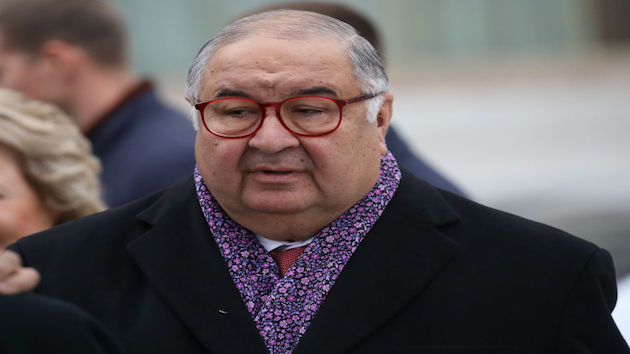
The United States will sanction Kremlin spokesman Dmitry Peskov, as well as one of Russia’s richest men, Alisher Usmanov, according to the White House.
Germany had already seized Usmanov’s superyacht, and the White House said both the boat and Usmanov’s private jet — which it said was one of the largest privately-owned aircraft in Russia — would be blocked for use in the U.S. or by Americans.
“These are significant steps that will impact the people who are closely around President Putin,” White House press secretary Jen Psaki told reporters.”We want him to feel the squeeze. We want the people around him to feel the squeeze.”
This is a developing story. Please check back for updates.
(WASHINGTON) — The House on Thursday approved a bill that would provide millions of veterans with expedited health care and disability payments related to illnesses caused by toxic exposure from burn pits.
The final vote was 256-174.
Thirty-four Republicans voted with all Democrats to support the bill.
The push to support military veterans plagued with health issues caused by toxic exposure to burn pits got a significant boost during President Joe Biden’s State of the Union address Tuesday — his support coming just before the House was set to vote Thursday.
“I’m calling on Congress: pass a law to make sure veterans devastated by toxic exposures in Iraq and Afghanistan finally get the benefits and comprehensive health care they deserve,” Biden said, calling it part of “a sacred obligation to equip all those we send to war and care for them and their families when they come home.”
Biden lamented the dangers of the toxic smoke from burn pits, which have resulted in enduring health issues for military veterans stationed overseas in Iraq, Afghanistan and Southwest Asia.
The open-air combustion of trash and other waste in burn pits is a common practice of military operations. Common materials incinerated in burn pits included human waste, paint, metal cans, food waste, unexploded ordnance, lubricant products, plastics, rubber, wood and even jet fuel.
Active-duty service members who have been exposed to these toxic chemicals are often plagued with life-threatening diseases and illness.
“And they come home, many of the world’s fittest and best-trained warriors in the world, never the same,” Biden told lawmakers. “Headaches. Numbness. Dizziness. A cancer that would put them in a flag-draped coffin.”
Biden poignantly recalled the memory of his late son, Beau Biden, who died from brain cancer in 2015.
“We don’t know for sure if a burn pit was the cause of his brain cancer, or the diseases of so many of our troops,” Biden said. “But I’m committed to finding out everything we can.”
Approximately 82% of post-9/11 veterans who served in Iraq and Afghanistan reported being exposed to burn pits and/or airborne toxic materials during their service, according to Iraq and Afghanistan Veterans of America, a nonprofit organization.
About half of those exposed believe they have symptoms associated with the exposure, and another 41 percent are unsure if their symptoms are related.
“My eyes burned. It was hard to take a deep breath when I coughed and it made chest hurt and it made me cough,” Katie Purswell, a former veteran and director of health policy at the American Legion, said during a press conference on Capitol Hill Wednesday.
“I choked on the odor from the winds when they would pick up after a while. I started waking up with bloody noses. It was difficult and painful to breathe. After I got home, I had bronchitis for a year. I don’t think my runtime has ever recovered. I just can’t take a deep breath anymore,” she said, describing the symptoms she faced following prolonged exposure to toxic burn pits while stationed overseas.
Purswell was joined by former veterans, advocates, members of Congress, and comedian Jon Stewart at the Capitol Wednesday in support of a bill the House intends to pass Thursday.
Stewart and fellow advocate and 9/11 first responder John Feal have long lobbied Congress for veterans and first responder health care, often challenging lawmakers in emotional testimony — protesting what they believe is inadequate care for the nation’s veterans.
“Last night, they were seen,” Stewart said of the president’s national address. “The president of the United States saw their struggle.”
The group is calling on Congress to pass the bill, Honoring Our PACT Act, that aims to improve health care and benefits for veterans exposed to toxic substances.
The bill would specifically designate 23 respiratory illnesses and cancers as likely linked to toxic exposures related to military burn pits and airborne hazards exposure.
Currently, the Department of Veterans Affairs decides these exposure claims on a case-by-case basis, with the exception of those filed for asthma, rhinitis or sinusitis. The burden of proving one’s illness is related to a burn pit exposure falls on the veteran, leading to delays in health care.
“There is no other toxic exposure legislation in Congress like it in scope or soundness,” Rep. Mark Takano, chairman of the House Veterans’ Affairs Committee, said Wednesday.
The California Democrat authored the legislation that has bipartisan support in the House.
“Without hesitation, our veterans raised their right hand to protect and defend this nation. And many are now sick as a result of that service. We made a pact with these individuals — a pact I’m afraid to say we have not yet honored,” Takano said.
Takano said his bill will address the full gamut of issues affecting toxic exposed-veterans, access to health care and benefits, while also reforming the VA’s “presumptive” decision-making process to provide health care to more than 3.5 million veterans who have been exposed.
The White House on Monday announced that the Department of Veterans Affairs is also making efforts to rework their policies – the VA proposed a rule that would recognize nine new respiratory illnesses as conditions that are presumed linked to a veterans’ military service, which would help fast track them for payouts and medical care.
Dennis McDonough, secretary of Veterans Affairs, alluded to the proposed changes during an interview with ABC News last month.
McDonough, acknowledging the “cumbersome” process veterans must go through to prove their illnesses are linked to exposure to burn pits, told ABC News that the department is working to establish the evidence to suggest even more illnesses are linked to burn pit exposure that he hopes the department will soon recognize.
The Senate Veterans Affairs Committee is undertaking its own effort to address the issue of toxic exposure for veterans as part of a three-step, bipartisan approach. But advocates, including Stewart and Feal, say the Senate’s effort doesn’t go as far in scope.
Some senators, however, are concerned that the House’s version of the bill is too pricey: the House bill calls for nearly $300 billion in spending over 10 years.
House Speaker Nancy Pelosi called out Republicans who voted against the bill for its hefty price tag at her press briefing Thursday.
“It really amazed me, and I’m rarely amazed and surprised around here,” Pelosi remarked to reporters.
“Oh really?” she went on, directing her ire at Republicans.
“You just gave tax cuts in 2017 to the richest people in America,” she said, referring to the Republican tax plan that went into effect under the Trump administration.
“Tax cuts for the rich. Cancer for our veterans. That’s how we see this discussion and this debate,” she added.
During Wednesday’s press conference with advocates, Pelosi — flagged by Stewart and Feal — defended the price tag.
“Don’t even talk to us about the price,” Pelosi said. “This is a cost of war that we should recognize … it’s going to be worth it. But it’s going to have a big price tag.”
“Because what we are looking at is the value of what this does for our country,” she said.
Sources familiar with the process told ABC News that members of the House and Senate will have to figure out their policy differences and take their respective bills to conference in the coming months to reach a final compromise.
The process could delay passage in the Senate for months to come before it would eventually reach Biden’s desk for his signature.
Stewart and Feal had a stark message for members of the Senate.
“Once this is done, make no mistake, then the battle shifts to the Senate. And as you know, they are excellent at killing things that are necessary. And we cannot allow it to happen,” Stewart said. “And you cannot allow this feeling of unity and hope and finally being seen to dissipate. We need all of your help to put the pressure on to make sure that the comprehensive needs that they have are passed.”
Feal warned Senate Majority Leader Chuck Schumer that he plans to lobby him hard.
“Let Schumer know that we want a bill compatible to the honorable PACT Act. If he does not do that, then I will make his life miserable,” Feal said.
A spokesman to Schumer said in a statement to ABC News: “Leader Schumer believes strongly in this bill and will do everything he can to pass it.”