(WASHINGTON) — The House voted Friday afternoon to pass a bipartisan gun safety package.
The bill, crafted in the wake of devastating mass shootings and on the one-month anniversary of the Robb Elementary School massacre in Texas that left 19 young children dead, is the first major piece of gun reform to clear Congress in decades.
The final vote was 234-193, with 14 Republicans joining all Democrats in supporting the bill. Applause could be heard in the chamber when House Speaker Nancy Pelosi called the vote.
The legislation now goes to President Joe Biden’s desk.
The president has praised the bill, despite having called on lawmakers to pass stronger restrictions like a ban on assault weapons and high-capacity magazines.
“This bipartisan legislation will help protect Americans,” Biden said in a statement after the Senate passed the legislation on Thursday. “Kids in schools and communities will be safer because of it.”
Fifteen Republicans in the Senate, including Republican leader Mitch McConnell, voted in favor of the bill.
The measure makes enhancements to background checks for potential gun buyers under the age of 21, requiring an “investigative period” to review juvenile and mental health records.
It also closes the so-called “boyfriend loophole.” Under current law, those convicted of domestic violence are prohibited from purchasing a gun if they are married to their partners or live with their partners. But under this bill, individuals in “serious” “dating relationships” will also be unable to buy guns for at least five years if they are convicted of abuse.
Millions of dollars would also be allocated to incentive states to pass “red flag” laws to remove guns from people deemed to be a danger to themselves or others, as well as other intervention programs or mental health services.
The House previously passed numerous gun reform packages; however, the Senate never took up the legislation due to Republican opposition.
The most recent package passed in the House earlier this month went much further than the Senate package. The legislation raised the minimum age to purchase firearms and banned ghost guns and large-capacity ammunition magazines, among other gun safety protections.
“This is a compromise. Surely not everything I want, and it’s not everything Republicans won. But it’s the first opportunity we’ve had in decades to do something worthwhile to prevent gun violence,” said Rep. Jim McGovern, D-Mass.
But other Democrats said the package didn’t go far enough.
“While I know that some are celebrating progress today, I am certainly not,” Rep. Norma Torres, D-Calif., emotionally said during Friday’s Rules Committee meeting. “This bill before us today is the bare minimum and we should be embarrassed. The bare minimum to protect children that are being murdered while learning their ABCs.”
Pelosi and other Democrats gathered on the steps of the United States Capitol before the vote to celebrate the legislation.
“I say to my colleagues: while it isn’t everything we would have liked to see in legislation, it takes us down the road, the path to more safety, saving lives,” Pelosi said. “Let us not judge the legislation for what it does not do, but respect it for what it does.”
“Our colleagues are gathered here with pictures of those who have been lost in all of this, accompanied by family members of those who have been lost,” Pelosi added. “It is our constant resolve that we will not stop until the job is done.”
The passage of the gun safety bill comes just one day after a major Supreme Court decision expanding gun rights.
The court’s conservative majority struck down a 100-year-old New York law that restricted the concealed carry of handguns in public to only those with a “proper cause.” Justice Clarence Thomas wrote in the opinion that the Second and Fourteenth Amendments protect an individual’s right to carry a handgun for self-defense outside the home.
ABC News’ Benjamin Siegel contributed to this report.
(WASHINGTON) — In thousands of rulings over its storied history, the U.S. Supreme Court has broken with stare decisis, the doctrine of respecting prior decisions, just 145 times in cases requiring interpretation of the Constitution.
The overturning of Roe v. Wade, the landmark 1973 ruling that extended constitutional protection for abortion, marks one of the few times it has clawed back a right enjoyed by millions of Americans for decades.
“The court has never ever overturned a prior case extending a constitutional right,” said Cardozo Law professor Kate Shaw, an ABC News legal analyst. At the same time, other scholars say, it would be restoring the right of people to govern themselves through elected policymakers.
The decision in Dobbs v. Jackson Women’s Health — allowing states to ban abortion — has put renewed focus on when and how the high court decides to reverse itself, and what some scholars say is a distinct shift in approach over the last 50 years.
“In most matters, it is more important that the applicable rule of law be settled than that it be settled right,” wrote Justice Louis Brandeis in 1932, famously summarizing the court’s approach to precedent at the time.
Justice Samuel Alito made clear the current majority has a different view: “When it comes to the interpretation of the Constitution,” Alito wrote in Dobbs, “we place a high value on having the matter ‘settled right.'”
The perceived “rightness” of a settled case has taken on new salience with the current Supreme Court, where five conservative justices — three appointed in the last five years — have signaled growing openness to revisit old “wrongs.”
“There is evidence that a weaker version of stare decisis — the presumption that the Supreme Court generally should not overrule its prior decisions — is in vogue on the court,” wrote University of Akron Law School professor Michael Gentithes in a 2020 law review analysis.
Gentithes says the high-water mark for the power of stare decisis was in the 1992 decision in Planned Parenthood v. Casey, when a conservative majority of justices reaffirmed the core holding of Roe even though a plurality considered it flawed.
“Then, as now, there were a bunch of new justices on the court who seemed quite skeptical of the soundness of Roe,” said Shaw. “And many people were very surprised to see the final outcome from a three justice majority of Republican appointees.”
Since then, as the court’s membership has changed, “poor reasoning” in a prior decision has become “ever-present justification” to attempt to overturn it, Gentithes’ analysis found.
Notably, it was Justice Alito who enshrined the court’s current approach to precedent in his 2018 opinion Janus v. AFSCME.
Laying out five factors he says justices should weigh in reversing a precedent, Alito put the quality of its reasoning as the paramount consideration — a standard that several of his justice peers have publicly embraced.
“I think a lot of people lack courage. They know what is right, and they’re scared to death of doing it. And then they come up with all these excuses for not doing it,” Justice Clarence Thomas, who joined Alito’s opinion in Janus, said last month about overturning cases he believes to be fundamentally wrong.
Two years later, Justice Brett Kavanaugh in a concurring opinion in Ramos v. Louisiana, put his spin on the approach, saying the precedent must be “grievously or egregiously” wrong to warrant overturning. But even then, he noted, justices should keep an eye on the reliance interests in a prior decision and a need to “maintain stability in the law.”
Justices Kavanaugh, Thomas, Alito, Neil Gorsuch, and Amy Coney Barrett all voted to overturn Roe and Casey.
“When one of our constitutional decisions goes astray, the country is usually stuck with the bad decision unless we correct our own mistake,” Alito explained.
Error correction has always been a factor in the Supreme Court’s rationale for overturning precedent, especially in matters of constitutional interpretation, which cannot easily be addressed by Congress.
While lawmakers could have attempted to amend the constitution to obliterate the Supreme Court’s racist “separate but equal” doctrine legitimized in the 1896 Plessy v. Ferguson decision, it was the justices’ unanimous 1954 ruling to overturn Plessy in Brown v. Board of Education that set it right.
“I think the Plessy example is very persuasive, not that Roe should be overturned but that we don’t want a stare decisis doctrine written in stone — or even setting cement,” said Sarah Isgur, a former Justice Department lawyer and ABC News legal analyst.
Justice Brandeis, a revered liberal icon of the court, acknowledged as much in his 1932 writing on stare decisis, noting that “lessons of experience and the force of better reasoning” may necessitate corrections.
But critics say contemporary emphasis on a prior decision’s reasoning — and its rightness or wrongness — may be undermining stare decisis and the credibility of the court.
“A court that changes its mind every time there is a new justice or different set of facts undermines the very concept of the rule of law and creates uncertainty for citizens, businesses and elected officials trying to go about their lives while following the laws of the land,” said Isgur.
Many legal scholars say overturning Roe also threatens precedents involving rights other than abortion not explicitly enumerated in the Constitution, such as marriage.
“If the court is willing to overrule Roe v. Wade, after we just had confirmation hearings of justices come in and say it’s precedent upon precedent, it’s a ‘super precedent,’ it’s foundational,” said Rachel Barkow, vice-dean of New York University Law School, “what the public sees is that no precedent is safe, that stare decisis is meaningless to them and that anything is up for grabs.”
Alito attempts to head off the criticism in his decision, writing “nothing in this opinion should be understood to cast doubt on precedents that do not concern abortion.”
“Everybody thinks that stare decisis is the idea that precedent counts for something, but it’s not absolute,” said University of Notre Dame law professor Sherif Girgis, a former clerk to Justice Alito. “It gets respect because it’s a precedent, but there’s always the possibility that it can be overturned if a bunch of other criteria are satisfied.”
(WASHINGTON) — President Joe Biden on Friday harshly criticized the Supreme Court’s decision upending abortion rights and called on Congress to enshrine access in federal law.
“It’s a sad day for the court and the country,” Biden said as he delivered remarks from the Cross Hall of the White House.
“Today the Supreme Court of the United States expressly took away a constitutional right from the American people that it had already recognized,” he said. ‘They didn’t limit it, they simply took it away. That’s never been done to a right so important to so many Americans but they did it.”
The court’s conservative majority voted Friday to overturn Roe v. Wade as it upheld a Mississippi law that bans nearly all abortions past 15 weeks of pregnancy.
Justice Samuel Alito, who also authored the bombshell draft opinion leaked to the public earlier this year indicating this outcome, wrote in the opinion that Roe was “egregiously wrong from the start.”
“Abortion presents a profound moral question,” Alito wrote. “The Constitution does not prohibit the citizens of each State from regulating or prohibiting abortion. Roe and Casey arrogated that authority. The Court overrules those decisions and returns that authority to the people and their elected representatives.”
The Supreme Court’s three liberal justices slammed the majority’s opinion, writing that the decision essentially “says that from the very moment of fertilization, a woman has no rights to speak of.”
Biden said he believed Roe was correctly decided, calling Friday’s ruling a “tragic error” by the high court.
Biden called on Congress to take action to enshrine abortion rights at the federal level.
“No executive action from the president can do that,” Biden said.
“This fall, Roe is on the ballot,” he added.
“This decision must not be the final word,” he said. “With your vote, you can act. You can have the final word.”
He called out President Donald Trump’s influence by name.
“It was three justices, named by one president, Donald Trump, who are the core of today’s decision to upend the scales of justice and eliminate a fundamental right for women in this country,” he said.
“Make no mistake: this decision is a culmination of a deliberate effort over decades to upset the balance of our law,” he said. “It is a realization of an extreme ideology, and a tragic error by the Supreme Court, in my view.”
Abortion rights activists previously told ABC News they believed Biden could employ the Food and Drug Administration and Medicaid to fill gaps in care.
Biden took such action on Friday, stating he was instructing the Department of Health and Human Services — which oversees the FDA — to take steps to protect access to medication abortion in the wake of Roe being overturned.
Biden also expressed concern Friday that the ruling would impact other Supreme Court decisions relating to the notion of privacy — such as contraception and same-sex marriage rights.
Supreme Court Justice Clarence Thomas, in his concurring opinion on Friday, stated such unenumerated rights should be reconsidered.
Thomas specifically called for the reconsideration of Griswold v. Connecticut, which established the right of married couples to use contraception; Lawrence v. Texas, which protects the right to same-sex romantic relationships; and Obergefell v. Hodges, which establishes the right to same-sex marriage.
“Because any substantive due process decision is ‘demonstrably erroneous,’ we have a duty to ‘correct the error’ established in those precedents,” he wrote.
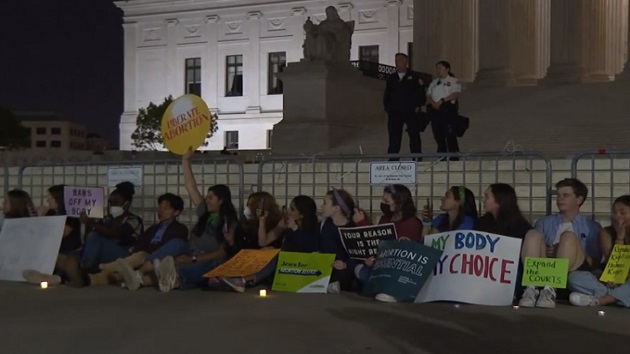
The Supreme Court’s ruling was met with immediate protest from individuals on both sides of the abortion debate. Biden called on Americans to keep all protests peaceful.
ABC News’ Ben Gittleson contributed to this report.
(WASHINGTON) — When activists learned the Supreme Court was considering overturning abortion rights, they feared other rights, such as same-sex marriage, same-sex relationships and contraceptives, might be next.
On Friday, Supreme Court Justice Clarence Thomas’s concurring opinion on Dobbs v. Jackson Women’s Health Organization that overturned Roe v. Wade validated those concerns by stating that other precedents from the high court should be reconsidered.
Thomas called for the reconsideration of Griswold v. Connecticut, which established the right of married couples to use contraception; Lawrence v. Texas, which protects the right to same-sex romantic relationships; and Obergefell v. Hodges, which establishes the right to same-sex marriage.
“In future cases, we should reconsider all of this Court’s substantive due process precedents, including Griswold, Lawrence, and Obergefell. Because any substantive due process decision is “demonstrably erroneous,” we have a duty to “correct the error” established in those precedents,” he wrote.
“After overruling these demonstrably erroneous decisions, the question would remain whether other constitutional provisions guarantee the myriad rights that our substantive due process cases have generated,” Thomas wrote.
Activist groups across the country are sounding the alarm about a potential fight for previously protected LGBTQ and reproductive rights.
“The anti-abortion playbook and the anti-LGBTQ playbook are one and the same,” said Sarah Kate Ellis, the president and CEO of LGBTQ advocacy organization GLAAD, in a statement. “Our bodies, healthcare and our future belong to us, not to a meddling politician or extremist Supreme Court justices, and we will fight back.”
The lack of reference to “abortion” in the Constitution and the fact that “no such right is implicitly protected by any constitutional provision,” was used in the opinion that led to the overturning of Roe v. Wade.
Still, Justice Samuel Alito stated in the opinion that other unenumerated rights that aren’t explicitly mentioned in the Constitution are not immediately in doubt.
“To ensure that our decision is not misunderstood or mischaracterized, we emphasize that our decision concerns the constitutional right to abortion and no other right,” the document states. “Nothing in this opinion should be understood to cast doubt on precedents that do not concern abortion.”
Thomas’ note to “correct the error” established in other precedents, however, has put LGBTQ groups like GLAAD, the National LGBTQ Task Force and reproductive rights organizations like Planned Parenthood, on edge.
“We must push back now – on all state and federal lawmakers and courts – to fight for abortion access and reproductive choice, the right for transgender people to access life-saving healthcare, the right to bodily autonomy, and the right to sexual freedom,” said Kierra Johnson, the executive director of the National LGBTQ Task Force, in a statement.
She continued, “These are our most basic liberties — to live a life of dignity, private from government interference. The Court has no place interfering with our constitutional right to make decisions about our own bodies.”
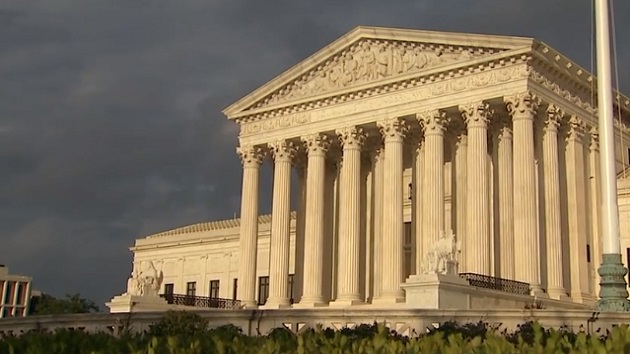
(WASHINGTON) — The Supreme Court on Friday ruled to overturn Roe v. Wade and the fundamental right to abortion that has been the law for almost 50 years.
The court ruled 6-3, in an opinion written by Justice Samuel Alito, who called Roe “egregiously wrong from the start.”
The court upheld a Mississippi law that bans all abortion past 15 weeks, with very few medical exceptions.
The court also overturned Roe v. Wade and Casey v. Planned Parenthood, two landmark decisions legalizing abortion nationwide.
Alito also wrote the bombshell draft opinion leaked to the public earlier this year. The three liberal justices dissented.
Alito wrote that the Constitution “does not confer a right to abortion,” stating it is ultimately up to the states to regulate abortion access.
“Abortion presents a profound moral question,” Alito wrote. “The Constitution does not prohibit the citizens of each State from regulating or prohibiting abortion. Roe and Casey arrogated that authority. The Court overrules those decisions and returns that authority to the people and their elected representatives.”
In their dissent, Justices Stephen Breyer, Sonia Sotomayor, and Elena Kagan lamented that millions of American women will lose a right because of the court’s decision.
“It says that from the very moment of fertilization, a woman has no rights to speak of,” their dissent reads. “A State can force her to bring a pregnancy to term, even at the steepest personal and familial costs. An abortion restriction, the majority holds, is permissible whenever rational, the lowest level of scrutiny known to the law.”
The three justices also pushed back on the majority’s reasoning that each state can address abortion access as it pleases.
“That is cold comfort, of course, for the poor woman who cannot get the money to fly to a distant State for a procedure,” they wrote. “Above all others, women lacking financial resources will suffer from today’s decision.”
Since Roe v. Wade in 1973 and Planned Parenthood v. Casey in 1992, the court has forbidden states from banning abortions prior to fetal viability outside the womb, roughly 24 weeks, according to medical experts.
Mississippi had argued that Roe and Casey were wrongly decided and that each state should be allowed to set its own policy.
Jackson Women’s Health, the state’s only remaining abortion clinic, argued that the high court’s protection of a woman’s right to choose abortion is clear, well-established precedent and should be respected.
After oral arguments in December, a majority of justices voted initially to side with Mississippi, according to a leaked first draft opinion by Justice Samuel Alito published by Politico in early May and confirmed to be authentic by Chief Justice John Roberts.
Majorities of Americans have long supported upholding Roe v. Wade and oppose state bans on all abortions, according to ABC News/Washington Post polling.
But Americans appear more divided on the type of ban at issue in Mississippi. A Marquette University Law School poll late last year found 37% favored upholding a 15-week ban, with 32% opposed.
Mississippi’s sole clinic only performs abortions up to 16 weeks.
As the Supreme Court case was pending, several Republican-led states enacted unique laws that effectively circumvent constitutional protections for abortion.
Texas’ SB8 — a near-total ban on abortions — took force in September, deputizing everyday citizens to sue anyone who “aids or abets” an illegal abortion. Oklahoma recently implemented a similar citizen-enforced measure that bans all abortions, with only exceptions for rape, incest or the life of the mother.
The Supreme Court ruled last year that it could not intervene to block the state laws.
Twenty-six states are considered certain or likely to ban abortions following a Supreme Court decision overturning Roe, according to the Guttmacher Institute, which supports abortion rights. Fourteen states plus Washington, D.C., have laws explicitly protecting access to abortion care.
The ruling is the Court’s most significant on abortion rights in years and the first for the current 6-justice conservative majority with Justice Amy Coney Barrett.
This is a developing story. Please check back for updates.
(NEW YORK) — Dr. Deborah Birx, a former White House COVID response coordinator under then-President Donald Trump, told Congress on Thursday that Trump’s focus on the 2020 election got in the way of a strong COVID response in the winter of 2021.
Birx, who has written a book on her time working with the White House in the early days of the pandemic, spoke to the House Subcommittee on the Coronavirus Crisis largely about what she said were the errors the Trump administration made and times she disagreed with its approach.
She told the committee that was told to delete recommendations of masks and social distancing in reports that went out to states’ governors and that those reports — once put out weekly — would only be provided if the states asked.
Birx said she thought the best approach would be complete transparency and to arm the states with all the data available
The former COVID coordinator and longtime public health official also said she put together a plan in September and October for how to go into the surge that she “knew was coming to the United States throughout that fall and winter of 2020 into 2021.”
MORE: ABC News Exclusive: Dr. Birx speaks to Trump disinfectant moment, says colleagues had resignation pact
She said she was given reason to believe that the plan would be used by the White House, but instead it never went anywhere.
“That strategy was never fully executed in all of its robust and comprehensive approach because the teams were never brought back together,” Birx testified.
“I believe it is because they were distracted by the post-election issues,” she said.
That fall and winter was the deadliest time of the pandemic in the US. More people died than at any other point in the pandemic to date.
Birx also said that she believes if Trump had followed her recommendations and data, lives would’ve been saved.
The misinformation circulating in the White House, Birx said, made it hard to act on plans.
“When you no longer agree on what is actually happening in the country and what needs to be done, and there’s not consensus on that, then you lose the ability to execute in the maximum efficient and effective way,” Birx said.
Going forward, Birx said the country still is not in a good place.
She argued that the Biden administration needs to be watching for new variants that could cause surges and launch quickly on proactively testing vulnerable people and prescribing Paxlovid, which can be lifesaving if given in the first five days of illness.
She also said the country shouldn’t overlook the toll that hospitalizations have taken on people, even as the country surpasses the tragic milestone of one million deaths.
“Hospitalizations in people over 70 is not benign. It’s not benign,” she said.
“I know everybody focuses on the deaths but I want to make it clear, many more Americans have suffered really significantly from being hospitalized and another whole group still has long COVID,” Birx said.
“And so you know, this isn’t trivial — this virus is not trivial, and should not just be immediately discarded as we’re doing fine. We are not doing fine yet.”
(WASHINGTON) — The Supreme Court ruling Thursday striking down a New York state law limiting the right to carry a concealed handgun in public is sparking a furor from Albany to Washington as gun safety activists and Democrats warn the ruling will lead to more guns, and more violence.
The high court’s ruling struck down the century-old law mandating that gun owners demonstrate “proper cause” to carry a concealed handgun outside of their homes.
The 6-3 opinion was authored by Justice Clarence Thomas for the conservative majority with the three liberal justices dissenting.
President Joe Biden said he was “deeply disappointed” by the ruling, saying it “contradicts both common sense and the Constitution, and should deeply trouble us all.”
“In the wake of the horrific attacks in Buffalo and Uvalde, as well as the daily acts of gun violence that do not make national headlines, we must do more as a society — not less — to protect our fellow Americans,” he said in a statement. “I urge states to continue to enact and enforce commonsense laws to make their citizens and communities safer from gun violence.”
The decision sparked an outcry among New York Democrats, including New York Democratic Gov. Kathy Hochul, who said she might call a special session of the state legislature to consider responses to the ruling — falling just six weeks after 10 Black people were killed in a mass shooting at a Buffalo supermarket.
“It is outrageous that at a moment of national reckoning on gun violence, the Supreme Court has recklessly struck down a New York law that limits those who can carry concealed weapons,” Hochul tweeted.
“In response to this ruling, we are closely reviewing our options — including calling a special session of the legislature,” she added. “Just as we swiftly passed nation-leading gun reform legislation, I will continue to do everything in my power to keep New Yorkers safe from gun violence.”
New York City’s Democratic Mayor Eric Adams warned that the ruling would allow for more guns on the streets and put residents at risk.
“We have been preparing for this decision and will continue to do everything possible to work with our federal, state, and local partners to protect our city. Those efforts will include a comprehensive review of our approach to defining ‘sensitive locations’ where carrying a gun is banned, and reviewing our application process to ensure that only those who are fully qualified can obtain a carry license,” he said in a statement.
“We will work together to mitigate the risks this decision will create once it is implemented, as we cannot allow New York to become the Wild West,” he added, ahead of a public press conference.
Congressional Democrats pan ruling after prominent mass shootings
Democrats in Washington, meanwhile, bemoaned the decision, noting that it comes as the nation grapples with a spate of high-profile mass shootings, including in Buffalo and at an elementary school in Uvalde, Texas.
“Just weeks after mass shootings in Buffalo and Uvalde, as parents and young people across the country call for an end to gun violence, the far-right Supreme court has struck down one of the nation’s oldest gun safety laws. Congress must pass gun safety legislation now,” Sen. Ed Markey, D-Mass., tweeted.
“This right-wing Supreme Court just gave in to the gun lobby and struck down a critical New York State gun control law. As we face rising gun violence across the country, this decision will only make it harder to protect New Yorkers from dangerous weapons in our communities,” added Rep. Mondaire Jones, D-N.Y.
Aligned groups advocating for stricter gun laws echoed those lamentations, painting in stark terms the violence they say could follow the ruling.
“More people will be harmed by guns as a result of today’s decision,” Everytown for Gun Safety Executive Director Eric Tirschwell said Thursday. “More people will be intimidated by guns, more people will be shot and wounded and more people will be shot and killed. By wrongly issuing this decision, and ignoring its public safety implications, the Supreme Court risks converting the Constitution into a suicide pact…”
Republicans, gun rights groups rejoice
Republicans and gun rights groups, for their part, hailed the ruling, casting it as a needed protection of the Second Amendment.
“Today’s SCOTUS decision reaffirms what we already knew: the right to keep and bear arms shall not be infringed,” tweeted Sen. Steve Daines, R-Mont. “This is a major victory for law-abiding gun owners across America.”
“While states like NY have tried to restrict your Constitutional 2nd Amendment right through burdensome laws and regulations, today’s Supreme Court ruling rightfully ensures the right of all law-abiding Americans to defend themselves without unnecessary government interference,” said House Minority Leader Kevin McCarthy, R-Calif., in a tweet.
The National Rifle Association, the nation’s preeminent gun rights group, praised the ruling as a “watershed win.”
“The right to self-defense and to defend your family and loved ones should not end at your home. This ruling brings life-saving justice to law-abiding Americans who have lived under unconstitutional regimes all across our country, particularly in cities and states with revolving door criminal justice systems, no cash bail and increased harassment of law-enforcement,” NRA chief Wayne LaPierre said in a statement.
Ruling comes as Congress pushes gun reform bill
The reactions come as Congress is working to move forward with a gun reform bill that would, among other things, provide funds for states to implement so-called red flag laws and close the “boyfriend loophole” to keep weapons out of the hands of domestic abusers, and break a 26-year long stalemate on bipartisan gun legislation on Capitol Hill.
Democrats, in particular, have been buoyed by what they say is public support for stricter gun laws, including a September Pew survey showing that majorities of Democrats and Republicans are against people carrying concealed guns without a permit.
The legislation is expected to ultimately pass, with 15 Senate Republicans voting Thursday to end debate on the bill ahead of a final vote by the end of the week and House Democrats, expected to be supportive, controlling that chamber.
(WASHINGTON) — Federal agents searched the Virginia home of former Trump Justice Department official Jeffrey Clark on Wednesday morning, according to multiple sources with direct knowledge of the activity.
It was unclear which federal agencies conducted the search, but one neighbor who witnessed the law enforcement activity said they saw officials entering and exiting the Lorton, Virginia, home after arriving there early Wednesday. A spokesperson for the Fairfax County, Virginia, Police Department told ABC News that its officers assisted with law enforcement activity at the house, but deferred to the Justice Department for further comment.
A spokesperson for the U.S. Attorney’s Office in Washington, D.C., said they “can confirm there was law enforcement activity in that area yesterday,” but declined to comment on specific individuals or the nature of that activity.
A lawyer for Clark did not respond to a request for comment. But Russ Vought, a former Trump White House official and the president of the Center for Renewing America, where Clark is now a senior fellow, said in a statement that “more than a dozen DOJ law enforcement officials searched Jeff Clark’s house in a pre-dawn raid, put him in the streets in his pajamas, and took his electronic devices.”
“The new era of criminalizing politics is worsening in the U.S.” Vought said. “This is not America, folks. The weaponization of government must end. Let me be very clear. We stand by Jeff and so must all patriots in this country.”
Clark, a former assistant attorney general for the environment and natural resources, has emerged as a key player in Donald Trump’s efforts to leverage the powers of the Justice Department to find widespread corruption in the 2020 electoral process after it became clear that Joe Biden had won.
On Thursday, the House panel investigating the Jan. 6 attack was expected to hear testimony from multiple former Justice Department officials with knowledge of Clark’s proposal of a plan to pressure states to invalidate Biden’s electoral victories after the 2020 election.
In one instance, emails obtained by ABC News in August 2021 showed how Justice Department officials rebuffed Clark’s request to urge officials in Georgia to investigate and possibly overturn Biden’s victory in the state.
An alleged plan to appoint Clark acting attorney general — which would have empowered him to pursue baseless allegations of voter fraud — prompted several Justice Department officials to threaten their resignation. Trump ultimately withdrew the plan.
Editor’s Note: This story has been updated to reflect that the eyewitness to Wednesday’s activity was not certain what agency the officials were from.
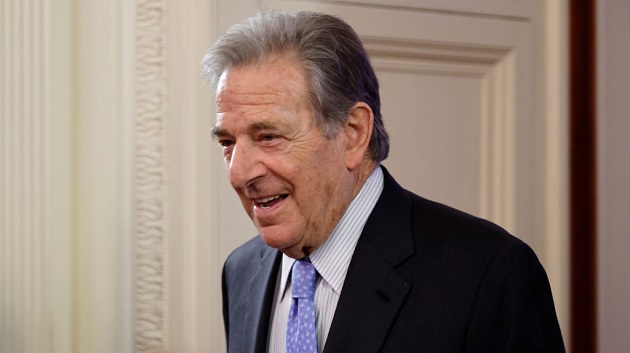
(NAPA COUNTY, Calif.) — House Speaker Nancy Pelosi’s husband, Paul Pelosi, has been charged with driving under the influence, causing injury, following his May 28 arrest, the Napa County District Attorney’s Office said.
Paul Pelosi is also charged with driving with 0.08% blood alcohol level or higher, causing injury, the office said in a press release Thursday. Both charges were filed as misdemeanors.
The 82-year-old was detained on May 28 around 11:44 p.m. and booked on two misdemeanor counts at the time, according to the Napa County Criminal Justice Network’s records.
The California Highway Patrol in Napa said at the time that units responded to a two-vehicle crash at 10:26 p.m. local time on State Route 29 at Walnut Lane. Paul Pelosi was driving a Porsche and traveling eastbound on Walnut Lane and attempted to cross SR-29 when his vehicle was hit by a party traveling northbound on SR-29 in a Jeep, according to the CHP.
Paul Pelosi’s bail had been set at $5,000 and he was released the next morning, the records show.
ABC News’ Morgan Gstalter contributed to this report.
(WASHINGTON) — The House Jan. 6 committee hearing on Thursday afternoon focused on what it said was a “brazen attempt” by then-President Donald Trump to misuse the Department of Justice for his own political gain.
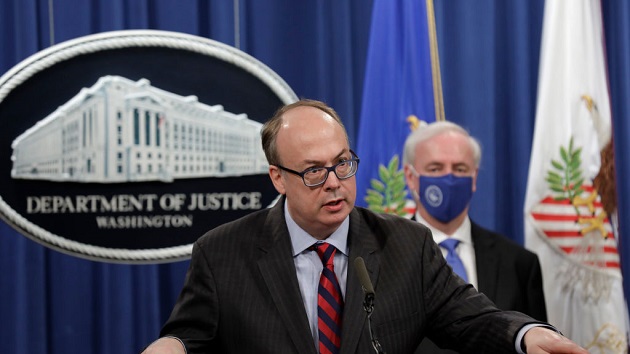
The panel heard from three former officials directly affected by Trump’s pressure campaign: former attorney general Jeffrey Rosen, former deputy attorney general Richard Donoghue and former top DOJ lawyer Steve Engel, all of whom said they repeatedly told Trump allegations of widespread voter fraud were untrue.
All three men described in stunning detail the desperate attempts by Trump and his allies to recruit the department in his plot to overturn his 2020 election loss to Joe Biden — which culminated in a plan to replace Rosen with Jeffrey Clark, a less-qualified but loyal official who was leading the department’s environmental division.
Notably, Clark’s Virginia home was raided by federal agents on Wednesday, as the Justice Department expands its investigation into a scheme to send fake electors to Congress and the National Archives.
Chairman Bennie Thompson, D-Miss., on Thursday characterized Trump’s pressure campaign against the DOJ — as well as his attacks on local election officials, then-Vice President Mike Pence and more — as the “inner workings of what was essentially a political coup.”
“He pressured the Justice Department to act as an arm of his reelection campaign,” Thompson summarized in his closing statement. “He hoped law enforcement officials would give the appearance of legitimacy to his lies, so he and his allies had some veneer of credibility when they told the country that the election was stolen.”
Here are some key takeaways from Thursday’s hearing:
Trump’s demands included seizing voting machines
Rosen and Donoghue shed light on an emergency meeting called by a particularly “agitated” Trump on New Year’s Eve, during which the president urged the department to seize voting machines from across the country.
Rosen said the officials in the room told him no.
“There was no factual basis nor was there any legal authority to do so,” Rosen testified.
It wasn’t the only request Trump made of the department before Jan. 6. He also wanted officials to send a lawsuit to the Supreme Court regarding election fraud, appoint a special counsel to investigate alleged fraud and more, witnesses said.
One theory propagated by Trump was that Italian satellites had switched votes from him to Biden, which Donoghue described as “pure insanity.”
Rosen said the department declined all of Trump’s demands because they “did not think that they were appropriate based on the facts and the law as we understood them.”
Tense Jan. 3 White House meeting on ‘murder-suicide pact’
The second half of the hearing zoomed in on a critical meeting at the White House on Jan. 3, 2021, when Trump weighed appointing Clark to lead the Justice Department.
The committee displayed a White House call log that already referred to Clark as the “acting attorney general,” suggesting that Trump was already ready to turn over the Justice Department to Clark before the meeting.
“What do I have to lose?” Trump mused at one point in the meeting. Donoghue replied that it was “not in anyone’s best interest.”
All three live witnesses described threatening to quit if Clark was appointed, citing his lack of qualifications to serve in such a high-level role.
“I said, Mr. President, within 24, 48, 72 hours you could have hundreds and hundreds of resignations of the leadership of the entire Justice Department because of your actions, what’s that going to say about you?” Engel said.
Engel said at that point, White House counsel stepped in to describe appointing Clark as a “murder-suicide pact.”
Scott Perry emerges as key figure in DOJ pressure campaign
The committee on Thursday outlined what it said was the role Rep. Scott Perry, R-Penn., played in trying to elevate Clark to attorney general as other officials in the department pushed back on Trump’s election baseless claims.
Perry was among the group of Republicans who met with Trump on Dec. 21, 2020, on how to continue challenging Joe Biden’s victory and push claims of voter fraud.
The next day, Perry introduced Clark to Trump in a White House meeting. Clark met with the president without the knowledge of his superiors, in violation of DOJ rules.
Perry also texted White House chief of staff Mark Meadows to help with Clark’s ascension. In one message displayed during the hearing, Perry wrote: “Mark, just checking in as time continues to count down. 11 days to 1/6 and 25 days to inauguration. We gotta get going.”
Perry’s office continued to defend his actions, with his spokesperson telling ABC News Congressional Correspondent Rachel Scott on Thursday there’s “nothing new here.”
Clark was ready to inform Georgia officials the DOJ found fraud
Clark was a key player in Trump’s attempt to get the Justice Department to falsely claim voter fraud in Georgia and other states.
A draft letter Clark circulated asked Georgia’s governor and other top state officials to convene the state legislature into a special session to investigate claims of voter fraud — fraud former Attorney General Bill Barr had already deemed meritless.
Donoghue said he and Rosen had “visceral reactions” to the draft document, adding that if it had been sent it might have sparked a “constitutional crisis.”
Former White House counsel Eric Herschmann recalled what he said to Clark when he became aware of his plans.
“When he finished discussing what he planned on doing, I said ‘[expletive], congratulations. You just admitted your first step you would take as AG would be committing a felony,” Herschmann said. “‘You’re clearly the right candidate for this job.'”
“I told Clark the only thing he knew was that environmental and election both start with “e,” and I’m not even sure you know that,” he added.
Trump: ‘Just say it was corrupt and leave the rest to us’
Drawing from handwritten notes, Donoghue documented that Trump told him to, “Just say that the election was corrupt + leave the rest to me and the R. Congressmen.”
When Donoghue told Trump on a Dec. 27, 2020, phone call he couldn’t change the outcome of the election, he recalled Trump “responded very quickly — and said, ‘that’s not what I’m asking you to do — I’m just asking you to say it is corrupt and leave the rest to me and the Republican congressmen,” Donoghue recalled.
He also said Trump told him the Justice Department was “obligated to tell people that this was an illegal, corrupt election,” despite officials repeatedly telling him no widespread fraud existed and that Biden was the legitimate winner.
Rep. Adam Kinzinger, one of two Republicans on the panel, emphasized the gravity of Trump’s request, saying, “The president wanted the top Justice Department officials to declare that the election was corrupt, even though, as he knew, there was absolutely no evidence to support that statement.”
GOP members of Congress sought preemptive pardons
Former White House officials detailed in taped depositions how several Republican members of Congress requested “blanket pardons” in the final days of the Trump administration.
Among those listed by the officials were Reps. Perry, Mo Brooks of Alabama, Andy Biggs of Arizona and Louie Gohmert of Texas.
Cassidy Hutchinson, a top aide to Meadows, added in her testimony that Gaetz had been asking for a pardon since “early December.” ABC News has previously reported on an ongoing DOJ investigation on sex trafficking allegations involving Gaetz.
Hutchinson also said she “heard” that Rep. Marjorie Taylor Greene of Georgia had requested a pardon from White House lawyer Pat Phillbin and said that Rep. Jim Jordan of Ohio “talked about pardons,” and asked for an update on whether the White House was going to pardon members of Congress, but did not directly ask for one, to her knowledge.
John McEntee, a former Trump White House aide, testified that at one point, the idea of a “blanket pardon” was floated for everyone involved in Jan. 6.
One after another, Republican lawmakers dismissed of denied the allegations.
In a statement to ABC News, Brooks dismissed said pardons “were unnecessary after all,” and while Gaetz did not deny the claim, he dismissed the committee in a tweet as a “political sideshow.”
Jordan called his involvement “100% fake news” in a tweet, and Perry’s spokesperson called it “a ludicrous and soulless lie.” Greene called it “gossip and lies” and the committee a “Witch Hunt.”