
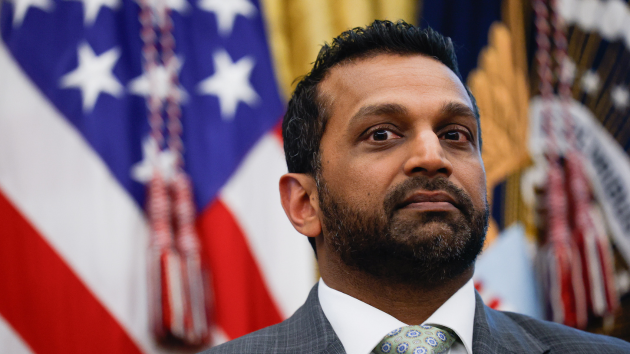
Trump tours Texas flood devastation while avoiding criticism he’s heaped on other governors

Trump tours Texas flood devastation while avoiding criticism he’s heaped on other governors
Win McNamee/Getty Images

(WASHINGTON) — President Donald Trump is touring the devastation left by flash flooding in central Texas amid growing questions about how local officials responded to the crisis as well as questions about the federal response — including the fate of the Federal Emergency Management Agency — that he has so far avoided.

Trump’s visit on Friday comes a week after heavy rainfall caused the Guadalupe River in Kerr County to rise 26 feet in less than an hour, killing at least 121, including dozens of children at the nearby Christian summer camp, Camp Mystic.

He and first lady Melania Trump will see flood-affected areas and participate in a roundtable with first responders and local officials. The two left the White House on Friday morning, with the president stopping to take some questions from reporters.

“It’s a horrible thing. A horrible thing. Nobody can even believe it,” Trump said of the catastrophic flash flooding.

“But we’re going to be there with some of the great families and others, the governor, everybody,” he added.

Accompanying him to Kerr County, one of the hardest hit areas, are Republican Sens. Ted Cruz and John Cornyn.

The search for more than 170 people still missing continues with more than 2,100 responders on the ground in Texas from local, state and federal agencies.

Meanwhile, local officials are under scrutiny about what steps were taken to adequately warn people and how long it took for authorities to take action based on escalating weather and other alerts.

Trump, notably, hasn’t engaged in similar criticism about how the crisis was handled — as he has done in the case of other disasters.

“I would just say this is a hundred-year catastrophe, and it’s just so horrible to watch,” Trump said on Sunday.

Instead, Trump has largely focused on his relationship with Texas Gov. Greg Abbott — a Republican and strong ally of the president.

“We’ve been in touch with Gov. Abbott, I’m very close to Gov. Abbott, and everybody in Texas,” Trump said on Sunday.

It’s a marked contrast to how Trump has reacted in the past, including to the California wildfires earlier this year, where he blasted California’s Democratic Gov. Gavin Newsom and other local Democratic officials.

Some of the hardest-hit areas of central Texas, including Kerr County, are areas of strong Republican support that voted for Trump in the 2024 election.

Trump approved a major disaster declaration for Texas earlier this week.

Abbott said during a news conference on Tuesday that he spoke with Trump that morning and received assurances that assistance would be provided.

“He could not stop talking about how sad he was for all the little girls who have lost their lives,” Abbott said. “He recounted his own understanding of what happened with what was really a tsunami wave, a wall of water, that swept too many of them away.”

“And he cares a lot about those young ladies. And he wants to step up and make sure that any need that we have here in Texas is going to be met very quickly,” Abbott continued.

The White House has pushed back heavily on criticism of the administration’s cuts to the National Weather Service, which led to some to question if staffing levels or forecasting abilities were impacted.

“Blaming President Trump for these floods is a depraved lie, and it serves no purpose during this time of national mourning,” White House press secretary Karoline Leavitt said from the briefing room podium on Monday.

Trump’s also avoided answering questions on whether he is still aiming to phase out FEMA.

Department of Homeland Security Secretary Kristi Noem, discussed the federal response to the floods during a Cabinet meeting on Tuesday.

“We as a federal government don’t manage these disasters, the state does,” Noem contended. “We come in and support them. And that’s exactly what we did here in this situation. FEMA went to an enhanced level immediately. But as soon as you signed the major disaster declaration, we were able to get them resources and dollars right away, just like you envisioned through state lot grants to help them with cleanup. And we’re still there in presence.”

Later in the week, though, Noem went after FEMA during the Biden and other previous administrations — alleging the agency has suffered from “gross mismanagement and negligence.”

“The list of famous failures is staggering,” Noem claimed in comments to the FEMA Advisory Council, a task force designed to recommend reforms to the agency, including possible dismantlement of the agency as it exists today. Trump appointed Abbott as a new member to the group back in April.

Acting FEMA Administrator David Richardson had yet to visit the affected areas in Texas as of Thursday afternoon.

ABC News’ Luke Barr and Kelsey Walsh contributed to this report.

Copyright © 2025, ABC Audio. All rights reserved.
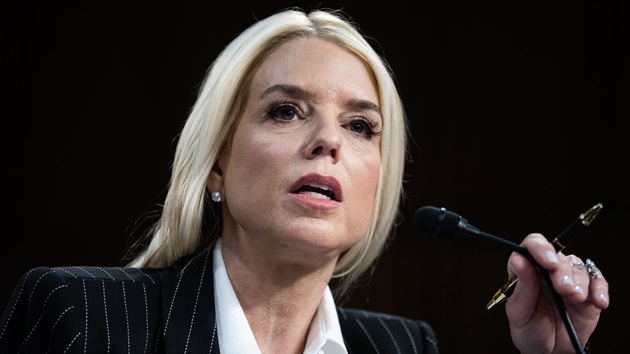
Rubio meets with Chinese foreign minister

Rubio meets with Chinese foreign minister
Joe Raedle/Getty Images

(WASHINGTON) — Secretary of State Marco Rubio said on Friday after his first meeting with Chinese Foreign Minister Wang Yi that their talks were “positive and constructive” and could pave the way for a meeting between the two countries’ heads of state.

“The president wants to do it. The Chinese side wants to see it happen. President Xi said that publicly. So I think the odds are high,” Rubio said. “I don’t have a date for you, but I think it’s coming.”

Rubio said he and his counterpart, in their first meeting and the secretary’s first trip to Asia, did not focus on tariff tensions between the nations.

Trump’s so-called reciprocal tariffs on almost every foreign country are set to take effect on Aug. 1. He initially delayed “reciprocal tariffs” in April, vowing to strike roughly 90 trade deals in 90 days.

Goods from China are already hit with a 30% tariff.

So far, the White House says it has reached trade agreements with only the United Kingdom and Vietnam, as well as a preliminary accord with China.

It was Rubio’s second high-stakes meeting with the top diplomat of a U.S. adversary after he and Russian Foreign Minister Sergei Lavrov met for 40 minutes on the sideline of summit for the Association of Southeast Asian Nations in Malaysia.

Rubio emerged from that Thursday meeting calling it a “frank” conversation in which he relayed Trump’s “frustration” for Moscow’s inflexible approach to the negotiating table for peace in Ukraine.

On Friday, Rubio said he shuttled the Russians’ message back to Trump in a phone call Thursday night, but tempered expectations for progress.

“I don’t want to oversell it, OK, but it was constructive, and there was some things that perhaps we can build on. [But] maybe not, I don’t know. We’ll find out, but there are some things that we will potentially explore,” he said.

The president has said this week that the U.S. will send weapons to Ukraine, expressing distrust in Russian president Vladimir Putin — and reversing course on a pause in specific munitions scheduled to head to Ukraine.

“You’ll be seeing things happen,” the president suggested Friday, in support of Ukraine.

Copyright © 2025, ABC Audio. All rights reserved.
More than 1,300 State Department employees to receive layoff notifications

More than 1,300 State Department employees to receive layoff notifications
Anna Moneymaker/Getty Images

(WASHINGTON) — The State Department is sending formal layoff notices to 1,107 civil service employees and 246 foreign service officers with domestic assignments, according to internal department communication reviewed by ABC News.

All notifications for civilian service employees and foreign service officers are expected to go out by the end of the day on Friday, according to the communication.

Impacted civil service employees will generally be placed on 60 days of administrative leave before termination, while foreign service officers will be placed on administrative leave for 120 days and then separated from the department.

In all, 3,000 employees are expected to depart as part of the reduction in force, according to the communication, but that number also includes voluntary departures.

Department leadership previously emphasized that they wanted to handle the layoffs with care, individually notifying each impacted employee; however, many are learning of the change in their employment status by seeing a downloadable Official Personnel Folder that was added to an online human resources portal in the overnight hours.

Employees have been informed they will lose access to the building, their email and some applications by the end of the day. Boxes for personal effects are being distributed at multiple points across the State Department’s campus. The department has also set up “Transition Day Out Processing” stations through the department

Impacted employees are also being instructed to send their teams a “brief update” on their projects, leave any hard files in their work area and to set an out-of-office message.

While these layoffs are focused of the domestic work force, they are based on personnel assignments on May 29 of this year. As such, a limited number of the impacted employees have been transferred abroad between then and now. They are being told to follow checkout procedures at their respective posts.

The State Department released a letter to all employees Thursday evening informing them that the department was officially moving to implement a “targeted reduction in domestic workforce.”

“Soon, the Department will be communicating to individuals affected by the reduction in force. First and foremost, we want to thank them for their dedication and service to the United States,” the letter, signed by Deputy Secretary for Management and Resources Michael Rigas, reads.

The letter advised that once these notifications have taken place, the department will go into the “final stage” of reorganization, where the new organizational chart unveiled by Secretary of State Marco Rubio earlier in the year will fully take effect.

Senior State Department officials described the changes as “the most complicated reorganization in government history,” emphasizing that the cuts were largely made to eliminate Cold War-era redundancies as well as eliminating functions that were “no longer aligned with the president’s foreign policy priorities.”

“At the end of the day, we have to do what’s right for the mission,” one senior official said.

“There’s a tremendous amount of sort of unnecessary bureaucracy,” the second official asserted.

The State Department previously reported to Congress that it would aim to reduce its domestic workforce by around 15% as part of the reorganization. However, the senior officials specified that more than half of that goal would be met through “voluntary reductions” — people who elected to take the deferred resignation plan offered through the “Fork in the Road” emails earlier this year.

The officials also said the department did not have current plans to reduce its force overseas.

“The secretary wants to take this one step at a time,” one official said.

The officials also defended the department’s decision to cut some highly trained foreign service officers rather than reassign them.

Copyright © 2025, ABC Audio. All rights reserved.
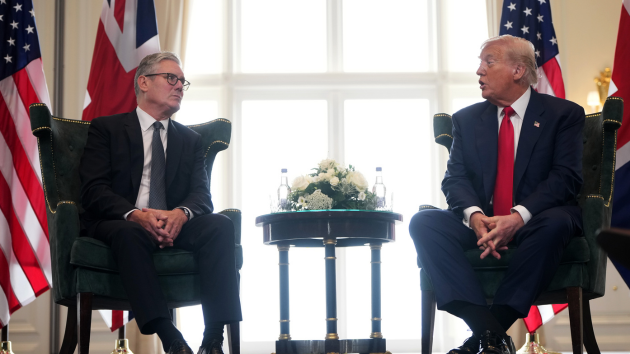
Schools brace for wave of parents seeking opt-outs after Supreme Court ruling

Schools brace for wave of parents seeking opt-outs after Supreme Court ruling
Stella/Getty Images

(WASHINGTON) — When public school teachers return to classrooms this fall, they will confront a new legal landscape that has given parents expanded veto power over certain aspects of a child’s education.

A sweeping constitutional interpretation issued last month from the U.S. Supreme Court recognizes a fundamental right under the First Amendment to opt-out from classroom lessons that may pose what it called a “very real threat of undermining” sincerely held religious beliefs.

It has school districts and their attorneys nationwide scrambling to review curriculum for possible conflicts and fine tune protocols for when and how students can be excused from certain material.

“It marks a significant challenge for public education nationwide,” the Montgomery County, Maryland, Board of Education, which lost the case, said in a statement on the decision.

The board had been sued by a group of Muslim, Jewish and Christian parents after it refused to permit families to opt-out their children from exposure to storybooks with LGBTQ themes.

“The right of parents to direct the religious upbringing of their children would be an empty promise if it did not follow those children into the public school classroom,” Justice Samuel Alito wrote in the majority opinion.

The ruling effectively requires schools to notify parents in advance of any classroom concepts that might be contrary to a particular religion and to accommodate requests to provide alternative instruction.

Sarah Parshall Perry, a former U.S. Department of Education attorney and current vice president of the conservative advocacy group Defending Education, called it a clear “directive” to districts.

“In making the decision, the high court expanded an earlier religious liberty in schools case, Wisconsin v. Yoder,” Perry wrote in a blog post. “In that 1972 decision, the court held that Amish families could opt their children out of compulsory education past eighth grade because continuing in school longer would be a violation of their religious beliefs.”

While religious rights advocates hailed the ruling as common sense, some civil rights groups, educators, and parents fear it now undermines the very foundation of public education.

“This decision could have a chilling effect,” said Becky Pringle, president of the National Education Association, the nation’s largest union of public school teachers, “and could lead to more educators self-censoring, shelving books and lessons, and preventing some already marginalized students from being seen and acknowledged.”

Some school officials have privately worried about a “Pandora’s box” of administrative burdens that sweeping opt-out rights now present, and said they may consider preemptively removing content from the curriculum entirely in order to avoid confrontations with parents.

“I’m sure there will be more parents that are going to exercise this right,” said Jim Walsh, a Texas lawyer who represents school boards and is a member of the National School Attorneys Association.

Federal courts have already fielded numerous disputes in recent years over religious objections to classroom lessons, including faith-based opposition to teaching women’s empowerment, the theory of evolution, coed physical education, and celebration of Halloween.

“There are religions that oppose medical science, surgery, psychiatry, interracial marriage, monogamy, woman’s suffrage, the right of gay people to marry, and so on,” said Rep. Jamie Raskin, D-Md., an attorney and law professor. “All of them will now be able to flood the courts with claims that particular curricular teachings and books offend their sincere values and their children should not be exposed to the offensive doctrines.”

To evaluate the claims, frontline educators could be put in a tough spot.

“School administrators will have to become experts in a wide range of religious doctrines in order to predict, in advance, whether a parent may object to a particular text, lesson plan, or school activity as contrary to their religious beliefs,” wrote Justice Sonia Sotomayor in her dissent in the case. “The result will be chaos.”

Walsh offered a more sanguine appraisal based on the experience of Texas, which has had an expansive statewide opt-out available to parents for 30 years.

“Parents can opt out of anything they have a religious or moral objection to and the school has to accommodate that. It has not caused significant problems,” Walsh said.
One reason the impact has been muted, he said, is that “kids are frequently embarrassed when their parents do this.”
As for concerns that schools might self-censor material so as to avoid conflicts with parents, Walsh said it’s a likely possibility.

“Sotomayor predicts a lot of litigation. I think she’s probably right about that, but I think if districts adopt a policy and transparency — and allow opt-out with some limitations on that — I think that’s going to go a long way for reducing that.”

Copyright © 2025, ABC Audio. All rights reserved.
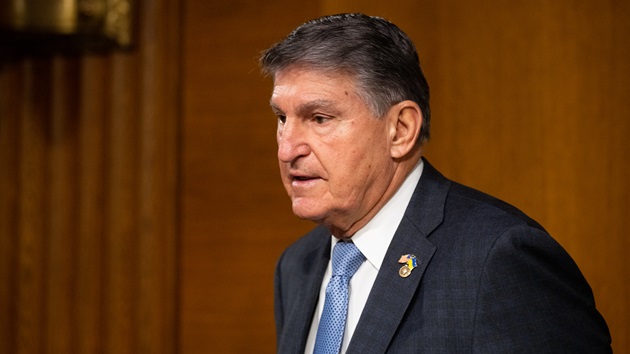
Trump heads to Texas after catastrophic flooding, avoiding criticism he’s heaped on other governors

Trump tours Texas flood devastation while avoiding criticism he’s heaped on other governors
Win McNamee/Getty Images

(WASHINGTON) — President Donald Trump travels to Texas on Friday amid growing questions about how local officials responded to the devastating floods, as well as questions about the federal response — including FEMA’s fate — that he has so far avoided.

Trump’s visit comes a week after heavy rainfall caused the Guadalupe River in Kerr County to rise 26 feet in less than an hour, killing at least 121, including dozens of children at the nearby Christian summer camp, Camp Mystic.

He and first lady Melania Trump will visit flood-affected areas, according to a statement from the first lady’s office.

The search for more than 170 people still missing continues with more than 2,100 responders on the ground in Kerr County from local, state and federal agencies.

Meanwhile, local officials are under scrutiny about what steps were taken to adequately warn people and how long it took for authorities to take action based on escalating weather and other alerts.

Trump, notably, hasn’t engaged in similar criticism about how the crisis was handled — as he has done in the case of other disasters.

“I would just say this is a hundred-year catastrophe, and it’s just so horrible to watch,” Trump said on Sunday.

Instead, Trump has largely focused on his relationship with Texas Gov. Greg Abbott — a Republican and strong ally of the president.

“We’ve been in touch with Governor Abbott, I’m very close to Governor Abbott, and everybody in Texas,” Trump said on Sunday.

It’s a marked contrast to how Trump has reacted in the past, including to the California wildfires earlier this year, where he blasted California’s Democratic Gov. Gavin Newsom and other local Democratic officials.

Some of the hardest-hit areas of central Texas, including Kerr County, are areas of strong Republican support that voted for Trump in the 2024 election.

Trump approved a major disaster declaration for Texas earlier this week.

Abbott said during a news conference on Tuesday that he spoke with Trump that morning and received assurances that assistance would be provided.

“He could not stop talking about how sad he was for all the little girls who have lost their lives,” Abbott said. “He recounted his own understanding of what happened with what was really a tsunami wave, a wall of water, that swept too many of them away.”

“And he cares a lot about those young ladies. And he wants to step up and make sure that any need that we have here in Texas is going to be met very quickly,” Abbott continued.

The White House has pushed back heavily on criticism of the administration’s cuts to the National Weather Service, which led to some to question if staffing levels or forecasting abilities were impacted.

“Blaming President Trump for these floods is a depraved lie, and it serves no purpose during this time of national mourning,” White House press secretary Karoline Leavitt said from the briefing room podium on Monday.
Trump’s also avoided answering questions on whether he is still aiming to phase out the Federal Emergency Management Agency.

Department of Homeland Security Secretary Kristi Noem, discussed the federal response to the floods during a Cabinet meeting on Tuesday.

“We as a federal government don’t manage these disasters, the state does,” Noem contended. “We come in and support them. And that’s exactly what we did here in this situation. FEMA went to an enhanced level immediately. But as soon as you signed the major disaster declaration, we were able to get them resources and dollars right away, just like you envisioned through state lot grants to help them with cleanup. And we’re still there in presence.”

Later in the week, though, Noem went after FEMA during the Biden and other previous administrations — alleging the agency has suffered from “gross mismanagement and negligence.”

“The list of famous failures is staggering,” Noem claimed in comments to the FEMA Advisory Council, a task force designed to recommend reforms to the agency, including possible dismantlement of the agency as it exists today. Trump appointed Abbott as a new member to the group back in April.

Acting FEMA Administrator David Richardson had yet to visit the affected areas in Texas as of Thursday afternoon.

ABC News’ Luke Barr and Kelsey Walsh contributed to this report.

Copyright © 2025, ABC Audio. All rights reserved.

Influential Latino leader Espaillat endorses Mamdani in New York mayor’s race

Influential Latino leader Espaillat endorses Mamdani in New York mayor’s race
Michael M. Santiago/Getty Images

(NEW YORK) — New York Assemblymember Zohran Mamdani notched the endorsement Thursday of Rep. Adriano Espaillat, an influential Latino leader, on Thursday in the race to become New York City’s next mayor.

The support of Espaillat, the first Dominican American to serve in the House of Representatives, carries significant weight among voters in his district, which includes Upper Manhattan and the Bronx.

“Zohran Mamdani brings clarity, discipline, and a deep commitment to tackling the stubborn issues facing New York City,” Espaillat said in a statement. “He understands our city doesn’t work if everyday New Yorkers — the very people that keep it moving forward — can’t afford to live here.”

Espaillat said Mamdani’s focus on cost of living and housing issues constituted “a strong vision of how to make New York serve those working to realize the American dream.”

“I’m proud to endorse him because New Yorkers deserve a mayor who will wake up every day and fight for them,” Espaillat said.

Espaillat previously endorsed former New York Gov. Andrew Cuomo in the Democratic primary despite calling for Cuomo to resign as governor in 2021 amid sexual harassment allegations.

Mamdani won some neighborhoods in Espaillat’s district, such as Washington Heights and Harlem, by over 17 points in the first round of the ranked-choice primary. He edged out Cuomo by 6 points in majority-Hispanic precincts, according to an analysis by The New York Times.

Espaillat also previously threw his support in the 2021 mayoral primary behind current Mayor Eric Adams, whose victory was in part secured by his strong performance with Hispanic voters. But Adams has been hemorrhaging their support throughout his tenure, dropping to a 14% approval rating among Hispanic voters in March, according to a Quinnipiac University poll.

In a statement thanking Espaillat for his endorsement, Mamdani said “Congressman Espaillat has been on the front lines of the fight against Donald Trump’s authoritarian administration. We both recognize the only way we can protect our city is by standing firm in our values and standing up for the working-class and immigrant communities who define us.”

The Democratic nominee is set to face Adams, who is running as an independent, and Republican Curtis Sliwa in the general election in November.

Cuomo also qualifies to run as an independent but has been noncommittal regarding whether he will campaign in the general election.

Espaillat’s backing builds upon the wave of support Mamdani has gained from prominent progressive politicians including Sen. Bernie Sanders and fellow New Yorker Rep. Alexandria Ocasio-Cortez. However, other top Democrats in the state, namely Senate Minority Leader Chuck Schumer, House Minority Leader Hakeem Jeffries and Gov. Kathy Hochul, have yet to formally endorse the nominee.

The endorsement from Espaillat, who criticized Adams for cooperating with President Donald Trump on immigration, also comes as Trump threatened to arrest Mamdani if he defied Immigration and Customs Enforcement as mayor. Mamdani pledged to remove all ICE officers from city facilities.

Trump has also suggested a federal takeover of New York City and Washington, D.C.

“If a communist gets elected to run New York, it can never be the same. But we have tremendous power at the White House to run places when we have to,” Trump said Tuesday.

Copyright © 2025, ABC Audio. All rights reserved.

Federal judge blocks Trump’s EO on birthright citizenship after SCOTUS ruling

Federal judge blocks Trump’s EO on birthright citizenship after SCOTUS ruling
Win McNamee/Getty Images

(WASHINGTON) — A federal judge in New Hampshire has blocked the Trump administration from enforcing its executive order on birthright citizenship.

U.S. District Judge Joseph Laplante certified a challenge on Thursday by the American Civil Liberties Union as a class action lawsuit and granted a preliminary injunction.

The ruling from Judge Laplante comes after the Supreme Court curtailed judge’s ability to issue nationwide injunctions but left a door open for challengers to seek relief by filing class action lawsuits.

The lawsuit, which was filed last month in New Hampshire was brought on behalf of pregnant immigrants, two immigrant parents and their infants.

“This ruling is a huge victory and will help protect the citizenship of all children born in the United States, as the Constitution intended,” said Cody Wofsy, deputy director of the ACLU’s Immigrant’s Rights Project, who argued the case. “We are fighting to ensure President Trump doesn’t trample on the citizenship rights of one single child.”

Judge Laplante’s order includes a seven-day stay to allow the Trump administration to appeal.

Copyright © 2025, ABC Audio. All rights reserved.
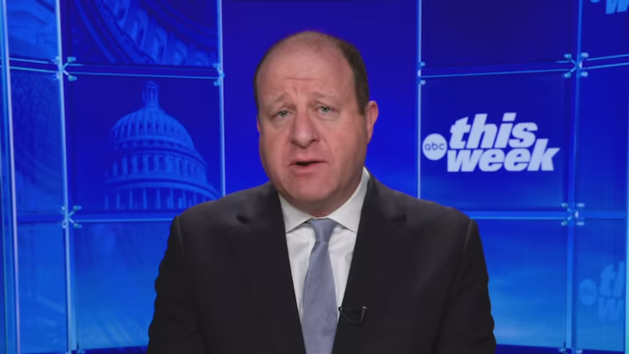
How Trump’s megabill affects student loans, school choice

How Trump’s megabill affects student loans, school choice
Samuel Corum/Getty Images

(WASHINGTON) — President Donald Trump’s signature tax and spending megabill could alter aspects of K-12 and higher education in the coming years, according to education advocates on both sides of the aisle.

After a monthslong process on Capitol Hill, the highly anticipated law will significantly reform the student loan process and broaden school choice options for families and the education community at large.

Here’s how the new law, which also brings massive cuts to government benefits such as Medicaid and increases funding for immigration enforcement, potentially changes education for millions of Americans.

Student loans

The megabill pushed through several House Republican policies aimed at reforming higher education — including with student loans.

The new law terminates all current student loan repayment plans for loans disbursed on or after July 1, 2026. They will be replaced with two separate plans: a standard repayment plan and a new income-based repayment plan called the Repayment Assistance Plan, according to the text of the megabill.

The Department of Education released a statement that said these new plans are currently impacted by legal challenges, urging borrowers on the Biden-era Income Driven Repayment plans to consider enrolling in an income-based repayment plan.

With this new process, Education and Workforce Committee Chairman Tim Walberg, a Republican, said he believes struggling borrowers will receive the assistance needed to repay loans without saddling taxpayers with that burden.

The new law also establishes loan limits for parent borrowers and terminates graduate and professional plus loans — designed to help graduate and professional students pay for school — for their degrees and certificates.

Earlier this year, Education Secretary Linda McMahon applauded the megabill for simplifying the “overly complex” repayment process and reducing borrowing amounts to “help curb rising tuition costs.”

The Student Borrower Protection Center, which focuses on eliminating the burden of student debt, denounced the provisions in the bill. Aissa Canchola Bañez, the center’s policy director, described it as a crushing blow to millions of Americans already struggling to cover college costs.

“This bill is a dangerous attack on students, working families and communities across the country,” she said, adding that it is “shredding the student loan safety net, weakening protections and pushing millions of students and families into the riskier and more expensive private student loan market.”

National Parents Union President Keri Rodrigues warned the new policies in Trump’s megabill are leading to a “difficult moment for American families.”

Rodrigues fears a $65,000 lifetime limit on Parent PLUS loans — which provide money to parents for their children to attend college — could eliminate a pathway to “economic mobility.”

“It’s going to mean a lot of hardship for kids and for families across the country,” she said.

School choice

Conservatives are celebrating the law as it continues to deliver on a long-standing pledge from the Trump administration to give power to parents and reduce education bureaucracy in Washington through universal school choice — something McMahon has pushed to see expanded nationwide.

Republican Sen. Bill Cassidy’s Educational Choice for Children Act tax credit, a provision included within the megabill, provides a charitable donation incentive for individuals and businesses to fund scholarship awards for students to cover expenses related to K-12 public and private education starting in 2027.

Republican Rep. Adrian Smith, who co-sponsored the House legislation, told ABC News it removes the “politics” from school-funding formulas that haven’t served students’ best interests.

“Students deserve the opportunity to succeed in the setting which best meets their needs, and this investment will open new doors for millions of American families,” Smith said.

Tommy Schultz, CEO of the conservative American Federation for Children, noted the change is a monumental step toward every state achieving school choice.

“AFC will work to ensure that governors and state leaders listen to their constituents and bring educational freedom to every state in the nation, and to as many families as possible,” Schultz said in a statement to ABC News. “We will continue to fight to ensure that this tax credit scholarship is well-implemented and expanded as soon as possible.”

Democratic Sen. Mazie Hirono is a staunch opponent of the president’s education policies and the Republican tax credit, saying it strips public schools of its resources and enriches wealthy families.

“What [the ECCA] does is it is yet another big tax break for rich people who can afford to contribute these kinds of funds — so mainly the people who will take advantage of this will be kids who are already going to private schools,” Hirono explained.

“Not much of a choice,” she quipped.

American Federation of Teachers President Randi Weingarten also slammed the bill for promoting a “massive and unprecedented transfer of wealth from everyday people to billionaires.”

“It writes a permanent school voucher scheme into the tax code that would redirect billions of dollars each year to private schools — even as our public schools, which educate 90 percent of all students, remain woefully underfunded,” Weingarten said in a statement to ABC News.

Despite the public school debate, Sen. Cassidy and education advocates argue no child should be “trapped” in a failing school.

Dr. Eva Moskowitz is the CEO of Success Academy Charter Schools, the highest-performing free public charter school network in New York City, and told ABC News that it’s time to move on from the public education “monopoly.”

“We have a solution right in front of us: high-performing charter schools and a scholarship program for the private school choice,” Moskowitz said. “This is the most concrete, pragmatic, thing we can do today to impact hundreds of thousands of children.”

Copyright © 2025, ABC Audio. All rights reserved.

Rubio, Lavrov meet after Russian barrage on Kyiv

Rubio, Lavrov meet after Russian barrage on Kyiv
Russian Foreign Minister Sergey Lavrov (2nd R) and United States Secretary of State Marco Rubio (2nd L) meet on the margins of the ASEAN Foreign Ministers Meeting in Kuala Lumpur, Malaysia on July 10, 2025/ Russian FM Press Service/Anadolu via Getty Images

(NEW YORK) — Secretary of State Marco Rubio emerged from a 40-minute meeting with Russian Foreign Minister Sergei Lavrov on Thursday with an acknowledgment that talks between Moscow and Kyiv for peace in Ukraine have not progressed much.

Rubio said he shared President Donald Trump’s “disappointment and frustration” with his Russian counterparts as the president has expressed distrust in Russian President Vladimir Putin and reversed his administration’s pause on weapons to Ukraine.

“We get a lot of bull**** thrown at us by Putin,” Trump said at the White House on Tuesday. “He’s very nice all the time, but it turns out to be meaningless.”

The president is “disappointed and frustrated that there’s not been more flexibility on the Russian side to bring about an end to this conflict,” Rubio said.

Hours before Rubio’s scheduled meeting with Lavrov, their first face-to-face since February, Russia launched a “massive combined strike” of 18 missiles and 400 drones, according to Ukrainian President Volodymyr Zelenskyy.

The attacks killed two and injured 16, and followed 10 days of drone strikes, which have often broken single-night records — and have marked a shift as Russia continues its summer offensive.

Trump said earlier this week that he was “very unhappy” with Moscow’s latest attacks on Kyiv — and said he is “looking at” an effort by congressional GOP to impose greater sanctions on Russia.

“As has been pointed out, we’ve seen an acceleration of attacks,” Rubio said. “I think it’s probably the largest drone attack in a city close to the Polish border, actually. So it’s a pretty deep strike.”

“I don’t want to overpromise,” he said about talks, citing Russia’s offensive.

Rubio said Russia brought a “new and different approach” to the negotiating table Thursday, but he tempered expectations about a development toward peace.

“I wouldn’t characterize it as something that guarantees peace,” he said.

The bilateral talks between the nations’ top diplomats — held on the sidelines of a summit for the Association of Southeast Asian Nations in Malaysia — come after Trump said Tuesday he approved the transfer of defensive weapons to Ukraine because Putin is “killing too many people.”

The announcement appeared to reverse a Pentagon-ordered pause last week on some munitions scheduled for Ukraine. Rubio said it was “mischaracterized” in the press and was merely a “pause, pending review” of munitions that were both defensive and offensive.

“Generally speaking, aid to Ukraine continues along the schedule that Congress appropriated,” Rubio said.

Meanwhile, momentum on Capitol Hill for a bill to sanction Russia’s energy industry is building.

After Trump said he was looking at the package “very closely,” Senate Majority Leader John Thune told reporters Wednesday “there’s a lot of interest in moving it.”

Rubio said that “we told [the Russians] that the moment would come where something like this could happen,” adding that Trump would need “flexibility” on enforcement of the sanctions regime.

Rubio wouldn’t say whether that moment had arrived, saying it was a question for the president.

Copyright © 2025, ABC Audio. All rights reserved.

Senate confirms Bryan Bedford as FAA administrator

Senate confirms Bryan Bedford as FAA administrator
Kevin Dietsch/Getty Images

(WASHINGTON) — The Senate on Wednesday confirmed Bryan Bedford as FAA administrator, putting a former airline executive in charge of the agency responsible for ensuring the safety and efficiency of the nation’s air travel.

The final vote was 53-43.

Bedford, who previously served as CEO of Republic Airways, retired from the position last week after leading the airline for more than 25 years. During his tenure, Republic became one of the largest regional carriers in the nation.

His nomination narrowly cleared the Senate Committee on Commerce, Science, and Transportation vote by 15-13, with all Republican senators voting in favor and all Democrats against.

While Bedford’s nomination has received widespread support from across the aviation industry, he has faced criticism over his position on the FAA’s 1,500-hour flight training rule.

The FAA rule requires pilots have 1,500 hours experience in the cockpit before they can fly for a commercial airline.

The rule was implemented in 2013, in response to the 2009 Colgan Air crash, after an NTSB investigation cited the flight crews’s inadequate training and qualifications as a key safety issue.

In 2022, the FAA rejected a petition from Republic Airways seeking an exemption for its pilots from the 1500-hour rule — calling for it to be brought down to 750 flying hours if the pilots met certain other requirements.

The FAA denied the request, saying “if a reduction in hours was appropriate, an exemption is not the appropriate vehicle with which to make such a determination.”

During his nomination hearing, senators questioned Bedford about his position on the 1,500-hour rule and whether he’d try to change it once becoming FAA administrator.

Illinois Democratic Sen. Duckworth pressed Bedford multiple times over his commitment to the 1500-hour rule. Bedford never answered the question, saying he does not “believe safety is static” since pilot training has changed over time, but reiterated that safety is a priority.

“I will not roll back safety,” Bedford told the committee. “There won’t be safety loopholes. I commit to you. We will never do anything to reduce the safety and competency of our pilots.”

Washington Sen. Maria Cantwell, the panel’s top Democrat, notably voted against advancing Bedford’s nomination out of committee.

Prior to the committee vote, Cantwell released a statement opposing his confirmation, saying Bedford “repeatedly refused to commit to upholding the 1500-hour rule and refused to recuse himself for his full term from granting his own company an exemption from this critical safety requirement.”

Scrutiny over Bedford’s position on the rule comes at a pivotal moment for aviation safety which has been in the spotlight since January’s mid-air collision between an American Airlines flight and a U.S. Army Black Hawk helicopter that killed everyone onboard both aircraft.

Following Bedford’s confirmation, the pilots union released a statement congratulating Bedford and expressing a commitment to working with him, while also reiterating concerns over his position on the pilot training requirements.

“We have concerns about his past efforts to lower pilot training requirements, and we will continue to bring the line pilot’s perspective to any discussions about changing these life-saving measures and hold him to his word that safety is his top priority,” Capt. Jason Ambrosi, president of the Air Line Pilots Association said in a statement. “Maintaining rigorous training requirements and keeping two pilots on the flight deck at all times remain top priorities for ALPA.”

Airlines for America and the National Air Traffic Controllers Association also released statements congratulating Bedford and reiterating their commitment to working with him to ensure aviation safety and to overhaul and modernize the nation’s air traffic control systems and facilities.

Copyright © 2025, ABC Audio. All rights reserved.