(ATLANTA) — Stacy Abrams, a Black Democrat running for Georgia governor, declined on Tuesday to directly comment on Republican David Perdue saying she should “go back to where she came from.”
“No, not at all,” Abrams, said at a news conference in Atlanta, when asked by ABC News whether she wanted to respond to what was widely labeled as racist remarks from Perdue on Monday night while giving a campaign speech in which he also charged she was “demeaning her own race.”
“I will say this,” Abrams told ABC News at Tuesday’s press conference. “I have listened to Republicans for the last six months attack me. But they’ve done nothing to attack the challenges facing Georgia. They’ve done nothing to articulate their plans for the future of Georgia. Their response to a comment on their record is to deflect and to pretend that they’ve done good for the people of Georgia.”
Perdue, running to get the GOP nomination for Georgia governor, seized on Abram’s comments last week that Georgia was “worst state in the country to live,” citing residents’ disparities in mental health and maternal mortality, among other issues.
“She ain’t from here. Let her go back to where she came from,” Perdue, a former senator challenging Gov. Brian Kemp for their party’s nomination, said at a campaign event in the Atlanta suburbs on Monday night. “She doesn’t like it here.”
Abrams grew up in Mississippi but has deep ties to Georgia, a state she moved to during high school and where she previously served as the House minority leader. She said last week that “when you’re No. 48 for mental health, when you’re No. 1 for maternal mortality, when you have an incarceration rate that’s on the rise and wages that are on the decline, then you are not the No. 1 place to live.”
Perdue’s dismissal that she “go back” somewhere else echoes comments by his party’s standard-bearer, former President Donald Trump, who notoriously told four progressive, non-white lawmakers in 2019 to “go back” to the “broken and crime infested places from which they came.” The lawmakers Trump targeted are all U.S. citizens and his tweet sparked a firestorm of criticism. (Perdue’s campaign did not respond to a request for comment from ABC News on Tuesday about the fallout of his attack on Abrams.)
While Abrams did not address Perdue directly at Tuesday morning’s press conference, she conceded that what she said last week about Georgia’s problems was “inelegant.” Still, she reiterated her larger point about what she called the many health and social challenges Georgians, especially voters, face.
“I had an inelegant delivery of the statement that I was making, and that is that Brian Kemp is a failed governor and doesn’t care about the people of Georgia,” she said. “Look at his record. Look at the results under his four years of leadership.” Kemp, for his part, has continued to assail Abrams as an out-of-step leftist while touting how he addressed COVID-19 and more.
Perdue on Monday also criticized comments Abrams made during her 2018 campaign for governor when she said she wanted to diversify the state’s economy beyond agriculture and hospitality.
But Perdue responded to her comments by claiming Abrams had “told Black farmers, ‘You don’t need to be on the farm,’ and she told Black workers in hospitality and all this, ‘You don’t need to be.'”
“She is demeaning her own race when it comes to that. I am really over this,” Perdue said. “She should never be considered material for governor of any state, much less our state where she hates to live.”
According to The Atlanta Journal-Constitution, Abrams actually said in 2018: “I want to create a lot of different jobs. Because people shouldn’t have to go into agriculture or hospitality in Georgia to make a living in Georgia. Why not create renewable energy jobs? Because, I’m going to tell y’all a secret: Climate change is real.” (Even then, she was dinged by the GOP as “brash and condescending,” with her aides at the time calling the criticism “absurdly misleading.”)
Perdue, who has been endorsed by Trump, is hoping to overtake what polls show is a significant deficit behind Kemp in order to win the Republican nomination and face Abrams in November.
Abrams, the only major Democrat running for her party’s nomination, is preparing for a rematch with Kemp, whom she ran against in 2018 — losing by a very narrow margin that she claimed was influenced by tactics that suppressed the vote. The GOP has repeatedly highlighted Abrams’ criticism of the election she lost, saying it is hypocritical given how Democrats have renounced Trump’s election lies.
“In 2018, voters across the state were denied access to the right to vote,” Abrams said Tuesday. “They were denied the ability to register and stay on the rolls. They were denied the ability to cast the ballot and the ability to have that ballot counted In 2018.”
Even in the face of high voter turnout, she said, “We know that … has nothing to do with suppression. Suppression is about whether or not you make it difficult for voters to access the ballot.”
ABC News’ Miles Cohen, MaryAlice Parks, Brittany Shepherd and Briana Stewart contributed to this report.
(NEW YORK) — National attention turns next to the South as Alabama, Arkansas, Georgia and Texas voters head to the polls on Tuesday, rounding out a consequential string of May contests.
Months-long, sometimes contentious battles to be governor, attorney general, secretary of state and for U.S. Senate and House seats will come to a head. The results should give more insight into the strength of former President Donald Trump’s endorsement with the Republican base as well as conservative voters’ appetite for election lies.
The most-watched races will be in Georgia, an emerging battleground state, with primaries for governor and the Senate that will preview closely fought races come November’s midterms.
At the top of the ticket — where he hopes to stay — sits incumbent Gov. Brian Kemp, an establishment Republican who shot to national prominence after the 2020 election when he refused to promulgate Trump’s debunked theory of a stolen election. Happy to take up that drumbeat, though, is Kemp’s challenger David Perdue, a former senator who lost to Jon Ossoff but who has embraced a MAGA-edge in his campaigning to return to office.
Perdue has spent most of his time on the trail pushing for sweeping electoral change, parroting Trump’s debunked talking points about voter fraud and a somehow-stole election. Despite Trump’s endorsement, though, Perdue’s message hasn’t seemed to stick with primary voters, at least not according to recent polling that shows Kemp with a major lead.
Trump-backed “big lie” believers continue down-ballot with Republican secretary of state candidate Rep. Jody Hice, who has said he would look to decertify the last presidential election — an extraordinarily undemocratic move that further highlights the possible ramifications of such candidates taking control of election administration.
Polling puts Hice in a neck-and-neck battle with incumbent Ben Raffensperger, who like Kemp was a popular establishment Republican-turned-enemy of the former president for refusing to act on the 2020 election conspiracy.
Not only are these races a test of Trump’s endorsement, they will also indicate how enthusiastically Georgia GOP voters will embrace the election mistrust that has become central to Trump’s pitch.
Another high-profile race is the GOP Senate primary, with the Trump-approved Herschel Walker leading the pack. Walker — a businessman and college football legend in Georgia — has been press shy, in part perhaps due to his headline-making past, including allegations of violent behavior and his diagnosis with dissociative identity disorder, or D.I.D., a complex mental health condition characterized by some severe and potentially debilitating symptoms.
Walker has denied some of the past allegations of domestic violence, physical threats and stalking; others he claimed not to remember. His campaign referred ABC News to his 2008 memoir, which detailed his D.I.D. diagnosis, and a 2008 interview he did with ABC News in which he discussed its effects on his marriage.
Democrats have two candidates who are likely to sail to victory Tuesday, with Stacey Abrams again up for governor — eyeing a possible rematch with Kemp in November — and Sen. Raphael Warnock up for re-election.
Across state lines in Alabama will see similar primary matchups for governor and an open Senate seat.
The three-way contest for the Senate slot evolved significantly over the campaign cycle: Rep. Mo Brooks earned Trump’s endorsement early in the race, only to have Trump withdraw it two months ago following disagreements over 2020 election claims.
Trump’s rescinded backing could prove consequential as Brooks now trails in the polls behind Katie Britt — a former chief of staff for retiring GOP Sen. Richard Shelby. Businessman Mike Durant was polling ahead of both candidates at certain points during the race but is now behind Britt and Brooks after Brooks saw a final-hour surge in recent voter surveys.
Brooks may still be campaigning off of Trump’s name, however. Campaign mailers obtained by the Alabama Political Reporter feature quotes from Trump during the time he supported Brooks.
Earlier this month, Brooks said he wouldn’t cooperate with the House’s Jan. 6 committee and was subpoenaed shortly thereafter. (He had spoken at the rally earlier on Jan. 6, 2021, before deadly rioting broke out at the U.S. Capitol; he has continued to try to delegitimize the 2020 election results.)
“I wouldn’t help Nancy Pelosi and Liz Cheney cross the street — I’m definitely not going to help them and their partisan Witch Hunt Committee,” Brooks previously told ABC News. “At this moment in time, right before an Alabama U.S. Senate election, if they want to talk, they’re gonna have to send me a subpoena, which I will fight.”
Brooks’ soon-to-be vacant House seat is a contest between former Trump Assistant Army Secretary Casey Wardynski, endorsed by the House Freedom Caucus, and Madison County Commissioner Dale Strong. Strong has been outraising Wardynski.
Another matchup in Alabama will be between incumbent Republican Gov. Kay Ivey and several primary challengers. That race — previously expected to be won handily by Ivey — has grown more combative after a term where Ivey bent away from some GOP messaging surrounding COVID-19 and gas taxes.
Lindy Blanchard, a former Trump-appointed ambassador running in the primary, called Ivey a “tax-hiking Fauci-loving” liberal in a recent ad. Ivey is also being challenged by the son of former Gov. Fob James — businessman Tim James — as well as former Morgan County Commissioner Stacy Lee George, pastor Dean Odle and others.
In Arkansas, races are shaping up to be somewhat less competitive. Former Trump White House Press Secretary Sarah Huckabee Sanders is the clear front-runner in a race where she’s eclipsing her competitors in fundraising and also received Trump’s endorsement. She’s up against Doc Washburn, the former host of a radio show in Little Rock.
Trump-backed Sen. John Boozman is on track to be reelected against several primary challenges, including from Army veteran and former NFL player Jake Bequette.
And in Texas, voters will decide more of the their 2022 nominees on Tuesday, determining the results of the runoff elections from the March 1 primaries.
The GOP race for attorney general is between incumbent Ken Paxton and Land Commissioner George W. Bush, a member of the state’s most prominent political family.
Paxton’s vulnerability from scandals — including indictment for securities fraud, FBI investigations into malfeasance and marital infidelity, among others, even as he has denied all allegations — will be tested against the grandson of former President George H.W. Bush and nephew of former President George W. Bush in a party that is more and more anathema to the Bushes’ brand of conservatism.
Tuesday’s sole competitive Democratic race will be in Texas. Progressive Jessica Cisneros, endorsed by Rep. Alexandria Ocasio-Cortez, D-N.Y., and Sen. Bernie Sanders, I-Vt., will face nine-term Congressman Henry Cuellar in the run-off election in the 28th district.
Sanders traveled to Texas to stump for Cisneros on Friday in a last-ditch effort to defeat Cuellar, the sole pro-life Democrat in Congress.
(WASHINGTON) — Deputy Secretary of State Wendy Sherman tested positive for COVID-19 over the weekend, she announced Monday.
“I’m experiencing mild symptoms and will be working remotely from home per CDC guidance,” she tweeted. “I am thankful to the @StateDept MED team for taking excellent care of me and all our colleagues around the world during this pandemic.”
Secretary of State Antony Blinken and Sherman were together for a meeting with Saudi Arabia’s deputy minister of defense in Washington, D.C., on Saturday.
Blinken, who recently recovered after testing positive for the virus earlier this month, is currently abroad with President Joe Biden in Asia.
It was initially unclear how frequently Sherman is testing, or if she is considered a close contact by Centers for Disease Control and Prevention standards to anyone currently in the delegation overseas.
(WASHINGTON) — With the last batches of ballots still being tallied in Pennsylvania’s Republican Senate primary, Donald Trump weighed in last week to insist his chosen candidate go ahead and “declare victory” even though the counting wasn’t complete.
The former president has a long history of insisting elections are fraudulent when he’s expecting he won’t get the outcome he wants. But historically, election officials around the country from both parties have complied with the law to count up and certify the vote regardless of their politics.
That could change come November: Trump is backing a slate of candidates in battleground states (including Pennsylvania) who have said they support his mistrust in elections, despite any evidence of widespread fraud. If voted into office, these officials would have the power to run elections — or even try to reject or reverse the results — as Trump has repeatedly urged them to do.
“We have to be a lot sharper next time when it comes to counting the vote,” Trump said in a video message earlier this year. “There’s a famous statement: Sometimes the vote counter is more important than the candidate. And we can’t let that ever, ever happen again,” Trump said, referring to a quote from Soviet Union dictator Joseph Stalin.
The next big test of Trump’s influence is Tuesday in Georgia, where he’s backed election-denier candidates down the ballot to challenge incumbents who wouldn’t do as he demanded in 2020 and overturn President Joe Biden’s victory. Democrats, and many Republicans, predict based on the candidates’ past statements that if they are chosen to represent the GOP and go on to win in the general election, they would interfere with future contests, especially under Trump’s pressure in 2024.
“Just a few years ago, this would have been considered a fringe and extreme view,” Minnesota Secretary of State Steve Simon, a Democrat, said of the rising tide of candidates questioning elections. “Now it’s been mainstreamed and very much normalized, and that’s a big, big problem.”
“It’s a potential emergency,” Simon added, “particularly going into a presidential election.”
The secretary of state is usually tasked with overseeing and certifying their local elections. They establish Election Day procedures and play a large role in validating the results, so any refusal to do so — while likely to face legal hurdles — could be a vital step in trying to overturn the ballots.
This year, the office is up for grabs in 28 states, including Minnesota, where Simon is facing a Republican who continues to cast doubt on the 2020 results. Simon said that voters in Minnesota and across the country should be able to trust their elected officials — unless there’s evidence of wrongdoing — to certify the vote of the people, no matter if the outcome is on their side.
“That’s what secretaries of state of both parties, to be fair, have done by and large over the last few years,” Simon told ABC News. “But this new crop of candidates is really alarming because they seem not to have those same values. They seem to be driven by an outcome.”
Some of these candidates have suggested they’ll cease absentee and mail-in balloting and continue audits of the 2020 election, among other actions at the position’s disposal that risk eroding voters’ confidence. Trump and his allies have not provided any proof of widespread fraud in the 2020 election, and more than 40 legal challenges across the country failed.
Former New Jersey Gov. Christine Todd Whitman, a Republican critic of Trump and co-chair of States United Democracy Center, a nonpartisan advocacy group tracking the uptick in election deniers running for office, warned that if Trump were to get his loyalists in place for 2024, it would presumably be much easier to ensure a loss wouldn’t happen again.
“People tend to focus just on the federal races and federal elections but forget that they’re run by the states. And that’s why these elections are so important,” Whitman told ABC News, describing the thinking behind their strategy: “We change the laws, so we can change the referee, so we can change the outcomes.”
Of the 111 candidates Trump endorsed in the 2022 midterms, more than 70% say they believe the 2020 election was fraudulent, according to FiveThirtyEight research. And as of this month, at least 23 election deniers were running for secretary of state in 18 states, according to the States United Action.
Trump has officially endorsed three secretaries of state candidates in GOP primary races. Each of those contenders argues it’s more important to continue pursuing the possible truth of his debunked claims about 2020, despite the damage to democratic norms and erosion of voter confidence that experts say is well underway.
Here’s a brief look at election-denying candidates in six key states where Trump disputed the results in 2020.
Pennsylvania
State Sen. Doug Mastriano, whom Whitman called a “prime election denier,” earned Trump’s endorsement and handily won the GOP gubernatorial primary. The Pennsylvania governor’s office has powerful influence on future elections.
Mastriano chartered buses to the rally at the Ellipse on Jan. 6, 2021, where Trump spoke; was seen at the U.S. Capitol that day (but said he didn’t go inside); and he had been involved in a White House meeting with Pennsylvania GOP lawmakers in December 2020, as Trump worked to overturn the results in the state and in other presidential battlegrounds.
While Mastriano is not running for secretary of state, Pennsylvania is one of a handful of states, like Florida and Texas, where the governor appoints the office who serves as the chief elections officer. Democrats fear that Mastriano — who has been critical of mail-in ballots and called for an investigation of how Pennsylvania conducted the 2020 election, insisting he wanted to “restore faith in the integrity of our system” — could appoint a secretary of state beholden to Trump. Mastriano has avoided specifying how he would carry out that duty as governor.
Even Republicans are concerned with Mastriano’s win, as indicated by GOP candidates dropping out in the final stretch of the primary race to consolidate votes around the Republican candidate who ultimately fell second to Mastriano.
Georgia
The former president backed a slate of candidates ahead of Tuesday’s primary, all promoting forms of election denialism in their platforms.
If Herschel Walker and Rep. Jody Hice were to win a Senate seat and the secretary of state’s office, respectively, they could theoretically try to overturn future election results — by refusing to certify the vote and send it to Washington — as Trump had pushed Gov. Brian Kemp and Secretary of State Brad Raffensperger, both Republicans, to do in 2020.
In an infamous January 2021 phone call, Trump asked Raffensperger to “find” nearly 12,000 votes to overtake Biden.
Hice, who is challenging Raffensperger, objected to Georgia’s electoral votes being counted for Biden and has said he’d decertify Biden’s 2020 win — a move that election experts say is not possible.
While Georgia has already undergone three separate audits which all confirmed Biden’s victory, Hice has said he would appoint a special counsel to investigate.
Arizona
In Arizona, Trump endorsed Mark Finchem, a far-right lawmaker in the state’s House of Representatives who attended the rally at the Ellipse on Jan. 6.
Like Mastriano, the House select committee investigating the Capitol attack has issued Finchem a subpoena for “information about efforts to send false slates of electors to Washington and change the outcome of the 2020 election.” (Also like Mastriano, Finchem was at the Capitol on Jan. 6 but said he wasn’t inside.)
Trump praised Finchem for an “incredibly powerful stance” on election integrity, well in advance of the GOP primary on Aug. 2. Finchem is sponsoring a bill that would treat Arizonians’ ballots as public records and make them searchable online, which experts warn could be exploited.
“These folks are supported by Trump, if only for the sole reason that they have said that they would seek ways — or have demonstrated already to seek ways — to undermine the election or actually return the election results,” Semedrian Smith, deputy director at the Democratic Association of Secretaries of State, told ABC News. “It’s absolutely terrifying to imagine that folks who already claim now that they are willing to overturn the election results, it’s hard to imagine that they’re not absolutely going to do that down the road.”
Nevada
Jim Marchant, a former member of the Nevada Assembly running in the Republican primary for secretary of state on June 14, has said he would not have certified Biden’s victory had he been in the office in 2020.
Like Mastriano and Finchem, he was involved with a fraudulent election document attempting to award Nevada’s six electoral votes to Trump instead of Biden, which was submitted to Congress and the National Archives. Marchant doesn’t have Trump’s endorsement but has said Trump allies encouraged him to run.
Marchant’s website states that his “number one priority will be to overhaul the fraudulent election system.” He has said he supports changes to state law to allow the legislature to override the secretary of state’s certification of an election.
Wisconsin
Wisconsin is one of nine states with a board or commission in charge of election oversight instead of just the secretary of state, but conservative leaders there are pushing to dismantle the bipartisan election commission.
State Rep. Amy Loudenbeck, the Republican front-runner for secretary of state, said she supports taking power away from the panel, which she has blasted as “broken,” and handing it over to the office she is seeking.
Nearly a dozen other states, meanwhile, have also attempted to diminish secretaries of states’ authority over elections or shifted aspects of administration to highly partisan bodies in the wake of the 2020 election.
In a sign of the fractured times, Wisconsin’s state GOP on Saturday opted not to endorse any candidates for statewide office ahead of the primary on Aug. 9.
Michigan
Trump, in Michigan, has backed Kristina Karamo, a community college professor who won her party’s nomination at a convention last month. She gained prominence after claiming, without evidence, that she’d witnessed irregularities in processing mail-in ballots while working as an election observer in Detroit in 2020.
Karamo will face Michigan Secretary of State Jocelyn Benson, a Democrat and former law school dean seeking her second term, whom Trump has attacked as “rogue.”
Benson faced an onslaught of criticism in the wake of the 2020 election and told NBC News last week, for the first time publicly, that Trump said in a White House meeting she should be arrested for treason and executed. A Trump spokesperson said Benson was lying, but Benson said the experience showed her “there was no bottom to how far he [Trump] and his supporters were willing to stoop to overturn or discredit a legitimate election.”
Simon, a neighboring Democratic secretary of state, told ABC News that all voters, including Trump supporters, should be concerned with the election-denier trend.
“No matter what issue you care about the most, you’re not going to get very far unless you have free and fair elections,” Simon said. “You want people running them who are going to be fair.”
(NEW YORK) — The first batch of imported baby formula under “Operation Fly Formula” arrived in the United States on Sunday as the Biden administration tries to alleviate the nationwide baby formula shortage.
Military aircraft transported the shipment of three formula brands, the equivalent of up to half a million 8-ounce bottles, from Ramstein Air Base in Germany to Indiana. The shipment included Nestlé Health Science Alfamino Infant and Alfamino Junior as well as Gerber Good Start Extensive HA, all of which are hypoallergenic formulas for children with cow’s milk protein allergies.
The Department of Agriculture said Saturday that “additional flights will be announced in the coming days.”
“Typically, the process to transport this product from Europe to U.S. would take two weeks. Thanks to Operation Fly Formula, we cut that down to approximately three days,” White House press secretary Karine Jean-Pierre said.
This shipment is the first of multiple planes of imported formula expected to arrive in the U.S. in the coming weeks.
“Folks, I’m excited to tell you that the first flight from Operation Fly Formula is loaded up with more than 70,000 pounds of infant formula and about to land in Indiana. Our team is working around the clock to get safe formula to everyone who needs it,” President Joe Biden tweeted Sunday ahead of the plane’s arrival.
Biden also signed legislation aimed at improving access to baby formula for low-income families last week.
The Access to Baby Formula Act of 2022 ensures families can use benefits from the Special Supplemental Nutrition Program for Women, Infants, and Children — also known as WIC — to buy formula products outside what is normally designated for the program during times of crisis.
The program purchases about half of all infant formula supply in the U.S., with some 1.2 million infants receiving formula through WIC.
Typically, each state relies on a contract with a single manufacturer to supply products for WIC participants. But a recall from Abbott, one of the nation’s largest manufacturers, highlighted flaws within the federal nutrition program.
“When we became aware of all of this we came together very quickly to do what we could,” Sen. Debbie Stabenow, D-Mich., said in remarks from the floor after the legislation passed, though she said she wished it would’ve never gotten to this point for families.
“The reality is that half of the baby formula in this country goes to moms and babies that are on a very important program that is called the Women, Infants, and Children’s program,” Stabenow continued. “We know that we’ve got to do anything humanly possible to take away any barrier available for them to get this important food for children.”
Now, the United States Department of Agriculture will have authority to amend WIC program rules during a shortage, recall or other emergencies and allow families to buy whatever products are available in the store.
The law also requires formula manufacturers that provide products for WIC participants to have a contingency plan for responding to shortages or recalls in the future.
Biden signed the baby formula bill into law during his five-day trip to Asia, according to the White House. He also signed a $40 billion aid package to Ukraine as Russia’s invasion stretches into its fourth month.
The Access to Baby Formula Act of 2022 had overwhelming bipartisan support in Congress, passing the House in a 414-to-9 vote and the Senate via unanimous consent.
Senate Majority Leader Chuck Schumer, D-N.Y., celebrated the bipartisan moment in the chamber.
“It’s rare that we have unanimity in the Senate on important measures, and I wish we had more, but this is one of these important issues and I’m glad we’re acting with one voice,” said Schumer, calling the shortage “stuff of nightmares” for parents.
For the week ending May 15, nearly 45% of products in the U.S. were unavailable, according to the data tracking firm Datasembly, up slightly from the 43% out-of-stock rate reported the week ending May 8.
The House also tried to give $28 million in emergency assistance to the Food and Drug Administration to enhance safety inspections and prevent fraudulent products from getting into stores. But the bill failed to move forward in the Senate, as Republicans on Capitol Hill remain opposed to giving the agency more funds.
FDA chief Robert Califf was grilled by lawmakers this week on the agency’s response to the formula shortage. He said it will the situation is “gradually” getting better, but that it “will be a few weeks before we’re back to normal.”
ABC News’ Allison Pecorin contributed to this report.
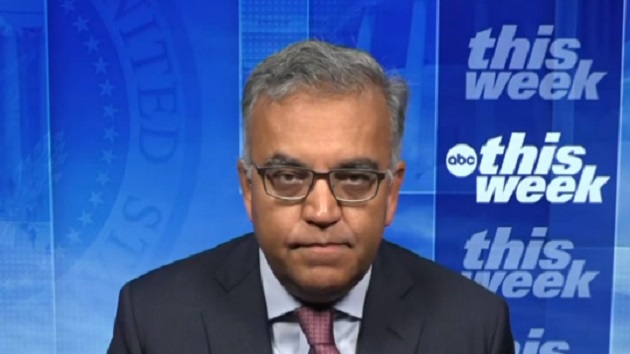
(NEW YORK) — The Biden administration is planning for a likely wave of COVID-19 infections this fall and winter by ensuring both a “new generation” of vaccines and access to treatment and testing, White House COVID-19 Response Coordinator Dr. Ashish Jha said on Sunday — but he stressed that plan depended on congressional funding.
“We have the resources,” Jha told ABC “This Week” co-anchor Martha Raddatz. “One of the reasons I’ve been talking a lot about the need for Congress to step up and fund this effort is if they don’t, Martha, we will go into the fall and winter without that next generation of vaccines, without treatments and diagnostics. That’s going to make it much, much harder for us to take care of and protect Americans.”
Jha has been urging lawmakers to approve President Joe Biden’s request for an additional $22.5 billion in COVID funding, warning that the nation has spent much of the money dedicated to pandemic testing and treatments, including what was in the $1.9-trillion American Rescue Plan signed into law last year. That request, however, remains stalled in Congress amid GOP opposition.
Meanwhile the U.S. is experiencing another COVID wave, with cases rising in nearly every state. Official infection numbers are up to more than 100,000 per day and COVID-related seven-day average hospitalizations rose by around 24% from the prior week, according to the latest CDC data. Experts say this surge is due in part to the virus’ continued variants and subvariants, some of which are increasingly contagious. Vaccination, the White House says, remains a key strategy at preventing severe illness death and lessening the spread.
“What we know is that this virus is evolving very quickly and every iteration of it has more and more immune escape [which] makes it harder for this virus to be contained unless we continue vaccinating people and keeping people up-to-date,” Jha said on “This Week.”
With the recent spikes in COVID cases and hospitalization numbers, Jha said vaccination or boosters were crucial and that he felt “very strongly” Americans should wear masks indoors again.
“When you’re in an indoor space, you should be wearing a mask,” he said. “First and foremost, my advice is if you have not gotten vaccinated in the last five months, if you have not gotten boosted, you need to go out to do that now.”
Raddatz pressed Jha on whether the administration had considered a new public health strategy considering their consistent advice had not broken through to all quarters of the public.
But, Raddatz asked, had the administration been considering another public health strategy considering their consistent advice (vaccines, masking) had not broken through to all quarters of the public?
“You said month after month after month, put your masks on, get a vaccine, get a booster, but the numbers aren’t really moving. So what kind of discussions do you have about another plan?” Raddatz said.
“We want to help people understand that we are in a different moment than we were two years ago, right? We are at a point where lots of people are vaccinated and boosted, where we do have widespread therapies available,” Jha said.
“And so the key discussion now is: How do we help Americans through this moment? And, this is really important, Martha, how do we prepare for future variants, how do we prepare for the evolution of this virus, and how do we make sure we have the resources to do it so we can protect Americans as this virus continues to evolve?”
With the Centers for Disease Control and Prevention this week backing booster eligibility for children 5 to 11 at least five months after their initial shots, Raddatz pressed Jha on when kids not yet eligible may be able to get their first shots.
“But what about 5 and under? How soon might we see that?” Raddatz asked.
“What I know is that Moderna has completed its application, those data are being looked at very closely right now by FDA [Food and Drug Administration] experts. And my expectation is that as soon as that analysis is done, probably within the next few weeks, we’re going to get that expert outside committee,” Jha said, referring to an FDA advisory committee. “And then after that, FDA’s going to make a decision.”
“My hope is that it’s going to be coming in the next few weeks,” he said.
Jha also talked about another infection that has gained increasing attention: monkeypox. Biden recently said it was “something that everybody should be concerned about.”
Jha, however, cautioned that there were significant differences between the COVID pandemic and the latest monkeypox cases, which have two confirmed infections so far in the U.S.– in Massachusetts and New York.
The U.S. is equipped with vaccines against it, Jha noted. And monkeypox has long been studied around the world.
“I would not be surprised, Martha, if we see a few more cases in the upcoming days. And I think the president’s right: Anytime we have an infectious disease outbreak like this we should all be paying attention,” he said. “But I feel like this is a virus we understand. We have vaccines against it, we have treatments against it, and it spreads very differently than SARS-CoV-2. It’s not as contagious as COVID.”
(WASHINGTON) — President Joe Biden signed legislation Saturday aimed at protecting low-income families as the United States grapples with a nationwide baby formula shortage.
The Access to Baby Formula Act of 2022 ensures families can use benefits from the Special Supplemental Nutrition Program for Women, Infants, and Children — also known as WIC — to buy formula products outside what is normally designated for the program during times of crisis.
The program purchases about half of all infant formula supply in the U.S., with some 1.2 million infants receiving formula through WIC.
Typically, each state relies on a contract with a single manufacturer to supply products for WIC participants. But a recall from Abbott, one of the nation’s largest manufacturers, highlighted flaws within the federal nutrition program.
“When we became aware of all of this we came together very quickly to do what we could,” Sen. Debbie Stabenow, D-Mich., said in remarks from the floor after the legislation passed, though she said she wished it would’ve never gotten to this point for families.
“The reality is that half of the baby formula in this country goes to moms and babies that are on a very important program that is called the Women, Infants, and Children’s program,” Stabenow continued. “We know that we’ve got to do anything humanly possible to take away any barrier available for them to get this important food for children.”
Now, the United States Department of Agriculture will have authority to amend WIC program rules during a shortage, recall or other emergencies and allow families to buy whatever products are available in the store.
The law also requires formula manufacturers that provide products for WIC participants to have a contingency plan for responding to shortages or recalls in the future.
Biden signed the baby formula bill into law during his five-day trip to Asia, according to the White House. He also signed a $40 billion aid package to Ukraine as Russia’s invasion stretches into its fourth month.
The Access to Baby Formula Act of 2022 had overwhelming bipartisan support in Congress, passing the House in a 414-to-9 vote and the Senate via unanimous consent.
Senate Majority Leader Chuck Schumer, D-N.Y., celebrated the bipartisan moment in the chamber.
“It’s rare that we have unanimity in the Senate on important measures, and I wish we had more, but this is one of these important issues and I’m glad we’re acting with one voice,” said Schumer, calling the shortage “stuff of nightmares” for parents.
For the week ending May 15, nearly 45% of products in the U.S. were unavailable, according to the data tracking firm Datasembly, up slightly from the 43% out-of-stock rate reported the week ending May 8.
The House also tried to give $28 million in emergency assistance to the Food and Drug Administration to enhance safety inspections and prevent fraudulent products from getting into stores. But the bill failed to move forward in the Senate, as Republicans on Capitol Hill remain opposed to giving the agency more funds.
FDA chief Robert Califf was grilled by lawmakers this week on the agency’s response to the formula shortage. He said it will the situation is “gradually” getting better, but that it “will be a few weeks before we’re back to normal.”
ABC News’ Allison Pecorin contributed to this report.
(SEOUL, South Korea) – In his first trip to Asia since taking office, President Joe Biden laid out conditions for meeting with North Korea’s Kim Jong Un.
“With regard to whether I would meet with the leader of North Korea, that would depend on whether he was sincere and whether he was serious,” Biden told reporters on Saturday as he appeared alongside South Korean President Yoon Suk-yeol at a press event.
Biden campaigned on taking a tougher stance on the North Korean leader than his predecessor. Former President Donald Trump frequently praised Kim, once saying he had a “great and beautiful” vision for his country. Trump and Kim held three high-profile meetings during his presidency.
Biden said last year he’d only meet with Kim so long as he committed to a discussion about dismantling North Korea’s nuclear arsenal. Yoon, South Korea’s newly elected president, reaffirmed Saturday that their shared goal is the complete denuclearization of North Korea.
“What I would not do is what has been done in the recent past,” Biden said at the time. “I would not give him all he’s looking for, international recognition as legitimate, and give him what allowed him to move in a direction of appearing to be more serious about what he wasn’t at all serious about.”
Biden said Saturday that the U.S. has offered vaccines to North Korea without any preconditions but has received no reply. Coronavirus appears to be surging in North Korea, with 2.4 million people “sickened with fever” as of Thursday.
“The answer’s yes, we’ve offered vaccines, not only to North Korea, but to China as well,” Biden said. “And we’re prepared to do that immediately. We’ve gotten no response.”
A White House spokesperson said the U.S. has offered to provide the shots through existing programs like COVAX — a global initiative to supply COVID-19 vaccines — as recently as last week.
During the joint news conference in Seoul, Biden and Yoon discussed ramping up U.S. support for South Korea in the face of North Korea’s aggression.
“Today, President Yoon and I committed to strengthening our close engagement and work together to take on challenges of regional security, including addressing the threat posed by the Democratic People’s Republic of Korea by further strengthening our deterrence posture and working towards complete denuclearization of the Korean Peninsula,” Biden said.
Both leaders agreed to consider expanding combined military exercises and training on the Korean Peninsula.
Biden began his six-day trip in South Korea on Friday and will end the trip in Tokyo, Japan, where he’ll meet with Japanese Emperor Naruhito and Prime Minister Kishida Fumio.
The White House said the trip comes at a pivotal moment in Biden’s foreign policy agenda.
“The message we’re trying to send on this trip is a message of an affirmative vision of what the world can look like if the democracies and open societies of the world stand together to shape the rules of the road, to define the security architecture of the region, to reinforce strong, powerful, historic alliances,” National Security Adviser Jake Sullivan told reporters this week.
(WASHINGTON) — A federal judge in Louisiana on Friday ordered the Biden administration to continue implementing pandemic-related restrictions at the border that effectively close humanitarian relief options for asylum seekers.
The restrictions were slated to end on Monday.
The restrictions were first implemented under the Trump administration by the Centers for Disease Control and Prevention which issued an order that derives its authority from a decades-old public health law known as Title 42.
The ruling today grants the GOP-led states’ motion for a preliminary injunction against the Title 42 rollback. The injunction is expected to remain in place until the case concludes, the government fixes its approach or until the government gets a more favorable decision on appeal if one is made.
The decision by Judge Robert R. Summerhays, a Trump appointee, comes as the Biden administration’s homeland security apparatus remains strained by a historic level of unauthorized migration in the southwest.
Immigration authorities arrested and stopped migrants 234,088 times along the southwest border last month, the highest monthly total in the reams of publicly available Customs and Border Protection data. That number includes a 183% increase in the number of inadmissible migrants trying to get through U.S. land ports since March.
During April, DHS says they removed 96,908 migrants under the Title 42 authority and 15,171 migrants under Title 8, which was the primary deportation authority before the pandemic.
It’s unclear what impact the use of Title 42 has on overall migration, despite claims from Republicans in Congress that it works as a successful deterrent.
Suspected unlawful entries at the border have come at a record pace over the past two years that the Title 42 order has been in effect. Meanwhile, the number of repeat border crossing attempts is up nearly fourfold since the first year the Title 42 was implemented.
One explanation behind the increase in repeated unlawful entries is the lack of long-term consequences for those processed and immediately expelled from the U.S. Under normal immigration processing, an order of removal comes with specific restrictions on re-entry and prosecutable consequences for those who try again.
Homeland Security Secretary Alejandro Mayorkas held meetings with top immigration officials at the border this week as he oversees preparations the department is taking in case the level of migration elevates further. At a press conference to discuss the trip he noted the Justice Department will decide whether to appeal the Louisiana court’s decision.
Mayorkas this week outlined the Department’s plan for the border transition away from Title 42 which involves surging homeland security resources, improving processing capacity and efficiency, ramping up consequences for increased border crossings, cracking down harder on transnational criminal smuggling networks and strengthening alliances across Central and South America.
“We have a multi-pronged approach to a very dynamic situation,” Mayorkas said. “We are addressing it across the Department of Homeland Security, across the federal government with our state and local partners, and with our partners and allies south of our border.”
Mayorkas said authorities will be increasing criminal prosecutions along the southwest border to apply the sort of consequences that Title 42 does not allow, including multi-year bans on re-entry for unauthorized migrants.
(WASHINGTON) — U.S. officials are still working out details for the first flight to import baby formula, Pentagon spokesperson John Kirby told reporters Friday, as parents continue to struggle to find supply amid the nationwide shortage.
The White House announced “Operation Fly Formula” on Thursday as an effort to transport baby formula from abroad that meets U.S. health and safety standards. The first shipment — said to be the equivalent of up to 1.5 million 8-ounce bottles — will come from Nestlé S.A. in Zurich, Switzerland and arrive in Plainfield, Indiana.
“I don’t have a specific update for you in terms of exactly what carrier it’s going to be and exactly what time and date but obviously this isn’t classified information and as soon as we have it properly sourced and all the details worked out, we’ll get that to you,” Kirby said during a press briefing.
Kirby added he doesn’t think it’s “going to be very long” before the flight is actually in the air. “We’re talking days at most,” he said.
The mission will likely use chartered commercial aircraft arranged by U.S. Transportation Command, but military “gray tail” planes could also be used if it is deemed to be the most efficient solution.
Nestlé told ABC News the first shipment will include 132 pallets of Nestlé Health Science Alfamino Infant and Alfamino Junior, as well as 114 pallets of Gerber Good Start Extensive HA — all of which are hypoallergenic formulas for children with cow’s milk protein allergies, one of the most common food allergies in babies.
The administration has been under intense scrutiny for its response to the crisis, which had been building for months.
In another effort to diffuse the situation, President Joe Biden on Wednesday invoked the Defense Production Act to prioritize ingredients needed for formula production. The 1950 law — first used to build up arms supplies following North Korea’s invasion of South Korea — compels suppliers to provide needed raw materials to formula manufacturers ahead of other customers ordering those goods.
But administration officials on Thursday struggled to say exactly how the Defense Production Act will help in this scenario, sidestepping questions on what raw ingredients formula companies need that they’ve said they’re not able to get.
The out-of-stock percentages have worsened for formula products, according to the data racking firm Datasembly. For the week ending May 15, nearly 45% of products were unavailable in stores across the U.S.
Coronavirus-related supply chain issues plagued the industry but a recall and plant closure from Abbott — one of the nation’s top manufacturers — exacerbated the shortage.
Food and Drug Administration Commissioner Robert Califf was grilled by lawmakers during a hearing Thursday on the agency’s handling of Abbott. Inspection reports and a whistleblower document suggest the FDA became aware of potential problems at the Abbott plant last fall.
Califf told lawmakers the Abbott plant is on track to reopen within two weeks. Once the facility is reopened, the company has said it would take an additional six to eight weeks before product is back on the shelves.
“We know many parents and caregivers are feeling frustrated,” Califf said. “This crisis has shown us the impact of having a single manufacturer cease production for a brief period, and unless we strengthen the resilience of our supply chain, we could be one natural disaster or quality mishap or cyber attack from being here again.”
ABC News’ Sasha Pezenik contributed to this report.