
‘Serious’ negotiations in Congress about new gun law after Texas school shooting, Sen. Murphy says

‘Serious’ negotiations in Congress about new gun law after Texas school shooting, Sen. Murphy says
Tom Williams/CQ-Roll Call, Inc via Getty Images, FILE

(WASHINGTON) — In the aftermath of the Texas elementary school shooting, there are “serious” bipartisan negotiations underway on a new gun law intended to reduce future killings, Sen. Chris Murphy, D-Conn., said Sunday.

“It’s inconceivable to me that we have not passed significant federal legislation trying to address the tragedy of gun violence in this nation,” Murphy told ABC “This Week” co-anchor Jonathan Karl. “The pace of everyday gun violence has dramatically escalated over the past two years.”

Nineteen children and two teachers were killed after a gunman opened fire at Robb Elementary School in Uvalde, Texas, on Tuesday, not even two weeks after 10 Black people were killed in a mass shooting in Buffalo, New York, that authorities described as a “racially motivated hate crime.”

After the Texas school shooting, Murphy gave an impassioned speech on the Senate floor calling for legislative action on gun violence. “What are we doing?” he asked his colleagues, adding, “There have been more mass shootings than days in the year.”

The shooting at Robb Elementary School is now the second deadliest K-12 school shooting after the Sandy Hook Elementary School massacre, in which 20 children and six staff members were killed in Newtown, Connecticut.

Murphy was finishing the end of his term as the congressman of that community when that shooting occurred in December 2012 and joined the Senate just weeks later. He’s since been a passionate advocate for gun law reform — an issue that faces GOP resistance in Congress, with conservatives arguing more laws are misplaced.

Ten years after the Sandy Hook shooting, Karl asked Murphy on Sunday, “What has been accomplished?”

“My hope is that this time is different,” Murphy said. “I get it. Every single time, after one of these mass shootings, there’s talks in Washington and they never succeed. But there are more Republicans interested in talking about finding a path forward this time than I have ever seen since Sandy Hook.”

Illinois Congressman Adam Kinzinger is one Republican who says his views on gun control changed after a series of mass shootings. He told Karl that “raising the age of gun purchase to 21 is a no brainer.”

“If you look at the Parkland shooting, you look at Buffalo, you look at this shooting, these are people under the age of 21,” Kinzinger said. “We know that the human brain develops and matures a lot between the age of 18 and 21. We just raised — without really so much as a blink — the age of purchasing cigarettes federally to 21.”

Murphy said negotiations with Republican senators have included discussion of so-called “red flag” laws, expansion of the federal background check system, safe storage, mental health resources and increased security funding for schools. “A package,” he said, “that really in the end could have a significant downward pressure on gun violence in this country and break the logjam.”

Kinzinger, an Air Force veteran and current member of the Air National Guard, held an A-rating from the National Rifle Association until he began advocating for gun control measures including the banning of bump stocks. He still owns an AR-15, which many gun control advocates have been calling to ban.

“Help me understand, how did you go from being somebody that was right in line with the gun lobby on this to somebody who thinks it’s time to change these laws?” Karl asked.

“It’s a journey of getting sick of seeing the mass shootings,” Kinzinger said. “I’m a strong defender of the Second Amendment. And one of the things I believe — for some reason, it is a very rare thing — is that as a person that appreciates and who believes in the Second Amendment, we have to be the ones putting forward reasonable solutions to gun violence.”

Some states have passed gun control legislation in the wake of mass shootings. After 17 people were killed in 2018 at Marjory Stoneman Douglas High School in Parkland, Florida, that state’s Republican-led legislature and Republican Gov. Rick Scott, who now serves in the Senate alongside Murphy, raised the minimum age to purchase a long gun to 21, improved background checks and banned bump stocks.

“Couldn’t that be a model?” Karl asked Murphy. “I mean, if [then-Gov.] Rick Scott could sign that into law in Florida, and support that in Florida, why couldn’t that pass in the United States Senate?”

“The Florida law is a good law and it’s a signal of what’s possible, right?” Murphy replied. “It’s also proof that Republicans could take on the gun lobby — because the NRA opposed that measure — and still get reelected.”

Kinzinger said the NRA has “gone from defending rights of gun owners… [to becoming] a grifting scam.” (The group is being sued by New York’s Attorney General Letitia James, who alleges financial misconduct. The NRA claims she is politically motivated.)

“The right to keep and bear arms is important to Republicans. It is to me, too,” Kinzinger said on Sunday. “But for some reason we’ve got locked in this position of ‘what are things where we can make a difference?'”

In Florida, Kinzinger said, “There was no blowback. Let’s do that kind of stuff now.”

Copyright © 2022, ABC Audio. All rights reserved.

Amid boycotts, US scrambling to make Summit of the Americas a success

Amid boycotts, US scrambling to make Summit of the Americas a success
Anna Moneymaker/Getty Images

(MEXICO CITY) — The week-long Summit of the Americas, slated to start June 8 in Los Angeles, is a big deal for the Western Hemisphere — bringing together leaders from North, Central, and South America and the Caribbean.

But President Joe Biden’s opportunity to host the high-profile gathering is running into some major problems that threaten to undermine the meetings — and Biden’s push to reassert U.S. leadership in the region.

Several leaders are threatening to boycott the summit because the U.S. has decided to not invite the governments of Venezuela and Nicaragua. And without these leaders’ participation, agenda items like a region-wide agreement on migration and efforts to combat climate change and the economic and social impacts of COVID-19 are in doubt.

“If all of the countries are not invited, I am not going to attend,” Mexican President Andrés Manuel López Obrador reiterated Friday. He’s repeatedly said all of the region’s countries must be invited, including those that Washington considers authoritarian and are under U.S. sanctions — Cuba, Venezuela, and Nicaragua.

Criticism like that has had the Biden administration scrambling to shore up attendance, including by dispatching Vice President Kamala Harris, first lady Dr. Jill Biden, and a special adviser for the summit, former Democratic senator Chris Dodd.

“Is it going to be the Summit of the Americas or the Summit of the Friends of America? Because if those countries are excluded, what continent are they from? Are they not from the Americas?” López Obrador, known by his initials as AMLO, added during a press conference Friday.

Losing the leader of Mexico, the 15th largest economy in the world and one of the region’s most important players, would be a big blow. U.S. officials, including Dodd, Biden’s friend and former Senate colleague, have been talking to AMLO’s government to secure his attendance.

But AMLO is not alone. The leaders of Bolivia, Antigua and Barbuda, and Guatemala have announced they will not attend. And others, including in Chile and Argentina, have criticized the snubs.

Even Honduras, whose left-leaning female president — the first in the nation’s history — has been showered with attention by the Biden administration, has threatened to not attend.

“I will attend the summit only if all of the countries in the Americas are invited without exception,” President Xiomara Castro tweeted Saturday.

That line in the sand was drawn just hours after Castro spoke with Vice President Harris. Harris, who Biden tapped to oversee the administration’s efforts to address migration from Central America, has sought to secure an ally in Castro — attending her inauguration in January and becoming the first foreign leader Castro met with after taking office.

While the U.S. readout of their Friday call made no mention of the summit, that Castro voiced clear opposition so shortly after is another troubling sign for the administration.

“Whether or not a widespread boycott of the summit ultimately materializes, the stresses in U.S-regional relations will have been exposed in an unflattering light,” Michael McKinley, who served as U.S. ambassador to Brazil, Colombia, and Peru, wrote in an opinion piece for the U.S. Institute of Peace.

“The uncertainties surrounding the summit,” he added, “are a wake-up call for the United States.”

Salvaging attendance could be one reason for those recent reversals in U.S. policy toward Cuba and Venezuela. Biden administration officials have denied that was the case, but a senior Caribbean-nation official said they made a difference in getting 13 of the 14 island nations to RSVP yes, according to Reuters. On Friday, the U.S. Treasury extended the oil company Chevron’s license to keep operating in Venezuela, stopping short of allowing the resumption of oil exports, but another good will gesture to Nicolás Maduro’s government.

But the U.S. made clear Thursday — it is not inviting the governments of Venezuela or Nicaragua, per Kevin O’Reilly, the top U.S. diplomat coordinating the summit. O’Reilly said the U.S. still doesn’t recognize Maduro’s legitimacy, but deferred to the White House on whether the U.S. would invite opposition leader Juan Guaidó, who the U.S. recognizes as Venezuela’s “interim president.”

While those exclusions were confirmed, whether Dodd and others can convince AMLO to come anyway is still an open question. The Mexican populist president, who’s said he may send his Foreign Secretary Marcelo Ebrard in his place, left the door open — praising Biden as a “good person, he doesn’t have a hardened heart.”

But Dodd’s efforts appear to have paid off elsewhere — after meeting Dodd on Tuesday, the far-right president of Brazil, another of the region’s major powers, is attending, per Brazilian newspaper O Globo. It will be the first time Biden even speaks to Jair Bolsonaro, whose attacks on the environment and Brazil’s democratic institutions — and his close ties to Donald Trump — have cooled relations with the White House.

In addition to Dodd, the administration deployed first lady Jill Biden on a six-day goodwill tour through the region this month. Biden, who will attend the summit with the president, visited Ecuador, Costa Rica and Panama — and batted away concerns about a boycott in between stops promoting U.S. investment and assistance in each country.

“I’m not worried. I think that they’ll come,” she told reporters as she departed San Jose, Costa Rica, on May 23.

O’Reilly told the Senate Thursday that the White House has not made a decision yet about inviting Cuba — a week and a half after the administration reversed Trump’s hardline policies. The White House announced flights to cities beyond Havana will resume, people-to-people exchanges will be permitted, and remittances will no longer be capped, among other steps that moved toward, but fell short of the rapprochement under Biden’s old boss, Barack Obama.

But regardless of a U.S. invite, Cuban President Miguel Díaz-Canel announced Wednesday that “under no circumstances” will he attend, accusing the U.S. of “intensive efforts and … brutal pressures to demobilize the just and firm claims of the majority of the countries of the region demanding that the Summit should be inclusive.”

The invitation list is also drawing criticism from Biden’s own party. Fifteen House Democrats, led by House Foreign Affairs Committee chair Gregory Meeks, wrote to Biden Thursday expressing “concern” about the decision.

“We feel strongly that excluding countries could jeopardize future relations throughout the region and put some of the ambitious policy proposals your administration launched under Build Back Better World at risk,” they wrote in their letter.

Others on Capitol Hill have argued in the opposite direction– with Sen. Marco Rubio, the top Republican on the Senate’s subcommittee for the Western Hemisphere, saying Thursday that the U.S. should not be “bullied” by AMLO or others and should not invite dictators.

Copyright © 2022, ABC Audio. All rights reserved.

Why gun control efforts in Congress have mostly failed for 30 years: TIMELINE

Why gun control efforts in Congress have mostly failed for 30 years: TIMELINE
Tom Williams/CQ-Roll Call, Inc via Getty Images

(WASHINGTON) — After the latest massacre in America — this time in an elementary school in Uvalde, Texas, in which 19 children and two adults were killed — Senate Majority Leader Chuck Schumer, D-N.Y., vowed his chamber would again take up legislation to address gun violence despite Republican opponents arguing the regulations are misguided.

Congress’ current divide on the issue is deeply rooted, tracing back to the mid-1990s, and has been shaped by electoral politics including the Democratic rout in the 1994 midterms that saw them lose the House for the first time in 40 years.

While Democratic lawmakers have at various times urged more federal gun reforms — mostly focused on assault-style or military-grade weapons and munitions and expanding the screening process for who can and cannot have a gun — Republicans say the focus should be elsewhere, on increasing public security and awareness of mental health and social issues.

Still the shootings continue, with new rounds of legislation often proposed in the wake of the worst killings: in Uvalde and in a Newtown, Connecticut, elementary school a decade earlier; and at Columbine High School 13 years before that, among other examples.

The prospect of a new federal law appears at the least very uncertain, given the partisan split. But legislators on both sides of the aisle are again talking, led by Connecticut Democratic Sen. Chris Murphy. Areas of focus and possible agreement include expanding background checks on gun sales — which has been voted down in Congress multiple times — and so-called “red” and “yellow flag” laws that would prevent someone from possessing a firearm if they have certain histories of concerning behavior.

Here is a look back at notable pieces of federal gun legislation that either passed or were defeated in Congress. The timeline reflects in part how the politics around guns, and the coalitions of politicians focusing on it, have shifted over time — from anxieties about crime in the ’90s that drew bipartisan backing to major support for gun manufacturers in the early 2000s to outcry about reducing school killings, and beyond.

2021: The House Democratic majority passes two lightly bipartisan measures expanding background checks, despite Republicans reiterating objections on Second Amendment grounds. One bill increases the window for review on a sale from three to 10 business days; the other bill essentially requires background checks on all transactions by barring the sale or transfer of firearms by non-federally licensed entities (closing so-called private loopholes). House Democrats vote to approve the first bill along with two Republicans (and two Democrats voting no). All Democrats except for one along with eight Republicans vote yes on the second bill, which previously passed the House in 2019, also under Democratic control.

2018: Congress passes and President Donald Trump signs into law an incremental boost to the federal background check system for potential gun owners. (The legislation is included as part of a necessary government spending package approved by wide bipartisan margins.)

2017: Trump signs into law a congressional reversal of an Obama-era rule which would have added an estimated 75,000 people to the federal background check system who were receiving Social Security mental disability benefits through a representative. Republican majorities in the House and Senate are joined by a few Democrats — four in the Senate and and six in the House — in blocking the impending regulation, which is opposed by both civil liberties and gun rights advocates.

2017: The House Republican majority is joined by six Democrats — with 14 Republicans opposing, arguing federal overreach — in backing a measure expanding concealed carry permits across the country via a reciprocity law requiring states to honor permits issued elsewhere. The bill dies in the Senate.

2013-2016: Partially prompted by the Sandy Hook Elementary School and Pulse nightclub killings, Congress takes up and then votes down various measures to expand background checks for sales online and at gun shows and to block people on no-fly and terrorism watch lists from being able to buy firearms. In one representative set of votes, in 2016, Democratic and Republican senators (with Republicans in the majority) each advance two proposals that are blocked along party lines. While some of those measures garner a majority, none get the 60 votes needed to overcome a filibuster as a potential winning compromise is frayed by differences over tactics and approach. Still, Susan Collins, R-Maine, reiterates hope — somewhere down the line — citing “tremendous interest from both sides of the aisle.”

2013: A bipartisan group in the Senate fails to approve their own expansion of concealed carry permits across the country, similar to what the House later takes up in 2017 and earlier tries to pass in 2011. Republicans, then in the minority, are joined by 12 Democrats — many of whom later say they oppose the expansion as the party and its base recommits to messaging around reducing guns and shootings.

2005: Congress’ Republican majority is joined by dozens of Democrats in passing the Protection of Lawful Commerce in Arms, signed into law by President George W. Bush. The legislation shields gun manufacturers from legal liability in almost all instances where their firearms are criminally used — with exceptions for defects in gun design, breach of contract and negligence. (PLCAA has since become a major target of Democratic ire, singled out by President Joe Biden, though such protections are not unheard of for other industries.)

1999: Previewing failed efforts to come, Congress votes down legislation to institute background checks and waiting periods for purchases at gun shows.

1994: In what would become the last major piece of federal gun legislation enacted by Congress, the Federal Assault Weapons Ban bars the manufacture and possession of a broad swath of semiautomatic weapons. The provision is included as part of the sweeping 1994 crime bill, shepherded by then-Sen. Biden and signed into law by President Bill Clinton. Gun legislation in this era is politically intertwined with federal efforts to curb crime. While the House narrowly passes the assault ban on its own and then later, successfully, via the overall crime legislation — in the first case, with most of the Democratic majority being joined by 38 Republicans; later, along with 46 Republicans — the crime bill is approved overwhelmingly in the Senate, with only two Democrats and two Republicans voting against and one Democrat, North Dakota’s Byron L. Dorgan, abstaining. The Senate approves with slimmer margins a reconciled version with the House in late 1994, with seven Republicans joining the Democratic majority. Clinton signs it shortly after. The assault ban includes some exemptions on the outlawed weapons along with a sunset date after 10 years, in what were seen as necessary concessions. Subsequent efforts to reauthorize the ban have failed.

1993: A year before the assault weapon ban, and amid sharp public concern about street-level crime, the House and Senate back the Brady Handgun Violence Prevention Act (named for President Ronald Reagan’s press secretary James Brady, who was gravely wounded in Reagan’s attempted assassination in 1981). Commonly known as the Brady bill, it institutes background checks for federally licensed sellers and initially imposes a five-day waiting period on sales — a provision that is later sunset with the launch of the National Instant Criminal Background Check System. Two-thirds of House Democrats are joined by a third of House Republicans in voting yes on the legislation. Although eight Democratic senators vote no (and one abstains), 16 Senate Republicans approve its passage along with the Democratic majority. President Clinton signs it into law.

ABC News’ Alexandra Hutzler and Trish Turner contributed to this report.

Copyright © 2022, ABC Audio. All rights reserved.

NRA convention kicks off in Texas just days after elementary school shooting

NRA convention kicks off in Texas just days after elementary school shooting
Andrew Harrer/Bloomberg via Getty Images

(HOUSTON) — The National Rifle Association is forging ahead with its annual meeting in Texas days after 19 young children and two teachers were killed in a mass shooting in the state. A roster of leading Republicans, including Donald Trump, will appear — with protesters set to gather outside.

The weekend-long event starts Friday in Houston, some 270 miles away from the killings Tuesday at Robb Elementary School in Uvalde. Multiple demonstrations, organized by interfaith leaders, Moms Demand Action, Indivisible Houston and other gun control advocates, are planned at the George R. Brown Convention Center, where much of the programming will be held.

Scheduled performers including Lee Greenwood said they would not be at the convention in light of the mass shooting. “After thoughtful consideration, we have decided to cancel the appearance out of respect for those mourning the loss of those innocent children and teachers in Uvalde,” Greenwood said in a statement.

Houston Mayor Sylvester Turner acknowledged the controversy on Wednesday but said, “It’s a contractual arrangement. We simply cannot cancel a conference or convention because we do not agree with the subject matter.”

The NRA plans to “reflect on” the Uvalde massacre and said this week that its “deepest sympathies are with the families and victims involved in this horrific and evil crime.”

“Although an investigation is underway and facts are still emerging, we recognize this was the act of a lone, deranged criminal,” the group said in a statement. “As we gather in Houston, we will reflect on these events, pray for the victims, recognize our patriotic members, and pledge to redouble our commitment to making our schools secure.”

Former President Trump is headlining NRA’s leadership forum on Friday. His oldest sons, Donald Trump Jr. and Eric Trump, were slated to speak Thursday night at the related NRA Hunters’ Leadership Forum Dinner and Awards Ceremony at the Rice Hotel, also in Houston.

Notably, no firearms will be allowed inside the assembly hall of the convention center on Friday due to President Trump’s appearance. The NRA said the ban is enforced by the Secret Service.

Texas Gov. Greg Abbott, Texas Sen. Ted Cruz and South Dakota Gov. Kristi Noem — all Republicans — were also previously confirmed to speak at Friday’s forum. Abbott declined to say earlier this week whether he would still attend, telling reporters on Wednesday he was “living moment-to-moment right now.” His office said Thursday he would be in Uvalde rather than at the NRA event, instead recording remarks for them by video, according to The Dallas Morning News.

Senate Majority Leader Chuck Schumer, D-N.Y., denounced Abbott as an “absolute fraud” ahead of the NRA event.

With Congress in the early stages of another bipartisan negotiation on possible gun legislation, Abbott stressed this week that he sees the Uvalde shooting as an issue of mental health, not guns — echoing Cruz and other conservative officials in contending gun laws are misplaced.

President Trump, who has embraced gun rights lobbyists despite occasional criticism, said in a Gab social media post earlier this week that “America needs real solutions and real leadership in this moment, not politicians and partisanship. That’s why I will keep my longtime commitment to speak in Texas at the NRA Convention and deliver an important address to America. In the meantime, we all continue to pray for the victims, their families and for our entire nation — we are all in this together!”

The NRA and other gun rights organizations are under renewed scrutiny amid a string of deadly public shootings. Earlier this month, 10 people were killed in a grocery store in Buffalo, New York, in what law enforcement described as a racially motivated attack by a suspected white supremacist. Days later, a gunman opened fire at a California church, killing one person and wounding five others; authorities have said that alleged shooter was driven by the political tension between China and Taiwan.

In Uvalde this week, 17 people were injured in addition to the 21 who were fatally shot, authorities said. A motive in that attack is not yet clear.

“When in God’s name are we going to stand up to the gun lobby?” President Joe Biden said after the latest tragedy. Democrats have limited options to pursue gun regulations given they don’t have the votes needed to squash a Republican-led filibuster in the Senate. The GOP has consistently said they won’t back sweeping changes to the law, citing their views on the Second Amendment, but some Republican lawmakers support more incremental measures such as expanding background checks.

How influential is the NRA today?

The NRA has been mired in internal strife in recent years. In 2019, it parted ways with its longtime marketing partner, Ackerman McQueen, and lobbyist Chris Cox.

Then last year, the group filed for bankruptcy and tried to reorganize in Texas after New York Attorney General Letitia James raised allegations of financial misconduct. The NRA said then that James had launched an “unconstitutional, premeditated attack” and that it was “committed to good governance.”

A federal judge later dismissed the bankruptcy case, leaving the group to face James’ lawsuit. She is seeking to recoup money that was allegedly misspent as well as ban NRA President Wayne LaPierre and other executives from serving in the leadership of any not-for-profit organization conducting business in the state.

Amid its scandals, the NRA spent $25 million less in the 2020 election cycle than it did in 2016, according to OpenSecrets, a nonprofit tracking data on campaign finance and lobbying. The gun group spent more than $54 million across federal races during Trump’s first campaign, in 2016, compared to $29 million four years later.

In the 2022 election cycle so far, the NRA has spent less than $10,000 on independent expenditures, OpenSecrets Executive Director Sheila Krumholz told ABC News.

But Adam Winkler, a University of California, Los Angeles, law professor who specializes in gun policy, told ABC News the NRA is still a powerful political force after decades of shaping public attitudes on firearms.

“The NRA has been immensely successful at persuading Americans that if you’re feeling in danger, you should have a gun,” Winkler said.

Gun sales hit a record high of 21 million in 2020, driven in part by first-time purchases. In 2021, sales hit their second highest number at 19 million.

The NRA has also been aided by a large constituency of very strong pro-gun voters who are “fighting for the same vision of gun rights,” Winkler said. Other organizations, such as Gun Owners of America, are stepping in to fill any gaps.

OpenSecrets reported last week that gun rights groups spent a record $15.8 million on lobbying in 2021 — more than five times the amount opposing gun control groups spent. The NRA alone spent $4.4 million on lobbying, up from its $2.2 million the year before.

“The gun rights forces in America are so powerful that another school shooting with an obscene number of deaths will likely not lead to significant new federal gun laws,” Winkler said.

ABC News’ Monica Escobedo contributed to this report.

Copyright © 2022, ABC Audio. All rights reserved.
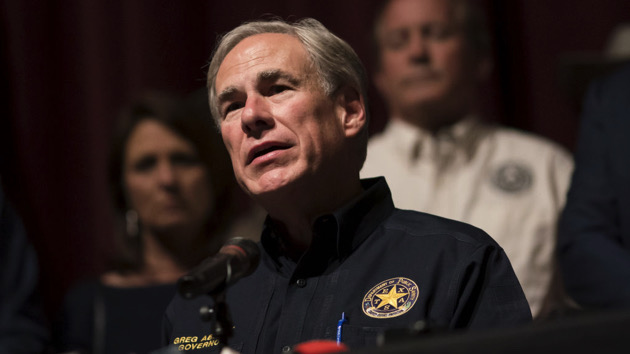
As Gov. Abbott places shooting blame on mental health, what has Texas done to address it?

As Gov. Abbott places shooting blame on mental health, what has Texas done to address it?
Eric Thayer/Bloomberg via Getty Images

(UVALDE, Texas) — During a press conference this week, Texas Gov. Greg Abbott blamed the mass shooting at an elementary school in Uvalde on mental health issues.

Abbott explained that law enforcement believes what’s behind these types of attacks is a growing prevalence of people with mental health issues and the need for more mental health support, not lax gun laws.

“We as a state, we as a society need to do a better job with mental health,” the Republican governor said Wednesday. “Anybody who shoots somebody else has a mental health challenge. Period. We as a government need to find a way to target that mental health challenge and to do something about it.”

However, advocates said the state has missed plenty of opportunities to address mental health.

The governor has diverted money away from agencies in Texas that oversee mental health programs and recent reports have found Texas is the worst state in the nation when it comes to providing access to mental health care, they say.

“Based on what we know about [the shooter], we cannot come to a formal conclusion that he had a mental illness,” Greg Hansch, executive director of the Texas chapter of the National Alliance on Mental Illness, told ABC News.

Abbott admitted during the conference that the 18-year-old suspected gunman in the Uvalde shooting, Salvador Ramos, did not have a diagnosed mental illness or a known criminal background, but rejected the idea that stricter gun laws would have prevented the shooting.

Debra Plotnick, executive vice president for state and federal advocacy at the nonprofit Mental Health America (MHA), said officials and the public often blame mental health when there is violence in a community.

“When we have a situation like this where people end up dead, it’s very easy to point fingers at mental health, in particular,” she said. “It’s a historic scapegoat and it’s still the case. But hate is not a mental illness … Having a mental health condition does not make someone violent.”

In fact, some critics said the state has not supported efforts to expand mental health care.

Texas is ‘worst in nation’ in mental health care access: Report

In April, Abbott announced he would be moving nearly $500 million from state agencies to fund Operation Lone Star, a Texas-Mexico border security initiative jointly being conducted by the Texas Department of Public Safety and the Texas Military Department.

Of that amount, $210.7 million was from Texas Health & Human Services, which oversees public mental health programs.

In a statement to ABC News, Abbott’s press secretary, Renae Eze, denied that the governor cut any funding from mental health services.

“This is a completely inaccurate, unsubstantiated narrative being spun by those trying to politicize a tragedy,” she wrote. “Governor Abbott did not, in no uncertain terms, cut funding from mental health services being provided for Texans. Governor Abbott has always worked diligently to fully fund and expand mental health programs and services for Texans.”

Eze added the Health & Human Services Commission requested to transfer funs because otherwise, they would lapse at the end of the fiscal year.

“HHSC confirmed in the same letter that the agency and its programs, including mental health programs and services, would not be negatively impacted by the transfer,” she wrote.

The MHA’s most recent State of Mental Health in America report found that Texas ranked last in the nation when it comes to access to mental care.

The report said nine measures made up the ranking including adults and youth with mental illnesses who couldn’t receive care, are uninsured or didn’t have insurance to cover care as well as the mental workforce availability.

“We have the highest uninsured rate in the nation and the most people uninsured.” Hansch said. “That certainly doesn’t help individuals with mental health conditions access care.”

The report adds to a growing body of evidence that Texans are not receiving mental health care. According to the Kaiser Family Foundation, nearly 70% of adults in Texas with mild mental illness did not receive mental health care leading up to the pandemic, as well as 57.4% of those with moderate mental illness and 44.7% of those with severe mental illness.

Texas Democratic gubernatorial candidate Beto O’Rourke confronted Abbott briefly during the press conference Wednesday over his comments before being escorted from the auditorium.

Outside, the former U.S. representative held an impromptu press conference during which he criticized Abbott and referenced the MHA report.

“He said mental health’s what’s broken here?” O’Rourke said. “We’re 50th in the nation in mental health care access. 50th. There are only 50 states in the nation. We are dead last.”

He continued, “He’s refused to expand Medicaid, which would bring $10 billion a year including mental health care access for people who need it … For the governor to say this is a mental healthcare issue and do nothing to improve mental health care access, we’re 50th in the nation. This shows that he is in large part to blame for what we see.”

Following the confrontation, Abbott avoided responding to O’Rourke’s claims in detail and called for unity in light of the tragedy. “We need to not focus on ourselves and our agendas, we need to focus on the healing and hope that we are providing to those who suffered unconscionable damage to their lives,” he said.

‘Addressing mental health isn’t going to end mass shootings’

This is not to say Texas hasn’t done anything to address mental health.

Following a shooting at Santa Fe High School in 2018 that killed 10 people, Abbott signed a series of bills that, among other things, sought to improve mental health access.

One bill created the Texas Child Mental Health Care Consortium to train primary care providers in mental health practices as well as provide counseling and psychiatric services to children. Another bill increased mental health training for teachers and other school officials.

Texas HHS also offers Mental First Aid training, during which participants are taught to recognize the signs and symptoms of mental health conditions.

Additionally, HHSC issues a quarterly report on waiting lists for mental health services and revealed plans last year to add 350 new inpatient psychiatric beds at the state hospitals within the next four years.

“Those are good steps and important,” Dr. Octavio Martinez, director of the University of Texas’ Hogg Foundation for Mental Health, told ABC News. “But we’ve been growing very significantly, we’ve been outstripping these resources because of the tremendous population growth needed in the public mental health system.”

Community advocates also want to see more school-based mental health centers, more school counselors and investments in mental health crisis services, which can help reach people who are in need or experiencing a mental health episode.

Even if Texas does divert more resources to mental health programs, experts said that won’t necessarily drive mass shootings down.

“Doing a better job addressing mental health isn’t going to end or even substantially reduce mass shootings,” Hansch said. “We should address mental health because doing so vastly increases the odds of recovery.”

He added, “It saves significant downstream costs for taxpayers, it’s a basic human right, and it saves lives that might otherwise be lost to suicide or co-morbid conditions.”

Copyright © 2022, ABC Audio. All rights reserved.

Blinken describes delicate balance between isolating and enabling China

Blinken describes delicate balance between isolating and enabling China
Alex Wong/Getty Images

(WASHINGTON) — In the eyes of the Biden administration, China is a daunting rival and an ever-present risk to global security. But it’s also a necessary partner for tackling some of the world’s most pressing issues.

During an address laying out the president’s policy towards China, Secretary of State Antony Blinken described a delicate balance between isolating and enabling the country, calling it the “most serious, long-term challenge” to the global balance.

“China is the only country with both the intent to reshape the international order and increasingly, the economic diplomatic military and technological power to do it,” he said. “Beijing’s vision would move us away from the universal values that have sustained so much of the world’s progress over the past 75 years.”

Delivered at George Washington University, his speech acknowledges that China was also a vital collaborator in the fight against climate change, pandemics and economic turmoil.

Blinken boiled the quagmire down into a single phrase.

“Put simply, the United States and China have to deal with each other for the foreseeable future,” he said. “That’s why this is one of the most complex and consequential relationships of any that we have in the world today.”

The secretary said that while the administration was already employing strategies to curb China’s influence, it would not try to limit its growth or create new Cold War. But while Blinken maintained that peace was its core goal, he vowed the U.S. would not compromise it own goals.

“Competition need not lead to conflict. We do not seek it. We will work to avoid it. But we will defend our interests against any threat,” he said.

The cost of China’s rise

Blinken acknowledged that China had undergone meteoric growth in the past half-century, but said its own people and other countries caught in its crosshairs had paid the price.

“Under President Xi, the ruling Chinese Communist Party has become more repressive at home and more aggressive abroad,” he said, citing mass surveillance, power grabs in the South China Sea, widespread human rights violations, the subversion of trade rules and more.

Blinken also noted the country’s repression of freedom in Hong Kong, its brutal treatment of religious and ethnic minorities in Tibet and the Xinjiang region, and its indignation over any international criticism over draconian measures employed against its citizens.

“Beijing insists that these are somehow internal matters, that others have no right to raise. That is wrong,” Blinken said.

The secretary also reaffirmed the One China policy, which was called into question earlier this week when President Biden he would defend Taiwan militarily before walking back his statements.

Blinken said the U.S. still acknowledges only one Chinese government, but said its posture towards Taiwan had intensified.

“What has changed is Beijing’s growing coercion by trying to cut off Taiwan’s relations with countries around the world and blocking it from participating in international organizations,” he said, adding that China regularly put on shows of force by flying military aircraft near the island. “These words and actions are deeply destabilizing. They risk miscalculation and threaten the peace and stability of the Taiwan Strait.”

For all its commitment to its own territorial integrity, Blinken argued China’s unwavering alliance with Russia was hypocritical.

“Even while Russia was clearly mobilizing to invade Ukraine, President Xi and President Putin declared that the friendship between their countries was and I quote, without limits,” he said.

Checking China’s spending power

Blinken repeatedly stressed that the aim of the administration was not exclude China from the world market. Instead, senior administration officials say they want to make sure it “plays by the same rules as everyone else.”

Blinken said that by creating dependencies, Beijing was “seeking to make China less dependent on the world and the world more dependent on China.”

“For our part, we want trade and investment as long as they’re fair, and don’t jeopardize our national security,” he added.

He warned other countries to go into trade partnerships with open eyes, wary of retaliation should they adopt a stance China disagrees with.

“Many of our partners already had a painful experience, how Beijing can come down hard when they make choices that it dislikes,” he said.

A decisive decade for the world

The secretary predicted the ideological battle between superpowers would be decided in the next 10 years.

“President Biden believes this decade will be decisive,” Blinken said, outlining the administration’s three pronged approach. “The Biden administration strategy can be summed up in three words, invest, align, compete.”

Invest, he said, referred to invigorating industry, technology and research to ensure the U.S. was up to par with China in these arenas. Align meant strengthening ties with key allies.

Blinken said efforts to do both these things were already underway through initiatives like the Bipartisan Infrastructure Law and revived geopolitical partnerships. But to truly compete, he contended that more needed to be done — calling on Congress to resolve a months’ long stalemate and send a massive spending bill aimed at ramping up the country’s ability to economically contend with China to the president’s desk.

“Beijing is determined to lead, but given America’s advantages, the competition is ours to lose — not only in terms of developing new technologies, but also in shaping how they’re used around the world, so that they’re rooted in democratic values, not authoritarian ones,” he implored.

Copyright © 2022, ABC Audio. All rights reserved.

Bipartisan senators meet on reviving stalled gun control talks

Bipartisan senators meet on reviving stalled gun control talks
Kevin Dietsch/Getty Images, FILE

(WASHINGTON) — In an indication of possible movement on stalled gun control efforts in the wake of the Texas school shooting, a bipartisan group of nine senators – four Republicans and five Democrats – led by Connecticut Democrat Sen. Chris Murphy, met for about a half-hour Thursday to discuss what is possible in reforming gun safety laws.

“This is a good start,” Murphy told reporters afterward, indicating that red flag laws and expanded background checks for commercial gun sales were “on our list” to consider during a weeklong recess.

The group is also looking at a GOP bill that was blocked Wednesday – the School Safety Act – that would codify current practice put in place during the Trump administration that created a clearinghouse of best practices for hardening schools against threats.

Sen. Susan Collins, R-Maine, said the group had broken down assignments and would be meeting via Zoom over the recess.

“I thought the meeting was very constructive and went well. We identified some issues and we’ll continue to work over the recess, and I am hopeful that we can come together on a package that will make a difference,” Collins told ABC News.

In a significant development, Senate Minority Leader Mitch McConnell encouraged the bipartisan negotiations.

ABC News Congressional Correspondent Rachel Scott confirmed he met with Texas GOP Sen. John Cornyn Thursday morning, giving his political blessing for Cornyn, a top ally, to meet with Democrats to see if there is a bipartisan path forward.

Democrats need the support of 10 Republicans to get advance any legislation toward a final vote and possible passage

Cornyn returned to Washington Thursday having seen the horror in his home state and, speaking on the Senate floor, said he is ready to work on finding ways to try to prevent another tragedy.

“I’m not interested in making a political statement. I’m not interested in the same old tired talking points,” he said. “I’m actually interested in what we can do to make the terrible events that occurred in Uvalde less likely in the future.”

South Carolina Republican Sen. Lindsey Graham and Connecticut Democrat Sen. Richard Blumenthal emerged from the basement of the Capitol where the group met to tout their bipartisan bill that would incentivize states through federal grants to implement so-called red flag laws,

“The complicating and challenging part of this statute is to set the standard, for example, what kind of showing has to be made to justify separating someone from a gun?” Blumenthal said of the challenge in crafting these types of laws, on the books in 19 states, that permit law enforcement to temporarily seize weapons — via court order — from those individuals who might be a danger to themselves or others.

Those requests typically come from family members, but Maine has a “yellow flag” law that puts the onus on medical professionals to determine when an individual would be a danger that would warrants guns being temporarily taken.

Sen. Martin Heinrich, a New Mexico Democrat, said he attended the meeting because as a gun enthusiast, his Democratic colleagues “wanted to include that perspective as we try to figure out if there’s some world of possible.”

Democratic Sen. Joe Manchin of West Virginia said he and GOP Sen. Pat Toomey of Pennsylvania, who also attended the meeting, would look at how they might update their background check bill, “looking at anything that’s happened” between 2013, when the bill failed at the hands of most GOP senators, and now.

Murphy is slated to work with that bipartisan duo.

Toomey called today’s meeting “an organizational meeting,” as the bipartisan group seeks to find common ground. “We’re getting started to try to figure out if there’s a path to getting to a consensus, and we’ll see where it takes us.”

Sounding a positive note as he left the meeting, Toomey said, “There’s a possibility it might work this time.”

The group emphasized that they have set no dates for completion of their assignments, but Senate Majority Leader Chuck Schumer reiterated Thursday that the group had a finite period of time, roughly 10 days — putting the time for a compromise to emerge at roughly just after the recess ends in a week.

“There is a powerful, emotional element to the red-flag statute that gives it momentum, especially after Uvalde — like Buffalo — where the shooter evidently indicated very strong signs that he was dangerous,” Blumenthal said, adding, “I’m more hopeful than ever before.”

Blumenthal indicated that the group is aware they have limited time to strike a deal.

“There is a real sense of urgency right now in this moment. We simply need to seize it,” said Blumenthal, indicating that this “Sandy Hook moment” was a particular impetus.

Copyright © 2022, ABC Audio. All rights reserved.

How Texas loosened gun restrictions despite recent mass shootings

How Texas loosened gun restrictions despite recent mass shootings
Eric Thayer/Bloomberg via Getty Images

(NEW YORK) — Gun control advocates are again calling on Texas lawmakers to restrict access to firearms after at least 19 children and two teachers were killed in a shooting at Robb Elementary School in Uvalde, Texas, on Tuesday.

The suspect, 18-year-old Salvador Ramos, a student at Uvalde High School, is also dead, authorities said. Officials told ABC News that the suspect legally purchased two AR-style rifles on May 17 and May 20, respectively, just days after his 18th birthday.

In Texas, where there are few restrictions on purchasing firearms, individuals who are 18 years or older are legally permitted to purchase long guns, which include shotguns and rifles.

Republican lawmakers, who currently control the State Legislature, have repeatedly loosened gun restrictions even after recent mass shootings in the state.

“You are doing nothing!” Texas Democratic gubernatorial candidate Beto O’Rourke said, confronting Texas Republican Gov. Greg Abbott during a press conference on Wednesday.

In the wake of the Uvalde shooting, Abbott pointed to a “mental health” problem in the community during Wednesday’s press conference and dismissed the suggestion that stricter gun laws could have prevented the shooting.

“I asked the sheriff and others an open-ended question and got the same answer from the sheriff, as well as from the mayor of Uvalde,” the governor told reporters. “The question was, ‘what is the problem here?’ And they were straightforward and emphatic. They said, ‘we have a problem with mental health illness.'”

Abbott echoed a common stance that many Republican lawmakers on both the state and national levels have repeatedly taken amid a nationwide debate on gun violence, which reaches a boiling point following each mass shooting.

According to the Giffords Law Center to Prevent Gun Violence, which advocates for gun control and studies gun laws across the country, seven of the deadliest mass shootings in the history of the U.S. happened in the country over the past decade. And four of those shootings, including the Uvalde shooting, happened in Texas.

Most recently, 25 people were killed in a mass shooting at First Baptist Church in Sutherland Springs, Texas, on Nov. 5, 2017. And in August 2019, 23 people were killed at a Walmart in El Paso. The gunmen, like the Uvalde shooting suspect, used semi-automatic rifles in the shootings.

In the wake of these shootings, Abbott signed a series of bills into law last year designed to further ease access to firearms. He argued that each piece of legislation strengthens the Second Amendment, the right to bear arms.

“Politicians from the federal level to the local level have threatened to take guns from law-abiding citizens — but we will not let that happen in Texas,” Abbott said in a statement on June 17, 2021. “Texas will always be the leader in defending the Second Amendment, which is why we built a barrier around gun rights this session.”

Among the bills signed by Abbot last year was House Bill 1927, dubbed as “Constitutional Carry” by gun rights advocates. The law made it legal for “law-abiding Texans” to carry handguns without a license or training. The law went into effect on Sept. 1, 2021.

“I’m not here to take anybody’s rifles away. I’m not here to take anybody’s guns away. But as this next legislative session unfolds in January here in Texas, I will seek to provide restrictions on access to these types of militarized weapons,” Texas State Sen. Roland Gutierrez, who represents the district where the Uvalde school shooting took place in Texas, told ABC News Live on Wednesday.

“Again, nobody in this rural community uses that type of weaponry to go hunting,” he added.

Amid criticism from gun control advocates, who argued for more restrictions in the wake of the El Paso shooting, Abbott defended the law, arguing that it “safeguards” the right to bear arms under the Second Amendment.

Abbott also signed into law in 2021 an amendment that loosened restrictions on handguns based on age.

In Texas, you had to be 21 years old to get a license to carry a handgun, but the 2021 amendment made it possible for 18-year-olds to receive a license if they meet other requirements, other than age, and if they are protected under various protective orders, including having been a victim of violence, stalking or sexual abuse.

“We have a governor and a Republican-controlled legislature that has chosen to put more guns on the streets, [and] make it easier for young people to access guns and weapons of war without training, without a license,” Texas Rep. Veronica Escobar, a Democrat, told ABC News Live on Tuesday.

Escobar criticized the passage of the legislation loosening gun restrictions after it was signed by Abbott in June 2021 and said that in the wake of the El Paso shooting, Abbott has “chosen to betray the victims of gun violence.”

Following the 2018 mass shooting at Santa Fe High School in Santa Fe, Texas, which left 10 dead, Abbott asked the State Legislature to consider a so-called “red flag” law that would allow court-ordered removal of firearms from an individual who is deemed to be dangerous.

But the Republican governor faced pushback from gun rights advocates in his own party, including Lt. Gov. Dan Patrick.

“It seems like there’s coalescence around the notion of not supporting what’s categorized as a ‘red flag’ law,” Abbott said in July 2018, according to the Texas Tribune. “What is important is … that we work together as a legislative body towards a solution to make our schools safer and to make our communities safer.”

After the Santa Fe shooting, Abbott announced a “school safety” plan and later signed into law bills that would, among other things, strengthen mental health access in schools, heighten police presence, hire more school safety marshals and remove the cap on how many can carry firearms in public schools.

Abbott also signed House Bill 2622 into law last year, making Texas a “Second Amendment Sanctuary State by protecting Texans from new federal gun control regulations.”

A 1994 federal assault weapons ban expired in 2004 — a measure that Democrats and gun control advocates have long fought to restore.

According to the Giffords Center, a study of mass shootings in which four or more people were killed found that more than 85% of these fatalities were caused by assault rifles. Seven states and the District of Columbia prohibit assault weapons. In Texas, assault weapons are legal.

Copyright © 2022, ABC Audio. All rights reserved.

Will Texas school shooting force Congress to finally act on gun control?

Will Texas school shooting force Congress to finally act on gun control?
Tim Graham/Getty Images

(WASHINGTON) — Experts examine America’s history with guns, the real-life impacts of gun violence and what can be done going forward to mitigate the problem.
As the nation mourns the latest American massacre of 19 elementary school students and two teachers in Texas, the deadliest mass school shooting in nearly a decade, gun control efforts remain stalled in Washington, as they have for almost 30 years.

President Joe Biden on Tuesday night made impassioned remarks expressing outrage at lawmakers who are blocking “common-sense” gun laws and rejected the argument often heard from Republicans that gun violence is a mental health issue.

“These kinds of mass shootings never happen with the kind of frequency they happen in America. Why? Why are we willing to live with this carnage?” Biden said with outrage. “Where in God’s name is our backbone to have the courage to deal with and stand up to the lobbies?”

Since the National Rifle Association formed its own political action committee in 1977, the organization has used its deep pockets to lobby lawmakers at the federal and state level to stave off gun control efforts.

According to the Brady Campaign to Prevent Gun Violence, the NRA spent $1.6 million in the first half of 2019 alone lobbying members of Congress to vote against a proposal to expand background checks for gun sales.

With Republicans offering sympathy to the loved ones of victims in the Robb Elementary shooting, several critics on social media called out their contributions from the gun lobby, citing $13.6 million to Sen. Mitt Romney, R-Utah, and $1.2 million to Minority Leader Mitch McConnell, over their careers.

The last meaningful gun reform legislation passed on Capitol Hill was the 1994 assault weapons ban, which expired in 2004 due to a “sunset” clause in the legislation. In the nearly 30 years since, gun control measures have mostly stalled on Capitol Hill, and in the current Democratic-controlled Congress, that’s due, in large part, to the Senate filibuster rule.

In the current 50-50 Senate, Democrats need 10 Republicans to join them to reach the 60-vote threshold required by the Senate’s filibuster rule in order to end debate on a bill, allowing it to proceed to a final vote. Republicans have warned even a single exception to the Senate’s 60-vote threshold to advance legislation would be dangerous to the rights of whichever party is in the minority (although both parties have used the so-called “nuclear option” in the last decade — requiring 51 votes to confirm all executive branch and judicial nominees, for example).

Republicans Sens. Ted Cruz and John Cornyn headed back to their home state of Texas on Wednesday to visit Uvalde.

Cornyn has supported bipartisan talks to expand background checks in the past. Cruz has not, and has faced backlash, along with Abbott, for being slated to speak at the NRA’s annual meeting in Houston this weekend, only a few hundred miles away from the massacre in Uvalde. Because former President Donald Trump is also attending, the NRA said Wednesday that firearms would not be allowed at the event, citing Secret Service protocol.

The last time Congress came close to passing substantial gun reform was in the wake of the Sandy Hook massacre in 2012, when a single gunman killed 20 students and 6 adults. Biden was tasked with the White House response on Capitol Hill while serving as vice president, but that effort ultimately failed to garner enough bipartisan support.

In lieu of congressional action, Biden has taken some executive actions aimed at curbing gun violence but conceded last week while in Buffalo there’s “not much” more he can do without congressional support.

Where does gun control stand in Congress?

House Democrats passed two gun control bills last year — one aimed at expanding background check requirements for gun sales, and the second aimed at extending the review period for background checks from three days to 10 days. But Democrats don’t have the votes needed to squash a GOP-led filibuster to pass either bill in the Senate.

Two Senate Democrats — Joe Manchin of West Virginia and Kyrsten Sinema of Arizona — have been adamant in their opposition to changing the Senate filibuster rule.

“If we can’t get 60 or 70 or more votes, we’ll talk then,” Manchin said Wednesday, expressing some confidence that senators could find some common ground before ending the rule.

Sinema, asked directly if she could support scrapping the filibuster to pass gun control legislation, told ABC News’ Trish Turner, “I don’t think that D.C. solutions are realistic here.”

Senate Majority Leader Chuck Schumer moved Tuesday evening to put the two House-passed bills on the chamber’s calendar, but it’s unclear if and when a vote would be held. If Schumer does bring legislation to the floor, it would likely be an effort to put every single senator on the record, as he’s done with failed legislation on abortion and voting rights.

When eviscerating Republicans in a floor speech Wednesday, Schumer signaled he was disinclined to put up that vote.

“I accept the fact that most of my Republicans are not willing to do what it takes to present this needless loss of life. The NRA will have a hold on them. That’s just the reality, unfortunately, but it is unacceptable to the American people to think that there are not 10 of my Republican colleagues just 10 — one out of five over here — would be ready to work to pass something that we reduce this plague of gun violence,” Schumer said. “It’s unacceptable, that there are not 10 members of the Republican caucus willing to save lives, find a way to do it. And yet, that’s where we are.”

Chris Murphy, D-Conn., who has represented his state since the Sandy Hook massacre also questioned his colleagues on the Senate floor Monday night in a speech that quickly went viral on social media.

“What are we doing? Just days after a shooter walked into a grocery store to gun down African American patrons. We have another Sandy Hook on our hands,” he said. “There are more mass shootings than days in the year. Our kids are living in fear every single time they set foot in the classroom because they think they’re going to be next. What are we doing?”

Renewed talks but will there be action?

While lawmakers on both sides of the aisle often talk about taking action in the wake of deadly mass shootings, there’s not widespread bipartisan agreement on what action to take.

Sen. Marco Rubio, R-Fla., pushed for The School Safety Act, which would create a federal clearinghouse database and collect information to establish best practices for school safety nationwide. Rubio will try to force a vote on that legislation Wednesday.Republican Sen. Rob Portman, who has accepted more than $3 million from the NRA in his career, told ABC News Congressional Correspondent Rachel Scott that he does support background checks.

“It’s not just about these horrific mass shootings, it’s also about this broader issue of gun violence, and then what are the actual solutions — what’s actually going to make a difference,” he said. “If we’re passing something to make us feel better here, that doesn’t have any impact on the actual issue.”

Democratic Sen. Richard Blumenthal said he thinks there could be common ground on red flag laws, noting his bipartisan red flag law bill with Republican Sen. Lindsey Graham. Red-flag laws allow police or family members to petition a court to order the removal of firearms from a person who may present a danger to others or themselves.

But Graham, asked by Scott on Wednesday if he can assure the American people that — this time — something will get done, said, “I can’t assure the American people there’s any law we can pass that would have stopped this shooting.”

With an apparent eye on midterms, Sen. Cory Booker, D-S.C., said he’s urging Schumer to put every senator on the record.

“I’m hoping it comes to the floor for a vote. It will fail. Americans should know that,’ Booker said. “Right now, there are not seemingly 10 senators that want to do the most moderate of things, which is universal background checks supported by almost 90% of Americans, the majority of gun owners, but I do think at this moment its important we put people on the record.”

Americans across party and demographic lines overwhelmingly support expanded background checks (89%) and red flag laws (86%), according to an ABC News-Washington Post poll from 2019.

ABC News Congressional Correspondent Rachel Scott, Trish Turner and Allie Pecorin contributed to this report.

Copyright © 2022, ABC Audio. All rights reserved.

Biden orders federal policing reform on 2nd anniversary of George Floyd’s killing

Biden orders federal policing reform on 2nd anniversary of George Floyd’s killing
Sarah Silbiger/Bloomberg via Getty Images

(WASHINGTON) — On the second anniversary of George Floyd’s death at the hands of Minneapolis police, President Joe Biden on Wednesday signed an executive order on policing reforms for federal law enforcement.

He had made a campaign promise to enact broader reform — but Democrats in Congress failed to overcome Republican opposition to a measure that would hold local police accountable — by making federal funding contingent on departments following congressionally-imposed requirements. The order signed Wednesday will apply to roughly 100,000 federal officers total, administration officials said.

Speaking in the East Room surrounded by Floyd’s family members, relatives of Breonna Taylor and civil rights leaders, Biden celebrated the order as a “measure of what we can do together to heal the very soul of this nation to address profound fear and trauma exhaustion.”

But first, he and Vice President Kamala Harris briefly addressed the shooting that took place Tuesday at a Texas elementary school that left 19 young children and two teachers dead.

“Enough is enough,” Harris said. “We must work together to create an America where everyone feels safe in their community, where children feel safe in their schools.”

Biden, who confirmed he will be traveling to Texas with first lady Jill Biden in the coming days, called for gun control reform.

“We’re here today for the same purpose,” Biden said, “to come together and say enough, to act, we must.”

The executive order signed by Biden will create a new national database that contains records of federal officer misconduct, including convictions, terminations, de-certifications, civil judgments, resignations and retirements while under investigation for serious misconduct.

It also requires all federal law enforcement agencies to revise use-of-force policies, banning chokeholds and restricting the use of no-knock warrants — two tactics that were widely criticized following the deaths of Floyd and Taylor.

Floyd died after a Minneapolis police officer knelt on his neck for more than nine minutes. Taylor, a Black medical worker, was shot and killed by Louisville, Kentucky, police using a no-knock warrant in March 2020.

Vice President Harris said Wednesday it was an honor to be joined by the families, stating she’s been moved by their courage.

“Your loved ones should be with us today,” she added. “You should not have to mourn, should never have had to mourn in order for our nation to feel your pain and to understand what is wrong and to agree that something must be done.”

Harris also criticized Senate Republicans for not supporting the George Floyd Justice in Policing Act, a package of reforms passed by the House last year, stating the GOP members, “walked away from their moral obligation to address what caused millions of Americans to march in the streets.”

On Wednesday, Biden once again called on lawmakers to pass the George Floyd Justice and Policing Act, stating he held off on signing the executive order because he was afraid it would undercut the effort on Capitol Hill to pass reforms. “Today we%u2019re acting,” Biden said. “We%u2019re showing that speaking out matters, feeling engaged matters, that the work of our time — healing the soul of this nation — is ongoing and unfinished and requires all of us never to give up.” Biden invited Floyd’s daughter, Gianna, to come and sit at the desk where he signed the order.

“A few years ago … she pulled me aside and she said, ‘My daddy is gonna change the world,'” Biden said at the ceremony.

ABC News’ Armando Garcia contributed to this report.

Copyright © 2022, ABC Audio. All rights reserved.