
Trump says he’d like to see facilities like ‘Alligator Alcatraz’ in other states

Trump says he’d like to see facilities like ‘Alligator Alcatraz’ in other states
Giorgio Viera/AFP via Getty Images

(WASHINGTON) — President Donald Trump said Tuesday he would like to see facilities like the new so-called “Alligator Alcatraz” migrant detention center in Florida‘s Everglades in other states.

“Well, I think would like to see them in many states. Really, many states,” the president said. “And, you know, at some point, they might morph into a system.”

The Trump administration is turning the remote Dade-Collier Training and Transition Airport into a facility that officials say will eventually hold up to 5,000 people. Officials say operations will start on Tuesday. The facility is part of Trump’s efforts to ramp up deportations by expanding detention capacity. The president has already sent migrants to Guantánamo Bay and the mega-prison in El Salvador.

Asked by ABC News’ Mary Bruce if the new center could be a new standard for immigration facilities in the U.S. despite criticism for its harsh conditions, Trump said, “It can be.”

“I mean, you don’t always have land so beautiful and so secure. They have a lot of bodyguards and a lot of cops that are in the form of alligators. You don’t have to pay them so much but I wouldn’t want to run through the Everglades for long. It will keep people where they’re supposed to be. This is a very important thing,” he said.

White House press secretary Karoline Leavitt said Trump’s visit would be a chance for the president to tout the funding for more detention facilities and efforts to enact Trump’s mass deportation policy that are in his megabill that the Senate could vote on Tuesday before sending to the House before Trump’s Fourth of July deadline.

“I think his trip to this detention facility actually underscores the need to pass the One Big, Beautiful Bill because we need more detention facilities across the country,” Leavitt said.

A source familiar with the planning tells ABC it will cost Florida $450 million a year, and officials say some of that money will be reimbursed from FEMA’s Shelter and Services Program.

Leavitt described the facility’s remote location in her briefing on Monday.

“There’s only one road leading in, and the only way out is a one-way flight,” she said. “It is isolated and surrounded by dangerous wildlife and unforgiving terrain. The facility will have up to 5,000 beds to house, process and deport criminal illegal aliens.”

“This is an efficient and low-cost way to help carry out the largest mass deportation campaign in American history,” Leavitt added.

When asked about the remote and dangerous location, Leavitt said that it was a feature of the facility to help prevent detainees from escaping.

“Well look, when you have illegal murderers and rapists and heinous criminals in a detention facility surrounded by alligators, yes, I do think that’s a deterrent for them to try to escape,” she said. “We do know that some of these illegal criminals have escaped from other detention facilities, like one in New Jersey, which I know was recently reported on. So, of course, we want to keep the American people safe, and we want to remove these public safety threats from our streets, and we want to effectively detain them as best as we can.”

Florida Attorney General James Uthmeier posted on X that the facility is a “one stop shop” to carry out Trump’s mass deportation agenda, claiming the location saves money on security since it’s surrounded by dangerous animals.

“You don’t need to invest that much in the perimeter. People get out, there’s not much waiting for them other than alligators and pythons. Nowhere to go, nowhere to hide,” Uthmeier posted.

Among officials who will join Trump at the facility are Department of Homeland Security Secretary Kristi Noem, Florida Gov. Ron DeSantis and Florida Congressman Byron Donalds.

In a statement released Monday, Noem said, “Alligator Alcatraz, and other facilities like it, will give us the capability to lock up some of the worst scumbags who entered our country under the previous administration. We will expand facilities and bed space in just days, thanks to our partnership with Florida. Make America safe again.”

DeSantis touted the facility last week as “as safe and secure as you can be.”

Environmental groups are suing to stop construction, alleging the government violated the Endangered Species Act by building on protected land.

Protesters gathered along the highway that cuts through the Everglades to demonstrate on Saturday. They included environmental activists and Native Americans advocating for their ancestral homelands. Others demonstrated against the treatment of migrants.

Copyright © 2025, ABC Audio. All rights reserved.
What to know about ‘Alligator Alcatraz’ migrant detention center amid Trump visit

Trump says he’d like to see facilities like ‘Alligator Alcatraz’ in other states
Giorgio Viera/AFP via Getty Images

(WASHINGTON) — President Donald Trump touring the new “Alligator Alcatraz” migrant detention center in Florida‘s Everglades on Tuesday.

The Trump administration is turning the remote Dade-Collier Training and Transition Airport into a facility that officials say will eventually hold up to 5,000 people. Officials say operations will start on Tuesday. The facility is part of Trump’s efforts to ramp up deportations by expanding detention capacity. The president has already sent migrants to Guantánamo Bay and the mega-prison in El Salvador.

Asked by ABC News’ Mary Bruce if the center could be a new standard for immigration facilities in the U.S. despite criticism for its harsh conditions, Trump said, “It can be.”

“I mean, you don’t always have land so beautiful and so secure. They have a lot of bodyguards and a lot of cops that are in the form of alligators. You don’t have to pay them so much but I wouldn’t want to run through the Everglades for long. It will keep people where they’re supposed to be. This is a very important thing,” he said.

White House press secretary Karoline Leavitt said Trump’s visit would be a chance for the president to tout the funding for more detention facilities and efforts to enact Trump’s mass deportation policy that are in his megabill that the Senate could vote on Tuesday before sending to the House before Trump’s Fourth of July deadline.

“I think his trip to this detention facility actually underscores the need to pass the One Big, Beautiful Bill because we need more detention facilities across the country,” Leavitt said.

A source familiar with the planning tells ABC it will cost Florida $450 million a year, and officials say some of that money will be reimbursed from FEMA’s Shelter and Services Program.

Leavitt described the facility’s remote location in her briefing on Monday.

“There’s only one road leading in, and the only way out is a one-way flight,” she said. “It is isolated and surrounded by dangerous wildlife and unforgiving terrain. The facility will have up to 5,000 beds to house, process and deport criminal illegal aliens.”

“This is an efficient and low-cost way to help carry out the largest mass deportation campaign in American history,” Leavitt added.

When asked about the remote and dangerous location, Leavitt said that it was a feature of the facility to help prevent detainees from escaping.

“Well look, when you have illegal murderers and rapists and heinous criminals in a detention facility surrounded by alligators, yes, I do think that’s a deterrent for them to try to escape,” she said. “We do know that some of these illegal criminals have escaped from other detention facilities, like one in New Jersey, which I know was recently reported on. So, of course, we want to keep the American people safe, and we want to remove these public safety threats from our streets, and we want to effectively detain them as best as we can.”

Florida Attorney General James Uthmeier posted on X that the facility is a “one stop shop” to carry out Trump’s mass deportation agenda, claiming the location saves money on security since it’s surrounded by dangerous animals.

“You don’t need to invest that much in the perimeter. People get out, there’s not much waiting for them other than alligators and pythons. Nowhere to go, nowhere to hide,” Uthmeier posted.

Among officials who will join Trump at the facility are Department of Homeland Security Secretary Kristi Noem, Florida Gov. Ron DeSantis and Florida Congressman Byron Donalds.

In a statement released Monday, Noem said, “Alligator Alcatraz, and other facilities like it, will give us the capability to lock up some of the worst scumbags who entered our country under the previous administration. We will expand facilities and bed space in just days, thanks to our partnership with Florida. Make America safe again.”

DeSantis touted the facility last week as “as safe and secure as you can be.”

Environmental groups are suing to stop construction, alleging the government violated the Endangered Species Act by building on protected land.

Protesters gathered along the highway that cuts through the Everglades to demonstrate on Saturday. They included environmental activists and Native Americans advocating for their ancestral homelands. Others demonstrated against the treatment of migrants.

Copyright © 2025, ABC Audio. All rights reserved.
Trump says he’ll ‘look’ at deporting Musk as feud reignites

Trump says he’ll ‘look’ at deporting Musk as feud reignites
Kevin Dietsch/Getty Images

(WASHINGTON) — President Donald Trump told reporters Tuesday his administration will “have to take a look” at deporting Elon Musk after the billionaire reignited the feud with the president over his spending bill.

Musk, a South African national and a naturalized U.S. citizen, made several weekend X posts slamming Republicans over the “Big Beautiful Bill,” arguing that it was adding more debt.

“It is obvious with the insane spending of this bill, which increases the debt ceiling by a record FIVE TRILLION DOLLARS that we live in a one-party country – the PORKY PIG PARTY!!,” Musk posted Monday afternoon.

Trump pushed back with a Truth Social post early Tuesday claiming Musk was upset about the bill eliminating the electric vehicle mandate and that “Elon would have to close up shop and head back home to South Africa.”

When asked by reporters later in the morning if he would deport Musk, Trump said, “We’ll have to take a look.”

“We might have to put DOGE on Elon,” he said.

Musk posted his response to Trump’s Tuesday morning comments on X.

“So tempting to escalate this. So, so tempting. But I will refrain for now,” Musk wrote.

This is a developing story. Please check back for updates.

Copyright © 2025, ABC Audio. All rights reserved.
Trump to visit new ‘Alligator Alcatraz’ migrant detention center in the Everglades

Trump says he’d like to see facilities like ‘Alligator Alcatraz’ in other states
Giorgio Viera/AFP via Getty Images

(WASHINGTON) — President Donald Trump is traveling to the new “Alligator Alcatraz” migrant detention center in Florida’s Everglades on Tuesday.

“We’re going out to Alligator Alcatraz. It’s the East Coast version, and it should be very exciting, very good,” Trump said as he left the White House on Tuesday morning. “Worked very hard on it with Ron [DeSantis] and everybody, and I think it’s going to be great.”

The Trump administration is turning the remote Dade-Collier Training and Transition Airport into a facility that officials say will eventually hold up to 5,000 people. Officials say operations will start on Tuesday. The facility is part of Trump’s efforts to ramp up deportations by expanding detention capacity. The president has already sent migrants to Guantánamo Bay and the mega-prison in El Salvador.

Leavitt said Trump’s visit will be a chance for the president to tout the funding for more detention facilities and efforts to enact Trump’s mass deportation policy that are in his megabill that the Senate could vote on Tuesday before sending to the House before Trump’s Fourth of July deadline.

“I think his trip to this detention facility actually underscores the need to pass the One Big, Beautiful Bill because we need more detention facilities across the country,” Leavitt said.

A source familiar with the planning tells ABC it will cost Florida $450 million a year, and officials say some of that money will be reimbursed from FEMA’s Shelter and Services Program.

Leavitt described the facility’s remote location in her briefing on Monday.

“There’s only one road leading in, and the only way out is a one-way flight,” she said. “It is isolated and surrounded by dangerous wildlife and unforgiving terrain. The facility will have up to 5,000 beds to house, process and deport criminal illegal aliens.”

“This is an efficient and low-cost way to help carry out the largest mass deportation campaign in American history,” Leavitt added.

When asked about the remote and dangerous location, Leavitt said that it was a feature of the facility to help prevent detainees from escaping.

“Well look, when you have illegal murderers and rapists and heinous criminals in a detention facility surrounded by alligators, yes, I do think that’s a deterrent for them to try to escape,” she said. “We do know that some of these illegal criminals have escaped from other detention facilities, like one in New Jersey, which I know was recently reported on. So, of course, we want to keep the American people safe, and we want to remove these public safety threats from our streets, and we want to effectively detain them as best as we can.”

Florida Attorney General James Uthmeier posted on X that the facility is a “one stop shop” to carry out Trump’s mass deportation agenda, claiming the location saves money on security since it’s surrounded by dangerous animals.

“You don’t need to invest that much in the perimeter. People get out, there’s not much waiting for them other than alligators and pythons. Nowhere to go, nowhere to hide,” Uthmeier posted.

Among officials who will join Trump at the facility are Department of Homeland Security Secretary Kristi Noem, Florida Gov. Ron DeSantis and Florida Congressman Byron Donalds.

In a statement released Monday, Noem said, “Alligator Alcatraz, and other facilities like it, will give us the capability to lock up some of the worst scumbags who entered our country under the previous administration. We will expand facilities and bed space in just days, thanks to our partnership with Florida. Make America safe again.”

DeSantis touted the facility last week as “as safe and secure as you can be.”

Environmental groups are suing to stop construction, alleging the government violated the Endangered Species Act by building on protected land.

Protesters gathered along the highway that cuts through the Everglades to demonstrate on Saturday. They included environmental activists and Native Americans advocating for their ancestral homelands. Others demonstrated against the treatment of migrants.

Copyright © 2025, ABC Audio. All rights reserved.
Key Senate holdout says he’ll vote for Trump’s megabill

Key Senate holdout says he’ll vote for Trump’s megabill
Andrew Harnik/Getty Images

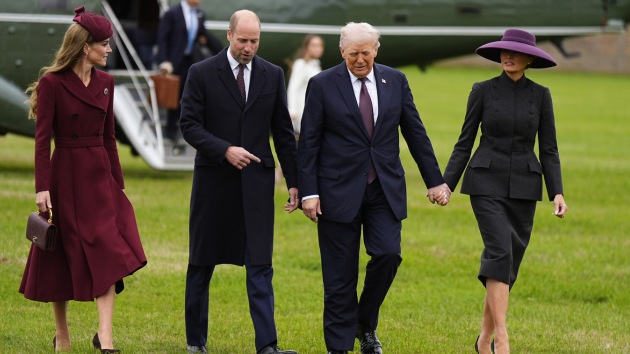
(WASHINGTON) — Republican Sen. Ron Johnson of Wisconsin — a staunch deficit hawk has been critical of President Donald Trump’s sweeping tax and immigration bill — signaled Monday that he would back the bill when it comes to a vote.

On Saturday Johnson flipped his vote to support a motion to move the One Big Beautiful Bill Act to the Senate floor only after huddling with Republican leaders about further reductions to the federal debt.

CNN’s Jake Tapper prompted Johnson to say he was a yes vote on the bill, to which the senator corrected him, saying he was “a yes on the motion to proceed” and “hopefully” add a provision that would prevent new enrollees in Medicaid expansion states from receiving Federal Medical Assistance Percentage (FMAP) if they are are not disabled and don’t have dependent children.

Johnson then pivoted to signal his support for the final bill, which will come to a floor vote when an ongoing vote-a-rama wraps up.

“This is about as good as we can get. I don’t like it. I would like to get a lot more. But at some point in time you have to recognize reality. And if we don’t pass this bill, we have a massive $4 trillion tax increase,” Johnson said.

The FMAP amendment, led by fellow conservative holdout Sen. Rick Scott of Florida, had not yet been considered Monday evening.

The Senate plowed ahead toward a final vote on the bill as Republicans rush to get it across the finish line by July 4, with lawmakers voting on amendments through the night into Tuesday morning.

The self-imposed deadline by Trump meant a rare weekend session for lawmakers, one filled with partisan drama and some GOP infighting.

On Monday morning, senators began the “vote-a-rama” — a series of votes on proposed amendments to the megabill.

There is no limit to the number of amendments lawmakers can seek. Senate Minority Leader Chuck Schumer, the chamber’s top Democrat, promised his party would bring amendment after amendment during the marathon session. Democrats forced a reading of the 940-page bill over the weekend, which took nearly 16 hours.
“Every senator will soon have an opportunity to reject this nonsense and vote for common-sense budgeting. Americans will be watching,” Schumer said on Monday as he slammed Trump’s bill as a break for billionaires that will hurt working-class families.

Democrats used the early hours of the vote-a-rama to force votes highlighting cuts the megabill makes to Medicaid, SNAP and rural hospitals and to hammer Republicans on the tax cuts they say the measure gives to the wealthiest Americans.

The Senate voted down, 47-53, an amendment led by Schumer that he said would have undone “the travesty that is at the core of the Republican bill.”

“Their bill the so-called big beautiful bill, which is really a big, ugly betrayal, cuts taxes for billionaires by taking away health care for millions of people. So what my amendment simply says, if people’s health care costs go up, the billionaire tax cuts vanish,” Schumer said.

Democratic Sen. Ed Markey’s effort to strip provisions that would negatively impact rural hospitals due to cuts to Medicaid also failed, but did receive the support of two Republicans: Sens. Lisa Murkowski of Alaska and Susan Collins of Maine.

The two moderate Republicans, who both have a history of voting across party lines, have raised concerns about how cuts to Medicaid and SNAP would hit their constituents. In total, Murkowski supported five Democratic-led measures in the ongoing vote-a-rama and Collins supported four.

Collins proposed her own amendment that aimed to increase the amount of money in the rural hospital relief fund. It failed by a vote of 22-78, with Collins subsequently criticizing what she called the “hypocritical approach” of the Democrats that voted against it.

Sen. Amy Klobuchar, the top Democrat on the Senate Agriculture committee, argued that the SNAP provisions in the bill creates “chaos for state budgets and hardship for families” and violate budget rules. Her motion related to SNAP was waived by Republicans.

Senate Majority Leader John Thune defended the bill as delivering Trump’s campaign promises to eliminate tax on tips and overtime pay while boosting spending for defense and border security.

“It’s been a long debate,” Thune said in his own floor remarks ahead of the votes on amendments. “I know people are weary. But at the end of the day, we want to get this done so that this country is safer and stronger and more prosperous, not only for today but for future generations of Americans.”

So far, Republicans have defeated all Democratic efforts to modify or reconsider the bill — but the session ran into Tuesday morning.

As he walked off the floor in the early hours of Tuesday, Thune was asked if he could pull the bill back or if he may be forced to hold a final passage vote on the bill, even if he knows it will fail.

“Those are options I don’t want to have to worry about,” Thune replied.

Senate Finance Committee chairman Mike Crapo, a Republican, argued against several of the Democratic amendments.

“The reality is, the reforms we are putting into place are to try to reign in control of wasteful and fraudulent and abusive spending that actually diverts resources away from the people who these programs really deserve to receive,” Crapo said of Schumer’s amendment on Medicaid.

The vote-a-rama is the last hurdle before a vote on final passage of the bill in the Senate.

There is little room for error in the Republican-controlled chamber. A procedural vote on Saturday night to open debate on the bill narrowly passed in a 51-49 vote after two Republican defections.

GOP Sens. Rand Paul of Kentucky and Thom Tillis of North Carolina voted against advancing the bill. Tillis railed against the changes to Medicaid in the bill, saying it would hurt his constituents and would represent a betrayal of Trump’s promise not to touch the entitlement program upon which millions of people rely for health care coverage.
Tillis’ opposition drew Trump’s ire, with the president threatening to support a primary challenger to the two-term senator. Tillis then suddenly announced he would not seek reelection, saying later he texted Trump on Saturday night suggesting he “probably needed to start looking for a replacement.”

“I respect President Trump. I support the majority of his agenda, but I don’t bow to anybody. When the people of North Carolina are at risk. And this bill puts them at risk,” Tillis said.

As of early Tuesday morning, the GOP leadership were still pushing for sufficient support.

One of the main targets was Murkowski, whose indecision came after reports that the Senate parliamentarian may have ruled some carve out provisions meant for her home state of Alaska’s Medicaid recipients out of order.

Also under pressure were Scott and Sen. Mike Lee, who were yet to receive a vote on their amendment that strips back additional funding for Medicaid. Collins had also not yet said which way she would vote.

Paul, meanwhile, offered an amendment that would significantly reduce the amount of money attributed to raise to the federal debt limit. The current bill raises the debt limit by $5 trillion dollars. Paul’s amendment would raise it by only $500 billion.

What’s next for OBBB in the House?

If the “One Big Beautiful Bill Act” passes in the Senate, it will have to go back to the House for members to consider the changes made to the bill.

House Republican leaders say Wednesday is the earliest chance for a megabill vote.

“Members are advised that votes are now expected in the House as early as 9 a.m. Wednesday, July 2. Please stay tuned to future updates for additional information regarding this week’s schedule,” a notice from Majority Whip Tom Emmer’s office said.

Speaker Mike Johnson expressed optimism that the Senate’s version of the One Big Beautiful Bill will pass in the GOP-led House despite opposition from moderates and conservatives.

“We’re going to pass this bill one way or the other,” Johnson said leaving the Capitol Monday evening. “And I have prevailed upon my Senate colleagues to please, please, please, put it as close to the House product as possible. I have been very consistent from the very beginning.

Johnson did not rule out passing the Senate version as is and said, “there’s still a lot of amendments, and a lot of game to play.”

Asked if GOP House leaders would make changes to what the Senate sends over, Johnson said, “We’ll see what the final product is. I am very hopeful as always. We will get this job done. We’ll see what happens.”

The speaker did not respond to a question about passing the bill by the Fourth of July deadline.

Republican leaders have told members they will receive 48 hours notice before a vote is called and will have 72 hours to review the bill text.

The House passed the Trump megabill by just one vote back in May. The Senate version of the bill will face an uphill battle in the House, given the GOP’s razor-thin majority.

California moderate Republican Rep. David Valadao said he will vote no given the Medicaid changes in the Senate bill. Several conservatives, including Reps. Chip Roy of Texas, Josh Breechen of Oklahoma and Eric Burlison of Missouri have also expressed opposition to the Senate’s version of the bill.

Johnson and other Republican leaders worked through the weekend to lock down the votes even as several lawmakers have expressed opposition to the Senate’s version, which is still not finalized. Johnson can only afford to lose three defections if all members are voting and present.

White House press secretary Karoline Leavitt said President Trump was working “hand in hand” with Johnson and Thune, and that the two leaders had met with him at the White House earlier Monday.

“Republicans need to stay tough and unified during the home stretch, and we are counting on them to get the job done,” Leavitt said during the White House briefing.

But sources familiar with the matter told ABC News Thune and Johnson have not met with President Trump at the White House, and as of now the two leaders have no current plans to meet with the president on Monday as the “One Big Beautiful Bill Act” progresses in the Senate.

A spokesman for Thune said he is preoccupied as the Senate moves through amendments to the megabill.

“Teams are obviously in close contact/coordination, as always, but we’re continuing to move through vote-a-rama in the Senate as we work to move this bill one step closer to the president’s desk,” the spokesman said in a post on X.

Speaker Johnson is in Washington working through House members’ concerns as the Senate works through the bill, including several provisions that could spell problems later in the week if the bill is sent back to the House.

ABC News’ John Parkinson contributed to this report.

Copyright © 2025, ABC Audio. All rights reserved.
Musk threatens to primary members of Congress who vote for Trump’s megabill

Musk threatens to primary members of Congress who vote for Trump’s megabill
Photo by Kevin Dietsch/Getty Images

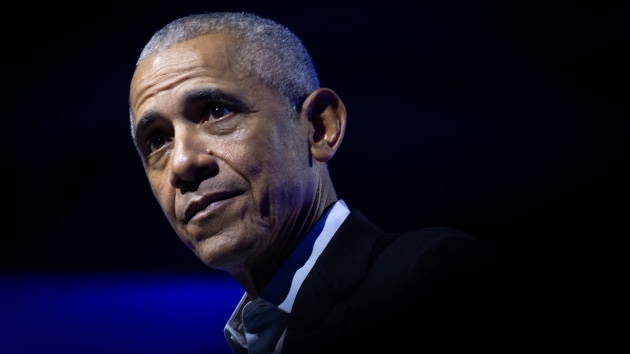
(WASHINGTON) — Elon Musk, the world’s richest man, on Monday said he would back challengers to members of Congress who vote for President Donald Trump’s “big, beautiful bill.”

Musk broke his short-lived X silence about the bill over the weekend, unloading on it for being “utterly insane.” On Monday, Musk criticized “every member of Congress who campaigned on reducing government spending and then immediately voted for the biggest debt increase in history,” vowing that “they will lose their primary next year if it is the last thing I do on this Earth.”

This is a developing story. Please check back for updates.


Copyright © 2025, ABC Audio. All rights reserved.
Trump signs executive order lifting sanctions on Syria

Trump signs executive order lifting sanctions on Syria
Andrew Caballero-reynolds/AFP via Getty Images

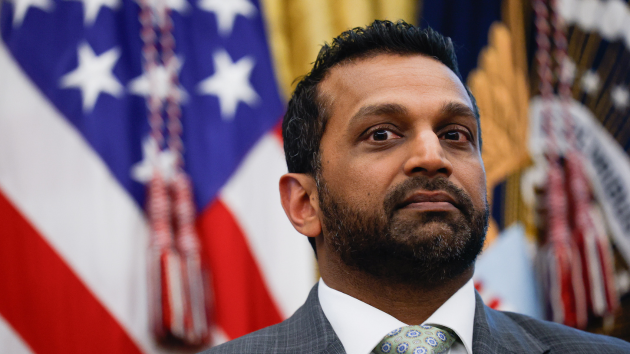
(WASHINGTON) — President Donald Trump on Monday lifted U.S. sanctions on Syria, signing an executive order to carry out a promise he made in May.

White House press secretary Karoline Leavitt told reporters ahead of the signing that Trump’s action was designed to “promote and support the country’s path to stability and peace.”

When he met with Syria’s new president Ahmad al-Sharaa last month, Trump announced he would lift the crippling U.S. sanctions against Syria and urged al-Sharaa to meet specified conditions in hopes that it will stabilize the country.

Those conditions included normalizing relations with Syria’s neighbors, including Israel, as well as the United States.

Ahmad al-Sharaa is a former al-Qaeda insurgent who fought against U.S. forces in Iraq and served time in the infamous Abu Ghraib priso.

Senior Trump administration officials who previewed the president’s action terminating the Syria sanctions program said it would dismantle the architecture of the program established by the executive branch while maintaining provisions targeted at Bashar Al Assad, his collaborators, and other destabilizing forces still at work in the region.

U.S. Ambassador to Turkey and the administration’s Special Envoy for Syria Tom Barrack cast the executive order — which is intended to work in tandem with the general waiver significantly easing sanctions that was issued by the U.S. in May — as a move by the president to “give these guys a chance,” referring to Syria’s interim government.

“You have a general who transitioned from wartime into a position of being the leader of a reframed new country that needs everything, and that’s basically what’s happened, but the vision and the execution was limited by our imposition of sanctions,” he said. “Syria needs to be given a chance, and that’s what’s happened.”

Barrack also said the purpose driving Trump was not to hold leverage over the newly-formed government.

“But one thing is clear, neither the president or the secretary of state is nation building. They’re not dictating, they’re not requiring. They’re not giving the framework of the democratic model that needs to be implemented to their architecture or desire. They’re saying we are going to give you an opportunity. We have a bunch of criteria that we want to watch along the way,” he said, referencing the Abraham Accords, integrating foreign fighters in Syrian society, protecting U.S. allies who fought against ISIS, and other issues.

Brad Smith, the acting under secretary for terrorism and financial intelligence at the Treasury Department, spoke about the more technical aspects of the order and emphasized that it would allow the administration to retain restrictions “where appropriate.”

“The significance of this moment cannot be overstated,” Smith said. “While we remain hopeful for the country’s future and its new government, we are also clear eyed that threats to peace remain, the United States will remain ever vigilant where our interests and security are threatened, and Treasury will not hesitate to use our authorities to protect us and international financial systems.

Abraham Accords

A senior administration official insisted that the Trump administration wasn’t looking to maintain “leverage” over Syrian authorities as it seeks to encourage its leadership to sign onto the Abraham Accords.

“Leverage is not what we’re interested in doing. The president ripped the sanctions off without any conditions,” they said. “It’s to Syria’s benefit to lean towards Israel.”

The senior administration official continued to note that it has been reported that Syria and Israel have been having conversations “on a backchannel basis.”

“So the way to entice them to get to the Abraham accords is to make it fruitful for them on an economic basis, on a on a civilization basis, on a peace and prosperity basis, and that’s all coming together. And what’s happened between Israel and Iran gives that window,” the official said. “So we’re not interested in leveraging them into anything.”

Despite the action Monday and previous suspension of many sanctions against Syria, a senior administration official acknowledged that it may take further action from Congress to permanently lift the penalties.

“We are now — pursuant to the executive order — going to look at suspension criteria for the Caesar Act,” the official said.

The Caesar Syria Civilian Protection Act of 2019 enhanced sanctions on any foreign entity that engaged in significant transactions in the Syrian government. Secretary of State Marco Rubio, back in May, issued a 180-day waiver of the Caesar Act sanctions.

“Ultimately Congress has the power to repeal the act,” the official said on Monday.

Copyright © 2025, ABC Audio. All rights reserved.

Department of Justice suing Los Angeles over sanctuary city policy

Department of Justice suing Los Angeles over sanctuary city policy
Mario Tama/Getty Images

(WASHINGTON) — The Department of Justice is suing the city of Los Angeles over its sanctuary city policy, alleging it interferes with the enforcement of federal immigration laws, officials announced on Monday.

“The challenged law and policies of the City of Los Angeles obstruct the Federal Government’s enforcement of federal immigration law and impede consultation and communication between federal, state, and local law enforcement officials that is necessary for federal officials to carry out federal immigration law and keep Americans safe,” the lawsuit states.

The lawsuit is targeting Ordinance Number 188441, which prohibits city resources, including personnel, from being used for immigration enforcement. The DOJ is seeking a permanent injunction barring the city from enforcing the ordinance.

The Los Angeles City Council and the city’s mayor, Karen Bass, are named among the defendants in the lawsuit, which was filed Monday in California’s Central District federal court.

The lawsuit comes after President Donald Trump deployed National Guardsmen and Marines to the city, over the objections of local and state leaders, in response to protests against the government’s immigration crackdown.

“Sanctuary policies were the driving cause of the violence, chaos, and attacks on law enforcement that Americans recently witnessed in Los Angeles,” Attorney General Pamela Bondi said in a statement Monday. “Jurisdictions like Los Angeles that flout federal law by prioritizing illegal aliens over American citizens are undermining law enforcement at every level — it ends under President Trump.”

Bill Essayli, U.S. attorney for the Central District of California, said in a statement that the lawsuit holds Los Angeles “accountable for deliberately obstructing the enforcement of federal immigration law.”

This is a developing story. Please check back for updates.

Copyright © 2025, ABC Audio. All rights reserved.

Will Thom Tillis’ opposition to Trump’s megabill win over Senate Republican colleagues?

Will Thom Tillis’ opposition to Trump’s megabill win over Senate Republican colleagues?
Al Drago/Getty Image

(WASHINGTON) — GOP Sen. Thom Tillis was back on Capitol Hill on Monday as Senate Republicans struggled to pass their “One Big Beautiful Bill Act” he opposes — before President Donald Trump’s July Fourth deadline.

“I may look for an opportunity to speak again,” Tillis said during his fiery remarks on the Senate floor on Sunday night, in which he urged his Republican colleagues to reconsider their support for the GOP tax bill, which he said “breaks” President Donald Trump’s promises to protect Medicaid.

But on Monday it remained unclear whether any of his fellow Republicans would go along.

Monday morning, as lawmakers began another long day of debate, Senate Minority Leader Chuck Schumer lauded Tillis for his remarks calling out the GOP megabill’s provisions he said would slash Medicaid in his home state of North Carolina.

“I salute my colleague from North Carolina. We all heard what our colleague from North Carolina had to say yesterday about this bill. My guess is about half — maybe more than half of the Republicans in the Senate agree with him. But he had the courage to speak the truth,” Schumer on Monday morning, as a vote-a-rama on the bill began.

“He said it himself: the bill devastates his state but make no mistake about it, it will devastate the states of almost every Republican here,” Schumer added.

But how Tillis will navigate the rest of his term in the Senate — and perhaps the rest of the reconciliation bill’s consideration — remains to be seen — after he abruptly announced he wouldn’t run for reelection when Trump threatened to support a GOP primary challenger.

While his speech railing against the measure’s Medicaid cuts displayed some of the “pure freedom” he noted in his retirement announcement “to call the balls and strikes as I see fit,” Tillis also told reporters at the Capitol on Sunday that he would never do anything to “undermine” or “surprise” the Senate Republican Conference.

“Look, here’s the thing, I was a leader. I’m never going to do anything to undermine my conference, and I’m never going to surprise my conference,” Tillis said..

“I let Senator Thune last night know that I intended to do this today. I’m not that kind of guy. I mean, if you’ve got a surprise or jam your conference to get something done, you’re a pretty shitty legislator, and that’s just not my style,” he went on.

“So, I’m going to stand behind John and the leadership and do everything I can to make them successful,” Tillis said.

In his speech to “explain” his vote Saturday against the motion to move forward on the “One Big Beautiful Bill Act,” he condemned the legislation.

“What do I tell 663,000 people in two years, three years, when President Trump breaks his promise by pushing them off of Medicaid because the funding is not there anymore, guys?” Tillis asked at one point. “The people in the White House advising the president, they’re not telling him that the effect of this bill is to break a promise.”

He said blasted the president’s self-imposed July 4th deadline to pass the legislation as “artificial.”

“I believe that we can make sure that we do not break the promise of Donald J. Trump — that he’s made to the people on Medicaid today,” Tillis went on. “But what we’re doing because we’ve got a view on an artificial deadline on July 4 that means nothing but another date and time we could take the time to get this right, if we lay down the house mark of the Medicaid bill and fix it.”

“What’s wrong with actually understanding what this bill does?” he said.

Tillis laid out how he’d done the work of understanding the bill over recent weeks, talking with leaders in North Carolina and members of the Trump administration about the impacts of the legislation’s Medicaid provisions on his state.

He said administration officials could not disprove his findings that there would be about a $26 billion cut in Medicaid across North Carolina as a result of the bill.

Tillis said he started his fact-finding process by asking Republican staff in the North Carolina legislature, members of Democratic Gov. Josh Stein’s team and to the non-partisan Hospital Association for their estimates about this bill’s cuts to Medicaid in North Carolina.

“I asked three different independent groups: a partisan Democrat group, a partisan Republican group of experts, and a nonpartisan group of the Hospital Association to develop an intact assessment, independent, not talking, not sharing, reporting to me, and what I found is the best case scenario is about a $26 billion cut,” Tillis said.

He said when he presented those findings to the Trump administration, they were rejected.

“I had people in the administration say, you’re all wet, you don’t know what you’re doing,” he said.

Tillis concluded by saying that the Senate “owes it to the American people” to withhold advancement of the bill ” until it’s demonstrated to me that we’ve done our homework.”

“We’re going to make sure that we fulfill the promise And then we can feel — I can feel — good about a bill that I’m willing to vote for, but until that time, I will be withholding my vote,” Tillis said.

Copyright © 2025, ABC Audio. All rights reserved.