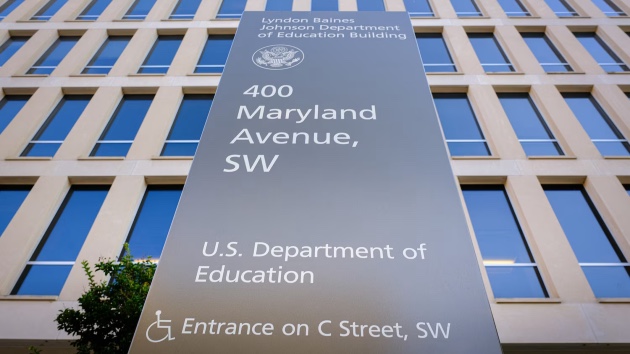
A sign marks the location of the U.S. Department of Education headquarters building on June 20, 2025, in Washington, DC. (J. David Ake/Getty Images)
(WASHINGTON) — The Department of Education’s Office watchdog is launching an investigation into the agency’s sensitive data systems, according to a letter first obtained by ABC News.
The news comes after Democratic Sen. Elizabeth Warren and a group of her Democratic colleagues sent a letter requesting a probe of the Department of Government Efficiency’s alleged “infiltration” of the Education Department’s Federal Student Aid office, which handles the nation’s $1.6 trillion student loan portfolio.
This week, the Education Department’s acting Office of Inspector General confirmed it would work to review that data. The OIG office is the statutory, independent entity within the department responsible for identifying fraud, waste, abuse and criminal activity involving department funds, programs, and operations, according to its website.
Asked about the investigation, the Department of Education referred ABC News to an appeals court decision last month, which did allow DOGE access to sensitive data at several agencies, including the student loan portfolio at the department. The White House claimed President Trump’s success through DOGE is “undisputed,” “legal” and yielding “historic results.”
Warren has led the charge in investigating the Trump administration’s changes at federal agencies, including the Education Department and Social Security Administration. She argued the American people should know who is “digging” into their personal data.
“The American people deserve to know if Elon Musk’s DOGE guys had access to private Social Security numbers and income information,” Warren told ABC News. “It’s about time these amateurs in the Education Department were investigated.”
Sensitive data that Warren warned could be vulnerable includes anything from borrowers’ social security numbers to personal information that is used within the National Student Loan Data Systems.
The acting inspector general said it “plans to look into the Department’s processes for managing access to several sensitive Department data systems.” This will be a coordinated effort with the Government Accountability Office, which is also looking into issues involving access and handling of sensitive data at the department, according to the letter from the acting inspector general.
The OIG claimed its probe will begin “shortly,” but a timeline for when — or if — a final report would be issued was not immediately available.
In June, the Democratic group of senators accused the Department of Education of refusing to comply with Warren’s monthslong congressional investigation into what, if any, records have been accessed by DOGE employees that could be sensitive.
“The Department of Education has a responsibility to protect student loan borrowers’ sensitive data and ensure it doesn’t get into the wrong hands,” Democratic Sen. Ben Ray Luján said in a statement to ABC News. “I’m thankful that the Department of Education’s Office of Inspector General heeded our call and will now launch an investigation into DOGE’s reckless takeover. All Americans deserve clarity and accountability regarding the full extent of DOGE’s role and influence at the Department of Education.”
Warren previously told ABC News that staffing cuts to the agency would have dire consequences on students interested in obtaining higher education. A fierce advocate of public education, Warren has vowed to fight the administration’s federal education-reduction efforts at every turn.
The department has made several changes since Secretary of Education Linda McMahon was sworn in as the nation’s education chief. Shortly after taking the position, McMahon, who comes from many years of experience in the private sector, noted that DOGE was conducting a solid audit of the agency.
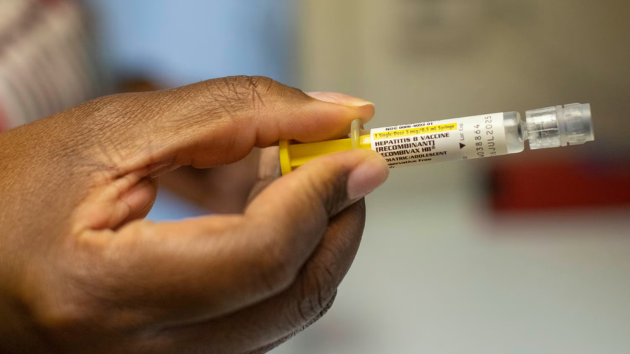
A Hepatitis B vaccine in Atlanta, Georgia, September 29, 2023. Alyssa Pointer for The Washington Post via Getty Images
(WASHINGTON) — An influential group of advisers for the Centers for Disease Control and Prevention during a meeting on Thursday is considering dropping a longstanding recommendation to give all newborns a hepatitis B vaccination in the hospital.
The CDC vaccine advisory committee, called ACIP, is also weighing new restrictions on existing recommendations for the combined MMRV shot to protect against measles, mumps, rubella and chickenpox.
An official vote is expected on Thursday afternoon. From there, the vote will need signoff from the acting CDC director or the Health and Human Services secretary.
The committee is not considering eliminating or recommending against these vaccines completely. But the changes that have been proposed could result in major disruptions and more illness, experts warn.
Experts say these changes could cause confusion, more doctors’ appointments and more individual shots for children, which could potentially lead to missed cases or more infections. It could also complicate vaccine supply and manufacturing logistics.
On Wednesday, Republican Sen. Bill Cassidy, a liver doctor, told reporters that Americans should not have confidence in this committee’s decisions if they change the current vaccination schedule.
“I can promise you there will be some hepatitis B transmission,” Cassidy told reporters when asked what would happen if the committee makes changes to already-existing recommendations.
This week’s meeting is the committee’s second since Health and Human Services Secretary Robert F. Kennedy Jr. dismissed all 17 of its members in June. Of the 12 advisers who have since been appointed, many have previously expressed vaccine-skeptical views.
Most major insurance providers have said they will continue covering existing vaccines at least through 2026. But any changes made today will likely impact the more than half of American children who are funded through a federal program, which is tied to the CDC committee recommendations.
The committee members so far are not unanimous during discussion, with some saying the proposed changes could take away parents’ choice — especially regarding the combined MMRV vaccine.
Currently, parents have a choice of giving their children measles, mumps, rubella and chickenpox all as one shot, or they can opt to give measles, mumps and rubella as one shot, and give chickenpox as a separate dose. Some studies have suggested a slightly elevated — but overall very rare — risk of seizures when all four are given as a combo shot to kids 12 to 15 months old.
But many parents and clinics may still prefer a single shot. Children also get a second dose of MMRV after the age of 4. The upcoming vote Thursday only discusses the first dose, and parents would still have a choice about their preference for the second shot in older children.
“The disadvantage of giving two doses, or as was suggested, separating the two doses, is that we know compliance falls, and the advantage of combination vaccines is that children and adults are more likely to complete the vaccine requirements if it’s given as a single dose,” said ACIP member Dr. Cody Meissner.
“If parents would choose to have one one jab and one vaccination, it would not be covered by the [federal vaccines for children program] over time accessing clinical care, if they understand the risks and benefits, that option is basically taken away from them,” said Dr. Joseph R. Hibbeln, another committee member.
Entrance to George Mason University, Fairfax, Virginia. Robert Knopes/UCG/Universal Images Group via Getty Images
(FAIRFAX, Va.) — Former Vice President Mike Pence will teach politics at George Mason University’s Schar School of Policy and Government in the spring.
The former vice president will teach students studying political science, law, public administration, and related fields at the university located in Virginia outside the nation’s capital.
Vice president to President Donald Trump from 2017-2021, Pence will teach seminars that “explore the intersection of politics, leadership, and national governance,” according to George Mason University.
As a public official who has served in both legislative and executive branch roles as congressman, governor and then vice president, Pence said he is excited to share the lessons he has learned with the next generation. Pence is also expected to draw on lessons directly pertaining to his experiences on the campaign trail, in the West Wing and as president of the U.S. Senate, the university said.
“Throughout my years of public service, I have seen firsthand the importance of principled leadership and fidelity to the Constitution in shaping the future of our nation,” Pence said in a statement. “I look forward to sharing these lessons with the next generation of American leaders and learning from the remarkable students and faculty of George Mason University.”
The former vice president acknowledged the importance of higher-level education, saying it plays a “vital role” in preparing future generations for “lives of service and integrity.”
“Now more than ever we should be investing our time and resources into civil discourse on campus, and I’m honored to contribute to that mission,” Pence said.
Since his time as vice president, Pence started his conservative organization, Advancing American Freedom, in 2021 and taught politics at Grove City College in Pennsylvania in 2024 after ending his presidential campaign in 2023.
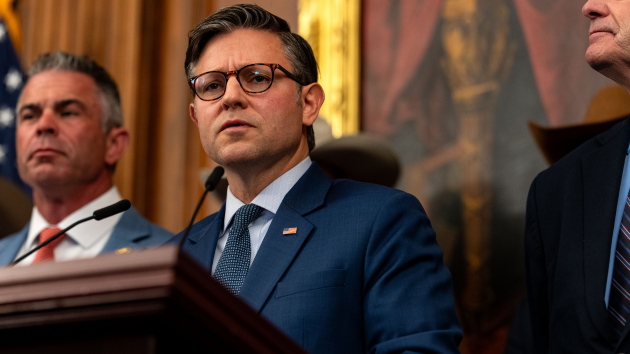
Speaker of the House Mike Johnson (R-LA) speaks during a news conference at the U.S. Capitol on September 16, 2025 in Washington, DC. House Republican leadership faces a long week as they try to rally House Republicans behind a stopgap funding bill to avert a shutdown, while also navigating growing pressure to boost security for lawmakers in the wake of Charlie Kirk’s killing. (Photo by Kent Nishimura/Getty Images)
(WASHINGTON) — House Republicans plan to vote Friday morning on a short-term measure to fund the government as a shutdown deadline nears, hoping to keep pressure on Democrats who have signaled they will vote to shut down the government if Republicans don’t cave to Democratic demands to restore cuts to Medicaid and extend Obamacare subsidies set to expire at the end of the year.
House Speaker Mike Johnson expressed cautious optimism Thursday that Republicans will pass their 52-day continuing resolution on Friday — a week ahead of the Sept. 30 deadline to fund the government.
“I think we have the votes and I think it’s just very unfortunate the Democrats are trying to play partisan games when we’re in good faith trying to fund the government,” Johnson told reporters as he arrived at the Capitol on Thursday. “So, this is a clean, short-term CR. There’s no tricks to this at all. It’s a total good faith effort to allow appropriators on both sides of the aisle to continue their work. I don’t know how they can object to it. I really don’t.”
With a narrow 219-213 edge over Democrats, Johnson can afford to lose just two Republican defectors in a vote on passage. Several hardline Republicans have signaled they intend to vote against it — though the speaker has repeatedly overcome last-minute holdouts — even if President Donald Trump’s arm-twisting is required to bring the final votes to heel.
The funding plan proposes $30 million in additional member security over a more than seven-week stretch — giving each member of Congress around $7,500 each week to spend on security — more than double their own congressional salary. The package also includes $58 million to meet the Trump administration’s request for supplemental funding for the executive and judicial branches.
That funding supplants a pilot funding program that lawmakers had utilized for member security in the wake of the shooting targeting state lawmakers in Minnesota over the summer.
Minority Leader Hakeem Jeffries has expressed opposition to the funding bill and Democrats are likely to follow his lead and vote against it.
“We will not support a partisan spending bill that Republicans are trying to jam down the throats of the American people that continues to gut health care. No one who is following what Republicans have done to rip away health care of the American people can reasonably suggest that responsible legislators should do anything other than push back aggressively to protect the health care of the American people,” Jeffries told reporters this week.
Senate and House Democrats unveiled a counter funding proposal that would only extend government funding until Oct. 31 and include health care-related proposals like rolling back Medicaid cuts in Trump’s megabill that passed earlier this year. This plan is a non-starter with Republicans who control majorities in both chambers.
The GOP plan, however, presents a real challenge in the Senate — if it passes the House — requiring at least seven Democratic votes to reach 60 votes for passage.
Senate Majority Leader John Thune has urged Senate Democrats to support the short-term measure, arguing the bill is a clean extension of funding.
“There’s nothing in here about President Trump,” Thune said on the Senate floor this week. “This is a clean funding resolution, bipartisan funding resolution, short-term, to allow the Appropriations Committee to do its work.”
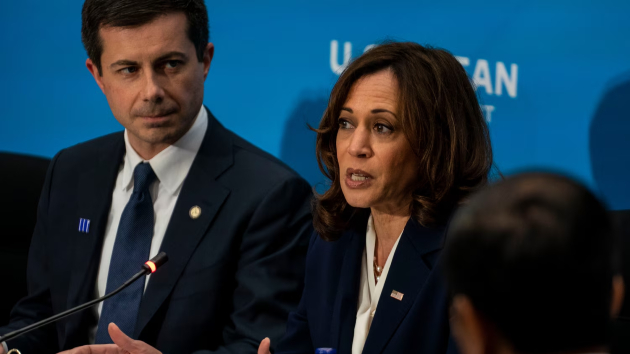
(NEW YORK) — Former Vice President Kamala Harris has written in her forthcoming memoir that she considered former Transportation Secretary Pete Buttigieg as the top choice to be her running mate in her 2024 presidential campaign, according to excerpts of the book obtained by The Atlantic.
But, she wrote, she decided that it would be too risky to have a gay man alongside her as a Black woman on the ballot, given how voters might react, according to the excerpts in The Atlantic.
“We were already asking a lot of America: to accept a woman, a Black woman, a Black woman married to a Jewish man. Part of me wanted to say, Screw it, let’s just do it. But knowing what was at stake, it was too big of a risk. And I think Pete also knew that — to our mutual sadness,” Harris wrote in her memoir, “107 Days,” according to The Atlantic.
ABC News has not independently reviewed the excerpts reported by The Atlantic.
Buttigieg’s team declined to comment when contacted by ABC News.
Buttigieg was among the contenders Harris considered as a vice presidential pick for her truncated presidential run, among other rising stars in the Democratic Party such as Pennsylvania Gov. Josh Shapiro and Kentucky Gov. Andy Beshear. In the end, Harris selected Minnesota Gov. Tim Walz.
A source close to the selection process told ABC News at the time that Harris liked Walz’s executive experience and a his “strong record of accomplishment for middle class families that models what we want to do nationally.” Harris told supporters in early August 2024 that Walz fit the criteria she sought in a running mate, including that he was “a fighter for the middle class” and a unifying leader.
Harris and Buttigieg did not discuss Harris’ reasoning for the decision, according to a person familiar with their discussions.
In the excerpts reported on by The Atlantic, Harris said that she considered Buttigieg as her top pick because, she wrote, Buttigieg “is a sincere public servant with the rare talent of being able to frame liberal arguments in a way that makes it possible for conservatives to hear them.”
Harris has said that her book, which will be released Tuesday, is a “behind-the-scenes look at my experience leading the shortest presidential campaign in modern history,” which she launched after President Joe Biden dropped out of the race in July 2024.
In an excerpt published last week in The Atlantic, Harris wrote that Democrats made a mistake and it was “recklessness” to allow Biden to make the decision alone on running for reelection, saying the choice should not have been “left to an individual’s ego.”
ABC News’ Brittany Shepherd, Gabriella Abdul-Hakim, Will McDuffie, and Fritz Farrow contributed to this report.
(WASHINGTON) — President Donald Trump said he would seek to designate antifa as a “major terrorist organization,” saying that the far-left-wing group was “sick” and “dangerous.”
The president in a social media post said he would also “strongly recommend” that whoever funds the actions of antifa groups should be investigated.
“I am pleased to inform our many U.S.A. Patriots that I am designating ANTIFA, A SICK, DANGEROUS, RADICAL LEFT DISASTER, AS A MAJOR TERRORIST ORGANIZATION,” Trump said.
He added, “I will also be strongly recommending that those funding ANTIFA be thoroughly investigated in accordance with the highest legal standards and practices. Thank you for your attention to this matter!”
It was not immediately clear how such a designation would be made for antifa, which is an umbrella description for far-left-leaning militant groups opposing fascists and neo-Nazis. Antifa does not have a publicly known centralized structure or leadership. The U.S. does not maintain a public list of domestic terrorist groups, although the State Department does maintain a list of Designated Foreign Terrorist Organizations.
Nor was it immediately clear how federal law enforcement authorities might make use of such a designation.
The Congressional Research Service, which collects and analyzes policy details for Congress, said in a 2023 report that while federal law enforcement plays a “significant role” in combating domestic terrorism, there exists a grey area between combating potential violence associated with domestic terrorism and publicly identifying those with extreme beliefs.
Holding extreme beliefs is not, in itself, criminal in the United States, since those beliefs are protected under the First Amendment, the report said.
“Further, the U.S. government does not provide a precise, comprehensive, and public explanation of any particular groups it might consider to be domestic terrorist organizations,” that report said. “Listing groups in this way may infringe on First Amendment-protected free speech—or the act of belonging to an ideological group, which in and of itself is not a crime in the United States.”
Trump’s comments on social media on Wednesday followed others he and members of his administration have made about antifa and left-leaning groups in the wake of the fatal shooting of political activist Charlie Kirk.
Trump on Monday said during an Oval Office event that he thinks Tyler Robinson, 22, the suspect charged in Kirk’s killing, may have been “radicalized” toward the “left” in a short period of time through his use of the internet.
“That’s my opinion, I think he was radicalized online based on what they’re saying,” Trump said.
“That’s just by watching the same things that you’re watching and hearing it looks like he became radicalized over the internet,” Trump said, then suggesting that his parents, who are allegedly Republican-aligned, were “wonderful.”
“Looks like he was radicalized over the internet, and it’s radicalized on the left, he’s a left. A lot of problems with the left, and they get protected, and they shouldn’t be protected,” Trump added.
He later added on Monday that he would “100%” consider designating antifa as a domestic terror organization.
It was not clear whether Robinson was influenced by or affiliated with antifa.
Deputy Chief of Staff Steven Miller on Monday said the White House would be targeting nongovernmental organizations that they said were fomenting violence.
“What you’re referring to is there are these nonprofit entities that organize, as the president mentioned, attacks on ICE officers, attacks on Border Patrol agents, organized doxing campaigns, which are a violation of federal law,” Miller said.
He added, “So there’s this whole network of organizations. And I think the key point the president’s been making is somebody is paying for all of this. This is not happening for free. And so under the president’s direction, the attorney general is going to find out who is paying for it, and they will not be criminally liable for paying for violence.”
(WASHINGTON) — Washington, D.C.’s top elected leaders on Thursday warned that President Donald Trump’s federal law enforcement surge has undermined public trust and threatened the city’s autonomy, even as they pressed Congress to help the District rebuild its police force and fill critical judicial vacancies.
Mayor Muriel Bowser, Council Chairman Phil Mendelson and Attorney General Brian Schwalb told the House Oversight Committee that while crime rates have fallen to 30-year lows, the city still needs long-term federal support, not armed National Guard patrols. All three leaders urged Congress to fund new facilities, confirm judges, and back efforts to restore the Metropolitan Police Department’s ranks to nearly 4,000 officers.
Both Mendelson and Schwalb criticized the effectiveness and legality of the federal surge.
“As the nation’s capital, public safety in the District has always required a strong working partnership with federal law enforcement, regardless of who is in the White House,” Schwalb said. “Declarations of emergency and unilateral federal actions, taken without coordination or advance warning, do not promote long-term public safety.”
“Sending masked agents in unmarked cars to pick people up off the streets; flooding our neighborhoods with armed national guardsmen untrained in local policing; attempting a federal takeover of our police force — none of these are durable, lasting solutions for driving down crime,” the D.C. attorney general added. “In fact, this threatens to destroy critical trust between local communities and police, which is essential to effective, efficient policing and prosecution.”
Mendelson called the emergency declaration “a manufactured crime crisis to justify an intrusion on the District’s autonomy.”
At a time when violent crime is at the lowest rate we’ve seen in 30 years, there is no federal emergency that the District needs the president to address,” he said, adding that National Guard troops lack law-enforcement training and have instead been “picking up trash and doing landscaping.”
Schwalb also pushed back against claims that juveniles offenders are not being prosecuted. He said his office brought charges in 84% of all violent youth cases last year, which included more than 90% of homicides, 87% of carjackings and 86% of gun cases.
All three officials urged Congress to help address longstanding vacancies on the D.C. courts and to fund a new psychiatric residential treatment facility for youth.
Marking the upcoming 250th anniversary of the U.S., Bowser said, “We have a once-in-a-lifetime opportunity for the nation’s capital to be the safest and most beautiful it’s been at any point in its history, not just for our residents, but for the millions of Americans who will come to Washington, D.C., to celebrate our country’s heritage.”
This is a developing story. Please check back for updates.
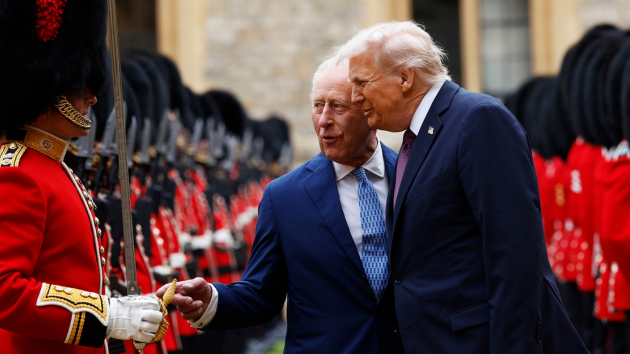
(LONDON) — President Donald Trump is meeting with British Prime Minister Keir Starmer at the latter’s official country residence on Thursday, the second day of a historic second state visit to the U.K., which saw Trump hosted by the royal family at Windsor Castle on Wednesday.
The two leaders held a bilateral meeting at Chequers, the prime minister’s estate in Buckinghamshire north of London.
They also participated in a reception with business leaders, where they announced a new science and technology partnership between the two nations in order to bolster technological innovation in both countries.
“We’re taking the next logical step with a historic agreement on science and technology partnerships, and this will create new government, academic and private sector cooperation in areas such as AI, which is taking over the world,” Trump said.
Starmer said the deal involves investments from multiple science and technology companies, totaling $204 billion across the Atlantic, creating 15,000 jobs in the next decade. He added that the deal includes investments from American companies such as Microsoft, Citigroup, Boeing, Amazon and Blackstone, and British companies such as BP, GSK, Rolls Royce and AstraZeneca.
Trump and first lady Melania Trump departed Windsor Castle earlier Thursday with a farewell ceremony involving King Charles III and Queen Camilla.
They were then greeted by Starmer and his wife, Victoria, at Chequers with bagpipes blaring in the background.
Asked by ABC News how his night at the castle was, Trump replied, “It was great, thank you.”
Trump and Starmer will hold a press conference at 2:20 p.m. local time — 9:20 a.m. ET. Multiple pressing global issues may be on the agenda. Among them are Russia’s ongoing full-scale invasion of Ukraine, Russia’s growing threat to NATO’s eastern flank and the war in Gaza, where Israel’s offensive on Gaza City is expanding as the two leaders meet.
Trump’s visit comes after Starmer and other European leaders traveled to the White House to meet with Trump and Ukrainian President Volodymyr Zelenskyy just after Trump’s summit in Alaska with Russian President Vladimir Putin.
Since that meeting, during which allies expressed optimism of a path forward on security guarantees, no progress has materialized.
Trump and the first lady are expected to leave London at just after 5 p.m. local time. They are expected to arrive back at the White House by 8:10 p.m. ET.
On Wednesday, Trump was greeted at Windsor Castle by the royal family and an elaborate military reception. Meanwhile, a crowd of thousands gathered in central London to protest Trump on Wednesday. Many of the protesters held anti-Trump signs and Palestinian flags.
During a tour of Windsor Castle, the Trumps laid a wreath on the tomb of Queen Elizabeth II during a service at the castle’s chapel, then spoke with the children before taking a tour of the chapel.
Later, the Trumps attended a state banquet, with other guests including Blackstone CEO Steve Schwarzman, Rupert Murdoch, Apple CEO Tim Cook, Nvidia CEO Jensen Huang and OpenAI CEO Sam Altman.
During his remarks at the state banquet, King Charles focused on the special relationship between the U.S. and the U.K., saying that “our people have fought and died together for the values we hold dear.”
“The ocean may still divide us, but in so many ways we are now the closest of kin,” he said.
At the end of his remarks, Charles proposed a toast to Trump and the first lady.
Trump then spoke, thanking Charles and saying he had worked to preserve his nation’s history, uplifted the poor and supported soldiers.
Trump also mentioned the Prince and Princess of Wales, saying it was nice to see them, saying that Kate was “healthy” and “beautiful.”
The president mentioned a few of the United Kingdom’s most significant historical accomplishments and said the U.K. laid the groundwork for law and liberty. Trump said the bond between America and the United Kingdom is irreplaceable.
“Together, we must defend the exceptional heritage that makes us who we are, and we must continue to stand for the values and the people of the English-speaking world, and we do indeed stand for that,” Trump said.
Trump praised Charles as a “great gentleman and a great king” as he departed Windsor Castle.
ABC News’ Michelle Stoddart, Zoe Magee, Isabella Murray, Lalee Ibssa, Joseph Simonetti and Ivan Pereira contributed to this report.
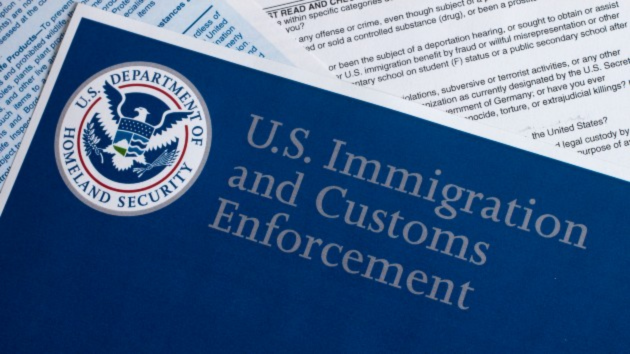
(NEW YORK) — Recent arrests involving migrants who were brought to the country as children are raising concerns among some immigrant rights and legal advocates that the Trump administration is disregarding protections provided by an Obama-era program.
An “Enforcement Tracker” organized by a coalition of immigrant rights advocacy organizations, called “Home is Here,” tallies up at least 18 cases where recipients of the Deferred Action for Childhood Arrivals (DACA) program have been deported or are at risk of being deported after being detained by immigration authorities since President Donald Trump took office.
“This is just the tip of the iceberg,” said Juliana Macedo do Nascimento, a spokesperson for United We Dream, a member of the coalition. “We know there are many more and that this administration is just really breaking the promise that the US government made to these people to protect them from deportation.”
ABC News got an exclusive look at the tracker, which the group plans to publicly release during a press conference with members of Congress on Thursday.
DACA, which began under President Barack Obama in 2012, provides deportation protections for people who were brought to the U.S. as children, allowing them to stay in the country and work legally on a two-year, renewable term. Recipients must pass a background check and submit biometric information to U.S. Citizenship and Immigration Services.
Some of the people included on the organization’s list have no criminal records, according to their lawyers. Others do have criminal histories, ranging from traffic infractions to domestic abuse charges, but advocates say in many cases they do not rise to the level of excluding someone from the program, and did not previously prevent recipients from being protected by the program or from renewing their status.
“Illegal aliens who claim to be recipients of DACA are not automatically protected from deportations,” a Department of Homeland Security spokesperson said in a statement. “DACA does not confer any form of legal status in this country. Any illegal alien who is a DACA recipient may be subject to arrest and deportation for a number of reasons, including if they’ve committed a crime.
2016 charge cited in arrest of Texas dad On Aug. 13, Paulo Gamez Lira, a resident of El Paso, Texas, was pulling into his mother’s driveway when he was suddenly surrounded by several federal agents.
In a video taken by a security camera at his mother’s driveway, obtained by ABC News, a federal agent can be heard asking Gamez Lira to turn off the engine and to not resist.
The agents “some masked and at least one armed with a handgun, approached the vehicle and roughly pulled Mr. Gamez Lira from the driver’s seat,” a filing in U.S. District Court in New Mexico stated. “Although Mr. Gamez Lira did not resist, the men injured Mr. Gamez Lira’s shoulder during the arrest.”
His children can be heard screaming and crying in the video.
When his wife, Alejandra, who asked that ABC News not use her last name, learned of his arrest, she said she didn’t believe it at first.
“I felt like my whole world stopped for a moment, and I didn’t know really what to do,” she told ABC News.
After his arrest, court records state Gamez Lira was transported to a Port of Entry in El Paso, Texas, for processing and transferred to an ICE facility despite telling the arresting agents that he is a DACA recipient.
Gamez Lira, according to court filings, was brought to the U.S. from Mexico as an infant and has lived nearly his entire life in the El Paso area. He applied for DACA shortly after it became available in 2012 and since then, has been able to the renew his grant of deferred action.
The DACA recipient has three children, including a 3-month old daughter who suffers from medical issues and spent the first month and a half of her life in the neonatal intensive care unit, according to his wife.
“There was no day that he wouldn’t be there with her and with me … It’s been pretty hard for all of us,” she said.
In 2016, court filings indicate Gamez Lira was charged with possession of marijuana but ultimately pleaded guilty to disorderly conduct after the charges were reduced.
Gamez Lira’s attorneys said they have not located records of his conviction in that case. “Such a conviction, if it exists, is nearly ten years old. Together with four dismissed traffic citations on Mr. Gamez Lira’s record, this history presented no barrier to his DACA eligibility and repeated renewals,” the attorneys wrote.
In a statement, DHS confirmed Gamez Lira was arrested on Aug. 13, calling him a “criminal illegal alien, with a previous arrest for marijuana possession.”
Gamez Lira has been held at the Otero County Processing Center in New Mexico since his arrest and is now facing removal proceedings.
DACA and crime: What the law says According to the U.S. Citizenship and Immigration Services website, someone is ineligible for DACA if they have been convicted of a felony, a “significant” misdemeanor or are “otherwise deemed to pose a threat to national security or public safety.” Applicants are also prohibited from traveling out of the country without authorization and they must continuously live in the U.S. since they submitted their most recent application.
Since applicants go through the renewal process every two years, immigration experts say that those with active status have already been screened by the government and given protection from deportation.
“If the person’s application revealed everything it was supposed to and they were granted DACA, you don’t get to second guess that conclusion later on because you want to,” said Thomas A. Saenz, president and general counsel of the Mexican American Legal Defense and Education Fund (MALDEF). “You should only risk losing DACA if something new happens, if you have a new criminal conviction that was not revealed in your application or discovered in your application when it was granted.”
Attorney: Uber driver took wrong turn before arrest
Another case highlighted by advocates involves a Los Angeles Uber driver who was hired to drop off passengers near the San Ysidro Port of Entry in San Diego on May 31 when he was detained by Border Patrol agents after making a wrong turn, according to his attorney.
The Uber driver, Erick Hernandez, missed an exit near the port of entry and was unable to take the following one because it was blocked by an accident, according to immigration attorney Valerie Sigamani.
“The next exit after that was Mexico,” Sigamani told ABC News.
Hernandez was taken into custody despite explaining to officers that he had accidentally entered into Mexico and is now being accused of attempting to re-enter the country illegally, Sigamani said.
Hernandez is facing a possible deportation to his home country of El Salvador, which he fled 20 years ago when he was 14, the attorney said.
Uber did not respond to multiple requests for comment.
“In the past, when situations have happened like this, DHS has been amenable, they have been open to negotiation, they have been open to understanding and having mercy,” Sigamani said. “At the moment it’s extremely difficult to negotiate with DHS.”
The attorney said Hernandez has no criminal record that would disqualify him from the program.
In a statement, a DHS spokesperson identified Hernandez as an “illegal alien from Mexico” and said he “self-deported and then tried to illegally re-enter the U.S.” However, Sigamani said he’s from El Salvador.
In a statement written from detention, Hernandez said having DACA gave him a sense of pride and that he at one point considered joining the military to further give back to the U.S. However, since his arrest, Hernandez says he has felt discriminated against.
“You feel disappointed and sad because you’ve overcome so many things, and then they tell you goodbye,” Hernandez said in a statement written in Spanish. “It’s discrimination. We are more careful than U.S. citizens because they don’t have to fear losing DACA. We focus on working hard, studying, and staying out of problems. We want to get ahead in life.”
Arrest at a car wash during LA crackdown
Another case cited by advocates involves a man who worked at a car wash just outside Los Angeles, who was arrested in early June as President Donald Trump deployed the National Guard to Los Angeles to clamp down on crime and illegal immigration.
Attorney Roxana Muro says it took Javier Diaz Santana a few moments to realize what was happening as agents descended at his workplace, because he’s deaf and communicates through sign language.
“He had just finished his lunch break and was on his way to go wash a car when, because he is deaf, he did not hear the commotion going on around him, employees running all over the place,” Muro said. “So when he did see the chaos, he started to run as well, but I don’t know that he entirely knew why he was running.”
Muro said Diaz-Santana was unable to communicate with officers that he had DACA and was detained.
Diaz-Santana, who has been in the country since he was about 5 years old, was quickly transported to a detention facility in Texas where he was held for over 20 days before being released on bond, Muro said.
During his time in detention, Muro said Diaz-Santana could not effectively communicate his status to ICE personnel. In 2013, Muro says DHS initiated removal proceedings against him because of a failed asylum application, but the court administratively closed the case since he had DACA. But now, she says the government has reopened that case in an attempt to deport him to Mexico.
In a statement, the DHS spokesperson said ICE staff provided Diaz Santana with a communications board and an American sign language interpreter.
“The facts are this individual is an illegal alien,” the spokesperson said. “This Administration is not going to ignore the rule of law.”
(LONDON) — President Donald Trump will meet with British Prime Minister Keir Starmer at the latter’s official country residence on Thursday, on the second day of a historic second state visit to the U.K. which saw Trump hosted by the royal family at Windsor Castle on Wednesday.
The two leaders will hold a bilateral meeting at Chequers, the prime minister’s estate in Buckinghamshire north of London.
Trump and first lady Melania Trump are expected to depart Windsor Castle at 10:30 a.m local time — 5:30 a.m. ET — with a farewell ceremony involving King Charles III and Queen Camilla.
Trump and Starmer are expected to meet at 11:15 a.m. local time. They will then hold a press conference at 2:20 p.m.
Multiple pressing global issues may be on the agenda. Among them are Russia’s ongoing full-scale invasion of Ukraine, Russia’s growing threat to NATO’s eastern flank and the war in Gaza, where Israel’s offensive on Gaza City is expanding as the two leaders meet.
Trump’s visit comes after Starmer and other European leaders traveled to the White House to meet with Trump and Ukrainian President Volodymyr Zelenskyy just after Trump’s summit in Alaska with Russian President Putin.
Since that meeting, during which allies expressed optimism of a path forward on security guarantees, no progress has materialized.
Trump and the first lady are expected to leave London at just after 5 p.m. local time. They are expected to arrive back at the White House by 8:10 p.m. ET.
On Wednesday, Trump was greeted at Windsor Castle by the royal family and an elaborate military reception. Meanwhile, a crowd of thousands gathered in central London to protest Trump on Wednesday. Many of the protesters held anti-Trump signs and Palestinian flags.
During a tour of Windsor Castle, the Trumps laid a wreath on the tomb of Queen Elizabeth II during a service at the castle’s chapel, then spoke with the children before taking a tour of the chapel.
Later, the Trumps attended a state banquet, with other guests including Blackstone CEO Steve Schwarzman, Rupert Murdoch, Apple CEO Tim Cook, Nvidia CEO Jensen Huang and OpenAI CEO Sam Altman.
During his remarks at the state banquet, King Charles focused on the special relationship between the U.S. and the U.K., saying that “our people have fought and died together for the values we hold dear.”
“The ocean may still divide us, but in so many ways we are now the closest of kin,” he said.
At the end of his remarks, Charles proposed a toast to Trump and the first lady.
Trump then spoke, thanking Charles and saying he had worked to preserve his nation’s history, uplifted the poor and supported soldiers.
Trump also mentioned the Prince and Princess of Wales, saying it was nice to see them, saying that Kate was “healthy” and “beautiful.”
The president mentioned a few of the United Kingdom’s most significant historical accomplishments and said the U.K. laid the groundwork for law and liberty. Trump said the bond between America and the United Kingdom is irreplaceable.
“Together, we must defend the exceptional heritage that makes us who we are, and we must continue to stand for the values and the people of the English-speaking world, and we do indeed stand for that,” Trump said.