
Trump’s filing opposing Mar-a-Lago raid forced DOJ’s hand, experts say

Trump’s filing opposing Mar-a-Lago raid forced DOJ’s hand, experts say
Yuri Gripas/Bloomberg via Getty Images, FILE

(WASHINGTON) — After three weeks of accusations from former President Donald Trump and his allies that the Justice Department and FBI overreached in their unprecedented August 8 search of Mar-a-Lago, the DOJ responded Tuesday with a late-night filing that laid bare the fruitless negotiations that preceded the raid — and provided ample evidence that in their own legal filing, Trump’s attorneys had left out key details and made multiple unfounded or false claims about the circumstances surrounding the DOJ’s efforts to retrieve classified documents.

Tuesday’s DOJ filing was not just a line-by-line rebuttal of the claims made by Trump and his lawyers that they were fully cooperative all along with department’s efforts to retrieve the records, but it put on full display the extent of the evidence collected so far by investigators in their probe of whether concealment of the documents amounts to obstruction of justice.

Included in the filing were paper exhibits showing the full subpoena sent to Trump’s lawyers, the sworn statement by a Trump lawyer earlier this summer stating they’d handed over all relevant documents, and a high-resolution photo of a pile of documents that was subsequently collected from Trump’s personal office with Top Secret markings.

The filing came in response to Trump’s request that a judge appoint a special master to intervene in investigators’ ongoing review of the items seized from Mar-a-Lago — but some legal experts tell ABC News that Trump’s team may have hurt their own cause.

“One of the greatest self-inflicted wounds is the Trump legal team’s decision, presumably with strong input from their client, deciding to lace their motion for a special master with several falsehoods,” said Ryan Goodman, a professor of law at New York University and former special counsel to the Department of Defense. “Their approach gave the Justice Department a strong reason to publicly set the record straight and issue statements about facts that would otherwise have remained secret due to an ongoing criminal investigation.”

“The Justice Department is usually loath to discuss matters that are under investigation,” Goodman added. “It is rare for the public to get this much visibility into the evidence that is being developed in an ongoing investigation.”

Indeed, Attorney General Merrick Garland has repeatedly said his department will only speak on criminal-related matters through its filings and pleadings in court. Prosecutors, in fact, said in a footnote of the filing that on Monday they had received authorization from D.C. District Court Chief Judge Beryl Howell to disclose evidence from their ongoing grand jury investigation, including the full copy of a May 11 subpoena that demanded Trump’s team hand over all remaining documents with classifications markings to the government.

Experts said that demonstrates the extent to which officials were willing to go in order to present the fullest version of facts to Judge Aileen Cannon, who will hear arguments Thursday from the government and Trump’s attorneys on the request for a special master.

“I don’t think this was like a calculated effort of, ‘Oh, wow, we have an opportunity here to push back hard and try to debunk all of what Trump has said,'” said Mary McCord, a former top official in DOJ’s National Security Division. “I think it was, you know, we have to respond, we have a court order to respond. The court is obviously going to consider this motion. We’re going to have a hearing and the motion we’re responding to set forth a factual background that is inaccurate, at least according to the government.”

Among other things, the DOJ’s filing directly contradicts the Trump legal team’s account of an in-person visit to Mar-a-Lago on June 3 by a group of FBI agents led by Jay Bratt, the chief of DOJ’s Counterintelligence and Export Control Section.

While Trump’s attorneys said that Bratt was permitted to inspect a storage room containing boxes of items from Trump’s time in the White House, Bratt said in the filing that Trump’s attorneys “explicitly prohibited government personnel from opening or looking inside any of the boxes” to confirm no documents with classified markings remained.

At the end of that visit, the Justice Department said Trump’s attorney provided a sworn statement in response to the subpoena, confirming that all relevant materials had been handed over. The name of the lawyer who signed the statement is redacted, but it was said to have been signed by Trump attorney Christina Bobb, according to reporting from The New York Times.

Neither of the filings from Trump’s legal team requesting the special master made any mention of that statement.

In addition, the DOJ rebutted arguments that Trump’s advisers have been making publicly, including Trump’s claim that he declassified the documents before leaving the White House. The filing said that during negotiations, Trump and his representatives never made any mention of the documents being declassified or subject to executive privilege. In fact, the filing said the documents the DOJ retrieved in June were stored inside a Redweld envelope that was “double-wrapped in tape” — suggesting that the attorney handing them over believed them to be highly sensitive.

The government says that after its June visit, the FBI uncovered “multiple sources of evidence” showing classified documents remained at Mar-a-Lago, and that such documents would also be found outside of the storage room.

“The government also developed evidence that government records were likely concealed and removed from the Storage Room and that efforts were likely taken to obstruct the government’s investigation,” the filing states. “This included evidence indicating that boxes formerly in the Storage Room were not returned prior to counsel’s review.”

While the latest filing did not spell out specifics about that evidence, it was that pattern of facts, in addition to other evidence of probable cause developed in the investigation, that the DOJ says led it to make the unprecedented decision to move forward in seeking a search warrant of the former president’s residence.

According to the Justice Department, investigators during the August 8 search found more than one hundred documents bearing classification markings ranging from Confidential to Top Secret, as well as “additional sensitive compartments that signify very limited distribution.”

“In some instances, even the FBI counterintelligence personnel and DOJ attorneys conducting the review required additional clearances before they were permitted to review certain documents,” the department said, noting the search “cast serious doubt” on the claims from Trump’s legal team that “there had been ‘a diligent search’ for records responsive to the grand jury subpoena.”

“That the FBI, in a matter of hours, recovered twice as many documents with classification markings as the ‘diligent search’ that the former President’s counsel and other representatives had weeks to perform calls into serious question the representations made in the June 3 certification and casts doubt on the extent of cooperation in this matter,” the filing states.

Copyright © 2022, ABC Audio. All rights reserved.

Michigan board of canvassers deadlocked on abortion rights initiative

Michigan board of canvassers deadlocked on abortion rights initiative
ilbusca/Getty Images

(LANSING, Mich.) — The Michigan Board of Canvassers is deadlocked on a bid to add an abortion question on enshrining abortion rights in the state’s constitution to the November ballot.

Sponsors of the ballot initiative have indicated they would file a lawsuit and ask the courts to order the measure be added to the ballot.

This is a breaking story. Please check back for updates.

Copyright © 2022, ABC Audio. All rights reserved.

Lawsuit filed to block Indiana abortion ban as South Carolina lawmakers approve near-total ban

Lawsuit filed to block Indiana abortion ban as South Carolina lawmakers approve near-total ban
Jason Marz/Getty Images

(WASHINGTON) — As states continue to regulate abortion rights across the country, abortion rights groups and state legislatures in Indiana and South Carolina are at odds amid fallout from the U.S. Supreme Court overturning Roe v. Wade.

Indiana abortion providers filed a lawsuit in Monroe County Circuit Court on Tuesday seeking to put an end to the state’s abortion ban before it goes into effect on Sept. 15. The South Carolina State House approved a near-total ban on abortion on Wednesday after the state’s Supreme Court temporarily blocked a 6-week ban earlier this month, while the court case moves forward. The House bill now heads to the state Senate for approval.

In a lawsuit, Indiana abortion providers claim the state’s ban, signed into law by Gov. Eric Holcomb on Aug. 5, violates the “fundamental” rights of abortion providers and patients protected under the Indiana Constitution. Indiana was the first state to pass a ban since the U.S. Supreme Court overturned Roe.

The suit alleges the law infringes on residents’ right to privacy, violating Indiana’s guarantee of equal privileges and immunities and violate the Constitution’s due course of law clause because of its unconstitutionally vague language.

The Indiana lawsuit filed against members of the Medical Licensing Board of Indiana and county prosecutors, was filed by Planned Parenthood, the Lawyering Project, the ACLU of Indiana and WilmerHale on behalf of abortion providers including Planned Parenthood, Women’s Med Group Professional Corp and All-Options.

“The abortion ban that the legislature rushed through during a special session — nearly immediately after the U.S. Supreme Court overturned Roe v. Wade — is both dangerous and incredibly cruel,” Alexis McGill Johnson, president and CEO of Planned Parenthood Federation of America, said in a statement.

Indiana’s abortion ban, Senate Bill 1, is a near-total ban on abortion, making it a level 5 felony to provide abortion services, only allowing three exceptions, according to the lawsuit. Providers who violate the ban will have their license revoked and could face between one to six years in prison and a fine of up to $10,000.

Under the law, abortions up to certain stages in pregnancy are permitted if the pregnant woman’s life is in danger, the fetus is diagnosed with a fatal anomaly or if the pregnancy was a result of rape or incest, according to the lawsuit.

The lawsuit alleges that the ban will “severely limit access to abortion care, prohibiting nearly all pregnant [residents] from accessing care in Indiana.”

If the law goes into effect, “thousands” of Indiana residents who seek abortion care each year will have to disrupt their lives to travel out of state for care, “significantly delaying their abortions and causing them to incur higher expenses,” the lawsuit alleges.

The ban also eliminates abortion clinics in the state, further restricting access, the lawsuit says.

“By slashing the number of facilities providing abortion, which will be limited to hospitals concentrated in and around Indianapolis, S.B. 1 will materially burden even the few people who may qualify for the ban’s extremely limited exceptions,” the lawsuit alleges.

The cost of an abortion procedure increases as the pregnancy advances, so patients pay more for care when they have to wait, the lawsuit says.

The lawsuit also warns that patients unable to travel will “resort to self-managing their abortion outside of the medical system” or be forced to continue a pregnancy against their will.

The state’s medical licensing board and the Indiana Prosecuting Attorneys Council did not immediately respond to ABC News’ request for comment.

The South Carolina State House on Wednesday, meanwhile, approved a near-total ban on abortion which only provides exceptions for pregnancies that are a result of rape and incest. If the bill is approved by the State Senate, it would head to the governor’s desk for approval.

In a statement to ABC News, South Carolina Gov. Henry McMaster’s office said he will “carefully consider any legislation that ultimately reaches his desk, but he believes this is a good starting point for the Senate to begin its deliberations.”

In February 2021, the Republican governor signed a package of bills into law that ban abortions after fetal cardiac activity is detected. The ban took effect June 27 — after the U.S. Supreme Court overturned Roe v. Wade.

The law was temporarily blocked by the South Carolina Supreme Court while justices review a lawsuit filed by Planned Parenthood in July that alleges the ban is an invasion of privacy and violation of equal protection under the state constitution.


Copyright © 2022, ABC Audio. All rights reserved.

Pennsylvania’s John Fetterman ramps back up campaign schedule with Hamptons fundraiser

Pennsylvania’s John Fetterman ramps back up campaign schedule with Hamptons fundraiser
Nate Smallwood/Getty Images, FILE

(NEW YORK) — Pennsylvania Senate hopeful John Fetterman recently attended a fundraiser in the Hamptons, a previously unreported appearance as he recovers from a stroke and ramps up to face Republican Dr. Mehmet Oz — whom he often attacks as an elitist celebrity versus his blue-collar style.

Photos posted to a public Instagram on Aug. 19 show Fetterman, Pennsylvania’s lieutenant governor, at a gathering in Amagansett on Long Island.

“Another fun one with our guy #johnfetterman #winning,” Quinn Blackwell wrote in a caption. Blackwell declined to comment when reached by phone; he also made his account private.

An account tagged in the photos, “jamesalexandernyc,” appears to belong to James Alexander, a director at the Cassia Group, according to a Linkedin page with his photo.

According to its website, Cassia Group is a private company that advances projects in various industries abroad, including energy ventures in oil-rich Middle Eastern countries.

Alexander did not respond to messages from ABC seeking comment, nor did Cassia Group when contacted by phone and email.

Suffolk County records for the address of the Hamptons home show that it was sold by a trust in Alexander’s name to Margaret Street LLC in 2012. Alexander’s name did not appear either in Federal Election Commission campaign finance data or on a list of Fetterman’s individual donors that spanned from June 2021 to June 2022.

A Fetterman campaign spokesperson, Joe Calvello, told ABC in a statement: “The only reason a dude like John would ever go to the Hamptons is because his campaign needs to raise money to fight back against the unprecedented onslaught of attacks and negative ads from Dr. Oz and his rich friends.”

Calvello did not answer specific questions about the fundraiser.

The pictures posted online from the event are standard fare, showing Fetterman — in his traditional hoodie — mingling with a group of people with name tags and posing with others in front of an outdoor pool. And it’s not, of course, unusual for Republicans and Democrats to raise money in the Hamptons during an election year.

Just this summer, according to CNBC, Democratic candidates from across the country attended or were scheduled to attend fundraisers there, including New York Gov. Kathy Hochul and gubernatorial hopefuls Stacey Abrams, of Georgia, and Wes Moore, of Maryland.

Oz, Fetterman’s opponent, has also spent time in the Hamptons and attended a July 4th weekend “white party” there this summer.

But Fetterman’s stop occurred as he has launched a number of high-profile attacks on Oz, accusing the former TV host of being out-of-touch with everyday voters in Pennsylvania — and more at home in the New York City area and its tony vacation enclaves.

“We just can’t be more different. We have a guy that lives in New Jersey, a guy that has — what is it, nine or 10 houses?” Fetterman told a crowd at a recent event in rural Mercer County, in one of his first in-person campaign appearances after his stroke in May.

Fetterman was in the Hamptons exactly one week after he returned to the trail at an energized rally in Erie as he continues to recover from his stroke. He has had a limited schedule since then, but he appeared at public events on consecutive days over the weekend — the first time he has done so since his health scare.

Some of Fetterman’s supporters downplayed his Hamptons visit.

Geraldine Eckert, who lives in Sharon, Pennsylvania, told ABC News that she wanted to do her own research on the event but said she “wouldn’t hold it against him.”

“If I were putting myself in Fetterman’s shoes, I guess I would go where I thought I could get money for my campaign and I would be honest with my constituents,” she added.

“He’s for the common people. He’s for the middle class. I can identify with him on a much easier scale than I can with any of the Republicans who are out there,” Jack Figaretti, a Democrat, told ABC News outside a campaign event.

Cassia Group, Alexander’s firm, appears to be engaged in business in conflict with some of Fetterman’s campaign issues. Cassia’s website touts work in metal mining and in various aspects of oil production, including “enhanced oil and gas recovery” and drilling. The website also described a 2016 project that involved collaboration with a firm linked to the Kuwaiti national oil company.

Fetterman’s website urges a “transition to clean energy as quickly as possible … in a way that preserves the union way of life for the thousands of workers.”

Copyright © 2022, ABC Audio. All rights reserved.

DOJ alleges ‘obstructive conduct’ by Trump’s legal team in efforts to retrieve classified records

DOJ alleges ‘obstructive conduct’ by Trump’s legal team in efforts to retrieve classified records
Thinkstock/Getty Images

(WASHINGTON) — The Justice Department on Tuesday responded to former President Donald Trump’s call for a “special master” to review materials the FBI seized at his Mar-a-Lago estate.

Trump’s lawyers have said the review is needed to deal with matters they argue may be covered by executive privilege.

In their 36-page filing, top department officials laid out in extraordinary detail their efforts to obtain highly classified records they allege were improperly stored at Mar-a-Lago since Trump’s departure from the White House, and the resistance, which they describe outright as obstructive conduct, that they were met with by Trump’s representatives in their efforts to have them handed over.

The government included multiple exhibits to support its argument, including one photo purporting to show an FBI photograph of documents recovered from a container in Trump’s personal office with colored cover sheets showing classification markings including TOP SECRET/SCI, with one showing a marking that appears to refer to information obtained by confidential human sources.

Officials revealed that after they issued a grand jury subpoena to Trump’s attorneys on May 11 to obtain all remaining classified documents at Mar-a-Lago, “the government also developed evidence that government records were likely concealed and removed from the Storage Room [at Mar-a-Lago] and that efforts were likely taken to obstruct the government’s investigation,” according to the filing.

“This included evidence indicating that boxes formerly in the Storage Room were not returned prior to counsel’s review,” officials added in the filing, referring to a lawyer for Trump who said all the records from the White House “were stored in one location,” the storage room, and “that there were no other records stored in any private office space or other location at the Premises and that all available boxes were searched.”

The DOJ said in its filing that the subpoena return date was May 24, but Trump’s team asked for an extension that the government initially denied before offering an extension until June 7. A lawyer for Trump contacted the DOJ on June 2 “and requested that FBI agents meet him the following day to pick up responsive documents,” according to the filing.

This gets to the June 3 visit by a small group of FBI agents and Jay Bratt, the head of DOJ’s counterintelligence division, which ABC News has widely reported on. In the filing, the DOJ said the information produced during this visit was “a single Redweld envelope, double-wrapped in tape, containing the documents,” suggesting that counsel for Trump was handling the documents in a manner that was classified.

“When producing the documents, neither counsel nor the custodian asserted that the former President had declassified the documents or asserted any claim of executive privilege,” the filing said. “Instead, counsel handled them in a manner that suggested counsel believed that the documents were classified: the production included a single Redweld envelope, double-wrapped in tape, containing the documents.”

In its filing, the DOJ also revealed that during this visit, Trump’s lawyers allowed a visit to the storage room but prohibited government personnel from looking through the boxes that remained in the storage room.

“Critically, however, the former President’s counsel explicitly prohibited government personnel from opening or looking inside any of the boxes that remained in the storage room, giving no opportunity for the government to confirm that no documents with classification markings remained,” the filing said.

The DOJ said, “The individual present as the custodian of records produced and provided a signed certification letter.”

The Justice Department on Monday said its team tasked with identifying potential attorney-client privileged materials that were seized in the search on Aug. 8 has already completed its review and is in the process of addressing possible privilege disputes.

Judge Aileen Cannon has indicated she was leaning toward granting a request from Trump’s legal team to appoint a special master to intervene in the ongoing review of documents.

Trump’s lawyers have until Wednesday to file their response to a federal judge.

A hearing is currently set for Thursday at 1 p.m. in West Palm Beach where Judge Cannon will hear arguments from both sides on the request.

Copyright © 2022, ABC Audio. All rights reserved.

Graham faces backlash after claiming violence could break out if Trump prosecuted

Graham faces backlash after claiming violence could break out if Trump prosecuted
Kevin Dietsch/Getty Images, FILE

(WASHINGTON) — Republican Sen. Lindsey Graham of South Carolina is facing backlash after claiming political violence will break out if former President Donald Trump is indicted for mishandling presidential records.

President Joe Biden on Tuesday, while not mentioning Graham by name, appeared to call him out at a political rally in Pennsylvania, saying, “the idea you turn on a television and see senior senators and congressmen saying if such and such happens, there’ll be blood in the street. Where the hell are we?”

Graham’s comments came at a time when Trump supporters’ threats against law enforcement have escalated following the Mar-a-Lago search and at least one man citing it attacked an FBI field office in Cincinnati, Ohio, and was later killed by police.

Law enforcement officials told ABC News they were investigating social media posts apparently linked to the suspect that called for violence in the days after the FBI search.

During an appearance on Fox News on Sunday, the former chairman of the Senate Judiciary Committee said there “will be riots in the street” if Trump faces legal ramifications for taking at least 184 classified documents to his Mar-a-Lago estate after leaving office.

After months of the Justice Department and National Archives negotiating with Trump’s legal teams to get him to return the documents, the FBI executed a search warrant on Aug. 8 at Mar-a-Lago. But since then, Graham and many other Republicans have argued that Trump is facing a double standard from how the DOJ treated Hillary Clinton.

Specifically, Clinton, Trump’s 2016 Democratic rival for president, was not charged after probes into her use of a private email server containing classified information while she was secretary of state.

The two cases are not the same, however. In both cases, the FBI launched criminal investigations, obtaining search warrants to obtain or access relevant documents. But in Clinton’s case, the FBI said in findings released in July 2016, the classified information had been improperly transmitted via carelessness, not in an attempt to circumvent the law.

The caliber of “classified information” found on Hillary Clinton’s private servers was not the same as what was found at Mar-a-Lago, particularly as it relates to highly-sensitive Special Access Programs. According to the Department of Justice’s report on the Clinton case, investigators found seven email chains on Clinton’s servers that were “relevant to” and “associated with a Special Access Program, while it appears Trump was keeping SAP materials themselves at Mar-a-Lago.

Trump’s case is ongoing, but an unsealed search warrant and property receipt from the FBI raid confirmed that the former president took properly marked classified documents from the White House.

Experts have said it’s highly unlikely that the Justice Department would have pursued such a search warrant without significant evidence. “The department does not take such a decision lightly,” Garland said during the press conference following the FBI search.

“If they try to prosecute President Trump for mishandling classified information after Hilary Clinton set up a server in her basement, there literally will be riots in the street. I worry about our country,” Graham said to Fox News host and former South Carolina GOP Rep. Trey Gowdy. Later in the program, Graham repeated the threat of violence again.

Graham again doubled down on his earlier remarks in Charleston on Monday, again likening Trump’s FBI search to the probe into Clinton, saying: “America cannot live with this kind of double standard. I thought what she did was bad, but she got a pass at the end of the day.”

Using less inflammatory language, he said that that there would be many “upset people” if Trump was prosecuted. “I reject violence. I’m not calling for violence. Violence is not the answer, but I’m just telling you,” he said.

Despite growing evidence against the former president, Trump and allies like Graham have repeatedly accused the Justice Department of being biased against him.

The Justice Department on Friday made public the redacted affidavit that supported the search of Trump’s Mar-a-Lago estate. ​​ ​​The affidavit outlines months of interactions between the National Archives and Records Administration and Trump’s team to secure the return of records that were improperly taken from the White House.

“Most Republicans, including me, believes when it comes to Trump, there is no law. It’s all about getting him. There’s a double standard when it comes to Trump,” Graham said.

Trump posted a video clip of Graham’s comments on his Truth Social media platform but without comment.

Asked for a response to Graham’s comments Monday, White House press secretary Karine Jean-Pierre said, “we have seen MAGA Republicans attack our democracy. We have seen MAGA Republicans take away our rights, make threats of violence, including this weekend …”

Rep. Eric Swalwell, D-Calif., tweeted on Monday about Graham’s remarks in contrast to the legislative victories that Democrats have seen throughout the summer.

“We are fighting for relief from prescription drug costs for Seniors, relief from inflation for working-class families, relief from mass shootings for parents, relief from the climate crisis for farmers. Republicans like @LindseyGrahamSC are promising riots,” he tweeted.

The Washington Post editorialized, “There is no excuse for this irresponsible rhetoric, which not only invites violence but also defies democratic norms.”

A new joint intelligence bulletin obtained by ABC News confirms that the FBI has seen an uptick in threats and acts of violence, including armed encounters, to its agents and law enforcement since their search of Trump’s Florida home.

Since the search, the FBI and DHS have identified multiple articulated threats and calls for the targeted killing of judicial, law enforcement, and government officials associated with the Palm Beach search, including the federal judge who approved the Palm Beach search warrant, according to the bulletin.

Graham has been a staunch defender of the former president, despite briefly breaking with Trump right after the Jan. 6 attack on the Capitol.

He’s currently resisting a grand jury probe into potential election interference in Georgia, fighting a subpoena to testify in connection with the investigation into Trump’s alleged effort to intimidate Georgia Secretary of State Brad Raffensperger and other state officials into overturning his 2020 loss to President Joe Biden, asking Raffensperger to “find” enough votes to ensure his victory.

Graham had recently hired former president Trump’s first White House counsel, Donald McGahn, to be part of his legal team.

The probe is led by Fulton County District Attorney Fani Willis, who subpoenaed Graham in July. In fighting the order, Graham has argued, among other things, that he was acting “within [his] official legislative responsibilities” as a senator and chairman of the Judiciary Committee when he allegedly made calls to Georgia officials in the wake of the 2020 election.

On Monday, new court filings from the Fulton County District Attorney’s office blasted the temporary subpoena block granted to Graham by a federal appeals court. The motion mentions that the strength of Trump and Graham’s relationship weakens the senator’s push against testifying.

“Senator Graham’s repetition of his previous arguments does not entitle him to partial quashal, and the District Attorney respectfully requests that his motion be denied,” Donald Wakeford, Fulton’s chief senior assistant district attorney, wrote in a motion filed on Monday.

The Fulton County DA’s response comes after Graham told Gowdy on Sunday that he’s got a “good legal case” against testifying before a grand jury.

“If we let county prosecutors start calling senators and members of Congress as witnesses when they’re doing their job, then you’ve got out of kilter our constitutional balance here,” Graham said about the probe on Sunday to Gowdy.

“I’ve got a good legal case, I’m going to pursue it …. You love the law, I love the law. I’ve never been more worried about the law and politics as I am right now. How can you tell a conservative Republican that the system works when it comes to Trump?”

ABC News’ Aaron Katersky, Olivia Rubin and Will Steakin contributed to this report.

Copyright © 2022, ABC Audio. All rights reserved.

Dr. Oz distances himself from his campaign’s jab at John Fetterman’s stroke

Dr. Oz distances himself from his campaign’s jab at John Fetterman’s stroke
Nate Smallwood/Getty Images

(WASHINGTON) — Mehmet Oz, the Republican candidate for Senate in Pennsylvania, on Tuesday tried to distance himself from an aide’s comment last week that appeared to mock the stroke suffered by Oz’s opponent, Democratic Lt. Gov. John Fetterman.

“The campaign has been saying lots of things,” Oz told KDKA, a Pittsburgh radio station. “My position — and I can only speak to what I’m saying — is that John Fetterman should be allowed to recover fully and I will support his ability, as someone who’s gone through a difficult time, to get ready.”

Oz was responding to a question about a comment attributed to Rachel Tripp, his communications adviser, who was quoted saying that if Fetterman “had ever eaten a vegetable in his life, then maybe he wouldn’t have had a major stroke and wouldn’t be in the position of having to lie about it constantly.”

Tripp’s comment was first reported by Insider on Aug. 23.

Amid near-instant condemnation, including from pro-Fetterman doctors and Fetterman himself, Oz’s campaigni nitially doubled down, calling the comment “good health advice” from a former cardiothoracic surgeon.

Until Tuesday morning, Oz had yet to personally speak about the campaign’s comment.

A spokesperson did not respond to repeated requests from ABC News to speak to the candidate after a town hall Monday night outside Pittsburgh — even as Oz criticized Fetterman for dodging the press at campaign stops of his own.

The spokesperson, Brittany Yanick, and Tripp did not immediately respond to requests for comment on Tuesday.

The backstory

The Pennsylvania Senate race took a heated — and personal — turn when Oz’s adviser was quoted derisively blaming Fetterman for his own stroke.

Tripp, the aide, had given a statement for the campaign, to Insider in response to Fetterman’s attacks on Oz as elitist and out of touch.

The Oz campaign comment drew immediate reaction on social media, including from Fetterman, who tweeted, “I know politics can be nasty, but even then, I could *never* imagine ridiculing someone for their health challenges.”

“I had a stroke. I survived it. I’m truly so grateful to still be here today,” he added.

Fetterman — who told a local outlet in 2018, when he was mayor of a small Pittsburgh suburb, that he had lost nearly 150 pounds by adopting a diet that included more vegetables — acknowledged in the days after the stroke in May that he “should have taken my health more seriously.”

But the tone of Tripp’s statement was deemed inappropriate by a group of pro-Fetterman physicians who earlier spoke out against Oz at an event organized by Fetterman’s campaign.

“No real doctor, or any decent human being, to be honest, would ever mock a stroke victim who is recovering from that stroke in the way that Dr. Oz is mocking John Fetterman,” Dr. Valerie Arkoosh, the Democratic chair of the board of commissioners in Montgomery County, said in a statement provided on Tuesday by a Fetterman spokeswoman.

The Oz campaign went on to tell ABC News in a statement late on Aug. 23: “Nice try. Dr. Oz has been urging people to eat more veggies for years. That’s not ridicule. It’s good health advice. We’re only trying to help.”

The salvo — in a race in a battleground state that could tip control of Congress — represented a departure from Oz’s other lines of attack since Fetterman’s stroke, which had involved largely dancing around it by jeering at Fetterman for his absence from the trail without referencing what sidelined him.

Oz struck an even more sympathetic tone immediately after Fetterman announced his stroke. He tweeted then: “I am thankful that you received care so quickly. My whole family is praying for your speedy recovery.”

“I think he just had it,” Stacy Garrity, the state treasurer and a co-chair of Oz’s campaign, told ABC News on Aug. 23. “I think he just got tired. He’s probably tired of hearing about veggies,” she said, referring to the Fetterman team’s repeated swipes over a video showing Oz shopping for vegetables to make crudités and criticizing Democrats for grocery prices.

The volley of statements threatened to overshadow Fetterman’s separate appearance on Aug. 23 afternoon in Pittsburgh to tout a key labor endorsement — only his second public campaign stop since his stroke. With many eyes still on his health, he spoke for roughly four and half minutes and exhibited patterns similar to those he showed at a rally in Erie earlier this month, speaking often in choppy sentences. (He told a newspaper last month that he was working with a speech therapist as he recovered.)

Amid now-routine jokes about the “crudités” video and Oz’s residential history outside of Pennsylvania, Fetterman also pledged to “stand with the union way of life” before exiting the venue without answering a group of reporters who flanked him as he walked.

Among those ignored questions was whether Fetterman would agree to debate Oz this fall, an issue Oz has hammered as Fetterman has remained largely mum about his plans to share a stage with his opponent.

“We’ve said we’re open to debating Oz,” Joe Calvello, a spokesman, said in response to a question that a reporter posed to Fetterman.

Oz’s campaign says he has agreed to five debates, including one on Sep. 6. Fetterman’s campaign says it refuses to set a schedule on Oz’s terms.

But according to a Pittsburgh Post-Gazette report, the campaign did not initially respond to an invitation emailed nearly a month ago to both campaigns by a politics editor at KDKA, a TV station in Pittsburgh planning the Sep. 6 debate.

Oz has accepted the invitation, the station’s news director told the Post-Gazette.

Asked by ABC News to respond to that report, a Fetterman spokesperson sent a statement from Rebecca Katz, a senior adviser to the campaign, who called Oz’s focus on debates “an obvious attempt to change the subject during yet another bad week for Dr. Oz.”

On Tuesday, Fetterman declined in a statement to take part in the debate, prompting a spokeswoman for Oz to call him a “liar” and a “coward.”

Fetterman did not commit to debating Oz this fall but did not rule it out, either.

Copyright © 2022, ABC Audio. All rights reserved.
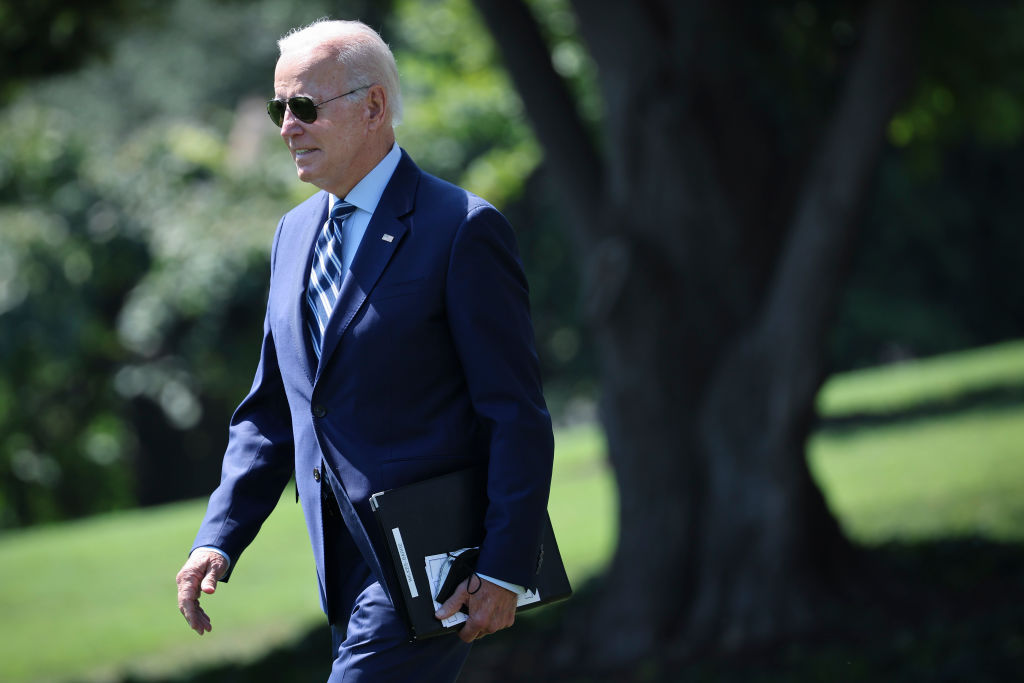
Biden calls out ‘MAGA Republicans’ as he talks police funding, crime prevention

Biden calls out ‘MAGA Republicans’ as he talks police funding, crime prevention
Win McNamee/Getty Images

(WILKES-BARRE, Penn.) — President Joe Biden continued his sharpened attacks on the Republican Party as he visited Pennsylvania on Tuesday, criticizing “MAGA Republicans” for their response to the Mar-a-Lago search and Jan. 6 as he highlighted his administration’s policing and crime prevention efforts.

“A safer America requires all of us to uphold the rule of law, not the rule of any one party or any one person,” Biden said as he spoke at Wilkes University.

“Let me say this to my MAGA Republican friends in Congress: Don’t tell me you support law enforcement if you won’t condemn what happened on Jan. 6,” he continued. “For God’s sake, whose side are you on?”

Biden, once apprehensive about directly criticizing his Oval Office predecessor, has ramped up his rhetoric ahead of the 2022 midterm elections, recently accusing some in the Republican Party of “semi-fascism.”

The president also addressed Republican criticism of the FBI in the wake of the search warrant executed at Donald Trump’s Florida estate, including their calls to defund the bureau. Biden’s comments on the search have been limited, besides stating he had no prior notice about the search and leaving questions of national security risk to the Justice Department.

“Now it’s sickening to see the new attacks on the FBI, threatening the lives of law enforcement agents and their families for simply carrying out the law and doing their job,” Biden said. “There’s no place in this country for endangering the lives of law enforcement.”

Biden on Tuesday also touted his “Safer America Plan,” unveiled in July, which calls on Congress to add $37 billion for the training of 100,000 additional police officers, to clear court backlogs and to establish new grants for communities to prevent violent crime and ease the burden on police officers in responding to non-violent situations

“I’ve not met a cop who likes a bad cop,” Biden said. “There’s bad in everything. There’s lousy senators and lousy presidents and lousy doctors and lousy lawyers. No, I’m serious. But I don’t know any police officer that feels good about the fact that there may be a lousy cop. I’m tired of not giving them the kind of help they need.”

In addition to making the case for the additional funding, Biden discussed the need to build on the bipartisan gun safety legislation passed earlier this summer by enacting a ban on assault weapons. The gun safety law, while the first major piece of reform in decades, didn’t go as far as Democrats and gun control advocates had hoped.

“The NRA was against it which means a vast majority, the vast majority of Republicans in Congress couldn’t even stand up and vote for it, because they’re afraid of the NRA,” he said.

Biden’s speech in Wilkes-Barre was his first of three stops in the battleground state in a week.

Meanwhile, Trump will also be in Pennsylvania this week for his first rally since the Aug. 8 search.

The former president will be campaigning for Republicans in two key Pennsylvania races: the gubernatorial election and the U.S. Senate contest.

State Sen. Doug Mastriano, who is running for governor, and Dr. Mehmet Oz, who is running for Senate, will be in attendance at Trump’s rally in Wilkes-Barre. Trump has endorsed them both.

Biden on Tuesday gave a shout out to the two Democrats going up against Mastriano and Oz: Josh Shapiro and John Fetterman, respectively.

“Josh Shapiro is a champion for the rule of law as your attorney general, and he’s gonna make one hell of a governor,” Biden said. “I really mean it.”

Fetterman, he said, will make “a great United States senator.”

ABC News’ Sarah Kolinovsky and Justin Gomez contributed to this report.

Copyright © 2022, ABC Audio. All rights reserved.

Does Biden’s student loan relief plan stand legally?

Does Biden’s student loan relief plan stand legally?
jayk7/Getty Images

(WASHINGTON) — As some federal student loan borrowers across the country prepare to see their loans wiped out following President Joe Biden’s debt cancellation plan, some borrowers may be wondering if the effort holds up legally.

The legality of Biden’s plan largely depends on who you ask. However, the Biden administration has vehemently defended canceling student loan debt for 20 million people and that the move is legally justified.

For the remaining 55%, Biden’s plan will offer more relaxed terms for loan repayment, according to the Biden administration. Those terms include cutting the amount that borrowers have to pay each month in half — from 10% to 5% of discretionary income — as well as covering borrowers’ unpaid monthly interest, among other efforts.

“The Department of Justice, Office of Legal Counsel and the general counsel’s office of the Department of Education have looked at the text of the statute and belief that the action that the Secretary took, the administration took here is legally justified,” National Economic Council Deputy Director Bharat Ramamurti said during a press briefing Friday.

“The president was clear from the beginning that he did not want to move forward on this unless it was clear that it was legally available to him,” Ramamurti said. “… One of the first things that he did when he came to office was ask for that legal opinion.”

The Department of Education, alongside the Department of Justice, released a legal opinion last Tuesday in defense of the groundbreaking administrative move, citing the HEROES Act.

The act provides the Secretary of Education broad authority to grant relief from student loan requirements during specific periods — such as the ongoing COVID-19 pandemic — for particular purposes, like addressing financial harms of wars or national emergencies.

“The Secretary of Education has used this authority, under both this and every prior administration since the Act’s passage, to provide relief to borrowers in connection with a war, other military operation, or national emergency, including the ongoing moratorium on student loan payments and interest,” the opinion reads.

The White House has repeatedly faced questions concerning the future of Biden’s plan in court, during a Friday press conference where officials said they expect legal challenges.

A June decision against the Environmental Protection Agency from the Supreme Court cited the “major questions doctrine,” which requires Congress to clearly and explicitly grant agencies the authority to employ extraordinary actions. He says this strategy may be used to jeopardize Biden’s plan.

“Recent rulings from the Supreme Court suggest that at least some of the justices on the current court could view sweeping executive action like this as running afoul of congressional intent,” Adam S. Minsky, a student loan attorney, told ABC News. “But this is not necessarily the same type of case that was recently decided.”

“It’s going to be up to the courts to decide whether those are valid claims or not, but we believe that we’re on very strong legal grounds,” Ramamurti said.

Jed Shugerman, a professor at Fordham Law, said he doesn’t see the order “surviving a legal challenge.”

“My bottom line is that if the Biden administration wants to prevail in an inevitable legal challenge, it needs to switch to the more appropriate statute as the legal basis for this policy (under the Higher Education Act of 1965) or significantly narrow its policy for specific COVID relief claims (and even then, it would be vulnerable),” Shugerman told ABC News.

Minksy said this is uncharted territory, adding that both Biden and former President Donald Trump have used the HEROES Act to pause federal loan payments, interest, and collection since the start of the COVID-19 pandemic.

Biden’s plan will erase at least $10,000 in federal student loan debt for Americans who made less than $125,000 per year in the 2020 or 2021 tax year, or less than $250,000 as a household.

For Americans under that same income bracket who took out Pell grants to pay for college, it would erase up to $20,000.

It is unclear when borrowers will see a change in their account balance. The White House says the applications for student debt relief will be launched by early October, with relief beginning to reach borrowers by early to mid-November.

Copyright © 2022, ABC Audio. All rights reserved.

With 10 weeks until midterms, election deniers are hampering some election preparations

With 10 weeks until midterms, election deniers are hampering some election preparations
adamkaz/Getty Images

(WASHINGTON) — In Colorado, supporters of Donald Trump seeking evidence of 2020 election fraud have flooded some county offices with so many records requests that officials say they have been unable to perform their primary duties.

In Nevada, some election workers have been followed to their cars and harassed with threats.

And in Philadelphia, concerns about the potential for violence around Election Day have prompted officials to install bulletproof glass at their ballot-processing center.

With 10 weeks to go until the 2022 midterms, dozens of state and local officials across the country tell ABC News that preparations for the election are being hampered by onerous public information requests, ongoing threats against election workers and dangerous misinformation campaigns being waged by activists still intent on contesting the 2020 presidential election.

The efforts, many of which are being coordinated at both the national and local level, range from confronting election officials at local government meetings to training volunteers to challenge the vote-counting process on Election Day, according to election officials.

Minnesota Secretary of State Steve Simon told ABC News he’s concerned that the efforts are a reflection of the prevailing attitude among 2020 election deniers that “the folks running elections in this county or this city are up to no good.”

‘A weaponized tool’

Election officials said that records requests, which are designed under the Freedom of Information Act (FOIA) to make the vote-tallying process transparent to the public, have increasingly been used by election deniers to disrupt the system.

At the “Moment of Truth Summit,” a two-day meeting of election deniers hosted by MyPillow CEO Mike Lindell last week in Springfield, Missouri, activists instructed attendees on how to request election-related records, and pointed them to templates to make it easier to submit the forms.

“Save your county! Get your cast vote records now!” was one of the calls to action, urging supporters to request ballot logs containing information on each ballot cast. One speaker boasted about his efforts, saying, “I have one of the best groups of followers in the world … and I basically set them out to start making public records requests everywhere for this information. And lo and behold, over time and working together, they managed to get hundreds and hundreds of these records.”

In Wisconsin, Dane County Clerk Scott McDonell told ABC News that just days after the summit, a Wisconsin activist filed one of those very requests — a lengthy inquiry that not only sought specific and detailed information, but offered guidance on how local officials should retrieve the data. McDonell said he’s received as many as 50 of these kinds of requests over a two-day period.

Elizabeth Howard, senior counsel in the Elections and Government Program at the Brennan Center for Justice, a nonpartisan think tank that tracks election rules, said it smacks of a coordinated effort.

“Election officials are clearly getting, like, a copy-and paste-job of a FOIA request from some centralized entity,” she said. “They can see in the FOIA request because it’ll be bracket, insert county here, close bracket — and the requestor doesn’t insert the name of the county.”

Election officials said many of the onerous requests seek ballot records, information on voting machines, and even the personal information of election workers — which election offices will not provide.

“They have become a weaponized tool against us to keep us from being able to do our job,” said Trudy Hancock, president of the Texas Association of Elections Administrators.

Marc Early, the supervisor of elections in the state of Florida, said that all the requests are making it harder to prepare the state for the upcoming midterms.

“We are under obligation to respond to these records requests in a very proactive way — but the volume and the nature of these requests are such that it’s difficult to just keep track of it all,” Early said. “And it’s become a big problem, because we have elections to conduct but we also have our obligations … to take these requests seriously. And we are, but it’s a difficult environment to live under.”

In Michigan, election officials have found themselves facing accusations from a one-time state officeholder. The clerk for Michigan’s Canton Township told ABC News that former state Sen. Patrick Colbeck has inundated the township with so many records requests that the clerk invited Colbeck to his office to let him see the township’s election management system in action, in the hope that Colbeck’s concerns about voter fraud would be assuaged.

“We have spent hours with him,” clerk Michael Siegrist said of Colbeck.

But the visit didn’t satisfy Colbeck, who Siegrist said is now asking the Michigan township to release the election management system’s programming files — something officials say they can’t do.

Such files are “not subject to public disclosure under the FOIA laws in Michigan, because they are both proprietary and a blueprint for election programming, and if they were distributed could result in individuals having a resource to hack future elections,” said Siegrist.

Colbeck, however, told ABC News the information he is seeking is not programming data, but timestamp information associated with cast vote records already provided by the township.

“This timestamp data would be very useful in an analysis of cast vote data,” he said, adding that “the election results database and associated log files created by the Dominion Election Management System software are not examples of source code any more than a MS Word document created by the MS Word application is source code.”

Colbeck called the disagreement “but one example of concerted statewide obstruction regarding FOIA requests.”

The township said it was still working through its backlog of records requests — eight of which have come from Colbeck alone.

‘Let your voices be heard’

Officials in Washoe County, Nevada, have also been flooded with records and information requests that they describe as “numerous” and “onerous.” But their election workers have also been the targets of threats and harassment.

Election workers have been followed to their cars and threatened with rhetoric like “Traitors are dealt with,” county spokesperson Bethany Drysdale told ABC News.

By mid-June, shortly after the Nevada primaries, Drysdale says the harassment had become so severe that the Washoe County voter registrar resigned their position, prompting the Washoe County Commission to propose a support plan to help county employees that “are unfairly publicly attacked, harassed, or disparaged by members of the public or by political organizations.”

That effort was assailed by members of the Republican Women of Reno, who in an online post asked, “Is it 1984 in Washoe County?” The organization, which has been leading local election challenge efforts and training poll watchers, urged others to “show up and let your voices be heard” at county commission meetings.

In Pennsylvania, Philadelphia officials are so concerned that they have installed bulletproof glass at their ballot-processing center ahead of the midterm elections.

In Otero County, New Mexico, David Clements, a former college professor who gained national prominence for pushing baseless claims of voter fraud, has been attending town hall meetings and confronting officials about the 2020 election.

“We want to let you know that this issue isn’t going to go away,” Clements said at a county commissioner meeting last week. “In fact, I’ll be here every two weeks, no matter how futile you think this exercise is.”

Clements, who was suspended last year from New Mexico State University, has traveled across the country to advocate for audits of the 2020 election. A week after speaking at Lindell’s “Moment of Truth Summit,” he was back in New Mexico, where he was escorted out of a Doña Ana County commission meeting after pressing the commissioners to investigate election-related claims.

“This has been brought up multiple times and there’s just no fact to it,” a commissioner told Clements.

At the Doña Ana meeting, Clements also publicly asked for the resignation of county clerk Amanda Lopez Askin.

“It was almost a joke to me,” Askin told ABC News. “I’m serving my community, and then you have 50,000 people that voted for me. All he does is feed my determination.”

Askin has had to report several death threats to the FBI, and she said the vitriol she’s receiving from election denial groups is becoming the new normal.

“It’s disheartening, and the thing that they don’t realize is, I’m a fellow New Mexican,” she said. “I was born and raised here, and I’m more against voter fraud than anyone.”

“It’s unfortunate he’s harassing public forums and public officials with baseless lies,” Alex Curtas, director of communications for the New Mexico secretary of state, said of Clements.

Contacted by ABC News for comment, Clements replied with a list of poll results from the conservative polling company Rasmussen Reports showing the percentage of likely voters who believe cheating affected the results of the 2020 election, and other related statistics.

‘A different level of intensity’

Back in Washoe County, Nevada, officials say election deniers have also spread dangerous misinformation — such as when one activist posted a clip from the election office’s livestream and questioned what an election worker was doing with their computer.

“When they posted the video, they said, ‘What is he doing? Look at him, he looks shifty. Look at him, he must be up to something,'” said Drysdale, the county spokesperson. “And that kind of caught fire.”

The employee was actually just shutting down a computer at the end of the day, Drysdale said.

“Misinformation yields threats against election officials that make it a lot more difficult to do our job, whether those threats be violent in form or whether they be harassment,” said Michigan Secretary of State Joselyn Benson.

In Maine, a local election denier transformed a former movie theater into a “Constitutional Hall” to hold so-called “election integrity” events and poll watcher trainings. The events have resulted in an increase in “requests for information about things that don’t exist,” according to the Maine secretary of state.

“To the election deniers who are hosting phony training, filling our citizenry with misinformation and disinformation, I would say our elections are free, fair, and secure,” Maine Secretary of State Shenna Bellows told ABC News.

Officials in other states, including Missouri, Indiana, Colorado and Kansas, told ABC News they were concerned about election deniers being trained as poll workers.

“This is a different level of intensity that I was not expecting,” said a Johnson County, Kansas, election commissioner.

A report released two weeks ago by the U.S. House Oversight and Reform Committee said election officials are facing unprecedented challenges.

“These new pressures on election officials make their core job of running elections far more difficult by draining already scarce resources and undermining public confidence in election processes,” the report said.

Copyright © 2022, ABC Audio. All rights reserved.