
Trump Organization charged Secret Service $1.4M to stay at his properties, committee says

Trump Organization charged Secret Service .4M to stay at his properties, committee says
400tmax/Getty Images

(WASHINGTON) — The Trump Organization on some occasions charged the Secret Service more than five times the government rate to stay at Donald Trump-owned properties while the agency was protecting him and his family, according to documents obtained by Congress.

In total the Secret Service spent at least $1.4 million in tax dollars at Trump Organization hotels and other properties over 669 expenditures between January 2017 and September 2021, House Committee on Oversight and Reform Chair Carolyn Maloney wrote in a Monday letter to Kimberly Cheatle, the director of the Secret Service.

Maloney, D-N.Y., wrote in her letter to Cheatle that the Secret Service had provided only partial accounting of when its agents had stayed at Trump properties and how much the agents paid.

Some of the trips were while agents were accompanying Trump’s children Donald Trump Jr. and Eric Trump and his daughter-in-law, Lara Trump, according to Maloney.

The oversight committee requested documents and details on the agency’s Trump spending in 2020, citing “disturbing” news reports of “exorbitant charges” by the former president’s properties.

Donald Trump did not divest himself of his businesses when he took office, though he said his sons were in charge — an arrangement that has drawn scrutiny and criticism from Democrats and ethics experts ever since.

According to the records the Secret Service has since provided the oversight committee, Maloney wrote Monday, “the Trump Organization charged the Secret Service a nightly rate in excess of the government per diem rate at least 40 times from the beginning of the Trump Administration through September 15, 2021. In several instances, the rates charged were more than three times the per diem rate.”

Maloney wrote that the Secret Service had granted at least 40 exceptions when agents were paying above the accepted rate at Trump properties. But she wrote that there may have been other instances of higher-than-accepted rates for which agents did not seek exemptions.

Maloney noted that the charges contradict previous statements made by Trump Organization officials, such as when Eric Trump, the president’s middle son, said in 2019: “If my father travels, they [government employees] stay at our properties for free — meaning, like, cost for housekeeping.”

The next year, in response to a Washington Post article about how much the Secret Service was being charged by the Trump Organization, Eric Trump said in a statement: “We provide the rooms at cost and could make far more money renting them to members or guests.”

On Monday, Maloney wrote that the records the committee obtained dispute this.

“Despite claims by the Trump Organization that federal employees traveling with the former President would stay at Trump properties ‘for free’ or ‘at cost,’ new information … shows that the former President’s company charged the Secret Service excessive nightly rates on dozens of trips,” she wrote.

The acceptable government rate is based on an average of daily hotel prices based on location and season, Maloney wrote.

In one example from 2017, Maloney wrote, agents were charged $1,185 per room per night at the Trump International Hotel in Washington.

Maloney wrote that there were two gaps in what the Secret Service had provided the committee, however: data on what the agency paid when staying at overseas Trump Organization properties and data on four trips to Mar-a-Lago in Florida.

There are some records of government spending for the Secret Service while Trump was abroad: In July 2018, the State Department spent about $70,000 on behalf of the agency for a stay at Trump’s Scottish hotel.

Separately, the State Department spent at least $38,500 at the Trump hotel in Vancouver, including some $15,000 for rooms for Secret Service agents in February 2017.

In a statement on Monday, Eric Trump, who is executive vice president of the Trump Organization, said that “any services rendered to the United States Secret Service or other government agencies at Trump owned properties, were at their request and were either provided at cost, heavily discounted or for free.”

“The company would have been substantially better off if hospitality services were sold to full-paying guests, however, the company did whatever it took to accommodate the agencies to ensure they were able to do their jobs at the highest levels,” Eric Trump continued. “They are amazing men and women.”

Eric Trump insisted that his father “funded the vast majority of his campaign with hundreds of millions of dollars of his own money and turned away billions of dollars in real estate deals worldwide after winning the Republican Primary.”

In a separate statement, a Secret Service spokesperson said the agency “has received a letter from the House Oversight Committee requesting information pertaining to protection-related hotel charges, and the agency will respond directly to the committee with the requested information.”

The cost of Secret Service for presidential families has made headlines beyond Trump. Earlier this year, ABC News reported that agents had been paying more than $30,000 a month for a residence in Malibu, California, close to where President Joe Biden’s son, Hunter Biden, was staying.

Copyright © 2022, ABC Audio. All rights reserved.

Biden officially launches student loan forgiveness application

Biden officially launches student loan forgiveness application
Alex Wong/Getty Images

(WASHINGTON) — President Joe Biden on Monday officially launched the application for student loan relief, after the test version of the site went live this weekend — a long-awaited first step to fulfilling one of his campaign promises just weeks before the midterm elections.

“Today marks a big step among others that my administration is taking to make education a ticket to the middle class,” Biden said.

“A new student loan application is now open. If you have federal student debt please visit student aid.gov. It’s easy, simple and fast. And it’s a new day for millions of Americans all across our nation,” he said.

Secretary of Education Miguel Cardona said after the Monday briefing that over 8 million borrowers have already applied for loan forgiveness through the “beta” — or test — version of the application, launched on Friday.

The rollout is a much-anticipated move to accomplish Biden’s August announcement that individuals with student loans making less that $125,00 can apply for up to $10,000 of debt relief, or as much as $20,000 for eligible borrowers who were also Pell Grant recipients.

Borrowers who submitted their applications for the student debt relief program during the beta test period won’t need to reapply now that the application is officially launched, according to a department spokesperson.

“As millions of people fill out the application. We’re going to make sure the system continues to work as smoothly as possible so that we can deliver student loan relief for millions of Americans as quickly and as efficiently as possible,” Biden said on Monday.

“My commitment was, if elected president, I was going to make government work to deliver for the people. This rollout keeps that commitment, just as I’m keeping my commitment to relieve student debt as borrowers recover from this economic crisis caused by the once in a lifetime pandemic.”

Biden also acknowledged the Republicans who are seeking to block the new relief.

“The Biden bailout is not only unfairly punishing Americans, but it is a political loser for Democrats this November. While Biden gives the wealthy a handout, his agenda has slammed families with rising gas prices, sky-high grocery bills, and tax hikes,” Republican National Committee spokesperson Nathan Brand said in a statement after Biden’s Monday announcement.

The policy has been challenged multiple times in court, largely by conservative organizations and states that argue that the Biden administration doesn’t have the authority to cancel student loan debt — that it’s up to Congress.

“Republican members of Congress, Republican governors are trying to do everything they can to deny this feat, even to their own constituents. As soon as I announced my administration’s student debt plan, they started attacking it, saying all kinds of things. Their outrage is wrong, and it’s hypocritical,” he said.

So far, none of the lawsuits has halted the program, which the Biden administration argues is on firm legal footing under the HEROES Act — an act that provides broader-than-usual authority to the Education Secretary during emergency periods, such as COVID. Biden said it’s his administration’s legal judgment that the relief program will not be blocked.

Biden noted that many of the GOP members who have opposed the policy have benefited from other COVID-related relief programs, like the Paycheck Protection Program or American Rescue Plan loans.

“As soon as I announced my administration’s student debt plan, they started attacking it, saying all kinds of things. Their outrage is wrong, and it’s hypocritical. I will never apologize for helping working Americans and middle class people as they recover from the pandemic,” he continued.

“I don’t want to hear from Republican officials again, who heard who had hundreds of thousands of dollars, even millions of dollars in pandemic relief loans, PPP loans, but who now attack the work the middle class Americans are getting relief,” Biden said.

The federal student loan forgiveness plan will cost $400 billion over 10 years, according to a revised estimate in late September from the Congressional Budget Office, which is a lower number than from one leading outside estimate.

“In total, more than 40 million Americans can stand to benefit from this relief, and about 90 percent — 90 percent of that relief is going to go people making less than $75,000 a year,” Biden said. “Let me be clear: Not a dime will go to those in the top 5 percent of the income bracket. Period.”

Biden said on Monday that the country is “on track” to reducing the federal deficit by $1 trillion this fiscal year, along with reducing it by another $300 billion over the next ten years because of a provision in the Inflation Reduction Act that allows Medicaid to now negotiate drug prices with corporations.

“We’re able to afford this student loan relief,” Biden claimed. “It’s because of our historic deficit reduction that Republicans voted against.”

He also said there would be federal income from the borrowers who do not qualify for the loan forgiveness program who will need to begin paying their loans when the payment pause discontinues this January. “That means billions of dollars a year will start coming into the U.S. Treasury,” Biden said.

“My administration’s plan is economically responsible.”

ABC News’ Mariam Khan contributed to this report.

Copyright © 2022, ABC Audio. All rights reserved.

White House blasts what it calls Trump’s ‘antisemitic’ comments

White House blasts what it calls Trump’s ‘antisemitic’ comments
Rudy Sulgan/Getty Images

(WASHINGTON) — The White House on Monday blasted former President Donald Trump for a weekend post on his social media platform telling American Jews to “get their act together.”

“Donald Trump’s comments were antisemitic, as you all know, and insulting, both to Jews and to our Israeli allies. But let’s be clear for years, for years now, Donald Trump has aligned with extremist and antisemitic figures,” White House press secretary Karine Jean-Pierre said Monday. “It should be called out … just like we called out our Democratic friends and colleagues last week and we will condemn and call this out as well.”

“We need to root out antisemitism everywhere it rears its ugly head. We need to call this out,” she said. “With respect to Israel, our relationship is ironclad. And it’s rooted in shared values and interests. Donald Trump clearly doesn’t understand that either.”

The rebuke comes after Trump knocked Jews on Truth Social over a perceived lack of loyalty to Israel, hitting on an antisemitic trope of dual loyalty that has plagued Jews across the world for centuries.

“No President has done more for Israel than I have. Somewhat surprisingly, however, our wonderful Evangelicals are far more appreciative of this than the people of the Jewish faith, especially those living in the U.S.,” Trump wrote.

“Those living in Israel, though, are a different story – Highest approval rating in the World, could easily be P.M.! U.S. Jews have to get their act together and appreciate what they have in Israel – Before it is too late!” Trump added.

The comment led to other criticism, including from the Jewish Democratic Council of America, which called the post “more unabashed antisemitism from GOP leader Donald Trump.”

“His threat to Jewish Americans and his continued use of the antisemitic dual loyalty trope fuels hatred against Jews. We will not be threatened by Donald Trump and Jewish Americans will reject GOP bigotry this November,” the council tweeted.

“We don’t need the former president, who curries favor with extremists and antisemites, to lecture us about the U.S.-Israel relationship. It is not about a quid pro quo; it rests on shared values and security interests. This ‘Jewsplaining’ is insulting and disgusting,” Anti-Defamation League’s CEO Jonathan Greenblatt also said Sunday.

“When the president says, ‘before it’s too late,’ it sounds like a threat in an environment where Jews already feel threatened,” Greenblatt added on CNN Monday. “It is bewildering that President Trump, who has Jewish children and Jewish grandchildren, continues to evoke age-old antisemitic tropes.”

Monday was not the first time Trump faced criticism over his comments on Jews.

He sounded a similar note in 2019 when he said Jewish people who back Democrats are disloyal.

“I think Jewish people that vote for a Democrat — I think it shows either a total lack of knowledge or great disloyalty,” Trump told reporters in the Oval Office in response to policies from some Democrats to curtail aid to Israel.

“There’s people in this country that are Jewish — no longer love Israel. I’ll tell you, the evangelical Christians love Israel more than the Jews in this country,” he added in an interview released in December.

“It used to be that Israel had absolute power over Congress. And today, I think it’s the exact opposite,” Trump said. “And I think Obama and Biden did that. And yet in the election, they still get a lot of votes from Jewish people, which tells you that the Jewish people, and I’ve said this for a long time, the Jewish people in the United States either don’t like Israel or don’t care about Israel.”

A spokesperson for Trump did not immediately respond to a request for comment regarding Monday’s White House rebuke.

Copyright © 2022, ABC Audio. All rights reserved.

Early vote count surpasses ordinary midterm turnout

Early vote count surpasses ordinary midterm turnout
boonchai wedmakawand/Getty Images

(WASHINGTON) — More than 2 million people have already voted in the 2022 general election, according to data analyzed by the University of Florida’s U.S. Elections Project.

The project, which compiles public data on early voting at ElectProject.org, had counted 2,030,730 early votes, of which 1,842,115 mail-in ballots have been returned and 188,615 ballots have been cast in person thus far, as of Oct. 17. There have been 14,892,186 total mail ballots requested.

University of Florida professor Michael McDonald, who oversees the Elections Project, said that early turnout so far in 2022 was higher than usual for a midterm election.

“It’s clear that we are above the 2018 midterm at the same point in time in states where we have comparable data to look at,” McDonald told ABC News.

With 21 days and millions more ballots left before Nov. 8, McDonald noted that 2022 turnout is likely to be on par with 2018 midterm turnout, which broke records previously set more than a century earlier. Midterm elections typically turn out fewer voters than during years when a presidential election is held, but the recent numbers indicate a growing trend of participation over the past few years.

“We do know that interest is running high for the election. We can see the sorts of indicators that would suggest that we’re in for a high-turnout election, much like we had in 2018. And 2018, was the highest midterm turnout rate since 1914,” he said.

“So, it was a fairly exceptional election, I mean 2020 was also exceptional in that it had the highest turnout for presidential elections since 1900.”

Early voting is underway in more than a dozen states, with more to start early voting sometime this week. Early voting periods range in length from four days to 45 days before Election Day, with an average length of 19 days, according to the National Conference of State Legislatures.

Between 2006 and 2018, the percentage of national voters who cast their vote at a polling site on Election Day dropped from roughly 80% to roughly 60%, according to voter data. During that same period, the percentage of voters who chose early in-person voting grew from 5.8% to 16.7%, and the percentage of voters who mailed in their ballot increased from 13.8% to 22.3%.

But a rise in the use of early voting began to really spike during the 2020 presidential election, when the COVID-19 pandemic dampened in-person voting and triggered many state legislatures to expand mail-in options. The 2020 election saw record breaking turnout and also was the first time more people voted before Election Day than on it.

McDonald noted that the current midterm early voting trends may be indicative of a more permanent, stronger pattern of early voting.

“What we’re observing here is that some people have changed their behavior. They’re either voting early, where they may not have done so in a past midterm election, or they’re voting sooner than they would have,” he said. “Those are both things that we saw in 2020, where people were not only voting by mail, and in person early at greater frequencies then they had past elections, but they were also voting earlier than they had in prior presidential elections.”

Of the states that record party registration, the U.S. Elections Project shows more Democrats have voted early this cycle — 52.3% compared to only 31.1 % of Republicans.

The share of Republicans who are recorded saying voters should be allowed to vote early or absentee without a documented reason fell drastically in the past few years, according to a 2021 Pew Research survey– down 19% from 2018.

The use of absentee and mail-in ballots have been subject to conspiracy and skepticism after former President Donald Trump said that mail-in ballots lead to voter fraud in 2020.

McDonald noted on Twitter that the early vote count numbers crested 2 million as their project now has included totals from Arizona, one of the latest states to open ballot casting options ahead of election day. The Copper State began mailing ballots out to constituents on Oct. 12.

Arizona was ground zero for election fraud claims, with Trump alleging mass fraud in the state — joined later by now-gubernatorial candidate Kari Lake and secretary of state candidate Mark Finchem. Arizona Attorney General Mark Brnovich, a Republican, and the courts have refuted these baseless allegations, saying there was no evidence of widespread voter fraud or irregularities associated with the 2020 presidential election in Maricopa County, the state’s most populous.

Sunday on CNN, Lake again refused to commit to conceding if she loses and laid the groundwork for sowing mistrust in mail-in voting options: “We don’t want to be counting for 10 days,” Lake said.

Florida leads in early voting participation

According to the U.S. Elections Project data, nearly a third of all of the early votes that have been cast so far, were done so in Florida– it’s the only state where early vote totals exceed 600,000. The rest of the 21 states that the project has recorded as imposing some sort of early vote method spans from 100,000 to 500,000 votes cast thus far this cycle.

“Quite remarkable, right. Considering that early voting is going on in many other states,” McDonald. “Florida has been piling on another 100,000 every day, at this point. Florida’s really why the numbers have moved so quickly.”

McDonald said that because of Florida’s larger size, broader voter turnout activity is expected, along with the fact that Floridians tend to use mail ballots more frequently than some of the other states has so far been casting votes early.

Large states like California, which sent their mail-in ballots out later than the Sunshine state, will quickly catch up, he said.

“California will catch up really quick and pass Florida within the next week or so. But in this period of time, right now, we’re Florida is the state that sent out well over a million mail ballots.”

Florida leads the pack as GOP Gov. Ron DeSantis on Thursday signed an executive order which allows voters in areas devastated by recent Hurricane Ian — coastal counties Lee, Charlotte and Sarasota — more flexibility to request and cast their ballots.

The expanded voting order adds three days to early voting, and waives the requirement for voters to supply a signature when requesting a vote by mail ballot at a new address– a new voting law passed in 2021– and authorizes election supervisors to designate additional early voting locations, among other measures.

DeSantis said he signed the order at the request of the Supervisors of Elections in Charlotte, Lee, and Sarasota counties, and at the recommendation of Florida Secretary of State Cord Byrd, following the storm which destroyed polling places and displaced thousands of people.

DeSantis encouraged Republicans to vote by mail at a campaign event on Saturday, saying he has “confidence” in Florida’s elections. The governor polled the crowd at the event, asking how they’d vote: attendees erupted into cheers when he asked who might cast ballots on Election Day, followed by silence when he asked if they might vote by mail.

“What I would say is whatever you like is fine. We’ve got good returns on absentee, and I have confidence in early voting, in person [voting], and of course Election day [voting],” DeSantis said.

ABC News’ Miles Cohen contributed to this report.

Copyright © 2022, ABC Audio. All rights reserved.

With Trump subpoena likely this week, what’s next for the Jan. 6 committee?

With Trump subpoena likely this week, what’s next for the Jan. 6 committee?
Mint Images/Getty Images

(WASHINGTON) — In a dramatic end to what might be its last public hearing, the Jan. 6 committee took the historic step to vote to subpoena Donald Trump.

The subpoena will likely be formally issued this week.

On Thursday, all nine members of the panel approved the resolution to compel the former president to testify about the Capitol attack, which the committee argues was the violent culmination of Trump’s many efforts to overturn the 2020 election.

“He must be accountable,” chairman Bennie Thompson, D-Miss., said before the vote. “He is required to answer for his actions.”

There’s been discussion among committee members and staff for months about whether they would want Trump to testify in a live setting. There’s no doubt they want him to testify under oath, as committee members made clear in the hearing.

Some members are hesitant to give Trump a live stage, while others view it as beneficial to their investigation as they would get to question him under oath. And there appears to be more of an openness among committee members to have him appear live.

Trump has told advisers he’d welcome a live appearance, according to sources familiar with his thinking, but has yet to say publicly whether he’ll cooperate.

The committee would need to negotiate with Trump if he were to offer to testify live in response to the panel’s subpoena, Rep. Adam Kinzinger said Sunday.

“I think that’s going to be a negotiation,” Kinzinger, R-Ill., a member of the committee, told ABC “This Week” anchor George Stephanopoulos. “I’ll only address that when we know for sure whether or not the president has tried to push to come in and talk to us live.”

“He’s made it clear he has nothing to hide, [that’s] what he said. So he should come in on the day we asked him to come in. If he pushes off beyond that, we’ll figure out what to do next,” Kinzinger said.

Trump did not answer whether he would appear in a 14-page memo sent to Thompson Friday, in which he continued his attacks on the panel and continued to make false claims about the presidential race.

“This memo is being written to express our anger, disappointment, and complaint that with all of the hundreds of millions of dollars spent on what many consider to be a Charade and Witch Hunt,” he wrote.

Some experts are wary the public will ever see Trump testify before the Jan. 6 committee.

“Before Donald Trump comes to answer questions about this under oath not only will pigs fly but they will circumvent the globe,” attorney Jeff Robins told ABC News Live anchor Linsey Davis.

What if he doesn’t cooperate?

If Trump refuses to cooperate, the committee could move to have the full House hold him in contempt and refer the matter to the Justice Department for prosecution.

“If they’re not going to do that, then it is essentially symbolic,” Nick Akerman, a former Watergate special prosecutor, told ABC News.

Chairman Thompson wouldn’t say when asked after the hearing how the committee planned to handle any eventual litigation or defiance of their subpoena.

The House has referred four people to the Justice Department after votes to hold them in contempt — former Trump White House chief of staff, Mark Meadows, Trump’s former social media director Dan Scavino, former Trump White House trade adviser Peter Navarro and form political adviser Steve Bannon. DOJ declined to press charges against Meadows and Scavino. Bannon was found guilty in July for defying the Jan. 6 committee subpoena. Navarro was also indicted on contempt of Congress charges and is scheduled to go to trial next month.

Trump could also attempt to run out the clock by fighting the subpoena if the committee took it to court, as he’s done with other investigations and records requests he’s faced over the years.

“There are myriad legal and separation of powers issues raised by the subpoena, including whether a congressional committee can compel the president to appear as well as the procedural hurdles in attempting to enforce a subpoena in court which previous court decisions have cast serious doubt upon,” Stanley Brand, a former counsel to the House of Representatives who has represented some of the Jan. 6 witnesses, including Scavino, told ABC News.

“There is also a question of timing given the substantial delays in litigating such a subpoena,” Brand said, pointing to congressional efforts to subpoena testimony from former White House counsel Don McGahn. The case stretched out in court for nearly two years, and ended with a voluntary agreement by McGahn to testify.

Brand said this issue, if litigated, could take just as long.

Republicans, if they win back control of the House this midterm election cycle as expected, are expected to drop the Jan. 6 investigation and turn to other matters. Top Republicans have already promised investigations into Biden and his son, Hunter Biden.

“Time is not on their side,” Akerman said, “considering it’s mid-October and there’s going to be a new Congress coming in Jan. 1, and there’s no guarantee it’s going to be controlled by the Democrats.”

Copyright © 2022, ABC Audio. All rights reserved.
DOJ seeks six months in prison, $200K fine for Steven Bannon over contempt conviction

DOJ seeks six months in prison, 0K fine for Steven Bannon over contempt conviction
Thinkstock/Getty Images

(WASHINGTON) — The Justice Department is asking a federal judge to sentence Steve Bannon, adviser to former President Donald Trump, to six months in prison and make him pay a $200,000 fine for his conviction on two counts of criminal contempt of Congress, according to a new court filing.

“From the moment that the Defendant, Stephen K. Bannon, accepted service of a subpoena from the House Select Committee to Investigate the January 6th Attack on the United States Capitol, he has pursued a bad-faith strategy of defiance and contempt,” prosecutors said Monday. “The Committee sought documents and testimony from the Defendant relevant to a matter of national importance: the circumstances that led to a violent attack on the Capitol and disruption of the peaceful transfer of power. In response, the Defendant flouted the Committee’s authority and ignored the subpoena’s demands.”

The statement continued, “For his sustained, bad-faith contempt of Congress, the Defendant should be sentenced to six months’ imprisonment—the top end of the Sentencing Guidelines’ range—and fined $200,000—based on his insistence on paying the maximum fine rather than cooperate with the Probation Office’s routine pre-sentencing financial investigation.”

Bannon was found guilty in July of defying a subpoena from the House select committee investigating the Jan. 6 attack on the U.S. Capitol.

He had been subpoenaed by the Jan. 6 panel for records and testimony in September 2021.

Story developing…

Copyright © 2022, ABC Audio. All rights reserved.

Whistleblower complaint claims Trump media company committed ‘fraudulent misrepresentations’

Whistleblower complaint claims Trump media company committed ‘fraudulent misrepresentations’
Mario Tama/Getty Images

(WASHINGTON) — A former executive has claimed to the government that Donald Trump’s eponymous media company — which sources say is under federal investigation — committed “fraudulent misrepresentations” regarding possible mergers with two other firms as it sought to raise money.

The complaint from Will Wilkerson, a former executive at Trump Media & Technology Group (TMTG), alleges federal securities law violations were committed by TMTG and several company officials, as well as Benessere Capital Acquisition Corporation (BENE) and Digital World Acquisition Corporation (DWAC).

BENE and DWAC had been considered or are being used as investor vehicles to potentially take TMTG public, a move which would also ensure a reported $1 billion in further financing from other investors, should the deal close.

Wilkerson’s complaint, filed in August and obtained this weekend by ABC News, alleges “fraudulent misrepresentations concerning the attempted mergers between these companies [Trump’s firm, BENE and DWAC] in violation of federal securities laws.”

More specifically, Wilkerson claims in his complaint that DWAC and Trump’s media company “had substantive communications” about merging before DWAC was a public company itself, violating regulations by the Securities and Exchange Commission (SEC).

The SEC and federal prosecutors in the Southern District of New York are investigating Trump’s company, according to sources familiar with the matter.

Both agencies declined to comment to ABC News.

Neither of the SPACs named in the complaint immediately responded to requests for comment.

In a statement, TMTG’s legal team touted the company’s work so far — such as its launch on multiple platforms and its millions of users — while pushing back on what it described as “knowingly false and defamatory statements” in a Washington Post article on Saturday in which Wilkerson spoke about his whistleblower complaint and his time as a TMTG executive.

Wilkerson was fired last week as senior vice president of operations after the Post sent questions to Trump based on his account, the paper reported.

DWAC first acknowledged in December that the SEC was probing its merger with TMTG and was seeking related documents.

DWAC also indicated in June that it was aware of a federal grand jury investigation in the Southern District of New York.

The whistleblower complaint states that DWAC was substituted as the SPAC to merge with Trump’s company, TMTG, because a deal with BENE “could not sufficiently capitalize TMTG at a valuation that was acceptable to President Trump” and others involved.

BENE’s CEO would have also made “less money” than if the CEO used his other, newer SPAC, according to the complaint.

“For these reasons, the parties agreed to substitute BENE for DWAC” in a merger, the whistleblower complaint reads.

Wilkerson’s complaint was first reported last week by The Miami Herald. TMTG launched last year and is the umbrella company for Truth Social, the platform Trump uses since being banned by most major social media websites in the wake of the Jan. 6 insurrection.

Wilkerson also claimed to The Post in its Saturday report that TMTG co-founder Andy Litinsky was booted from the board because he would not hand over shares of the company to the former president’s wife, former first lady Melania Trump, when Donald Trump asked him to do so.

The Post published a copy of an email that Wilkerson shared with them, apparently sent by Litinsky in March, in which Litinsky refers to Donald Trump’s alleged demand that he transfer his shares and his belief that being removed from the board was retaliation against him.

The Post reported that it was not known whether Litinsky ultimately relinquished his shares.

Speaking with the Post, Wilkerson attacked the leadership of TMTG CEO Devin Nunes, a former California lawmaker.

In its statement, TMTG defended Nunes, saying he was hired by Donald Trump “to create a culture of compliance and build a world-class team to lead Truth Social.”

The Post’s story was “rife with knowingly false and defamatory statements and other concocted psychodramas,” the company said. “We will consider republication of such statements to be legally-actionable evidence of reckless disregard for the truth.”

Copyright © 2022, ABC Audio. All rights reserved.
Everywhere Obama is going to be ahead of Democrats’ midterm crunch

Everywhere Obama is going to be ahead of Democrats’ midterm crunch
Official White House Photo by Cameron Smith

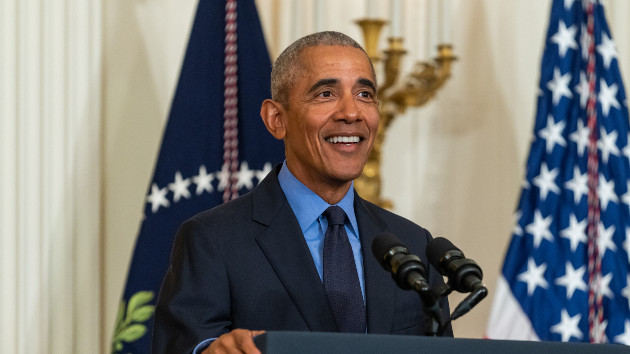
(WASHINGTON) — Former President Barack Obama, still one of the most popular figures in the Democratic Party, is set to hit the campaign trail in the final stretch to the midterm elections.

Democrats hope to sway enough voters to avoid losing control of Congress — despite major political headwinds like high inflation.

Here is where Obama is scheduled to appear in the next few weeks:

Atlanta with Abrams, Warnock

Obama will appear in Atlanta on Oct. 28, visiting a state that could decide which party controls the Senate and is also hosting a competitive gubernatorial election.

He will rally for freshman Sen. Raphael Warnock, who is running for a full term of his own after winning a special election last year, and Stacey Abrams, the prominent voting rights activist and former lawmaker again trying to unseat Republican Gov. Brain Kemp after he narrowly beat her in 2018.

Warnock is running neck-and-neck with former football star Herschel Walker, though he has a narrow edge in the most recent surveys, according to FiveThirtyEight, including in those taken since Walker, a staunch abortion opponent, denied a report that he paid for an ex-girlfriend’s abortion in 2009.

Abrams, for her part, is widely viewed as the underdog to Kemp though she is seeking to mobilize voters.

Democrats are hoping to keep their momentum going in the Peach State after a banner year in 2020, when President Joe Biden narrowly won the state and Warnock and Jon Ossoff ended up eking out a pair of Senate wins — the first such victories for Democrats there in decades.

Detroit with Whitmer

Obama will rally in Detroit on Oct. 29, appearing with Gov. Gretchen Whitmer and other Democrats.

Whitmer is running for reelection against conservative commentator Tudor Dixon.

The governor, who has focused her campaign messaging around a blend of pocketbook and social issues, is widely viewed as the favorite and leads Dixon in FiveThirtyEight’s polling average. A win there would offer a promising sign for Democrats in a tight presidential swing state.

“The event will focus on the stakes of the race as access to abortion, voting rights and public education are at risk in Michigan,” Obama’s office said in a statement.

Milwaukee with Evers, Barnes

Obama will also rally in Milwaukee on Oct. 29 with Wisconsin Gov. Tony Evers, who is up for reelection, and Lt. Gov. Mandela Barnes, who is running to oust Republican Sen. Ron Johnson,

State Attorney General Josh Kaul, Sen. Tammy Baldwin and Rep. Gwen Moore will also attend.

Wisconsin is a crucial state for Democrats this year, with Johnson as one of the most vulnerable Republican senators up for reelection.

Barnes has begun narrowly trailing Johnson in voter surveys after facing an avalanche of attack ads painting him as soft on crime, while Evers is locked in a close race with businessman Tim Michels.

Flipping Johnson’s seat would ease Democrats’ path to keeping Senate control, where they hold a bare majority, while the victor in the gubernatorial race could help decide key policies on issues like abortion access and voting rights in a state where Republicans control both chambers of the state legislature.

Copyright © 2022, ABC Audio. All rights reserved.
Recession is ‘possible but not inevitable,’ Buttigieg says as he touts supply chain focus

Recession is ‘possible but not inevitable,’ Buttigieg says as he touts supply chain focus
ABC News

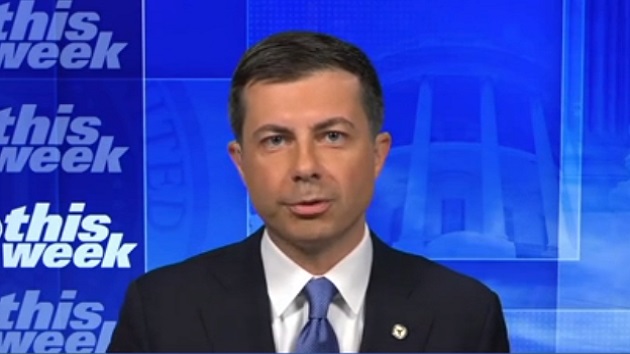
(WASHINGTON) — With year-over-year inflation barely easing in the latest Consumer Price Index report despite sharp increases in interest rates meant to cool the economy, Transportation Secretary Pete Buttigieg said Sunday that a recession is “possible but not inevitable.”

Buttigieg was asked in an interview on ABC’s “This Week” if the threat of recession worried him.

“Look, it’s possible but not inevitable. … A part of why we do see a lot of pressure on prices is that while the demand has come back, Americans have more income because Americans have jobs in this almost historically low level of unemployment,” Buttigieg told anchor George Stephanopoulos, adding that it’s “been hard for the supply side to keep up.”

“That’s a big part of what we’re working on — on the infrastructure side — dealing with some of the bottlenecks we have, dealing with some of the constraints that we have in transportation infrastructure that’s needed to be upgraded for decades,” Buttigieg said, referring to a supply-chain crunch exacerbated by the COVID-19 pandemic.

President Joe Biden said last week that he believed an economic downturn was unlikely but conceded there could be a “very slight recession.” His comments came after Jamie Dimon, the CEO of the largest bank in the United States, JPMorgan Chase CEO, warned a recession is likely within six to nine months because of Russia’s war in Ukraine and historically high inflation and the rising interest rates to combat those prices.

The Federal Reserve has raised interest rates five times so far this year and is expected to again next month.

Stephanopoulos pressed Buttigieg on what more Biden could do about rising prices after the president said he would soon be announcing more steps to tackle inflation and, particularly, the cost of gas.

Buttigieg emphasized that he didn’t want to “get ahead of the president,” but he highlighted how Biden had ordered the release of fuel from the country’s strategic petroleum reserve and waived a requirement on ethanol blending for gas stations.

“This is part of a bigger focus that the president has sustained throughout this year on fighting inflation and creating more of that breathing room for American families,” Buttigieg said.

While gas prices have fallen sharply from a summer high — now averaging about $3.90, down from $5.02 in mid-June — they are 20 cents higher than they were just a month ago, according to AAA. Buttigieg laid some of the blame with oil companies, who have defended themselves from criticism of excessive profits.

The economic headwinds could cost Democrats their slim congressional majorities this November.

Stephanopoulos asked Buttigieg how the party should address high inflation with just 23 days until the midterm elections. Polls show it is a major factor in Biden’s low approval rating, with voters giving Republicans the advantage on handling the economy — and Republicans have, in turn, made the state of the economy central to their campaign messaging.

“Good policy is good politics. And we have been doing the right thing for the American people with proposals and achievements, legislatively, that are popular because they make sense,” Buttigieg said. He pointed to a bipartisan infrastructure funding bill that was signed in 2021, which has allowed for improvements to bridges, roads and airports across the country, as well as the recently enacted Infrastructure Reduction Act (IRA), which contains provisions aimed at lowering health care costs.

Buttigieg suggested that the November elections were important for making sure those policies continue: “It’s why we can’t turn back on the progress that’s been made, especially because we know there’s still a long way to go.”

He cited some conservative objections to allowing Medicare to negotiate prescription drug prices, which was a major part of the IRA. GOP lawmakers have said the negotiation power is a “price control” that will hamstring pharmaceutical development.

“It’s the wrong time to do anything that would increase costs for health care or anything else for the American people,” Buttigieg said.

Stephanopoulos asked whether Biden should spend more time highlighting the White House’s other 2021 successes, like the direct COVID relief payments and a temporary expansion of the child tax credit which expired at the end of last year.

Buttigieg said “we are proud of those accomplishments,” and then noted what he believed were others, such as a funding bill for domestic manufacturing, a veterans’ health care bill and Biden’s initial COVID-19 relief bill when the economy “was at risk of going into free-fall.”

“In some ways having achieved so much legislatively makes it hard to talk about all at once because there are just so many,” he said.

Copyright © 2022, ABC Audio. All rights reserved.

Trump testifying live before Jan. 6 committee would require ‘negotiation,’ Kinzinger says

Trump testifying live before Jan. 6 committee would require ‘negotiation,’ Kinzinger says
ABC News

(WASHINGTON) — The House Jan. 6 committee investigating last year’s Capitol riot would need to negotiate with former President Donald Trump if he were to offer to testify live in response to the panel’s subpoena, Rep. Adam Kinzinger said Sunday.

“I think that’s going to be a negotiation,” Kinzinger, R-Ill., a member of the committee, told ABC “This Week” anchor George Stephanopoulos. “I’ll only address that when we know for sure whether or not the president has tried to push to come in and talk to us live.”

“He’s made it clear he has nothing to hide, [that’s] what he said. So he should come in on the day we asked him to come in. If he pushes off beyond that, we’ll figure out what to do next,” Kinzinger said.

He dodged Stephanopoulos’ question on whether Trump should be held in criminal contempt if he does not comply with the subpoena.

“Do you believe that the Justice Department, if the president refuses, should hold him in criminal contempt?” Stephanopoulos asked.

“That’s a bridge we cross if we have to get there,” Kinzinger said, adding, “We’re at a bit of a time limit here. And as we’re wrapping up the investigation, we’re also pursuing new leads and facts.”

Trump has not yet said if he will comply with the committee subpoena but did send the panel a 14-page screed reiterating his election fraud conspiracies.

“We made a decision in front of the American people, not behind closed doors, to begin the process of subpoenaing the former president,” Kinzinger said on “This Week.” “He’s required by law to come in. And he can ramble and push back all he wants.”

Kinzinger’s comments come after the House panel on Thursday voted to subpoena Trump — a rare but not unheard of demand of a former president — as the committee enters the final months of its investigation into the deadly insurrection on Jan. 6, 2021.

Committee members have cast the subpoena as an effort to hear directly from Trump on what he did and did not do and what he did and did not know regarding Jan. 6.

Previous committee hearings have detailed how, according to Trump’s former aides and others, he knew there was no legal basis for his scheme to stay in power and was aware his claims of election fraud in 2020 were baseless but continued to push his supporters to march to the Capitol — even as he knew some of them were armed.

Trump has said the investigation is politically motivated and that he did nothing wrong.

The committee, which is not expected to continue into the next Congress, is in the process of formulating its final report, which will include legislative recommendations on how to stop another insurrection and ensure elections are certified at the state and federal levels.

On Sunday, Stephanopoulos pressed Kinzinger on if the committee will be making a criminal referral, which would be a notable recommendation but is not required to open a probe of Trump’s conduct. Kinzinger noted that the government is already investigating.

“It’s not a mandate, but I think … we’re certainly going to address that issue, and we’ll have more to come on that when we make that decision,” Kinzinger said.

“The Justice Department appears to be pursuing this pretty hard,” he said.

Asked about the “threat” from how widespread election denial has become in the Republican Party, despite the lack of evidence, Kinzinger, who is stepping down as a Republican lawmaker in January, said, “I don’t think this is just going to go away organically.”

The public had power to push back as well, he said: “This is going to take the American people really standing up and making the decision that truth matters.”

Copyright © 2022, ABC Audio. All rights reserved.