
NY Mayor Eric Adams calls for ‘coordination’ with GOP governors, WH on bused migrants

NY Mayor Eric Adams calls for ‘coordination’ with GOP governors, WH on bused migrants
ABC News

(NEW YORK) — New York City Mayor Eric Adams on Sunday called for more “coordination” with the federal government and Govs. Greg Abbott, R-Texas, and Ron DeSantis, R-Fla., who are busing and flying newly arrived migrants to blue states across the country.

“I traveled to Washington last week, spoke with Sen. [Chuck] Schumer, Sen. [Kirsten] Gillibrand and other lawmakers and sat down with Biden administration to talk about — how do we coordinate?” Adams, a Democrat, told ABC “This Week” co-anchor Jonathan Karl, referencing New York’s two Democratic senators.

“Their goal is to make sure that we get resources and coordination that’s needed. … These migrants and asylum-seekers are not coming to any particular city. They’re coming to America. This is an American crisis that we need to face,” Adams said.

His comments come as Abbott has sent some 11,000 migrants from Texas to Chicago, New York and Washington in protest, Abbott has said, of Democrats’ southern border policies. He most recently bused dozens of migrants to Vice President Kamala Harris’ residence — and DeSantis, embracing a similar strategy, last week flew migrants to Martha’s Vineyard in Massachusetts, which numerous critics denounced as a stunt.

Adams, whose city has accepted migrants bused up from Texas, on Sunday said New York had a “moral and legal obligation” to provide shelter and aid people who come there after entering the U.S.But he accused Abbott of declining to collaborate on efforts to transport the migrants, despite Abbott’s office initially agreeing otherwise.

“We’ve reached out and stated that, ‘Let’s coordinate and work together so we can deal with this crisis together. They refused to do so,” Adams said, adding, “I don’t think it was politically expedient for them to coordinate. It was more to do this, basically, showmanship.”

El Paso, Texas, Mayor Oscar Leeser who oversees a border city, also appeared on “This Week” on Sunday and expressed concern about the number of migrants coming across the southern border. But he said it was important to treat people entering the country humanely — and to think of the work as a joint effort.

“The people are not coming to El Paso. They’re coming to America,” Leeser said.

When pressed by Karl, Mayor Adams insisted New York would remain a “sanctuary city” and that migrants who arrive will be cared for. (Karl noted that both Abbott and DeSantis declined to appear on “This Week” and discuss immigration.)

“This city has always been the sanctuary city, and we’ve always managed those who wanted to come to New York City to pursue the American dream,” Adams said. But, he said, “We’re not asking for people all over the country to send people to New York merely because they don’t want to take on their responsibility to help those who are seeking this American dream. That is not what we’re asking for.”

“Let’s coordinate in that fashion like we’ve done with other large communities we have in New York City, where we’re able to coordinate, get sponsors, work with our nongovernmental organizations. That is what crisis calls for,” Adams said. “It calls for coordination.”

Asked by Karl if he planned to accept Abbott’s invitation to visit the border, Adams declined to answer directly and pivoted to criticizing Abbott’s “political ploy” by sending migrants away.

Mayor Leeser told Karl that the number of migrants coming to El Paso continues to increase, with the city seeing roughly 2,000 migrants in a single day last week. But he emphasized that they would be treated compassionately as they are transported to their final destinations after being processed by government officials.

“That’s been really important, that we don’t send anyone where they don’t want to go, we make sure we help them,” Leeser said. “We put them on the buses with food and make sure they get to their destination and make sure that we always continue to treat people like human beings.”

Asked by Karl if he was aware of how the Biden administration planned to handle the ongoing migration — as Republican leaders like Abbott stress they feel the White House has no plan — Leeser cited his own strong relationship with Border Patrol. But he said the issue affected more than his city.

For their parts, Abbott and DeSantis have argued Democratic-led states and cities away from the southern border aren’t doing enough amid the high border crossings, with DeSantis warning that the flights to Martha’s Vineyard are “just the beginning efforts.”

Copyright © 2022, ABC Audio. All rights reserved.

Russia has been committing ‘war crimes of massive proportions,’ Ukraine ambassador says

Russia has been committing ‘war crimes of massive proportions,’ Ukraine ambassador says
ABC News

(NEW YORK) — As new evidence emerges of war crimes by the Russian military in its ongoing invasion of Ukraine, “It’s so important for everyone to see the true face of this aggression and terrorist attack Russia is waging,” Ukraine’s ambassador to the U.S., Oksana Markarova, said Sunday.

“It’s tortures, rapes, killings. War crimes of a massive proportions,” Markarova claimed in an interview with ABC “This Week” co-anchor Jonathan Karl. “That’s why we need to liberate the whole territory of Ukraine as soon as possible because clearly Russians are targeting all Ukrainians. Whole families. Children. So, there is no war logic in all of this. It’s simply terrorizing and committing genocide against Ukrainians.”

Ukrainian President Volodymyr Zelenskyy said in an address on Thursday that a mass grave was found in the recently recaptured territory of Izyum. Over 400 bodies could be buried in the site, according to Ukrainian officials. (Russia has repeatedly denied targeting civilians, despite evidence otherwise.)

“Do you have a handle in terms of those mass graves of who the victims are?” Karl asked Markarova on Sunday.

“We already have teams of investigators there,” she replied, adding that the country has been preparing national and international criminal cases against Russia — an effort the U.S. is assisting with, Markarova said.

“The majority of [the victims], of course, Ukrainians,” Markarova told Karl, calling the mass grave’s discovery “horrifying.”

“Some of them are families, like everyone in the family is killed for no reason,” she said, noting that “the majority of them … [showed] clear signs of torture.”

This month, Ukraine launched a rapidly successful counteroffensive to recapture territories occupied by Russia. During an address Wednesday evening, Zelenskyy said Ukrainian forces advanced 110 kilometers in five days of combat, taking back large swaths of the east.

Karl noted the operation was undertaken “with a relatively small number of armed forces.”

“Do you have the manpower to hold this territory and to continue to push the Russians back?” he asked.

Markarova acknowledged her country’s military weaknesses but said their resistance extended beyond troops alone.

“In general, our force is much slower than Russian force. But the reason why they can’t hold the ground and we can retake it, and we will retake it, is because they are not only fighting with our brave president and our armed forces, they are fighting with all Ukrainians,” she said. “So all 40 million of Ukrainians are fighting for our loved ones and homes.”

“All of them were waiting for liberation,” she said.

The U.S. this week provided another $675 million in aid to Ukraine for ammunition, missiles and training. Since January, the U.S. has given some $13.5 billion in aid.

Russian President Vladimir Putin, meanwhile, says his army is regrouping in a war he has described as preserving his country’s security. The White House has publicly warned him against certain kinds of retaliation.

In an interview on CBS’ “60 Minutes,” President Joe Biden said that if Putin were to use chemical weapons against Ukraine, “You will change the face of war unlike anything since World War II.”

Citing that “stern warning” from Biden, Karl asked Markarova about the Ukrainian military push, saying, “What do you worry that Russia will do in response?”

“For all years that Putin is in power, they tried to scare the world and they tried to get all of us thinking what he will do next,” Markarova said. “We just have to continue on pushing, liberating Ukraine. We just have to clearly and all together say to Putin, and to all Russians who support this, that it’s not OK in the 21st century to attack a peaceful neighboring country.”

“Let’s not worry about what Putin thinks he should do,” she added. “Let’s all stay the course, provide more support to Ukraine because it’s going to be much cheaper and better for the democratic world to win this war while it’s still in Ukraine.”

Copyright © 2022, ABC Audio. All rights reserved.
Michigan voters on abortion rights, EVs, economy ahead of election

Michigan voters on abortion rights, EVs, economy ahead of election
ABC News

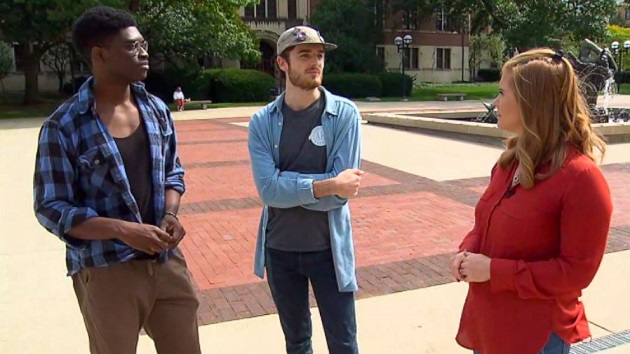
(ANN ARBOR, Mich.) — As the Detroit Auto Show in Michigan makes a comeback after a three-year hiatus, ABC News hit the ground in the city as well as the University of Michigan campus to speak to voters on the most important issues that are on their minds.

The state is gearing up to be ground zero of a battle over abortion rights after the state Supreme Court ordered an abortion ballot initiative, which seeks to enshrine abortion rights in the state and will be voted on in November. It was originally deadlocked by the board of canvassers in August.

Zaynab Alsalman, a senior at the University of Michigan, says the decision to have an abortion should not be decided by the government.

“I do think a woman should have the ability to choose whether or not they want to have an abortion,” said Alsalman to ABC News. “It’s a very personal choice and it’s very vulnerable to make that decision. It’s just a personal choice.”

Sam Dubose and Stephen Oduro, also seniors at the University of Michigan, identify as pro-abortion rights and they say the topic of abortion will influence many people to head to the polls on Election Day.

“I think restricting people from things like abortion, that’s just pretty dangerous, in my opinion,” said Oduro to ABC News. “As a male, I don’t think it’s my position to be saying, ‘Oh no, you can’t be doing this with your body.’ I think it’s a whole messed up situation personally.”

“I’m going to vote my conscience,” said Dubose to ABC News. “I know what I’m going to do.”

President Joe Biden also visited the city’s Auto Show on Wednesday, touting the future of electric cars in America but some, like Michigan native Gary Novak, is unconvinced about transitioning vehicles away from gas.

“I just don’t think the infrastructure is there yet,” said Novak to ABC News, who identifies as a conservative and formerly worked in the automotive industry. “I still think we’re a long way off. And I don’t think people are going to want to sit for a long recharge time.”

Hannah, a student at the University of Michigan who says she mostly votes Democratic and did not give a last name, disagrees with skeptics of electrical vehicles.

“I really appreciate the way that [the Biden] administration is handling that sort of transition from fuel vehicles to EVs,” Hannah said to ABC News.

“The climate crisis that we’re in today, it’s important to shift focus to other sources of power,” she added.

The consequences of inflation on the economy are also on the minds of voters, including Ralph Johnson, a Democrat from Detroit.

“I would like to see the prices go down even though everybody is working but it seems like the prices are going up,” Johnson told ABC News.

“Now you have to be very specific in what you get,” he added.

Copyright © 2022, ABC Audio. All rights reserved.

What to know about Raymond Dearie, the special master reviewing Mar-a-Lago documents

What to know about Raymond Dearie, the special master reviewing Mar-a-Lago documents
Joe Raedle/Getty Images

(NEW YORK) — Judge Aileen Cannon has appointed an independent arbiter to review documents seized from former President Donald Trump’s Florida residence.

Raymond Dearie, a senior district judge for the Eastern District of New York, has been named the “special master” in the case to sift through all of the materials taken by federal agents during the Aug. 8 raid at Mar-a-Lago, including the roughly 100 documents bearing classification markings.

Dearie was one of the two candidates Trump’s legal team proposed to serve as special master.

The Department of Justice, which also submitted two names for consideration to Judge Cannon, had deemed Dearie was an adequate choice, writing he and their picks all had “substantial judicial experience.”

But the DOJ has said overall that a special master appointment was unnecessary and would delay the government’s review, potentially causing “irreparable harm to our national security and intelligence interests.”

The DOJ on Friday appealed to the 11th Circuit for a partial stay on Cannon’s order, which halted the government’s ability to use the classified documents and other materials seized in its ongoing criminal investigation. The DOJ is asking the appeals court to permit it to continue working with the classified records and not disclose them for review by the special master.

Here’s what to know about Dearie and the role he’ll be playing in the high-profile Trump investigation.

Who is Dearie?

Dearie, 78, started his career in private practice after graduating from St. John’s University School of Law in 1969. He then served in the U.S. Attorney’s Office in the Eastern District of New York for six years as chief of the appeals division.

He was also the U.S. Attorney for the Eastern District of New York before being tapped by President Ronald Reagan in 1986 to serve on the federal bench. He was the chief judge of the U.S. District Court in the Eastern District of New York for four years before assuming senior status in 2011.

Dearie also served on the U.S. Foreign Intelligence Surveillance Court, or FISA court, which considers applications from the government for the collection of electronic surveillance or physical searches.

During his time on the FISA court, Dearie approved of a warrant for the DOJ and FBI to surveil Carter Page — a former campaign aide for Trump — during special counsel Robert Mueller’s Russia investigation after the 2016 election. The FISA court’s ruling was heavily criticized by Trump and his Republican allies.

What will he be doing?

Dearie will be reviewing the seized materials from Mar-a-Lago for any personal items and will examine documents for certain types of privileges, namely attorney-client and executive privilege, that should not be used in the DOJ probe.

Judge Cannon said the special master will prioritize reviewing the classified documents, and requested they submit interim reports and recommendations “as appropriate.”

Dearie also had 10 days after the Sept. 15 order to consult with lawyers for both the DOJ and Trump’s team and then provide Judge Cannon with a timeline for the review.

The DOJ argued in court the special master wasn’t needed because a “filter team” has already completed its review of material possibly covered by attorney-client privilege. The federal agency also questioned whether Trump’s claims of executive privilege — a tool presidents possess to shield communications from courts or Congress — were warranted given he’s no longer in office.

Dearie has until Nov. 30 to finish his work, several weeks longer than the DOJ wanted.

Trump is 100% responsible for “the professional fees and expenses of the Special Master and any professionals, support staff, and expert consultants engaged at the Special Master’s request,” Cannon ruled.

Copyright © 2022, ABC Audio. All rights reserved.

After a third of veterans report being arrested, a new effort to understand why

After a third of veterans report being arrested, a new effort to understand why
Courtesy of Ron Self

(NEW YORK) — 

After close to a decade serving in the Marine Corps, Ron Self could knot a rope that was strong enough to drag military vehicles across combat zones in Africa. But serving time in a prison cell years later, he couldn’t get the bedsheets he’d tied together to hold.

“When I attempted to hang myself and the rope broke and I was on my knees and I realized immediately this is not — this was not — the solution,” he told ABC News.

After more than a decade of incarceration for a freeway shooting, Self said he was still processing the anger and shame of his arrest.

He is not alone: One-third of veterans say they have been arrested, according to a new report by the Council on Criminal Justice, citing a 2017 study focused on military service and crime.

“When you separate and you’re no longer part of something that’s bigger than anything you’ve ever been a part of your entire life — which is military service — and you don’t have that camaraderie anymore, it can take a, definitely, a dark turn,” Self said.

That’s what happened to him, he said: Self was a decorated Marine, awarded for his bravery in a helicopter crash in South Korea, by the time he was being medically discharged in the ’90s. But, he said, he felt increasingly unstable and estranged from civilian life. Which he thinks is why, in part, he agreed to be a hired gun and attempt to take someone’s life during their commute to work.

“I was laying in the back of a truck in a sniper hole built into this truck,” Self remembers of the 1994 incident, in which he armed himself on the freeway with a sniper rifle. “I was looking at him [the victim] through the crosshairs of the telescope on the rifle and I remember thinking how easy that would be, to just do that, and then take the off-ramp and go.”

Instead, Self said he aimed for the lower-right corner of the car windshield and shot two rounds, several seconds apart, in what he says was an attempt to avoid taking the man’s life.

“My intent was to make it public so that [the person who wanted him killed] couldn’t do it with someone else when this failed,” Self said.

He can still remember the reaction of a woman in a nearby car.

“The terror on her face from that windshield exploding and the gunshots — that terror is something I’ve only ever seen in combat,” he said. “The difference was we were there to stop the people causing it, and in that moment, it was me … I can’t even articulate how that hit me psychologically.”

The driver behind the shot-through windshield was injured but alive. Self was later arrested on charges of conspiracy to commit murder, attempted murder and firing a weapon within city limits.

“The fact that I did what I did, I think at a subconscious level, was me removing myself from society because I felt I didn’t belong in society,” he said.

Self was convicted and initially sentenced to 32 years to life in prison, with the possibility of parole.

After attempting to kill himself while incarcerated, he decided that he couldn’t let other former service members experience the same anguish.

“The solution would be a program that would help other veterans not make the poor choices I did,” he said.

While in prison, Self created a peer-to-peer mentor program, Veterans Healing Veterans from the Inside Out, to support other former service members navigating incarceration, past trauma and suicidal ideation.

He was later able to successfully argue in a parole hearing that he was attempting to avoid taking anyone’s life on the freeway and was released from prison in 2017 after serving 23 years.

The former Marine recently joined the Council on Criminal Justice as an inaugural member of the Veterans Justice Commission, which launched last month.

Self will work alongside two former defense secretaries, Chuck Hagel and Leon Panetta, as a part of a 15-member body investigating veteran arrest rates. The two-year long commission will also make policy recommendations to better support former service members.

“There’s been an injustice suffered here,” Hagel told ABC, adding “no one’s paid attention.”

He believes the council provides “a strength, a position, a structure that we can work within and we can work on to attract some of the best minds in the country on this issue.”

“We need to do a better job,” he said of society supporting veterans returning from war. “And it’s not good enough to just say, well, we can do more. With this commission, hopefully what we can do is we can be specific.”

The commission recognizes more than 181,500 veterans in prison or jails across the U.S., citing the latest count estimated in 2011-2012 by the Department of Justice. According to the same data, 8% of people incarcerated in local jails and state and federal prisons in the U.S. are veterans.

The majority of incarcerated veterans are sentenced for violent crimes and close to twice as many veterans are serving life sentences than their non-veterans counterparts, according to the commission’s report, citing a 2016 survey by the DOJ.

The commission defined unique risk factors among people returning from war that make them more likely to engage in criminal activity. These factors include post-traumatic stress disorders, traumatic brain injuries, heightened mental health concerns, more frequent substance misuse and financial insecurity.

Federal, state and local programs have been established to assist incarcerated veterans. The Veterans Justice Outreach Program was launched in 2009 by the Department of Veterans Affairs to better identify incarcerated veterans and connect them to appropriate resources. While the U.S. House Committee on Veterans’ Affairs references 138,000 veterans served by this program over a four-year period, the commission also acknowledges a pervasive lack of awareness from service members of what support systems are available to them both before and after their arrests.

When Self was being processed through his medical discharge after his military service, he said he was not made aware of all of the resources available to him.

“I had no clue that I had a potentiality for service-connected benefits or actual monetary benefit,” he said. “I had no idea about any of that.”

“I don’t want to blame the military,” Self continued. “And I’m not. And I’m not playing the victim. I own a very poor decision I made. But I also take into consideration now — I made this decision five months after several people I served with were killed, and I never processed that.”

After years in the military, the Marine Corps had become his family, where he said he found “people that have basically chewed the same dirt, spit the same bud.”

The chronic pain he faced that caused his eventual medical discharge from the Marines, he says now, was more tolerable overseas because of his relationships with his fellow service members. “To be removed from that — it was an absolute loss of identity.”

“It’s an inappropriate cry for help,” Self said of service members committing crimes.

He recognizes his unique position as a formerly incarcerated veteran on the commission to answer those cries.

“Everyone that raised their hand to serve was trusted to carry a weapon in defense of this country. I violated that trust by doing what I did,” he said of his shooting. “I may not ever be able to regain that level of trust. I can definitely spend the rest of my life trying to.”

Self believes the commission will be an important next step in studying the larger issue and ensuring incarcerated veterans know they are not alone or beyond correction and rehabilitation.

“We all have the ability for redemption. We all have the ability to change how we frame and view our past,” Self said of fellow service members who may have found themselves in a similar position to him. “If we can reframe how that drives us through the rest of our lives, it could be a lot more helpful to all people leaving the military and the society in which we fought for.”

ABC News’ Matt Seyler contributed to this report.

Copyright © 2022, ABC Audio. All rights reserved.
Why some anti-abortion rights backers want a ban that would stop few abortions

Why some anti-abortion rights backers want a ban that would stop few abortions
Kevin Dietsch/Getty Images

(WASHINGTON) — Confused yet on where the abortion debate stands? If not, you probably should be.

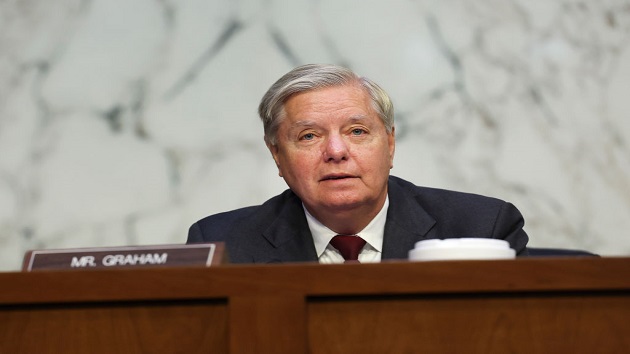
Three months after securing the biggest victory in their political lives at the Supreme Court, a close ally of former President Donald Trump and a major anti-abortion rights group proposed a federal ban on abortion after 15 weeks.

The plan by Republican Sen. Lindsey Graham of South Carolina and Susan B. Anthony Pro-Life America included some exceptions for rape and incest, and got a nod from former Vice President Mike Pence, a hero of the cause.

Yet, according to the Centers for Disease Control and Prevention, the vast majority of abortions occur by 15 weeks. In fact, 93% of abortions happen before 13 weeks.

That means that after decades of promising to end abortions, a major slice of the anti-abortion rights movement just rallied around legislation that would curb only a fraction of them. Why?

“It’s political opportunism by Graham, who is trying to give Republicans a place to stand,” said Chuck Coughlin, a Republican strategist who runs the Arizona-based consulting firm HighGround.

“But it’s like standing in the middle of a highway,” he added. “There’s no base that’s going to support that.”

It’s an unexpected twist in the never-ending U.S. debate on abortion: As Republicans in statehouses, including those in Georgia, Indiana and West Virginia, embrace near-total abortion bans, strategists are warning these hard-line positions could spook more moderate and independent voters.

With midterm elections on the horizon, several GOP candidates have begun avoiding the issue with at least one — Arizona Senate candidate Blake Masters — scrubbing his website of a previous declaration that he is “100% pro life.”

To political strategists like Coughlin, Graham’s proposal was clearly aimed as a lifeline to flailing conservative candidates, even as the Senate Minority Leader Mitch McConnell said he had no intention of trying to get a floor vote on the bill.

“I think that’s where the country is at. So, I don’t mind talking about pro-life issues,” Graham said Wednesday, adding, “I think my proposal over time will be supported by the public at large.”

Polls show that a majority of Americans support upholding Roe v. Wade, which ruled a right to an abortion up until viability of a fetus, usually around 24 weeks. At the same time, support for abortion rights dwindle as a woman’s pregnancy continues.

Mallory Carroll, vice president of communications for Susan B. Anthony Pro-Life America, told ABC News that it opted to swing behind Graham’s proposal as a way of setting a “federal minimum” that showed strong voter support.

The proposed legislation includes a provision that would still allow states to enact tougher restrictions.

“Susan B. Anthony Pro-Life America has consistently urged elected officials at the federal and state level to be as ambitious as possible to save unborn children while using the tools of democracy to debate and arrive at a consensus,” Carroll wrote in a statement.

Another benefit of Graham’s legislation to his fellow Republicans, some strategists say, could have been to turn the tables on Democrats by asking them to explain their support for second-trimester abortions.

As the CDC data show, such procedures are extremely rare and doctors say they can occur because of severe abnormalities with the fetus or because of risks to their own health.

Yet, as this week wore on, all of that nuance was lost.

GOP lawmakers in Washington and candidates in the field dodged questions on the bill, while Democrats cited a federal ban as extreme. House Speaker Nancy Pelosi quipped that Republicans “think that life begins at the candlelight dinner the night before.”

Sarah Isgur, a former Trump administration official and now an ABC News contributor, said that at the end of the day, Graham’s political move just didn’t make sense.

“He’s dividing the GOP base even among pro-life Republicans, and he’s nationalizing a conversation that conservatives argued for decades they wanted decided at the state level,” she said.

Also, Republicans fare better when talking about issues like inflation and crime, she added.

“So why is Graham trying to keep abortion — an issue that clearly energizes Democratic voters more than Republican ones–at the top of the agenda?” Isgur said.

Either way, the underlying message from both parties this week to voters: Let’s not get too caught up in the details on abortion.

“I, for one, want to focus on the inflation numbers that came out today” and the possible railway strike, Republican Sen. Thom Tillis of North Carolina told reporters at one point.

“That’s what people are talking about,” he said.

Copyright © 2022, ABC Audio. All rights reserved.

Senate vote on marriage equality delayed until after midterm elections

Senate vote on marriage equality delayed until after midterm elections
Tim Graham/Getty Images

(WASHINGTON) — After trying for weeks to hammer out a compromise to codify gay and interracial marriage, Senate negotiators announced Thursday they will delay a vote on their legislation until after the November election while expressing confidence it will eventually pass.

“Through bipartisan collaboration, we’ve crafted commonsense language that respects religious liberty and Americans’ diverse beliefs, while upholding our view that marriage embodies the highest ideals of love, devotion, and family. We’ve asked Leader Schumer for additional time and we appreciate he has agreed. We are confident that when our legislation comes to the Senate floor for a vote, we will have the bipartisan support to pass the bill,” the group said in a statement.

“It takes a lot of the political sting out of it to say this is not about the midterm election,” said GOP negotiator Sen. Rob Portman of Ohio whose own son came out as gay several years ago.

“This is about getting a result that helps a million families across America who are concerned about what might happen,” Portman added.

When asked if she was disappointed in the delay, lead GOP sponsor Sen. Susan Collins of Maine told ABC, “No. I think we’re in very good shape, very good shape, and I think this bill is going to pass.”

“I think we managed to thread the needle on the religious liberty concerns,” added Collins, referencing a primary concern of would-be GOP supporters.

Supporters had hoped to kick off consideration of their bill, the Respect for Marriage Act, as early as Thursday, but the GOP concerns — including a last-minute issue with potentially jeopardizing the tax exempt status of churches and non-profit schools with policies perceived as anti-gay — mounted as negotiators tried to find the requisite 10 GOP Republican votes to get by a filibuster by others in their conference.

“We have just put together language that is finalized. That has tremendous, I think, respect for the input that we’ve received on religious freedom. But the fact of the matter is it’s only about 18 hours old –– less than that, and we think that it’s fair for the members who are interested, who have worked with us, to give them an opportunity to do that,” said Sen Thom Tillis, R-N.C., who helped rally GOP support.

“And, you know, there have been some that said the timing of the vote was political. This is clearly, I think, a situation where we want to make our members feel comfortable with it. And I’m confident that we’ll ultimately pass it,” said Tillis.

“I think that’s a wise decision,” GOP Sen. Roy Blunt of Missouri told reporters of the pushed-back vote, adding, “It will get more votes.”

When asked why it was wise, Blunt, a respected, longtime member of the “whip” teams in both chambers of Congress who corral votes and is retiring at year’s end, said, “I think if you do it after the election, it’s clearly not something that you’re doing just for political purpose. And I think people will think about it more thoughtfully because of that, and a handful of them likely to decide to be somewhere after the election that they wouldn’t have been with a vote that was purely – at least likely – a political ploy.”

Sen Mitt Romney, R-Utah, a devout Mormon who has worked with negotiators on religious liberty concerns said those had been addressed, but he praised the delay, regardless.

“It’s, in my opinion, an indication they want to see something become law, not just a message, which is good news,” said Romney.

Negotiators worked throughout Thursday with the primary Democratic sponsors, Sen. Tammy Baldwin of Wisconsin and Arizona’s Kyrsten Sinema, buttonholing Republicans as they passed in the chamber earlier for an unrelated vote, showing them bill text.

Sinema joking that her silver-spiked tennis shoes were for getting members going and coming in the chamber.

Portman could be seen going through the group’s latest bill changes line by line with Blunt.

Not everyone was happy with the delay, though.

“If there are Republicans who don’t want to vote on that before the election, I assume it is because they are in the wrong side of history,” said a visibly irritated Sen. Elizabeth Warren, D-Mass. “Equal marriage has been a part of who we are as a nation. We’ve lived with it for years now. And protecting it by statute is something every single senator and every single member of Congress should be willing to vote for. And if they’re not, they need to go on the record and say so.”

The Respect for Marriage Act passed the House in mid-July with a surprising 47 Republicans voting for it.

That measure is expected to be amended in the Senate, forcing it back to the House for reconsideration. That could prove awkward in a lame duck session if Republicans retake that chamber in the midterms. Speaker Pelosi and her team would be shepherding that bill back through before the GOP takes control in January.

Copyright © 2022, ABC Audio. All rights reserved.

Judge denies DOJ request for stay in investigation of Trump’s Mar-a-Lago docs

Judge denies DOJ request for stay in investigation of Trump’s Mar-a-Lago docs
Witthaya Prasongsin/Getty Images

(WASHINGTON) — U.S. District Judge Aileen Cannon on Thursday denied the Department of Justice’s request for a partial stay of her ruling that enjoined the FBI from using roughly 100 documents seized from Mar-a-Lago with classification markings in its ongoing criminal investigation of Donald Trump — and mandated they be handed over to a special master for review.

Cannon has also appointed Raymond Dearie, senior district judge for the Eastern District of New York, as special master.

In a filing last week that amounted to a line-by-line rebuke of Cannon’s ruling, DOJ prosecutors wrote that they would seek intervention by the 11th Circuit Court of Appeals if she declined to act on their request for a partial stay by the end of Thursday.

Prosecutors cited the potential for “irreparable harm” to national security — not just from the FBI having to halt their criminal investigation of the recovered records but from the uncertainty her ruling had separately caused, leading the intelligence community to pause its own separate review of whether the classified records, or any intel sources or methods, have been compromised.

“In order to assess the full scope of potential harms to national security resulting from the improper retention of the classified records, the government must assess the likelihood that improperly stored classified information may have been accessed by others and compromised,” the DOJ counterintelligence chief, Jay Bratt, wrote in the filing, specifically referencing the dozens of empty folders with classified banners on them taken from Trump’s estate and the need to assess whether documents that were previously in them were compromised or remain missing.

This is a developing story. Please return for updates.

Copyright © 2022, ABC Audio. All rights reserved.

After Republicans escalate migrant busing scheme, White House condemns ‘chaos’

After Republicans escalate migrant busing scheme, White House condemns ‘chaos’
Rudy Sulgan/Getty Images

(WASHINGTON) — The Biden White House on Thursday condemned Republican governors who this week escalated their strategy of busing — and now flying — migrants to Democratic cities in protest of the administration’s border policies.

Florida GOP Gov. Ron DeSantis sent two planes of migrants to Martha’s Vineyard late Wednesday evening, surprising state and local officials. Two buses sent by Texas Gov. Greg Abbott carrying roughly 100 migrants were dropped off in front of Vice President Kamala Harris’s Naval Observatory residence early Thursday morning.

DeSantis said the confrontational moves were a message to President Joe Biden and Harris to do their “damn job” and secure the border.

The White House and Democrats are calling the moves cruel, accusing the GOP leaders of creating “chaos.”

“There’s a legal way of doing this — for managing migrants,” White House press secretary Karine Jean-Pierre said during Thursday’s briefing with reporters. “Republican governors interfering in that process and using migrants as political pawns is shameful, is reckless, and just plain wrong.”

Jean-Pierre criticized the governors for appearing to give no notice to leaders on the ground.

“The fact that Fox News and not the Department of Homeland Security, the city or local NGOs (non-governmental organizations) were alerted about a plan to leave migrants, including children, on the side of a busy D.C. street makes clear that this is just a cruel premeditated political stunt,” Jean-Pierre said.

Two buses carrying roughly 100 migrants were dropped off in front of Harris’ official Naval Observatory residence early Thursday morning. They were met by immigration advocates from the SAMU First Response, a humanitarian nonprofit foundation in Washington, which said the migrants are receiving food, clothing and hygiene care.

Tatiana Laborde, the managing director of SAMU, told ABC News the migrants were “extremely confused and disoriented ” when they landed on the sidewalk of the residential drop-off location.

Geoff Freeman, the director of Martha’s Vineyard airport, told ABC News in a phone call “nobody on the island was informed” of the planes’ arrivals.

“No local officials knew of this event until after it happened,” Freeman said.

Lack of coordination between communities regarding bussing of migrants “can wreak havoc and do harm, to individuals and those communities” said a Homeland Security spokesperson.

“That is the case here,” the spokesperson said.

The spokesperson explained migrants encountered at the U.S.-Mexico border continue to be expelled under Title 42. Anyone not expelled under Title 42 are either given expedited removal proceedings or are issued a notice to appear before an immigration judge and monitored through ICE alternatives to detention. DHS continues to work closely with nonprofit organizations and local governments on efforts to facilitate voluntary migrant transportation, the spokesperson said.

“Failure to coordinate is irresponsible and creates unsafe conditions for vulnerable migrants as well as the receiving jurisdictions,” they added.

DeSantis said sending migrants to Democrat-led states was a response to their previous “virtue signaling” by declaring themselves sanctuary jurisdictions during former President Donald Trump’s years in office.

“We’re not a sanctuary state,” he said at Florida at a news conference.

Border state Republicans praised the migrant vans, arguing the crisis at the border is a problem that should be shouldered by the entire country.

“This is a national responsibility, it should be a national burden,” said Florida Sen. Marco Rubio.

Border crossings reached a peak in May as U.S. Customs and Border Protection encountered 239,416 migrants along the southern border — the largest number of migrants ever.

Encounters dropped slightly in June and July, but experts estimate the agency will cross 2 million apprehensions by the end of the fiscal year ending this month.

Harris was tapped by President Joe Biden last year to lead the administration’s effort to tackle challenges at the border and work with Central American countries to address the root causes of the problem. Republicans have long criticized Harris’s absence at the southern border since taking on the role.

Rep. August Pfluger, R-Texas, tweeted: “If our “Border Czar” won’t visit the border, the border will visit her.” Several GOP members of Congress on Thursday posted similar sentiments on social media Thursday.

Harris declined to comment when asked by ABC News’ Justin Gomez if she had any reaction to the migrants that were dropped off in front of her residence.

The White House defended its immigration policies on Thursday while also acknowledging there’s more work to be done.

Jean-Pierre pointed to steps to advance border technology, add more immigration judges and provide record funding to the Department of Homeland Security as proof the administration is committed to fixing what she described as a “decimated” immigration system left behind by the Trump administration.

“We are fixing a broken system,” she told ABC News Senior White House Correspondent Mary Bruce when asked about the influx of migrants at the border. “It is not like turning the light switch on. It is going to take some time.”

Jean-Pierre said Republicans in Congress should instead focus on passing a long-term, comprehensive legislation to reform the immigration system.

“They deserve better than being left on the streets of D.C. or being left in Martha’s Vineyard,” the press secretary said of the migrants who’ve been transported. “They deserve a lot better than that.”

ABC News’ Allison Pecorin, Briana Stewart, Miles Cohen and Luke Barr contributed to this report.

Copyright © 2022, ABC Audio. All rights reserved.

NYC again rejects council members’ calls to terminate Trump golf license

NYC again rejects council members’ calls to terminate Trump golf license
Mike Stobe/LIV Golf/Getty Images

(NEW YORK) — The New York City Parks Department has again rejected calls by members of the city council to terminate the Trump Organization’s license to operate a city-owned golf course in the Bronx.

Council members on Thursday called for the “immediate termination” of the Trump Organization’s license to operate the golf course at Ferry Point Park, a month before it’s scheduled to host a women’s tournament underwritten by Saudi Arabia.

City officials previously said they could not “unreasonably withhold approval” for the course to host the October event.

“The Trump-operated golf course hosting a golf tournament sponsored by the Saudi government just weeks after the 21st anniversary of this country’s most devastating event ever is insensitive to say the least,” Council Speaker Adrienne Adams said Thursday.

The tournament, part of the women’s Aramco Team Series, has close ties to the Saudi government but is separate from the LIV Golf tour that has poached players from the PGA Tour.

Council member Shekar Krishnan called the tournament “so offensive to the families of 9/11.”

But a New York City Parks Department representative said the city would continue to honor its contract with former President Donald Trump’s namesake company.

“As we’ve told Chair Krishnan and his colleagues in the City Council, ending the contract we inherited would require the city to pay up to tens of millions of dollars to the Trump Organization, an outcome no one wants,” a department spokesperson said in a statement. “We agree with the chairman on the desired outcome to cancel both this tournament and the overarching license agreement, and hope in the future he seeks a productive partnership on the issue.”

In April, a New York state judge upheld Trump’s right to continue to operate the course after former Mayor Bill de Blasio attempted to terminate Trump’s operating license following the Jan. 6 attack on the U.S. Capitol.

The Trump Organization called the effort to terminate the company’s operating license “nothing more than a political vendetta.”

Copyright © 2022, ABC Audio. All rights reserved.