
White House announces over $8 billion in hunger and nutrition commitments

White House announces over  billion in hunger and nutrition commitments
Official White House Photo by Cameron Smith

(WASHINGTON) — Ahead of President Joe Biden’s conference Wednesday where his administration will call to end hunger and decrease diet-related diseases by 2030, the White House announced that the private and public sector are committing more than $8 billion to reach that goal.

“These range from bold philanthropic contributions and in-kind donations to community-based organizations, to catalytic investments in new businesses and new ways of screening for and integrating nutrition into health care delivery,” the White House said in a fact sheet released Wednesday.

The first White House Conference on Hunger, Nutrition, and Health was held more than 50 years ago, according to the administration.

The White House noted that at least $2.5 billion will be used to back start-up companies finding solutions to hunger and food insecurity, while over $4 billion will go toward philanthropy that strengthens access to healthy food, encourages healthy choices and expands physical activity.

A senior administration official told reporters on a call that over 100 organizations “have committed to bold and, in some cases, paradigm shifting commitments that will meaningfully improve nutrition, promote physical activity and reduce hunger and diet related disease over the next seven years.”

Actions to achieve the president’s goal are spread across five pillars: improving food access and affordability, integrating nutrition and health, empowering consumers to make and have access to healthy choices, supporting physical activity for all and enhancing nutrition and food security research, according to the White House.

The administration announced that wholesale restaurant food distributor Sysco will give $500 million to advance healthy eating for its serving communities and Warner Bros. Discovery will give 600 million meals to children experiencing food insecurity.

Google will also introduce new features in its products to help people obtain public food benefits and health care services, it said.

Last year, 10.2% of American households experienced food insecurity at some point, the Department of Agriculture said.

The White House also announced that the National Restaurant Association will increase its Kids Live Well program to 45,000 more restaurants. Major fast-food chains, including Subway, Burger King and Chipotle, have already committed to the initiative, which helps restaurants create healthier meal choices for children.

Restaurants in this program commit to certain standards like only offering water, milk or juice for kids’ meals, rather than soda, the fact sheet said.

For at least one million Americans at risk for a diet-related disease, MyFitnessPal will grant them free and premium-level membership on its app by 2030, White House said. The Special Olympics will also introduce an initiative that will, in part, increase SNAP-Ed benefits for people with intellectual disabilities.

Starting next year, the White House said the Rockefeller Foundation and the American Heart Association aim to mobilize $250 million in partnership with Kroger to build the first national “Food is Medicine Research Initiative” to integrate healthy food into the healthcare approach.

“The Biden-Harris Administration envisions an America where no one wonders whether they will have enough money to put food on the table, where the healthy food choice is the easier choice, and where everyone has the same opportunity to be physically active,” the administration said in an executive summary of the White House’s National Strategy on Hunger, Nutrition, and Health.

Some of the initiatives in the strategy, like expanding free school lunches, would require congressional cooperation, but that seems unlikely to happen in the near future.

In the summary, the White House noted “the rising prevalence of diet-related diseases such as type 2 diabetes, obesity, hypertension, and certain cancers,” and how the consequences of them and food insecurity “disproportionately impact historically underserved communities.”

Obesity was more common in Black adults than other adult groups, the Centers for Disease Control and Prevention found last year, which increases their risk of serious diseases and health conditions.

Almost 50% of Black adults were obese, compared to 45.6% of Hispanics, 41.4% of Whites and 16.1% of Asians.

“Food insecurity and diet-related diseases are largely preventable, if we prioritize the health of the nation,” the White House said.

Held in the nation’s capital, the conference is expected to draw more than 500 attendees — from farmers to business leaders and academics to activists.

Copyright © 2022, ABC Audio. All rights reserved.

Government shutdown likely avoided after Sen. Manchin reverses course on energy permitting

Government shutdown likely avoided after Sen. Manchin reverses course on energy permitting
Photo by Mike Kline (notkalvin)/Getty Images

(WASHINGTON) — An about-face from Sen. Joe Manchin on Tuesday evening helped to set the Senate on an unexpected glide path to averting a Friday night shutdown.

The funding bill, which will keep the government running through Dec. 16, easily earned the 60 votes necessary to clear a procedural hurdle during a Tuesday vote. Seventy-two Senators supported moving forward with the proposal.

It was not expected to be so easy.

For several weeks, Majority Leader Chuck Schumer of New York has been carefully balancing his promise to Manchin to include Manchin’s permitting change proposal on a must-pass bill before the fiscal year ends on Sept. 30 — despite a growing coalition of members on both sides of the aisle vowing to block any short-term funding bill that included Manchin’s changes.

Schumer gave assurances to Manchin in order to secure the West Virginia Democrat’s essential support for the party’s major social spending and tax bill this summer, the Inflation Reduction Act.

As recently as Monday, Manchin was holding firm to that promise. He spent the weekend working the phones, rallying support and publishing op-eds extolling the benefits — according to him — that his legislation would heap upon both renewable and non-renewable energy sources, over cries from critics that it would support further fossil fuel development. He believed there was a path to 60 votes.

But then he relented.

In a statement on Tuesday just half an hour before the Senate was set to vote down a short-term funding bill that included permitting changes, Manchin announced that he had requested Schumer remove his language from the bill.

“It is unfortunate that members of the United States Senate are allowing politics to put the energy security of our nation at risk. The last several months, we have seen firsthand the destruction that is possible as Vladimir Putin continues to weaponize energy. A failed vote on something as critical as comprehensive permitting reform only serves to embolden leaders like Putin who wish to see America fail,” Manchin said in a statement. “For that reason and my firmly held belief that we should never come to the brink of a government shutdown over politics, I have asked Majority Leader Schumer to remove the permitting language from the Continuing Resolution we will vote on this evening.”

Schumer, in floor remarks moments later, said he would advance a short-term funding bill without Manchin’s proposal.

“Senate Republicans have made clear they will block legislation to fund the government if it includes bipartisan permitting reform, because they’ve chosen to obstruct instead of work in a bipartisan way to achieve something they’ve long claimed they want to do,” Schumer said.

Republicans were largely united in their intention to block a funding bill that included Manchin’s permitting language. Senate Minority Leader Mitch McConnell of Kentucky actively whipped against it.

Though much of the GOP conference supports permitting changes, many saw this vote as an opportunity to push back on Manchin for what they saw as his betrayal when he pivoted from opposing the Democrats’ sweeping climate and health bill to cast the deciding “yes” vote — an unexpected reversal this summer that, until it was revealed, had lured some Republicans into backing a separate bill on domestic computer-chip manufacturing.

In floor remarks before Manchin’s call to remove his permitting language from the bill, McConnell called the inclusion of Manchin’s proposal a “phony fig leaf.”

“The poison pill is a phony attempt to address an important topic of permitting reform,” McConnell said. “It is much too difficult to build things in America an unleash American energy. Liberal regulations are the problem.”

But Republicans weren’t the only ones working to block the funding bill when it included Manchin’s language.

Vermont independent Sen. Bernie Sanders had vowed to vote against it too, citing concerns about the adverse environmental impact that speeding up permitting projects for non-renewable energies could have. In a scathing letter to his colleagues on Friday, Sanders urged Democrats to make what he called an environmentally conscious choice.

“In my view, the time has come for Congress to tell the fossil fuel industry that their short-term profits are not more important than the future of our planet,” Sanders wrote.

He also found Schumer and Manchin’s behind-the-scenes deal making on the IRA objectionable, branding the agreement that helped yield the Democrats’ climate and health bill last year as a “disastrous side deal.”

With permitting changes now sidelined, the Senate will likely pass a bill to fund the government as soon as Wednesday. The bill also provides emergency funding for a variety of bipartisan priorities.

Money to Ukraine in their fight against Russia’s invasion remains a priority. There’s a combined $12.3 billion in aid to Ukraine that includes $3 billion for security assistance, $4.5 billion in economic support and $3.7 in drawdown authority for weapons.

The funding bill would provide $35 million “to respond to potential nuclear and radiological incidents in Ukraine, assist Ukraine partners with security of nuclear and radiological materials, and prevent illicit smuggling of nuclear and radiological material.”

This comes in the wake of Russian President Vladimir Putin last week suggesting that tactical nuclear weapons could be used to change the course of his invasion of Ukraine, groundlessly accusing the West of threatening Russia’s territorial integrity.

But the funding bill also centers domestic aid.

Jackson, Mississippi, would see a $20 million influx of cash to assist with the ongoing water crisis that has left many of its citizens without clean drinking water for more than a month. New Mexico, ravaged by wildfires last year, would get $2.5 billion to assist in rebuilding efforts.

And, as conversations about the cost of energy swirl, there’s language in the bill to provide $1 billion in low-income heating assistance.

The legislation also averts a potential funding crisis at the Food and Drug Administration by including reauthorization for FDA user fees. But Democrats’ long sought COVID-19 priorities have once again fallen by the wayside.

The Biden administration wanted Congress to approve an additional $22 billion in funds to combat COVID-19 via vaccine research and additional testing. Republicans have blocked multiple efforts to secure these funds, arguing that there are still remaining monies yet to be utilized and questioning the necessity of additional spending.

GOP lawmakers once again prevailed in blocking COVID funds, this time by keeping supplemental funding off of the short-term bill.

During her weekly press conference on Tuesday, White House press secretary Karine Jean-Pierre vowed the administration will keep working to secure funds.

“We are not going to give up,” Jean-Pierre said. “We need to protect and build on the progress we have made. We will continue that process.”

Once the Senate passes the short-term funding bill, that legislation will need to pass the House before the Sept. 30 fiscal year deadline. The House could begin considering it as soon as Thursday.

Copyright © 2022, ABC Audio. All rights reserved.

Jan. 6 committee postpones hearing because of Hurricane Ian

Jan. 6 committee postpones hearing because of Hurricane Ian
Mint Images/Getty Images

(WASHINGTON) — The House Jan. 6 committee scheduled for Wednesday has been postponed because of Hurricane Ian.

The storm is expected to make landfall in Florida at about the same time as the hearing was to take place.

“In light of Hurricane Ian bearing down on parts of Florida, we have decided to postpone tomorrow’s proceedings,” Chairman Bennie Thompson, D-Miss., and Vice Chair Liz Cheney, R-Wyo., said in a statement Tuesday afternoon. ‘We’re praying for the safety of all those in the storm’s path. The Select Committee’s investigation goes forward and we will soon announce a date for the postponed proceedings.”

Rep. Stephanie Murphy, a Democratic member of the panel, represents Florida’s 7th Congressional District.

The committee was set to reconvene Wednesday after a two-month hiatus for a midday hearing.

But the rapid advancement of Hurricane Ian is now dominating airwaves, with the storm currently a Category 3 hurricane and expected to grow stronger.

Thompson previously told reporters that the committee would be airing “substantial footage” and “significant witness testimony” but didn’t give any more details on what the public can expect to see or what the focus of the hearing would be.

Lawmakers held eight televised hearings from June to July detailing what they described as former President Donald Trump’s “sophisticated” efforts to overturn the 2020 election results, which they said led to the events that took place on Jan. 6, 2021.

The hearings, two of which were held in prime-time, were produced to capture the public’s attention more than a year and half after the riot.

At the last hearing on July 21, the committee focused on the 187 minutes that passed between Trump’s speech at the Ellipse and his taped statement later that afternoon telling rioters to leave the Capitol. Using testimony from former White House officials, the committee said Trump resisted pressure to act as he watched the violence unfold on television.

“President Trump did not fail to act during the 187 minutes between leaving the Ellipse and telling the mob to go home,” Rep. Adam Kinzinger, R-Ill., said. “He chose not to act.”

Since then, the committee has requested information from several people with ties to election denialism and Trump, including former House Speaker Newt Gingrich.

Ginni Thomas, the wife of Supreme Court Justice Clarence Thomas, has agreed to a voluntary interview with the committee, her attorney confirmed last week.

There’s also the looming question of whether the committee will call former Vice President Mike Pence to testify before it wraps up the investigation.

Cheney told ABC News Chief Washington Correspondent Jonathan Karl that she hopes Pence will speak with lawmakers. The former vice president said he’d consider testifying if asked, but then implied that there could be constitutional constraints to any potential appearance.

Cheney also told Karl that she expects transcripts, records and other materials gathered by the committee over the course of its probe to be made public.

Wednesday’s hearing was anticipated to be the last before the committee releases a final report of its findings and recommendations by the end of the year.

Copyright © 2022, ABC Audio. All rights reserved.

South Carolina House rejects bill to ban abortions with few exceptions

South Carolina House rejects bill to ban abortions with few exceptions
The State/Getty Images

(COLUMBIA, SC) — The South Carolina House rejected a bill Tuesday that would’ve banned nearly all abortions after fetal cardiac activity is detected. The proposed ban would have made exceptions for when the mother’s life or health is in danger, for fetuses with fatal anomalies and first-trimester pregnancies that are a result of rape or incest.

The bill was introduced by the state Senate in September after it rejected an abortion ban proposed by the House. The proposed legislation comes as the state Supreme Court blocked a six-week ban on abortion from going into effect amid ongoing litigation.

The bill failed with a vote of 95 to 11, as lawmakers remain at odds over regulating abortion in the state.

The bill would have made it illegal to perform an abortion or administer or distribute drugs that induce an abortion. A person found guilty of providing an abortion would have faced a fine of $10,000 and jail time of up to two years.

The proposed bill would have also required physicians who provide abortion services in line with the exceptions for rape or incest to report the procedure to their county sheriff’s department within 24 hours of performing or inducing the abortion.

Physicians would have been required to report the name and contact information for the woman making the allegation and to preserve a DNA sample from the fetal remains and submit it as evidence to authorities.

The bill required abortion providers to add a note to the patient’s medical records stating that the abortion was performed under one of the exceptions.

Under the bill, Planned Parenthood would’ve also been prevented from utilizing state funds for any purposes related to abortions.

In August, the state House passed a near-total ban on abortion which only provided exceptions for pregnancies that are a result of rape and incest. The state Senate rejected the bill, passing its own abortion bill and sending it back to the House.

South Carolina Gov. Henry McMaster had signaled he would sign an abortion ban into law, telling ABC News in August that he would “carefully consider any legislation that ultimately reaches his desk, but he believes this is a good starting point for the Senate to begin its deliberations,” referring to the first House bill.

McMaster also approved in February 2021 a package of bills banning abortions after fetal cardiac activity is detected. The ban took effect after Roe was overturned, but is now blocked by the South Carolina Supreme Court while justices review a lawsuit filed by Planned Parenthood in July. The lawsuit claims that the ban is an invasion of privacy and violation of equal protection under the state constitution.

Copyright © 2022, ABC Audio. All rights reserved.
How Arizona’s abortion ban may affect the midterms

How Arizona’s abortion ban may affect the midterms
Marilyn Nieves/Getty Images

(NEW YORK) — The Arizona court ruling on Friday upholding the state’s 1901 law banning abortions is rattling voters and elected officials.

The law provides no exceptions for rape, incest or fetal abnormalities and makes performing abortions punishable by two to five years in prison.

ABC News’ Libby Cathey, who is covering the midterm elections in Arizona and one of the embeds featured on the Hulu show Power Trip, spoke with “Start Here” Monday about how this ruling, and the battle for abortion rights since the Supreme Court’s decision overturning Roe v. Wade, will affect the races.

START HERE: So, first of all, can you just explain this ruling to me because we saw some states change their laws right after Roe fell, but this seemed to catch a lot of people way off guard.

LIBBY CATHEY: Yes. So, just to backtrack, there’s this law on the books in Arizona dating back to 1864 that bans all abortions and dishes out two to five years of jail time for those who help with one, except to save a mother’s life. And it feels like this law was really forgotten about. It dates back to before Arizona was even a state, but when the Supreme Court overturned Roe with the Dobbs decision in June, the Republican attorney general here, Mark Brnovich, said he will enforce this law. He will prosecute doctors who try to help women get an abortion.

So Planned Parenthood sued him, saying this was unconstitutional, this violates privacy rights, and the court had put an injunction in place that providers had hoped would stay. That did not happen. So on Friday afternoon, a state judge in Arizona reinstated this territorial era, near-total ban on abortion. And the timing was big too, because on Saturday, a ban on abortions after 15 weeks was set to go into effect. That was passed earlier this year by the legislature, signed by Republican Gov. Doug Ducey. And Ducey says this slightly less restrictive ban after 15 weeks is the law of the land.

START HERE: So it’s about to be less restrictive and all of a sudden it’s way, way, way more restrictive than anyone thought.

CATHEY: Right. So, and at the same time, the Republican attorney general, Mark Brnovich, is saying that this more restrictive law is the law of the land. So you can have two conflicting statements here. And this all just happened over the weekend, and I think there’s a lot of confusion about it.

START HERE: Yes. So as a result of this, what is the current rule in Arizona like? What can a pregnant woman do or not do? What can an abortion provider do or not do?

CATHEY: So the reality is abortion is illegal in the state of Arizona right now. If women want to get an abortion, they’ll need to go to California or go to another state to get one. And Planned Parenthood clinics are still open. They can help point women to other resources and provide contraception. But medical abortions, essentially, medication given to end a pregnancy before ten weeks, oftentimes before women even know they’re pregnant. All of those services have stopped.

I was at a press conference on Saturday where a doctor said all the chatter among her physicians, Facebook groups, [and] among doctors in Arizona is they feel their hands are tied. She used the words moral injury. And abortion rights supporters protesting outside the state capitol this weekend, they all say, point blank, women and girls will die because of this law. It will be like going back into a time when women resort to really desperate measures to end a pregnancy or women die themselves because of pregnancy complications, especially when doctors here can get two to five years of jail time for helping them.

START HERE: And just so I’m crystal clear, no exceptions at all?

CATHEY: There is no exception to rape or incest in either of those two abortion bans we just talked about. Both of them do have an exception to save the mother’s life. But again, because of that, the prosecution — and I think it scares a lot of people. So a lot of people will be having to go out the state or just not get an abortion at all. Democrats here say it’s one of the more restrictive laws in the country. And Arizona is a very red state, or it has been…but this has the potential to change a lot of things.

START HERE: And that’s what I’m wondering next, because I’m looking at Arizona’s House races right now where they have nine House seats. FiveThirtyEight’s forecast says at this moment, Republicans are expected to win five of those nine House seats like bare majority. Could something like this change the landscape of the midterms in a place like Arizona?

CATHEY: This has the potential to be a big game-changer. One Republican consultant told me that all the polling we’ve seen in Arizona that you’ve just mentioned here, it can be thrown out of the window. You have a Democratic candidate for attorney general here, Kris Mayes. She won’t prosecute any abortion ban violations. She thinks all these bans are unconstitutional. You have Democrat Katie Hobbs. She’s running for governor. She’s been trying to get abortion at the forefront of the race for governor against Kari Lake. Lake is proudly against abortion. And so this ruling may very well help them here in a few weeks when ballots go out. I mean, Republicans want to be talking about inflation and immigration and crime, but now they’re going to have to address this.

START HERE: Well, I don’t think I quite understood this until now, that, like, normally you’re voting because you think someone might affect abortion rights in your state. Say it really matters to you. Here you got the Democrats saying, “I will not enforce this law.” You got the Republicans saying, “I will enforce this law.” Hence, whoever votes for the attorney general or maybe the governor, you are deciding directly how abortion rights are about to be treated.

CATHEY: Exactly. And then that’s what Democrats and their supporters are at least saying. And that’s what they’re trying to drive home with voters. The Republicans say they’d enforce these bans. The Democrats say they wouldn’t. And to that, to that matter, to in the Senate race, you’ve got Blake Masters and Mark Kelly and you’ve got Democrats there saying that Blake Masters would support a total ban on abortion at a national level. So these are all issues that are being resurfaced because of this ruling. And while it’s not like Kansas, where there’s a literal initiative on the issue of abortion, Democrats and their supporters here say abortion is certainly on the ballot in Arizona.

Copyright © 2022, ABC Audio. All rights reserved.
Senate stumbles toward government shutdown with impasse over energy policy

Senate stumbles toward government shutdown with impasse over energy policy
Mint Images/Getty Images

(WASHINGTON) — Congress has just three legislative days remaining to avert a fast-approaching government shutdown at the end of the week, and much of its ability to keep the government running will depend upon whether lawmakers can navigate an impasse over energy policy.

In the few days that remain, Senate Majority Leader Chuck Schumer will try to lead the Senate in passage of a short-term funding bill that is expected to include Sen. Joe Manchin’s energy permitting reform legislation. Schumer struck a deal with Manchin to include energy permitting reform, a top priority for the West Virginia moderate Democrat, on a must-pass piece of legislation before the end of the fiscal year on Sept. 30 in order to secure Manchin’s crucial support for Democrats’ keystone Inflation Reduction Act.

But with the passage of the health care and environmental bill now in the rearview mirror, Schumer’s behind-the-scenes deal making has come home to roost. The fiscal year ends on Friday, leaving the Democratic caucus in both chambers deeply divided with just days to a shutdown.

On Tuesday, the Senate will take a key test vote to determine the fate of Manchin’s legislation as it considers a bill to fund the government through mid-December.

Schumer, with the backing of the White House, is sticking to his promise to include the Manchin legislation, introduced Wednesday, in the short-term funding bill. The Manchin bill would accelerate energy projects mandating that federal environmental reviews essentially be completed in two and a half years, a substantial increase from today’s process.

In a Wall Street Journal op-ed published Sunday, Manchin argued that his proposed legislation would bring the country in line with allied countries like Canada and Australia by reducing timelines on energy products from the current five to 10 years.

He called his bill, which speeds up permitting process for both renewable projects like wind and solar as well as non-renewable energies like oil and gas, “the kind of balanced and all-of-the-above energy approach America needs if we are to defend this nation’s energy security from those who seem hell-bent on weakening it.”

But it’s proven a tough pill to swallow for some progressives, many of whom knew of the outlines of the Schumer-Manchin deal before the IRA vote but not the specifics, which were just unveiled at the end of last week. They’re pushing back against what they see as a deal that goes counter to the very progress the IRA is expected to make against climate change.

Sen. Jeff Merkley, D-Ore., is organizing a letter to Schumer — signed by a number of liberal senators, including Sen. Bernie Sanders — asking that a vote on legislation speeding up permits occur separately from one on funding the government, according to an aide to the Oregon Democrat.

But the Senate group, like the more than 80 House progressives who oppose the deal in the House, stopped short of threatening to vote against the government funding bill if permitting reform is attached.

Sanders, however, has said unequivocally he intends to vote against funding the government if it includes Manchin’s bill.

In a scathing dear colleague letter on Friday, Sanders urged his fellow lawmakers to block the “disastrous side deal recently introduced by Senator Manchin to make it easier for the fossil fuel industry to destroy the planet and pollute the environment.”

“Next week, Congress has a fundamental choice to make. We can listen to the fossil fuel industry and climate deniers who are spending huge amounts of money on lobbying and campaign contributions to pass this side deal. Or we can listen to the scientists and the environmental community who are telling us loudly and clearly to reject it,” Sanders wrote.

It is that Sanders’ opposition in the narrowly divided Senate that has put Schumer in something of a bind. He needs GOP votes on government funding, but Republicans — feeling they have leverage — are anxious to pay Manchin back for what they see as his betrayal when he pivoted from opposing the Democrats’ sweeping climate and health bill to casting the deciding “yes” vote.

Manchin, in his Sunday op-ed, accused GOP leadership of playing politics in standing in the way of his legislation while promoting a competing, though slightly more expensive, bill by his home state GOP colleague, Sen. Shelley Moore Capito. The bills are remarkably similar, especially in that both guarantee the approval of a top project for West Virginia — the as-yet-unbuilt Mountain Valley Pipeline which is intended to carry natural gas some 300 miles from northern West Virginia into southern Virginia. The project is tied up in litigation.

It’s in part because of the greenlighted Mountain Valley Pipeline project that Capito said she intends to support Manchin’s legislation when it comes to the floor. She’ll back the short term funding bill with Manchin’s legislation attached during Tuesday’s test vote.

But it’s not clear if other Republicans will be ready to give Manchin another win.

According to an aide, Manchin spent the weekend working the phones and shored up the support of several other Republicans. He’s still confident there’s a path to the 60 votes necessary to clear Tuesday’s procedural vote on the short term funding bill that will include his legislation.

Despite Manchin’s optimism, that vote faces major headwinds. That’s why there’s a backup plan to keep the government funded.

If the bill fails to get the necessary 60 votes to proceed, Schumer is largely expected to strip Manchin’s permitting reform legislation and barrel forward. That’s essential not only to keep the lights on in Washington but also to secure funds for a few other bipartisan priorities.

There is support from both parties for additional funding to assist Ukraine in the ongoing war against Russia. The short term funding bill is expected to include at least $12 billion in economic and humanitarian aid for Ukraine.

The bill is also expected to include disaster aid for Jackson, Mississippi’s ongoing water crisis. A flood in Jackson last month brought to a head years of water system failures in the area, leaving residents without access to clean drinking water.

A potential funding crisis at the Food and Drug Administration will also be averted. After months of behind-the-scenes squabbling, negotiators reached an agreement late last week to include language reauthorizing FDA user fees in this short term package. Authorization for those fees on companies which seek authorization from the FDA for new drugs must be renewed every five years. Current authorization expires Friday.

The FDA uses the user fees to fund an expedited approval process for new and innovative drugs and medical technologies. By including this language in the short term bill, the FDA won’t be sending pink slips to workers who helped authorize COVID-19 vaccines during the pandemic.

But other COVID-19 priorities are expected to fall by the wayside, yet again.

The administration wanted Congress to approve an additional $22 billion in funds to combat COVID-19 to fund vaccine research and additional testing. Republicans have blocked multiple efforts to secure these funds, arguing that there is still remaining funding that’s yet to be utilized, and questioning the necessity of additional spending.

The administration’s efforts to secure COVID money were not helped, however, by Biden’s comments on “60 Minutes” earlier this month that “the pandemic is over.”

Republican Whip John Thune told reporters last week that Biden’s comments make it “​​eminently harder for sure” to persuade the GOP to support additional funds.

The fate of a separate $4 billion request from the White House to combat monkeypox remains uncertain.

The Senate is expected to act sometime this week to avert a shutdown, at which point the House will have to swiftly take up and pass the legislation. House Majority Leader Steny Hoyer said the chamber may work through the weekend to secure funding if necessary.

Copyright © 2022, ABC Audio. All rights reserved.
McConnell calls Democrat Kyrsten Sinema ‘the most effective first-term senator’

McConnell calls Democrat Kyrsten Sinema ‘the most effective first-term senator’
Alex Wong/Getty Images

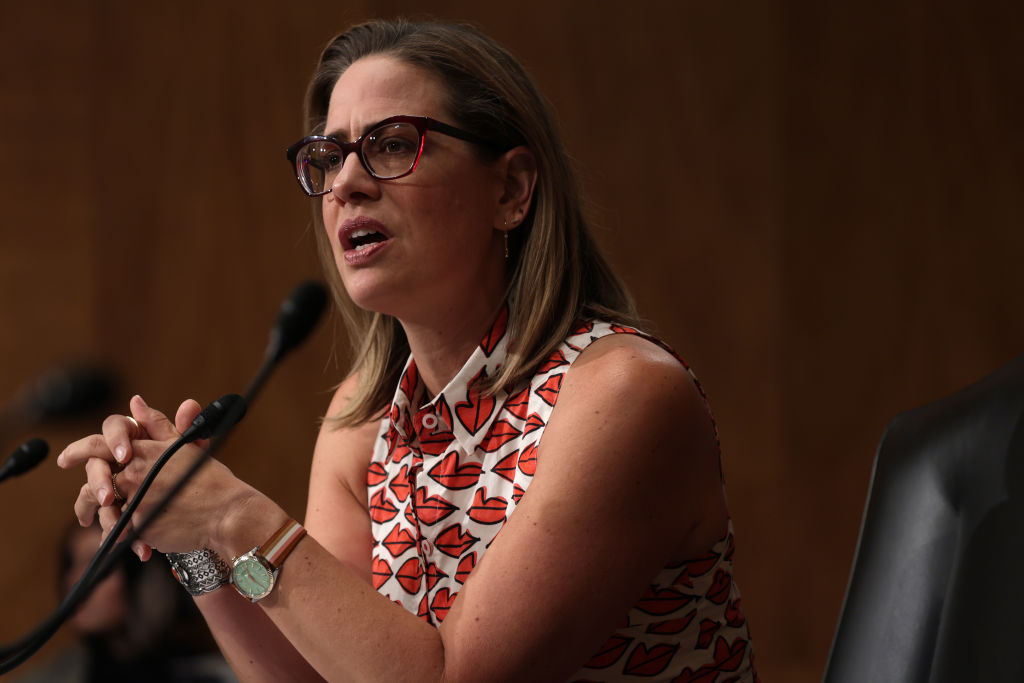
(WASHINGTON) — Arizona Democratic Sen. Kyrsten Sinema on Monday doubled down on her controversial support for the filibuster and displayed her unconventional friendship with Senate Minority leader Mitch McConnell during a speech hosted by the Republican in his home state of Kentucky.

Speaking at the McConnell Center at the University of Louisville, Sinema reiterated her stance that the Senate should continue passing legislation under a 60-vote threshold, clarifying that she hopes to resurrect the filibuster for “everything,” including all judicial and executive branch nominees. That move would almost guarantee that the 50-50 Senate would block nearly all of President Joe Biden’s appointments.

“I committed to the 60-vote threshold, it’s been an incredibly unpopular view. I actually think we should restore the 60 vote threshold for the areas in which it has been eliminated already,” the moderate Democrat said during her speech on “The Future of Political Discourse and the Importance of Bipartisanship.”

“It would make it harder for us to confirm judges. It would make it harder for us to confirm executive appointments in each administration. But I believe by restoring, we’d actually see more of that middle ground in all parts of our governance which is what I believe our forefathers intended.”

Sinema has over the past two years been the outlier among fellow Democratic senators who have attempted to pass legislation in a tied Senate, remaining steadfast in her allegiance to the filibuster rule despite mounting criticism. Her main argument against eliminating the filibuster was that doing so might turn the Senate into the House — a lower chamber without the longstanding Senate rule.

“The trouble with that is …the House with elections every two years, representing a smaller group of voters by each House, they really represent the passions of the moment in the political spectrum,” she said, noting the impending midterm elections just over a month and a half away. Sinema is not yet up for reelection for another term.

“Control changes between the House and the Senate every couple of years, it’s likely to change again, in just a few weeks … The Senate was designed to be a place that moves slowly to cool down those passions, to think more strategically and long term about the legislation before us.”

Ahead of her remarks, Sinema was called “the most effective first term senator I’ve seen in my time in the Senate,” by McConnell, who has served 37 years in the chamber and is poised to break records for leadership longevity.

His selection of Sinema for the bipartisan speaking series means the Arizonan is now part of a longstanding list of political heavyweights, including Supreme Court Justice Amy Coney Barrett, Sen. Amy Klobuchar, D-Minn., Biden while he was vice president and Hillary Clinton while she was secretary of state.

“She is today what we have too few of in the Democratic Party, a genuine, moderate, and a dealmaker,” McConnell said, noting with particular reverence her dedication to the Senate’s 60-vote threshold rule.

“It took one hell of a lot of guts for Kyrsten Sinema to stand up and say, ‘I’m not going to break the institution in order to achieve a short-term goal,'” he said, noting her departure from the Democrats’ desire to lower the threshold.

McConnell also said that former President Donald Trump “would harangue me on virtually a weekly basis,” about the same idea.

He also applauded Sinema’s involvement in moving forward bipartisan legislation — a role she has enjoyed as one of the few swing votes in the 50-50 Senate.

“Kyrsten has been right in the middle of, if not the principal leader, in getting us to an outcome in a highly partisan time, on infrastructure on school safety, mental health, postal reform, that ships bill you name it, every single thing that we’ve been able to work together on,” McConnell said.

Sinema, too, touted her friendship with the top Republican during her speech.

“At first glance, Sen. McConnell and I have relatively little — or some could even say nothing — in common,” she said. “For starters, he drinks bourbon, I drink wine. He’s from the Southeast and I’m from the great Southwest. He wears suits and ties, and I wear dresses and these fierce sneakers. Perhaps most obviously, we come from opposing political parties.”

“But despite our apparent differences, Sen. McConnell and I have forged a friendship — one that is rooted in our commonalities, including our pragmatic approach to legislating, our respect for the Senate as an institution, our love for our home states and a dogged determination on behalf of our constituents.”

Copyright © 2022, ABC Audio. All rights reserved.
Biden and DeSantis haven’t spoken directly as Hurricane Ian bears down on Florida

Biden and DeSantis haven’t spoken directly as Hurricane Ian bears down on Florida
Paul Hennessy/SOPA Images/LightRocket via Getty Images

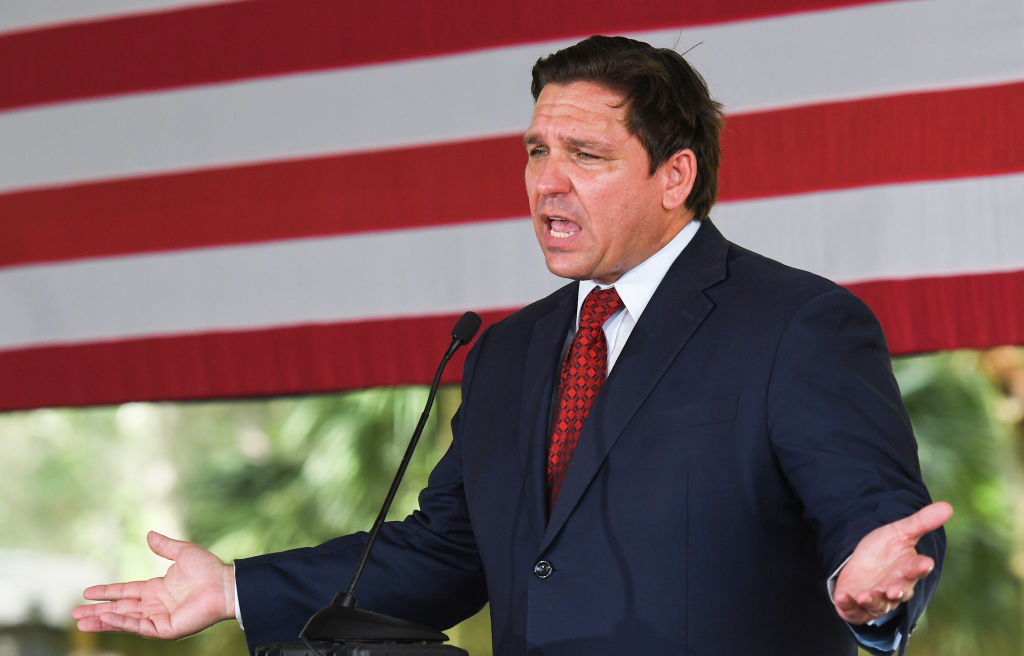
(WASHINGTON) — Ahead of Hurricane Ian’s expected landfall in Florida, White House press secretary Karine Jean-Pierre said Monday that President Joe Biden has yet to speak directly with GOP Gov. Ron Desantis.

“We don’t have any calls to preview or that’s locked into there, at this time,” Jean-Pierre said when asked by ABC Chief White House Correspondent Cecilia Vega.

Jean-Pierre insisted that the politically tense relationship between the two men is not at issue.

“It’s about the people of Florida. It’s not about public officials, especially in this time. And so again, the president, as president of the United States, as president for — for folks in red states and blue states, he’s going to keep that commitment. And you have seen him do that over the course of the 19 months when there has been extreme — extreme events, extreme weather that has happened again in blue states and red states,” she said.

When another reporter pointed out that President Biden never spoke with Mississippi GOP Gov. Tate Reeves during the height of Jackson’s water crisis, Jean-Pierre said the administration showed up for Mississippians, even without a Biden call to Reeves.

“When you mentioned the governor of Mississippi, they, you’re right, they didn’t speak and we still were able to deliver for the folks in Jackson and for the folks of Mississippi. You had our EPA administrator on the ground, you had FEMA administrator on the ground and not just them, but also folks who work for those — for those two agencies. And you have the Army Corps of Engineers. And so we put the full — the full power of the administration. We surged resources on the ground, to make sure that we did everything that we can to help the people of Mississippi. This is the same, there’s no difference here,” she insisted.

She did say that FEMA Administrator Deanne Criswell, who was in Miami Monday, will appear in the White House briefing room Tuesday to provide an update.

“FEMA has prepositioned supplies at strategic locations in Florida and also Alabama. That includes generators, millions of meals and millions of liters of water. FEMA also has staff on the ground supporting planning and preparation efforts. Tomorrow, Administrator Criswell will provide an update on the efforts underway in Florida — Florida to prepare for Hurricane Ian as well as ongoing recovery efforts in Puerto Rico and also Alaska,” Jean-Pierre said.

Biden has declared a state of emergency exists in Florida and has ordered federal aid to supplement state efforts.

An unrelated Biden trip to Florida scheduled for Tuesday has been postponed because of the storm.

Copyright © 2022, ABC Audio. All rights reserved.

Biden’s student loan forgiveness will cost $400B, new estimate says, as White House pushes back

Biden’s student loan forgiveness will cost 0B, new estimate says, as White House pushes back
Chris Kleponis/CNP/Bloomberg via Getty Images

(WASHINGTON) — President Joe Biden’s federal student loan forgiveness plan will cost $400 billion over 10 years, according to a revised estimate this week from the Congressional Budget Office.

That’s a lower number than from one leading outside estimate, but the nonpartisan federal agency’s projection drew quick pushback from the White House, which is sensitive to criticism it is growing rather than reducing the government deficit.

In a letter sent Monday to North Carolina Republicans Sen. Richard Burr and Rep. Virginia Foxx following their inquiries into Biden’s announcement last month to forgive up to $20,000 in federal student loans, the CBO noted that the cost of pausing repayments through the end of 2022 will add an additional $20 million onto that $400 billion price tag.

That CBO estimate does not include the cost of another feature of Biden’s plan: lowering the maximum amount a borrower can pay back to 5% of their income, down from 10%. The nonpartisan Committee for Responsible Federal Budget estimates that would tack on $120 million.

The CBO score, which the agency estimates is “highly uncertain” due to components that include projections dependent on future economic conditions and on how future terms of loans might be modified, is slightly less than the University of Pennsylvania’s Wharton Business School assessment that all three components of the forgiveness plan would cost about $605 billion.

Opponents of Biden’s student loan program — including some members of his own party — have insisted that the plan is impractical during a time of historic inflation rates and high gas prices, though the many Democratic supporters of the plan say it helps addresses education’s affordability issues.

The White House maintains that the cost of the student loan forgiveness plan pales in comparison to the president’s ability to foster debt reduction elsewhere.

The estimated loan cancellation price comes in higher than the $300 million amount that the Biden-backed Inflation Reduction Act is expected to reduce the federal deficit by, however. (An administration official noted to ABC News that, overall, the cash flow impact of debt cancellation will be very small in 2023 — about $21 billion.)

MORE: Biden’s student loan forgiveness policy: How to apply, who qualifies, more
In a statement, a White House spokesman emphasized that the president is still likely to reduce the federal deficit this year, despite the outlay for debt forgiveness, and the spokesman compared that with a major tax cut under Biden’s predecessor Donald Trump.

“The Biden-Harris Administration’s student debt relief plan provides breathing room to tens of millions of working families. It gives people who have been struggling with student debt that shot they want at starting a business, buying that first home, or just having a slightly easier time paying the monthly bills,” Abdullah Hasan said. “It’s a stark contrast to the Trump tax bill, which ballooned the deficit by nearly $2 trillion and provided the vast majority of benefits to big corporations and the wealthiest individuals.”

The White House also circulated a memo pushing back on the CBO estimate, noting that it assumed a 90% participation rate in the forgiveness program — though similar, smaller-scale programs had much lower participation.

The White House memo challenged how the CBO arrived at $400 billion, suggesting that the agency’s own logic pegged the number at around $250 billion.

The debt cancellation program is expected to open for applications in October.

Copyright © 2022, ABC Audio. All rights reserved.

Biden to propose new rule requiring airlines to disclose extra fees upfront

Biden to propose new rule requiring airlines to disclose extra fees upfront
Official White House Photo by Adam Schultz

(WASHINGTON) — President Joe Biden on Monday is expected to announce a new proposed rule that would allow fliers to see the total cost of an airline ticket, including extra fees, before they click on “purchase.”

Under the proposed rule, airlines and travel search websites would have to disclose fees upfront — the first time the airfare is displayed — charges associated with baggage, sitting with your child, and changing or cancelling your flight.

The announcement is part of a larger effort from the White House to help lower prices for consumers as record high inflation continues. It also comes with midterm elections approaching.

“Airline passengers deserve to know the full, true cost of their flights before they buy a ticket,” Transportation Secretary Pete Buttigieg said in a release. “This new proposed rule would require airlines to be transparent with customers about the fees they charge, which will help travelers make informed decisions and save money.”

Scott Keyes, founder of Scott’s Cheap Flights, believes giving clearer disclosure of these fees upfront will be a “major win for travelers” by making it “far easier” to compare the full cost of different flight options.

He explained that some airlines now make more money on fees than fares, partly due to the fact that fees are exempt from the 7.5% federal excise tax on airfare.

Airlines for America (A4A), which represents major U.S. passenger airlines, responded to the rule arguing that airlines already “offer transparency to consumers from first search to touchdown.”

“U.S. airlines are committed to providing the highest quality of service, which includes clarity regarding prices, fees and ticket terms,” the group said in a statement. “A4A passenger carriers provide details regarding the breakdown of airfares on their websites, providing consumers clarity regarding the total cost of a ticket. This includes transparency regarding taxes and government fees on airline tickets, which account for more than 20 percent of many domestic one-stop, roundtrip tickets.”

The public has 60 days to comment on the proposal before it can be finalized.

Copyright © 2022, ABC Audio. All rights reserved.