
Putin faces ‘irreversible’ reality in Ukraine invasion despite latest moves: Petraeus

Putin faces ‘irreversible’ reality in Ukraine invasion despite latest moves: Petraeus
ABC News

(WASHINGTON) — Russian President Vladimir Putin now faces an “irreversible” quagmire amid the country’s land grab in its ongoing invasion of Ukraine, retired Army general and former CIA chief David Petraeus said Sunday.

Putin “is losing” despite “significant” but “desperate” moves in the war that began in late February, Petraeus told ABC “This Week” co-anchor Jonathan Karl.

“President [Volodymyr] Zelenskyy and Ukraine have mobilized vastly better than has Russia,” Petraeus said. “Ukraine has recruited, trained, equipped, organized and employed force incomparably better than Russia has.”

Regardless of Putin’s bravado, Petraeus said, “No amount of annexation, no amount of even veiled nuclear threats can get him out of this situation.”

Asked by Karl if Russia could win in its conflict with Ukraine, Petraeus said he did not see how: “They cannot. There is nothing he [Putin] can do at this point.”

On Friday, Putin said he was “forever” annexing four regions of Ukraine — a move denounced by Ukraine, the U.S. and other countries — and, in late September, the Russian leader said he was calling up some 300,000 reservists to bolster the war effort, triggering protests across his country.

In a rare acknowledgment Thursday, Putin admitted “mistakes” in how the mobilization was carried out. But he argued again in a speech Friday that the invasion was crucial to preserving Russia against what he described as “the enemy” in the West.

Meanwhile Ukrainian forces, buttressed by billions in weapons and funding from the U.S. and European allies, have made steady territorial gains since a counteroffensive that started last month.

“He’s going to continue to lose on the battlefield,” Petraeus said of Putin, pointing to Russia’s recent retreat from a supply hub city in one of the annexed regions. Mounting sanctions are another complication, Petraeus said.

Putin’s Friday speech, in which he announced the annexation of parts of Ukraine, was designed to undercut Europe’s commitment to challenging Russia, which is a major energy supplier on the continent, Petraeus said.

“Europe’s going to have a tough winter,” Petraeus said. “There’s going to be very reduced flow of natural gas, but they’ll get through it and I don’t think they’ll crack on the issue of support for Ukraine.”

“Negotiations, as President Zelenskyy has said, will be the ultimate end,” Petraeus said — though an imminent diplomatic outcome might be unlikely, as Zelenskyy signaled on Friday that Ukraine would only agree to talks “with another president of Russia.”

“It can still get worse for Putin and for Russia. And even the use of tactical nuclear weapons on the battlefield won’t change this at all,” Petraeus said.

Still, he said the nuclear threat must be taken “seriously.”

Karl asked him if the use of such weapons would require the U.S. to directly intervene in the conflict with NATO.

Petraeus said a response might see the U.S. and its NATO allies “take out every Russian conventional force that we can see and identify on the battlefield” in Ukraine, the contested region of Crimea that Russia annexed in 2014 and ships in the Black Sea.

“It cannot go unanswered. But it doesn’t expand — it’s not nuclear for nuclear. You don’t want to get into a nuclear escalation here,” Petraeus said. “But you have to show that this cannot be accepted in any way.”

Copyright © 2022, ABC Audio. All rights reserved.

7 Americans released from detention in Venezuela, Biden says

7 Americans released from detention in Venezuela, Biden says
Mohamad syam/500px via Getty Images

(VENEZUELA) — Seven Americans detained in Venezuela have been released, the White House announced Saturday.

“Today, after years of being wrongfully detained in Venezuela, we are bringing home Jorge Toledo, Tomeu Vadell, Alirio Zambrano, Jose Luis Zambrano, Jose Pereira, Matthew Heath and Osman Khan,” President Joe Biden said in a statement.

Five of the individuals released were oil executives who were part of the “Citgo 6” group that was jailed in 2017 after being arrested on corruption charges when they were called to the country for a meeting. Earlier this year, Venezuela released the sixth oil executive, Gustavo Cardenas.

Biden expressed his gratitude for the “hard work of dedicated public servants across the U.S. Government who made this possible, and who continue to deliver on my Administration’s unflinching commitment to keep faith with Americans held hostage and wrongfully detained all around the world.”

Amid the positive news, Biden also noted there are still many families who have family members detained, recommitting his administration’s commitment to bring them home.

“Today, we celebrate that seven families will be whole once more. To all the families who are still suffering and separated from their loved ones who are wrongfully detained — know that we remain dedicated to securing their release,” he said.

This is a developing story. Please check back for updates.

Copyright © 2022, ABC Audio. All rights reserved.

Greg Abbott, Beto O’Rourke clash in 1st and only planned gubernatorial debate

Greg Abbott, Beto O’Rourke clash in 1st and only planned gubernatorial debate
Brandon Bell/Staff via Getty Images

(TEXAS) — Texas Gov. Greg Abbott and his Democratic challenger Beto O’Rourke faced off in a debate on Friday less than six weeks before Election Day.

The debate — the first and only planned debate for the gubernatorial race — took place at the University of Texas Rio Grande Valley in Edinburgh, where Abbott and O’Rourke sat at tables with no audience as they clashed over some of the biggest issues facing the state.

The two candidates sparred over immigration, abortion and gun control, with the Uvalde school shooting being one of the hottest topics of the debate.

Nineteen children and two adults were killed at Robb Elementary School on May 24 in what is the deadliest shooting ever at a Texas public school.

O’Rourke held a press conference with Uvalde families affected by the shooting before the debate, speaking about the need for gun reform. O’Rourke also alleged that Abbott banned the families and others from attending the debate, to which Abbott’s team responded that both candidates had agreed to the rules of the debate.

The first debate question regarding gun control opened with a video of a Robb Elementary survivor stating that in Texas, an 18-year-old cannot buy beer, but can purchase an assault-style weapon similar to that which killed her classmates in Uvalde.

When asked to explain their view on the issue, Gov. Abbott said any attempt to raise the legal purchasing age will be met “with it being overturned” and that he aims to address “what is really ailing our communities” which he cited was mental health issues.

O’Rourke rebutted Abbott’s claim that any attempt would be immediately overturned, pointing to Parkland, Florida, where 23 days after its own mass school shooting, the legal purchasing age limit was raised and is still being held, years later.

“All we need is action and the only person standing in our way is the governor of the state of Texas,” he said.

Abbott said he approves of expanding background checks to include juvenile records but is still against red flag laws. O’Rourke sidestepped questions on whether he supported confiscating AR-15-style weapons as he focused on what he believes he can get done as governor: raising the minimum age of purchase to 21, implementing red flag laws, and requiring universal background checks.

When asked about preventing another Uvalde, O’Rourke pointed criticisms at Abbott, who he said “has not lifted a finger to make it any less likely that any of our kids will meet that same fate.”

Here’s what the candidates had to say on other hot-button issues facing Texans.

Immigration

Abbott has been in the national spotlight over his busing of migrants from Texas to Democrat-run states and cities across the country, spending at least $12 million on the effort. Most recently, Abbott bused migrants to Washington near Vice President Kamala Harris’s residence.

The panel showed a clip of New York City Mayor Eric Adams speaking on the busing of migrants saying he has reached out to the Texas governor’s office to coordinate a plan. Adams says the governor has refused to do so.

“Mayor Adams has never called my office, never talked about it in my administration. And so, what he’s saying is just flat out false,” said Gov. Abbott. “There has been communication between non-governmental organizations in Texas as well as the ultimate location, whether it be Washington, D.C., or New York.”

O’Rourke, speaking on the busing of migrants, said “We don’t need any more stunts. We need solutions. We need those coming here to follow our laws. We need to make sure our laws follow up.”

The two also disagreed on Operation Lone Star, an initiative started by Abbott to place more troopers at the border, with Abbott saying the $4 billion program was only necessary because of President Joe Biden’s immigration policies. “I’m telling you $0 should be going to Operation Lone Star and that’s what it would be if we had a president who was enforcing the immigration laws of the United States of America,” Abbott said.

O’Rourke said Operation Lone Star was a failed system and is not deterring people from arriving at the U.S.-Mexico border.

Abortion

Abortions in Texas have all but ceased after the state’s trigger law went into effect on Aug. 25. The trigger law established civil and criminal penalties for performing banned abortions and prohibits the procedure with few exceptions, including cases where a pregnancy poses serious health risks to the pregnant woman.

During the debate, the panel of moderators played a clip where Gov. Abbott said victims of rape and incest can get the Plan B pill that can “prevent a pregnancy from occurring in the first place.”

Yet when asked is emergency contraception a viable alternative to abortion for victims of rape and incest, Gov. Abbott said, “Well, it depends on what you mean by alternative. An alternative obviously, is to do what we can to assist and aid the victim, and that is to help get them medical assistance that they need and the care that they need, but also to know what their options are. They’re going to know that [in] the state there are alternatives to abortion program provides living assistance, baby supplies, all kinds of things that can help them also with increased funding for prenatal and postpartum care.”

When O’Rourke was asked if he would support any limit on when a woman can’t have an abortion, he said this election is about reproductive freedom.

“I will fight to make sure that every woman in Texas can make her own decisions about her own body, her own future and her own health care and will work with the legislature and my fellow Texans to return us to the standard that Texas women want in the first place, Roe vs. Wade,” he said.

Copyright © 2022, ABC Audio. All rights reserved.

Biden says Hurricane Ian may rank ‘among the worst’ in US history

Biden says Hurricane Ian may rank ‘among the worst’ in US history
Chip Somodevilla/Getty Images

(WASHINGTON) — With Hurricane Ian lashing the southeast U.S. after leaving a path of destruction in Florida, President Joe Biden provided a detailed update Friday on his administration’s response to the devastating storm, calling it now “an American crisis.”

Hurricane Ian made landfall in Florida as a Category 4 storm on Wednesday, breaking rainfall and storm surge records as it left Fort Myers, Naples and other coastal cities underwater. Ian on Friday made landfall in South Carolina as a Category 1 storm just after 2:00 p.m.

“I’ve directed that every possible action be taken to save lives and get help for the survivors,” Biden said as he spoke from the White House Roosevelt Room. “Every single minute counts. It’s not just a crisis for Florida. It’s an American crisis. We’re all in this together.”

The president said he continued his talks with Florida GOP Gov. Ron DeSantis on Friday morning, reiterating the federal government’s commitment to help his state recover from the storm.

“We’re just beginning to see the scale of that destruction,” Biden said. “It is likely to rank among the worst in the nation’s history. You have all seen on television, homes and property wiped out. It is going to take months, years to rebuild.”

Biden didn’t paint as grim a picture on the death toll as he did on Thursday, when he said early reports indicated “substantial loss of life” and said Hurricane Ian could be the “deadliest hurricane in Florida’s history.”

DeSantis said Friday morning the number of dead from Ian is at least 21, and that it’s expected to grow. For now, the governor said 20 of those deaths are unconfirmed because they were spotted during search and rescue operations and crews were told to prioritize those found alive and still trapped.

Biden emphasized the work of search and rescue teams, stating he deployed the largest team in recent history along with the U.S. Coast Guard’s six fixed-wing aircrafts, 18 rescue boats and 16 rescue helicopters.

“Working with the Defense Department, National Guard, state and local first responders, they’ve rescued 117 people in southwest Florida coast, in Fort Myers and Naples so far,” Biden said.

Among the missions, Biden said, was rescuing a 94-year-old woman who was hoisted up into a helicopter. The rescue teams also reported saving a 1-month-old baby.

Four more Florida counties will be covered by disaster assistance to cover 100% of the cost to clear the debris left by the hurricane, bringing the total number of counties receiving the aid to 13.

Biden also spoke about the effort to restore power to the millions of Floridians still without electricity on Friday morning. He said 44,000 utility workers and restoration personnel from 33 states are “working around the clock to help get power back on.”

Biden also spoke with South Carolina GOP Gov. Henry McMaster as the storm approached, again offering support as Ian brings potentially “life-threatening” storm surge to the state. Biden approved an emergency declaration for South Carolina late Thursday evening.

During his update Friday, Biden spoke about the need for unity when responding to these extreme weather events.

Biden and DeSantis have appeared to bury the hatchet as they’ve coordinated this week to respond to Hurricane Ian. The two leaders are political opponents on a number of issues, most recently sparring over DeSantis’ migrant flights.

“At times like these, Americans come together, they put aside politics, they put aside division and we come together to help each other,” Biden said.

Copyright © 2022, ABC Audio. All rights reserved.

How Natural Disasters Can Change A Politician

How Natural Disasters Can Change A Politician
Miami Herald/Getty Images

(WASHINGTON) — In September 2017, Hurricane Irma swept across the southern tip of Florida, swamping what was then the state’s 26th Congressional District. The following July, that district’s Republican representative, Carlos Curbelo, introduced a bill that would tax greenhouse-gas emissions to help reduce the impact of climate change on his hurricane-prone constituency. Curbelo’s party affiliation raised eyebrows at the time, but for him, the threat of recurrent disasters sent political partisanship out the window. “This is not an academic discussion for those of us who live in South Florida. This is a local issue,” he told Audubon magazine in 2018.

And he’s not alone. Today, although some one-quarter of elected officials walking the halls of Congress don’t believe human-caused climate change is even real, research suggests that politicians can be persuaded to take action on climate change and other environmental issues. Unfortunately, it might take a headline-grabbing hurricane to do it. In the past decade, several studies have suggested that lawmakers are more likely to take action on climate change when they — and their constituents — have had to deal with the disastrous consequences of previously doing nothing. 

From the 1969 Cuyahoga River fire that led to the creation of the Environmental Protection Agency to the 1990 Oil Pollution Act that was born out of a series of oil spills, most notably from the Exxon Valdez, a long history of environmental disasters have inspired improvements in environmental policy, said M. Daniele Paserman, an economist at Boston University. 

“Disasters make environmental problems more salient,” he said. Paserman’s research has found that, between 1989 and 2014, congresspeople from districts hit by a hurricane were more likely to sponsor or co-sponsor environmental regulatory bills in the following year. And he’s not the only one who has noticed similar correlations. According to another study, which looked at abnormal temperature and precipitation trends between 2004 and 2011, members of Congress whose home states were experiencing weird weather were more likely to vote for all kinds of environmental legislation. More broadly, international research from 34 countries found that nuclear disasters increased the number of renewable-energy policies implemented for as long as seven years after the event. 

This line of research is relatively new and the number of studies relatively thin. But all of this builds on a larger question that has been studied more in depth: how personally experiencing the effects of climate change shape belief and behavior in the general public. 

A 2021 review of existing literature discovered ample evidence that living through a natural disaster is associated with higher levels of self-reported belief that climate change is a problem and a greater concern about what this might do to you and your family. Our own polling with Ipsos earlier this month showed something similar. Even among Republicans, nearly half of those who had experienced an extreme weather event in the past five years told us they were worried about climate change, compared with only 17 percent who hadn’t experienced a natural disaster.

But there are limits to the ability of a disaster to prevent future calamities. For one thing, the same review paper that showed increased belief in climate change didn’t find a corresponding increase in behaviors that would deal with that issue. And changes in belief are still heavily moderated by what people already think. For example, in a 2019 survey of people who experienced severe flooding in the United Kingdom during the winter of 2013-14, the ones who walked away with the highest levels of concern about climate change were those who had already attributed floods to global warming. 

So, it probably shouldn’t be a shock that the much smaller number of papers looking at how politicians might change their behavior in the face of climate change comes with its own set of caveats and complications. Studies have indicated that only countries with strong democracies see an increase in climate policy following climate disasters. And Paserman’s study found that the effects were tightly linked to proximity to the disaster. Even lawmakers who served in the same state where a hurricane occurred but whose districts were unaffected weren’t as likely to step up for political change. 

And while that paper found that politicians who experienced climate disasters were more likely to push for climate policies regardless of party, a different study — the one that showed abnormal temperature and precipitation trends were correlated with representatives’ environmental votes — found that party did matter. Moderate Democrats made the biggest shift toward more environmental-policy support, said Erich Muehlegger, an economist at the University of California, Davis, and an author on that paper. “We didn’t find much of a result for Republicans, nor did we find much of a result for the more strident Democrats, though that might be due to the fact that they were always voting for environmental regulations,” he said. “You can’t become more pro-environment if you were already on top of all those issues.” 

It’s going to take a lot more research to fully understand why politicians sometimes change their policy in the face of climate disaster and sometimes don’t. Meanwhile, just because lawmakers are responding to natural disasters with environmental votes doesn’t mean they aren’t seeing other, seedier kinds of legislative opportunities from the same event. Ethan Kaplan, an economist at University of Maryland, College Park, and his colleagues found that politicians are likely to use the immediate aftermath of a natural disaster to push through votes favoring the concerns of special-interest donors when nobody is paying attention. That’s not a contradiction to the idea that disaster could prompt politicians to take action on climate change. Instead, Kaplan said, the two things can run parallel. A disaster can create a distraction for donors’ goals in the short term, even as it prompts greater environmental policies in the long run. 

Copyright © 2022, ABC Audio. All rights reserved.

Government shutdown averted after House, Senate pass funding bill

Government shutdown averted after House, Senate pass funding bill
Mint Images/Getty Images

(WASHINGTON) — A bill to avert a federal government shutdown passed the House on Friday, just hours before the midnight deadline.

The House voted 230-201 to pass the stopgap legislation, which will keep the government funded through mid-December — past the midterm elections.

The bill now heads to President Joe Biden’s desk. He’ll need to sign it before the end of the day Friday to avert a shutdown.

The Senate voted 72-25 to advance the legislation on Thursday afternoon after some stumbles earlier this week over energy permitting reform.

The legislation moved forward after Sen. Joe Manchin, D-W.Va., agreed to drop the provision — which was opposed by some progressives and most Republicans — from the continuing resolution. All 25 “no” votes came from the GOP side of the aisle.

The bill includes an additional $12 billion in military and economic aid for Ukraine, $1 billion in heating and utility assistance for low-income families, $20 million in response to the water crisis in Jackson, Mississippi, and includes a five-year reauthorization for Food and Drug Administration user fees.

The measure also includes money for Federal Emergency Management Agency’s main disaster relief fund, an infusion that comes amid Hurricane Ian’s leveling of southwest Florida and after Hurricane Fiona’s devastation on Puerto Rico.

In floor remarks just before the vote, House Speaker Nancy Pelosi, D-Calif., highlighted some of the emergency appropriations included on the bill, including aid for Ukraine and to assist with the water crisis in Jackson, Mississippi. She also highlighted a relatively small amount of funding that could be immediately deployed to assist with Hurricane Ian recovery effort, but noted that even more funds will likely be needed.

“This legislation is a package for the people. I urge a strong bipartisan yes on the continuing resolution so that we may swiftly send this bill to the President’s desk,” Pelosi said on the floor.

What’s not included in the legislation is the billions of dollars the White House requested to continue its COVID-19 response. The Biden administration requested $22.4 billion for vaccines, treatments and next-generation research.

“This legislation avoids a very bad thing — shutting down the government — and does a lot of good things: money for the people of Ukraine, funding for communities reeling from natural disasters, aid to families with their heating bills, just to name a few,” Senate Majority Leader Chuck Schumer, D-N.Y., said just before the vote.

“Millions and millions of people can breathe easy,” Schumer added.

Republicans tried to get the continuing resolution to lapse early next year, rather than mid-December, in the hopes that the GOP will gain control of the House after the November midterm elections.

Sen. Schumer announced Thursday that the Senate will not return for its next vote until Nov. 14, giving members time to campaign in their home states from now until Election Day.

When the Senate returns for the lame duck session, it will have a hefty to-do list to tackle. Members will have to pass the National Defense Authorization Act, fund the government, confirm nominees and potentially take up legislation to protect same sex marriage.

Schumer warned of an “extremely busy” final two months of the calendar year.

Copyright © 2022, ABC Audio. All rights reserved.
Ketanji Brown Jackson appears with John Roberts after Supreme Court investiture

Ketanji Brown Jackson appears with John Roberts after Supreme Court investiture
Grant Faint/Getty Images

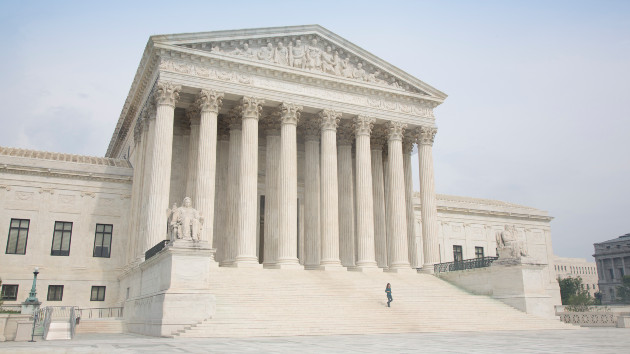
(WASHINGTON) — Ketanji Brown Jackson descended the Supreme Court’s marble steps for the first time as justice on Friday morning, flanked by Chief Justice John Roberts and with a smile on her face, appearing to soak up her momentous, history-making installation as the 116th member of the court.

Jackson has already been sworn in and begun participating in cases, but on Friday she was feted with the investiture celebration in the historic courtroom, alongside her peer justices and a gallery full of friends, family and supporters, including President Joe Biden and Vice President Kamala Harris.

Jackson sat in the same chair used by Chief Justice John Marshall in the 19th century as she was formally introduced to the court.

For the first time in the Supreme Court’s 233-year history, a majority of the justices are not white men and it’s the first time four women are serving together on the court. Jackson is the first Black woman to serve as a justice on the court.

Nearly every seat in the courtroom on Friday was filled, with House Speaker Nancy Pelosi and past Supreme Court justices, including Stephen Breyer and Anthony Kennedy, also in attendance, as well as Jackson’s husband, Dr. Patrick Jackson, and two daughters, Leila and Talia.

After the ceremony, Jackson and Roberts were photographed together on the marble steps of the court. Four months after the same courthouse plaza was wrapped in steel security fencing and buffeted with angry protestors, Jackson and Roberts stood together quietly looking out at the horizon and a new day for this embattled court.

Jackson was tapped by Biden to fill the seat vacated by Breyer. After nearly 24 hours of questioning from senators in, at times contentious and emotional, Senate hearings, she was confirmed by the chamber in a 53-47 vote in early April.

Speaking at the White House the day after her confirmation, Jackson highlighted the historic nature of her appointment, noting the thousands of notes she received from people after her nomination.

“It has taken 232 years and 115 prior appointments for a Black woman to be selected to serve on the Supreme Court of the United States,” she said. “But we’ve made it. We’ve made it, all of us. All of us.”

Jackson was officially sworn in on June 30. Her husband held two Bibles as she repeated constitutional and judicial oaths in a brief ceremony at the Supreme Court.

“With a full heart, I accept the solemn responsibility of supporting and defending the Constitution of the United States and administering justice without fear or favor, so help me God,” Jackson said in a written statement at the time of her swearing-in. “I am truly grateful to be part of the promise of our great Nation.”

The entire court will sit for new pooled official photos on Oct 7.

The court begins hearing cases in the new term on Monday, Oct. 3. This term, for the first since the coronavirus pandemic, the court will welcome the public back to its courtroom as it hears arguments.

Copyright © 2022, ABC Audio. All rights reserved.
Race to November: Dr. Oz lays out his platform as Senate race heats up

Race to November: Dr. Oz lays out his platform as Senate race heats up
ABC News

(NEW YORK) — With just a little over a month before the Nov. 8 elections, Dr. Mehmet Oz tells ABC News that he is gearing up for a tight campaign schedule as he tries to convince Pennsylvania voters that he’s the best choice for their U.S. Senator.

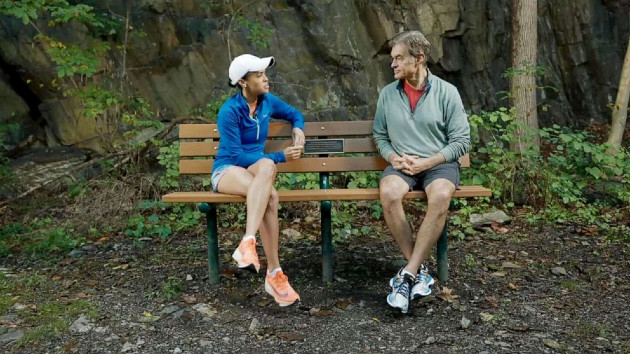
Oz laid out more specifics of his agenda and responded to criticism by his opponent, Pennsylvania Lt. Gov. John Fetterman, in a wide-ranging interview and run with ABC News’ Linsey Davis.

Oz, a former heart surgeon turned TV talk show host, said he decided to run for office because of the legacy he has as a first-generation American. The GOP candidate said that his father, who immigrated to the U.S. from Turkey, instilled in him pride in his adopted land and encouraged him to work hard.

“My life is a living testimony to the American dream,” he told Davis. “I want everyone to have that, and I don’t want that getting squandered away.”

Oz’s residency has come into question from Fetterman and other opponents who have noted that Oz moved to Pennsylvania in 2020 after residing in New Jersey. Fetterman has frequently brought up this point in social media posts.

Oz pushed back against the criticism, calling the residency complaints a “preposterous issue.”

“I had two kids in Pennsylvania, married my wife 37 years ago in the house we live in now, which was the best decision I made in my life, and we moved back couple of years ago,” he said.

“It’s a deeper reality that, in Pennsylvania, we don’t care where you’re from. We care what you stand for,” Oz added.

Oz added that he was a Philadelphia Eagles fan.

The Republican candidate said his first priority as a senator would be health care. Oz said every American should have access to health care but added, “we’ve got to deal with the cost issues as well.”

When asked if he supported U.S. Sen. Lindsey Graham’s bill to ban abortion nationwide, Oz, who has supported banning abortions with exceptions for lifesaving instances, didn’t directly answer but reiterated his stance that the issue should be left up to the states.

“I don’t think the federal government should play a role in telling states how to make decisions around some of these issues, especially sensitive ones like those involving the pro-life movement,” he said.

Health has come up in the campaign after Fetterman suffered a stroke in May.

Last month, Oz distanced himself from a comment made by one of his campaign staffers who was quoted saying that if Fetterman “had ever eaten a vegetable in his life, then maybe he wouldn’t have had a major stroke and wouldn’t be in the position of having to lie about it constantly.”

Oz reiterated that he has empathy for Fetterman and his recovery.

“It’s an area that I specialize in medicine, recovering from a stroke,” he said. “All of these issues are challenges, especially if you’re in the political arena, which is physically demanding, and you’ve got to articulate your thoughts on this campaign.”

Oz, however, criticized his opponent for not having more facetime during the campaign. Fetterman has kept most of his campaigning online and with few public appearances since the stroke.

There is only one debate scheduled between the candidates on Oct. 25.

“Focus on the voters,” Oz said. “They have a right to hear my opponent articulate and defend his policies.”

Oz said he is focused on winning over all voters — Republicans, Democrats and Independents. However, he has faced criticism for his ties to the far-right, but also from the far-right for not being conservative enough.

Oz was endorsed by Former President Donald Trump, but he has contended he wants to be a leader for all.

“I think I’m a moderate leader, but not passive. I feel very strongly about the positions I have,” he said.

“Politics is a game of addition and multiplication, not division. I have lots of people endorsing me. Some of those people don’t like President Trump. Many do. But I want everybody endorsing me,” he added.

Copyright © 2022, ABC Audio. All rights reserved.

Ex-Trump adviser Tom Barrack’s emails to Paul Manafort, Jared Kushner, Ivanka Trump read aloud during trial

Ex-Trump adviser Tom Barrack’s emails to Paul Manafort, Jared Kushner, Ivanka Trump read aloud during trial
Michael M. Santiago/Getty Images

(NEW YORK) — Government prosecutors in the case of Tom Barrack on Thursday read aloud hundreds of emails and texts sent by the former Trump fundraiser, who is on trial at a federal courthouse in Brooklyn, New York, for allegedly illegally lobbying on behalf of the United Arab Emirates.

The hours-long recitation included messages to Donald Trump’s daughter Ivanka Trump, her husband Jared Kushner, and Trump’s 2016 campaign manager, Paul Manafort.

Barrack, a billionaire California-based businessman and longtime Trump associate, has pleaded not guilty to charges that he acted as a foreign agent for the UAE from 2016 to 2018 and failed to register with Justice Department, which prosecutors say constitutes a crime. The government alleges that Barrack illegally lobbied on behalf of the UAE while seeking investments from two UAE sovereign wealth funds — a charge his defense attorneys have dismissed as ridiculous.

“[The government’s] accusations are nothing short of ridiculous. Tom Barrack was never under anybody’s direction. Tom Barrack was never under anybody’s control,” said Michael Schachter, Barrack’s attorney. “Tom Barrack was his own man [and] said things because he wanted to.”

After several days of testimony, prosecutors on Thursday laid out communications from Barrack in an effort to prove their case. The messages largely focused on discussions surrounding an energy speech that Trump, who was then a presidential candidate, was set to deliver in early 2016.

Prosecutors have alleged that Barrack shared an early draft of the speech with UAE government officials for feedback, and then inserted language favorable to the UAE.

“Wow, I’m just stunned by how bad this is,” Barrack wrote in an email to Manafort in May, 2016, upon receiving a new draft of the proposed energy speech that did not include his earlier additions praising the UAE. “We better figure out a way to get one paragraph to balance foreign policy concerns for energy dependent allies in the gulf.”

“Send me an insert that will work for our friends. I will push to get it included,” replied Manafort, who was later pardoned by Trump after being sentenced in 2019 to seven years in prison for charges related to special counsel Robert Mueller’s investigation. “This is easier than fighting to get the speech back to where it was.”

According to emails presented by prosecutors, Barrack, seeking feedback, had first sent a draft of the speech to Rashid Al Malik, whom the government describes as a UAE national who is also charged alongside Barrack. Al Malik then forwarded the speech to a member of the UAE government, and after much back-and-forth, language praising the UAE was inserted.

“Here is my latest draft, I will give it to him tomorrow,” Barrack wrote days later to Al Malik, in an email with the subject line “totally confidential.” Amidst more back-and-forth that followed, Barrack pushed back on some suggestions, writing to his aide, Matthew Grimes — who is also charged and has pleaded not guilty — “do not include any of their other comments please.”

On May 26, 2016, Trump delivered the speech — which included a pledge to “work with our Gulf allies.”

“Amazing speech!” Al Malik wrote to Barrack shortly thereafter.

“MBZ and MBS were watching,” added Al Malik, referring to UAE President Mohamed bin Zayed Al Nahyan and then-Deputy Crown Prince of Saudi Arabia Mohammed bin Salman Al Saud.

Prosecutors also displayed emails from months before the speech, in which Barrack pushed to get Manafort hired by the Trump campaign.

“I think it’s really, really important and Manafort is a genius killer [sic] but the opposite of [Trump adviser Roger] Stone,” Barrack wrote in a Feb. 29, 2016, email to Ivanka Trump and Kushner.

Barrack also forwarded an email he had previously sent to Trump saying that Manafort was “the most serious and lethal of managers.”

“Thank you for being such a great friend,” Manafort emailed to Barrack after Manafort was hired as the campaign’s GOP convention manager. No responses from Ivanka Trump or Kushner were included.

Other emails also appeared to show an effort by Barrack to prevent others from meeting with UAE officials. In early May, Barrack emailed Al Malik that a sheikh had “reached out to the Trump Organization to Jared … to try and set up a meeting.”

“I intercepted,” Barrack wrote in the May 5, 2016, email, which prosecutors read as a picture of Kushner was displayed for the jury.

“I told him to cancel that is bulls—,” Barrack wrote days later regarding a separate potential meeting.

Later, Barrack emailed Jared that the man he was supposed to meet with was a “mid level bureaucrat.”

“You are the only direct channel to the candidate and no one else,” Al Malik told Barrack in a later email.

Copyright © 2022, ABC Audio. All rights reserved.
Greg Abbott and Beto O’Rourke set to debate: What to expect

Greg Abbott and Beto O’Rourke set to debate: What to expect
Jordan Vonderhaar/Getty Images

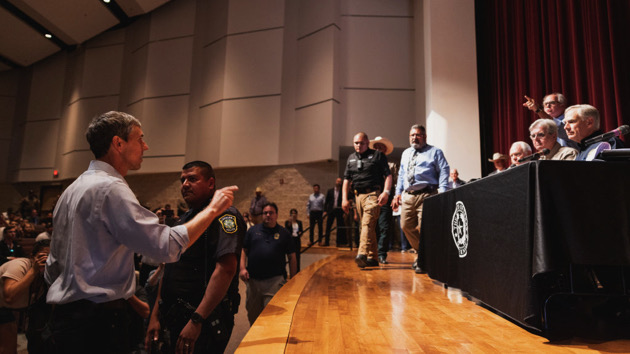
(NEW YORK) — On Friday — for the first and only time — Texas Republican Gov. Greg Abbott and his Democratic challenger, former Texas Rep. Beto O’Rourke, will meet face-to-face for a debate less than six weeks before Election Day.

Both candidates come to the stage with long political careers, well-known records and established public personas.

Abbott has been governor since 2015 — the position has no term limits — and was the state attorney general and a member of the Texas Supreme Court before that.

He has defined his tenure based in part on Texas’ economic performance and also on his hardline stances on abortion access and on immigration across the southern border, saying he is focused on reducing the flow of drugs and human trafficking.

His Operation Lone Star, where state troopers and National Guard members patrol the Texas border with Mexico, was one such major initiative to address that. But it has drawn scrutiny both for its success — given its price tag and given that migrant arrests remain at all-time highs — and what the federal government suspects may be civil rights violations.

Abbott’s office has said President Joe Biden’s border policies are to blame and that criticism of Abbott’s immigration policies amounted to “attacking the only state taking unprecedented actions to do the federal government’s job.”

More recently, Abbott has also been sending migrants from Texas via bus to Democratic-led cities such as Chicago, New York and Washington, drawing outcry there that he is using people as part of a political stunt. He said it is a necessary protest of the White House’s border strategy.

O’Rourke, who is running to unseat him, is a former representative for El Paso and announced last fall that he would run for governor. He previously ran against Republican Sen. Ted Cruz but narrowly lost in 2018; he then went on to unsuccessfully seek the Democratic nomination for president in 2020.

The last Democratic governor to represent the Lone Star State was the late Ann Richards, from 1991 to 1995, leaving office after being defeated by George W. Bush.

Friday’s debate may well focus on a handful of topics that that either been priorities or pitfalls for both candidates. Immigration, a perennial focus for voters in Texas, is likely to come up with each candidate pressing different points — on how best to handle people who seek to cross the border. O’Rourke may also cite the state’s power grid failure during deadly winter weather last year while Abbott could cite O’Rourke’s embrace of gun law changes in a state where gun ownership is popular — but which was also the site of the Uvalde school massacre in May.

Abortion, too, splits Abbott and O’Rourke, given that Abbott signed a ban on abortions without exceptions for rape or incest. (Abbott’s website states that he wants to “defend the culture of life in Texas.”)

Recent polls indicate that O’Rourke has more work to do with voters and may be on the defensive on some issues. FiveThirtyEight’s analysis of the best polling shows Abbott with an approximately 7-point lead over O’Rourke.

According to a recent Quinnipiac University poll, the Texas-Mexico border ranks as the No. 1 issue among likely voters along with that group narrowly backing Abbott’s migrant busing (51-47% approval). However, O’Rourke has a slight advantage over Abbott with Hispanic voters (49-48%).

O’Rourke has called his fluency in Spanish is a “competitive advantage.”

Abbott, for his part, has downplayed the certainty of a close race: “This game ain’t over yet, and we’ll see how close it is when all is said and done,” he said earlier this month.

Some O’Rourke supporters are optimistic.

“Beto has done the work on the ground,” said Jen Ramos, a political specialist for Jolt Action. ” He not only focused on South Texas communities and Latino communities before he even decided to run for the governorship but has made a key point on talking to voters that have not been spoken to historically, in any gubernatorial election.”

The debate will begin Friday at 8 p.m. ET and will be telecast throughout the state and on Nexstar’s national cable news network.

Copyright © 2022, ABC Audio. All rights reserved.